
LEAD ANALYST
Utkarsh Khirodkar is a Lead Market Research Analyst at MetaStat Insight, specializing in market intelligence, technology sector assessments, and competitive strategy.

Retail Project Management Software Market Size, Share, By Solution (Project Planning, Rollout Scheduling, Task Management, Collaboration Tools, Budget Management, Cost Management, Resource Planning, Capacity Management, Risk Management, Reporting, Analytics, and Others), By Deployment (Cloud, On-Premises, and Hybrid), By Application (Store Openings, Store Refurbishments, Remodels, Digital-Store Programs, Merchandising Resets, Capital Project Management, and Others), By Enterprise Size (Enterprise Retailers, Mid-Market Retail Chains, and SMB Retailers), Industry Analysis, Growth, Trends, and Forecast, 2026-2033
Report ID
MSI-4790
Published
June, 2026
Pages
312 Pages
Format
Report Details
Choose Your License
Retail Project Management Software Market
Retail Project Management Software market size is valued at USD 1,505.5 million in 2025 and projected to grow at a CAGR of 11.2% during the forecast period, reaching USD 3,524.9 million by 2033.
North America holds 53.31% in 2025 with US leading the market share in 2025.
Project Planning and Rollout Scheduling segment is valued at USD 371.7 million in 2026 and is projected to reach USD 740.9 million by 2033, at a CAGR of 10.4% during the forecast period.
Key trends driving growth: Rising adoption of omnichannel retail strategies is increasing demand for centralized project coordination tools and Growing implementation of cloud-based SaaS platforms is accelerating software deployment across retail enterprises.
Opportunities include expansion of AI-driven predictive analytics creates opportunities for intelligent retail planning solutions and increasing digital transformation among SMEs is opening new revenue streams for software vendors.
Key insight: AI-enabled workflow automation is transforming retail project management software into a strategic operational intelligence platform.
The Global Retail Project Management Software Market is witnessing strong momentum owing to rapid digital transformation across retail operations and the increasing complexity of omnichannel commerce management. Retailers are adopting project management platforms to streamline store expansion projects, inventory coordination, supply chain planning, workforce collaboration, and customer engagement initiatives across multiple locations. The market is shifting from traditional project management tools toward integrated cloud-based ecosystems equipped with AI-driven analytics, workflow automation, resource allocation, and real-time collaboration capabilities. Growing dependence on hybrid work models and distributed retail teams has further increased the need for centralized project visibility and operational efficiency tools.
Retail companies are increasingly investing in scalable SaaS-based project management solutions that integrate with ERP, CRM, merchandising, and supply chain systems. Large retail chains are focusing on predictive planning, automated reporting, and agile project execution to reduce operational bottlenecks and improve decision-making speed. The emergence of AI-powered retail ecosystems, automated fulfillment centers, and smart inventory management is strengthening software adoption across organized retail and e-commerce segments. Vendors are continuously improving their platforms with machine learning, low-code customization, and advanced analytics to support faster deployment and improved retail workflow management.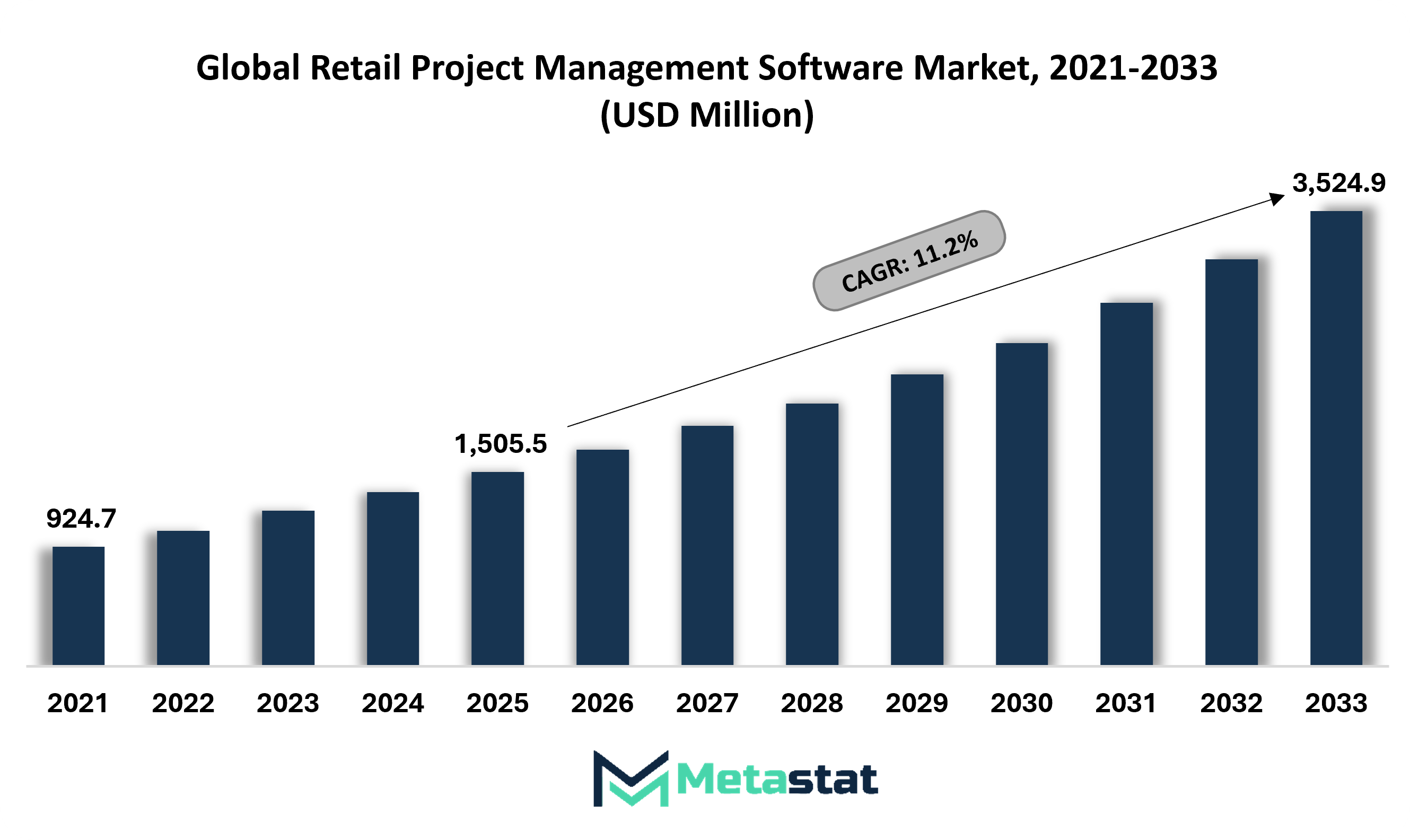
Rising adoption of omnichannel retail strategies is increasing demand for centralized project coordination tools.
Rising adoption of omnichannel retail strategies continues to strengthen demand for centralized coordination platforms within the retail project management software market. Retail enterprises are focusing on synchronized inventory planning, campaign execution, vendor communication, and store operations across digital and physical channels. Future retail ecosystems are expected to rely on unified software environments that improve workflow visibility, reduce operational delays, and support faster project execution across multiple retail locations.
Growing implementation of cloud-based SaaS platforms is accelerating software deployment across retail enterprises.
Growing implementation of cloud-based SaaS platforms is accelerating deployment across the retail project management software market. Retail organizations are increasingly choosing scalable cloud environments for improved accessibility, lower infrastructure spending, and simplified operational management. Future expansion across global retail networks will support wider investment in subscription-based software models that enable remote collaboration, real-time reporting, automated scheduling, and centralized project tracking.
High integration complexity with legacy retail infrastructure limits adoption among traditional retailers.
High integration complexity with legacy retail infrastructure continues to create operational barriers within the retail project management software market. Traditional retail organizations often operate through outdated enterprise systems that lack compatibility with modern project management applications. Future migration strategies will require significant technical restructuring, longer deployment timelines, and higher implementation spending, creating hesitation among retailers managing large-scale operational transformation programs.
Data privacy and cybersecurity concerns continue to challenge cloud-based project management deployments.
Data privacy and cybersecurity concerns continue to challenge adoption patterns across the retail project management software market. Retail corporations manage large volumes of customer data, transaction records, and operational information through cloud-connected platforms. Future regulatory frameworks surrounding digital security will increase compliance requirements, creating additional pressure on software vendors to strengthen encryption standards, identity management systems, and risk monitoring capabilities across enterprise retail networks.
Expansion of AI-driven predictive analytics creates opportunities for intelligent retail planning solutions.
Expansion of AI-driven predictive analytics is creating strong growth opportunities within the retail project management software market. Retail organizations are increasingly exploring intelligent planning solutions that forecast demand fluctuations, identify operational inefficiencies, and improve project scheduling accuracy. Future software innovation will encourage broader adoption of advanced analytics engines that support automated decision-making, resource optimization, workforce planning, and performance forecasting across complex retail environments.
The Retail Project Management Software market is classified based on Solution, Deployment, Application, and Enterprise Size.
Project Planning and Rollout Scheduling segment is valued at USD 168.5 million in 2026 and is projected to reach USD 299.7 million by 2033, at a CAGR of 8.6% during the forecast period.
Project Planning and Rollout Scheduling supports organized execution across retail expansion programs. Retail groups are expected to adopt smart scheduling systems for improved timeline control, faster approvals, and reduced operational delays. Growing dependence on automation within the retail project management software market will encourage accurate coordination between vendors, contractors, and internal management teams.
Task Management segment is valued at USD 168.5 million in 2026 and is projected to reach USD 299.7 million by 2033, at a CAGR of 8.6% during the forecast period.
Task Management solutions assist retail organizations in monitoring assignments, deadlines, and workforce responsibilities through centralized platforms. Future retail operations are expected to rely on advanced workflow systems that reduce manual follow-ups while improving accountability. Demand in the retail project management software market will rise owing to increasing pressure for faster project completion across multiple retail locations.
Collaboration Tools segment is valued at USD 209.3 million in 2026 and is projected to reach USD 407.2 million by 2033, at a CAGR of 10% during the forecast period.
Collaboration Tools create clear communication between regional offices, project managers, vendors, and store teams. Retail businesses will prioritize digital coordination platforms for stronger operational transparency. Expansion of remote project supervision practices will strengthen adoption across the retail project management software market during large-scale retail modernization initiatives.
Budget and Cost Management segment is valued at USD 247.3 million in 2026 and is projected to reach USD 546.4 million by 2033, at a CAGR of 12% during the forecast period.
Budget and Cost Management helps retail companies monitor project spending, procurement costs, and contractor payments. Retail operators are projected to focus on financial visibility owing to rising infrastructure and maintenance expenses. Long-term development in the retail project management software market will benefit from increased demand for accurate forecasting and cost optimization capabilities.
Resource Planning and Capacity Management segment is valued at USD 190.4 million in 2026 and is projected to reach USD 384.9 million by 2033, at a CAGR of 10.6% during the forecast period.
Resource Planning and Capacity Management software improves allocation of labor, equipment, and operational resources across retail projects. Retail establishments are expected to increase investment in predictive planning systems for better workforce utilization. Strong focus on operational efficiency will create new growth opportunities for the retail project management software market in the coming years.
Risk Management segment is valued at USD 133.7 million in 2026 and is projected to reach USD 308.4 million by 2033, at a CAGR of 12.7% during the forecast period.
Risk Management platforms help retailers identify delays, compliance issues, vendor disruptions, and financial uncertainties before project escalation. Future retail construction and remodeling activities are expected to require stronger preventive monitoring systems. Expansion of multi-location retail operations will contribute to increasing adoption across the retail project management software market.
Reporting and Analytics segment is valued at USD 214.7 million in 2026 and is projected to reach USD 557.2 million by 2033, at a CAGR of 14.6% during the forecast period.
Reporting and Analytics solutions provide detailed visibility into project performance, financial progress, operational bottlenecks, and completion rates. Retail companies are expected to rely heavily on real-time dashboards for data-driven decision-making. Rising importance of predictive business intelligence will accelerate innovation across the retail project management software market.
Others segment is valued at USD 139.4 million in 2026 and is projected to reach USD 280.1 million by 2033, at a CAGR of 10.5% during the forecast period.
Other solutions include document management, vendor communication platforms, compliance tracking, and workflow automation tools. Retail businesses are expected to continue integrating specialized project functions into unified digital platforms. Continuous technological development will support broader software adoption across various retail formats within the retail project management software market.
Cloud segment is projected to reach USD 382.9 million by 2033, at a CAGR of 1.8% during the forecast period.
Cloud deployment offers flexible accessibility, remote project supervision, lower infrastructure costs, and faster software implementation. Retail groups are projected to prefer cloud-based platforms owing to increasing digital transformation strategies. Growing dependence on scalable retail operations will support demand across international retail networks in the retail project management software market.
On-Premises segment is projected to reach USD 382.9 million by 2033, at a CAGR of 1.8% during the forecast period.
On-Premises deployment offers greater control over operational data, security protocols, and internal system customization. Large retail companies managing sensitive project records will continue preferring internally controlled software infrastructure. Stable demand for secure enterprise environments will support steady adoption across the retail project management software market.
Hybrid segment is projected to reach USD 671.4 million by 2033, at a CAGR of 11.7% during the forecast period.
Hybrid deployment combines the advantages of cloud flexibility with on-premises security and operational control. Retail corporations will adopt hybrid systems for balanced project management across distributed enterprise environments. Increasing complexity in retail expansion activities will create favourable opportunities within the retail project management software market.
Store Openings segment is projected to reach USD 907.3 million by 2033.
Store Openings applications support planning, scheduling, workforce coordination, procurement tracking, and launch management activities. Retail brands are expected to increase software adoption for faster expansion into urban and regional markets. Rising competition among retail chains will positively influence growth across the retail project management software market.
Store Refurbishments and Remodels segment is projected to reach USD 907.3 million by 2033.
Store Refurbishments and Remodels require coordination among contractors, vendors, and operational teams. Retail companies are expected to modernize physical store environments for improved consumer engagement and brand positioning. Increased focus on renovation efficiency will contribute to growth of the retail project management software market.
Digital-Store Programs segment is projected to reach USD 804.8 million by 2033.
Digital-Store Programs focus on the integration of smart retail technologies, self-service systems, and connected customer experiences. Retail operators are projected to prioritize software solutions that support digital transformation initiatives. Increasing adoption of smart retail infrastructure will strengthen future development in the retail project management software market.
Merchandising Resets segment is projected to reach USD 324.6 million by 2033.
Merchandising Resets help retail groups reorganize store layouts, promotional displays, and inventory positioning activities. Retail organizations are expected to continue investing in software for accurate execution of seasonal merchandising programs. Growing focus on consumer engagement strategies will support long-term demand within the retail project management software market.
Capital Project Management segment is projected to reach USD 540.8 million by 2033.
Capital Project Management software supports large retail investments involving construction, infrastructure upgrades, and operational expansion initiatives. Retail businesses are projected to increase spending on centralized management systems for better financial oversight. Expansion of commercial retail infrastructure will create strong opportunities across the retail project management software market.
Others segment is projected to reach USD 234 million by 2033.
Other applications include warehouse upgrades, supply chain modernization, sustainability initiatives, and franchise development programs. Retail corporations will adopt advanced management software for broader operational coordination. Continuous retail innovation will encourage diverse application growth in the retail project management software market.
Enterprise Retailers segment is projected to grow at a CAGR of 12.4% during the forecast period.
Enterprise Retailers manage large project portfolios involving multiple stores, vendors, and operational teams across different regions. Large-scale organizations are expected to invest heavily in advanced project management technologies for improved efficiency and reporting accuracy. Strong digital transformation spending will support expansion of the retail project management software market.
Mid-Market Retail Chains segment is projected to grow at a CAGR of 12.4% during the forecast period.
Mid-Market Retail Chains increasingly require scalable project management systems capable of supporting regional expansion and operational modernization. Retail operators within mid-sized business segments are projected to prioritize affordable software with automation capabilities. Rising competition within organized retail will contribute to demand growth across the retail project management software market.
SMB Retailers segment is projected to grow at a CAGR of 13.5% during the forecast period.
SMB Retailers are gradually adopting project management systems for improved scheduling, budgeting, and workflow organization. Smaller retail organizations are expected to choose user-friendly and cost-effective digital solutions for operational control. Increasing awareness regarding productivity optimization will create future growth opportunities within the retail project management software market.
Based on geography, the Retail Project Management Software market is divided into North America, Europe, Asia-Pacific, South America, Middle East, and Africa.
Strong SaaS ecosystem adoption across large retail chains continues to strengthen regional market leadership in North America.
Growing investments in AI-powered retail automation and fulfillment technologies are supporting software demand in North America.
European retailers are emphasizing sustainable retail operations, cross-border digital commerce management, and AI-assisted workflow optimization, encouraging stronger adoption of integrated retail project management platforms.
Rapid expansion of e-commerce infrastructure in India and Southeast Asia is boosting demand for scalable project management solutions in Asia Pacific.
Rising retail digitization initiatives across China and Japan are creating significant opportunities for cloud-based software providers.
Middle East, Africa, and South America are witnessing gradual adoption of retail project management software, supported by expanding organized retail sectors, improving digital infrastructure, rising mobile commerce penetration, and increasing investments in smart retail modernization initiatives.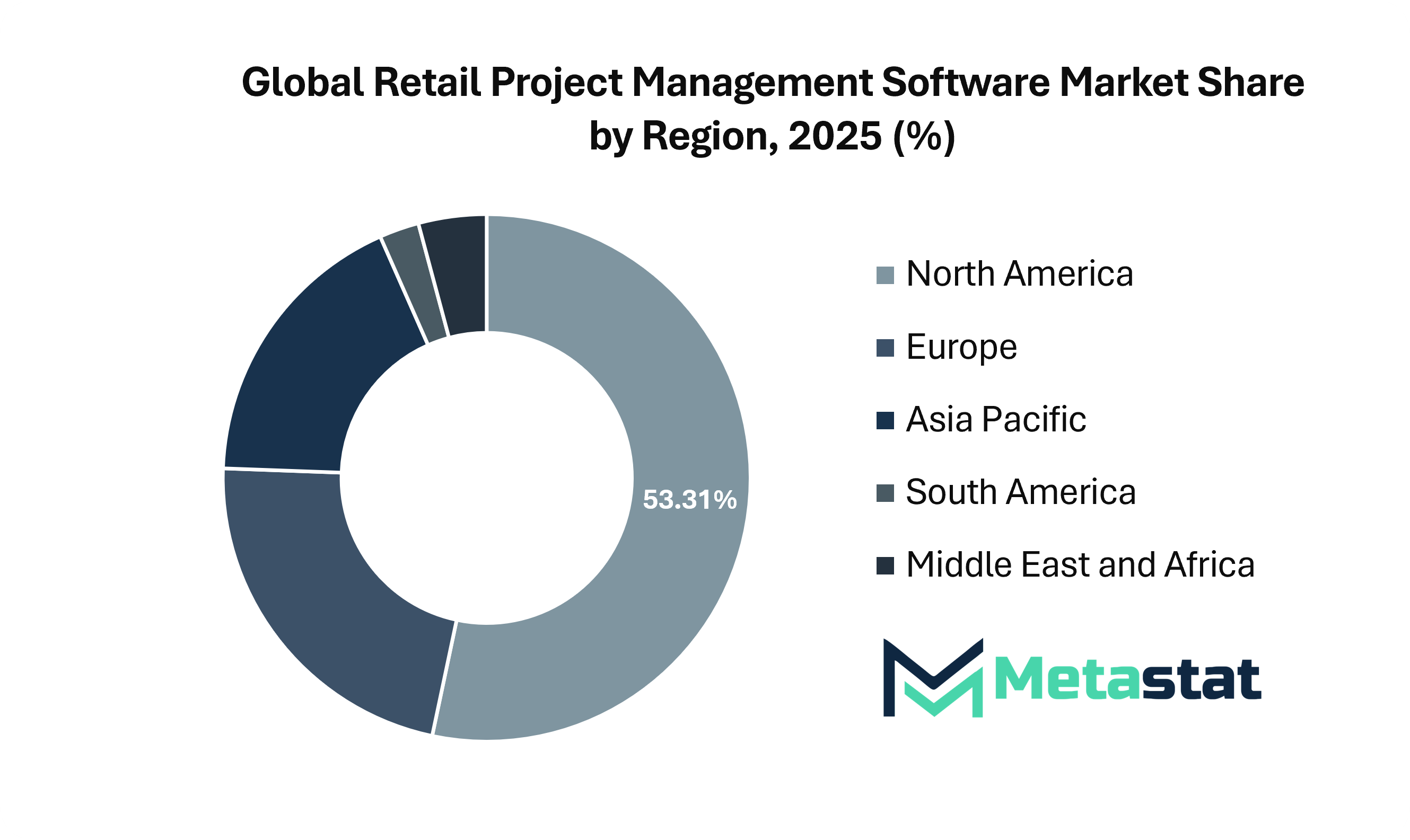
The Global Retail Project Management Software Market continues to develop as retail groups focus on improving daily operations, strengthening project planning, and managing execution with greater speed and accuracy. Retail companies are managing multiple activities simultaneously, including inventory tracking, store launches, marketing campaigns, and employee coordination. Increased operational complexity has raised demand for software that organizes work in one centralized platform and reduces execution delays. Businesses are also seeking systems that support communication among teams working from different locations. Cloud-based platforms are becoming increasingly common owing to their ability to provide quick access to project details and real-time updates. Small and large retailers are investing in these solutions to improve productivity and reduce manual work. The market is also seeing strong interest as retailers need better visibility into timelines, budgets, and team performance without relying on outdated spreadsheets or disconnected tools.
Many software vendors are introducing capabilities that make project management easier and more flexible for retail businesses. Automation tools, reporting dashboards, and task-tracking systems are helping managers make faster decisions and avoid confusion during project execution. Mobile access is another important factor driving demand, as employees stay connected while working remotely or moving between store locations. The Global Retail Project Management Software Market is also gaining attention owing to the growing use of digital retail channels. Online shopping, customer engagement campaigns, and rapid product launches require strong coordination between departments.
Several leading companies are contributing to market competition by providing advanced project management solutions for retail operations. Important industry participants include Eleco plc, Planview, Inc., Smartsheet Inc., monday.com Ltd., Asana, Inc., Wrike, Inc., Quickbase Inc., OnePlan Portfolio Solutions, LLC, ClickUp, and Airtable. Other organizations, including WorkZone, LLC, Triskell Software, OneDesk Inc., MerchLogix, and Accruent LLC, are also strengthening their market position by providing customized services and operational support for retail groups. These organizations are focusing on product updates, stronger integrations, and customer-focused solutions to remain competitive.
The market outlook remains positive as retailers increase their focus on digital transformation and organized project execution. Businesses are expected to continue investing in software that supports faster communication, accurate reporting, and efficient resource management. Artificial intelligence and data analytics will play a larger role in helping organizations predict project risks and improve planning accuracy. Growing retail expansion in developing economies is creating additional opportunities for software vendors to reach new customers. Demand from e-commerce businesses and multi-store retail chains will support long-term market growth. As competition in the retail sector increases, companies are expected to rely more on project management platforms that help teams stay connected, improve workflow visibility, and complete projects within deadlines.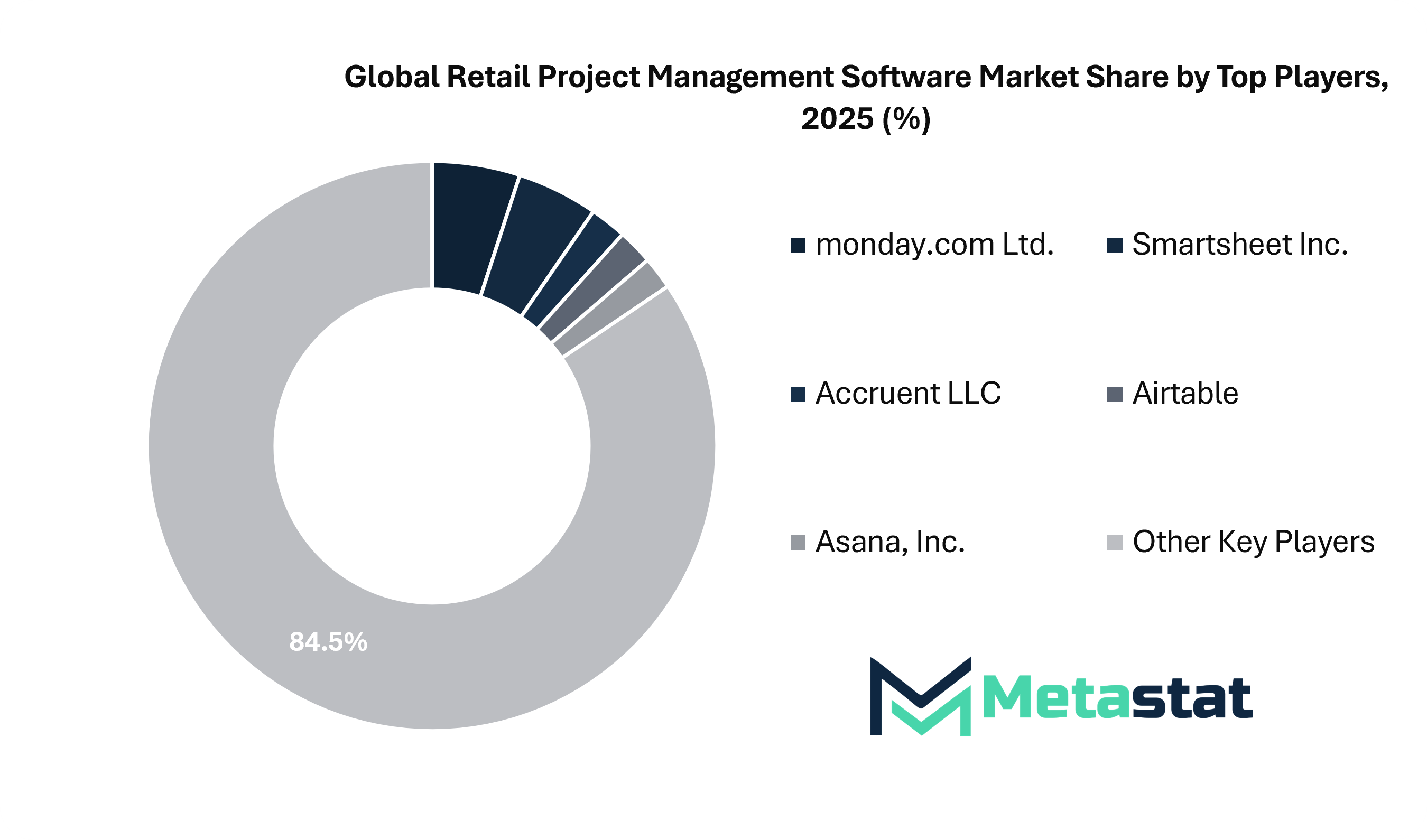
Market size is forecast to rise from USD 1,505.5 million in 2025 to over USD 3,524.9 million by 2033.
Future market growth is expected to be driven by AI-enabled project orchestration, increasing omnichannel retail investments, and the rising need for real-time operational intelligence. Retailers are expected to prioritize software platforms capable of integrating inventory planning, customer analytics, workforce management, and supply chain coordination into unified digital environments.
This research report categorizes the Retail Project Management Software market based on key segments and regions, forecasts revenue growth, and analyses trends in each submarket. The report analyses the key growth drivers, opportunities, and challenges influencing the Retail Project Management Software market. Recent market developments and competitive strategies such as expansion, product launch, partnership, merger, and acquisition have been included to draw the competitive landscape in the market.
The report strategically identifies and profiles the key market players and analyses their core competencies in each sub-segment of the Retail Project Management Software market.
|
Report Attributes |
Details |
|
Study Period |
2021-2033 |
|
Base Year |
2025 |
|
Estimated Year |
2026 |
|
Forecast Period |
2026-2033 |
|
Historical Period |
2021-2025 |
|
Growth Rate |
CAGR 11.2% from 2026 to 2033 |
|
Revenue Unit |
USD million |
|
Segmentation |
By Solution, Deployment, Application, Enterprise Size, and Region |
|
By Region |
North America (By Solution, Deployment, Application, Enterprise Size, and Country)
|
|
Europe (By Solution, Deployment, Application, Enterprise Size, and Country)
|
|
|
Asia Pacific (By Solution, Deployment, Application, Enterprise Size, and Country)
|
|
|
South America (By Solution, Deployment, Application, Enterprise Size, and Country)
|
|
|
Middle East and Africa (By Solution, Deployment, Application, Enterprise Size, and Country)
|
Find answers to common questions about this report
Top players operating in the Retail Project Management Software industry includes Eleco plc, Planview, Inc., Smartsheet Inc., monday.com Ltd., Asana, Inc., Wrike, Inc., Quickbase Inc., OnePlan Portfolio Solutions, LLC, ClickUp, Airtable, WorkZone, LLC, Triskell Software, OneDesk Inc., MerchLogix and Accruent LLC.
High integration complexity with legacy retail infrastructure is expected to hamper market growth during the forecast period.
The Project Planning and Rollout Scheduling is the leading type of segment in the Global market.
Global Retail Project Management Software market is estimated to reach USD 3,524.9 million by 2033.
Rising adoption of omnichannel retail strategies and growing implementation of cloud-based SaaS platforms are key factors driving the market.
North America region dominates the market.
The Global Retail Project Management Software market is expected to grow at a CAGR of 11.2% over the forecast period (2026-2033).
The Metastat Insights analysis shows that the North America Retail Project Management Software market size is estimated to be USD 3,524.9 million by 2033.
The Metastat Insights study shows that the Global Retail Project Management Software market size was USD 1,505.5 million in 2025.
The analysts below cover Information & Technology research at Metastat Insights.
LEAD ANALYST
Utkarsh Khirodkar is a Lead Market Research Analyst at MetaStat Insight, specializing in market intelligence, technology sector assessments, and competitive strategy.

PRINCIPAL CONSULTANT - ENTERPRISE AI & EMERGING TECHNOLOGIES
Banking & Finance · Electronics and Semiconductor · Energy and Power · Healthcare IT · Information & Technology · Professional Services
Vijay Gunti is a Principal Consultant at MetaStat Insight, bringing over two decades of experience across enterprise digital transformation, technology strategy, and intelligent systems.

LEAD CONSULTANT - COMMUNICATION, TELECOM, AND IT
Electronics and Semiconductor · Information & Technology · Machinery & Equipment · Professional Services
Ravindra Sathe Consultants for Communication, Telecom, and IT at MetaStat Insight. He leads the firm's industry research initiatives across telecommunications infrastructure, digital connectivity, enterprise networking, and emerging information technology domains.
Transitioning ultra-class mining haul trucks to alternative power requires concrete data on remote hydrogen refueling infrastructure economics. The report evaluated megawatt-scale electrolyzer installation expenses, onsite storage safety mandates, and heavy-duty fuel cell stack degradation under continuous duty cycles. That technical rigor helped our engineers benchmark realistic total operating cost horizons for off-highway fleet decarbonization.
Enterprise zero-trust network rollouts are often slowed down by multi-cloud transit latency and proprietary hardware retirement schedules. This study provided realistic total cost of ownership models comparing cloud-delivered security edge solutions against traditional hardware refreshes. The analysis of contract renewal lengths and software maintenance fees gave us clear visibility into enterprise replacement cycles over the next three to five years.
Scaling antibody-drug conjugate manufacturing hinges on contract manufacturing availability for high-potency active ingredients. The MetaStat Insight analysis looked closely at global cleanroom slot constraints, bioconjugation batch failure rates, and supply chain redundancies between the US, Europe, and India. The supplier capability matrix proved genuinely useful for our team when mapping secondary source options across our clinical pipeline.
Explore related market intelligence reports worth reading alongside this one.
Starting from
$2950