
LEAD ANALYST
Utkarsh Khirodkar is a Lead Market Research Analyst at MetaStat Insight, specializing in market intelligence, technology sector assessments, and competitive strategy.

Human Risk Management Market Size, Share, By Deployment Mode (On-Premises and Cloud), By Organization Size (Small Enterprises, Medium Enterprises, and Large Enterprises), By Application (Compliance Management, Threat Detection, Security Awareness Training, Policy Management, Incident Management, and Others), By End-User (BFSI, Healthcare, IT, Telecommunications, Retail, Manufacturing, Government, and Others), Industry Analysis, Growth, Trends, and Forecast, 2026-2033
Report ID
MSI-4704
Published
April, 2026
Pages
315 Pages
Format
Report Details
Choose Your License
Human Risk Management Market
Global Human Risk Management market size is valued at USD 3,270.6 million in 2025 and projected to grow at a CAGR of 13.2% during the forecast period, reaching USD 8,813.6 million by 2033.
North America holds 44.3% of the global market in 2025, with the U.S. leading the regional market share.
On-Premises segment accounts for a market share of 26.0% in 2025.
Key trends driving growth: Increased frequency and sophistication of phishing and social engineering along with shift toward measurable human risk scoring tied to security outcomes.
Opportunities include risk-based conditional access and security controls triggered by human risk signals.
Key insight: Rising cyber threats and regulatory pressure are accelerating enterprise investment in human-centric risk mitigation frameworks within the Global Human Risk Management market.
The global Human Risk Management market is evolving at the intersection of cybersecurity, workforce behavior analytics, and enterprise risk management. Over the forecast period, its scope will extend beyond compliance monitoring and conventional security awareness programs. Organizations are increasingly adopting predictive behavioral analytics, phishing susceptibility assessment, identity risk signals, and employee activity intelligence within centralized security frameworks. These platforms are becoming an integral part of enterprise security architecture, supporting executive decision-making, regulatory readiness, and stronger cyber resilience.
The market scope is expanding across insider risk assessment, contractor risk screening, policy adherence monitoring, and security culture evaluation. Artificial intelligence-enabled platforms are helping enterprises analyze employee lifecycle data, access behavior, phishing response patterns, and external risk indicators to identify vulnerabilities before incidents occur. Organizations operating across distributed environments are also integrating identity governance, behavioral analytics, and real-time risk monitoring to protect business operations while maintaining workforce productivity.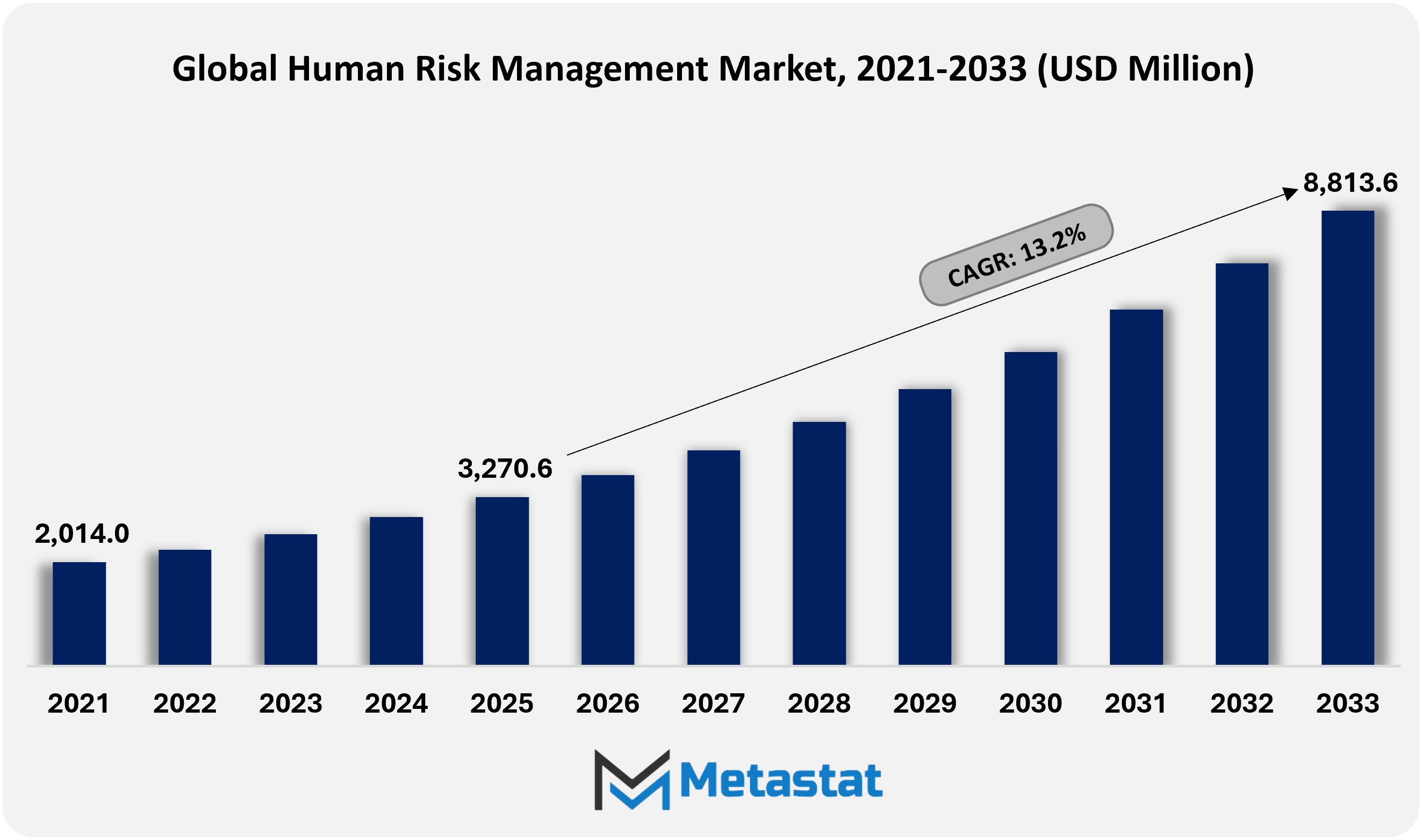
Increased frequency and sophistication of phishing and social engineering.
The rising volume of advanced phishing campaigns and social engineering attacks is increasing demand in the global Human Risk Management market. Attack methods are becoming increasingly personalized, data-driven, and automated, targeting employees across email, messaging applications, and collaboration platforms. Organizations now recognize human behavior as a primary security vulnerability, which is driving investment in structured training, behavioral analytics, and predictive risk identification tools to reduce exposure and financial loss.
Shift toward measurable human risk scoring tied to security outcomes
Enterprises are increasingly adopting measurable human risk scoring models aligned with security performance metrics, strengthening the global Human Risk Management market. Boards and executive teams are seeking clear indicators that link employee behavior with breach probability, compliance posture, and incident response readiness. Data-backed dashboards and benchmarking tools support informed budget allocation, improved governance practices, and measurable accountability across departments.
Privacy, monitoring, and workforce trust concerns
Workforce sensitivity toward surveillance and behavioral monitoring is creating adoption challenges within the global Human Risk Management market. Expanded tracking tools will raise concerns related to personal data usage, ethical oversight, and internal transparency. Regulatory frameworks across regions are tightening data protection requirements, compelling organizations to balance security visibility with employee trust, consent management, and responsible data governance practices.
Integration complexity across identity, email, endpoint, and security analytics stacks
Integration complexity across fragmented security ecosystems remains a structural challenge for the global Human Risk Management market. Organizations often operate multiple identity management, email security, endpoint protection, and analytics platforms from different vendors. Harmonizing risk signals across these environments requires standardized data formats, interoperable APIs, and coordinated governance models to ensure consistent threat detection and actionable insights.
Risk-based conditional access and security controls triggered by human risk signals
A major opportunity in the global Human Risk Management market lies in adaptive security architectures driven by human risk indicators. Conditional access frameworks are increasingly being designed to adjust authentication requirements, session privileges, and monitoring intensity based on behavioral risk scores. These intelligent control systems help reduce breach exposure while preserving operational continuity and supporting proactive defense strategies based on continuous risk assessment.
The Global Human Risk Management market is classified based on Deployment Mode, Organization Size, Application, and End-User.
On-Premises segment is valued at USD 960.8 million in 2026 and is projected to reach USD 1,355.5 million by 2033, at a CAGR of 5% during the forecast period.
On-Premises deployment in the global Human Risk Management market remains relevant for organizations that require direct infrastructure control and strict data governance. Enterprises handling sensitive or classified information continue to invest in secure internal systems to maintain operational continuity, regulatory compliance, and long-term resilience against insider-driven and workforce-related security risks.
Cloud segment is valued at USD 2,738.1 million in 2026 and is projected to reach USD 7,458.1 million by 2033, at a CAGR of 15.4% during the forecast period.
Cloud deployment in the global Human Risk Management market is expanding rapidly owing to scalability, centralized updates, and cost efficiency. Enterprises with distributed workforces are adopting cloud-based platforms to enable real-time monitoring, predictive analytics, automated risk scoring, and seamless integration with digital collaboration environments across global operations.
Small and Medium Enterprises segment is projected to reach USD 3,575.7 million by 2033, at a CAGR of 17.3% during the forecast period.
Small and Medium Enterprises in the global Human Risk Management market are increasing adoption through subscription-based models and modular solutions. Rising digital exposure is encouraging investment in affordable compliance monitoring, employee risk assessment, and targeted awareness programs designed to strengthen human-centric security without significant capital expenditure.
Large Enterprises segment is projected to reach USD 5,237.9 million by 2033, at a CAGR of 10.9% during the forecast period.
Large Enterprises in the global Human Risk Management market are prioritizing advanced analytics, behavioral intelligence, and enterprise-wide integration. Complex organizational structures and global regulatory obligations are driving demand for centralized dashboards, automated reporting frameworks, and continuous workforce monitoring to minimize operational disruption and reputational risk.
Compliance Management segment is projected to reach USD 1,413.7 million by 2033.
Compliance Management in the global Human Risk Management market is gaining strategic importance owing to tightening international regulations and cross-border data protection requirements. Automated audit trails, policy acknowledgment tracking, and continuous assessment tools support governance frameworks and help reduce financial penalties linked to human oversight failures.
Threat Detection segment is projected to reach USD 2,223.7 million by 2033.
Threat Detection in the global Human Risk Management market is advancing through artificial intelligence and behavioral analytics. Proactive identification of insider threats, phishing susceptibility, and credential misuse is strengthening organizational security layers and improving predictive capabilities aligned with evolving cybersecurity threats.
Security Awareness Training segment is projected to reach USD 2,612.4 million by 2033.
Security Awareness Training in the global Human Risk Management market is shifting toward adaptive learning formats and scenario-based simulations. Personalized training pathways informed by employee risk profiles improve knowledge retention, reduce unintentional breaches, and support measurable improvements in organizational security culture.
Policy Management segment is projected to reach USD 892.8 million by 2033.
Policy Management in the global Human Risk Management market is advancing through digital policy lifecycle automation. Structured version control, automated updates, and real-time acknowledgment tracking improve governance consistency while ensuring workforce alignment with evolving regulatory standards and internal security mandates.
Incident Management segment is projected to reach USD 1,133.4 million by 2033.
Incident Management in the global Human Risk Management market is increasingly integrating real-time reporting systems and cross-functional response coordination. Automated escalation protocols and data-driven post-incident analysis support faster containment, lower operational impact, and stronger preventive strategies for future risk mitigation.
Others segment is projected to reach USD 537.6 million by 2033.
The Others segment in the global Human Risk Management market includes workforce risk analytics, behavioral benchmarking, and security culture assessment tools. Integrated platforms support predictive workforce insights, enabling management teams to identify vulnerability trends and implement proactive human risk mitigation strategies.
BFSI segment is projected to grow at a CAGR of 12% during the forecast period.
BFSI adoption in the global Human Risk Management market is increasing owing to regulatory intensity and financial fraud exposure. Institutions are prioritizing employee risk monitoring, insider threat detection, and compliance frameworks to protect sensitive financial information and maintain institutional credibility.
Healthcare segment is projected to grow at a CAGR of 14.9% during the forecast period.
Healthcare organizations in the global Human Risk Management market are strengthening investment in workforce compliance monitoring and patient data protection. Rising digital health adoption and growth in electronic medical records are increasing the need for structured awareness programs and continuous risk assessment to prevent data misuse and privacy breaches.
IT and Telecommunications segment is projected to grow at a CAGR of 13.9% during the forecast period.
The IT and Telecommunications segment in the global Human Risk Management market is emphasizing proactive risk analytics and secure workforce behavior management. Remote workforce expansion and critical infrastructure protection are increasing demand for integrated platforms that support real-time monitoring and automated compliance validation.
Retail segment is projected to grow at a CAGR of 14.2% during the forecast period.
Retail companies in the global Human Risk Management market are addressing rising cybersecurity exposure linked to digital payments and e-commerce systems. Employee awareness training, transaction monitoring, and incident response tools support secure customer engagement and help protect transactional integrity.
Manufacturing segment is projected to grow at a CAGR of 14.5% during the forecast period.
Manufacturing companies in the global Human Risk Management market are integrating human risk analytics into operational technology environments. Increased automation and connected factory systems are driving demand for workforce monitoring solutions that prevent unauthorized access and safeguard production continuity.
Government segment is projected to grow at a CAGR of 12.6% during the forecast period.
Government agencies in the global Human Risk Management market are adopting structured risk governance frameworks to protect critical infrastructure and sensitive data. Workforce screening, continuous compliance oversight, and behavioral analytics support institutional transparency and long-term security resilience.
Others segment is projected to grow at a CAGR of 9.9% during the forecast period.
The Others segment in the global Human Risk Management market includes education, energy, and professional services. Ongoing digital transformation initiatives across these sectors are supporting adoption of human risk visibility tools designed to strengthen governance, improve accountability, and reduce operational uncertainty.
Based on geography, the Global Human Risk Management market is divided into North America, Europe, Asia-Pacific, South America, Middle East, and Africa.
North America Human Risk Management Market is set to expand at a CAGR of 13.2% within the forecast period, reaching a market size (TAM) of USD 3,387.1 million by the end of 2033.
In North America, strict data protection regulations and rising cyber liability concerns are accelerating demand in the global Human Risk Management market.
In North America, growing enterprise focus on insider risk mitigation and employee cybersecurity training is strengthening adoption of Human Risk Management solutions.
In Europe, stringent data privacy regulations, rising enterprise focus on insider risk, and growing investment in cybersecurity awareness programs are supporting steady growth in the Human Risk Management market.
In Asia Pacific, rapid digital transformation across enterprises is creating strong expansion opportunities in the global Human Risk Management market.
In Asia Pacific, rising awareness of phishing and social engineering threats is opening new growth avenues for Human Risk Management vendors.
Across the Middle East and Africa and South America, improving cybersecurity frameworks and rising investment in digital infrastructure are steadily supporting market growth.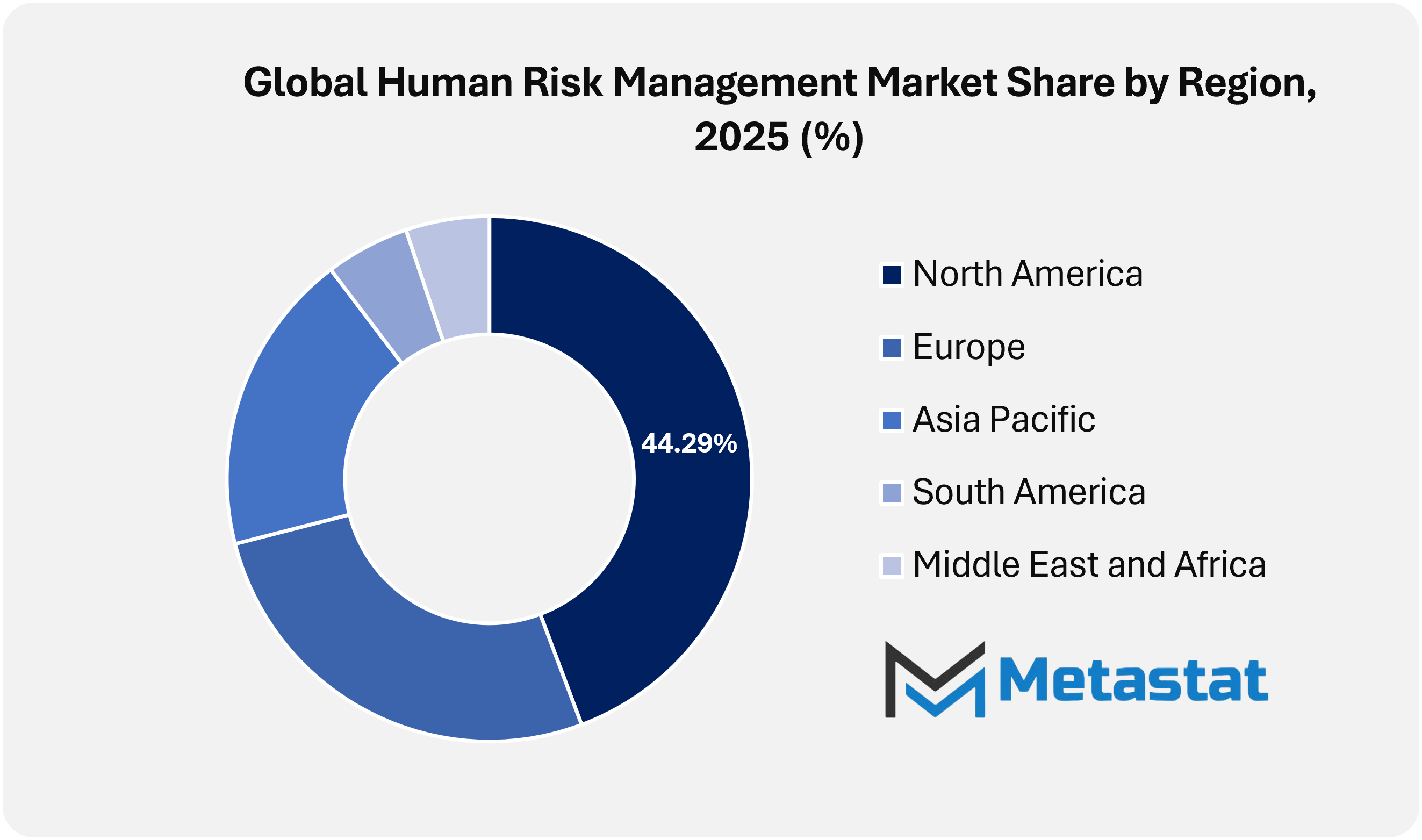
The global Human Risk Management market is gaining strong attention as enterprises recognize that employees remain one of the most significant exposure points in cybersecurity. Technology alone cannot prevent data breaches, insider threats, or phishing attacks. Human behavior, decision-making, and awareness play a critical role in shaping security outcomes. Organizations across industries are investing in structured programs that assess employee risk levels, deliver targeted training, and monitor behavioral signals that wil indicate vulnerabilities. Rising digital adoption, remote work models, and increasing regulatory pressure are continuing to push enterprises toward human-centered security strategies that go beyond conventional tools.
Market participants recognize that a single employee action, such as clicking a malicious email, can disrupt operations, damage reputation, and result in financial loss. As a result, vendors are offering solutions that combine phishing simulation, security awareness training, behavioral analytics, and insider risk detection. Many platforms now integrate artificial intelligence with behavioral science to identify patterns and predict potential threats before incidents occur. As cyber threats become more sophisticated, organizations are prioritizing solutions that mitigate human risk in real time and deliver personalized training interventions. The shift from generic awareness sessions to data-driven risk scoring reflects a clear transformation in how enterprises approach cybersecurity culture.
The competitive landscape includes a broad mix of cybersecurity vendors, human risk specialists, and security awareness training providers. Key players in the global Human Risk Management market include Mimecast Services Limited, Arctic Wolf Networks, Inc., KnowBe4, Inc., Code42 Software, Inc., Proofpoint, Inc., CultureAI, Inc., CybSafe Ltd., DTEX Systems, Inc., OutThink Limited, Living Security, Inc., Fortinet, Inc., Fortra, LLC, HoxHunt Ltd., Huntress Labs, Inc., Syteca, ArmorPoint, LLC, ZINAD, MetaCompliance Ltd, USECURE LTD, AwareGO ehf., NINJIO, Inc., Nudge Security, Inc., KEEPNET LABS LTD, SoSafe GmbH, Sophos Ltd., SANS Institute, Inc., Teramind, Inc., Trend Micro Incorporated, PhishingBox, LLC, Gurucul, Inc., and Nisos. These companies offer solutions ranging from phishing simulation and security awareness training to insider risk monitoring and human risk analytics. Some vendors focus on enterprise-grade platforms with advanced integrations, while others target small and medium-sized businesses with modular offerings.
Partnerships, product innovation, and platform integration remain central to competitive positioning in the global Human Risk Management market. Vendors are expanding their capabilities by combining awareness training with behavioral monitoring tools and unified dashboards for security teams. Cloud-based delivery models support scalability, while analytics-driven insights help organizations quantify employee risk exposure. With regulators increasing scrutiny over data protection and cybersecurity practices, demand for measurable human risk frameworks will rise steadily. The market is projected to expand as enterprises shift from reactive security measures toward proactive human risk management strategies that strengthen long-term resilience.
Market size is forecast to rise from USD 3,270.6 million in 2025 to over USD 8,813.6 million by 2033.
Over time, investment will increasingly shift toward predictive intelligence platforms capable of quantifying behavioral risk, policy non-compliance exposure, and insider threat vulnerability. The global Human Risk Management market is expected to influence enterprise cybersecurity strategy not only through incident response, but through the integration of human-centered risk intelligence into long-term organizational planning.
This research report categorizes the Human Risk Management market based on key segments and regions, forecasts revenue growth, and analyses trends in each submarket. The report analyses the key growth drivers, opportunities, and challenges influencing the Human Risk Management market. Recent market developments and competitive strategies such as expansion, product launch, partnership, merger, and acquisition have been included to draw the competitive landscape in the market.
The report strategically identifies and profiles the key market players and analyses their core competencies in each sub-segment of the Human Risk Management market.
|
Report Attributes |
Details |
|
Study Period |
2021-2033 |
|
Base Year |
2025 |
|
Estimated Year |
2026 |
|
Forecast Period |
2026-2033 |
|
Historical Period |
2021-2025 |
|
Growth Rate |
CAGR 13.2% from 2026 to 2033 |
|
Revenue Unit |
USD million |
|
Segmentation |
By Deployment Mode, Organization Size, Application, End-User, and Region |
|
By Region |
North America (By Deployment Mode, Organization Size, Application, End-User, and Country)
|
|
Europe (By Deployment Mode, Organization Size, Application, End-User, and Country)
|
|
|
Asia Pacific (By Deployment Mode, Organization Size, Application, End-User, and Country)
|
|
|
South America (By Deployment Mode, Organization Size, Application, End-User, and Country)
|
|
|
Middle East and Africa (By Deployment Mode, Organization Size, Application, End-User, and Country)
|
Find answers to common questions about this report
Top players operating in the Human Risk Management industry include Mimecast Services Limited, Arctic Wolf Networks, Inc., KnowBe4, Inc., Code42 Software, Inc., and Proofpoint, Inc.
Global Human Risk Management market is estimated to reach USD 8,813.6 million by 2033.
Privacy, monitoring, and workforce trust concerns will hamper the market growth within the forecast period.
The Cloud is the leading type segment in the Global market.
North America region dominates the market.
Increased frequency and sophistication of phishing and social engineering and Shift toward measurable human risk scoring tied to security outcomes are key driving factors, boosting the market.
The Metastat Insights study shows that the Global Human Risk Management market size was USD 3,270.6 million in 2025.
The Global Human Risk Management market is expected to grow at a CAGR of 13.2% over the forecast period (2026-2033).
The Metastat Insights analysis shows that the North America Human Risk Management market size is estimated to be USD 3,387.1 million by 2033.
The analysts below cover Information & Technology research at Metastat Insights.
LEAD ANALYST
Utkarsh Khirodkar is a Lead Market Research Analyst at MetaStat Insight, specializing in market intelligence, technology sector assessments, and competitive strategy.

PRINCIPAL CONSULTANT - ENTERPRISE AI & EMERGING TECHNOLOGIES
Banking & Finance · Electronics and Semiconductor · Energy and Power · Healthcare IT · Information & Technology · Professional Services
Vijay Gunti is a Principal Consultant at MetaStat Insight, bringing over two decades of experience across enterprise digital transformation, technology strategy, and intelligent systems.

LEAD CONSULTANT - COMMUNICATION, TELECOM, AND IT
Electronics and Semiconductor · Information & Technology · Machinery & Equipment · Professional Services
Ravindra Sathe Consultants for Communication, Telecom, and IT at MetaStat Insight. He leads the firm's industry research initiatives across telecommunications infrastructure, digital connectivity, enterprise networking, and emerging information technology domains.
Scaling antibody-drug conjugate manufacturing hinges on contract manufacturing availability for high-potency active ingredients. The MetaStat Insight analysis looked closely at global cleanroom slot constraints, bioconjugation batch failure rates, and supply chain redundancies between the US, Europe, and India. The supplier capability matrix proved genuinely useful for our team when mapping secondary source options across our clinical pipeline.
Floating offshore wind feasibility relies heavily on specialized installation vessel availability and port crane limits, which most broad renewable energy forecasts ignore. The report delivered a thorough analysis of dry dock capacity, mooring chain supply constraints, and raw material pricing trends for deepwater anchor installations. It served as a solid independent sanity check for our offshore project capital expenditure assumptions.
Assessing commercial microgrid software adoption requires looking past top-level installation numbers and examining utility interconnection queues. The research provided verifiable data on average permitting timelines, tariff structures, and battery storage integration costs across regional utility territories. That grounded perspective was valuable for our team when building five-year demand projections for industrial microgrid controllers.
Explore related market intelligence reports worth reading alongside this one.