
LEAD ANALYST
Utkarsh Khirodkar is a Lead Market Research Analyst at MetaStat Insight, specializing in market intelligence, technology sector assessments, and competitive strategy.

Global Cybersecurity Market Size, Share, By Offering (Solutions and Services ), By Enterprise Size (Large Enterprises, Small Enterprises and Medium Enterprises), By Deployment Mode (Cloud and On-Premise), By End-users (BFSI, Healthcare, IT, Telecom, Industrial, Defense, Retail, E-commerce, Energy, Utilities, Manufacturing, and Others), Industry Analysis, Growth, Trends, and Forecast, 2026-2033
Report ID
MSI-4654
Published
April, 2026
Pages
311 Pages
Format
Report Details
Choose Your License
Cybersecurity Market
Global Cybersecurity market size is valued at USD 237.4 billion in 2025 and projected to grow at a CAGR of 12.2% during the forecast period, reaching USD 595.8 billion by 2033.
North America holds 36.9% of the global cybersecurity market in 2025, with the U.S. leading regional market revenue.
Solutions segment accounts for 68.2% of the global cybersecurity market in 2025.
Key trends driving growth: Increasing frequency and sophistication of cyberattacks across enterprises and critical infrastructure propel cybersecurity investments, along with rapid digital transformation, cloud adoption, and remote work expansion increase vulnerability surfaces and security spending.
Opportunities include growing adoption of AI-driven threat detection and zero-trust security architectures creates advanced growth potential in cybersecurity solutions.
Key insight: Accelerating digital transformation across global industries intensifying cyber risk exposure, strengthening strategic importance of advanced cybersecurity frameworks across enterprise ecosystems.
The Global Cybersecurity market has become foundational to the digital economy as organizations operate increasingly complex networks, cloud infrastructures, connected devices, and large-scale data environments. The market reflects the growing urgency among enterprises to protect digital assets, operational systems, and customer data from increasingly advanced cyber threats.
Modern enterprises operate within ecosystems that combine cloud computing platforms, remote collaboration tools, edge computing environments, and industrial IoT systems. Each additional connection introduces new attack surfaces that require layered security architectures. The Global Cybersecurity market has shifted from conventional perimeter security toward adaptive security models that combine identity management, threat intelligence, endpoint security, and continuous monitoring. Financial institutions, technology companies, and public sector organizations are allocating substantial resources to cybersecurity frameworks that protect payment networks, digital infrastructure, and national systems. Cyber incidents targeting power grids, manufacturing systems, and healthcare networks demonstrate how security vulnerabilities can disrupt critical services. These risks are encouraging organizations to integrate cybersecurity considerations into every stage of digital transformation initiatives.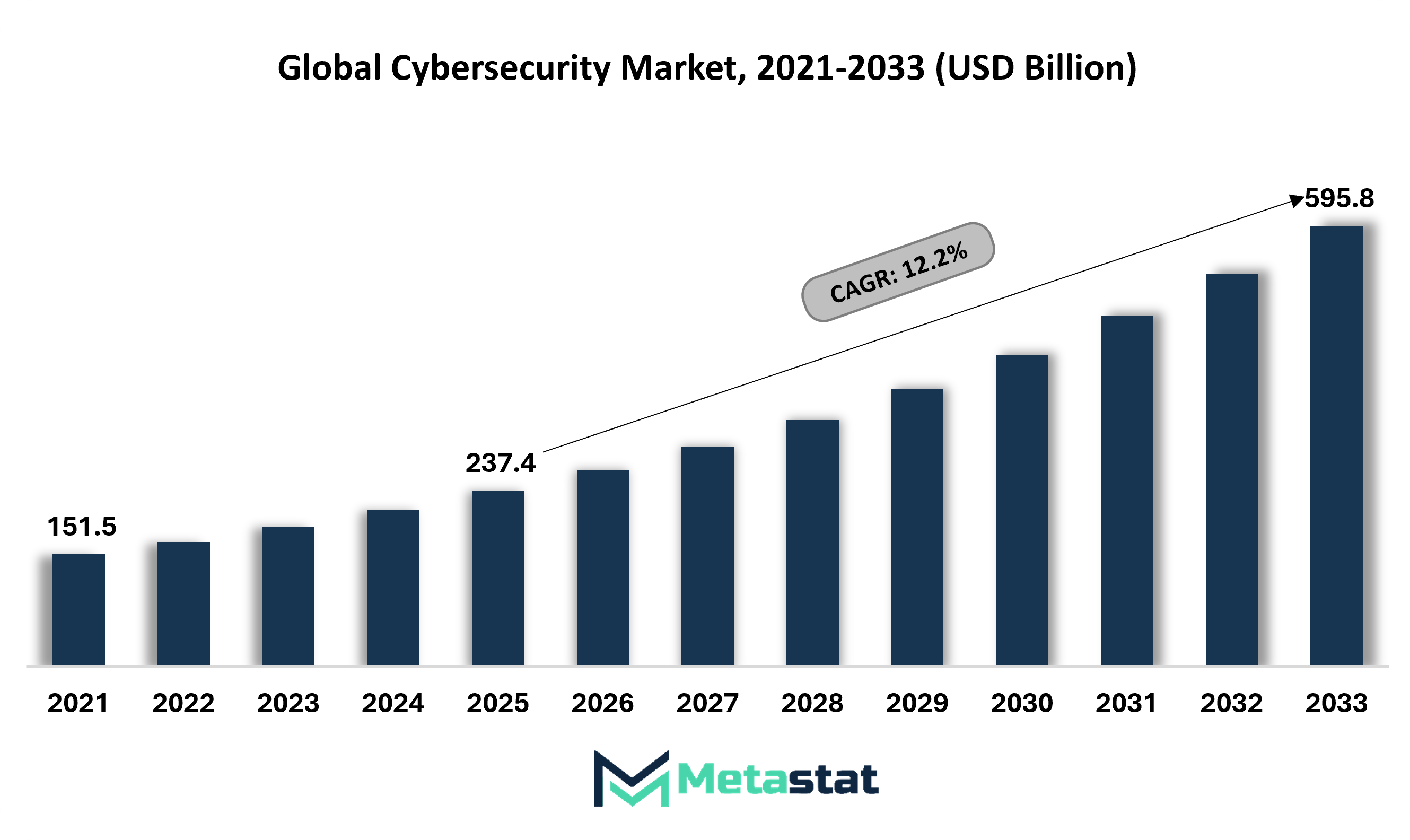
Increasing frequency and sophistication of cyberattacks across enterprises and critical infrastructure propel cybersecurity investments.
Cyberattacks targeting government agencies, financial institutions, healthcare networks, and industrial facilities have increased in both frequency and sophistication. Threat actors are deploying ransomware campaigns, advanced persistent threats, and supply chain infiltration strategies that exploit vulnerabilities across interconnected systems. Organizations are responding by strengthening threat detection capabilities, adopting advanced encryption technologies, and implementing automated incident response systems.
Rapid digital transformation, cloud adoption, and remote work expansion increase vulnerability surfaces and security spending
Enterprises are adopting cloud platforms, smart devices, industrial automation systems, and artificial intelligence technologies to improve operational efficiency. Each digital transformation initiative expands the volume of sensitive data and connected endpoints within enterprise networks. Security frameworks must therefore scale to protect complex infrastructures composed of hybrid cloud environments, mobile endpoints, and distributed databases. Investments in identity and access management, endpoint security, and data protection platforms continue to drive the Global Cybersecurity market.
Shortage of skilled cybersecurity professionals limits effective implementation and management of security solutions
Cybersecurity platforms require skilled professionals capable of managing threat intelligence systems, security operations centers, and vulnerability assessment tools. Many organizations face difficulty recruiting qualified analysts capable of managing increasingly complex security environments. Workforce shortages delay the implementation of advanced cybersecurity frameworks and reduce the effectiveness of existing security systems.
High deployment and maintenance costs, especially for advanced security frameworks, constrain adoption among small enterprises
Comprehensive security architectures often require the integration of multiple technologies such as network monitoring platforms, endpoint protection software, threat intelligence services, and incident response systems. Deployment, maintenance, and workforce training can create substantial financial commitments for organizations with limited IT budgets. Smaller enterprises will delay adoption of advanced cybersecurity solutions owing to budget constraints.
Growing adoption of AI-driven threat detection and zero-trust security architectures creates advanced growth potential in cybersecurity solutions
Security vendors are increasingly integrating artificial intelligence algorithms that analyze behavioral patterns within networks to identify potential intrusions. Machine learning models detect anomalies in user behavior, data transfers, and application access patterns, enabling proactive security responses. Zero-trust architecture further strengthens cybersecurity frameworks by verifying identity and device integrity at every access point.
The Global Cybersecurity market is classified based on Offering, Enterprise Size, Deployment Mode, and End-users.
Solutions segment is valued at USD 181.4 billion in 2026 and is projected to reach USD 395.8 billion by 2033, at a CAGR of 11.8% during the forecast period.
Cybersecurity solutions include a broad range of technologies designed to detect, prevent, and respond to digital threats. These solutions include network security systems, endpoint protection software, intrusion detection systems, encryption tools, identity and access management systems, and threat intelligence platforms. Many enterprises deploy integrated security ecosystems that combine multiple solutions capable of monitoring network traffic, analyzing user behavior, and identifying suspicious activity across distributed digital environments.
Services segment is valued at USD 84.7 billion in 2026 and is projected to reach USD 200.1 billion by 2033, at a CAGR of 13.1% during the forecast period.
Cybersecurity services support organizations through consulting, risk assessment, system integration, security monitoring, and incident response. Managed security services enable enterprises to outsource complex security operations to specialized providers operating advanced security operations centers. Professional services support organizations with compliance audits, vulnerability testing, regulatory reporting, and security architecture design.
Large Enterprises segment is projected to reach USD 402.8 billion by 2033, at a CAGR of 11.6% during the forecast period.
Large enterprises maintain complex IT infrastructures consisting of global data centers, distributed cloud platforms, enterprise software environments, and extensive digital transaction systems. These organizations invest heavily in multi-layered cybersecurity frameworks capable of protecting global operations. Dedicated security teams continuously monitor networks, deploy advanced analytics platforms, and implement incident response strategies.
Small and Medium Enterprises (SMEs) segment is projected to reach USD 193.1 billion by 2033, at a CAGR of 13.7% during the forecast period.
Small and medium enterprises represent a rapidly expanding segment within the Global Cybersecurity market. Many SMEs previously relied on basic security measures, though rising cyber threats are encouraging adoption of more advanced protection technologies. Cloud-based security platforms provide SMEs with scalable solutions that protect business data, payment systems, and customer information without requiring large internal IT departments.
Cloud segment is projected to reach USD 331.3 billion by 2033.
Cloud-based cybersecurity solutions enable organizations to secure applications, data, and network traffic across distributed cloud environments. These solutions support real-time threat detection, automated patch management, and centralized monitoring across multiple cloud platforms. Businesses adopting hybrid and multi-cloud infrastructures increasingly rely on cloud security technologies that provide flexible protection across geographically distributed systems.
On-Premise segment is projected to reach USD 264.5 billion by 2033.
On-premises cybersecurity solutions remain critical for organizations operating sensitive infrastructure such as financial systems, government networks, and industrial control systems. These solutions allow enterprises to maintain direct control over security architecture, compliance protocols, and sensitive data storage environments.
BFSI segment is projected to grow at a CAGR of 13.9% during the forecast period.
Banks, financial institutions, and insurance providers handle high volumes of sensitive financial data and digital transactions. Cybersecurity frameworks protect online banking systems, payment gateways, and financial databases from fraud and cyber intrusion.
Healthcare segment is projected to grow at a CAGR of 13.4% during the forecast period.
Healthcare organizations manage patient data, diagnostic systems, and connected medical devices. Cybersecurity solutions protect electronic health records, telemedicine platforms, and hospital management systems.
IT and Telecom segment is projected to grow at a CAGR of 12.7% during the forecast period.
Telecommunication networks and technology providers maintain vast digital infrastructure including data centers, communication networks, and cloud services. Security platforms protect these systems against data breaches and network disruptions.
Industrial and Defense segment is projected to grow at a CAGR of 11.3% during the forecast period.
Industrial enterprises and defense organizations operate highly sensitive infrastructure including manufacturing systems, military communication networks, and national security databases. Advanced cybersecurity frameworks protect operational technology systems from cyber sabotage and espionage.
Retail and E-commerce segment is projected to grow at a CAGR of 13.2% during the forecast period.
Online retail platforms process digital payments and customer data across global e-commerce networks. Security technologies help prevent data theft, payment fraud, and identity breaches.
Energy and Utilities segment is projected to grow at a CAGR of 10.5% during the forecast period.
Energy providers operate power grids, oil pipelines, and energy distribution networks. Cybersecurity systems protect critical infrastructure from cyberattacks capable of disrupting energy supply chains.
Manufacturing segment is projected to grow at a CAGR of 10.8% during the forecast period.
Manufacturers are increasingly integrating digital automation, robotics, and IoT sensors into production environments. Cybersecurity systems protect industrial control systems from unauthorized access and data manipulation.
Others segment is projected to grow at a CAGR of 8.2% during the forecast period.
Other sectors, including education, transportation, and public administration, are adopting cybersecurity technologies to safeguard operational networks and sensitive information systems.
Based on geography, the Global Cybersecurity market is divided into North America, Europe, Asia-Pacific, South America, Middle East, and Africa.
North America maintains a leading position in the Cybersecurity market owing to strong investment from U.S. technology companies, major financial institutions, and federal agencies in threat detection platforms, cloud security infrastructure, and critical network protection.
Europe continues to record steady demand supported by strict data protection regulations, enterprise modernization, and increasing focus on cyber resilience across industrial and public sector environments.
Asia-Pacific is emerging as a high-growth region, driven by rapid digital transformation across China, India, Japan, South Korea, and Southeast Asia. Expanding e-commerce ecosystems, mobile financial services, and cloud adoption are strengthening demand for identity protection, endpoint security, and fraud prevention solutions.
South America, the Middle East, and Africa are witnessing increased demand for cybersecurity technologies owing to the expansion of digital banking platforms, government digitization programs, telecom modernization, and smart infrastructure development.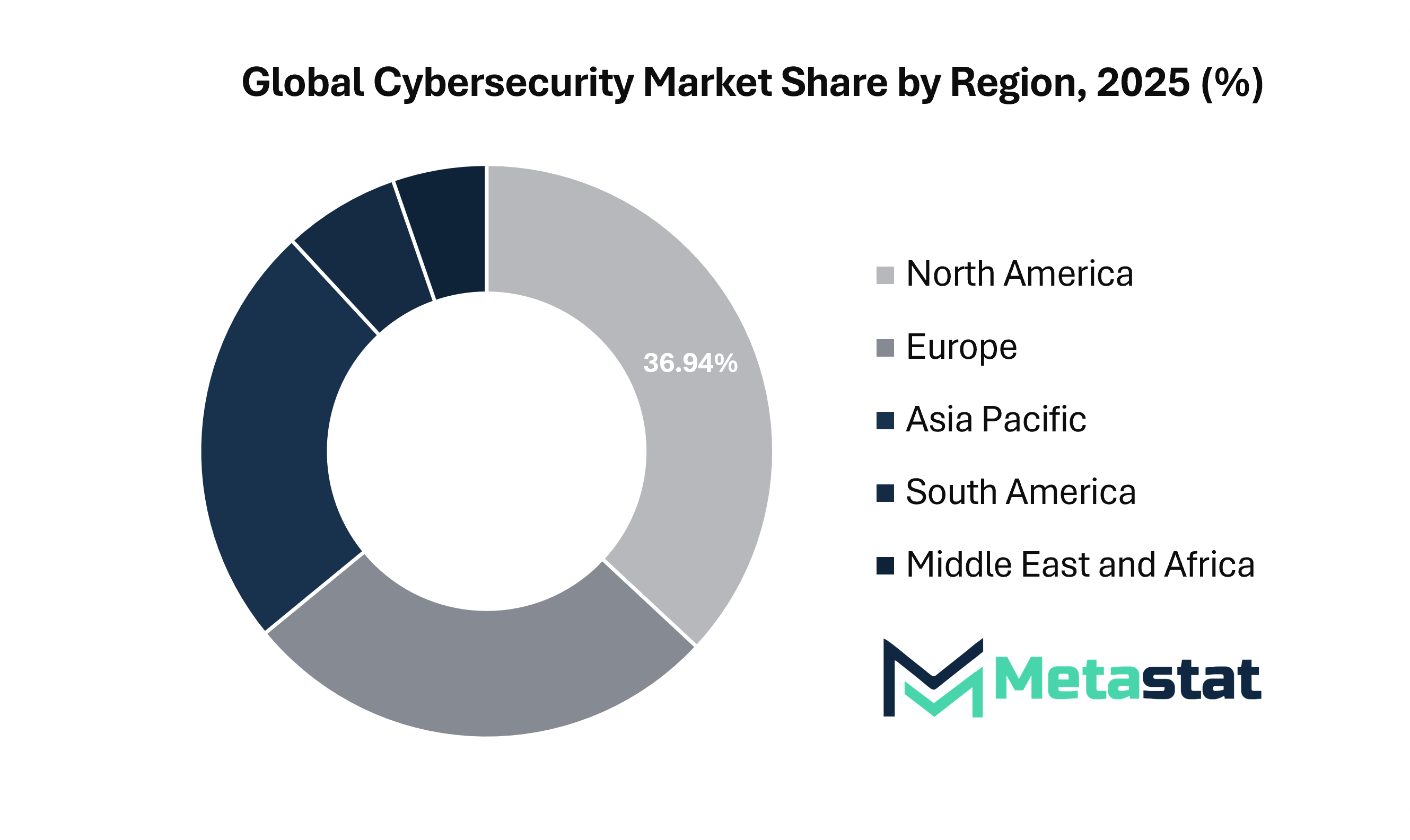
The Global Cybersecurity market has gained strong attention owing to rising digital activity across industries. Businesses, governments, financial institutions, healthcare providers, and technology companies rely heavily on connected systems to manage data and operations. Greater connectivity also increases exposure to cyber threats, including data theft, ransomware, network intrusion, and identity fraud. Security tools and services therefore play a critical role in protecting digital infrastructure. Organizations are increasingly focusing on proactive security strategies to identify threats early, protect sensitive data, and maintain trust among users and customers.
Demand for cybersecurity solutions will continue to grow with rapid adoption of cloud platforms, remote working models, artificial intelligence, and large-scale data storage. Organizations manage substantial volumes of personal and operational data each day, making digital security a critical requirement. Security frameworks now cover multiple layers, including endpoint security, network monitoring, data encryption, identity management, and cloud protection. Governments worldwide are also introducing stronger data protection regulations, which will continue to push enterprises to invest in security systems. These trends will shape long-term demand for advanced cybersecurity platforms.
Large technology providers remain central to the cybersecurity ecosystem. Companies such as Akamai Technologies, Inc., Alphabet Inc., Cisco Systems, Inc., Cloudflare, Inc., F5, Inc., Fortinet, Inc., Microsoft Corporation, and International Business Machines Corporation continue to strengthen global security infrastructure through advanced network protection, threat intelligence, and cloud security tools. Broadcom Inc. and Check Point Software Technologies Ltd. maintain strong positions through enterprise security software and network defense solutions. Gen Digital Inc. and Mimecast Limited also hold notable positions in identity security, email security, and digital risk management solutions used across a broad range of industries.
Defense, industrial security, and specialized protection services also contribute to market expansion. BAE Systems plc and Rheinmetall AG provide deep expertise in defense-grade security systems that support national infrastructure and government networks. Claroty Ltd. and Dragos, Inc. focus on industrial cybersecurity, helping protect operational technology systems used in manufacturing, energy, and utilities. CyberArk Software Ltd. plays a major role in identity security and privileged access protection, helping organizations manage sensitive system permissions and prevent unauthorized access.
Market size is forecast to rise from USD 237.4 billion in 2025 to over USD 595.8 billion by 2033.
Future cybersecurity strategies will increasingly incorporate artificial intelligence systems capable of identifying threats through behavioral analysis and automated monitoring. Security frameworks are expected to evolve toward predictive threat intelligence models that identify vulnerabilities before malicious actors exploit them.
This research report categorizes the Cybersecurity market based on key segments and regions, forecasts revenue growth, and analyses trends in each submarket. The report analyses the key growth drivers, opportunities, and challenges influencing the Cybersecurity market. Recent market developments and competitive strategies such as expansion, product launch, partnership, merger, and acquisition have been included to draw the competitive landscape in the market.
The report strategically identifies and profiles the key market players and analyses their core competencies in each sub-segment of the Cybersecurity market.
|
Report Attributes |
Details |
|
Study Period |
2021-2033 |
|
Base Year |
2025 |
|
Estimated Year |
2026 |
|
Forecast Period |
2026-2033 |
|
Historical Period |
2021-2025 |
|
Growth Rate |
CAGR 12.2% from 2026 to 2033 |
|
Revenue Unit |
USD billion |
|
Segmentation |
By Offering, Enterprise Size, Deployment Mode, End-users, and Region |
|
By Region |
North America (By Offering, Enterprise Size, Deployment Mode, End-users, and Country)
|
|
Europe (By Offering, Enterprise Size, Deployment Mode, End-users, and Country)
|
|
|
Asia Pacific (By Offering, Enterprise Size, Deployment Mode, End-users, and Country)
|
|
|
South America (By Offering, Enterprise Size, Deployment Mode, End-users, and Country)
|
|
|
Middle East and Africa (By Offering, Enterprise Size, Deployment Mode, End-users, and Country)
|
Find answers to common questions about this report
Top players operating in the Cybersecurity industry include Akamai Technologies, Inc., Alphabet Inc., BAE Systems plc, Broadcom Inc., Check Point Software Technologies Ltd., Rheinmetall AG, Cisco Systems, Inc., and Claroty Ltd.
Global Cybersecurity market is estimated to reach USD 595.8 billion by 2033.
North America region dominates the market.
Increasing frequency and sophistication of cyberattacks across enterprises and critical infrastructure propel cybersecurity investments and rapid digital transformation, cloud adoption, and remote work expansion increase vulnerability surfaces and security spending are key driving factors, boosting the market.
Shortage of skilled cybersecurity professionals limits effective implementation and management of security solutions will hamper the market growth within the forecast period.
The Metastat Insights analysis shows that the North America Cybersecurity market size is estimated to be USD 213.8 billion by 2033.
The Metastat Insights study shows that the Global Cybersecurity market size was USD 237.4 billion in 2025.
The Global Cybersecurity market is expected to grow at a CAGR of 12.2% over the forecast period (2026-2033).
The analysts below cover Information & Technology research at Metastat Insights.
LEAD ANALYST
Utkarsh Khirodkar is a Lead Market Research Analyst at MetaStat Insight, specializing in market intelligence, technology sector assessments, and competitive strategy.

PRINCIPAL CONSULTANT - ENTERPRISE AI & EMERGING TECHNOLOGIES
Banking & Finance · Electronics and Semiconductor · Energy and Power · Healthcare IT · Information & Technology · Professional Services
Vijay Gunti is a Principal Consultant at MetaStat Insight, bringing over two decades of experience across enterprise digital transformation, technology strategy, and intelligent systems.

LEAD CONSULTANT - COMMUNICATION, TELECOM, AND IT
Electronics and Semiconductor · Information & Technology · Machinery & Equipment · Professional Services
Ravindra Sathe Consultants for Communication, Telecom, and IT at MetaStat Insight. He leads the firm's industry research initiatives across telecommunications infrastructure, digital connectivity, enterprise networking, and emerging information technology domains.
Evaluating secondary resin quality across post-consumer packaging streams requires reliable technical segmentation. MetaStat Insight delivered an objective assessment that distinguished between extrusion-grade flake pricing and optical sorting throughput limitations across Western Europe. The competitive positioning breakdown for licensed depolymerization technology providers answered several questions during our feedstock feasibility audit. Their team clarified regional trade restrictions on mixed plastic scrap quickly when our team submitted follow-up requests.
Evaluating sovereign cloud deployments for core banking platforms demands a clear view of data residency regulations and migration exit strategies. MetaStat Insight delivered an exhaustive review of regional latency tolerances, mainframe decommission milestones, and third-party vendor concentration risk. The regulatory compliance mapping across European and Asian financial jurisdictions gave our team a dependable baseline for multi-cloud infrastructure discussions.
Replacing petrochemical surfactants with bio-based alternatives requires realistic timelines on industrial precision fermentation scaling. The market research broke down commercialization timelines, feedstock sugar price sensitivities, and regional cosmetic ingredient regulatory approvals in Europe and East Asia. That supplier readiness mapping gave our formulations team reliable context when comparing renewable chemical sourcing roadmaps.
Explore related market intelligence reports worth reading alongside this one.
Starting from
$2950