
LEAD ANALYST
Utkarsh Khirodkar is a Lead Market Research Analyst at MetaStat Insight, specializing in market intelligence, technology sector assessments, and competitive strategy.

UK Immersive Entertainment & Experiential Property Market Size, Share, By Type (Virtual Reality Experiences, Augmented Reality Experiences, Mixed Reality Installations, Projection Mapping, Interactive Walls, Location-Based Entertainment, Immersive Theater, Live Shows, Gamified Spaces, and Others), By Application (Entertainment, Leisure, Theme Parks, Attractions, Retail, Shopping Malls, Museums, Cultural Centers, Corporate Brand Activations, Hospitality, Tourism, Education, Edutainment, and Others), By End User (Consumers, Enterprises, Real Estate Developers, Educational Institutions, and Others), Industry Analysis, Growth, Trends, and Forecast, 2026-2033
Report ID
MSI-4787
Published
June, 2026
Pages
309 Pages
Format
Report Details
Choose Your License
UK Immersive Entertainment and Experiential Property Market
UK Immersive Entertainment & Experiential Property market size is valued at USD 6,179.4 million in 2025 and projected to grow at a CAGR of 19.5% during the forecast period, reaching USD 26,162.8 million by 2033.
Virtual Reality (VR) Experiences segment account for a market share of 36.5% in 2025.
Key trends driving growth: Rising consumer demand for social, interactive, and memory-driven leisure activities is increasing footfall at immersive venues and property owners are adopting experiential tenants to revive underperforming retail and mixed-use spaces.
Opportunities include expansion of immersive concepts into secondary UK cities offers untapped demand beyond London and partnerships with film, gaming, and media brands can create high-value licensed attractions with strong audience pull.
Key insight: The UK market is shifting from traditional retail-led venues toward experience-focused destinations that blend entertainment, hospitality, and digital interaction.
The UK Immersive Entertainment & Experiential Property Market is a rapidly developing segment of the entertainment and real estate industry, focused on venues that combine technology, storytelling, gaming, live performance, and interactive design. These properties are developed to increase visitor dwell time, generate repeat attendance, and create differentiated customer experiences.
Operators, landlords, investors, and entertainment brands are investing in VR arenas, immersive theatre concepts, interactive exhibits, projection environments, and gamified attraction formats. Rising demand for social entertainment activities, tourism spending, and mixed-use property redevelopment will support long-term growth of the UK Immersive Entertainment & Experiential Property Market.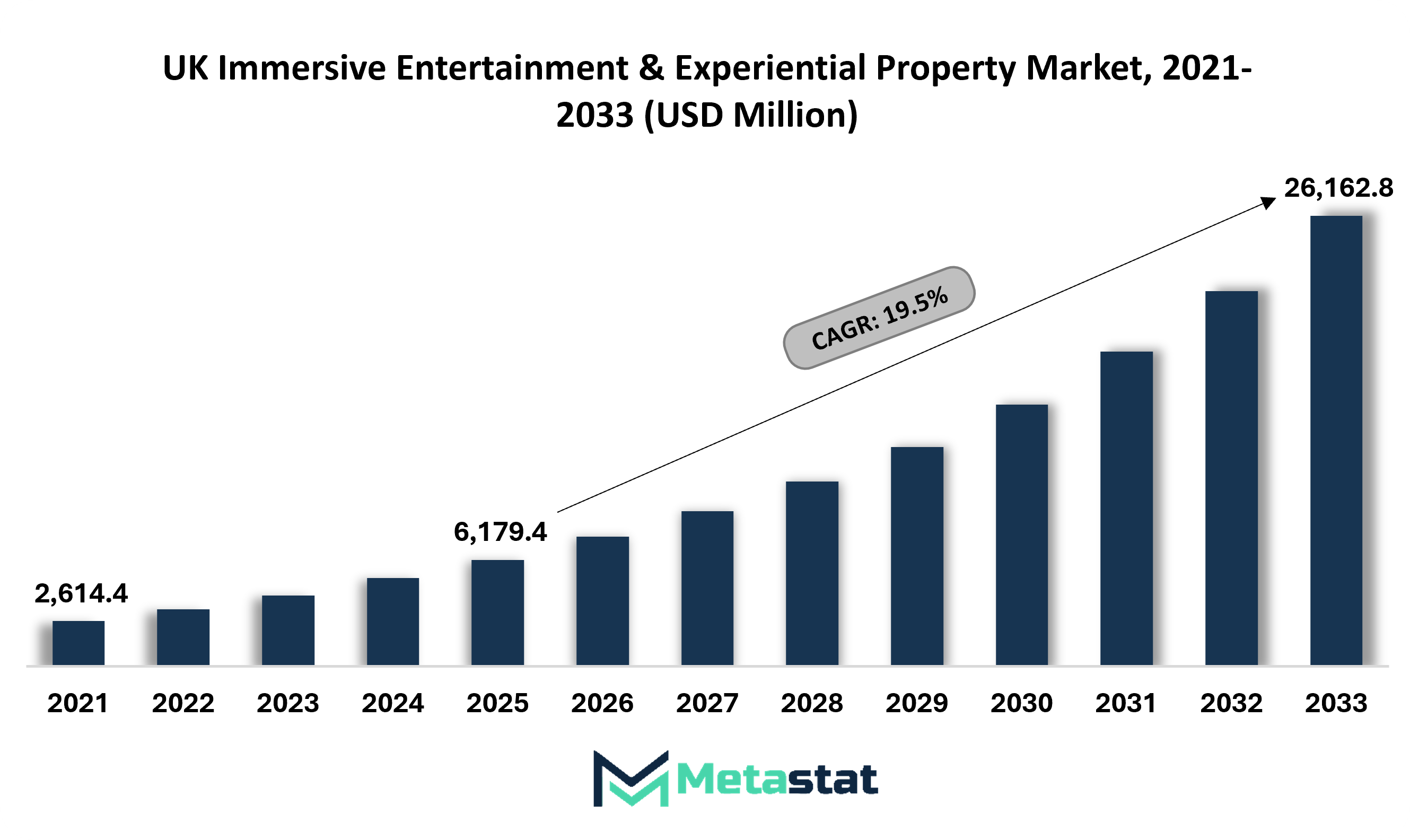
Rising consumer demand for social, interactive, and memory-driven leisure activities is increasing footfall at immersive venues.
Increasing preference for shared entertainment outings, participatory attractions, and memorable weekend experiences is lifting visitor numbers across the UK Immersive Entertainment & Experiential Property Market. Consumers seek story-led environments, competitive games, digital art zones, and sensory spaces. Strong attendance supports repeat visits, food spending, and premium package demand.
Property owners are adopting experiential tenants to revive underperforming retail and mixed-use spaces.
Landlords across retail centres and mixed-use properties are choosing leisure operators to improve occupancy and increase visitor dwell time. Escape rooms, virtual reality arenas, themed dining venues, and interactive exhibitions create stronger destination value. The UK Immersive Entertainment & Experiential Property Market is gaining momentum through property repositioning strategies.
High setup costs for themed environments, advanced technology, and frequent content upgrades can pressure profitability.
High capital requirements for scenic design, projection systems, sound engineering, licensing, and safety compliance can narrow margins. Frequent storyline refreshes remain important for repeat demand. UK Immersive Entertainment & Experiential Property Market operators face pressure from maintenance expenses, staffing costs, and technology replacement cycles.
Economic uncertainty and reduced discretionary spending can limit visitor frequency and premium ticket sales.
Periods of inflation, higher household bills, and cautious spending behaviour can reduce demand for paid attractions. Families will postpone entertainment outings or choose lower-cost options. UK Immersive Entertainment & Experiential Property Market venues will face softer bookings, weaker premium ticket sales, and shorter visit-planning windows.
Expansion of immersive concepts into secondary UK cities offers untapped demand beyond London.
Cities such as Manchester, Birmingham, Leeds, Bristol, Glasgow, and Liverpool present strong potential through growing populations, student communities, and active tourism flows. Lower occupancy costs can improve project returns. Expansion of the UK Immersive Entertainment & Experiential Property Market into regional hubs can unlock wider national reach and stable revenue growth.
The UK Immersive Entertainment & Experiential Property market is classified based on Type, Application, and End User.
Virtual Reality (VR) Experiences segment is valued at USD 2,744.9 million in 2026 and is projected to reach USD 9,439.5 million by 2033, at a CAGR of 19.3% during the forecast period.
Virtual Reality experiences create fully simulated environments where visitors interact with adventure zones, sports challenges, artistic journeys, and social gaming. Future venues across the UK will integrate motion systems, scent effects, and adaptive narratives, increasing repeat visits, premium ticket pricing, and broader commercial partnerships.
Augmented Reality (AR) Experiences segment is valued at USD 1,570.5 million in 2026 and is projected to reach USD 5,258.7 million by 2033, at a CAGR of 18.8% during the forecast period.
Augmented Reality Experiences combine digital layers with physical environments, enhancing shops, museums, streets, and branded zones. Future growth will emerge through smart glasses, mobile mapping, and real-time personalization. Operators can generate higher dwell time, stronger engagement metrics, and new sponsorship opportunities.
Mixed Reality (MR) Installations segment is valued at USD 903.5 million in 2026 and is projected to reach USD 3,296.5 million by 2033, at a CAGR of 20.3% during the forecast period.
Mixed Reality installations combine physical objects with responsive digital content, creating shared spaces for entertainment, education, and commerce. Future deployment will include gesture controls, holographic visuals, and collaborative gameplay. Property owners can transform underused spaces into revenue-generating attractions with strong visitor appeal.
Projection Mapping & Interactive Walls segment is valued at USD 419.1 million in 2026 and is projected to reach USD 1,483.4 million by 2033, at a CAGR of 19.8% during the forecast period.
Projection mapping and interactive walls convert everyday surfaces into dynamic visual destinations. Future adoption will rise across hotels, event halls, and retail facilities seeking dramatic visitor impact. Touch response, motion sensing, and seasonal themes can support repeat visits and flexible programming schedules.
Location-Based Entertainment (LBE) segment is valued at USD 952.4 million in 2026 and is projected to reach USD 3,369.8 million by 2033, at a CAGR of 19.8% during the forecast period.
Location-Based Entertainment uses destination venues to offer distinctive experiences unavailable at home. Escape games, simulation arenas, and digital adventure parks align with rising leisure demand. Future growth will target mixed-use developments, transport hubs, and city centres where footfall supports sustained business performance.
Immersive Theater & Live Shows segment is valued at USD 493.5 million in 2026 and is projected to reach USD 1,726.7 million by 2033, at a CAGR of 19.6% during the forecast period.
Immersive Theatre and Live Shows place audiences inside story-led environments with active participation. Future productions will integrate wearable devices, branching narratives, and dynamic sets. Hospitality districts and tourism zones can benefit through premium packages, dining tie-ins, and night-time economy growth.
Gamified Spaces segment is valued at USD 276.1 million in 2026 and is projected to reach USD 986.3 million by 2033, at a CAGR of 19.9% during the forecast period.
Gamified Spaces use scoring systems, missions, rewards, and competition inside physical environments. Fitness venues, family entertainment centres, and retail destinations gain stronger participation through playful design. Future concepts will include AI-driven difficulty levels, loyalty integration, and team-based experiences for different age groups.
Others segment is valued at USD 164.6 million in 2026 and is projected to reach USD 601.7 million by 2033, at a CAGR of 20.3% during the forecast period.
Other formats include sensory tunnels, digital art rooms, wellbeing immersion pods, creator studios, and seasonal pop-up attractions. Future innovation will arrive through cross-industry partnerships linking technology companies, designers, and landlords seeking fresh concepts with fast installation cycles and flexible monetization.
Entertainment & Leisure segment is projected to reach USD 7,650 million by 2033, at a CAGR of 19.2% during the forecast period.
Entertainment and Leisure remains a major application area owing to demand for social outings and memorable group activities. Future centres will integrate dining, gaming, wellbeing, and digital shows under one roof, creating longer visits and multiple spending channels.
Theme Parks & Attractions segment is projected to reach USD 5,546.5 million by 2033, at a CAGR of 19.9% during the forecast period.
Theme Parks and Attractions can use advanced media systems to refresh visitor appeal without full rebuild costs. Future parks will install immersive queues, story-led zones, and adaptive rides, improving capacity management, visitor satisfaction, and seasonal attendance stability.
Retail & Shopping Malls segment is projected to reach USD 3,110.8 million by 2033, at a CAGR of 19% during the forecast period.
Retail and Shopping Malls increasingly require experience-led footfall drivers. Immersive zones can support product launches, family visits, and evening visitors. Future mall strategies will combine rotating attractions, data-led promotions, and blended entertainment anchors to improve tenant performance.
Museums & Cultural Centers segment is projected to reach USD 2,493.3 million by 2033, at a CAGR of 19.6% during the forecast period.
Museums and Cultural Centres can modernize exhibits through digital storytelling, reconstructed historical scenes, and interactive data. Future visitors will expect personalized journeys, multilingual guidance, and participatory learning. Cultural locations can attract younger audiences and stronger tourism demand.
Corporate Brand Activations segment is projected to reach USD 2,119.2 million by 2033, at a CAGR of 19.9% during the forecast period.
Corporate Brand Activations use experiential environments to create memorable customer touchpoints. Future campaigns will include immersive trials, digital customization, and measurable engagement analytics. Brands can secure deeper emotional connections while venues gain short-term rental income and media visibility.
Hospitality & Tourism segment is projected to reach USD 2,383.4 million by 2033, at a CAGR of 19.2% during the forecast period.
Hospitality and Tourism operators can use immersive installations inside hotels, resorts, and city landmarks. Future packages will combine themed stays, interactive dining, and destination storytelling. Higher visitor spending, longer stays, and stronger online visibility will follow.
Education & Edutainment segment is projected to reach USD 1,813.1 million by 2033, at a CAGR of 20.7% during the forecast period.
Education and Edutainment merge learning with participation, making complex topics easier to understand. Future centres will feature science simulations, language adventures, and career training zones. Families and schools can support year-round attendance with wider community relevance.
Others segment is projected to reach USD 1,046.5 million by 2033, at a CAGR of 18.7% during the forecast period.
Other applications include healthcare waiting areas, transport terminals, residential amenities, and civic engagement spaces. Future use will focus on calming environments, public information delivery, and community participation, expanding business value beyond entertainment-led settings.
Consumers segment is projected to reach USD 9,939.2 million by 2033.
Consumers remain central demand drivers through spending on social activities, family outings, celebrations, and novelty experiences. Future preferences will favour personalization, seamless booking, loyalty rewards, and shareable moments, encouraging frequent visits across urban and suburban destinations.
Enterprises segment is projected to reach USD 8,738.4 million by 2033.
Enterprises use immersive environments for launches, training, recruitment, and customer engagement. Future enterprise demand will rise owing to hybrid work cultures requiring memorable in-person activities. Venues offering analytics, customization, and scalable formats can secure recurring business contracts.
Real Estate Developers segment is projected to reach USD 3,723.0 million by 2033.
Real estate developers increasingly use experiential assets to raise property value and tenant appeal. Future mixed-use schemes will include leisure anchors, rooftop immersion zones, and community interaction hubs, supporting leasing strength and destination branding.
Educational Institutions segment is projected to reach USD 2,336.3 million by 2033.
Educational institutions can adopt immersive spaces for science labs, history learning, design training, and collaborative skills development. Future campuses will include simulation rooms and interactive learning facilities, improving student engagement and institutional differentiation.
Others segment is projected to reach USD 1,425.9 million by 2033.
Other end users include municipalities, healthcare providers, event organizers, and cultural foundations. Future demand will focus on community wellbeing, tourism promotion, public education, and temporary fairs, creating wider market depth with varied revenue sources.
The UK Immersive Entertainment & Experiential Property Market has developed into an active part of the entertainment economy, bringing together storytelling, technology, and physical venues that offer visitors experiences beyond traditional leisure. Consumers are increasingly seeking activities where they participate, solve challenges, move through themed spaces, and interact with virtual environments. Changing consumer preferences have encouraged operators to invest in creative venues that convert unused or underused properties into high-value attractions. Shopping centres, warehouses, city venues, and mixed-use sites are being adapted for immersive experiences, helping landlords attract stronger footfall and longer visitor stays. The market is supported by families, tourists, young professionals, and corporate groups looking for memorable social outings. With interest rising in experience-led entertainment, operators continue to test new formats that blend gaming, theatre, and virtual reality.
Several companies have played an important role in shaping the UK Immersive Entertainment & Experiential Property Market through strong concepts and repeat customer appeal. Sandbox VR, Inc. has built interest through free-roam virtual reality sessions that place guests inside action-driven digital worlds. Secret Group Ltd., known for Secret Cinema, has gained attention by blending film stories with large live sets and actor-led participation. Immersive Group Gaming Ltd, operating Immersive Gamebox, has developed interactive group gaming rooms suited to retail and leisure destinations. Punchdrunk Global Ltd. remains widely recognised for walk-through theatre experiences where visitors move through different spaces and shape their own journey. DNA Escape Limited has supported the growth of mystery-based attractions through escape room formats.
Other operators have expanded the category by introducing fresh concepts built around technology and storytelling. Zero Latency VR UK Limited, connected with MeetspaceVR, has helped popularise large-scale multiplayer virtual reality sessions. The VOID became recognised for combining physical sets with virtual effects, creating strong visitor immersion. Ellipsis Entertainment Ltd., known for Layered Reality, has introduced productions that merge live performance with projection and sensory design. Dreamachine has attracted attention through sensory light and sound experiences focused on mood and perception. The League of Adventure, creator of Phantom Peak, has introduced a story-led city setting where guests discover clues, characters, and evolving narratives across multiple visits. These brands show how broad the sector has become, with formats designed for different age groups and spending levels.
Little Lion Entertainment Ltd., operator of The Crystal Maze Live Experience, turned a popular television concept into a successful venue attraction that combines nostalgia with active gameplay. Escape Hunt Group Ltd has also built a strong presence through escape room entertainment across multiple locations. Looking ahead, market growth will depend on regular content updates, smart site selection, and experiences worth sharing socially. Operators that keep visits fresh and use space efficiently will continue to attract customers. With consumer demand shifting toward participation over passive viewing, the sector will remain a crucial part of modern leisure property use across the United Kingdom.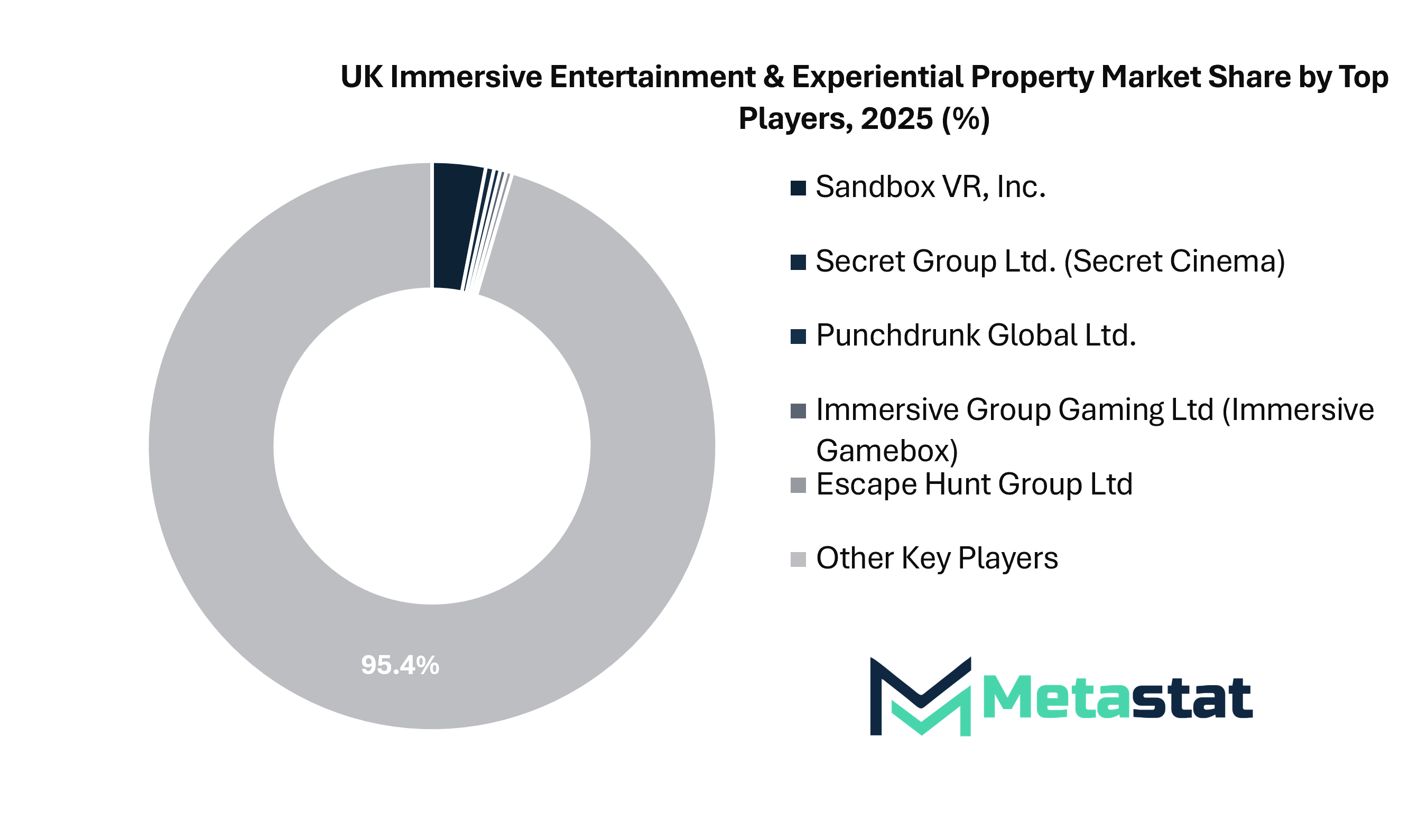
Market size is forecast to rise from USD 6,179.4 million in 2025 to over USD 26,162.8 million by 2033.
The UK Immersive Entertainment & Experiential Property Market is expected to benefit from experiential consumer spending, redevelopment of surplus retail space, and technology-driven leisure demand. Future demand is likely to favour AI-personalized attractions, subscription entertainment passes, portable pop-up immersive venues, branded franchise experiences, and mixed hospitality-entertainment destinations.
This research report categorizes the UK Immersive Entertainment & Experiential Property market based on key segments and regions, forecasts revenue growth, and analyses trends in each submarket. The report analyses the key growth drivers, opportunities, and challenges influencing the UK Immersive Entertainment & Experiential Property market. Recent market developments and competitive strategies such as expansion, product launch, partnership, merger, and acquisition have been included to draw the competitive landscape in the market.
The report strategically identifies and profiles the key market players and analyses their core competencies in each sub-segment of the UK Immersive Entertainment & Experiential Property market.
|
Report Attributes |
Details |
|
Study Period |
2021-2033 |
|
Base Year |
2025 |
|
Estimated Year |
2026 |
|
Forecast Period |
2026-2033 |
|
Historical Period |
2021-2025 |
|
Growth Rate |
CAGR 19.5% from 2026 to 2033 |
|
Revenue Unit |
USD million |
|
Segmentation |
By Type, Application and End User |
Find answers to common questions about this report
Top players operating in the UK Immersive Entertainment & Experiential Property industry includes Sandbox VR, Inc., Secret Group Ltd. (Secret Cinema), Immersive Group Gaming Ltd (Immersive Gamebox), and Punchdrunk Global Ltd.
UK Immersive Entertainment & Experiential Property market is estimated to reach USD 26,162.8 million by 2033.
Rising consumer demand for social, interactive, and memory-driven leisure activities is increasing footfall at immersive venues and property owners are adopting experiential tenants to revive underperforming retail and mixed-use spaces are key driving factors, boosting the market.
High setup costs for themed environments, advanced technology, and frequent content upgrades can pressure profitability will hamper the market growth within the forecast period.
The Virtual Reality (VR) Experiences is the leading type of segment in the UK market.
The Metastat Insights study shows that the UK Immersive Entertainment & Experiential Property market size was USD 6,179.4 million in 2025.
The UK Immersive Entertainment & Experiential Property market is expected to grow at a CAGR of 19.5% over the forecast period (2026-2033).
The analysts below cover Information & Technology research at Metastat Insights.
LEAD ANALYST
Utkarsh Khirodkar is a Lead Market Research Analyst at MetaStat Insight, specializing in market intelligence, technology sector assessments, and competitive strategy.

PRINCIPAL CONSULTANT - ENTERPRISE AI & EMERGING TECHNOLOGIES
Banking & Finance · Electronics and Semiconductor · Energy and Power · Healthcare IT · Information & Technology · Professional Services
Vijay Gunti is a Principal Consultant at MetaStat Insight, bringing over two decades of experience across enterprise digital transformation, technology strategy, and intelligent systems.

LEAD CONSULTANT - COMMUNICATION, TELECOM, AND IT
Electronics and Semiconductor · Information & Technology · Machinery & Equipment · Professional Services
Ravindra Sathe Consultants for Communication, Telecom, and IT at MetaStat Insight. He leads the firm's industry research initiatives across telecommunications infrastructure, digital connectivity, enterprise networking, and emerging information technology domains.
Evaluating sovereign cloud deployments for core banking platforms demands a clear view of data residency regulations and migration exit strategies. MetaStat Insight delivered an exhaustive review of regional latency tolerances, mainframe decommission milestones, and third-party vendor concentration risk. The regulatory compliance mapping across European and Asian financial jurisdictions gave our team a dependable baseline for multi-cloud infrastructure discussions.
Replacing petrochemical surfactants with bio-based alternatives requires realistic timelines on industrial precision fermentation scaling. The market research broke down commercialization timelines, feedstock sugar price sensitivities, and regional cosmetic ingredient regulatory approvals in Europe and East Asia. That supplier readiness mapping gave our formulations team reliable context when comparing renewable chemical sourcing roadmaps.
Tracking ceramic matrix composite adoption in high-bypass aero engines requires strict attention to material qualification cycles and FAA airworthiness testing milestones. The MetaStat Insight team provided a detailed timeline of silicon carbide fiber manufacturing capacity and commercial foundry lead times. Having clear visibility into upstream thermal barrier coating supply helped us stress-test our long-term component procurement strategy.
Explore related market intelligence reports worth reading alongside this one.