
LEAD ANALYST
Utkarsh Khirodkar is a Lead Market Research Analyst at MetaStat Insight, specializing in market intelligence, technology sector assessments, and competitive strategy.

New Zealand Optical Encryption Market Size, Share, By Encryption Layer (Layer 1, Layer 2, and Layer 3), By End-user Vertical (Datacenter, Cloud, BFSI, Government, Defense, Healthcare, Energy, Utilities, Retail, E-commerce, and Other End-user Verticals), By Data Rate (less than 10 Gbps, 10 - 40 Gbps, 40 - 100 Gbps, and above 100 Gbps), Industry Analysis, Growth, Trends, and Forecast, 2026-2033
Report ID
MSI-4796
Published
June, 2026
Pages
307 Pages
Format
Report Details
Choose Your License
New Zealand Optical Encryption Market
New Zealand Optical Encryption market size is valued at USD 34.5 million in 2025 and projected to grow at a CAGR of 10.3% during the forecast period, reaching USD 76.9 million by 2033.
Layer 1 segment account for a market share of 45.60% in 2025.
Key trends driving growth: Increasing demand for secure data transmission driven by rising cyber threats and data breaches across sectors and expansion of cloud computing, data centers, and high-speed fiber networks requiring advanced encryption solutions
Opportunities include adoption of quantum cryptography and post-quantum encryption technologies for next-generation security and growth in government, defense, and critical infrastructure sectors demanding ultra-secure communication networks.
Key insight: A significant shift toward hardware-based, Layer 1 encryption is emerging owing to its ability to deliver high-speed, low-latency security directly at the optical transmission layer, making it critical for modern data-intensive applications.
The New Zealand optical encryption market is a niche but steadily growing segment within the country’s broader ICT and secure communications ecosystem. In New Zealand, the push toward high-speed broadband infrastructure, data center interconnectivity, and cloud adoption is creating a positive environment for optical-layer security solutions. These technologies encrypt data directly at the physical fiber layer and are gaining importance among telecom operators, government agencies, and enterprises managing sensitive information.
The market is further supported by New Zealand’s digital transformation initiatives and its growing reliance on secure cross-border data exchange. With increasing internet penetration and rising global data traffic, there is a parallel need for robust, low-latency encryption solutions that operate at line speed. Optical encryption is valued in such environments as it reduces vulnerabilities associated with software-based encryption and ensures high-performance data transmission across long-haul and metro networks.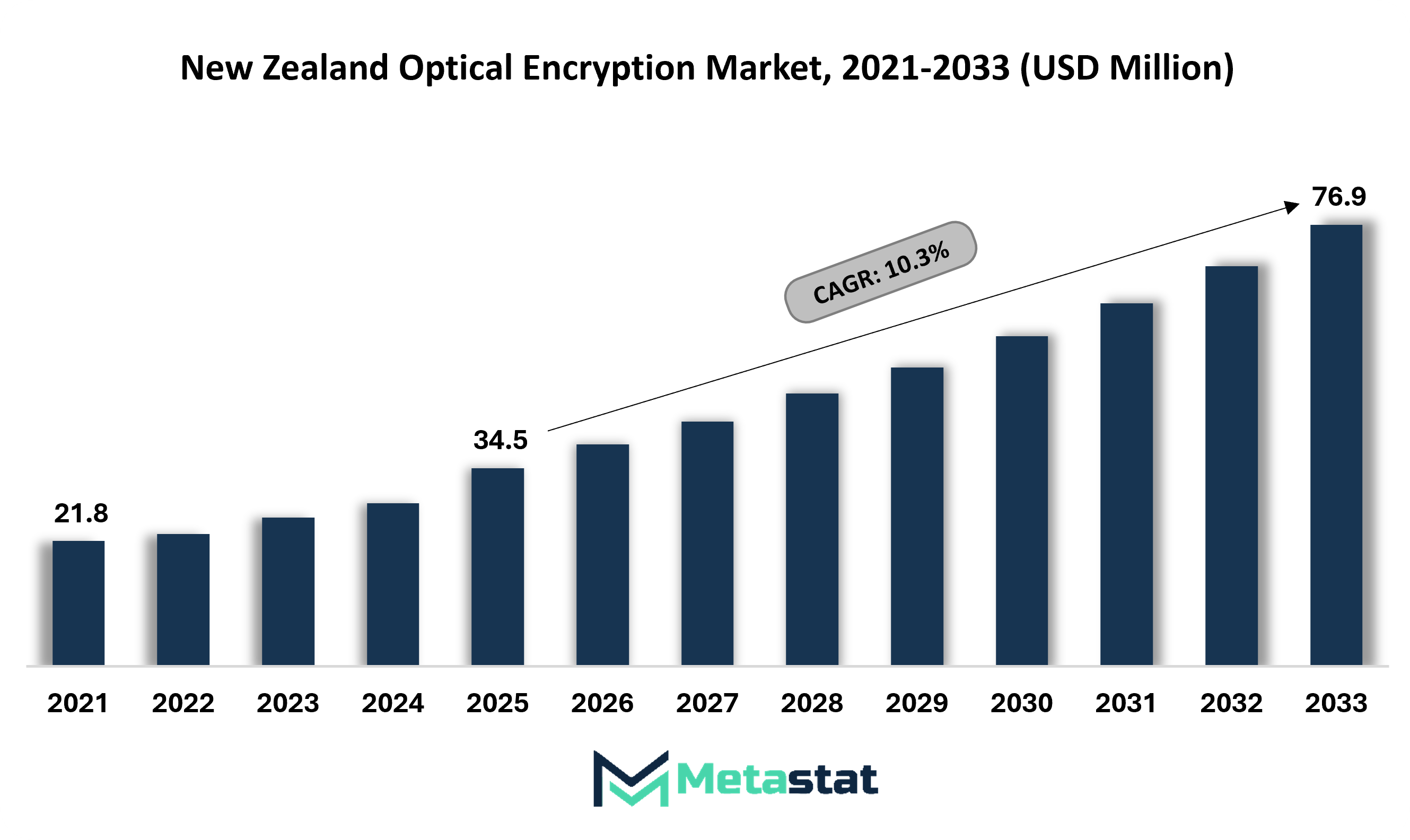
Increasing demand for secure data transmission driven by rising cyber threats and data breaches across sectors.
The rising frequency of cyberattacks has increased focus on secure communication frameworks in the New Zealand Optical Encryption Market. Enterprises handling financial data, healthcare information, and government records are prioritizing optical encryption for stronger protection. Regulatory pressure and data privacy requirements are pushing organizations toward stronger transmission security, creating sustained growth momentum.
Expansion of cloud computing, data centers, and high-speed fiber networks requiring advanced encryption solutions.
Rapid growth of cloud platforms, hyperscale data centers, and fiber-optic infrastructure supports strong demand within the New Zealand Optical Encryption Market. High-speed data exchange requires encryption at the optical layer to maintain performance without latency. Telecom operators and cloud service providers are integrating optical encryption to protect large-scale data movement across interconnected digital ecosystems.
High implementation costs and complexity associated with optical encryption infrastructure.
Significant capital investment required for deployment limits adoption across small and medium enterprises in the New Zealand Optical Encryption Market. Advanced hardware, specialized components, and system upgrades increase overall expenditure. Complex architecture design and maintenance requirements create an additional operational burden, slowing widespread implementation despite the strong security benefits offered by optical encryption technologies.
Limited skilled expertise and integration challenges in deploying advanced optical security systems.
Shortage of trained specialists with expertise in optical encryption technology restricts market expansion in the New Zealand Optical Encryption Market. Integration with legacy systems creates technical challenges, leading to longer deployment cycles. Organizations face difficulty in aligning encryption protocols with existing network infrastructure, creating barriers to seamless adoption across multiple enterprise verticals.
Adoption of quantum cryptography and post-quantum encryption technologies for next-generation security.
The emergence of quantum cryptography presents a transformative opportunity for the New Zealand Optical Encryption Market. Development of post-quantum encryption strategies supports future-ready security frameworks against advanced computational threats. Research initiatives and innovation in quantum-secure communication systems enable businesses to prepare for next-generation data security, strengthening long-term market potential.
The New Zealand Optical Encryption market is classified based on Encryption Layer, End-user Vertical, and Data Rate.
Layer 1 segment is valued at USD 18.1 million in 2026 and is projected to reach USD 42.3 million by 2033, at a CAGR of 12.9% during the forecast period.
The Layer 1 segment highlights hardware-level protection embedded within optical transmission systems. Direct encryption at the physical layer ensures minimal latency and strong resistance against interception. Future growth indicates wider adoption across high-capacity backbone networks, where demand for ultra-secure, real-time data transfer continues to rise with expanding digital ecosystems.
Layer 2 segment is valued at USD 9.4 million in 2026 and is projected to reach USD 16.5 million by 2033, at a CAGR of 8.4% during the forecast period.
The Layer 2 segment focuses on data-link security, enabling protection during frame transmission across network devices. Adoption is expected to increase with rising enterprise reliance on secure Ethernet services. Enhanced scalability and compatibility with existing infrastructure position Layer 2 encryption as a practical solution for organizations seeking balanced performance and security.
Layer 3 segment is valued at USD 11.1 million in 2026 and is projected to reach USD 18.1 million by 2033, at a CAGR of 7.2% during the forecast period.
The Layer 3 segment addresses network-level encryption through secure IP-based communication. Rising data exchange across distributed systems supports demand for flexible and software-driven security models. The outlook indicates integration with advanced routing technologies, enabling secure communication across complex network environments without compromising operational efficiency.
Datacenter and Cloud segment is projected to reach USD 50.8 million by 2033, at a CAGR of 13.7% during the forecast period.
The New Zealand Optical Encryption Market in data center and cloud environments reflects strong demand for secure data storage and transmission. Increasing cloud adoption drives the need for high-speed encrypted connectivity between facilities. Future trends indicate deeper integration with cloud-native architectures, ensuring seamless protection across virtualized and hybrid infrastructure models.
BFSI segment is projected to reach USD 6.5 million by 2033, at a CAGR of 6.4% during the forecast period.
The New Zealand Optical Encryption Market in BFSI emphasizes the protection of sensitive financial data across digital channels. Rising cyber threats and strict regulatory requirements are increasing the adoption of optical encryption solutions. Future trends indicate expanded deployment across transaction networks, ensuring secure, high-speed communication for banking operations and financial services.
Government and Defense segment is projected to reach USD 6 million by 2033, at a CAGR of 6.3% during the forecast period.
The New Zealand Optical Encryption Market in government and defense sectors prioritizes national security and confidential communication. High-level encryption requirements support the secure transmission of classified data. The outlook highlights investment in advanced optical technologies to strengthen secure communication networks against evolving cyber risks.
Healthcare segment is projected to reach USD 3.8 million by 2033, at a CAGR of 6.2% during the forecast period.
The New Zealand Optical Encryption Market in healthcare focuses on safeguarding patient records and medical data transmission. Digital transformation across healthcare systems increases the need for secure connectivity. Future growth is expected through integration with telemedicine platforms and digital health systems, ensuring privacy and data integrity across medical networks.
Energy and Utilities segment is projected to reach USD 4.0 million by 2033, at a CAGR of 6.1% during the forecast period.
The New Zealand Optical Encryption Market in energy and utilities supports secure communication across critical infrastructure networks. Increasing adoption of smart grid systems drives demand for reliable encryption solutions. Future growth indicates stronger focus on protecting operational technology systems from cyber threats while preserving uninterrupted service delivery.
Retail and E-commerce segment is projected to reach USD 2.1 million by 2033, at a CAGR of 2.4% during the forecast period.
The New Zealand Optical Encryption Market in retail and e-commerce highlights secure handling of customer data and online transactions. Growth in digital commerce strengthens the need for encrypted communication channels. The outlook indicates adoption of high-speed optical encryption to support large transaction volumes while maintaining customer trust and data security.
Other End-user Verticals segment is projected to reach USD 3.7 million by 2033, at a CAGR of 3.2% during the forecast period.
The New Zealand Optical Encryption Market across other end-user verticals includes sectors adopting secure communication for operational efficiency. Diverse industries will integrate optical encryption with digital systems. Future trends indicate broader application across emerging sectors seeking advanced data security solutions in increasingly connected environments.
less than 10 Gbps segment is projected to reach USD 4.1 million by 2033.
New Zealand Optical Encryption Market in less than 10 Gbps segment supports smaller-scale operations requiring secure yet cost-effective solutions. Adoption remains steady across enterprises with moderate data needs. Outlook suggests gradual decline in dominance owing to rising preference for higher bandwidth capabilities.
10 - 40 Gbps segment is projected to reach USD 16.5 million by 2033.
New Zealand Optical Encryption Market within 10 to 40 Gbps segment balances performance and affordability. Medium-sized enterprises increasingly adopt such solutions for secure data transmission. Future trends indicate sustained demand driven by growing digital workloads and need for reliable encrypted connectivity.
40 - 100 Gbps segment is projected to reach USD 23.7 million by 2033.
New Zealand Optical Encryption Market in 40 to 100 Gbps range reflects strong demand from data-intensive industries. High-speed secure communication supports cloud services and large-scale data transfer. Future growth is expected with expansion of high-performance computing and advanced networking infrastructure.
above 100 Gbps segment is projected to reach USD 32.6 million by 2033.
New Zealand Optical Encryption Market above 100 Gbps represents cutting-edge segment driven by hyperscale data requirements. Rapid increase in data generation fuels demand for ultra-high-speed encrypted transmission. Outlook highlights continuous innovation in optical technologies to support next-generation networks and large-scale digital transformation initiatives.
The New Zealand Optical Encryption Market is gaining interest owing to the rising need for secure data transmission across digital networks. With growing dependence on cloud services, financial systems, and government platforms, organizations are focusing strongly on protecting sensitive information. Optical encryption provides a reliable method to secure data at the physical layer, helping prevent unauthorized access during transmission. In New Zealand, the steady growth of digital infrastructure and increased internet usage are pushing organizations to adopt stronger security measures. This shift reflects the growing understanding that data security is no longer optional for digital enterprises.
Another important factor shaping this market is the expansion of data centers and high-speed communication networks. Businesses are handling larger volumes of data every day, increasing exposure to cyber threats. Optical encryption helps reduce these risks by adding an additional layer of security without affecting network performance. Telecom operators, financial institutions, and public sector bodies are among the early adopters. Their investment in secure communication systems is encouraging smaller organizations to follow the same path. Over time, this adoption pattern will strengthen the overall security environment in New Zealand.
The competitive landscape of the New Zealand Optical Encryption Market includes several global and regional companies working to offer efficient and scalable solutions. Key New Zealand Optical Encryption industry players, including Ciena Corporation, Nokia Corporation, Cisco Systems, Inc., Huawei Technologies Co., Ltd., ADTRAN, Inc., Ribbon Communications Inc., Ekinops S.A., PacketLight Networks Ltd., Smartoptics AS, Pan Dacom Direkt GmbH, Thales Group, Senetas Corporation Ltd., Rohde & Schwarz GmbH & Co. KG, Tejas Networks Limited, and FS.com, Inc., are focusing on product development and partnerships. Their strategies include enhancing encryption strength, reducing latency, and ensuring compatibility with existing systems. These companies are also investing in research to meet changing customer needs.
Looking ahead, the market will continue to grow with support from government policies and increased awareness of cybersecurity. As industries shift toward digital operations, the demand for secure communication tools will rise. Challenges such as high initial costs and technical complexity will slow adoption for some organizations, but ongoing innovation will help address these issues. The future of the New Zealand Optical Encryption Market appears stable, supported by strong demand and continuous improvements in technology,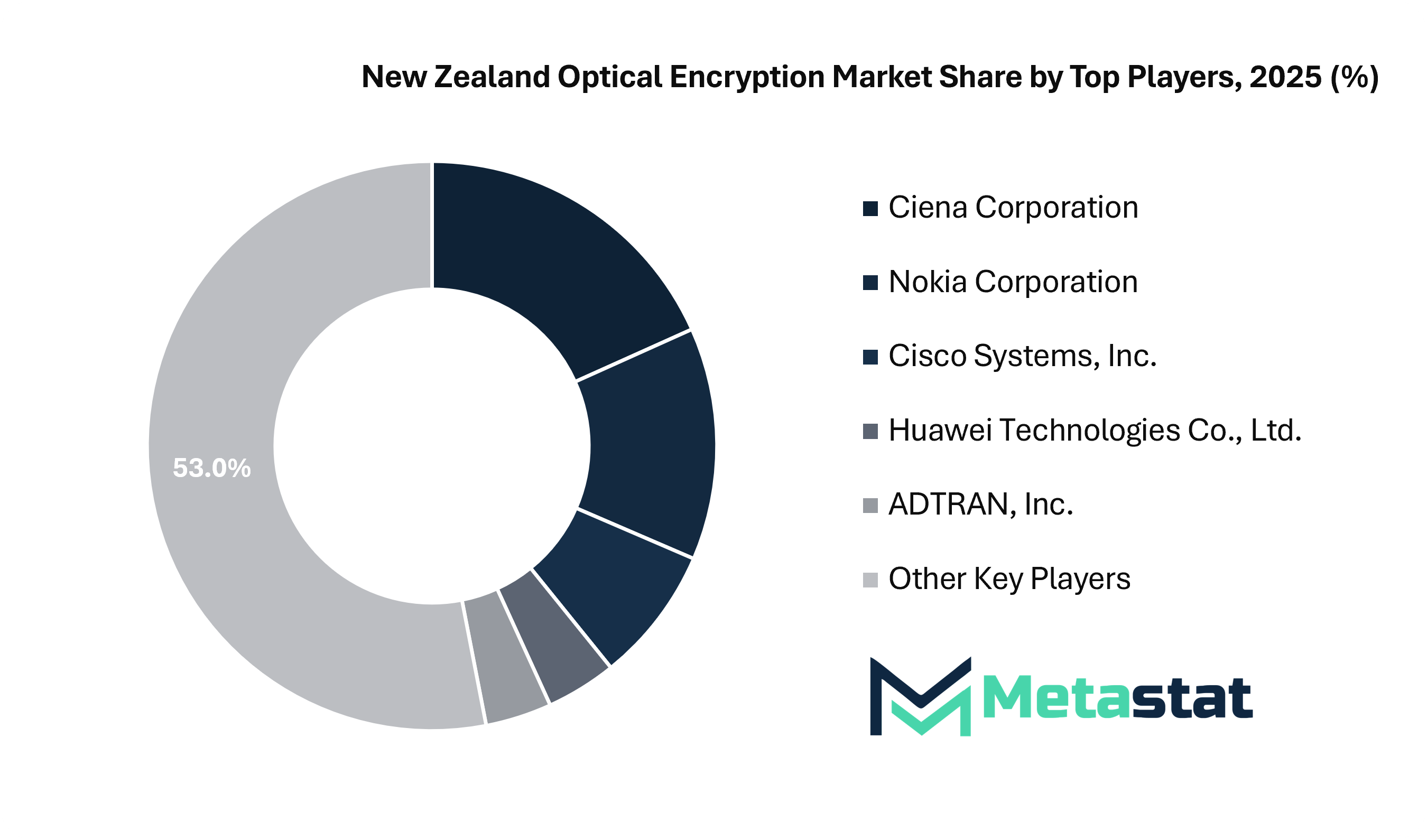
Market size is forecast to rise from USD 34.5 million in 2025 to over USD 76.9 million by 2033.
Looking ahead, the future of the New Zealand optical encryption market will be shaped by advancements in quantum-safe cryptography, increasing deployment of hyperscale data centers, and stricter data sovereignty regulations.
This research report categorizes the New Zealand Optical Encryption market based on key segments and regions, forecasts revenue growth, and analyses trends in each submarket. The report analyses the key growth drivers, opportunities, and challenges influencing the New Zealand Optical Encryption market. Recent market developments and competitive strategies such as expansion, product launch, partnership, merger, and acquisition have been included to draw the competitive landscape in the market.
The report strategically identifies and profiles the key market players and analyses their core competencies in each sub-segment of the New Zealand Optical Encryption market.
|
Report Attributes |
Details |
|
Study Period |
2021-2033 |
|
Base Year |
2025 |
|
Estimated Year |
2026 |
|
Forecast Period |
2026-2033 |
|
Historical Period |
2021-2025 |
|
Growth Rate |
CAGR 10.3% from 2026 to 2033 |
|
Revenue Unit |
USD million |
|
Segmentation |
By Encryption Layer, End-user Vertical and Data Rate |
WHAT REPORT PROVIDES
Find answers to common questions about this report
Top players operating in the New Zealand Optical Encryption industry includes Ciena Corporation, Nokia Corporation, Cisco Systems, Inc., Huawei Technologies Co., Ltd., ADTRAN, Inc., and Ribbon Communications Inc.
New Zealand Optical Encryption market is estimated to reach USD 76.9 million by 2033.
The Metastat Insights study shows that the New Zealand Optical Encryption market size was USD 34.5 million in 2025.
Increasing demand for secure data transmission driven by rising cyber threats and data breaches across sectors and expansion of cloud computing, data centers, and high-speed fiber networks requiring advanced encryption solutions are key driving factors, boosting the market.
The New Zealand Optical Encryption market is expected to grow at a CAGR of 10.3% over the forecast period (2026-2033).
High implementation costs and complexity associated with optical encryption infrastructure will hamper the market growth within the forecast period.
The analysts below cover Information & Technology research at Metastat Insights.
LEAD ANALYST
Utkarsh Khirodkar is a Lead Market Research Analyst at MetaStat Insight, specializing in market intelligence, technology sector assessments, and competitive strategy.

PRINCIPAL CONSULTANT - ENTERPRISE AI & EMERGING TECHNOLOGIES
Banking & Finance · Electronics and Semiconductor · Energy and Power · Healthcare IT · Information & Technology · Professional Services
Vijay Gunti is a Principal Consultant at MetaStat Insight, bringing over two decades of experience across enterprise digital transformation, technology strategy, and intelligent systems.

LEAD CONSULTANT - COMMUNICATION, TELECOM, AND IT
Electronics and Semiconductor · Information & Technology · Machinery & Equipment · Professional Services
Ravindra Sathe Consultants for Communication, Telecom, and IT at MetaStat Insight. He leads the firm's industry research initiatives across telecommunications infrastructure, digital connectivity, enterprise networking, and emerging information technology domains.
When planning edge sensor rollouts across refinery environments, generic IoT reports typically miss the harsh-environment certification bottlenecks. MetaStat Insight gave an objective evaluation of ATEX and Class 1 Division 2 hardware availability, along with realistic five-year maintenance cycle cost projections. The comparison of wireless mesh versus private cellular backhaul helped our team pressure-test network reliability models for remote processing facilities.
In the biological seed treatment space, registration timelines vary drastically between the European Union, Brazil, and North America. The MetaStat Insight research handled these cross-border regulatory barriers with genuine nuance, mapping commercialization pathways alongside historical field adoption rates. The segmentation between microbial strains and biochemical active ingredients was particularly well structured.
Our team was tracking whether regional recycling infrastructure could realistically absorb the growing volume of lithium iron phosphate batteries over the next decade. The report did a solid job separating announced hydrometallurgical plant capacity from active, permitted operational throughput. That distinction made the feedstock availability projections and regional recovery rate models far more credible than standard commercial overviews.
Explore related market intelligence reports worth reading alongside this one.
Starting from
$2950
Starting from
$2950