
LEAD ANALYST
Utkarsh Khirodkar is a Lead Market Research Analyst at MetaStat Insight, specializing in market intelligence, technology sector assessments, and competitive strategy.

Global Data-as-a-Service (DaaS) Market Size, Share, By Data Type (Business and Company Data, Consumer and Demographic Data, Intent and Behavioral Data, Location and Geospatial Data), By Delivery Model (APIs and Real-Time Data Feeds, Cloud Data Marketplaces and Native Data Shares, Batch Data Files and Enterprise Data Licensing, Managed Data Enrichment and Integration Services), By Application (Sales and Marketing Intelligence, Customer Data Enrichment and Identity Resolution, Risk, Fraud and Compliance Intelligence, AI, Machine Learning and Advanced Analytics), By End User Industry (BFSI, IT and Telecommunications, Government, Retail & E-commerce, Healthcare), Industry Analysis, Growth, Trends, and Forecast, 2026-2033
Report ID
MSI-4818
Published
July, 2026
Updated
Pages
254 Pages
Format
Report Details
Choose Your License
Global Data-as-a-Service (DaaS) Market
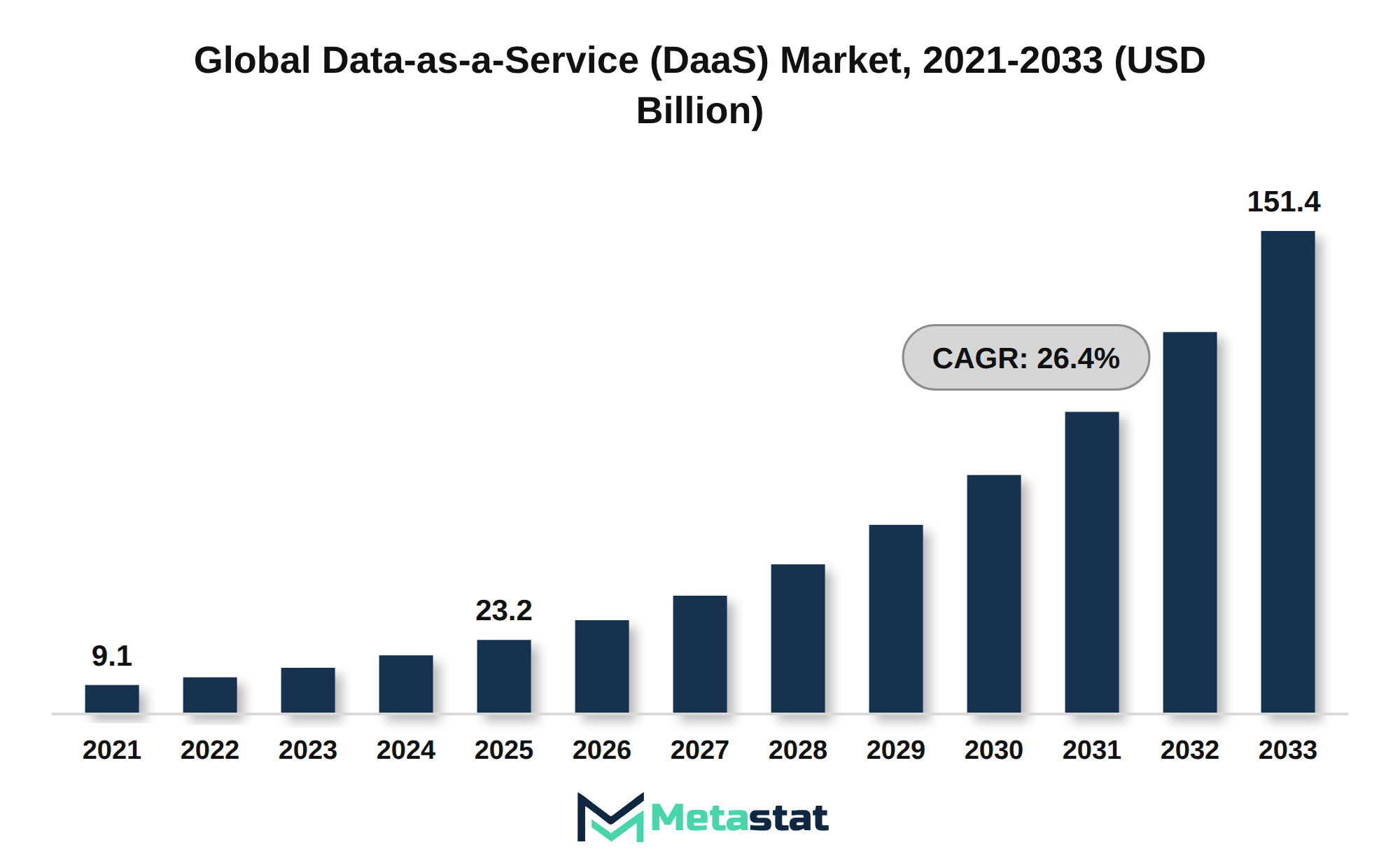
The global Data-as-a-Service (DaaS) market was valued at USD 23.2 billion in 2025 and is projected to reach USD 151.4 billion by 2033, growing at a CAGR of 26.4% over the forecast period.
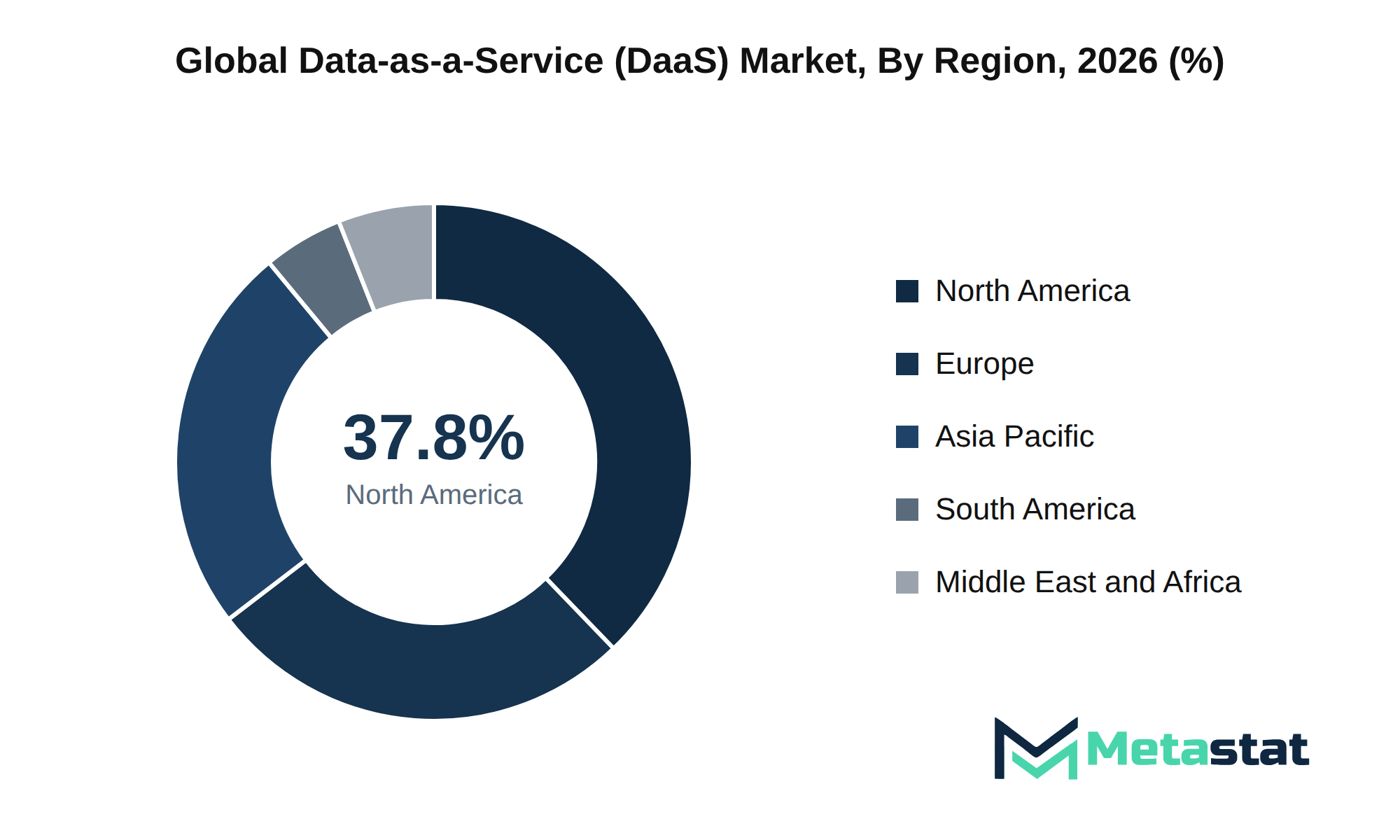
The Data-as-a-Service (DaaS) market is positioned for significant growth, with a base value of USD 23.2 billion anticipated in 2025. The market is projected to expand at a compound annual growth rate (CAGR) of 26.4%, reaching USD 151.4 billion by 2033. The regional distribution shows North America holding a substantial share of 37.8% in 2025, with the United States leading the market share in 2026. Europe and Asia Pacific follow, with shares of 26.8% and 24.4%, respectively.
The North American region is expected to maintain its dominance throughout the forecast period, with a projected market value of USD 54.6 billion by 2033, reflecting the same CAGR of 26.4%. Various factors contribute to this growth, including advancements in cloud technologies, increasing reliance on data for decision-making, and the ongoing digital transformation across industries.
Key drivers include the rising demand for real-time data access and the increasing importance of data analytics in enhancing business performance. Organizations are increasingly adopting DaaS solutions to streamline operations, improve customer insights, and gain a competitive edge. The delivery models, such as APIs and real-time data feeds, are gaining traction, projected to grow from USD 9.9 billion in 2026 to USD 52.6 billion by 2033, at a CAGR of 27%. This shift highlights the need for businesses to use timely data for strategic initiatives.
Cloud data marketplaces and native data shares are also anticipated to experience significant growth, with an estimated value of USD 48 billion by 2033. The flexibility and scalability offered by these delivery models align with businesses' evolving needs, allowing them to access diverse datasets efficiently. As organizations increasingly embrace digitalization, the demand for managed data enrichment and integration services will also rise, contributing to the market's overall expansion.
In the context of application areas, sales and marketing intelligence is set to see substantial growth, with projections indicating an increase from USD 9 billion in 2026 to USD 43.5 billion by 2033. The rising importance of customer data enrichment and identity resolution further highlights the relevance of DaaS in enhancing marketing strategies and customer engagement. With the increased focus on data-driven decision-making, industries such as BFSI and IT and telecommunications are expected to be significant contributors to market growth.
As organizations face challenges related to data compliance and regulatory requirements, the DaaS market is likely to evolve to address these concerns. Companies are expected to prioritize solutions that ensure data integrity and security, supporting sustainable growth in the coming years. The relationship between data regulations and organizational strategies will shape the market as firms navigate compliance requirements while maximizing data utility.
The Data-as-a-Service (DaaS) market is experiencing a notable shift towards digitalization and integration with Industry 4.0 and 5.0 frameworks. Companies are increasingly adopting smart operations to enhance their data capabilities. The integration of advanced technologies such as artificial intelligence (AI) and machine learning is driving demand for real-time data analytics. This trend allows organizations to derive insights from vast datasets, improving decision-making processes across various sectors.
As businesses continue to embrace digital transformation, the need for data-driven strategies becomes essential. The market is witnessing growth in applications related to sales and marketing intelligence, risk and fraud detection, and customer data enrichment. This shift enhances operational efficiencies and enables companies to adapt to changing consumer behaviors. The increasing reliance on data for strategic initiatives highlights the importance of robust data management solutions within the market.
Capital allocation within the Data-as-a-Service (DaaS) market reflects a focus on infrastructure investments necessary for supporting advanced data solutions. Companies are prioritizing expenditures on cloud infrastructure, data integration tools, and analytics platforms. This investment trend is crucial for maintaining competitive advantage and ensuring scalability in operations. With a projected compound annual growth rate (CAGR) of 26.4% from 2026 to 2033, it is evident that organizations are recognizing the critical role of investing in data infrastructure as part of their long-term strategies.
Infrastructure enhancements are about upgrading technology and optimizing operational expenditures. Firms are increasingly evaluating their CapEx and OpEx strategies to maximize returns on data investments. The demand for cost-effective solutions is driving interest in managed data services that can provide flexibility and efficiency in data handling. Through strategic capital allocation, organizations are better positioned to leverage the growing opportunities in the DaaS market.
The Data-as-a-Service (DaaS) market is also subject to various macroeconomic headwinds, including inflationary pressures and currency volatility. These economic factors can significantly influence investment decisions and operational costs for businesses across different regions. Companies must navigate these challenges while maintaining data integrity and service quality. Inflation can lead to increased costs for technology and infrastructure, impacting profit margins and pricing strategies.
Additionally, currency fluctuations can affect international transactions and partnerships, creating complexities in the market. Companies operating in multiple currencies must develop strategies to mitigate risks associated with these economic variables. Understanding the influence of macroeconomic conditions is essential for stakeholders aiming to capitalize on the growth potential within the DaaS market.
Despite the positive outlook for the Data-as-a-Service (DaaS) market, several constraints and dependencies exist that could impact future growth. Regulatory compliance and data privacy concerns are critical for service providers and their clients. As data protection regulations evolve globally, companies must ensure adherence to these guidelines to avoid legal repercussions and maintain customer trust. This necessity can impose additional operational burdens and costs on businesses.
In addition, competition in the market is fragmented, with numerous players vying for market share. This competition can lead to pricing pressures, making it crucial for companies to differentiate their offerings effectively. As organizations seek to enhance their value propositions, they must navigate the complex dynamics of the market while addressing regulatory and competitive challenges.
The Data-as-a-Service (DaaS) market features several commercial structures designed to align vendor revenue with buyer consumption patterns. Organizations procuring external data assets evaluate these models based on budgetary predictability, operational scalability, and total cost of ownership.
Subscription models represent the traditional foundation of commercial enterprise software. Under a subscription agreement, buyers pay a recurring monthly or annual fee for continuous access to defined datasets, curated feeds, or API endpoints. This structure offers maximum financial predictability, making it popular among procurement teams and financial planners. Subscriptions commonly feature tiered access levels determined by query frequency, the breadth of data attributes, or update intervals. However, fixed tiers can lead to shelfware if an enterprise consumes less data than anticipated.
Usage-based or consumption models charge buyers strictly for what they process, retrieve, or query. Providers calculate charges using metrics such as API calls, records fetched, data transfer volumes, or computational credits consumed. Cloud data platforms such as Snowflake and Amazon Web Services (AWS) have normalized consumption-driven pricing across modern analytics stacks. Pay-per-use architectures eliminate upfront commitments and ensure direct alignment between cost and actual utility. The primary operational trade-off is spend variability, which requires rigorous monitoring to avoid unexpected monthly billing spikes.
To reconcile the trade-offs between fixed subscriptions and raw consumption, many providers now deploy hybrid models. In a hybrid agreement, customers commit to a baseline recurring subscription that includes core platform access and standard quotas. Any consumption beyond this threshold triggers overage fees billed at metered rates.
Value-based pricing represents another emerging approach in specialized domains, such as financial intelligence, supply chain optimization, and healthcare analytics. Rather than billing solely for raw data transfer, vendors price their services based on the measurable business impact, data uniqueness, or downstream analytical yield delivered to the client.
Organizations across various sectors are increasingly adopting digital transformation initiatives to enhance operational efficiency and improve customer engagement. This shift is driven by the integration of advanced technologies, such as automation, artificial intelligence, and data analytics, which are essential for modernizing legacy processes and adapting to the evolving business landscape. As businesses seek to leverage these technologies, the demand for Data-as-a-Service (DaaS) solutions is rising. DaaS enables companies to access and analyze large volumes of data without the burden of managing complex infrastructure, providing them with insights crucial for informed decision-making and competitive advantage.
The impact of this transformation is most pronounced in regions with high levels of digital investment, particularly North America and Europe. In North America, businesses are rapidly embracing DaaS to streamline functions such as sales and marketing intelligence. This is evident through the projected growth of the DaaS market in the region, which is expected to reach USD 54.6 billion by 2033, reflecting a compound annual growth rate (CAGR) of 26.4%. Europe, also a significant player, shows substantial adoption of DaaS, driven by a focus on enhancing operational productivity and ensuring compliance with evolving regulations.
For suppliers in the DaaS market, this surge presents both opportunities and challenges. Companies must innovate to meet the rising demand for tailored data solutions across various applications, including customer data enrichment, risk management, and advanced analytics. As organizations seek to enhance their data capabilities, suppliers are encouraged to invest in technologies that facilitate effective integration and real-time data access. By doing so, they can position themselves as essential partners in the digital transformation journey, ultimately shaping the future of how businesses leverage data.
Transformation across industries is reshaping how organizations operate and compete. Companies are increasingly adopting digital technologies to automate processes, enhance data usage, and digitize legacy systems. This shift drives demand for Data-as-a-Service (DaaS) solutions, which offer scalable, on-demand access to data without the need for extensive in-house data management. The integration of artificial intelligence (AI) and advanced analytics into business operations further emphasizes the need for real-time data accessibility, allowing firms to make informed decisions quickly and efficiently.
The impact of digital transformation is most pronounced in regions with significant technological infrastructure and investment capabilities. North America leads with a projected market value of USD 54.6 billion by 2033, reflecting a compound annual growth rate (CAGR) of 26.4%. The financial services, healthcare, and retail sectors are the most active in adopting DaaS solutions, with organizations in these areas looking to enhance customer engagement and streamline operations. Europe and Asia Pacific are also experiencing substantial growth, driven by increased venture funding and a focus on innovation.
For suppliers in the Data-as-a-Service (DaaS) market, the rise in digital transformation presents both opportunities and challenges. As organizations seek to modernize their data infrastructure, suppliers must evolve their offerings to meet growing expectations for data quality, security, and integration capabilities. This environment encourages innovation and collaboration among DaaS providers, pushing them to develop new solutions that cater to specific industry needs. Ultimately, those suppliers that can effectively align their services with the ongoing digital transformation will likely experience significant growth in this competitive market.
The Data-as-a-Service (DaaS) market faces significant constraints due to high capital investment requirements and escalating operating costs. Providers must invest heavily in infrastructure, technology, and skilled labor to develop and maintain data solutions. These costs create barriers to entry for new players and challenge existing providers to sustain their operations without passing on expenses to customers.
Segments that typically absorb the most damage include smaller enterprises and startups within the market. These organizations often struggle to secure the necessary funding to compete against larger firms that benefit from economies of scale. According to forecasts, North America holds the largest market share at 37.8%, where high operating costs can particularly impact emerging players seeking to establish their foothold amid established competitors. The BFSI sector, projected to grow from USD 8.2 billion in 2026 to USD 40.5 billion by 2033, may face similar challenges as financial institutions work to balance innovation against rising costs.
To address these challenges, industry participants are seeking to optimize operational efficiencies through automation and partnerships with cloud service providers. However, these workarounds are often incomplete; they do not fully mitigate the pressures associated with high capital investments nor eliminate the risk of operational disruptions from cost-cutting measures. While larger firms may absorb costs, smaller entities continue to feel the strain, which may hinder their ability to invest in growth strategies and lead to market fragmentation. As a result, the market remains susceptible to disruptions that could stall advancements in service delivery and innovation.
Organizations in the Data-as-a-Service (DaaS) market face significant operational challenges due to tightening global regulatory standards. As governments and regulatory bodies impose stricter compliance requirements, companies must adapt their data management practices to meet these evolving legal obligations. This often leads to increased scrutiny on data handling processes, necessitating investments in compliance frameworks and risk management systems. Maintaining compliance creates a burden, as firms must divert attention and funds away from core business operations to address regulatory demands.
Firms in highly regulated sectors, particularly in North America and Europe, find it increasingly difficult to manage compliance with diverse and overlapping regulations. The financial services industry, for instance, experiences intense regulatory oversight, compelling DaaS providers to ensure strict adherence to data protection laws. This situation is further complicated by differing standards across regions, making it challenging for companies looking to operate on a global scale.
In response to these challenges, organizations are investing in advanced compliance solutions and tools to streamline their data processes. This includes deploying automated compliance monitoring systems and engaging legal expertise to navigate the complex regulatory environment. However, these measures come at a significant financial cost, impacting margins as firms allocate resources to compliance rather than innovation or market expansion. As a result, the DaaS market must balance the necessity of compliance with the imperative to remain competitive, which can strain operational efficiencies and profitability.
The Data-as-a-Service (DaaS) market presents significant opportunities driven by emerging regional demands and the need for infrastructure modernization. As organizations seek efficient data management solutions, the market is projected to grow from USD 23.2 billion in 2025 to USD 151.4 billion by 2033, reflecting a compound annual growth rate (CAGR) of 26.4%. Increased digitization efforts and the necessity for real-time data access have heightened the demand for DaaS, particularly across various sectors such as banking, healthcare, and retail.
Key players positioned to capture these opportunities include established technology firms and emerging startups that can offer innovative delivery models such as APIs and real-time data feeds, as well as cloud data marketplaces. To succeed, these organizations require capabilities in data integration, analytics, and compliance with regulatory standards. The ability to provide efficient data access and enrichment services will be crucial, especially as enterprises prioritize digital transformation initiatives to enhance operational efficiency and customer engagement.
The timing for capitalizing on these opportunities is critical, as the DaaS market is expected to evolve rapidly. Companies that can quickly adapt to changing buyer behaviors and technological advancements will benefit most. Delays in adopting modern infrastructure or failure to align with sustainability imperatives could close the window of opportunity, as competitors streamline their offerings. In this dynamic environment, the focus on geographic expansion and niche applications will further shape market trajectories and define success for participants in the DaaS market.
The Global Data-as-a-Service (DaaS) market is segmented based on Data Type, Delivery Model, Application, and End User Industry.
Valued at USD 9.9 billion in 2026, the Business and Company Data segment is projected to reach USD 49.2 billion by 2033, translating to a compound annual growth rate (CAGR) of 25.7% during the forecast period. This segment is driving significant growth in the Data-as-a-Service (DaaS) market as businesses increasingly rely on accurate company data for strategic decision-making and competitive advantage.
Primary demand drivers in this segment include the escalating need for data-driven insights and enhanced analytics capabilities across industries. As organizations strive to optimize operations, the adoption of Business and Company Data solutions is rising. Companies are prioritizing the integration of real-time data to improve customer engagement and sales strategies. This shift is expected to be a catalyst for sustained segment expansion.
Technological maturation is also shaping the landscape of this segment. Advances in data processing technologies and machine learning are enabling more sophisticated data analytics, which enhances the utility of business data. Consequently, organizations are investing in next-gen upgrades to maintain a competitive edge and ensure compliance with evolving regulations.
The growing importance of regulatory compliance standards presents both challenges and opportunities. Companies must navigate a complex web of regulations, which necessitates robust data management practices. This environment increases the demand for reliable Business and Company Data solutions, reinforcing the segment's growth trajectory within the broader market.
By 2033, the Consumer and Demographic Data segment is estimated to reach USD 35.1 billion, reflecting a compound annual growth rate (CAGR) of 25.4% during the forecast period. This rapid growth can be attributed to several factors including increasing demand for precise targeting in marketing strategies and the need for businesses to understand consumer behavior on a granular level. Organizations are using demographic insights to optimize customer engagement and enhance user experience across various platforms.
Demand drivers in this segment stem from the growing emphasis on data-driven decision-making, as businesses seek to refine their marketing efforts and better tailor products to meet the needs of diverse consumer bases. Rising adoption of advanced analytics tools further supports the use of consumer data, enabling organizations to extract relevant insights that inform strategic initiatives.
As technological maturation continues, next-generation upgrades in data collection and processing methods are expected to enhance the efficiency and accuracy of demographic data analytics. There is a notable shift in downstream applications, with sectors like retail and e-commerce particularly focused on using consumer data to drive sales and improve customer loyalty.
While the market presents significant opportunities, it also faces challenges such as regulatory compliance standards that require adherence to data protection laws. Navigating these compliance issues is crucial for companies aiming to use consumer data responsibly and effectively.
By 2033, the Intent and Behavioral Data segment is expected to reach USD 32.5 billion. This growth reflects the increasing reliance on data-driven insights to enhance customer targeting and engagement. Organizations are adopting intent and behavioral data to refine their marketing strategies, improve customer experience, and gain a competitive edge in the Data-as-a-Service (DaaS) market.
Demand for this type of data is driven by the need for personalization in marketing and sales efforts. Companies are leveraging behavioral data to understand consumer actions, preferences, and trends, which significantly informs product development and marketing campaigns. This shift towards data-centric decision-making is evident across various industries, particularly in retail and e-commerce, where consumer insights directly impact revenue.
Technological advancements in data collection and analytics have facilitated the maturation of the Intent and Behavioral Data segment. Enhanced algorithms and machine learning models are enabling organizations to extract deeper insights from behavioral data, thus driving segment expansion. As organizations upgrade their technological capabilities, they can process and analyze large datasets more effectively, which enhances their decision-making processes.
Regulatory compliance standards are shaping how businesses collect and handle intent and behavioral data. Companies must navigate these regulations to ensure ethical data use while maximizing the value derived from this data type. Overall, the segment shows strong potential for growth, supported by adoption trends and technological progress.
Location and Geospatial Data is anticipated to increase at a compound annual growth rate (CAGR) of 27.3% during the forecast period. This growth is influenced by several factors, including the escalating demand for location-based services across various industries. Sectors such as transportation, logistics, and urban planning are increasingly adopting geospatial data to enhance operational efficiency and better decision-making processes.
Technological advancements play a significant role in the expansion of this segment. Innovations in satellite technology and geographic information systems (GIS) have improved data accuracy and accessibility, facilitating more sophisticated analyses and applications. Organizations are keen to apply these advancements to stay competitive, driving the uptake of location and geospatial data solutions.
Adoption rates are particularly high in industries that rely on data-driven insights for strategic planning and execution. For instance, retail and e-commerce businesses are using geospatial data to optimize supply chain logistics. They enhance customer experiences through location-targeted marketing initiatives.
While growth opportunities exist, challenges related to regulatory compliance and data privacy must be addressed. Organizations must navigate complex regulations that govern the use of location data to mitigate risks associated with non-compliance. This regulatory landscape will likely influence operational strategies in the Data-as-a-Service (DaaS) market as companies seek to handle location data responsibly.
Emerging technologies and evolving data requirements contribute to the growth of the Others Data Type segment within the Data-as-a-Service (DaaS) market. Organizations are increasingly leveraging diverse data types to enhance their analytical capabilities. This drives demand for innovative data solutions. Key applications include niche markets where specific data types offer competitive advantages, allowing businesses to tailor their offerings based on unique insights.
Adoption rates are influenced by the growing need for real-time data integration across various platforms. This trend is particularly prominent in industries seeking to optimize operations through enhanced data utilization. Companies are investing in strategic partnerships to access specialized data types that support operational goals.
Regulatory compliance remains a critical concern. Organizations navigate various standards that impact data usage. Ensuring adherence to these regulations while managing operational costs represents a challenge for firms within this segment. Organizations must balance the need for diverse data with the imperative to remain compliant.
Supply chain resilience plays a role as businesses seek to mitigate risks associated with data sourcing and distribution. Fluctuations in data availability can impact operational efficiency. It is essential for firms to establish reliable data pathways. Overall, the Others Data Type segment is positioned for growth, driven by evolving market dynamics and increasing demand for specialized data solutions.
Valued at USD 9.9 billion in 2026, the APIs and Real-Time Data Feeds segment is projected to grow significantly, reaching USD 52.6 billion by 2033, reflecting a compound annual growth rate (CAGR) of 27% during this forecast period. The rising demand for real-time information across various industries drives this growth, as organizations increasingly require instantaneous access to data for decision-making and operational efficiency.
Technological maturation is important in the expansion of this segment. The integration of advanced APIs has enhanced connectivity and interoperability among systems, allowing businesses to streamline their operations and improve customer experiences. As organizations adopt next-generation technologies, the need for reliable and efficient data feeds becomes critical, facilitating real-time analytics and encouraging innovation.
Adoption rates are particularly high in sectors such as finance and e-commerce, where timely data is essential for competitive advantage. Companies are emphasizing data-driven strategies, leading to an increased reliance on APIs for accessing and managing data effectively. Additionally, regulatory compliance is increasingly influencing the segment, as businesses must adhere to standards that dictate how data is captured, processed, and shared.
As the market evolves, players must also consider cost structures and pricing volatility. The demand for high-quality real-time data feeds may exert margin pressures, necessitating strategic investments in infrastructure and technology to maintain competitiveness. Overall, the growth trajectory of APIs and Real-Time Data Feeds within the Data-as-a-Service (DaaS) market signals a significant phase, driven by technological advancements and shifting industry dynamics.
By 2033, the Cloud Data Marketplaces and Native Data Shares segment is estimated to reach USD 48 billion, growing at a CAGR of 28.7% during the forecast period. This significant growth is driven by increasing demand for accessible and consumable data, enabling organizations to adopt cloud technologies for enhanced data sharing and monetization. As businesses seek to optimize their operations and decision-making processes, cloud data marketplaces become vital platforms for sourcing diverse data types.
Technological maturation is important in the expansion of this segment. Cloud-based solutions are evolving, allowing users to seamlessly integrate and analyze data from various sources. This integration facilitates real-time access to valuable insights, enhancing the overall user experience and driving further adoption. As enterprises increasingly invest in next-generation upgrades, they are positioning themselves to take full advantage of the benefits offered by cloud data marketplaces.
Regulatory compliance standards also influence market dynamics. As organizations face stricter data privacy regulations, the need for compliant data solutions becomes critical. Businesses that access cloud data marketplaces can enhance their regulatory adherence by sourcing data from certified providers, thereby mitigating risks associated with non-compliance.
Strategic opportunity windows are emerging as organizations seek innovative ways to capitalize on data-driven insights. The ability to share and monetize data through cloud platforms positions businesses to explore new revenue streams and enhance competitive advantages in a changing market.
By 2033, the Batch Data Files and Enterprise Data Licensing segment is projected to reach USD 27.2 billion. This growth reflects a broader trend within the Data-as-a-Service (DaaS) market, where increasing data demands are driving the adoption of batch data solutions across various industries.
Technological advancements play a crucial role in this segment's expansion. Organizations seek to leverage large volumes of data for analytics and decision-making. The need for comprehensive and reliable data licensing models becomes more pronounced. Batch data files allow companies to process and analyze historical data efficiently, contributing to improved operational efficiencies.
Regulatory compliance also influences adoption rates in this sub-segment. As organizations grapple with complex data privacy regulations, the demand for standardized data licensing solutions that ensure compliance with legal requirements is on the rise. Enterprises are increasingly prioritizing partnerships with providers that offer robust compliance frameworks alongside their batch data services.
During the forecast period, the Managed Data Enrichment and Integration Services segment is projected to grow at a CAGR of 25.2%. This growth is fueled by the increasing demand for streamlined data operations across various industries, as organizations seek to enhance their decision-making processes through enriched data. The ability to integrate disparate data sources efficiently has become critical, particularly as businesses strive for more comprehensive insights in a changing market.
Technological maturation is driving adoption. As cloud computing and data analytics technologies advance, organizations can leverage more sophisticated tools for data enrichment and integration. This results in improved accuracy and timeliness of data, which are essential for effective customer engagement strategies. The rise of advanced analytics and machine learning continues to push organizations toward adopting managed services to gain a competitive edge.
Regulatory compliance standards are also influencing this segment's growth. Organizations must adhere to increasingly stringent data protection regulations, making it vital to integrate services that ensure compliance while maintaining data integrity. As businesses navigate these complexities, managed data services offer solutions that enrich data and provide safeguards against regulatory risks.
Strategic opportunity windows exist in sectors such as BFSI and IT, where the need for rich, relevant data is critical. The growing reliance on data for customer insights and risk management highlights the importance of managed data enrichment and integration services within the broader Data-as-a-Service (DaaS) market.
Deployment models dictate how data assets are hosted, managed, secured, and delivered to consuming applications. Enterprises select deployment architectures based on regulatory requirements, latency needs, existing infrastructure investments, and internal operational capabilities.
Public cloud deployment dominates contemporary DaaS delivery. In this model, providers host and manage multi-tenant or dedicated data environments across hyper-scale infrastructure such as Microsoft Azure and Amazon Web Services (AWS). Public cloud delivery provides near-infinite computational scalability, rapid provisioning, and straightforward integration with existing cloud data warehouses. Organizations leverage public cloud DaaS to eliminate physical hardware maintenance and benefit from continuous vendor-managed updates.
Enterprises operating in heavily regulated sectors often mandate private cloud deployments. Under this model, the DaaS environment runs on dedicated infrastructure isolated from other tenants. Vendors deploy single-tenant instances that adhere to bespoke enterprise network policies, custom encryption standards, and specialized access controls. While private cloud architectures demand higher operational oversight and procurement costs, they satisfy strict internal governance mandates and lower shared-resource risks.
Hybrid deployment models combine on-premise infrastructure with public and private cloud environments. Platforms like Oracle Cloud enable enterprises to retain sensitive historical databases on-premise while querying external DaaS sources hosted in the cloud. Edge deployments are also gaining traction in industrial automation, telecommunications, and connected logistics. In edge scenarios, lightweight DaaS nodes cache and distribute data close to physical endpoints, dramatically reducing latency for time-critical operational systems.
Valued at USD 9 billion in 2026, the Sales and Marketing Intelligence segment is projected to reach USD 43.5 billion by 2033, growing at a compound annual growth rate (CAGR) of 25.3% during the forecast period. This remarkable expansion is primarily driven by the increasing need for data-driven strategies to enhance customer engagement and optimize marketing campaigns. Organizations are increasingly adopting advanced analytics solutions that facilitate the effective processing and interpretation of vast amounts of data.
Technological maturation is important in this growth. As tools and platforms evolve, they provide enhanced capabilities for sales forecasting, customer segmentation, and performance tracking, which are vital for strategic decision-making. This evolution enables businesses to obtain insights that directly contribute to revenue generation and market competitiveness.
In addition, the downstream application matrix indicates a significant shift in consumer behavior, necessitating a more nuanced approach to marketing and sales. Companies are leveraging data-as-a-service (DaaS) solutions to gain real-time insights into customer preferences, enabling tailored offerings that appeal to target audiences. Such tailored approaches not only improve conversion rates but also encourage customer loyalty.
Regulatory compliance standards are shaping the landscape, pushing organizations to adopt ethical data practices that ensure consumer trust. With growing scrutiny on data privacy, companies are investing in solutions that align with these regulations, which drives additional demand for robust sales and marketing intelligence systems.
By 2033, the Customer Data Enrichment and Identity Resolution segment is estimated to reach USD 35.3 billion, growing at a compound annual growth rate (CAGR) of 26% during the forecast period. This growth is driven by increasing demand for accurate and comprehensive customer profiles, which enable organizations to enhance their marketing strategies and improve customer engagement. The market is experiencing a shift as businesses increasingly rely on data-driven insights for operational efficiencies and competitive differentiation.
The technological maturation of data processing tools and analytics platforms allows organizations to better handle vast amounts of customer data. These advancements facilitate next-gen upgrades, enabling businesses to integrate various data sources for richer insights. As customer touchpoints proliferate, the necessity for identity resolution becomes critical, ensuring that customer interactions are consistent and personalized.
Regulatory compliance standards also play a significant role in shaping the market. As data privacy regulations become more stringent, organizations are compelled to adopt robust data governance frameworks that emphasize ethical data usage and transparency. This compliance drive further stimulates investment in customer data enrichment solutions.
Cost structures in this segment are evolving, with pricing volatility influenced by the growing competition among data service providers. Businesses face margin pressures, compelling them to seek cost-effective yet reliable data solutions. The ability to source accurate and timely data is becoming a strategic opportunity for organizations to optimize their marketing efforts and enhance overall customer satisfaction in the Data-as-a-Service (DaaS) market.
By 2033, the Risk, Fraud and Compliance Intelligence segment is projected to reach USD 28.5 billion. This growth is driven by increasing regulatory compliance standards and the need for organizations to mitigate risks associated with data management. As businesses face heightened scrutiny and stricter regulations, leveraging data analytics to ensure compliance and manage fraud becomes essential.
Technological maturation in data processing and analytics tools enables organizations to adopt more sophisticated solutions for risk assessment and fraud detection. These advancements enhance the ability to analyze large datasets in real time, facilitating quicker decision-making and response strategies. Consequently, businesses are increasingly turning to Data-as-a-Service (DaaS) market solutions to streamline these processes and improve their compliance frameworks.
The demand for risk management solutions is influenced by shifts in consumption patterns across various end-user industries, particularly within the banking, financial services, and insurance (BFSI) sector. As financial institutions seek to safeguard against emerging threats and ensure adherence to compliance requirements, the relevance of this segment within the market continues to grow.
Investment in next-generation upgrades and data solutions further supports expansion within this segment, allowing businesses to stay ahead of potential compliance breaches and fraudulent activities. As organizations invest strategically in risk and compliance intelligence capabilities, the market is set to flourish significantly through the forecast period.
The AI, Machine Learning and Advanced Analytics segment is projected to grow at a CAGR of 29.7% during the forecast period. This rapid expansion reflects rising demand for data-driven insights across various industries. Organizations increasingly rely on advanced analytics to enhance decision-making processes, optimize operations, and improve customer experiences, driving adoption rates for services within the Data-as-a-Service (DaaS) market.
Technological maturation plays a critical role in this growth, as advancements in machine learning algorithms and processing capabilities facilitate more sophisticated analytical applications. As businesses seek to apply these technologies, the market's expansion is likely to be supported by next-generation upgrades and product evolution vectors that provide enhanced functionality and efficiency.
End-use dynamics also influence market trends, with sectors such as finance, healthcare, and retail showing heightened interest in AI-driven solutions. These industries employ machine learning to refine customer targeting, manage risks, and streamline operations, reflecting a shift toward data-centric strategies. Regulatory compliance standards push organizations to adopt advanced analytics to ensure adherence to data governance policies, further enhancing the segment's appeal.
With growing investment in AI technologies and a strong focus on data-driven strategies, the AI, Machine Learning and Advanced Analytics segment is positioned for significant growth within the broader DaaS landscape. As competition intensifies, organizations that effectively use these capabilities are likely to gain substantial competitive advantages.
Adoption of Data-as-a-Service (DaaS) solutions in other applications is driven by a variety of factors. Organizations are increasingly relying on data for decision-making across diverse sectors, including healthcare, logistics, and education. The technological maturation of analytics tools has facilitated this shift, enabling businesses to derive insights from unstructured and semi-structured data formats. As companies look to enhance operational efficiency, they recognize the value of integrating data from various sources to support diverse business functions.
In addition, the demand for real-time data insights is expanding. Organizations are investing in next-generation upgrades to ensure their data capabilities meet growing consumer expectations and market dynamics. This trend reflects a broader consumption shift where businesses increasingly value data accessibility and usability. In addition, regulatory compliance standards are becoming more stringent, prompting organizations to adopt robust data solutions that ensure adherence to industry-specific guidelines.
Cost structures in the market are also evolving. Businesses are navigating pricing volatility influenced by technological advancements and competitive pressures. As a result, efficient data management practices are crucial for maintaining profit margins. Supply chain resilience remains a focus, with companies seeking reliable data to enhance visibility and responsiveness in their operations. Altogether, these factors illustrate the dynamic nature of the Data-as-a-Service (DaaS) market, particularly within the other applications segment.
With a valuation of USD 8.2 billion in 2026, the BFSI segment is projected to expand significantly, reaching USD 40.5 billion by 2033, reflecting a compound annual growth rate (CAGR) of 25.7% during the forecast period. This growth is primarily driven by the increasing adoption of digital banking solutions and the need for enhanced data analytics capabilities. Financial institutions are investing in Data-as-a-Service (DaaS) solutions to streamline operations and improve customer experiences through personalized services.
Regulatory compliance remains a critical focus for the BFSI sector. Institutions are leveraging DaaS to meet stringent regulations and maintain data integrity while managing risks associated with data breaches. The ability to access real-time data through DaaS not only aids in compliance but also enhances decision-making processes in risk management.
Technological maturation is important in the expansion of this market segment. As financial technology evolves, the integration of advanced analytics and machine learning into data services enables institutions to derive useful insights from large datasets. This shift is driving demand for innovative data solutions that can adapt to the rapidly changing market dynamics.
Overall, the BFSI segment's growth trajectory within the Data-as-a-Service (DaaS) market is supported by ongoing digital transformation initiatives, regulatory requirements, and the pursuit of operational efficiency. This sector is positioned for continued expansion as financial entities increasingly recognize the value of data in driving business success.
The IT and Telecommunications segment is projected to generate revenues of USD 36.4 billion by 2033, reflecting a compound annual growth rate (CAGR) of 27% throughout the forecast period. This growth is driven by the increasing demand for advanced data solutions that support real-time decision-making and enhance operational efficiency.
Technological maturation in IT infrastructures and telecommunications networks creates an environment conducive to the adoption of Data-as-a-Service (DaaS) solutions. Companies are increasingly upgrading their systems to integrate next-generation data services, which enable them to handle data more effectively. This shift allows for improved analytics capabilities, ultimately leading to better service delivery and customer experience.
Regulatory compliance standards also play a significant role in shaping the environment of this segment. Organizations must align with various regulations governing data management and privacy, propelling them to invest in DaaS solutions that offer compliant and secure data handling. This necessity is especially prominent as data privacy laws become stricter across different regions.
Cost structures associated with traditional data management systems create margin pressures that compel businesses to explore more efficient alternatives. DaaS provides these organizations with scalable solutions that can be tailored to meet specific needs without the overhead costs typically linked to on-premises systems. As a result, this segment of the market is positioned for substantial expansion, reflecting broader trends within the Data-as-a-Service (DaaS) market.
By 2033, the Government segment is expected to reach USD 19.4 billion. Increasing demand for data-driven decision-making is a primary driver behind this growth, as government agencies seek to enhance operational efficiencies and improve public services through data analytics. The integration of advanced technologies like artificial intelligence and machine learning is facilitating the maturation of data solutions, making them more accessible and effective for governmental use.
Regulatory compliance remains a significant consideration for this sector. Government entities are under constant pressure to adhere to evolving standards and policies aimed at safeguarding data security and privacy. These requirements often necessitate investment in Data-as-a-Service (DaaS) solutions that meet stringent compliance criteria and enhance governance frameworks.
In addition, the focus on transparency and accountability is pushing agencies to adopt data solutions that enable better tracking and reporting of public resources and services. As a result, consumption shifts towards platforms that can provide real-time insights and analytics, ensuring timely and informed decision-making.
The sector's cost structures are also evolving, influenced by budget constraints and the need for scalable solutions. Government agencies are increasingly looking for DaaS offerings that optimize costs while providing the flexibility to adapt to changing demands, ensuring effective resource allocation.
With a compound annual growth rate (CAGR) of 27.6%, the Retail & E-commerce segment is set for substantial expansion during the forecast period. This growth is primarily driven by the increasing demand for personalized shopping experiences, which necessitates enhanced data solutions.
Data-as-a-Service (DaaS) solutions are crucial in enabling the integration of consumer behavior analytics and market trends. Retailers are increasingly using data to optimize inventory management, thereby reducing costs and improving customer satisfaction. By applying predictive analytics, companies can anticipate consumer needs and streamline their operations, which is vital in a competitive marketplace.
The emphasis on digital transformation has led retailers to adopt sophisticated data strategies, allowing for real-time decision-making. As e-commerce continues to thrive, the need for enriched customer profiles and targeted marketing is more critical than ever. This shift not only improves deeper customer engagement but also enhances operational efficiency across various retail channels.
Overall, the growing reliance on data-driven strategies within the Retail & E-commerce sector highlights the importance of DaaS. Companies striving to remain competitive must invest in these solutions to make the most of their data assets, ensuring they can adapt to evolving consumer expectations and market dynamics.
Healthcare organizations increasingly turn to the Data-as-a-Service (DaaS) market to enhance patient care, streamline operations, and ensure regulatory compliance. The primary demand drivers include the need for real-time analytics and the integration of data across various health information systems. These factors contribute to a heightened focus on improving patient outcomes and optimizing resource allocation.
Technological maturation in healthcare technology, especially advancements in data analytics and cloud computing, facilitates the growth of DaaS applications. Next-generation upgrades support the adoption of more sophisticated data-driven solutions, aiding healthcare providers in making informed decisions based on comprehensive insights. The evolution of product offerings in DaaS enables better data interoperability, which is essential for modern healthcare systems.
Regulatory compliance standards, such as those mandated by health authorities, play a significant role in shaping the healthcare DaaS landscape. Organizations must navigate complex compliance frameworks to avoid penalties and ensure patient privacy. This regulatory pressure drives the demand for robust data management solutions that can uphold these standards while providing valuable insights.
Cost structures within the healthcare sector are impacted by pricing volatility and margin pressures related to data services. As healthcare providers seek to reduce operational costs while maintaining service quality, they increasingly rely on DaaS for efficient data handling and analysis. This reliance highlights strategic opportunity windows for DaaS providers to tailor their offerings to meet the specific needs of healthcare clients.
Adoption of Data-as-a-Service (DaaS) solutions across various industries reflects a growing recognition of the importance of data-centric strategies. The need for timely and accurate insights drives organizations to embrace DaaS offerings, particularly in sectors where traditional data management methods fall short. Technological maturation and next-generation upgrades enhance the ability of these industries to leverage data more effectively, ensuring they remain competitive in a data-driven environment.
Regulatory compliance presents both challenges and opportunities for companies within this segment. As businesses navigate complex data privacy laws and industry-specific regulations, the demand for compliant DaaS solutions increases. Organizations are motivated to adopt services that not only meet regulatory standards but also facilitate operational efficiencies. The resulting shift in consumption patterns indicates a strong preference for solutions that offer robust compliance features alongside their core data offerings.
Cost structures and pricing volatility influence procurement strategies in this segment. Companies are increasingly focused on optimizing their data expenditures while ensuring they receive maximum value from their DaaS investments. As providers continue to innovate and expand their offerings, organizations will seek to balance cost pressures with the imperative for high-quality data services.
Overall, the Data-as-a-Service (DaaS) market is poised for significant evolution as industries adapt to these dynamics, creating strategic opportunities for growth and investment in advanced data solutions.
Based on geography, the Global Data-as-a-Service (DaaS) market is divided into North America, Europe, Asia-Pacific, South America, Middle East, and Africa.
North America is positioned as a leader in the Data-as-a-Service (DaaS) market, with a projected market size of USD 54.6 billion by the end of 2033, expanding at a compound annual growth rate (CAGR) of 26.4% during the forecast period. This region accounted for 37.8% of the global market share in 2025, highlighting its dominance and strategic importance in the sector.
Key drivers of demand in North America include infrastructure modernization and the transition toward digital solutions across various industries. Companies in the United States, Canada, and Mexico are increasingly adopting DaaS solutions to enhance operational efficiency and improve decision-making processes. As businesses shift to cloud-based environments, the need for real-time data access and analytics is becoming critical.
Mature market dynamics in North America are contributing to the growth of high-value replacement cycles. Companies are seeking to upgrade legacy systems to more robust DaaS solutions that offer better scalability and functionality. This trend is particularly noticeable in sectors such as BFSI, IT and Telecommunications, and retail, where data-driven insights are essential for competitive advantage.
Regional competitive dynamics reflect a mix of established vendors and emerging players, with companies like Data Axle, Dun & Bradstreet, and Experian at the forefront. Vendor consolidation trends are evident as companies seek to enhance their service offerings and expand their market reach. This competitive environment encourages innovation and drives the development of advanced DaaS solutions tailored to specific industry needs.
Localized procurement dynamics and cultural nuances also play a significant role in shaping the DaaS market in North America. Businesses are increasingly focused on regional B2B buying behaviors, opting for solutions that align with local compliance mandates and regulatory frameworks. These factors are crucial for ensuring data integrity and security, which remain top priorities for organizations across the region.
North America remains the most mature and commercially active market for Data-as-a-Service solutions. The region benefits from early cloud adoption, high enterprise technology investments, and a dense concentration of data providers, platform innovators, and enterprise consumers.
Enterprises across the United States and Canada view data as a strategic operational asset rather than a passive operational byproduct. Financial institutions, healthcare systems, retail chains, and media conglomerates actively purchase external datasets to enrich proprietary data models. Furthermore, North American enterprises increasingly act as both buyers and sellers, packaging their internal data streams into external DaaS offerings via cloud marketplaces. The extensive adoption of Amazon Web Services (AWS) and enterprise platforms such as Salesforce provides a ready-made digital foundation for rapid data exchange.
While North America lacks a single omnibus federal data privacy law comparable to international frameworks, state-level compliance mandates shape regional DaaS practices. The California Consumer Privacy Act (CCPA) and related state laws impose explicit governance rules around personal information, consumer consent, and third-party data distribution. Consequently, DaaS buyers in North America demand verified lineage, automated compliance tracking, and robust opt-out handling from data providers.
The European DaaS market is defined by advanced digital infrastructure coupled with the world’s most stringent regulatory frameworks. Enterprise buyers across Europe prioritize governance, cross-border compliance, and ethical data sourcing above speed or raw volume.
Data protection regulation acts as the primary operational compass for European DaaS adoption. The General Data Protection Regulation (GDPR) establishes strict legal parameters governing the collection, processing, enrichment, and commercialization of personal information. Providers must ensure that data sold or shared via DaaS platforms maintains an uncompromised chain of lawful consent. Compliance with information security standards like ISO 27001 is practically mandatory for vendors bidding on European enterprise contracts.
European enterprises in manufacturing, automotive, logistics, and utilities are aggressively digitizing operational workflows. Organizations leverage systems such as SAP Data Intelligence to harmonize external commercial data with legacy enterprise resource planning systems.
Simultaneously, the European Union's focus on digital sovereignty has driven interest in localized data spaces and sovereign cloud architectures. European enterprises increasingly demand assurances that their shared and purchased data assets remain hosted within EU jurisdictions and comply fully with cross-border data transfer restrictions.
Europe is positioned as a significant player in the Data-as-a-Service (DaaS) market, holding a market share of 26.8% in 2025. The region is characterized by mature market dynamics, with established players and high-value replacement cycles driving growth. Countries such as Germany, France, the UK, Italy, and Spain are leading in adoption, benefiting from a robust digital infrastructure and a focus on modernization.
Germany leads in infrastructure modernization, making it a critical hub for DaaS solutions. Its strong IT sector and commitment to digital transformation enhance the market's growth. France and the UK follow closely, with both nations investing heavily in data-driven initiatives that streamline operations and improve customer engagement. Adoption rates in these countries are enhanced by increasing demand for analytics and real-time data solutions.
Spain and Italy are also emerging as key markets within the region. These countries exhibit underpenetrated territories ripe for expansion, particularly in industries like retail and e-commerce. As businesses seek to enhance their data capabilities, the DaaS market is expected to see incremental growth in these nations, driven by increased awareness and the integration of data services into business processes.
Cross-border trade corridors in Europe facilitate the distribution of DaaS offerings, with geopolitical factors shaping the competitive environment. Companies are increasingly localizing their operations to comply with regional regulations, thereby enhancing the availability of data services across the continent. This trend highlights the necessity for localized procurement dynamics that cater to unique cultural and business practices.
As the DaaS market evolves, regional competitive landscapes will continue to shift. Domestic market leaders are expected to engage in vendor consolidation to enhance their service offerings and maintain competitive advantage. This consolidation will likely lead to an increase in strategic partnerships aimed at expanding market reach and improving service delivery.
The Asia Pacific region represents the fastest-evolving market for Data-as-a-Service, driven by widespread digital transformation, extensive mobile-first user bases, and major public investments in cloud computing infrastructure.
Enterprises across economies such as Japan, Australia, Singapore, India, and South Korea are migrating business-critical workloads from legacy on-premise data centers to managed cloud platforms. Organizations rely on scalable platforms like Google BigQuery and Microsoft Azure to support high-throughput data processing. As digital infrastructure matures, business leaders are transitioning from basic data storage to advanced analytics, creating sustained regional demand for external business intelligence feeds.
The explosive growth of regional digital commerce, digital banking, and mobile payments produces immense volumes of transactional data. Regional businesses require real-time consumer intent data, alternative credit scoring inputs, and dynamic supply chain visibility to remain competitive. DaaS providers in Asia Pacific address these requirements by delivering localized demographic, geolocation, and market intelligence data through low-latency APIs. This allows local enterprises to modernize customer engagement and personalize services at scale.
The Asia-Pacific region is poised for substantial growth in the Data-as-a-Service (DaaS) market, capturing a significant share of 24.4% of the global market in 2025. Countries such as China, India, and Japan are leading, each contributing to the rising demand driven by digital transformation and a surge in data generation.
China's rapid industrialization and modernization efforts have positioned it as a leader in adopting DaaS. The country's focus on infrastructure modernization enhances its capacity to leverage data for improved decision-making across various sectors. Meanwhile, India's expanding technology ecosystem and increasing internet penetration support the market, as businesses seek innovative solutions to manage and analyze data effectively.
In Japan, a mature market dynamic prevails, with organizations engaging in high-value replacement cycles. Companies are increasingly investing in advanced DaaS solutions to maintain competitiveness and drive incremental growth. South Korea also shows promise, characterized by strong technology adoption and a robust demand for data-driven insights, particularly in the IT and telecommunications sectors.
Australia's DaaS market benefits from localized procurement dynamics and cultural nuances that influence business buying behaviors. Companies in Australia prioritize compliance with local regulations, creating an environment conducive to DaaS adoption. Southeast Asia's diverse economy presents underpenetrated opportunities, with countries in the region striving to enhance their data capabilities to support growth in e-commerce and digital services.
Overall, the interaction of emerging market front-runners and mature market dynamics is shaping the DaaS landscape in Asia-Pacific. As infrastructure modernizes and local compliance mandates evolve, the market is expected to experience significant expansion through 2033, driven by both established players and new entrants seeking to capitalize on regional opportunities.
The Data-as-a-Service (DaaS) market in South America is expected to contribute a notable 5.00% share of the global market in 2025. Brazil is the leading country in this region, driving significant investment in data solutions, while Argentina follows closely with its own set of emerging opportunities. The Rest of South America is also witnessing increased interest, albeit at a slower pace.
Infrastructure modernization is vital to the region's market dynamics. Many businesses are upgrading their digital capabilities, focusing on cloud solutions and data analytics to enhance operational efficiency. This trend is particularly prevalent in Brazil, where large enterprises are rapidly adopting DaaS solutions to streamline processes and gain competitive advantages. Argentina, with its growing tech ecosystem, is also experiencing a rise in demand for these services.
Localized procurement dynamics are influencing the buying behaviors within South America. Companies are increasingly prioritizing local vendors for DaaS solutions to address specific regulatory and compliance mandates. This shift not only supports regional vendors but also enhances data governance and security protocols, important for industries like finance and healthcare.
The competitive landscape in South America is marked by a mix of domestic players and international firms. Vendor consolidation trends are emerging as companies seek to expand their service offerings and strengthen their market position. Established firms are acquiring smaller startups to integrate innovative technologies and enhance their data service capabilities.
Lastly, foreign direct investment (FDI) flows are expected to accelerate, further propelling the DaaS market in the region. Investors recognize the potential of South America as an underpenetrated territory within the global data market, making it an attractive destination for strategic investments aimed at leveraging local expertise and resources.
The Middle East and Africa region is expected to capture a 6.00% share of the global Data-as-a-Service (DaaS) market by 2025, reflecting significant potential for growth. Countries like Saudi Arabia and the UAE are emerging as front-runners in adopting DaaS solutions, driven by rapid infrastructure modernization and increased digitalization across various sectors.
Investment in digital infrastructure remains a critical factor for the region's expansion. Both public and private sectors are prioritizing the integration of advanced data solutions to enhance operational efficiencies. This trend is particularly evident in South Africa, where local enterprises are increasingly leveraging DaaS offerings to innovate and compete effectively in the global market.
The underpenetrated nature of the market presents ample opportunities for growth. Areas in the Rest of Middle East and Africa are beginning to awaken to the benefits of DaaS, though adoption rates are still developing. Factors such as localized procurement dynamics and cultural nuances significantly influence B2B buying behaviors, which can accelerate the integration of data solutions.
The regional competitive landscape is evolving, with domestic market leaders intensifying their focus on vendor consolidation trends. Companies are actively pursuing alliances and partnerships to broaden their service offerings and enhance value propositions. As DaaS solutions gain traction, the landscape is likely to experience a shift in competitive dynamics, leading to an increasingly concentrated market.
Strategic entry barriers, including regulatory frameworks and compliance mandates, can impact foreign direct investment (FDI) flows. Understanding these local regulations is crucial for any new entrants aiming to establish a foothold in the region. As the Data-as-a-Service (DaaS) market matures, entities that align their strategies with regional demands will likely benefit from incremental growth vectors.
Snowflake: Distinguishes itself through its secure data sharing capabilities and the Snowflake Marketplace. Its decoupled compute-and-storage architecture allows data consumers to query shared datasets instantly without moving or copying physical files.
Databricks: Approaches DaaS through the lens of open lakehouse architecture and collaborative machine learning. By utilizing Delta Lake and Delta Sharing, Databricks enables secure, cross-platform data exchange without vendor lock-in.
Google BigQuery: Serves as a serverless, highly scalable analytics platform. It integrates tightly with the broader Google Cloud ecosystem and Analytics Hub, simplifying the discovery and direct querying of commercial data streams.
Teradata Vantage: Focuses on large-scale enterprise analytics, providing high-concurrency hybrid data querying across complex institutional environments.
Informatica: Provides end-to-end master data management, cataloging, and automated governance. It helps enterprises clean, validate, and orchestrate external DaaS feeds directly into enterprise architectures.
IBM Cloud Pak for Data: Combines data management, automated lineage, and artificial intelligence into a containerized software platform. It enables large enterprises to govern external data assets consistently across multi-cloud environments.
Cloud-Based vs On-Premise DaaS Solutions
Organizations evaluate operational flexibility, total cost of ownership, and physical control when deciding between cloud-based and on-premise DaaS models.
Cloud-based DaaS solutions offer superior operational speed. Providers manage underlying server provisioning, software updates, hardware scaling, and baseline security patches. This managed approach frees internal engineering teams from routine infrastructure maintenance, allowing them to focus on analytical use cases.
Conversely, on-premise deployments place the entire operational burden on internal IT teams. Upgrading hardware capacity, managing storage clusters, and maintaining high availability require dedicated staff and recurring capital expenditure.
Cloud DaaS platforms scale compute and storage resources dynamically. When an enterprise experiences unexpected query surges, the cloud backend expands compute allocations instantly. Furthermore, cloud platforms distribute data across global availability zones, ensuring low-latency access for distributed teams.
On-premise solutions struggle with sudden capacity demands. Scaling an on-premise cluster requires purchasing and racking physical servers, a process that can take months. Solutions like Oracle Cloud and Teradata Vantage help mitigate these limitations by offering hybrid deployment patterns that bridge localized infrastructure with cloud-based burst capacity.
Choosing between subscription and pay-per-use commercial structures requires balancing budget predictability against raw operational efficiency.
Financial Predictability and Strategic Budgeting
Subscription agreements provide budgeting certainty. Organizations pay a predetermined rate at regular intervals, simplifying financial planning and internal accounting. Procurement departments often prefer fixed subscriptions because they eliminate the risk of mid-year budget shortfalls.
However, fixed subscriptions introduce financial waste when consumed capacity falls below the contractual allocation. If an organization pays for continuous API throughput but only accesses data intermittently, the effective cost per record rises sharply.
Pay-per-use models charge purely for operational activity. Platforms such as Snowflake, Databricks, and Amazon Web Services (AWS) use consumption-based metrics where costs reflect queries run, compute hours consumed, or bytes transferred. This model is ideal for dynamic workloads, research projects, and seasonal businesses with fluctuating data requirements.
The primary drawback is billing volatility. Without stringent governance controls, unoptimized queries or rogue automated scripts can generate severe unexpected charges within hours. Organizations adopting pay-per-use structures must implement strict consumption caps, automated billing alerts, and query quota limits.
External data consumption introduces operational risks surrounding intellectual property protection, regulatory fines, and network vulnerability. Robust DaaS providers implement multi-layered security architectures to safeguard data integrity and consumer trust.
Baseline Security Frameworks and Auditing
Enterprise procurement teams require independent verification of a vendor's internal security controls. Certification under ISO 27001 confirms that a DaaS provider maintains a systematic, risk-based approach to managing sensitive company data.
Similarly, SOC 2 Type II compliance audits demonstrate that the vendor maintains operational controls over security, system availability, processing integrity, and confidentiality over an extended observation period. These certifications serve as the fundamental threshold for enterprise software vendor qualification.
Beyond architectural cybersecurity, DaaS providers must adhere to complex global privacy laws. When datasets contain consumer or employee information, vendors must guarantee compliance with the GDPR in Europe and state-level laws such as the CCPA in North America.
Providers achieve this through automated data masking, tokenization, hashing, and rigorous differential privacy techniques. Organizations consuming DaaS feeds must also verify complete data provenance, ensuring that external providers legally obtained every record and preserve customer consent across the downstream data lifecycle.
Integration Capabilities and API Standards
The ultimate value of any Data-as-a-Service solution depends on how smoothly external data integrates into an enterprise’s existing operational systems, data warehouses, and reporting tools.
RESTful APIs remain the standard integration mechanism for on-demand, query-based DaaS access. REST architectures use standard web protocols to deliver data payloads, typically structured in JSON or CSV formats, directly to client applications. For complex, nested queries, GraphQL APIs are increasingly common, allowing consuming systems to request exact attributes and avoid payload bloat.
For high-volume, event-driven requirements, real-time webhooks and streaming APIs deliver continuous updates the moment external records change, eliminating the latency inherent in traditional batch-polling methods.
Enterprise data pipelines require seamless interoperability between external DaaS feeds and internal software suites. Platforms such as Informatica, IBM Cloud Pak for Data, and SAP Data Intelligence provide out-of-the-box connectors that ingest, cleanse, and orchestrate external data streams directly into cloud analytics warehouses.
Similarly, enterprise customer relationship management platforms like Salesforce integrate external commercial data directly into sales workflows via native connectors. Standardized database drivers, such as JDBC and ODBC, further allow downstream business intelligence and visualization tools to query external DaaS endpoints without requiring complex, custom software development.
The Data-as-a-Service (DaaS) market has experienced notable consolidation, driven by mergers and acquisitions among key players. Companies like Experian, Equifax, and Dun & Bradstreet have expanded their market presence through strategic acquisitions, targeting firms that enhance their data offerings or provide complementary capabilities. This trend of consolidation strengthens these companies' data portfolios and enhances their competitive positioning against emerging entrants in the market.
Strategic alliances play a crucial role in promoting collaboration within the market. Partnerships between data providers and technology firms, such as IBM and Salesforce, facilitate the integration of advanced tools and capabilities, enhancing service offerings. These alliances often lead to expanded customer bases and improved service delivery, highlighting the importance of collaborative strategies in the evolving DaaS market.
Go-to-market strategies are becoming increasingly diverse among DaaS providers. Companies are adopting various commercial models, including subscription-based pricing and pay-per-use structures, to appeal to a broader range of clients. This flexibility in pricing architectures allows firms to cater to different customer needs, from small businesses to large enterprises, effectively expanding their market reach.
Product differentiation remains a focal point for companies in the DaaS market. Firms invest significantly in research and development to create proprietary technology moats that enhance their offerings. For instance, capabilities in AI, machine learning, and advanced analytics are becoming essential for companies like Teradata and Databricks. These technological advancements improve data processing and analysis and provide clients with insights, setting these companies apart from their competitors.
Barriers to entry in the DaaS market are substantial, with established players enjoying the advantages of brand equity and customer loyalty. New entrants face challenges in building credibility and trust while competing against the well-established reputations of companies like Oracle and SAP. The need for significant investment in technology and infrastructure to deliver competitive services adds to the hurdles for potential disruptors.
Customer retention strategies are critical in this market. High switching costs associated with migrating data solutions encourage clients to remain loyal to their chosen providers. Companies such as LiveRamp and Acxiom focus on enhancing customer relationships through personalized services and effective data management practices, reinforcing brand loyalty.
The intellectual property (IP) landscape within the DaaS market is characterized by extensive patent portfolios held by major players. This technological defensibility reinforces the competitive advantages of established firms like Thomson Reuters and S&P Global, as their proprietary technologies enable them to deliver unique data solutions that are difficult for new entrants to replicate.
Looking ahead, the competitive outlook for the DaaS market remains optimistic. As the demand for data-driven insights continues to rise, companies must be proactive in identifying strategic growth vectors. Firms will need to adapt their offerings to meet evolving customer needs, invest in innovative technologies, and pursue strategic partnerships to maintain their competitive edge. The market is expected to grow from USD 23.2 billion in 2025 to USD 151.4 billion by 2033, with a compound annual growth rate (CAGR) of 26.4%, indicating a robust future for key players within this dynamic environment.
The Data-as-a-Service (DaaS) market is poised for substantial growth, with market size forecast to rise from USD 23.2 billion in 2025 to over USD 151.4 billion by 2033. This growth represents a compound annual growth rate (CAGR) of 26.4%. Several macroeconomic factors will impact this trajectory, influencing both demand and supply dynamics across various regions and segments.
In a bull case scenario, increasing investments in next-generation technologies and the acceleration of digital transformation initiatives by enterprises could lead to demand surges for DaaS solutions. Companies that prioritize strategic capital allocation towards infrastructure and scalable data solutions are more likely to capture emerging white-space opportunities. As organizations strive to leverage data for competitive advantages, the market could experience even more robust demand from sectors such as BFSI, IT and telecommunications, and retail.
Conversely, in a bear case scenario, potential economic downturns, geopolitical tensions, or regulatory changes could dampen growth. Companies may face significant hurdles in adhering to imminent compliance milestones and policy enforcement horizons, which could lead to delays in data integration and usage. Supply chain disruptions, particularly due to evolving trade corridors, may impact the availability of critical data resources, thus affecting market growth.
As the Data-as-a-Service (DaaS) market matures, core industry shifts will drive structural consumption changes. Organizations seeking data-driven insights must adapt to evolving consumer needs and integrate more sophisticated data types, such as intent and behavioral data, alongside traditional business and demographic data. This transformation will require ongoing investments in research and development as companies strive to commercialize innovative solutions that align with market demands.
The integration of artificial intelligence (AI) and advanced analytics into DaaS offerings will reshape application landscapes, influencing sectors like sales and marketing intelligence and risk management. Companies in the market must ensure they possess a defensibility roadmap to navigate these changes, remaining agile and responsive to the technological advancements that define the future of data services.
To capitalize on growth opportunities, firms should focus on qualifying diverse suppliers outside their current concentration regions. This strategy will enhance resilience against potential disruptions and provide a broader range of data sources, ensuring continuity in service delivery. Investing in managed data enrichment and integration services will help organizations maximize the value derived from their data assets.
The market is characterized by varying regional shares, with North America leading at 37.8%. Companies aiming to expand should consider localized strategies tailored to distinct regional demands, particularly in Europe and Asia Pacific, where growth potential remains significant. Establishing partnerships with local data providers can enhance market entry and facilitate compliance with regional regulations.
For the base case to hold, macroeconomic stability will be crucial. Continued investment in digital transformation, proactive engagement with regulatory bodies, and the ability to navigate geopolitical shifts are essential. Firms must remain vigilant and adaptable, ensuring that their strategies align not only with current market conditions but also with emerging trends that could shape the future of the Data-as-a-Service (DaaS) market.
The report strategically identifies and profiles the key market players and analyses their core competencies in each sub-segment of the Data-as-a-Service (DaaS) market.
|
Report Attributes |
Details |
|
Study Period |
2021-2033 |
|
Base Year |
2025 |
|
Estimated Year |
2026 |
|
Forecast Period |
2026-2033 |
|
Historical Period |
2021-2025 |
|
Growth Rate |
CAGR 26.4% from 2026 to 2033 |
|
Revenue Unit |
USD billion |
|
Segmentation |
By Data Type, Delivery Model, Application, End User Industry, and Region |
|
By Region |
North America (By Data Type, Delivery Model, Application, End User Industry, and Country)
|
|
Europe (By Data Type, Delivery Model, Application, End User Industry, and Country)
|
|
|
Asia Pacific (By Data Type, Delivery Model, Application, End User Industry, and Country)
|
|
|
South America (By Data Type, Delivery Model, Application, End User Industry, and Country)
|
|
|
Middle East and Africa (By Data Type, Delivery Model, Application, End User Industry, and Country)
|
Find answers to common questions about this report
The Data-as-a-Service (DaaS) market size was valued at USD 23.2 billion in 2025.
The Data-as-a-Service (DaaS) market is expected to experience a CAGR of 26.4% during the forecast period from 2026 to 2033.
According to Metastat Insights analysis, the North America Data-as-a-Service (DaaS) market size will reach USD 54.6 billion by 2033.
APIs and Real-Time Data Feeds leads the Data-as-a-Service (DaaS) market with a projected value of USD 52.6 million by 2033, compared to other delivery models.
Key drivers for the Data-as-a-Service (DaaS) market include the increasing adoption of digital transformation initiatives across various sectors, which enhances operational efficiency and customer engagement. The integration of advanced technologies such as automation, artificial intelligence, and data analytics is crucial for modernizing legacy processes, thereby driving demand for DaaS solutions.
North America holds the dominant share of the Data-as-a-Service (DaaS) market, with a regional share of 37.8% in 2025.
High capital investment requirements and escalating operating costs significantly restrain the Data-as-a-Service (DaaS) market growth. These financial pressures create barriers for new entrants and challenge existing providers, particularly smaller enterprises that struggle to secure funding. Tightening global regulatory standards also impose compliance burdens that complicate data management practices.
Organizations are adopting Data-as-a-Service (DaaS) solutions due to the integration of advanced technologies such as automation, artificial intelligence, and data analytics. These factors enhance operational efficiency and improve customer engagement, particularly in regions with high digital investment like North America and Europe.
The Data-as-a-Service (DaaS) market is estimated to reach a valuation of USD 151.4 billion by 2033.
Key players in the Data-as-a-Service (DaaS) market include Data Axle, Dun & Bradstreet, Experian, Equifax, Zoominfo Technologies Inc., and IBM Corp.
DaaS platforms connect using REST APIs, native marketplace sharing, and standard JDBC or ODBC drivers. Enterprise integration tools like Informatica and IBM Cloud Pak for Data automate ingestion into central repositories. Business intelligence platforms then query these unified datasets directly, eliminating manual data extracts and cumbersome flat-file transfers.
Standard enterprise DaaS implementations range from several weeks to a few months. Turnkey API connections and native cloud marketplace subscriptions deploy in days. Conversely, complex enterprise deployments involving legacy data warehouse migrations, custom data transformations, automated compliance audits, and internal governance reviews require longer integration cycles to ensure operational stability.
Enterprises should confirm that DaaS providers hold SOC 2 Type II and ISO 27001 certifications to ensure rigorous information security controls. Additionally, organizations handling consumer data must confirm verifiable compliance with regulatory frameworks such as GDPR and CCPA. Regulated verticals also require domain-specific standards, including HIPAA or PCI-DSS certifications.
DaaS pricing generally separates raw data storage from compute utilization. Storage costs scale steadily based on overall volume, while compute costs scale with query volume, execution runtime, and refresh rates. User-based pricing applies primarily to administrative platform seats, whereas automated API consumption scales with request frequency rather than internal employee headcount.
Snowflake emphasizes secure cross-cloud data sharing and separate storage-compute scaling. Databricks specializes in unified lakehouse architecture, data science workflows, and Apache Spark processing. Google BigQuery delivers a serverless, highly scalable SQL analytics engine deeply integrated with Google Cloud. Each platform provides enterprise-grade data access, differing primarily in underlying processing architecture and workload strengths.
The United States leads adoption due to high cloud maturity, dense vendor presence, and aggressive data monetization efforts. The United Kingdom, Germany, Japan, and Singapore follow closely. Their momentum stems from advanced telecommunications networks, modernized digital banking sectors, and enterprise-wide initiatives to integrate real-time external analytics into strategic operational workflows.
Subscription models traditionally lead enterprise budgets due to predictable recurring costs. However, pay-per-use consumption models popularized by providers like Snowflake and Amazon Web Services (AWS) are expanding quickly. Enterprises increasingly adopt hybrid agreements that pair baseline subscriptions with elastic compute billing to prevent surprise expenses while managing demand surges.
Cloud-based DaaS provides immediate elasticity, fully managed updates, and global access through providers such as Microsoft Azure. In contrast, on-premise deployments require dedicated physical hardware, internal technical upkeep, and manual maintenance. While on-premise systems offer total infrastructure control, cloud solutions deliver faster deployment, lower capital costs, and simpler API integration.
The analysts below cover Information & Technology research at Metastat Insights.
LEAD ANALYST
Utkarsh Khirodkar is a Lead Market Research Analyst at MetaStat Insight, specializing in market intelligence, technology sector assessments, and competitive strategy.

PRINCIPAL CONSULTANT - ENTERPRISE AI & EMERGING TECHNOLOGIES
Banking & Finance · Electronics and Semiconductor · Energy and Power · Healthcare IT · Information & Technology · Professional Services
Vijay Gunti is a Principal Consultant at MetaStat Insight, bringing over two decades of experience across enterprise digital transformation, technology strategy, and intelligent systems.

LEAD CONSULTANT - COMMUNICATION, TELECOM, AND IT
Electronics and Semiconductor · Information & Technology · Machinery & Equipment · Professional Services
Ravindra Sathe Consultants for Communication, Telecom, and IT at MetaStat Insight. He leads the firm's industry research initiatives across telecommunications infrastructure, digital connectivity, enterprise networking, and emerging information technology domains.
Last Updated: September, 2026
Tracking capacity expansion in single-use bioprocessing requires dependable data on raw material availability and cleanroom-grade polymer supply chains. The competitive landscape chapter gave a grounded evaluation of secondary component suppliers across North America and Asia-Pacific rather than simply reprinting press releases. Having that level of supplier benchmarking helped clarify dual-sourcing considerations for our clinical pipeline planning.
When evaluating distributed energy resource management systems, standard research summaries tend to gloss over the operational differences between front-of-the-meter utility deployments and behind-the-meter industrial sites. The MetaStat Insight report addressed those distinctions directly, especially regarding software interoperability standards and grid interconnection backlogs. The five-year market sizing across regional transmission organizations provided actionable context for our grid modernization strategy.
Most industry reports on warehouse automation bundle autonomous mobile robots and fixed conveyor installations into the same top-level numbers, which complicates advisory work. This study split the market cleanly by payload tiers, navigation technology, and fleet management software layers. The regional forecast for Western Europe gave our team defensible adoption benchmarks when evaluating capital allocation for logistics clients, saving us days of secondary data scrubbing.
Explore related market intelligence reports worth reading alongside this one.
Starting from
$2950