
LEAD ANALYST
Utkarsh Khirodkar is a Lead Market Research Analyst at MetaStat Insight, specializing in market intelligence, technology sector assessments, and competitive strategy.

Malaysia Cybersecurity Market Size, Share, By Offering (Security Solutions and Security Services), By Security Type (Network Security, Endpoint Security, Cloud Security, Application Security, Data Security, Identity and Access Management and Others), By Deployment Mode (On-Premise, Cloud and Hybrid), By End-Use Industry (BFSI, Government and Defense, IT and Telecom, Manufacturing, Healthcare, Retail and E-Commerce, Energy and Utilities and Others), Industry Analysis, Growth, Trends, and Forecast, 2026-2033
Report ID
MSI-5743
Published
November, 2026
Pages
305 Pages
Format
Historical
Base year
Forecast
Forecast period
Report Details
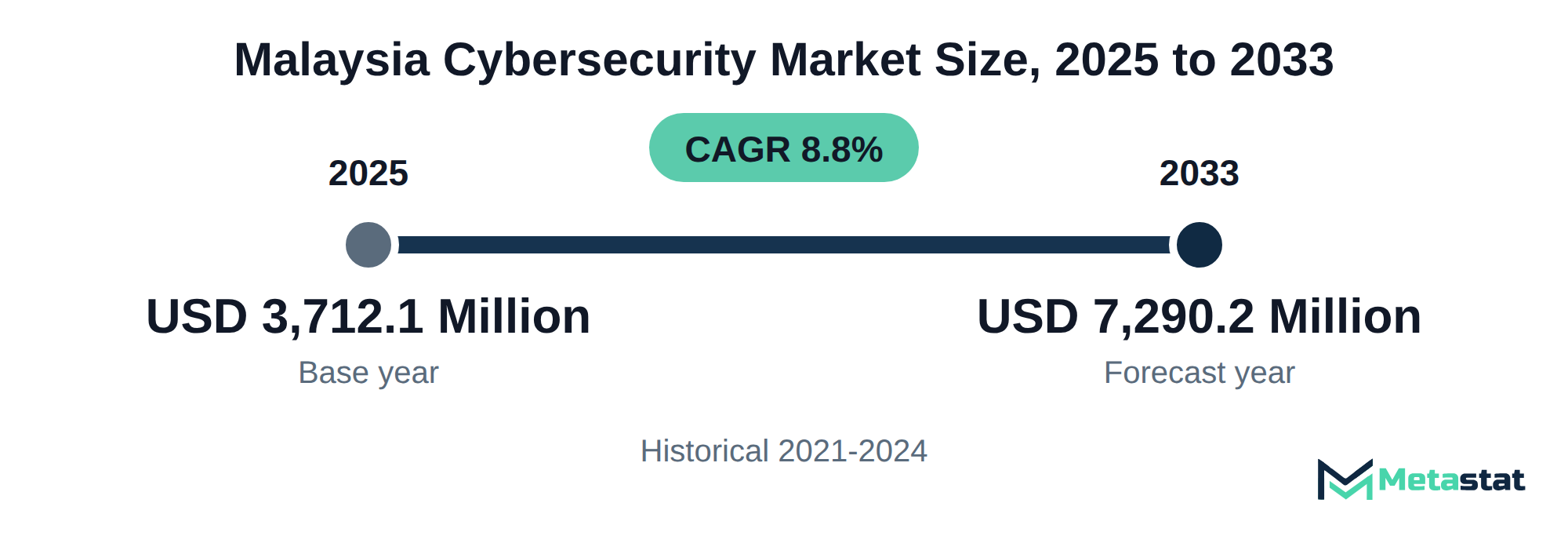
Market Valuation: Valued at $3,712.1 Million in 2025, projected to reach $7,290.2 Million by 2033 at a 8.8% CAGR.
Dominant Segment: The banking, financial services, and insurance (BFSI) sector leads the Malaysia Cybersecurity market, driven by the critical need for enhanced security measures against cyber threats and stringent regulatory compliance.
Geographic Lead: Asia-Pacific is the leading region in cybersecurity spending, fueled by rapid digital transformation and increasing regulatory requirements that emphasize the need for robust cybersecurity solutions.
What's Inside: This report provides a comprehensive analysis of the Malaysia Cybersecurity market, including competitive coverage, market dynamics, and detailed forecasts across various segments and deployment modes.
Cloud Security Growth: The cloud security segment is projected to reach USD 1,506.2 million by 2033, reflecting a CAGR of 12.6%, driven by the increasing reliance on cloud-based solutions and the need for enhanced security in hybrid work environments.
Managed Detection and Response Demand: Demand for Managed Detection and Response (MDR) services is accelerating, with the Security Services segment expected to reach USD 3,050.2 million by 2033, highlighting the shift towards proactive cybersecurity measures.
Choose Your License
Malaysia Cybersecurity Market
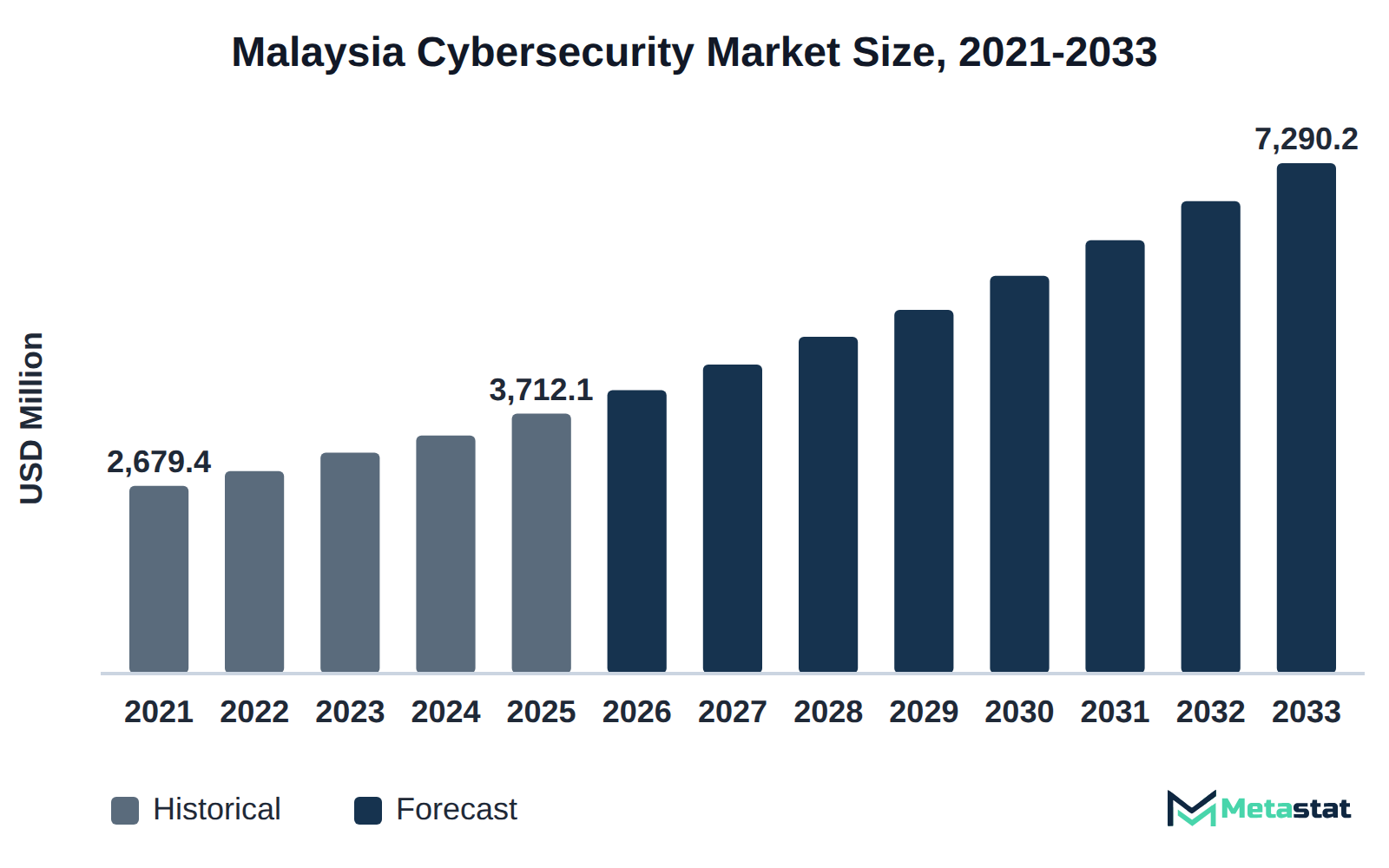
The Malaysia Cybersecurity market was valued at USD 3,712.1 million in 2025 and is projected to reach USD 7,290.2 million by 2033, growing at a CAGR of 8.8% over the forecast period.
The Malaysia Cybersecurity market encompasses a broad array of security solutions and services aimed at protecting digital information and infrastructure. This market attracts expenditure from various sectors, including banking, government, and telecommunications, driven by the increasing frequency and sophistication of cyber threats. Organizations prioritize investments in cybersecurity to safeguard sensitive data, ensure compliance with regulations, and maintain customer trust in operations.
Several factors propel growth in the market, particularly rising demand for reliable security solutions in the banking, financial services, and insurance (BFSI) sector. This segment represents the highest value within the market, supported by the necessity for enhanced security measures against cyberattacks. The market is projected to expand significantly at a compound annual growth rate of 8.8% over the forecast period, reflecting the urgent need for effective cybersecurity measures across industries.
The region demonstrating the largest share in cybersecurity spending is Asia-Pacific, which leads due to a combination of rapid digital transformation and increasing regulatory requirements. Growing concerns surrounding data privacy and security further drive investment in cybersecurity measures. Organizations focus on adopting advanced technologies and strategies to mitigate risks associated with cyber threats.
The demand for cybersecurity solutions and services in Malaysia stems from the increasing frequency and sophistication of cyber threats. Organizations across various sectors prioritize investments in these technologies to protect their assets, ensure compliance with regulations, and maintain customer trust. The financial services sector is the largest contributor to the market, with significant spending driven by stringent security requirements and the need for strong protection against data breaches.
Growth in the market is supported by the rising adoption of digital transformation initiatives across industries, coupled with heightened awareness of cybersecurity risks. Organizations integrate advanced technologies, including cloud computing and IoT, which create new vulnerabilities that require broader security measures. The cloud security segment stands out with notable value, driven by increasing reliance on cloud-based solutions and a shift toward remote work environments.
Market dynamics reflect a strong focus on enhancing security infrastructure, particularly within the BFSI sector and government agencies. Ongoing investment in security services highlights a proactive approach to managing risks and mitigating potential threats. This proactive stance contributes to an expanding market, driving competitive growth among key players and encouraging innovation in cybersecurity offerings.
Cloud security emerges as a critical focus in the Malaysia Cybersecurity market, reflecting a broader trend toward adopting zero-trust architectures. This shift prioritizes securing access to applications and data across diverse environments. In 2026, the cloud security segment is projected to reach USD 1,506.2 million, illustrating substantial investment growth in this area. Organizations increasingly recognize the need for stronger security measures, driven by the complexity of hybrid work models and the growing incidence of cyber threats.
Investments in cloud security and zero-trust security frameworks deliver immediate benefits, including enhanced protection against unauthorized access and data breaches. These expenditures support compliance with evolving regulatory requirements across various sectors, particularly in industries including BFSI, government, and healthcare. Organizations enhancing their security postures contribute to accelerated growth in the Malaysia Cybersecurity market, creating further opportunities for security solution providers and service firms.
Demand for Managed Detection and Response (MDR) services has seen significant growth within the Malaysia Cybersecurity market, driven by the increasing complexity of cyber threats and the necessity for businesses to enhance their security postures. Companies in Malaysia are opting for MDR solutions to proactively monitor, detect, and respond to security incidents, which often involve advanced persistent threats that traditional security measures struggle to address. MDR offerings are one form of managed security services, in which providers handle monitoring and response on behalf of clients.
The market for Security Services, which includes MDR, is projected to reach USD 3,050.2 million by 2033, reflecting a compound annual growth rate (CAGR) of 9.8%. This growth shows that businesses see value in investing in threat detection and response strategies. Implementing MDR solutions allows companies to shift from reactive to proactive security management, ultimately leading to a stronger defense against evolving cyber risks.
Pricing models for MDR services typically involve subscription-based contracts, allowing organizations to access advanced security technologies and expertise without the burden of managing these resources in-house. This approach effectively lowers operational costs while enhancing security capabilities. Organizations that adopt MDR services can mitigate risks efficiently and stay focused on their core business operations, which supports overall market growth.
The banking, financial services, and insurance (BFSI) sector represents a significant focus for cybersecurity investment within the Malaysia Cybersecurity market due to its critical role in national and economic stability. This sector is projected to achieve a value of USD 1,408.5 million by 2033, reflecting a compound annual growth rate (CAGR) of 7.8% from 2026. Such growth reflects rising demand for strong cybersecurity measures that protect sensitive financial data and maintain consumer trust.
Government agencies and critical infrastructure entities prioritize security to mitigate risks associated with cyber threats that lead to financial losses and data breaches. The government's ongoing push for digital transformation across various public services necessitates enhanced cybersecurity protocols to safeguard against evolving threats. By investing in advanced security solutions, entities protect their operational integrity and comply with regulatory requirements aimed at maintaining national security.
The anticipated increase in investment from these sectors significantly influences the overall demand dynamics within the market. Cybersecurity threats continue to evolve, driving the focus on specialized security solutions tailored for the BFSI sector and government infrastructure, which supports sustained growth and innovation in the Malaysia Cybersecurity market.
Investment in cloud cybersecurity solutions within the Malaysia Cybersecurity market is accelerating, reflecting a broader trend toward cloud services adoption across various sectors. In 2026, cloud deployment mode is projected to reach USD 3,117.3 million by 2033, driven by an anticipated compound annual growth rate (CAGR) of 12.6%. This shift signifies a growing preference for flexibility, scalability, and enhanced security offered by cloud-based solutions compared to traditional on-premise systems.
Business entities transitioning to cloud cybersecurity solutions benefit from reduced operational costs and improved resource allocation. The growing demand for hybrid work environments emphasizes the need for comprehensive cloud security frameworks. Organizations in sectors including BFSI and Government and Defense are particularly inclined toward these solutions, aiming to fortify their defenses against evolving cyber threats while maintaining operational efficiency. The implications of this transition extend beyond immediate cost savings. Stakeholders in the market adapt to this changing landscape to remain competitive.
Changing demographics among buyers drive increased spending on cybersecurity solutions in Malaysia. Organizations within the BFSI sector, government agencies, and IT firms seek robust cybersecurity measures due to heightened awareness of cyber threats. The increasing frequency of cyber incidents prompts these buyers to upgrade existing systems and adopt new technologies. A shift toward digital transformation enhances the urgency for comprehensive cybersecurity strategies. This surge in investment highlights the critical need for advanced cybersecurity solutions to protect sensitive data and maintain operational integrity. The combination of evolving buyer demographics and an increased focus on cybersecurity creates substantial growth opportunities within the market.
The push for digital transformation across industries significantly influences spending on cybersecurity solutions in the Malaysia Cybersecurity market. Organizations increasingly prioritize technology integration and efficiency, prompting investments in advanced security measures. This trend particularly affects sectors heavily reliant on digital infrastructure, including IT and Telecom, where enhanced security protocols protect sensitive data and ensure operational continuity. The rise in remote work and cloud adoption adds urgency to strengthen cybersecurity defenses, leading to higher demand for tailored solutions. Buyers are drawn to security services that enable integration with existing systems while providing continuous monitoring and threat detection. The shift towards digital platforms creates a demand for innovative security products that address unique vulnerabilities associated with new technologies. The growing complexity of cyber threats calls for stronger solutions and reinforces market growth through 2033.
High costs associated with cybersecurity solutions hinder adoption among small and medium-sized enterprises (SMEs) in Malaysia. These organizations often have constrained budgets and prioritize cost-effective solutions for their operational needs. The significant investment required for comprehensive cybersecurity measures leads to slower uptake and smaller orders. Many SMEs opt for basic security measures instead of advanced solutions, resulting in delayed replacement of outdated systems. This reluctance to invest in enhanced cybersecurity capabilities reduces overall market growth potential. The continuing threat landscape highlights the need for effective security solutions, but affordability remains a challenge for many SMEs. In the context of the Malaysia Cybersecurity market, addressing these financial constraints could facilitate greater engagement and investment from this crucial buyer segment.
Profit margin pressure presents a significant challenge for suppliers in the Malaysia Cybersecurity market. Increased competition among providers leads to downward pressure on pricing, impacting overall profitability. In response, suppliers enhance service offerings and focus on value-addition strategies to differentiate themselves from competitors. Several companies are exploring automation and machine learning to streamline operations and reduce service delivery costs. This approach aids in maintaining competitive pricing and improves the efficiency of cybersecurity solutions. Many suppliers intensify their focus on niche markets and specialized services, allowing for premium pricing models. This shift toward specialization creates new revenue streams and alleviates margin pressure, enabling providers to remain profitable while catering to evolving customer demands. Addressing margin pressure shapes long-term growth and sustainability in the market.
Strong growth in cloud security represents a significant opportunity within the market, with an anticipated value reaching USD 1,506.2 million by 2033. This segment exhibits a compound annual growth rate (CAGR) of 12.6%, indicating robust demand driven by the increasing reliance on cloud-based solutions across various industries. Organizations are transitioning to cloud environments to enhance their operational efficiency and scalability, leading to heightened investment in security measures tailored for these platforms. The rising incidence of cyber threats targeting cloud infrastructures necessitates comprehensive security strategies, compelling businesses to prioritize cloud security solutions. This shift reflects broader trends in digital transformation, where securing cloud environments becomes essential for organizations of all sizes. Investment in cloud security not only mitigates risk but aligns with strategic objectives for growth and innovation. The market's evolution highlights the importance of addressing emerging security challenges associated with cloud deployment, representing a critical area for investment and development.
The Malaysia Cybersecurity market is segmented based on Offering, Security Type, Deployment Mode, and End-Use Industry.
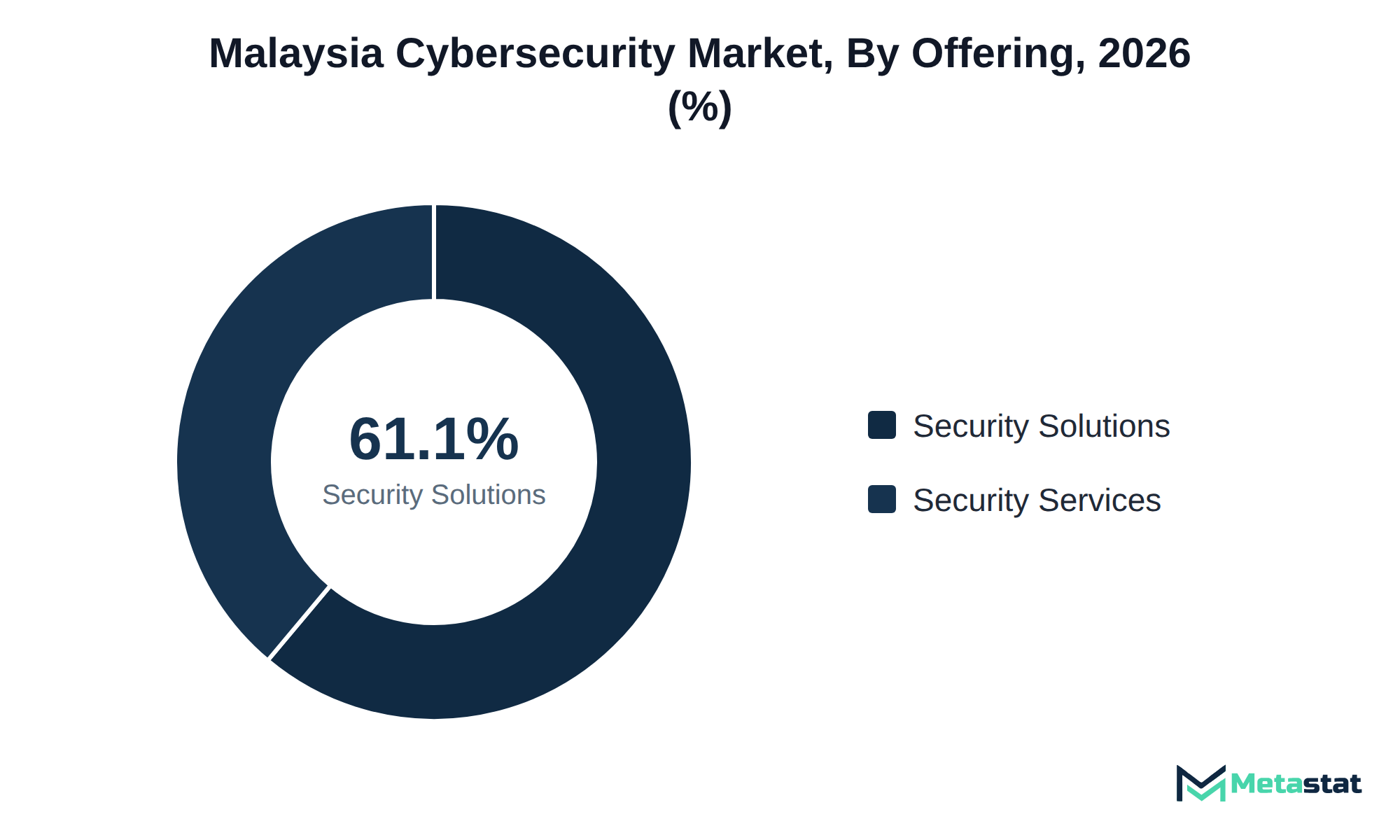
Security Solutions segment is valued at USD 2,459.8 million in 2026 and is projected to reach USD 4,240 million by 2033, at a CAGR of 8.1% during the forecast period. This segment provides vital tools and services designed to safeguard data and systems, primarily used by businesses and organizations across various sectors facing increasing cyber threats. Driven by the rise in cyberattacks, organizations actively seek reliable solutions to protect sensitive information. The segment's growth differs from Security Services, which is anticipated to grow at a faster CAGR of 9.8%, highlighting a significant shift towards integrated security measures. While Security Solutions offers a more static and foundational approach, the dynamic nature of the services sector responds quickly to evolving threats, appealing to organizations requiring immediate assistance and expertise.
This segment provides essential cybersecurity services, including consulting, risk assessment, and incident response, primarily by enterprises aiming to enhance their security posture. Organizations across various sectors, especially in BFSI and Government, rely on these services to address mounting cyber threats and compliance requirements. The accelerated adoption of these services is driven by the increasing complexity of cyber-attacks, which necessitates expert intervention. Compared to Security Solutions, which holds a CAGR of 8.1%, the Security Services segment experiences a more significant growth trajectory. This distinction highlights the escalating demand for specialized services that cater to unique security challenges faced by businesses today. Investing in these services enables organizations to maintain resilience against evolving threats, strengthening their cybersecurity frameworks.
Network Security segment is valued at USD 910.9 million in 2026 and is projected to reach USD 1,439.1 million by 2033, at a CAGR of 6.8% during the forecast period. This segment includes solutions that protect networks from unauthorized access, misuse, or theft of data, catering to organizations across various sectors including banking, healthcare, and telecommunications. The rising frequency of cyber threats drives investment in this area, with businesses prioritizing the safeguarding of their network infrastructure. Compared to other segments, Network Security experiences slower growth relative to Endpoint Security, which has a CAGR of 7.4%. The adoption of advanced technologies including intrusion detection systems and firewalls enhances network security measures, influencing purchase decisions in the market. Organizations recognize the critical need for strong network security strategies, particularly where sensitive data is handled, which supports compliance with regulatory standards.
Endpoint Security segment is estimated to reach USD 1,019.2 million by 2033, at a CAGR of 7.4% during the forecast period. This segment focuses on protecting endpoints including laptops, desktops, and mobile devices from cyber threats. Organizations across various industries, including BFSI and IT, employ Endpoint Security solutions to safeguard sensitive data and maintain operational integrity. An increasing trend of remote workforces and mobile device usage drives significant demand for these solutions, with businesses seeking to mitigate risks associated with unsecured endpoints. Unlike Network Security, which emphasizes broader infrastructure protection, Endpoint Security offers tailored defenses against specific threats targeting individual devices. This distinction leads to a more dynamic growth trajectory, reflecting the increasing sophistication of cyber threats targeting endpoints. The anticipated growth in this segment shows the market's focus on security strategies that integrate network and endpoint protections to improve overall cybersecurity posture.
Cloud Security segment is expected to reach USD 1,506.2 million by 2033. This segment encompasses a vital aspect of cybersecurity, focusing on protecting data stored and processed in cloud environments. Businesses across various industries employ cloud security solutions to safeguard sensitive information and comply with regulatory requirements. The demand for these solutions is driven by increasing reliance on cloud infrastructure and the growing sophistication of cyber threats targeting cloud-based assets. Compared to other segments, including Endpoint Security, which sees a CAGR of 7.4%, cloud security demonstrates a higher growth potential with a projected CAGR of 12.6%. This growth trajectory reflects the escalating need for organizations to enhance their security posture while leveraging cloud services. The Malaysia Cybersecurity market benefits from significant investments in cloud security, especially from sectors prioritizing digital transformation and operational efficiency.
Application Security segment is projected to grow at a CAGR of 9.6% during the forecast period. This segment includes solutions designed to protect applications from vulnerabilities and threats, often used by software developers, IT teams, and cybersecurity professionals to secure applications throughout their lifecycle. Increased regulatory compliance and the necessity to safeguard sensitive data drive demand for Application Security solutions. Unlike other segments, including Network Security, which focuses primarily on protecting network infrastructures, Application Security emphasizes securing the software itself. This distinction leads to a different buyer base, with software companies particularly reliant on these solutions. The growing complexity of applications and the integration of new technologies raise the urgency for robust Application Security frameworks, influencing overall spending within the Malaysia cybersecurity market.
Data Security encompasses measures and technologies that protect sensitive data from unauthorized access, corruption, or theft. Organizations across various sectors implement these solutions to safeguard personal information, financial records, and intellectual property. The sector attracts attention due to the increasing emphasis on data privacy regulations and the rise of cyber threats targeting data assets. Regulatory requirements, including enhanced data protection mandates, drive demand for robust data security solutions among businesses, particularly within the BFSI and healthcare industries. This segment distinguishes itself from others by focusing specifically on data integrity and compliance, which attracts higher investments compared to segments like Network Security or Endpoint Security. Organizations prioritizing data security solutions frequently seek advanced encryption technologies and identity management systems to mitigate risks associated with data breaches and data loss.
Identity and Access Management focuses on managing user identities and controlling access to resources, ensuring that only authorized individuals access sensitive information. Privileged identity management applies the same control to accounts with elevated access. Organizations across various sectors, including BFSI and government, engage this segment to mitigate risks associated with unauthorized access and data breaches. Increasing regulatory requirements surrounding data protection and privacy significantly drive the demand for robust identity and access management solutions. This segment distinguishes itself from other security types through its emphasis on user authentication and authorization processes, often featuring higher implementation costs due to the complexity of integration with existing systems. Ongoing advancements in technology, including multi-factor authentication and biometrics, enhance security measures, further emphasizing the importance of this segment in the Malaysia cybersecurity market.
Email security, web security, and operational technology (OT) security comprise a critical component of the cybersecurity landscape. These solutions address diverse threats including phishing attacks, malware infections, and vulnerabilities in industrial control systems. Organizations across various sectors, including healthcare, finance, and manufacturing, employ these services to protect sensitive information and maintain operational integrity. The demand for these security types is driven by the increasing frequency and sophistication of cyberattacks targeting various digital channels and infrastructure. Compared to other segments like network and endpoint security, this sub-segment experiences a unique set of challenges, including the need for continuous updates and upgrades, reflecting changing threats. Adopting these solutions involves higher compliance requirements, particularly in regulated industries, influencing the purchasing decisions of enterprises prioritizing regulatory adherence and data protection.
On-Premise deployment is valued at USD 1,834.9 million in 2026 and is projected to reach USD 2,634.7 million by 2033, at a CAGR of 5.3% during the forecast period. This deployment mode is primarily used by organizations seeking to maintain control over their cybersecurity infrastructure, often preferred by industries with stringent regulatory requirements. Factors including growing concerns over data privacy and security drive demand for On-Premise solutions, particularly among financial institutions and government agencies that prioritize data sovereignty. Compared to alternative deployment modes, On-Premise experiences slower growth, reflecting a trend toward cloud adoption, which grows at a CAGR of 12.6%. Overall, the On-Premise segment addresses specific needs for data control and protection in the Malaysia Cybersecurity market.
This segment supports organizations in securing their cloud environments, facilitating remote access and collaboration while maintaining data integrity. Enterprises across various sectors, particularly in BFSI and IT and Telecom, increasingly adopt cloud solutions to enhance operational efficiency and scalability. Rising cyber threats and the necessity for robust data protection drive heightened demand for such offerings. Compared to other deployment modes, cloud solutions experience faster growth, primarily due to their flexibility and lower upfront costs. This segment's anticipated CAGR of 12.6% surpasses the On-Premise segment's growth rate of 5.3%, highlighting a shift towards more scalable and accessible cybersecurity solutions. With increasing cloud adoption, the market experiences a notable transformation, emphasizing the need for comprehensive security measures tailored to evolving digital landscapes.
Hybrid deployment mode is expected to reach USD 1,538.2 million by 2033. This segment serves a vital role for organizations seeking a balanced approach between cloud and on-premise solutions, enabling flexibility and scalability. Enterprises in various sectors leverage hybrid models, especially those requiring secure data management alongside existing legacy systems. The increasing demand for such models stems from organizations' need for adaptability in their cybersecurity strategies. This segment experiences faster growth compared to on-premise solutions, with a projected CAGR of 12.6%. While several sectors prefer fully cloud-based solutions for their agility, others find hybrid approaches more suitable, allowing them to optimize costs while enhancing security measures. This dynamic reflects broader trends in the Malaysia Cybersecurity market, where organizations prioritize robust protection against evolving threats.
This segment caters primarily to financial institutions and governmental organizations, focusing on securing sensitive financial data and ensuring compliance with regulatory standards. Increasing incidences of cyber threats targeting financial systems drive demand for advanced security solutions. The regulatory environment surrounding data protection and privacy significantly influences investments in cybersecurity. Compared to other segments, the BFSI sub-segment experiences steady growth due to high levels of security spending. With a CAGR of 7.8%, growth remains robust yet slower than the anticipated increase in the cloud security segment, which shows a CAGR of 12.6%. The Malaysia Cybersecurity market is expected to continue evolving, adapting to emerging threats and regulatory demands.
The Government and Defense segment is estimated to reach USD 1,140.2 million by 2033, at a CAGR of 8.1% during the forecast period. This segment focuses on protecting sensitive governmental operations and defense mechanisms from cyber threats, ensuring national security and safeguarding critical infrastructure. Increased cyber threats targeting government institutions drive demand for advanced cybersecurity solutions. Regulatory requirements for data protection within the public sector enhance spending in this area. Compared to other segments, the Government and Defense segment experiences steady growth, influenced by evolving threat landscapes and the necessity for compliance with stringent regulations. The unique requirements of governmental bodies create a distinct buyer profile, often leading to higher investment levels in cybersecurity compared to sectors including manufacturing or retail. This differentiation reflects a commitment to robust security measures that are essential for maintaining public trust and operational integrity.
IT and Telecom segment is expected to reach USD 1,176.6 million by 2033. This segment serves various organizations involved in telecommunications, internet services, and information technology, focusing on maintaining secure infrastructures and protecting sensitive data. Increasing cyber threats drive demand for robust cybersecurity solutions. With a projected CAGR of 8.1%, this segment exhibits healthy growth, reflecting the industry's urgent focus on safeguarding digital assets. Compared to other segments, IT and Telecom maintains a moderate growth trajectory, influenced by rapid technological advancements and evolving regulations. Investments in enhanced security measures and compliance frameworks enhance this segment's overall appeal, positioning it favorably within the Malaysia Cybersecurity market.
The manufacturing segment is projected to grow at a CAGR of 9.2% during the forecast period. This segment is essential in the development and production of components and assemblies, integrating cybersecurity measures to protect intellectual property and sensitive operational data. Manufacturers face increasing pressure to comply with regulations regarding data protection and cybersecurity standards, driving investments in robust security solutions. Compared to other segments, the manufacturing sector typically experiences a faster growth rate due to its critical need for safeguarding proprietary technologies and production processes. The heightened focus on Industry 4.0, which incorporates IoT technologies and smart manufacturing, necessitates advanced cybersecurity measures, further fueling demand within the Malaysia Cybersecurity market.
Healthcare involves the protection of patient data and clinical information through advanced cybersecurity measures. This sector is critical for hospitals, clinics, and health technology providers, all prioritizing the safeguarding of sensitive health records. Increasing cyber threats targeting personal health information drive demand for security solutions in this field. Regulatory compliance, including adherence to health data protection laws, significantly influences purchasing decisions, ensuring that healthcare organizations adopt necessary cybersecurity measures. Compared to other segments, including BFSI, the Healthcare segment experiences distinct challenges, including the urgency to protect life-critical data and the necessity for continuous operational uptime. This focus on high-stakes data security creates a unique environment for cybersecurity investment. The market sees various technology implementations aimed at enhancing patient trust and ensuring secure interactions within digital health ecosystems.
Retail and E-Commerce includes businesses engaged in selling goods and services online, requiring robust cybersecurity measures to protect sensitive customer information and transaction data. Key users of this segment include online retailers, marketplaces, and service providers who prioritize data security to maintain customer trust and comply with regulations. Increasing cyber threats and a growing reliance on digital platforms drive demand for advanced cybersecurity solutions in this area. Retail and E-Commerce experiences more rapid growth compared to other segments, supported by the sector's expansion and the persistent need for security against data breaches. This segment's focus on online transactions sets it apart from traditional industries, necessitating tailored solutions to address unique vulnerabilities and maintain a competitive advantage within the market.
Energy and Utilities encompasses systems and services that ensure the security of critical infrastructure including power generation, water supply, and energy distribution. This segment typically serves utilities, energy producers, and government entities tasked with maintaining public safety and service continuity. Growing concerns about cybersecurity threats and infrastructure vulnerabilities drive demand for advanced energy cybersecurity measures tailored to this sector. Threats from cyber-attacks targeting energy systems prompt organizations to invest in specialized solutions to protect essential services. Compared to other segments, this sub-segment faces unique regulatory challenges and higher stakes due to potential disruptions affecting public safety and economic stability. The market responds dynamically to technological advancements and regulatory requirements, ensuring that energy and utility operations remain resilient against evolving cyber threats.
This sub-segment encompasses educational institutions, professional service providers, and logistics companies, each requiring distinct cybersecurity measures tailored to their operations. Educational institutions apply these measures to protect sensitive student and institutional data, while professional services safeguard client information and proprietary systems. Logistics companies face challenges related to securing supply chain data and operational technology. Demand within this sub-segment is driven by increasing regulatory requirements and the rising threat landscape, compelling organizations to enhance their cybersecurity posture. Compared to other segments, including BFSI and Government and Defense, this sub-segment experiences slower growth due to budget constraints in educational and smaller professional service entities. Investment in advanced cybersecurity solutions is essential to protect sensitive information across diverse industries. The Malaysia Cybersecurity market reflects this dynamic, presenting a diverse landscape where different sectors prioritize unique security needs.
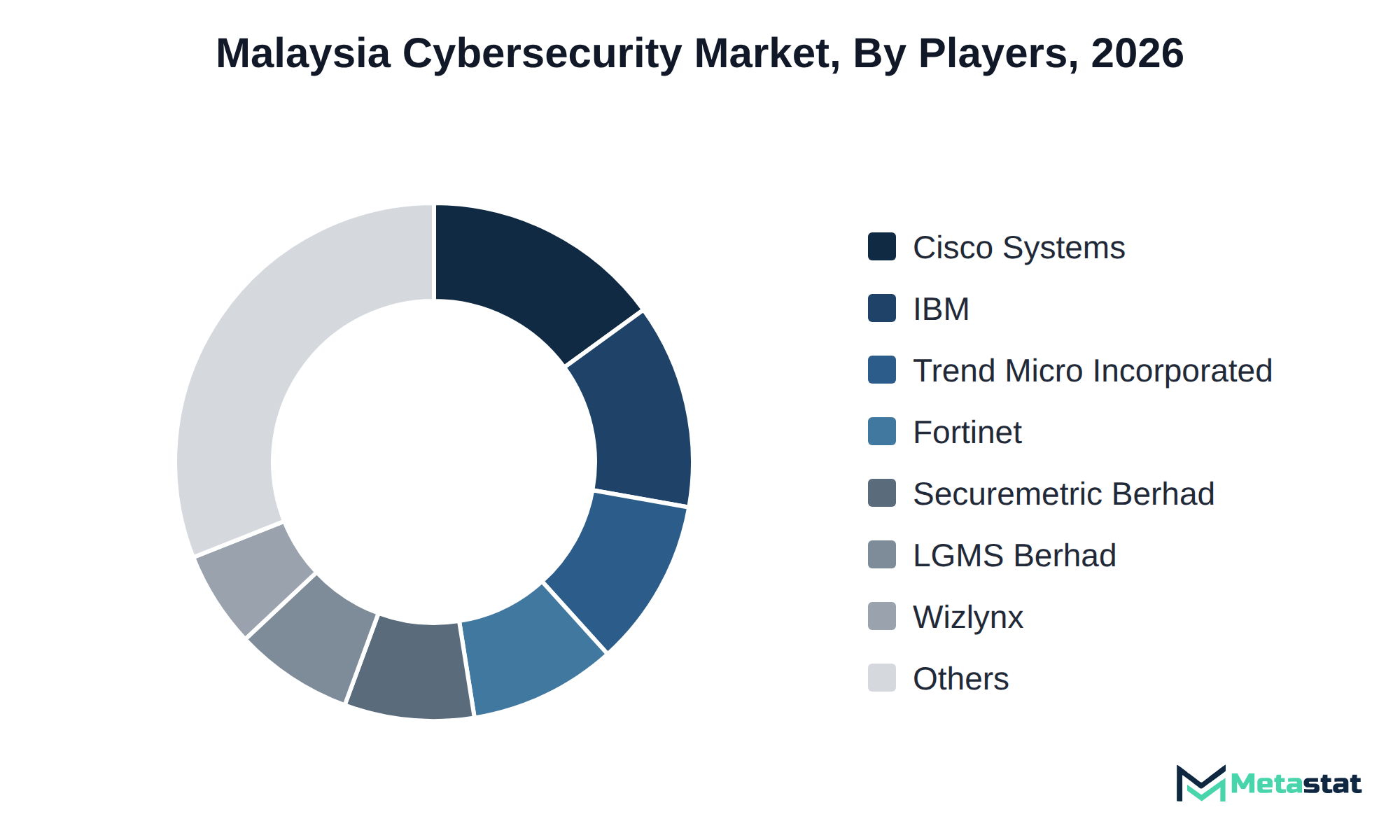
The Malaysia Cybersecurity market features various companies with distinct focuses, including security solutions and services. Providers including LGMS Berhad and Nexagate Sdn. Bhd. emphasize tailored security solutions for specific industries, addressing unique client requirements through customization and adherence to certification standards.
Competition within the market reflects a blend of service quality, pricing, and ecosystem integration. Companies like Cisco Systems, Inc. and IBM Corporation prioritize advanced technology and comprehensive ecosystems to attract enterprises seeking robust cybersecurity frameworks. Firms including Trend Micro Incorporated and Fortinet, Inc. focus on delivering competitive pricing and high-performance security services, appealing to both large organizations and small to medium-sized enterprises.
Achieving this growth relies on several key developments within the Malaysia Cybersecurity market. The adoption of Cloud Security is critical, with an anticipated value of USD 1,506.2 million by 2033, reflecting the rising demand for flexible and scalable security solutions. The BFSI sector, with growth from USD 833.8 million in 2026 to USD 1,408.5 million by 2033, significantly contributes to driving market expansion.
However, risks present challenges to achieving these targets. Rising cybersecurity threats and evolving attack vectors strain resources and hinder the pace of investment in necessary technologies. Organizations in sectors like Government and Defense, which are expected to see revenues reach USD 1,140.2 million by 2033, navigate these threats carefully. Overall, the alignment of technological advancements and strategic investments will be essential for the market to reach USD 7,290.2 million by 2033.
By Offering: Security Solutions, Security Services
By Security Type: Network Security, Endpoint Security, Cloud Security, Application Security, Data Security, Identity and Access Management, Others (Email Security, Web Security, OT Security)
By Deployment Mode: On-Premise, Cloud, Hybrid
By End-Use Industry: BFSI, Government and Defense, IT and Telecom, Manufacturing, Healthcare, Retail and E-Commerce, Energy and Utilities, Others (Education, Professional Services, Logistics)
The report strategically identifies and profiles the key market players and analyses their core competencies in each sub-segment of the Cybersecurity market.
Report Attributes | Details |
Study Period | 2021-2033 |
Base Year | 2025 |
Estimated Year | 2026 |
Forecast Period | 2026-2033 |
Historical Period | 2021-2025 |
Growth Rate | CAGR 8.8% from 2026 to 2033 |
Revenue Unit | USD million |
Segmentation | By Offering, Security Type, Deployment Mode, End-Use Industry, and Region |
Find answers to common questions about this report
The Cybersecurity market size was valued at USD 3,712.1 million in 2025.
The market is projected to grow at a CAGR of 8.8% during the forecast period from 2026 to 2033.
Security Solutions leads the Cybersecurity market with a projected value of USD 4,240 million by 2033, compared to Security Services, which is expected to reach USD 3,050.2 million in the same year.
Changing demographics among buyers drive increased spending on cybersecurity solutions in Malaysia. The push for digital transformation across industries significantly influences spending on cybersecurity solutions.
High costs associated with cybersecurity solutions hinder adoption among small and medium-sized enterprises in Malaysia. Profit margin pressure due to increased competition among providers impacts overall profitability, prompting suppliers to enhance service offerings and focus on value-addition strategies.
Several factors favor adoption in the Malaysia Cybersecurity market. Increased awareness of cyber threats drives organizations, particularly in the BFSI sector, government, and IT, to invest in robust cybersecurity solutions. The shift towards digital transformation further compels businesses to enhance their security measures, leading to higher demand for comprehensive strategies.
The Cybersecurity market is estimated to reach a valuation of USD 7,290.2 million by 2033.
Key players operating in the Cybersecurity market include LGMS Berhad, Nexagate Sdn. Bhd., Securemetric Berhad, Cisco Systems, Inc., IBM Corporation, Fortinet, Inc., Trend Micro Incorporated, and SentinelOne, Inc.
Cloud security is projected to reach USD 1,506.2 million by 2033, reflecting a compound annual growth rate (CAGR) of 12.6%, driven by increasing reliance on cloud-based solutions.
The BFSI sector is anticipated to grow from USD 833.8 million in 2026 to USD 1,408.5 million by 2033, indicating a CAGR of 7.8%.
The analysts below cover Information & Technology research at Metastat Insights.
LEAD ANALYST
Utkarsh Khirodkar is a Lead Market Research Analyst at MetaStat Insight, specializing in market intelligence, technology sector assessments, and competitive strategy.

PRINCIPAL CONSULTANT - ENTERPRISE AI & EMERGING TECHNOLOGIES
Banking & Finance · Electronics and Semiconductor · Energy and Power · Healthcare IT · Information & Technology · Professional Services
Vijay Gunti is a Principal Consultant at MetaStat Insight, bringing over two decades of experience across enterprise digital transformation, technology strategy, and intelligent systems.

LEAD CONSULTANT - COMMUNICATION, TELECOM, AND IT
Electronics and Semiconductor · Information & Technology · Machinery & Equipment · Professional Services
Ravindra Sathe Consultants for Communication, Telecom, and IT at MetaStat Insight. He leads the firm's industry research initiatives across telecommunications infrastructure, digital connectivity, enterprise networking, and emerging information technology domains.
Ambulatory surgical centers have very different purchasing cycles for robotic-assisted surgery platforms than major hospital networks. The MetaStat Insight study focused squarely on capital expenditure depreciation, procedural reimbursement pathways, and surgeon training overhead. That operational clarity made it much simpler to validate multi-year procedure growth forecasts against actual ambulatory center adoption patterns.
When planning edge sensor rollouts across refinery environments, generic IoT reports typically miss the harsh-environment certification bottlenecks. MetaStat Insight gave an objective evaluation of ATEX and Class 1 Division 2 hardware availability, along with realistic five-year maintenance cycle cost projections. The comparison of wireless mesh versus private cellular backhaul helped our team pressure-test network reliability models for remote processing facilities.
In the biological seed treatment space, registration timelines vary drastically between the European Union, Brazil, and North America. The MetaStat Insight research handled these cross-border regulatory barriers with genuine nuance, mapping commercialization pathways alongside historical field adoption rates. The segmentation between microbial strains and biochemical active ingredients was particularly well structured.
Explore related market intelligence reports worth reading alongside this one.
Starting from
$2950