
LEAD ANALYST
Utkarsh Khirodkar is a Lead Market Research Analyst at MetaStat Insight, specializing in market intelligence, technology sector assessments, and competitive strategy.

US Zero Trust Security Market Size, Share, By Security Type (Endpoint & IoT Security, Network Security, Identity & Access Management Security, Data Security, Cloud Security, Application Security, Security Analytics & Monitoring), By Deployment Model (On-Premises and Cloud), By Organization Size (Large Enterprises and Small & Medium-Sized Enterprises), By End-Use Industry (IT & Telecom, BFSI, Government & Defense, Healthcare, Retail & E-commerce, Manufacturing, Energy & Utilities), Industry Analysis, Growth, Trends, and Forecast, 2026-2033
Report ID
MSI-5625
Published
October, 2026
Pages
274 Pages
Format
Historical
Base year
Forecast
Forecast period
Report Details
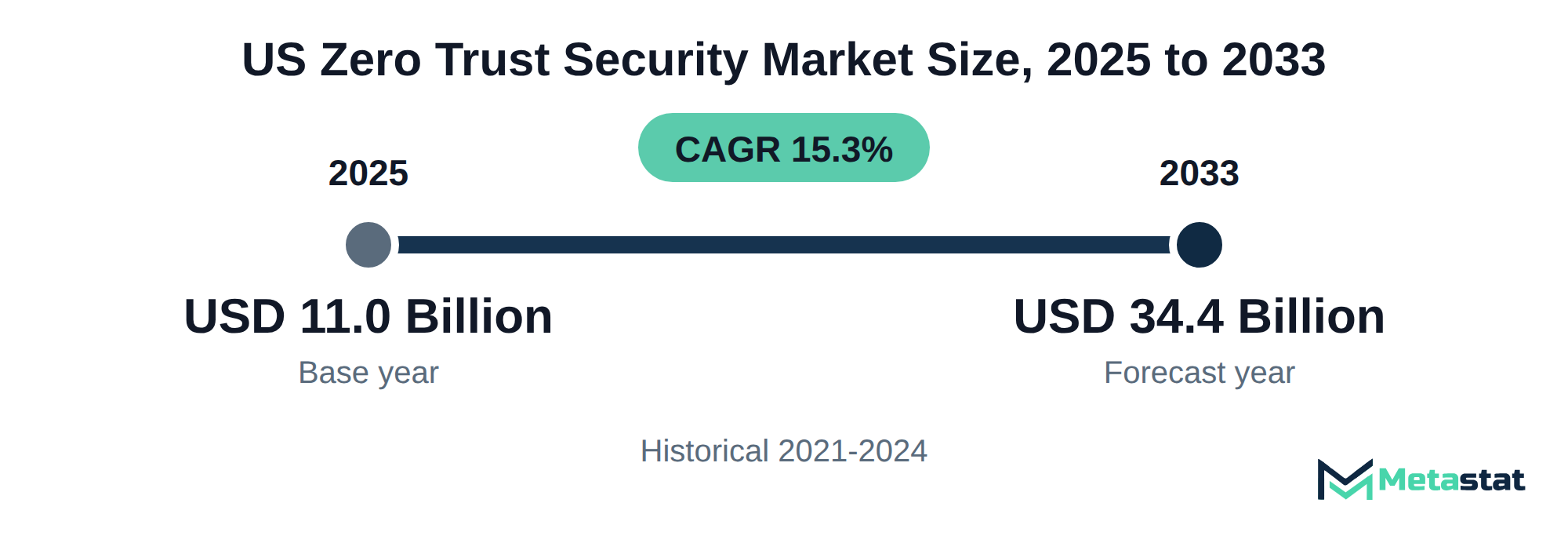
Market Valuation: Valued at $11 Billion in 2025, projected to reach $34.4 Billion by 2033 at a 15.3% CAGR.
Dominant Segment: Network Security leads the US Zero Trust Security market, driven by the critical need for safeguarding organizational networks against escalating cyber threats.
Geographic Lead: North America holds the largest market share, propelled by a high concentration of technology firms and an increasing awareness of cybersecurity challenges.
What's Inside: The report provides comprehensive competitive coverage, detailed analyses of market dynamics, and forecasts spanning from 2026 to 2033.
Increased Demand for Comprehensive Solut: Organizations are prioritizing comprehensive security measures to protect sensitive data and maintain operational continuity in response to evolving cyber threats.
Increased Cloud Adoption Drives Market G: The shift towards cloud deployment models is a significant factor in market growth, as organizations seek flexibility and scalability in their security solutions.
Choose Your License
US Zero Trust Security Market
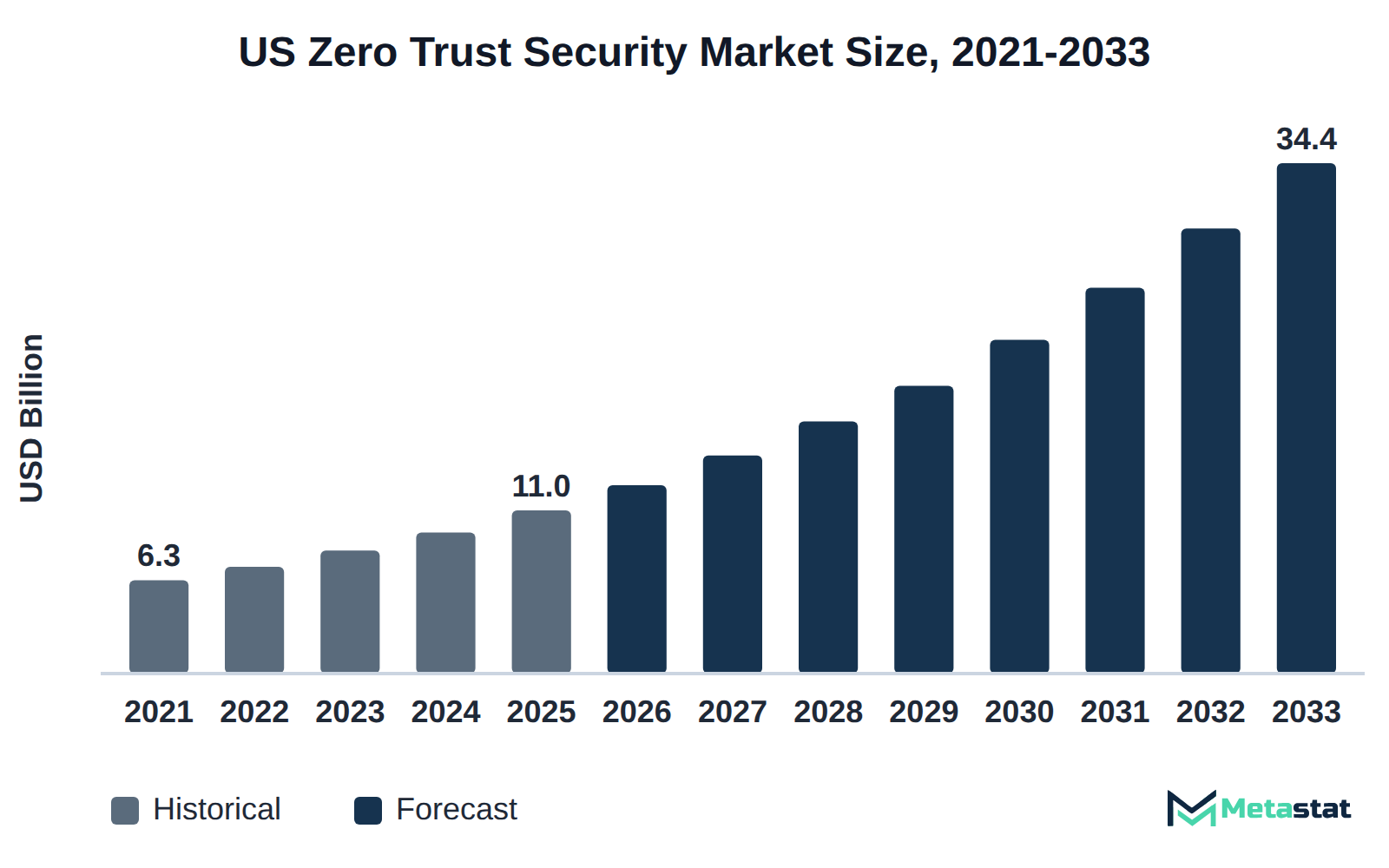
The US Zero Trust Security market was valued at USD 11 billion in 2025 and is projected to reach USD 34.4 billion by 2033, growing at a CAGR of 15.3% over the forecast period.
The US Zero Trust Security market encompasses a range of products and services designed to enhance cybersecurity by adopting a perimeterless security model. This approach addresses the rising concerns around data breaches and cyber threats, prompting organizations across various sectors to invest significantly in these solutions. Demand stems from the increasing need for robust security measures, particularly in environments where remote work and cloud adoption are prevalent.
Growth in the market is driven by the escalating frequency of cyberattacks and the growing awareness of the vulnerabilities inherent in traditional security architectures. Within the segments, Network Security is projected to hold the largest market share, reflecting its critical role in safeguarding organizational networks. The rapid shift to cloud computing further increases the demand for advanced security solutions, ensuring data protection across various platforms and applications.
Large Enterprises constitute a primary buyer group, seeking comprehensive security solutions to mitigate risks and maintain regulatory compliance. The anticipated compound annual growth rate of 15.3% points to a strong upward trajectory for the US Zero Trust Security market through the forecast period. Continuous innovation and the evolution of security technologies will drive investment in Zero Trust Security solutions.
Investments in the US Zero Trust Security market arise from the growing need to secure sensitive data and systems as cyber threats evolve rapidly. Organizations recognize the importance of implementing effective security measures across multiple layers, ensuring robust protection against unauthorized access. This need for comprehensive security solutions drives demand across various sectors, particularly in industries where data integrity and privacy are essential.
The anticipated growth in the market is primarily fueled by the increasing adoption of cloud-based solutions. Among the different security types, Network Security holds the largest share, reflecting organizations' focus on safeguarding their networks against a variety of cyber threats. In terms of regional performance, North America holds the most significant market share, driven by the high concentration of technology firms and heightened awareness of cybersecurity challenges.
The widespread shift toward remote working arrangements further accelerates the demand for Zero Trust Security solutions. While companies embrace digital transformation initiatives, the requirement for secure access to resources and data becomes critical. Overall, the US Zero Trust Security market is positioned for substantial growth as industries continue strengthening their cybersecurity measures.
The shift from traditional enterprise virtual private networks (VPNs) to Universal Zero Trust Network Access (ZTNA) represents a significant transformation in the US Zero Trust Security market. Organizations increasingly recognize the limitations of conventional VPNs, which often expose networks to potential threats by creating broad access points. In contrast, ZTNA applies a more granular approach, providing access based on user identity, device security posture, and contextual information, thereby minimizing risks associated with remote access.
For instance, the market anticipates that Cloud Deployment Models will generate USD 19.5 billion by 2033, reflecting a compound annual growth rate (CAGR) of 20.8%. This rapid growth in the cloud segment highlights the move toward more secure and flexible access solutions. Businesses in sectors including IT and Telecom, projected to reach USD 13.5 billion by 2033 with a CAGR of 14.2%, lead this transition.
This transformation enhances security and improves user experience. By limiting access based on user-specific factors, organizations provide employees with reliable connectivity while protecting sensitive data. The shift to Universal ZTNA is a strategic move that positions businesses to adapt to evolving security threats, ultimately driving demand within the US Zero Trust Security market.
The convergence of identity security and microsegmentation significantly influences procurement strategies within the US Zero Trust Security market. Organizations increasingly prioritize a unified approach that integrates these two essential components to enhance security measures. The market saw a notable shift towards prioritizing identity and access management solutions. Expected demand growth is reflected in the significant revenue projection of USD 6.6 billion for Identity & Access Management Security by 2033.
While buyers navigate procurement, flexible pricing models emerge as an essential consideration. Providers frequently offer subscription-based pricing, allowing businesses to scale their solutions in alignment with evolving security needs. This model supports organizations in managing costs effectively while accessing advanced technology. The anticipated growth in demand emphasizes the importance of adaptable payment structures that align with budget constraints and operational goals.
Overall, the focus on identity security and microsegmentation shapes purchasing decisions and enhances overall security postures. Organizations adopting these integrated solutions experience improved protection against advanced threats while optimizing their investment in security technologies. This trend shows why strategic procurement matters in the US Zero Trust Security market.
Zero Trust access controls play a critical role in protecting U.S. healthcare devices and industrial operational technology (OT) from cyber threats. This sector faces unique challenges due to the sensitive nature of the data involved and the need for uninterrupted service. The increasing interconnectivity of medical devices and industrial systems creates vulnerabilities, making robust security measures essential. In the U.S. Zero Trust Security market, healthcare organizations are projected to increase their investment in endpoint security significantly. Forecast growth runs from USD 5.4 billion in 2026 to USD 13.5 billion by 2033, a compound annual growth rate of 14.2%.
Implementing Zero Trust models aids in mitigating risks associated with unauthorized access to medical and industrial systems. Healthcare providers and industrial operators require tailored solutions that ensure secure connectivity among devices while maintaining compliance with regulatory standards. The rising demand for secure access controls directly influences the market, pushing organizations to adopt advanced security measures focused on identity and access management. This shift enhances data protection and optimizes operational efficiency within these critical sectors.
U.S. enterprises evaluating Zero Trust Security platforms for hybrid environments should consider the scalability of the solutions offered. An effective platform adapts to both on-premises and cloud environments while maintaining consistent security policies and user experiences. The US Zero Trust Security market is projected to grow significantly, with cloud security expected to reach USD 19.5 billion by 2033, reflecting a compound annual growth rate (CAGR) of 20.8%. This growth highlights the increasing reliance on cloud solutions in tandem with traditional on-premises systems.
Organizations assess integration capabilities with existing infrastructure. An efficient integration process enhances operational efficiency and ensures comprehensive coverage across all endpoints. Zero Trust Security platforms support various security types, including endpoint and IoT security. This segment is projected to grow from USD 3.2 billion in 2026 to USD 7.7 billion by 2033, a CAGR of 13.3%. Such growth reflects the demand for adaptable security measures in hybrid environments.
Prioritizing scalability and integration when selecting Zero Trust Security platforms enables U.S. enterprises to enhance their security posture while promoting cohesive operations across diverse environments. Vendors providing these capabilities are expected to gain a competitive advantage in the expanding US Zero Trust Security market.
Growing concerns over cybersecurity threats drive demand for comprehensive security solutions among organizations, particularly in large enterprises and small to medium-sized businesses. Clients seek to protect sensitive data and maintain operational continuity in an environment where cyber attacks become more sophisticated. The increasing emphasis on regulatory compliance and the shift towards remote work contribute to heightened spending in this sector. This shift highlights a significant increase in investment in advanced security infrastructures to ensure a robust defense against cyber threats.
Changing organizational priorities and the need for reliable cybersecurity measures drive this expansion, presenting opportunities for vendors and service providers targeting diverse sectors, including IT, healthcare, and finance. The market continues to evolve while companies prioritize integrating innovative security frameworks to address emerging risks effectively.
Cloud deployment models significantly influence the US Zero Trust Security market. Organizations increasingly adopt cloud solutions to enhance flexibility and scalability while reducing infrastructure costs. This shift reflects a broader trend toward digital transformation across industries, particularly in IT and telecom, where firms seek agile security frameworks that integrate with existing cloud services. The growing reliance on cloud infrastructure necessitates advanced security measures, driving demand for Zero Trust principles that prioritize user identity and device security over traditional perimeter-based approaches. Businesses experience enhanced protection against evolving cyber threats through the deployment of Zero Trust strategies, which mitigate risks associated with remote work and cloud environments. Cloud security solutions represent a substantial portion of market growth, with an anticipated compound annual growth rate of 20.8% through 2033. This trend positions organizations to better safeguard sensitive data while adapting to the complexities of modern IT environments.
High costs associated with Zero Trust Security implementations limit demand among small and medium-sized enterprises (SMEs). Budget constraints within this buyer group lead to slower adoption rates and smaller orders in the market. In an economic environment where IT budgets are tight, SMEs prioritize essential cybersecurity measures over advanced zero trust solutions. This prioritization results in delayed transitions away from traditional security models, impacting the overall market growth rate. Organizations face increasing threats, and the pressure to allocate funds efficiently complicates decisions regarding robust security investments. Reluctance to embrace comprehensive zero trust solutions due to financial considerations hampers operational efficiency and leaves organizations vulnerable to potential breaches. This dynamic creates a significant challenge for vendors seeking to penetrate the SME segment effectively.
The rising costs associated with skilled labor present a significant challenge for suppliers in the US Zero Trust Security market. Talent scarcity results from the increasing demand for cybersecurity professionals, particularly those with expertise in Zero Trust architectures. This shortage impacts service delivery and profitability, compelling organizations to invest heavily in recruiting and retaining qualified personnel. In response, suppliers implement competitive compensation packages and enhanced training programs to attract talent. Several firms pursue partnerships with educational institutions to cultivate a pipeline of skilled workers. Automation tools emerge in response to the demand for efficiency, allowing existing teams to manage workloads more effectively. Organizations maintain service quality and minimize operational disruptions despite the talent constraints in the market.
Endpoint and IoT security represents a significant growth segment within the US Zero Trust Security market. With a projected compound annual growth rate (CAGR) of 13.3% from 2026 to 2033, this segment addresses the increasing demand for safeguarding a range of devices connected to enterprise networks. The proliferation of Internet of Things (IoT) devices increases vulnerabilities, prompting organizations to seek robust security solutions that incorporate endpoint protection. The ability to implement comprehensive security measures across diverse devices enhances overall network security, catering primarily to large enterprises and small to medium-sized businesses.
The rising adoption of IoT across various industries, including healthcare and manufacturing, intensifies the imperative for effective endpoint security solutions. Companies are investing in advanced technologies and services to mitigate risks associated with endpoint vulnerabilities, resulting in increased demand within the market. This trend indicates a significant opportunity for providers focused on delivering innovative endpoint and IoT security solutions that align with evolving cybersecurity needs.
The US Zero Trust Security market is segmented based on Security Type, Deployment Model, Organization Size, and End-Use Industry.
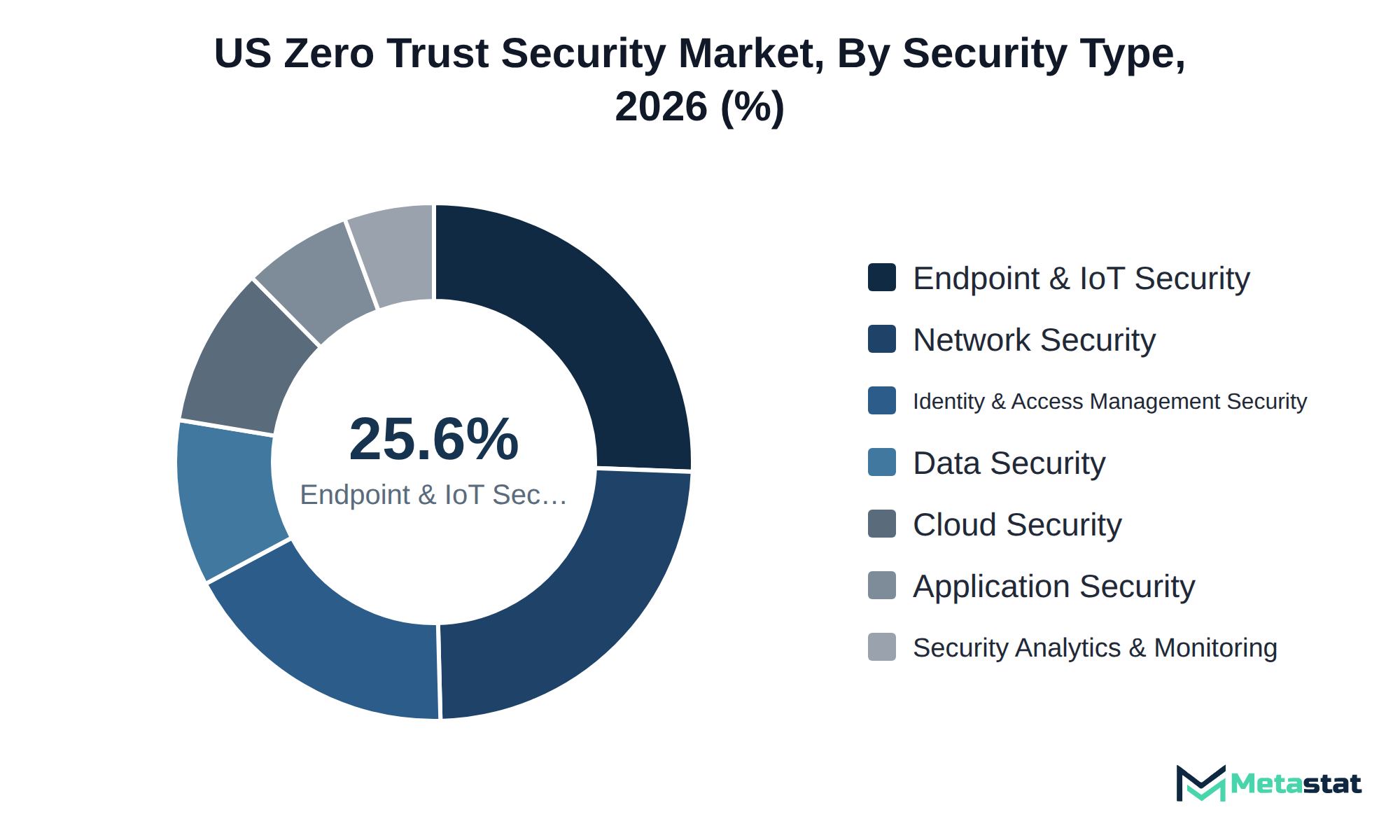
Organizations apply this segment to secure devices and networks that connect to their systems, addressing vulnerabilities linked to the increasing use of Internet of Things (IoT) technologies. The segment experiences growth due to heightened awareness of cybersecurity threats, particularly in sectors including healthcare and manufacturing. This segment's growth rate is notable when compared to other security types, reflecting strong demand among large enterprises and small to medium-sized enterprises. The adoption of advanced technologies and real-time monitoring tools within this segment enhances overall security posture, driving ongoing investments. In contrast to other sub-segments, which focus on broader network security elements, Endpoint & IoT Security emphasizes safeguarding specific devices and applications.
Network Security segment is estimated to reach USD 7.5 billion by 2033, at a CAGR of 13.9% during the forecast period. This segment focuses on protecting network infrastructure and data from unauthorized access and threats. Intrusion detection and prevention systems are among the technologies used to identify and block unauthorized access attempts. Organizations across various sectors, including IT and telecom, rely on this segment to safeguard their digital assets. Key drivers for growth include increasing cyber threats and the demand for advanced security solutions. The Network Security segment experiences growth dynamics that set it apart from other sub-segments, including a robust emphasis on real-time threat detection and response. This segment's growth trajectory is slightly lower than that of Endpoint and IoT Security, which benefits from a CAGR of 13.3%. The market for Network Security reflects the critical need for secure network environments in an era of escalating cyber risks.
Identity & Access Management Security segment is expected to reach USD 6.6 billion by 2033. This segment focuses on managing user identities and controlling access to systems and data, serving organizations across various sectors, including IT, finance, and healthcare. One significant demand driver is the increasing need for secure authentication mechanisms due to rising cyber threats. Enterprises require robust identity solutions to safeguard sensitive information, enhancing overall security posture. Compared to other segments, Identity & Access Management Security experiences a higher growth rate, driven by compliance and regulatory standards that necessitate strict access controls and monitoring practices. This segment's distinct emphasis on user identity and access differentiates it from other security types like Network Security and Data Security, which target different aspects of cybersecurity. Ultimately, this growth reflects an urgent response to evolving cyber threats and the need to protect digital identities.
Data Security segment is projected to grow at a CAGR of 15.9% during the forecast period. This segment focuses on protecting sensitive information from unauthorized access and breaches, used by various organizations including healthcare, finance, and government entities. The increasing incidence of data breaches significantly drives demand for robust data security solutions. Organizations prioritize safeguarding personal and financial information, leading to heightened investment in advanced data protection technologies. Compared to other segments, Data Security stands out due to its higher anticipated growth rate. While Network Security and Endpoint Security focus more on perimeter defense and device protection, respectively, Data Security emphasizes safeguarding the actual data regardless of its location, thereby addressing emerging vulnerabilities in an increasingly decentralized environment. The market is expected to see continued advancements in data encryption and masking technologies to meet evolving security needs.
Cloud Security encompasses solutions designed to safeguard cloud environments, applications, and data in transit. Organizations across various sectors deploy these solutions to mitigate risks associated with cloud adoption, especially as more businesses transition to cloud-based infrastructures. Demand for this segment is driven by the increasing frequency and sophistication of cyberattacks targeting cloud systems and services. The growing trend of remote work further emphasizes the requirement for robust cloud security measures. Compared to other security types, Cloud Security exhibits faster growth, propelled by rising cloud services usage and the increasing need for effective data protection strategies. With a focus on scalability and continuous protection, this sub-segment addresses unique challenges posed by cloud environments, distinguishing it from traditional security approaches.
Application Security focuses on protecting applications from cyber threats by implementing security measures throughout the software development lifecycle. This segment serves various industries, including IT, healthcare, and finance, where sensitive data protection is critical. Increased reliance on software applications and cloud services drives demand for Application Security solutions, enabling organizations to safeguard their digital assets. In comparison to other segments including Network Security and Endpoint Security, Application Security experiences slower growth due to complexities in integrating security protocols within existing applications. However, the rise of application vulnerabilities and regulatory requirements for data protection highlights the necessity for robust security solutions in this area. Organizations prioritizing application security enhance their overall security posture, responding effectively to emerging threats and compliance challenges.
Security Analytics & Monitoring involves the real-time analysis and monitoring of security events and incidents to enhance an organization’s threat detection and response capabilities. This segment finds extensive application across various sectors, including IT and healthcare, helping organizations identify vulnerabilities and address potential breaches proactively. The increasing sophistication of cyber threats drives demand for advanced analytics and real-time monitoring solutions. Organizations seek to strengthen their cybersecurity posture in a landscape characterized by constant digital transformation. This segment differs from others within the security type group due to its focus on data-driven insights and analytics, positioning it as a crucial component for organizations aiming to achieve robust security measures in an increasingly complex threat environment. The market shows potential for growth driven by the escalating need for intelligence-led security measures.
The On-Premises segment is valued at USD 7.5 billion in 2026 and is projected to reach USD 14.9 billion by 2033, at a CAGR of 10.2% during the forecast period. This deployment model is employed primarily by organizations seeking to maintain control over their security infrastructure and comply with industry regulations. Large enterprises and small to medium-sized businesses use on-premises solutions to address specific compliance and security requirements. The steady growth of this segment is driven by increasing concerns over cybersecurity threats and regulatory compliance, particularly among industries including finance and healthcare. Compared to cloud deployment models, which exhibit a higher growth rate, on-premises solutions offer more customization and control, making them favorable for organizations with stringent security needs. Ongoing investment in infrastructure upgrades supports robust demand for on-premises security solutions in the US Zero Trust Security market.
This segment focuses on providing security solutions tailored for cloud environments, enabling secure access and data protection for organizations adopting cloud technologies. Large enterprises and small to medium-sized businesses adopt these solutions to safeguard sensitive information and applications hosted in the cloud. Rapid adoption of cloud services drives demand, reflecting a shift toward modernized IT infrastructures. The growing need for flexibility and scalability in security solutions differentiates this segment from on-premises alternatives, which are projected to grow at a slower CAGR of 10.2%. The market's ability to address evolving cybersecurity threats supports further expansion, ensuring organizations remain protected in an increasingly digital environment.
The Large Enterprises segment is valued at USD 8.1 billion in 2026 and is projected to reach USD 20.4 billion by 2033, at a CAGR of 14.1% during the forecast period. This segment primarily serves large organizations that seek advanced security solutions to protect sensitive data and maintain regulatory compliance. Increasing reliance on digital infrastructure and the necessity for robust cybersecurity strategies drive demand within this segment. Larger firms face unique challenges compared to small and medium-sized enterprises, including higher vulnerability to sophisticated cyber threats and greater regulatory scrutiny. The growth trajectory for this segment reflects a commitment to adopting comprehensive security measures. The market anticipates that large enterprises will increasingly invest in advanced technologies to enhance their security postures, supported by ongoing investments in Zero Trust frameworks.
The Small & Medium-Sized Enterprises segment is estimated to reach USD 14 billion by 2033, at a CAGR of 17.1% during the forecast period. This segment primarily serves businesses requiring robust security measures to protect sensitive data and network resources. Increased digitalization and heightened awareness of cyber threats drive demand for advanced security solutions tailored for smaller organizations. The emphasis on budget-friendly security options is vital, distinguishing this segment from larger enterprises that prioritize comprehensive, high-cost solutions. While large enterprises focus on broader security strategies, small and medium-sized enterprises often seek adaptable and cost-effective approaches, resulting in a faster growth trajectory within the market. The unique challenges faced by these businesses, including limited resources and pressure to comply with regulations, further drive the adoption of Zero Trust Security frameworks.
This segment serves telecommunications and IT service providers that require robust security solutions to protect sensitive data and ensure network integrity. Increased reliance on digital operations and remote work models significantly influences this segment's growth. The ongoing evolution of cyber threats necessitates advanced security measures, heightening demand for Zero Trust strategies. Compared to other segments, IT & Telecom experiences moderate growth, driven by its unique challenges and higher security requirements, leading to its projected expansion in the market.
The BFSI segment is estimated to reach USD 5.9 billion by 2033, at a CAGR of 14.5% during the forecast period. This segment primarily serves banks, insurance companies, and financial services firms, focusing on securing sensitive financial data and ensuring regulatory compliance. The increasing frequency of cyberattacks targeting financial institutions drives strong demand for advanced security solutions. Evolving regulations necessitate comprehensive security measures, enhancing the urgency for BFSI players to adopt Zero Trust Security frameworks. Compared to other segments, this segment experiences significant growth due to its critical nature, with unique buyer dynamics emphasizing stringent security requirements and compliance. The overall market dynamics reflect a heightened focus on protecting financial data and maintaining customer trust, which significantly influences the adoption of Zero Trust strategies across the BFSI sector.
The Government & Defense segment is expected to reach USD 4.1 billion by 2033. This segment protects sensitive governmental and defense data from cyber threats and unauthorized access. Agencies and military organizations adopt Zero Trust Security solutions to secure their networks and infrastructure, ensuring national security and maintaining the integrity of sensitive information. The increasing frequency of cyberattacks targeting government institutions drives demand within this segment. In comparison to other segments, Government & Defense exhibits slower growth, with a compounded annual growth rate (CAGR) of 14.1%, influenced by stringent regulations and compliance requirements prevalent in the sector. Overall, this segment attracts significant investment from government agencies focused on enhancing their cybersecurity posture while addressing specific threats unique to the public sector.
Healthcare is projected to grow at a CAGR of 18.2% during the forecast period. This growth reflects the increasing demand for robust security solutions to protect sensitive patient data and ensure compliance with strict regulations. Healthcare organizations, including hospitals and clinics, prioritize security measures to safeguard electronic health records and other critical data from cyber threats. The rising frequency of healthcare-related cyber incidents drives this segment's growth, distinguishing it from others in the market. Unlike segments including IT & Telecom, which is expected to grow at a CAGR of 14.2%, the healthcare segment exhibits a stronger growth trajectory due to heightened concerns regarding patient privacy and data security. Investment in advanced security technologies, including identity and access management, remains crucial for healthcare providers aiming to enhance their cybersecurity posture.
Retail & E-commerce represents a critical component of the US Zero Trust Security market, focusing on securing online transactions, protecting customer data, and ensuring business continuity. Companies within this segment, typically retailers and e-commerce platforms, employ advanced security measures to mitigate risks associated with cyber threats. The rising frequency of data breaches and growing consumer awareness about data privacy necessitate robust security solutions tailored for this sector. While segments like IT & Telecom experience significant growth, Retail & E-commerce faces unique challenges, particularly regarding the rapid adaptation of security measures to evolving digital channels. The need for effective user experiences while maintaining high-security standards drives innovation and investment in this area.
Manufacturing involves production processes where organizations require robust security measures to protect sensitive data and maintain operational integrity. Companies in this sector implement Zero Trust Security solutions to safeguard against cyber threats, ensuring the protection of intellectual property and sensitive operational data. Key drivers influencing this segment include increasing cyberattacks specifically targeting manufacturing systems, alongside the rising adoption of smart manufacturing and Industry 4.0 technologies that demand enhanced security protocols. This segment stands out with potential for rapid growth, driven by heightened awareness of cybersecurity risks and regulatory requirements. Compared to other segments, including IT & Telecom, Manufacturing experiences a different adoption rate due to varying compliance needs and the complexity of integrating advanced cybersecurity measures into existing manufacturing infrastructure. The US Zero Trust Security market reflects these trends through increased investments to secure manufacturing systems and processes.
Energy & Utilities encompasses energy cybersecurity solutions tailored for the protection of critical infrastructure and services within the energy sector, including oil, gas, and electricity. This segment attracts investment from utility companies and energy providers aiming to safeguard their operational technology and data from increasing cyber threats. Rapid digitization within the sector drives demand, with organizations focusing on implementing Zero Trust Security to improve resilience against attacks. Regulatory requirements further influence adoption, compelling firms to prioritize advanced security measures. Compared to other segments, Energy & Utilities experiences unique challenges due to its diverse range of legacy systems, complicating the integration of innovative security solutions. The market for Zero Trust Security is expanding as organizations recognize the importance of securing their infrastructures against evolving cyber threats, raising this segment's profile within the broader context of the US Zero Trust Security market.
This segment includes various industries including Education, Transportation & Logistics, and Hospitality that require tailored security solutions to protect sensitive data and ensure compliance with regulations. Educational institutions, transportation companies, and hospitality providers apply these security measures to safeguard personal information, financial transactions, and operational integrity. Increasing digital transformation drives demand for enhanced security protocols, particularly amid rising cyber threats targeting sensitive data in these sectors. Unlike other segments, this one experiences slower growth due to budget constraints and regulatory hurdles that impede adoption. Organizations in this segment often face challenges in securing funding for robust security implementations, impacting their ability to invest in comprehensive Zero Trust Security solutions. The US Zero Trust Security market is expected to evolve, reflecting the growing importance of cybersecurity across all sectors.
In the US Zero Trust Security market, competition evolves around distinct service types and deployment models. Companies focus on providing innovative solutions across various security types, including endpoint and IoT security, network security, identity and access management security, and data security. The competitive environment highlights diverse business strategies prioritized by individual companies.
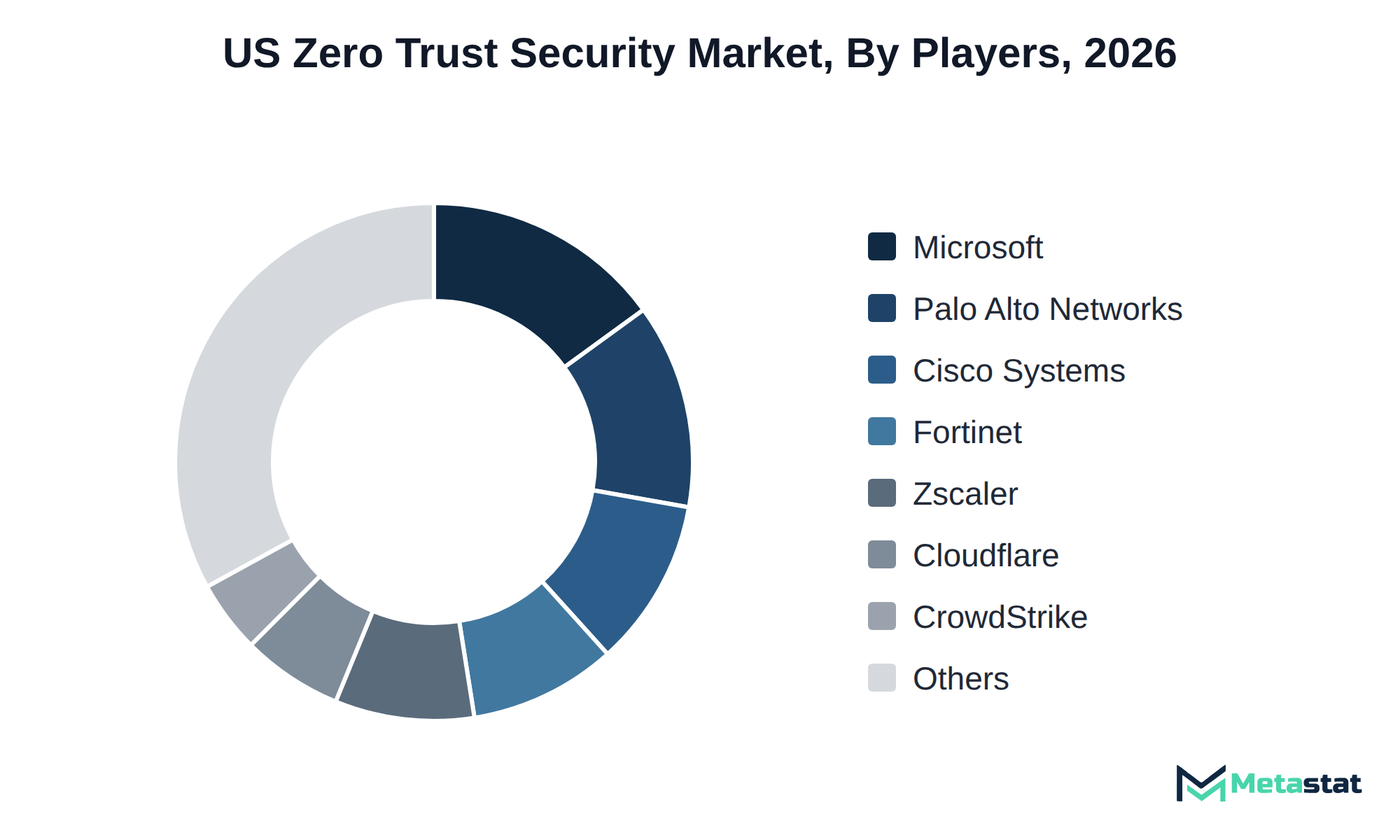
Buyers in the market select solutions based on factors including price, certification, customization, service quality, and the broader ecosystem. Microsoft Corporation emphasizes strong ecosystem integration, while Zscaler, Inc. and Palo Alto Networks, Inc. focus on specialized security offerings tailored to evolving threats. Cloudflare, Inc. and Fortinet, Inc. enhance their propositions with scalable cloud-based solutions, catering to the demands of large enterprises and small and medium-sized enterprises alike.
Achieving the forecast growth in the US Zero Trust Security market requires several key developments. Strong demand for cloud-based solutions is anticipated to drive the market forward, particularly in the Cloud Deployment Model segment, which is projected to grow significantly. Large Enterprises are expected to enhance their security protocols, creating a robust demand for comprehensive Identity & Access Management Security solutions. The healthcare sector is projected to adopt Zero Trust Security frameworks due to increasing regulatory requirements and data protection concerns.
However, market growth faces potential risks. Economic downturns or cybersecurity incidents could hinder investment in advanced security measures. The pace of technological advancements and organizational readiness to implement Zero Trust architectures will influence the speed of adoption across various sectors. Companies operating in the US Zero Trust Security market work through these challenges to fully realize the projected growth trajectory.
By Security Type: Endpoint & IoT Security, Network Security, Identity & Access Management Security, Data Security, Cloud Security, Application Security, Security Analytics & Monitoring
By Deployment Model: On-Premises, Cloud
By Organization Size: Large Enterprises, Small & Medium-Sized Enterprises
By End-Use Industry: IT & Telecom, BFSI, Government & Defense, Healthcare, Retail & E-commerce, Manufacturing, Energy & Utilities, Others (Education, Transportation & Logistics, Hospitality)
The report strategically identifies and profiles the key market players and analyses their core competencies in each sub-segment of the Zero Trust Security market.
Report Attributes | Details |
Study Period | 2021-2033 |
Base Year | 2025 |
Estimated Year | 2026 |
Forecast Period | 2026-2033 |
Historical Period | 2021-2025 |
Growth Rate | CAGR 15.3% from 2026 to 2033 |
Revenue Unit | USD billion |
Segmentation | By Security Type, Deployment Model, Organization Size, End-Use Industry, and Region |
Find answers to common questions about this report
The Zero Trust Security market size was valued at USD 11 billion in 2025.
The market is projected to grow at a CAGR of 15.3% during the forecast period from 2026 to 2033.
Endpoint & IoT Security leads the Zero Trust Security market with a projected value of USD 7.7 billion by 2033. This segment's growth reflects its significant demand compared to other security types.
Growing concerns over cybersecurity threats drive demand for comprehensive security solutions among organizations, particularly in large enterprises and small to medium-sized businesses. The increasing emphasis on regulatory compliance and the shift towards remote work contribute to heightened spending in this sector.
High costs associated with Zero Trust Security implementations limit demand among small and medium-sized enterprises. The rising costs of skilled labor present a significant challenge for suppliers, impacting service delivery and profitability.
The Zero Trust Security market is estimated to reach a valuation of USD 34.4 billion by 2033.
Key players operating in the Zero Trust Security market include Microsoft Corporation, Zscaler, Inc., Palo Alto Networks, Inc., Cisco Systems, Inc., Fortinet, Inc., Cloudflare, Inc., and CrowdStrike Holdings, Inc.
Endpoint and IoT security is projected to grow at a compound annual growth rate of 13.3% from 2026 to 2033.
The cloud deployment model is anticipated to experience a compound annual growth rate of 20.8% through 2033.
The market for large enterprises is expected to expand from USD 8.1 billion in 2026 to USD 20.4 billion by 2033.
The analysts below cover Information & Technology research at Metastat Insights.
LEAD ANALYST
Utkarsh Khirodkar is a Lead Market Research Analyst at MetaStat Insight, specializing in market intelligence, technology sector assessments, and competitive strategy.

PRINCIPAL CONSULTANT - ENTERPRISE AI & EMERGING TECHNOLOGIES
Banking & Finance · Electronics and Semiconductor · Energy and Power · Healthcare IT · Information & Technology · Professional Services
Vijay Gunti is a Principal Consultant at MetaStat Insight, bringing over two decades of experience across enterprise digital transformation, technology strategy, and intelligent systems.

LEAD CONSULTANT - COMMUNICATION, TELECOM, AND IT
Electronics and Semiconductor · Information & Technology · Machinery & Equipment · Professional Services
Ravindra Sathe Consultants for Communication, Telecom, and IT at MetaStat Insight. He leads the firm's industry research initiatives across telecommunications infrastructure, digital connectivity, enterprise networking, and emerging information technology domains.
When evaluating distributed energy resource management systems, standard research summaries tend to gloss over the operational differences between front-of-the-meter utility deployments and behind-the-meter industrial sites. The MetaStat Insight report addressed those distinctions directly, especially regarding software interoperability standards and grid interconnection backlogs. The five-year market sizing across regional transmission organizations provided actionable context for our grid modernization strategy.
Most industry reports on warehouse automation bundle autonomous mobile robots and fixed conveyor installations into the same top-level numbers, which complicates advisory work. This study split the market cleanly by payload tiers, navigation technology, and fleet management software layers. The regional forecast for Western Europe gave our team defensible adoption benchmarks when evaluating capital allocation for logistics clients, saving us days of secondary data scrubbing.
Standard industry briefs frequently blur the operational distinctions between isobaric pressure exchangers and centrifugal turbines. In this study, MetaStat Insight categorized mega-scale desalination tenders across the GCC and Mediterranean basins by membrane replacement frequencies and salinity tolerances. Their primary research helped us evaluate local content requirements in Saudi Arabia and the UAE without relying on marketing literature. We found the segment-level equipment replacement estimates grounded and well-reasoned throughout.
Explore related market intelligence reports worth reading alongside this one.