
LEAD ANALYST
Utkarsh Khirodkar is a Lead Market Research Analyst at MetaStat Insight, specializing in market intelligence, technology sector assessments, and competitive strategy.

Global Virtual Private Network Market Size, Share, By Type (Remote Access VPN, Site-to-Site VPN, Personal VPN and Mobile VPN), By Deployment Mode (On-Premises, Cloud-Based and Hybrid), By End User (Commercial, Individual and Managed Service Providers), By Component (Hardware, Software and Services), Industry Analysis, Growth, Trends, and Forecast, 2026-2033
Report ID
MSI-5113
Published
August, 2026
Updated
Pages
285 Pages
Format
Historical
Base year
Forecast
Forecast period
Report Details
Choose Your License
Global Virtual Private Network Market
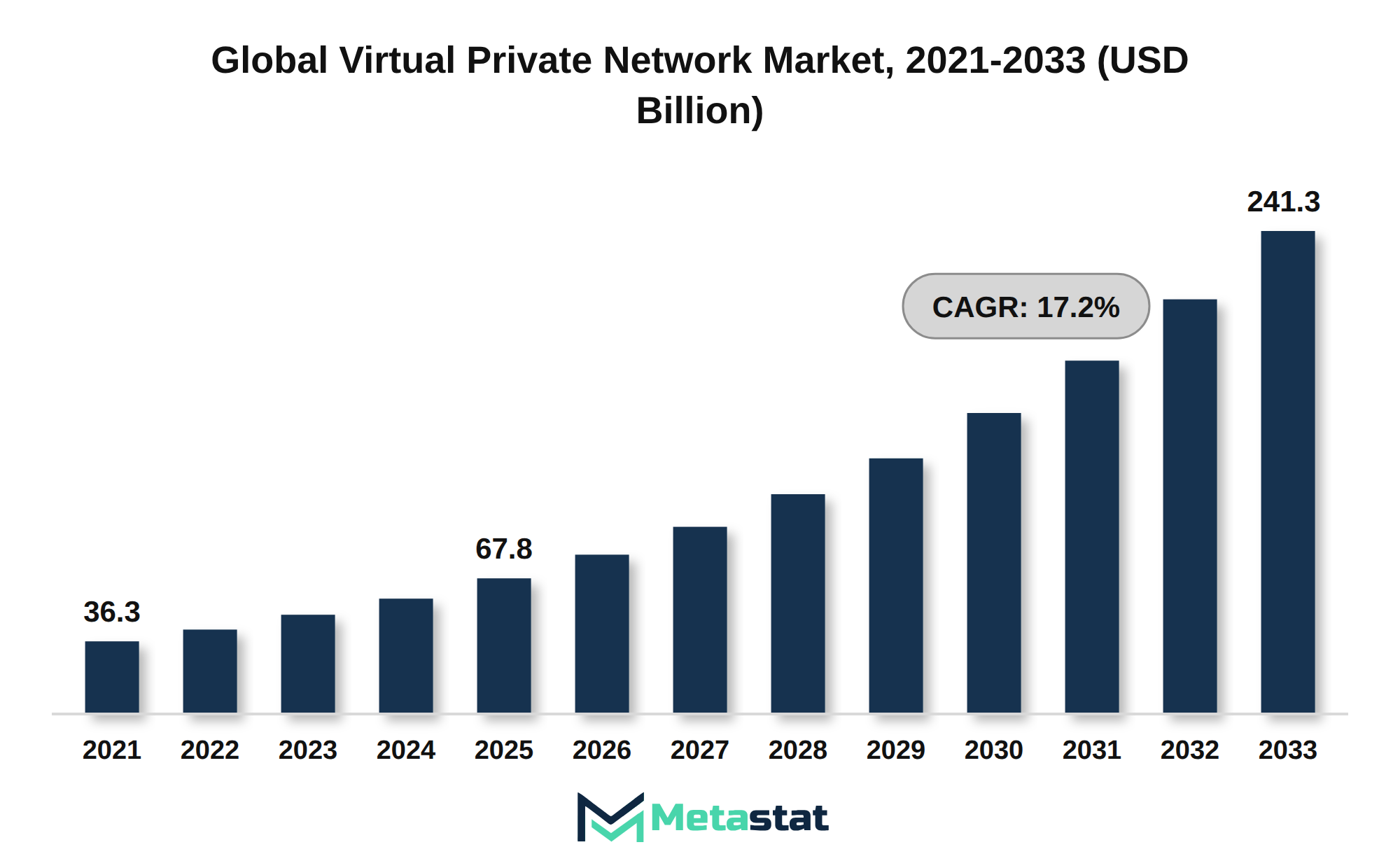
The global Virtual Private Network market was valued at USD 67.8 billion in 2025 and is projected to reach USD 241.3 billion by 2033, growing at a CAGR of 17.2% over the forecast period.
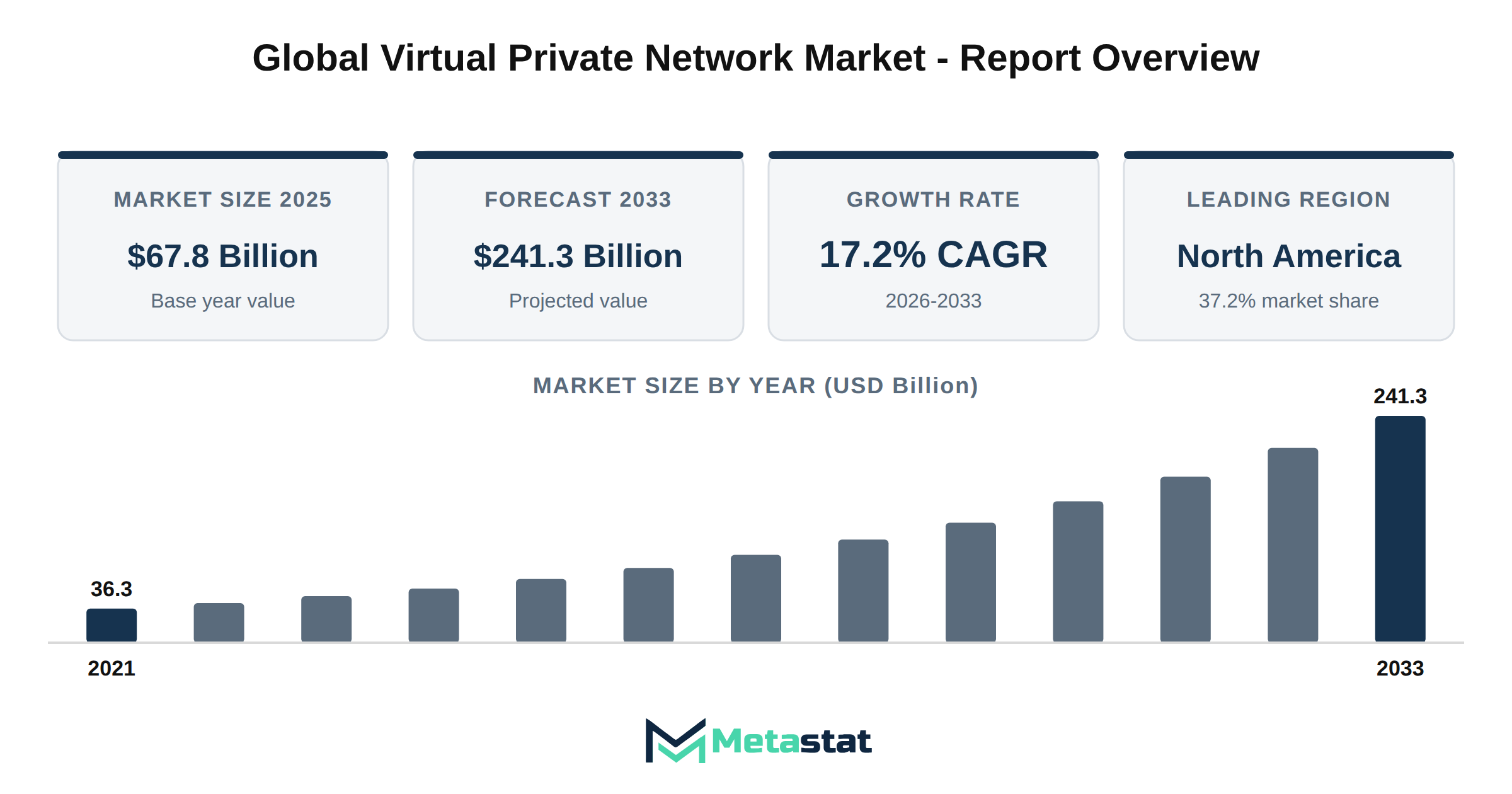
The virtual private network market exhibits significant growth potential, driven by increasing demand for secure internet connections and data privacy. The market's value reached USD 67.8 billion in 2025, demonstrating a robust trajectory from USD 36.3 billion in 2021. This upward trend reflects a compound annual growth rate (CAGR) of 17.2% projected to drive the market value to USD 241.3 billion by 2033.
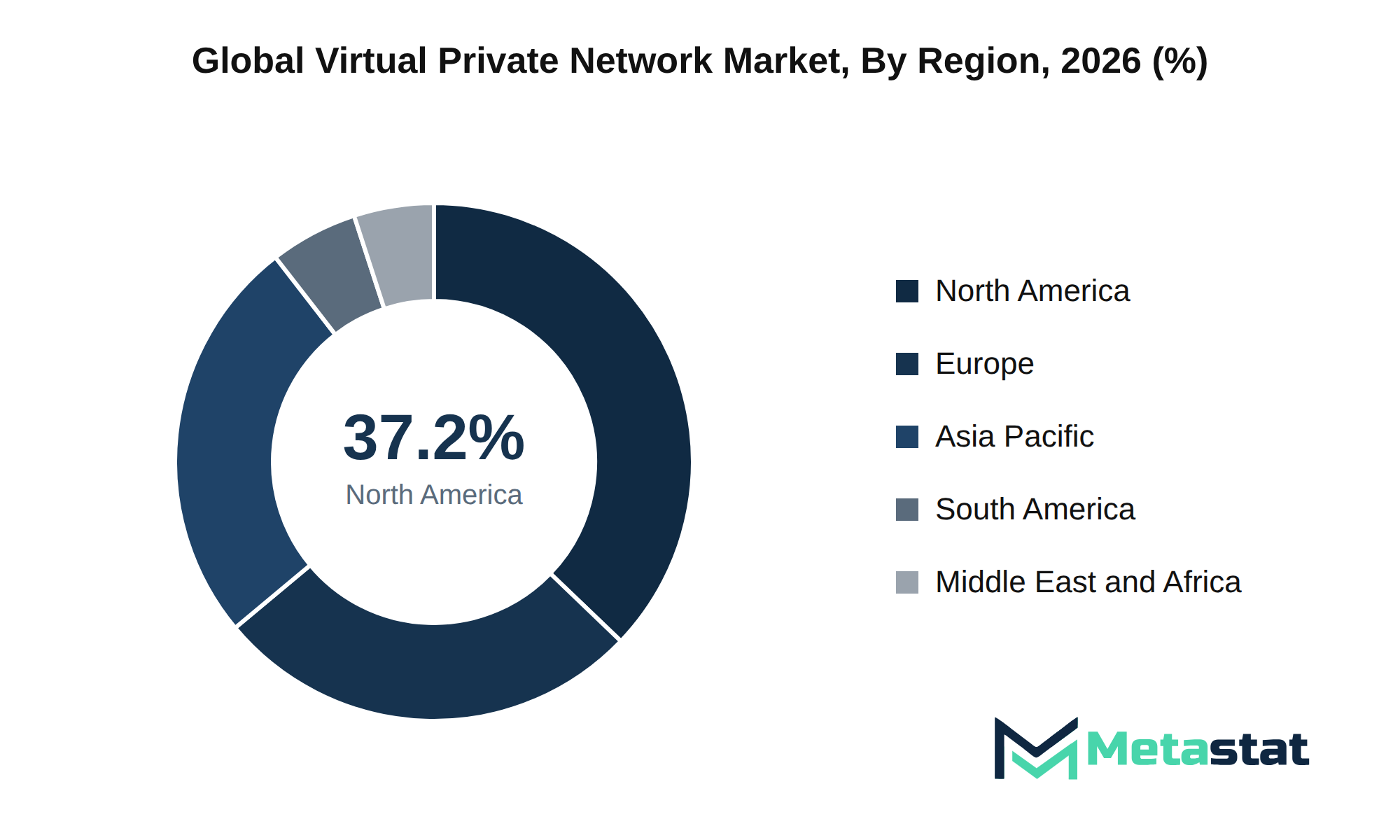
North America holds the largest market share at 37.2%, largely influenced by the presence of major technology companies and increasing cybersecurity threats. Europe follows closely with a share of 26.8%, driven by stringent data protection regulations and a growing awareness of privacy issues. The Asia Pacific region, accounting for 25.6% of the market, sees escalating adoption of VPN solutions among businesses and individuals seeking secure online access.
In terms of market segments, remote access VPNs are expected to grow from USD 31.4 billion in 2026 to USD 89.3 billion by 2033, indicating a CAGR of 16.1%. The site-to-site VPN segment anticipates reaching USD 70 billion by 2033, growing at a CAGR of 16.3%. Personal VPNs are projected to achieve a value of USD 50.7 billion, reflecting a rising trend among individual users prioritizing online privacy.
The deployment modes within the market indicate a shift towards cloud-based solutions, with a forecasted value of USD 108.6 billion by 2033. This shift is driven by the flexibility and scalability that cloud-based VPNs offer, catering to the needs of modern enterprises. On-premises deployments will grow from USD 34.1 billion in 2026 to USD 82.1 billion by 2033, reflecting a CAGR of 13.4%.
The Virtual Private Network market faces various challenges, including regulatory compliance and the need for adherence to standards across different regions. Companies operating within the market encounter a complex environment of regional risk frameworks that necessitate ongoing adjustments to their operational strategies. Ensuring compliance with these regulations often incurs additional costs, impacting profitability and market entry strategies for new entrants.
Market fragmentation is evident, with numerous players offering specialized solutions tailored to specific customer requirements. This fragmentation creates intense competition, compelling organizations to innovate continuously and differentiate their offerings. Mergers and acquisitions play a crucial role in shaping the competitive landscape, enabling companies to expand their portfolios and enhance their market presence. Strategic partnerships provide access to new technologies and markets.
Research and development trajectories focus on next-generation innovations that enhance user experience and improve security features. Investments in advanced technologies, including artificial intelligence and machine learning, significantly influence product development cycles. These innovations drive demand within the Virtual Private Network market, allowing service providers to offer more robust and scalable solutions.
Sustainability initiatives increasingly impact corporate strategies, with organizations seeking to align their operations with decarbonization goals and circular economy dynamics. Implementing sustainable practices not only meets regulatory expectations but connects with environmentally conscious consumers. Companies that prioritize sustainable transformation enhance their brand reputation and attract a broader customer base.
Capital allocation strategies reflect the market's growth potential, with significant investments directed towards infrastructure development. Organizations prioritize technology upgrades and network enhancements to accommodate increasing demand for secure online connectivity. This focus on infrastructure positions companies to capitalize on emerging opportunities within the market, supporting long-term growth and sustainability.
Future strategic outlooks indicate a robust trajectory for the Virtual Private Network market, driven by increasing digitalization, remote work trends, and heightened cybersecurity concerns. Companies adopting proactive approaches to address these trends will likely secure competitive advantages. High-value recommendations for organizations include investing in next-generation technologies, strengthening partnerships, and prioritizing compliance to navigate the evolving landscape effectively.
The virtual private network market experiences significant growth owing to the ongoing digital transformation across various industries. Organizations increasingly adopt digital technologies to enhance operational efficiency, improve customer engagement, and ensure data security. This shift necessitates secure connections, which VPNs provide, enabling employees to access corporate networks remotely without compromising sensitive information.
Increased reliance on cloud services further accelerates the adoption of VPN solutions. Businesses migrating to cloud environments require secure communication channels to protect data integrity and privacy. Consequently, demand for VPN services rises, driven by the need for secure remote access and the growing integration of digital solutions.
Technological integration, especially with automation and artificial intelligence, influences the virtual private network market positively. Companies integrating these technologies require reliable security measures to safeguard their digital assets. VPNs serve because a critical component in securing communications, leading to increased investment and implementation across various sectors.
The emphasis on operational productivity and cost-efficiency initiatives drives organizations toward adopting VPN technology. By streamlining processes and optimizing labor, companies achieve significant savings while enhancing their security frameworks. This trend contributes to the ongoing expansion of the market, because businesses prioritize both productivity and security in their strategic planning.
Investment in technological integration significantly influences the Virtual Private Network market. Businesses increasingly adopt automation, artificial intelligence, and advanced software solutions to enhance performance and streamline operations. This integration improves efficiency and security, appealing to organizations that prioritize digital transformation. Various industries, including finance, healthcare, and education, actively seek VPN solutions to protect sensitive information while facilitating remote access and collaboration.
Increased venture funding in technology enhances innovation in the sector, leading to the development of advanced VPN solutions that cater to evolving user needs. Organizations benefit from improved operational productivity, driven by technology integration that optimizes processes and reduces overhead costs. The growing reliance on digital platforms and services further fuels demand for secure connections, driving sustained growth in the market.
While consumer behaviors evolve with a focus on remote work and heightened cybersecurity awareness, VPN adoption becomes critical for maintaining business continuity and data protection. The market experiences continued growth, resulting from organizations prioritizing technological investments that support secure, efficient, and flexible work environments.
The virtual private network market encounters challenges related to regulatory compliance and economic pressures. Stricter regulations regarding data protection and privacy compel organizations to invest in compliance measures, increasing operational costs. Many companies face difficulties maintaining compliance while integrating new technologies, resulting in potential delays in deployment and market entry.
Macroeconomic headwinds, including rising inflation and capital stagnation, impact organizations' willingness to invest in VPN solutions. These factors hinder growth opportunities, particularly in developing regions where budget constraints remain a significant barrier. Organizations experience pressure to balance cybersecurity investments with other operational necessities, leading to reduced spending on VPN services.
Talent shortages within the technology sector contribute to deployment bottlenecks. The market requires skilled professionals to implement and manage VPN solutions effectively. Insufficient availability of trained personnel hinders the rapid adoption of VPN technologies and impacts overall market growth.
Data security vulnerabilities and privacy concerns persist, affecting consumer trust in VPN providers. Incidents of data breaches and misuse of personal information lead to hesitance among potential users, stifling growth in the market. Organizations prioritize robust security measures, yet the complexity involved often results in slower adoption rates.
Market fragmentation complicates the competitive landscape due to numerous players operating with varying offerings and capabilities. This fragmentation dilutes brand recognition and creates confusion for consumers, obstructing the decision-making process. The virtual private network market faces potential saturation, particularly in mature sectors, leading to intensified competition and price pressures.
The Virtual Private Network market faces significant challenges stemming from geopolitical fragmentation and supply chain disruptions. Political tensions among nations result in trade deficits and tariff friction, affecting the availability and cost of critical components. This scenario forces suppliers to navigate complex relationships and heightened regulatory scrutiny, increasing compliance overhead.
Technological disruptions further complicate market dynamics, creating volatility in feedstock and component availability. This volatility intensifies logistics disruptions, impacting the timely delivery of services. Such instability affects pricing structures, leading to margin pressures that influence overall market growth.
Rising input costs and a shrinking talent pool contribute to workforce skill gaps, complicating the integration of new technologies. Firms encounter challenges in talent retention and automation displacements, which impact productivity and service quality. These factors collectively create an environment where demand for Virtual Private Network solutions fluctuates, limiting overall market stability.
Intellectual property protection deficits present further risks, exposing companies to cybersecurity threats and data vulnerabilities. The evolving landscape of legal liabilities requires firms to invest in robust security measures, adding to operational costs. Consequently, organizations face heightened scrutiny from consumers and regulators alike, influencing strategic decisions.
Overall, geopolitical fragmentation and supply chain disruptions significantly challenge growth in the Virtual Private Network market, necessitating strategic adaptations to maintain competitiveness and address evolving consumer demands.
Rapid digital transformation across various industries fuels increasing demand for Virtual Private Network services. In regions including North America and Europe, heightened awareness regarding cybersecurity threats has prompted enterprises to adopt robust VPN solutions. The emphasis on secure remote access, particularly in the wake of the COVID-19 pandemic, highlights the necessity for advanced security measures. Infrastructure modernization initiatives within these regions support the evolution of VPN technology, enhancing capabilities and performance.
Geographical expansion further contributes to the market's growth trajectory. Emerging economies in Asia Pacific and South America recognize the value of secure communications, driving investment in VPN infrastructure. These regions exhibit a growing trend toward cloud-based deployments, aligning with global digital transformation efforts. Technological disruptions in network architecture and security protocols position VPNs because essential components for organizations navigating complex digital environments.
Next-generation innovations, including enhanced encryption methods and AI-driven security features, play a critical role in market evolution. Organizations increasingly prioritize sustainability imperatives, integrating eco-friendly practices within their operational frameworks. The alignment of Environmental, Social, and Governance (ESG) criteria with technological investments ensures organizations meet both compliance and consumer expectations.
Strategic consolidation through mergers and acquisitions reshapes the competitive environment, allowing players to leverage synergies and expand their service offerings. This trend accelerates product integration across multiple platforms, enhancing value propositions for users. Evolving buying behaviors, characterized by increased reliance on digital procurement channels, highlight shifts in commercial models that influence purchasing decisions within the market.
Overall, the intersection of these factors creates a favorable environment for the Virtual Private Network market, positioning it for sustained growth throughout the forecast period. Opportunities arise from the continuous need for secure digital solutions, driving demand for innovative VPN offerings that meet the evolving needs of both commercial and individual users.
The Global Virtual Private Network market is segmented based on Type, Deployment Mode, End User, and Component.
Valued at USD 31.4 billion in 2026, the Remote Access VPN segment is projected to reach USD 89.3 billion by 2033, exhibiting a CAGR of 16.1% during the forecast period. Increasing remote work trends across various industries drive demand for secure and reliable remote access solutions. Companies prioritize access to data and applications while ensuring robust security measures, leading to significant adoption of remote access VPNs in corporate environments.
The segment benefits from technological maturation, with advancements in encryption and authentication methods enhancing user experience and security. Next-generation upgrades focus on improving connectivity speed and reducing latency, factors crucial for remote access. Product evolution reflects customer preferences for user-friendly interfaces and integration with existing IT infrastructures, further supporting market growth.
End-use dynamics indicate a rising trend in the commercial sector, where businesses invest in remote access solutions to facilitate flexible work arrangements. Individual users contribute to demand, seeking secure browsing options that protect personal data. Regulatory compliance standards surrounding data protection and privacy drive organizations to adopt remote access VPNs, ensuring adherence to laws like GDPR.
Pricing volatility in the market influences purchasing decisions, with organizations weighing the cost versus benefits of remote access solutions. Margin pressures arise from increasing competition and the necessity for continuous innovation. Strategic opportunities exist for providers to offer tailored solutions, addressing specific needs within diverse industries.
Overall, the Remote Access VPN segment is essential in the broader Virtual Private Network market, responding dynamically to emerging trends, technological advancements, and regulatory frameworks shaping the industry landscape.
Expansion in the Site-to-Site VPN segment aligns with increasing adoption across organizations seeking secure communication between multiple locations. This segment is projected to reach USD 70 billion by 2033, at a CAGR of 16.3% during the forecast period. The rise in cybersecurity threats drives investment in reliable solutions, compelling companies to establish secure connections between their branches and offices. Enhanced collaboration and the need for remote access to resources fuel demand in various sectors, particularly in finance, healthcare, and technology.
Technological maturation contributes significantly to the market's evolution. Advancements in encryption protocols and secure tunneling methods improve reliability and performance, prompting organizations to transition from traditional VPN solutions to more robust Site-to-Site configurations. The growing trend of cloud adoption influences enterprises to integrate Site-to-Site VPN solutions, facilitating secure cloud service access and data sharing.
Regulatory compliance standards, especially in industries with stringent data protection requirements, necessitate the implementation of effective security measures, including Site-to-Site VPNs. Financial institutions and healthcare providers face mounting pressure to protect sensitive data, driving investments in secure communication networks. Increased scrutiny from regulators ensures companies prioritize secure connectivity solutions.
The Site-to-Site VPN segment reflects a comprehensive approach to remote connectivity, addressing the evolving demands of the Virtual Private Network market. Organizations increasingly prioritize security and efficiency, promoting further growth in this critical segment.
Increasing privacy concerns among individuals drive the growth of the Personal VPN segment within the Virtual Private Network market. Users seek enhanced security for their online activities, particularly when using public networks. This heightened awareness of data protection creates a larger user base, with significant adoption across various demographics.
Technological advancements play a critical role in segment expansion. Enhanced encryption methods and user-friendly interfaces contribute to greater accessibility for non-technical users. Personal VPN solutions evolve to incorporate next-generation features like multi-device support and higher connection speeds, appealing to a broader audience.
Pricing strategies impact market dynamics. Competitive pricing among service providers encourages user subscriptions, while flexible payment options attract a diverse clientele. The proliferation of cost-effective Personal VPN services enhances market penetration, contributing to anticipated revenue growth.
The Personal VPN segment is expected to reach USD 50.7 billion by 2033. This growth aligns with shifting consumer behaviors and preferences, driven by individuals prioritizing their online privacy and security. While the market evolves, continuous innovation will ensure that Personal VPN services meet the changing demands of users, reinforcing their place in the broader Virtual Private Network market.
Growing demand for secure mobile connectivity drives the Mobile VPN segment within the Virtual Private Network market. Increasing reliance on mobile devices for work and personal use drives the necessity for secure remote access to corporate networks. This segment is projected to grow at a CAGR of 20.6% during the forecast period. The surge in remote work culture and mobile application usage further encourages organizations to implement mobile VPN solutions, ensuring data protection while employees operate away from traditional office environments.
Technological advancements enhance the evolution of Mobile VPN services, improving user experience and security features. Companies invest in next-generation upgrades to improve connection speeds and reduce latency, making mobile VPNs more attractive to end users. The increasing prevalence of cyber threats necessitates robust security measures, supporting growth within this segment. Enhanced encryption methods and multi-factor authentication options strengthen security protocols, resulting in heightened user confidence.
Users across various industries, including finance, healthcare, and retail, significantly contribute to the demand for Mobile VPN solutions. This segment serves both commercial and individual users seeking reliable and secure access to sensitive information on the go. The market experiences a shift towards subscription-based pricing models, aligning with evolving consumption patterns. Such models offer organizations flexibility while reducing upfront costs, appealing to a broader customer base.
Overall, the Mobile VPN segment significantly influences the future of the Virtual Private Network market, reflecting the growing importance of mobile security solutions in an increasingly interconnected world.
Valued at USD 34.1 billion in 2026, the On-Premises segment is projected to reach USD 82.1 billion by 2033, at a CAGR of 13.4% during the forecast period. A surge in demand for enhanced security measures drives the adoption of On-Premises solutions among businesses that prioritize control over their data. Organizations increasingly seek compliance with strict regulatory standards, further propelling market growth. While firms invest in next-generation upgrades and technological maturation, the necessity for integrated systems and robust security protocols becomes evident.
Product evolution plays a critical role, allowing service providers to refine their offerings to cater to specific customer requirements and industry standards. End-user dynamics shift toward a preference for tailored solutions, resulting in increased investments from commercial enterprises and managed service providers looking to optimize operations. This market segment benefits from rising consumption shifts toward secure access to corporate resources, especially with the growing trend of remote work.
Strategic opportunity windows arise for vendors focusing on innovation and developing comprehensive solutions that address complex security challenges. The On-Premises segment remains resilient amid competitive pressures, with firms navigating cost structures and pricing volatility effectively. The overall outlook for this segment remains positive, driven by continuous investments in security infrastructure and a commitment to maintaining compliance with evolving regulations within the virtual private network market.
Increasing adoption of cloud-based solutions significantly influences the Virtual Private Network market. Organizations seek scalable and flexible networking solutions, which cloud-based VPNs provide effortlessly. This segment is estimated to reach USD 108.6 billion by 2033, at a CAGR of 20.5% during the forecast period. Rising concerns regarding data privacy, security breaches, and regulatory compliance drive enterprises to invest in cloud-based VPN services. Enhanced accessibility to remote work options further increases demand, enabling users to connect securely from various locations.
Technological maturation in cloud computing and networking supports the development of advanced VPN solutions. Businesses focus on integrating next-generation technologies including Artificial Intelligence and Machine Learning to enhance security and user experience. The increasing volume of data processed through cloud infrastructures leads to a greater emphasis on data encryption and secure connections, further accelerating segment growth.
Downstream applications across diverse industries, including finance, healthcare, and e-commerce, create significant opportunities for cloud-based VPNs. Organizations require secure communications to maintain compliance with industry regulations, which reinforces the necessity for reliable VPN solutions. End-use dynamics shift towards greater reliance on managed services, driven by enterprises seeking to offload complexities associated with infrastructure management.
Strategic opportunity windows arise with the growing demand for enhanced digital experiences and security. Firms investing in cloud-based VPNs achieve improved operational efficiency and customer satisfaction, leading to increased market share. Supply chain resilience becomes a focus, because organizations seek to mitigate risks associated with data breaches and cyber threats.
Significant growth is anticipated in the Hybrid segment of the Virtual Private Network market, projected to reach USD 50.7 billion by 2033. This expansion results from increasing demand for flexible deployment options and the necessity for organizations to enhance security measures while maintaining operational efficiency. The convergence of on-premises and cloud-based solutions allows businesses to tailor their network configurations, addressing specific needs and providing scalable security solutions.
Technological maturation throughout the industry drives innovation in Hybrid VPN offerings. Companies increasingly deploy advanced encryption methods and robust authentication protocols, ensuring data integrity and security in a mixed environment. Regulatory compliance standards surrounding data protection and privacy further emphasize the necessity for sophisticated VPN solutions, prompting organizations to invest in Hybrid models that adapt to evolving legal frameworks.
Consumption shifts demonstrate a notable preference for Hybrid solutions among various end users, including commercial entities and managed service providers. This trend stems from the growing need for secure remote access combined with the advantages of centralized management. The market responds to these demands with continuous enhancements in product evolution, incorporating next-generation upgrades that facilitate connectivity and secure data transfer.
Strategic opportunity windows arise due to increased capital investment in hybrid technologies. Organizations recognize the potential for cost savings associated with flexible deployment models, enhancing overall network resilience. The competitive landscape reflects these dynamics, with numerous players focusing on developing innovative solutions that cater to the specific requirements of diverse clients, ensuring sustained growth within the segment.
Valued at USD 48.5 billion in 2026, the commercial segment is projected to reach USD 137.6 billion by 2033, at a CAGR of 16% during the forecast period. Increasing concerns around data security and privacy significantly drive demand in this segment, particularly among enterprises looking to safeguard sensitive information and maintain compliance with regulatory standards. The rise of remote work and global collaboration has heightened the need for secure communication channels, prompting organizations to adopt advanced Virtual Private Network solutions.
Investment in next-gen upgrades enhances the appeal of commercial VPN services. Features including enhanced encryption, multi-factor authentication, and centralized management tools support organizations in managing their network security effectively. Ongoing technological maturation allows for the integration of artificial intelligence and machine learning, driving further enhancements in threat detection and response capabilities. This evolution attracts a diverse range of commercial users, from small businesses to large enterprises, increasing overall penetration in the market.
Operational efficiency emerges because a vital consideration for commercial users, with organizations seeking solutions that streamline connectivity without compromising security. The growing reliance on cloud-based applications and services highlights the importance of reliable and secure VPN connections. Consequently, service providers focusing on cloud-based deployment models experience significant growth opportunities, aligning with the broader trend of digital transformation across various sectors.
While organizations increasingly prioritize user experiences and robust security measures, demand for comprehensive VPN solutions rises. The commercial segment's growth reflects the broader dynamics of the Virtual Private Network market, characterized by innovation and increasing adoption driven by evolving security needs. Continual investments in product evolution and technological advancements position the market for sustained growth through 2033 and beyond.
Growing awareness of online privacy fuels interest in Virtual Private Networks among individuals. This segment benefits from a surge in demand for secure browsing and data protection. Increasing incidents of cyber threats drive individuals to seek reliable solutions for safeguarding personal information. The rise of remote work further enhances the need for secure connections, supporting the expansion of the individual segment.
Technological advancements play a crucial role in shaping the offerings within the segment. Innovations in encryption and authentication protocols enhance user experience and security, attracting more individuals to adopt these services. Competitive pricing strategies among providers contribute to increased accessibility, further promoting market growth.
Individual segment is estimated to reach USD 70 billion by 2033, at a CAGR of 19.1% during the forecast period. This significant growth reflects ongoing shifts in consumption patterns, with more individuals prioritizing cybersecurity in their digital interactions. Regulatory compliance standards regarding data protection influence adoption, driven by individuals seeking solutions that align with privacy regulations.
With a projected value of USD 33.8 billion by 2033, the Managed Service Providers segment plays a critical role in the Virtual Private Network market. The demand for reliable and secure network solutions drives adoption among managed service providers, who offer comprehensive services to businesses seeking to enhance their cybersecurity posture.
Growth in this segment results from an increasing focus on operational efficiency and the need for scalable solutions. Managed service providers deliver tailored VPN services that align with the unique requirements of various industries, facilitating secure connectivity for remote operations. This adaptability enhances competitiveness in sectors including finance, healthcare, and education.
Technological advancements, including the integration of artificial intelligence and machine learning, enhance the capabilities of VPN solutions offered by managed service providers. These innovations improve threat detection, automate security protocols, and streamline network management, positioning them because essential partners for organizations navigating evolving cybersecurity landscapes.
Regulatory compliance standards drive further demand for VPN solutions among managed service providers. Organizations face increasing scrutiny regarding data protection and privacy regulations, compelling them to adopt robust security measures. Managed service providers deliver these essential services, helping clients mitigate risks associated with non-compliance.
The segment benefits from significant investment in next-generation technologies that improve performance and user experience. Continuous product evolution addresses emerging threats and ensures that services remain relevant amid a fast-changing digital environment. Overall, the Managed Service Providers segment stands because a vital component of the expanding Virtual Private Network market.
Projected growth in the Hardware segment reflects the ongoing evolution of the Virtual Private Network market. Valued at USD 17.3 billion in 2026, this sub-segment aims to reach USD 41 billion by 2033, achieving a CAGR of 13.1% during the forecast period. Factors driving this expansion include rising demand for enhanced network security and performance, spurred by increased cyber threats across industries. Businesses prioritize secure connections for remote work and data transmission, necessitating robust hardware solutions.
Technological advancements in hardware components enhance the performance and reliability of VPN solutions. Integration of next-gen technologies, including advanced encryption and faster processing capabilities, improves user experiences. Evolving regulatory compliance standards heighten the need for reliable hardware that meets data protection requirements. Enterprises investing in these solutions benefit from reduced operational risks and enhanced customer trust, further propelling market growth.
Increased adoption of cloud services and the proliferation of IoT devices contribute to rising demand for hardware solutions within the market. Organizations seek adaptable hardware that supports integration with existing infrastructure while accommodating future scalability. The shift towards hybrid working models emphasizes the necessity for secure and efficient hardware, prompting investments that position companies favorably in a competitive environment.
Overall, the Hardware segment within the Virtual Private Network market represents a dynamic area poised for significant growth, driven by technological maturation, increased security demands, and evolving end-use dynamics.
Expansion of the Software segment will play a critical role in the growth of the Virtual Private Network market. This segment is estimated to reach USD 125.5 billion by 2033, at a CAGR of 17.9% during the forecast period. Increasing reliance on digital communication and remote work practices are primary demand drivers, creating opportunities for software solutions that ensure secure and private connectivity.
Adoption of innovative technologies, including artificial intelligence and machine learning, facilitates the development of advanced VPN software. These technologies enhance user experience, streamline performance, and improve overall security protocols. End users, particularly commercial entities and managed service providers, seek integrated solutions that encompass these advancements.
Continued evolution of the software product offerings, including subscription-based models, aligns with changing consumption patterns among individual consumers and businesses. Regulatory compliance standards increasingly shape the landscape, influencing software development to ensure adherence to data protection regulations. Such dynamics encourage investment in next-gen upgrades, driving the market's growth.
Pricing volatility remains a concern, impacting profit margins for software developers. Strategic opportunity windows emerge owing to businesses prioritizing cybersecurity investments, resulting in increased demand for robust software solutions. The software segment's contribution to the Virtual Private Network market encapsulates a response to evolving technological demands and heightened security awareness.
Growth in the Services segment of the Virtual Private Network market aligns with rising demand for security and reliable internet connections across various sectors. Businesses increasingly prioritize secure networking solutions to protect sensitive data and comply with stringent regulations, driving significant investment in this area. The segment is expected to reach USD 74.8 billion by 2033, reflecting the strong need for managed security services and professional support. Enhanced connectivity needs among remote workers and the rise of hybrid work environments further contribute to demand for comprehensive service offerings.
Technological maturation pushes firms to adopt next-generation upgrades in virtual private network services. Providers focus on delivering innovative solutions, including advanced encryption and scalable architectures, which attract a diverse range of clients looking for tailored security options. Integration with cloud-based platforms enables efficient connectivity and operational efficiency, enhancing attractiveness for end-users. This evolution in service offerings promotes higher adoption rates, particularly among commercial enterprises looking to secure their digital infrastructures.
End-use dynamics indicate a strong shift towards managed services, emphasizing the importance of expertise in implementation and maintenance. Companies increasingly outsource VPN management to specialized service providers, allowing them to focus on core business operations while ensuring top-tier security measures. The market benefits from this trend, driven by organizations that prioritize cybersecurity establishing competitive advantages through enhanced data protection and risk mitigation strategies.
Based on geography, the Global Virtual Private Network market is divided into North America, Europe, Asia-Pacific, South America, Middle East, and Africa.
North America holds a prominent position in the Virtual Private Network market, with a projected market size of USD 82.1 billion by the end of 2033, expanding at a CAGR of 17.2% during the forecast period. The region represented 37.2% of the global market share in 2025, reflecting strong demand driven by increasing cybersecurity concerns and the need for secure remote access solutions across various sectors.
The high adoption rates of advanced technologies in the United States, Canada, and Mexico contribute to the region's market performance. These countries demonstrate a robust infrastructure capable of supporting sophisticated Virtual Private Network solutions, enhancing connectivity, and enabling efficient operations for both commercial and individual users. Emerging trends, including remote work and digital transformation initiatives, further fuel the demand for Virtual Private Network services.
Segment expansion within the market sees significant contributions from the commercial sector, which prioritizes data security and compliance with local regulations. While businesses seek to protect sensitive information, the demand for scalable and reliable Virtual Private Network solutions continues to rise. Localized procurement dynamics influence purchasing behaviors, driven by organizations favoring vendors with established reputations and proven track records in cybersecurity.
The North American market for Virtual Private Networks experiences dynamic growth, characterized by high-value replacement cycles and strategic entry barriers that support established players. Domestic market leaders, including Cisco Systems, Inc. and Fortinet, Inc., leverage their technological capabilities to offer innovative solutions tailored to the specific needs of regional customers, ensuring sustained competitive advantages in this evolving market.
Europe represents a significant share of the global Virtual Private Network market, accounting for 26.8% in 2025. Key demand drivers in this region include heightened awareness of cybersecurity threats and the increasing need for secure communications among businesses. The commercial sector, especially in countries like Germany, France, and the UK, demonstrates a growing trend toward remote work solutions, which boosts the demand for Virtual Private Networks.
Investment in infrastructure modernization presents further growth opportunities within the market. Countries including Italy and Spain actively pursue enhanced digital connectivity, which supports expanded VPN adoption. The presence of established technology firms in the region, alongside a robust competitive landscape featuring players like Cisco Systems, Inc. and Fortinet, Inc., facilitates healthy market dynamics.
Regulatory frameworks across Europe influence market development. Compliance mandates regarding data protection fuel interest in Virtual Private Network solutions, driven by businesses striving to meet stringent requirements. The evolving geopolitical environment further emphasizes the need for localized solutions, prompting companies to explore VPN options tailored to regional needs.
Emerging markets within Europe exhibit underpenetrated segments ripe for growth, including personal and mobile VPNs. Increased smartphone penetration and an emphasis on individual privacy drive demand in markets including Russia. The competitive landscape evolves, and partnerships among vendors are projected to enhance service offerings and drive incremental growth in the market.
The Asia-Pacific region represents a substantial share of the global market, accounting for 25.6% in 2025. Increasing internet penetration and the growing awareness of cybersecurity threats drive demand for Virtual Private Networks in countries like China, Japan, India, and South Korea. The rise of remote work practices further accelerates adoption, driven by businesses seeking secure connections for their employees. In addition, the expansion of e-commerce and digital services in Southeast Asia and Australia enhances the need for reliable and secure network connections.
Cloud-based deployment modes are particularly popular, reflecting the region's strong inclination towards scalable solutions. The increasing number of managed service providers in the Asia-Pacific region adds to the competitive dynamics. Local compliance mandates and regulatory frameworks compel organizations to adopt Virtual Private Networks to safeguard sensitive information, which in turn supports market growth. Infrastructure modernization initiatives across these countries enhance the readiness of businesses to implement advanced networking solutions.
The regional competitive landscape features a diverse array of domestic market participants and established global players. Localized procurement dynamics, influenced by cultural nuances, shape B2B buying behaviors significantly. The ongoing trend of nearshoring initiatives supports the regional supply chain, allowing companies to enhance their responsiveness to market demands. Investment in geographical expansion windows facilitates the growth of both established and emerging participants in the Virtual Private Network market.
Growth in the Virtual Private Network market within South America is driven by the increasing need for enhanced cybersecurity measures and the rise in remote work adoption. Brazil and Argentina play critical roles in this market, reflecting a growing awareness of data protection among businesses and consumers.
The region's share of the global market reached 5.5% in 2025. Emerging demands from both individual users and commercial enterprises create significant uptake of VPN services, leading to heightened competition among local and international providers. Infrastructure modernization efforts support the deployment of advanced VPN solutions throughout South America.
Local compliance mandates and regulatory requirements enhance the urgency for VPN adoption across various sectors. This environment of increasing digital threats and privacy concerns stimulates investment in VPN technologies, ensuring that the market remains poised for continuous expansion.
The Virtual Private Network market in the Middle East and Africa demonstrates substantial potential for growth, driven by increasing digitalization and a rising need for secure online communications. Countries including Saudi Arabia and the UAE lead in adopting advanced technologies, which boosts demand for robust VPN solutions. South Africa, with its growing tech ecosystem, shows positive trends in VPN adoption among businesses and individuals seeking enhanced security.
Infrastructure modernization initiatives across these regions support further penetration of VPN services. Governments in the Middle East and Africa are investing in digital infrastructure to drive economic growth, which encourages the adoption of technologies that safeguard online activities. This increasing focus on internet security aligns with global trends toward privacy and data protection, influencing consumer and enterprise demand.
The regional competitive landscape features several domestic and international players offering diverse VPN solutions. While established companies dominate the market, the emergence of local startups contributes to innovation and pricing competitiveness. The presence of global firms enriches the market, encouraging advancements in technology and service offerings tailored to regional needs.
Localized procurement dynamics shape purchasing decisions, with businesses preferring solutions that comply with specific regulatory frameworks. Compliance with local laws regarding data protection and cybersecurity significantly impacts the strategies of VPN providers, leading to a more nuanced approach to market offerings. Cultural nuances and regional buying behaviors influence the types of VPN services in demand, with commercial and individual users seeking tailored solutions that reflect their specific requirements.
The market share for the Middle East and Africa is projected at 5.0% in 2025. This projection underpins the ongoing growth trajectory, influenced by ongoing investments in infrastructure and an increasing recognition of the value of secure online communication channels. Businesses and consumers alike prioritize digital security, and the potential for expansion in the VPN market remains strong.
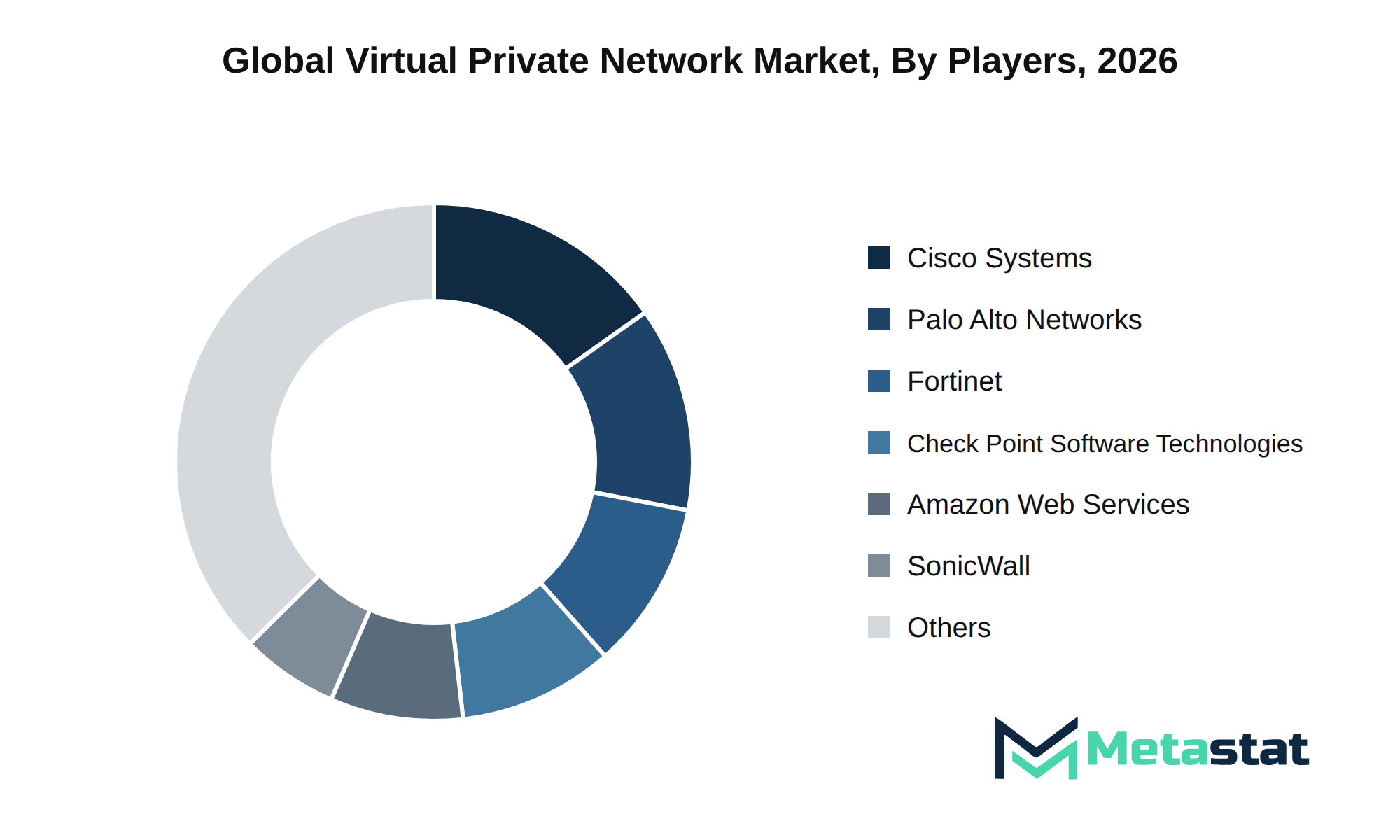
The Virtual Private Network market exhibits a diverse competitive environment characterized by significant strategic activities, including mergers, acquisitions, and partnerships. Major players including Cisco Systems, Inc., Fortinet, Inc., and Palo Alto Networks, Inc., engage in strategic consolidation, enhancing market position through innovative offerings and collaborative ventures. Companies utilize proprietary technologies to create distinct advantages in product differentiation and customer retention, ensuring sustained growth.
Pricing architectures and commercial models exhibit variability across the market, with firms implementing tailored approaches to meet specific customer needs. The presence of established players, including Check Point Software Technologies Ltd. and Juniper Networks, Inc., raises barriers for new entrants, contributing to a stable competitive landscape. The ongoing focus on R&D pipelines among leading organizations, including Microsoft Corporation and Amazon Web Services, Inc., drives continuous innovation and strengthens technological defensibility.
Strategic alliances and joint ventures play a crucial role in expanding market reach, with companies like Cloudflare, Inc. and Zscaler, Inc. collaborating to enhance service offerings. Customer retention strategies and switching costs remain vital, contributing to brand equity dynamics in the market. Intellectual property portfolios are critical for maintaining competitive advantage, attributed to firms navigating the complexities of patent landscapes to protect innovations and secure market positions.
The future competitive outlook for the Virtual Private Network market emphasizes defensive imperatives and strategic growth vectors. Organizations continuously assess threats from startups and disruptive technologies, ensuring alignment with market trends and customer expectations. Overall, these strategic elements shape the competitive environment, driving the market's evolution and growth prospects.
Market size is forecast to rise from USD 67.8 billion in 2025 to over USD 241.3 billion by 2033. The base case reflects growth at a 17.2% CAGR, driven by increasing demand for secure communication and data protection across various sectors. Factors influencing this growth include macroeconomic conditions, evolving regulatory landscapes, and growing cybersecurity threats, which lead organizations to invest in Virtual Private Network solutions.
The bull case envisions a scenario where heightened geopolitical tensions and rapid technological advancements accelerate adoption, pushing the market to exceed initial forecasts. Conversely, the bear case considers potential economic downturns or disruptive regulatory changes that could hinder growth, resulting in slower market expansion. Overall, strategic capital allocation and investment in next-generation technologies will shape the market's trajectory, driving innovation and addressing the evolving needs of enterprises.
The Virtual Private Network market demonstrates robust potential for growth, influenced by various external factors and internal advancements. Continuous monitoring of these dynamics will provide insights into future developments and opportunities.
The report strategically identifies and profiles the key market players and analyses their core competencies in each sub-segment of the Virtual Private Network market.
Report Attributes | Details |
Study Period | 2021-2033 |
Base Year | 2025 |
Estimated Year | 2026 |
Forecast Period | 2026-2033 |
Historical Period | 2021-2025 |
Growth Rate | CAGR 17.2% from 2026 to 2033 |
Revenue Unit | USD billion |
Segmentation | By Type, Deployment Mode, End User, Component, and Region |
By Region | North America (By Type, Deployment Mode, End User, Component, and Country)
|
Europe (By Type, Deployment Mode, End User, Component, and Country)
| |
Asia Pacific (By Type, Deployment Mode, End User, Component, and Country)
| |
South America (By Type, Deployment Mode, End User, Component, and Country)
| |
Middle East and Africa (By Type, Deployment Mode, End User, Component, and Country)
|
Find answers to common questions about this report
The Virtual Private Network market size was valued at USD 67.8 billion in 2025, according to the Metastat Insights study.
The Virtual Private Network market is projected to grow at a CAGR of 17.2% during the forecast period from 2026 to 2033.
The North America Virtual Private Network market size is estimated to reach USD 82.1 billion by 2033.
The Remote Access VPN segment leads the Virtual Private Network market, with a projected value of USD 89.3 billion by 2033. This segment demonstrates significant growth potential, driven by increasing demand for secure remote connectivity.
Key drivers for the Virtual Private Network market include ongoing digital transformation across industries, increasing reliance on cloud services, and the integration of automation and artificial intelligence. Organizations prioritize secure remote access, operational productivity, and cost-efficiency, prompting significant investments in VPN technology to protect sensitive information and enhance collaboration.
North America holds the dominant share of the Virtual Private Network market, with a value of USD 82.1 billion projected for 2033, representing 37.2 percent of the total market.
The Virtual Private Network market growth is restrained by regulatory compliance challenges and economic pressures, which increase operational costs. talent shortages within the technology sector hinder effective deployment and management of VPN solutions, impacting overall market expansion.
Factors favoring product adoption in the virtual private network market include the ongoing digital transformation across industries, which increases the demand for secure remote access and data protection. Organizations prioritize investments to enhance operational efficiency and safeguard sensitive information, leading to increased demand for VPN solutions.
The Virtual Private Network market is estimated to reach a valuation of USD 241.3 billion by 2033.
Key players in the Virtual Private Network market include Cisco Systems, Inc., Fortinet, Inc., Palo Alto Networks, Inc., Check Point Software Technologies Ltd., Amazon Web Services, Inc., Microsoft Corporation, and Google LLC.
The analysts below cover Information & Technology research at Metastat Insights.
LEAD ANALYST
Utkarsh Khirodkar is a Lead Market Research Analyst at MetaStat Insight, specializing in market intelligence, technology sector assessments, and competitive strategy.

PRINCIPAL CONSULTANT - ENTERPRISE AI & EMERGING TECHNOLOGIES
Banking & Finance · Electronics and Semiconductor · Energy and Power · Healthcare IT · Information & Technology · Professional Services
Vijay Gunti is a Principal Consultant at MetaStat Insight, bringing over two decades of experience across enterprise digital transformation, technology strategy, and intelligent systems.

LEAD CONSULTANT - COMMUNICATION, TELECOM, AND IT
Electronics and Semiconductor · Information & Technology · Machinery & Equipment · Professional Services
Ravindra Sathe Consultants for Communication, Telecom, and IT at MetaStat Insight. He leads the firm's industry research initiatives across telecommunications infrastructure, digital connectivity, enterprise networking, and emerging information technology domains.
Last Updated: September, 2026
Our team was tracking whether regional recycling infrastructure could realistically absorb the growing volume of lithium iron phosphate batteries over the next decade. The report did a solid job separating announced hydrometallurgical plant capacity from active, permitted operational throughput. That distinction made the feedstock availability projections and regional recovery rate models far more credible than standard commercial overviews.
Tracking capacity expansion in single-use bioprocessing requires dependable data on raw material availability and cleanroom-grade polymer supply chains. The competitive landscape chapter gave a grounded evaluation of secondary component suppliers across North America and Asia-Pacific rather than simply reprinting press releases. Having that level of supplier benchmarking helped clarify dual-sourcing considerations for our clinical pipeline planning.
When evaluating distributed energy resource management systems, standard research summaries tend to gloss over the operational differences between front-of-the-meter utility deployments and behind-the-meter industrial sites. The MetaStat Insight report addressed those distinctions directly, especially regarding software interoperability standards and grid interconnection backlogs. The five-year market sizing across regional transmission organizations provided actionable context for our grid modernization strategy.
Explore related market intelligence reports worth reading alongside this one.
Starting from
$2950