
LEAD ANALYST
Utkarsh Khirodkar is a Lead Market Research Analyst at MetaStat Insight, specializing in market intelligence, technology sector assessments, and competitive strategy.

Global VoIP Services Market Size, Share, By Service Type (Hosted Business VoIP / Cloud PBX Services, SIP Trunking Services, Virtual Number / DID Services, Wholesale VoIP Origination & Termination, Programmable Voice / Voice API Services), By Organization Size (Micro & Small Enterprises, Medium Enterprises, Large Enterprises), By End-Use Industry (BFSI, IT & Telecommunications, Retail & E-commerce, Healthcare, Government & Public Sector, Hospitality & Travel, Education, Manufacturing, Professional & Business Services, Others), Industry Analysis, Growth, Trends, and Forecast, 2026-2033
Report ID
MSI-5224
Published
September, 2026
Pages
292 Pages
Format
Historical
Base year
Forecast
Forecast period
Report Details
Choose Your License
Global VoIP Services Market
The global VoIP Services market was valued at USD 162.1 billion in 2025 and is projected to reach USD 379.1 billion by 2033, growing at a CAGR of 11.2% over the forecast period.
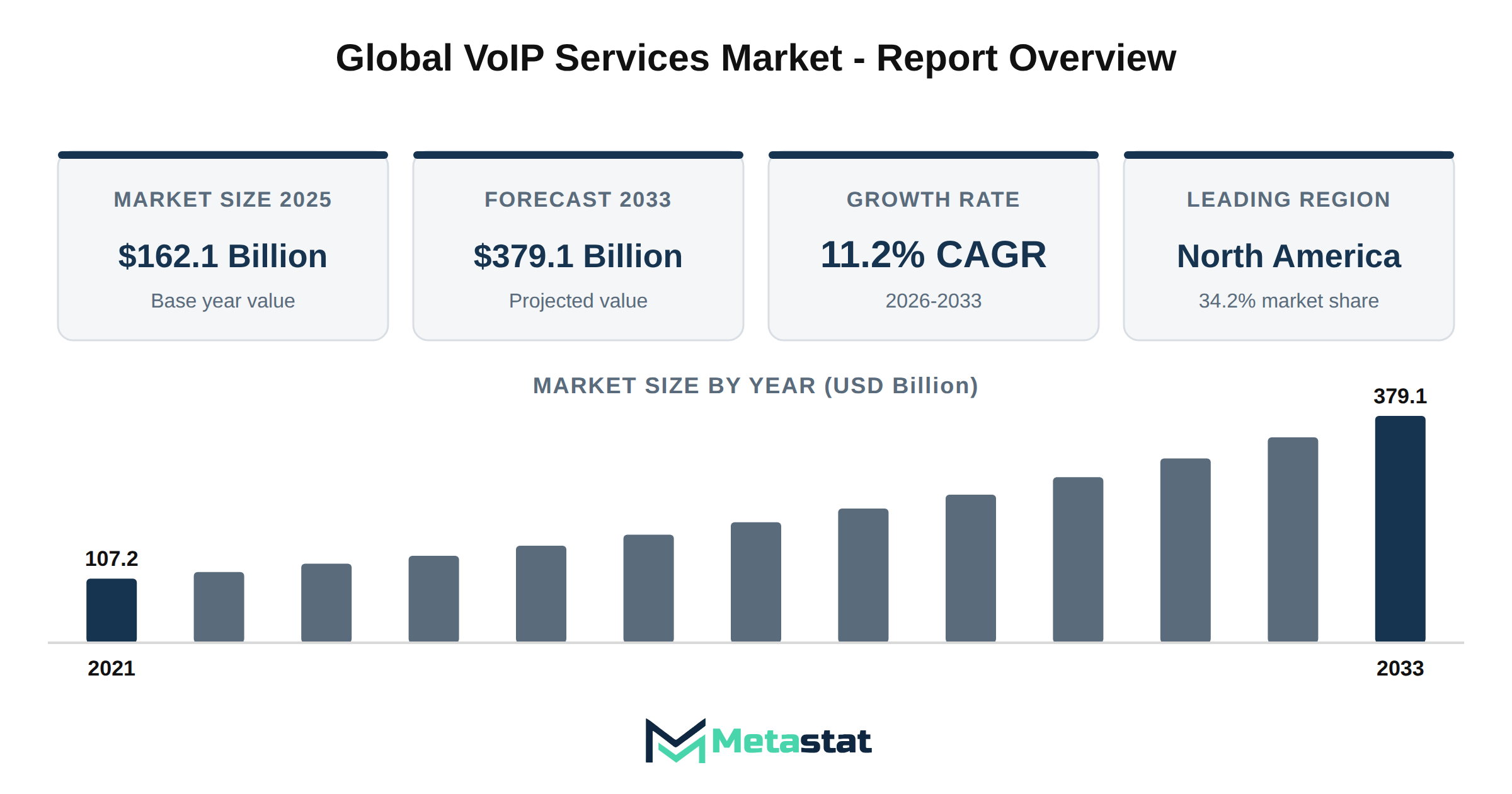
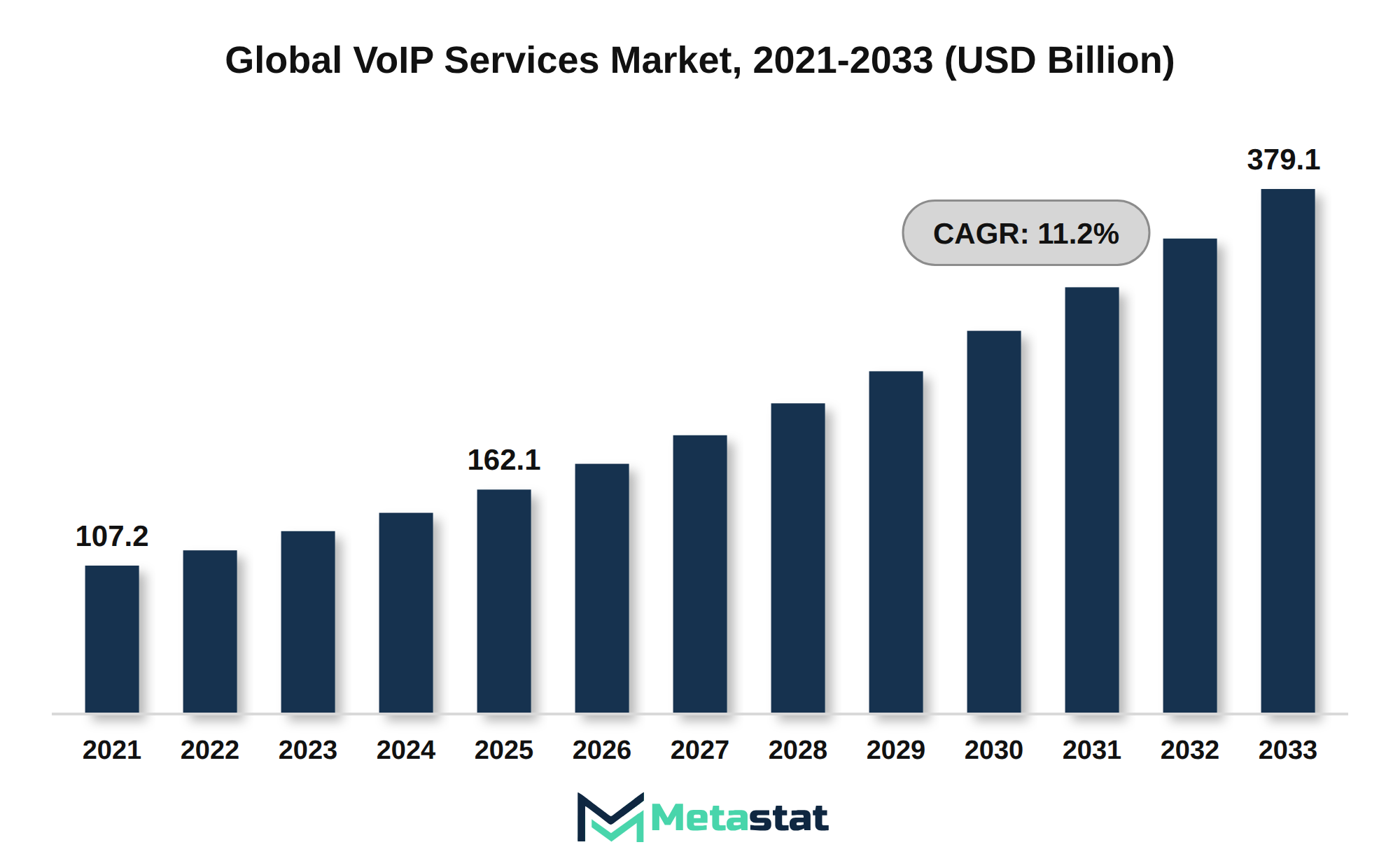
The VoIP Services market reached a value of USD 162.1 billion in 2025, following a historical trajectory of growth from USD 107.2 billion in 2021. This upward trend is projected to continue, with the market expected to achieve USD 379.1 billion by the end of 2033, reflecting a compound annual growth rate (CAGR) of 11.2% during the forecast period from 2026 to 2033.
Factors contributing to this growth include the increasing adoption of hosted business VoIP and cloud PBX services, which are anticipated to rise from USD 61.7 billion in 2026 to USD 132.7 billion by 2033, representing a CAGR of 11.6%. SIP trunking services are projected to generate USD 94.8 billion by 2033, indicating steady demand for these solutions.
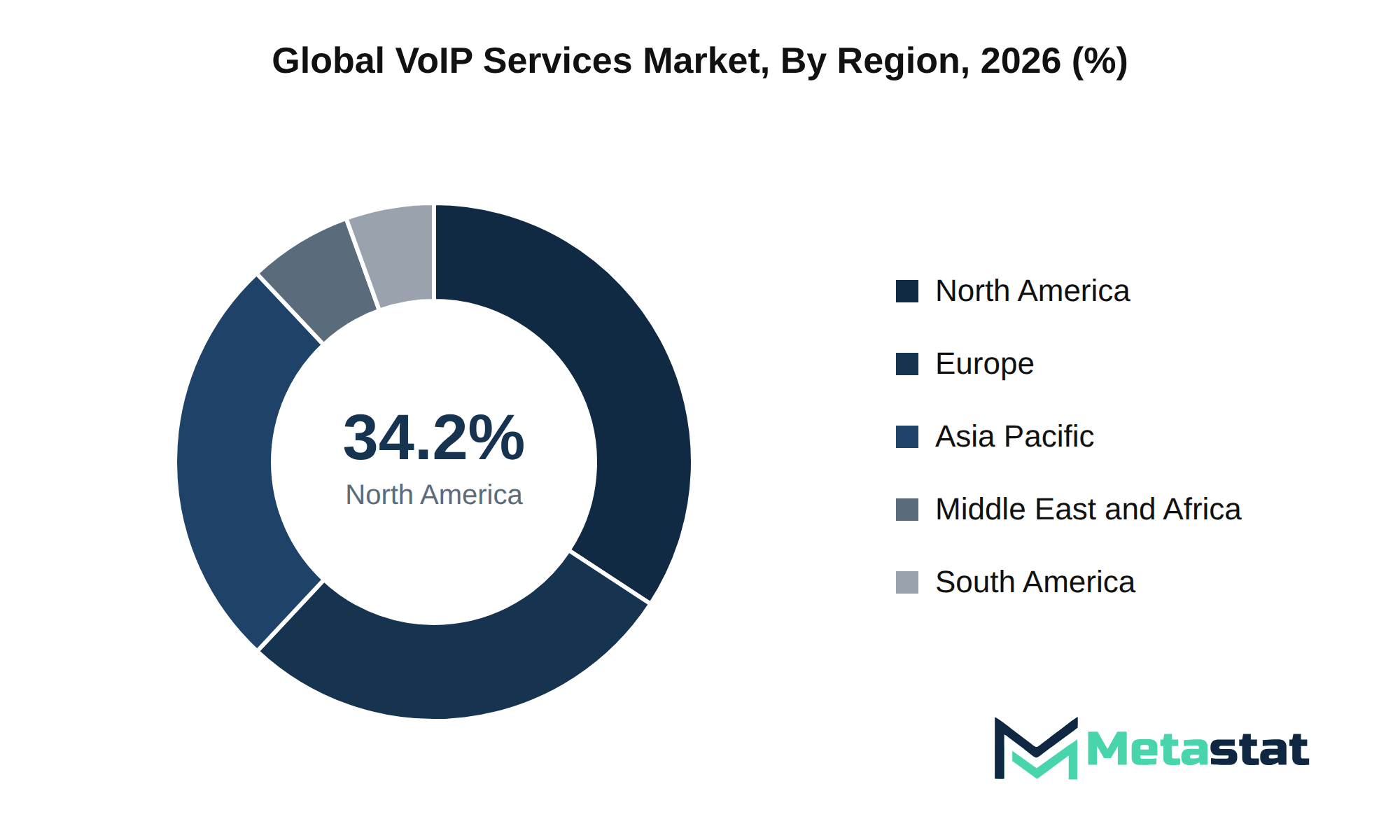
Regional dynamics highlight North America, which accounts for 34.2% of the overall market share. By 2033, the region is expected to contribute USD 119.4 billion to the market, with a CAGR of 11.2%. European and Asia Pacific markets follow, comprising 27.7% and 26% of the market respectively, reflecting diverse regional growth patterns.
In the context of end-use industries, the BFSI sector is forecasted to grow from USD 25.2 billion in 2026 to USD 51 billion by 2033, demonstrating a CAGR of 10.6%. The IT and telecommunications industry is projected to reach USD 68.2 billion by 2033, while retail and e-commerce services are expected to contribute USD 43.6 billion by the same year, illustrating the widespread applicability of VoIP solutions across various sectors.
LEO (Low Earth Orbit) and VSAT (Very Small Aperture Terminal) technologies enhance VoIP quality and resilience. These advancements create stable connections, especially in remote locations. The integration of LEO satellites supports low-latency communication, crucial for high-quality voice services. Increased adoption of these technologies positions providers to meet growing demand for reliable VoIP solutions across various sectors.
Cross-border numbering and portability play significant roles in the VoIP Services market. Businesses increasingly require effective communication across borders, driving demand for services that enable number portability without compromising quality. This trend encourages providers to develop innovative solutions that improve user experience and regulatory compliance.
The adoption of Microsoft Teams Direct Routing has transformed collaboration for organizations. This service allows enterprises to integrate their VoIP systems with Microsoft Teams, streamlining communication processes. The market experiences heightened demand for integration solutions that enable efficient workflows and reduce operational costs.
SIP (Session Initiation Protocol) security and fraud controls represent critical factors in maintaining trust within the VoIP Services market. With cyber threats on the rise, robust security measures ensure safe and reliable communications. Investment in advanced security protocols reassures users, building confidence in VoIP because a primary communication tool.
Wholesale voice services and white-label economics contribute significantly to market dynamics. Providers focus on cost-effective solutions that cater to smaller operators, allowing them to offer competitive services. This strategy enhances market penetration and supports growth in underserved regions, driving overall market expansion.
Regulatory frameworks in regions including SADC (Southern African Development Community) influence market operations. Adherence to local regulations ensures compliance and promotes fair competition among providers. These frameworks shape the strategic direction of VoIP services, affecting pricing and service offerings.
Investment in research and development trajectories drives next-generation innovations within the VoIP Services market. Companies prioritize developing sustainable solutions that align with decarbonization and circular economy principles. This focus on sustainability positions the market to thrive while addressing evolving consumer expectations and regulatory pressures.
The supply chain significantly impacts the VoIP Services market. Efficient logistics architecture and sourcing strategies enhance service delivery while minimizing costs. Companies that optimize their supply chains gain a competitive edge, enabling them to respond swiftly to market demands.
Market fragmentation influences the competitive landscape, with numerous players vying for market share. This fragmentation encourages innovation, because companies develop unique offerings to differentiate themselves. M&A dynamics will likely shape the future of the market, with strategic acquisitions enhancing capabilities and expanding service portfolios.
Capital allocation towards infrastructure investments remains essential for sustained growth. Providers who prioritize network enhancements and technology upgrades will improve service quality and expand their market reach. The strategic outlook for the VoIP Services market highlights the importance of aligning corporate imperatives with evolving consumer needs and market conditions.
Rapid digital transformation drives growth in the VoIP Services market by enabling organizations to enhance communication capabilities through advanced technologies. The increasing reliance on cloud-based solutions and remote work arrangements necessitates effective communication tools, leading businesses to adopt VoIP services. Organizations prioritize digital tools to improve operational efficiency and streamline processes, resulting in a shift from traditional telephony systems to internet-based voice communications.
Investment in technological integration is crucial in this transition. Modern enterprises incorporate automation, artificial intelligence, and software solutions to optimize workflows and enhance customer interactions. The demand for efficient and cost-effective communication solutions prompts enterprises to seek VoIP services, which improve customer engagement and satisfaction.
The ongoing digital transformation fuels investments in infrastructure and modernization, further driving the expansion of the market. Organizations across various sectors recognize the importance of upgrading communication systems to remain competitive and agile in a fast-evolving business environment. This trend signals a long-term structural change in communication preferences, contributing to sustained growth in the VoIP Services market.
The VoIP Services market expands in response to shifting demographic patterns that reshape communication needs. Urbanization drives a growing demand for efficient communication solutions, particularly among younger populations that embrace digital technologies. An aging population increases the necessity for accessible voice communication, particularly among seniors who rely on user-friendly platforms for connectivity. These demographic trends compel enterprises to adopt VoIP solutions that cater to diverse user preferences and enhance overall communication efficiency.
Evolving consumer behaviors driven by lifestyle changes impact the market. Increasing reliance on remote work and telecommuting creates a significant demand for VoIP services that support flexible communication. The market aligns with these trends by offering scalable solutions that facilitate collaboration across various platforms, enhancing operational productivity across multiple sectors. This adaptability proves crucial for organizations aiming to meet the demands of a dynamic workforce.
Overall, demographic shifts and evolving consumer preferences significantly contribute to the growth of the VoIP Services market, prompting increased investment in technology and infrastructure that supports communication demands.
Regulatory challenges present significant obstacles for the VoIP Services market, impacting growth and adoption rates. Increased compliance requirements and legal mandates impose additional operational burdens on service providers, leading to heightened costs. Organizations face challenges in navigating these regulations, which slow deployment and hinder market entry for new participants.
Macroeconomic headwinds, including inflationary pressures and capital stagnation, restrict investment in infrastructure upgrades necessary for VoIP deployment. Companies in the market struggle with rising operating costs, which deter customers seeking cost-effective solutions. Supply chain disruptions exacerbate these challenges, delaying the rollout of critical technologies and services.
Geopolitical instability contributes to market fragmentation, affecting service availability in certain regions. This instability creates uncertainty, leading to cautious investment strategies that limit growth potential. Infrastructure gaps and connectivity deficits hinder effective communication solutions, particularly in underserved areas, impacting overall market performance.
Skilled labor deficiencies and talent gaps present challenges for organizations seeking to innovate within the VoIP Services market. Rising workforce overhead associated with training and retention complicates operational efficiency. Data security vulnerabilities and privacy concerns remain significant, threatening customer trust and market expansion.
Overall, these regulatory challenges and macroeconomic factors create a complex environment for VoIP service providers, affecting their ability to compete and innovate effectively within the market.
Geopolitical fragmentation continues to pose significant challenges for the VoIP Services market. Trade deficits and tariff friction disrupt the flow of materials and technology, creating complexities that hinder market growth. These geopolitical tensions result in increased operational costs for suppliers, impacting profit margins and overall pricing strategies. Compliance overhead from tightening global regulatory standards adds to the financial burden, forcing many organizations to allocate resources toward navigating these challenges instead of investing in innovation and expansion.
Technological disruptions introduce additional uncertainties, creating interoperability friction among various systems and platforms. This situation complicates integration efforts for VoIP services, limiting their effectiveness across different organizations and sectors. The constant evolution of cybersecurity threats raises concerns regarding data vulnerabilities, emphasizing the need for enhanced security measures that require substantial investment.
Logistics disruptions further strain the market, causing delays in product delivery and supply chain instability. These issues result in increased lead times and ultimately impact customer satisfaction. Workforce skill gaps and talent retention pressures exacerbate challenges in maintaining operational efficiency, leading to slower adoption rates of VoIP technologies across various industries.
Environmental sustainability demands and decarbonization mandates introduce further complexity. Organizations face pressure to reduce their environmental footprint, which requires investment in greener technologies and practices. The VoIP Services market navigates these multifaceted challenges while meeting changing downstream demands and addressing market saturation. Overall, these factors limit growth potential and require adaptive strategies to sustain competitive advantage.
The VoIP Services market benefits from a range of emerging innovations that enhance capabilities and broaden applications. Continuous technological disruptions, particularly in cloud computing and artificial intelligence, improve the functionality of VoIP services. These advancements enable effective communication, improve service reliability, and lower operational costs, driving adoption across various sectors.
Infrastructure modernization significantly contributes to market expansion. Upgrades in network systems and broadband connectivity enable higher-quality VoIP services. Geographic regions with enhanced infrastructure experience increased demand, particularly in emerging economies where businesses recognize the advantages of adopting VoIP solutions. This shift leads to increased market penetration and competitiveness.
Digital procurement shifts and evolving buying behaviors influence purchasing decisions within the VoIP Services market. Businesses prioritize cost-effective and scalable solutions, prompting suppliers to innovate and integrate services. The emphasis on value-chain optimization and process automation enhances the market’s appeal, particularly among micro and small enterprises seeking efficient communication solutions.
The market reflects a growing emphasis on sustainability imperatives and eco-friendly practices. Companies increasingly align their strategies with environmental, social, and governance (ESG) objectives, driving demand for VoIP services that support these goals. This alignment creates opportunities for providers to offer green solutions that attract socially conscious businesses.
Strategic consolidation and cross-industry mergers strengthen the competitive position of stakeholders within the market. Collaborations among technology providers facilitate the development of comprehensive service offerings that cater to diverse customer needs. Such partnerships enhance market reach and diversify product portfolios, contributing to sustained growth.
Overall, the VoIP Services market stands at the intersection of innovation and demand for modern communication solutions. Companies adapt to changing market dynamics and embrace new technologies, creating opportunities for growth and expansion.
The Global VoIP Services market is segmented based on Service Type, Organization Size, and End-Use Industry.
Hosted Business VoIP / Cloud PBX Services segment is valued at USD 61.7 billion in 2026 and is projected to reach USD 132.7 billion by 2033, at a CAGR of 11.6% during the forecast period. Increasing reliance on digital communication and the shift towards remote work environments drive demand for these services. Businesses pursue cloud-based communications for their flexibility, scalability, and cost-effectiveness. With ongoing technological advancements, features including integrated collaboration tools and enhanced security measures encourage adoption among enterprises. The ability to streamline communication processes and reduce operational costs incentivizes organizations across various sectors, including BFSI, IT, and healthcare, to implement these solutions.
The VoIP Services market experiences significant growth driven by firms seeking more efficient communication methods. The transition from traditional phone systems to cloud-based solutions reflects changing consumer preferences and the need for modernized infrastructure. Organizations that adopt Hosted Business VoIP / Cloud PBX Services achieve improved collaboration and productivity, contributing to their competitive advantage in the market. Investment in next-generation upgrades and continuous product evolution further enhances the segment’s growth potential.
SIP Trunking Services segment is estimated to reach USD 94.8 billion by 2033, at a CAGR of 10% during the forecast period. Demand for SIP Trunking Services derives from the increasing need for cost-effective telecommunication solutions among enterprises. Companies prioritize efficient communication, leading to higher adoption rates of SIP trunking technology. The segment experiences expansion due to the growing trend of remote work, which necessitates reliable and scalable communication systems.
Technological maturation of SIP solutions enhances interoperability with existing systems, enabling easier integration for businesses transitioning from traditional telephony. Enhanced features, including advanced call routing and unified communications, drive further interest in this segment. Downstream applications within industries, including BFSI and IT & Telecommunications, require robust communication infrastructures, positioning SIP Trunking Services because a critical component.
Overall, the VoIP Services market benefits from the substantial growth potential within the SIP Trunking Services segment. Organizations increasingly recognize the advantages of SIP trunking, including flexibility, scalability, and reduced operational costs. Strategic investments in this area contribute to the overall expansion of the VoIP Services market.
In the VoIP Services market, the segment for Virtual Number / DID Services is expected to reach USD 49.3 billion by 2033. Primary demand drivers include the growing need for businesses to establish a local presence in various regions without the expense of physical offices. This demand primarily stems from the expansion of small and medium enterprises engaging in digital commerce and remote operations.
Segment expansion catalysts align with advancements in communication technologies, enhancing the functionality of virtual numbers. While companies increasingly adopt cloud-based solutions, the ability to manage multiple numbers from a single platform becomes essential, supporting efficient business operations. The ongoing technological maturation of VoIP solutions guarantees that service providers offer competitive features, including flexibility and cost-effectiveness, which attract a broader range of customers.
Downstream applications, particularly in e-commerce and customer service sectors, highlight the critical role of virtual numbers. Companies leverage these services to optimize customer engagement and streamline communications with international clients. Regulatory compliance standards influence market dynamics, reflecting businesses' efforts to ensure adherence to local telecommunications regulations while using virtual number services.
Cost structures within this segment reflect competitive pricing strategies among providers, with pricing volatility impacting margin pressures. Strategic opportunity windows arise from the increasing shift towards cloud communications, prompting investments in innovative solutions. Capital investment outlook remains positive, creating an environment conducive to further growth and adoption of virtual number and DID services in the VoIP Services market.
Growth in the Wholesale VoIP Origination & Termination segment stems from increasing demand for cost-effective communication solutions among businesses. Providers focus on optimizing their service offerings to enhance quality and reduce latency, driving adoption across various industries. This segment serves because a vital backbone for many telecommunications companies, ensuring reliable connectivity. Pricing strategies play a key role, influencing customer choices and market dynamics.
Wholesale VoIP Origination & Termination segment is projected to grow at a CAGR of 7.9% during the forecast period. Innovations in technology, including advancements in VoIP protocols and the adoption of cloud-based solutions, further contribute to the segment's expansion. End-users in sectors like BFSI and IT & Telecommunications increasingly rely on these services for efficient communication, enabling a broader market acceptance.
The market’s capacity to adapt to regulatory compliance standards enhances its resilience and positions it favorably against potential disruptions. With strategic investments in infrastructure and technology, providers deliver reliable services that meet evolving consumer needs, building confidence among clients. Overall, the Wholesale VoIP Origination & Termination segment will play a significant role in shaping the VoIP Services market's future trajectory.
Technological advancements drive the adoption of Programmable Voice and Voice API Services within the VoIP Services market. Increasing demand for effective communication and real-time interactions across diverse applications drives investments in programmable voice technologies. Organizations seek to enhance customer engagement and streamline workflows by integrating these services into their operations.
The evolution of artificial intelligence and machine learning significantly influences this segment. Businesses apply programmable voice services to automate processes, enabling personalized customer experiences and efficient service delivery. The scalability offered by cloud-based solutions facilitates rapid deployment and adaptability, further fueling growth.
End-use dynamics play a critical role in shaping the demand for Programmable Voice and Voice API Services. Industries including BFSI, IT and Telecommunications, and Retail experience heightened interest in these technologies, driven by their efforts to improve operational efficiency and enhance customer satisfaction. Continuous consumption shifts reflect a growing preference for flexible and customizable communication solutions.
Regulatory compliance standards impact service offerings in the VoIP Services market. Providers focus on ensuring adherence to data protection regulations while optimizing service functionalities. This alignment enhances customer trust and strengthens market positioning.
Investment in research and development remains vital for sustained growth in this segment. Companies actively seek strategic opportunity windows by exploring innovative applications that leverage programmable voice capabilities. This proactive approach positions them favorably within the competitive environment, facilitating agility in capturing emerging market opportunities.
Valued at USD 62.7 billion in 2026, the Micro & Small Enterprises segment is projected to reach USD 140.3 billion by 2033, at a CAGR of 12.2% during the forecast period. Demand drivers for this segment include the increasing reliance on cost-efficient communication solutions among smaller organizations. Adoption of VoIP services enables these enterprises to optimize operational efficiency and reduce overhead costs associated with traditional telephony.
Segment expansion catalysts revolve around advancements in technology and the growing availability of high-speed internet. The evolution of product offerings tailored for micro and small businesses enhances accessibility and functionality. End-use dynamics indicate a notable shift towards cloud-based solutions, with enterprises prioritizing flexibility and scalability in their communication systems.
Regulatory compliance standards impact the market, with various regions imposing guidelines for data security and privacy, influencing purchasing decisions. Pricing volatility remains a concern, with fluctuations in service costs affecting budget allocations among micro and small enterprises. Strategic opportunity windows arise from the increasing trend toward digital transformation across industries, positioning VoIP services because an essential component of modern business communication.
The Micro & Small Enterprises segment in the VoIP Services market is set for significant growth driven by technological advancements and evolving customer needs. Continuous investment in innovative solutions will further enhance the segment's trajectory in the coming years.
Growing interest in advanced communication solutions drives the demand in the Medium Enterprises segment of the VoIP Services market. This segment is estimated to reach USD 113.7 billion by 2033, at a CAGR of 11.6% during the forecast period. The increasing reliance on cost-effective and scalable communication systems supports the adoption of VoIP services among medium enterprises. Enhanced features, including virtual numbers and SIP trunking, enable better connectivity and operational efficiency, attracting organizations looking to streamline their communication strategies.
Technological maturation influences the expansion of this segment. Innovations in cloud technology and integrated communication platforms enable medium enterprises to enhance collaboration and productivity. Regulatory compliance requirements influence the demand for VoIP solutions, because organizations seek to meet industry standards while reducing operational costs. Consequently, the evolution of VoIP services aligns with the specific needs of medium enterprises, allowing them to leverage the latest advancements in communication technology.
End-use dynamics further shape the Medium Enterprises segment, with industries including BFSI, IT & Telecommunications, and Retail actively investing in VoIP services. These sectors benefit significantly from the flexibility and scalability offered by VoIP solutions, which cater to their unique operational demands. The ongoing shift towards digital-first strategies ensures that the VoIP Services market continues to grow, driven by robust demand from medium enterprises seeking efficient communication solutions.
Strong adoption of VoIP services among large enterprises drives significant market growth, reflecting a shift towards enhanced communication solutions. Digital collaboration and remote working trends necessitate scalable, cost-effective communication tools, driving robust demand. Large enterprises increasingly seek integrated solutions that consolidate voice, video, and messaging functionalities, streamlining operations and improving productivity.
Technological advancements in VoIP services facilitate superior voice quality and reliability, enhancing user experience and encouraging further uptake. Innovations in artificial intelligence and machine learning contribute to next-gen upgrades, enabling features including automated customer responses and advanced analytics. Such enhancements support the evolving needs of large enterprises, aligning with their objectives for efficient workflows and improved customer engagement.
Market dynamics indicate that large enterprises will experience a compound annual growth rate (CAGR) of 11.2% from 2026 to 2033. The Large Enterprises segment is projected to reach USD 125.1 billion by 2033. The increase reflects heightened investment in digital infrastructure, with firms prioritizing advanced communication solutions to remain competitive in a rapidly changing business environment.
Regulatory compliance and security concerns influence purchasing decisions, prompting enterprises to seek VoIP solutions that meet industry standards. A focus on data protection and privacy drives demand for services that offer robust security features, enabling organizations to safeguard sensitive communications. Investments in compliant solutions enhance operational integrity and support long-term profitability in the market.
Valued at USD 25.2 billion in 2026, the BFSI segment is projected to reach USD 51 billion by 2033, reflecting a CAGR of 10.6% during the forecast period. Increasing demand for secure and efficient communication channels within the banking and financial services industries drives adoption of VoIP services. Organizations prioritize cost-effectiveness and flexibility, enhancing operational efficiency through cloud-based communications. The ongoing digital transformation in financial technology encourages innovation, promoting widespread integration of Voice over Internet Protocol solutions. Regulatory compliance standards necessitate the adoption of reliable communication systems, pushing firms to upgrade existing infrastructure. This transition enables efficient customer interactions, thereby enhancing overall customer satisfaction. Strategic investments in next-generation VoIP solutions become essential for organizations aiming to maintain competitiveness in the evolving VoIP Services market.
Rapid expansion in the IT & Telecommunications sector significantly influences the VoIP Services market. Increased demand for streamlined communication solutions drives organizations to seek reliable and efficient VoIP services, leading to substantial market growth. The IT & Telecommunications segment is projected to reach USD 68.2 billion by 2033, at a CAGR of 10.8% during the forecast period. Technological advancements, including the integration of artificial intelligence and machine learning, enhance service offerings and improve user experiences, resulting in heightened competition among providers.
Organizations actively adopt VoIP services to reduce operational costs while improving communication quality. The shift towards remote work environments accelerates the need for scalable communication solutions. Consequently, companies invest in the latest VoIP technologies to remain competitive in an evolving marketplace. Increased emphasis on regulatory compliance with communication standards ensures that providers enhance their service capabilities.
Pricing pressures influence service providers, compelling them to innovate continuously and optimize cost structures. The focus on subscription-based models enables flexibility for organizations of varying sizes, facilitating wider adoption of VoIP services across the IT & Telecommunications segment. Strategic investments in next-generation technologies position key players to capitalize on emerging opportunities, ultimately driving growth and expansion in the market.
Rapid growth in the Retail & E-commerce segment of the VoIP Services market stems from increasing reliance on digital communication and the need for cost-effective solutions in customer engagement. Retailers pursue integrated communication platforms to enhance customer interactions, improve operations, and elevate service delivery. With consumers increasingly favoring online shopping, businesses prioritize adopting technologies that enable effective communication across various channels, including voice, video, and messaging.
Investment in advanced VoIP solutions enables retailers to optimize their customer service strategies, providing personalized experiences that drive customer loyalty. The segment is projected to reach USD 43.6 billion by 2033. Continued technological maturation supports the integration of VoIP services with e-commerce platforms, enhancing transactional efficiency and customer satisfaction.
The expansion of the Retail & E-commerce segment benefits from evolving consumer preferences toward instantaneous communication, increasing competition among service providers to offer innovative solutions. Pricing volatility in the telecom sector influences the adoption of VoIP services, with businesses seeking cost-effective alternatives to traditional communication methods. Strategic opportunities within the segment attract investments aimed at leveraging cloud capabilities and enhancing service offerings, reinforcing the market's growth trajectory.
Investment in healthcare technology fuels the demand for VoIP services within the healthcare sector. Enhanced communication capabilities, efficient patient management, and regulatory compliance drive providers to adopt VoIP solutions. The integration of telehealth services further encourages healthcare organizations to implement VoIP systems, improving accessibility and patient engagement.
The healthcare segment is projected to grow at a CAGR of 12.9% during the forecast period. Increasing reliance on remote healthcare solutions and real-time communication enhances service delivery and operational efficiency. The sector embraces digital transformation, leading to a significant rise in demand for VoIP services.
Healthcare organizations face pressure to comply with stringent privacy regulations, necessitating secure communication methods. VoIP services provide robust encryption features, ensuring patient data confidentiality and adherence to compliance standards. This compliance aspect positions the VoIP services market favorably, attracting more healthcare providers seeking reliable communication solutions.
The ongoing evolution of telemedicine contributes to the growth of VoIP services in healthcare. With the rising demand for virtual consultations, healthcare providers invest in advanced VoIP technologies to facilitate communication between patients and practitioners. This shift enhances patient satisfaction and improves healthcare outcomes by enabling timely interventions.
Adoption of VoIP services within the Government and Public Sector reflects a strategic shift towards enhancing communication efficiency and reducing operational costs. Public sector organizations prioritize digital transformation to improve service delivery and citizen engagement. This transition is driven by the need for integrated communication solutions that facilitate collaboration across various departments and agencies.
Investment in next-generation communication technologies supports the expansion of VoIP services in this sector. Government entities seek to modernize their infrastructure, and VoIP systems provide flexibility and scalability, allowing for updates and upgrades. The ongoing push for regulatory compliance influences organizations to adopt secure and reliable communication platforms that align with established standards.
Technological maturation plays a critical role in the adoption of VoIP services in the public sector. Organizations recognize the benefits of cloud-based solutions, which offer enhanced security features and reduced maintenance costs. Demand for advanced telecommunication capabilities continues to rise, driven by expectations for improved connectivity and service delivery.
Public sector entities explore innovative communication solutions that enhance operational agility and responsiveness. This pursuit aligns with broader trends in digital governance, where public institutions leverage technology to meet evolving citizen demands. Organizations shift towards cloud-based VoIP services, positioning the market for substantial growth within this segment.
Technological maturation serves because a primary demand driver within the Hospitality & Travel sector, where communication efficacy enhances customer engagement and service delivery. This segment experiences significant growth driven by the increasing adoption of cloud-based communication solutions, which streamline operations and reduce costs. Hotels and travel agencies leverage VoIP services to improve customer interaction, manage reservations, and provide real-time support. These factors result in heightened customer satisfaction and loyalty.
Investment in next-generation upgrades, including integrated omnichannel communication platforms, enhances operational efficiency within this sector. Evolving customer preferences for effective communication contribute to the segment's expansion, leading to adoption across various hospitality services, including hotels, restaurants, and travel agencies. Regulatory compliance standards and policies promoting digital transformation in customer service further stimulate demand within the market.
Cost structures reflect a shift towards more flexible pricing models in the sector, enabling hospitality businesses to access advanced VoIP technologies without significant upfront investment. This dynamic encourages smaller enterprises to adopt these solutions, expanding the customer base for service providers. Overall, the Hospitality & Travel segment illustrates a resilient market, characterized by continuous technological evolution and strategic opportunities for capital investment.
Innovative communication methodologies drive strong interest in the Education sector, prompting adoption of VoIP services tailored for academic environments. Integration of VoIP technology enhances connectivity, enabling institutions to implement more efficient communication systems that improve collaboration among students, educators, and administrative staff. Demand for remote learning solutions, spurred by recent global shifts toward digital education, fuels the expansion of the market. Educational institutions increasingly prioritize cost-effective communication systems that improve operational efficiency while addressing the unique needs of diverse learning environments.
Investment in advanced communication tools enhances educational delivery, improving interactivity and engagement in various educational settings. VoIP services support the transition to hybrid and remote learning models, aligning with evolving educational strategies focused on accessibility and flexibility. This shift positions the market to capture a growing share of the overall VoIP services landscape, driven by institutions seeking innovative ways to integrate technology into their teaching methodologies. Educational entities recognize the competitive advantage that robust communication systems bring to their operations, driving further expansion in the VoIP Services market.
Technological advancements within the manufacturing sector drive demand for VoIP services, enabling improved communication efficiency and cost reduction. The integration of VoIP solutions enhances operational flexibility, allowing manufacturers to adopt scalable communication models that align with their growth strategies. Increased emphasis on real-time communication and collaboration among teams supports the adoption of VoIP technologies, streamlining production processes and facilitating better decision-making.
Investment in automation and smart manufacturing technologies reinforces the need for reliable communication infrastructure. VoIP services provide crucial support for inter-departmental coordination, particularly in production and supply chain management. The shift towards Industry 4.0 encourages manufacturers to explore innovative communication solutions that optimize workflow and enhance productivity.
Regulatory compliance within the manufacturing sector necessitates robust communication tools. VoIP services offer features that align with compliance standards, facilitating secure information exchange and documentation. The evolving landscape of manufacturing demands adaptable communication solutions that respond effectively to industry-specific challenges.
Expansion of the VoIP services market in the manufacturing sector is influenced by the growing need for cost-effective communication solutions. Providers enhance their offerings to include next-gen upgrades that address specific manufacturing requirements, contributing to market growth. Strong competition among VoIP service providers encourages continuous innovation, ensuring that manufacturers have access to advanced communication technologies that meet their evolving needs.
Growth in the Professional & Business Services sector aligns with increasing demand for efficient communication solutions. Businesses prioritize streamlined operations and enhanced customer interactions, prompting the adoption of VoIP services. Segment expansion is driven by the need for remote collaboration tools and cost-effective communication methods. Organizations within this segment recognize the value of reliable VoIP systems to support their operational efficiency and competitiveness.
Technological advancements significantly influence this segment, with next-generation upgrades becoming essential for businesses aiming to stay ahead. The evolution of products, including features like video conferencing and unified communications, enhances service offerings. This evolution leads to a shift in consumption patterns, where organizations expect integrated solutions that enhance productivity.
Regulatory compliance and standards impact the adoption of VoIP services in the Professional & Business Services sector. Companies prioritize adherence to industry regulations, driving demand for solutions that meet compliance requirements. Cost structures related to VoIP services reflect the need for scalable pricing models, allowing businesses to manage expenses effectively while enjoying enhanced communication capabilities.
Strategic opportunity windows arise from the ongoing digital transformation of businesses. Organizations seek innovative VoIP solutions that offer flexibility and adaptability to their unique needs. Increased capital investment in advanced communication technologies supports the growth trajectory of the VoIP Services market, positioning it because a key enabler of business success in the Professional & Business Services sector.
Investment patterns in the Energy & Utilities, Transportation & Logistics, and Media & Entertainment sectors significantly influence demand for VoIP services. The need for effective communication solutions arises from the complexity and scale of operations within these industries. Transportation & Logistics firms rely on VoIP to manage operations across multiple locations, enhancing coordination and efficiency. Energy & Utilities companies benefit from VoIP's ability to enable real-time communication, improving decision-making processes and operational responsiveness.
In the Media & Entertainment sector, content delivery and production processes thrive on effective communication channels. VoIP services enable instant connectivity among teams, enhancing creativity and collaboration. These sectors exhibit a strong trend toward digitization, driving the demand for innovative communication technologies. Organizations prioritize cost-efficiency, and VoIP services provide a scalable solution that enhances operational flexibility while reducing overall communication expenses.
Regulatory compliance shapes adoption strategies within these industries. Organizations work to align with communication standards and policies, ensuring secure and reliable operations. Technological obsolescence presents challenges, but ongoing upgrades in VoIP infrastructure enhance reliability and performance. Strategic opportunities arise from these dynamics, attracting capital investment that focuses on expanding capabilities in the evolving VoIP services market.
Based on geography, the Global VoIP Services market is divided into North America, Europe, Asia-Pacific, South America, Middle East, and Africa.
Strong investment in infrastructure modernization supports the growth of the VoIP Services market in North America. The region's commitment to enhancing its telecommunication framework aligns with the increasing demand for efficient communication solutions. The market share is 34.2% in 2025, indicating its dominance on a global scale.
Countries including the United States, Canada, and Mexico display robust adoption rates driven by a combination of technological advancements and changing consumer preferences. The emergence of advanced communication tools, including cloud-based VoIP systems, refines operational efficiency across various industries.
High-value replacement cycles present an opportunity for market players to introduce innovative solutions that meet the evolving needs of enterprises. The presence of established domestic market participants strengthens competitive dynamics, influencing investment flows and vendor consolidation trends within the region.
Geopolitical factors and regional compliance mandates shape the operational landscape of the VoIP Services market. Adherence to local regulations ensures that service providers maintain a competitive edge, while strategic entry barriers protect established players from new entrants. The market expansion demonstrates the promising outlook for stakeholders in North America.
In Europe, the VoIP Services market benefits from robust demand driven by increasing reliance on digital communication solutions across various sectors. Countries like Germany, France, the UK, Italy, and Spain exhibit advanced telecommunications infrastructure, enhancing service accessibility and user experience. The growing trend of remote work and the need for reliable communication tools among businesses contribute significantly to market growth.
The region's competitive landscape features several domestic companies including BT Group plc and Vodafone Group Plc, which play crucial roles in shaping service offerings and pricing strategies. These companies concentrate efforts on expanding their service portfolios, particularly in hosted business VoIP and SIP trunking services, responding to the evolving needs of micro and small enterprises and larger organizations.
Infrastructure modernization remains a key factor in the market's expansion, with ongoing investments aimed at upgrading network capabilities to support increased VoIP traffic. The adoption of cloud-based solutions gains traction, further driving segment growth and offering businesses scalable communication options. Emerging market participants in Eastern Europe are beginning to capture attention, revealing untapped potential within the region.
Localized procurement dynamics and cultural nuances influence B2B buying behaviors, encouraging providers to tailor their services to meet specific regional demands. The European market benefits from a strategic entry barrier that attracts foreign direct investment (FDI), creating an environment conducive to innovation and competition. While organizations seek to enhance operational efficiency, the VoIP Services market is anticipated to experience sustained growth, contributing to the overall expansion of the communication technology sector within Europe.
The Asia-Pacific region holds a share of the VoIP Services market, accounting for 26.0% in 2025. High demand for VoIP solutions arises from rapid digital transformation initiatives across various industries, particularly in China, Japan, India, South Korea, and Australia. These countries show increasing investments in infrastructure modernization, contributing to improved connectivity and communication capabilities.
A surge in remote work and digital communication further enhances the adoption rates of VoIP services among enterprises, especially in micro and small organizations. Emerging market front-runners, including India and Southeast Asia, exhibit strong growth potential due to underpenetrated territories and a youthful, tech-savvy population eager for cost-effective communication solutions.
The competitive landscape in this region includes several domestic and international players striving for market share. Companies focus on localized procurement dynamics and tailor their offerings to meet the cultural nuances and regional B2B buying behaviors. This strategy strengthens relationships with clients, enhancing customer loyalty and retention.
Investment in energy grid resiliency and local infrastructure readiness remains crucial for enabling VoIP adoption. With foreign direct investment flows increasing, the region presents favorable conditions for market expansion. Incremental growth vectors, driven by high-value replacement cycles in legacy systems, further fuel the demand for VoIP solutions.
While market players continue to innovate and adapt their strategies, the VoIP Services market in the Asia-Pacific region is expected to evolve, positioning itself because a key area for growth and development within the global landscape.
The VoIP Services market in South America is characterized by a relatively low penetration rate compared to other regions. Brazil and Argentina stand because the leading countries in this segment, with existing infrastructure and increasing demand for integrated communication solutions. Several factors contribute to market growth, including urbanization, rising smartphone adoption, and the push for digital transformation across various sectors.
Investment in infrastructure modernization remains a key catalyst for growth, enabling the expansion of reliable internet services necessary for VoIP adoption. Local businesses increasingly recognize the benefits of efficient communication tools, driving demand for hosted business VoIP and SIP trunking services. The VoIP Services market in South America is expected to evolve further because companies adapt to changing consumer behaviors and technological advancements.
In addition, cultural nuances play a significant role in shaping regional buying behaviors. Companies in South America lean toward localized procurement strategies, thereby establishing partnerships with domestic providers. The focus on enhancing customer experiences and operational efficiencies positions the market for incremental growth, with potential for an increase in overall market share in the coming years.
Growth in the VoIP Services market within the Middle East and Africa region stems from increasing digital transformation initiatives and a rising demand for cost-effective communication solutions. Countries including Saudi Arabia and the UAE prioritize investment in modern telecommunications infrastructure, enhancing the adoption of VoIP services across various sectors.
The region's market exhibits significant potential due to underpenetrated territories and a growing interest in cloud-based solutions. South Africa shows promising developments in the IT & Telecommunications sector, driving demand for hosted VoIP services and SIP trunking solutions. Other parts of the Middle East and Africa continue to modernize their communication frameworks.
Investment in localized manufacturing and procurement dynamics influences competitive landscapes, allowing regional players to strengthen their market position. Cultural nuances and B2B buying behaviors contribute to unique demands in the VoIP Services market, creating opportunities for tailored service offerings and enhancing overall market engagement.
Strategic entry barriers, including regulatory frameworks and compliance mandates, impact market dynamics. The potential for foreign direct investment and geographic expansion remains strong, encouraging established players to enhance their presence in the region. This trend influences the overall growth of the market.
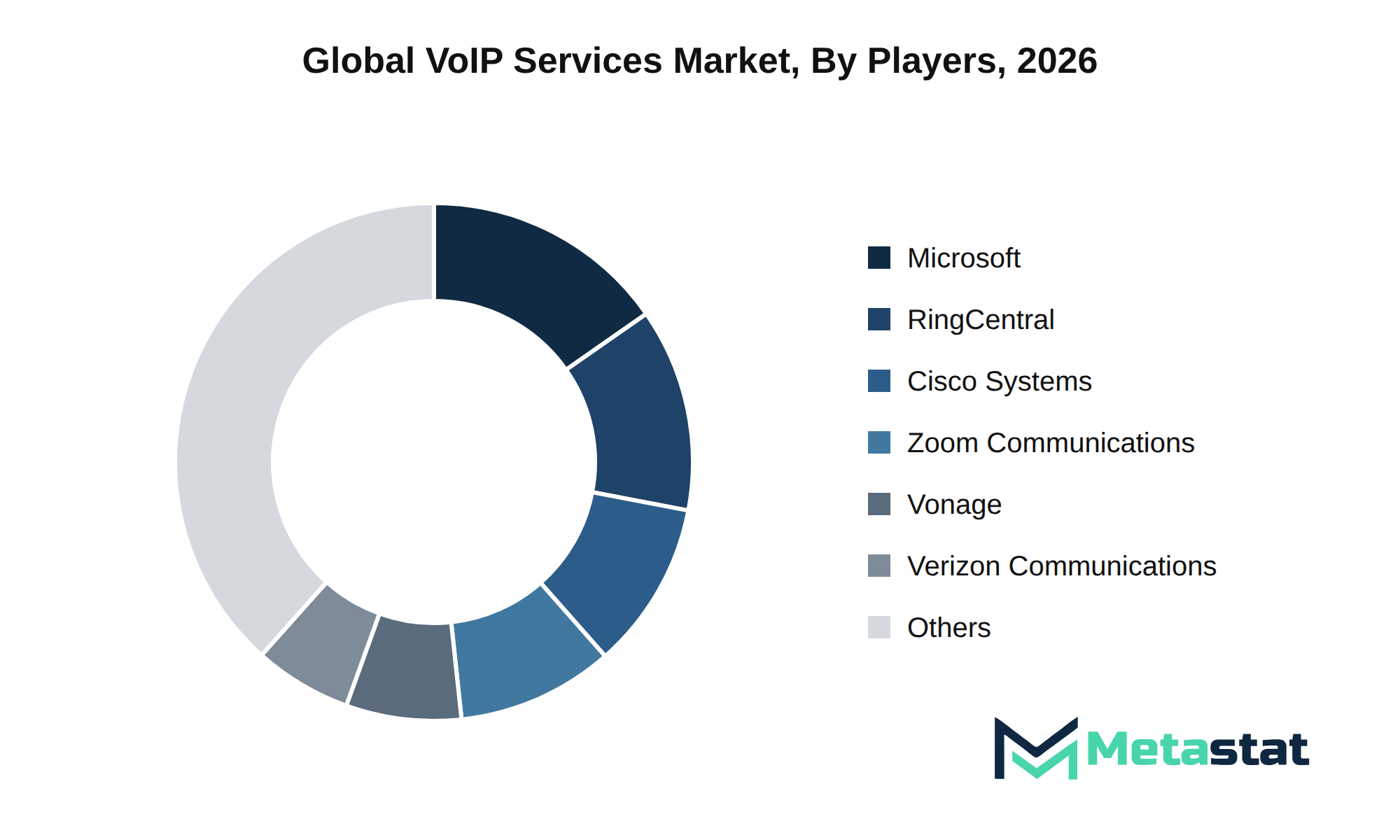
The VoIP Services market experiences significant competitive dynamics driven by various strategic behaviors among key players. Companies pursue mergers and acquisitions to consolidate market positions, enhance service offerings, and gain access to new technologies. Strategic alliances and partnerships shape the landscape, enabling providers to expand their market reach and integrate complementary capabilities. For instance, organizations like RingCentral, Microsoft Corporation, and Cisco Systems, Inc. leverage these strategies to strengthen their competitive edge.
Pricing architectures vary significantly, with companies adopting diverse commercial models to attract different segments of customers. Providers including Zoom Communications, Inc. and 8x8, Inc. focus on competitive pricing and tailored solutions aimed at small and medium enterprises, while larger entities like Verizon Communications Inc. and BT Group plc / BT Business cater to enterprise-level clients with comprehensive service packages. Innovations in product differentiation and R&D pipelines contribute to the development of unique offerings, which serve because a barrier to entry for new market entrants.
Intellectual property portfolios play a crucial role in maintaining technological defensibility among established players like Vonage and Lumen Technologies, Inc. These companies invest significantly in research and development to protect their innovations and sustain competitive advantages. The future competitive outlook for the VoIP Services market will depend on the ability of companies to navigate these dynamics while adapting to evolving customer needs and technological advancements.
Market size is forecast to rise from USD 162.1 billion in 2025 to over USD 379.1 billion by 2033. The base case reflects a compound annual growth rate (CAGR) of 11.2%. Various factors are contributing to this growth trajectory, including the integration of next-generation technologies and evolving consumer preferences. In particular, organizations across multiple industries are adopting VoIP Services due to a cost-effective communication solution that drives demand and facilitates operational efficiencies.
Strategic capital allocation alongside infrastructure commitments significantly influences the market. Investment in advanced VoIP solutions addresses emerging enterprise needs, aligning with ongoing regulatory evolution and compliance milestones. Companies focused on research and development (R&D) pursue timely commercialization of innovative VoIP applications, which enhances competitiveness and promotes market penetration.
Shifts in the global supply chain and geopolitical realignments create new challenges and opportunities within the VoIP Services market. While businesses adapt to these dynamic conditions, they explore high-growth pockets, optimizing their offerings to meet changing demands. The maturation of core industries will contribute to the overall market expansion, with an emphasis on developing defensibility roadmaps to navigate potential risks.
Overall, the VoIP Services market is positioned for significant growth, driven by strategic imperatives and evolving market conditions. Continuous monitoring of macroeconomic scenarios, alongside execution of effective growth recommendations, remains essential for stakeholders aiming to capitalize on the potential of this market.
The report strategically identifies and profiles the key market players and analyses their core competencies in each sub-segment of the VoIP Services market.
Report Attributes | Details |
Study Period | 2021-2033 |
Base Year | 2025 |
Estimated Year | 2026 |
Forecast Period | 2026-2033 |
Historical Period | 2021-2025 |
Growth Rate | CAGR 11.2% from 2026 to 2033 |
Revenue Unit | USD billion |
Segmentation | By Service Type, Organization Size, End-Use Industry, and Region |
By Region | North America (By Service Type, Organization Size, End-Use Industry, and Country)
|
Europe (By Service Type, Organization Size, End-Use Industry, and Country)
| |
Asia Pacific (By Service Type, Organization Size, End-Use Industry, and Country)
| |
South America (By Service Type, Organization Size, End-Use Industry, and Country)
| |
Middle East and Africa (By Service Type, Organization Size, End-Use Industry, and Country)
|
Find answers to common questions about this report
The VoIP Services market size was valued at USD 162.1 billion in 2025.
The VoIP Services market is projected to grow at a CAGR of 11.2% during the forecast period from 2026 to 2033.
The North America VoIP Services market size is estimated to reach USD 119.4 billion by 2033.
The segment leading the VoIP Services market is Hosted Business VoIP / Cloud PBX Services, with a projected value of USD 132.7 billion by 2033. This segment demonstrates the highest growth potential within the market.
Rapid digital transformation and the increasing reliance on cloud-based solutions drive growth in the VoIP Services market. Organizations prioritize effective communication tools to enhance operational efficiency, while demographic shifts and evolving consumer preferences further contribute to the demand for scalable VoIP solutions that support flexible communication.
North America holds the dominant share of the VoIP Services market, with a value of USD 119.4 billion projected for 2033, representing 34.2 percent of the total market.
Regulatory challenges and macroeconomic factors significantly restrain the VoIP Services market growth. Compliance requirements increase operational burdens and costs for service providers, while inflation and supply chain disruptions limit investment in necessary infrastructure upgrades. Geopolitical instability further complicates market dynamics, affecting service availability and leading to cautious investment strategies.
Rapid digital transformation enhances communication capabilities, driving VoIP Services adoption. The shift towards cloud-based solutions and remote work arrangements necessitates effective communication tools, leading organizations to prioritize VoIP for improved operational efficiency and customer engagement. Demographic trends further support this growth, particularly among younger populations and seniors seeking accessible communication solutions.
The VoIP Services market is estimated to reach a valuation of USD 379.1 billion by 2033.
Key players in the VoIP Services market include RingCentral, Inc., Microsoft Corporation, Cisco Systems, Inc., Zoom Communications, Inc., 8x8, Inc., Vonage, and Verizon Communications Inc.
The analysts below cover Information & Technology research at Metastat Insights.
LEAD ANALYST
Utkarsh Khirodkar is a Lead Market Research Analyst at MetaStat Insight, specializing in market intelligence, technology sector assessments, and competitive strategy.

PRINCIPAL CONSULTANT - ENTERPRISE AI & EMERGING TECHNOLOGIES
Banking & Finance · Electronics and Semiconductor · Energy and Power · Healthcare IT · Information & Technology · Professional Services
Vijay Gunti is a Principal Consultant at MetaStat Insight, bringing over two decades of experience across enterprise digital transformation, technology strategy, and intelligent systems.

LEAD CONSULTANT - COMMUNICATION, TELECOM, AND IT
Electronics and Semiconductor · Information & Technology · Machinery & Equipment · Professional Services
Ravindra Sathe Consultants for Communication, Telecom, and IT at MetaStat Insight. He leads the firm's industry research initiatives across telecommunications infrastructure, digital connectivity, enterprise networking, and emerging information technology domains.
Analyzing the transition from natural gas to green hydrogen in iron ore reduction requires realistic infrastructure timelines. Meta stat insight supplied a detailed regional assessment of DRI plant conversion costs and scrap metal availability in North America and Western Europe. Their report carefully examined pellet quality specs and electrical grid access constraints without making oversimplified market assumptions. The research material served as a practical reference during internal technology roadmap discussions.
Integrating zero-trust access controls across legacy electronic health record systems involves complex compliance overhead. Team produced an analysis that clearly separated identity governance and administration tools from privileged access management platforms. Their evaluation of HIPAA and GDPR compliance features across cloud native solutions gave our architecture group clear baseline criteria. The custom data request regarding biometric authentication adoption in hospital networks was returned promptly with clear documentation.
Evaluating calorific value requirements and air permit compliance across municipal waste facilities requires localized data. Metastat Insight structured their analysis around operational throughput capacity and feedstock composition variations in Latin America and Eastern Europe. Their competitive mapping of sorting equipment vendors helped clarify technology differences between optical separators and heavy media systems. The study provided an objective baseline during our capital expenditure reviews.
Explore related market intelligence reports worth reading alongside this one.