
LEAD ANALYST
Utkarsh Khirodkar is a Lead Market Research Analyst at MetaStat Insight, specializing in market intelligence, technology sector assessments, and competitive strategy.

Australia Media Planning & Buying Services Market Size, Share, By Service Type (Media Strategy & Communications Planning, Media Planning & Channel Allocation, Media Buying, Negotiation & Investment, Campaign Activation & Optimisation, Audience, Data & Consumer Insights, Measurement, Attribution & Marketing Effectiveness, Media Technology & Ad Operations, Content Partnerships & Sponsorship Activation), By Media Channel (Digital Media, Television & Connected TV, Out-of-Home & Digital Out-of-Home, Radio & Digital Audio, Print Media, Cinema Advertising, Retail Media and Other Channels), By Buying Model (Direct Media Buying, Programmatic Buying, Private Marketplace Buying, Automated Guaranteed Buying and Hybrid Buying), By Advertiser Industry (Retail & E-commerce, FMCG & Consumer Goods, Automotive, Financial Services & Insurance, Telecommunications & Technology, Travel, Tourism & Hospitality, Media, Entertainment & Gaming, Healthcare & Pharmaceuticals and Others), Industry Analysis, Growth, Trends, and Forecast, 2026-2033
Report ID
MSI-5154
Published
September, 2026
Pages
265 Pages
Format
Historical
Base year
Forecast
Forecast period
Report Details
Choose Your License
Australia Media Planning & Buying Services Market
The Australia Media Planning & Buying Services market was valued at USD 1,641.5 million in 2025 and is projected to reach USD 2,179 million by 2033, growing at a CAGR of 3.6% over the forecast period.
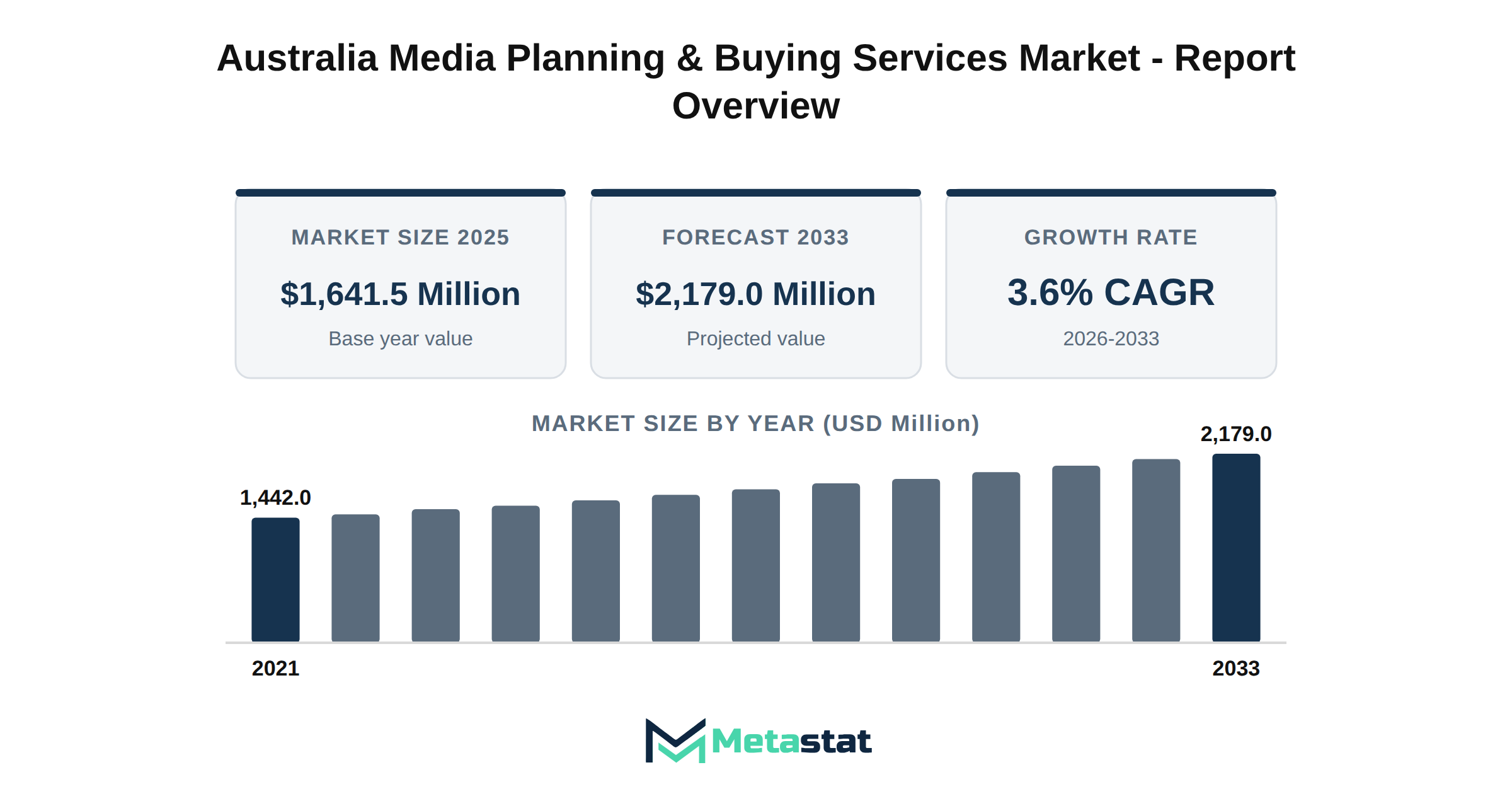
The Australia Media Planning & Buying Services market stands at USD 1,641.5 million in 2025, with projections indicating growth to USD 2,179 million by 2033. This growth represents a compound annual growth rate (CAGR) of 3.6% during the forecast period. Historical data illustrates a steady increase in market value, starting from USD 1,442 million in 2021 and rising to USD 1,578.8 million in 2024. The anticipated growth trajectory reflects increasing investments in various media channels and service types.
Australian media spend growth trends show a shift towards digital channels, driven by changing consumer behaviors and preferences. Advertisers allocate larger portions of their budgets to digital media, resulting in a reallocation from traditional media. This trend highlights the importance of adapting strategies to maximize engagement and return on investment. Advertiser budget sentiment remains optimistic, with demand for data-driven insights shaping media planning approaches.
Programmatic inventory and trading dynamics have gained significant traction, enabling advertisers to optimize their spending through automated processes. This shift enhances targeting capabilities, allowing for more efficient media buying. Retail media network adoption continues to rise, integrating digital advertising within retail environments, thereby enhancing the consumer shopping experience.
Cross-channel ROI benchmarking plays a critical role in evaluating the effectiveness of various media investments. Advertisers increasingly seek comprehensive metrics that encompass different media channels, ensuring a complete view of campaign performance. Independent agency competitive positioning becomes essential, with agencies striving to differentiate themselves in a fragmented marketplace.
Agency remuneration and fee models evolve alongside changing market demands, with transparency and value becoming focal points in agency-client relationships. Regulatory compliance and standards impact agency operations, necessitating adaptability in response to legal and industry requirements. Geopolitical risk frameworks further influence market dynamics, because agencies navigate complexities related to global trade and political stability.
Disruption across media drives innovation, with R&D trajectories focusing on next-generation solutions that meet evolving consumer needs. Sustainable transformation initiatives gain importance, focusing on decarbonization and circular economy dynamics, prompting agencies to align their practices with environmental goals. The supply chain landscape adapts to these trends, emphasizing logistics architecture and sourcing strategies that support sustainability objectives.
The ongoing evolution in the Australia Media Planning & Buying Services market reflects significant shifts in advertising strategies. Advertisers increasingly allocate budgets towards digital channels, leading to a noticeable reallocation of funds from traditional media. This trend arises from the need for measurable results, improved targeting capabilities, and enhanced consumer engagement. Digital media's share of overall advertising spend continues to grow, driven by technological advancements and changing consumer behaviors.
Advertiser sentiment remains positive, with businesses expressing confidence in increasing their marketing budgets. Demand for innovative and effective advertising strategies shapes this sentiment, driven by companies seeking to maximize their return on investment. A competitive landscape encourages collaboration among agencies and brands, enabling the development of tailored advertising solutions that connect with target audiences.
Programmatic buying gains traction, streamlining the inventory and trading process. This shift allows advertisers to optimize their media spend through real-time data insights and automated purchasing. The efficiency of programmatic channels enhances the market's attractiveness, prompting more advertisers to integrate these solutions into their strategies.
Retail media networks experience substantial adoption, allowing brands to leverage e-commerce platforms for advertising. This strategy aligns with the growing trend of directly engaging consumers within their shopping environments, enabling brands to strengthen their visibility and drive sales conversions. The integration of retail media into broader marketing plans exemplifies the market's adaptability to evolving consumer preferences.
Cross-channel return on investment benchmarking becomes critical for advertisers, enabling them to assess the effectiveness of their multi-channel strategies. Accurate measurement tools provide insights into performance across various platforms, leading to data-driven decision-making that optimizes campaign effectiveness. This analytical approach enhances competitiveness within the market.
Independent agencies find their competitive positioning strengthened through innovative service offerings and personalized client experiences. These agencies cater to niche markets, providing tailored solutions that differentiate them from larger counterparts. Their agility and responsiveness to client needs contribute to their growing prominence in the market.
Agency remuneration and fee model discussions gain importance because clients seek transparency and accountability in their partnerships. Agencies are encouraged to adopt flexible pricing structures that align with clients' performance objectives. Regulatory compliance remains a priority, ensuring adherence to industry standards while navigating the complexities of geopolitical risks that impact market dynamics.
Market fragmentation presents unique challenges and opportunities for agencies. Mergers and acquisitions reshape the competitive landscape, enabling firms to enhance their service capabilities and broaden their client bases. This dynamic drives continuous innovation and investment in emerging technologies, ensuring the market remains responsive to changing consumer demands.
Overall, the Australia Media Planning & Buying Services market experiences significant growth, propelled by digital transformation and evolving advertiser expectations. Strategic capital allocation and infrastructure investments become essential in navigating inflationary pressures and currency volatility. The future outlook remains optimistic, with high-value recommendations emphasizing the importance of adaptability and innovation in maintaining a competitive edge.
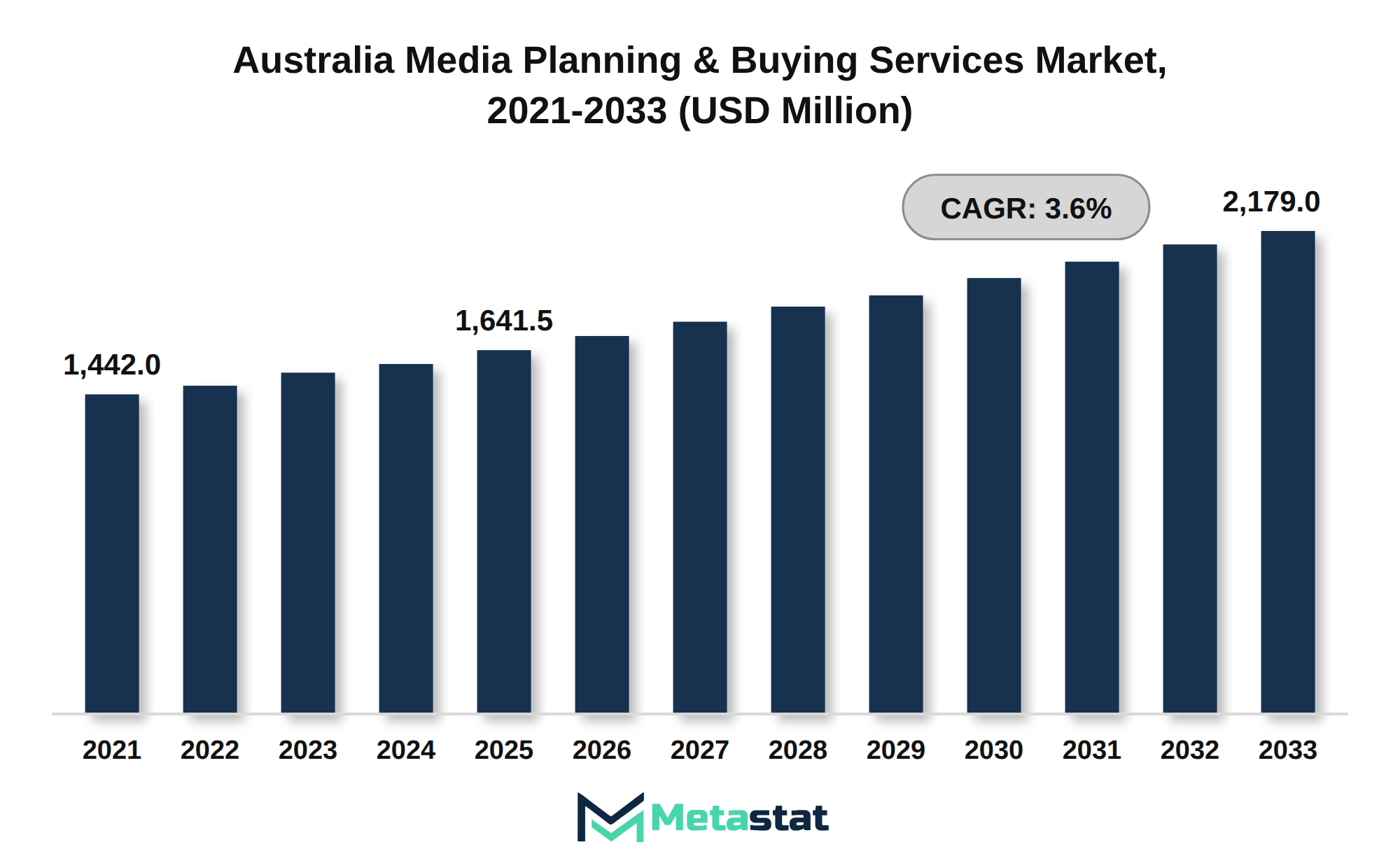
Digital transformation plays a critical role in driving the Australia Media Planning & Buying Services market. The increasing adoption of digital technologies accelerates the shift from traditional media to digital channels, enhancing the effectiveness of advertising strategies. Companies leverage advanced analytics, automation, and artificial intelligence to optimize media planning and buying processes. This shift results in improved targeting, measurement, and attribution capabilities, allowing advertisers to reach their audiences more effectively.
With the rise of digital media consumption, businesses in sectors including retail and e-commerce see significant benefits from this transformation. Enhanced consumer insights derived from data analytics enable these companies to tailor their marketing efforts, leading to higher engagement and conversion rates. Increased spending on digital advertising contributes to an overall growth trajectory.
While businesses continue investing in technology to enhance operational efficiency, demand for media planning and buying services rises. This trend creates a competitive edge in reaching target demographics, ultimately leading to higher revenues and sustained market expansion in the Australia Media Planning & Buying Services market.
Investment in digital media channels significantly influences the Australia Media Planning & Buying Services market. Organizations increasingly allocate budget to digital platforms, reflecting the shift in consumer engagement and media consumption habits. The transition from traditional media to digital channels results from heightened consumer preferences for online content, leading advertisers to pursue effective digital strategies.
This transition is evident in advertising spend, with digital media projected to experience a compound annual growth rate of 4.8% from 2026 to 2033. The increasing integration of advanced technologies, including automation and artificial intelligence, enhances the efficiency of digital media planning and buying processes. Advertisers leverage these technologies to optimize campaigns, improve targeting, and gain valuable insights, which further drives market growth.
Investments in technology infrastructure facilitate effective execution of media strategies across various digital platforms. The growing emphasis on data-driven decision-making allows advertisers to adapt to evolving consumer behaviors and preferences. Consequently, the Australia Media Planning & Buying Services market is positioned to benefit from these shifts, with significant growth anticipated during the forecast period.
The Australia Media Planning & Buying Services market faces significant regulatory challenges that impede growth opportunities. Regulatory tightening creates compliance hurdles that increase operational complexity and costs for service providers. These hurdles result in delays in campaign activations due to stringent adherence requirements, affecting overall efficiency and responsiveness in the market.
Macroeconomic headwinds, including inflationary pressures and capital stagnation, complicate the financial landscape for companies operating within the sector. Rising costs of living and materials lead to budget constraints for advertisers, resulting in reduced media spending. This trend directly influences demand within the market, limiting growth potential for various service providers.
Shifting consumer preferences towards digital platforms and the proliferation of alternative offerings challenge traditional media strategies. Competition from emerging digital channels forces organizations to adapt quickly, resulting in a constant need for innovation. Failure to keep pace with technological advancements leads to obsolescence, diminishing the competitive position of established players in the market.
Supply chain disruptions, particularly in digital media and technology, contribute to deployment bottlenecks that hinder effective campaign execution. Skills shortages in the workforce exacerbate these challenges, creating talent gaps that limit the ability of firms to deliver comprehensive services. The cumulative effect of these factors restrains the market’s ability to capitalize on growth opportunities.
Privacy concerns and data security vulnerabilities present additional risks that organizations navigate. Increased scrutiny regarding consumer data usage necessitates investments in compliance mechanisms. These requirements divert resources from strategic initiatives, further constraining growth within the Australia Media Planning & Buying Services market.
The Australia Media Planning & Buying Services market encounters significant challenges due to geopolitical fragmentation. Heightened trade tensions and varying international relations contribute to an unstable environment, leading to trade deficits and tariff friction. These factors create uncertainty for media agencies, affecting operational strategies and investment decisions.
Technological disruptions further complicate the market. Rapid advancements in media technology require continuous adaptation and integration, posing challenges for firms managing complex research and development (R&D) processes. Interoperability friction among different media platforms exacerbates these difficulties, creating barriers to effective campaign execution.
Volatile feedstock and component availability disrupt planning and execution strategies. Fluctuations in input costs exert pressure on profit margins, compelling agencies to reassess pricing strategies and operational efficiencies. The need for talent retention intensifies these challenges, with skill gaps in the workforce impacting service delivery quality in the market.
Environmental lifecycle footprints and sustainability demands complicate the operational framework for media planning and buying. Agencies balance the need for effective campaign strategies with growing expectations for environmental responsibility, creating implementation bottlenecks and potential reputational risks. The Australia Media Planning & Buying Services market navigates these multifaceted challenges to achieve sustainable growth in an increasingly complex environment.
Growth in the Australia Media Planning & Buying Services market results from emerging regional demands that emphasize the need for effective marketing strategies. Increased competition among brands in various sectors necessitates innovative approaches to reach target audiences. The trend towards geographical expansion further increases this need, compelling businesses to adapt their media strategies to diverse consumer bases across different regions.
Technological disruptions and digital transformation significantly influence market dynamics, driving a shift towards more data-driven and targeted advertising solutions. Advertisers increasingly seek to leverage advanced analytics and consumer insights, enhancing the effectiveness of their campaigns. This demand for advanced technologies aligns with the strategic consolidation occurring in the market, where companies pursue mergers and acquisitions to strengthen their service offerings and expand capabilities.
Environmental sustainability efforts further impact the Australia Media Planning & Buying Services market. Businesses increasingly focus on green transformations and ESG-driven alignments, prompting a shift in marketing strategies that highlight sustainable practices. This focus on eco-friendly initiatives addresses consumer expectations and opens avenues for niche application growth, allowing firms to differentiate their offerings in a competitive landscape.
Changing buying behaviors and digital procurement shifts reshape commercial models within the market. Advertisers prioritize efficiency and effectiveness in their media investments, leading to increased demand for programmatic buying solutions and automated processes. This transition contributes to operational yield maximization and value-chain optimization, enhancing overall market performance.
The combination of these factors creates a robust environment for growth within the Australia Media Planning & Buying Services market. Firms that effectively navigate these emerging trends and adapt their strategies accordingly position themselves for sustained success and increased market share.
The Australia Media Planning & Buying Services market is segmented based on Service Type, Media Channel, Buying Model, and Advertiser Industry.
Valued at USD 175.3 million in 2026, the Media Strategy & Communications Planning segment is projected to reach USD 226.2 million by 2033, reflecting a CAGR of 3.7% during the forecast period. Growth in this segment stems from a combination of factors including the increasing emphasis on data-driven marketing strategies and the growing complexity of consumer behavior. Advertisers prioritize clear communication strategies, leading to heightened investment in comprehensive media planning and execution services.
Market participants focus on integrating advanced analytics and consumer insights into their strategies, enabling targeted campaigns that engage audiences. This evolution in planning approaches supports the overall expansion of the Australia Media Planning & Buying Services market. Increased competition in media channels drives demand for effective communication strategies, prompting companies to invest in innovative solutions that enhance their market positioning.
With the rise of digital platforms, advertisers leverage advanced technologies to optimize campaign performance and engage consumers more effectively. The demand for integrated media strategies continues to grow, positioning the Media Strategy & Communications Planning segment because a vital component of the broader media services landscape. The segment's expansion aligns with changing consumer preferences and regulatory standards, ensuring that marketers remain agile and responsive to dynamic market conditions.
Investments in media planning and channel allocation reflect evolving strategies among advertisers targeting optimal audience engagement. This segment is projected to reach USD 337.1 million by 2033, at a CAGR of 2.5% during the forecast period. Factors driving this growth include increased competition across industries and the necessity for precise media channel allocation to maximize return on investment. Advertisers, particularly in sectors including retail and e-commerce, prioritize effective media strategies that leverage both traditional and digital platforms. Integration of advanced analytics and data-driven insights enhances planning accuracy, ensuring that campaigns align with consumer behavior trends.
The ongoing shift towards multi-channel strategies requires agencies to adapt to emerging media formats and consumer touchpoints. An enhanced focus on audience data and consumer insights shapes future investments in media planning. Regulatory compliance regarding data usage and advertising standards influences operational approaches within the market. While businesses prioritize digital transformation, demand for sophisticated planning services sustains growth in this segment, contributing significantly to the overall expansion of the Australia Media Planning & Buying Services market.
Strong demand for effective advertising strategies drives growth within the Media Buying, Negotiation & Investment segment of the Australia Media Planning & Buying Services market. Advertisers prioritize data-driven approaches to optimize their media investments, focusing on measurable outcomes that enhance campaign performance. This shift towards precision in media investment encourages companies to adopt advanced analytics and programmatic buying techniques, ensuring better alignment with consumer behaviors and preferences.
Investment in technology, particularly programmatic solutions, facilitates efficient media buying processes. Enhanced competition among media agencies to deliver innovative solutions supports the ongoing evolution of services in this sector.
Evolving consumer preferences and the rise of digital channels prompt advertisers to reassess their media strategies. The increasing significance of digital platforms enables advertisers to access broader audiences while optimizing costs. This transition reflects changing consumption patterns, where traditional media is supplemented by digital and programmatic buying. Continuous adaptation to these dynamics positions the Media Buying, Negotiation & Investment segment to capture emerging opportunities and expand its market presence effectively.
Growth within the Campaign Activation & Optimisation segment reflects an increasing emphasis on maximizing campaign effectiveness and reaching target audiences in an ever-competitive landscape. This segment is projected to grow at a CAGR of 5.1% during the forecast period, supported by the rising demand for tailored marketing strategies that enhance consumer engagement. Advertisers increasingly prioritize data-driven insights to optimize campaign performance, leading to heightened investment in advanced analytics tools and platforms.
The drive toward personalization in advertising fuels adoption of sophisticated campaign strategies, enabling businesses to connect with consumers on a deeper level. Technologies that support real-time campaign adjustments provide significant advantages, allowing marketers to respond swiftly to market changes and consumer behavior. The focus shifts toward integrating multiple channels to create cohesive marketing experiences that connect across various touchpoints.
In the context of the Australia Media Planning & Buying Services market, this segment's expansion aligns with broader industry trends emphasizing innovation and agility. Advertisers investing in these capabilities not only enhance their competitive positioning but contribute to overall market growth, thereby reinforcing the importance of campaign activation and optimization in driving revenue. Continued advancements in technology and data utilization will likely further enhance the segment, establishing it because a critical component of successful marketing strategies in the coming years.
Growing emphasis on data-driven marketing strategies fuels demand within the Audience, Data & Consumer Insights segment of the Australia Media Planning & Buying Services market. Advertisers increasingly rely on consumer insights to optimize campaigns, ensuring effective engagement with target audiences. This segment's success hinges on the integration of advanced analytics and technologies, enabling firms to utilize consumer behavior data for more tailored advertising strategies.
Technological maturation in data analytics enhances the ability of advertisers to process and interpret large volumes of data. Improved tools and methodologies promote efficient data collection and analysis, facilitating better decision-making. Advertisers realize opportunities for deeper audience segmentation and personalized messaging, which contribute to enhanced campaign performance.
Market expansion catalysts include rising consumer expectations for tailored content and experiences. Advertisers prioritize understanding audience preferences to develop effective campaigns, leading to increased investment in consumer insights. Compliance with evolving regulatory standards surrounding data privacy and consumer rights presents challenges, prompting firms to adopt robust data governance frameworks.
Cost structures in the segment reflect ongoing investments in technology and talent to maintain competitive advantages. Pricing volatility in data services emerges due to fluctuating demand and technological advancements. A focus on strategic opportunity windows drives firms to explore partnerships and collaborations, enhancing their capabilities in audience insights.
Supply chain resilience remains critical to ensure reliable access to data sources and analytics tools. Companies actively seek solutions to mitigate risks associated with data sourcing, ensuring a steady flow of valuable consumer insights. Continuous adaptation to disruptive alternatives, including emerging technologies, shapes the competitive environment, compelling firms to innovate their approaches to audience engagement.
Overall, the Audience, Data & Consumer Insights segment plays a significant role in informing strategies within the broader Australia Media Planning & Buying Services market. While firms navigate this evolving landscape, the ability to leverage insights effectively will define success in the coming years.
Emerging technologies continue to shape the Measurement, Attribution & Marketing Effectiveness segment within the Australia Media Planning & Buying Services market. Innovations in analytics and tracking tools enhance marketers' ability to assess campaign performance and audience engagement. Advanced algorithms and machine learning capabilities streamline data analysis, providing insights that drive more effective marketing strategies.
Demand for precise measurement and attribution reflects advertisers' desire for greater accountability in their marketing investments. While brands prioritize return on investment, the focus shifts toward tools that offer comprehensive insights into consumer behavior and campaign impact. This trend influences the adoption of sophisticated measurement frameworks that integrate various media channels, enabling advertisers to optimize their strategies across platforms.
Regulatory compliance increasingly influences marketing effectiveness initiatives, owing to businesses navigating data privacy regulations and ethical considerations. Adherence to these standards enhances trust among consumers, which in turn drives engagement and conversion rates. Companies investing in compliance-focused solutions position themselves favorably in a competitive landscape, reinforcing their commitment to responsible marketing practices.
Strategic investment in automation and next-generation marketing technologies supports the growth of this segment. By leveraging automation, businesses achieve operational efficiencies, reduce costs, and enhance the accuracy of their marketing efforts. The segment's expansion depends on the ability to adapt to changing consumer preferences and technological advancements, ensuring that companies remain relevant in an evolving marketplace.
Downstream applications of effective measurement and attribution strategies extend beyond traditional marketing efforts. Enhanced data insights enable businesses to tailor their product offerings, optimize customer experiences, and refine targeting strategies. Brands better align their marketing initiatives with consumer expectations, driving satisfaction and loyalty.
Technological advancements significantly influence the Media Technology & Ad Operations segment within the Australia Media Planning & Buying Services market. The incorporation of innovative tools enhances efficiency in campaign management and data analytics, creating competitive advantages for agencies. Increased reliance on data-driven insights drives demand for more sophisticated technology solutions, reflecting a shift towards automation and personalization in advertising strategies.
Strategic investments in software platforms facilitate more effective audience targeting and resource allocation. Continuous development in media technology enables integration of various channels, allowing agencies to optimize ad placements and measure performance in real-time. Enhanced capabilities in data collection and analysis enable agencies to deliver tailored marketing solutions that meet evolving consumer expectations.
End-use dynamics indicate a growing necessity for compliance with industry regulations, prompting agencies to adopt robust solutions that ensure adherence to standards. This regulatory environment encourages investment in advanced technologies that support transparency and accountability in advertising practices. Adapting to these requirements positions agencies favorably within the competitive landscape of the market.
Growing interest in strategic collaborations and sponsorships enhances the relevance of Content Partnerships & Sponsorship Activation within the Australia Media Planning & Buying Services market. Brands increasingly seek innovative ways to connect with audiences through partnerships that align with their values and objectives. This trend drives demand for integrated marketing strategies that leverage both traditional and digital platforms, facilitating deeper engagement with target demographics.
Technological advancements continue to influence the effectiveness of sponsorship activation, enabling more precise targeting and measurement of campaign performance. Enhanced analytics and data-driven insights allow brands to assess the return on investment for sponsorship activities, leading to more informed decision-making in future campaigns. Advertisers increasingly recognize the importance of authentic connections and content that resonates with consumers, further strengthening the role of this segment in the overall market.
Shifts in consumer behavior towards experiences over products influence the dynamics of sponsorship activation. Brands increasingly invest in creating memorable experiences that reflect their identity and create emotional connections with consumers. This focus on experiential marketing strategies supports the growth of Content Partnerships & Sponsorship Activation, driven by companies prioritizing collaborations that enhance their narrative and increase brand visibility. The ongoing evolution of consumer preferences necessitates continuous adaptation in sponsorship strategies, ensuring they remain relevant and effective.
Competitive pressures in the market encourage advertisers to explore unique partnerships that differentiate their offerings. Innovative sponsorships and collaborations that align with cultural and social movements connect strongly with audiences, allowing brands to establish a stronger presence in a crowded marketplace. Strategic partnerships with influential entities amplify brand messages and expand reach, creating significant opportunities for growth.
Strong growth in digital advertising drives the Digital Media segment within the Australia Media Planning & Buying Services market. Valued at USD 704 million in 2026, this segment is projected to reach USD 974.5 million by 2033, reflecting a CAGR of 4.8% during the forecast period. Increasing adoption of digital platforms by advertisers results from shifting consumer behavior towards online content consumption. Brands focus on targeted marketing strategies, leveraging data insights for effective audience engagement. The rise of mobile and social media advertising enhances investment in digital media channels, contributing to the segment's expansion. Demand for innovative ad formats and personalization fuels competition among service providers, leading to advancements in technology that enable superior tracking and measurement of campaign performance. Evolving consumer preferences for interactive and engaging content drive advertisers to allocate a larger share of their budgets to digital media, underscoring its significance within the broader market.
Valued at USD 470 million by 2033, the Television & Connected TV segment experiences a CAGR of 2.3% during the forecast period. Demand for this segment arises from the ongoing transition to digital platforms and the increasing adoption of connected devices among consumers. Advertisers recognize the importance of reaching audiences through television and connected TV, which leads to enhanced investments in these channels.
While content consumption shifts toward on-demand viewing, advertisers leverage the capabilities of television and connected TV for targeted campaigns. Broadcast and streaming services offer diverse advertising opportunities, appealing to a broad range of demographics. This shift in consumer behavior creates a favorable environment for growth in the segment.
Technological maturation and advancements in streaming capabilities facilitate enhanced user experiences, driving higher engagement levels. The rise of programmatic buying models within television and connected TV enables advertisers to optimize their campaigns effectively, maximizing return on investment. These factors contribute to the segment's expansion within the Australia Media Planning & Buying Services market.
Considerable capital investment in next-generation upgrades and product evolution continues to shape the competitive landscape. Advertisers seek to capitalize on innovative advertising formats and interactive features, which improve engagement and effectiveness. This strategic focus on evolving advertising practices emphasizes the significance of the Television & Connected TV segment in the overall market dynamics.
Rapid urbanization and changing consumer behaviors drive demand for the Out-of-Home & Digital Out-of-Home segment within the Australia Media Planning & Buying Services market. This segment is projected to reach USD 271.9 million by 2033, highlighting significant growth potential amid increasing investments in digital infrastructure and advertising technologies. Marketers recognize the effectiveness of out-of-home advertising in reaching diverse audiences, particularly in urban settings where foot traffic is substantial.
Technological maturation enhances targeting capabilities, allowing for more personalized and data-driven advertising strategies. Innovations including programmatic buying and real-time analytics enable advertisers to optimize campaigns effectively, ensuring maximum engagement and return on investment. The segment benefits from advancements in digital displays and interactive formats, which attract attention and facilitate consumer interaction, leading to higher conversion rates.
Increased competition among advertisers compels stakeholders to adopt innovative approaches to capture audience attention effectively. The shift toward experiential marketing creates opportunities for brands to engage consumers more meaningfully. Understanding the effectiveness of various advertising channels influences how budgets are allocated, with a growing preference for integrating digital and traditional out-of-home strategies.
Regulatory compliance and responsiveness to data privacy standards remain critical considerations for marketers operating in the Out-of-Home & Digital Out-of-Home segment. Adapting to these evolving regulations positions companies to leverage opportunities while mitigating risks associated with non-compliance. This adaptability builds confidence among advertisers, encouraging increased spending in out-of-home initiatives.
Overall, the Out-of-Home & Digital Out-of-Home segment reflects a market characterized by technological advancement and changing consumer preferences. Strategic investments and a focus on measurable outcomes will drive continued growth within this segment of the Australia Media Planning & Buying Services market.
Growth within the Radio & Digital Audio segment reflects evolving consumer preferences for audio content. This shift results in increased consumption of digital audio platforms and podcasts, driving demand for advertising in this medium. Advertisers recognize the potential of reaching targeted audiences through personalized audio experiences, enhancing their marketing strategies.
Projected growth at a CAGR of 0.8% during the forecast period highlights the segment's resilience. Advertisers continuously adapt to the changing landscape by leveraging data analytics and audience insights, allowing for more effective media buying decisions. This trend positions the Radio & Digital Audio segment because an important component of the Australia Media Planning & Buying Services market.
Technological maturation of streaming services and mobile applications further fuels interest in digital audio advertising. The rise of smart speakers and on-demand audio content creates opportunities for brands to engage consumers in innovative ways. Strategic investments in this area improve customer experiences and enhance brand loyalty, reinforcing the segment's role in the broader media ecosystem.
Shifts in consumer behavior influence the demand for print media within the Australia Media Planning & Buying Services market. Advertisers seek to integrate print strategies with digital executions, leveraging the tangibility and credibility that print offers. This integration enhances brand visibility and builds consumer trust, essential elements in a competitive advertising landscape.
Technological maturation plays a role in the evolution of print media strategies. Innovations in printing technologies enable more sophisticated printing techniques, allowing for personalized and high-quality materials. Advertisers capitalize on these advancements to create effective campaigns that connect with target audiences, contributing to the overall market dynamics.
End-use dynamics for print media reflect an ongoing transformation in how consumers engage with content. Although digital media consumption rises, print maintains its relevance, particularly in specific industries like retail and luxury goods, where tangible formats enhance brand storytelling. Advertisers recognize the value of combining print with digital to create comprehensive campaigns that maximize reach and engagement.
Cost structures within the print media segment experience fluctuations driven by raw material sourcing and manufacturing processes. Price volatility in paper and ink, along with distribution costs, challenges advertisers to optimize their budgets effectively. Strategic planning around these factors ensures that brands achieve the desired effect while managing expenditures.
Regulatory compliance standards shape the operational landscape for print media. Advertisers adhere to environmental regulations and sustainability initiatives, pushing them toward more eco-friendly production methods. This evolution not only addresses regulatory requirements but aligns with consumer expectations for responsible advertising practices.
Strategic opportunities emerge because advertisers explore new avenues for print media consumption. Brands that effectively navigate these opportunities strengthen their market position. Continuous investment in print media, combined with innovative approaches, supports the ongoing relevance of the medium in the Australia Media Planning & Buying Services market.
Consumer interest in cinema advertising reflects a unique opportunity for brands seeking to engage audiences in immersive environments. The appeal of cinema lies in its ability to deliver high-quality audiovisual experiences, capturing viewer attention through compelling storytelling and striking imagery. This segment thrives on the emotional connections established during film viewings, enabling brands to create deeper engagement with their target demographic.
The market benefits from ongoing advancements in technology, enhancing the quality and effectiveness of cinema advertising. Innovations in projection and sound systems improve the viewing experience, making advertisements more memorable. Growing collaboration between studios and advertisers facilitates the integration of brands into film narratives, creating opportunities for product placement and sponsorships.
Shifts in consumer behavior further drive the success of cinema advertising. An increasing preference for shared experiences among audiences boosts attendance at theaters, creating a larger canvas for advertisers. An emphasis on premium experiences, including luxury seating and enhanced concession offerings, attracts diverse audience segments, expanding potential viewer reach.
Regulatory considerations influence advertising strategies within cinema spaces, shaping how brands communicate with viewers. Compliance with industry standards ensures that messages connect effectively while maintaining viewer trust. The market for cinema advertising adapts accordingly, with brands focusing on authenticity and relevance in their messaging.
Investment in cinema advertising supports the overall growth of the Australia Media Planning & Buying Services market. Brands prioritize this channel to leverage its unique capabilities, driving interest and engagement. Successful cinema campaigns contribute to enhanced brand visibility and awareness, reinforcing the role of cinema in comprehensive media strategies.
Increasing utilization of Retail Media within the Australia Media Planning & Buying Services market reflects shifting consumer purchasing behaviors and a strong inclination towards personalized marketing. Retailers increasingly invest in targeted advertising strategies that leverage consumer data, driving engagement and enhancing brand visibility. This sub-segment benefits from the integration of advanced analytics and artificial intelligence, enabling marketers to deliver tailored advertisements based on consumer preferences and shopping habits.
Adoption of Retail Media continues to grow, fueled by the increasing penetration of e-commerce platforms and the necessity for brands to connect with consumers in real-time. Retail Media serves because a strategic channel for advertisers looking to optimize their advertising spend while maximizing return on investment. The ongoing transformation in consumer engagement strategies emphasizes the importance of this segment within the broader context of media planning and buying.
Regulatory compliance and data privacy standards increasingly shape the landscape of Retail Media, ensuring that consumer data is handled responsibly. Advertisers navigate these regulations while maintaining effective targeting capabilities. This dynamic creates both challenges and opportunities for businesses to refine their media strategies and enhance consumer trust.
Market players are investing in technology to develop next-generation retail advertising solutions that enable integration across various digital platforms. Continuous innovation in this space leads to improved ad placements and more effective measurement of campaign performance. Strategic partnerships between retailers and technology providers further enable companies to leverage advanced tools, enhancing their competitive edge in the market.
The Retail Media segment positions itself because a critical avenue for growth within the Australia Media Planning & Buying Services market. While brands increasingly recognize the value of reaching consumers at the point of purchase, the segment is set to expand, driven by the ongoing evolution of consumer expectations and marketing strategies.
Innovative approaches within the Other Channels segment, encompassing cinema sponsorship, experiential media, and emerging media, drive engagement and brand connection. Increased consumer interaction with immersive experiences creates higher advertising value, attracting brands seeking to differentiate themselves in a competitive environment. Adoption of experiential marketing strategies enables advertisers to create memorable connections, enhancing brand loyalty while bridging the gap between traditional and digital mediums.
While brands explore unconventional marketing avenues, opportunities for unique sponsorships arise. Collaboration with cinema and experiential venues enables advertisers to reach targeted demographics effectively. Such strategies enhance visibility and create memorable touchpoints that connect with consumers, emphasizing the importance of integrated marketing efforts within the Australia Media Planning & Buying Services market.
Technological maturation facilitates the growth of this segment, allowing for sophisticated audience analytics and measurement tools. Enhanced tracking of consumer engagement and behavior enables advertisers to refine their strategies, ensuring alignment with evolving consumer preferences. An increasing number of brands leverage data-driven insights to optimize campaigns, intensifying competition and positioning the market for continued expansion.
Regulatory compliance shapes strategies within this segment. Advertisers navigate various standards related to consumer privacy and data usage, influencing campaign design and execution. Adapting to these regulations while maintaining creative integrity presents both challenges and opportunities, highlighting the dynamic nature of the Australia Media Planning & Buying Services market.
Overall, the Other Channels segment reflects a strategic shift towards experiential marketing and innovative sponsorships, driven by changing consumer expectations and technological advancements. This evolution signifies an important moment for brands aiming to enhance engagement and maximize impact in the competitive landscape.
Valued at USD 609.9 million in 2026, the Direct Media Buying segment experiences a projected decline to USD 589.2 million by 2033, reflecting a CAGR of -0.5% during the forecast period. This segment's contraction arises from a shift towards programmatic buying models, which offer efficiency and precision in media purchasing. Advertisers increasingly gravitate toward automated solutions, drawn by the cost-effectiveness and sophisticated targeting capabilities these solutions provide. The market undergoes a gradual transition, where traditional media buying practices face challenges from evolving consumer preferences and technological advancements.
Competition among various buying models exerts pressure on direct media buying strategies. Advertisers within industries including retail and e-commerce, which traditionally relied on direct channels, now explore alternative formats that offer higher engagement and measurable results. The market reacts to changing dynamics, emphasizing the importance of adaptability in marketing strategies. Direct Media Buying faces challenges in maintaining relevance amid this evolution, compelling companies to reassess their approaches within the Australia Media Planning & Buying Services market.
Cost structures within direct media buying reflect the need for efficiency, impacting profit margins. Advertisers seek to optimize spending, prompting scrutiny of traditional purchasing methods. This emphasis on data-driven decisions influences the overall landscape, encouraging stakeholders to focus on ROI and effectiveness. Strategic opportunity windows arise for firms willing to innovate and enhance their offerings. The Direct Media Buying segment encounters significant headwinds in the competitive landscape of the Australia Media Planning & Buying Services market.
Increasing adoption of programmatic buying strategies drives growth within the Australia Media Planning & Buying Services market. This approach allows advertisers to automate the purchasing process, enabling more efficient and data-driven decisions that align with evolving consumer preferences. The ongoing transition towards data-centric marketing practices significantly enhances the appeal of programmatic buying, driven by advertisers seeking to optimize their campaigns and improve ROI.
Programmatic buying segment is estimated to reach USD 824.1 million by 2033, at a CAGR of 6.3% during the forecast period. This growth stems from advancements in technology and the increasing availability of consumer data, enabling advertisers to target specific audiences more effectively. Enhanced analytics capabilities further support advertisers in refining their strategies, resulting in a more personalized marketing approach that connects with consumers.
The competitive landscape drives innovation in programmatic buying, encouraging service providers to develop next-generation capabilities that streamline ad transactions. Continued investments in artificial intelligence and machine learning technologies facilitate improved audience segmentation and campaign optimization, creating stronger connections between brands and consumers. This segment's growth trajectory reflects a broader trend within the market, where efficiency and precision in ad spending remain critical.
Strategic partnerships between advertisers and technology providers create additional opportunities for growth within the programmatic buying segment. By leveraging advanced tools and platforms, businesses enhance their media planning and buying strategies, ultimately leading to increased market share. The combination of shifting consumer behaviors and technological advancements positions programmatic buying because a key element of the Australia Media Planning & Buying Services market.
Within the Australia Media Planning & Buying Services market, Private Marketplace Buying emerges because a vital segment, reflecting a strategic shift in how advertisers approach media acquisition. This segment is expected to reach USD 284.6 million by 2033, driven by the rising preference for targeted advertising solutions. Advertisers increasingly leverage private marketplaces to gain greater control over their inventory, ensuring more favorable pricing and enhanced transparency in transactions.
Demand for Private Marketplace Buying stems from the need for personalized advertising experiences, allowing brands to engage with specific audience segments effectively. This trend encourages advertisers to invest in advanced data analytics and targeting capabilities, which in turn enhances the effectiveness of media campaigns. Increased focus on data privacy and compliance with regulations further influences the adoption of private marketplace strategies, because advertisers seek to maintain consumer trust while maximizing campaign performance.
Technological maturity influences the growth of this segment. Innovations in programmatic advertising have streamlined the process of accessing premium inventory, enabling advertisers to execute campaigns with greater efficiency. The evolution of analytics tools and consumer insights provides advertisers with valuable data to inform their strategies, ensuring that media investments yield optimal returns.
While the market evolves, opportunities for expansion arise, particularly in industries including retail and e-commerce, where the demand for targeted media solutions is strong. Advertisers in these sectors benefit from the ability to tailor campaigns directly to consumer preferences, leading to improved engagement and higher conversion rates. Increased competition among media providers in the private marketplace will likely drive further enhancements in technology and service offerings.
Rapid adoption of automated guaranteed buying strategies significantly influences the Australia Media Planning & Buying Services market. This segment benefits from increasing demand for precise targeting and efficient resource allocation, allowing advertisers to reach specific audiences effectively. The projected growth rate of 6.2% CAGR during the forecast period highlights the rising significance of programmatic solutions in media buying.
Technological maturation supports the enhancement of automated guaranteed buying capabilities. Advanced algorithms and data analytics facilitate better decision-making processes, optimizing campaign performance and delivering measurable results. Advertisers increasingly recognize the advantages of leveraging data-driven insights, which enable refinement of strategies and more effective budget allocation within the market.
The shift toward digital channels creates an environment conducive to automated guaranteed buying. Advertisers transitioning from traditional methods to programmatic approaches experience increased efficiency and transparency in their media investments. The convenience of real-time bidding and automated workflows drives interest among a diverse range of industries seeking to optimize media spending.
Valued at USD 589.2 million by 2033, the automated guaranteed buying segment contributes significantly to the overall growth of the market. This value reflects the rising integration of automation in media planning, which enhances operational efficiency and reduces the time required for campaign execution. Strong competition among key players in the Australia Media Planning & Buying Services market further accelerates innovation and improvement in this segment.
Increased emphasis on data-driven strategies shapes the Hybrid Buying segment within the Australia Media Planning & Buying Services market. Advertisers prioritize integrated approaches that blend traditional and digital media, optimizing spending efficiency and maximizing audience engagement. Adoption stems from a growing recognition of the need for adaptability in a changing media environment.
Prominent features include enhanced targeting capabilities and real-time analytics, which allow advertisers to refine campaigns dynamically. This strategic flexibility addresses the evolving demands of consumers and the competitive pressures faced by brands. This segment assists advertisers in navigating complex media environments, ensuring optimal resource allocation.
Innovative technologies facilitate transitions between media formats, promoting a more cohesive brand narrative. Advertisers benefit from insights gathered across various channels, resulting in improved campaign performance. The strategic opportunity windows available through Hybrid Buying are expected to drive significant growth, aligning advertising efforts with consumer expectations.
Investment in next-gen upgrades, including advanced programmatic technologies, enhances the Hybrid Buying segment’s potential. These enhancements streamline operations and reduce time-to-market for campaigns, which is critical in a competitive market. Overall, the Hybrid Buying segment significantly influences the future of the Australia Media Planning & Buying Services market.
Valued at USD 401.3 million in 2026, the Retail & E-commerce segment is projected to reach USD 544.5 million by 2033, at a CAGR of 4.5% during the forecast period. Factors including the increase in online shopping and the continuous integration of technology into retail strategies drive demand. Retailers adopt advanced marketing strategies to enhance consumer engagement and improve sales performance, which directly impacts spending on media planning and buying services.
Competition within the Retail & E-commerce sector intensifies owing to brands focusing on personalized marketing and efficient consumer experiences. The growing significance of data analytics influences marketing strategies and optimizes advertising spend. Insights derived from consumer behavior guide advertisers in allocating budgets more effectively. The market exhibits a strong inclination towards optimizing media channels, particularly digital media, ensuring brands reach targeted audiences efficiently.
Technological advancements contribute to the segment's growth by enhancing targeting capabilities and measurement accuracy. Continuous innovation in advertising technology allows advertisers to refine strategies, leading to a shift towards more efficient spending. The integration of artificial intelligence and machine learning into media buying processes enhances decision-making, enabling marketers to maximize ROI. This dynamic environment within the Australia Media Planning & Buying Services market supports the overall expansion of the Retail & E-commerce segment.
Consumer spending patterns and brand loyalty are essential in the FMCG & Consumer Goods segment. The segment is projected to reach USD 327.5 million by 2033, at a CAGR of 2.2% during the forecast period. Factors influencing growth include increasing penetration of e-commerce and the rise of digital marketing strategies tailored to engage consumers effectively. Brands prioritize data-driven marketing to enhance campaign effectiveness and reach specific demographics, driving demand for sophisticated planning and buying services.
This market experiences heightened competition, compelling advertisers to invest in innovative marketing solutions. Strategic collaborations between brands and media agencies provide deeper insights into consumer preferences, enhancing targeting accuracy. The influence of regulatory compliance standards and evolving consumer expectations necessitates continuous adaptation of marketing strategies, ensuring that campaigns remain relevant and compliant with industry standards. The increasing focus on sustainability and ethical branding further shapes the advertising landscape, prompting brands to align their messaging with consumer values.
Investment in technology and analytics is critical for optimizing advertising spend and improving ROI. Brands leveraging advanced analytics for audience segmentation and campaign performance measurement gain a competitive edge in the market. This segment's growth reflects broader trends within the Australia Media Planning & Buying Services market, where advertisers increasingly recognize the importance of adapting to shifting consumer dynamics and technological advancements.
Demand for media planning and buying services within the Automotive segment stems from the ongoing transformation of the automotive industry, characterized by technological advancements and the growing emphasis on digital marketing strategies. This segment is projected to reach USD 197 million by 2033. Increased competition among automotive brands drives investments in strategic advertising campaigns, focusing on reaching diverse consumer demographics through innovative media channels.
The shift towards electric vehicles and advanced mobility solutions influences marketing strategies, requiring brands to adapt their messaging to align with consumer preferences for sustainability and innovation. Incorporating digital platforms into traditional advertising practices enhances engagement and interaction, making it essential for automotive advertisers to optimize their media planning and buying services accordingly.
Rising consumer expectations for personalized advertising experiences necessitate the adoption of data analytics tools and platforms that facilitate targeted marketing efforts. This trend leads to stronger collaboration between automotive companies and media agencies, ensuring that campaigns effectively connect with potential buyers. Efficient allocation of advertising budgets across various channels enhances the effectiveness of marketing strategies within the Australia Media Planning & Buying Services market.
Regulatory compliance surrounding automotive advertising standards influences strategies in this segment. Adhering to these standards while maximizing outreach requires a sophisticated understanding of both consumer behavior and regulatory frameworks. While the automotive landscape evolves, the demand for innovative media solutions continues to grow, positioning the segment for sustained growth within the broader market.
Investment in the Financial Services & Insurance sector increasingly drives demand for media planning and buying services. A focus on digital channels reflects the sector's response to evolving consumer preferences and technological advancements. Advertisers within this segment emphasize targeted campaigns that align with consumer behaviors, enhancing engagement and conversion rates.
The Financial Services & Insurance segment is projected to grow at a CAGR of 4% during the forecast period. This growth stems from rising competition among financial institutions and the necessity to differentiate service offerings. Advertisers leverage data analytics and consumer insights to optimize campaign effectiveness, addressing specific needs of the target audience.
The market landscape shows a shift towards digital media channels, with substantial investments directed into programmatic buying strategies. These strategies facilitate real-time bidding and audience targeting, improving efficiency and cost-effectiveness in media buying. Financial institutions adapt to regulatory changes and heightened scrutiny on consumer data usage, making strategic planning essential for maintaining compliance while maximizing reach.
Collaboration with media planning agencies enables advertisers to navigate these challenges effectively. Leveraging partnerships with established players in the Australia Media Planning & Buying Services market enhances companies' ability to execute sophisticated campaigns and measure their impact accurately. The integration of advanced technologies and data-driven approaches further strengthens the competitive positioning of advertisers in this segment.
Demand for media planning and buying services within the Telecommunications & Technology sector relies heavily on rapid advancements in digital infrastructure and consumer electronics. This segment experiences growth driven by increased investments in connectivity and mobile technologies, highlighting a consistent push towards modernization across various platforms. The transition to 5G technology significantly enhances data transmission speeds, creating new avenues for advertisers to engage consumers effectively. Businesses leverage these advancements, shifting strategies towards integrating digital solutions that cater to the evolving needs of tech-savvy consumers.
Advertising in the Telecommunications & Technology segment adapts to changing consumer preferences. Enhanced personalization through data analytics encourages deeper engagement with target audiences, resulting in more effective marketing campaigns. The market shows a trend towards adopting artificial intelligence and machine learning to optimize advertising strategies, allowing for real-time adjustments that enhance campaign effectiveness. Integration of these technologies positions advertisers to capture market share by delivering tailored messages that connect with consumers.
Regulatory compliance in the Telecommunications & Technology sector plays a critical role in shaping marketing strategies. Adhering to data privacy and protection regulations influences how companies collect and manage consumer data for targeted advertising. This scrutiny necessitates a transparent approach, prompting advertisers to develop ethical practices that comply with strict regulations while maintaining consumer trust. In this environment, strategies focusing on data responsibility become vital for sustaining growth and securing long-term customer relationships.
Pricing dynamics within the Telecommunications & Technology segment face volatility influenced by technological advancements and market competition. The introduction of innovative products often leads to fluctuating prices, compelling advertisers to continually assess their cost structures. This environment demands agility in marketing strategies, allowing companies to adapt to rapid shifts in consumer sentiment and market conditions. Strategic investment in emerging technologies is essential for maintaining a competitive edge within the market.
Investment outlook in the Telecommunications & Technology sector indicates a focus on next-generation upgrades. Companies prioritize enhancing their digital advertising capabilities to adapt to evolving consumer behaviors and technological trends. This emphasis on innovation supports the ongoing evolution of marketing strategies, positioning businesses to respond proactively to market opportunities. The resulting landscape encourages collaboration among stakeholders to align their efforts with emerging consumer expectations, creating a cohesive advertising ecosystem within the Australia Media Planning & Buying Services market.
Growth within the Travel, Tourism & Hospitality segment reflects a combination of factors driving demand for media planning and buying services. Increased travel activity and expanding consumer interest in experiences over material goods contribute to heightened advertising needs from industry players. Premium services and innovative offerings attract a diverse range of customers, propelling spending on media strategies that effectively engage target audiences.
The combination of evolving consumer preferences and technological advancements facilitates strategic opportunities within this segment. Digital platforms have become essential for reaching potential travelers, compelling advertisers to invest in tailored campaigns that effectively target diverse demographics. Targeted advertising enhances the effectiveness of promotional efforts, directly impacting the growth trajectory of the Australia Media Planning & Buying Services market.
Regulatory compliance and industry standards influence advertising strategies within the Travel, Tourism & Hospitality segment. Adherence to evolving regulations ensures that campaigns remain effective and aligned with consumer expectations. Continuous adaptation to these standards allows advertisers to maintain credibility and trust, essential components in a competitive market. Businesses that successfully integrate compliance into their advertising strategies benefit from an expanded market presence.
Price volatility and margin pressures present challenges for businesses operating within this segment. Fluctuating costs associated with advertising channels impact overall profitability, prompting companies to optimize their media buying strategies. Efficient allocation of resources across various channels ensures that advertisers maximize their return on investment while maintaining competitive pricing structures.
Investment in innovative technologies and campaign optimization strategies enhances the resilience of advertising efforts. Embracing next-gen upgrades allows advertisers to leverage data-driven insights and analytics, facilitating more effective targeting of potential customers. This strategic focus on technological maturation supports continuous growth and adaptation within the Travel, Tourism & Hospitality segment of the market.
Engagement with media, entertainment, and gaming content drives increased investment in the Australia Media Planning & Buying Services market. Companies focus on creating immersive experiences and leveraging advanced digital platforms to capture consumer attention. The rise of streaming services and mobile gaming increases demand for tailored marketing strategies to reach diverse audiences effectively.
Shifts in consumer preferences towards interactive and on-demand content necessitate innovative campaign strategies. Advertisers recognize the importance of aligning their messaging with emerging trends, enhancing brand visibility through targeted media placements. Continuous advancements in technology facilitate deeper consumer insights, enabling brands to refine their marketing approaches and optimize audience engagement.
The competitive nature of the media, entertainment, and gaming sectors compels advertisers to adopt data-driven strategies. Measurement and attribution are crucial in evaluating campaign effectiveness, allowing companies to allocate resources efficiently and maximize return on investment. These dynamics contribute to sustained growth and development within the market, positioning it favorably for future opportunities.
Investment strategies within the Healthcare & Pharmaceuticals sector increasingly emphasize precision marketing and targeted outreach. This segment benefits from heightened regulatory scrutiny, driving demand for effective media planning and buying services that comply with compliance standards. A focus on outcome-oriented advertising enhances the relevance of campaigns, ensuring that healthcare brands deliver effective messaging to their target audiences.
Technological advancements in data analytics facilitate deeper insights into consumer behavior, allowing for more effective audience targeting and improved campaign performance. Brands within the segment adopt these tools to refine their marketing strategies. This enhancement of engagement occurs while navigating a complex regulatory environment. Demand for accurate measurement and attribution solutions supports the ongoing evolution of campaign strategies, allowing companies to allocate resources efficiently.
Persistent shifts in consumer preferences toward digital channels impact the way healthcare brands communicate with their audiences. The transition toward telehealth and online services accelerates the need for innovative campaign activation and optimization techniques. Brands focusing on digital media increase investments in programmatic buying, enhancing the overall effectiveness of marketing efforts within the Australia Media Planning & Buying Services market.
Amid rising competition and evolving consumer expectations, the sector experiences pressures on pricing and margins that necessitate greater operational efficiency. Brands explore strategic partnerships and content collaborations to enhance their market presence while managing costs. This collaborative approach promotes innovation and drives value creation, ensuring companies remain competitive.
Consumer interest in properties and infrastructure fuels demand within the Others segment, encompassing Real Estate, Energy, Utilities, and B2B/Industrial sectors. Shifts towards sustainable practices and energy efficiency drive investment in these industries, necessitating sophisticated media strategies. Growth in this segment correlates with the expanding digital landscape, where tailored messaging enhances brand visibility among targeted audiences.
Increased competition among businesses in the real estate and industrial sectors leads to a greater emphasis on marketing effectiveness, influencing how companies allocate resources towards media planning and buying services. The adoption of innovative technologies, including digital media channels, supports more effective audience engagement strategies. This trend facilitates strategic opportunities for service providers within the Australia Media Planning & Buying Services market, creating avenues for enhanced collaboration and investment.
Regulatory compliance regarding environmental standards and commercial practices impacts media planning approaches, compelling businesses to adopt more transparent messaging. The necessity for compliance contributes to heightened demand for professional media services, which navigate these complexities efficiently. Overall, the evolving dynamics within the Others segment positions it because a critical area of interest within the market.
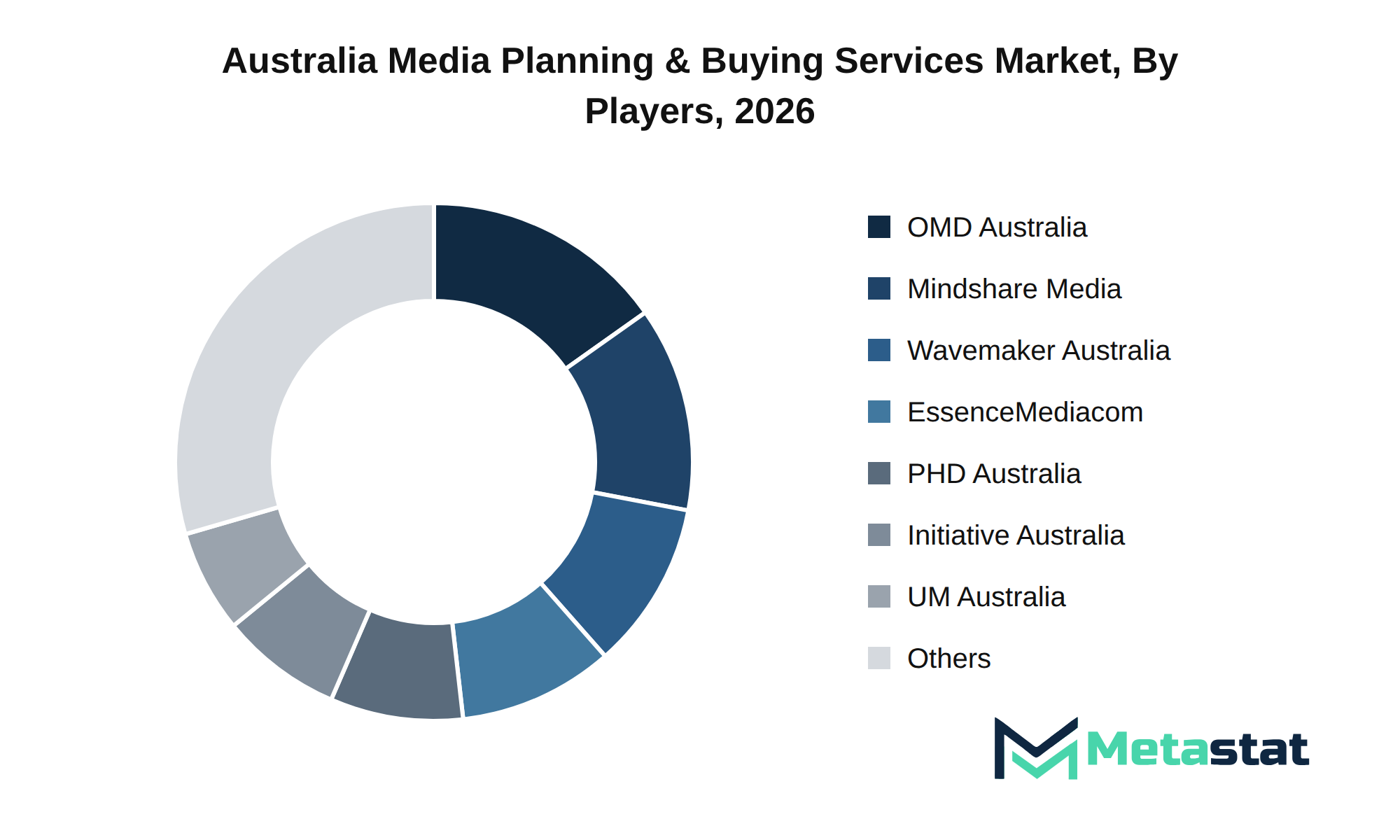
The Australia Media Planning & Buying Services market experiences dynamic competition driven by various strategies. Key players including OMD Australia, Mindshare Media Ltd, and Wavemaker Australia engage in strategic consolidation and industry restructuring to enhance their market positions. These firms focus on developing integrated solutions that cater to evolving consumer preferences, aiding customer retention and enhancing brand equity.
Pricing architectures reflect the competitive intensity within the market. Companies like EssenceMediacom Holdings Limited and PHD Australia implement diverse commercial models that leverage proprietary technology and R&D pipelines, establishing significant entry barriers for potential new entrants. This innovation enables differentiation, allowing firms to better meet client demands and adapt to market changes.
Strategic alliances and cross-industry partnerships play a crucial role in defining competitive dynamics. Collaborations among players including Initiative Australia, UM Australia, and Starcom Australia contribute to supply chain dominance and procurement leverage, enhancing operational efficiencies. The landscape features a focus on value chain integration, where firms streamline processes to optimize resource allocation and maximize returns.
Future competitive outlooks in the Australia Media Planning & Buying Services market suggest a growing emphasis on technological defensibility and intellectual property portfolios. Players like Zenith Australia and Spark Foundry invest in innovative solutions to maintain their competitive edge, ensuring sustained growth in an increasingly competitive environment.
Market size is forecast to rise from USD 1,641.5 million in 2025 to over USD 2,179 million by 2033. The base case reflects a growth trajectory at a 3.6% CAGR. Strong economic conditions could drive higher demand, resulting in an accelerated growth scenario. Conversely, economic downturns or shifts in consumer behavior could lead to a slower growth trajectory.
Downstream demand changes significantly influence the Australia Media Planning & Buying Services market. Industries including retail and automotive increasingly adopt data-driven strategies, enhancing demand for media planning and buying services. Core industry maturation prompts firms to refine their service offerings, focusing on campaign effectiveness and ROI.
Structural consumption shifts are evident with rising digital media consumption. The integration of next-generation technologies, including AI and data analytics, transforms media strategies and optimizes ad placements. Rapid commercialization of R&D initiatives supports innovative tools and platforms, driving operational efficiencies across the market.
Regulatory evolution timelines shape compliance strategies within the Australia Media Planning & Buying Services market. Firms align with imminent compliance milestones to avoid penalties. Evolving trade corridors and geopolitical realignments necessitate adaptive strategies to maintain competitive positioning.
Strategic capital allocation directives emphasize infrastructure commitments and CapEx investment vectors, particularly in digital channels. Identifying emerging white-space opportunities presents firms with avenues for growth, addressing unmet enterprise needs and tapping into high-growth pockets.
Executive-level strategic imperatives highlight the importance of defensibility roadmaps in navigating market challenges. Firms prioritizing innovation and adaptability position themselves favorably for future growth within the market. The evolving landscape highlights the need for proactive approaches to market dynamics and consumer preferences.
The report strategically identifies and profiles the key market players and analyses their core competencies in each sub-segment of the Media Planning & Buying Services market.
Report Attributes | Details |
Study Period | 2021-2033 |
Base Year | 2025 |
Estimated Year | 2026 |
Forecast Period | 2026-2033 |
Historical Period | 2021-2025 |
Growth Rate | CAGR 3.6% from 2026 to 2033 |
Revenue Unit | USD million |
Segmentation | By Service Type, Media Channel, Buying Model, Advertiser Industry, and Region |
Find answers to common questions about this report
The Media Planning & Buying Services market size in Australia was valued at USD 1,641.5 million in 2025.
The Media Planning & Buying Services market is expected to grow at a CAGR of 3.6% during the forecast period from 2026 to 2033.
The Media Buying, Negotiation & Investment segment leads the Australia Media Planning & Buying Services market, with a projected value of USD 544.1 million by 2033. This segment holds the largest share compared to other service types.
Digital transformation significantly drives the Australia Media Planning & Buying Services market, with increased adoption of digital technologies enhancing advertising strategies. Companies leverage advanced analytics and automation to optimize media planning, leading to improved targeting and higher engagement rates. This shift results in increased spending on digital advertising, contributing to overall market growth.
Regulatory challenges, macroeconomic headwinds, and shifting consumer preferences towards digital platforms restrain growth in the Australia Media Planning & Buying Services market. Compliance hurdles increase operational complexity and costs, while inflationary pressures lead to budget constraints for advertisers, ultimately limiting media spending and growth potential.
Digital transformation significantly influences product adoption in the Australia Media Planning & Buying Services market. The shift towards digital channels enhances advertising effectiveness, while advancements in analytics and automation improve campaign targeting and measurement. These factors lead to increased spending on digital advertising and a competitive edge for companies that effectively leverage technology.
The Media Planning & Buying Services market is estimated to reach a valuation of USD 2,179 million by 2033.
Key players in the Australia Media Planning & Buying Services market include OMD Australia, Mindshare Media Ltd, Wavemaker Australia, EssenceMediacom Holdings Limited, PHD Australia, and Initiative Australia.
Digital transformation significantly drives demand in the Australia Media Planning & Buying Services market. The increasing adoption of digital technologies enhances advertising strategies, allowing companies to optimize media planning and buying processes.
Digital media is projected to experience a compound annual growth rate of 4.8% from 2026 to 2033, indicating its status because the fastest-growing media channel in the Australia Media Planning & Buying Services market.
The analysts below cover Professional Services research at Metastat Insights.
LEAD ANALYST
Utkarsh Khirodkar is a Lead Market Research Analyst at MetaStat Insight, specializing in market intelligence, technology sector assessments, and competitive strategy.

PRINCIPAL CONSULTANT - ENTERPRISE AI & EMERGING TECHNOLOGIES
Banking & Finance · Electronics and Semiconductor · Energy and Power · Healthcare IT · Information & Technology · Professional Services
Vijay Gunti is a Principal Consultant at MetaStat Insight, bringing over two decades of experience across enterprise digital transformation, technology strategy, and intelligent systems.

PRINCIPAL CONSULTANT - QUALITY SYSTEMS & COMPLIANCE
Electronics and Semiconductor · Machinery & Equipment · Professional Services
Omkar Phadtare is an Industry Consultant at MetaStat Insight, specializing in quality systems, regulatory compliance, and standards benchmarking to drive data-driven market intelligence and strategic industry research.

LEAD CONSULTANT - COMMUNICATION, TELECOM, AND IT
Electronics and Semiconductor · Information & Technology · Machinery & Equipment · Professional Services
Ravindra Sathe Consultants for Communication, Telecom, and IT at MetaStat Insight. He leads the firm's industry research initiatives across telecommunications infrastructure, digital connectivity, enterprise networking, and emerging information technology domains.
When planning edge sensor rollouts across refinery environments, generic IoT reports typically miss the harsh-environment certification bottlenecks. MetaStat Insight gave an objective evaluation of ATEX and Class 1 Division 2 hardware availability, along with realistic five-year maintenance cycle cost projections. The comparison of wireless mesh versus private cellular backhaul helped our team pressure-test network reliability models for remote processing facilities.
In the biological seed treatment space, registration timelines vary drastically between the European Union, Brazil, and North America. The MetaStat Insight research handled these cross-border regulatory barriers with genuine nuance, mapping commercialization pathways alongside historical field adoption rates. The segmentation between microbial strains and biochemical active ingredients was particularly well structured.
Our team was tracking whether regional recycling infrastructure could realistically absorb the growing volume of lithium iron phosphate batteries over the next decade. The report did a solid job separating announced hydrometallurgical plant capacity from active, permitted operational throughput. That distinction made the feedstock availability projections and regional recovery rate models far more credible than standard commercial overviews.
Explore related market intelligence reports worth reading alongside this one.
Starting from
$2950