
LEAD ANALYST
Utkarsh Khirodkar is a Lead Market Research Analyst at MetaStat Insight, specializing in market intelligence, technology sector assessments, and competitive strategy.

Global Digital Marketing and Social Media Agency Services Market Size, Share, By Service Type (Digital Advertising and Performance Marketing, Social Media Marketing and Community Management, Content, Creative and Influencer Marketing, SEO, AEO, GEO and Organic Search Services), By Technology Enablement (AI-Driven Content and Creative Automation, Predictive Analytics and Hyper-Personalization, Programmatic Media and Automated Campaign Optimization, Marketing Automation and CRM), By Agency and Delivery Model (Full-Service Integrated Digital Agencies, Specialist and Social-First Agencies, Performance and Data-Driven Agencies, Embedded and In-House Marketing Teams), By End-Use Industry (Retail, E-commerce and Consumer Goods, Technology, Media and Telecommunications, Banking, Financial Services and Insurance, Automotive, Travel and Hospitality), Industry Analysis, Growth, Trends, and Forecast, 2026-2033
Report ID
MSI-5020
Published
August, 2026
Pages
252 Pages
Format
Historical
Base year
Forecast
Forecast period
Report Details
Choose Your License
Global Digital Marketing and Social Media Agency Services Market
The global Digital Marketing and Social Media Agency Services market was valued at USD 370.8 billion in 2025 and is projected to reach USD 772.3 billion by 2033, growing at a CAGR of 9.6% over the forecast period.
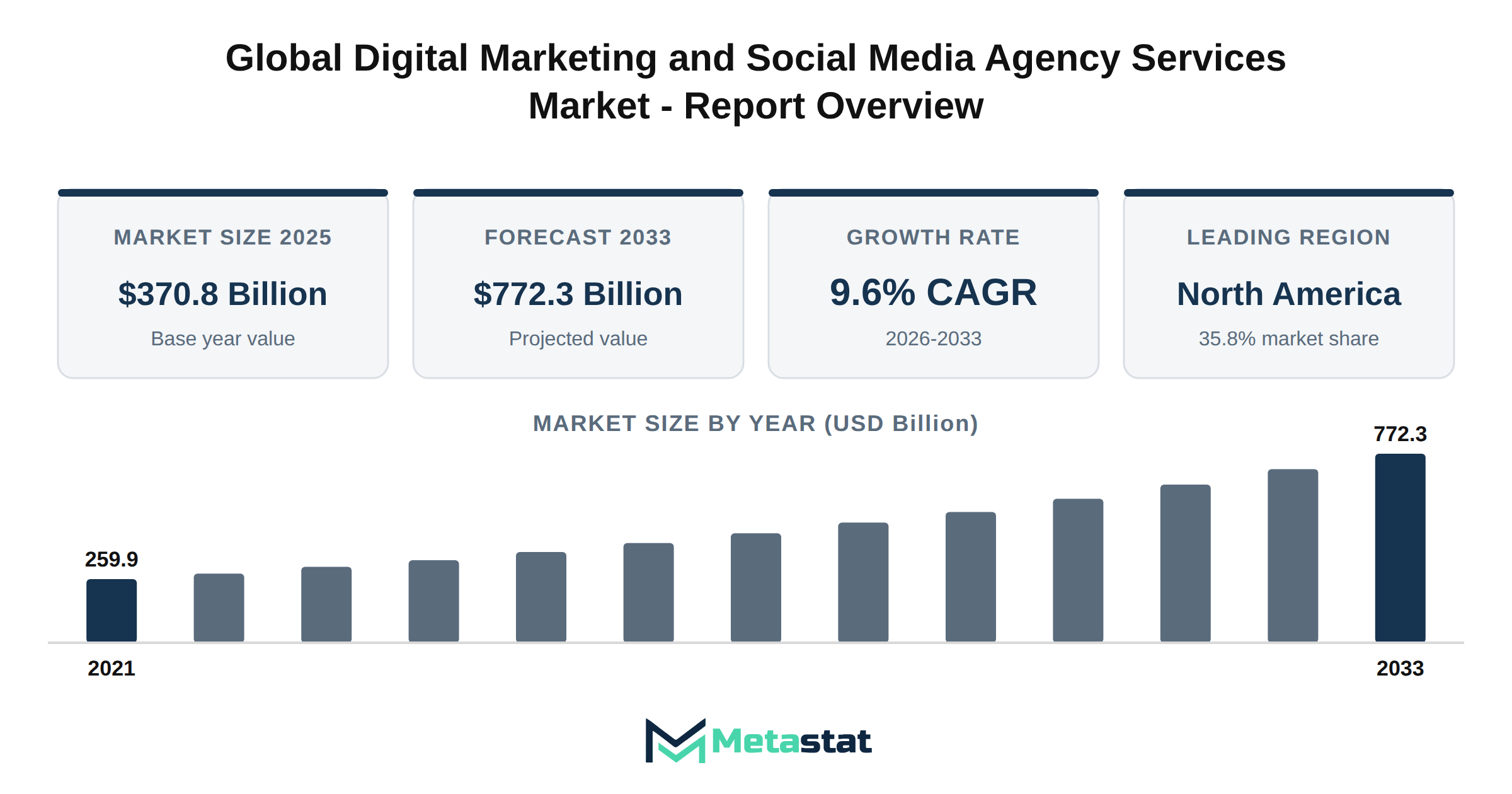
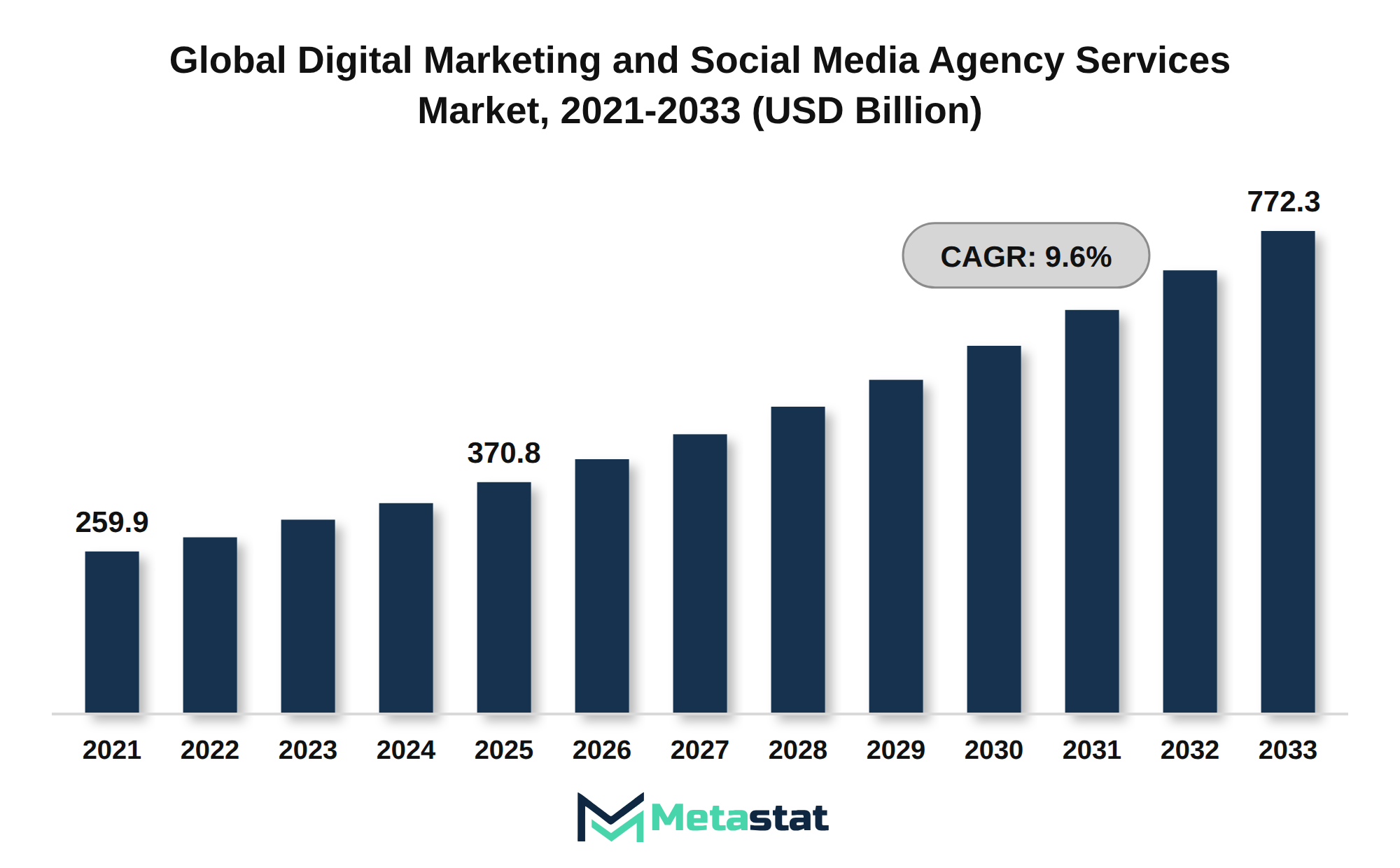
The global Digital Marketing and Social Media Agency Services market reached a base value of USD 370.8 billion in 2025. Projections indicate an upward trend, with the market expected to attain USD 772.3 billion by 2033, reflecting a compound annual growth rate (CAGR) of 9.6% during the forecast period from 2026 to 2033. Historical data shows steady growth, starting from USD 259.9 billion in 2021 to USD 310.7 billion in 2023, and USD 337.2 billion in 2024.
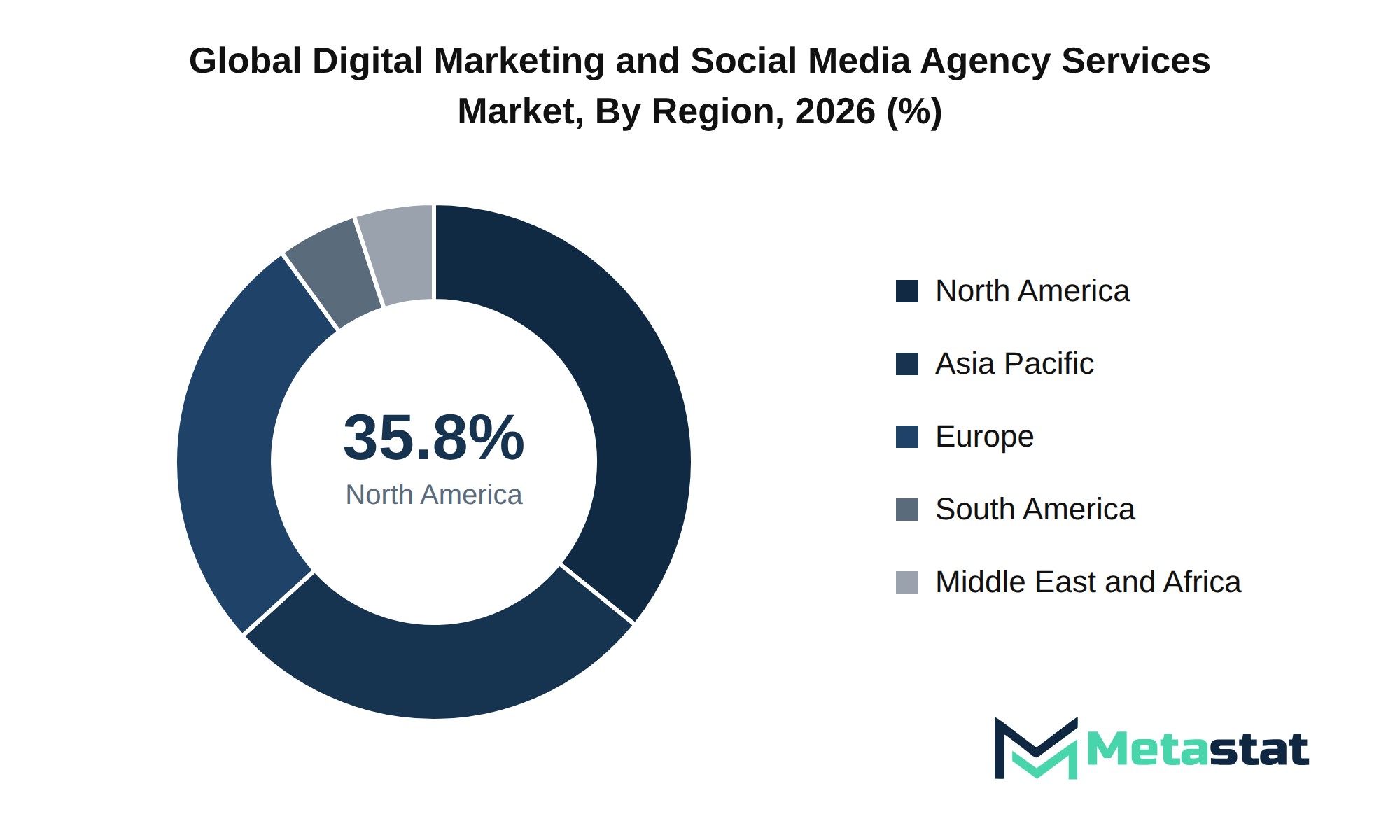
Regional distribution shows North America holds the largest share, accounting for 35.8% of the market. Europe follows with a share of 26.7%, while Asia Pacific represents 27.4%. Both South America and the Middle East and Africa contribute smaller shares of 5% each. By 2033, North America is projected to generate USD 262 billion, with a CAGR of 9.6%, highlighting the region's strong position in the market.
Segment analysis indicates that Digital Advertising and Performance Marketing, along with Social Media Marketing and Community Management, lead in market growth. The former is expected to grow from USD 153.1 billion in 2026 to USD 278 billion by 2033, achieving a CAGR of 8.9%. The latter is anticipated to reach USD 200.8 billion by 2033, with a CAGR of 10.5%. Content, Creative and Influencer Marketing, along with SEO, AEO, GEO, and Organic Search Services, contribute to the market's expansion.
Technological advancements drive the market forward, particularly through AI-Driven Content and Creative Automation. This segment is projected to grow from USD 80.1 billion in 2026 to USD 189.2 billion by 2033, reflecting a CAGR of 13.1%. Predictive Analytics and Hyper-Personalization will similarly expand, reaching USD 142.9 billion by 2033 with a CAGR of 11.3%. The integration of programmatic media and automated campaign optimization enhances operational efficiency within the market.
The Digital Marketing and Social Media Agency Services market faces a complex environment influenced by various factors. Regulatory compliance remains a key concern, with agencies needing to navigate evolving legislation and guidelines that dictate advertising practices and data privacy. This compliance landscape imposes costs on companies, shaping operational strategies and influencing competitive positioning.
Market fragmentation characterizes the current environment, with numerous players competing across different service types and geographic regions. This fragmentation leads to varied pricing strategies and service offerings, compelling agencies to differentiate themselves to capture market share. The resultant competition drives innovation, prompting agencies to invest in technology and creative solutions.
Innovation trajectories within the market emphasize the importance of next-generation capabilities. Agencies increasingly adopt AI-driven content and creative automation, predictive analytics, and hyper-personalization techniques to enhance client engagement and campaign effectiveness. These advancements are expected to reshape service delivery models and influence client expectations.
Sustainable transformation initiatives gain traction within the market, driven by agencies recognizing the need for environmentally responsible practices. Clients increasingly demand transparency regarding sustainability efforts, prompting agencies to integrate sustainable strategies into their operations. This shift aligns with client values and opens avenues for new business opportunities.
Macroeconomic headwinds, including inflationary pressures and currency volatility, impact agency operations and profitability. Fluctuating costs of inputs and services challenge pricing strategies and revenue projections. Agencies navigate these economic uncertainties while seeking to maintain client relationships and deliver value.
The Digital Marketing and Social Media Agency Services market anticipates significant growth through 2033, driven by technological advancements and evolving consumer preferences. Agencies that adapt to these changes and invest in innovative solutions are well-positioned to capitalize on emerging opportunities, enhancing their competitive advantage.
The ongoing digital transformation across various industries significantly influences the demand for services in the Digital Marketing and Social Media Agency Services market. Organizations increasingly invest in digital strategies to enhance operational efficiency, customer engagement, and brand visibility. This shift results from a combination of factors, including evolving consumer behaviors, technological advancements, and the necessity to remain competitive in a rapidly changing environment.
Businesses recognize the importance of integrating advanced technologies, including automation and artificial intelligence, into their marketing initiatives. These technologies streamline processes, enhance data analysis capabilities, and enable targeted marketing efforts. The growing reliance on digital platforms for marketing communications encourages companies to seek specialized agency services, driving revenue growth within the market.
Shifting demographic patterns and lifestyle changes influence consumer preferences, pushing brands to adapt their marketing strategies. The rise of social media platforms has transformed how organizations interact with their customers. This evolution increases the need for effective social media marketing and community management, attracting more clients to agency services that specialize in these areas. Demand for digital marketing and social media agency services is projected to grow, positioning the market for substantial revenue expansion during the forecast period.
Venture funding has gained momentum, significantly supporting the expansion of the Digital Marketing and Social Media Agency Services market. Increased investment from private equity and venture capital firms promotes innovation, leading to enhanced service offerings and improved client engagement. Firms receiving funding invest in advanced technologies, enhancing capabilities in multiple service areas.
Growth in venture funding fuels demand for digital marketing solutions, particularly among startups and small businesses eager to establish their online presence. Government initiatives aimed at promoting entrepreneurship further incentivize investment in digital marketing, resulting in greater competition among agencies. This competitive landscape drives agencies to differentiate their services, ultimately benefiting clients.
The ongoing integration of technology within marketing strategies remains a critical factor. Increased funding enables agencies to adopt AI-driven tools and software automation, streamlining operations and improving campaign efficiency. These advancements contribute to the overall effectiveness of marketing efforts, positioning the Digital Marketing and Social Media Agency Services market for sustained growth.
Firms focusing on innovative service diversification attract clients seeking advanced solutions. Enhanced capabilities in data analytics and hyper-personalization result from increased investment, allowing agencies to meet evolving consumer demands. This shift toward a data-driven approach enhances the value proposition of agencies, driving client interest and revenue growth.
The surge in venture funding strengthens the market's resilience to economic fluctuations. Investments in technology, combined with innovative service offerings, establish a solid foundation for long-term growth within the Digital Marketing and Social Media Agency Services market. This dynamic environment creates an atmosphere conducive to continuous improvement, with agencies adapting to meet client needs.
Regulatory compliance remains a significant restraint for the Digital Marketing and Social Media Agency Services market, creating hurdles for businesses operating within this sector. Stricter regulations concerning data protection and privacy prompt agencies to invest heavily in compliance measures, diverting resources that could otherwise enhance service delivery or innovation. This situation particularly affects smaller agencies, which often lack the capital required to implement comprehensive compliance frameworks, thereby limiting their competitive edge against larger firms.
Macroeconomic headwinds, including inflationary pressures and capital stagnation, further challenge the market. Rising operational costs, driven by increased wages and materials, create constraints on profit margins. Agencies operating in an inflationary environment face challenges in maintaining pricing strategies that attract clients while covering rising expenses. This scenario limits the overall growth potential of the market.
Supply chain disruptions, influenced by geopolitical instability and resource scarcity, impact the timely delivery of services and technology solutions. Agencies often rely on a network of partners and vendors to deliver comprehensive digital solutions. Interruptions in this network lead to delays and reduced service quality, diminishing client satisfaction and retention. Consequently, agencies experience difficulties in maintaining client relationships and attracting new business.
Talent gaps and skilled labor deficiencies pose challenges for the Digital Marketing and Social Media Agency Services market. The demand for specialized skills, including data analytics and digital content creation, exceeds the current supply of qualified professionals. This shortage leads to higher recruitment costs, effectively increasing operational expenses for agencies. The inability to hire adequately skilled personnel hinders agencies from fully exploiting market opportunities.
These multifaceted restraints, including regulatory compliance challenges, escalating operational costs, macroeconomic headwinds, and talent shortages, collectively inhibit the growth trajectory of the Digital Marketing and Social Media Agency Services market. Addressing these issues is crucial for agencies seeking to enhance their competitiveness and profitability.
The Digital Marketing and Social Media Agency Services market experiences challenges stemming from geopolitical tensions and economic fragmentation. These tensions often result in trade deficits and tariff friction, complicating international service provision and limiting market access for agencies. Such conditions alter client budgets and preferences, impacting overall demand for digital marketing services.
Technological disruptions introduce further complexity, driven by agencies striving to integrate advanced technologies within their offerings. This integration often involves significant research and development costs, which strain resources and increase operational risks. The necessity for interoperability among diverse platforms remains a notable challenge, hindering effective service delivery.
Market players face rising input costs driven by supply chain instability and component volatility. These factors lead to increased pricing pressures, constraining profit margins across the industry. Workforce skill gaps further exacerbate these issues, because agencies struggle to retain talent capable of navigating the evolving digital landscape.
The emphasis on sustainability adds layers of complexity, with environmental lifecycle footprints and decarbonization mandates shaping client expectations. Agencies are tasked with demonstrating their commitment to sustainable practices, often requiring investment in retrofitting efforts and compliance with tightening global regulatory standards. These challenges create bottlenecks that delay implementation timelines and impede market growth.
Overall, the Digital Marketing and Social Media Agency Services market contends with a multifaceted set of challenges. Navigating these obstacles requires agility and strategic foresight, crucial for sustaining competitiveness in an increasingly fragmented and demanding environment.
The Digital Marketing and Social Media Agency Services market benefits from rapid technological disruptions that reshape service delivery and customer engagement strategies. Innovations in artificial intelligence, machine learning, and data analytics enhance personalization and targeting capabilities for campaigns. Businesses increasingly adopt AI-driven content and creative automation, projected to expand from USD 80.1 billion in 2026 to USD 189.2 billion by 2033, representing a compound annual growth rate (CAGR) of 13.1 percent. This transformation allows agencies to optimize marketing efforts, reduce costs, and improve client return on investment.
The shift towards predictive analytics and hyper-personalization further influences market dynamics. This segment is anticipated to reach USD 142.9 billion by 2033, with a CAGR of 11.3 percent. Such advancements enable agencies to deliver tailored experiences, aligning marketing strategies with evolving consumer preferences. Enhanced data capabilities drive operational efficiency while building deeper customer relationships, creating a competitive advantage in the market.
In addition to technological advancements, growing regional demands and geographical expansions lead to increased market opportunities. North America, Europe, and Asia Pacific represent key regions contributing significantly to market revenue, with North America anticipated to generate USD 262 billion by 2033, maintaining a CAGR of 9.6 percent. Evolving buying behaviors and digital procurement shifts across these regions highlight the importance of adapting strategies to meet diverse consumer needs.
The Digital Marketing and Social Media Agency Services market stands positioned for substantial growth, driven by emerging technologies, geographical expansion, and evolving buyer behaviors. While agencies leverage these opportunities, the integration of next-generation innovations and sustainability imperatives becomes crucial in meeting market demands while enhancing overall performance.
The Global Digital Marketing and Social Media Agency Services market is segmented based on Service Type, Technology Enablement, Agency and Delivery Model, and End-Use Industry.
Valued at USD 153.1 billion in 2026, the Digital Advertising and Performance Marketing segment is projected to reach USD 278 billion by 2033, at a CAGR of 8.9% during the forecast period. Driven by the increasing reliance on digital platforms for advertising, businesses across various sectors actively seek effective strategies to engage target audiences. The shift toward data-driven marketing supports the adoption of performance-based advertising, allowing businesses to maximize ROI through measurable outcomes.
Technological maturation plays a significant role in shaping this segment, with advancements in AI and machine learning enhancing campaign optimization and targeting capabilities. Next-gen upgrades including programmatic advertising and real-time analytics enable marketers to make informed decisions, driving the demand for digital advertising services. The evolution of ad formats, including video and interactive content, aligns with changing consumer preferences, further propelling growth in this space.
End-use dynamics demonstrate a significant demand for digital advertising across retail, e-commerce, and technology sectors. Retailers leverage targeted campaigns to enhance customer engagement and conversion rates, while technology firms apply performance marketing to drive product awareness. While businesses prioritize digital strategies, investments in innovative solutions become critical to maintaining competitiveness in the evolving landscape of the Digital Marketing and Social Media Agency Services market.
Cost structures remain influenced by the need for transparency in ad placements and performance metrics. Pricing volatility, resulting from fluctuating digital ad rates, poses challenges for agencies in maintaining profitability. Nevertheless, strategic opportunity windows emerge through partnerships and collaborations, enabling agencies to expand their service offerings and enhance value propositions. The combination of these factors establishes the Digital Advertising and Performance Marketing segment because a key driver of growth within the broader market.
Significant growth characterizes the Social Media Marketing and Community Management segment, projected to reach USD 200.8 billion by 2033, at a CAGR of 10.5% during the forecast period. Increased adoption of social media platforms among businesses drives demand for targeted marketing strategies that engage users effectively. Enterprises focus on building strong online communities to enhance brand loyalty and customer engagement, influencing purchasing decisions and driving sales.
Investments in advanced analytics and content creation technologies further support segment expansion. Enhanced capabilities for audience segmentation and targeted advertising enable the delivery of personalized experiences to users. Businesses increasingly recognize the importance of social media in their overall marketing strategies, intensifying the demand for community management services.
Technological maturation influences strategies within the segment. Innovations in artificial intelligence and machine learning facilitate more effective engagement strategies, allowing firms to optimize interactions with their target audiences. Social media trends shift towards authentic communication and real-time engagement, compelling brands to adapt quickly and maintain relevance in a changing digital environment.
Regulatory compliance and evolving consumer expectations necessitate a proactive approach to community management. Brands navigate new privacy regulations while ensuring transparent communication with their audiences. Effective community management enhances brand reputation and mitigates potential risks linked to negative feedback or public relations crises.
The Social Media Marketing and Community Management segment reflects a dynamic environment within the Digital Marketing and Social Media Agency Services market. Market participants capitalize on emerging trends and technologies to deliver innovative solutions that meet the growing demands of consumers and businesses alike.
Demand for Content, Creative and Influencer Marketing services is driven by brand strategies focusing on authentic engagement with consumers. Companies recognize the importance of storytelling and visuals in capturing audience attention, particularly on social media platforms. This trend emerges from consumer preferences for relatable content that builds connection and loyalty.
Technological advancements significantly enhance the effectiveness of this segment. AI-driven tools for content creation and personalization allow marketers to tailor messages to specific audience segments. Predictive analytics further refine targeting strategies, ensuring brands connect with consumers at optimal times and through preferred channels. These advancements drive market growth, influencing investment in innovative marketing technologies.
Adoption of influencer marketing continues to expand, with brands leveraging social media influencers to increase their reach and credibility. This strategy aligns with shifts in consumer behavior, where recommendations from trusted personalities carry more weight than traditional advertisements. Consequently, companies invest in influencers that fit their brand ethos, enhancing authenticity and consumer trust.
The Content, Creative and Influencer Marketing segment is expected to reach USD 154.5 billion by 2033. This growth reflects the increasing significance of emotional connection in marketing strategies. Brands that prioritize these connections differentiate themselves in a crowded market, ensuring sustained consumer engagement and loyalty.
Regulatory compliance and evolving privacy standards shape operational strategies within the segment. Marketers navigate these regulations while maintaining effective outreach efforts. Strategies that prioritize transparency and consumer privacy improve brand reputation, presenting opportunities for long-term growth within the Digital Marketing and Social Media Agency Services market.
Growth within the SEO, AEO, GEO and Organic Search Services segment reflects a broader shift towards data-driven marketing strategies. Increased reliance on search engine optimization techniques correlates with businesses striving to enhance their online visibility and user engagement. The rise of digital channels because primary outlets for customer interaction compels companies in various industries to prioritize organic search services, driving demand.
Technological advancements in analytics and machine learning contribute significantly to market expansion. Businesses leverage these technologies to improve targeting and personalization in marketing campaigns, enhancing overall effectiveness. This evolution supports the segment's growth trajectory, with a CAGR of 9.1% during the forecast period.
Investment trends indicate a shift towards comprehensive SEO strategies, focusing on content relevance and user experience. SEO, AEO, GEO and Organic Search Services play a crucial role in fulfilling end-user needs across different sectors, particularly in retail and e-commerce, where visibility directly impacts sales performance. The segment's alignment with businesses aiming to integrate advanced technologies further highlights its importance in the Digital Marketing and Social Media Agency Services market.
Market players are responding to this demand by innovating service offerings that cater to evolving consumer behaviors. The adoption of AI-driven tools and predictive analytics enhances the ability to optimize content effectively, ensuring businesses remain competitive in digital spaces. Companies investing in these advanced capabilities gain a significant advantage, driving continued growth within the segment.
Demand drivers for the "Others" sub-segment within the Digital Marketing and Social Media Agency Services market involve a diverse range of services that do not fit neatly into traditional categories. These services often address unique client needs, creating opportunities for agencies to innovate and differentiate their offerings. Factors including increasing demand for niche marketing solutions and customization of services to meet specific client requirements contribute to segment growth.
Adoption of these services often stems from evolving consumer behaviors and preferences, necessitating tailored strategies. Companies increasingly seek to engage with consumers on a more personal level, prompting agencies to develop specialized approaches that connect with target audiences. This shift toward personalization reflects broader consumption patterns and influences how brands interact with their customers.
Technological maturation plays a significant role in the evolution of the "Others" sub-segment. Advances in data analytics, machine learning, and AI enhance agencies' capabilities to offer customized marketing solutions. This technological evolution improves efficiency and effectiveness, allowing agencies to deliver innovative services that meet the demands of a rapidly changing marketplace.
Strategic opportunity windows arise from agencies exploring new service offerings and adapting to market dynamics. Continuous investment in technology and talent enables agencies to expand their service portfolios and address emerging client needs. This adaptation drives revenue growth and enhances competitive positioning within the broader Digital Marketing and Social Media Agency Services market.
Pricing volatility and margin pressures represent challenges that agencies face in delivering these specialized services. Economic fluctuations and shifts in consumer spending impact pricing strategies, compelling agencies to balance cost management with service quality. Effective financial planning and operational efficiency become critical to maintaining profitability in a competitive landscape.
End-use dynamics illustrate how various industries increasingly rely on customized marketing services to achieve their goals. Retail, e-commerce, and technology sectors represent significant beneficiaries of these tailored marketing solutions. By addressing industry-specific challenges and leveraging data-driven insights, agencies strengthen client relationships and drive long-term success in the market.
Valued at USD 80.1 billion in 2026, the AI-Driven Content and Creative Automation segment is projected to reach USD 189.2 billion by 2033, at a CAGR of 13.1% during the forecast period. The increasing reliance on automated content generation tools and creative solutions drives demand within this segment. Businesses prioritize efficiency and personalization in marketing strategies, prompting a shift toward AI-driven solutions that enhance user engagement and optimize resource allocation.
Technological advancements in AI and machine learning facilitate the maturation of content creation processes, allowing marketers to deliver tailored experiences at scale. The next generation of upgrades focuses on improving algorithms that enhance content relevance and effectiveness, benefiting various industries leveraging digital marketing and social media agency services. End-use dynamics reflect a growing interest in data-driven decision-making, influencing companies to invest in AI-driven automation tools that yield measurable results.
Regulatory compliance standards continue to evolve, impacting how organizations approach data usage and customer privacy. Firms remain vigilant about adhering to these regulations while implementing AI-driven solutions that respect user consent and ethical considerations. The ability to leverage sophisticated predictive analytics enhances customer segmentation, enabling businesses to deliver targeted marketing campaigns while navigating potential policy headwinds.
Investment in this segment demonstrates a strategic opportunity window for agencies looking to differentiate themselves in a competitive environment. The market's growth stems from increasing adoption of AI technologies, which play a crucial role in shaping future marketing strategies. Businesses recognize the potential cost efficiencies and improved outcomes associated with embracing AI-driven content and creative automation, reinforcing its position within the broader digital marketing and social media agency services market.
Growth in the Predictive Analytics and Hyper-Personalization segment reflects increasing demand for personalized marketing strategies across various industries. Companies invest in advanced data analytics tools to enhance customer experiences and drive engagement, aligning with broader trends in digital marketing. This segment is projected to reach USD 142.9 billion by 2033, at a CAGR of 11.3% during the forecast period.
Technological maturation significantly influences the expansion of this segment, with advancements in artificial intelligence and machine learning enabling marketers to process vast amounts of consumer data efficiently. Enhanced data processing capabilities allow businesses to deliver tailored content and recommendations, effectively meeting consumer expectations for personalization. End-use industries, particularly retail, e-commerce, and technology, benefit from these innovations, enhancing customer satisfaction and retention.
Regulatory compliance standards related to data privacy influence the adoption of predictive analytics tools. Compliance with legislation, including GDPR and CCPA, drives demand for solutions that ensure data security while providing insights for hyper-personalized marketing efforts. Businesses prioritizing compliance gain a competitive advantage, building trust with consumers and encouraging higher engagement rates.
Price fluctuations in technology and software services impact operational costs within this segment. Companies focus on building strategic partnerships with technology providers to mitigate pricing volatility and secure access to innovative solutions. Such collaborations enhance the development of next-generation upgrades and support product evolution within the predictive analytics landscape.
The investment outlook for predictive analytics remains robust, with capital allocation directed towards enhancing analytical capabilities. This commitment to investing in advanced technologies signals a strategic opportunity window for agencies and businesses aiming to leverage data-driven insights. The growth trajectory of this segment aligns with the broader dynamics of the Digital Marketing and Social Media Agency Services market, driving demand for comprehensive and effective marketing solutions.
Growth in programmatic media and automated campaign optimization stems from increasing reliance on data-driven marketing strategies. Businesses recognize the efficiency of automated systems in targeting specific audiences, maximizing ad spend, and improving conversion rates. This phenomenon particularly influences sectors including retail, technology, and e-commerce, where competition necessitates rapid and effective responses to consumer behavior.
Investment in advanced technological solutions continues to drive market expansion. The integration of artificial intelligence and machine learning facilitates enhanced predictive analytics, allowing marketers to tailor campaigns with precision. Prioritizing personalized consumer experiences intensifies demand for sophisticated automation tools, propelling segment growth.
By 2033, the programmatic media and automated campaign optimization segment is expected to reach USD 177.6 billion. This anticipated expansion aligns with the broader trajectory of the Digital Marketing and Social Media Agency Services market, where innovation and consumer-centric strategies are essential for maintaining competitive advantages.
Dynamic shifts in consumer behavior further contribute to the segment's evolution. The rise of mobile and digital media consumption necessitates agile marketing approaches, compelling businesses to adopt automated solutions that respond in real time to changing preferences. This adaptability enhances engagement and ensures that marketing initiatives remain relevant in an increasingly fragmented media environment.
Regulatory compliance and data privacy concerns present challenges that influence market strategies. Adhering to evolving regulations requires continuous adaptation of marketing practices, creating a need for automated solutions that efficiently navigate these complexities. Ultimately, staying ahead of regulatory changes supports sustainable growth within the programmatic media and automated campaign optimization segment.
Growth in the Marketing Automation, CRM and Customer Data Platforms segment reflects the increasing emphasis on data-driven decision-making in marketing strategies. Businesses increasingly rely on these platforms to enhance customer engagement, streamline operations, and drive conversions. Advanced functionalities enable organizations to collect, analyze, and apply customer data effectively, resulting in tailored marketing efforts that connect with target audiences.
Investment in artificial intelligence and machine learning technologies drives innovation within this segment. Organizations adopt these technologies to improve predictive analytics and enhance customer personalization, resulting in increased customer satisfaction and loyalty. The segment is projected to grow at a CAGR of 8% during the forecast period.
Adoption across various end-use industries demonstrates the segment's versatility. Retail, e-commerce, and consumer goods companies leverage marketing automation tools to optimize customer touchpoints and enhance operational efficiency. Industries including technology, media, and telecommunications employ these platforms to refine their marketing strategies, further contributing to the segment's expansion.
Regulatory compliance standards and data privacy concerns shape the development of marketing automation solutions. Vendors focus on ensuring compliance with regulations while offering robust data management capabilities, which enhances trust among clients. Such measures strengthen market positioning, driving revenue growth in the Digital Marketing and Social Media Agency Services market.
Overall, the Marketing Automation, CRM and Customer Data Platforms segment represents a critical component of the broader technological enablement strategy in the market. Continuous advancements and a focus on customer-centric marketing approaches highlight its importance in shaping the future of the industry.
Technological advancements drive demand within the "Others" sub-segment of the Digital Marketing and Social Media Agency Services market. Adoption of innovative tools improves efficiency and enhances the ability to analyze consumer behavior effectively. Increased focus on customer engagement leads to higher investments in advanced technologies, enabling agencies to deliver tailored marketing solutions that connect with target audiences.
Strategic opportunities promote growth within this sub-segment. Businesses prioritize technological maturation and next-gen upgrades to maintain competitive advantages. This focus on evolution encourages agencies to integrate emerging technologies into their service offerings, ensuring alignment with market trends and client expectations, which strengthens long-term demand.
End-use dynamics significantly influence demand in the market. Industries including retail, e-commerce, and technology invest heavily in digital marketing solutions to capture online audiences and enhance brand visibility. Consumption shifts towards digital platforms necessitate the adoption of integrated marketing strategies, driving growth in the "Others" sub-segment.
The market faces varying cost structures and pricing volatility. Agencies encounter margin pressures due to fluctuating technology costs and the need for continuous innovation. Effective management of these factors remains crucial to maintaining profitability while ensuring optimal service delivery, which limits adoption among price-sensitive buyers.
Supply chain resilience and raw material sourcing impact the ability to provide innovative services. Agencies navigate logistics vulnerabilities while leveraging strategic partnerships to enhance service offerings. This approach secures a competitive position within the broader Digital Marketing and Social Media Agency Services market, reinforcing the segment's position.
Full-Service Integrated Agencies segment is valued at USD 135.3 billion in 2026 and is projected to reach USD 231.7 billion by 2033, at a CAGR of 8% during the forecast period. This growth stems from a shift toward integrated marketing solutions that combine various digital strategies under one roof, providing a smooth experience for clients. Increasing demand for cohesive brand messaging drives businesses to choose full-service agencies over specialized firms, enhancing reach and effectiveness in campaign execution.
Adoption of advanced technologies continues to influence this segment. The integration of artificial intelligence and data analytics allows agencies to deliver personalized marketing strategies that connect with target audiences. Effective usage of predictive analytics enhances campaign outcomes, further strengthening the market position of full-service integrated digital agencies.
Competition within the Digital Marketing and Social Media Agency Services market intensifies due to agencies innovating service offerings. The necessity for ongoing adaptation to digital trends necessitates continuous investment in talent and technology. This technical maturation creates an environment where agencies innovate, ensuring they meet evolving client needs and capitalize on emerging market opportunities.
Downstream applications of integrated services span various industries, including retail, technology, and healthcare. These sectors increasingly rely on full-service agencies to navigate complex market landscapes and maintain competitive advantages. Consequently, this segment is positioned to benefit from rising digital advertising budgets, because businesses allocate more resources to comprehensive marketing strategies.
Cost structures play a critical role in agency operations, with pricing volatility linked to service demands and technological advancements. Agencies that implement efficient operational models maintain healthy profit margins while delivering high-quality services. Sustained investment in technology and talent cultivation will likely generate strategic opportunity windows, further driving growth within the full-service integrated digital agencies segment.
Significant growth is anticipated in the Specialist and Social-First Agencies segment of the Digital Marketing and Social Media Agency Services market, with an estimated value of USD 177.6 billion by 2033, reflecting a compound annual growth rate (CAGR) of 11.3% during the forecast period. Increasing social media penetration and the growing importance of brand engagement drive demand for specialized services tailored to social platforms. Businesses recognize the necessity of establishing strong online presences to connect with audiences effectively.
The evolution of digital marketing strategies continues to influence the adoption of social-first approaches. Companies seek to use innovative methods for content creation and community management, enhancing engagement with target demographics. This focus on interactive and relationship-building techniques supports segment expansion and signifies a shift towards personalized marketing.
Technological advancements contribute to the maturation of this segment. Tools for analytics and real-time engagement enable agencies to provide data-driven insights that inform campaign strategies. The integration of artificial intelligence and machine learning further enhances content targeting and optimization, enabling agencies to deliver more relevant experiences to consumers.
Changing consumer preferences towards authentic and relatable content have reshaped marketing dynamics. Companies are shifting from traditional advertising methods to more engaging storytelling formats. This shift generates higher consumer interest and drives conversion rates, reinforcing the value of specialist agencies dedicated to social media strategies.
Competitive pressures have escalated, prompting agencies to innovate continually in service delivery. Firms in this segment focus on unique value propositions, including niche expertise in specific industries or advanced community management capabilities. The emphasis on building brand loyalty and customer advocacy through social channels enhances revenue opportunities across various markets.
Strong demand for performance-oriented strategies influences the expansion of Performance and Data-Driven Agencies within the Digital Marketing and Social Media Agency Services market. Businesses increasingly seek measurable outcomes, driving agencies to adopt data-driven methodologies and advanced analytics to optimize marketing efforts. This trend stems from the rising importance of Return on Investment (ROI) in marketing campaigns, which compels organizations to leverage performance metrics for informed decision-making.
Technological advancements serve because a catalyst for the evolution of this segment. Innovations in artificial intelligence and machine learning enhance the capabilities of agencies, enabling personalized campaigns that connect with target audiences. These technologies facilitate real-time data analysis, allowing agencies to adjust strategies dynamically and improve campaign effectiveness. The growing adoption of predictive analytics further augments the segment's value proposition, allowing agencies to anticipate consumer behavior and tailor marketing approaches accordingly.
Performance and Data-Driven Agencies segment is expected to reach USD 208.5 billion by 2033. This growth reflects the increasing emphasis on accountability and transparency in marketing practices. Businesses across various sectors, particularly retail, e-commerce, and consumer goods, are investing significantly in performance marketing strategies to maximize their marketing budgets and achieve better results.
Regulatory considerations impact the performance marketing landscape. Compliance with data protection regulations shapes the operational frameworks of agencies, prompting them to adopt transparent data management practices. Such adaptations not only ensure compliance but build consumer trust, which is vital for long-term success in the market.
The Performance and Data-Driven Agencies segment thrives on the integration of advanced technologies, heightened accountability, and regulatory compliance. The intersection of these factors creates a robust environment for growth within the Digital Marketing and Social Media Agency Services market, positioning it for continued expansion in the coming years.
Growth in Embedded, In-House and Managed Marketing Teams reflects shifting preferences among businesses toward integrating marketing functions within their operational structures. This segment is projected to grow at a CAGR of 8.8% during the forecast period. Companies increasingly recognize the benefits of close collaboration between marketing teams and other business units, enhancing responsiveness to market changes and consumer preferences. Adoption of this model aligns with trends toward efficiency and cost-effectiveness, providing organizations with greater control over brand messaging and customer engagement strategies.
Investment in technology significantly influences this segment's expansion, with advancements in marketing automation, data analytics, and customer relationship management facilitating more effective campaign management and performance measurement. The integration of these technologies enables marketing teams to leverage insights for targeted strategies, driving better results. While businesses prioritize digital transformation, demand for Embedded, In-House and Managed Marketing Teams within the Digital Marketing and Social Media Agency Services market continues to rise, reflecting a significant shift in how organizations approach marketing efforts.
Strategic opportunity windows within the "Others" sub-segment emerge from evolving client needs and the necessity for tailored marketing solutions. Diverse businesses increasingly seek innovative approaches that extend beyond traditional agency services, reflecting shifts in consumer engagement and expectations. While companies evolve, the demand for strategies that encompass various digital channels drives this sub-segment's relevance in the Digital Marketing and Social Media Agency Services market.
Technological maturation facilitates operational efficiencies, enabling agencies to integrate advanced tools and methodologies into their service offerings. The proliferation of digital platforms encourages agencies to adopt next-gen upgrades, enhancing the capabilities of their marketing strategies. Downstream applications of these technologies influence end-use dynamics, leading to a more connected experience between brands and consumers.
Pricing volatility remains a consideration for agencies operating in this sub-segment. Competitive pricing structures influence client retention and acquisition, requiring agencies to adapt their strategies. Regulatory compliance standards further impact operational dynamics, necessitating a robust understanding of market policies and certifications that affect service delivery.
Cost structures within the "Others" sub-segment involve balancing resource allocation against service quality and innovation. Agencies face margin pressures arising from increased competition and client expectations, compelling them to refine service offerings. Consumption shifts toward personalized and engaging content drive agencies to explore disruptive alternatives that connect with target audiences.
The Digital Marketing and Social Media Agency Services market positions itself for continued evolution, reflecting broader trends in technology and consumer behavior. Strategic investments in emerging technologies are expected to play a critical role in shaping the trajectory of the "Others" sub-segment, reinforcing its significance within the overall market.
Valued at USD 127.7 billion in 2026, the Retail, E-commerce and Consumer Goods segment is projected to reach USD 247.9 billion by 2033, at a CAGR of 9.9% during the forecast period. This growth reflects a surge in online shopping and changing consumer preferences, driving demand for innovative digital marketing strategies. The shift towards e-commerce compels brands to enhance their online visibility and engagement through targeted marketing efforts, driven by consumers increasingly relying on digital channels for purchasing decisions.
Technological maturation within digital marketing tools supports more personalized and effective outreach strategies. The proliferation of data analytics enables brands to fine-tune their marketing campaigns, optimizing customer engagement and return on investment. Enhanced targeting capabilities become vital for brands competing in the Retail, E-commerce and Consumer Goods market, where consumer loyalty often hinges on personalized experiences.
Segment expansion catalysts include rapid advancements in social media marketing and performance-driven strategies. Companies that leverage community management and influencer partnerships see improved visibility and customer connection. While social media platforms continue evolving, brands adapt by optimizing their content strategies to align with emerging trends and consumer expectations.
Consumption shifts demonstrate a growing preference for convenience and direct access to products. Retailers are increasingly investing in digital channels to streamline purchasing processes, enhance user experience, and drive customer retention. This focus on consumer-centric strategies positions brands to capitalize on the expanding digital landscape within the Digital Marketing and Social Media Agency Services market.
Regulatory compliance standards surrounding data privacy influence marketing practices. Brands in this segment navigate these regulations while maintaining effective marketing strategies. Balancing compliance with innovative marketing approaches becomes crucial for sustaining competitive advantages in the evolving market landscape.
The segment's growth outlook remains robust, supported by strategic opportunity windows that arise from the continuous evolution of digital marketing technologies. Investment in next-gen upgrades and innovative tools presents brands with avenues for differentiation and enhanced market positioning, driving ongoing demand within the Retail, E-commerce and Consumer Goods segment.
Growth within the Technology, Media and Telecommunications segment reflects robust demand for innovative marketing solutions and digital engagement strategies. Continuous technological maturation drives the adoption of advanced tools and platforms, facilitating targeted outreach and personalized customer interactions. Increased investment in next-gen upgrades enhances capabilities in data analytics, leading to improved campaign performance and customer satisfaction.
Consumer preferences shift towards digital platforms, creating opportunities for agencies to cater to evolving needs. Companies focus on creating integrated marketing campaigns, leveraging technology to streamline operations and maximize outreach. The segment is projected to reach USD 208.5 billion by 2033, at a CAGR of 11% during the forecast period.
Policy compliance and regulatory standards shape operational frameworks, influencing strategies within the market. Agencies prioritize adherence to evolving guidelines, building trust and credibility among clients. Strategic opportunity windows arise from the continuous evolution of consumer behavior and technological advancements.
Capital investment outlook within the segment remains optimistic, driven by the increasing importance of digital presence and engagement. Firms recognize the necessity of adapting to the digital landscape, prompting continued growth within the Technology, Media and Telecommunications sector of the Digital Marketing and Social Media Agency Services market.
Growth in the Banking, Financial Services and Insurance segment reflects an increasing reliance on digital marketing strategies to engage consumers effectively. Financial institutions progressively leverage digital channels to enhance customer experience and improve engagement, driven by evolving consumer preferences and technological advancements. Regulatory compliance standards further shape marketing strategies, compelling agencies to integrate compliance measures into their campaigns.
Investment in advanced analytics and data-driven marketing approaches supports the ability of financial organizations to deliver personalized content and targeted advertising. The increasing trend toward digitization in financial services accelerates the adoption of marketing technologies, enabling firms to optimize reach and improve engagement. The segment is projected to reach USD 130.5 billion by 2033.
Competition among agencies emphasizes the importance of innovation and adaptability, enabling them to respond to the dynamic needs of financial clients. Strategic opportunity windows arise through the integration of new technologies and next-gen upgrades, further enhancing operational efficiencies. The Digital Marketing and Social Media Agency Services market is anticipated to experience sustained growth driven by these trends and developments.
The Automotive, Travel and Hospitality segment is projected to grow at a CAGR of 7.4% during the forecast period. This growth results from increased consumer demand for personalized travel experiences and connectivity across digital platforms. The integration of advanced digital marketing strategies enhances engagement and builds brand loyalty within the segment. Technological maturation in AI-driven content and predictive analytics provides significant enhancements in targeting and customer interaction.
Investment in technology drives innovation in marketing approaches, allowing brands to adapt to shifting consumer preferences effectively. The adaptation of next-gen upgrades in marketing automation tools and data analytics supports the need for real-time consumer insights. This capability enables companies to tailor offerings, enhancing their competitive positioning. Changing consumption patterns among consumers, who now prioritize experiential travel, further fuel market growth.
Regulatory compliance standards surrounding data privacy increasingly influence marketing strategies within the segment. Agencies navigate these regulations while maintaining effective customer engagement tactics. Cost structures continue to evolve, particularly driven by brands allocating resources toward advanced digital solutions. Pricing volatility linked to digital advertising impacts margins, requiring careful strategic planning to optimize marketing budgets.
Strategic opportunity windows arise from untapped markets and demographic shifts, particularly among younger consumers who favor digital interactions. This demographic shift encourages agencies to develop targeted strategies that connect with emerging travelers. The Automotive, Travel and Hospitality segment within the Digital Marketing and Social Media Agency Services market presents significant growth potential, driven by innovation and a commitment to meeting evolving consumer needs.
Emerging trends drive demand within the "Others" sub-segment of the Digital Marketing and Social Media Agency Services market. Various industries seek innovative marketing solutions to enhance customer engagement and brand visibility. Shifts in consumer behavior towards digital interactions stimulate the need for tailored marketing strategies. Regulatory compliance influences marketing efforts, compelling firms to adopt strategies that align with evolving standards.
Technological maturation creates an environment where businesses leverage advanced analytics and digital tools for effective marketing campaigns. This evolution leads to the development of next-generation upgrades that enhance service offerings across various platforms. Enhanced data privacy regulations prompt agencies to prioritize transparency and compliance in their marketing efforts, affecting cost structures and pricing strategies.
Investment in marketing capabilities strengthens brand positioning and market presence. Companies explore strategic opportunities within the "Others" sub-segment, identifying white-space areas that support the introduction of innovative marketing solutions. The overall growth trajectory observed in the Digital Marketing and Social Media Agency Services market reflects a robust appetite for diverse marketing approaches, emphasizing the importance of adaptability in a dynamic business environment.
Based on geography, the Global Digital Marketing and Social Media Agency Services market is divided into North America, Europe, Asia-Pacific, South America, Middle East, and Africa.
North America Digital Marketing and Social Media Agency Services market is expected to expand at a CAGR of 9.6% during the forecast period, reaching a market size (TAM) of USD 262 billion by the end of 2033. The region's share of the global market highlights its significant role within the industry. Key demand drivers include a strong push towards digital transformation across various sectors, particularly in the United States, Canada, and Mexico.
Investment in infrastructure modernization enhances the capabilities of service providers, allowing for improved delivery of marketing solutions. Businesses increasingly leverage advanced technologies including AI-driven content automation and predictive analytics, which drive further adoption. Growing e-commerce trends within North America lead to an upsurge in demand for targeted digital marketing strategies.
The presence of major players and a competitive landscape characterized by vendor consolidation trends contribute to market maturity. Domestic market participants, including Accenture Song and Publicis Groupe, continue to innovate, setting high standards for service delivery. Regional procurement dynamics reflect the cultural nuances of B2B buying behaviors, influencing purchasing decisions and service selection.
Overall, the Digital Marketing and Social Media Agency Services market in North America exhibits strong growth potential, driven by a mix of technological advancements, evolving consumer preferences, and strategic investments in digital capabilities.
Europe holds a significant position in the Digital Marketing and Social Media Agency Services market, accounting for 26.7% of the global market share in 2025. This region benefits from a mature digital infrastructure, creating a conducive environment for digital marketing innovations. Countries including Germany, France, the UK, Italy, and Spain exhibit robust demand due to high internet penetration rates and increasing investments in digital advertising. Russia, despite regulatory challenges, presents opportunities for growth owing to local companies seeking to enhance their online presence.
The popularity of social media marketing is particularly pronounced in Europe, with businesses increasingly allocating budgets toward community management and engagement initiatives. Digital advertising strategies gain traction because companies aim to streamline marketing efforts and improve customer reach. The shift toward data-driven decisions in campaign management has prompted agencies to invest in advanced analytics and performance marketing solutions, driving segment expansion.
Local compliance mandates and cultural nuances influence procurement behaviors, compelling agencies to tailor their offerings to meet diverse client needs. Competitive dynamics within the region reflect a blend of established players and emerging agencies that capitalize on localized strategies. Continued growth in the Digital Marketing and Social Media Agency Services market across Europe hinges on adaptability to regulatory changes and alignment with evolving consumer preferences.
The Asia-Pacific region is essential in the Digital Marketing and Social Media Agency Services market, with a projected market share of 27.4% in 2025. Rapid digital transformation within countries including China, Japan, and India fuels demand for innovative marketing solutions, complemented by increasing internet penetration and smartphone usage. High levels of social media engagement create a fertile environment for Social Media Marketing and Community Management services, reflecting a cultural inclination towards digital interactions.
Investment in AI-Driven Content and Creative Automation presents significant growth opportunities within the region, driven by a strong focus on personalized marketing strategies. The competitive landscape features both local and international players, with domestic market participants striving to enhance their service offerings to meet evolving consumer expectations. Diverse market dynamics across South Korea, Australia, and Southeast Asia contribute to varied adoption rates of digital marketing services.
Infrastructure modernization in urban centers facilitates the integration of advanced digital marketing solutions, while underpenetrated territories present unique challenges and opportunities for market participants. Regulatory frameworks across the region influence operational strategies, with local compliance mandates shaping service delivery. Cross-border trade corridors enhance the reach of service providers, enabling market expansion and increasing competition in the Digital Marketing and Social Media Agency Services market.
South America represents a developing market in the Digital Marketing and Social Media Agency Services market, accounting for a share of 5.00% in 2025. Brazil and Argentina serve because key players in this region, with various opportunities arising from growing internet penetration and increasing smartphone usage. Growing internet penetration and increasing smartphone usage drive demand for digital marketing services, particularly among small to medium-sized enterprises seeking cost-effective ways to reach consumers.
Emerging trends, including the rise of social media marketing, highlight the region's evolving consumer engagement strategies. Companies increasingly invest in localized content and community management to connect with audiences. The region's cultural nuances necessitate tailored marketing approaches that connect with local consumers, enhancing brand loyalty and visibility.
Investment in infrastructure modernization and digital transformation initiatives supports the growth of the market. Developing advertising technologies and platforms enhances efficiency and effectiveness, allowing businesses to optimize their marketing strategies. While the Digital Marketing and Social Media Agency Services market expands, Brazil and Argentina are expected to lead in adopting innovative marketing solutions, positioning themselves because influential players within the sector.
The Middle East and Africa region shows significant growth potential in the Digital Marketing and Social Media Agency Services market, capturing 5.00% of the global market share in 2025. Saudi Arabia and the UAE emerge due to key players, driven by rapid digital adoption and an increasing focus on social media strategies among businesses. South Africa contributes to the development of the market, with a growing emphasis on localized content and community engagement. Infrastructure modernization is essential for expanding digital marketing capabilities, with investments directed towards enhancing internet connectivity and mobile access across urban and rural areas. The region's diverse cultural landscape influences B2B buying behaviors, necessitating tailored marketing strategies that connect with local audiences. Emerging market front-runners are likely to benefit from strategic entry barriers, enabling them to establish a strong presence in underpenetrated territories. The demand for AI-driven content and predictive analytics continues to rise, reflecting an industry shift towards data-driven decision-making. Overall, the Digital Marketing and Social Media Agency Services market in the Middle East and Africa is poised for growth, fueled by evolving consumer preferences and increasing investments in digital infrastructure.
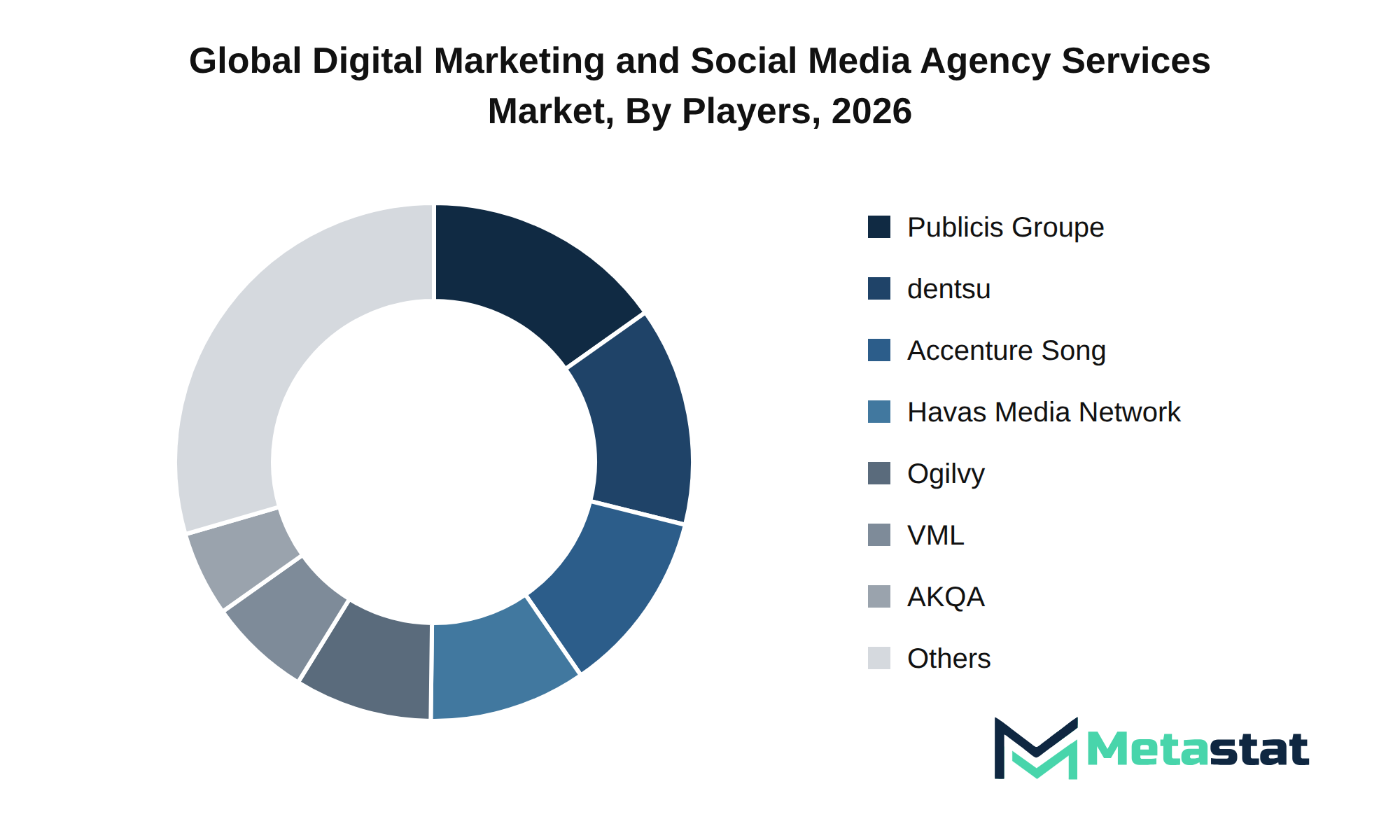
The Digital Marketing and Social Media Agency Services market experiences significant dynamics influenced by strategic behaviors among key players. Mergers and acquisitions, along with strategic consolidation, remain prevalent owing to agencies seeking synergies and market share expansion. Companies including Accenture Song and dentsu pursue aggressive growth strategies, establishing integrated service offerings that enhance customer engagement and retention.
Pricing architectures and commercial models vary widely across the market. Publicis Groupe and Ogilvy leverage their extensive experience to offer competitive pricing while ensuring high-quality service delivery. Specialist agencies like Jellyfish and VML differentiate themselves through unique value propositions, focusing on niche markets and innovative digital solutions.
Technological advancements drive product differentiation, with firms investing in R&D pipelines to create proprietary technologies. For instance, agencies like AKQA and Havas Media Network focus on AI-driven solutions and predictive analytics, enhancing their service capabilities and providing clients with tailored marketing strategies. This emphasis on technology creates competitive advantages and establishes barriers to entry for new entrants in the market.
Strategic alliances and partnerships enhance resource sharing and data integration across the ecosystem. Agencies including R/GA and Merkle form joint ventures to expand their service offerings, thus positioning themselves because leaders in the market. This collaborative approach facilitates entry into new markets and strengthens brand equity.
The future competitive outlook for the Digital Marketing and Social Media Agency Services market remains robust due to ongoing innovation and market restructuring. Defensive imperatives drive companies to enhance customer retention strategies and lower switching costs, prioritizing brand loyalty. Overall, the combination of these factors shapes the evolving environment of the digital marketing sector.
Market size is forecast to rise from USD 370.8 billion in 2025 to over USD 772.3 billion by 2033. This growth trajectory reflects a base case scenario with a compound annual growth rate (CAGR) of 9.6%. Under a bullish scenario, heightened investment in advanced digital tools and strategies by agencies could accelerate growth further, driven by increasing client demands for innovative and effective marketing solutions. Conversely, a bearish scenario involving economic downturns or shifts in consumer behavior could suppress growth, impacting revenue streams across various segments of the market.
The macroeconomic environment influences the Digital Marketing and Social Media Agency Services market. With the maturation of core industries, agencies are adapting to evolving downstream demand, pushing them to adjust their offerings. Structural shifts in consumption patterns, alongside the integration of next-generation technologies, create opportunities for research and development commercialization efforts. Regulatory evolution and compliance milestones further influence operational strategies, compelling agencies to align with emerging standards and policies.
Geopolitical realignments and global supply chain shifts continue to affect market dynamics, altering trade corridors and strategic capital allocation directives. Investment in infrastructure and capital expenditures targeting technological advancements remains critical for agencies aiming to capture emerging white-space opportunities. Recognition of unmet enterprise needs and identification of high-growth pockets will drive strategic imperatives for executives, shaping defensibility roadmaps and future growth pathways.
The report strategically identifies and profiles the key market players and analyses their core competencies in each sub-segment of the Digital Marketing and Social Media Agency Services market.
|
Report Attributes |
Details |
|
Study Period |
2021-2033 |
|
Base Year |
2025 |
|
Estimated Year |
2026 |
|
Forecast Period |
2026-2033 |
|
Historical Period |
2021-2025 |
|
Growth Rate |
CAGR 9.6% from 2026 to 2033 |
|
Revenue Unit |
USD billion |
|
Segmentation |
By Service Type, Technology Enablement, Agency and Delivery Model, End-Use Industry, and Region |
|
By Region |
North America (By Service Type, Technology Enablement, Agency and Delivery Model, End-Use Industry, and Country)
|
|
Europe (By Service Type, Technology Enablement, Agency and Delivery Model, End-Use Industry, and Country)
|
|
|
Asia Pacific (By Service Type, Technology Enablement, Agency and Delivery Model, End-Use Industry, and Country)
|
|
|
South America (By Service Type, Technology Enablement, Agency and Delivery Model, End-Use Industry, and Country)
|
|
|
Middle East and Africa (By Service Type, Technology Enablement, Agency and Delivery Model, End-Use Industry, and Country)
|
Find answers to common questions about this report
The Digital Marketing and Social Media Agency Services market size was valued at USD 370.8 billion in 2025, according to the Metastat Insights study.
The Digital Marketing and Social Media Agency Services market is projected to grow at a CAGR of 9.6% during the forecast period from 2026 to 2033.
The North America Digital Marketing and Social Media Agency Services market size is estimated to reach USD 262 billion by 2033.
The segment leading the Digital Marketing and Social Media Agency Services market is Digital Advertising and Performance Marketing, with a projected value of USD 278 billion by 2033. This segment demonstrates significant growth compared to other service types.
The key drivers for the Digital Marketing and Social Media Agency Services market include the ongoing digital transformation across industries, increased investment in digital strategies, and the rising reliance on advanced technologies including automation and artificial intelligence. These factors enhance operational efficiency, customer engagement, and brand visibility, ultimately driving revenue growth within the market.
North America holds the dominant share of the Digital Marketing and Social Media Agency Services market, with a projected value of USD 262 billion in 2033, representing 35.8 percent of the total market.
Regulatory compliance challenges, rising operational costs, macroeconomic headwinds, and talent shortages significantly restrain growth in the Digital Marketing and Social Media Agency Services market. Stricter regulations divert resources, while inflation and skilled labor deficiencies increase operational expenses, limiting agencies' competitiveness and profitability.
Factors favoring product adoption in the Digital Marketing and Social Media Agency Services market include the ongoing digital transformation across industries, increased investment in advanced technologies, and the growing reliance on digital platforms for marketing communications. These elements enhance operational efficiency, customer engagement, and brand visibility, driving demand for specialized agency services.
The Digital Marketing and Social Media Agency Services market is estimated to reach a valuation of USD 772.3 billion by 2033.
Key players in the Digital Marketing and Social Media Agency Services market include Accenture Song, dentsu, Publicis Groupe, Ogilvy, VML, and Havas Media Network.
The analysts below cover Professional Services research at Metastat Insights.
LEAD ANALYST
Utkarsh Khirodkar is a Lead Market Research Analyst at MetaStat Insight, specializing in market intelligence, technology sector assessments, and competitive strategy.

PRINCIPAL CONSULTANT - ENTERPRISE AI & EMERGING TECHNOLOGIES
Banking & Finance · Electronics and Semiconductor · Energy and Power · Healthcare IT · Information & Technology · Professional Services
Vijay Gunti is a Principal Consultant at MetaStat Insight, bringing over two decades of experience across enterprise digital transformation, technology strategy, and intelligent systems.

PRINCIPAL CONSULTANT - QUALITY SYSTEMS & COMPLIANCE
Electronics and Semiconductor · Machinery & Equipment · Professional Services
Omkar Phadtare is an Industry Consultant at MetaStat Insight, specializing in quality systems, regulatory compliance, and standards benchmarking to drive data-driven market intelligence and strategic industry research.

LEAD CONSULTANT - COMMUNICATION, TELECOM, AND IT
Electronics and Semiconductor · Information & Technology · Machinery & Equipment · Professional Services
Ravindra Sathe Consultants for Communication, Telecom, and IT at MetaStat Insight. He leads the firm's industry research initiatives across telecommunications infrastructure, digital connectivity, enterprise networking, and emerging information technology domains.
Tracking maintenance cycle demand for secondary flight display units and terrain collision avoidance systems across regional jet fleets involves complex aftermarket dynamics. MetaStat Insight provided practical analysis separating airline retrofit programs from OEM forward-fit production schedules in North America and Southeast Asia. The supplier matrix highlighted component obsolescence timelines without resorting to vague generalizations. The dataset served as a dependable reference during our annual program review meetings.
Evaluating secondary resin quality across post-consumer packaging streams requires reliable technical segmentation. MetaStat Insight delivered an objective assessment that distinguished between extrusion-grade flake pricing and optical sorting throughput limitations across Western Europe. The competitive positioning breakdown for licensed depolymerization technology providers answered several questions during our feedstock feasibility audit. Their team clarified regional trade restrictions on mixed plastic scrap quickly when our team submitted follow-up requests.
Evaluating sovereign cloud deployments for core banking platforms demands a clear view of data residency regulations and migration exit strategies. MetaStat Insight delivered an exhaustive review of regional latency tolerances, mainframe decommission milestones, and third-party vendor concentration risk. The regulatory compliance mapping across European and Asian financial jurisdictions gave our team a dependable baseline for multi-cloud infrastructure discussions.
Explore related market intelligence reports worth reading alongside this one.