
LEAD ANALYST
Utkarsh Khirodkar is a Lead Market Research Analyst at MetaStat Insight, specializing in market intelligence, technology sector assessments, and competitive strategy.

Global Image Sensor Market Size, Share, By Technology (CMOS Image Sensors, CCD Image Sensors, and Others (InGaAs, Infrared, Event-Based, and X-Ray Arrays)), By Processing Technique (2D Image Sensors and 3D Image Sensors), By Spectrum (Visible Spectrum and Non-Visible Spectrum), By End-Use Industry (Consumer Electronics, Automotive, Security & Surveillance, Industrial & Machine Vision, Healthcare & Life Sciences, Scientific & Research, Aerospace & Defense, and Others (Commercial Scanning, Retail, and Agriculture)), Industry Analysis, Growth, Trends, and Forecast, 2026-2033
Report ID
MSI-5544
Published
October, 2026
Pages
302 Pages
Format
Historical
Base year
Forecast
Forecast period
Report Details
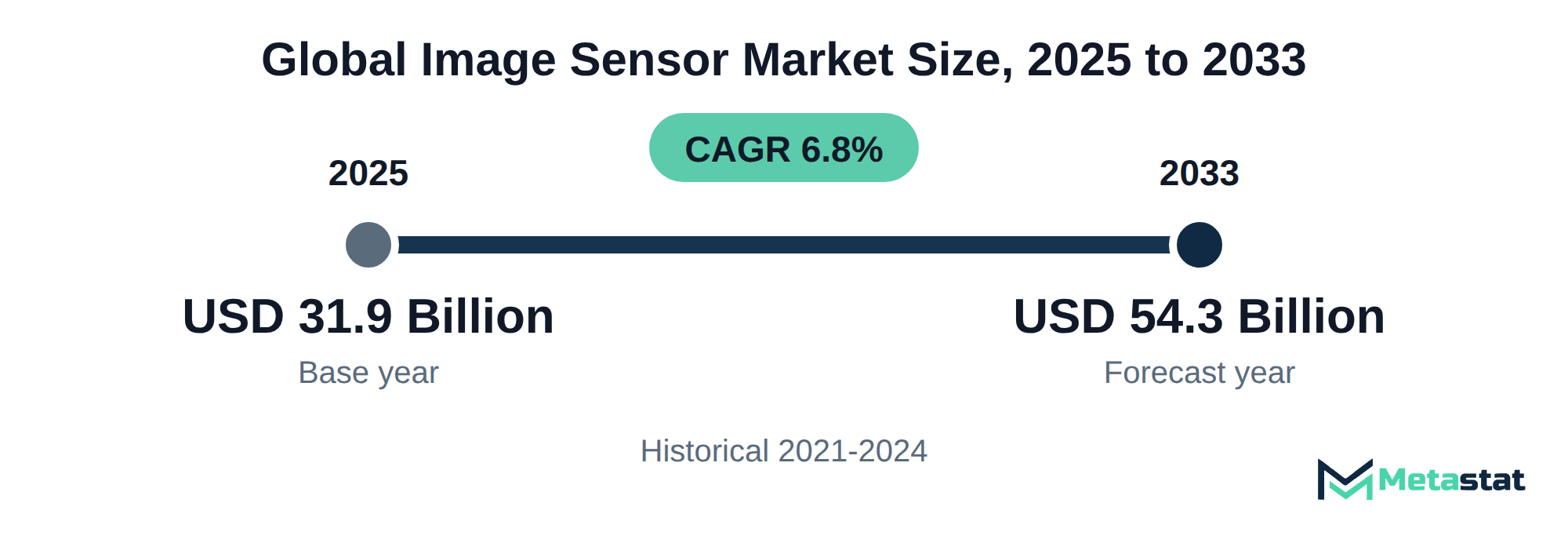
Market Valuation: Valued at $31.9 Billion in 2025, projected to reach $54.3 Billion by 2033 at a 6.8% CAGR.
Dominant Segment: CMOS image sensors lead the market, driven by their high performance and cost-effectiveness, particularly in consumer electronics and automotive applications.
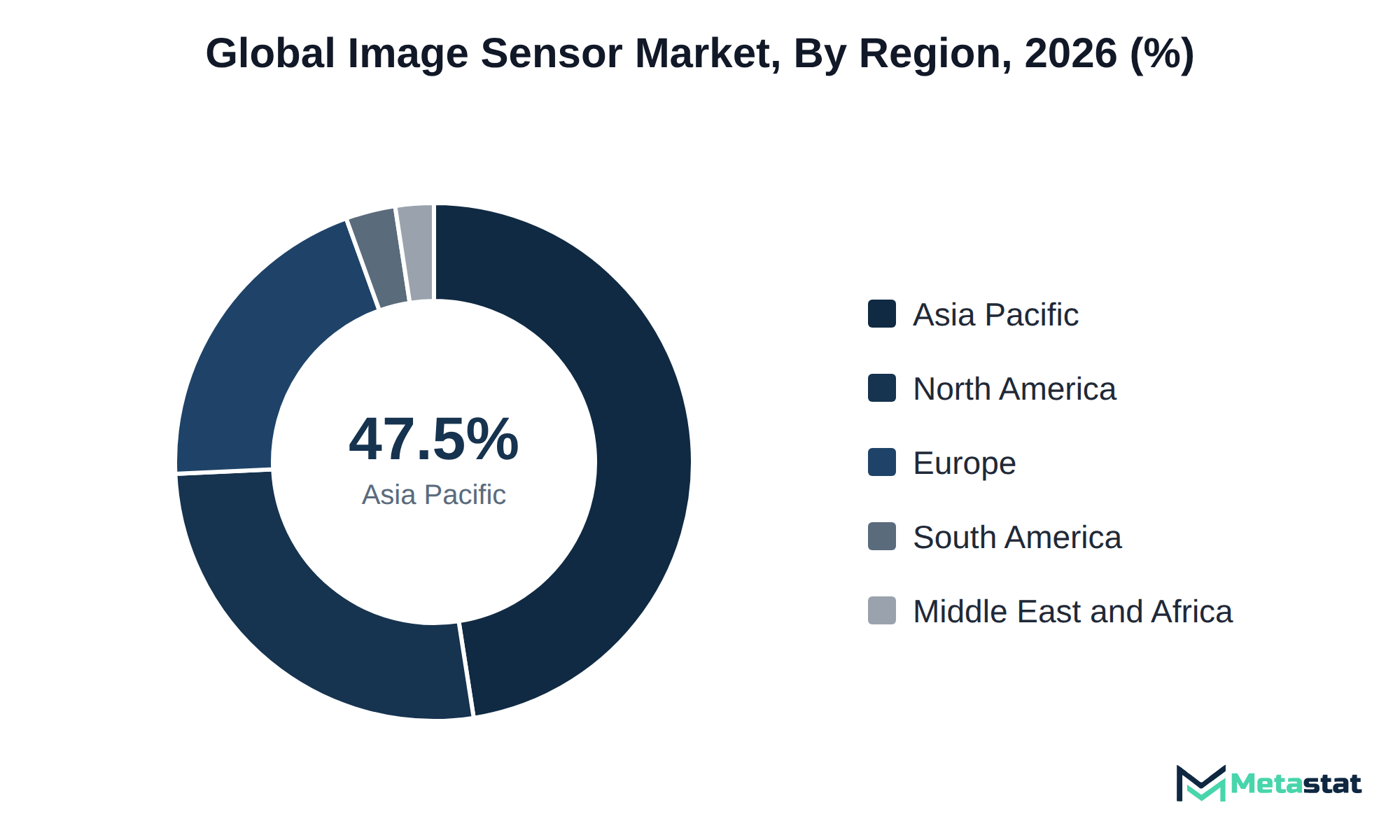
Geographic Lead: Asia Pacific is the fastest-growing region, accounting for 47.5% of the market share in 2025, fueled by rapid technological advancements and increased production of consumer electronics.
What's Inside: The report includes a comprehensive analysis of market dynamics, competitive landscape, and detailed segmentation by technology, processing technique, spectrum, and end-use industry.
High Growth in Non-Visible Spectrum Appl: The non-visible spectrum segment is projected to grow significantly, driven by rising demand for infrared and X-ray sensors in healthcare and industrial applications.
Increased Investment in Automotive Appli: The automotive sector is experiencing substantial investment in imaging technology, particularly for advanced driver-assistance systems and autonomous vehicles.
Choose Your License
Global Image Sensor Market
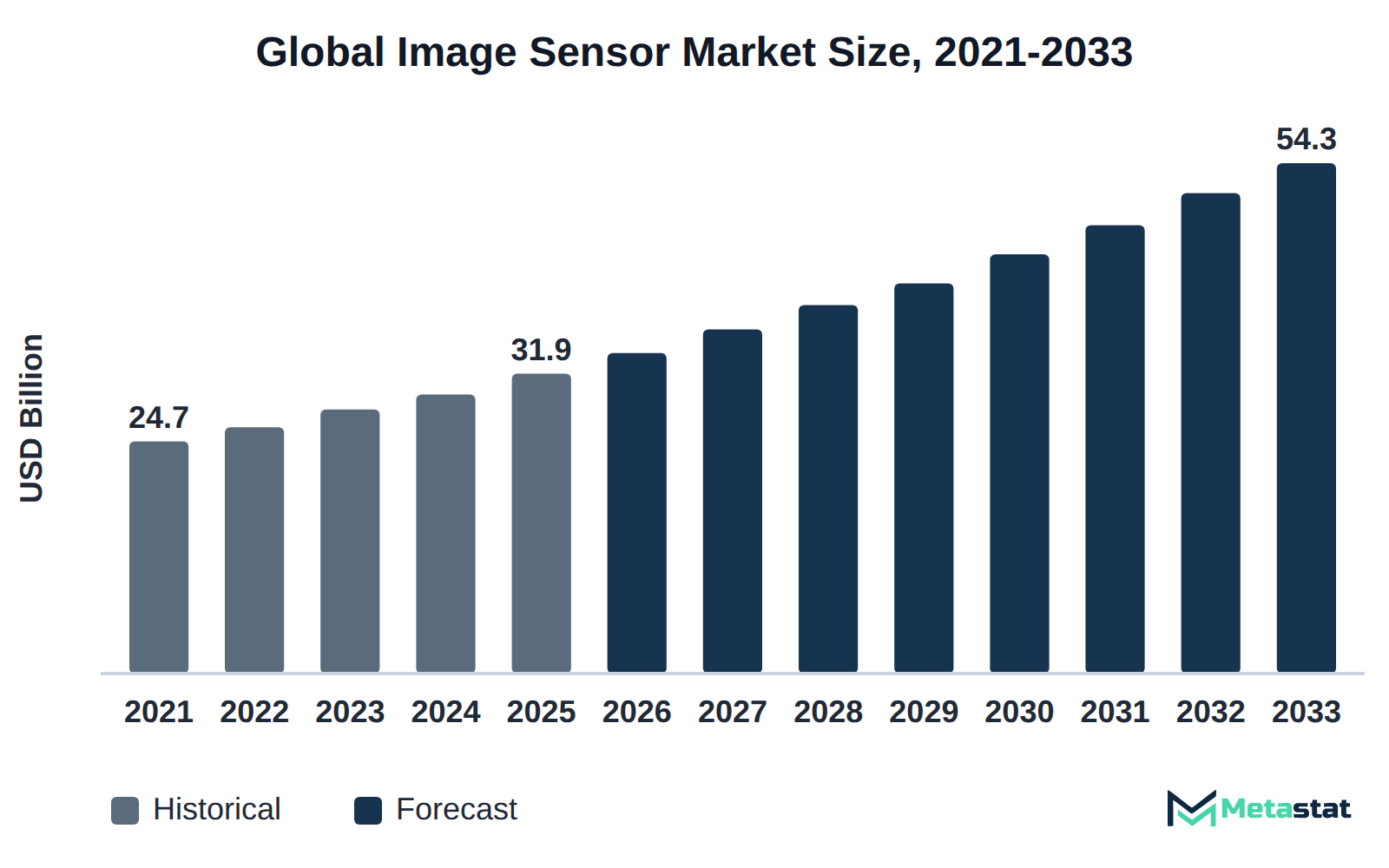
The global Image Sensor market was valued at USD 31.9 billion in 2025 and is projected to reach USD 54.3 billion by 2033, growing at a CAGR of 6.8% over the forecast period.
The Image Sensor market encompasses various technologies that capture images across different applications, including consumer electronics, automotive, and industrial sectors. Buyers invest in these sensors to enhance visual quality and functionality in devices including smartphones, cameras, and vehicles. The market expands due to growing demand for high-resolution imaging and advanced functionalities, including enhanced autofocus and low-light performance.
Growth in the market is driven by increased adoption of CMOS image sensors, which dominate in value due to their high performance and cost-effectiveness. North America holds 26.7% of the market in 2025, with the US leading in 2026. The Asia Pacific region follows closely, accounting for 47.5% of the market share, driven by rapid technological advancements and increasing production of consumer electronics.
One key growth driver involves rising demand for image sensors in automotive applications, particularly for safety and autonomous driving features. This segment experiences significant investment as manufacturers integrate advanced imaging capabilities into vehicles. The focus on enhanced safety measures and automation supports the market, contributing to overall growth in the coming years.
The Image Sensor market serves a broad range of industries, driven by advancements in imaging technology and the growing demand for high-quality visual content. Buyers invest in image sensors to enhance their product offerings, improve image quality, and meet the increasing expectations of consumers for superior visuals. This investment spans devices including smartphones, cameras, and automotive systems, where image sensors shape functionality and user experience.
Growth in the market is propelled by the rise of consumer electronics, particularly smartphones and digital cameras, which represent the largest segment. The Asia Pacific region accounts for 47.5% of the market, reflecting its significance in the global landscape. The shift towards advanced imaging technologies in automotive applications further fuels this expansion, with the integration of image sensors enhancing safety and driving experiences.
Investments in research and development drive innovation in image sensor technology, resulting in new applications and improved performance. The market continues to evolve with advancements in sensor types and processing techniques, allowing for greater adaptability across sectors. Together, these developments position the Image Sensor market for sustained growth as demand for enhanced imaging capabilities rises.
Stacked CMOS image sensors significantly enhance image quality in high-resolution mobile cameras. This technology involves layering multiple sensor components to improve light capture and overall image fidelity. The growing popularity of such sensors is evidenced by the expected increase in the CMOS image sensor segment, projected to expand from USD 31.8 billion in 2026 to USD 51.1 billion by 2033, reflecting a CAGR of 7%. Enhanced image quality directly impacts consumer electronics, particularly in smartphones, where superior camera capabilities drive purchasing decisions.
This advancement aligns with the ongoing trend toward higher megapixel counts and advanced computational photography, which have become essential features in modern smartphones. While manufacturers prioritize image quality, the adoption of stacked CMOS image sensors is expected to rise, leading to competitive advantages for companies that invest in this technology. The image sensor market stands to benefit from such innovations, with manufacturers positioning themselves to meet the demands of consumers seeking better photographic experiences.
3D image sensors play a vital role in enhancing depth perception across various applications, particularly in the automotive and industrial vision sectors. Depth sensor technology supports this capability in both sectors. The demand for 3D image sensors is driven by their ability to provide precise spatial data, which significantly improves object recognition, navigation, and safety features in vehicles and machinery. In the Image Sensor market, the segment for 3D image sensors is projected to grow at a compound annual growth rate (CAGR) of 7.4%, highlighting the increasing reliance on this technology.
Buyers in this market prioritize contract models that align with their operational needs and financial capabilities. Many manufacturers opt for long-term contracts to secure a consistent supply of sensors, facilitating predictable budgeting and planning. Pricing structures often vary based on volume commitments, with tiered pricing models encouraging larger orders. This strategy allows buyers to benefit from reduced unit costs while ensuring access to advanced imaging technologies.
Buyers frequently seek partnerships with manufacturers that offer flexible payment terms. This approach allows for optimized cash flow management, particularly for small to medium-sized enterprises that face budget constraints. These pricing and contract models strengthen the competitive position of companies and help them grow market share and customer loyalty.
Infrared and X-ray image sensors extend the capabilities of imaging technology beyond the visible spectrum. By incorporating these sensors, industries including healthcare and security achieve enhanced imaging capabilities that allow for improved diagnostics and surveillance. The image sensor market anticipates significant growth in this area, with non-visible spectrum sensors projected to reach USD 7 billion by 2033, reflecting a compound annual growth rate of 8.4%.
The demand for infrared and X-ray image sensors is driven by applications requiring high precision and detailed imaging in challenging environments. In the healthcare sector, these sensors enable advancements in medical imaging techniques, including X-ray and MRI, facilitating early disease detection and monitoring. In security applications, the ability to detect heat signatures enhances surveillance systems, allowing for better threat identification in low visibility conditions. CCTV networks are a common place where these sensors are deployed. Manufacturers focused on these specialized sensors therefore gain revenue opportunities and can meet the growing needs of these sectors.
CMOS image sensors significantly drive adoption in the automotive and medical imaging sectors. In the automotive industry, these sensors enhance vehicle safety through advanced driver-assistance systems (ADAS), enabling features including lane departure warnings and automated parking. The adoption of CMOS technology in this sector is projected to grow at a compound annual growth rate (CAGR) of 7% by 2033. This growth reflects a shift toward greater reliance on imaging for safety and efficiency in transportation.
Medical imaging benefits from the capabilities of CMOS image sensors. These sensors provide high-resolution imaging for applications like ultrasound and endoscopy, improving diagnostic accuracy. Disposable endoscopes are one device format that uses compact imaging sensors. The ability to integrate with portable devices enhances the accessibility of medical imaging. This technology's expected growth aligns with a broader trend toward improved healthcare outcomes and patient monitoring solutions. By 2033, the automotive segment alone is expected to reach a market value of USD 10.7 billion, which shows the commercial potential of advanced sensor technologies.
Growing demand for advanced imaging capabilities drives significant spending in the consumer electronics sector. Manufacturers focus on enhancing image quality in devices including smartphones, tablets, and digital cameras, leading to higher volumes of image sensor purchases. This increased adoption stems from consumer preferences for high-resolution and feature-rich devices, which necessitate superior imaging technology. The market is projected to reach USD 21.8 billion by 2033, reflecting a compound annual growth rate of 6.2% during the forecast period. This increased demand benefits suppliers, resulting in heightened competition and innovation to meet evolving consumer needs.
Expansion in automotive applications further supports the Image Sensor market. Rising interest in advanced driver-assistance systems and autonomous vehicles drives demand for high-quality sensors. While manufacturers integrate more sophisticated imaging technology, spending in this segment increases, further enhancing the market's growth trajectory.
Growing advancements in imaging technology drive significant investment in the automotive sector. Enhanced safety features and automation in vehicles require sophisticated imaging solutions. High-resolution cameras and sensors improve object detection, lane tracking, and parking assistance, leading to increased adoption of image sensors. Automotive traffic sign recognition is another camera-based function within advanced driver-assistance systems. Automotive manufacturers prioritize these technologies to meet consumer demand for enhanced safety and navigational capabilities.
Investments in research and development for advanced sensor technologies reflect the commitment of key players in the automotive sector. Emerging trends including autonomous driving create a substantial market for image sensors equipped with advanced features, including real-time image processing and night vision capabilities. The market benefits from the integration of image sensors into many applications, including advanced driver-assistance systems (ADAS) and camera systems. Revenue generated from these applications contributes significantly to the overall growth of the market.
High costs associated with advanced imaging technology act as a significant restraint in the Image Sensor market. Buyers in the consumer electronics sector face budgetary constraints that lead to slower uptake of the latest imaging solutions. The expense of integrating sophisticated image sensors into devices, including smartphones and cameras, results in smaller orders and delayed product launches. In the automotive sector, the high price of image sensors impacts investment in advanced driver-assistance systems (ADAS), limiting the deployment of safety features that rely on high-quality imaging. Manufacturers in industrial and machine vision applications experience challenges in justifying the cost of upgrading sensors when existing technologies suffice for basic operations. Machine vision cameras are the main hardware affected by this upgrade decision. This cost barrier restricts the overall growth potential of the market, affecting technology adoption and stalling innovations that rely on enhanced image sensing capabilities.
Suppliers in the Image Sensor market face significant pressure from rising material costs. Factors including global supply chain disruptions and increased demand for high-quality components contribute to these escalating costs. These pressures affect profitability, compelling suppliers to reevaluate their pricing strategies and operational efficiencies. In response, many companies are investing in automation and advanced manufacturing techniques to streamline production processes and reduce reliance on expensive materials. Suppliers are exploring alternative materials and sourcing strategies to mitigate the impact of cost fluctuations. These proactive measures aim to sustain competitive pricing while maintaining product quality in a changing market. Strategic partnerships and collaborations emerge as vital approaches to enhance supply chain resilience and ensure stable access to critical components. Suppliers need ongoing innovation and adaptability to handle rising material costs. The market's future relies on these efforts to preserve profitability and support continued growth.
The non-visible spectrum segment of the market demonstrates strong potential for growth, driven by increasing applications in industrial and medical fields. The surging demand for imaging solutions in healthcare and surveillance systems enhances prospects for non-visible spectrum technologies, including infrared and X-ray sensors.
Buyers in the healthcare sector, particularly those focused on advanced diagnostics and imaging for patient monitoring, drive significant investment in these technologies. Industrial applications leverage non-visible spectrum sensors for enhanced safety measures and improved process automation. Increased investment in research and development will further strengthen this segment, ensuring advancements in performance and efficiency.
The expansion of non-visible spectrum applications offers a clear opportunity for players in the image sensor market and calls for innovation and tailored solutions.
The Global Image Sensor market is segmented based on Technology, Processing Technique, Spectrum, and End-Use Industry.
These sensors serve crucial functions in consumer electronics, automotive applications, and security systems. Key factors driving this segment include rising demand for high-resolution imaging and advancements in mobile technology. The performance of CMOS sensors surpasses that of CCD sensors, which exhibit slower growth at a CAGR of 4.1%. The ability to produce high-quality images at a lower cost positions CMOS sensors favorably, making them the preferred choice among manufacturers. Consequently, this segment's growth trajectory is robust compared to others, particularly with increased integration of imaging technology across diverse sectors.
CCD Image Sensors segment is estimated to reach USD 2.8 billion by 2033, at a CAGR of 4.1% during the forecast period. This technology finds applications in fields including scientific research, medical imaging, and industrial inspection, where high-quality image capture is essential. EMCCD cameras are a specialized example of this technology. Demand for CCD sensors is influenced by their superior image quality and low noise levels, making them preferable for specialized applications compared to alternatives. While the growth rate for CCD Image Sensors lags behind that of CMOS technologies, which are projected to grow at a CAGR of 7%, they maintain a distinct position in the market due to their unique advantages in specific use cases. Companies focusing on high-precision imaging technologies are increasingly investing in CCD development, enhancing its role in niche applications that prioritize quality over cost.
Others (InGaAs, Infrared, Event-Based And X-Ray Arrays) segment is expected to reach USD 0.4 billion by 2033. This segment finds applications in specialized areas including medical imaging, industrial inspection, and security systems, where advanced imaging capabilities are crucial. The growth of this segment is driven by increasing demand for high-sensitivity sensors that operate under low-light conditions, particularly in the medical and surveillance sectors. Shortwave infrared imaging is one example of the sensing approaches in this segment. Compared to other technology segments, including CMOS and CCD, this segment experiences slower growth, with a projected CAGR reflecting stable yet moderate demand dynamics. This slower trend stems from niche applications and advanced technological requirements, which often involve higher costs and specialized manufacturing processes. Stakeholders in the market recognize the importance of continuous innovation to enhance performance and reduce costs associated with these advanced imaging solutions.
2D Image Sensors segment is valued at USD 15.3 billion in 2026 and is projected to reach USD 23.1 billion by 2033, at a CAGR of 6.1% during the forecast period. These sensors find extensive use in consumer electronics, automotive imaging, and industrial applications, where high-resolution image capture is essential. Growth within this segment is driven primarily by increasing demand for high-quality imaging across various devices. This segment exhibits a more gradual growth trajectory compared to the 3D Image Sensors segment, which has a higher CAGR of 7.4%. Strong demand in consumer electronics enhances its market potential and positions 2D Image Sensors as a foundational technology while newer imaging techniques emerge.
3D Image Sensors segment is estimated to reach USD 31.2 billion by 2033, at a CAGR of 7.4% during the forecast period. This technology finds application in various sectors, including automotive and industrial automation, where depth perception is essential. Increasing adoption of automation and robotics across industries drives demand for accurate 3D imaging solutions. Compared to other processing techniques, including 2D image sensors, the 3D segment experiences faster growth due to its superior capabilities in capturing spatial information. The rising focus on enhancing safety features in vehicles contributes to the increasing implementation of 3D imaging technologies. Investment in research and development continues to enhance the performance and affordability of 3D image sensors, further fueling their integration into consumer electronics and other fields. The market displays significant opportunities for innovation and differentiation among suppliers aiming to capture evolving end-user needs.
Valued at USD 30.2 billion in 2026, the Visible Spectrum segment is projected to reach USD 47.2 billion by 2033, at a CAGR of 6.6% during the forecast period. This segment includes image sensors capturing light within the visible range, commonly found in consumer electronics including smartphones, cameras, and televisions. The demand for superior image quality, driven by growing consumer expectations for high-resolution visuals, drives market growth. Compared to other segments, the Visible Spectrum benefits from its wide applicability and established technology, while segments like Non-Visible Spectrum, expected to grow at a CAGR of 8.4%, face a different set of challenges and market dynamics. The focus on enhancing image quality in diverse applications further distinguishes this segment from others, highlighting its critical role in the overall market.
This segment finds applications in various fields, including industrial and medical imaging, where advanced capabilities for detecting non-visible wavelengths are critical. Demand in this area is driven by the rise of automation and safety regulations in manufacturing, prompting investments in enhanced sensor technologies. Compared to other segments, including Visible Spectrum, the Non-Visible Spectrum exhibits a higher growth rate, reflecting increasing reliance on these sensors for specialized applications. The continuous evolution of imaging technologies further boosts the adoption of non-visible spectrum sensors, particularly in sectors like healthcare, where accuracy and precision are essential. The segment's distinct characteristics contribute to its unique position, highlighting its significance in the broader Image Sensor market.
This segment significantly contributes to the development of smartphones, tablets, and cameras, serving consumers who demand high-quality imaging solutions for personal and professional use. Rising demand for enhanced imaging capabilities drives growth in this segment, particularly with features including facial recognition and augmented reality becoming more prevalent. The Consumer Electronics segment experienced a higher CAGR compared to other segments like Automotive, which has a CAGR of 7.7%. Price sensitivity in consumer electronics influences purchasing decisions, leading manufacturers to adopt cost-effective yet advanced imaging technologies. Innovations in CMOS technology facilitate improved performance and lower production costs, positively impacting market dynamics.
The automotive segment is estimated to reach USD 10.7 billion by 2033, at a CAGR of 7.7% during the forecast period. This segment serves critical functions in advanced driver-assistance systems (ADAS), autonomous vehicles, and other safety applications, serving automotive manufacturers and technology developers. Growing trends toward enhanced safety features and autonomous driving capabilities significantly drive demand in this area. Compared to other segments, the automotive sector exhibits a faster growth rate, reflecting increasing investment in safety technology and regulatory requirements for vehicle safety. The need for higher-resolution sensors to support complex visual processing requirements in vehicles further distinguishes this segment's trajectory from the other segments in the market.
Security & Surveillance segment is expected to reach USD 6.5 billion by 2033. This segment finds applications in monitoring public spaces, critical infrastructure, and private properties, with users including governmental organizations, commercial enterprises, and residential consumers. Driving factors include increasing security concerns and the adoption of advanced surveillance technologies. With a projected CAGR of 6.5%, this segment exhibits faster growth compared to others including Automotive and Consumer Electronics, highlighting its unique positioning in the market. Advancements in technologies including facial recognition and artificial intelligence enhance the capabilities of security systems, leading to increased investment in this area. The segment's rapid expansion reflects heightened demand for robust security solutions and the evolving landscape of surveillance technologies.
Industrial & Machine Vision segment is projected to grow at a CAGR of 7.4% during the forecast period. This segment finds applications in manufacturing and automation, serving for tasks including quality inspection, process control, and robotic guidance. Key drivers for growth include the increasing adoption of automation in industrial settings and advancements in imaging technology, which enhance operational efficiency. Compared to other segments, this one offers unique opportunities for businesses focused on high-precision applications. The growing emphasis on smart manufacturing and Industry 4.0 initiatives further increases demand in this area. Premium pricing for sophisticated imaging solutions sets this segment apart from others, reflecting the specialized needs of industrial users. In this context, the image sensor market shows a strong trajectory toward innovation and enhanced capabilities.
Healthcare & Life Sciences focuses on the application of image sensors in various medical and research settings. This segment finds utility in diagnostic imaging, surgical procedures, and laboratory research, meeting demands from hospitals, clinics, and research institutions. Demand for advanced imaging solutions drives growth within this area, while regulatory standards create challenges for adoption. Unlike other segments, including consumer electronics, this sector prioritizes precision and reliability over price, leading to a different buyer profile among healthcare providers and research organizations. The market is expected to evolve, driven by ongoing technological advancements in imaging capabilities that improve diagnostic accuracy and operational efficiency.
Scientific & Research applications employ advanced imaging technologies for various analytical and experimental purposes. Researchers in fields including physics, chemistry, and biology use these sensors for capturing high-resolution images and data essential for experimentation. Demand in this segment is influenced by the growing need for precision and accuracy in scientific investigation. This segment distinguishes itself from others, particularly in terms of pricing, which tends to be higher due to the specialized nature of the applications and the advanced technologies employed. The market encourages innovation, driven by the continuous pursuit of enhanced imaging capabilities that support complex scientific inquiries. Compared to other segments, Scientific & Research applications face unique challenges relating to the customization of sensors to meet specific research requirements, influencing the procurement cycles of institutions and laboratories.
Aerospace & Defense involves the use of image sensors for various applications, including surveillance, reconnaissance, and targeting in military operations. Government and defense contractors primarily employ these sensors for advanced imaging solutions that enhance operational effectiveness. Growth in this segment is driven by increasing defense budgets and advancements in imaging technology, ensuring high-resolution, real-time imaging capabilities. Compared to other segments, the Aerospace & Defense sector experiences slower growth due to stringent regulatory requirements and higher development costs, which necessitate significant investment in research and procurement processes. This market demonstrates a distinct focus on reliability and performance, characteristics that influence purchasing decisions for end-users in this critical field.
This segment includes applications in commercial scanning, retail, and agriculture. Utilization in these areas primarily focuses on improving efficiency and accuracy in various processes, including inventory management and crop monitoring. The driving force behind this segment stems from technological advancements that enhance image quality and processing speed, enabling better data analytics and decision-making for businesses. Compared to other segments, this area experiences slower growth due to competition from established technologies and varying adoption rates among different industries. Buyer demographics, including retailers and agricultural firms, influence purchasing decisions. Their specific requirements for image sensors shape demand patterns and impact pricing strategies within the broader market.
Based on geography, the Global Image Sensor market is divided into North America, Europe, Asia-Pacific, South America, Middle East, and Africa.
Demand for the Image Sensor market in North America exhibits strong momentum, driven primarily by the consumer electronics and automotive industries. Advances in technology and increasing integration of image sensors in various devices, including smartphones and vehicles, fuel this growth. Regulatory initiatives aimed at enhancing safety standards in the automotive sector further stimulate demand. The market in this region is projected to reach USD 13.9 billion by the end of 2033, reflecting significant expansion. In 2025, North America holds a 26.7% share of the global market, emphasizing its competitive position. The presence of leading manufacturers contributes to the region's innovation and supply capability, positioning it as a key player in the overall market.
In Europe, the image sensor market experiences significant growth, driven by demand across various industries, particularly consumer electronics and automotive. Countries including Germany, France, and the UK play significant roles in this expansion, supported by advancements in technology and increasing consumer preferences for high-quality imaging solutions. The market holds a notable share, with a contribution of 20.2% in 2025. Emerging applications within security and surveillance further increase demand, reflecting a growing focus on enhanced safety measures. Regulatory frameworks focused on technology standards influence market dynamics, ensuring compliance and encouraging innovation across the sector. Investment in research and development strengthens the competitive landscape, positioning Europe as a key player in the global image sensor market.
Asia-Pacific dominates the Image Sensor market, accounting for 47.5% of global share in 2025. The demand for image sensors in this region derives primarily from strong growth in consumer electronics and automotive industries. Nations including China, Japan, and India invest heavily in technology advancements, driving the need for high-quality imaging solutions. Infrastructure improvements, particularly in smart city initiatives and automotive safety regulations, further enhance market prospects. Significant contributions from South Korea and Australia in research and development strengthen the competitive landscape. The combination of heightened consumer demand and government support for technology integration positions Asia-Pacific as a crucial hub for future growth in the market.
Brazil and Argentina serve the primary markets for image sensors in South America, driven by increasing demand for consumer electronics and automotive applications. Investments in technology and infrastructure development support the expansion of these industries, enhancing market growth. Regulatory frameworks focused on improving manufacturing capabilities contribute to the segment's momentum. The image sensor market in South America accounts for 3.1% of the global market in 2025, reflecting the region's emerging role in this industry. Manufacturers seek to leverage growth opportunities within the region, particularly in consumer electronics and automotive sectors, which exhibit significant potential for the adoption of advanced imaging technologies.
The Image Sensor market in the Middle East and Africa experiences unique demand dynamics driven primarily by the growing presence of consumer electronics and security sectors. Countries including Saudi Arabia and the UAE invest substantially in infrastructure projects, boosting demand for advanced imaging technologies. South Africa's industrial sector increasingly adopts image sensors for various applications, including machine vision and quality control. The region's share of the global market reached 2.4% in 2025. Local investments in technology and innovation align with international trends toward digital transformation, positioning the market for continuous growth. Emerging market players expand their portfolios to capture opportunities within the region, enhancing competition and driving technological advancements in the market.
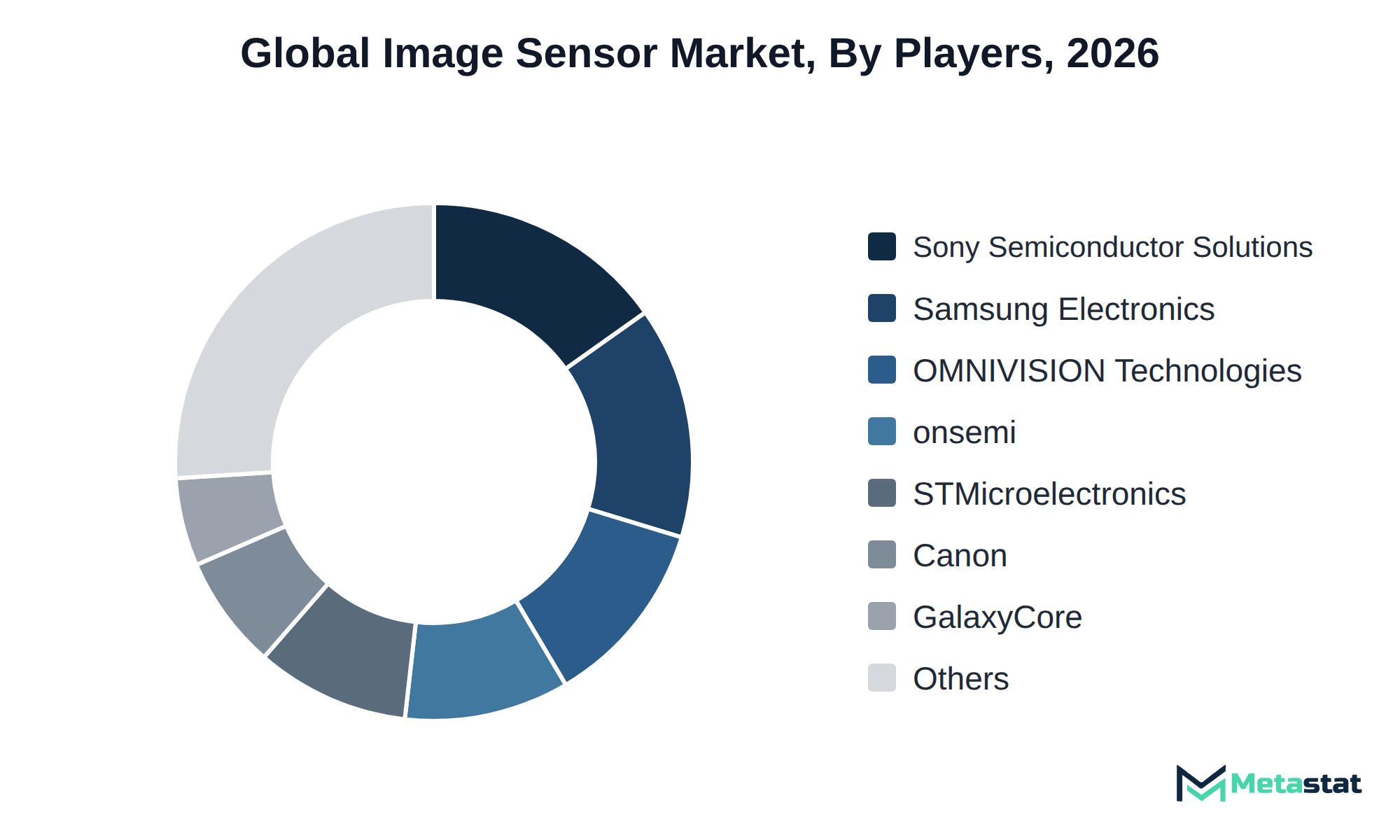
Companies within the Image Sensor market differentiate through technology, pricing strategies, and customer service offerings. Key players focus on various segments, including CMOS and CCD technologies, catering to diverse buyer needs including customization and ecosystem compatibility.
Sony Semiconductor Solutions Corporation and Samsung Electronics Co., Ltd. emphasize advanced sensor technologies primarily in consumer electronics. OMNIVISION Technologies, Inc. and onsemi target the automotive industry, offering specialized imaging solutions. STMicroelectronics N.V. delivers tailored services to security and surveillance sectors, enhancing customer engagement while driving market growth.
Achieving this growth depends on several key developments within the Image Sensor market. The increasing adoption of CMOS image sensors drives expansion, primarily in consumer electronics, where demand is projected to grow from USD 14.3 billion in 2026 to USD 21.8 billion by 2033. The rising need for advanced 3D imaging techniques in automotive applications contributes to this upward trajectory, with 3D image sensors expected to see significant growth. The transition towards non-visible spectrum sensors in security and surveillance applications is anticipated to enhance overall market value, with non-visible spectrum sensors projected to reach USD 7 billion by 2033.
However, potential supply chain disruptions and escalating raw material costs present risks that could hinder market progress. Significant delays in technological advancements or production capacity could impede the timely fulfillment of market demand, affecting growth trajectories across various segments. While the market evolves, stakeholders will closely monitor these dynamics to ensure sustained momentum towards the projected market size.
By Technology: CMOS Image Sensors, CCD Image Sensors, Others (InGaAs, Infrared, Event-Based And X-Ray Arrays)
By Spectrum: Visible Spectrum, Non-Visible Spectrum
By End-Use Industry: Consumer Electronics, Automotive, Security & Surveillance, Industrial & Machine Vision, Healthcare & Life Sciences, Scientific & Research, Aerospace & Defense, Others (Commercial Scanning, Retail, Agriculture)
The report strategically identifies and profiles the key market players and analyses their core competencies in each sub-segment of the Image Sensor market.
Report Attributes | Details |
Study Period | 2021-2033 |
Base Year | 2025 |
Estimated Year | 2026 |
Forecast Period | 2026-2033 |
Historical Period | 2021-2025 |
Growth Rate | CAGR 6.8% from 2026 to 2033 |
Revenue Unit | USD billion |
Segmentation | By Technology, Processing Technique, Spectrum, End-Use Industry, and Region |
By Region | North America (By Technology, Processing Technique, Spectrum, End-Use Industry, and Country)
|
Europe (By Technology, Processing Technique, Spectrum, End-Use Industry, and Country)
| |
Asia Pacific (By Technology, Processing Technique, Spectrum, End-Use Industry, and Country)
| |
South America (By Technology, Processing Technique, Spectrum, End-Use Industry, and Country)
| |
Middle East and Africa (By Technology, Processing Technique, Spectrum, End-Use Industry, and Country)
|
Find answers to common questions about this report
The Image Sensor market size was valued at USD 31.9 billion in 2025.
The market is projected to grow at a CAGR of 6.8% during the forecast period from 2026 to 2033.
The North America Image Sensor market size is estimated to reach USD 13.9 billion by 2033.
CMOS Image Sensors lead the Image Sensor market with a projected value of USD 51.1 billion by 2033, reflecting the highest growth rate among the technology segments.
Growing demand for advanced imaging capabilities in consumer electronics drives significant spending in the sector. Expansion in automotive applications, particularly advanced driver-assistance systems and autonomous vehicles, further supports the market.
High costs associated with advanced imaging technology act as a significant restraint on Image Sensor market growth. These expenses lead to slower uptake of the latest imaging solutions in the consumer electronics sector. Rising material costs further pressure suppliers, impacting profitability and prompting reevaluation of pricing strategies.
The expansion of non-visible spectrum applications, particularly in healthcare and industrial fields, supports adoption of advanced imaging solutions. Increased investment in research and development for these technologies enhances performance and efficiency, driving demand in the Image Sensor market.
The Image Sensor market is estimated to reach a valuation of USD 54.3 billion by 2033.
Key players operating in the Image Sensor market include Sony Semiconductor Solutions Corporation, Samsung Electronics Co., Ltd., OMNIVISION Technologies, Inc., onsemi, STMicroelectronics N.V., and Canon Inc.
Asia Pacific leads the Image Sensor market, holding a significant share of 47.5% in 2025. This dominance reflects the region's strong demand for advanced imaging technologies across various applications.
The analysts below cover Electronics and Semiconductor research at Metastat Insights.
LEAD ANALYST
Utkarsh Khirodkar is a Lead Market Research Analyst at MetaStat Insight, specializing in market intelligence, technology sector assessments, and competitive strategy.

PRINCIPAL CONSULTANT - ENTERPRISE AI & EMERGING TECHNOLOGIES
Banking & Finance · Electronics and Semiconductor · Energy and Power · Healthcare IT · Information & Technology · Professional Services
Vijay Gunti is a Principal Consultant at MetaStat Insight, bringing over two decades of experience across enterprise digital transformation, technology strategy, and intelligent systems.

PRINCIPAL CONSULTANT - QUALITY SYSTEMS & COMPLIANCE
Electronics and Semiconductor · Machinery & Equipment · Professional Services
Omkar Phadtare is an Industry Consultant at MetaStat Insight, specializing in quality systems, regulatory compliance, and standards benchmarking to drive data-driven market intelligence and strategic industry research.

ENERGY & INFRASTRUCTURE INDUSTRY CONSULTANT
Automotive and Transportation · Electronics and Semiconductor · Energy and Power · Machinery & Equipment
Saurabh Vasant Ganvir consults for Energy & Infrastructure Industry at MetaStat Insight, specializing in renewable energy, solar EPC, and electric vehicle (EV) infrastructure markets.

LEAD CONSULTANT - COMMUNICATION, TELECOM, AND IT
Electronics and Semiconductor · Information & Technology · Machinery & Equipment · Professional Services
Ravindra Sathe Consultants for Communication, Telecom, and IT at MetaStat Insight. He leads the firm's industry research initiatives across telecommunications infrastructure, digital connectivity, enterprise networking, and emerging information technology domains.
Evaluating secondary resin quality across post-consumer packaging streams requires reliable technical segmentation. MetaStat Insight delivered an objective assessment that distinguished between extrusion-grade flake pricing and optical sorting throughput limitations across Western Europe. The competitive positioning breakdown for licensed depolymerization technology providers answered several questions during our feedstock feasibility audit. Their team clarified regional trade restrictions on mixed plastic scrap quickly when our team submitted follow-up requests.
Evaluating sovereign cloud deployments for core banking platforms demands a clear view of data residency regulations and migration exit strategies. MetaStat Insight delivered an exhaustive review of regional latency tolerances, mainframe decommission milestones, and third-party vendor concentration risk. The regulatory compliance mapping across European and Asian financial jurisdictions gave our team a dependable baseline for multi-cloud infrastructure discussions.
Replacing petrochemical surfactants with bio-based alternatives requires realistic timelines on industrial precision fermentation scaling. The market research broke down commercialization timelines, feedstock sugar price sensitivities, and regional cosmetic ingredient regulatory approvals in Europe and East Asia. That supplier readiness mapping gave our formulations team reliable context when comparing renewable chemical sourcing roadmaps.
Explore related market intelligence reports worth reading alongside this one.
Starting from
$2950