
LEAD ANALYST
Utkarsh Khirodkar is a Lead Market Research Analyst at MetaStat Insight, specializing in market intelligence, technology sector assessments, and competitive strategy.

Global CCTV Market Size, Share, By Product Type (Digital Video Recorders (DVR), Network Video Recorders (NVR), Video Management Software (VMS)), By Technology (IP Camera and Analog Camera), By Connectivity (Wired and Wireless), By End User (Residential, Commercial, Industrial, and Government), Industry Analysis, Growth, Trends, and Forecast, 2026-2033
Report ID
MSI-5161
Published
September, 2026
Pages
255 Pages
Format
Historical
Base year
Forecast
Forecast period
Report Details
Choose Your License
Global CCTV Market
The global CCTV market was valued at USD 56.5 billion in 2025 and is projected to reach USD 201.2 billion by 2033, growing at a CAGR of 17.2% over the forecast period.
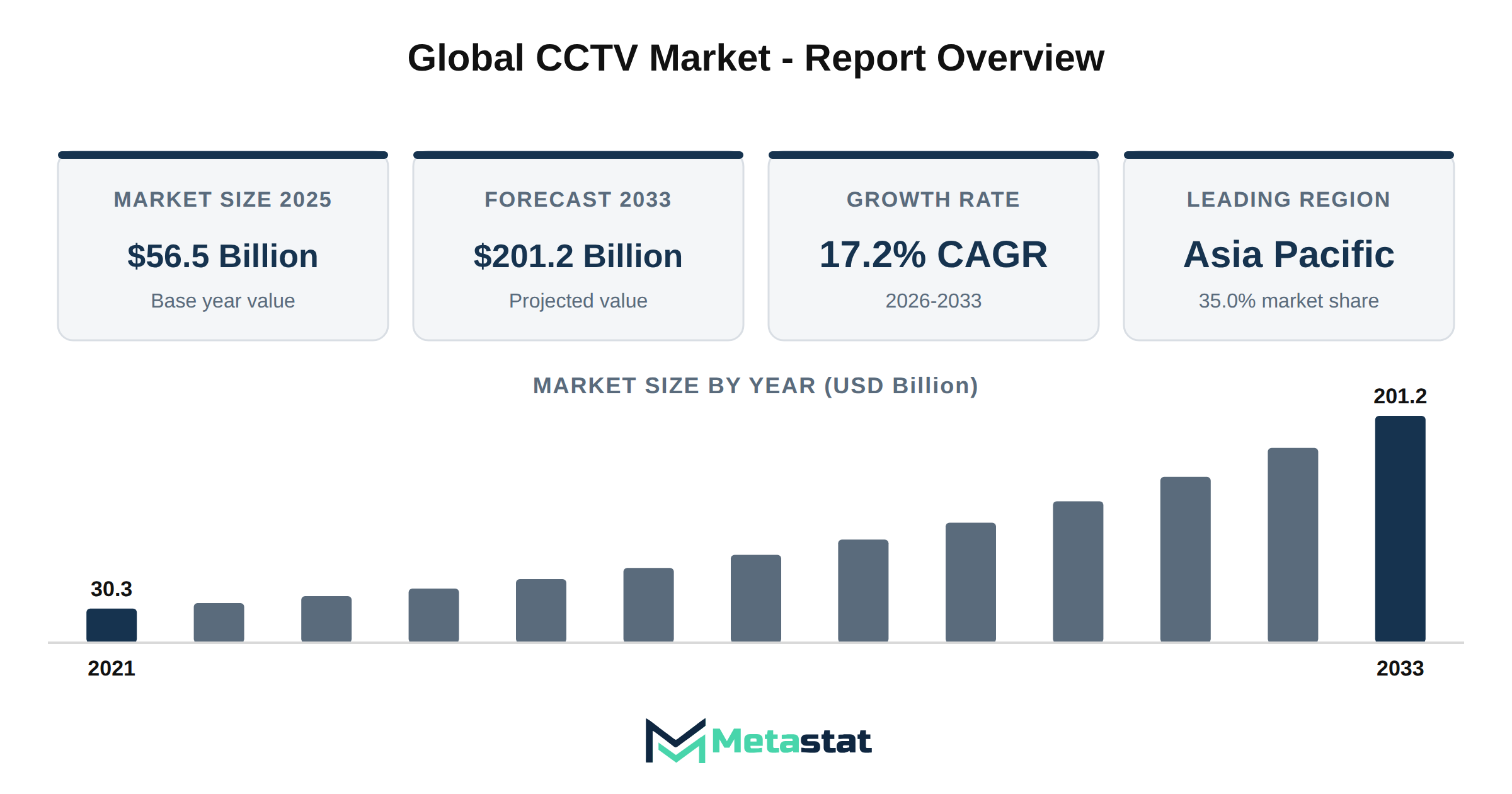
The global CCTV market is projected to experience significant growth from USD 56.5 billion in 2025 to USD 201.2 billion by 2033, reflecting a compound annual growth rate (CAGR) of 17.2%. This expansion results from increasing security concerns across various sectors, including residential, commercial, and industrial applications. The demand for advanced surveillance systems drives investments in innovative technologies and solutions, enhancing the overall market landscape.
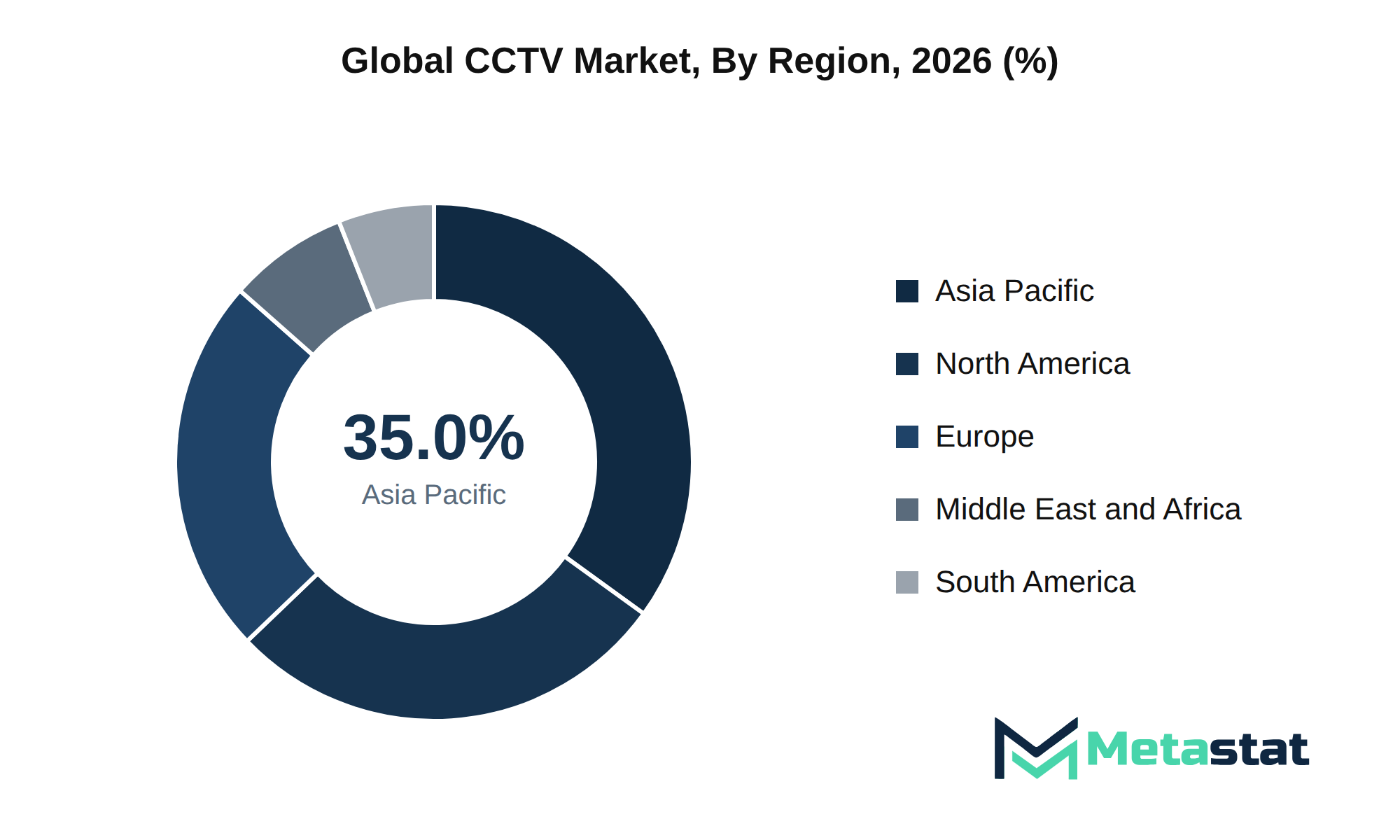
Regional analysis shows that Asia Pacific leads with a market share of 35%, followed by North America at 27.9% and Europe at 23.7%. This distribution indicates varying adoption rates influenced by regional security requirements, technological advancements, and infrastructure development. North America is projected to reach a market value of USD 53.9 billion by 2033, demonstrating strong growth potential driven by ongoing investments in smart city initiatives and enhanced security measures.
Technological advancements play a critical role in shaping the CCTV market. The shift towards IP cameras signifies a move towards higher resolution and improved connectivity, with projections indicating growth from USD 51.4 billion in 2026 to USD 164.1 billion by 2033, achieving a CAGR of 18%. This transition reflects the increasing demand for real-time surveillance and data analytics capabilities.
The product type segment illustrates the growing importance of Network Video Recorders (NVR) and Video Management Software (VMS), with NVR projected to reach USD 84.4 billion by 2033. Investment in these technologies enhances operational efficiency and contributes to the overall value proposition of surveillance systems in various applications.
Market participants face challenges related to regulatory compliance and standards, which vary across regions. Adhering to local regulations impacts operational practices and influences procurement strategies within the market. Companies that navigate these regulatory landscapes effectively position themselves for competitive advantage while ensuring alignment with customer expectations.
The CCTV market experiences a changing environment shaped by various factors influencing its trajectory. Regulatory compliance and standards play a crucial role in ensuring product quality and operational efficiency. Adherence to these regulations enhances market entry for suppliers and builds consumer trust, ultimately driving demand for advanced surveillance solutions.
Next-generation innovations in technology drive the market forward, particularly through advancements in artificial intelligence and machine learning. These developments enhance the capabilities of CCTV systems, enabling features including real-time analytics and automated responses. Increased investment in research and development (R&D) creates a competitive environment, allowing companies to differentiate their offerings and capture a larger market share.
Sustainable transformation initiatives gain traction within the CCTV market. Companies prioritize environmentally friendly practices, including energy-efficient technologies and sustainable materials in product design. This shift aligns with global decarbonization efforts and circular economy dynamics that emphasize resource efficiency and waste reduction, appealing to environmentally conscious consumers and organizations.
The supply chain environment for the market continues to evolve, influenced by global economic conditions and geopolitical factors. Manufacturers and suppliers adapt their logistics architecture to mitigate risks associated with disruptions. Strategic sourcing and partnerships enhance resilience and ensure a steady flow of materials, critical for meeting growing demand.
Market fragmentation presents both challenges and opportunities for players in the CCTV sector. A diverse array of providers contributes to a competitive environment, prompting innovation and pricing strategies that benefit end-users. Navigating this fragmentation requires firms to maintain agility in operations and marketing to effectively address varying consumer needs.
Investment in infrastructure remains a focal point for future growth strategies within the market. Capital allocation towards enhancing surveillance capabilities in urban areas and high-traffic locations drives demand for sophisticated CCTV systems. This focus on infrastructure investments supports the market's expansion and positions it favorably for long-term growth.
The CCTV market stands at a critical juncture, with various forces shaping its evolution. Companies align their strategies with regulatory requirements, technological advancements, and sustainability initiatives to thrive in this competitive environment. High-value recommendations for stakeholders include prioritizing innovation, enhancing supply chain resilience, and committing to sustainable practices that appeal to modern consumers.
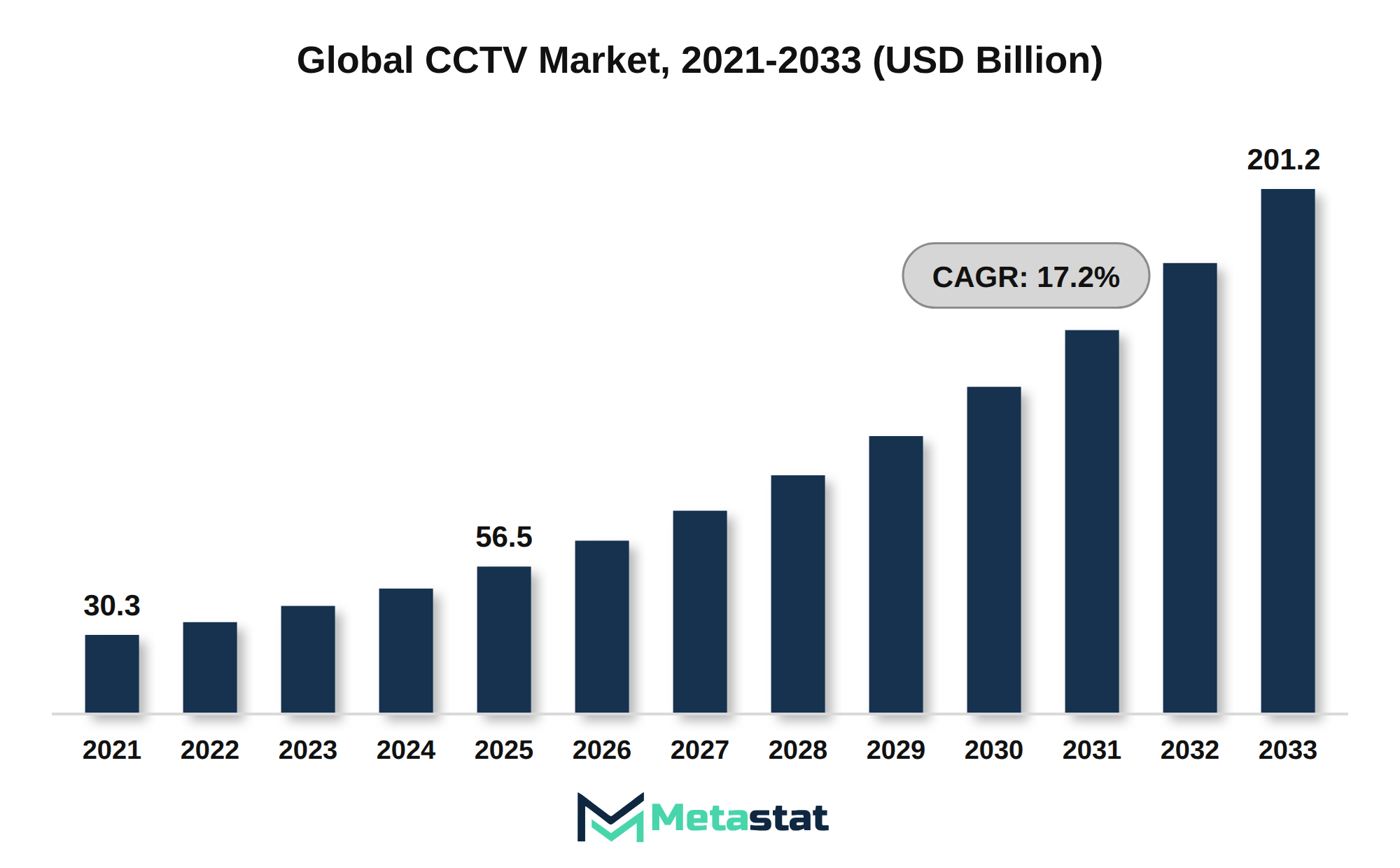
The CCTV market experiences significant growth driven by increasing security concerns across various sectors. Heightened crime rates, terrorist threats, and the need for surveillance in public spaces prompt businesses and governments to invest in advanced security solutions. Rising security concerns drive demand for innovative CCTV technologies, enhancing safety protocols and infrastructure resilience, particularly in urban areas.
Technological advancements, including AI integration and remote monitoring capabilities, further support market expansion. Enhanced features in CCTV systems enable real-time analytics and automated responses to security incidents, attracting investment from private and public sectors alike. Organizations recognize the importance of safeguarding assets and personnel, leading to a notable escalation in capital spending. Growth in emerging economies, alongside matured markets, contributes to a diversified customer base, reinforcing expenditure on CCTV solutions.
The relationship between rising security concerns and technological advancements fuels demand within the CCTV market, positioning it for continued growth throughout the forecast period.
The emphasis on digital transformation significantly influences the growth trajectory of the CCTV market. Organizations across various sectors prioritize the integration of advanced technologies, including artificial intelligence and automation, to streamline operations and enhance security measures. This shift reflects a broader trend of digitizing legacy processes, allowing businesses to improve efficiency and responsiveness in security management.
Investment in digital solutions enables companies to leverage data analytics and insights derived from CCTV systems. Enhanced analytical capabilities lead to improved threat detection and response times, which are crucial for sectors including commercial and industrial applications. The transition towards connected devices creates an ecosystem where real-time monitoring and proactive security measures become commonplace, driving demand for sophisticated CCTV solutions.
The rising complexity of security challenges necessitates a shift from traditional systems to more integrated and intelligent solutions. This transition enhances operational productivity and aligns with evolving consumer behaviors and expectations for high-tech security offerings. While organizations prioritize investment in digital transformation, the market is projected to experience significant growth through increased adoption of advanced CCTV technologies.
Increasingly stringent regulatory frameworks impose significant challenges within the CCTV market. Compliance hurdles stemming from legal mandates regarding data security and privacy create barriers to market entry and expansion. Companies face heightened scrutiny driven by the adoption of advanced technologies, leading to increased operational costs and potential legal liabilities. These obligations compel manufacturers to invest in compliance measures, diverting capital from innovation and development efforts.
Macroeconomic headwinds, including inflationary pressures and supply chain disruptions, further compound market challenges. Rising costs of raw materials and logistical inefficiencies increase the overall expenditure for producers. Geopolitical instability introduces uncertainties, affecting supply chains and market access, and leading to fluctuating costs. These factors result in a constrained growth environment, impacting investment decisions and dampening market expansion.
Infrastructure gaps pose additional limitations, particularly in emerging markets where connectivity deficits hinder effective deployment. Deployment bottlenecks arise when insufficient infrastructure prevents optimal installation and operation of CCTV systems. Skilled labor deficiencies impede the progress of technological implementation, resulting in longer project timelines and increased costs.
Data security vulnerabilities and privacy concerns further restrict market growth. The potential for IP theft risks and breaches creates reluctance among potential buyers, undermining confidence in new installations. Cultural barriers and regional adoption resistors impact the market differently across geographies, leading to fragmentation in demand and varied growth rates. These elements collectively exert downward pressure on the CCTV market, shaping its trajectory in the coming years.
Geopolitical fragmentation and trade disruptions present notable challenges within the CCTV market. Heightened tensions between nations lead to trade deficits and tariff friction, increasing operational costs for manufacturers. Such barriers complicate the import and export of essential components and finished products, creating uncertainty in pricing and supply chains.
Technological disruptions, including rapid advancements in cybersecurity measures, impact the market's development trajectory. Manufacturers face significant hurdles in integrating new technologies into existing systems, leading to interoperability friction that stifles innovation. This complexity results in increased research and development costs, straining profit margins.
Rising input costs, driven by feedstock volatility and logistics disruptions, contribute to pricing compression across the sector. These factors exert pressure on margins, compelling industry players to reassess pricing strategies while remaining competitive. Talent retention pressures and workforce skill gaps exacerbate operational challenges, limiting the ability to implement advanced technologies effectively.
Environmental considerations influence market dynamics, with sustainability demands pushing companies toward decarbonization initiatives. These mandates require substantial investments in new technologies and processes, adding to the financial burden. Consequently, organizations face implementation bottlenecks that impede timely adaptation to evolving market conditions.
In conjunction with these challenges, intellectual property protection deficits raise the stakes regarding cybersecurity risks and data vulnerabilities. Companies navigate these complexities while changing downstream demands and market saturation further intensify competition, necessitating strategic adjustments to maintain relevance in the CCTV market.
The CCTV market benefits significantly from emerging technologies, which enhance system capabilities and operational efficiencies. The rapid advancement of IP cameras, network video recorders, and video management software enables superior video quality, remote access, and integrated security solutions. This technological evolution attracts diverse applications across various sectors, including residential, commercial, and industrial markets, facilitating expansion opportunities.
Infrastructure modernization significantly shapes demand for CCTV solutions. Urbanization and increasing investments in smart city initiatives drive the need for advanced surveillance systems. Regions focusing on infrastructure enhancements experience heightened demand for security solutions, promoting the adoption of innovative CCTV technologies.
Geographical expansion in emerging markets creates additional avenues for growth. Countries in Asia Pacific, Africa, and South America present untapped potential for CCTV deployment, driven by increasing urbanization and rising security concerns. Local manufacturers and suppliers capitalize on this demand by offering tailored solutions that meet specific regional needs.
Digital transformation initiatives continue to reshape the CCTV market. Organizations increasingly prioritize integrated security systems that align with their digital strategies. This trend leads to greater collaboration between technology providers and end-users, encouraging innovation and product integration within the market.
Sustainability imperatives influence purchasing decisions, driven by organizations seeking eco-friendly solutions in their security systems. The shift towards green technologies prompts manufacturers to develop energy-efficient products that align with environmental goals. This focus on sustainability enhances brand image and strengthens long-term relationships with environmentally conscious clients.
Evolving buying behaviors and digital procurement shifts necessitate adaptation within the market. Organizations increasingly engage digital platforms for procurement processes, demanding transparency, efficiency, and rapid delivery from suppliers. This transformation compels market participants to enhance their digital presence and streamline operations to cater to changing customer preferences.
Value-chain optimization remains essential for maximizing profits and reducing costs in the competitive market. Companies concentrate on process automation, which improves operational yield and enhances overall efficiency. Such initiatives strengthen market positions and enable firms to respond swiftly to customer needs while maintaining profitability.
The Global CCTV market is segmented based on Product Type, Technology, Connectivity, and End User.
Digital Video Recorders (DVR) segment is valued at USD 25 billion in 2026 and is projected to reach USD 65.5 billion by 2033, at a CAGR of 14.8% during the forecast period. Increased demand for reliable video surveillance solutions drives the growth of the DVR segment. Heightened security concerns across various sectors, including residential, commercial, and industrial, encourage the adoption of advanced DVR systems. Technological advancements enhance the capabilities of these devices, resulting in improved storage capacity and video quality. Integration with other security systems, including IP cameras and video management software, supports comprehensive surveillance solutions, encouraging further penetration in the market.
Investment in next-generation upgrades and product evolution addresses rising customer expectations for features including remote access, cloud storage solutions, and enhanced user interfaces. End-use dynamics shift toward smart home and smart city developments where DVR systems play a critical role in integrated security solutions. Regulatory compliance standards related to data protection and privacy influence DVR adoption, creating opportunities for companies that prioritize secure data handling and storage practices. The segment faces challenges related to pricing volatility and margin pressures driven by competition and technological obsolescence, necessitating strategic investment and innovation to maintain market relevance.
Network Video Recorders (NVR) segment is estimated to reach USD 84.4 billion by 2033, at a CAGR of 17.5% during the forecast period. Demand for NVR systems is driven by increasing security concerns across various sectors, including commercial, residential, and industrial applications. The push for enhanced surveillance capabilities fuels the adoption of NVR technology, particularly in urban environments where rising crime rates prompt the need for advanced monitoring solutions.
Technological maturation supports segment expansion, with NVR devices integrating sophisticated features including cloud storage, remote access, and advanced analytics. These enhancements improve user experience and operational efficiency, driving further adoption in the CCTV market. Transitioning from traditional analog systems to NVRs represents a significant upgrade, facilitating higher video resolutions and improved data management.
End-user dynamics reflect a shift towards smart home technologies, with residential consumers increasingly opting for NVR solutions that integrate seamlessly with other smart devices. Commercial enterprises prioritize NVR capabilities that offer centralized management of multiple security cameras, enhancing real-time monitoring and incident response.
Regulatory compliance standards regarding surveillance and data protection impact adoption rates. Organizations adopting NVR systems navigate these regulations to ensure secure data handling and storage. Consequently, companies investing in NVR technology benefit from improved compliance and operational practices.
Pricing volatility in the component supply chain creates margin pressures for manufacturers. Fluctuations in the costs of raw materials and electronic components drive strategic pricing decisions, impacting overall segment profitability. However, the growing demand for advanced NVR solutions creates strategic opportunity windows for manufacturers to innovate and differentiate their offerings in the competitive landscape.
Video Management Software (VMS) segment is expected to reach USD 51.2 billion by 2033. Increasing reliance on video surveillance across various sectors drives demand for VMS solutions, particularly within commercial and government entities. Enhanced security requirements in urban areas and public spaces lead to higher adoption rates of sophisticated software, enabling comprehensive management of video feeds, analytics, and storage. Technological maturation of VMS solutions facilitates integration with existing security systems, improving operational efficiency and functionality.
Demands for a user-friendly experience and real-time monitoring capabilities drive the evolution of VMS offerings. Upgrades to next-generation technologies, including artificial intelligence and cloud-based solutions, further expand the market's potential. The growing preference for IP-based cameras increases the need for advanced VMS to manage increased data volumes and improve processing capabilities, aligning with broader trends in digital transformation across the CCTV market.
End-use dynamics indicate strong growth in the commercial sector, driven by rising security concerns and investments in infrastructure. Government regulations mandating enhanced surveillance in specific areas contribute to the segment's expansion. Pricing volatility, driven by fluctuations in technology costs, impacts VMS pricing structures, although the overall trend indicates decreasing costs with advancements in software development. Supply chain resilience strengthens due to manufacturers investing in local sourcing and strategic partnerships, mitigating risks associated with global logistics vulnerabilities.
Significant growth in the IP Camera segment benefits from increasing security needs across various industries. This demand reflects the rise in surveillance and monitoring requirements driven by urbanization, crime prevention, and public safety concerns. Adoption of advanced technologies enhances the capabilities of IP cameras, providing features including high-definition video quality, remote accessibility, and advanced analytics. Such technological maturation leads to increased efficiency and effectiveness in security applications, promoting wider acceptance among end-users.
The segment is valued at USD 51.4 billion in 2026 and is projected to reach USD 164.1 billion by 2033, at a CAGR of 18% during the forecast period. This expansion aligns with a growing trend toward smart cities and IoT integration, where IP cameras serve because critical components in comprehensive security frameworks. End-use dynamics shift toward commercial and residential applications, with businesses increasingly investing in IP camera systems to enhance security measures.
Technological advancements, including cloud storage and AI-driven analytics, further drive segment growth by providing enhanced functionality and flexibility. Regulatory compliance standards regarding safety and data protection create a conducive environment for investment in IP camera solutions. Cost structures evolve due to improvements in manufacturing processes, leading to more competitive pricing while maintaining quality. The combination of these factors positions the IP Camera segment because an important area within the overall CCTV market.
Growth in the Analog Camera segment of the CCTV market aligns with rising demand for affordable surveillance solutions across various applications. This segment is estimated to reach USD 37.1 billion by 2033, at a CAGR of 13.8% during the forecast period. Demand is driven by the need for enhanced security measures in residential, commercial, and industrial sectors, where cost-effective solutions play a crucial role in decision-making. Technological maturation contributes to segment expansion, driven by manufacturers increasingly focusing on improving the quality and capabilities of analog cameras while maintaining competitive pricing. The continued integration of analog systems with digital infrastructure has enhanced usability, making it appealing for existing users to upgrade their systems incrementally.
Changing consumer preferences reflect a demand for hybrid systems that incorporate both analog and digital technologies. This evolution presents regulatory compliance challenges, where customers face scrutiny to meet specific standards. The cost structure associated with analog cameras remains favorable compared to higher-end digital alternatives, enhancing market attractiveness for budget-conscious buyers. Pricing volatility in raw material sourcing impacts cost management, but established supply chain resilience allows manufacturers to mitigate these risks effectively. Overall, the Analog Camera segment's growth trajectory within the CCTV market highlights its critical role in meeting diverse security needs while adapting to evolving market dynamics.
Valued at USD 42.1 billion in 2026, the wired segment is projected to reach USD 121 billion by 2033, reflecting a CAGR of 16.3% during the forecast period. This growth stems from the increasing demand for robust and reliable surveillance solutions across various applications, including residential, commercial, and industrial sectors. Adoption of wired CCTV systems remains influenced by the need for consistent connectivity and superior data transmission capabilities, essential for effective monitoring and security management.
Technological maturation plays a critical role in driving the wired segment forward. Advances in wiring technologies and improvements in infrastructure enable higher resolution video capture and enhanced performance. The market experiences a shift toward next-generation upgrades, with consumers increasingly favoring systems that offer integration with existing security frameworks. Product evolution in this segment focuses on developing more efficient wired solutions that cater to the growing needs for high-quality surveillance and streamlined installation processes.
End-use dynamics significantly contribute to the wired segment's expansion. Commercial and industrial buyers prioritize wired systems due to their reliability and security, which are essential in environments requiring constant monitoring. Regulatory compliance standards further emphasize the importance of wired solutions, because they typically provide more stable and secure connections compared to wireless alternatives. This aspect increases demand within the market, encouraging investment in wired technologies.
Pricing volatility and cost structures affect the wired segment. The long-term benefits and lower maintenance costs associated with wired systems present a compelling value proposition. These factors enhance market resilience, allowing players to adapt to fluctuations in raw material sourcing and supply chain vulnerabilities. Strategic opportunity windows arise from the growing need for enhanced security measures, positioning the wired segment favorably within the broader CCTV market.
Growing consumer awareness regarding security and surveillance drives substantial demand for wireless CCTV solutions. The increasing need for flexible and easily deployable surveillance systems supports the adoption of wireless technology, particularly in residential and commercial sectors. Wireless technology eliminates the limitations posed by wired connections, facilitating installation in various settings and environments.
Wireless segment is estimated to reach USD 80.2 billion by 2033, at a CAGR of 18.6% during the forecast period. This growth reflects advancements in network security and the ongoing development of next-generation wireless protocols, enhancing the capabilities of surveillance systems. Consumers prioritize scalability and remote accessibility, leading to heightened interest in wireless solutions.
Market players focus on innovation, offering integrated features including cloud storage and remote monitoring capabilities, which enhance system usability. The shift toward smart home and office environments drives growth in this segment, driven by users seeking advanced video surveillance technologies that align with their digital ecosystems. Expanding urbanization and rising crime rates contribute to heightened investments in efficient surveillance solutions across multiple industries.
Pricing dynamics remain essential in shaping market competition. The increasing availability of cost-effective wireless CCTV systems has made advanced surveillance technologies accessible to a broader audience. This trend encourages further investment in wireless solutions, enhancing overall market penetration. Regulatory compliance standards and certifications, focusing on data protection and privacy, play a critical role in shaping product development and influencing consumer trust within the CCTV market.
Growth in the residential segment of the CCTV market stems from heightened awareness regarding home security and surveillance. Increasing crime rates and the need for enhanced safety measures drive homeowners to invest in advanced surveillance systems. The segment is valued at USD 13.8 billion in 2026 and is projected to reach USD 47.8 billion by 2033, at a CAGR of 19.4% during the forecast period. Technological advancements in video surveillance, including high-definition cameras and smart home integrations, further support this demand. Next-generation upgrades, including remote monitoring capabilities and integration with mobile applications, enhance the appeal of these systems for residential users.
Increased adoption of smart home technologies facilitates the growth of the market, driven by consumer demand for intuitive solutions that integrate seamlessly into existing home infrastructure. This trend influences manufacturers to develop products with advanced features, including facial recognition and real-time alerts. Regulatory compliance and standards related to privacy and data security shape the dynamics of the residential segment, pushing manufacturers to ensure their products meet stringent guidelines. Consequently, investment in research and development becomes critical for capturing the evolving preferences of consumers in the market.
Strong demand for security solutions drives significant growth in the Commercial segment of the CCTV market. Increased awareness regarding security threats and theft leads businesses to invest in surveillance systems. This sector is projected to reach USD 61.3 billion by 2033, at a CAGR of 16.5% during the forecast period. Technological maturation, including the adoption of advanced video analytics and artificial intelligence, enhances the functionality of CCTV systems, attracting commercial users seeking improved security management.
Growing urbanization and the expansion of commercial infrastructure further fuel market adoption. Retailers, financial institutions, and corporate offices require reliable surveillance systems to protect assets and ensure safety. The emergence of next-gen upgrades, including cloud-based storage and remote monitoring capabilities, provides greater flexibility and accessibility for commercial users. Compliance with regulatory standards related to safety and security drives the implementation of sophisticated surveillance systems.
Market participants focus on product evolution to meet evolving customer needs, resulting in innovative solutions tailored for specific commercial applications. Pricing dynamics within the market reflect competitive pressures and technological advancements, influencing purchasing decisions. Increased competition among suppliers encourages the introduction of cost-effective solutions while maintaining high-performance standards. This dynamic environment positions the Commercial segment for ongoing expansion in the CCTV market.
Adoption of advanced surveillance technologies in industrial environments drives demand for high-quality CCTV solutions. Industrial facilities increasingly require robust security systems to mitigate risks associated with theft, vandalism, and workplace safety. Integration of digital technologies within the market facilitates real-time monitoring and analytics, enhancing decision-making processes in industrial operations.
Investment in next-generation upgrades, including artificial intelligence and cloud-based solutions, supports the evolution of the CCTV market. These innovations improve the functionality of existing infrastructure, enabling integration with other security measures. Increased awareness surrounding safety protocols among industrial stakeholders fuels the expansion of this segment, leading to an anticipated market value of USD 28.9 billion by 2033.
Technological maturation within the industry ensures that companies upgrade existing systems without substantial capital outlay. Enhanced interoperability between various devices encourages broader adoption of CCTV technologies among industrial users. Compliance with evolving regulatory standards regarding workplace safety and security increases demand for advanced surveillance systems in the market.
Shifts in consumption patterns reflect a growing preference for integrated security solutions that encompass both hardware and software components. The market anticipates increased investment in comprehensive security packages, catering to the unique needs of industrial users. Cost structures within the industrial segment continue to adapt, balancing the need for advanced technology with budget constraints, further influencing growth trajectories in the CCTV market.
Investments in public safety and national security drive growth in the government sector of the CCTV market. Rising concerns about crime rates, terrorist threats, and public safety prompt government entities to prioritize surveillance systems for monitoring public spaces, transportation networks, and critical infrastructure. This trend is supported by regulatory compliance standards requiring enhanced security measures in urban and high-risk areas.
Technological advancements in surveillance equipment, including AI-powered analytics and integration with smart city initiatives, facilitate broader adoption within government operations. Smart analytics provide real-time insights, enhancing situational awareness and response capabilities. An evolving landscape of cybersecurity threats necessitates robust surveillance systems, prompting governments to modernize existing infrastructure.
The government segment is projected to grow at a CAGR of 16% during the forecast period. Investments in next-generation upgrades, including cloud-based storage solutions and advanced video management systems (VMS), enhance this segment. Increasing demand for data-driven decision-making in public safety enhances the strategic value of CCTV systems.
Cost structures in the government segment vary significantly based on equipment specifications and installation requirements. Pricing volatility arises from fluctuating technology costs and supplier dynamics, impacting procurement strategies. Nevertheless, long-term benefits of reduced crime rates and enhanced public safety justify investments in advanced surveillance solutions.
Strategic opportunities for market participants include collaborations with government agencies to provide tailored solutions that meet specific security needs. The global push towards modernization positions the government segment of the market for substantial growth, reflecting a strong commitment to enhancing national security and public safety.
Significant interest in security solutions drives expansion within the Others segment of the CCTV market. This sub-segment encompasses a range of applications, including educational facilities, healthcare institutions, and retail environments. Increased focus on safety and surveillance in various sectors is driving demand, further stimulating growth.
Technological maturation enhances system performance and reduces costs associated with installation and maintenance. Adoption of advanced features including remote monitoring, integration with smart technologies, and cloud-based solutions contributes to the segment's appeal. These advancements attract diverse end-users seeking reliable security measures.
Compliance with regulatory standards influences purchasing decisions in the market, creating conditions that support investment in upgraded systems. Organizations prioritize solutions aligning with safety regulations and industry certifications, reinforcing the importance of compliance in strategic planning. This trend encourages market participants to innovate and provide products that meet evolving requirements.
Various consumption shifts reflect changing preferences and practices among end-users. Increased reliance on data-driven insights enables organizations to optimize security protocols and improve response times to incidents. The demand for systems that provide analytical capabilities and real-time monitoring enhances the value proposition of the segment.
Ongoing capital investments in technology and infrastructure contribute to the segment's resilience. Organizations prioritize security in their budget allocations, recognizing its critical importance in protecting assets and ensuring operational continuity. This commitment underpins growth prospects in the Others segment of the CCTV market.
Based on geography, the Global CCTV market is divided into North America, Europe, Asia-Pacific, South America, Middle East, and Africa.
North America represents a significant portion of the global CCTV market, accounting for a 27.9% share in 2025. The region's market is projected to expand at a CAGR of 17.2% during the forecast period, reaching a market size (TAM) of USD 53.9 billion by the end of 2033. Key factors driving this growth include increasing investments in public safety, advancements in surveillance technologies, and a heightened focus on security across various sectors.
The demand for CCTV solutions in North America is supported by the robust infrastructure and technological advancements prevalent in the region. Growing concerns about security threats across residential, commercial, and industrial sectors lead to greater adoption of surveillance technologies. The presence of mature market dynamics encourages high-value replacement cycles, prompting consumers to upgrade to advanced CCTV systems.
Cross-border trade corridors facilitate the movement of CCTV products, while localized manufacturing densities enhance supply chain efficiencies. The region's competitive landscape features domestic vendors, with several companies consolidating their positions through strategic partnerships and mergers. Cultural nuances and regional B2B buying behaviors significantly influence procurement dynamics, further shaping the market.
Europe's CCTV market shows considerable activity, driven by regulatory frameworks and compliance mandates that prioritize security and surveillance across several sectors. Countries including Germany, France, and the UK have established stringent safety regulations, resulting in heightened demand for advanced surveillance systems. This trend is particularly evident in Germany and France, where urbanization and infrastructure modernization initiatives enhance the adoption of CCTV technologies.
Market dynamics reflect a mature environment, characterized by a focus on high-value replacement cycles for outdated systems. Customers increasingly seek enhanced functionalities, leading to a shift towards IP cameras and Network Video Recorders (NVR). Such advancements contribute to revenue growth across the market, with localized procurement dynamics increasingly influencing buying behaviors.
Regional vendors consolidate their positions by collaborating to establish competitive advantages while leveraging localized manufacturing densities. Companies are well-positioned to meet regional demands while navigating geopolitical fragmentation and its associated impacts. The emergence of domestic market participants creates a competitive atmosphere that stimulates innovation and enhances product offerings.
The market's overall growth trajectory aligns with the broader emphasis on security, driven by strategic entry barriers and foreign direct investment (FDI) flows. Adequate regional resource availability promotes infrastructure readiness, further supporting market expansion potential. Investment in CCTV solutions across Europe reflects a response to evolving consumer preferences and a commitment to enhance public safety, ultimately shaping the future of the CCTV market in the region.
The Asia-Pacific region accounts for 35.00% of the global CCTV market, projected in 2025. The expansion of surveillance technology in this region is driven by increasing investments in security infrastructure and a growing need for real-time monitoring solutions across various sectors. Countries including China, Japan, India, and South Korea lead in adoption rates, fueled by rising urbanization and crime rates, which necessitate enhanced security measures.
Infrastructure modernization supports the growth of the market, enabling integration of sophisticated CCTV systems. Technological advancements in surveillance equipment, particularly IP cameras, enhance the capabilities of security systems, attracting both residential and commercial buyers. Evolving consumer expectations for advanced security features and system interoperability further drive segment expansion.
Emerging markets within Southeast Asia present high-value opportunities for growth, with underpenetrated territories benefiting from increased focus on public safety. Localized manufacturing densities support the demand, enabling quicker access to advanced surveillance technologies. Government initiatives promoting smart city projects and digital transformation efforts increase investment in security solutions across the region.
Regional competitive landscapes highlight a mix of domestic leaders and international players striving for market share. Increased foreign direct investment (FDI) flows into the Asia-Pacific region facilitate strategic market entry for global vendors, enhancing competition and innovation. Cultural nuances and regional B2B buying behaviors significantly influence procurement strategies, with a growing preference for localized sourcing.
The CCTV market in the Asia-Pacific region is expected to experience significant growth through 2033, supported by technological advancements, rising security awareness, and ongoing infrastructure improvements. The convergence of demand drivers, coupled with strong competition among domestic and international players, positions the region because a key player in the global market.
In South America, the CCTV market anticipates steady growth driven by increasing security concerns and rising demand for surveillance solutions. Brazil and Argentina serve because the primary markets, contributing significantly to the regional share. The focus on enhancing public safety and protecting assets drives adoption across various sectors.
Infrastructure modernization supports market expansion, with significant investments in technology and security systems. The region's investment in smart city initiatives aligns with global trends toward enhanced surveillance capabilities and supports the adoption of advanced CCTV solutions.
Strong local demand for security solutions influences market dynamics, with domestic players actively participating in providing tailored offerings. Regional manufacturers adapt products to meet local compliance requirements, addressing specific security challenges faced by businesses and government entities.
Cross-border trade corridors facilitate access to advanced technologies and contribute to competitive pricing in the market. Increased foreign direct investment further supports regional growth, creating opportunities for both established and emerging players in the CCTV market.
The CCTV market in the Middle East and Africa accounts for a share of 7.5% in 2025, reflecting a growing interest in security solutions across the region. Countries like Saudi Arabia and the UAE exhibit strong demand for advanced surveillance technologies, driven by urbanization and increasing investment in infrastructure modernization. South Africa shows potential, driven by heightened concerns over safety and crime that stimulate demand for effective security measures.
Local compliance mandates and regional regulatory frameworks significantly impact procurement dynamics within the market. Organizations prioritize adherence to safety standards, influencing the adoption of CCTV systems tailored to meet specific regulations. This focus on compliance creates a competitive landscape where domestic market leaders strive to innovate while addressing the unique needs of their clientele.
Regional resource availability and energy grid resiliency support the deployment of CCTV solutions in diverse environments. Investments in localized manufacturing densities enhance supply chain efficiencies, promoting faster response times and lower operational costs. The market experiences incremental growth vectors, particularly in underpenetrated territories, where emerging front-runners capitalize on opportunities for expansion.
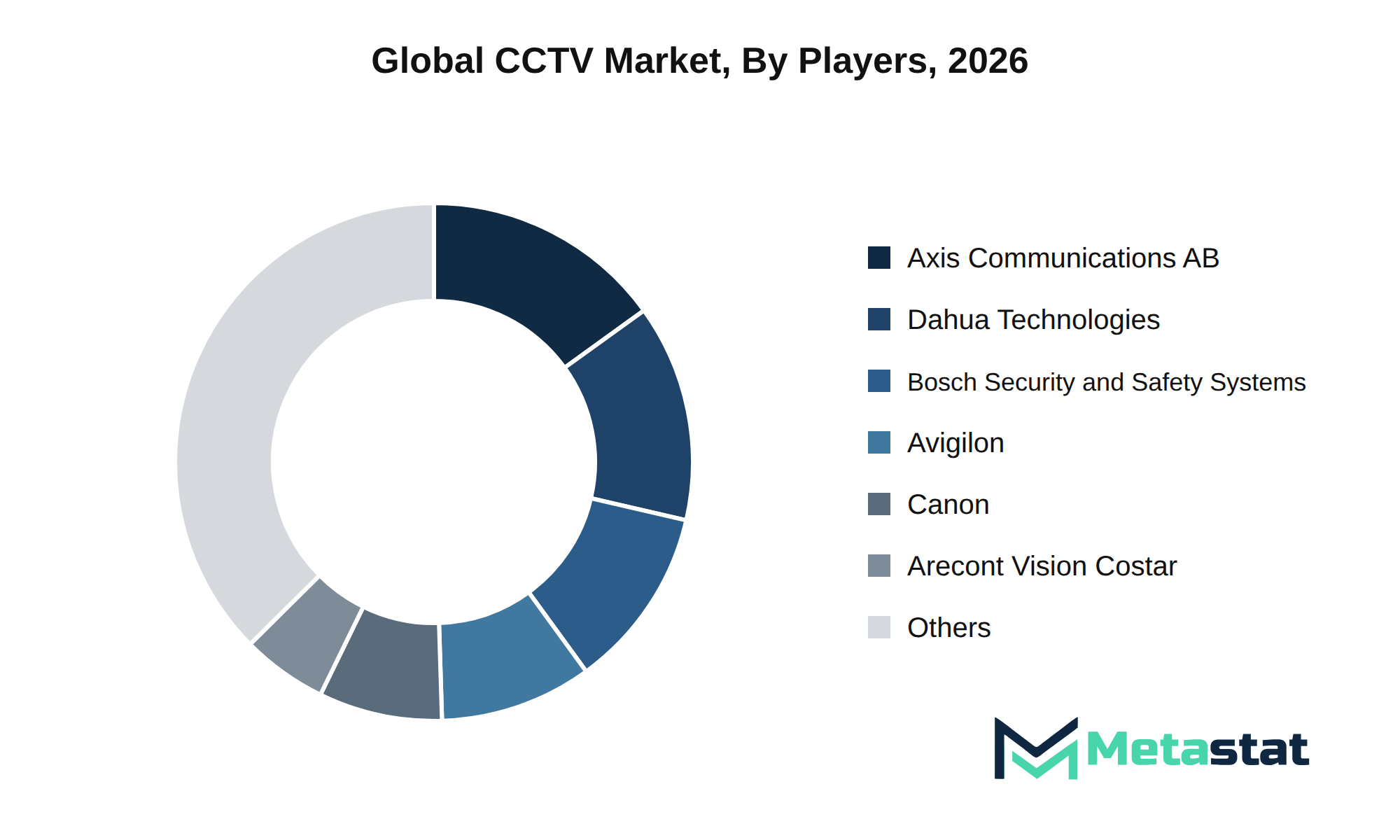
The CCTV market experiences robust competition driven by a mix of strategic behaviors among key players. Companies including Hikvision Digital Technology, Dahua Technologies Co. Ltd., and Axis Communications AB engage in product differentiation, focusing on innovative technologies and proprietary solutions to secure market share. Their emphasis on research and development strengthens their product offerings, enhancing technological defensibility against potential market entrants.
Strategic alliances and partnerships emerge because a popular approach among firms like Genetec Inc. and Milestone Systems, which seek to enhance their ecosystem capabilities and expand market reach. These collaborations facilitate access to new customer segments and promote cross-industry innovation, allowing players to respond effectively to evolving market demands.
Pricing architectures significantly impact the competitive dynamics within the market. Companies provide cost-effective solutions to attract diverse end users, ranging from residential to industrial sectors. Such strategies contribute to customer retention, wherein established firms like Bosch Security and Safety Systems Inc. and Canon Inc. leverage brand equity to maintain loyalty during increasing competition.
The market encounters barriers to entry, including technological complexities and the necessity for substantial capital investments. New entrants face challenges in overcoming established players' intellectual property portfolios and patent landscapes, which create a competitive moat. This dynamic shapes the future competitive outlook, emphasizing the importance of strategic growth vectors aimed at sustaining market presence and expanding operational capabilities.
Market size is forecast to rise from USD 56.5 billion in 2025 to over USD 201.2 billion by 2033. This growth signals robust expansion driven by macroeconomic factors, evolving downstream demand, and the maturation of core industries. Increased investment in next-generation technologies, alongside advancements in research and development, influences product cycles and market attractiveness. Regulatory evolution and compliance timelines shape operational frameworks, affecting strategic initiatives within the market.
Geopolitical realignments and shifting trade corridors affect the global supply chain, creating challenges and opportunities for strategic capital allocation. Companies focusing on infrastructure commitments and capital expenditure investments position themselves to capture emerging white-space opportunities. Unmet enterprise needs in various sectors highlight high-growth pockets within the CCTV market, driving innovation and competitive differentiation.
Executive-level strategic imperatives emphasize the importance of developing defensibility roadmaps and future growth recommendations. Adapting to evolving market conditions and consumer preferences, organizations optimize operational efficiencies while enhancing product offerings to align with demand. This proactive approach supports resilience amid fluctuating economic cycles and positions companies for long-term success in the CCTV market.
The report strategically identifies and profiles the key market players and analyses their core competencies in each sub-segment of the CCTV market.
Report Attributes | Details |
Study Period | 2021-2033 |
Base Year | 2025 |
Estimated Year | 2026 |
Forecast Period | 2026-2033 |
Historical Period | 2021-2025 |
Growth Rate | CAGR 17.2% from 2026 to 2033 |
Revenue Unit | USD billion |
Segmentation | By Product Type, Technology, Connectivity, End User, and Region |
By Region | North America (By Product Type, Technology, Connectivity, End User, and Country)
|
Europe (By Product Type, Technology, Connectivity, End User, and Country)
| |
Asia Pacific (By Product Type, Technology, Connectivity, End User, and Country)
| |
South America (By Product Type, Technology, Connectivity, End User, and Country)
| |
Middle East and Africa (By Product Type, Technology, Connectivity, End User, and Country)
|
Find answers to common questions about this report
The CCTV market size was valued at USD 56.5 billion in 2025.
The CCTV market is projected to grow at a CAGR of 17.2% during the forecast period from 2026 to 2033.
The North America CCTV market size is estimated to reach USD 53.9 billion by 2033.
The Network Video Recorders (NVR) segment leads the CCTV market, projected to reach USD 84.4 billion by 2033. This figure reflects the highest anticipated revenue among the product types.
Key drivers for the CCTV market include increasing security concerns across various sectors, heightened crime rates, and terrorist threats. Technological advancements, including AI integration and remote monitoring capabilities, support market expansion by enhancing safety protocols and infrastructure resilience. This combination fuels demand for innovative CCTV technologies.
Increasingly stringent regulatory frameworks and compliance hurdles regarding data security and privacy create barriers to market entry and expansion. Macroeconomic headwinds, including inflation and supply chain disruptions, further compound these challenges, resulting in a constrained growth environment for the CCTV market.
Increasing security concerns across various sectors and the integration of advanced technologies, including artificial intelligence, drive product adoption in the CCTV market. Businesses and governments invest in sophisticated solutions to enhance safety protocols and improve operational efficiency, creating a favorable environment for the deployment of innovative CCTV systems.
The CCTV market is estimated to reach a valuation of USD 201.2 billion by 2033.
Key players in the CCTV market include Arecont Vision Costar LLC, Axis Communications AB, Bosch Security and Safety Systems Inc., Dahua Technologies Co. Ltd., Hikvision Digital Technology, Honeywell International Inc., and Panasonic System Networks Co., Ltd.
Asia Pacific holds the largest share of the CCTV market with 35% in 2025, driven by rising security demands and urbanization.
The analysts below cover Electronics and Semiconductor research at Metastat Insights.
LEAD ANALYST
Utkarsh Khirodkar is a Lead Market Research Analyst at MetaStat Insight, specializing in market intelligence, technology sector assessments, and competitive strategy.

PRINCIPAL CONSULTANT - ENTERPRISE AI & EMERGING TECHNOLOGIES
Banking & Finance · Electronics and Semiconductor · Energy and Power · Healthcare IT · Information & Technology · Professional Services
Vijay Gunti is a Principal Consultant at MetaStat Insight, bringing over two decades of experience across enterprise digital transformation, technology strategy, and intelligent systems.

PRINCIPAL CONSULTANT - QUALITY SYSTEMS & COMPLIANCE
Electronics and Semiconductor · Machinery & Equipment · Professional Services
Omkar Phadtare is an Industry Consultant at MetaStat Insight, specializing in quality systems, regulatory compliance, and standards benchmarking to drive data-driven market intelligence and strategic industry research.

ENERGY & INFRASTRUCTURE INDUSTRY CONSULTANT
Automotive and Transportation · Electronics and Semiconductor · Energy and Power · Machinery & Equipment
Saurabh Vasant Ganvir consults for Energy & Infrastructure Industry at MetaStat Insight, specializing in renewable energy, solar EPC, and electric vehicle (EV) infrastructure markets.

LEAD CONSULTANT - COMMUNICATION, TELECOM, AND IT
Electronics and Semiconductor · Information & Technology · Machinery & Equipment · Professional Services
Ravindra Sathe Consultants for Communication, Telecom, and IT at MetaStat Insight. He leads the firm's industry research initiatives across telecommunications infrastructure, digital connectivity, enterprise networking, and emerging information technology domains.
Evaluating calorific value requirements and air permit compliance across municipal waste facilities requires localized data. Metastat Insight structured their analysis around operational throughput capacity and feedstock composition variations in Latin America and Eastern Europe. Their competitive mapping of sorting equipment vendors helped clarify technology differences between optical separators and heavy media systems. The study provided an objective baseline during our capital expenditure reviews.
Decarbonizing industrial thermal processes hinges on refrigerant regulations and compressor efficiency limits. Metastat Insights delivered a thorough market analysis that evaluated natural refrigerants like CO2 and hydrocarbons against synthetic low-GWP alternatives. The breakdown of utility incentives and grid capacity constraints across key European manufacturing hubs offered valuable perspective. The follow-up conversation with their sector analysts addressed our specific questions on mechanical vapor recompression systems efficiently.
Assessing 200mm wafer transition schedules and substrate supply bottlenecks requires precise technical intelligence. MetaStat Insight supplied an actionable breakdown comparing planar and trench MOSFET architectures across automotive and industrial drive markets. The regional capacity estimates for Asia-Pacific foundries helped clarify lead-time uncertainties during our strategic planning session. When we needed additional clarification on high-purity raw material sourcing, their analyst team responded with helpful context within twenty-four hours.
Explore related market intelligence reports worth reading alongside this one.