
LEAD ANALYST
Utkarsh Khirodkar is a Lead Market Research Analyst at MetaStat Insight, specializing in market intelligence, technology sector assessments, and competitive strategy.

IP Cameras Market By Type (Centralized IP Cameras and Decentralized IP Cameras), By Application (Residential Use, Commercial Use, Manufacturing, Factory Use, Public and Government Infrastructure), Industry Analysis, Size, Share, Growth, Trends, and Forecast, 2023-2030
Report ID
MSI-2496
Published
February, 2026
Pages
259 Pages
Format
Report Details
Choose Your License
IP Cameras Market
The Global IP Cameras market is estimated to reach $207,494.4 Million by 2030; growing at a CAGR of 14.4% from 2023 to 2030.
The Global IP Cameras market is reshaping the surveillance and security systems across the world. In recent years, the market has experienced unprecedented growth, fueled by advancements in imaging technology and a surging demand for high-performance surveillance solutions.
IP cameras, short for Internet Protocol cameras, represent a paradigm shift from traditional analog cameras, offering a plethora of features that extend beyond mere video capture. Unlike their analog counterparts, IP cameras use digital technology to transmit video data over an IP network, allowing for seamless integration with other devices and systems. This digital transformation has led to a remarkable enhancement in image quality, providing sharper and more detailed footage for surveillance purposes.
The significance of the Global IP Cameras market lies in its ability to deliver advanced functionalities that go beyond basic video surveillance. These cameras often come equipped with intelligent features, such as video analytics, facial recognition, and motion detection, empowering users with proactive monitoring capabilities. This heightened level of sophistication has positioned IP cameras as indispensable tools for not only security applications but also for business intelligence, retail analytics, and smart city initiatives.
One of the key drivers behind the growing importance of IP cameras is their compatibility with the Internet of Things (IoT) ecosystem. These cameras seamlessly integrate into interconnected networks, facilitating a holistic approach to security and automation. With the rise of smart homes and smart cities, IP cameras play a pivotal role in creating a comprehensive surveillance infrastructure that enhances public safety and operational efficiency.
Furthermore, the global adoption of IP cameras is witnessing a surge due to the increasing need for remote monitoring and accessibility. IP cameras allow users to view real-time footage from any location with an internet connection, providing a level of flexibility that was previously unattainable with analog systems. This capability is particularly crucial for businesses, government agencies, and homeowners seeking to maintain a watchful eye on their premises regardless of physical proximity.
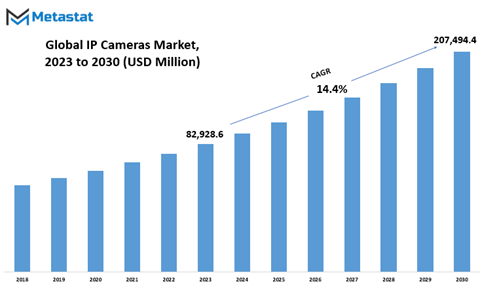
The global IP Cameras market has witnessed substantial growth in recent times. Key factors driving this surge include the increasing demand for advanced surveillance systems and the growing awareness regarding the benefits of IP cameras. These cameras, utilizing Internet Protocol, have become integral for various applications, from home security to commercial and industrial monitoring.
One of the primary driving forces behind the escalating demand for IP cameras is their enhanced functionality compared to traditional analog cameras. The ability to transmit data over the internet facilitates remote monitoring, enabling users to keep tabs on their premises from virtually anywhere. This convenience factor has significantly contributed to the widespread adoption of IP cameras across different sectors.
Furthermore, the advancements in technology have led to the development of high-resolution IP cameras, providing clearer and more detailed images. This improvement in image quality enhances the overall effectiveness of surveillance, thereby increasing the attractiveness of IP cameras in the market. As businesses and individuals alike prioritize security, the demand for these advanced surveillance solutions is expected to maintain its upward trajectory.
However, challenges persist that may impede the growth of the global IP Cameras market. Concerns related to privacy and data security have become more pronounced as these cameras become more prevalent. The potential misuse or unauthorized access to the data generated by IP cameras has raised apprehensions among users. Additionally, the initial cost of implementing IP camera systems can be a barrier for smaller businesses or individuals with budget constraints.
Despite these challenges, the market holds promising opportunities for future growth. The integration of artificial intelligence (AI) in IP cameras is emerging as a potential game-changer. AI-powered features, such as facial recognition and object detection, enhance the capabilities of IP cameras, making them more intelligent and efficient in identifying potential security threats. This innovation is expected to drive the adoption of IP cameras in sectors where advanced analytics and real-time decision-making are crucial.
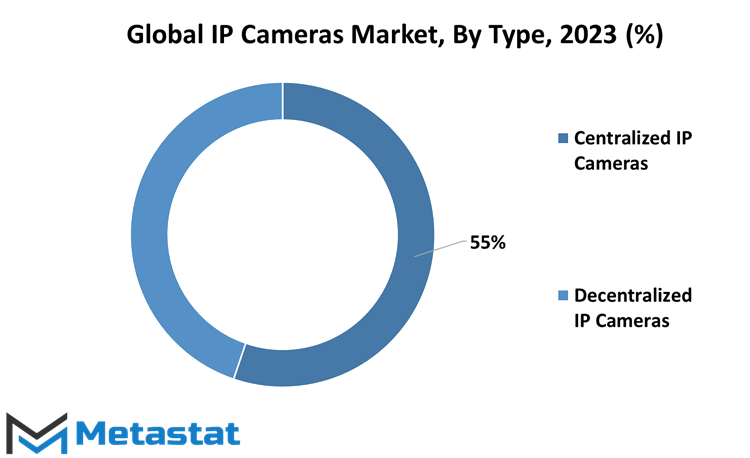
In today's tech-driven era, the global market for IP cameras is a significant player in the surveillance industry. The market is broadly categorized into two types: Centralized IP Cameras and Decentralized IP Cameras.
Centralized IP Cameras, as one segment, are designed with a centralized recording system. These cameras send video feeds to a central location where the footage is stored and managed. This centralized approach simplifies the monitoring process, allowing users to access and control multiple cameras from a single point.
On the other hand, Decentralized IP Cameras represent another segment. Unlike their centralized counterparts, these cameras come equipped with built-in storage capabilities. Each camera operates independently, managing its recording and storage. This decentralized model offers a more distributed and flexible surveillance solution, suitable for various applications and environments.
The differentiation between Centralized and Decentralized IP Cameras is pivotal for consumers seeking tailored surveillance solutions. The choice depends on factors such as the scale of the surveillance network, the level of control desired, and the specific requirements of the environment in which the cameras will be deployed.
As businesses and individuals increasingly prioritize security, the IP camera market continues to witness substantial growth. The distinction between Centralized and Decentralized IP Cameras underscores the industry's commitment to providing diverse options to meet the evolving needs of users. Ultimately, understanding these distinctions empowers consumers to make informed decisions based on their unique surveillance requirements.
The global IP Cameras market is categorized based on its applications, catering to various needs in different sectors. These applications include Residential Use, Commercial Use, Manufacturing/Factory Use, and Public & Government Infrastructure.
In the Residential sector, IP cameras have become an integral part of home security systems. Homeowners utilize these cameras to monitor their property remotely, enhancing overall security. The ease of installation and user-friendly interfaces make IP cameras a popular choice for residential use.
Moving on to the Commercial sector, businesses deploy IP cameras for diverse purposes. From monitoring customer traffic and enhancing overall security to preventing theft, these cameras play a crucial role in maintaining a secure and efficient commercial environment. The flexibility and scalability of IP camera systems make them adaptable to the varying needs of different businesses.
In Manufacturing/Factory Use, IP cameras contribute significantly to safety and surveillance. They help in monitoring production processes, ensuring worker safety, and safeguarding against unauthorized access. The real-time monitoring capabilities of IP cameras provide an added layer of security and efficiency in manufacturing environments.
Moreover, the Public & Government Infrastructure sector benefits from the use of IP cameras for surveillance and public safety. These cameras are strategically placed in public spaces, government buildings, and critical infrastructure to monitor and respond to potential security threats. The widespread adoption of IP cameras in public areas contributes to overall safety and security.
The global IP Cameras market is segmented based on its applications, with Residential Use, Commercial Use, Manufacturing/Factory Use, and Public & Government Infrastructure being the key categories. Each application serves specific needs within its respective sector, showcasing the versatility and effectiveness of IP cameras in today's security-conscious world.
The global market for IP cameras is a vast landscape that spans across the globe. Geographically, this expansive market is categorized into different regions, with a focus on North America and Europe.
The technological advancements and widespread adoption of surveillance systems in various sectors contribute to the significant presence of IP cameras in the North American market. From urban cityscapes to rural landscapes, the utilization of IP cameras has become an integral part of security measures.
Moving across the Atlantic, Europe mirrors North America in embracing IP camera technology. The European market showcases a similar trend, with a growing reliance on these cameras for security and surveillance applications. The diverse landscapes and urban developments across Europe create a demand for advanced surveillance solutions, making IP cameras a preferred choice.
Beyond these regions, the global landscape of IP cameras extends to other parts of the world. The widespread use of these cameras transcends boundaries, finding applications in diverse environments and industries. From Asia to Africa, IP cameras play a crucial role in enhancing security measures and monitoring activities.
The global nature of the IP cameras market underscores its adaptability and relevance across different continents. As technology continues to advance, the adoption of IP cameras is likely to increase, further shaping the landscape of surveillance and security on a global scale. In essence, the market for IP cameras is not confined to specific regions but spans the entire world, reflecting the universal need for advanced and effective surveillance solutions.
The global IP Cameras market is marked by a diverse landscape, with various companies vying for prominence. Among the key players in the IP Cameras industry, Hangzhou Hikvision Digital Technology Co. stands out. This company has carved a niche for itself through its innovative approach and technological prowess.
In the IP Cameras market, Hangzhou Hikvision Digital Technology Co. has emerged as a frontrunner, showcasing a commitment to delivering cutting-edge solutions. Its prominence in the market can be attributed to a combination of factors, including a robust product lineup and a focus on customer satisfaction.
One notable aspect of Hangzhou Hikvision Digital Technology Co.'s strategy is its emphasis on technological advancements. The company continually invests in research and development, ensuring that its IP Cameras incorporate the latest features and capabilities. This commitment to staying at the forefront of technological evolution sets Hangzhou Hikvision Digital Technology Co. apart in a competitive market.
Moreover, Hangzhou Hikvision Digital Technology Co. understands the importance of user-friendly interfaces. The company's IP Cameras are designed with simplicity in mind, catering to a wide range of users, from tech enthusiasts to those less familiar with complex systems. This user-centric approach contributes to the widespread adoption of Hangzhou Hikvision's products.
In the IP Cameras market, the role of key players like Hangzhou Hikvision Digital Technology Co. cannot be overstated. As technology continues to advance, companies in this industry must adapt to meet evolving consumer needs. Hangzhou Hikvision's ability to navigate these changes, coupled with its commitment to innovation and user satisfaction, positions it as a formidable force in the global IP Cameras market.
Find answers to common questions about this report
Global IP Cameras market is valued at $82,928.6 million in 2023.
Global IP Cameras market is estimated to grow with a CAGR of 14.4% from 2023 to 2030.
Global IP Cameras market is estimated to reach $207,494.4 million by 2030.
Top players operating in the IP Cameras industry includes Hangzhou Hikvision Digital Technology Co., Ltd., Zhejiang Dahua Technology Co., Ltd., Axis Communications AB, and others.
The analysts below cover Electronics and Semiconductor research at Metastat Insights.
LEAD ANALYST
Utkarsh Khirodkar is a Lead Market Research Analyst at MetaStat Insight, specializing in market intelligence, technology sector assessments, and competitive strategy.

PRINCIPAL CONSULTANT - ENTERPRISE AI & EMERGING TECHNOLOGIES
Banking & Finance · Electronics and Semiconductor · Energy and Power · Healthcare IT · Information & Technology · Professional Services
Vijay Gunti is a Principal Consultant at MetaStat Insight, bringing over two decades of experience across enterprise digital transformation, technology strategy, and intelligent systems.

PRINCIPAL CONSULTANT - QUALITY SYSTEMS & COMPLIANCE
Electronics and Semiconductor · Machinery & Equipment · Professional Services
Omkar Phadtare is an Industry Consultant at MetaStat Insight, specializing in quality systems, regulatory compliance, and standards benchmarking to drive data-driven market intelligence and strategic industry research.

ENERGY & INFRASTRUCTURE INDUSTRY CONSULTANT
Automotive and Transportation · Electronics and Semiconductor · Energy and Power · Machinery & Equipment
Saurabh Vasant Ganvir consults for Energy & Infrastructure Industry at MetaStat Insight, specializing in renewable energy, solar EPC, and electric vehicle (EV) infrastructure markets.

LEAD CONSULTANT - COMMUNICATION, TELECOM, AND IT
Electronics and Semiconductor · Information & Technology · Machinery & Equipment · Professional Services
Ravindra Sathe Consultants for Communication, Telecom, and IT at MetaStat Insight. He leads the firm's industry research initiatives across telecommunications infrastructure, digital connectivity, enterprise networking, and emerging information technology domains.
Analyzing the transition from natural gas to green hydrogen in iron ore reduction requires realistic infrastructure timelines. Meta stat insight supplied a detailed regional assessment of DRI plant conversion costs and scrap metal availability in North America and Western Europe. Their report carefully examined pellet quality specs and electrical grid access constraints without making oversimplified market assumptions. The research material served as a practical reference during internal technology roadmap discussions.
Integrating zero-trust access controls across legacy electronic health record systems involves complex compliance overhead. Team produced an analysis that clearly separated identity governance and administration tools from privileged access management platforms. Their evaluation of HIPAA and GDPR compliance features across cloud native solutions gave our architecture group clear baseline criteria. The custom data request regarding biometric authentication adoption in hospital networks was returned promptly with clear documentation.
Evaluating calorific value requirements and air permit compliance across municipal waste facilities requires localized data. Metastat Insight structured their analysis around operational throughput capacity and feedstock composition variations in Latin America and Eastern Europe. Their competitive mapping of sorting equipment vendors helped clarify technology differences between optical separators and heavy media systems. The study provided an objective baseline during our capital expenditure reviews.
Explore related market intelligence reports worth reading alongside this one.