
LEAD ANALYST
Utkarsh Khirodkar is a Lead Market Research Analyst at MetaStat Insight, specializing in market intelligence, technology sector assessments, and competitive strategy.

Asia Pacific (APAC) Super Capacitor Market Size, Share, By Product Type (Electric Double-Layer Capacitors (EDLCs), Pseudocapacitors, Hybrid Supercapacitors), By Electrode Material (Carbon-Based, Metal Oxide-Based, Conducting Polymer-Based, Composite-Based), By End-Use Industry (Automotive, Industrial Manufacturing, Consumer Electronics, Energy and Power, Telecommunications, Aerospace and Defense, Others), By Region (China, Japan, South Korea, India, Australia, Rest of Asia Pacific), Industry Analysis, Growth, Trends, and Forecast, 2026-2033
Report ID
MSI-5760
Published
November, 2026
Pages
302 Pages
Format
Historical
Base year
Forecast
Forecast period
Report Details
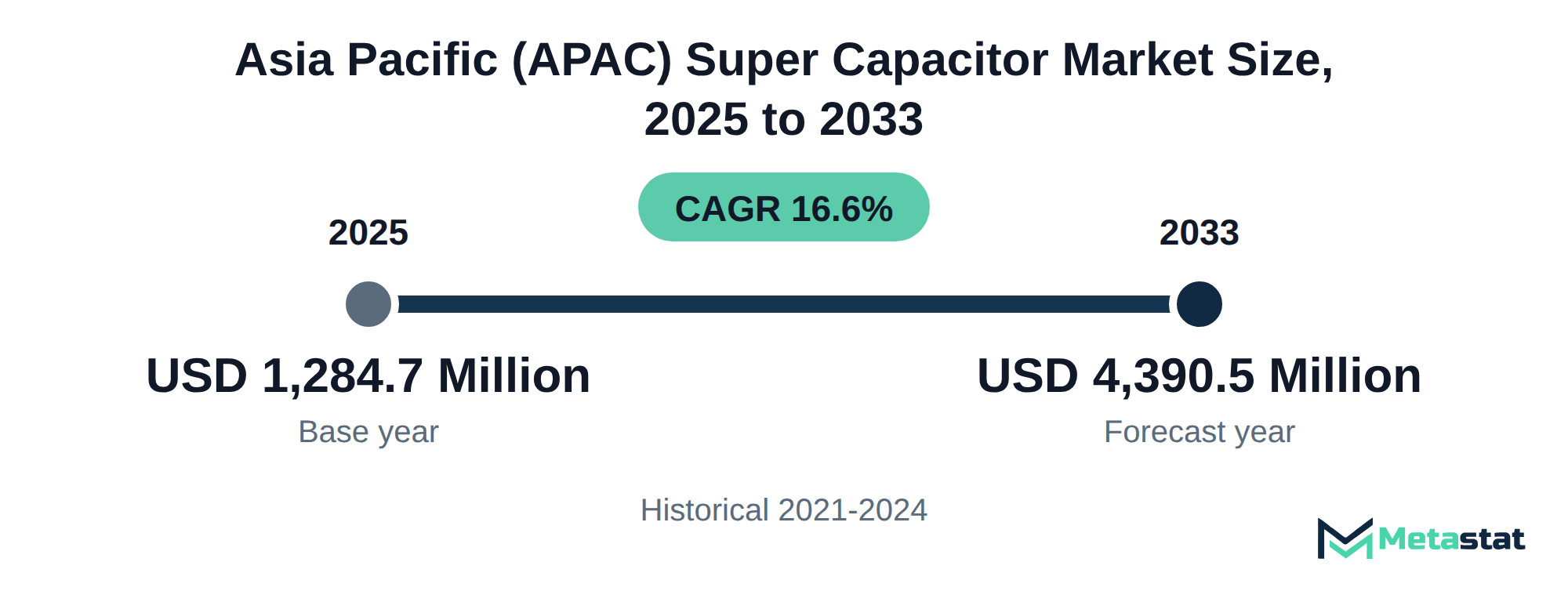
Market Valuation: Valued at $1,284.7 Million in 2025, projected to reach $4,390.5 Million by 2033 at a 16.6% CAGR.
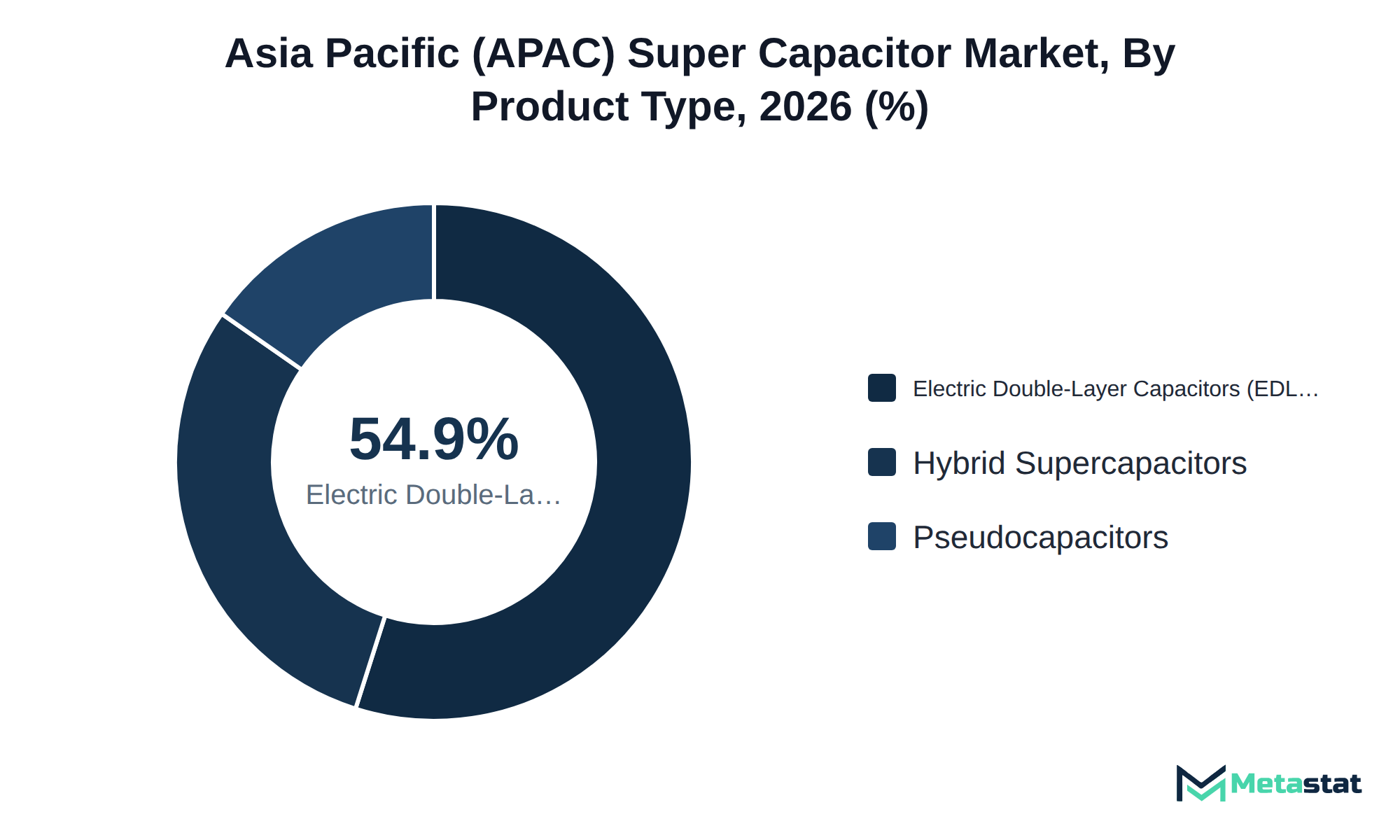
Dominant Segment: Electric Double-Layer Capacitors (EDLCs) lead the Asia Pacific Super Capacitor market, driven by their rapid charge and discharge capabilities, making them essential for automotive and industrial applications.
Geographic Lead: China is the largest market for supercapacitors in the Asia Pacific region, fueled by rapid industrialization and a strong focus on sustainable energy solutions.
What's Inside: The report provides comprehensive coverage of market dynamics, competitive analysis, and forecasts from 2026 to 2033, focusing on various product types, electrode materials, and end-use industries.
High Growth Potential in Indian Market: India exhibits the highest growth potential within the region, with a projected CAGR of 18.9%, driven by increasing investments in renewable energy and the electrification of transportation.
Technological Innovations: Advancements in supercapacitor technologies, particularly in materials and design, are enhancing energy density and performance, making them competitive alternatives to traditional batteries.
Choose Your License
Asia Pacific (APAC) Super Capacitor Market
The Asia Pacific (APAC) Super Capacitor market was valued at USD 1,284.7 million in 2025 and is projected to reach USD 4,390.5 million by 2033, growing at a CAGR of 16.6% over the forecast period.
The Asia Pacific (APAC) Super Capacitor market encompasses various types of energy storage solutions that provide rapid charge and discharge capabilities. Buyers invest in super capacitors due to their efficiency and long lifecycle compared to traditional batteries. Key industries, including automotive and industrial manufacturing, drive demand for these products, reflecting a growing emphasis on energy efficiency and sustainability in operations.
Growth in the market is supported by increased adoption of electric double-layer capacitors (EDLCs), which represent the highest value segment. China stands out as the region with the largest share, significantly contributing to the overall market expansion. The automotive industry serves as a primary growth driver, with rising demand for electric vehicles necessitating advanced energy storage solutions.
Future projections indicate growth across the region, driven by technological advancements and increasing investments in renewable energy sources. The Asia Pacific (APAC) Super Capacitor market is expected to benefit from these trends, enhancing its role in various applications, including consumer electronics and energy and power sectors. Super capacitors are increasingly used to meet the energy demands of modern applications.
The Asia Pacific (APAC) Super Capacitor market provides advanced energy storage solutions that support various applications across multiple industries. Buyers invest in this technology driven by the demand for efficient and reliable energy storage options, particularly in sectors including automotive, consumer electronics, and industrial manufacturing. The growing emphasis on renewable energy integration and energy efficiency drives spending in this market.
Electric Double-Layer Capacitors (EDLCs) represent the segment with the highest value, reflecting their widespread adoption in numerous applications. China holds the largest share of the market, driven by rapid industrialization and an increasing focus on sustainable energy solutions. The automotive industry acts as a significant growth driver, with rising electric vehicle production and the need for enhanced energy storage systems.
In addition to automotive, other sectors including energy and power increasingly recognize the benefits of supercapacitors, contributing to the market's expansion. The Asia Pacific (APAC) Super Capacitor market is set to benefit from ongoing technological advancements and increasing investments in energy storage infrastructure.
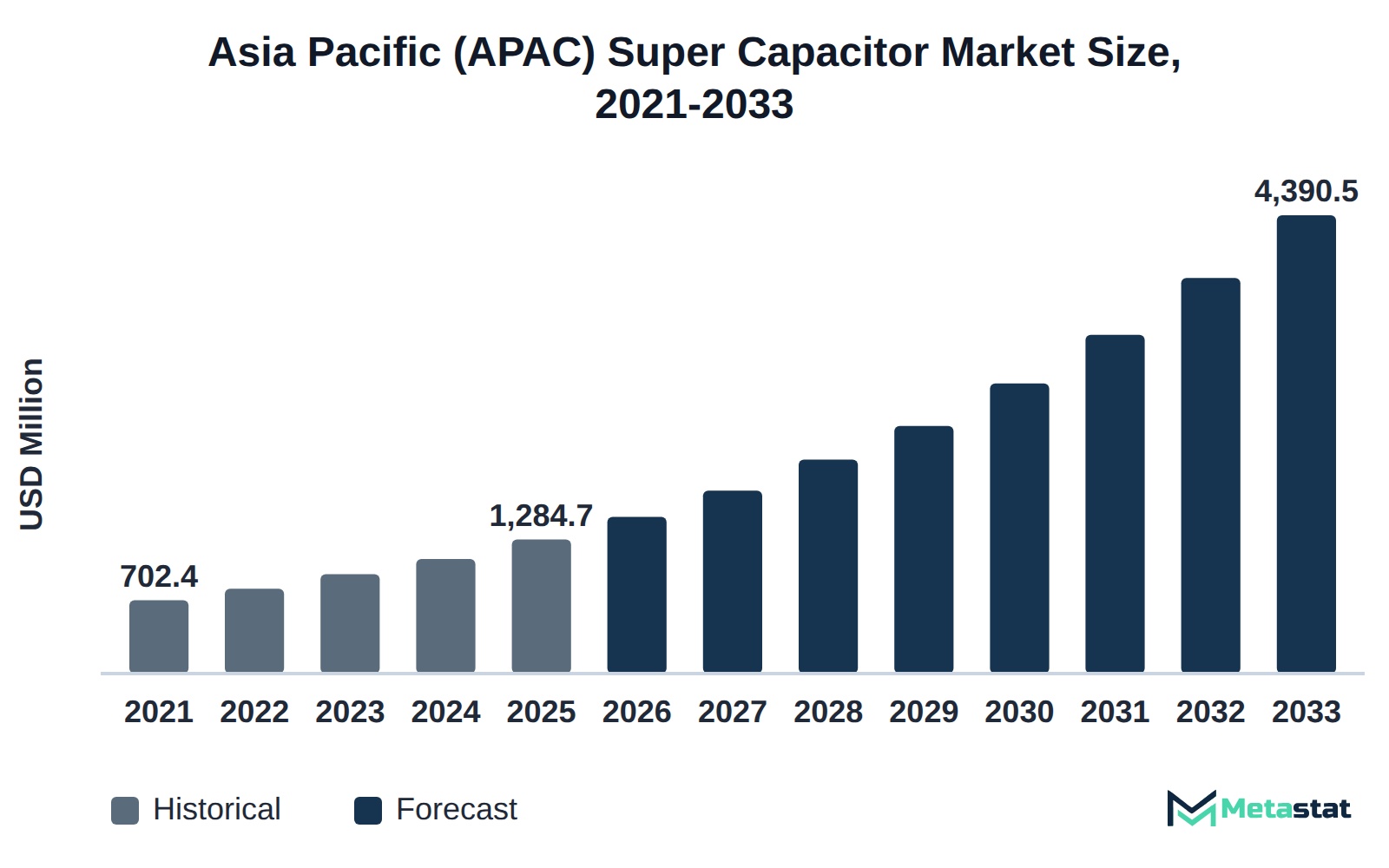
The Asia Pacific (APAC) Super Capacitor market experiences a significant shift toward advanced supercapacitor technologies, particularly in high-power energy storage applications. Electric Double-Layer Capacitors (EDLCs) lead this transformation, with a projected growth from USD 817.4 million in 2026 to USD 2,255 million by 2033, reflecting a compound annual growth rate (CAGR) of 15.6%. This growth is driven by increasing demands for efficient energy storage solutions across various industries, particularly in automotive and industrial manufacturing.
EDLCs, recognized for their rapid charge and discharge capabilities, act as a viable alternative to traditional batteries in applications requiring high power output. Their incorporation in electric vehicles enhances performance by providing the necessary power bursts during acceleration, significantly improving overall vehicle energy efficiency. The industrial sector benefits from integrating supercapacitors into machinery, leading to reductions in energy consumption and operational costs.
Advancements in supercapacitor technology position the Asia Pacific (APAC) Super Capacitor market for significant growth. Increasing investments in research and development are expected to further improve the performance and applicability of these energy storage solutions.
The Asia Pacific (APAC) Super Capacitor market experiences significant purchasing trends driven by automotive electrification and industrial sectors. Pricing structures often vary based on the application, with bulk purchasing agreements prevalent among automotive manufacturers. These companies typically negotiate contract models that ensure long-term supply stability and price predictability, aligning with production schedules and technological advancements.
For instance, automotive applications demand supercapacitor modules with anticipated revenue reaching USD 1,122.6 million by 2033, reflecting a compound annual growth rate (CAGR) of 17.1%. This growth drives manufacturers to offer competitive pricing strategies, often incentivizing bulk orders and establishing tiered discounts based on volume. Consequently, automotive buyers benefit from lower unit costs while ensuring a steady supply of critical components for electric vehicles and hybrid technologies.
In industrial applications, supercapacitor modules play a critical role in energy storage and power backup solutions, with revenues projected to reach USD 995.8 million by 2033. Industrial buyers increasingly favor flexible contract terms that accommodate fluctuating demand and project timelines. These arrangements create collaborative relationships that enhance operational efficiencies and ensure access to advanced technologies. Such competitive pricing models in the Asia Pacific (APAC) Super Capacitor market ultimately support sustained growth and innovation across multiple sectors.
Hybrid energy storage solutions are increasingly vital for the telecommunications sector, driven by growing demand for reliable power sources. The Asia Pacific (APAC) Super Capacitor market sees hybrid supercapacitors becoming essential for applications requiring rapid energy discharge and efficient energy storage. These devices integrate seamlessly with renewable energy systems, facilitating better energy management in telecommunications infrastructure.
In the telecommunications industry, reliable power supply is critical for maintaining network uptime, particularly in remote areas where grid access is limited. Hybrid supercapacitors, with a projected market value of USD 1,414.6 million by 2033, enhance energy storage capabilities, enabling smooth transitions between renewable energy sources and conventional power supplies. This significance aligns with the industry's shift towards sustainable energy practices and the increasing deployment of renewable energy systems.
Financially, this integration leads to reduced operational costs and improved efficiency for telecommunications companies. Enhanced energy reliability through hybrid energy storage results in fewer outages and lower maintenance costs. Continued growth of the market reflects increasing investment in hybrid supercapacitor technology across the Asia Pacific region, aligning with the broader trend towards greener energy solutions.
Supercapacitors are increasingly prevalent in the automotive and industrial manufacturing sectors within the Asia Pacific (APAC) Super Capacitor market. This increase is driven by the demand for energy-efficient solutions and the rising trend of electric and hybrid vehicles, which rely on supercapacitors for energy storage and quick power delivery.
In industrial manufacturing, the adoption of supercapacitors supports the need for efficient energy management and improved power quality. The industry is anticipated to reach a value of USD 995.8 million by 2033, indicating a strong growth trajectory. This demand results from the need for reliable power sources to support automation and advanced manufacturing processes. The integration of supercapacitors provides enhanced performance in energy storage systems, thereby contributing to overall operational efficiency.
Advancements in supercapacitor technology enhance operational capabilities for industries, ensuring that manufacturers meet stringent energy efficiency regulations while improving product performance. Supercapacitors are changing the Asia Pacific (APAC) Super Capacitor market by supporting sustainable practices across multiple sectors.
The automotive industry drives demand for supercapacitors due to a marked shift towards electrification and energy efficiency. Manufacturers invest in advanced energy storage solutions to enhance electric vehicle (EV) performance, addressing the need for rapid energy discharge and recharge capabilities. This transition leads to increased volume purchases of Electric Double-Layer Capacitors (EDLCs), which serve critical functions in energy management systems. The Asia Pacific (APAC) Super Capacitor market thus benefits from this automotive focus, with supercapacitors emerging as essential components in high-performance EVs. While manufacturers prioritize energy efficiency, demand for supercapacitors strengthens, influencing pricing structures and market dynamics.
Advancements in supercapacitor technologies further support this growth, enabling enhanced performance metrics in automotive applications.
Significant technological advancements in supercapacitors drive growth within the Asia Pacific (APAC) Super Capacitor market. Innovations in materials and design enhance energy density, power density, and cycle life, positioning supercapacitors as competitive alternatives to traditional batteries. The development of carbon-based electrode materials offers improved performance while reducing weight, making these devices suitable for applications in automotive, consumer electronics, and industrial sectors.
The rise of hybrid supercapacitors, which combine the benefits of electric double-layer capacitors and batteries, addresses the need for energy-efficient solutions. Such developments attract investment from various industries seeking reliable energy storage options. The integration of supercapacitors into renewable energy systems expands their appeal, facilitating energy management and stabilization. Advancing technologies enable versatile applications and greater efficiency, which supports market expansion.
Adoption of supercapacitors in the Asia Pacific (APAC) Super Capacitor market encounters challenges due to high costs associated with production and procurement. Industries including automotive and industrial manufacturing experience increased financial burdens, leading to slower uptake of these energy storage solutions. The premium pricing of supercapacitors, driven by advanced technology and materials, significantly influences purchasing decisions. Buyers often opt for alternative solutions that offer lower initial investments, resulting in reduced order volumes and delayed replacements for existing systems. This trend restricts the expansion of the supercapacitor market, with companies focusing on cost-effective options instead of embracing innovations. High costs weigh on revenue and market penetration and slow growth in a sector with significant technological potential.
Rising input costs present a significant challenge for suppliers in the Asia Pacific (APAC) Super Capacitor market. Escalating prices of raw materials, particularly carbon and metal oxides, directly impact production expenses, leading to tighter profit margins. Suppliers respond by seeking alternative sourcing strategies and investing in supply chain optimization to mitigate these impacts. Several companies explore partnerships to secure more favorable pricing or improve the efficiency of their production processes through technological advancements. The integration of innovative materials and methods enhances product performance while controlling costs. These strategies aim to maintain competitive pricing and secure product availability as demand grows across industries.
The Indian segment of the Asia Pacific (APAC) Super Capacitor market offers strong expansion potential, driven by a compound annual growth rate (CAGR) of 18.9%. Increasing investments in renewable energy and infrastructure development fuel demand for advanced energy storage solutions, particularly in applications including automotive and industrial manufacturing. Battery energy storage systems in India are a related area of this wider investment in energy storage. This market segment's growth rate reflects a shift toward sustainable energy practices and the electrification of transportation systems. The urgency for efficient energy storage mechanisms aligns with India's growing industrial base, which increasingly requires reliable power sources. Addressing this demand with supercapacitor technology highlights the potential for significant revenue generation and market penetration. The focus on the Indian market emphasizes a trend toward localized manufacturing and the adaptation of technology to meet specific regional needs, creating competitive advantages for suppliers. This upward trajectory suggests that manufacturers and stakeholders should prioritize investment strategies tailored to the Indian market's unique dynamics.
The Asia Pacific (APAC) Super Capacitor market is segmented based on Product Type, Electrode Material, End-Use Industry, and Region.
This segment holds significance in energy storage applications, particularly in automotive, industrial manufacturing, and consumer electronics sectors. Demand for EDLCs is driven by the growing need for efficient energy storage solutions that offer rapid charge and discharge capabilities. In contrast to other segments, including pseudocapacitors, EDLCs experience a more moderate growth rate, reflecting strong market acceptance and established applications in various industries. The emphasis on hybrid energy storage systems further enhances the adoption of EDLCs, which complement existing technologies while meeting increasing power demands. This trend positions the segment favorably among buyers seeking reliable performance and increased energy efficiency.
Pseudocapacitors segment is estimated to reach USD 720.9 million by 2033, at a CAGR of 17.6% during the forecast period. Pseudocapacitors serve in applications requiring high power density and rapid charge/discharge capabilities, widely used in consumer electronics and industrial equipment. Demand for this segment is driven by the increasing need for efficient energy storage in devices like smartphones and hybrid vehicles. Growth in consumer electronics generates significant demand, distinguishing this segment with a higher CAGR compared to Electric Double-Layer Capacitors (EDLCs) at 15.6%. Pseudocapacitors are often favored for their ability to deliver higher power output over shorter durations, making them particularly appealing for applications that require brief bursts of energy. This segment's growth trajectory reflects evolving energy storage needs across various sectors, further contributing to the expansion of the Asia Pacific (APAC) Super Capacitor market.
Hybrid Supercapacitors segment is expected to reach USD 1,414.6 million by 2033. This type of supercapacitor integrates both electrochemical double-layer capacitance and pseudocapacitance, delivering higher energy density compared to traditional options. Industries including automotive and renewable energy apply hybrid supercapacitors for applications requiring rapid charging and discharging capabilities. The demand for this segment is driven by the increasing need for efficient energy storage solutions across sectors. With a compound annual growth rate of 17.5%, this segment outpaces others, including Electric Double-Layer Capacitors (EDLCs), which show a CAGR of 15.6%. Their versatility makes hybrid supercapacitors a favorable choice for applications that demand higher energy output and longer cycle life.
Carbon-Based segment is valued at USD 716 million in 2026 and is projected to reach USD 1,983.6 million by 2033, at a CAGR of 15.7% during the forecast period. This segment finds application predominantly in automotive and industrial sectors, where energy storage capabilities are essential for applications including regenerative braking and energy efficiency. Growth in this segment is driven by increasing demand for lightweight and efficient energy storage solutions. Compared to other segments, Carbon-Based materials offer a balanced combination of performance and cost, positioning them favorably for widespread adoption. The growth rate of 15.7% contrasts with Pseudocapacitors, which show a faster growth trajectory at 17.6%. This differentiation highlights varied buyer preferences and technological advancements influencing market dynamics.
Metal Oxide-Based segment is estimated to reach USD 1,042.3 million by 2033, at a CAGR of 17.3% during the forecast period. This segment serves various applications, particularly in energy storage systems for consumer electronics and automotive sectors. Demand growth is driven by rising needs for efficient energy storage solutions and advancements in manufacturing processes, which enhance performance and reliability. Compared to other sub-segments, Metal Oxide-Based solutions exhibit a higher growth rate, appealing to industries focused on high-performance applications. The segment's price competitiveness remains vital, especially against alternatives like Carbon-Based capacitors, which attract users seeking lower-cost options. These dynamics favor innovative approaches to energy storage in the Asia Pacific (APAC) Super Capacitor market.
Conducting Polymer-Based segment is expected to reach USD 582.2 million by 2033. This segment finds applications in consumer electronics, automotive, and renewable energy sectors, where efficient energy storage solutions are essential. A significant driver for this segment stems from increasing demand for lightweight and compact energy storage solutions, particularly in consumer electronics. Growth rates for this segment are projected at 17.3%, placing it on a competitive trajectory compared to other electrode materials. Unlike Carbon-Based and Metal Oxide-Based segments, which have CAGRs of 15.7% and 17.3% respectively, Conducting Polymer-Based capacitors cater to niche applications requiring specialized energy storage characteristics. The distinct properties of conducting polymers, including enhanced conductivity and flexibility, enable unique applications that are less dependent on traditional materials, promoting adoption across various industries. Conducting Polymer-Based solutions contribute significantly to the Asia Pacific (APAC) Super Capacitor market as it continues to develop.
Composite-Based supercapacitors are projected to grow at a CAGR of 17.3% during the forecast period. This segment serves applications in energy storage systems for renewable energy, where high energy density and long cycle life are essential. Industries including automotive and renewable energy increasingly adopt this technology due to its efficiency in energy management. Demand for composite-based materials enhances performance characteristics, driving growth in this sub-segment. Compared to other electrode materials, the Composite-Based segment features unique properties that appeal to manufacturers seeking improved efficiency and lower weight. The market positions it favorably against conventional options, resulting in increased competition and innovation.
Automotive segment is valued at USD 370.7 million in 2026 and is projected to reach USD 1,122.6 million by 2033, at a CAGR of 17.1% during the forecast period. This segment primarily serves electric vehicle manufacturers and traditional automotive companies seeking energy-efficient solutions. Key drivers for growth include the transition to electric and hybrid vehicles, enhancing performance and energy management systems. Regulatory incentives for low-emission transportation significantly influence purchasing decisions in the automotive sector. Compared to other end-use industries, automotive supercapacitor adoption exhibits faster growth, with a CAGR of 17.1%, driven by high demand for energy storage solutions in applications including regenerative braking and power boost systems. Power boost systems support acceleration, which makes the electric vehicle traction motor industry a closely related part of the automotive value chain. Industries including industrial manufacturing and consumer electronics grow at lower rates, highlighting the unique position of automotive within the Asia Pacific (APAC) Super Capacitor market.
Industrial Manufacturing segment is estimated to reach USD 995.8 million by 2033, at a CAGR of 16.9% during the forecast period. This segment finds extensive application in factory automation, process control, and machinery maintenance, with demand primarily driven by manufacturers seeking enhanced energy efficiency and reliability in operations. A growing emphasis on automation and smart manufacturing initiatives enhances this segment, enabling manufacturers to optimize energy consumption and reduce operational costs. Compared to other segments, industrial manufacturing exhibits a more stable growth trajectory, supported by ongoing investments in modernizing equipment and infrastructure. The focus on sustainability and energy efficiency further strengthens the demand for supercapacitors in this sector, distinguishing it from other segments including consumer electronics, which experience higher volatility in demand due to consumer trends. The Asia Pacific (APAC) Super Capacitor market is positioned to benefit significantly from these industrial advancements.
Consumer Electronics segment is expected to reach USD 735.8 million by 2033. This segment primarily serves manufacturers of electronic devices, including smartphones, tablets, and wearables, where efficient energy storage solutions are critical. The demand for lightweight, compact energy storage drives growth in this segment. Technological advancements in supercapacitors enhance charge and discharge rates, appealing to electronics producers aiming for improved device performance. The segment differentiates itself from other end-use industries through its relatively faster growth rate, with a compound annual growth rate (CAGR) of 17.5%. This contrasts with Industrial Manufacturing, which exhibits a CAGR of 16.9%. The increasing focus on energy efficiency and innovation within the Consumer Electronics space fuels momentum in the Asia Pacific (APAC) Super Capacitor market.
Energy and Power segment is projected to grow at a CAGR of 17.5% during the forecast period. This segment focuses on applications for energy storage and power management systems, used by industries including renewable energy, smart grid management, and backup power solutions. Significant growth is driven by the increasing reliance on renewable energy sources, which requires efficient energy storage solutions. This segment experiences faster growth due to the expanding need for sustainable energy storage solutions compared to other segments. In 2033, the Energy and Power segment is expected to reach a valuation of USD 735.8 million, reflecting its importance in the Asia Pacific (APAC) Super Capacitor market.
Telecommunications involves the use of supercapacitors to support energy storage and power delivery in communication networks and devices. This segment caters primarily to telecommunications infrastructure providers and equipment manufacturers, who rely on efficient energy solutions to manage power fluctuations and enhance device performance. Increasing demand for high-speed data transmission and the growing adoption of 5G network equipment drive this segment's expansion. Telecommunications differs from other segments in its focus on rapid technological advancements, which often necessitate more sophisticated energy management solutions. Unlike the automotive sector, which emphasizes electrification, telecommunications prioritizes the integration of supercapacitors in high-performance equipment, leading to unique pricing dynamics and adoption rates within the Asia Pacific Super Capacitor market.
Aerospace and Defense applications employ supercapacitors for critical functions, including energy storage and power management in various systems. Key players in this sector include manufacturers of aircraft and defense equipment, relying on supercapacitors to enhance the efficiency and reliability of electrical systems. Demand for advanced energy solutions drives growth in this segment, driven by increasing investments in defense technologies and aerospace innovations. Counteracting this growth are stringent regulations and high testing standards in the industry, which complicate supply chains and increase costs. This segment typically experiences slower growth compared to others, influenced by the specialized nature of projects and higher price sensitivity among buyers. The differing pace reflects the unique requirements of Aerospace and Defense compared to more consumer-oriented sectors in the market.
This segment includes applications across healthcare, transportation infrastructure, and building systems. These sectors employ supercapacitors for energy storage, quick charging, and power delivery, enhancing performance and efficiency. Demand for reliable energy solutions in healthcare devices and smart building systems drives growth, while regulatory standards on energy efficiency support adoption. The segment's growth trajectory is influenced by increasing investments in smart infrastructure. Compared to other segments, including automotive and industrial manufacturing, this area experiences slower growth due to its niche applications and varying buyer requirements. Nevertheless, opportunities persist as the global emphasis on sustainable practices intensifies. The Asia Pacific (APAC) Super Capacitor market reflects these trends, revealing unique dynamics across its various segments.
China segment is valued at USD 721.8 million in 2026 and is projected to reach USD 2,055.6 million by 2033, at a CAGR of 16.1% during the forecast period. This segment primarily serves the automotive, industrial manufacturing, and consumer electronics industries, where high energy density and rapid charging capabilities are critical. Rapid industrial growth in China drives demand for supercapacitors, particularly in the automotive sector, with manufacturers increasingly adopting these components for electric vehicles. The Chinese market exhibits a higher growth rate, reflecting robust investments in renewable energy and electric transportation. The unique combination of government support for clean energy initiatives and a growing manufacturing base positions the China segment as a key player in the Asia Pacific (APAC) Super Capacitor market.
Japan is estimated to reach USD 767.5 million by 2033, at a CAGR of 16% during the forecast period. This segment serves various applications in automotive, industrial manufacturing, and consumer electronics. The demand for supercapacitors in Japan is driven by the rapid growth of electric vehicles, which require high-performance energy storage solutions. Regulatory support for energy efficiency in manufacturing processes influences market dynamics. Compared to other segments, the growth rate in Japan aligns closely with the overall market, reflecting strong investment in technology and innovation. The Japan segment stands out due to its focus on energy-intensive industries, where supercapacitors enhance performance and reliability.
South Korea segment is expected to reach USD 560.2 million by 2033. This segment primarily finds application in various industries, including automotive and industrial manufacturing, where it provides essential energy storage solutions. The growth of this segment is driven by increasing demand for efficient power management systems in electric vehicles and industrial automation. South Korea's growth rate aligns closely with the regional average, while its specific focus on high-tech applications differentiates it. Investment in infrastructure and technology enhancements supports this trend, reflecting a strong market environment in the Asia Pacific (APAC) Super Capacitor market.
India segment is projected to grow at a CAGR of 18.9% during the forecast period. Applications in the automotive industry and consumer electronics drive this segment's growth, with demand for efficient energy storage and rapid charge-discharge capabilities. Indian manufacturers increasingly adopt supercapacitors in electric vehicles and portable electronics, emphasizing sustainability and performance. Compared to the automotive segment, which has a CAGR of 17.1%, the growth of the India segment reflects heightened investment and innovation. Regulations promoting electric vehicle adoption enhance the market's attractiveness, setting it apart from more mature segments in the region. The market shows significant potential, with India contributing substantially to overall revenue growth.
Australia represents a significant player in the supercapacitor segment, with applications spanning various industries. Key users include automotive manufacturers and industrial equipment developers, who utilize supercapacitors for their high energy storage capabilities and rapid discharge rates. Demand for supercapacitors in Australia is influenced mainly by the growing emphasis on energy efficiency and sustainability across sectors. The trend drives innovation and investment in advanced energy storage solutions. Compared to other regions, Australia's market dynamics are shaped by stringent environmental regulations, promoting the adoption of eco-friendly technologies. The emphasis on reducing carbon footprints distinguishes this segment from markets in other countries including China and India, where growth is fueled by different economic drivers. The Asia Pacific (APAC) Super Capacitor market reflects these regional variations, impacting overall industry performance.
The Rest of Asia Pacific segment encompasses various countries in the region, contributing to a diverse market landscape. Applications of supercapacitors in this segment primarily include energy storage and quick power delivery, serving industries including consumer electronics and automotive. Demand derives from the increasing emphasis on energy efficiency and sustainable technologies across multiple sectors. Regulatory support for clean energy initiatives further supports growth prospects. Compared to other segments in the Asia Pacific (APAC) Super Capacitor market, this segment presents unique opportunities due to lower adoption barriers and higher price sensitivity among local manufacturers. An enhanced focus on reducing production costs influences pricing strategies, impacting profitability in contrast to regions like China, where the focus centers on advanced technology integration.
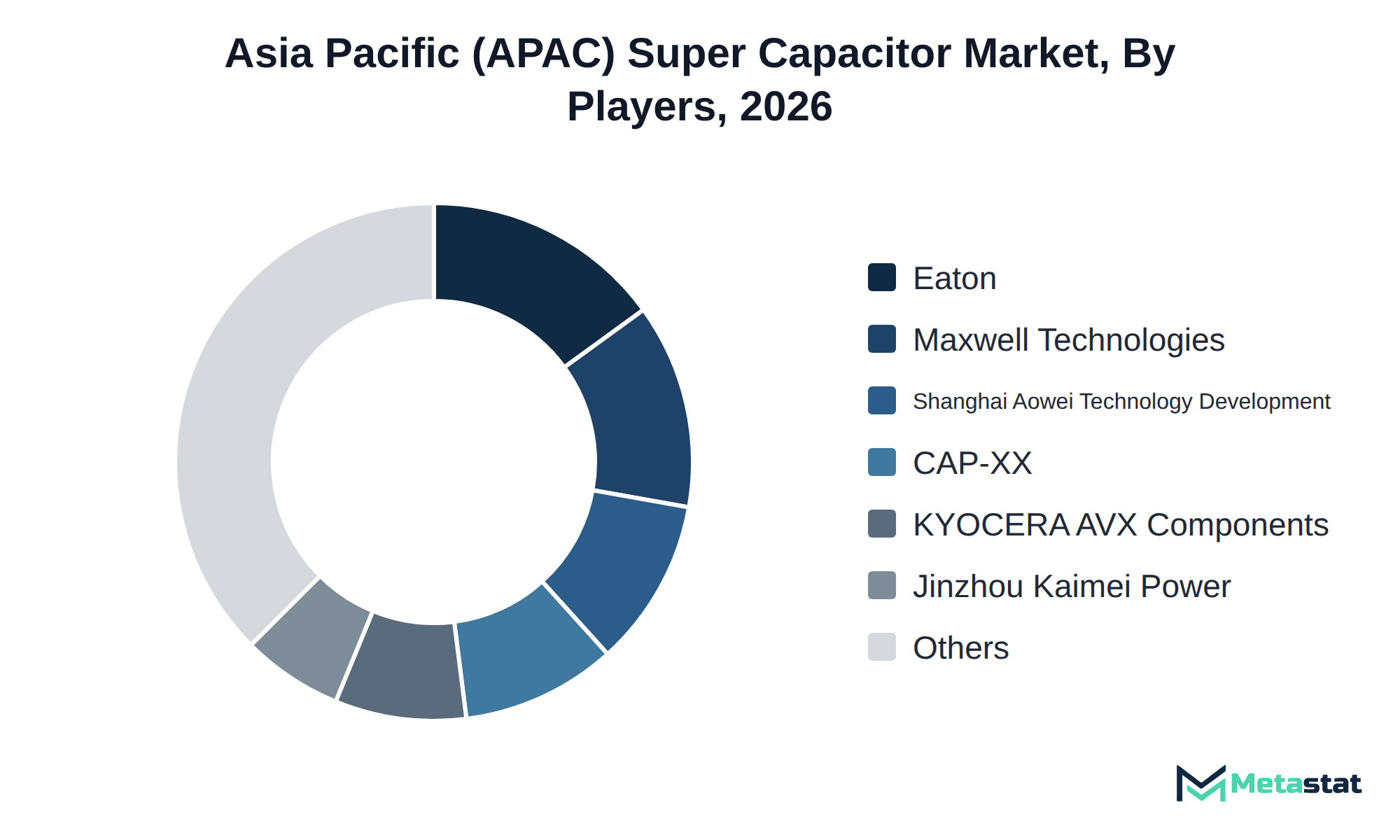
Key players in the Asia Pacific (APAC) Super Capacitor market compete through product differentiation and pricing. Companies emphasize attributes including certification, customization, and service quality, catering to specific buyer preferences that influence purchasing decisions.
Shanghai Aowei Technology Development Co., Ltd. emphasizes innovation in supercapacitor technology, targeting the automotive and industrial manufacturing sectors. CAP-XX Limited is recognized for its development of high-performance supercapacitors, aimed at consumer electronics and energy applications. Eaton Corporation focuses on reliable energy management solutions and applies its expertise to improve its product offerings.
Price competitiveness influences buyer decisions, with players like Nippon Chemi-Con Corporation and Panasonic Industry Co., Ltd. striving to deliver cost-effective solutions without compromising quality. Companies including Skeleton Technologies prioritize customer service and support, enhancing their appeal to buyers seeking a strong partnership in product development and application.
Growth relies on several key developments within the Asia Pacific (APAC) Super Capacitor market. Demand for Electric Double-Layer Capacitors (EDLCs) is projected to increase. The segment is expected to expand significantly from USD 817.4 million in 2026 to USD 2,255 million by 2033, driven by applications in automotive and industrial manufacturing sectors. Advancements in Metal Oxide-Based electrode materials contribute to broader market penetration, with a projected value of USD 1,042.3 million by 2033. The anticipated 16.6% CAGR reflects a strong growth trajectory, contingent on technological innovations and regulatory support for energy-efficient solutions. However, risks persist, particularly in supply chain stability, which could impede production and delivery timelines. Disruptions in the supply of raw materials or shifts in global trade policies pose challenges to market growth across various regions, particularly in China, which represents a significant share of the overall market. Effective management of these risks will be essential for realizing the full potential of the Asia Pacific (APAC) Super Capacitor market.
By Product Type: Electric Double-Layer Capacitors (EDLCs), Pseudocapacitors, Hybrid Supercapacitors
By Electrode Material: Carbon-Based, Metal Oxide-Based, Conducting Polymer-Based, Composite-Based
By End-Use Industry: Automotive, Industrial Manufacturing, Consumer Electronics, Energy and Power, Telecommunications, Aerospace and Defense, Others (Healthcare, Transportation Infrastructure and Building Systems)
By Region: China, Japan, South Korea, India, Australia, Rest of Asia Pacific
The report strategically identifies and profiles the key market players and analyses their core competencies in each sub-segment of the Super Capacitor market.
Report Attributes | Details |
Study Period | 2021-2033 |
Base Year | 2025 |
Estimated Year | 2026 |
Forecast Period | 2026-2033 |
Historical Period | 2021-2025 |
Growth Rate | CAGR 16.6% from 2026 to 2033 |
Revenue Unit | USD million |
Segmentation | By Product Type, Electrode Material, End-Use Industry, Region, and Region |
Find answers to common questions about this report
The Super Capacitor market size was valued at USD 1,284.7 million in 2025.
The market is projected to grow at a CAGR of 16.6% during the forecast period from 2026 to 2033.
Electric Double-Layer Capacitors (EDLCs) lead the Super Capacitor market with a projected value of USD 2,255 million by 2033. This segment demonstrates the highest growth potential compared to other types.
The automotive industry drives demand due to a shift towards electrification and energy efficiency, leading to increased volume purchases of Electric Double-Layer Capacitors. Significant technological advancements enhance performance metrics, positioning supercapacitors as competitive alternatives to traditional batteries.
High costs associated with production and procurement restrain growth in the Super Capacitor market, resulting in slower adoption of energy storage solutions. Rising input costs, particularly for raw materials, challenge suppliers by tightening profit margins.
Several factors favor adoption in the Asia Pacific Super Capacitor market. The automotive industry's shift towards electrification and energy efficiency drives demand for advanced energy storage solutions. increasing investments in renewable energy and infrastructure development create a need for reliable energy storage options across various sectors.
The Super Capacitor market is estimated to reach a valuation of USD 4,390.5 million by 2033.
Key players operating in the Super Capacitor market include Shanghai Aowei Technology Development Co., Ltd., CAP-XX Limited, Eaton Corporation, ELNA Co., Ltd., Jinzhou Kaimei Power Co., Ltd., Maxwell Technologies, Panasonic Industry Co., Ltd., and Skeleton Technologies.
India exhibits the highest growth rate in the Super Capacitor market, with a compound annual growth rate (CAGR) of 18.9 percent. This growth is driven by increasing investments in renewable energy and infrastructure development.
The revenue forecast for Electric Double-Layer Capacitors (EDLCs) by 2033 is approximately USD 2,255 million. This segment reflects a compound annual growth rate (CAGR) of 15.6 percent during the forecast period.
The analysts below cover Electronics and Semiconductor research at Metastat Insights.
LEAD ANALYST
Utkarsh Khirodkar is a Lead Market Research Analyst at MetaStat Insight, specializing in market intelligence, technology sector assessments, and competitive strategy.

PRINCIPAL CONSULTANT - ENTERPRISE AI & EMERGING TECHNOLOGIES
Banking & Finance · Electronics and Semiconductor · Energy and Power · Healthcare IT · Information & Technology · Professional Services
Vijay Gunti is a Principal Consultant at MetaStat Insight, bringing over two decades of experience across enterprise digital transformation, technology strategy, and intelligent systems.

PRINCIPAL CONSULTANT - QUALITY SYSTEMS & COMPLIANCE
Electronics and Semiconductor · Machinery & Equipment · Professional Services
Omkar Phadtare is an Industry Consultant at MetaStat Insight, specializing in quality systems, regulatory compliance, and standards benchmarking to drive data-driven market intelligence and strategic industry research.

ENERGY & INFRASTRUCTURE INDUSTRY CONSULTANT
Automotive and Transportation · Electronics and Semiconductor · Energy and Power · Machinery & Equipment
Saurabh Vasant Ganvir consults for Energy & Infrastructure Industry at MetaStat Insight, specializing in renewable energy, solar EPC, and electric vehicle (EV) infrastructure markets.

LEAD CONSULTANT - COMMUNICATION, TELECOM, AND IT
Electronics and Semiconductor · Information & Technology · Machinery & Equipment · Professional Services
Ravindra Sathe Consultants for Communication, Telecom, and IT at MetaStat Insight. He leads the firm's industry research initiatives across telecommunications infrastructure, digital connectivity, enterprise networking, and emerging information technology domains.
When evaluating distributed energy resource management systems, standard research summaries tend to gloss over the operational differences between front-of-the-meter utility deployments and behind-the-meter industrial sites. The MetaStat Insight report addressed those distinctions directly, especially regarding software interoperability standards and grid interconnection backlogs. The five-year market sizing across regional transmission organizations provided actionable context for our grid modernization strategy.
Most industry reports on warehouse automation bundle autonomous mobile robots and fixed conveyor installations into the same top-level numbers, which complicates advisory work. This study split the market cleanly by payload tiers, navigation technology, and fleet management software layers. The regional forecast for Western Europe gave our team defensible adoption benchmarks when evaluating capital allocation for logistics clients, saving us days of secondary data scrubbing.
Standard industry briefs frequently blur the operational distinctions between isobaric pressure exchangers and centrifugal turbines. In this study, MetaStat Insight categorized mega-scale desalination tenders across the GCC and Mediterranean basins by membrane replacement frequencies and salinity tolerances. Their primary research helped us evaluate local content requirements in Saudi Arabia and the UAE without relying on marketing literature. We found the segment-level equipment replacement estimates grounded and well-reasoned throughout.
Explore related market intelligence reports worth reading alongside this one.