
LEAD ANALYST
Utkarsh Khirodkar is a Lead Market Research Analyst at MetaStat Insight, specializing in market intelligence, technology sector assessments, and competitive strategy.

Global Social Robots Market Size, Share, By Robot Type (Humanoid Robots, Companion Robots, Service Interaction Robots, Educational Robots, Telepresence Robots, Therapeutic and Assistive Robots, Entertainment Robots), By Component (Hardware, Software, Services), By Mobility (Mobile Wheeled, Stationary, Mobile Legged, Semi-Mobile), By End-Use Industry (Healthcare and Elder Care, Education, Retail and Hospitality, Residential, Entertainment and Events, Corporate and Public Sector), Industry Analysis, Growth, Trends, and Forecast, 2026-2033
Report ID
MSI-5757
Published
November, 2026
Pages
310 Pages
Format
Historical
Base year
Forecast
Forecast period
Report Details
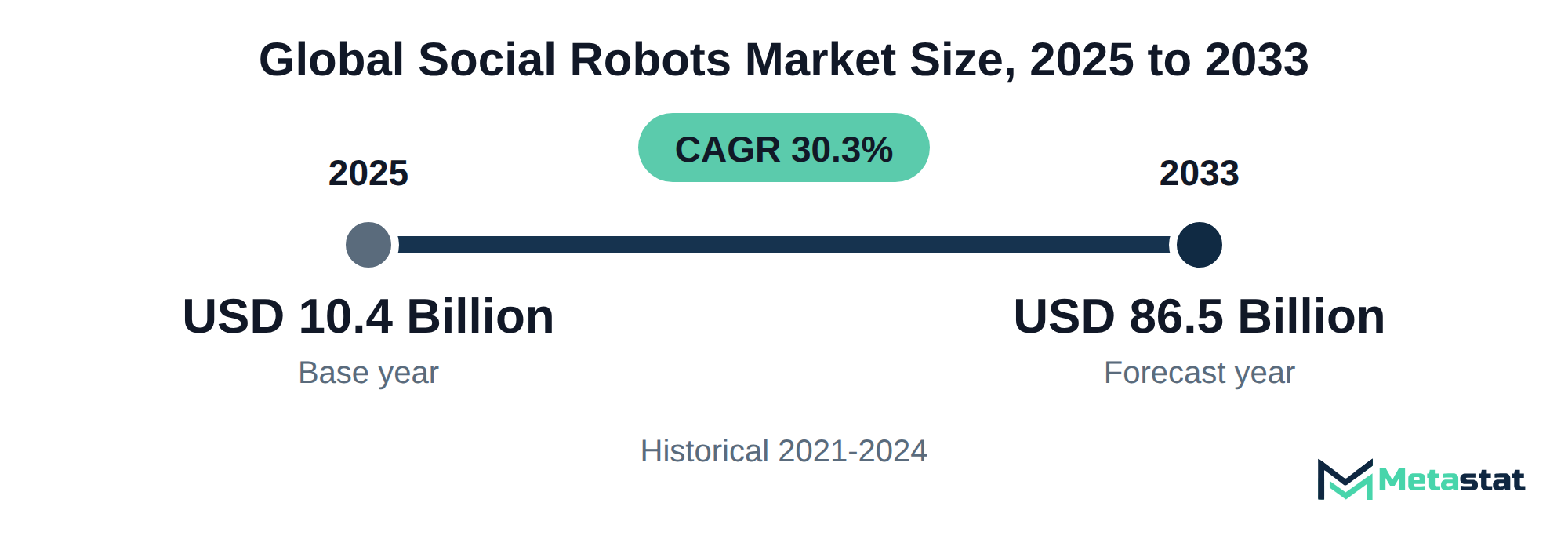
Market Valuation: Valued at $10.4 Billion in 2025, projected to reach $86.5 Billion by 2033 at a 30.3% CAGR.
Dominant Segment: Humanoid robots lead the Social Robots market, driven by their critical roles in communication and assistance across various sectors, particularly in healthcare and education.
Geographic Lead: North America is the leading region, holding 35.9% of the market in 2025, with the US expected to sustain its dominance through 2026 due to high adoption rates of innovative robotic solutions.
What's Inside: The report provides a comprehensive analysis of the Social Robots market, including competitive coverage, detailed segmentations by robot type, component, mobility, and end-use industry, along with forecasts extending to 2033.
Subscription Growth: The shift towards subscription-based models is notable in the companion and healthcare robot segments, allowing for more flexible payment options and wider access to advanced robotic solutions.
Educational Robots Demand: The educational robots segment is projected to reach USD 15.3 billion by 2033, reflecting a growing emphasis on interactive learning tools that enhance student engagement and outcomes.
Choose Your License
Global Social Robots Market
The global Social Robots market was valued at USD 10.4 billion in 2025 and is projected to reach USD 86.5 billion by 2033, growing at a CAGR of 30.3% over the forecast period.
The Social Robots market encompasses various types of robotic systems designed to interact with humans and assist in diverse tasks across multiple sectors. Buyers invest in these solutions to enhance efficiency, improve customer experiences, and address challenges in areas including healthcare, education, and retail. The integration of social robots into daily operations reflects a growing demand for innovative technology aimed at supporting human activities and improving overall productivity.
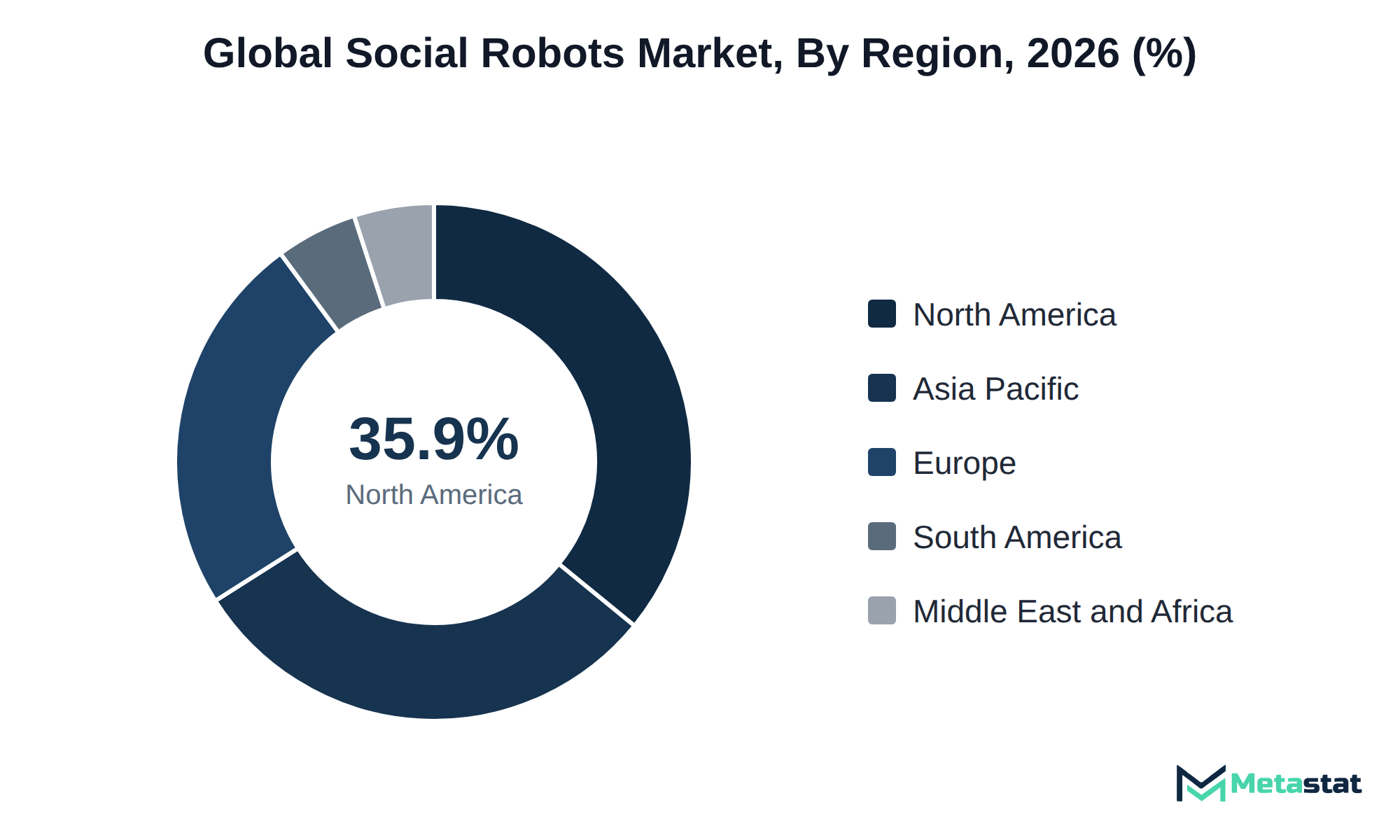
Growth in the social robots market is driven by increasing adoption of humanoid robots, which support communication and assistance. North America holds 35.9% of the market in 2025, with the US leading in 2026. In comparison, Europe and Asia Pacific follow with 23.9% and 30.1% market shares, respectively. The rising prevalence of automation and advanced robotics technology fuels the expansion of humanoid robots, allowing organizations to enhance engagement and service delivery.
Humanoid robots account for the largest market value among the segments, reflecting their importance across applications. The forecasted growth trajectory indicates a significant increase in the adoption of these robots, particularly in healthcare and elder care settings. Ongoing technological advancements and evolving consumer expectations regarding personal interactions with machines drive further investment and interest in this evolving market.
The Social Robots market spans robotic applications tailored to improve human interaction and assistance across many fields. Buyers invest in this technology to enhance efficiency and productivity, with significant expenditures driven by the growing demand for automation and support in sectors including healthcare, education, and retail. The increasing focus on creating engaging, user-friendly robotic systems stimulates spending in the market, with organizations seeking innovative solutions to meet evolving consumer expectations.
Growth in the market is influenced by advancements in artificial intelligence, machine learning, and robotics technology, enabling the development of more sophisticated and responsive systems. The segment of humanoid robots represents the largest share of the market, reflecting the substantial interest in robots that closely mimic human appearance and behavior. Demand for these robots is expected to rise, particularly in applications that require personal interaction and support, including elder care and education.
The rising adoption of social robots in various industries fuels market expansion. Organizations recognize the potential of these systems to improve customer engagement and operational efficiency, contributing to increased investment in robotic solutions. The combination of technological advancements and strong end-user demand positions the market for significant growth in the coming years, with opportunities for innovation and development across multiple applications.
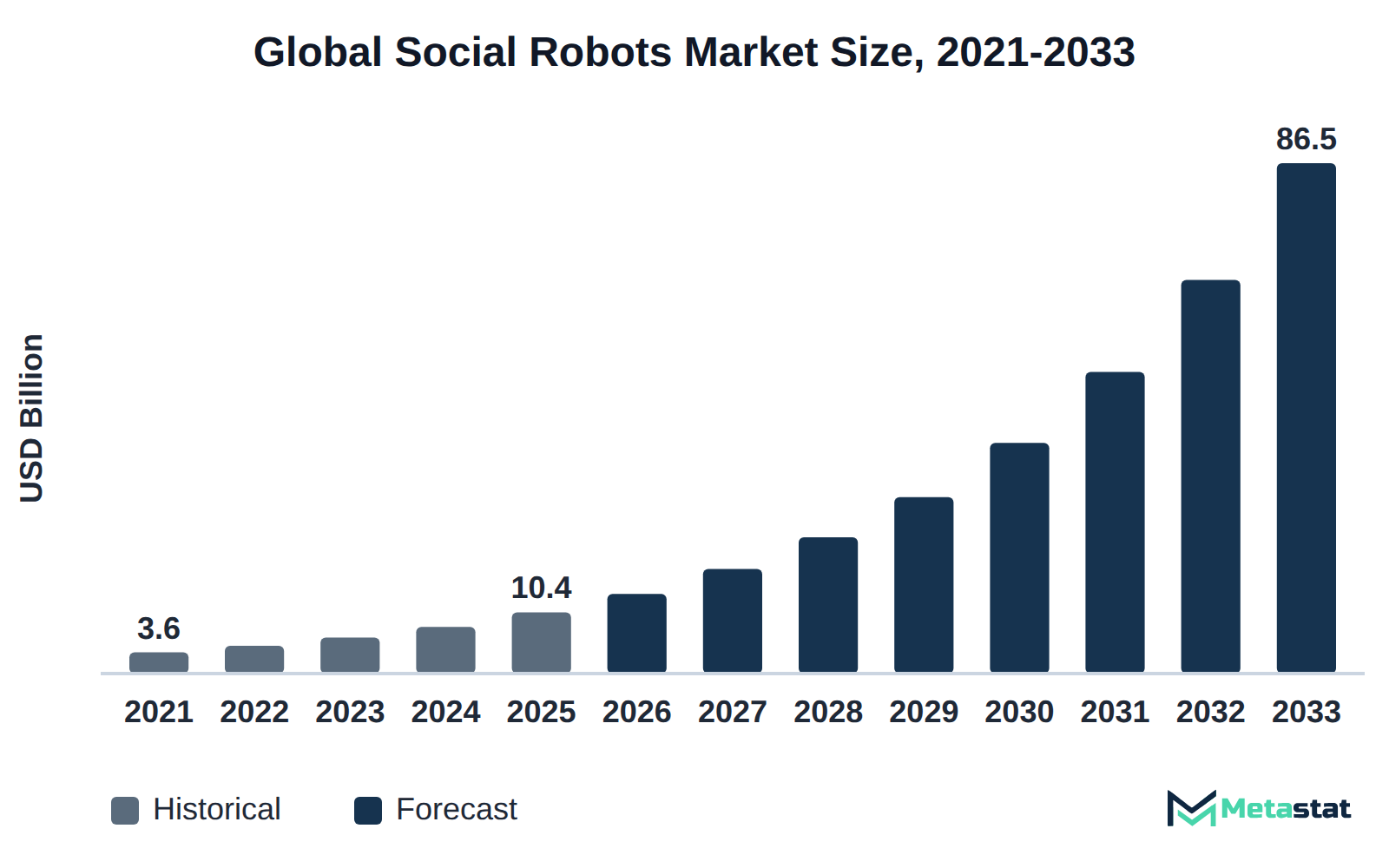
The integration of multimodal conversational AI into social robots enhances natural human-robot interaction significantly. This technology enables robots to process and respond to multiple forms of input, including voice, gesture, and facial expressions, creating a more intuitive user experience. The social robots market is witnessing substantial growth in this area, projected to reach USD 86.5 billion by 2033, driven by advancements in AI and natural language processing.
Humanoid robots represent a key segment within this market, anticipated to grow from USD 6.5 billion in 2026 to USD 39.1 billion by 2033, reflecting a compound annual growth rate of 29.3%. This growth is driven by increasing demand for robots that engage users in a more relatable manner, particularly in sectors including healthcare and education. These industries benefit from robots that communicate effectively, bridging gaps in service delivery and enhancing user satisfaction.
The deployment of multimodal conversational AI in social robots allows for personalized interactions, creating deeper connections with users. This capability positions social robots as valuable assets in various applications, ranging from elder care to educational tools. As this technology expands within the social robots market, it could change how humans and machines coexist, while driving demand and investment across multiple sectors.
Subscription-based models are emerging as a preferred payment method for the Social Robots market, particularly in the segments of companion and healthcare robots. These models provide flexibility and lower upfront costs for buyers, appealing to both individual consumers and organizations. The market for healthcare and elder care robots is projected to reach USD 31.3 billion by 2033, reflecting an impressive compound annual growth rate (CAGR) of 29.6% from 2026. This growth intensifies the focus on subscription services, allowing users to pay a recurring fee for access to advanced robotic solutions, software updates, and support services.
The adoption of subscription models facilitates easier access to advanced technology and upgrades while minimizing the financial burden of large one-time purchases. For instance, healthcare facilities increasingly opt for subscription contracts that bundle hardware, software, and services, allowing for continuous improvement without significant capital expenditure. This trend enhances operational efficiency for healthcare providers, reduces downtime for robotic systems, and ensures that customers benefit from the latest technological advancements.
The shift toward subscription-based payment models positions providers to capitalize on the growing demand for companion and healthcare robots, leading to improved customer satisfaction and retention. Flexible financial solutions help expand the deployment of social robots across various applications.
The Asia Pacific region has emerged as a significant player in the commercialization of humanoid and educational social robots. This growth aligns with the increasing demand for innovative educational tools within the education sector, which is projected to reach USD 15.3 billion by 2033. Educational institutions seek to integrate technology into learning environments to enhance engagement and improve educational outcomes. The demand for educational robots reflects a shift towards interactive and personalized learning experiences that traditional methods cannot provide.
Educational institutions in Asia Pacific require solutions that support curriculum development and enable student engagement. Humanoid robots serve as interactive teaching aids that promote STEM education, enabling students to develop critical thinking and problem-solving skills through hands-on learning experiences. This focus on technology in education is vital due to a growing emphasis on preparing students for future job markets that increasingly demand tech-savvy individuals.
The Social Robots market is expanding in response to these distinct needs, with educational robots anticipated to play a significant role in meeting the demands of educators and students alike. The integration of these robots into classrooms not only enhances learning experiences but supports educational institutions in achieving their objectives. This trend positions the Asia Pacific region as a leader in the adoption of advanced educational technologies, fueling further growth in the market.
Social robots significantly transform elder care by enhancing the quality of life for senior citizens. These robots provide companionship and assistance, addressing issues including loneliness and limited mobility. This growth is driven by increasing demand for innovative solutions in elder care that improve patient outcomes and operational efficiency.
In the education sector, social robots enable personalized learning experiences for students. They engage learners through interactive teaching methods, making education more enjoyable and effective. The education segment is anticipated to reach a value of USD 15.3 billion by 2033, indicating a CAGR of 29%. This expansion highlights the educational landscape's shift toward integrating technology into learning environments, which enhances student engagement and retention.
Customer engagement in retail and hospitality significantly benefits from social robots. These robots streamline service delivery, improve customer interactions, and provide essential information in real time. The retail and hospitality segment is set to achieve a value of USD 17.2 billion by 2033, reflecting the market's recognition of technology's role in enhancing customer experience. This transformation in customer engagement demonstrates the growing reliance on social robots to create efficient, personalized service experiences, ultimately driving brand loyalty and increasing sales.
Healthcare providers increasingly invest in social robots to enhance patient care and operational efficiency. This shift stems from a growing demand for improved patient engagement and support, particularly in elder care environments. The integration of social robots into healthcare systems simplifies routine tasks, allowing staff to focus on more complex patient needs. Projections indicate that spending on healthcare and elder care robots will expand from USD 5.1 billion in 2026 to USD 31.3 billion by 2033, demonstrating the potential for growth within this segment. The social robots market benefits from this trend, positioning itself as a key element in reshaping healthcare delivery.
Investments in educational applications contribute significantly to market expansion. Educational institutions increasingly adopt social robots to enhance learning experiences, particularly for children with special needs. These robots facilitate personalized learning and interactive engagement, effectively catering to diverse student requirements. The forecast for educational robots suggests a strong growth trajectory, with spending expected to reach USD 15.3 billion by 2033. This trend highlights the critical role of social robots in modern education and their potential to transform traditional teaching methodologies.
Innovations in artificial intelligence and machine learning are transforming the capabilities of social robots. Enhanced sensing technologies enable these robots to perceive and respond to human emotions and behaviors, enriching user interaction. This development appeals to various sectors, including healthcare, education, and retail, where personalized experiences significantly improve engagement. The incorporation of advanced software solutions enhances functionality, allowing robots to perform complex tasks with increased efficiency.
In the healthcare sector, for instance, social robots assist in monitoring patients, providing companionship, and facilitating rehabilitation. Educational institutions leverage these technologies to create interactive learning environments, making education more accessible and engaging for students. Retailers employ social robots to improve customer service, providing product information and support in an engaging manner. The growing integration of these advanced technologies drives revenue growth in the market for social robots, prompting suppliers to invest in further innovations to meet rising demand.
High costs present a significant barrier to adoption among various buyer groups in the Social Robots market. Organizations operating within the healthcare and elder care sectors face challenges related to budget constraints and funding limitations. Initial costs associated with purchasing and implementing these robotic systems lead to slower uptake and smaller orders, inhibiting broader adoption.
In education, budgetary restrictions further constrain the ability of institutions to invest in social robots. The need for substantial financial resources to integrate advanced robotic technologies results in delayed replacement cycles for existing solutions. Such barriers impact overall market growth, limiting the penetration of innovative social robots in sectors that would benefit significantly from their capabilities.
Suppliers in the Social Robots market face significant challenges related to rising material costs, impacting profitability. The increasing prices of essential components, including sensors and processors, put pressure on profit margins. These cost escalations result from disruptions in global supply chains and heightened competition for critical resources, leading to difficulties in maintaining competitive pricing.
In response to these challenges, suppliers pursue various strategies to manage expenses and enhance profitability. Several firms explore partnerships with manufacturers to secure better pricing on components, ensuring more stable supply chains. Others invest in research and development to create more cost-effective alternatives, aiming to reduce reliance on high-cost materials. These approaches help suppliers navigate increasing material costs while continuing to innovate in the Social Robots market.
The educational robots segment exhibits a compound annual growth rate of 29.6%, indicating strong demand for these technologies in the market. Factors driving this growth include increasing adoption in schools and educational institutions to enhance learning experiences and engagement. Educational robots serve diverse functions, including teaching programming and robotics, helping students develop critical thinking skills, and encouraging collaboration. The market's focus on enhancing student interactions illustrates the potential for educational robots to transform traditional learning environments.
North America ranks as a leading region for educational robot implementation, supported by substantial investments in education technology. The introduction of innovative teaching methods and resources has created a favorable environment for educational robots to thrive. This growth opportunity reflects a shift in educational practices, emphasizing experiential learning and technological integration in classrooms. The emergence of educational robots is expected to boost overall market value, contributing to growing demand for social robots across various sectors.
The Global Social Robots market is segmented based on Robot Type, Component, Mobility, and End-Use Industry.
Humanoid social robots find applications in fields including healthcare, education, and entertainment, serving both professional and personal purposes. Key demand drivers include advancements in AI technology, which enhance the interaction capabilities of humanoid robots, making them more appealing to consumers and businesses. Compared to other segments, humanoid robots demonstrate faster growth, driven by their increasing adoption in elder care and educational settings, where they provide companionship and instructional support. The projected CAGR of 29.3% reflects rising interest and investment in this technology, setting it apart from other robot types that do not experience the same level of growth.
Companion Robots segment is estimated to reach USD 18.5 billion by 2033, at a CAGR of 32.5% during the forecast period. These robots primarily assist individuals in social interaction and provide companionship, which has gained traction among elderly care facilities and residential users. Demand for these robots grows due to rising awareness of mental health and emotional well-being, driving investments in technology that enhances social interaction. Compared to other segments, Companion Robots exhibit faster growth; for example, the Educational Robots segment has a CAGR of 29.6%. This acceleration reflects a unique focus on personal and social engagement, differentiating it from other robotic applications that serve primarily utilitarian functions. Adoption barriers in this segment remain relatively low, with consumers increasingly seeking technology that supports emotional connection and support.
Service Interaction Robots segment is expected to reach USD 10.2 billion by 2033. These robots facilitate interaction and assist users in various environments, particularly in customer service and hospitality sectors. By enhancing engagement and streamlining tasks, they serve businesses looking to improve operational efficiency and customer satisfaction. The growing demand for automation and personalized service drives this segment, with significant interest from industries aiming to enhance user experiences. The Service Interaction Robots segment is projected to exhibit a compound annual growth rate of 29.3% due to increasing integration of advanced technologies, including AI and machine learning, which enhance their capabilities and effectiveness. Overall, demand for service interaction robots continues to rise, reflecting evolving needs in the market.
Educational Robots generate significant interest, projected to grow at a CAGR of 29.6% during the forecast period. These robots assist in learning environments, enhancing student engagement and facilitating personalized education across various age groups. Educational institutions increasingly adopt these technologies to enrich curricula and provide interactive learning experiences. The primary drivers for this segment include the rising emphasis on STEM education and the integration of technology in classrooms, creating demand for innovative educational tools. Compared to other robot types, Educational Robots exhibit relatively faster growth driven by their ability to enhance learning outcomes and adapt to diverse educational needs. In 2033, the segment is expected to reach a market value of USD 15.3 billion, highlighting its importance in the overall landscape of the market.
Telepresence Robots enable remote communication and interaction through video and audio technologies, facilitating real-time engagement across various environments. These robots serve educational institutions, corporate offices, and healthcare providers, allowing users to connect with others from different locations. The increasing demand for remote work solutions and virtual learning drives the adoption of telepresence robots. Businesses seek to enhance collaboration and productivity, while educational organizations aim to provide effective remote learning experiences. Compared to other segments, telepresence robots exhibit unique features, focusing on communication capabilities rather than autonomous task execution. This focus differentiates them from service interaction robots that emphasize direct assistance and interaction with users. The flexibility and adaptability of telepresence robots suit the growing reliance on remote connectivity and contribute significantly to growth in the Social Robots market.
Therapeutic and Assistive Robots focus on providing support and care to individuals with various needs, including the elderly and those with disabilities. These robots find application in healthcare settings, improving patient engagement and enhancing the quality of life for users. Demand for these robots is driven by an increasing population of aging individuals, creating a need for innovative solutions to assist caregivers and healthcare providers. Unlike other segments, this sub-segment exhibits a unique emphasis on emotional connections, differentiating it from more functional robots in the market. Adoption in healthcare settings often faces challenges related to integration with existing systems and regulatory compliance. These factors delay widespread acceptance, impacting overall growth compared to other robot types that experience faster advancements and clearer pathways to market entry.
Entertainment Robots provide engaging and interactive experiences for users, often used in various recreational and leisure activities. This segment finds application in areas including theme parks, events, and personal entertainment at home. Demand for these robots is driven by the increasing popularity of immersive experiences and advancements in technology that enhance user interaction. Unlike other segments, entertainment robots focus more on consumer engagement rather than functional tasks, attracting a different buyer demographic, including families and event organizers. The unique nature of entertainment robots differentiates them from service and educational robots, which cater to more practical applications. While the overall Social Robots market sees significant growth, entertainment robots capture interest through their innovative designs and capabilities, appealing to those seeking entertainment solutions.
This segment encompasses various specialized robot types not explicitly categorized elsewhere, focusing on unique social interactions and functionalities across different applications. These robots fulfill diverse purposes, including entertainment, companionship, and specific business interactions. Industries employing these robots include hospitality, events, and personal assistance, highlighting their multifunctional nature. Demand for these robots is driven by growing interest in innovative customer engagement solutions. This segment distinguishes itself through flexibility and adaptability compared to more defined categories like humanoid or companion robots. The varying functionalities attract a broad range of buyers, emphasizing the innovative potential of social robots. In contrast to the rapid growth of companion robots, this segment is a niche market with slower expansion because of its specialized offerings. Broader acceptance requires tailored marketing strategies and investment. The Social Robots market continues to evolve, with this segment contributing to the overall diversification of applications and usage scenarios.
Hardware segment is valued at USD 7.8 billion in 2026 and is projected to reach USD 45.4 billion by 2033, at a CAGR of 28.7% during the forecast period. This segment provides essential components for various social robots, including sensors, processors, and power systems. Industries apply hardware in healthcare for patient monitoring systems, in education for interactive learning tools, and in hospitality for customer service applications. Increased demand for enhanced functionalities in robots drives the hardware segment, reflecting a trend toward advanced interactive capabilities. This segment exhibits faster growth compared to others including services, which have lower adoption rates. The hardware's critical role in improving robot performance, coupled with technological advancements, supports innovation and investment across the market.
The software segment is estimated to reach USD 27.6 billion by 2033, at a CAGR of 32.5% during the forecast period. This segment focuses on enhancing the functionality of social robots through various applications, including automation of processes, interaction capabilities, and user engagement. Key buyers include businesses in healthcare, education, and retail sectors, leveraging software to improve service delivery and operational efficiency. Rapid advancements in artificial intelligence and machine learning significantly drive this segment, resulting in increased demand for more sophisticated software solutions. Software grows at a significantly higher CAGR than the hardware component, which is projected to grow at a CAGR of 28.7%. It benefits from the ongoing need for continuous updates and improvements in robot capabilities, making it a key area for investment within the market.
The Services segment is expected to reach USD 13.5 billion by 2033. This segment enhances the functionalities of social robots by providing ongoing support and maintenance. Industries including healthcare, education, and retail rely on these services to ensure optimal performance and reliability of their robotic investments. Growth in this segment is driven by increasing demand for operational efficiency and customer engagement, particularly in healthcare, where robots assist in patient care and administrative tasks. Compared to other components, the Services segment exhibits a relatively higher growth rate, with a compound annual growth rate of 32.5% emphasizing its significance in the expanding Social Robots market. Personalized service offerings distinguish this segment and let it meet the unique needs of various buyers, supporting applications from patient monitoring to educational assistance.
Mobile Wheeled segment is valued at USD 8.2 billion in 2026 and is projected to reach USD 50.4 billion by 2033, at a CAGR of 29.5% during the forecast period. These mobile robots serve various applications in sectors like healthcare, hospitality, and logistics, where mobility and interaction with users are crucial. Demand for this segment is driven by increasing automation in environments that require physical presence and assistance, including hospitals and retail spaces. Compared to other segments, Mobile Wheeled robots exhibit significant growth, reflecting heightened interest and investment in automating customer service and operational tasks. This segment’s growth rate outpaces the stationary alternatives, indicating a clear preference among buyers for adaptable and mobile solutions that enhance user engagement and operational efficiency.
Stationary segment is estimated to reach USD 18.5 billion by 2033, at a CAGR of 27.7% during the forecast period. This segment focuses on robots that remain fixed in one location, serving various applications in healthcare, education, and retail environments. Organizations employ stationary robots for tasks including patient monitoring, interactive learning, and customer engagement. Demand for this segment is driven by advancements in technology, enabling enhanced interaction capabilities and increasing operational efficiency. The stationary segment exhibits a slower growth rate compared to the mobile wheeled segment, which is projected to grow at a CAGR of 29.5%, reflecting different buyer preferences and applications. Buyers seek stationary robots for specific tasks requiring consistent functionality, differentiating this segment from others that prioritize mobility or versatility. Stationary robots enhance user experiences across multiple industries in the Social Robots market.
Mobile Legged segment is expected to reach USD 12.5 billion by 2033. This segment focuses on robots with legged mobility, which find applications in various environments requiring enhanced maneuverability. Industries including healthcare, logistics, and education employ these robots for their ability to navigate complex terrains and provide assistance in settings like hospitals and schools. The driving force behind increased adoption stems from the demand for robots capable of performing tasks in challenging environments. With a compound annual growth rate of 29.5%, the Mobile Legged segment exhibits significant growth compared to others in the group. Advances in robotics technology complement this growth by improving functionality and adaptability, which appeals to many types of buyers. In contrast to stationary counterparts, legged robots offer unique mobility advantages, enhancing their appeal across applications.
Semi-Mobile segment is projected to grow at a CAGR of 33% during the forecast period. This segment comprises robots that move with a degree of autonomy while remaining partially stationary. Applications include healthcare assistance, where robots support patient mobility and monitoring. Demand for Semi-Mobile robots stems from the increasing need for automation in various sectors, particularly in healthcare and elder care facilities. This segment differs from Mobile Wheeled robots, which exhibit a higher growth rate of 29.5%, highlighting a distinct user preference for stationary features combined with mobility. The flexibility offered by Semi-Mobile robots provides advantages in constrained environments, including tight spaces in hospitals, where maneuverability is essential. Advancements in robotics technology are expected to enhance the capabilities and adoption of Semi-Mobile robots across different industries.
This segment includes various specialized robot types not explicitly categorized elsewhere, emphasizing distinct social interactions and functionalities tailored to specific applications. These robots cater to niche markets that demand unique capabilities, attracting buyers in sectors including healthcare, education, and entertainment. Demand arises from the growing interest in personalized and adaptive robotic solutions that improve user experience. Unlike other mobility segments, which feature standardized functionalities, this category thrives on innovation and customization, often commanding higher prices due to specialized features. The market for these robots continues to evolve, propelled by technological advancements and increasing consumer expectations for more versatile applications.
Applications in this segment focus on supporting the elderly and individuals with disabilities, enhancing overall well-being and facilitating daily activities. Demand growth is driven by an increasing aging population and a rising requirement for assistance in daily activities. This segment differentiates itself from others through its higher growth rate compared to segments like Retail and Hospitality, which offers a CAGR of 29.0%. The market for healthcare and elder care robots is expanding, attracting investments and innovations to improve functionality and usability in caregiving. Enhanced technology integration into these robots allows for more effective interactions, further propelling adoption rates in healthcare facilities and residential settings.
Robots in this segment serve various educational purposes, used by schools, universities, and educational institutions to enhance learning experiences. The increasing emphasis on digital education drives demand for robots that facilitate interactive learning and personalized instruction. Compared to other segments, the Education segment experiences significant growth, fueled by the increasing adoption of innovative teaching methodologies and the need for engaging educational tools. This segment stands out due to its focus on developing skills in students, contributing to the overall growth of the market.
The Retail and Hospitality segment is expected to reach USD 17.2 billion by 2033. This segment serves various industries by enhancing customer experience and operational efficiency through the deployment of robots for tasks including inventory management and customer interaction. Growth in this area is driven by increasing demand for automation in smart retail environments, where companies seek to optimize service delivery while reducing labor costs. With a projected CAGR of 29% for the Healthcare and Elder Care segment, the Retail and Hospitality segment experiences faster growth compared to other segments. Innovations in robotics technology, including advanced AI and machine learning capabilities, play a significant role in improving service quality and customer engagement. Suppliers benefit from increased demand for their solutions, positioning them favorably within the competitive landscape of the Social Robots market.
The Residential segment is projected to grow at a CAGR of 32.1% during the forecast period. This segment serves various applications, including domestic assistance, companionship, and entertainment for families and individuals. The demand for social robots in residential settings is driven by increasing consumer interest in smart home technologies and enhanced connectivity. Compared to other segments, the Residential segment experiences faster growth, influenced by rising awareness of the benefits robots bring to everyday life. Unlike the Healthcare and Elder Care segment, which focuses on specialized care, the Residential segment appeals broadly to families seeking interactive and engaging solutions. The market expansion supports innovation in companion and entertainment robots tailored for home environments, highlighting its unique position and growth potential.
Entertainment and Events involve using robots to enhance various recreational and interactive experiences. These robots serve entertainment purposes at gatherings, exhibitions, and public events, engaging audiences in novel ways. Key drivers of demand within this segment include the growing emphasis on unique and memorable experiences at events, alongside advancements in robotics technology that enhance interactivity. Compared to other segments, including Healthcare and Elder Care, this category attracts a more diverse range of buyers, including event organizers and entertainment companies. The robots in this segment often feature higher levels of customization and engagement, differentiating them from service-oriented robots. With technological innovations including artificial intelligence integration, the segment is expected to see progressive adoption, contributing to the overall growth of the Social Robots market.
This segment focuses on the integration of social robots within corporate and public sector environments, enhancing interactions and operational efficiencies. Organizations leverage social robots for various applications, including customer service, data collection, and employee assistance. The primary demand driver stems from the increasing need for automation and improved service delivery, particularly in high-traffic public settings. This sector emphasizes functionality and performance, differentiating it from other segments that prioritize cost or consumer engagement. The adoption of advanced robotics technology in this space reflects ongoing innovation aimed at enhancing user experience, with several players actively developing tailored solutions for diverse operational needs. Compared to other segments, the corporate and public sector often requires higher levels of customization and integration, positioning it uniquely within the social robots market.
This segment includes various applications of social robots not categorized under specific industry use cases including healthcare or education. Industries leveraging these robots include entertainment firms and corporate sectors, which use them for enhancing customer engagement and interactive experiences. Adoption of these robots is driven by increasing demand for innovative technologies that improve user experience and operational efficiency. This category often experiences slower growth due to higher customization costs and varying consumer acceptance across different markets. The Social Robots market features a diverse range of products in this segment, highlighting the importance of versatility and adaptability in robot design to meet evolving consumer expectations.
Based on geography, the Global Social Robots market is divided into North America, Europe, Asia-Pacific, South America, Middle East, and Africa.
Demand for social robots in North America is primarily driven by advancements in the healthcare sector, where robotics enhance patient care and improve operational efficiency. The increasing adoption of companion and humanoid robots within elder care facilities reflects the growing need for automated assistance in daily activities. North America holds a 35.9% share of the global market in 2025, indicating significant investment in robotic technologies. By the end of 2033, the market is projected to reach USD 28.6 billion. The United States, Canada, and Mexico represent a diverse landscape of buyers, with universities and healthcare institutions actively seeking innovative solutions to improve service delivery. Enhanced infrastructure, coupled with robust technological development, positions the region for sustained growth in the social robots market.
With a strong market presence in 2025, Europe represents a significant player in the Social Robots market. Countries like Germany, France, and the UK drive demand due to their advanced technological infrastructure and investment in research and development. The healthcare and educational sectors exhibit strong interest in social robots, leveraging these technologies for enhanced patient care and interactive learning experiences. Growing awareness of the benefits of automation in these sectors influences purchasing decisions, leading to increased adoption rates. The region's focus on innovation and integration of robotics into daily life supports market growth in the coming years. By 2033, Europe is projected to contribute substantially to the overall market expansion.
Asia-Pacific accounts for 30.1% of the global Social Robots market in 2025. Strong demand stems from various sectors, primarily healthcare, education, and retail. Countries like China and Japan invest heavily in robotics for elder care and educational purposes, driving innovation and adoption. South Korea's focus on technological advancement enhances the regional ecosystem of social robots. Infrastructure development in Australia supports integration into everyday life, allowing for broader acceptance. Southeast Asia shows potential growth due to increasing urbanization and consumer interest in robotic solutions. Regulatory frameworks in these countries encourage research and development, significantly impacting the market's trajectory.
Brazil and Argentina represent significant opportunities in the Social Robots market, driven by increasing investments in education and healthcare sectors. Growing adoption of robots in educational settings enhances learning experiences, while advancements in healthcare improve patient interactions. The market's growth is supported by rising demand for companion and service interaction robots, addressing specific needs in these industries. South America positions itself as an emerging player in the global arena. Infrastructure improvements and government initiatives focused on technology integration further contribute to market expansion. The region's unique consumer preferences and diverse applications for robots create a tailored approach for companies seeking to penetrate these markets.
Growing interest in the Social Robots market within the Middle East and Africa is driven by advancements in healthcare and elder care. Countries like Saudi Arabia and the UAE are investing heavily in technologies that enhance patient interaction and improve care processes. South Africa's focus on educational applications for robots has led to increased adoption in schools and universities, promoting engagement and personalized learning experiences. The region benefits from favorable economic conditions, allowing for infrastructure development that supports the integration of social robots across various industries. With a share of 5.0% of the global market in 2025, growth in this sector is expected to generate significant contributions from local players and an expanding consumer base seeking innovative solutions.
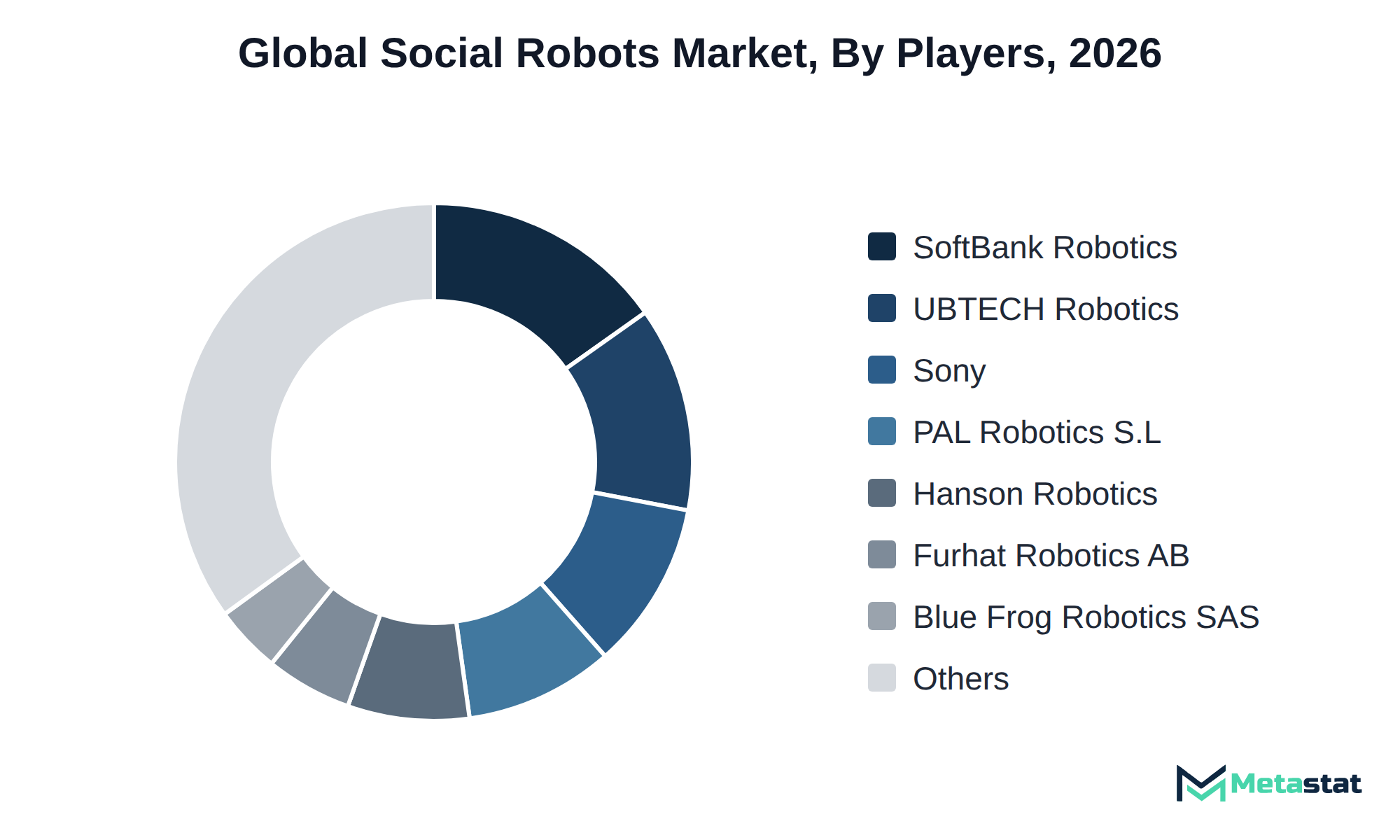
Competition within the Social Robots market occurs across several strategic dimensions, including product differentiation and service offerings. Companies position themselves based on factors including price, customization, and ecosystem integration, allowing buyers to select solutions that best meet specific operational needs.
AKINROBOTICS emphasizes the development of advanced humanoid robots, targeting educational and entertainment sectors. SoftBank Robotics Group Corp. focuses on service interaction robots, providing robust support and integration options for various industries. Meanwhile, Intuition Robotics Ltd. specializes in companion robots, enhancing user experience through tailored functionalities.
The market features distinct segments, including hardware, software, and services. For example, PAL Robotics S.L. concentrates on hardware solutions, driving innovation in mobile wheeled robots. UBTECH Robotics Corp. Ltd. provides a comprehensive software ecosystem to support diverse robot types, ensuring adaptability across multiple applications.
In addition, companies like Blue Ocean Robotics ApS focus on service offerings, providing maintenance and upgrades that enhance the lifecycle of their robotic solutions. This segmentation creates a competitive environment where companies use their unique strengths to capture market share, catering to growing demand across various end-use industries.
Several developments will drive social robots market growth. First, advancements in Humanoid Robots, with a projected increase in market share from USD 6.5 billion in 2026 to USD 39.1 billion by 2033, will enhance user engagement across various sectors. The growth of Companion Robots, expected to reach USD 18.5 billion by 2033, will appeal to consumers seeking interactive and personal assistance, significantly impacting residential applications. However, the market faces risks that could impede this growth, particularly regulatory challenges and public acceptance of robotic technologies. These factors could result in slower adoption rates, especially in regions like Europe, where consumer concerns about data privacy and security are prevalent. Thus, while the outlook for the Social Robots market remains positive, achieving the forecasted USD 86.5 billion hinges on overcoming these barriers.
By Robot Type: Humanoid Robots, Companion Robots, Service Interaction Robots, Educational Robots, Telepresence Robots, Therapeutic and Assistive Robots, Entertainment Robots, Others
By Component: Hardware, Software, Services
By Mobility: Mobile Wheeled, Stationary, Mobile Legged, Semi-Mobile, Others
By End-Use Industry: Healthcare and Elder Care, Education, Retail and Hospitality, Residential, Entertainment and Events, Corporate and Public Sector, Others
The report strategically identifies and profiles the key market players and analyses their core competencies in each sub-segment of the Social Robots market.
Report Attributes | Details |
Study Period | 2021-2033 |
Base Year | 2025 |
Estimated Year | 2026 |
Forecast Period | 2026-2033 |
Historical Period | 2021-2025 |
Growth Rate | CAGR 30.3% from 2026 to 2033 |
Revenue Unit | USD billion |
Segmentation | By Robot Type, Component, Mobility, End-Use Industry, and Region |
By Region | North America (By Robot Type, Component, Mobility, End-Use Industry, and Country)
|
Europe (By Robot Type, Component, Mobility, End-Use Industry, and Country)
| |
Asia Pacific (By Robot Type, Component, Mobility, End-Use Industry, and Country)
| |
South America (By Robot Type, Component, Mobility, End-Use Industry, and Country)
| |
Middle East and Africa (By Robot Type, Component, Mobility, End-Use Industry, and Country)
|
Find answers to common questions about this report
The Social Robots market size was valued at USD 10.4 billion in 2025.
The market is projected to grow at a CAGR of 30.3% during the forecast period from 2026 to 2033.
The North America Social Robots market size is estimated to reach USD 28.6 billion by 2033.
Humanoid Robots lead the Social Robots market with a projected value of USD 39.1 billion by 2033. This segment demonstrates the highest growth potential compared to others in the market.
Healthcare providers increasingly invest in social robots to enhance patient care and operational efficiency, driven by a growing demand for improved patient engagement. Educational institutions adopt these robots to enhance learning experiences, particularly for children with special needs, reflecting a significant shift in educational practices.
North America holds the dominant share of the Social Robots market, with a projected value of USD 28.6 billion in 2033, representing 35.9 percent of the total market. This figure surpasses the shares of other regions, including Europe and Asia Pacific.
High costs restrain Social Robots market growth, particularly in healthcare and education, where budget constraints limit investments. Rising material costs challenge suppliers, impacting profitability and hindering competitive pricing.
Increasing adoption of social robots in healthcare and education is driven by the need for enhanced patient engagement and personalized learning experiences. The integration of advanced technologies, including artificial intelligence and machine learning, further supports this trend by improving functionality and user interaction.
The Social Robots market is estimated to reach a valuation of USD 86.5 billion by 2033.
Key players operating in the Social Robots market include AKINROBOTICS, SoftBank Robotics Group Corp., Blue Frog Robotics SAS, Furhat Robotics AB, Hanson Robotics Limited, Intuition Robotics Ltd., and PAL Robotics S.L.
The analysts below cover Electronics and Semiconductor research at Metastat Insights.
LEAD ANALYST
Utkarsh Khirodkar is a Lead Market Research Analyst at MetaStat Insight, specializing in market intelligence, technology sector assessments, and competitive strategy.

PRINCIPAL CONSULTANT - ENTERPRISE AI & EMERGING TECHNOLOGIES
Banking & Finance · Electronics and Semiconductor · Energy and Power · Healthcare IT · Information & Technology · Professional Services
Vijay Gunti is a Principal Consultant at MetaStat Insight, bringing over two decades of experience across enterprise digital transformation, technology strategy, and intelligent systems.

PRINCIPAL CONSULTANT - QUALITY SYSTEMS & COMPLIANCE
Electronics and Semiconductor · Machinery & Equipment · Professional Services
Omkar Phadtare is an Industry Consultant at MetaStat Insight, specializing in quality systems, regulatory compliance, and standards benchmarking to drive data-driven market intelligence and strategic industry research.

ENERGY & INFRASTRUCTURE INDUSTRY CONSULTANT
Automotive and Transportation · Electronics and Semiconductor · Energy and Power · Machinery & Equipment
Saurabh Vasant Ganvir consults for Energy & Infrastructure Industry at MetaStat Insight, specializing in renewable energy, solar EPC, and electric vehicle (EV) infrastructure markets.

LEAD CONSULTANT - COMMUNICATION, TELECOM, AND IT
Electronics and Semiconductor · Information & Technology · Machinery & Equipment · Professional Services
Ravindra Sathe Consultants for Communication, Telecom, and IT at MetaStat Insight. He leads the firm's industry research initiatives across telecommunications infrastructure, digital connectivity, enterprise networking, and emerging information technology domains.
In the biological seed treatment space, registration timelines vary drastically between the European Union, Brazil, and North America. The MetaStat Insight research handled these cross-border regulatory barriers with genuine nuance, mapping commercialization pathways alongside historical field adoption rates. The segmentation between microbial strains and biochemical active ingredients was particularly well structured.
Our team was tracking whether regional recycling infrastructure could realistically absorb the growing volume of lithium iron phosphate batteries over the next decade. The report did a solid job separating announced hydrometallurgical plant capacity from active, permitted operational throughput. That distinction made the feedstock availability projections and regional recovery rate models far more credible than standard commercial overviews.
Tracking capacity expansion in single-use bioprocessing requires dependable data on raw material availability and cleanroom-grade polymer supply chains. The competitive landscape chapter gave a grounded evaluation of secondary component suppliers across North America and Asia-Pacific rather than simply reprinting press releases. Having that level of supplier benchmarking helped clarify dual-sourcing considerations for our clinical pipeline planning.
Explore related market intelligence reports worth reading alongside this one.