
LEAD ANALYST
Utkarsh Khirodkar is a Lead Market Research Analyst at MetaStat Insight, specializing in market intelligence, technology sector assessments, and competitive strategy.

Global Patient Engagement Solutions Market Size, Share, By Component (Software, Services and Hardware), By Deployment Model (Cloud-Based, On-Premises and Hybrid), By Application (Patient Access and Appointment Management, Health Information Access and Secure Messaging, Patient Education and Wellness, Care Management and Treatment Adherence, Patient Financial Engagement, Patient Feedback and Experience Measurement and Clinical Trial Recruitment and Retention), By End User (Healthcare Providers, Health Insurance Payers, Pharmaceutical and Biotechnology Companies, Medical Device Companies, Contract Research Organizations and Others (Public Health Agencies, Patient Advocacy Organizations)), Industry Analysis, Growth, Trends, and Forecast, 2026-2033
Report ID
MSI-3603
Published
October, 2026
Pages
263 Pages
Format
Historical
Base year
Forecast
Forecast period
Report Details
Market Valuation: Valued at $29.4 Billion in 2025, projected to reach $135.9 Billion by 2033 at a 21.1% CAGR.
Dominant Segment: Software leads the market, driven by strong demand for digital platforms that offer appointment scheduling, real-time messaging, telemedicine, and patient education resources.
Geographic Lead: North America holds 42.9% of the market in 2025, with the US leading in 2026, fueled by advanced healthcare infrastructure and high technology adoption among providers and insurers.
Fastest-Growing Deployment: Cloud-based deployment is projected to reach USD 105 billion by 2033, achieving the highest CAGR among deployment models at 22.6%, as buyers prioritize scalable, cost-efficient solutions.
Key Application Growth: Patient access and appointment management outpaces other application segments, projected to reach USD 31.5 billion by 2033, as providers invest in digital-first scheduling and streamlined intake.
What's Inside: The report provides detailed segmentation by component, deployment model, application, and end user, with competitive analysis and forecasts from 2026 to 2033.
Choose Your License
Global Patient Engagement Solutions Market
The global Patient Engagement Solutions market was valued at USD 29.4 billion in 2025 and is projected to reach USD 135.9 billion by 2033, growing at a CAGR of 21.1% over the forecast period.
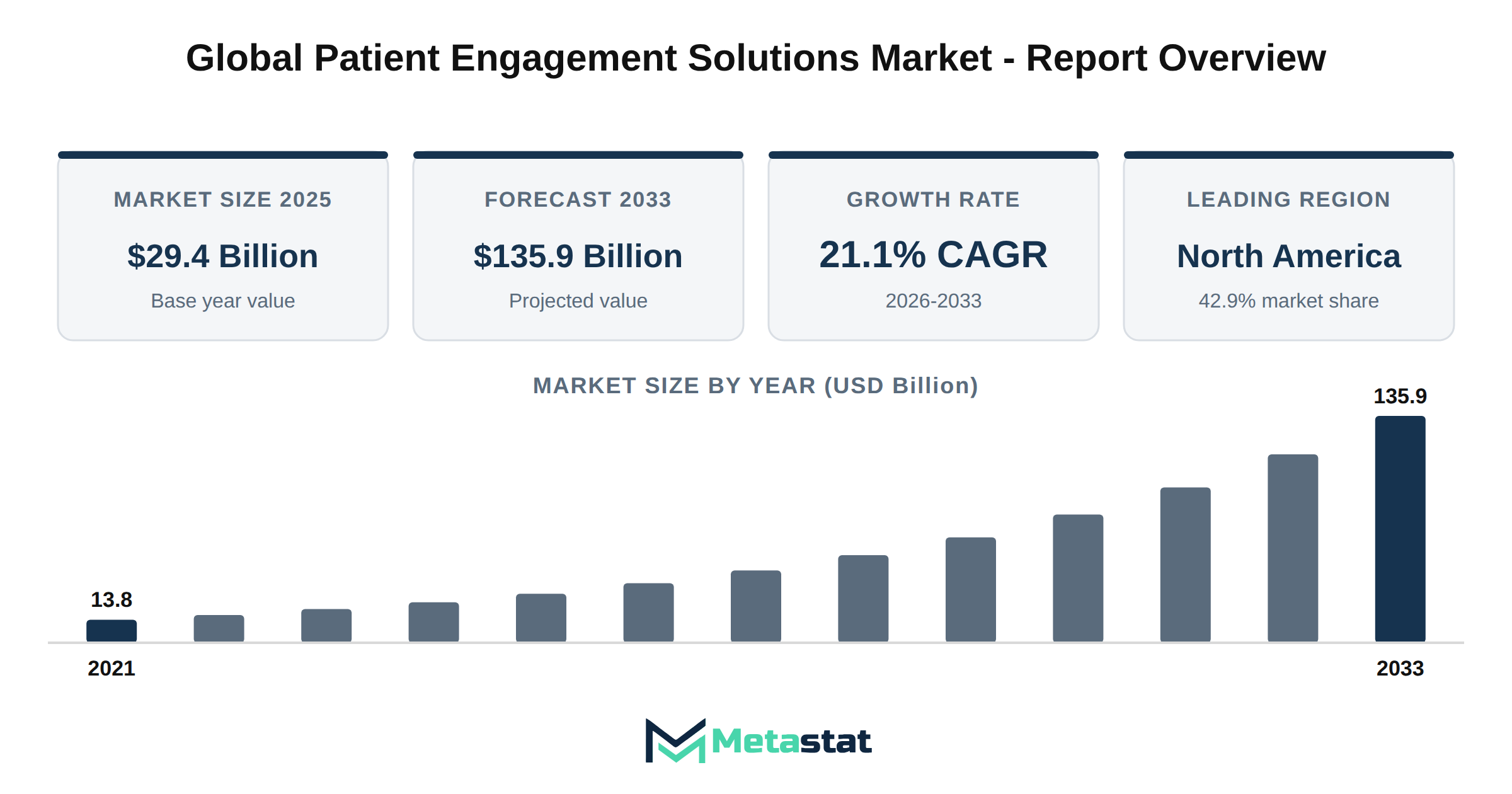
The Patient Engagement Solutions market covers a wide spectrum of platforms, software, and services that improve communication and interaction between patients and healthcare providers. Healthcare organizations, payers, and life sciences companies invest in these solutions to increase patient satisfaction, streamline appointment management, and provide secure access to health information. The shift toward value-based care is accelerating adoption alongside dedicated care management solutions that track disease progression and care coordination. Patients now expect digital health experiences that deliver greater convenience and transparency in their interactions with medical professionals.
Software holds the largest segment share by value. Demand is strong for digital platforms that provide appointment scheduling, real-time messaging, telemedicine, and patient education resources. Buyers show a clear preference for scalable, cloud-enabled technologies that support both clinical workflows and patient self-service. These capabilities reduce administrative burdens for providers and enable payers and pharmaceutical companies to engage patients more effectively throughout the care continuum.
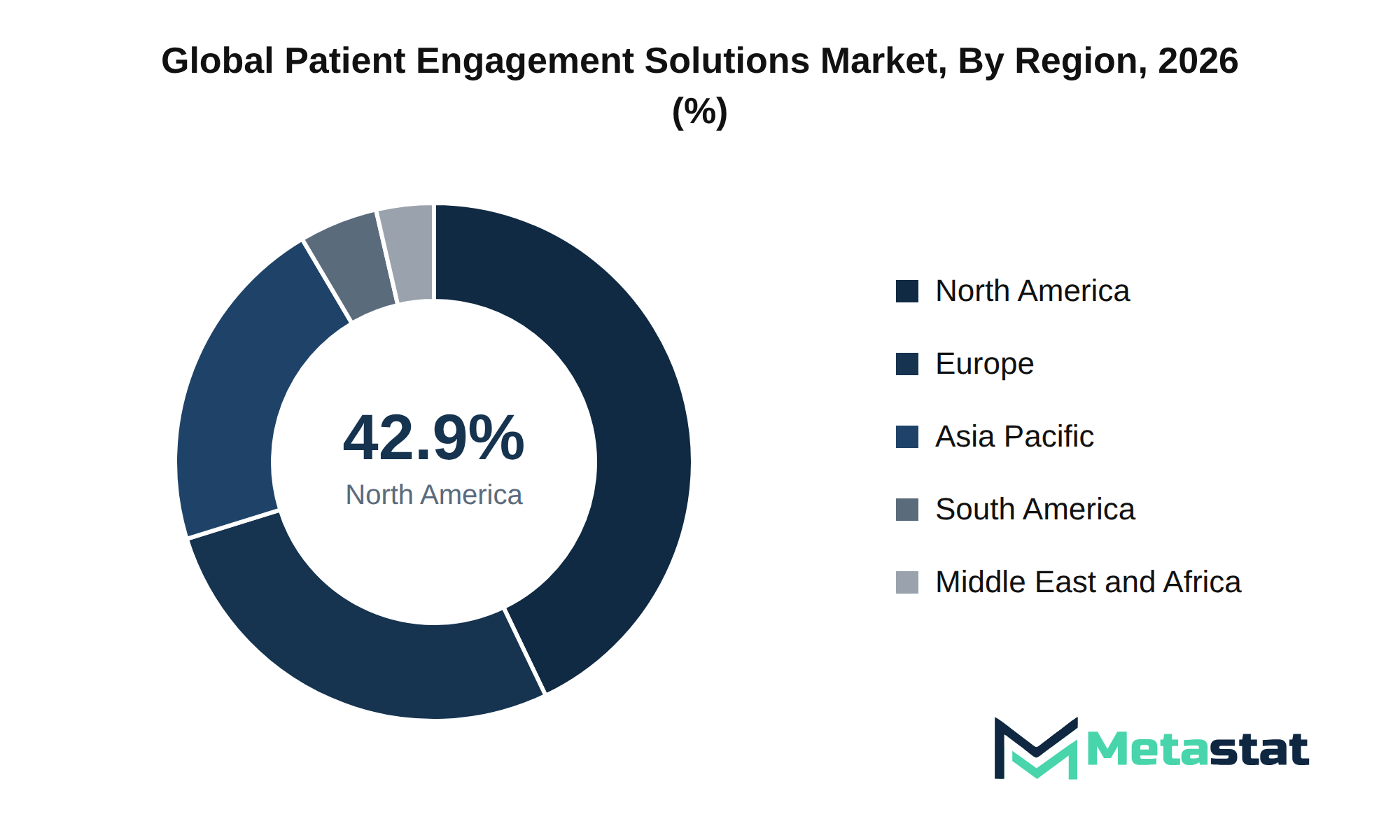
North America holds 42.9% of the market in 2025, with the US leading in 2026. Advanced healthcare infrastructure and a high rate of technology adoption among providers and insurers drive demand in this region. The main driver for this market is the increasing focus on improving patient outcomes and operational efficiency. Significant investment in digital engagement tools and integrated care platforms reflects this trend.
Solutions in this market enable healthcare providers, payers, and pharmaceutical companies to improve patient outcomes by streamlining access, information sharing, and treatment adherence across chronic condition platforms such as digital diabetes management. Buyers invest in these technologies to address rising chronic disease rates, deliver personalized care, and meet patient expectations for digital engagement. Cloud-based, hybrid, and on-premises platforms integrate scheduling, secure messaging, and wellness education. Outside acute facilities, specialized home healthcare providers increasingly rely on these portals to sustain continuous clinical contact with recovering and elderly patients. These options support diverse organizational needs and regulatory requirements.
Software accounts for the largest share by component, driven by increasing adoption of cloud-based patient engagement platforms. Automated appointment management and real-time communication between patients and clinicians are standard features. Robust health data access enhances operational efficiency and patient satisfaction. Cloud-Based deployment leads in value, reflecting a shift toward scalable and cost-effective solutions that facilitate integration across large healthcare networks and insurance payers.
Healthcare digitization is accelerating across North America, supported by rising telehealth adoption and regulatory initiatives that prioritize patient-centered care. Providers and payers in the region are intensifying efforts to implement proactive, data-driven engagement strategies aimed at reducing costs and improving health outcomes. Complementing these communication channels, investments in contactless remote patient monitoring allow clinical teams to observe physiological trends continuously without requiring active patient data entry.
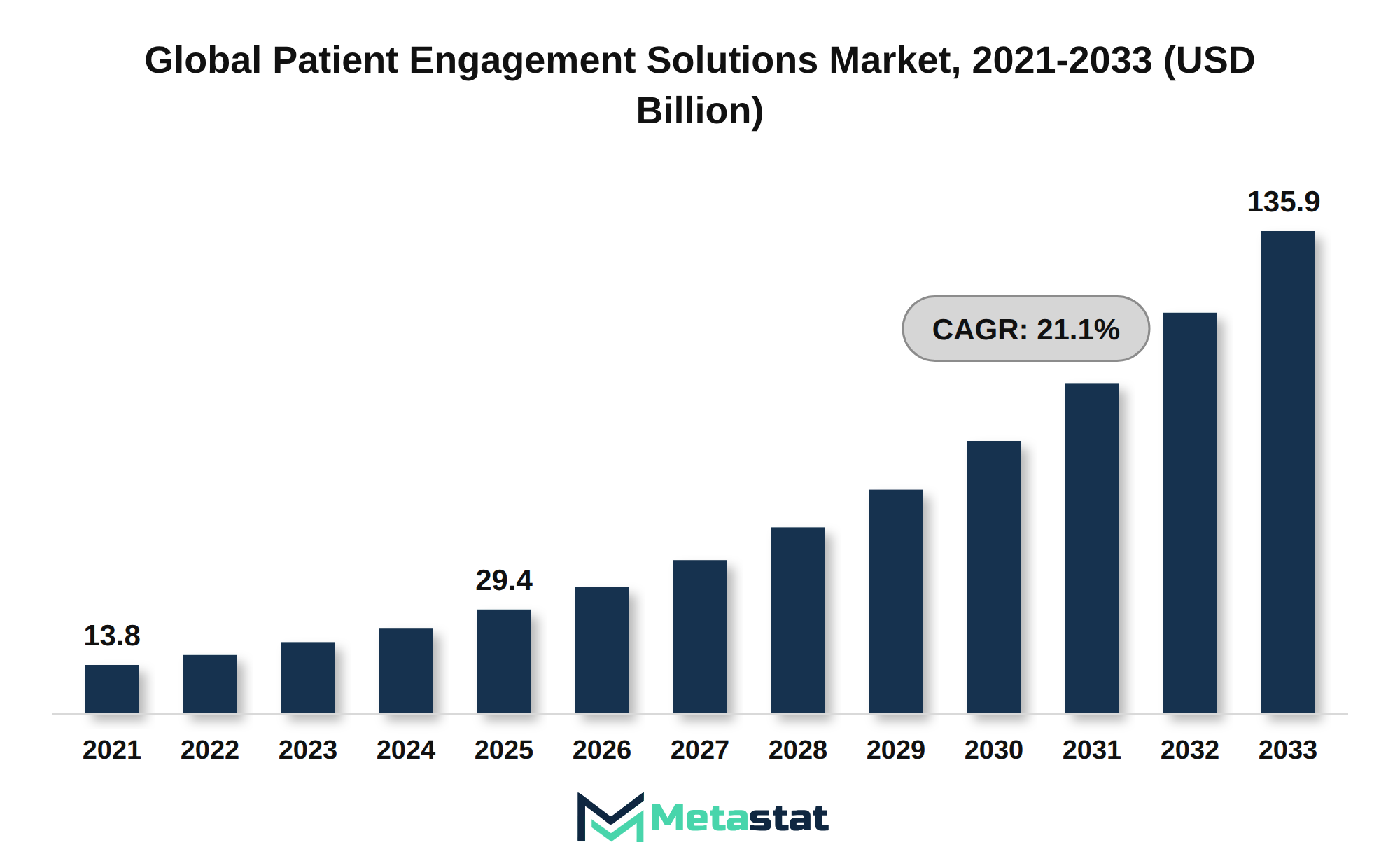
AI-powered capabilities have established a new standard for personalized outreach and care navigation in the Patient Engagement Solutions market. Machine learning algorithms and natural language processing techniques are now embedded into leading software platforms, supporting tailored patient communication, automated reminders, and adaptive health education workflows. The shift toward cloud-based deployment has intensified this trend, with the cloud-based segment forecast to reach USD 105.0 billion by 2033, reflecting a CAGR of 22.6% from 2026. This migration supports rapid data processing and real-time analytics required for individualized patient interactions across provider, payer, and pharmaceutical use cases.
Buyers across healthcare providers and health insurance payers are transitioning to AI-enabled solutions to address rising expectations for accessible, convenient, and relevant care support. Patient access and appointment management applications integrating AI-driven scheduling and virtual assistants are projected to reach USD 31.5 billion by 2033. These systems lower administrative burden and improve care coordination, enabling organizations to serve larger and more complex patient populations without proportionally increasing staffing or manual intervention. For healthcare organizations unable to manage high-volume scheduling intake internally, pairing AI front doors with healthcare-specialized business process outsourcing provides scalable contact center support for non-clinical inquiries. The commercial effect is an acceleration in platform replacement cycles and a premium on solutions offering integrated AI, predictive analytics, and scalable architecture. Suppliers investing in advanced AI capabilities strengthen their competitive position and attract buyers seeking differentiation through automation and precision in patient engagement.
Provider purchasing decisions in the Patient Engagement Solutions market increasingly favor platforms that combine EHR-integrated patient portals with digital front door capabilities. Hospital groups and large ambulatory networks gravitate towards solutions that streamline administrative workflows, reduce appointment no-shows, and facilitate secure messaging through a single digital access point. This shift is reflected in the strong growth of the software segment, which is projected to reach USD 86.7 billion by 2033. Buyers place a premium on platforms that integrate with legacy systems, as seen across the private healthcare clinics EHR landscape, while supporting modular pricing with contracts typically scaled to patient population size and transaction volumes. Solution providers respond by offering tiered subscription models and value-based contracts, aligning pricing with measurable improvements in patient engagement and clinical efficiency.
Cloud-based deployment models, forecast to grow to USD 105 billion by 2033, support this purchasing trend by reducing upfront capital expenditure and enabling rapid deployment across multi-site organizations. Buyers leverage these flexible contract structures to trial advanced features, including remote check-in and automated patient education, before expanding platform usage. This has led to an environment where contract flexibility and interoperability drive both adoption and vendor selection. In commercial terms, providers able to demonstrate strong EHR integration and cost transparency gain a preferential position in competitive tenders, translating into higher revenue retention and market share in the Patient Engagement Solutions market.
Digital patient engagement platforms have changed the way pharmaceutical and biotechnology companies approach clinical trial recruitment and retention. These organizations increasingly rely on targeted engagement solutions to identify, enroll, and retain participants, reducing bottlenecks that traditionally slow trial progress. The market addresses these needs with specialized tools that streamline communication, automate reminders, and personalize outreach for diverse patient populations. For clinical trial recruitment and retention, digital tools support informed consent processes, increase patient understanding of study requirements, and offer real-time feedback channels that enhance participant satisfaction.
Within this segment, pharmaceutical and biotechnology companies make up a distinct buyer group, projected to generate USD 17.3 billion in revenue by 2033. These buyers prioritize solutions that facilitate high-quality data collection, compliance monitoring, and participant safety. Integration of such tools allows sponsors to address challenges including low trial enrollment rates and high dropout rates, which carry significant commercial and regulatory risks. While engagement platforms secure adequate study participation, clinical sponsors pair patient retention workflows with certified healthcare analytical testing services to process trial bioassays and validate therapeutic endpoints. Expanding digital recruitment capabilities leads to broader patient representation and faster trial timelines, ultimately strengthening the pipeline for new therapies and advancing market competitiveness. Ongoing refinement of engagement strategies by trial sponsors drives demand for digital recruitment and retention solutions, supporting continued innovation and competitive differentiation across the sector. This evolution in digital enrollment directly reinforces the operational transition toward the decentralized clinical trials market, where remote consent and home-based protocols minimize participant travel hurdles.
Automated patient communication increases appointment attendance and strengthens treatment adherence by reducing gaps in scheduling and patient engagement. Digital reminders, appointment confirmations, and follow-up messages delivered through software platforms create continuous touchpoints between providers and patients. Healthcare organizations adopt these automated tools to cut missed appointments and streamline follow-up care. The software segment, valued at USD 21.5 billion in 2026 and projected to reach USD 86.7 billion by 2033, leads market growth and reinforces the shift toward automation in patient outreach strategies.
Automated messaging helps healthcare providers address common reasons patients miss appointments, including forgetfulness or confusion about scheduling logistics. Short, personalized reminders and instructions delivered via patient portals, SMS, or email help patients prepare for visits and follow prescribed treatment plans. These features drive higher operational efficiency for providers. Improved patient outcomes follow from better continuity of care. In chronic disease management, automated outreach supports daily medication adherence and timely check-ins, which reduces the risk of complications and readmissions.
Widespread adoption of automated communication platforms lowers administrative overhead for providers. Revenue increases when last-minute cancellations decline. Suppliers that integrate secure messaging, appointment management, and education tools into their offerings position clients to achieve higher patient satisfaction scores and stronger retention. Solutions that link communication with adherence tracking differentiate providers and drive sustained market demand.
Widespread adoption of telehealth and remote care services has rapidly shifted how patients and providers interact, prompting a surge in demand for digital platforms that streamline patient engagement outside traditional clinical settings. Healthcare providers, health insurance payers, and pharmaceutical companies now require scalable tools that support remote appointments, digital check-ins, virtual consultations, and ongoing patient monitoring. Integration of mobile apps and cloud-based platforms has reduced barriers to access for both urban and rural populations, enabling care delivery without geographic limitations. Organizations investing in these platforms report higher patient satisfaction scores and improved treatment outcomes, reinforcing the commercial rationale for expanding remote engagement capabilities. Demand is expected to continue benefiting from this technology-driven realignment of care delivery models over the forecast period.
Fragmented health IT systems often limit the integration of patient engagement platforms, leading to slower deployment among healthcare providers. Hospitals and clinics operating older electronic health record systems encounter compatibility issues when adopting new patient engagement solutions, resulting in extended implementation timelines and higher integration costs. This challenge restricts providers with limited IT resources from leveraging the full capabilities of advanced engagement software. For large health systems, complex integration requirements reduce the speed of customization and workflow optimization, delaying the anticipated improvements in patient communication and operational efficiency. The market faces slower uptake in regions and organizations with infrastructure gaps or legacy system dependencies, driving demand for solutions that address interoperability challenges. Delayed adoption in these segments translates to missed opportunities for expanded patient access and engagement, impacting overall growth. The market experiences a direct relationship between system compatibility and the pace of technology adoption among providers.
Suppliers in the Patient Engagement Solutions market experience significant cost pressure due to complex and evolving healthcare compliance requirements. Maintaining up-to-date data privacy and security protocols often demands substantial investment in both technology infrastructure and specialized talent. For software and platform providers, this translates into increased spending on training, audits, and regular updates to protect sensitive patient data and meet regulatory standards. Service vendors face higher liability insurance premiums and the risk of contractual penalties if compliance gaps are found. In response, suppliers are investing in modular software architectures and automated compliance monitoring to streamline updates while keeping operational costs contained. This focus on cost containment shapes pricing strategy and influences which regions and customer segments suppliers prioritize.
Cloud-based deployment is positioned as the strongest pocket of opportunity, supported by its projected rise from USD 25.3 billion in 2026 to USD 105 billion by 2033. This segment holds the highest compound annual growth rate among deployment models at 22.6%, outpacing both on-premises and hybrid options. Healthcare providers and payers accelerate cloud adoption to support scalable, always-available patient communication and facilitate integration with new digital health tools. Vendors offering robust, secure cloud platforms address persistent pain points including limited IT resources, infrastructure costs, and the flexibility required for remote or distributed operations. Buyer preference is expected to shift toward cloud-based offerings while organizations prioritize rapid scaling, cost efficiency, and simplified compliance management.
The Global Patient Engagement Solutions market is segmented based on Component, Deployment Model, Application, and End User.
Software underpins patient-facing digital tools for appointment management, secure messaging, health records access, and tailored education modules, with primary adoption among healthcare providers and health insurance payers. Driving demand in this segment, healthcare providers prioritize interoperability and real-time data exchange to streamline patient journeys and automate touchpoints, increasing both workflow efficiency and patient satisfaction. Compared to services and hardware, software leads in scale and pace, fueled by frequent updates, scalable delivery models, and recurring licensing models that shape buyer preferences. Digital-first care strategies further accelerate uptake, making software the fastest-expanding component. Adoption trends reflect a shift toward integrated platforms that consolidate multiple engagement features, while services focus more on implementation or support and hardware delivers lower projected value growth through 2033.
Services segment is estimated to reach USD 38.3 billion by 2033, at a CAGR of 20.5% during the forecast period. This segment addresses the growing reliance of healthcare providers, payers, and pharmaceutical companies on consulting, integration, training, and managed services to optimize deployment and use of patient engagement platforms. Increased digitalization across care providers and payers has driven demand for specialized services that manage system customization, data security, compliance, and workflow integration. Compared to software and hardware, service adoption is propelled by buyers with limited in-house IT capacity who require ongoing support, which influences the segment’s steady growth rate and pricing premium. Organizations are shifting toward service-driven strategies to scale digital initiatives and ensure regulatory compliance in a complex health IT environment. Broader adoption of interoperable solutions and evolving regulatory requirements continue to shape the value of services relative to other components.
Hardware segment is expected to reach USD 11 billion by 2033. Physical devices in this segment support real-time patient monitoring, interactive kiosks, biometric authentication, and in-clinic digital interaction. Hospitals and clinics invest in these devices to improve patient throughput, support digital check-in, and capture health data at the point of care. Demand for hardware is driven by the requirement for efficient patient check-in and monitoring beyond digital-only platforms, especially in settings where software solutions alone do not meet operational goals. Unlike software and services, hardware adoption often involves higher upfront investment and faces longer replacement cycles, influencing purchasing decisions among healthcare providers. While software in the market is projected to grow to USD 86.7 billion by 2033, hardware adoption progresses at a measured pace due to cost considerations and integration complexity. Distinct from cloud-based offerings, hardware remains essential for on-site engagement and data capture, particularly in high-volume or infrastructure-constrained environments.
Valued at USD 25.3 billion in 2026 and projected to reach USD 105 billion by 2033, cloud-based deployment is driven by healthcare providers and health insurance payers looking for scalable, accessible platforms that reduce IT overhead. Hospitals, clinics, and payer organizations favor cloud-based models for their ability to support rapid updates, remote access, and enterprise-level integration with minimal on-site infrastructure. These solutions address the demand for real-time patient data access, continuous patient-provider communication, and faster onboarding of new services - advantages strengthened by regulatory shifts toward interoperability and patient-centric care in major healthcare economies. Compared to on-premises and hybrid deployments, cloud-based solutions deliver higher growth at a CAGR of 22.6%, reflecting faster adoption among buyers seeking both cost efficiency and flexibility. Increasing digital literacy and organizational pressure to modernize legacy systems influence adoption, setting this deployment model apart from slower-growing, capital-intensive alternatives.
Estimated to reach USD 15.5 billion by 2033, the On-Premises segment is projected to grow at a CAGR of 13.2%. This deployment model is primarily adopted by hospitals, large health systems, and organizations with strict requirements for data control and regulatory compliance. Organizations favor on-premises solutions when they prioritize ownership and direct oversight of patient data infrastructure, often driven by internal security policies or specific regulatory obligations. While public cloud alternatives have gained traction for their scalability and cost efficiency, on-premises installations remain preferred by stakeholders managing highly sensitive health information or operating in regions with stringent data residency laws. Compared to the faster-growing cloud-based segment, on-premises solutions involve higher up-front capital investment and ongoing maintenance costs, which tends to limit adoption to entities with dedicated IT resources and robust cybersecurity strategies. This segment attracts buyers who value customization and integration with legacy systems, rather than those seeking rapid deployment and operational flexibility.
Hybrid deployment is expected to reach USD 15.4 billion by 2033. This approach combines both on-premises and cloud-based systems, enabling healthcare organizations to maintain certain sensitive data on local infrastructure while facilitating broader accessibility and scalability through cloud components. Buyers choosing hybrid models are typically large hospital networks, health systems, and public health agencies that require flexibility for compliance and integration with legacy IT assets. Adoption in this segment is propelled by the demand for customizable deployment and the ability to balance security with remote access needs. Compared to fully cloud-based solutions, hybrid deployments often appeal to buyers with more complex regulatory or technical requirements, despite showing a slower adoption curve due to higher implementation and maintenance costs. Organizations prioritizing data sovereignty and local control are drawn to the hybrid segment, setting its investment profile apart from other deployment options.
Valued at USD 8.6 billion in 2026 and projected to reach USD 31.5 billion by 2033 at a CAGR of 20.3%, patient access and appointment management platforms address the operational challenge of connecting patients with care providers efficiently, reducing administrative workload and missed appointments. Hospitals, clinics, and health systems stand out in purchasing, driven by rising patient volumes and a shift toward digital-first scheduling. This segment outpaces others in its group, reflecting faster growth than health information access or patient education solutions. Increased investment by providers is triggered by the need for streamlined intake, mobile scheduling, and digital check-in, which accelerate access to care and improve satisfaction. Compared to segments focused on secure messaging or patient wellness, access and appointment management commands higher volume adoption among large provider groups, with price sensitivity shaped by integration depth and scalability requirements. Regulatory encouragement for reduced wait times further boosts demand in this segment.
Estimated to reach USD 26.5 billion by 2033, Health Information Access and Secure Messaging delivers a CAGR of 19.3% through the forecast period. This segment addresses the growing demand for secure, digital access to personal health records and real-time communication between patients and healthcare professionals. Health systems, insurance payers, and pharmaceutical firms invest in these solutions to streamline clinical workflows, support regulatory compliance, and increase patient satisfaction by improving transparency and accessibility. Heightened patient expectations for data privacy and control drive software adoption, particularly among healthcare providers and insurance payers seeking to differentiate their services. This segment commands higher investment than patient education and wellness tools due to its central role in compliance and interoperability, making it a priority for organizations modernizing digital infrastructure. Demand for integrated, secure messaging solutions is accelerated by policy changes favoring data portability and heightened regulatory scrutiny, positioning this segment as a commercial and operational necessity for providers competing in the market.
Patient Education and Wellness segment is expected to reach USD 15.9 billion by 2033. This segment delivers digital content and interactive tools to patients, supporting preventive care, health literacy, and ongoing wellness management. Healthcare providers and payers deploy these solutions to extend patient support beyond clinical settings, reduce preventable admissions, and drive improved outcomes. Rising demand is driven by the shift toward value-based care, where providers are incentivized to manage patient health holistically and prevent complications. Unlike Patient Access or Secure Messaging, which are focused on transactions or communication, Patient Education and Wellness prioritizes proactive engagement and self-management, often targeting chronic disease populations. Barriers to adoption in this segment include variation in digital literacy among patients and the challenge of creating content that meets regulatory standards across regions. Growth in this area is further influenced by payer initiatives and government programs that integrate patient education requirements into reimbursement frameworks. Health insurers continue to invest in these offerings to support population health strategies and lower long-term costs.
Projected to grow at a CAGR of 23.6% during the forecast period, care management and treatment adherence addresses the persistent challenge of supporting patients through complex care regimens and chronic disease management. This segment is used by healthcare providers and payers seeking to improve clinical outcomes and reduce costly readmissions by ensuring that patients follow prescribed treatment plans. Driving forces include the increase in chronic illnesses and the push for value-based care, which incentivizes providers to track and improve adherence rates. This sub-segment stands out for its faster growth relative to others, reflecting heightened demand from provider networks and insurance organizations aiming to minimize gaps in care. Unlike patient education or appointment management, which center on information dissemination or scheduling, care management and treatment adherence tools emphasize real-time monitoring and intervention, often integrating with electronic health records for proactive patient support. This differentiation enables more personalized and population health-driven approaches.
Financial engagement solutions address the increasingly complex payment landscape in healthcare by enabling patients to understand, manage, and fulfill their financial obligations across billing, insurance, and reimbursement processes. These platforms are used by healthcare providers, insurance payers, and patients to facilitate transparent communications, offer flexible payment plans, and simplify insurance claims, reducing administrative burden and potentially accelerating revenue cycles. Demand in this segment is driven by a heightened focus on patient-centric billing transparency and new coverage models that shift more payment responsibility to patients. Compared to faster-growing application areas including care management and treatment adherence, adoption of financial engagement solutions is influenced by variability in healthcare regulations and differences in payer-provider integration, which shape buyer priorities and speed of implementation. The segment stands out for its direct impact on both provider liquidity and patient experience, making advanced, user-friendly payment technologies a key area of innovation and competition.
Collecting and analyzing patient feedback through digital tools informs healthcare providers about satisfaction levels, quality of care, and areas for clinical or service improvement. Hospitals, clinics, and health systems rely on this segment to capture real-time patient sentiment and prioritize experience-driven interventions. Demand for patient feedback and experience measurement is driven by value-based care models, where reimbursement increasingly reflects patient satisfaction and outcomes instead of purely service volume. Compared to data-centric segments including health information access, this segment focuses on subjective experience, often requiring integration with survey tools and analytics platforms rather than electronic health records. Wider adoption in the market is influenced by growing regulatory and accreditation requirements, which reward organizations that systematically measure and act on patient experience. Resistance sometimes arises from survey fatigue and concerns about data privacy, setting the segment apart from purely transactional or educational applications in the market.
Recruitment and retention solutions for clinical trials streamline how pharmaceutical companies, contract research organizations, and healthcare providers identify, enroll, and engage participants throughout the trial period. Key users deploy these tools to overcome longstanding difficulties with patient enrollment and reduce dropout rates, both of which directly impact study timelines and regulatory submissions. In the Patient Engagement Solutions market, demand for this application segment is driven by the growth of complex clinical trials and the shift to decentralized and hybrid trial models. These platforms integrate personalized communication, digital consent, and remote monitoring to support higher retention and improve protocol compliance. Compared to other application segments in the Patient Engagement Solutions market, buyers in clinical trial recruitment and retention face stricter regulatory expectations and require more specialized workflows, making adoption decisions slower and solution pricing higher. High entry costs and the requirement for validated, compliant digital technologies set this segment apart from wellness or appointment management solutions, which target broader patient populations and face less stringent regulatory oversight.
At USD 20.5 billion in 2026 and projected to reach USD 74.3 billion by 2033, healthcare providers hold the highest-value position in the Patient Engagement Solutions market, supported by a CAGR of 20.2%. Hospitals, clinics, and integrated health systems rely on these solutions to improve patient communication, streamline workflow, and facilitate personalized care across digital and in-person environments. Rising demand for coordinated care has resulted in increased adoption by multi-site health systems and community hospitals, which prioritize solutions that integrate with electronic health records and telehealth platforms. Compared to health insurance payers or pharmaceutical companies, healthcare providers face higher regulatory and interoperability requirements, driving investment into scalable, standards-based platforms. Growth in this segment outpaces others in the end user group due to intensifying pressure on providers to enhance patient outcomes while meeting government and accreditation mandates for digital health engagement. Providers’ willingness to pay premium pricing for advanced integration and analytics capabilities further differentiates this segment’s growth trajectory.
Estimated to reach USD 29.8 billion by 2033, health insurance payers are projected to grow at a CAGR of 22%. Insurers use patient engagement solutions for care coordination, claims management, and improving member satisfaction. Growth in this segment is driven by the increasing complexity of health plans, incentives for preventive care, and mandates for greater transparency in patient communications. Health insurance payers integrate these platforms to reduce administrative burden, boost compliance with value-based care models, and minimize unnecessary utilization. Compared with healthcare providers, buyers in this group emphasize workflow automation and data analytics, seeking scalable solutions that enhance operational efficiency and support large, distributed member populations. This segment outpaces pharmaceutical and biotechnology companies in growth, reflecting stronger digital adoption within the insurance industry. Regulatory developments requiring improved patient access to information influence technology investment, pushing payers toward comprehensive digital engagement tools that align with evolving compliance obligations.
Expected to reach USD 17.3 billion by 2033, pharmaceutical and biotechnology companies use patient engagement solutions to facilitate data-driven drug development, support real-world evidence generation, and improve adherence programs. These companies interact with patients directly for research participation, post-market surveillance, and education initiatives that require secure digital communication and tailored outreach. Regulatory shifts demanding more robust patient data integration and outcomes tracking have increased reliance on advanced digital platforms in this segment. Unlike healthcare providers or payers, buyers in this group prioritize capabilities that streamline clinical trial engagement and collect longitudinal health data, supporting both regulatory compliance and accelerated product development cycles. Pharmaceutical and biotechnology companies experience distinct adoption patterns driven by the competitive need for innovation and differentiation, rather than the scale or operational efficiency sought by providers. Growth in this segment is supported by expanding requirements for patient-reported outcomes and digital therapies, which set it apart from end users with more standardized workflows in the market.
Medical Device Companies segment is projected to grow at a CAGR of 22.4% during the forecast period, outpacing the historical and forecasted rates of other end user segments in the Patient Engagement Solutions market. These organizations focus on integrating connected devices, remote monitoring systems, and digital health tools to improve patient outcomes, device adherence, and post-market surveillance. Growth in this segment is driven by regulatory incentives for data interoperability and the shift toward value-based care, requiring medical device firms to support patients beyond product delivery. Compared to healthcare providers and insurance payers, medical device companies deploy engagement platforms to collect device usage data, provide real-time feedback to patients, and proactively manage adverse events, all of which support regulatory compliance and post-market requirements. Adoption in this segment is influenced by the need for robust data security and integration with broader healthcare systems, setting it apart from the other end user segments. High growth reflects increased demand for connected health solutions, particularly in chronic disease management and home-based care.
Contract research organizations deliver outsourced clinical trial management, data collection, and regulatory support for pharmaceutical, biotechnology, and medical device companies. In the Patient Engagement Solutions market, these organizations rely on patient-centric digital tools to improve trial recruitment, engagement, and retention, supporting sponsors seeking to accelerate study timelines and comply with increasingly complex regulatory requirements. Adoption within this segment is driven by sponsors’ focus on reducing drop-out rates and optimizing data quality, with digital engagement platforms providing real-time patient monitoring, remote support, and adherence reminders. Unlike healthcare provider or payer segments, contract research organizations prioritize integration with electronic data capture and study management systems rather than core electronic health record or claims platforms. Regulatory compliance and the complexity of global trial management increase the demand for scalable, secure engagement solutions tailored to diverse study protocols and geographies. While adoption of digital solutions among contract research organizations trails the volume of purchases seen among healthcare providers, the segment influences broader product requirements in the Patient Engagement Solutions market through its emphasis on interoperability and regulatory alignment.
Public health agencies and patient advocacy organizations use engagement solutions to enable outreach, education, and population health monitoring that extends beyond direct clinical care. These buyers seek platforms that support broad-based communication, facilitate preventive health campaigns, and improve the accessibility of resources for underserved or at-risk groups. Demand in this segment is driven by the need for community-level engagement and data-driven interventions that inform policy and direct funding toward high-impact public health initiatives. Compared to healthcare providers and payers, decision cycles for these buyers are influenced more heavily by regulatory compliance, grant availability, and public reporting requirements than by direct revenue objectives. Adoption often involves distinct integration needs, reflecting the priority on interoperability with public data registries and open-access health information systems. This segment responds to a broader stakeholder base and places greater emphasis on scalability and inclusivity, differing from provider-driven models focused primarily on individual patient interaction.
Based on geography, the Global Patient Engagement Solutions market is divided into North America, Europe, Asia-Pacific, South America, Middle East, and Africa.
Healthcare technology adoption in the United States drives regional performance, reflecting strong investment from hospital systems and outpatient networks in digital interaction platforms. Canada and Mexico follow with increasing digitization of patient communications and growing integration of electronic health records. North America captures 42.9% of global revenue in 2025, making it the largest contributor to the Patient Engagement Solutions market throughout the forecast window. Regulatory momentum in the United States around data interoperability and digital access ensures providers and payers prioritize software and cloud-based deployments. High smartphone penetration and broadband connectivity further support user uptake of mobile health tools, particularly in urban and suburban centers. By the end of 2033, North America is projected to reach USD 53.2 billion, driven by scale of investment and policy emphasis on digital-first healthcare delivery. Regional leadership is reinforced by new functionalities and integration with existing clinical systems, which accelerate demand.
Europe accounted for 27.3% of global revenue in 2025, reflecting sustained investment by healthcare providers and payers in digital patient solutions. Germany, France, and the UK shape regional demand through extensive hospital networks and national health systems that prioritize interoperability and digital access. Across Italy and Spain, public sector initiatives influence adoption patterns, while private providers in Germany and the UK adopt advanced patient portals and remote care platforms. Regulatory alignment on patient data protection and secure digital communication accelerates solution uptake, particularly among organizations managing large patient populations. In Russia and the broader Rest of Europe, adoption reflects ongoing modernization efforts and rising interest in scalable, cloud-based tools. Evolving expectations for patient self-management and transparency in care have made Europe a focus market for technology vendors. The market benefits from a purchaser base that includes major health systems and insurers responding to both regulatory requirements and patient-driven demand for digital engagement options.
Healthcare providers and insurance payers in Asia Pacific drive sustained adoption of digital engagement platforms, reflecting the region’s expanding patient base and the rapid digitalization of care delivery. China, India, and Japan stand out as the leading contributors, driven by large-scale government initiatives supporting health IT adoption and growing investments from private hospital groups. This regional expansion is supported by rising smartphone penetration and increasing internet access, which enable patients to interact with care teams and access health resources remotely. The region accounted for 21.3% of global revenue in the Patient Engagement Solutions market in 2025, which shows its influence on vendor strategies. Local adaptation of solutions, including language support and mobile-first interfaces, shapes product offerings across these countries. Intense competition among technology suppliers aiming to serve a diverse and price-sensitive population further accelerates innovation and cost optimization throughout the market.
Brazil leads demand in South America, driven by public and private healthcare facilities investing in digital engagement tools to improve patient communication and care coordination. In Argentina, adoption centers on urban hospital networks digitizing appointment management and secure messaging, aiming to reduce wait times and streamline access to providers. Across the region, limited healthcare IT infrastructure and uneven broadband access restrict growth, especially outside major metropolitan areas. Regional buyers in South America favor flexible, scalable solutions that support both Portuguese and Spanish interfaces, reflecting the linguistic diversity of Brazil and Argentina. Local vendors and international suppliers compete by tailoring platforms to regulatory and cultural requirements unique to these countries. South America’s share of global revenue remains heavily concentrated in Brazil and Argentina, where health system modernization and policy support for digital health initiatives are strongest.
Private healthcare groups in Saudi Arabia and the United Arab Emirates are increasing their investment in digital solutions to support patient communication and streamline appointment scheduling. Uptake of the Patient Engagement Solutions market in South Africa is influenced by public-private collaboration projects that increase access to health information for underserved populations. A distinct driver in the region is the regulatory push for digital health records in major hospitals, particularly in the UAE, prompting providers to seek scalable platforms that support both Arabic and English interfaces. Market share in this region reflects gradual adoption rates influenced by infrastructure variability and differing levels of digital literacy across Saudi Arabia, UAE, South Africa, and the broader Middle East and Africa. Investment is strongest where government incentives align with provider demand for interoperable, secure patient-facing applications.
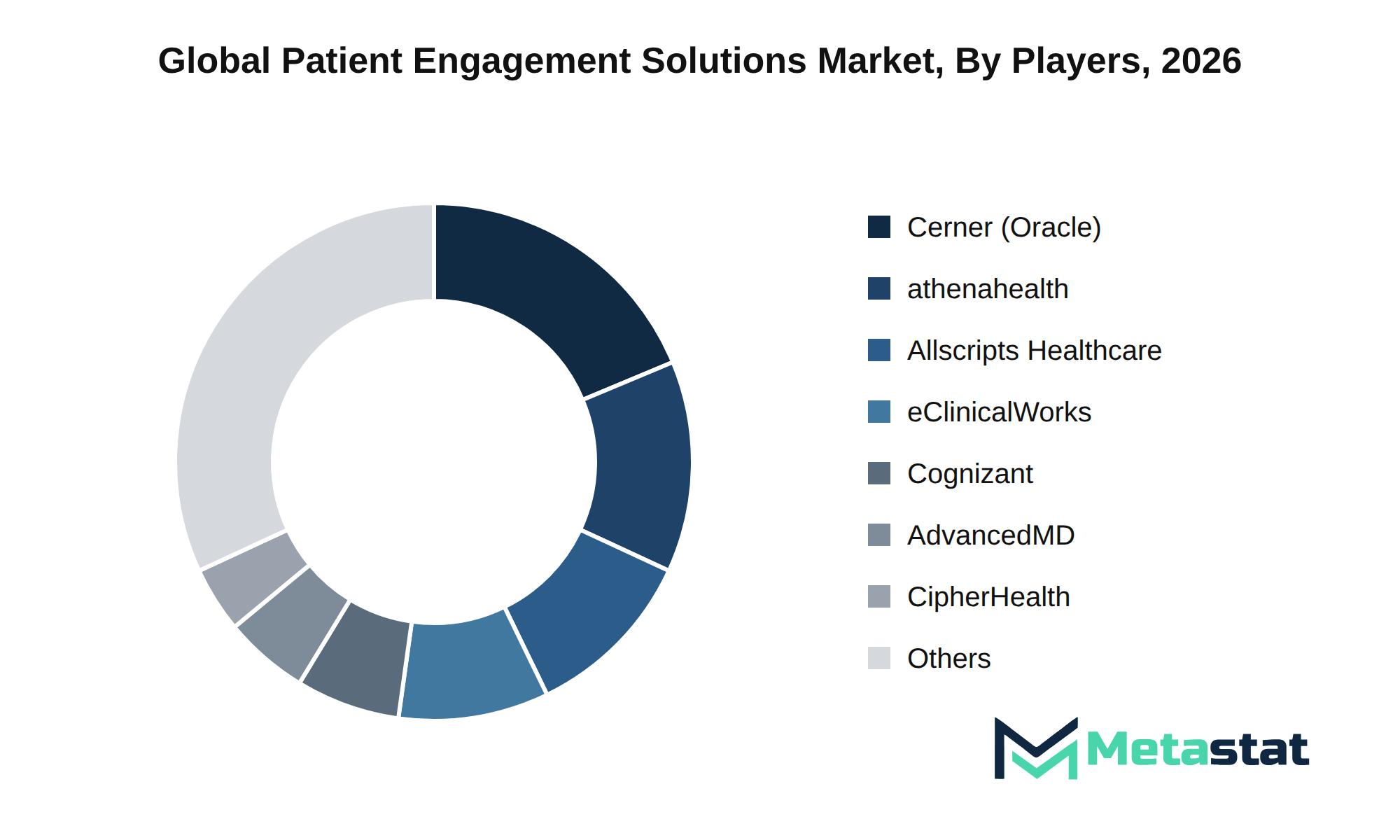
Competition in the Patient Engagement Solutions market reflects a mix of software specialists, service integrators, and technology conglomerates, each targeting different healthcare buyer priorities. Companies differentiate offerings on interoperability with electronic health records, breadth of patient communication tools, and the ability to support compliance with regional data privacy standards. Buyers compare platforms on integration flexibility, customization options, and total cost of ownership, with larger healthcare providers placing a premium on scalable cloud-based deployments and continual product updates.
Software-centric firms including Epic Systems Corporation and eClinicalWorks, LLC focus on patient portal integration, secure messaging, and analytics to streamline patient-provider interactions. Cognizant and Health Catalyst, Inc. emphasize data-driven population health management, leveraging analytics to support care coordination and treatment adherence functionalities. Companies including Cerner Corporation (Oracle) and athenahealth, Inc. provide comprehensive service ecosystems that address patient access, appointment scheduling, and engagement across multiple touchpoints. Medical Information Technology, Inc. (MEDITECH) concentrates on expanding interoperability and intuitive user experience for both clinical staff and patients, aiming to improve adoption in hospital and outpatient settings.
Rising adoption of cloud-based platforms, supported by demand for remote patient interactions and integrated digital health ecosystems, is reshaping supplier strategies throughout the Patient Engagement Solutions market. Price competitiveness remains decisive in large-scale contracts, but decision makers increasingly weigh vendor support capabilities, data security commitments, and the degree of workflow automation available in each solution. This drives suppliers to expand service portfolios and invest in patient-centric innovation to secure long-term engagement with healthcare organizations.
Achieving this outlook depends first on continued adoption of cloud-based deployment, which is projected to expand from USD 25.3 billion in 2026 to USD 105.0 billion by 2033. Healthcare providers and payers are increasing investment in digital infrastructure, driven by the operational and cost benefits of centralizing patient data and communications through scalable cloud platforms. Growing demand from healthcare providers - expected to reach USD 74.3 billion by 2033 - reflects a shift toward patient-centric care models and regulatory incentives supporting digital health engagement, particularly in North America, which is forecast to account for USD 53.2 billion of the market by 2033.
Momentum across these segments relies on healthcare systems prioritizing software integration and patient access tools. The primary risk to growth lies in concerns surrounding data privacy and interoperability. Variations in regulatory requirements and technical standards, especially in Europe and Asia Pacific, slow technology integration and limit efficient data sharing between providers, payers, and patients. If these challenges restrict investment or delay solution rollouts, expansion could proceed more slowly than projected. The balance of adoption, technology integration, and policy alignment across regions will determine whether the market achieves the projected trajectory.
By Component: Software, Services, Hardware
By Deployment Model: Cloud-Based, On-Premises, Hybrid
By Application: Patient Access and Appointment Management, Health Information Access and Secure Messaging, Patient Education and Wellness, Care Management and Treatment Adherence, Patient Financial Engagement, Patient Feedback and Experience Measurement, Clinical Trial Recruitment and Retention
By End User: Healthcare Providers, Health Insurance Payers, Pharmaceutical and Biotechnology Companies, Medical Device Companies, Contract Research Organizations, Others (Public Health Agencies, Patient Advocacy Organizations)
The report strategically identifies and profiles the key market players and analyses their core competencies in each sub-segment of the Patient Engagement Solutions market.
|
Report Attributes |
Details |
|
Study Period |
2021-2033 |
|
Base Year |
2025 |
|
Estimated Year |
2026 |
|
Forecast Period |
2026-2033 |
|
Historical Period |
2021-2025 |
|
Growth Rate |
CAGR 21.1% from 2026 to 2033 |
|
Revenue Unit |
USD billion |
|
Segmentation |
By Component, Deployment Model, Application, End User, and Region |
|
By Region |
North America (By Component, Deployment Model, Application, End User, and Country)
|
|
|
|
Asia Pacific (By Component, Deployment Model, Application, End User, and Country)
|
|
|
|
|
Middle East and Africa (By Component, Deployment Model, Application, End User, and Country)
|
Find answers to common questions about this report
The Patient Engagement Solutions market size was valued at USD 29.4 billion in 2025.
The projected CAGR is 21.1% for the forecast period from 2026 to 2033.
The North America Patient Engagement Solutions market size is estimated to reach USD 53.2 billion by 2033.
Software leads by component, reaching USD 86.7 billion in 2033, the highest among all type segments. This segment outpaces Services and Hardware in projected value.
Widespread adoption of telehealth and remote care services is driving demand for digital platforms that enable patient engagement outside traditional clinical settings. Accelerating cloud-based deployment supports scalable, cost-efficient communication and integration with digital health tools.
North America holds the dominant share with 42.9 percent of the total market. This region is projected to reach USD 53.2 billion by 2033, the highest value among all regions.
Fragmented health IT systems slow integration of patient engagement platforms and raise deployment costs for providers with legacy infrastructure. Suppliers face higher expenses from evolving healthcare compliance requirements, increasing investment in data security and regulatory updates.
Cloud-based deployment is accelerating adoption by enabling scalable, always-available patient communication and reducing infrastructure costs for providers with limited IT resources. Integration of mobile apps and cloud platforms further lowers access barriers, allowing healthcare organizations to expand remote care without geographic constraints.
The Patient Engagement Solutions market is estimated to reach a valuation of USD 135.9 billion by 2033.
Companies active in this sector include AdvancedMD, Allscripts Healthcare, LLC, athenahealth, Inc., Cerner Corporation (Oracle), eClinicalWorks, LLC, Epic Systems Corporation, and Medical Information Technology, Inc. (MEDITECH). These organizations develop and supply core patient engagement solutions to healthcare providers and related end users.
The analysts below cover Healthcare IT research at Metastat Insights.
LEAD ANALYST
Utkarsh Khirodkar is a Lead Market Research Analyst at MetaStat Insight, specializing in market intelligence, technology sector assessments, and competitive strategy.

LEAD PRINCIPAL ANALYST, PHARMA AND HEALTHCARE
Food and Beverages · Healthcare · Healthcare IT · Medical Devices
Ajay Devgire is the Lead Healthcare Analyst at MetaStat Insight, leading strategic research and market intelligence initiatives across the global healthcare domain.

PRINCIPAL CONSULTANT - ENTERPRISE AI & EMERGING TECHNOLOGIES
Banking & Finance · Electronics and Semiconductor · Energy and Power · Healthcare IT · Information & Technology · Professional Services
Vijay Gunti is a Principal Consultant at MetaStat Insight, bringing over two decades of experience across enterprise digital transformation, technology strategy, and intelligent systems.
In the biological seed treatment space, registration timelines vary drastically between the European Union, Brazil, and North America. The MetaStat Insight research handled these cross-border regulatory barriers with genuine nuance, mapping commercialization pathways alongside historical field adoption rates. The segmentation between microbial strains and biochemical active ingredients was particularly well structured.
Our team was tracking whether regional recycling infrastructure could realistically absorb the growing volume of lithium iron phosphate batteries over the next decade. The report did a solid job separating announced hydrometallurgical plant capacity from active, permitted operational throughput. That distinction made the feedstock availability projections and regional recovery rate models far more credible than standard commercial overviews.
Tracking capacity expansion in single-use bioprocessing requires dependable data on raw material availability and cleanroom-grade polymer supply chains. The competitive landscape chapter gave a grounded evaluation of secondary component suppliers across North America and Asia-Pacific rather than simply reprinting press releases. Having that level of supplier benchmarking helped clarify dual-sourcing considerations for our clinical pipeline planning.
Explore related market intelligence reports worth reading alongside this one.