
LEAD ANALYST
Utkarsh Khirodkar is a Lead Market Research Analyst at MetaStat Insight, specializing in market intelligence, technology sector assessments, and competitive strategy.

US Healthcare Payment Solutions Market Size, Share, By Type (Payment Integrity Solutions, Claims Management Solutions, Pharmacy Benefit Management Solutions, Electronic Health Record (EHR)-integrated Payment Solutions, Supplemental Health Payment Solutions, and Others), By End User (Third-Party Administrators (TPAs), Health Insurance Companies, Hospitals, Clinics, Pharmacy Benefit Managers (PBMs), Payment Integrity Providers, Electronic Health Records Vendors, and Others), Industry Analysis, Growth, Trends, and Forecast, 2026-2033
Report ID
MSI-4760
Published
May, 2026
Pages
310 Pages
Format
Report Details
Choose Your License
US Healthcare Payment Solutions Market
US Healthcare Payment Solutions market size is valued at USD 34.2 million in 2025 and projected to grow at a CAGR of 6.6% during the forecast period, reaching USD 56.9 million by 2033.
Payment Integrity Solutions segment account for a market share of 19.8% in 2025.
Key trends driving growth: Rising healthcare costs are increasing demand for flexible payment plans and financing tools and growing adoption of digital health systems is supporting integration of automated payment solutions.
Opportunities include AI-driven revenue cycle tools can improve claim accuracy and reduce payment delays and mobile payment and contactless transaction growth creates new scope for patient-friendly billing services.
Key insight: The US Healthcare Payment Solutions Market is expanding through digital billing platforms that improve collections, transparency, and patient payment convenience.
The US Healthcare Payment Solutions Market is a growing segment of the healthcare technology industry focused on streamlining payments between patients, healthcare providers, insurers, third-party administrators, and payment service providers. These solutions help reduce billing complexity, improve collection cycles, strengthen payment transparency, and support better financial experiences for patients.
Hospitals, clinics, insurers, and healthcare technology providers are investing in automated claims workflows, digital payment portals, AI-enabled revenue cycle management, and secure transaction systems. Increasing healthcare spending, insurance complexity, and rising demand for seamless patient billing will support long-term growth of the US Healthcare Payment Solutions Market.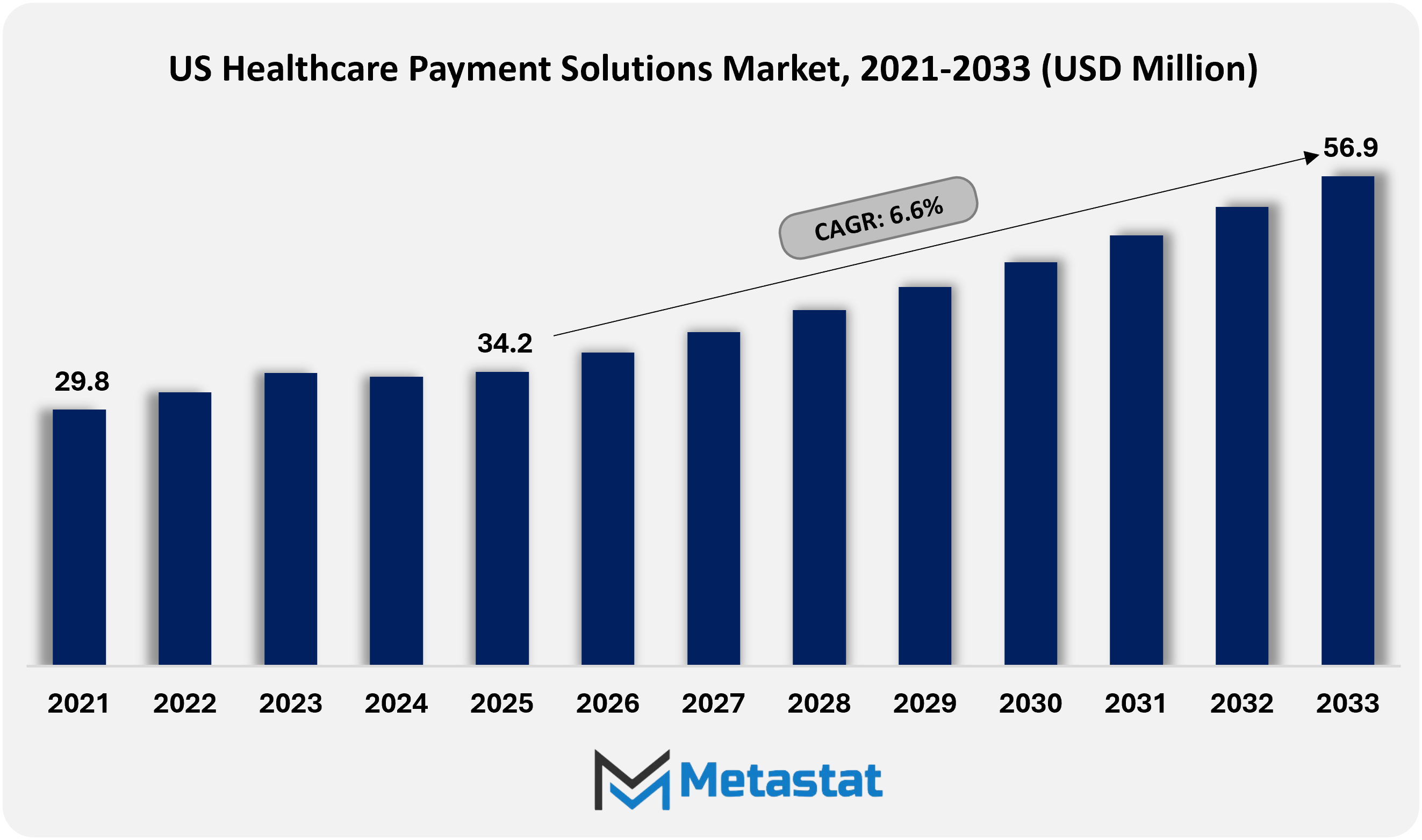
Rising healthcare costs are increasing demand for flexible payment plans and financing tools.
Medical inflation, higher treatment costs, and rising patient financial responsibility will support wider use of structured payment plans, installment models, and healthcare financing services. Hospitals, clinics, and billing networks will focus on smoother collections, stronger cash flow, and improved affordability across the US Healthcare Payment Solutions Market.
Growing adoption of digital health systems is supporting integration of automated payment solutions.
Electronic health record-connected billing software, telehealth platforms, and patient portals will create strong demand for automated payment processing. Faster invoices, digital reminders, online settlements, and connected accounting features will improve operational speed. Broader technology adoption will support expansion across the US Healthcare Payment Solutions Market.
Data privacy concerns and strict compliance rules create challenges for payment platform providers.
Sensitive medical and financial data require secure handling, advanced encryption, and continuous monitoring. Regulatory requirements, audit pressure, and penalty risks will increase operating burdens for payment platform providers. Compliance spending and security upgrades will slow product launches, partnerships, and service expansion in the US Healthcare Payment Solutions Market.
High implementation costs limit adoption among smaller healthcare practices.
Software licenses, system integration, workforce training, and maintenance costs will create barriers for independent clinics and small physician groups. Budget pressure can delay modernization plans and reduce technology upgrades. Uneven adoption patterns can restrict near-term penetration across parts of the US Healthcare Payment Solutions Market.
AI-driven revenue cycle tools can improve claim accuracy and reduce payment delays.
Artificial intelligence will support coding reviews, claim validation, denial prediction, and payment forecasting. Faster approvals and fewer billing errors will improve provider revenue performance. Advanced automation solutions can attract strong investment interest, creating fresh expansion opportunities in the US Healthcare Payment Solutions Market.
The US Healthcare Payment Solutions market is classified based on Type and End User.
Payment Integrity Solutions segment is valued at USD 7.2 million in 2026 and is projected to reach USD 11.4 million by 2033, at a CAGR of 6.7% during the forecast period.
Future demand for payment integrity solutions will rise through predictive audits, coding validation, fraud pattern detection, and automated reconciliation. Stronger data exchange across payers and healthcare providers can reduce revenue leakage, improve billing accuracy, and support cleaner settlements. Greater regulatory focus will encourage wider enterprise adoption across nationwide networks.
Claims Management Solutions segment is valued at USD 13.0 million in 2026 and is projected to reach USD 20.5 million by 2033, at a CAGR of 6.7% during the forecast period.
Claims management solutions will gain momentum through faster claim intake, automated review, denial prevention, and smart routing. Digital workflows can shorten processing cycles, reduce manual errors, and improve revenue visibility. Advanced analytics will guide cost-control decisions, creating stronger operational efficiency across healthcare payment value chains.
Pharmacy Benefit Management Solutions segment is valued at USD 5.4 million in 2026 and is projected to reach USD 8.4 million by 2033, at a CAGR of 6.6% during the forecast period.
Pharmacy Benefit Management Solutions will expand through formulary optimization, pricing transparency tools, rebate monitoring, and medication spend controls. Growing prescription volumes can increase demand for efficient claim adjudication. Data-led planning can support lower waste, better supplier negotiations, and clearer payment outcomes across pharmacy channels.
Electronic Health Record (EHR)-integrated Payment Solutions segment is valued at USD 4.0 million in 2026 and is projected to reach USD 6.9 million by 2033, at a CAGR of 8.2% during the forecast period.
Electronic Health Record (EHR)-integrated payment solutions will witness steady growth through direct billing links, eligibility checks, and instant payment capture. Connected data can reduce duplicate entries and support cleaner documentation. Faster administrative workflows can improve collection timelines, creating stronger financial performance for care facilities.
Supplemental Health Payment Solutions segment is valued at USD 2.8 million in 2026 and is projected to reach USD 4.3 million by 2033, at a CAGR of 6% during the forecast period.
Supplemental Health Payment Solutions will rise with growing interest in dental, vision, wellness, and accident coverage. Flexible contribution models can support broader consumer choice. Digital enrollment, faster reimbursements, and simplified claim pathways will improve participation levels, encouraging wider use across employer-sponsored benefit programs.
Others segment is valued at USD 4 million in 2026 and is projected to reach USD 5.4 million by 2033, at a CAGR of 4.3% during the forecast period.
Other solution categories will include niche platforms focused on telehealth billing, home care reimbursement, wearable-linked claims, and cross-network settlement tools. Innovation from smaller providers can open fresh revenue paths. Specialized software will address underserved payment gaps across evolving healthcare service formats.
Third-Party Administrators (TPAs) segment is projected to reach USD 9.0 million by 2033, at a CAGR of 5.8% during the forecast period.
Third-Party Administrators (TPAs) will increase technology spending for claim automation, fraud checks, member support, and network payment controls. Rising employer health plans will create larger administrative workloads. Efficient digital systems can improve turnaround speed, helping administrators manage higher transaction volumes with controlled operating costs.
Health Insurance Companies segment is projected to reach USD 17.7 million by 2033, at a CAGR of 6.5% during the forecast period.
Health insurance companies will remain primary users of advanced payment systems owing to the need for accuracy, speed, and cost discipline. Smart claims engines, fraud screening, and member payment portals will strengthen service quality. Broader data use can guide premium planning and reserve management.
Hospitals and Clinics segment is projected to reach USD 15.7 million by 2033, at a CAGR of 6.5% during the forecast period.
Hospitals and clinics will adopt stronger payment systems for patient billing, insurer coordination, and revenue cycle management. Higher outpatient volumes can increase demand for instant verification and digital collection tools. Seamless settlement processes can support cash flow stability and improved administrative efficiency.
Pharmacy Benefit Managers (PBMs) segment is projected to reach USD 6.1 million by 2033, at a CAGR of 6.7% during the forecast period.
Pharmacy Benefit Managers (PBMs) will invest in payment modernization for drug claims review, rebate settlement, and pricing oversight. Rising specialty drug costs will increase the need for tighter controls. Integrated analytics can support settlement performance reviews and cleaner payment movement across pharmacy networks.
Payment Integrity Providers segment is projected to reach USD 4.0 million by 2033, at a CAGR of 7% during the forecast period.
Payment integrity providers will see expanding opportunities through audit engines, duplicate detection, fraud alerts, and coding review services. Payers will seek external expertise for savings capture. Continuous monitoring tools can improve confidence in reimbursement accuracy while reducing avoidable financial leakage across large portfolios.
Electronic Health Records Vendors segment is projected to reach USD 3.2 million by 2033, at a CAGR of 9.4% during the forecast period.
Electronic Health Records vendors will enter payment workflows through embedded billing, patient statements, and insurance connectivity modules. Demand for unified administrative systems will support revenue growth. Strong interoperability features can improve provider preference, creating broader market presence across ambulatory and hospital settings.
Others segment is projected to reach USD 1.1 million by 2033, at a CAGR of 5.8% during the forecast period.
Other customers will include employers, government programs, digital health firms, and care coordinators seeking efficient settlement tools. Expanding healthcare access models will generate fresh demand. Customized payment systems can address specific operational needs across nontraditional healthcare financing participants.
The US Healthcare Payment Solutions Market has expanded as hospitals, clinics, insurers, and patients seek faster, clearer, and easier billing processes. Traditional payment methods often created delays, coding errors, and confusion over outstanding balances. Digital systems now help track claims, send reminders, accept multiple payment options, and reduce manual work. Providers also require stable cash flow, making stronger collection tools important. Patients expect easy online payment options similar to other digital services they use daily. Clearer payment workflows improve trust and allow staff to spend more time supporting care instead of managing administrative paperwork.
Key industry players include Sagility LLC, Cervey LLC, Innovative Healthware Services, Inc. (Claimsbridge), and HPS (Health Payment Systems), which focus on claims handling and payment accuracy. Sedgwick, Gallagher Bassett Services, Inc., and Trustmark Mutual Holding Company support employers and benefit programs with organized payment services. UnitedHealth Group, Cigna Group, Aetna, and Humana use large networks and data systems to manage high transaction volumes. Their scale helps speed approvals, reduce avoidable errors, and enhance member experience. Strong customer service also remains important, as payment issues can create financial pressure for patients and families during treatment periods.
Software specialists such as HealthEdge Software, Inc., Cognizant (TriZetto Provider Solutions), Paymentus Corporation, Altera Digital Health Inc. (Ventus), Veradigm LLC, Athenahealth, Inc., Waystar, NextGen Healthcare, and Optum Inc. supply providers with tools that connect billing, data, and patient communication. These platforms can automate statements, estimate costs before visits, and flag missing information before claims are submitted. Many organizations select vendors that match their size, budget, and workflow requirements. Flexible configuration is important since small clinics and large hospitals often require different workflows, integration levels, and deployment models for daily operations.
Cotiviti, Inc. and Zelis Healthcare Inc. are also active in analytics, coordination, and payment integrity services. Competition in the US Healthcare Payment Solutions Market will remain strong as providers seek lower costs and patients need transparent bills. Firms that improve security, shorten claim cycles, and offer easy self-service tools will gain an advantage. Future progress will come from stronger analytics that identify denials early and guide staff action. Even with new technology, success will depend on reliable service, fair pricing, security, and easy user experiences for providers, payers, and patients.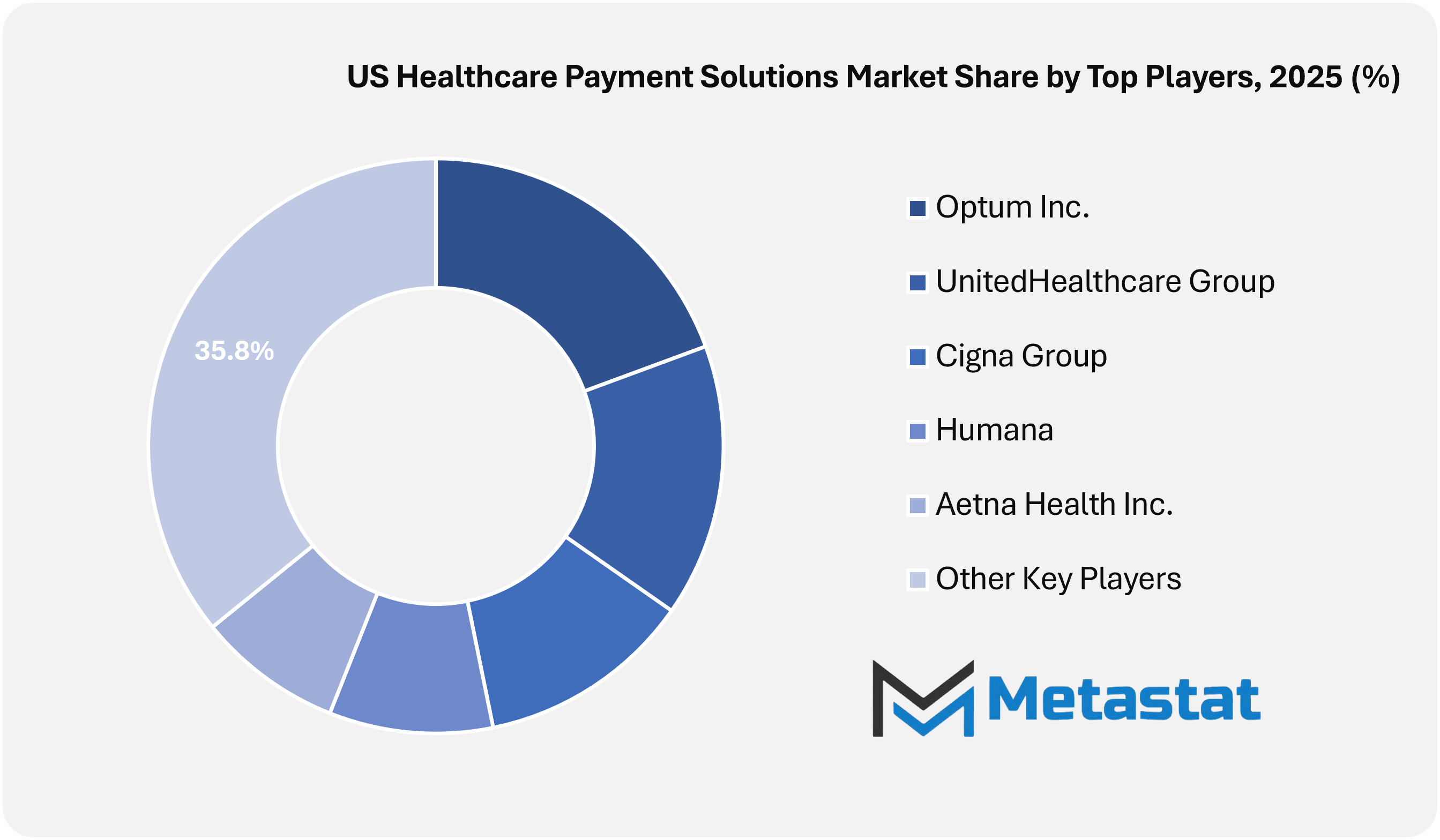
Market size is forecast to rise from USD 34.2 million in 2025 to over USD 56.9 million by 2033.
The US Healthcare Payment Solutions Market is expected to benefit from continued digital transformation, growing patient responsibility for medical costs, and demand for transparent billing systems. Future demand will favour AI-powered revenue cycle platforms, embedded payments within EHR systems, real-time insurance verification, installment financing tools, and mobile-first patient billing solutions.
This research report categorizes the US Healthcare Payment Solutions market based on key segments and regions, forecasts revenue growth, and analyses trends in each submarket. The report analyses the key growth drivers, opportunities, and challenges influencing the US Healthcare Payment Solutions market. Recent market developments and competitive strategies such as expansion, product launch, partnership, merger, and acquisition have been included to draw the competitive landscape in the market.
The report strategically identifies and profiles the key market players and analyses their core competencies in each sub-segment of the US Healthcare Payment Solutions market.
|
Report Attributes |
Details |
|
Study Period |
2021-2033 |
|
Base Year |
2025 |
|
Estimated Year |
2026 |
|
Forecast Period |
2026-2033 |
|
Historical Period |
2021-2025 |
|
Growth Rate |
CAGR 6.6% from 2026 to 2033 |
|
Revenue Unit |
USD million |
|
Segmentation |
By Type, End User |
Find answers to common questions about this report
Top players operating in the Healthcare Payment Solutions industry includes Sagility LLC, Cervey LLC., Innovative Healthware Services, Inc. (Claimsbridge), HPS (Health Payment Systems), Sedgwick, Gallagher Bassett Services, Inc., and Trustmark Mutual Holding Company.
US Healthcare Payment Solutions market is estimated to reach USD 56.9 million by 2033.
The Metastat Insights study shows that the US Healthcare Payment Solutions market size was USD 34.2 million in 2025.
The Claims Management Solutions is the leading type segment in the US market.
The US Healthcare Payment Solutions market is expected to grow at a CAGR of 6.6% over the forecast period (2026-2033).
Data privacy concerns and strict compliance rules create challenges for payment platform providers will hamper the market growth within the forecast period.
Rising healthcare costs are increasing demand for flexible payment plans and financing tools and growing adoption of digital health systems is supporting integration of automated payment solutions are key driving factors, boosting the market.
The analysts below cover Healthcare IT research at Metastat Insights.
LEAD ANALYST
Utkarsh Khirodkar is a Lead Market Research Analyst at MetaStat Insight, specializing in market intelligence, technology sector assessments, and competitive strategy.

LEAD PRINCIPAL ANALYST, PHARMA AND HEALTHCARE
Food and Beverages · Healthcare · Healthcare IT · Medical Devices
Ajay Devgire is the Lead Healthcare Analyst at MetaStat Insight, leading strategic research and market intelligence initiatives across the global healthcare domain.

PRINCIPAL CONSULTANT - ENTERPRISE AI & EMERGING TECHNOLOGIES
Banking & Finance · Electronics and Semiconductor · Energy and Power · Healthcare IT · Information & Technology · Professional Services
Vijay Gunti is a Principal Consultant at MetaStat Insight, bringing over two decades of experience across enterprise digital transformation, technology strategy, and intelligent systems.
Evaluating calorific value requirements and air permit compliance across municipal waste facilities requires localized data. Metastat Insight structured their analysis around operational throughput capacity and feedstock composition variations in Latin America and Eastern Europe. Their competitive mapping of sorting equipment vendors helped clarify technology differences between optical separators and heavy media systems. The study provided an objective baseline during our capital expenditure reviews.
Decarbonizing industrial thermal processes hinges on refrigerant regulations and compressor efficiency limits. Metastat Insights delivered a thorough market analysis that evaluated natural refrigerants like CO2 and hydrocarbons against synthetic low-GWP alternatives. The breakdown of utility incentives and grid capacity constraints across key European manufacturing hubs offered valuable perspective. The follow-up conversation with their sector analysts addressed our specific questions on mechanical vapor recompression systems efficiently.
Assessing 200mm wafer transition schedules and substrate supply bottlenecks requires precise technical intelligence. MetaStat Insight supplied an actionable breakdown comparing planar and trench MOSFET architectures across automotive and industrial drive markets. The regional capacity estimates for Asia-Pacific foundries helped clarify lead-time uncertainties during our strategic planning session. When we needed additional clarification on high-purity raw material sourcing, their analyst team responded with helpful context within twenty-four hours.
Explore related market intelligence reports worth reading alongside this one.