
LEAD ANALYST
Utkarsh Khirodkar is a Lead Market Research Analyst at MetaStat Insight, specializing in market intelligence, technology sector assessments, and competitive strategy.

Global DC Voltage Regulator Market Size, Share, By Regulator Type (Linear Voltage Regulators, Low-Dropout (LDO) Regulators, Switching Voltage Regulators, Multi-Output Voltage Regulators (PMICs), Integrated DC-DC Regulator Modules), By Conversion Topology (Buck (Step-Down) Regulators, Boost (Step-Up) Regulators, Buck-Boost Regulators, Inverting Regulators, Flyback Regulators, Charge Pump Regulators), By Output Current (Below 1A, 1A-5A, Above 5A-20A, Above 20A), By End-Use Industry (Consumer Electronics, Automotive and Electric Vehicles, Industrial Electronics and Automation, IT and Data Centers, Telecommunications and Networking, Healthcare and Medical Electronics, Aerospace and Defense Electronics, Others (Home Appliances, Instrumentation and Test Equipment)), Industry Analysis, Growth, Trends, and Forecast, 2026-2033
Report ID
MSI-5753
Published
November, 2026
Pages
287 Pages
Format
Historical
Base year
Forecast
Forecast period
Report Details
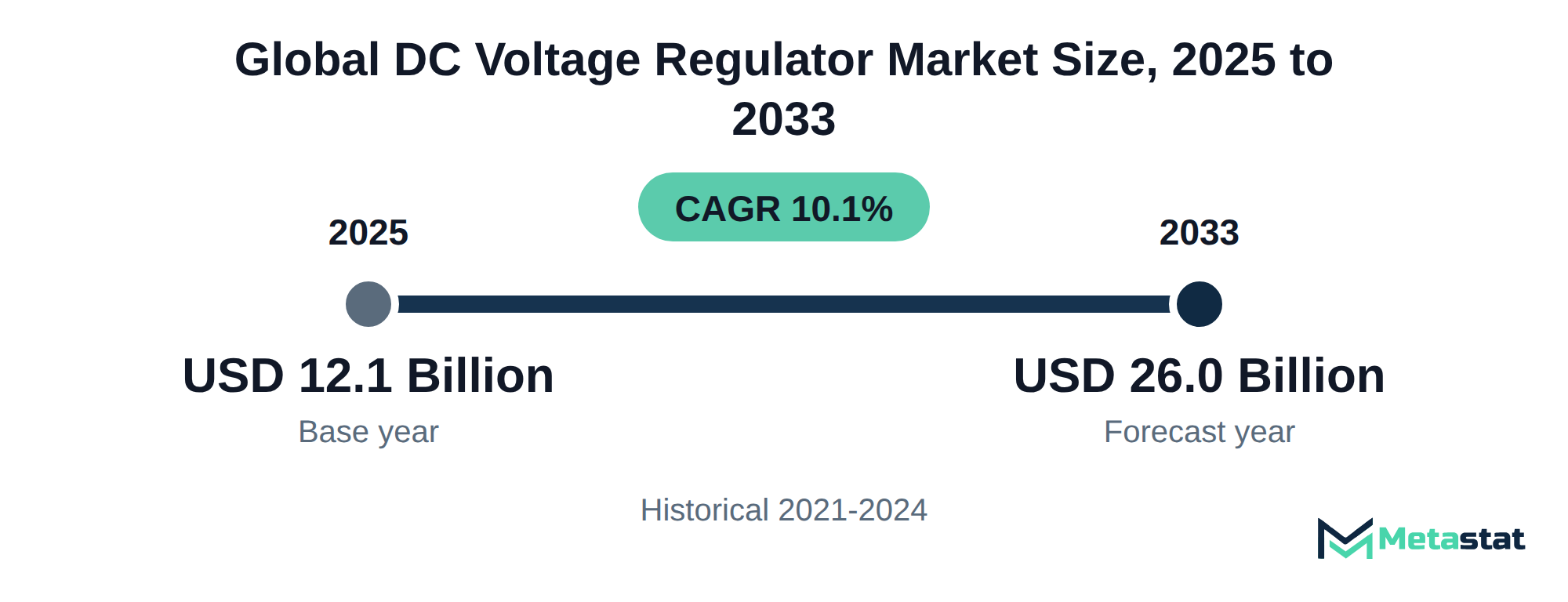
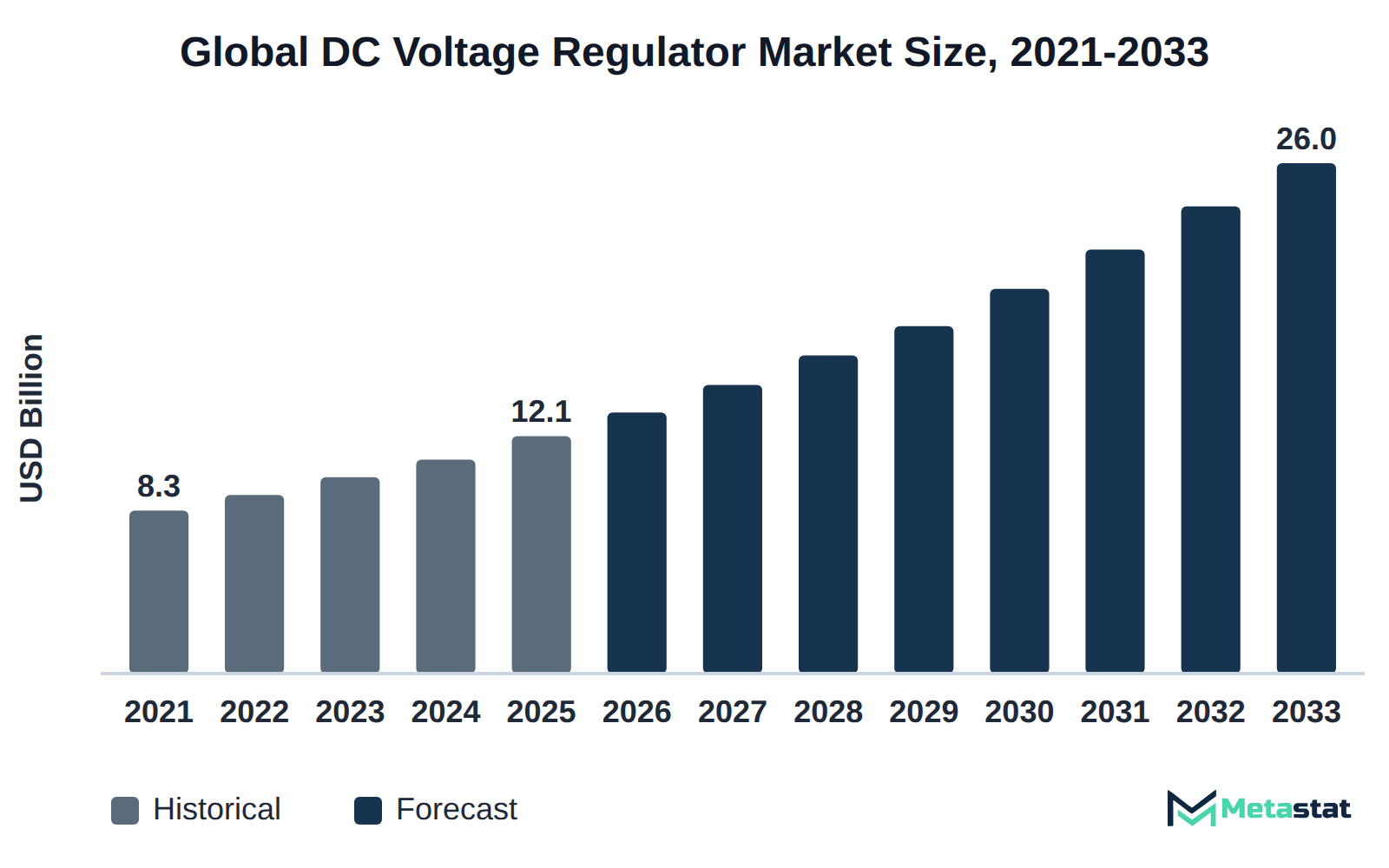
Market Valuation: Valued at $12.1 Billion in 2025, projected to reach $26 Billion by 2033 at a 10.1% CAGR.
Dominant Segment: Switching Voltage Regulators lead the market, driven by their critical role in efficient power management across various applications.
Geographic Lead: North America is the leading region, holding 27.0% of the market in 2025, primarily due to high technological adoption and robust industrial infrastructure.
What's Inside: The report includes comprehensive competitive coverage, detailed analyses of market dynamics, and forecasts extending to 2033.
Emerging Opportunities: The low-current segment, particularly for applications below 1A, is projected to grow significantly, driven by demand in consumer electronics and healthcare.
Technological Advancements: Innovations in switching regulators and low-dropout (LDO) technologies enhance efficiency, allowing for reduced energy losses and improved reliability in electronic devices.
Choose Your License
Global DC Voltage Regulator Market
The global DC Voltage Regulator market was valued at USD 12.1 billion in 2025 and is projected to reach USD 26 billion by 2033, growing at a CAGR of 10.1% over the forecast period.
The DC Voltage Regulator market encompasses devices that maintain a constant voltage level to electronic circuits. Buyers invest in these regulators to ensure the stability and reliability of their electronic systems, which is essential in applications ranging from consumer electronics to industrial automation. The diverse range of applications fuels demand, with technology advancements and increasing reliance on electronic devices driving spending in this sector.
Growth in the market is influenced by several factors, including rising adoption in the automotive and electric vehicle sectors. Among the various segments, Switching Voltage Regulators represent the largest share of value, reflecting their critical role in efficient power management. North America holds 27.0% of the market in 2025, with the US leading in 2026. This regional lead reflects strong demand driven by high technology adoption and well-established industrial infrastructure.
The market experiences significant momentum due to heightened awareness of energy efficiency and the need for reliable power solutions. Companies across multiple industries recognize the importance of integrating advanced voltage regulation technologies to enhance performance and reduce operational costs. Companies continue to invest in innovative DC voltage regulation products tailored to evolving consumer and industrial needs.
The DC Voltage Regulator market covers devices that keep voltage levels stable across electronic applications. Buyers invest in these products to enhance the performance and reliability of their systems, particularly in sectors including consumer electronics, automotive, and industrial automation. The need for efficient power management solutions drives demand, leading to significant spending in this market. AC voltage regulators and stabilizers serve the same purpose on the alternating-current side of power systems.
Growth in the market is primarily fueled by the increasing adoption of advanced technologies, particularly in consumer electronics, where the integration of smart devices accelerates demand for efficient voltage regulation. The Switching Voltage Regulators segment represents the largest value segment within the market, reflecting its critical role in modern electronic systems.
Emerging markets, particularly in the Asia Pacific region, demonstrate strong growth potential due to rising investments in technology infrastructure and increasing demand for electric vehicles and renewable energy solutions. This regional growth further emphasizes the importance of reliable voltage regulation in supporting the evolving landscape of electronic devices and systems.
Switching regulators represent a significant advancement in DC-DC conversion technologies, enhancing efficiency and performance across various applications. These devices, characterized by their ability to switch on and off rapidly, enable higher efficiency compared to traditional linear regulators. In 2023, the demand for switching voltage regulators is expected to show substantial growth, illustrating a shift in design paradigms within the DC Voltage Regulator market.
The market for switching voltage regulators is projected to reach USD 10.7 billion by 2033. This substantial figure highlights the growing preference for high-efficiency solutions that effectively manage power and reduce thermal losses. Industries, particularly in consumer electronics and automotive, are increasingly adopting these technologies to meet stringent energy efficiency standards while improving overall device performance.
Ongoing innovation in switching regulator technology aligns with the wider trend towards more sustainable and efficient electronic systems. With the increased focus on reducing power consumption, the market is shifting towards components that deliver performance and lower operational costs. This trend drives further investment in switching regulator design and production, creating a competitive landscape that emphasizes operational excellence and technological advancement.
The automotive electrification trend significantly influences purchasing decisions within the DC Voltage Regulator market. As electric vehicles become more mainstream, manufacturers increasingly seek efficient voltage regulation solutions to enhance vehicle performance and safety. The market for automotive and electric vehicles is expected to reach USD 5 billion by 2033, highlighting the growing demand for advanced power management systems in this sector.
Manufacturers tend to opt for long-term contracts with suppliers to ensure a stable supply of voltage regulators that meet specific performance criteria. This strategy helps manage costs and streamline production processes. Competitive pricing structures, including volume discounts, strongly influence procurement decisions. Buyers prioritize reliable suppliers that offer favorable terms, enabling them to maintain production schedules without interruptions.
Data centers, tasked with managing increasing workloads, necessitate effective power management systems to optimize energy usage. Efficient regulation therefore matters across data center power systems. The industry's focus on sustainability drives demand for innovative voltage regulators that enhance energy efficiency. Organizations adopt performance-based contracts that incentivize suppliers to improve product efficacy, ensuring operational costs remain manageable while adhering to environmental standards. This dynamic directly shapes the growth and evolution of the market.
Consumer electronics increasingly demand miniaturization, high-current density, and integrated power management integrated circuits (PMICs). The trend toward smaller devices necessitates compact voltage regulation solutions. Integrated PMICs efficiently manage power distribution within a confined space, reducing the overall footprint of electronic devices.
In the DC Voltage Regulator market, multi-output voltage regulators stand out, driven by their capacity to handle multiple voltages simultaneously while maintaining high efficiency. This demand aligns with the evolving specifications for consumer electronics, particularly in smartphones, laptops, and wearables, where size constraints are critical. The segment of multi-output voltage regulators is projected to grow at a compound annual growth rate (CAGR) of 10.9% from 2026 to 2033, reflecting strong adoption rates.
Manufacturers focusing on miniaturization strategies enhance product appeal, facilitating broader market penetration. The capacity to provide reliable power management solutions while occupying minimal space directly influences design choices among electronics manufacturers. This trend establishes the position of integrated PMICs as a preferred choice for innovative product designs, thereby propelling the growth of the DC Voltage Regulator market.
Rising demand for electronic devices drives significant growth in the DC Voltage Regulator market, particularly in consumer electronics and industrial applications. The increasing reliance on electronics for everyday activities prompts manufacturers to seek reliable voltage regulation solutions. For instance, the consumer electronics segment is projected to expand from USD 3.4 billion in 2026 to USD 6.4 billion by 2033, demonstrating a compound annual growth rate (CAGR) of 9.7%. This surge is fueled by the proliferation of devices including smartphones, laptops, and smart home appliances, all requiring efficient power management to enhance performance and longevity.
In parallel, the automotive and electric vehicles sector exhibits significant growth, with expectations of reaching USD 5 billion by 2033, reflecting a CAGR of 10.4%. The transition toward electric vehicles necessitates advanced voltage regulation solutions to ensure optimal battery performance and safety during operation. High-voltage battery management systems form a related area of EV power electronics. While manufacturers invest in innovative technologies, the market for DC Voltage Regulators expands, presenting opportunities for companies to innovate and differentiate their offerings, ultimately enhancing competitiveness. The acceleration of digital transformation across industries further emphasizes the necessity for reliable voltage regulation, establishing a favorable environment for sustained market growth.
Growing consumer electronics adoption drives substantial investment in voltage regulation solutions. Purchasers across various demographics prioritize devices that enhance performance and energy efficiency in electronics. This shift results in a notable increase in demand for DC Voltage Regulators, with revenue in the market projected to reach USD 26 billion by 2033. The trend reflects a broader move towards high-performance electronics, where users seek reliable power supply solutions for smartphones, laptops, and other portable devices. Higher integration of technology into everyday life further fuels this demand, encouraging manufacturers to innovate and enhance their product offerings. While consumers become more aware of energy efficiency, the push for advanced regulatory solutions within the market intensifies, leading to more competitive pricing and improved operational efficiency.
Technological innovation within the DC Voltage Regulator market enhances efficiency and performance across various applications. The emergence of advanced switching regulators and low-dropout (LDO) regulators significantly improves power management, allowing for reduced energy losses and increased reliability in electronic devices. These technologies enable higher integration levels, meeting the demand for compact and energy-efficient solutions in sectors including consumer electronics and automotive.
Investment in research and development accelerates the introduction of new regulator designs that facilitate better thermal management and dynamic load response. Consequently, industries using these advancements benefit from improved system performance and lower operating costs. The continual evolution of regulator technology positions suppliers to capture a larger share of the growing market, driven by increasing energy efficiency requirements and rising demand for sophisticated electronic devices.
Price fluctuations within the DC Voltage Regulator market present a significant barrier to adoption, particularly among small and medium-sized enterprises. These businesses operate on tighter budgets, making them sensitive to changes in component prices. Increased costs lead to reduced purchase quantities or delayed procurement timelines, impacting overall demand in the market. Higher prices for advanced voltage regulation technologies deter smaller buyers from upgrading their existing systems, limiting their ability to enhance efficiency and performance. This situation creates a cycle where these enterprises lag in adopting the latest innovations, further widening the gap between larger firms with more flexible procurement strategies and smaller players. Addressing price stability remains crucial for improving market penetration and ensuring that businesses of all sizes participate in the growing demand for efficient voltage regulation solutions.
Input cost pressures present a significant challenge for suppliers within the DC Voltage Regulator market. Rising prices for raw materials and components reduce profit margins, prompting suppliers to seek more cost-effective sourcing strategies. This situation becomes critical, particularly for small and medium-sized manufacturers, where operating costs directly influence competitive positioning. To address these challenges, suppliers invest in optimizing production processes and exploring alternative materials that offer comparable performance at lower costs. Several suppliers establish long-term contracts with key suppliers to mitigate price volatility in raw materials.
Collaborations with research institutions increasingly support innovations in materials and manufacturing techniques. These initiatives aim to enhance efficiencies while reducing dependency on volatile input costs. Suppliers are expected to use advanced technologies to streamline operations and minimize waste. Such strategic responses help maintain competitiveness in a market characterized by fluctuating input costs and intensifying competition.
The low-current segment within the DC Voltage Regulator market presents a significant growth opportunity. This segment, defined as output currents below 1A, is projected to expand from USD 3.8 billion in 2026 to USD 7 billion by 2033, reflecting a compound annual growth rate (CAGR) of 8.9%. Demand in low-current applications arises from various industries, including consumer electronics and healthcare, where energy efficiency and compact designs are crucial. The increasing proliferation of portable devices and smart technology enhances the need for efficient voltage regulation solutions tailored to lower power requirements. Suppliers focusing on low-current voltage regulators capitalize on this growth trajectory, addressing the specific needs of industries prioritizing miniaturization and energy savings. Adoption of innovative technologies within this segment is expected to drive market penetration and revenue growth, supporting broader advancements across the market.
The Global DC Voltage Regulator market is segmented based on Regulator Type, Conversion Topology, Output Current, and End-Use Industry.
Linear Voltage Regulators segment is valued at USD 2.4 billion in 2026 and is projected to reach USD 4.1 billion by 2033, at a CAGR of 8.2% during the forecast period. These regulators are widely used in applications requiring precise voltage regulation, including consumer electronics and automotive systems. The growing integration of electronic components in various devices drives demand for reliable voltage regulation solutions. The segment's growth trajectory is influenced by the increasing need for efficiency and performance in electronic devices. Compared to other regulator types, Linear Voltage Regulators exhibit stable pricing and lower power consumption, although their growth rate is slower than that of Multi-Output Voltage Regulators, which benefit from higher CAGR projections. The market sees a shift toward more compact and efficient designs, emphasizing the importance of this segment in ensuring optimal functionality in modern electronics.
Low-Dropout (LDO) Regulators segment is estimated to reach USD 5.7 billion by 2033, at a CAGR of 8.7% during the forecast period. This type of regulator is widely used in applications requiring low noise and high precision, often found in consumer electronics like mobile devices and laptops. The increasing demand for compact and efficient power management solutions drives adoption, particularly among manufacturers focused on enhancing device performance. Compared to other segments, LDO regulators experience a slower growth rate, largely due to their limited output current capabilities. While switching voltage regulators dominate the market with a broader application range and superior efficiency, LDOs maintain a distinct niche due to their operational advantages in specific settings. The unique characteristics of LDO regulators, including low dropout voltage and simple design, set them apart, making them essential for applications where space and power efficiency are critical.
Switching Voltage Regulators segment is expected to reach USD 10.7 billion by 2033. These devices play a critical role in various applications that require efficient voltage regulation, particularly in consumer electronics and industrial automation. Demand for higher efficiency and reduced power loss drives the adoption of switching regulators, setting this segment apart from linear and low-dropout (LDO) regulators, which typically experience slower growth rates. Consumers and manufacturers increasingly prioritize energy efficiency, with switching voltage regulators benefiting from a compound annual growth rate (CAGR) of 9.6%, reflecting their growing prominence in the market. The shift toward more compact and efficient power solutions aligns with trends in electric vehicles and data centers, further supporting the expansion of this segment and highlighting its importance in modern electronics.
Multi-Output Voltage Regulators (PMICs) segment is projected to grow at a CAGR of 10.9% during the forecast period. These regulators are essential for managing power distribution in complex electronic systems, commonly found in consumer electronics, automotive applications, and industrial equipment. The surge in demand for integrated power management solutions drives growth in this segment, with manufacturers focusing on enhancing efficiency and reducing design complexity. Compared to other regulator types, Multi-Output Voltage Regulators differentiate themselves through their ability to supply multiple output voltages from a single device, catering to diverse power requirements. This capability positions them favorably against Linear and LDO Regulators, which typically serve single output functions. The market's broader focus on automation and smart technology integration further fuels the adoption of Multi-Output Voltage Regulators, aligning with contemporary trends in electronics design.
Integrated DC-DC Regulator Modules serve to convert voltage levels efficiently, critical for various electronic applications. These modules find extensive use in consumer electronics, automotive systems, and industrial equipment, where compact size and high efficiency are essential. Demand for these modules is driven by the increasing complexity of electronic systems requiring precise voltage regulation. Compared to other types of regulators, integrated DC-DC modules typically experience faster growth due to their ability to reduce space and cost in designs while enhancing performance. Technology advances lead manufacturers to focus on integrating additional functionalities into these modules, aligning with trends in miniaturization and energy efficiency. This segment positions itself uniquely by addressing the specific needs of high-performance applications that prioritize size and efficiency, distinguishing it from other segments in the market.
Buck (Step-Down) Regulators segment is valued at USD 5.7 billion in 2026 and is projected to reach USD 10.9 billion by 2033, at a CAGR of 9.6% during the forecast period. This segment is essential for powering various electronic devices, including consumer electronics and industrial applications, by converting a higher input voltage to a lower output voltage. Demand for Buck Regulators is driven by the increasing need for energy efficiency in power management solutions. Compared to other regulator types, this segment exhibits a competitive growth trajectory, with a higher CAGR than linear voltage regulators, indicating an evolving preference among manufacturers for these efficient solutions. The energy-saving capabilities of Buck Regulators align with the industry's shift toward sustainable practices, further enhancing their position in the market.
Boost (Step-Up) Regulators segment is estimated to reach USD 4.9 billion by 2033, at a CAGR of 10.4% during the forecast period. This segment finds application in various electronic devices, where increasing voltage levels are required from lower voltage sources, thus enabling the operation of power-hungry components. Demand for Boost Regulators arises from sectors including consumer electronics, automotive systems, and telecommunications, where efficient power management is critical. The growth of this segment outpaces that of Low-Dropout (LDO) Regulators, which has a CAGR of 8.7%. Factors including miniaturization of devices and the push for energy-efficient solutions drive demand. Unlike Switching Voltage Regulators, which offer a more complex solution for power conversion, Boost Regulators focus specifically on raising voltage levels, catering to unique market needs related to efficiency and simplicity. This specialization enhances their appeal among manufacturers and contributes to significant growth in the market.
Buck-Boost Regulators segment is expected to reach USD 4.5 billion by 2033. These regulators provide voltage regulation with both step-up and step-down capabilities, making them ideal for applications that require output voltage variations. Commonly used in renewable energy systems, automotive applications, and battery management, the segment attracts buyers seeking flexible voltage solutions. The growth in this segment is driven by increasing demand for stable power supply solutions across various industries. In comparison to other regulators, Buck-Boost Regulators exhibit moderate growth, with a CAGR anticipated at 9.3%. This growth rate differentiates them from Low-Dropout (LDO) Regulators, which experience a higher CAGR of 8.7%. Investment in renewable energy and electric vehicles continues to drive the market for these regulators, highlighting their critical role in modern electrical systems.
Inverting Regulators segment is projected to grow at a CAGR of 9.3% during the forecast period. Inverting regulators convert a positive input voltage to a negative output voltage, performing critical functions in specific electronic applications. This segment finds particular utility in sectors including telecommunications, automotive systems, and industrial automation, where precision voltage control is essential. The demand for inverting regulators is driven by the increasing complexity of electronic designs and the rising need for efficient voltage conversion solutions. Compared to other regulator types, inverting regulators cater to niche markets requiring specific voltage levels, leading to a higher cost per unit. The efficient performance and reliability of this segment enhance its appeal, positioning it as a key player within the DC Voltage Regulator market.
Flyback Regulators employ a transformer for energy transfer, allowing efficient voltage conversion in a compact design. Frequently employed in power supplies for consumer electronics and industrial applications, these regulators excel in providing isolation between input and output, making them suitable for various environments. Factors driving demand include increasing requirements for energy efficiency and compact designs in electronic devices. Compared to other sub-segments, Flyback Regulators differ in their capacity to handle higher power levels while maintaining lower costs, making them attractive in budget-sensitive applications. The segment's growth is driven by advancements in semiconductor technologies, enabling better performance and reliability, thereby expanding its applications across diverse sectors.
Charge Pump Regulators employ a capacitive energy storage mechanism to convert one voltage level to another, suitable for low-power applications. Commonly employed in portable electronic devices, these regulators contribute to power efficiency and size reduction. The demand for compact electronic solutions drives growth in this sub-segment, particularly within consumer electronics, where real estate for circuit components is limited. This segment stands out due to its unique ability to deliver higher output voltages from lower input voltages compared to other regulator types, appealing to manufacturers seeking efficient energy solutions. Factors including advancements in semiconductor technology enhance the performance of Charge Pump Regulators, further supporting their adoption in the evolving landscape of the DC Voltage Regulator market. Unlike Switching Voltage Regulators, which experience higher growth rates, Charge Pump Regulators target niche applications requiring specific voltage adjustments without incurring significant power losses.
Applications for regulators in this segment primarily cater to consumer electronics, where low power consumption and compact sizes are crucial. Demand within this segment arises from the need for efficient power supply solutions in devices including mobile phones, wearables, and small appliances. Due to the relatively lower price point, this segment attracts a different buyer profile compared to higher current segments. The segment's growth rate outpaces that of the 1A-5A segment, which is projected to reach USD 9.9 billion by 2033 with a CAGR of 9.9%. This trend reflects the increasing focus on energy efficiency and portability across consumer products, fueling investment and innovation in the market.
This segment is widely applied in various applications, including consumer electronics and industrial automation, where reliable power management is crucial. Demand for this segment is driven by the increasing adoption of electric vehicles and consumer devices requiring efficient power supply solutions. Compared to other output current segments, the 1A-5A range stands out due to its moderate growth rate relative to segments like Below 1A, which is projected to reach USD 7 billion by 2033 at a CAGR of 8.9%. The higher current capacity in the 1A-5A segment supports applications requiring greater energy efficiency, contributing to its competitive position in the market.
Above 5A-20A segment is expected to reach USD 6.3 billion by 2033. This segment finds applications in high-power electronic devices, including industrial machinery and automotive systems. Demand for this sub-segment increases due to the increasing adoption of electric vehicles and renewable energy technologies, which require robust power management solutions. The growth rate in this segment is notable due to the rising focus on efficient energy use, aligning with global sustainability goals. Compared to other output current segments, this sub-segment benefits from higher price points and specialized applications, distinguishing itself from segments with lower output. Robust demand in industrial and automotive applications drives investment and innovation, shaping competitive dynamics in the DC Voltage Regulator market.
The Above 20A segment is projected to grow at a CAGR of 11.1% during the forecast period. This segment primarily serves high-power applications, including industrial motors, electric vehicle systems, and heavy machinery, where substantial power delivery is critical. Technological developments in power management emphasize increasing efficiency and performance, driving demand for high-capacity voltage regulators. Key industries adopting Above 20A solutions include automotive, aerospace, and renewable energy sectors, which require robust power solutions for advanced functionalities. Compared to other segments, the Above 20A segment experiences faster growth due to rising electrification in transportation and industrial applications. This segment's differentiation stems from higher price points associated with advanced technology and reliable performance, influencing procurement decisions by end-users across various industries. The market continues to explore innovations to enhance power density and thermal management in this segment, ensuring competitiveness and viability in future applications.
Consumer electronics apply DC voltage regulators in devices including smartphones, tablets, and home appliances to ensure stable voltage levels for optimal performance. The increasing demand for advanced consumer electronics drives growth in this segment, with manufacturers focusing on energy efficiency and compact designs. This segment experiences faster growth compared to others in the market, including industrial electronics, which has a different set of drivers and user profiles. The consumer electronics sector benefits from rapid technological advancements, requiring voltage regulation solutions that scale with evolving device capabilities. Rising consumer preferences for high-performance electronics significantly influence adoption rates, further supporting market expansion.
This segment serves critical applications in electric vehicles, automotive systems, and transportation technologies, facilitating the management and regulation of voltage levels for various electronic components. Key drivers include rising demand for electric vehicles and advancements in automotive technology, with manufacturers increasingly adopting sophisticated voltage regulation systems. Compared to other segments, this sub-segment exhibits faster growth, reflecting the urgent need for efficient power management solutions in modern vehicles. The increasing regulatory focus on electric vehicle development adds momentum to the segment, positioning it as a significant driver for the overall DC Voltage Regulator market.
The Industrial Electronics and Automation segment is expected to reach USD 4.6 billion by 2033. This segment caters to industries that rely on automated systems, robotics, and control systems, where precision and efficiency are critical. Driving forces include rising demand for automation technologies in manufacturing and ongoing integration of Industry 4.0 solutions. This segment exhibits a higher growth trajectory compared to other end-use categories, driven by an annual growth rate of 11.0%, reflecting strong investment in automation and advanced manufacturing processes. Unlike consumer electronics, which experiences moderate growth, Industrial Electronics and Automation focuses on robust applications requiring specialized voltage regulation solutions, thereby attracting a distinct customer base. Evolving automation technology creates innovation opportunities in this segment of the DC Voltage Regulator market.
IT and Data Centers segment is projected to grow at a CAGR of 11% during the forecast period. This segment focuses on providing stable and reliable power supply solutions for critical IT infrastructure, including servers, networking equipment, and storage systems. The increasing demand for data processing and storage in various industries drives growth within this segment, driven by organizations prioritizing operational efficiency and data security. Advancements in cloud computing and virtualization technologies encourage investment in efficient power management solutions. Compared to other segments, including Consumer Electronics and Automotive, the IT and Data Centers segment experiences faster growth, reflecting the heightened need for robust power solutions in an increasingly data-driven economy. With a projected value increase to USD 4.6 billion by 2033, this segment significantly contributes to the overall dynamics of the DC Voltage Regulator market.
This segment caters to the telecommunications and networking sector, addressing the growing demand for reliable power supply in communication infrastructure. Telecommunications companies and network equipment manufacturers apply DC voltage regulators for stable voltage control in various devices, ensuring optimal performance of equipment including routers, switches, and base stations. Rising demand for 5G network equipment adds to this need for stable voltage control. The ongoing expansion of 5G networks drives considerable growth in this segment, with increased infrastructure investments influencing demand. Emphasis on energy efficiency and compact designs prompts product innovations, setting this segment apart from others that focus on larger, less energy-efficient solutions. The DC Voltage Regulator market benefits from these trends, leading to significant advancements in performance and reliability, which are crucial in high-demand environments.
Healthcare and Medical Electronics involves crucial applications in medical devices and healthcare systems, ensuring precise voltage regulation critical for various equipment functionalities. This segment is employed by healthcare providers, medical device manufacturers, and research facilities, focusing on items like diagnostic imaging equipment, other diagnostic tools, and patient monitoring devices. Rapid advancements in healthcare technology drive demand in this segment, reflecting the increasing emphasis on accurate and reliable medical equipment performance. Compared to other segments in the market, Healthcare and Medical Electronics typically experiences steady, consistent growth, influenced by ongoing investments in medical infrastructure and technology. Regulatory standards and the need to maintain high-quality performance in healthcare devices significantly affect the segment, presenting both challenges and opportunities for innovation. The market for DC Voltage Regulators supports this essential segment by providing the necessary voltage stability and efficiency in an evolving medical landscape.
Aerospace and Defense Electronics encompasses applications critical for military and aviation operations, including navigation systems, communication devices, and defense radar technology. This segment serves aerospace manufacturers and defense contractors, who require highly reliable and precise voltage regulation to support sensitive electronic systems. Rapid advancements in defense technology and increasing investments in aerospace initiatives drive demand within this sub-segment. This segment experiences slower growth relative to consumer electronics due to stringent regulatory requirements and high-performance standards that necessitate more expensive components. Enhanced reliability and operational performance requirements distinguish Aerospace and Defense Electronics from other sectors, influencing overall pricing strategies within the market.
This sub-segment includes applications in home appliances, instrumentation, and test equipment, which require reliable voltage regulation for various electronic components. Products in this segment serve a broad array of consumer and industrial products, ensuring optimal performance and longevity. Demand for these regulators is driven by the increasing complexity of home appliances and the growing reliance on electronic testing equipment. This segment typically experiences slower growth compared to other categories, primarily due to pricing sensitivity and the established nature of many applications. Buyers in this segment prioritize cost-effectiveness while seeking dependable performance, differentiating it from rapidly growing segments including automotive and electric vehicles. Technological advances and new innovations in voltage regulation are expected to reshape this sector, enhancing efficiency and reducing costs while supporting the evolution of the DC Voltage Regulator market.
Based on geography, the Global DC Voltage Regulator market is divided into North America, Europe, Asia-Pacific, South America, Middle East, and Africa.
The North American region shows strong potential in the DC Voltage Regulator market, driven by demand across various sectors including consumer electronics, automotive, and industrial applications. Advanced technology and a strong manufacturing base in the United States, Canada, and Mexico enhance the region's competitive edge. Infrastructure investments in renewable energy and electric vehicles support market expansion, reflecting a commitment to sustainable practices. North America is projected to reach USD 6.7 billion by the end of 2033, indicating significant growth opportunities. The market's focus on efficiency and innovation continues to stimulate advancements, ensuring that manufacturers adapt to evolving consumer needs. With a 27% regional market share in 2025, North America is a major force in the global market for DC Voltage Regulators.
Strong demand for the DC Voltage Regulator market in Europe arises from the consumer electronics and automotive sectors. Countries including Germany, France, and the UK drive significant advancements in technology and infrastructure, promoting the adoption of voltage regulation solutions. Increased production of electric vehicles in Germany has heightened the need for efficient voltage regulation, enhancing performance and energy management. The European market, representing 23% of the global share in 2025, reflects a commitment to sustainable energy and innovation in various applications. Regulations focusing on energy efficiency further stimulate growth within the region, driving investments in modern technologies that require robust voltage regulation. This dynamic market environment makes Europe a key player in global voltage regulation.
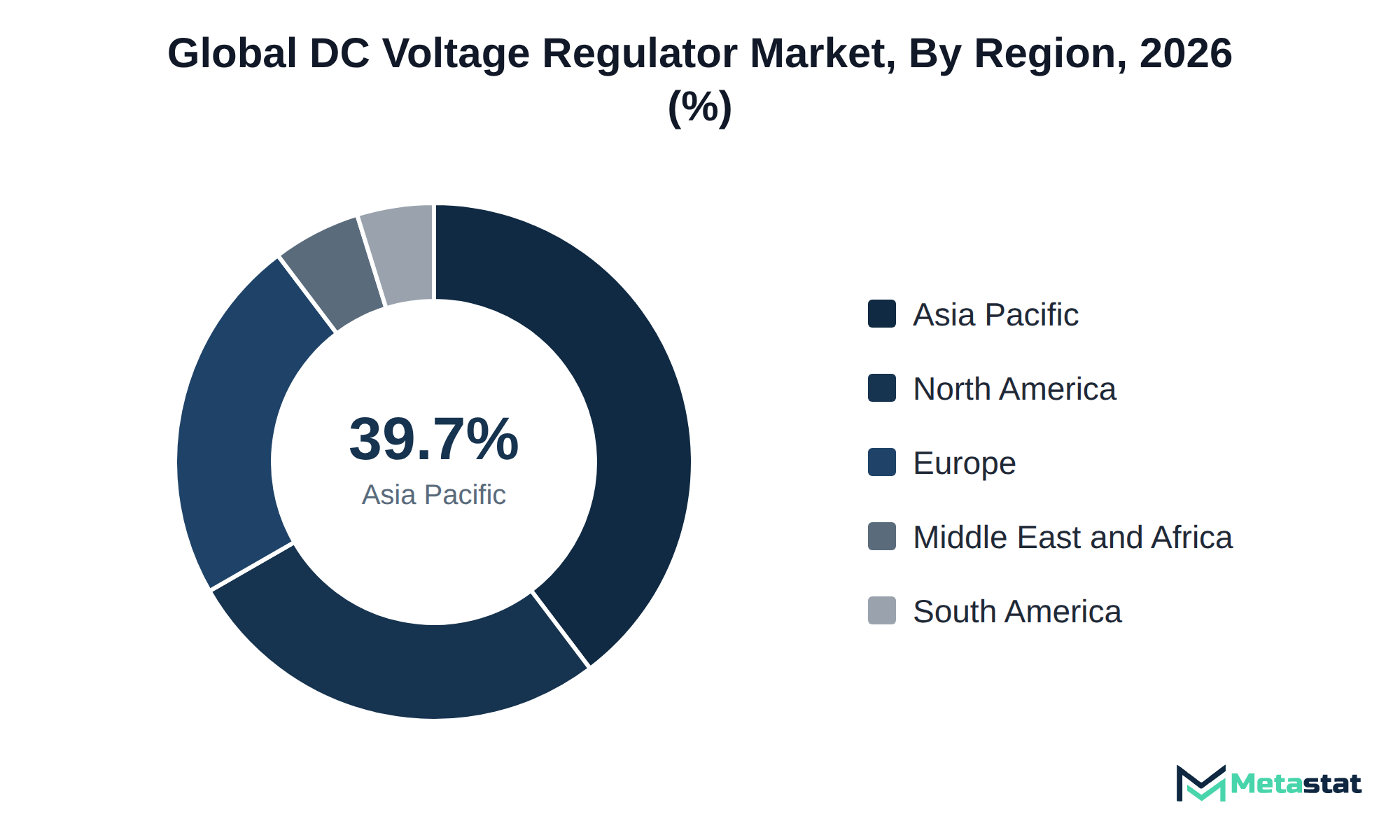
Asia-Pacific holds a 39.7% share of the DC Voltage Regulator market in 2025. Rapid growth in industries including consumer electronics and automotive drives demand for advanced power management solutions. In China and India, expanding manufacturing sectors contribute to increased adoption of voltage regulators across various applications, enhancing product reliability. Emerging electric vehicle markets in South Korea and Japan necessitate innovative voltage regulation technologies to support automotive electrification. Infrastructure investments in Australia further support the development of smart technologies, creating opportunities for voltage regulator adoption. The region's diverse technology base makes it a critical hub for both production and innovation in the market.
The DC Voltage Regulator market in South America shows unique dynamics driven primarily by the consumer electronics and automotive industries. Brazil and Argentina represent significant buyers, with growing investments in electric vehicle infrastructure and smart consumer devices. The region's market is characterized by its focus on low-cost production and increasing demand for efficient power management solutions. Regulatory frameworks surrounding electronic manufacturing support market growth, promoting local production and reducing import reliance. By 2025, South America holds a market share of 4.8%, with expectations for continued growth driven by expanding technology adoption and infrastructure development. The market's outlook emphasizes the need for reliable voltage regulation across diverse applications.
The Middle East and Africa region exhibits unique dynamics within the DC Voltage Regulator market. Key industries driving demand include automotive and consumer electronics, with an increased focus on electric vehicle applications. Countries including Saudi Arabia and the UAE emphasize infrastructure development, enhancing the need for reliable power solutions. South Africa presents growing opportunities in renewable energy projects, which contribute to the demand for efficient voltage regulation. This region accounts for 5.5% of the global market share in 2025, highlighting its potential for growth during the forecast period. Ongoing investments in technology and manufacturing capabilities significantly influence the market landscape, ensuring competitive offerings that meet regional specifications.
Competition within the DC Voltage Regulator market involves a diverse range of strategies focused on product differentiation, cost efficiency, and technological advancements. Companies prioritize attributes including price, certification, customization, and ecosystem support to attract buyers. High demand for customized solutions drives competition, especially in industries including consumer electronics and automotive.
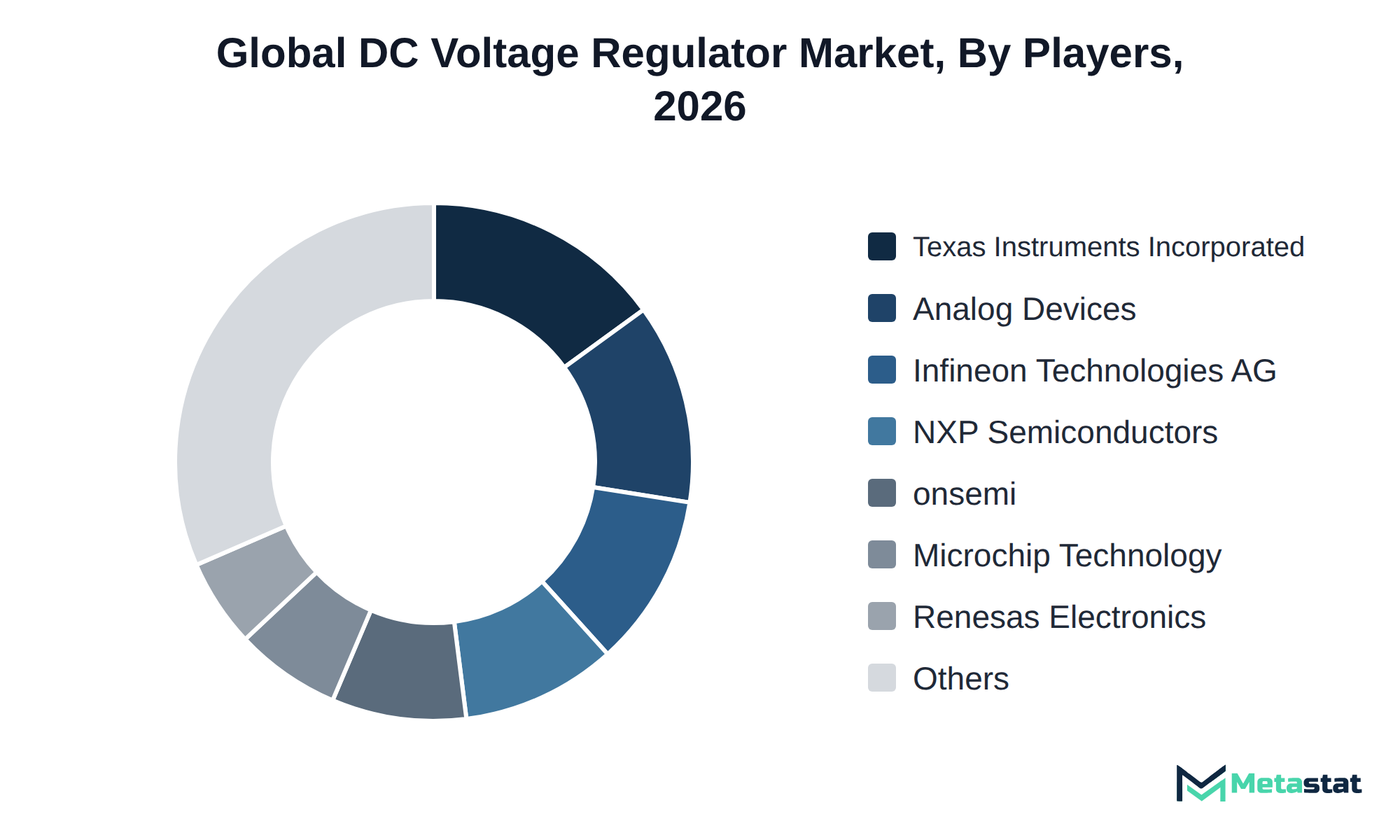
Texas Instruments Incorporated emphasizes innovative products across various segments, particularly in Low-Dropout (LDO) Regulators and Switching Voltage Regulators. Analog Devices, Inc. concentrates on high-performance applications, ensuring reliability and efficiency, which appeals to industry leaders in industrial automation. Infineon Technologies AG targets electric vehicles and renewable energy systems, aligning product development with market shifts toward sustainability.
Achieving this growth relies on several key developments. First, increasing demand in the automotive and electric vehicles segment, driven by the transition to electric mobility, supports market expansion. Second, the consumer electronics sector continues to adopt advanced voltage regulation technologies, with anticipated growth from USD 3.4 billion in 2026 to USD 6.4 billion by 2033, reflecting a CAGR of 9.7%. A third driver stems from the rising applications of DC voltage regulators in IT and data centers, which indicate a significant push towards energy-efficient solutions. However, potential risks exist in supply chain disruptions, which impede timely access to key components, ultimately affecting production schedules. These developments shape the future of the DC Voltage Regulator market and highlight both opportunities and vulnerabilities within the evolving environment.
By Regulator Type: Linear Voltage Regulators, Low-Dropout (LDO) Regulators, Switching Voltage Regulators, Multi-Output Voltage Regulators (PMICs), Integrated DC-DC Regulator Modules
By Conversion Topology: Buck (Step-Down) Regulators, Boost (Step-Up) Regulators, Buck-Boost Regulators, Inverting Regulators, Flyback Regulators, Charge Pump Regulators
By End-Use Industry: Consumer Electronics, Automotive and Electric Vehicles, Industrial Electronics and Automation, IT and Data Centers, Telecommunications and Networking, Healthcare and Medical Electronics, Aerospace and Defense Electronics, Others (Home Appliances, Instrumentation and Test Equipment)
The report strategically identifies and profiles the key market players and analyses their core competencies in each sub-segment of the DC Voltage Regulator market.
Report Attributes | Details |
Study Period | 2021-2033 |
Base Year | 2025 |
Estimated Year | 2026 |
Forecast Period | 2026-2033 |
Historical Period | 2021-2025 |
Growth Rate | CAGR 10.1% from 2026 to 2033 |
Revenue Unit | USD billion |
Segmentation | By Regulator Type, Conversion Topology, Output Current, End-Use Industry, and Region |
By Region | North America (By Regulator Type, Conversion Topology, Output Current, End-Use Industry, and Country)
|
Europe (By Regulator Type, Conversion Topology, Output Current, End-Use Industry, and Country)
| |
Asia Pacific (By Regulator Type, Conversion Topology, Output Current, End-Use Industry, and Country)
| |
South America (By Regulator Type, Conversion Topology, Output Current, End-Use Industry, and Country)
| |
Middle East and Africa (By Regulator Type, Conversion Topology, Output Current, End-Use Industry, and Country)
|
Find answers to common questions about this report
The DC Voltage Regulator market size was valued at USD 12.1 billion in 2025.
The market is projected to grow at a CAGR of 10.1% during the forecast period from 2026 to 2033.
The North America DC Voltage Regulator market size is estimated to reach USD 6.7 billion by 2033.
Switching Voltage Regulators lead the market with a projected value of USD 10.7 billion by 2033, surpassing other segments in revenue potential.
Growing consumer electronics adoption drives substantial investment in voltage regulation solutions. The low-current segment, defined as output currents below 1A, presents a significant growth opportunity, projected to expand from USD 3.8 billion in 2026 to USD 7 billion by 2033.
Price fluctuations within the DC Voltage Regulator market present a significant barrier to adoption, particularly among small and medium-sized enterprises that operate on tighter budgets. Input cost pressures challenge suppliers, with rising prices for raw materials and components reducing profit margins and influencing competitive positioning.
Several factors favor adoption in the DC Voltage Regulator industry, including the increasing demand for energy-efficient solutions in consumer electronics and healthcare. The growth of portable devices and smart technology drives the need for compact voltage regulation solutions, enhancing market penetration. advancements in regulator technology improve performance and reliability, further supporting adoption.
The DC Voltage Regulator market is estimated to reach a valuation of USD 26 billion by 2033.
Key players operating in the DC Voltage Regulator market include Texas Instruments Incorporated, Analog Devices, Inc., Infineon Technologies AG, NXP Semiconductors N.V., onsemi, Microchip Technology Inc., Renesas Electronics Corporation, and STMicroelectronics.
The Low-Dropout (LDO) Regulators segment is projected to grow at a compound annual growth rate (CAGR) of 8.7%.
The analysts below cover Electronics and Semiconductor research at Metastat Insights.
LEAD ANALYST
Utkarsh Khirodkar is a Lead Market Research Analyst at MetaStat Insight, specializing in market intelligence, technology sector assessments, and competitive strategy.

PRINCIPAL CONSULTANT - ENTERPRISE AI & EMERGING TECHNOLOGIES
Banking & Finance · Electronics and Semiconductor · Energy and Power · Healthcare IT · Information & Technology · Professional Services
Vijay Gunti is a Principal Consultant at MetaStat Insight, bringing over two decades of experience across enterprise digital transformation, technology strategy, and intelligent systems.

PRINCIPAL CONSULTANT - QUALITY SYSTEMS & COMPLIANCE
Electronics and Semiconductor · Machinery & Equipment · Professional Services
Omkar Phadtare is an Industry Consultant at MetaStat Insight, specializing in quality systems, regulatory compliance, and standards benchmarking to drive data-driven market intelligence and strategic industry research.

ENERGY & INFRASTRUCTURE INDUSTRY CONSULTANT
Automotive and Transportation · Electronics and Semiconductor · Energy and Power · Machinery & Equipment
Saurabh Vasant Ganvir consults for Energy & Infrastructure Industry at MetaStat Insight, specializing in renewable energy, solar EPC, and electric vehicle (EV) infrastructure markets.

LEAD CONSULTANT - COMMUNICATION, TELECOM, AND IT
Electronics and Semiconductor · Information & Technology · Machinery & Equipment · Professional Services
Ravindra Sathe Consultants for Communication, Telecom, and IT at MetaStat Insight. He leads the firm's industry research initiatives across telecommunications infrastructure, digital connectivity, enterprise networking, and emerging information technology domains.
Floating offshore wind feasibility relies heavily on specialized installation vessel availability and port crane limits, which most broad renewable energy forecasts ignore. The report delivered a thorough analysis of dry dock capacity, mooring chain supply constraints, and raw material pricing trends for deepwater anchor installations. It served as a solid independent sanity check for our offshore project capital expenditure assumptions.
Assessing commercial microgrid software adoption requires looking past top-level installation numbers and examining utility interconnection queues. The research provided verifiable data on average permitting timelines, tariff structures, and battery storage integration costs across regional utility territories. That grounded perspective was valuable for our team when building five-year demand projections for industrial microgrid controllers.
Ambulatory surgical centers have very different purchasing cycles for robotic-assisted surgery platforms than major hospital networks. The MetaStat Insight study focused squarely on capital expenditure depreciation, procedural reimbursement pathways, and surgeon training overhead. That operational clarity made it much simpler to validate multi-year procedure growth forecasts against actual ambulatory center adoption patterns.
Explore related market intelligence reports worth reading alongside this one.