
LEAD ANALYST
Utkarsh Khirodkar is a Lead Market Research Analyst at MetaStat Insight, specializing in market intelligence, technology sector assessments, and competitive strategy.

Global Home Appliances Market Size, Share, By Product Type (Cooking Appliances, Refrigerators and Freezers, Laundry Appliances, Heating and Cooling Appliances, Dishwashers, Water Heaters, Floor and Garment Care Appliances, Food and Beverage Preparation Appliances, Air and Water Treatment Appliances), By Connectivity (Connected Appliances and Non-Connected Appliances), By Installation Format (Built-in Appliances, Freestanding Appliances and Countertop and Portable Appliances), By Distribution Channel (Specialty and Electronics Stores, Supermarkets and Hypermarkets, Exclusive Brand Outlets and Online), Industry Analysis, Growth, Trends, and Forecast, 2026-2033
Report ID
MSI-5634
Published
October, 2026
Pages
256 Pages
Format
Historical
Base year
Forecast
Forecast period
Report Details
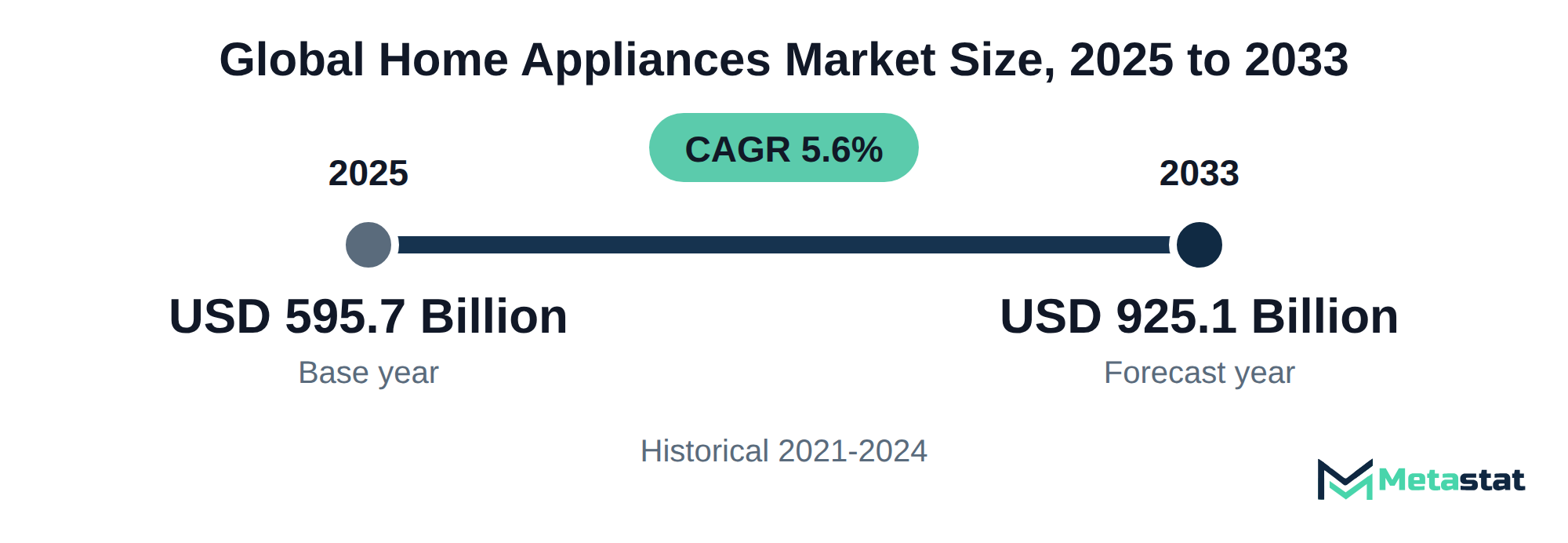
Market Valuation: Valued at $595.7 Billion in 2025, projected to reach $925.1 Billion by 2033 at a 5.6% CAGR.
Dominant Segment: Cooking appliances lead the market, driven by a strong consumer preference for innovative cooking solutions that enhance meal preparation efficiency.
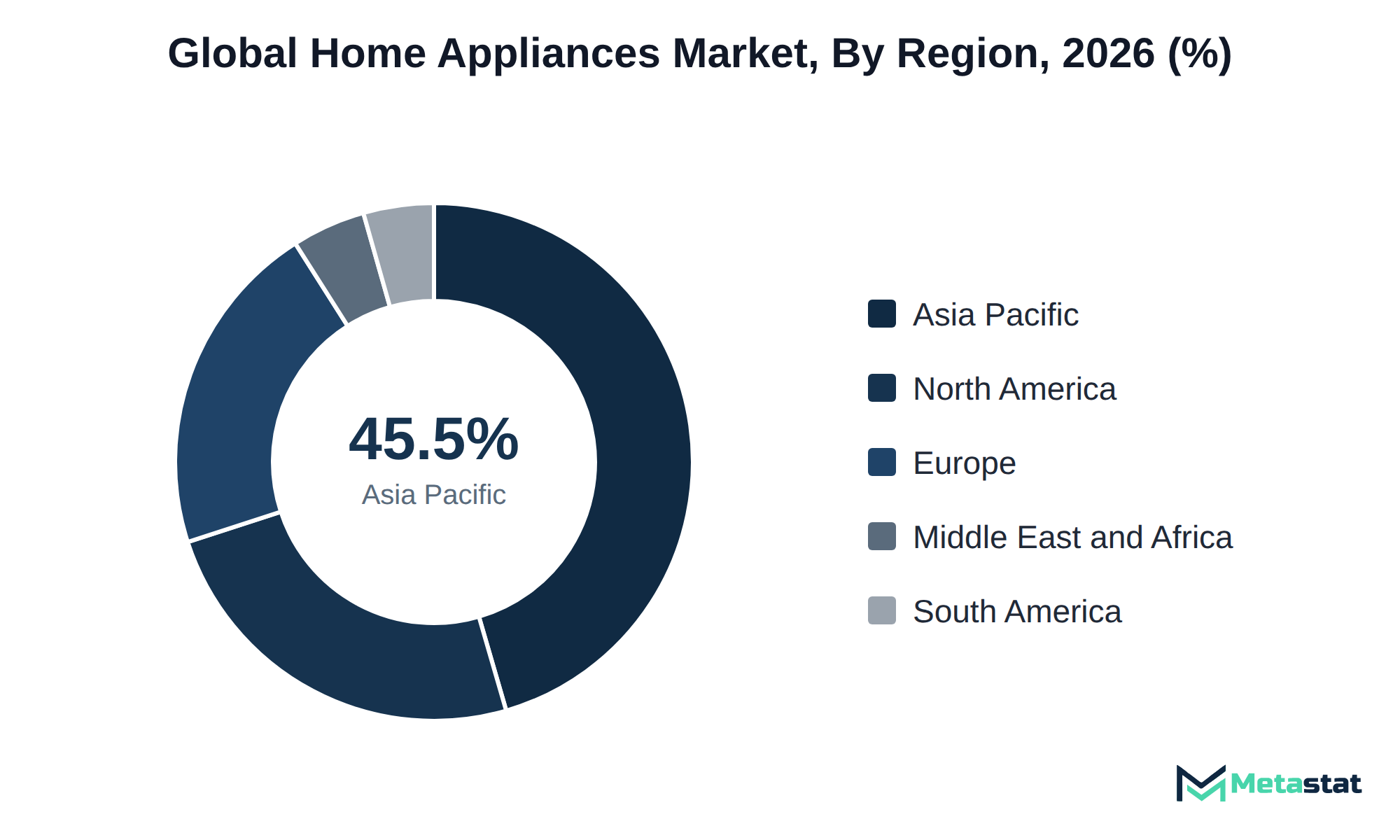
Geographic Lead: The Asia Pacific region dominates the market with a 45.5% share, fueled by urbanization and a growing middle class that increases home appliance purchases.
What's Inside: The report provides comprehensive coverage of market dynamics, competitive analysis, and detailed forecasts for the Home Appliances market from 2026 to 2033.
Energy-Efficient Solutions: The market is witnessing a significant shift towards energy-efficient cooking appliances, projected to grow at a CAGR of 5.4% from 2026 to 2033, as consumers prioritize sustainability.
Connected Appliances Growth: Connected appliances are set to generate USD 109.4 billion by 2033, with a CAGR of 10.9% from 2026, reflecting the increasing demand for smart home technologies.
Choose Your License
Global Home Appliances Market
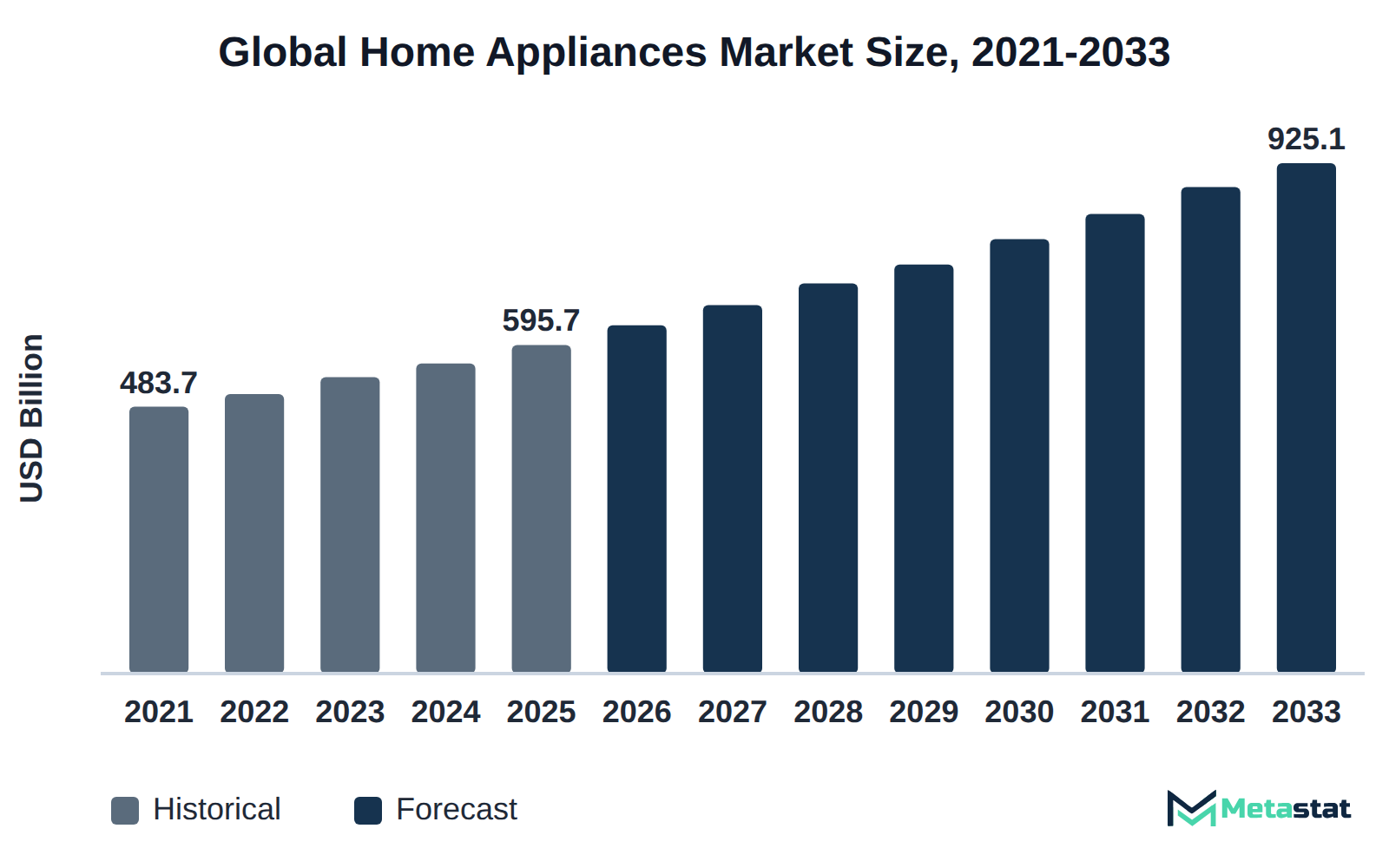
The global Home Appliances market was valued at USD 595.7 billion in 2025 and is projected to reach USD 925.1 billion by 2033, growing at a CAGR of 5.6% over the forecast period.
The Home Appliances market covers products designed for domestic use, including cooking, refrigeration, laundry, and heating and cooling appliances. Buyers invest in these products to enhance their living standards, improve energy efficiency, and simplify daily tasks. The growing focus on smart technology integration further drives consumer spending, with connected appliances offering convenience and control, reflecting the evolving needs of modern households.
The market is growing strongly, driven by rising disposable incomes and increasing demand for energy-efficient solutions. Among product segments, cooking appliances represent the highest value, indicating a strong preference for innovative cooking solutions. The Asia Pacific region leads the market with a share of 45.5%, highlighting the area's urbanization and expanding middle class, which contribute to increased home appliance purchases.
North America holds 24.5% of the market in 2025, with the US leading in 2026. The emphasis on sustainability and smart technologies acts as a primary growth driver, prompting manufacturers to innovate and meet consumer expectations. Buyers seek appliances that offer both functionality and environmental benefits, leading to continued market expansion.
The Home Appliances market caters to consumer demand for efficient and convenient household solutions. Buyers invest in these products to enhance their daily living experiences, driven by the desire for improved functionality, energy efficiency, and modern designs. The variety of products available in the market, including cooking, refrigeration, and laundry appliances, addresses diverse consumer preferences and lifestyles.
Growth in the market is propelled by technological advancements that enhance product features and convenience. Among the segments, cooking appliances command the highest value, reflecting strong consumer interest in innovative cooking solutions. The rapid adoption of connected appliances contributes to market expansion, attracting tech-savvy consumers seeking integrated home solutions.
Market dynamics are influenced by various factors, including changing consumer preferences and emerging trends in sustainability. The increasing focus on energy-efficient products drives manufacturers to innovate and adopt environmentally friendly practices. This focus aligns with consumers’ growing awareness of sustainability, resulting in heightened demand for appliances that reduce energy consumption and environmental impact.
Energy-efficient cooking appliances increasingly attract consumer interest, driven by heightened awareness of environmental sustainability and rising energy costs. The Home Appliances market experiences a significant shift towards products that minimize energy consumption, with a compound annual growth rate (CAGR) of 5.4% projected for cooking appliances from 2026 to 2033. This growing demand creates opportunities for manufacturers to innovate and enhance their product portfolios, aligning with consumer preferences for eco-friendly options. Household induction appliances represent one product type within the cooking appliances category.
The adoption of built-in kitchens complements this trend, offering straightforward design integration and optimizing space efficiency. Built-in appliances, including energy-efficient cooking units, are anticipated to generate increased revenue within the Home Appliances market, with a projected CAGR of 7% through 2033. These appliances enhance aesthetic appeal and drive energy savings, making them attractive to modern consumers seeking convenience and sustainability.
Companies that focus on energy-efficient features and built-in designs can capture the evolving demands of environmentally conscious buyers and strengthen their competitive edge and market share.
The rise of connected home appliances significantly alters purchasing and payment practices within the Home Appliances market. Consumers increasingly value the convenience and efficiency presented by smart appliances, leading to a shift in buying behavior. Connected appliances, defined by their ability to communicate over the internet, are projected to generate USD 109.4 billion by 2033, reflecting a compound annual growth rate (CAGR) of 10.9% from 2026. This trend indicates a growing preference for technology that combines functionality with connectivity.
Pricing models for connected appliances often include up-front costs combined with recurring fees for premium services, remote diagnostics, or enhanced features. This approach aligns with consumer expectations for ongoing support and software updates. Retailers and manufacturers are adopting subscription-based models that promote customer retention while ensuring regular revenue streams. The proliferation of connected devices encourages manufacturers to provide bundled services, enhancing value propositions for consumers. Increased adoption of connected home appliances positions companies to capitalize on emerging trends in smart home technology, creating new opportunities for revenue generation and market expansion.
Growing consumer preference for online shopping significantly influences the Home Appliances market, particularly among younger buyers. This demographic prioritizes convenience and time efficiency, seeking smooth online experiences when purchasing appliances. In 2025, the market for online appliance purchases is projected to expand, driven by increasing internet penetration and the rise of e-commerce platforms. This trend highlights the need for retailers to enhance their online presence and ensure efficient logistics networks for delivery and installation services.
This segment's expansion indicates that buyers increasingly value smart technology integration within their appliances. Retailers adapt their service offerings to accommodate the expectations of this tech-savvy consumer base, who require setup assistance to maximize the functionality of connected devices.
Effective management of installation services represents a strategic opportunity for appliance retailers. Offering professional installation enhances customer satisfaction and drives additional revenue streams for retailers within the Home Appliances market. While demand for connected appliances rises, firms that invest in strong installation capabilities alongside their product offerings strengthen their competitive position and build customer loyalty.
Compact cooking appliances increasingly address the specific needs of urban households, where space constraints limit kitchen size. These appliances deliver functionality without sacrificing valuable square footage. For instance, the segment of Cooking Appliances is projected to grow from USD 123.4 billion in 2026 to USD 178.4 billion by 2033, reflecting a compound annual growth rate of 5.4 percent. This growth signifies an escalating demand for efficient cooking solutions in urban environments.
Urban dwellers prioritize convenience, leading to a preference for appliances that optimize meal preparation in limited spaces. Compact cooking appliances, including multifunctional ovens and small kitchen appliances, streamline cooking tasks while ensuring quality results. The continued adoption of such products enhances the attractiveness of the Home Appliances market, with manufacturers focusing on innovation to meet these evolving consumer preferences. This trend improves consumer satisfaction and strengthens manufacturers' competitive position, increasing revenue potential for the market.
Growing awareness of energy efficiency significantly influences purchasing trends among environmentally conscious consumers. These buyers increasingly seek appliances that enhance energy savings while maintaining performance, particularly in cooking and laundry categories. This shift toward energy-efficient models results in higher sales volume, contributing to a projected market value of USD 925.1 billion by 2033. Cooking appliances, specifically, are expected to see substantial growth, with a compound annual growth rate of 5.4% from 2026 to 2033. The combination of rising energy costs and the desire for sustainable options strengthens this demand, reflecting a broader transition in consumer behavior within the market.
Changing demographics and increased emphasis on sustainability drive the adoption of energy-efficient solutions. Younger generations prioritize eco-friendly products, further supporting the market's expansion. Manufacturers that align their product offerings with evolving consumer values remain competitive as conditions change.
Advancements in smart technology significantly influence the adoption of connected appliances within the Home Appliances market. These innovations enhance consumer convenience and offer increased control over household systems. The integration of smart features enables users to monitor and manage appliances remotely through mobile applications, creating an efficient user experience. Enhanced connectivity contributes to energy efficiency, allowing consumers to optimize energy usage and reduce costs. This trend appeals to tech-savvy households, driving demand for smart refrigerators, washing machines, and HVAC systems.
Manufacturers are responding to this trend by developing a wider range of connected appliances that feature advanced capabilities including voice control, which relies on AI speech recognition, and machine learning. This evolution reflects a broader shift towards home automation, where consumers expect more intelligent and responsive systems. The growing availability of compatible products and platforms accelerates the integration of these appliances into the smart home ecosystem. The market is projected to experience significant growth in the coming years, with connected appliances becoming a key driver of overall sales in the Home Appliances market.
Increasing prices for home appliances restrict affordability, particularly affecting budget-conscious consumers. Higher costs result from increased raw material prices and supply chain disruptions, leading to smaller orders and delayed purchases. The rising costs impact first-time buyers who prioritize cost-effective solutions. Consequently, buyers often postpone replacing old appliances, opting to repair rather than invest in new models. This trend creates a barrier to market growth, with demand stagnating among segments sensitive to price fluctuations. In the Home Appliances market, maintaining competitive pricing alongside quality remains essential to attract price-sensitive consumers and stimulate demand. The ongoing price pressures could hinder the adoption of innovative features that enhance user experience, further complicating the market.
Suppliers in the Home Appliances market face significant challenges due to escalating raw material costs. Prices for essential components, including metals and plastics, have surged due to global supply chain disruptions and increased demand from various industries. This situation creates margin pressure, compelling suppliers to reassess pricing strategies and operational efficiencies.
In response, many suppliers adopt advanced manufacturing techniques and seek alternative materials that provide cost savings without compromising product quality. Strategic partnerships with raw material providers emerge to secure better pricing and availability. By optimizing production processes and exploring innovative sourcing strategies, suppliers enhance resilience against fluctuating material costs. This proactive approach supports profitability while maintaining competitive pricing in the market.
The demand for connected appliances within the Home Appliances market demonstrates significant growth potential, driven by changing consumer preferences toward smart home technologies. Increased connectivity enhances user convenience, enabling remote monitoring and control of various household devices.
Young, tech-savvy consumers prioritize integration of appliances into their digital ecosystems, prompting manufacturers to innovate and develop smart products that align with these expectations. This trend presents opportunities for appliance companies to differentiate themselves through advanced features and enhanced user interfaces.
Smart homes and smart devices continue to gain traction, and the market experiences heightened competition among suppliers aiming to capitalize on this trend. This shift toward a more connected approach drives customer loyalty and promotes higher spending on premium appliances, strengthening overall market growth.
The Global Home Appliances market is segmented based on Product Type, Connectivity, Installation Format, and Distribution Channel.
Cooking appliances support meal preparation in residential households and commercial establishments. The growing inclination towards energy-efficient models drives demand, reflecting consumers' preferences for sustainability. This segment distinguishes itself with a higher growth rate compared to others, including Heating and Cooling Appliances, which has a CAGR of 5.9%. The availability of innovative features and smart technology integration contributes to its appeal, pushing manufacturers to invest in advanced functionalities. Consumers increasingly favor appliances that provide improved user experience and efficiency, aligning with their lifestyle demands. The Cooking Appliances segment is expected to demonstrate significant potential for expansion within the market, fueled by evolving consumer behaviors and technological advancements.
Refrigerators and Freezers segment is estimated to reach USD 156.5 billion by 2033, at a CAGR of 5.3% during the forecast period. This segment serves primarily residential consumers and commercial establishments, providing essential food preservation and storage solutions. Growing consumer focus on energy efficiency drives demand for advanced refrigeration technologies, leading to the development of models that consume less power while maintaining optimal performance. This segment experiences steady growth, distinguished by its essential nature compared to other appliance categories, which see fluctuations based on trends. For example, Cooking Appliances show a slightly lower growth rate of 5.4%, emphasizing the robustness of Refrigerators and Freezers within the market. Innovations including smart controls and improved insulation materials further enhance efficiency, reinforcing the segment's position in the market.
The Laundry Appliances segment is expected to reach USD 138.5 billion by 2033. This segment includes washing machines, dryers, and other related equipment primarily used by households and commercial establishments for fabric care. Consumers increasingly seek convenience and efficiency, driving demand for modern laundry appliances. Factors influencing this segment include the shift towards energy-efficient models and rising user expectations for performance and reliability. Compared to other product types in the market, Laundry Appliances exhibit moderate growth, with a projected CAGR of 5.6%. In contrast, segments like Connected Appliances experience more rapid expansion, reflecting evolving consumer preferences. The competitive landscape highlights manufacturers focusing on innovative technologies that enhance user experiences while maintaining affordability and energy efficiency. The growth of Laundry Appliances follows broader market trends and points to the importance of consumer-centric designs and sustainability initiatives.
Heating and Cooling Appliances segment is projected to grow at a CAGR of 5.9% during the forecast period. This segment includes air conditioners, heaters, and ventilation systems used in residential and commercial settings to maintain comfortable indoor climates. Rising global temperatures and increasing consumer awareness of energy efficiency drive demand for heating and cooling solutions steadily, particularly in regions with extreme weather patterns. Unique to this segment, technological advancements in energy-efficient systems contribute significantly to its growth, appealing to environmentally conscious customers. Cooking Appliances and Refrigerators and Freezers show growth rates of 5.4% and 5.3%, respectively. The Heating and Cooling Appliances segment stands out with a higher growth rate, reflecting the market's increasing focus on climate control technologies and sustainability efforts.
Dishwashers are essential appliances designed to automate the cleaning of dishes, utensils, and cookware. They serve households and commercial kitchens, streamlining the dishwashing process and enhancing overall efficiency. The rising trend of convenience among consumers drives demand for these appliances, particularly in urban environments where space and time constraints exist. Product innovation, including energy-efficient models and smart technology integration, significantly influences consumer purchasing decisions. Compared to other segments, dishwashers attract a different buyer demographic, focusing on convenience and ease of use rather than price. The competitive landscape in this segment remains dynamic, with manufacturers continuously enhancing features to meet evolving consumer preferences. The market reflects a growing interest in sustainability, with consumers increasingly favoring products that reduce water and energy consumption.
Water heaters provide essential services for residential and commercial settings, ensuring hot water availability for daily activities including bathing, cleaning, and cooking. Homeowners and businesses increasingly rely on water heaters for comfort and convenience, leading to steady demand across various regions. Key factors driving this segment include rising temperatures, necessitating hot water for comfort, and increasing construction activities, which boost installations in new buildings. This segment typically experiences slower growth compared to cooking appliances, catering primarily to consumers seeking reliable heating solutions. The pricing dynamics of water heaters align with broader appliance trends, reflecting advancements in energy efficiency technologies that enhance performance while reducing operational costs.
Floor and Garment Care Appliances encompass a variety of devices, including steam irons, designed for cleaning and maintaining various surfaces and fabrics. These appliances serve both residential and commercial users, focusing on enhancing cleanliness and convenience. Factors driving this segment include a growing emphasis on hygiene, coupled with an increasing number of dual-income households requiring efficient cleaning solutions. Compared to other segments, Floor and Garment Care Appliances typically experience slower growth, influenced by established product preferences and less frequent replacement cycles. While larger appliances like refrigerators and washing machines experience rapid technological advancements, this segment features a more gradual evolution, often relying on traditional cleaning methods supplemented by innovative features.
Food and beverage preparation appliances, including drip coffee makers, facilitate the preparation of meals and beverages in various settings. Consumers in residential and commercial spaces use these appliances for convenience and efficiency. The rising trend of cooking at home, driven by health consciousness and cost savings, increases demand for these products. Technological advancements enhance the functionality of these appliances, allowing for smarter and more versatile options. Compared to other segments, food and beverage preparation appliances experience steady growth, driven by consumer interest in culinary exploration and experimentation. This segment's distinct appeal lies in its ability to cater to both casual cooks and culinary enthusiasts, setting it apart from other appliance categories that focus more on basic household needs. The market for food and beverage preparation appliances continues to evolve, adapting to changing consumer preferences and lifestyles.
Air and Water Treatment Appliances encompass devices designed to enhance the quality of air and water in residential and commercial environments. These appliances, including air purifiers, humidifiers, dehumidifiers, and water filtration systems, help health-conscious consumers and businesses keep living spaces clean and safe. Demand for these products has surged due to increasing awareness of health issues linked to poor air quality and contaminated water sources. Rising concern over respiratory problems and waterborne diseases drives consumers toward investing in reliable treatment systems. This segment's growth trajectory differs from other product types, reflecting a faster pace that aligns with heightened public focus on health and wellness. Compared to other appliances, Air and Water Treatment Appliances generally command higher prices, making them attractive to a consumer base willing to invest in long-term health benefits. This segment contributes significantly to the dynamics of the market.
Personal care appliances, such as electric shavers, and sewing machines serve various functions, including grooming, styling, and sewing tasks traditionally performed by hand. Consumers in this segment range from individual users seeking convenience and efficiency to professionals requiring high-quality equipment for commercial purposes. A notable driver for this segment arises from increasing consumer interest in personal grooming and home sewing, reflecting a shift toward self-sufficiency and creativity. Compared to other segments, these appliances experience slower growth due to higher price points and niche market dynamics, appealing primarily to specific demographics focused on quality and brand reputation. The incorporation of advanced technology in personal care devices enhances user experiences, further differentiating this segment from more standardized home appliances. The market evolves in response to consumer preferences for multifunctionality and ergonomic design, reinforcing its place within the broader home appliances market.
These appliances serve multiple functions, enhancing user convenience by enabling remote control and automation of household tasks. Increasing demand for smart home solutions among tech-savvy consumers drives growth in this segment, reflecting a shift in consumer preferences toward more integrated solutions. Connected Appliances differentiate themselves from Non-Connected Appliances, which are anticipated to reach USD 815.8 billion by 2033 at a CAGR of 5%. The emerging focus on IoT technology and energy management features positions the Connected Appliances segment as a leader in innovation within the broader market, making it particularly attractive to early adopters and affluent buyers seeking to modernize their living spaces.
These appliances serve essential functions in households and commercial settings, with users ranging from individual consumers to businesses requiring reliable and efficient equipment. Demand for Non-Connected Appliances is driven by the need for basic functionality and cost-effectiveness, appealing to budget-conscious consumers who prioritize affordability over advanced technology. This segment experiences steady growth, although at a slower pace compared to Connected Appliances, which is projected to grow at a CAGR of 10.9%. The preference for traditional models reflects a segment of the market where consumers remain cautious about the integration of smart technology and its associated costs. Overall, the market continues to evolve, with Non-Connected Appliances maintaining a strong presence due to their practicality and established presence.
Built-in Appliances segment is valued at USD 105.7 billion in 2026 and is projected to reach USD 169.4 billion by 2033, at a CAGR of 7% during the forecast period. These appliances blend into kitchen and living spaces, offering aesthetic and functional benefits to homeowners and businesses. The segment attracts consumers seeking space-saving solutions, particularly in urban environments where kitchen space is limited. A significant driver of growth stems from a rising preference for modern, stylish designs that complement contemporary interiors. Compared to other segments within the Installation Format category, Built-in Appliances experience faster growth due to their appeal among high-income households investing in premium kitchen solutions, while Freestanding Appliances exhibit slower growth at a CAGR of 4.7%. This differentiation points to shifting consumer priorities toward enhancing home aesthetics and maximizing space efficiency.
Freestanding Appliances segment is estimated to reach USD 373.9 billion by 2033, at a CAGR of 4.7% during the forecast period. These appliances offer versatility and convenience, widely used in various residential and commercial applications. The increasing preference for flexible home layouts and the ease of installation contribute to demand, particularly among consumers seeking functional and adaptable solutions. Compared to other segments, Freestanding Appliances experience moderate growth, with a slower CAGR than Connected Appliances, which shows a CAGR of 10.9%. The competitive landscape features various brands focusing on innovation and design to attract diverse buyers, enhancing the segment's appeal. This segment addresses varying consumer needs and preferences within the broader Home Appliances market.
Countertop and Portable Appliances segment is expected to reach USD 234.9 billion by 2033. This segment includes items such as blenders, toasters, and portable electric heaters, widely used for their convenience in residential and commercial settings. Growth in this segment is propelled by increasing consumer preference for multifunctional appliances that save space and enhance efficiency. Distinct from other segments, including Built-in Appliances, which feature higher installation costs and permanent placement, Countertop and Portable Appliances cater to consumers seeking flexibility and ease of use, allowing for quick and efficient operations. The segment is projected to grow at a considerable rate, driven by innovations and product advancements that enhance usability and functionality. The Home Appliances market adapts, reflecting evolving consumer preferences towards portable solutions that fit modern lifestyles.
Wall- and Ceiling-Mounted Appliances segment is projected to grow at a CAGR of 6.2% during the forecast period. These appliances maximize space and provide efficient heating and cooling solutions, predominantly in residential settings. Consumers increasingly prioritize space-saving designs and energy efficiency, driving demand for these appliances. The segment stands out from Built-in and Freestanding Appliances due to its specialized application and installation flexibility. The growing trend of smart home integration fuels interest in these appliances, often leading to higher price points compared to traditional alternatives. By 2033, the segment is expected to achieve a significant market share, contributing to the overall growth of the market, alongside trends emphasizing aesthetic appeal and functionality.
Specialty and Electronics Stores segment is valued at USD 282.4 billion in 2026 and is projected to reach USD 382 billion by 2033, at a CAGR of 4.4% during the forecast period. These stores sell many types of home appliances, catering primarily to consumers seeking high-quality, specialized products. The increasing preference for personalized shopping experiences drives growth in this segment, with customers prioritizing expert advice and product demonstrations. Compared to other distribution channels, this segment faces slower growth due to the rise of online shopping, which offers convenience and potentially lower prices. While online sales channels expand rapidly, Specialty and Electronics Stores maintain a distinct market presence by offering immediate access to products and customer service that enhance buyer confidence. The market adapts to shifting consumer preferences, ensuring that these outlets remain relevant in an evolving retail environment.
Supermarkets and Hypermarkets segment is estimated to reach USD 95.7 billion by 2033, at a CAGR of 3.3% during the forecast period. This segment is significant in the distribution of home appliances, catering to a broad customer base that includes individual consumers and contractors. The primary driver for this segment stems from the growing preference for one-stop shopping experiences, providing convenience and efficiency for customers looking to purchase home appliances. Compared to other distribution channels, Supermarkets and Hypermarkets typically offer a wider range of brands and products in a physical location. This segment exhibits slower growth relative to online sales channels, which are projected to grow at a CAGR of 8.8% during the same period. The focus on enhancing the customer shopping experience, combined with the market's increasing demand for home appliances, supports the continued relevance of supermarkets and hypermarkets in the home appliances market.
Exclusive Brand Outlets segment is expected to reach USD 98.2 billion by 2033. This segment caters to consumers seeking specialized home appliances from recognized brands, offering high-quality products. Demand for these outlets has grown due to increasing consumer preference for branded appliances that promise reliability and superior performance. Exclusive Brand Outlets face competitive pressure from online platforms, which offer convenience and often lower prices. The segment distinguishes itself from other distribution channels by focusing on brand loyalty, resulting in higher average transaction values compared to supermarkets and hypermarkets. The market for exclusive brand outlets is projected to expand, driven by continuous innovation and the introduction of premium products.
Online sales in the Home Appliances market are projected to grow at a CAGR of 8.8% during the forecast period. This segment primarily serves consumers seeking convenience and variety in purchasing home appliances through digital platforms. Rapid advancements in e-commerce technology and the increasing penetration of the internet drive growth in this segment, attracting tech-savvy consumers and busy households. Compared to other distribution channels, online sales offer a broader selection, often at competitive prices, due to lower overhead costs. This segment differentiates itself through its customer-centric approach, enabling personalized shopping experiences and efficient delivery options. The forecast indicates that the segment's value is expected to increase significantly, reflecting a shift in consumer preferences towards online shopping solutions.
Direct Project Sales and Department Stores facilitate the purchase of home appliances through specialized retail environments. These channels cater primarily to consumers seeking tailored solutions for homes or projects, emphasizing customer service and expert advice. Factors driving this segment include the growing trend of home renovations and the increasing consumer focus on energy-efficient appliances. This segment differs from others due to its higher emphasis on personalized service and product demonstrations, which enhance the decision-making process for buyers. Compared to larger distribution channels, this segment observes slower growth owing to its niche market focus and dependence on local demand. The Home Appliances market sees evolving consumer preferences for direct engagement and support during the purchasing process, impacting overall sales dynamics.
Based on geography, the Global Home Appliances market is divided into North America, Europe, Asia-Pacific, South America, Middle East, and Africa.
Consumer preferences in the United States, Canada, and Mexico drive significant demand for energy-efficient home appliances, emphasizing sustainability and cost savings. The North American market benefits from a strong retail infrastructure, with a high concentration of specialty stores and e-commerce platforms facilitating easy access to a variety of products. Technological advancements in connectivity enhance the appeal of smart appliances, aligning with evolving consumer lifestyles. North America is projected to reach USD 207.1 billion by the end of 2033. The market's growth reflects increasing investments in home renovations and growing awareness of energy-efficient solutions among consumers. The emphasis on innovation and design, along with competitive pricing strategies, positions the region favorably within the global Home Appliances market.
Germany, France, the UK, Italy, Spain, and Russia contribute significantly to the Home Appliances market through robust consumer demand and increasing disposable incomes. A strong emphasis on energy efficiency and sustainability drives consumer preferences, prompting manufacturers to innovate in product design and functionality. The market benefits from well-established retail networks and e-commerce platforms facilitating access to a diverse range of products. The trend towards smart home integration enhances the appeal of connected appliances, with consumers seeking convenience and energy management solutions. By 2025, Europe holds a 21.00% share of the global market, indicating substantial investment potential in this region. Growing demand for energy-efficient and smart appliances positions Europe as a vital player in the evolving home appliances landscape.
Rapid urbanization and increased disposable income in Asia-Pacific significantly drive the demand for the Home Appliances market. Countries including China and India demonstrate substantial consumer interest in energy-efficient and technologically advanced appliances, aligning with rising environmental awareness. The region's robust manufacturing infrastructure supports the availability of a diverse range of products, enhancing accessibility for consumers. Connected appliances are experiencing strong growth, with anticipated revenues reaching USD 109.4 billion by 2033, reflecting a shift towards smart home technologies. Competitive pressure compels manufacturers to innovate while maintaining affordability, ensuring a steady influx of products in the market. Australia and Japan maintain notable segments for high-end appliances, driven by premium consumer preferences. The combination of these factors positions Asia-Pacific as a key player in the global market.
In South America, the Home Appliances market experiences distinct dynamics driven by consumer demand in Brazil and Argentina. Urbanization and rising disposable incomes in these countries contribute to increased purchases of home appliances, particularly in the cooking and laundry segments. Infrastructure improvements in retail distribution channels enhance accessibility for consumers, facilitating growth. The market share for South America is projected at 4.4% in 2025. Manufacturers focus on affordability and energy efficiency to capture the attention of cost-conscious consumers, further supporting market expansion. Online sales channels gain traction, reflecting broader trends in consumer purchasing behavior.
Demand in the Middle East and Africa for the Home Appliances market relies heavily on rising urbanization and increasing consumer awareness of energy-efficient products. Countries like Saudi Arabia and the UAE exhibit strong preferences for high-quality, technologically advanced appliances, driven by a growing middle class and urban population. Retail infrastructure in these nations supports accessibility to a broad range of products, with specialty and electronics stores playing a significant role in distribution. South Africa's market reflects a unique blend of local manufacturing and imports, catering to diverse consumer needs and preferences. The Middle East and Africa region presents potential growth opportunities driven by technological advancements and shifting consumer trends. The market continues to evolve, responding to the distinct demands and preferences of its consumers.
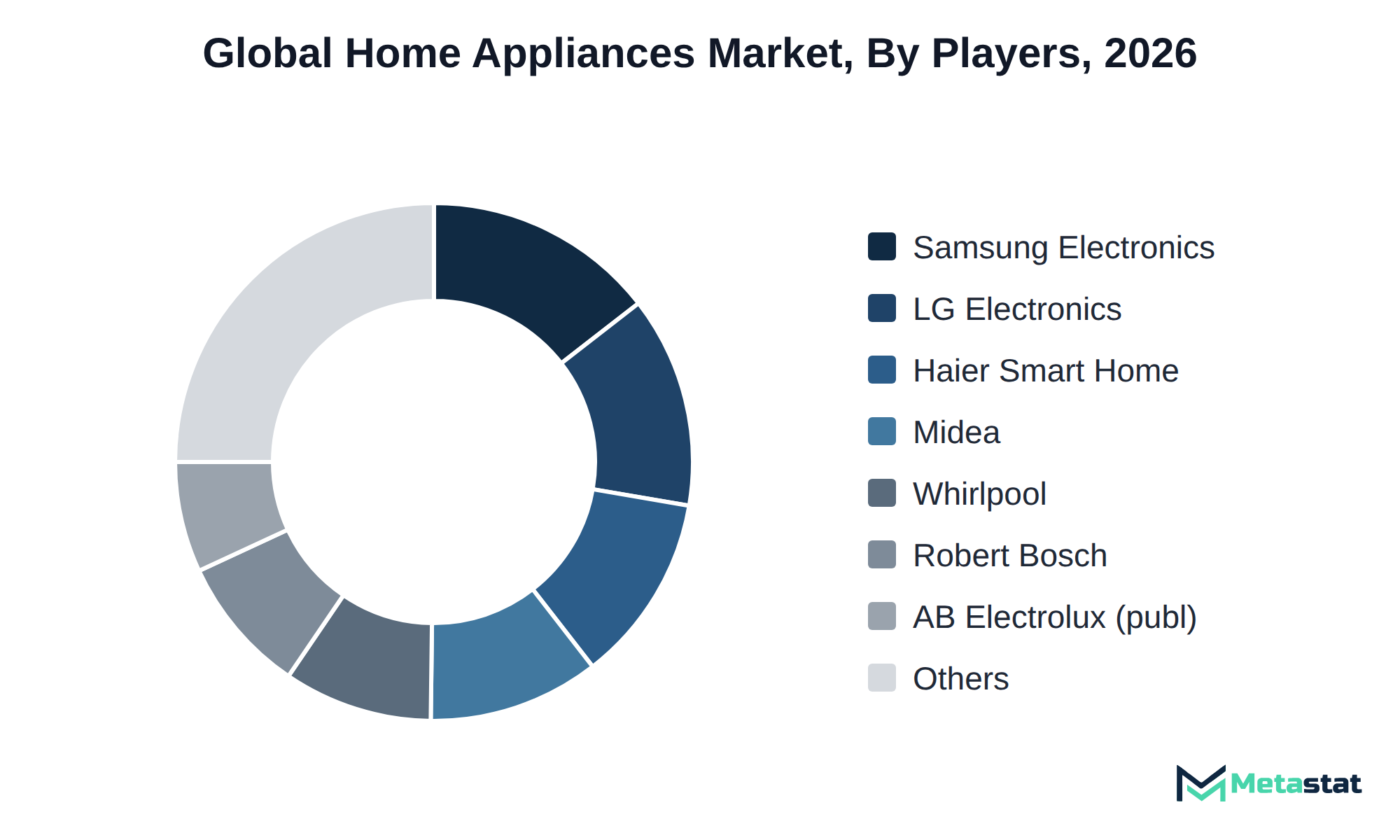
Companies in the home appliances market compete across various dimensions, including product quality, pricing, and technological innovation. Buyers prioritize attributes including price, energy efficiency, brand reputation, and after-sales service when making purchasing decisions.
Haier Smart Home Co., Ltd. focuses on smart home integration and energy-efficient appliances, appealing to eco-conscious consumers. Midea Group Co., Ltd. emphasizes affordability and functionality, catering to a broad customer base seeking reliable and cost-effective solutions. Samsung Electronics Co., Ltd. stands out for its advanced technology and innovative designs, targeting tech-savvy consumers who value modern aesthetics and smart functionalities.
In addition, LG Electronics Inc. is recognized for its emphasis on smart technology and user-friendly interfaces, while Whirlpool Corporation prioritizes durable products with a strong focus on customer service. These strategic differences highlight how various players position themselves in the competitive dynamics of the home appliances market.
This growth relies on key developments within the market, particularly the increasing demand for connected appliances and built-in appliances. Connected appliances are projected to show a growth rate of 10.9% CAGR, reflecting a trend among consumers toward smart home technologies. Both segments highlight a shift in consumer preferences toward integrated, space-saving solutions, particularly in North America and Europe, where urban living drives demand for innovative home appliances.
However, risks exist that could slow this growth trajectory. Economic fluctuations and potential supply chain disruptions hinder production capabilities and product availability, particularly in the Asia Pacific region, which holds the largest market share at 45.5%. If manufacturers encounter significant challenges in sourcing components or managing logistics, growth rates decline, impacting overall market performance. The combination of these developments and risks will define the future outlook of the market.
By Product Type: Cooking Appliances, Refrigerators and Freezers, Laundry Appliances, Heating and Cooling Appliances, Dishwashers, Water Heaters, Floor and Garment Care Appliances, Food and Beverage Preparation Appliances, Air and Water Treatment Appliances, Others (Personal Care Appliances, Sewing Machines)
By Connectivity: Connected Appliances, Non-Connected Appliances
By Installation Format: Built-in Appliances, Freestanding Appliances, Countertop and Portable Appliances, Wall- and Ceiling-Mounted Appliances
By Distribution Channel: Specialty and Electronics Stores, Supermarkets and Hypermarkets, Exclusive Brand Outlets, Online, Others (Direct Project Sales, Department Stores)
The report strategically identifies and profiles the key market players and analyses their core competencies in each sub-segment of the Home Appliances market.
Report Attributes | Details |
Study Period | 2021-2033 |
Base Year | 2025 |
Estimated Year | 2026 |
Forecast Period | 2026-2033 |
Historical Period | 2021-2025 |
Growth Rate | CAGR 5.6% from 2026 to 2033 |
Revenue Unit | USD billion |
Segmentation | By Product Type, Connectivity, Installation Format, Distribution Channel, and Region |
By Region | North America (By Product Type, Connectivity, Installation Format, Distribution Channel, and Country)
|
Europe (By Product Type, Connectivity, Installation Format, Distribution Channel, and Country)
| |
Asia Pacific (By Product Type, Connectivity, Installation Format, Distribution Channel, and Country)
| |
South America (By Product Type, Connectivity, Installation Format, Distribution Channel, and Country)
| |
Middle East and Africa (By Product Type, Connectivity, Installation Format, Distribution Channel, and Country)
|
Find answers to common questions about this report
The Home Appliances market size was valued at USD 595.7 billion in 2025.
The market is projected to grow at a CAGR of 5.6% during the forecast period from 2026 to 2033.
The North America Home Appliances market size is estimated to reach USD 207.1 billion by 2033.
Connected Appliances lead the Home Appliances market, with a projected value of USD 109.4 billion by 2033. This segment shows a compound annual growth rate of 10.9 percent from 2026 to 2033.
Key drivers for the Home Appliances market include growing awareness of energy efficiency, which influences purchasing trends among environmentally conscious consumers. Increased demand for connected appliances, driven by changing consumer preferences toward smart home technologies, supports market growth.
Increasing prices for home appliances restrict affordability, particularly affecting budget-conscious consumers. Escalating raw material costs create margin pressure for suppliers, compelling them to reassess pricing strategies and operational efficiencies.
Growing awareness of energy efficiency and a shift toward smart home technologies favor adoption in the Home Appliances industry. Younger, tech-savvy consumers increasingly prioritize eco-friendly and connected appliances, driving demand for innovative products that enhance convenience and sustainability.
The Home Appliances market is estimated to reach a valuation of USD 925.1 billion by 2033.
Key players operating in the Home Appliances market include Haier Smart Home Co., Ltd., Midea Group Co., Ltd., Samsung Electronics Co., Ltd., LG Electronics Inc., Whirlpool Corporation, and AB Electrolux (publ).
Cooking appliances are expected to experience a compound annual growth rate of 5.4 percent from 2026 to 2033.
The analysts below cover Consumer Goods research at Metastat Insights.
LEAD ANALYST
Utkarsh Khirodkar is a Lead Market Research Analyst at MetaStat Insight, specializing in market intelligence, technology sector assessments, and competitive strategy.
Assessing 200mm wafer transition schedules and substrate supply bottlenecks requires precise technical intelligence. MetaStat Insight supplied an actionable breakdown comparing planar and trench MOSFET architectures across automotive and industrial drive markets. The regional capacity estimates for Asia-Pacific foundries helped clarify lead-time uncertainties during our strategic planning session. When we needed additional clarification on high-purity raw material sourcing, their analyst team responded with helpful context within twenty-four hours.
Tracking maintenance cycle demand for secondary flight display units and terrain collision avoidance systems across regional jet fleets involves complex aftermarket dynamics. MetaStat Insight provided practical analysis separating airline retrofit programs from OEM forward-fit production schedules in North America and Southeast Asia. The supplier matrix highlighted component obsolescence timelines without resorting to vague generalizations. The dataset served as a dependable reference during our annual program review meetings.
Evaluating secondary resin quality across post-consumer packaging streams requires reliable technical segmentation. MetaStat Insight delivered an objective assessment that distinguished between extrusion-grade flake pricing and optical sorting throughput limitations across Western Europe. The competitive positioning breakdown for licensed depolymerization technology providers answered several questions during our feedstock feasibility audit. Their team clarified regional trade restrictions on mixed plastic scrap quickly when our team submitted follow-up requests.
Explore related market intelligence reports worth reading alongside this one.