
LEAD ANALYST
Utkarsh Khirodkar is a Lead Market Research Analyst at MetaStat Insight, specializing in market intelligence, technology sector assessments, and competitive strategy.

Global Direct Selling Market Size, Share, By Product Category (Health and Wellness Products, Nutritional Supplements, Weight Management Products, Beauty and Cosmetics, Personal Care Products, Household and Cleaning Products, Home Appliances and Kitchenware, Clothing, Accessories and Jewelry, Others), By Business Model (Single-level Marketing, Multi-level Marketing), By End-user (Individual Consumers, Families and Households, Commercial and Institutional Buyers), By Sales Channel (Person-to-Person Selling, Home Demonstrations, Party Plan and Group Selling, Online and Social Media Selling, Hybrid and Omnichannel Selling), Industry Analysis, Growth, Trends, and Forecast, 2026-2033
Report ID
MSI-5766
Published
November, 2026
Pages
261 Pages
Format
Historical
Base year
Forecast
Forecast period
Report Details
Market Valuation: Valued at $164.9 Billion in 2025, projected to reach $285.6 Billion by 2033 at a 7.1% CAGR.
Dominant Segment: Health and wellness products lead the Direct Selling market, driven by a growing consumer focus on personal health and nutrition. This segment is projected to reach USD 74.8 billion by 2033, reflecting a strong demand for nutritional supplements and weight management solutions.
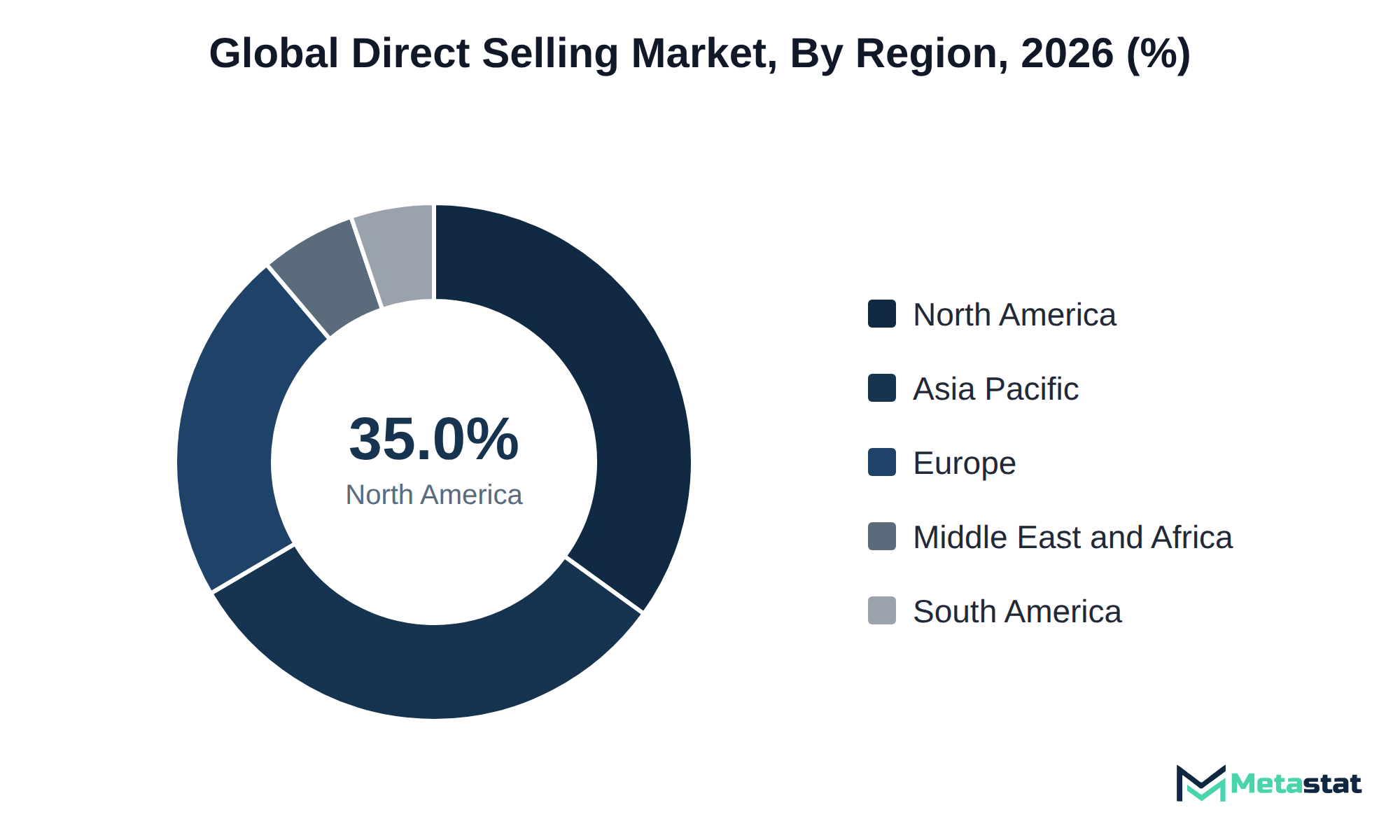
Geographic Lead: North America is the leading region in the Direct Selling market, holding 35.0% of the market share in 2025, with the U.S. expected to maintain its dominance through 2026. The region's robust purchasing power and established distribution networks facilitate market growth.
What's Inside: The report provides a comprehensive analysis of the Direct Selling market, covering product categories, business models, end-user segments, and sales channels. It includes competitive coverage and insights into market dynamics, trends, and forecasts for 2026-2033.
Emerging Trends: The rise of online and social media selling is transforming the Direct Selling landscape, with this segment projected to grow at a CAGR of 9.6%. This shift highlights the increasing importance of digital engagement in reaching wider audiences and enhancing consumer experiences.
Choose Your License
Global Direct Selling Market
The global Direct Selling market was valued at USD 164.9 billion in 2025 and is projected to reach USD 285.6 billion by 2033, growing at a CAGR of 7.1% over the forecast period.
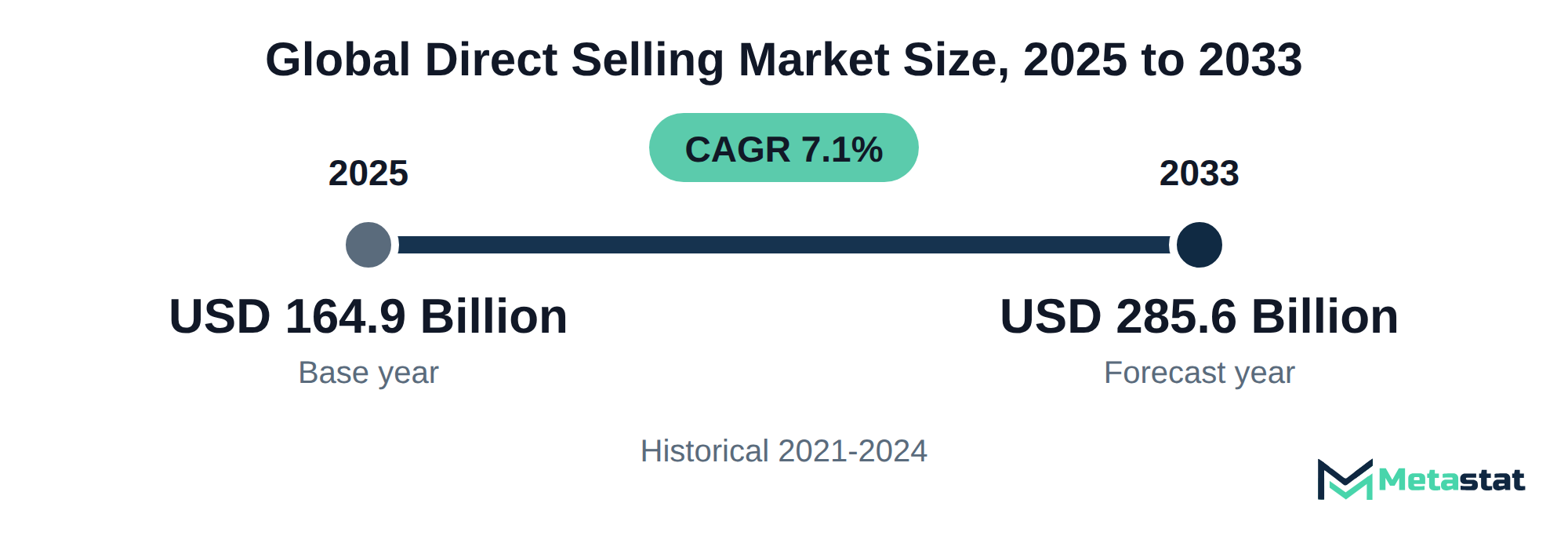
The Direct Selling market encompasses a variety of products and services sold directly to consumers, bypassing traditional retail channels. Buyers turn to direct selling for its convenience, personalized experience, and access to unique products, many of which focus on health, beauty, and wellness. This direct approach allows for stronger customer relationships and results in higher customer loyalty, driving repeat purchases.
Significant growth in the market stems from rising demand for health and wellness products, particularly nutritional supplements that address individual health needs. In terms of regional distribution, North America holds 35.0% of the market in 2025, with the US leading in 2026. The Asia Pacific region follows closely, capturing 31.6% of the market. Growing consumer emphasis on health and wellness is a key driver of market expansion.
The market shows potential for various business models, with multi-level marketing emerging as the most valuable segment. This model encourages independent distributors to promote products through personal networks, creating a ripple effect of sales. The combination of personal engagement and the growing trend toward home-based businesses positions this model for growth.
Direct Selling provides a unique approach for consumers seeking diverse products, including health and wellness items, beauty products, and household goods. Buyers spend on these offerings to access quality products, personal service, and often, exclusive items not available through traditional retail channels. The convenience of direct interaction with sales representatives enhances the customer experience, strengthening brand loyalty and repeat purchases.
Growth in the market is driven by increasing consumer demand for personalized shopping experiences and the expanding influence of digital platforms. Among the product categories, health and wellness products represent the largest segment, reflecting a strong consumer focus on health consciousness. This region's robust purchasing power and established distribution networks facilitate the growth of direct selling initiatives.
The rise of e-commerce and social media selling channels has transformed how consumers engage with brands, significantly impacting the market. Technology enables sales representatives to reach broader audiences while maintaining personal connections with customers. These shifts make direct selling strategies more effective and support overall market expansion.
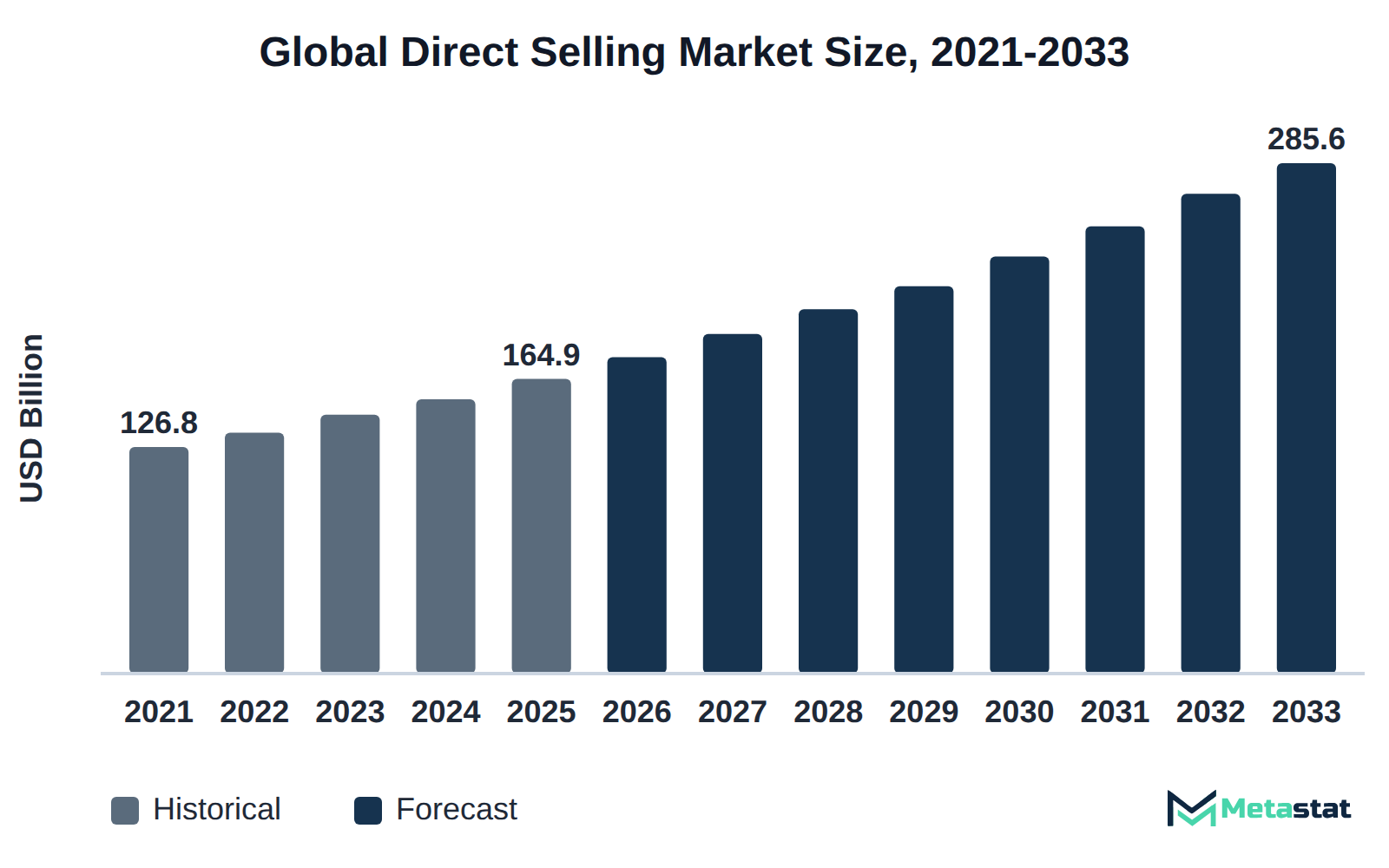
Social commerce and digital platforms significantly reshape strategies within the Direct Selling market. Online and social media selling, projected to expand at a compound annual growth rate (CAGR) of 9.6%, illustrates this shift. The integration of social media into direct selling tactics allows businesses to reach wider audiences, creating a more engaging consumer experience. Digital platforms provide a streamlined approach for sellers to connect with potential customers, enabling direct interactions and personalized marketing.
The transition to online and social media selling enhances accessibility for individual consumers, who represent a substantial portion of the market. By leveraging social commerce, sellers build communities around their products, enhancing loyalty and repeat purchases. This digital engagement drives sales and encourages brand advocacy, both of which contribute to market growth.
Incorporating digital strategies into direct selling efforts leads to increased efficiency and cost savings. Companies that adapt their selling methods to include online platforms position themselves favorably in a competitive landscape, appealing to the evolving preferences of consumers. The focus on social commerce within the Direct Selling market reflects a strategic response to changing buying behaviors and technological advancements.
Investments in health and wellness products within the Direct Selling market reflect a significant shift towards consumer-centric purchasing strategies. The projected value of health and wellness products is expected to increase from USD 45.3 billion in 2026 to USD 74.8 billion by 2033, highlighting the expanding demand in this segment. This growth results from heightened consumer interest in personal health management and the effectiveness of direct-to-consumer sales channels. Such channels offer convenience, personalized service, and a deeper connection between the seller and the buyer.
The pricing strategies in this segment often include tiered pricing models, subscription services, and promotional offers. Individual consumers exhibit a strong preference for flexible payment options, enhancing the appeal of these products. The direct selling approach allows suppliers to create tailored pricing packages that adapt to the specific needs of diverse consumer demographics. The emphasis on personalized pricing drives sales and builds customer loyalty, establishing a competitive edge in the market.
With the health and wellness product segment’s expected growth, suppliers that innovate in pricing strategies and payment options will significantly enhance their market presence. This approach meets consumer expectations and strengthens long-term relationships within the Direct Selling market.
Multi-Level Marketing (MLM) businesses emphasize retention strategies to enhance distributor loyalty and engagement. Effective compensation structures are central to achieving this goal. Distributors thrive on recognition and financial incentives, which drive their motivation and commitment. This makes loyalty, rewards and incentive management a central part of distributor engagement in MLM organizations. For instance, the MLM segment is projected to reach USD 223.2 billion by 2033, reflecting a compound annual growth rate (CAGR) of 7.3%. This expected growth highlights the significance of robust compensation frameworks that reward distributors for their sales performance and leadership in building their teams.
In addition to financial rewards, training and development opportunities contribute to distributor retention. Providing comprehensive support and mentorship creates a sense of belonging and professional growth. Successful MLM organizations implement tiered compensation plans, encouraging distributors to advance through ranks based on their performance. This strategy rewards individual achievement and builds a collaborative environment that improves overall productivity. By focusing on these compensation structures and retention strategies, businesses operating in the Direct Selling market position themselves for sustained growth and a competitive edge.
Hybrid selling models significantly enhance customer acquisition strategies and distributor networks within the Direct Selling market. By combining traditional person-to-person engagement with digital platforms, companies streamline outreach and expand their consumer base more effectively. For instance, the segment of Online and Social Media Selling is expected to experience a compound annual growth rate of 9.6%, reflecting a robust shift toward digital interaction.
This transformation allows distributors to access broader markets and engage a diverse audience. The ability to use online platforms reduces geographical constraints, enabling distributors to reach potential customers who prefer online transactions over traditional methods. Such an approach increases the efficiency and effectiveness of distributor networks, ultimately driving higher sales volume.
The commercial implications are significant, as organizations that adopt hybrid models are likely to see increased customer loyalty and higher retention rates. Enhanced accessibility creates a more inclusive environment for both customers and distributors, allowing for a more comprehensive and adaptive market presence.
The rise in health consciousness among individual consumers significantly influences spending patterns within the market. This demographic shift reflects a growing preference for health and wellness products, particularly nutritional supplements and weight management items. Increased awareness of personal health and nutrition is driving substantially higher demand for these products. This trend indicates that consumers prioritize health-related purchases, contributing to the expansion of the market. Enhanced consumer education regarding health benefits and product efficacy drives this shift, prompting a broader variety of offerings in the health and wellness segment.
The ongoing expansion of e-commerce platforms further facilitates access to these products, aligning with consumer preferences for convenient purchasing options. This combination of health awareness and improved shopping experiences promotes growth across the market.
Continuous advancements in product innovation enhance cost-effectiveness within the Direct Selling market. Suppliers increasingly focus on developing high-quality products at lower production costs, allowing for competitive pricing strategies. Innovations such as green packaging and efficient manufacturing processes contribute to reduced operational expenses. This transformation attracts a broader consumer base, driving demand among individual consumers and families seeking value-driven products. The rise of e-commerce platforms facilitates direct interactions between suppliers and buyers, bypassing traditional retail costs, which further promotes competitive pricing.
The impact of these innovations extends beyond mere price adjustments. They enable suppliers to introduce a wider range of products tailored to evolving consumer preferences. Enhanced product offerings appeal to health-conscious individuals and families, encouraging repeat purchases and brand loyalty. Consequently, the market is projected to experience significant growth, with the value expected to reach USD 285.6 billion by 2033, reflecting a compound annual growth rate of 7.1%. This dynamic environment presents opportunities for investment and expansion within the market.
Rising costs of products exert pressure on individual consumers and families, resulting in slower adoption of offerings within the Direct Selling market. Increased pricing amid inflationary trends diminishes disposable income, leading to more measured purchasing behavior. Buyers exhibit hesitance to commit to higher-priced items, often delaying purchases or opting for lower-cost alternatives. This trend particularly affects health and wellness products, where price sensitivity significantly influences consumer decisions. The result is smaller and less frequent orders, which restricts market growth potential. A smaller user base leads to limited brand loyalty and fewer referrals, which are essential for sustaining a successful direct selling environment. This dynamic highlights the ongoing challenge of balancing product value with consumer affordability, shaping the overall operations of direct selling.
Rising input costs present significant challenges for suppliers within the Direct Selling market. Fluctuations in raw materials and logistics expenses contribute to increased operational costs, impacting overall profitability. Suppliers face pressure to maintain price competitiveness while ensuring product quality, which directly affects their margin structures. In response, companies are adopting strategies focused on optimizing sourcing channels and enhancing inventory management to mitigate these cost pressures. Several suppliers are exploring local sourcing options to reduce transportation costs and lead times, ultimately improving their supply chain efficiency. These measures aim to balance the need for cost control with the demand for high-quality products. These adjustments in supplier strategy show that innovation and agility are needed to manage these financial constraints effectively.
The Health and Wellness Products segment within the Direct Selling market exhibits significant growth potential, driven by an increasing focus on personal health among consumers. By 2033, this segment is projected to reach USD 74.8 billion, reflecting a compound annual growth rate (CAGR) of 7.4% from 2026. Individual consumers, the primary end-user group, show growing demand for these products, leading to rising sales across various platforms, particularly in online and social media channels. Heightened awareness surrounding wellness, nutrition, and fitness among consumers increases demand for nutritional supplements and weight management products, which are key components of this segment. The market responds to these trends with innovative offerings, enhancing accessibility and variety for consumers. This focus on health aligns with broader societal shifts toward wellness, positioning health and wellness products as a vital area for investment and development in the coming years.
The Global Direct Selling market is segmented based on Product Category, Business Model, End-user, and Sales Channel.
These products cater to individual consumers seeking to enhance their well-being through nutritional supplements, weight management solutions, and beauty products. The growing awareness of personal health and fitness drives demand for these offerings. In comparison to other segments, including Personal Care Products, which exhibit slower growth, Health and Wellness Products demonstrate a more robust expansion trajectory, fueled by increasing focus on overall health. The segment's growth is influenced by trends in preventive healthcare and consumer preferences shifting towards natural and organic solutions. With a CAGR surpassing many other segments, the market presents substantial opportunities for companies focused on health and wellness innovations.
Nutritional Supplements segment is estimated to reach USD 53.4 billion by 2033, at a CAGR of 7.4% during the forecast period. This segment includes dietary supplements such as vitamins, minerals, and herbal formulations, primarily used by individual consumers seeking to enhance their overall health and well-being. The growing health consciousness among these consumers drives demand for nutritional supplements, with consumers increasingly prioritizing wellness and disease prevention. Compared to other segments in the product category, this segment demonstrates faster growth due to the rising trend of self-care and increased consumer awareness of health benefits. Individual buyers often weigh quality and efficacy when selecting nutritional supplements. This distinguishes the segment from beauty and weight management products, which appeal to different consumer priorities and show varying growth dynamics.
Weight Management Products segment is expected to reach USD 21.8 billion by 2033. This segment targets consumers seeking to manage their weight through various nutritional offerings. Individual consumers and families engage with weight management products, prompted by growing health consciousness and lifestyle changes. A significant demand driver for this segment stems from increasing awareness of obesity and related health issues, propelling consumers to seek effective solutions. Compared to other segments, including Nutritional Supplements, the growth rate of weight management products reflects a growing focus on personal health management. The segment is anticipated to achieve a robust compound annual growth rate (CAGR) of 7.4%, aligning it closely with the broader trends in the market. The integration of innovative formulations and marketing strategies further enhances the appeal of these products, attracting a diverse consumer base committed to health and wellness.
Beauty and Cosmetics segment is projected to grow at a CAGR of 7.4% during the forecast period. This segment includes skincare and cosmetic products, along with other personal care items, catering to individual consumers seeking beauty enhancement solutions. Increasing awareness regarding skincare and personal grooming drives demand, especially among younger demographics focused on appearance. Compared to other product categories, Beauty and Cosmetics benefits from higher margins, attracting a different set of buyers who invest in premium products. The growing trend of online and social media selling, which thrives on visual appeal, significantly impacts this segment's growth, enabling brands to reach a wider audience. This focus on aesthetics and personal care distinguishes it from other categories including Health and Wellness Products, which emphasize overall well-being.
Personal Care Products encompass grooming products and hygiene items designed for individual use. These products appeal to a diverse demographic, primarily targeting individual consumers who prioritize personal care routines. Significant growth within this segment is driven by rising consumer awareness and demand for quality personal care solutions. Increasing emphasis on self-care and personal hygiene fuels interest, particularly among younger consumers seeking innovative and effective products. Unlike other segments, Personal Care Products attract buyers who prioritize convenience and quality, resulting in higher price points compared to basic household items. The market remains competitive, with ongoing product innovation and marketing strategies focusing on unique selling propositions to differentiate brands in a crowded marketplace.
Household and Cleaning Products encompass a range of essential goods used in daily cleaning and maintenance tasks. Individual consumers and families increasingly rely on household cleaning products for their effectiveness and convenience. A strong push towards eco-friendly and sustainable products plays a substantial role in shaping this segment, with consumers prioritizing health and environmental impact in their purchasing decisions. This trend differentiates Household and Cleaning Products from other segments, which focus more on luxury or health-oriented items. The demand for innovative formulations and packaging contributes to the competitive landscape, encouraging companies to develop products that align with evolving consumer preferences. This segment exhibits growth potential driven by increased awareness of cleanliness and hygiene, further enhancing its importance within the market.
Home Appliances and Kitchenware includes a variety of products designed to assist in daily cooking and household tasks. This segment appeals to individual consumers, families, and commercial buyers seeking convenience and efficiency in their kitchens. Trends in consumer preferences prioritizing functionality and sustainability drive demand within this segment. While other product categories, including Health and Wellness Products, experience rapid growth, Home Appliances and Kitchenware maintains steady demand, reflecting consistent purchasing behavior rather than fluctuating trends. The market benefits from ongoing innovations that enhance product appeal, although competition from inexpensive alternatives in retail channels presents a challenge for suppliers. While consumers become more discerning about quality and environmental impact, suppliers focusing on sustainable materials and energy-efficient home appliances are likely to gain a competitive edge.
Clothing, Accessories and Jewelry encompass a diverse range of products, appealing to individual consumers seeking personal style and self-expression. This sub-segment caters to various demographics, with products frequently used for both personal and gifting purposes. Preference for unique and trending items drives demand, influencing purchasing decisions among consumers. The segment operates in an environment characterized by rapid fashion changes and social media influence, which shape buyer preferences and trends. Compared to other segments, this sub-segment experiences a different pricing structure, often reflecting higher margins due to branding and design elements. While Health and Wellness Products focus on functional benefits, Clothing, Accessories and Jewelry prioritize aesthetic appeal, creating a distinct positioning within the market. These dynamics lead to varying growth trajectories and consumer engagement, making this sub-segment unique.
Others, including books, educational products, and food and beverages, serve diverse consumer interests. These products appeal to individual consumers seeking knowledge enhancement, nutritional options, or culinary experiences. Rising awareness of personal health and education drives demand for educational materials and nutritious food items. This segment differs from more prominent categories, including Health and Wellness Products, by attracting a broader audience that values information and culinary diversity rather than solely health-focused solutions. Lower price points and varied audience demographics characterize this segment, making it accessible to several consumer groups. Growth in online platforms further facilitates the reach of these products, creating opportunities for sellers to engage with consumers more effectively. Shifts in consumer preferences toward overall well-being and self-improvement reinforce this segment's relevance in the market.
Single-level Marketing segment is valued at USD 40.9 billion in 2026 and is projected to reach USD 62.4 billion by 2033, at a CAGR of 6.2% during the forecast period. This model primarily caters to individual consumers seeking direct access to products without intermediary retailers. The increasing preference for personalized shopping experiences drives demand in this segment, owing to consumers favoring direct interactions with sellers. Compared to Multi-level Marketing, which features a more complex structure and higher growth rate, Single-level Marketing exhibits steadier growth. The segment's appeal lies in its straightforward compensation model, attracting individuals who prefer lower-risk investment opportunities. This model supports a variety of products, allowing for diverse offerings that connect well with consumers focusing on convenience and accessibility. The market reflects a significant shift in consumer shopping preferences, emphasizing the value of personal engagement in retail transactions.
Multi-level Marketing segment is estimated to reach USD 223.2 billion by 2033, at a CAGR of 7.3% during the forecast period. This business model relies on the recruitment of sales representatives who earn commissions not only on their sales but on the sales made by their recruits. Individual consumers and direct sellers adopt this model due to its potential for income generation and product promotion. Strong demand for diverse product offerings within this segment drives growth, particularly in industries including health and wellness. The segment's 7.3% growth rate outpaces the Single-level Marketing segment, reflecting strong interest in multi-tiered income opportunities. Increasing digital engagement and the rise of social media platforms streamline product promotion, further enhancing market reach.
The Individual Consumers segment is valued at USD 86.4 billion in 2026 and is projected to reach USD 143.3 billion by 2033, at a CAGR of 7.5% during the forecast period. This segment appeals primarily to individuals seeking health and wellness solutions, personal care products, and household items. The increasing focus on personal health and wellness among consumers drives growth in this segment, with individuals prioritizing products that enhance their well-being. The Individual Consumers segment experiences a higher growth rate compared to Commercial and Institutional Buyers, which experience slower expansion due to differing purchasing behaviors. Personal purchasing power and evolving consumer preferences influence product choices, making this segment distinct in its demand dynamics. The market positions itself to adapt and innovate based on these consumer-driven trends.
The Families and Households segment is estimated to reach USD 99.7 billion by 2033, at a CAGR of 6.6% during the forecast period. This segment primarily includes products used for daily living and household needs, appealing to individuals and families seeking convenience and quality. Increasing awareness regarding health and wellness among consumers drives demand in this segment, led by rising interest in nutritional products and household goods. Compared to Individual Consumers, this segment demonstrates slower growth due to more saturated markets and higher competition in mainstream retail. Families and Households rely on various sales channels, including person-to-person selling and online platforms, to access these products, and the shift toward digital sales channels enhances accessibility and convenience for buyers. This evolving purchasing behavior highlights the importance of adapting strategies within the Direct Selling market to cater to the needs of families and households.
Commercial and Institutional Buyers segment is expected to reach USD 42.6 billion by 2033. This segment includes various organizations, businesses, and institutions procuring products for operational use, directly impacting their efficiency and effectiveness. Growth in this sector is driven by increasing demand for health and wellness products, reflecting rising awareness of health among employees and stakeholders. Unlike individual consumers who prioritize personal preferences, commercial buyers focus on bulk purchasing and utility, resulting in different pricing dynamics. The segment experiences slower growth compared to Individual Consumers, which expands at a CAGR of 7.5%. Investments in enhancing corporate wellness programs significantly influence the demand for these products, positioning the segment as a crucial component of the Direct Selling market.
Person-to-Person Selling segment is valued at USD 56.4 billion in 2026 and is projected to reach USD 82 billion by 2033, at a CAGR of 5.5% during the forecast period. This sales channel primarily enables direct interactions between sellers and consumers, allowing for personalized service and product demonstrations. Individual consumers and families commonly adopt this approach for its convenience and the personal touch it offers. Growth in this segment derives from increasing consumer preference for personalized shopping experiences and the effectiveness of direct engagement. Compared to Online and Social Media Selling, which exhibits a higher growth rate at a CAGR of 9.6%, Person-to-Person Selling builds deeper customer relationships, positioning it as a complementary approach rather than a direct competitor. The market increasingly values the authenticity and trust established through face-to-face interactions, further strengthening demand in this segment.
Home Demonstrations segment is estimated to reach USD 33.2 billion by 2033, at a CAGR of 5.5% during the forecast period. This segment primarily facilitates direct interactions between consumers and products in a personal setting, allowing demonstrations that enhance customer engagement and understanding. Individual consumers often seek out these demonstrations for products that require more personal interaction and hands-on experience. The growth of this segment is driven by an increasing preference for experiential buying, where consumers appreciate seeing products in action prior to purchasing. Compared to other sales channels, Home Demonstrations offers a unique opportunity for interaction and personalization, distinguishing it from methods including online selling, which lacks direct personal contact. The market continues to evolve, reflecting broader trends toward personalized shopping experiences and the importance of consumer engagement in driving sales growth.
Party Plan and Group Selling segment is expected to reach USD 42.3 billion by 2033. This segment typically involves social events where products are demonstrated and sold directly to attendees, appealing to individual consumers and families seeking personalized shopping experiences. The increasing popularity of social selling and the growing influence of peer recommendations drive demand in this segment. Compared to other sales channels, Party Plan and Group Selling experiences slower growth, influenced by changing consumer preferences toward online and social media selling, which has a higher CAGR of 9.6%. This segment often provides lower price points, making products more accessible to a broader audience. The market features an evolving landscape, with participants leveraging social networks to enhance engagement and sales effectiveness.
Online and Social Media Selling segment is projected to grow at a CAGR of 9.6% during the forecast period. This segment facilitates the promotion and sale of products through digital platforms, appealing primarily to individual consumers who value convenience and accessibility. The shift towards online shopping and the increasing penetration of social media among diverse demographics drive demand for this segment. Compared to other sales channels, including Person-to-Person Selling, Online and Social Media Selling exhibits faster growth, highlighting a significant trend towards digital interaction. With an anticipated rise in e-commerce and the need for brands to maintain an active online presence, growth in this segment ensures expanded reach for suppliers and enhanced purchasing opportunities for buyers. The market reflects growing adaptation to technology, enhancing engagement and simplifying the buying process.
Hybrid and Omnichannel Selling encompasses a blend of traditional selling methods with digital platforms, enhancing customer engagement and accessibility. This approach caters to various consumers, allowing for a comprehensive shopping experience across multiple channels. The increasing adoption of mobile technology and social media significantly drives this segment, enabling sellers to reach a broader audience. Compared to other sales channels, Hybrid and Omnichannel Selling offers a unique advantage by integrating online reach with face-to-face interactions, appealing to customers seeking personalized experiences. The market experiences significant growth driven by changing consumer behaviors that favor convenience and accessibility. With the rise of e-commerce, this segment stands out for its ability to adapt dynamically to shifting buyer preferences, positioning it favorably within the broader context of the Direct Selling market.
Based on geography, the Global Direct Selling market is divided into North America, Europe, Asia-Pacific, South America, Middle East, and Africa.
Significant growth in the Direct Selling market is driven by robust consumer demand in the United States, Canada, and Mexico. Health and wellness products, particularly nutritional supplements, play a crucial role in boosting sales. Direct selling companies benefit from a well-established network of independent sellers, facilitating personalized customer engagement. By 2033, North America is projected to reach USD 95.4 billion, holding a notable share of 35.0% in the global market for this segment. The combination of innovative marketing strategies and strong consumer interest in health products positions the region for sustained expansion. Market growth reflects a shift in consumer purchasing behavior towards direct sales channels, enhancing accessibility and convenience for buyers.
The European market accounts for 22.3% of the global direct selling market in 2025. Key drivers of demand include health and wellness products, particularly in countries like Germany and France, where consumer interest in nutritional supplements and beauty products remains strong. Regulations and consumer protection laws in Europe promote transparency and ethical selling practices, enhancing buyer confidence in the market. The presence of diverse distribution channels, including traditional methods and online platforms, facilitates access for individual consumers across the region. Countries including the UK and Italy demonstrate strong growth trends, particularly in multi-level marketing models, supporting overall market expansion through innovative sales strategies.
In the Asia-Pacific region, a significant portion of demand for the Direct Selling market arises from the growing prevalence of health and wellness products. Countries including China and India exhibit increasing consumer awareness of personal health, driving sales in nutritional supplements and wellness solutions. The region benefits from a young demographic, particularly in Southeast Asia, influencing trends in beauty and cosmetics through social media platforms. Robust online and social media selling strategies further enhance market reach, aligning with consumer preferences for digital interaction. The region's market share is projected at 31.6% in 2025, demonstrating strong growth potential during the forecast period. Regulatory environments in various countries support entrepreneurship in direct selling, encouraging innovation and competition among companies. This evolving environment creates opportunities for growth and diversification within the market.
Brazil and Argentina contribute significantly to the Direct Selling market, with a growing interest in health and wellness products. The rising demand for Nutritional Supplements and Beauty and Cosmetics drives expansion in the region, reflecting changing consumer preferences towards personal health and well-being. The market's infrastructure, including local distribution networks and logistics, supports accessibility to products across urban and rural areas. The market benefits from cultural factors that embrace social selling methods, enhancing community engagement. The region's share of the global market in 2025 reflects expectations for continued growth driven by evolving consumer behavior and preferences. Brazil's dynamic economy and Argentina's increasing disposable income further support this upward trend, positioning the region for potential investment opportunities in the coming years.
The Middle East and Africa exhibit a unique dynamic within the Direct Selling market, primarily driven by a mix of consumer preferences and emerging sales channels. Rapid urbanization and increasing disposable incomes in countries like Saudi Arabia and the UAE fuel demand for health and wellness products, particularly nutritional supplements. The growing influence of social media enhances online selling opportunities, creating a strong platform for direct sellers to engage with consumers. South Africa stands out with its strong community practices, where person-to-person selling thrives, supported by a cultural inclination toward relationship-based transactions. The region's share of the global market is projected at 6.0% in 2025, reflecting its evolving engagement with direct selling strategies.
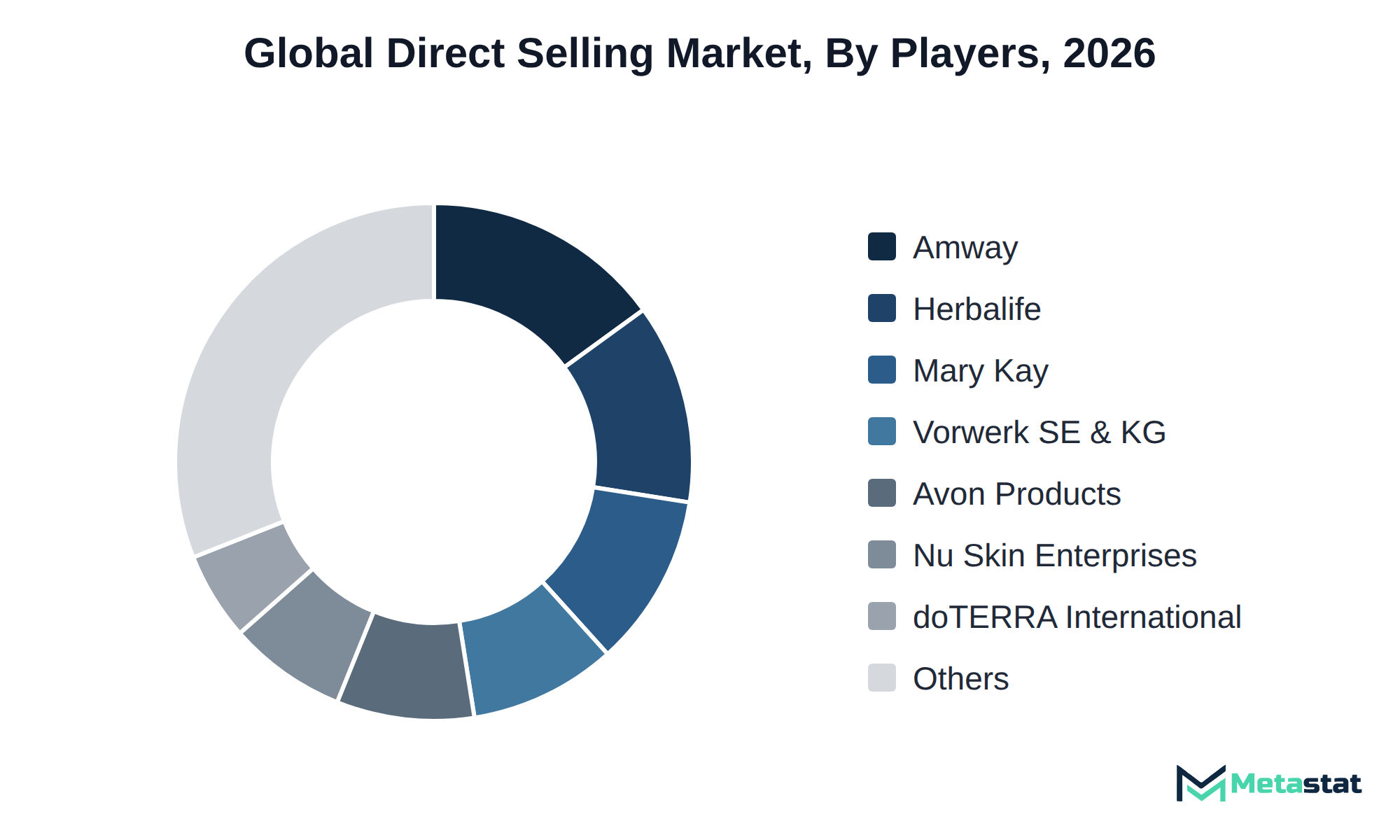
Companies in the Direct Selling market differentiate themselves primarily through their chosen business models and product offerings. Single-level marketing and multi-level marketing represent the two predominant business models. Multi-level marketing, characterized by a structure that incentivizes participants to recruit additional sellers, is projected to dominate in terms of revenue, with a forecast value reaching USD 223.2 billion by 2033. Meanwhile, single-level marketing focuses on direct sales to consumers, with a forecast increase to USD 62.4 billion in the same timeframe.
Product categories play a significant role in shaping competitive strategies. Health and wellness products and nutritional supplements are key focus areas, with health and wellness products expected to grow to USD 74.8 billion by 2033. Companies including Amway Corporation emphasize nutritional supplements and weight management products, while Herbalife Ltd. concentrates on wellness-oriented solutions. Avon Products, Inc. and Mary Kay Inc. focus primarily on beauty and cosmetics, appealing to a consumer base that values quality and brand prestige.
Buyers in the market prioritize various factors, including price, product certification, and brand reputation. Individual consumers often seek products that offer trusted health benefits, while families and households tend to favor products with proven effectiveness. Companies like doTERRA International LLC and Forever Living Products International, LLC build their reputations on high-quality, certified products, catering to the health-conscious consumer segment.
The rise of online and social media selling introduces new avenues for companies to connect with buyers. Firms including USANA Health Sciences, Inc. leverage digital platforms to enhance visibility and engagement, reflecting a shift toward more integrated selling strategies. This adaptation to consumer preferences is crucial for sustaining growth and capturing a larger market share.
Key developments influencing this growth include increasing consumer demand for Health and Wellness Products, expected to generate significant revenue, with a projected rise from USD 45.3 billion in 2026 to USD 74.8 billion by 2033. The shift towards Online and Social Media Selling channels continues to drive engagement, with these platforms facilitating deeper connections between sellers and individual consumers.
North America is projected to contribute substantially to this growth, with an anticipated market value of USD 95.4 billion by 2033. However, potential risks including regulatory challenges and shifting consumer preferences could impede growth. Tightening regulatory frameworks or shifting consumer interest towards other purchasing methods could present challenges to the market's trajectory. How companies manage these developments will determine whether the Direct Selling market reaches its forecasted value.
By Product Category: Health and Wellness Products, Nutritional Supplements, Weight Management Products, Beauty and Cosmetics, Personal Care Products, Household and Cleaning Products, Home Appliances and Kitchenware, Clothing, Accessories and Jewelry, Others (Books, Educational Products, Food and Beverages)
By End-user: Individual Consumers, Families and Households, Commercial and Institutional Buyers
By Sales Channel: Person-to-Person Selling, Home Demonstrations, Party Plan and Group Selling, Online and Social Media Selling, Hybrid and Omnichannel Selling
The report strategically identifies and profiles the key market players and analyses their core competencies in each sub-segment of the Direct Selling market.
Report Attributes | Details |
Study Period | 2021-2033 |
Base Year | 2025 |
Estimated Year | 2026 |
Forecast Period | 2026-2033 |
Historical Period | 2021-2025 |
Growth Rate | CAGR 7.1% from 2026 to 2033 |
Revenue Unit | USD billion |
Segmentation | By Product Category, Business Model, End-user, Sales Channel, and Region |
By Region | North America (By Product Category, Business Model, End-user, Sales Channel, and Country)
|
Europe (By Product Category, Business Model, End-user, Sales Channel, and Country)
| |
Asia Pacific (By Product Category, Business Model, End-user, Sales Channel, and Country)
| |
South America (By Product Category, Business Model, End-user, Sales Channel, and Country)
| |
Middle East and Africa (By Product Category, Business Model, End-user, Sales Channel, and Country)
|
Find answers to common questions about this report
The Direct Selling market size was valued at USD 164.9 billion in 2025.
The market is projected to grow at a CAGR of 7.1% during the forecast period from 2026 to 2033.
The North America Direct Selling market size is estimated to reach USD 95.4 billion by 2033.
The leading segment in the Direct Selling market is Multi-level Marketing, projected to reach USD 223.2 billion by 2033. This segment surpasses Single-level Marketing, which is expected to reach USD 62.4 billion in the same year.
Key drivers for the Direct Selling market include rising health consciousness among individual consumers, leading to increased demand for health and wellness products. continuous advancements in product innovation enhance cost-effectiveness, attracting a broader consumer base seeking value-driven options.
North America holds the dominant share of the Direct Selling market, with a projected value of USD 95.4 billion in 2033, representing 35 percent of the total market. This region surpasses others in market share, highlighting its significant role in the industry.
Rising costs of products restrain growth in the Direct Selling market. Increased pricing amid inflation reduces disposable income, resulting in more measured purchasing behavior and smaller order sizes among individual consumers and families. This trend limits overall market expansion potential.
The increasing focus on personal health among consumers drives adoption within the Direct Selling market. Enhanced consumer education about health benefits and the expansion of e-commerce platforms facilitate access to health and wellness products, promoting significant market growth.
The Direct Selling market is estimated to reach a valuation of USD 285.6 billion by 2033.
Key players operating in the Direct Selling industry include Amway Corporation, Herbalife Ltd., Mary Kay Inc., Vorwerk SE & Co. KG, Avon Products, Inc., Nu Skin Enterprises, Inc., and Oriflame Holding AG.
The analysts below cover Consumer Goods research at Metastat Insights.
LEAD ANALYST
Utkarsh Khirodkar is a Lead Market Research Analyst at MetaStat Insight, specializing in market intelligence, technology sector assessments, and competitive strategy.
Evaluating secondary resin quality across post-consumer packaging streams requires reliable technical segmentation. MetaStat Insight delivered an objective assessment that distinguished between extrusion-grade flake pricing and optical sorting throughput limitations across Western Europe. The competitive positioning breakdown for licensed depolymerization technology providers answered several questions during our feedstock feasibility audit. Their team clarified regional trade restrictions on mixed plastic scrap quickly when our team submitted follow-up requests.
Evaluating sovereign cloud deployments for core banking platforms demands a clear view of data residency regulations and migration exit strategies. MetaStat Insight delivered an exhaustive review of regional latency tolerances, mainframe decommission milestones, and third-party vendor concentration risk. The regulatory compliance mapping across European and Asian financial jurisdictions gave our team a dependable baseline for multi-cloud infrastructure discussions.
Replacing petrochemical surfactants with bio-based alternatives requires realistic timelines on industrial precision fermentation scaling. The market research broke down commercialization timelines, feedstock sugar price sensitivities, and regional cosmetic ingredient regulatory approvals in Europe and East Asia. That supplier readiness mapping gave our formulations team reliable context when comparing renewable chemical sourcing roadmaps.
Explore related market intelligence reports worth reading alongside this one.