
LEAD ANALYST
Utkarsh Khirodkar is a Lead Market Research Analyst at MetaStat Insight, specializing in market intelligence, technology sector assessments, and competitive strategy.

Europe Second-Hand Apparel Market Size, Share, By Product Type (Tops (T-shirts, Shirts, Blouses and Sweatshirts), Bottoms (Trousers, Jeans, Shorts and Skirts), Dresses and Jumpsuits, Outerwear (Coats, Jackets and Parkas), Knitwear (Sweaters and Cardigans), Suits and Formalwear, Sportswear and Activewear, Underwear and Sleepwear, Others (Maternity Wear and Workwear)), By Consumer Group (Women, Men, Children, Unisex), By Sales Channel (Wholesalers/Distributors, Hypermarkets/Supermarket, Multi-Brand Store, Online Retailers, Others (Departmental Stores, Independent Small Stores)), By Region (Germany, United Kingdom, France, Italy, Spain, Rest of Europe), Industry Analysis, Growth, Trends, and Forecast, 2026-2033
Report ID
MSI-5754
Published
November, 2026
Pages
303 Pages
Format
Historical
Base year
Forecast
Forecast period
Report Details
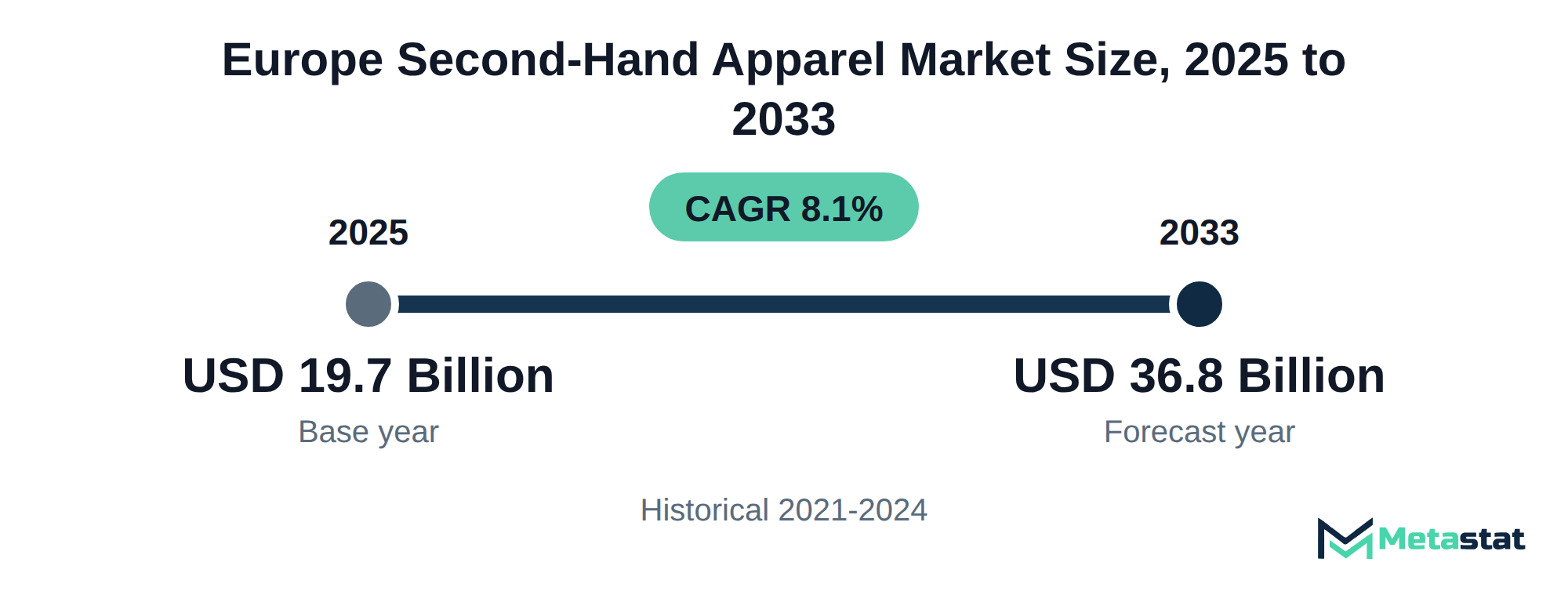
Market Valuation: Valued at $19.7 Billion in 2025, projected to reach $36.8 Billion by 2033 at a 8.1% CAGR.
Dominant Segment: The women's segment leads the Europe Second-Hand Apparel market, driven by a growing awareness of sustainability and the desire for fashionable, affordable clothing. This segment is projected to expand from USD 11.6 billion in 2026 to USD 19.7 billion by 2033.
Geographic Lead: Germany holds the largest share of the market, reflecting strong consumer preference for second-hand clothing and a robust retail infrastructure. This region's growth is supported by increasing sustainable shopping practices among its consumers.
What's Inside: The report provides a comprehensive analysis of the Europe Second-Hand Apparel market, including detailed segmentation by product type, consumer group, and sales channel. It also covers competitive landscapes and strategic insights, along with market forecasts through 2033.
Emerging Trends: The children's segment is poised for significant growth, projected to reach USD 4.6 billion by 2033, driven by parents seeking sustainable and affordable clothing options for their children.
Consumer Behavior Shifts: Changes in consumer behavior towards sustainability and value-driven purchasing are significantly influencing spending growth, particularly among women, who are increasingly opting for second-hand apparel as an eco-friendly alternative.
Choose Your License
Europe Second-Hand Apparel Market
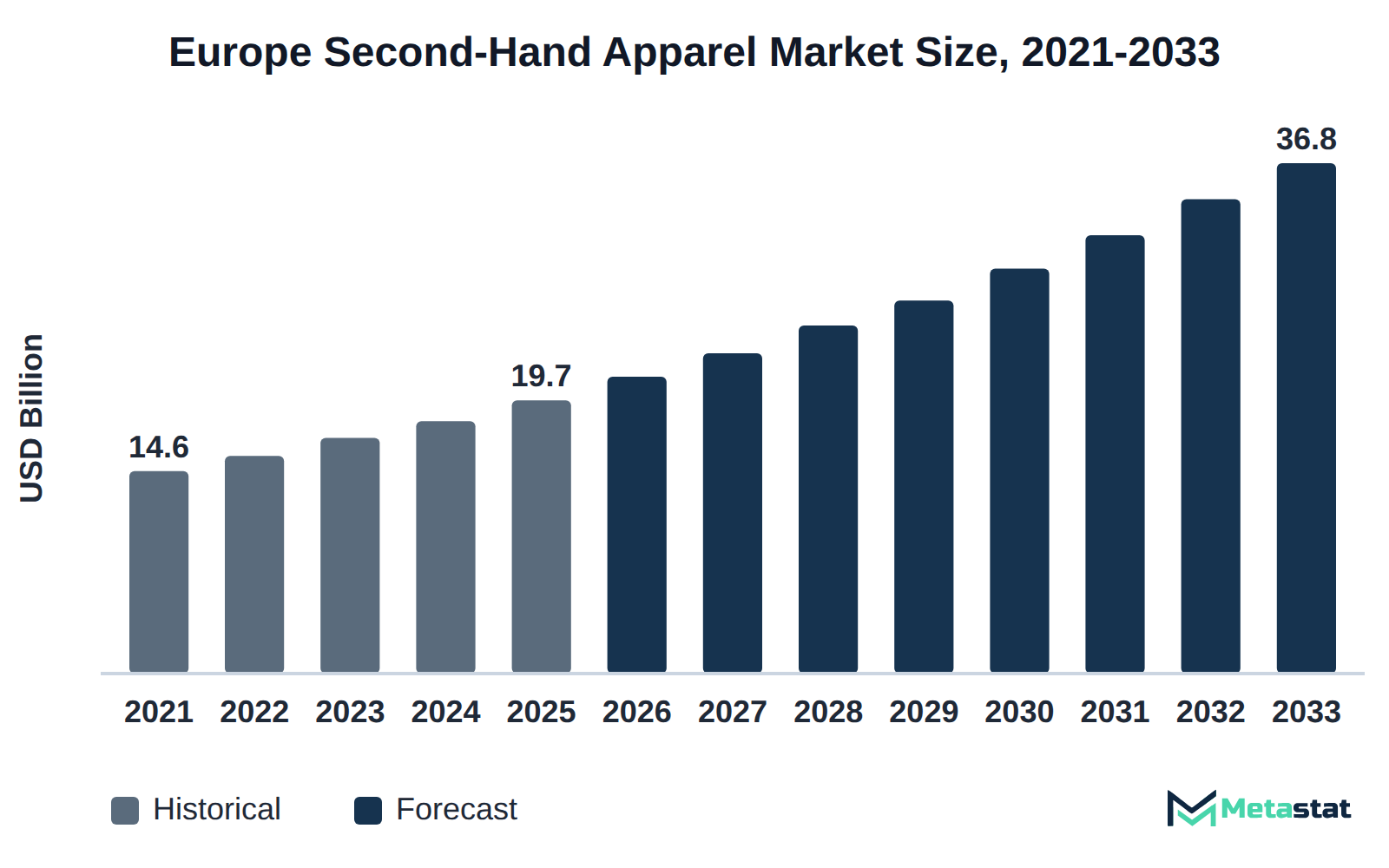
The Europe Second-Hand Apparel market was valued at USD 19.7 billion in 2025 and is projected to reach USD 36.8 billion by 2033, growing at a CAGR of 8.1% over the forecast period.
The Europe Second-Hand Apparel market encompasses a variety of pre-owned clothing items, including tops, bottoms, dresses, and outerwear. Buyers invest in this market due to multiple factors, including sustainability concerns, cost-effectiveness, and the desire for unique fashion pieces. The trend towards environmentally conscious consumption has led to increased demand for second-hand apparel, particularly among younger demographics seeking affordable and stylish options without compromising ethics.
Growth in the market is primarily driven by rising consumer awareness regarding the environmental impact of fast fashion. Women represent the largest consumer group, contributing significant value to the market. Among the various regions, Germany holds the largest share of the market, reflecting a strong preference for second-hand clothing. German consumers show a growing inclination towards sustainable shopping practices, reinforcing the market's upward trajectory.
In terms of product segments, tops, which include T-shirts, shirts, and blouses, generate the most substantial revenue within the market. The increasing acceptance of second-hand clothing as a mainstream choice further supports market expansion. With a projected compound annual growth rate of 8.1%, the market is expected to keep growing through the forecast period as consumer attitudes and behaviors evolve.
The market consists of various segments, including tops, bottoms, dresses, and outerwear, appealing to diverse consumer groups. Buyers invest in second-hand apparel due to increasing environmental awareness, affordability, and the unique fashion offerings found in pre-owned clothing. The growing trend of sustainability among consumers drives purchasing decisions, with many seeking eco-friendly alternatives to fast fashion.
Growth in the Europe Second-Hand Apparel market is fueled by rising demand for unique and vintage clothing, especially among younger demographics. The segment of women's apparel holds the largest value, highlighting strong consumer preference for fashionable options. Among the regions, Germany stands out with the largest market share, reflecting well-developed retail infrastructure and the strong presence of online platforms.
One primary growth driver stems from increasing acceptance of second-hand shopping as a mainstream choice, supported by the proliferation of digital marketplaces. This shift in consumer behavior enhances market accessibility, increasing the appeal of second-hand apparel in Europe. The combination of economic factors, including rising living costs, encourages consumers to explore cost-effective shopping alternatives.
The increasing acceptance of luxury and branded clothing within the second-hand apparel landscape impacts consumer purchasing behavior significantly. The shift reflects a growing trend among consumers valuing sustainability and uniqueness while seeking high-quality items at accessible prices. This trend is particularly evident among women, who are projected to represent a substantial segment of the Europe Second-Hand Apparel market, with expectations of growth from USD 11.6 billion in 2026 to USD 19.7 billion by 2033.
The luxury goods segment distinguishes itself through curated offerings and exclusive pieces, which attract a discerning customer base. Brands like Vinted and Depop are adapting their platforms to accommodate this demand, emphasizing the importance of authenticity and quality. This alignment enhances brand reputation and creates new revenue streams through resale, reinforcing the circular economy model.
This shift towards luxury and branded clothing in the second-hand market enables retailers to improve their sales strategies, increasing customer loyalty and engagement. In the Europe Second-Hand Apparel market, the ability to offer diverse, high-quality options remains a key differentiator in a competitive retail environment.
Online resale platforms are a significant channel in the European Second-Hand Apparel market and offer payment options that improve the purchasing experience. These platforms implement diverse pricing models, including fixed prices, auction-based systems, and negotiating opportunities between buyers and sellers. For instance, online retailers facilitate transactions through secure payment gateways, ensuring consumer trust and satisfaction during the purchasing process.
In 2026, the market is expected to reach USD 21.4 billion, reflecting growing consumer acceptance of second-hand apparel. This growth is supported by platforms that provide user-friendly interfaces, enabling straightforward transactions in the resale process. Buyers increasingly favor platforms that allow price negotiations and flexible payment terms, addressing consumer concerns regarding affordability and value.
The rise of peer-to-peer fashion trading, a form of the sharing economy, further influences purchasing strategies within the market. Consumers actively engage in social commerce, shopping while they share insights and recommendations. This interactive approach creates a sense of community among users, encouraging repeat purchases and brand loyalty while driving revenue growth for online resale platforms.
Women represent a significant buyer group in the Europe Second-Hand Apparel market, driven by a growing awareness of sustainability. This shift towards circular fashion aligns with the increasing emphasis on sustainable consumption and environmental responsibility.
The rise of sustainability regulations across Europe further supports this trend. Governments and organizations promote policies aimed at reducing textile waste and encouraging a circular economy. Textile-to-textile recycling is one related part of this circular economy. Women, often more attuned to sustainability issues, actively seek alternatives to fast fashion, favoring second-hand options that contribute to environmental conservation. This behavior influences purchasing decisions and encourages retailers to adapt their offerings to meet this demand.
Prioritizing sustainability positions the market to capture the increasing interest from women consumers. This alignment with consumer values creates opportunities for retailers to enhance their brand image and loyalty. The commercial consequence includes projected market expansion, driven by the intersection of sustainability regulations and consumer preferences for circular fashion.
Growing awareness of sustainability significantly drives consumer demand for pre-owned clothing across Europe. This shift in consumer behavior stems from increasing concerns regarding environmental impacts and the fast fashion industry’s contribution to waste and pollution. Many consumers, particularly younger demographics, gravitate towards second-hand apparel as a more sustainable alternative.
Women constitute a major consumer group in the market, with their segment expected to rise from USD 11.6 billion in 2026 to USD 19.7 billion by 2033, translating to a CAGR of 7.9%. This demographic seeks unique, affordable fashion choices that align with their values of sustainability and individuality. The rise of online retail channels further supports this trend, enabling easy access to pre-owned clothing. Enhanced availability and growing acceptance of second-hand apparel among consumers drive competition among brands, spurring innovation and expanding offerings.
Changes in consumer behavior significantly influence spending growth in the Europe Second-Hand Apparel market. Shifts toward sustainability and value-driven purchasing have prompted increased interest among buyers, particularly women. These consumers prioritize eco-friendly practices, leading to a heightened demand for second-hand clothing, an alternative to fast fashion. The transition reflects broader social trends favoring thrift and environmental consciousness, enhancing market volume and price stability. Women’s share of market revenue is projected to expand from USD 11.6 billion in 2026 to USD 19.7 billion by 2033, representing a compound annual growth rate of 7.9%. This increase shows how demographic and behavioral shifts shape market dynamics and drive demand.
Growing consumer acceptance of various product types, including tops and bottoms, aligns with these behavioral changes, further contributing to market expansion. Understanding consumer motivations is therefore central to explaining purchasing decisions in this evolving market.
Increasing pressure on suppliers to minimize costs significantly influences the Europe Second-Hand Apparel market. Sourcing strategies that emphasize cost efficiency enable firms to offer competitive pricing while maintaining quality. This approach attracts price-sensitive consumers and encourages higher sales volume across various segments. A strong network of collection and distribution channels optimizes inventory management and reduces overhead costs, directly affecting profit margins. The rising trend of thrift shopping and budget-friendly fashion further increases demand for affordable second-hand apparel.
Adoption of innovative technologies, including data analytics and inventory management systems, enhances operational efficiency among suppliers. These technologies facilitate better forecasting and inventory turnover, resulting in reduced waste and increased profitability. Suppliers streamline operations and position themselves to capitalize on emerging opportunities within the market. The convergence of cost-effective sourcing and advanced technology drives growth, enabling suppliers to meet evolving consumer preferences effectively.
Price sensitivity presents a significant constraint on the Europe Second-Hand Apparel market, particularly affecting the women consumer group. Many women seeking affordable fashion options view pre-owned clothing as an economical choice; however, perceived prices for high-quality second-hand apparel remain high. Consequently, this perception leads to slower uptake within this demographic, resulting in smaller order sizes and delayed purchases. Buyers frequently compare second-hand prices against new retail offerings, deterring purchases if second-hand items are not competitively priced. Off-price retail is a related value-focused channel for budget-minded shoppers. The market faces challenges in convincing potential buyers of the value of pre-owned items, particularly when consumers prioritize cost-efficiency and affordability. This situation creates a barrier that limits overall demand and adoption rates, impacting revenue growth and market expansion potential.
Increasing material costs present a significant challenge for suppliers in the Europe Second-Hand Apparel market. Rising prices for pre-owned clothing and associated logistics directly affect profit margins, compelling suppliers to explore various strategies to maintain viability. Many suppliers respond by optimizing sourcing channels and emphasizing quality over quantity to attract discerning consumers willing to pay a premium for curated selections.
Suppliers are implementing innovative pricing strategies to offset the impact of increased costs. This includes offering loyalty programs and promotional discounts that encourage repeat purchases while managing inventory turnover more effectively. A shift towards direct partnerships with brands allows suppliers to access exclusive stock, differentiating their offerings from competitors. Such adaptations support the sustainability of the business model, which is essential for growth within the competitive landscape of the market.
The children's segment within the Europe Second-Hand Apparel market presents significant growth potential, projected to reach USD 4.6 billion by 2033. This segment attracts parents seeking affordable and sustainable clothing options for their children, driven by increasing awareness of environmental impacts associated with fast fashion. Demand for second-hand children's items experiences strong growth. The market benefits from parents prioritizing value and quality, focusing on sourcing pre-owned apparel that withstands the rigors of children's activities.
Distribution through online retailers demonstrates the highest growth rate, projected at a compound annual growth rate (CAGR) of 9%. This trend highlights the importance of e-commerce in reaching tech-savvy parents seeking convenient shopping experiences. The combination of digital platforms and the rising interest in sustainable fashion creates a favorable environment for the children's segment, leading to increased penetration and overall market expansion.
The Europe Second-Hand Apparel market is segmented based on Product Type, Consumer Group, Sales Channel, and Region.
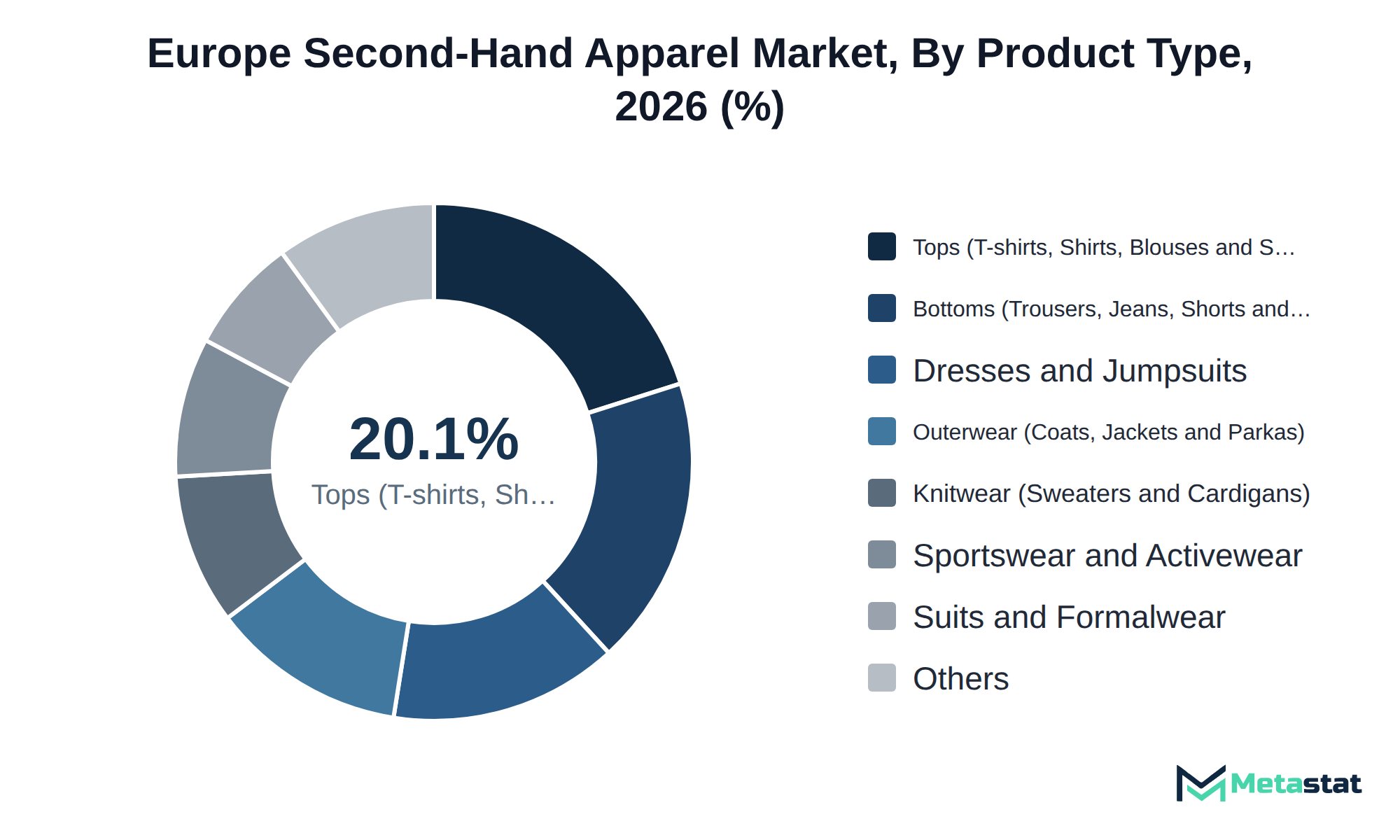
Tops (T-shirts, Shirts, Blouses and Sweatshirts) segment is valued at USD 4.3 billion in 2026 and is projected to reach USD 7.2 billion by 2033, at a CAGR of 7.6% during the forecast period. This segment serves a wide range of consumers, including women and men, looking for casual and versatile clothing options. Key drivers of growth in this segment include rising consumer interest in sustainable fashion and the increasing popularity of online resale platforms, which facilitate access to pre-owned items. Compared to other segments, including bottoms which are set to grow at a CAGR of 7.8%, tops exhibit slightly slower growth while maintaining a strong market presence. The demand for tops differentiates it from other product types, highlighting the preference for stylish yet affordable apparel among various consumer groups in the Europe Second-Hand Apparel market.
Bottoms (Trousers, Jeans, Shorts and Skirts) segment is estimated to reach USD 6.5 billion by 2033, at a CAGR of 7.8% during the forecast period. This segment includes various styles of lower-body apparel, such as denim jeans, used by both men and women for casual, formal, and recreational purposes. Growing demand for comfortable and versatile clothing significantly influences this segment, with consumers increasingly opting for pre-owned options that offer affordability and sustainability. The segment stands out with a higher growth rate compared to certain other segments in the market. Women represent a primary consumer group, while increasing interest from men contributes to expanding demand. This segment's trajectory is supported by the rise of online resale platforms that facilitate easy access to diverse second-hand fashion choices, further driving growth in the market.
The Dresses and Jumpsuits segment is expected to reach USD 5.4 billion by 2033. This segment caters primarily to women seeking stylish and versatile clothing options for various occasions. Demand arises from the increasing popularity of sustainable fashion, driven by consumers opting for second-hand options to reduce their environmental impact. The segment differs from others, including Tops, which shows a compound annual growth rate (CAGR) of 7.6%, indicating a slower growth trajectory compared to Dresses and Jumpsuits. Cost considerations significantly influence purchasing decisions, with buyers prioritizing affordability along with style. The segment's ability to attract consumers seeking unique fashion pieces positions it favorably in the competitive landscape of the Europe Second-Hand Apparel market.
Outerwear (Coats, Jackets and Parkas) segment is projected to grow at a CAGR of 8.2% during the forecast period. This segment appeals to consumers seeking functionality and style in their outer garments, with a diverse buyer base spanning various demographics. Increasing interest in sustainable fashion drives demand, owing to consumers striving to reduce their environmental impact by purchasing second-hand items. Retailers offering outerwear at competitive prices attract both cost-conscious and environmentally aware shoppers. Compared to other segments, outerwear presents a distinct advantage through its higher price point and strong demand during seasonal transitions. The segment's projected growth outpaces that of tops and bottoms, presenting a profitable opportunity for retailers and investors in the Europe Second-Hand Apparel market.
Knitwear includes sweaters and cardigans, appealing to a wide range of consumers seeking comfort and versatility in their wardrobe. This segment attracts buyers who prioritize both style and functionality, particularly during colder months. Demand for knitwear is driven by the growing trend of layering and the increasing popularity of casual and athleisure fashion. Compared to other product segments, knitwear exhibits a distinctive appeal due to its comfort-driven nature, attracting a diverse consumer base, including women, men, and children. This segment's growth trajectory is supported by heightened interest in sustainable fashion choices, aligning with broader market trends within the Europe Second-Hand Apparel market. Retailers offering knitwear balance quality with competitive pricing to capture consumer interest and drive sales effectively.
Suits and Formalwear consist of formal clothing designed for occasions that require a polished appearance. This segment attracts consumers seeking attire for business meetings, weddings, and other formal events, often emphasizing quality and brand reputation. Demand for second-hand suits and formalwear is influenced by the growing trend of sustainability, with eco-conscious buyers opting for pre-owned options instead of new garments. Price sensitivity impacts purchasing decisions, particularly among younger buyers who seek affordable luxury. Compared to other segments, this category exhibits slower growth, facing challenges in convincing buyers to opt for second-hand formalwear over traditional retail options. The Europe Second-Hand Apparel market displays unique dynamics in this segment, with many consumers prioritizing durability and style in their selections.
Sportswear and Activewear encompass athletic clothing designed for physical activities, appealing to fitness enthusiasts and casual exercisers alike. This segment attracts diverse consumers, including those prioritizing comfort, style, and functionality in their workout attire. Increased health consciousness significantly drives demand for second-hand sportswear, particularly among younger demographics. Compared to other segments, this category experiences faster growth, supported by a growing emphasis on sustainable fashion choices. Shoppers find value in pre-owned athletic wear that combines quality with affordability, enhancing the appeal of the market. This shift toward sustainability and value-driven purchasing continues to shape consumer preferences.
Underwear and Sleepwear includes essential garments for daily comfort and modesty, appealing to a diverse consumer base. This segment caters primarily to women, who actively seek stylish and comfortable options for their intimate apparel. Demand for second-hand options in this category is influenced by increasing acceptance of buying pre-owned items for personal use, driven by sustainability trends and cost-effectiveness. Compared to other segments including Tops or Bottoms, which attract broader audiences due to varying styles and occasions, Underwear and Sleepwear often sees a more niche market focused on specific preferences in fit and fabric. Price sensitivity among buyers significantly shapes purchasing decisions, prompting brands to offer competitive pricing and quality assurance, enhancing their appeal in the market.
Maternity wear and workwear serve specific needs for consumers focused on functionality and comfort. Individuals seeking versatile clothing that suits professional environments and the demands of parenthood drive this segment's relevance. Growing awareness of sustainability increases interest in second-hand options, particularly among environmentally conscious buyers. This segment differs from others, including tops or bottoms, which have broader appeal and faster growth rates. The maternity wear and workwear segment experiences distinct buying patterns, attracting consumers who prioritize practicality over fashion trends. Price sensitivity remains a crucial factor influencing purchasing decisions, with buyers seeking cost-effective solutions. Awareness of sustainability and functionality continues to enhance the appeal of pre-owned maternity wear and workwear in the Europe Second-Hand Apparel market.
This segment attracts consumers seeking fashionable and affordable clothing options, motivated by sustainability and individual expression. A rising awareness of environmental issues significantly drives demand within this group, with more women opting for second-hand apparel to reduce waste and support eco-friendly practices. Compared to the men's segment, which anticipates a higher CAGR of 8.3%, the women segment offers unique styles that cater to diverse preferences, resulting in a different purchasing dynamic. Strong interest from younger demographics who value both style and sustainability highlights a shift in consumer behavior that supports growth.
The men segment is estimated to reach USD 10.6 billion by 2033, at a CAGR of 8.3% during the forecast period. This segment targets male consumers who prioritize style, affordability, and sustainability. Increasing awareness of environmental issues drives demand for second-hand apparel among men, contributing to the segment's growth. Compared to other consumer groups, men exhibit lower price sensitivity, allowing for a more premium positioning of products within this segment. The online retail channel's expansion significantly influences accessibility and convenience for male shoppers, enhancing market penetration. The men's segment is positioned to outperform other consumer groups, reflecting a robust trajectory of growth in the market.
This segment caters primarily to parents and guardians seeking affordable clothing options for growing children. The increasing focus on sustainability among parents drives demand in this segment, highlighting a shift toward environmentally friendly purchasing choices. Compared to other consumer groups, the children's segment experiences a unique growth trajectory, characterized by higher price sensitivity due to budget-conscious families. The sector benefits from a robust online retail presence, projected to grow at a CAGR of 9%. This adaptation to digital platforms enhances accessibility, contributing positively to the overall growth of the market.
Unisex apparel is projected to grow at a CAGR of 7.9% during the forecast period. This segment appeals to consumers seeking versatile clothing options suitable for various occasions and informal settings. Primary drivers of demand include shifting consumer preferences toward inclusivity and sustainability, with younger demographics increasingly opting for second-hand options. The segment distinguishes itself from others in the consumer group, including women and men, by targeting a broader audience with diverse fashion needs. With a growing emphasis on eco-friendly shopping habits, unisex apparel captures attention from those aiming to reduce their fashion footprint. The market for unisex second-hand apparel strengthens with the rising acceptance of gender-neutral fashion.
Wholesalers/Distributors segment is valued at USD 1.7 billion in 2026 and is projected to reach USD 2.4 billion by 2033, at a CAGR of 5% during the forecast period. This segment primarily serves retailers and small businesses seeking to stock second-hand apparel for resale. A growing focus on sustainability and environmental impact drives demand for second-hand clothing, influencing wholesaler and distributor strategies. Competition from online retailers, which experience a higher CAGR of 9%, differentiates this segment by attracting buyers seeking lower prices and bulk purchases. The wholesaler/distributor channel faces challenges in adapting to changing consumer preferences, complicating its growth trajectory in the evolving Europe Second-Hand Apparel market.
Hypermarkets/Supermarkets segment is estimated to reach USD 2.3 billion by 2033, at a CAGR of 6.2% during the forecast period. This segment caters to a broad audience seeking affordable second-hand apparel, particularly through physical retail spaces. Growth in this segment is driven by increasing consumer inclination towards sustainable shopping practices, reflecting a shift in purchasing behavior. Compared to other sales channels, including Online Retailers, this segment experiences slower growth, with Online Retailers exhibiting a higher CAGR of 9%. The appeal of Hypermarkets/Supermarkets lies in their ability to provide a diverse assortment of second-hand items in a single location, making them attractive to budget-conscious consumers who prioritize convenience and variety. The market continues to evolve, emphasizing the importance of integrating sustainability into retail strategies.
Multi-Brand Store segment is expected to reach USD 6.2 billion by 2033. This segment caters to consumers seeking a diverse selection of second-hand apparel in a physical retail environment, providing an alternative to online shopping platforms. The growth of this segment is driven by increasing consumer preferences for sustainable fashion choices and a growing trend toward thrift shopping. Unlike other sales channels, Multi-Brand Stores typically offer a curated experience with higher-quality items, appealing to buyers seeking unique fashion pieces. Demand for second-hand apparel remains strong, with the overall market projected to grow significantly, reflecting a shift in purchasing behavior toward sustainable and ethical consumption.
The Online Retailers segment is projected to grow at a CAGR of 9% during the forecast period. This segment primarily enables consumers to access second-hand apparel through various digital platforms, catering to tech-savvy buyers seeking convenient shopping solutions. Consumer demand is driven by the increasing preference for sustainable fashion, aligning with trends toward eco-consciousness. Online channels provide a wider range of options compared to traditional retail, making them particularly appealing to younger demographics. This segment's growth outpaces traditional sales channels, including wholesalers and hypermarkets, which are anticipated to grow at lower rates of 5% and 6.2%, respectively. Online retailers often offer competitive pricing, enhancing their attractiveness in a market known for price sensitivity. Overall, the rising shift toward e-commerce platforms establishes the Online Retailers segment as a critical component of the Europe Second-Hand Apparel market.
Departmental stores and independent small stores serve niche markets within the second-hand apparel sector, providing unique and curated selections for consumers. These outlets attract shoppers seeking individuality and a more personalized shopping experience. The demand for diverse and affordable fashion drives growth in this segment, appealing particularly to eco-conscious consumers interested in sustainable choices. Compared to larger sales channels like online retailers, this segment experiences slower growth due to limited reach and inventory. However, it offers higher price points associated with exclusive merchandise, distinguishing it from other segments. The Europe Second-Hand Apparel market benefits from this diversity in sales channels, enhancing overall accessibility and consumer engagement.
Germany segment is valued at USD 4.8 billion in 2026 and is projected to reach USD 8 billion by 2033, at a CAGR of 7.8% during the forecast period. This segment serves a diverse consumer base, including fashion-conscious individuals seeking unique styles and sustainable choices. Increased awareness of sustainability and the circular economy drives growth, with consumers opting for second-hand apparel to reduce environmental impact. Compared to the broader market, this segment exhibits a relatively steady growth trajectory, appealing particularly to eco-conscious buyers. The focus on sustainability and the appeal of vintage style differentiate this segment from others, encouraging a larger demographic to participate in the growing market. Buyers increasingly prioritize eco-friendly alternatives, and the Germany segment benefits significantly from this trend.
United Kingdom segment is estimated to reach USD 7.7 billion by 2033, at a CAGR of 8.3% during the forecast period. This segment attracts consumers focused on sustainable fashion and affordability, frequently appealing to younger demographics and environmentally conscious buyers. Growing awareness of the environmental impact of fast fashion drives increased interest in second-hand apparel. The United Kingdom stands out due to its robust online retail platforms, which enhance accessibility for consumers, differentiating it from other regions. The market reflects a cultural shift toward sustainability, with online retailers projected to show significant growth, enhancing overall demand for this segment. The UK market exhibits a higher growth rate compared to other consumer groups, driven by the rising popularity of digital platforms for buying and selling pre-owned clothing.
France segment is expected to reach USD 6.7 billion by 2033. This segment appeals to consumers prioritizing sustainable fashion and affordability. Women represent a significant portion of the buyer demographic, driving demand for fashionable and eco-friendly apparel. Factors including increasing environmental awareness among consumers and a growing acceptance of second-hand shopping influence this segment's growth. Compared to the male segment, which is projected to reach USD 10.6 billion by 2033, the female segment experiences a slightly slower growth rate, with a CAGR of 7.9%. The France segment stands out due to its focus on unique fashion finds and the cultural acceptance of vintage clothing, distinguishing it from other segments within the Europe Second-Hand Apparel market.
Valued at USD 4.8 billion in 2026, the Italy segment is projected to grow at a CAGR of 8.3% during the forecast period. This segment appeals to consumers seeking stylish and affordable clothing options, with many individuals prioritizing sustainability and second-hand shopping. Women, in particular, form a significant portion of the buyer demographic, driving demand for unique apparel. Factors influencing this segment include growing awareness of environmental impact and a cultural shift toward thrifting, which enhances the popularity of second-hand apparel. Compared to other regions, this segment experiences significant growth, distinguishing itself with a strong consumer base that actively engages in the circular economy. The Italy segment contributes to the overall expansion of the Europe Second-Hand Apparel market, addressing both fashion needs and sustainability concerns.
Spain offers a growing market for second-hand apparel, attracting consumers seeking sustainable fashion options. The increasing awareness of environmental issues drives demand among young adults and environmentally conscious shoppers. This segment distinguishes itself through a strong preference for unique and vintage styles, appealing to fashion-forward individuals looking for distinctive pieces. Compared to other segments, Spain's market reflects robust engagement with online sales channels, aligning with a global trend of digital commerce within the Europe Second-Hand Apparel market. While growth rates vary across different regions, Spain aligns with the overall upward trajectory in the second-hand apparel industry, reflecting changing consumer attitudes toward sustainability and fashion consumption.
The Rest of Europe segment encompasses a diverse array of countries within Europe, contributing to the overall dynamics of the market. This segment serves consumers seeking affordable and unique clothing options, particularly appealing to environmentally conscious buyers who prioritize sustainability. Growing awareness surrounding the environmental impact of fast fashion drives demand for second-hand apparel. The segment exhibits different growth characteristics compared to its counterparts, with varying consumer preferences influencing purchasing behavior. For instance, while growth rates in other segments, including Germany or the United Kingdom, reflect strong trends, the Rest of Europe segment captures a distinct demographic that values localized sourcing and unique finds. This differentiation allows for a unique market position that aligns with sustainability goals and consumer demand for individuality in fashion choices.
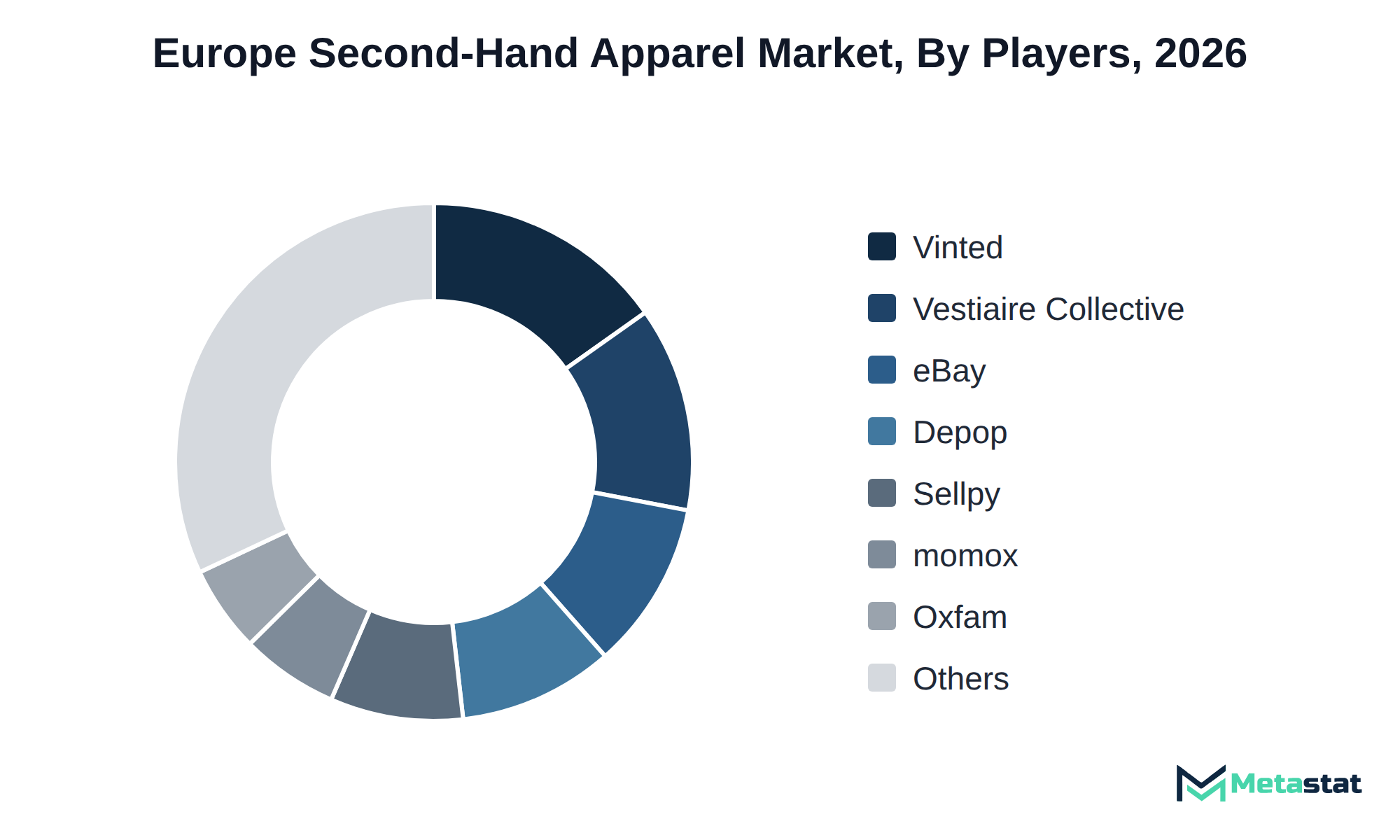
In the Europe Second-Hand Apparel market, various companies adopt distinct strategies to capture market share. Online platforms including Vinted, Depop, and eBay leverage digital channels to facilitate peer-to-peer transactions, prioritizing convenience and accessibility for buyers. Companies like Vestiaire Collective and Farfetch focus on curated selections and luxury items, appealing to consumers seeking high-quality second-hand apparel.
Price sensitivity influences buyer choices across the market. Companies including momox and Sellpy emphasize affordability, targeting budget-conscious consumers. Customization and certification play significant roles, with Oxfam and Traid promoting sustainable practices that connect with eco-conscious buyers. Diverse offerings within the market ensure that various consumer needs are met, from budget-friendly options to premium curated collections.
This growth relies on several key developments within the Europe Second-Hand Apparel market. First, a significant increase in awareness regarding sustainable fashion trends is expected to drive demand among consumers, especially women, who represent a substantial portion of the market. Second, the expansion of online retail channels will facilitate easier access to second-hand apparel, boosting sales across various segments, particularly in countries like Germany and the United Kingdom. Third, enhancing the availability of diverse product types, including dresses and outerwear, will cater to evolving consumer preferences and encourage greater spending. Conversely, the primary risk that could hinder this growth involves economic fluctuations that impact consumer spending habits. A downturn in economic conditions could lead to decreased discretionary spending, particularly affecting the market's performance in regions like France and Italy. Overall, the market's trajectory hinges on these developments and on effective risk mitigation.
By Product Type: Tops (T-shirts, Shirts, Blouses and Sweatshirts), Bottoms (Trousers, Jeans, Shorts and Skirts), Dresses and Jumpsuits, Outerwear (Coats, Jackets and Parkas), Knitwear (Sweaters and Cardigans), Suits and Formalwear, Sportswear and Activewear, Underwear and Sleepwear, Others (Maternity Wear and Workwear)
By Consumer Group: Women, Men, Children, Unisex
By Sales Channel: Wholesalers/Distributors, Hypermarkets/Supermarket, Multi-Brand Store, Online Retailers, Others (Departmental Stores, Independent Small Stores)
By Region: Germany, United Kingdom, France, Italy, Spain, Rest of Europe
The report strategically identifies and profiles the key market players and analyses their core competencies in each sub-segment of the Second-Hand Apparel market.
Report Attributes | Details |
Study Period | 2021-2033 |
Base Year | 2025 |
Estimated Year | 2026 |
Forecast Period | 2026-2033 |
Historical Period | 2021-2025 |
Growth Rate | CAGR 8.1% from 2026 to 2033 |
Revenue Unit | USD billion |
Segmentation | By Product Type, Consumer Group, Sales Channel, Region, and Region |
Find answers to common questions about this report
The Second-Hand Apparel market size was valued at USD 19.7 billion in 2025.
The market is projected to grow at a CAGR of 8.1% during the forecast period from 2026 to 2033.
Tops (T-shirts, Shirts, Blouses and Sweatshirts) leads the Second-Hand Apparel market with a projected value of USD 7.2 billion by 2033. This segment shows significant growth potential, driven by increasing consumer interest in sustainable fashion.
Changes in consumer behavior driven by sustainability and value-oriented purchasing significantly enhance demand. The rising trend of thrift shopping and budget-friendly fashion increases interest in affordable second-hand apparel.
Price sensitivity presents a significant constraint, particularly affecting the women consumer group, with perceived prices for high-quality second-hand apparel remaining high. Increasing material costs challenge suppliers, compelling them to explore various strategies to maintain viability while managing profit margins.
Changes in consumer behavior, particularly among women, favor adoption due to a growing emphasis on sustainability and value-driven purchasing. The rising acceptance of various second-hand product types further supports market expansion, aligning with consumers' motivations for affordable and eco-friendly fashion alternatives.
The Second-Hand Apparel market is estimated to reach a valuation of USD 36.8 billion by 2033.
Key players operating in the Second-Hand Apparel market include Vinted, Vestiaire Collective, Depop, Sellpy, eBay, Oxfam, and Patagonia.
The children's segment is projected to reach USD 4.6 billion by 2033, reflecting significant growth potential driven by parents seeking affordable and sustainable clothing options.
The women's consumer group is expected to expand its market revenue share from USD 11.6 billion in 2026 to USD 19.7 billion by 2033, reflecting a compound annual growth rate of 7.9 percent.
The analysts below cover Consumer Goods research at Metastat Insights.
LEAD ANALYST
Utkarsh Khirodkar is a Lead Market Research Analyst at MetaStat Insight, specializing in market intelligence, technology sector assessments, and competitive strategy.
Assessing commercial microgrid software adoption requires looking past top-level installation numbers and examining utility interconnection queues. The research provided verifiable data on average permitting timelines, tariff structures, and battery storage integration costs across regional utility territories. That grounded perspective was valuable for our team when building five-year demand projections for industrial microgrid controllers.
Ambulatory surgical centers have very different purchasing cycles for robotic-assisted surgery platforms than major hospital networks. The MetaStat Insight study focused squarely on capital expenditure depreciation, procedural reimbursement pathways, and surgeon training overhead. That operational clarity made it much simpler to validate multi-year procedure growth forecasts against actual ambulatory center adoption patterns.
When planning edge sensor rollouts across refinery environments, generic IoT reports typically miss the harsh-environment certification bottlenecks. MetaStat Insight gave an objective evaluation of ATEX and Class 1 Division 2 hardware availability, along with realistic five-year maintenance cycle cost projections. The comparison of wireless mesh versus private cellular backhaul helped our team pressure-test network reliability models for remote processing facilities.
Explore related market intelligence reports worth reading alongside this one.