
LEAD ANALYST
Utkarsh Khirodkar is a Lead Market Research Analyst at MetaStat Insight, specializing in market intelligence, technology sector assessments, and competitive strategy.

Europe Department Stores Market Size, Share, By Product Category (Apparel & Fashion, Beauty, Cosmetics & Fragrances, Footwear & Fashion Accessories, Home, Furniture & Living, Consumer Electronics & Appliances, Food, Gourmet & Delicatessen, Children's & Baby Products, Sports and Travel & Leisure Products), By Store Format (Full-Line Department Stores, Off-Price Department Stores, Discount Department Stores, Luxury Department Stores and Online Department Stores), By Ownership Model (Publicly Listed, Privately Held and Cooperative), By Region (Russia, Poland, Czech Republic, Ukraine, Hungary and Rest of Europe), Industry Analysis, Growth, Trends, and Forecast, 2026-2033
Report ID
MSI-5171
Published
September, 2026
Pages
256 Pages
Format
Historical
Base year
Forecast
Forecast period
Report Details
Choose Your License
Europe Department Stores Market
The Europe Department Stores market was valued at USD 184.7 billion in 2025 and is projected to reach USD 249 billion by 2033, growing at a CAGR of 3.8% over the forecast period.
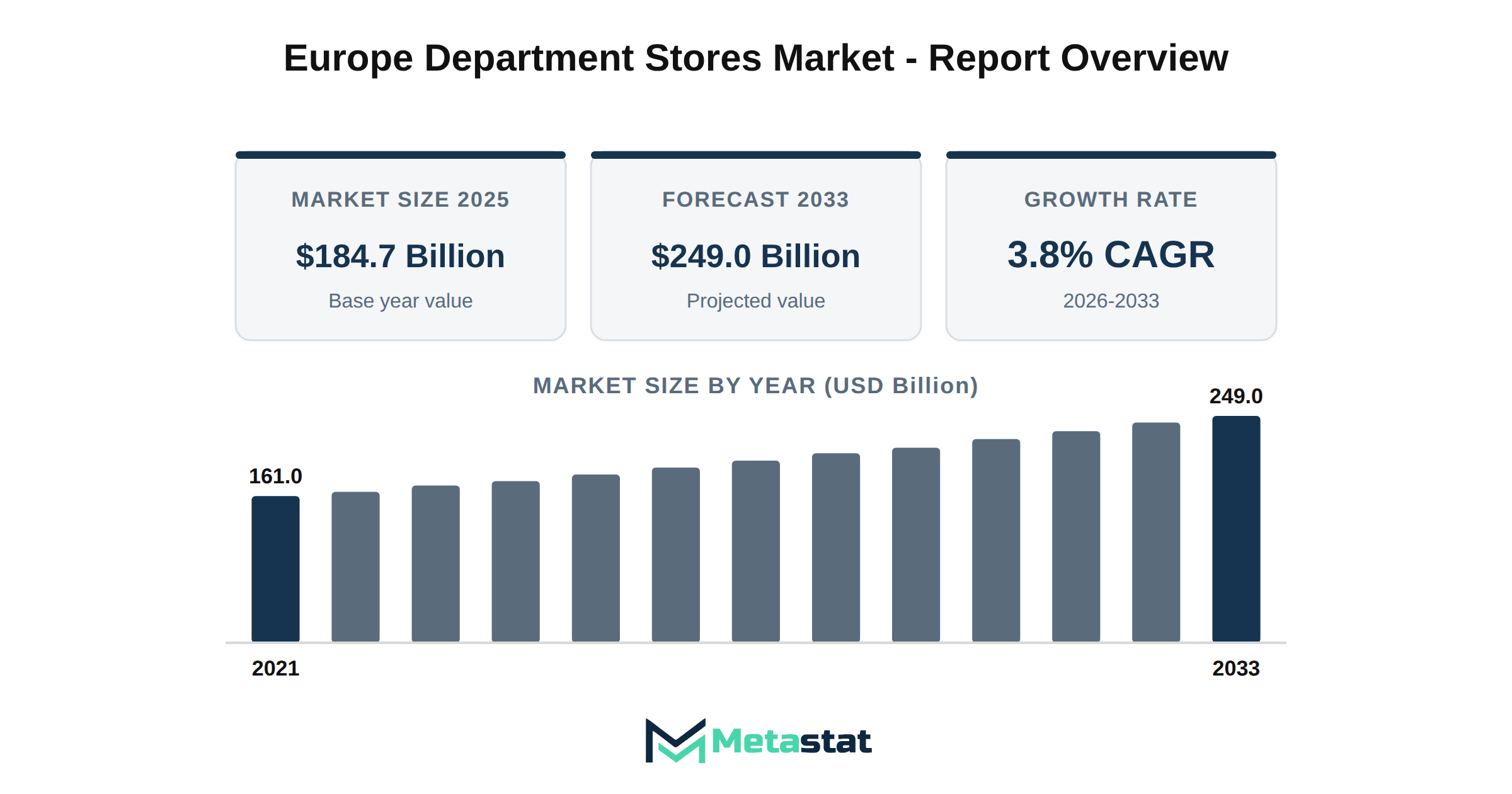
The Europe Department Stores market generated a base value of USD 184.7 billion in 2025, with a forecasted growth to USD 249 billion by 2033, reflecting a compound annual growth rate (CAGR) of 3.8%. Historical data indicates a steady increase from USD 161 billion in 2021, reaching USD 177.3 billion in 2024. The anticipated growth trajectory highlights significant shifts in consumer preferences and retail strategies.
Retailers are integrating omnichannel approaches to enhance customer experiences, facilitating smooth transitions between online and offline shopping. The adoption of click-and-collect services streamlines the customer journey, allowing consumers to order online and pick up items in-store. This strategy improves convenience and drives foot traffic to physical locations.
In Eastern Europe, luxury demand trends show increasing interest in premium retail experiences. Consumers demonstrate a willingness to invest in high-quality products, influencing department store offerings and marketing strategies. Retailers focus on delivering tailored experiences that appeal to affluent customers, contributing to growth in this segment.
Dynamic shifts characterize the competitive landscape within Russia's department store sector, driven by evolving consumer expectations and economic factors. Retailers in this region adapt to changes in purchasing behavior, emphasizing quality and service. This adaptation increases competition among local and international players, enhancing the market's vibrancy.
Strategies for online-to-offline fulfillment evolve in response to changing market conditions. Retailers prioritize regulatory compliance and adapt to new standards, ensuring efficient operations while navigating geopolitical risks. This focus on compliance and adaptation shapes the future strategic outlook for the market.
Omnichannel retail integration has become a significant strategy within the Europe Department Stores market. Retailers increasingly adopt a hybrid approach that seamlessly merges online and offline shopping experiences. This integration enhances customer convenience, allowing shoppers to research products online before visiting physical stores.
Click-and-collect adoption has surged, driven by consumers' desire for immediate gratification. This model enables shoppers to purchase items online and retrieve them in-store, reducing shipping costs and wait times. Retailers implementing effective click-and-collect systems experience increased foot traffic and customer loyalty.
The store-to-digital customer journey exemplifies a transformation in consumer behavior. Shoppers increasingly transition between online and offline platforms, expecting a cohesive experience. Retailers prioritizing a unified customer experience across channels strengthen their market position and improve customer retention.
The demand for a premium retail customer experience influences purchasing decisions. High-end department stores focus on personalized services, exclusive products, and immersive shopping environments. This approach attracts affluent consumers seeking unique shopping experiences that reflect their lifestyle.
Eastern Europe exhibits notable luxury demand trends, with consumers increasingly seeking high-quality products and experiences. This shift presents opportunities for department stores to diversify their offerings and cater to evolving consumer preferences in the region.
The competitive landscape of department stores in Russia reflects a dynamic market environment. Retailers face challenges from both domestic and international competitors, necessitating strategic differentiation through product offerings and customer service enhancements.
Online-to-offline fulfillment strategies are critical for maintaining a competitive edge. Retailers focus on optimizing inventory management and logistics to ensure timely product availability across channels. This strategy addresses consumer expectations for rapid fulfillment and enhances overall customer satisfaction.
Regulatory compliance and geopolitical risk frameworks shape operational strategies within the market. Retailers navigate complex regulations while adapting to economic shifts and political uncertainties, ensuring resilience in their business models.
Market fragmentation remains a defining characteristic, with numerous players vying for market share. This fragmentation encourages innovation and forces retailers to differentiate their offerings, ultimately benefiting consumers through diverse product selections.
Capital allocation and infrastructure investments play crucial roles in the market's growth trajectory. Retailers invest in technology and physical store enhancements to improve operational efficiency and customer engagement, aligning with broader trends in the retail sector.
Inflationary pressures and currency volatility impact pricing strategies and profit margins. Retailers adapt their approaches to manage costs while maintaining competitive pricing, ensuring sustainability amid economic fluctuations.
The future strategic outlook for the Europe Department Stores market indicates continued growth, driven by evolving consumer preferences and innovative retail strategies. Retailers prioritizing adaptability and customer-centric approaches are well-positioned to thrive in this competitive environment.
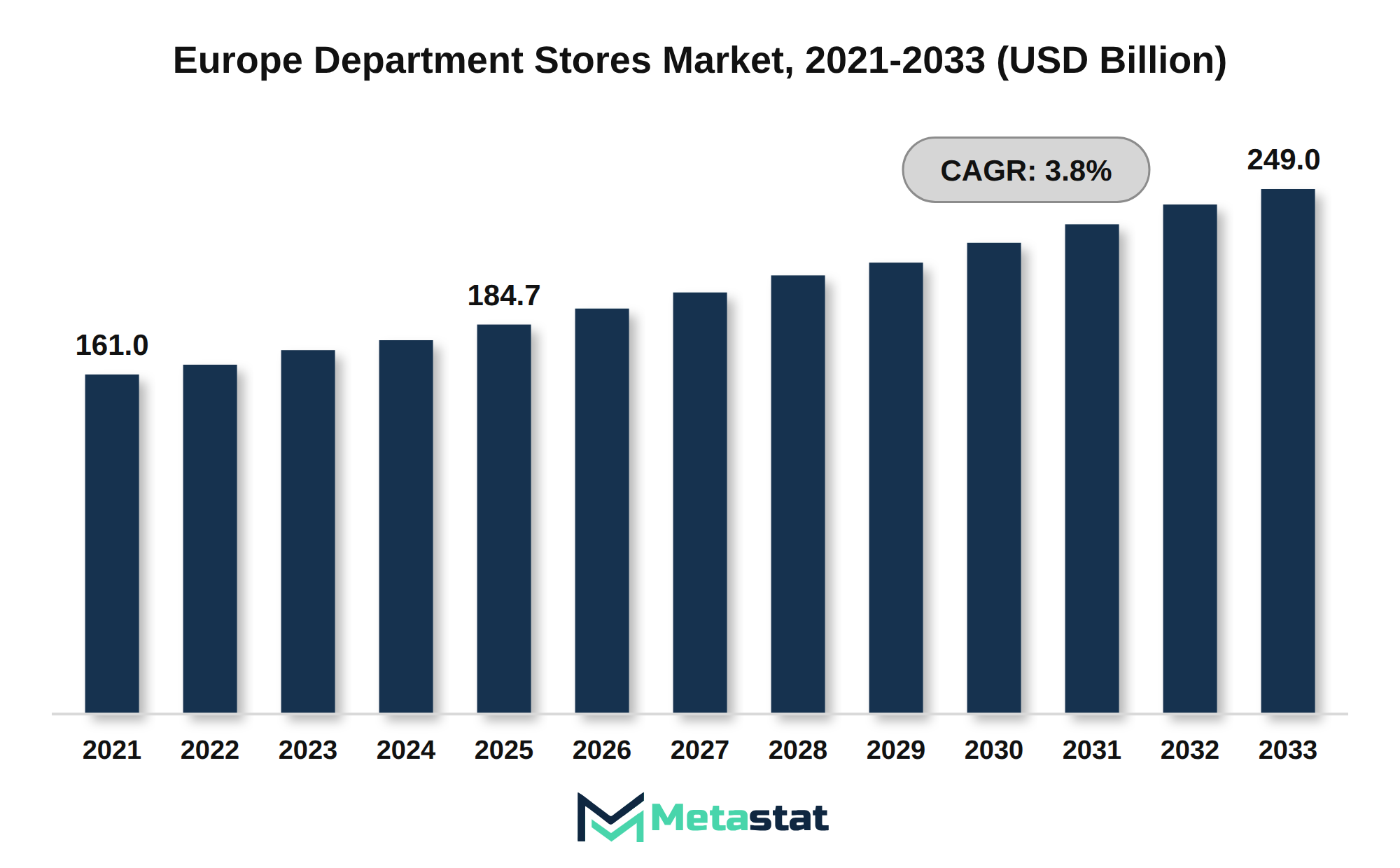
Consumer spending patterns in the Europe Department Stores market demonstrate strong growth, significantly influencing overall market performance. This upward trend results from improved economic conditions, including rising disposable incomes and greater consumer confidence across various regions. Consumers exhibit a willingness to spend on both essential and luxury items, driving heightened demand for department stores, particularly in sectors including apparel and beauty products.
Increased investment in marketing strategies and enhanced in-store experiences further supports this trend, attracting a diverse customer base. The strategic focus on personalization and curated shopping experiences aligns with evolving consumer preferences, enhancing customer loyalty and driving repeat business. Consequently, the market is projected to reach a value of USD 249 billion by 2033.
The emergence of digital platforms and e-commerce integration complements traditional shopping modalities. This integration enables department stores to reach a broader audience, facilitating access to a wider range of products. The dual-channel approach enhances competitiveness within the market, positioning retailers favorably against online-only competitors.
The digital transformation within the Europe Department Stores market significantly enhances operational efficiency and customer engagement. A surge in technological integration, particularly automation and artificial intelligence, streamlines processes and reduces costs. Retailers increasingly adopt software solutions that facilitate inventory management and personalized marketing, contributing to improved customer experiences and driving sales growth.
Shifting demographic patterns, particularly urbanization and the aging population, influence consumer behaviors and expectations. Younger generations favor retail environments that offer tech-driven experiences, while older demographics appreciate the convenience that digital solutions provide. This evolving buying preference necessitates that department stores adapt their offerings, reinforcing demand for innovative digital solutions.
Investment in infrastructure development and asset modernization further supports market growth. Upgrading both physical and digital capabilities drives efficiency and enhances the ability to respond to changing consumer preferences. These advancements open new revenue streams and improve overall competitiveness, positioning the market well for future opportunities.
The Europe Department Stores market faces significant operational challenges stemming from regulatory compliance and legal mandates. Increasing regulations impose higher operational costs and necessitate comprehensive compliance measures for retailers. These requirements constrain financial resources, divert funds from growth initiatives, and impact profitability across various store formats.
Macroeconomic headwinds, including inflationary pressures and capital stagnation, contribute to the market's restraint. Rising costs for goods and services force retailers to reassess pricing strategies, affecting consumer purchasing behavior. Such economic conditions hinder expansion efforts and create uncertainty regarding future investments in infrastructure and technology.
Supply chain disruptions exert additional pressure on the market, affecting inventory management and delivery timelines. Geopolitical instability further complicates sourcing strategies, resulting in higher operational risks for retailers. This instability leads to potential revenue losses and reduced market confidence.
High capital investment requirements pose a barrier to entry for new players and limit the ability of existing retailers to innovate or enhance their offerings. This situation restricts competition, because retailers allocate resources to meet regulatory demands rather than pursuing growth opportunities. Consequently, the market experiences slower growth rates compared to more agile sectors.
The Europe Department Stores market navigates cultural barriers and regional adoption resistors, which impact customer engagement and brand loyalty. Addressing these concerns requires targeted marketing strategies and tailored product offerings, diverting resources from other critical areas. Without effective management of these factors, market penetration remains limited, hindering overall growth.
A combination of regulatory compliance challenges, economic pressures, supply chain disruptions, and high capital requirements constrains the potential of the Europe Department Stores market. These factors limit operational flexibility and the ability to capitalize on emerging opportunities, necessitating a strategic approach to mitigate their impact.
The Europe Department Stores market faces challenges due to geopolitical fragmentation that disrupts supply chains across various regions. Trade deficits and tariff friction stemming from these geopolitical tensions create an unpredictable environment for retailers, impacting pricing strategies and overall market competitiveness. Fragmented trade relationships lead to increased costs for imported goods, forcing companies to adjust their pricing structures, which affects profitability.
Technological disruptions further complicate the landscape for the market. Companies struggle to integrate new technologies into their existing operations due to interoperability friction. This friction arises from the lack of standardized systems, which delays innovation and increases costs associated with research and development processes. The complexity of adopting new technologies hinders the ability of department stores to enhance customer experiences and streamline operations.
Logistics disruptions contribute to the instability of supply chains, exacerbated by rising input costs and talent retention pressures. The need for skilled workers to manage advanced retail technologies remains a significant hurdle. Workforce skill gaps limit the effectiveness of automation initiatives, which are essential for improving operational efficiency. The growing emphasis on sustainability demands pushes companies to rethink their supply chain strategies, complicating their ability to maintain competitive pricing.
Ultimately, these challenges shape a competitive environment that requires strategic adaptations. Ongoing instability in supply chains and workforce dynamics will likely impact the growth trajectory of the Europe Department Stores market, necessitating robust strategies to mitigate risks and leverage emerging opportunities effectively.
The Europe Department Stores market presents substantial opportunities driven by emerging regional demands and changing consumer preferences. Consumers increasingly seek personalized shopping experiences, compelling retailers to adapt their offerings to meet these expectations. This shift drives innovation in product selection and enhances customer engagement, stimulating overall market growth.
Infrastructure modernization forms another critical opportunity. Retailers invest in upgrading their facilities and technologies to improve operational efficiency and customer experience. Enhanced logistics and supply chain capabilities result from these investments, enabling quicker response times and better inventory management. Such advancements contribute to higher customer satisfaction and retention rates.
Geographical expansion continues to shape the market. Retailers explore underserved regions, aiming to tap into new customer bases. This strategy aligns with the growing urbanization trend and rising disposable incomes in various areas. Establishing a presence in these markets allows companies to diversify their revenue streams and mitigate risks associated with economic fluctuations.
Technological disruptions, including advancements in e-commerce and mobile shopping, reshape market dynamics. Retailers leverage digital platforms to reach a wider audience and enhance their product offerings. This transition facilitates operational improvements and positions businesses to adapt to evolving consumer habits, strengthening their competitive advantage.
Sustainability imperatives influence how retailers approach market strategies. Growing consumer awareness regarding environmental issues drives demand for eco-friendly products and practices. Retailers that align their operations with sustainability goals appeal to a broader customer base and enhance their brand reputation, leading to long-term loyalty.
The Europe Department Stores market is expected to continue evolving through strategic consolidation, cross-industry mergers, and acquisitions. This trend allows companies to enhance their market share, diversify their product portfolios, and improve operational efficiencies. Such moves create a more competitive landscape, benefiting consumers with better product offerings and services.
The Europe Department Stores market is segmented based on Product Category, Store Format, Ownership Model, and Region.
Valued at USD 56.9 billion in 2026, the Apparel & Fashion segment is projected to reach USD 69.5 billion by 2033, at a CAGR of 2.9% during the forecast period. This growth results from shifting consumer preferences, with increased emphasis on sustainable and ethically produced clothing influencing purchasing decisions. The segment attracts attention due to the rising trend of online shopping, which enhances accessibility and convenience for consumers, driving demand in the market.
Technological advancements play a crucial role in segment evolution, enabling retailers to adopt innovative solutions including augmented reality fitting rooms and advanced supply chain management systems. These technologies enhance customer engagement and optimize inventory management, supporting the segment's expansion. Collaborations between fashion brands and technological firms facilitate the integration of next-generation upgrades into the shopping experience.
Price volatility in raw materials impacts cost structures and profit margins within the segment. Changes in cotton and synthetic fiber prices create pressures on retailers, prompting them to adjust pricing strategies to maintain competitiveness. Regulatory compliance regarding sustainability standards influences product offerings, pushing brands towards adopting eco-friendly practices to cater to environmentally conscious consumers.
The segment's growth connects with various industries, including apparel manufacturing, e-commerce platforms, and logistics providers. Transitioning consumer behavior towards online shopping necessitates collaboration between these sectors, ensuring that the market remains agile and responsive to evolving demands. Increasing disposable income across several European countries boosts the potential for revenue growth, establishing a favorable outlook for the Apparel & Fashion segment within the Europe Department Stores market.
Growth within the Beauty, Cosmetics & Fragrances segment of the Europe Department Stores market is driven by an increasing consumer focus on personal grooming and self-care. Rising disposable income among consumers enhances spending on premium beauty products, while social media influences contribute to heightened demand for cosmetic and fragrance brands. Technological advancements in product formulation and packaging have led to innovative offerings, driving consumer interest in new and unique beauty products.
Market expansion is supported by shifts in consumer preferences towards sustainable and eco-friendly products. Brands adopting environmentally-conscious practices attract a growing segment of eco-aware consumers, enhancing market penetration. Regulatory compliance regarding ingredient safety and environmental impact further shapes product offerings, influencing consumer purchasing decisions.
The segment is projected to reach USD 38.6 billion by 2033, at a CAGR of 5% during the forecast period. The integration of online sales channels complements traditional retail strategies, allowing brands to reach a broader audience and enhance customer engagement. This shift in shopping behavior facilitates market growth, with digital platforms becoming essential for brand visibility and sales generation.
Growth in the Footwear & Fashion Accessories segment aligns with evolving consumer preferences toward stylish and functional products. The segment is projected to reach USD 26.2 billion by 2033, indicating a robust market trajectory. Factors driving this expansion include increasing disposable incomes and heightened awareness of fashion trends. Retailers emphasize diverse product offerings to attract a wider audience, influencing purchasing behaviors.
Technological advancements play a critical role in the market, particularly in online shopping platforms that enhance consumer engagement. The integration of augmented reality and AI in shopping experiences enriches product discovery. Brands leverage these technologies to provide personalized shopping experiences, catering specifically to the discerning preferences of modern consumers.
Regulatory compliance surrounding product quality and safety standards influences market dynamics. Strict adherence to regulations ensures consumer trust and brand loyalty, which are critical for sustained growth. Brands prioritizing compliance enhance their market positioning and secure a competitive edge in the industry.
Price volatility remains a significant challenge, driven by fluctuations in raw material costs. Brands adapt to these pressures by optimizing supply chains and seeking alternative sourcing strategies. Such measures mitigate cost impacts while ensuring product availability and consistent quality, which are crucial for maintaining consumer satisfaction.
The combination of shifting consumption patterns and technological evolution shapes the Footwear & Fashion Accessories segment within the Europe Department Stores market. Strategic investment in innovative product development and consumer engagement initiatives is essential for capturing emerging opportunities, ultimately driving growth in this competitive environment.
Consumer interest in the Home, Furniture & Living segment reflects a robust preference for quality and sustainability, driving market growth. This segment is projected to grow at a CAGR of 3.2% during the forecast period. Shifts in consumer behavior emphasize the importance of home aesthetics and functionality, influencing purchasing decisions in department stores across Europe. Increased investments in home improvement projects and a rise in disposable incomes facilitate heightened demand for furniture and home décor.
Operational efficiencies and enhanced customer experiences serve because critical components for retailers in this segment. Adoption of innovative designs and eco-friendly materials aligns with evolving consumer expectations, building brand loyalty. Technological advancements in product offerings, including smart home solutions, significantly enhance the appeal of the Home, Furniture & Living segment, attracting a tech-savvy demographic.
Pricing strategies tailored to reflect quality and value enhance competitiveness in this segment. Retailers leverage promotional campaigns and targeted marketing to capture consumer attention, influencing purchase behaviors. Overall, the Home, Furniture & Living segment reflects a dynamic growth trajectory within the Europe Department Stores market, driven by evolving consumer demands and strategic market positioning.
Shifts in consumer preferences towards smart and energy-efficient devices drive demand within the Consumer Electronics & Appliances sub-segment of the Europe Department Stores market. The increasing integration of technology into everyday products significantly influences purchasing decisions, with consumers seeking products that offer connectivity and modern features. Retailers in this sector respond to these evolving consumer needs by enhancing their product offerings with innovative technologies and features.
Next-generation upgrades in product lines contribute to segment expansion, driven by manufacturers continuously developing improved models that offer enhanced functionalities. This evolution aligns with consumer expectations for higher performance and sustainability. Retailers leverage these advancements to attract tech-savvy buyers, creating a competitive environment within the market.
End-use dynamics reflect a growing inclination towards smart home solutions, with consumers prioritizing convenience and automation in their purchases. This trend results in increased unit sales of appliances that integrate seamlessly into smart home ecosystems. Retailers adapt their strategies to emphasize these features, enhancing customer engagement and loyalty.
Regulatory compliance standards regarding energy efficiency and safety significantly influence product development within the segment. Manufacturers prioritize adherence to these standards, ensuring that their offerings remain competitive while meeting legal requirements. This focus on compliance leads to increased production costs, impacting pricing strategies and margin pressures.
Strategic opportunity windows arise from the rising demand for eco-friendly products. Consumers increasingly favor brands that prioritize sustainability in their product designs. Retailers position themselves effectively by highlighting environmentally friendly appliances, thus capturing a wider audience and enhancing their market share.
Overall, the Consumer Electronics & Appliances sub-segment experiences significant growth fueled by technological advancements and evolving consumer behaviors. The Europe Department Stores market stands poised for continued expansion, supported by these critical factors shaping the segment's landscape.
Consumer preferences increasingly shift towards high-quality food products and gourmet items, directly impacting the Food, Gourmet & Delicatessen segment within the Europe Department Stores market. This segment benefits from a growing emphasis on premium food offerings and a rising trend toward healthy eating. Adopting sustainable practices and ethically sourced ingredients enhances brand loyalty among consumers and encourages repeat purchases.
Expansion catalysts include the increasing demand for unique culinary experiences and the integration of local and artisanal products into the offerings. Retailers invest in enhancing their product ranges to meet evolving consumer tastes, leading to greater foot traffic and higher sales volumes. The trend towards gourmet and specialty food products reflects a broader lifestyle choice, aligning with health-conscious consumers who prioritize quality over quantity.
Technological advancements play a crucial role in enhancing the shopping experience within this segment. Innovations including online ordering and delivery services facilitate access to gourmet products, appealing to the convenience-oriented shopper. Robust supply chain management ensures product availability and freshness, meeting consumer expectations for high-quality food items.
Price volatility remains a challenge, driven by fluctuations in raw material costs that influence retail pricing strategies. Retailers navigate these challenges by optimizing their procurement processes and establishing strong partnerships with suppliers. Maintaining competitive prices while ensuring high product quality becomes essential for sustaining margins in the Food, Gourmet & Delicatessen segment.
Strategic opportunity windows arise from increasing consumer interest in international cuisine and specialty food items. Retailers leverage this demand by introducing diverse product lines, catering to multicultural neighborhoods. Enhancing in-store experiences through tastings and culinary events further drive foot traffic, creating a community around gourmet food offerings.
The outlook for this segment in the Europe Department Stores market demonstrates strong potential, driven by the evolving landscape of consumer preferences and the continuous pursuit of quality. Capital investment in this area reflects confidence in sustained growth, particularly because culinary trends continue to evolve and expand consumer engagement.
Consumer loyalty towards Children's & Baby Products drives substantial demand within the Europe Department Stores market. Parents increasingly prioritize quality, safety, and sustainability when selecting products for their children, influencing purchasing decisions across various categories. The growing trend of eco-conscious parenting increases interest in organic and environmentally friendly products, encouraging retailers to expand offerings in this segment.
Expansion catalysts include an increase in the birth rate in several European countries, leading to a heightened focus on products catering to infants and toddlers. Technological advancements in product design, including smart baby monitors and multifunctional strollers, attract tech-savvy parents. Retailers adopt omnichannel strategies to enhance customer engagement, blending physical and digital shopping experiences.
Consumption shifts reflect a greater emphasis on convenience and accessibility. Parents seek one-stop shopping solutions, prompting department stores to diversify their inventory in the Children's & Baby Products segment. The impact of regulatory compliance standards regarding product safety and material sourcing remains significant, compelling retailers to uphold high quality and safety benchmarks.
Pricing volatility in raw materials influences cost structures for various products, with ongoing fluctuations affecting profit margins. Competition among retailers remains robust, particularly in offering value-added services and loyalty programs. Strategic opportunity windows arise from addressing emerging consumer preferences, enabling innovative marketing tactics and product development tailored to modern parental needs.
Supply chain resilience becomes essential in maintaining product availability, particularly during peak shopping seasons. The relationship between consumer expectations and regulatory pressures shapes the market. In the coming years, sustained investment in product innovation and customer-centric approaches is expected to enhance the position of the Children's & Baby Products segment within the broader Europe Department Stores market.
Demand for Sports, Travel & Leisure Products in the Europe Department Stores market is influenced by the growing trend of experiential consumption. Consumers increasingly prioritize experiences over material possessions, leading to a surge in demand for leisure-related products. This shift in consumer behavior drives retailers to enhance their offerings, providing a wider range of products catering to various interests including sports, travel, and leisure activities.
Investment in product innovation is essential for the expansion of the segment. Retailers focus on integrating advanced technology into products, including smart gadgets for travelers or high-performance athletic gear, to meet the evolving needs of consumers. Such technological maturation ensures that products remain relevant and appealing, ultimately enhancing consumer engagement and loyalty.
Regulatory compliance and sustainability standards increasingly shape market dynamics. Consumers demonstrate a preference for brands that align with environmentally friendly practices, impacting purchasing decisions. Retailers responding to these trends adopt sustainable sourcing and production methods to cater to the eco-conscious consumer base.
Pricing volatility and margin pressures present challenges for retailers in the segment. Fluctuating costs of raw materials, driven by global supply chain disruptions, affect pricing strategies. Retailers balance competitive pricing with maintaining profit margins, often leading to strategic adjustments in inventory management and product offerings.
Strategic opportunity windows exist for retailers seeking to expand market presence. Identifying niche markets and targeting specific consumer demographics enhances market penetration. By aligning product offerings with specific interests and lifestyle choices, retailers position themselves effectively to capture an expanding consumer base within the market.
Interest in books, gifts, and stationery reflects ongoing consumer demand for personalized products and unique offerings. Shifts in gifting behavior, characterized by increased focus on meaningful and thoughtful presents, contribute to expansion in this sub-segment. The rise of online shopping has transformed how consumers access these products, encouraging department stores to enhance their online presence and offer effective shopping experiences. Trends toward sustainable and eco-friendly products influence purchasing decisions, prompting retailers to adapt their product lines to align with environmental values.
Strategic partnerships with local artisans and creators increase product diversity and connect with consumers seeking authenticity. The role of social media in influencing purchasing behavior continues to grow, particularly in promoting literary works and artisanal gifts. Seasonal events and holidays serve because catalysts for demand spikes, driving sales during critical periods. Innovations in packaging and presentation enhance the overall consumer experience, further supporting growth in the market.
Valued at USD 88.1 billion in 2026, the Full-Line Department Stores segment is projected to reach USD 101.9 billion by 2033, exhibiting a CAGR of 2.1% throughout the forecast period. This growth stems from a combination of increasing disposable income and evolving consumer preferences towards convenience and variety in shopping. The segment benefits from a broad product range, attracting diverse customer demographics, which reinforces its market position. Enhanced shopping experiences, driven by investments in store aesthetics and customer service, support customer retention and loyalty.
Technological advancements play a significant role in shaping the segment's trajectory. Full-line department stores increasingly integrate digital solutions, enabling effective online and offline shopping experiences. Such technological maturation boosts operational efficiency and aligns with consumer expectations for personalized services and product recommendations. This shift towards omnichannel retailing is expected to significantly influence purchasing behaviors, leading to higher sales volumes and increased market share.
Consumption shifts increasingly mirror trends in sustainability and ethical sourcing. Consumers gravitate towards brands that demonstrate corporate social responsibility, prompting full-line department stores to adapt their product offerings. This responsiveness to consumer values enhances brand loyalty and positions the market for growth. The ongoing rise of e-commerce necessitates that brick-and-mortar locations evolve, combining online capabilities with in-store experiences to address changing shopping habits.
Regulatory compliance standards and certifications relevant to health and safety increasingly shape operational practices. Full-line department stores enhance their market competitiveness by adhering to these standards, ensuring consumer confidence in product quality. Pricing volatility, driven by fluctuating raw material costs and supply chain challenges, influences margin pressures within the segment. Strategic management of costs and pricing structures remains essential for sustaining profitability in a competitive marketplace.
Continued investment in store formats, including renovations and expansions, reflects the commitment to enhancing customer experiences. While the market evolves, identifying strategic opportunity windows will be crucial for capitalizing on emerging trends and consumer demands. The ability to leverage these insights into effective strategies positions full-line department stores for sustained relevance and growth within the Europe Department Stores market.
Increasing consumer awareness regarding value and quality contributes to the growth of Off-Price Department Stores within the Europe Department Stores market. These stores attract price-sensitive shoppers who prioritize savings without sacrificing product quality. The segment is projected to reach USD 20 billion by 2033, at a CAGR of 5.4% during the forecast period.
Technological maturation and evolving digital platforms enhance the shopping experience, allowing off-price retailers to effectively market their offerings. The rise in online shopping has led to increased competition, requiring these retailers to adapt their strategies and embrace omnichannel approaches. This shift improves consumer engagement and strengthens loyalty among price-conscious buyers.
In response to changing consumption patterns, off-price department stores emphasize a diverse product range, including apparel, footwear, and home goods. This product evolution aligns with consumer preferences for unique and discounted merchandise. Regulatory compliance and cost structures remain crucial for maintaining competitive pricing while ensuring product quality and safety standards are met.
Strategic opportunities continue to arise within the segment, particularly in regions with emerging economies where disposable incomes increase. Investment in marketing and infrastructure supports growth, positioning off-price retailers favorably in the market. The combination of evolving consumer demands and strategic expansions presents a positive outlook for Off-Price Department Stores in the Europe Department Stores market.
Discount Department Stores generate significant interest within the Europe Department Stores market, driven by changing consumer preferences for affordable shopping options. Price-sensitive consumers increasingly seek value without compromising on quality, leading to heightened demand for discount retail formats. The segment is expected to reach USD 22.3 billion by 2033, reflecting strong growth prospects. Factors contributing to this expansion include economic fluctuations that incentivize budget-conscious shopping and the rising appeal of off-price merchandise.
Technological advancements in supply chain management enhance operational efficiencies and lower costs, further supporting the segment's growth. Online shopping integration allows discount department stores to broaden their reach, catering to the growing trend of e-commerce adoption among consumers. Increased reliance on digital platforms enables retailers to optimize inventory management and expedite delivery processes, aligning with consumer expectations for convenience and accessibility.
Competition within the segment intensifies, driven by established players and new entrants vying for market share. Differentiation through unique product offerings and exclusive deals becomes essential to attract price-sensitive shoppers. Strategic investments in marketing, including promotional campaigns and loyalty programs, enhance consumer engagement and drive foot traffic into stores. The Europe Department Stores market features a competitive environment where discount department stores capitalize on their value proposition to capture a larger customer base.
Luxury Department Stores exhibit a notable trajectory within the Europe Department Stores market, projected to grow at a CAGR of 5.5% during the forecast period. Emerging demand drivers include an increasing preference for premium products among consumers, attributed to affluent buyers showing a willingness to invest in high-quality and exclusive offerings. This trend aligns with a global increase in disposable income, creating an environment conducive to luxury spending.
Expansion catalysts including strategic marketing initiatives and personalized shopping experiences enhance consumer engagement, further stimulating growth in this segment. Retailers are investing in technology to create integrated omnichannel experiences, connecting online and offline platforms to cater to a diverse consumer base. Next-gen upgrades, including augmented reality and tailored services, continue to transform the luxury shopping experience, attracting new clientele while retaining loyal customers.
With a focus on evolving product offerings, luxury department stores are incorporating sustainable and ethically sourced products, responding to the growing consumer demand for corporate social responsibility. This shift reflects a broader consumption trend towards environmentally conscious purchasing habits. Regulatory compliance standards surrounding sustainability and consumer protection increasingly influence product lines and marketing strategies, compelling retailers to align with contemporary values.
Cost structures in the luxury segment often reflect higher operational expenses linked to premium materials and exclusive branding. Pricing volatility occurs in response to raw material sourcing fluctuations, which affect overall profitability. Maintaining customer loyalty in this competitive landscape requires continuous innovation and adaptation to changing tastes and preferences.
Strategic opportunity windows emerge for luxury department stores to enhance their supply chain resilience, ensuring reliable access to sought-after products. The potential for substitution risks exists, owing to consumers becoming more aware of alternative luxury retail formats and direct-to-consumer brands. While technological advancements continue, the segment's dynamics shift, encouraging retailers to invest in disruptive alternatives that enhance the shopping experience.
Overall, the luxury department stores segment plays a significant role in driving growth within the Europe Department Stores market, with a forecasted value of USD 20 billion by 2033. Ongoing investments in technology, marketing, and sustainable practices will shape the future of this segment, adapting to evolving consumer demands and market trends.
Adoption of online department stores reflects increasing consumer reliance on digital shopping platforms. Enhanced convenience and broader product ranges contribute to this trend, attracting a diverse customer base. While consumers prioritize online shopping options, demand for efficient and user-friendly e-commerce experiences escalates.
Technological advancements in website design and mobile applications facilitate shopping experiences. Integration of AI and machine learning enhances personalization, tailoring recommendations to individual preferences and behaviors. These innovations support growth in the Europe Department Stores market by improving customer engagement and satisfaction.
Changes in consumer purchasing habits drive a shift towards online platforms, particularly among younger demographics comfortable with technology. This demographic prioritizes convenience, often favoring the ability to shop anytime and anywhere over traditional in-store experiences. This segment attracts significant investment aimed at expanding digital capabilities and improving service offerings.
Strategic partnerships with logistics companies enhance supply chain resilience, ensuring timely delivery and efficient order fulfillment. This emphasis on logistics strengthens the competitive positioning of online department stores, allowing brands to meet rising consumer expectations for quick and convenient service.
Emerging trends in sustainability influence consumer choices, with increasing demand for eco-friendly products available through online platforms. Brands adopting sustainable practices enhance their appeal to environmentally conscious consumers. This trend contributes to the overall growth of the Europe Department Stores market.
Consumer behavior increasingly shifts towards convenience and personalized shopping experiences, driving demand for Small-format / Neighborhood Department Stores within the Europe Department Stores market. These stores cater to urban consumers seeking quick access to essentials and specialized products, reflecting the growing trend of localized retailing.
Technological advancements in retail, including mobile payment systems and online integration, enhance the shopping experience at these stores. Adoption of next-generation technologies, including inventory management systems, enables small-format stores to optimize operations and respond swiftly to consumer trends.
Regulatory compliance influences operational practices and supply chain management. Local regulations around product sourcing and sustainability standards impact how these stores operate, prompting investment in compliant and sustainable practices that align with consumer expectations.
Pricing strategies affect competitive positioning within the market. Smaller retailers often adopt pricing models that emphasize value and quality, appealing to budget-conscious consumers. Fluctuations in pricing due to raw material costs create margin pressures, necessitating strategic adjustments to maintain competitiveness.
Strategic opportunities exist for expansion in underserved urban areas. Identifying white-space opportunities allows retailers to capture additional market share by establishing stores in locations with limited competition. This approach supports long-term growth within the segment and enhances overall market dynamics.
Valued at USD 72.1 billion in 2026, the Publicly Listed segment is projected to reach USD 89 billion by 2033, at a CAGR of 3.1% during the forecast period. This growth stems from increased transparency and trust among consumers, creating a favorable environment for publicly listed entities. The competitive advantage lies in their ability to attract investments and enhance brand image, which translates into higher consumer confidence. Significant players in the Europe Department Stores market leverage their public status to access capital for expanding product offerings and improving customer experience.
Market dynamics indicate that regulatory compliance standards play a crucial role in shaping operational strategies for publicly listed companies. Adherence to these standards not only influences consumer perception but mitigates risks associated with liabilities. Publicly listed entities invest in maintaining high-quality standards, which reinforces consumer loyalty and drives sales in the long term. Such strategies enhance margins while navigating pricing volatility and cost structures inherent in the market.
The Publicly Listed segment reflects considerable growth potential within the Europe Department Stores market due to strong demand drivers and effective management of compliance standards. Capital investment outlook remains positive, driven by stakeholders recognizing the value in maintaining a reputable public presence.
Growing interest in the Privately Held segment of the Europe Department Stores market aligns with heightened consumer demand for personalized shopping experiences and distinct product offerings. This segment is estimated to reach USD 124.6 billion by 2033, at a CAGR of 4.2% during the forecast period. Key factors driving this segment include the increasing focus on customer engagement and enhanced service delivery, which cater to the evolving preferences of consumers.
Investment in branding and unique in-store experiences emerges because a critical catalyst for growth within the Privately Held segment. Retailers operating in this space leverage brand loyalty and customer trust to differentiate themselves from competitors. This strategic positioning enables these businesses to capture a larger share of the market through targeted marketing initiatives and tailored product assortments.
While competitive pressures intensify, companies in the Privately Held segment adapt their strategies to optimize pricing structures and maintain profit margins. This adaptation involves careful management of supply chain efficiencies and operational costs, which further strengthens their competitive stance in the market. The focus on delivering quality products while maintaining affordability enhances the segment’s appeal to cost-conscious consumers.
Technological advancements play a significant role in shaping the Privately Held segment, driving innovations in customer interaction and sales processes. Retailers increasingly integrate digital channels into their operations, allowing for smooth transitions between online and offline shopping environments. This integration supports consumer engagement and encourages repeat purchases, driving growth in this sector of the market.
The Privately Held segment in the Europe Department Stores market experiences robust expansion driven by consumer demand, strategic investments, and technological advancements. With an anticipated market size of USD 124.6 billion by 2033, sector stakeholders position themselves to capture emerging opportunities and navigate the evolving retail environment.
Growing interest in cooperative ownership models within the Europe Department Stores market influences overall market dynamics. Cooperative models provide consumers with an opportunity to engage in shared ownership, aligning closely with values of sustainability and community support. This ownership structure encourages local sourcing and community involvement, appealing to consumers who prioritize ethical consumption practices.
Cooperative segments are projected to reach USD 22.7 billion by 2033, driven by rising consumer demand for collaborative purchasing options. In the context of this market, cooperatives enhance customer loyalty by creating a sense of belonging and participation in decision-making processes. This approach strengthens brand loyalty and encourages repeat business, providing a competitive edge in a crowded marketplace.
Prominent players within the cooperative segment emphasize the importance of member engagement to drive sales and operational efficiency. Membership-based models streamline supply chains, reduce costs, and allow for more responsive inventory management. This adaptability contributes significantly to the growth and resilience of cooperatives in the retail environment.
Technological advancements play a vital role in enhancing cooperative operations. Digital platforms enable efficient communication among members while facilitating efficient transactions. The integration of e-commerce capabilities further extends the reach of cooperatives, attracting a broader customer base. This technological maturation supports growth projections and positions cooperatives favorably within the competitive environment of the market.
Growth in the State-owned segment stems from government initiatives aimed at stabilizing local economies and promoting employment. This segment is expected to grow at a CAGR of 4% during the forecast period, reflecting efforts to enhance public sector involvement in retail. State-owned department stores increasingly provide essential goods and services, meeting consumer demand in key markets across Europe.
Government support for state-owned enterprises contributes to cost management and pricing stability, allowing these stores to improve operational efficiency. Increased investments in modernization and technology upgrades enhance customer experience, driving foot traffic and sales. This evolution positions the State-owned segment because a significant contributor to the overall growth of the Europe Department Stores market.
Consumer preferences for reliable and accessible retail options influence purchasing decisions, benefiting state-owned department stores. These establishments provide a diverse range of products, appealing to various demographics and enhancing market penetration. Consequently, the segment's growth aligns with broader trends within the Europe Department Stores market, emphasizing the importance of public sector engagement in driving retail performance.
Valued at USD 14.6 billion in 2026, the Russia segment faces a projected decrease to USD 14.2 billion by 2033, reflecting a CAGR of -0.5% during the forecast period. Economic challenges, including fluctuating consumer confidence and inflationary pressures, significantly impact spending behaviors in the region. This decline results from reduced disposable income and evolving consumer preferences, leading to shifts towards value-oriented shopping options.
Regulatory compliance and geopolitical tensions present additional headwinds for the Russia segment within the Europe Department Stores market. Retailers confront rising costs associated with logistical operations and supply chain management, which directly influence pricing strategies. This landscape necessitates innovative approaches to cater to changing consumer demands while managing margin pressures effectively.
Strategic opportunity windows exist for players that adapt to these market dynamics through targeted product offerings and enhanced customer experiences. The ability to navigate price volatility and optimize inventory management will determine competitive positioning. Retailers focusing on technological advancements and e-commerce integration are expected to mitigate the adverse effects of current market conditions, ensuring resilience in a challenging environment.
Growth in the Poland segment reflects robust consumer interest in diverse product offerings available in department stores. Increasing disposable incomes combined with a rise in urbanization enhance consumer purchasing power, particularly in urban centers. Market expansion correlates with the country's economic development and a heightened focus on lifestyle and fashion trends.
The Poland segment is projected to reach USD 12.6 billion by 2033, at a CAGR of 6.6% during the forecast period. The development of shopping complexes serving multiple retail formats fuels increased foot traffic, benefiting department stores. Retailers respond to evolving consumer preferences by enhancing customer experiences through experiential shopping and targeted marketing efforts.
Competitive dynamics within the Europe Department Stores market create opportunities for brands to differentiate through exclusive offerings and enhanced in-store experiences. Investment in technology and data analytics enables retailers to personalize shopping experiences and streamline operations, leading to improved customer satisfaction and loyalty. Continuous innovation in product assortments provides a strategic advantage, with trends shifting towards sustainability and ethical consumption.
In the Czech Republic, the market exhibits strong potential, with projections indicating a reach of USD 7.8 billion by 2033. Factors driving this growth include increasing consumer spending, rising disposable incomes, and a shift towards modern retail experiences. The segment benefits from evolving consumer preferences, where personalized shopping and convenience play significant roles in decision-making. Retailers focus on enhancing customer engagement through innovative strategies, which further stimulates demand within this market.
Technological advancements significantly influence the retail landscape, with digital initiatives enhancing the shopping experience. The adoption of e-commerce platforms complements traditional retail, enabling consumers to access a wider range of products. Trends in sustainability and ethical consumption shape consumer choices, prompting department stores to adapt their offerings accordingly. This adaptation reflects changing end-use dynamics, with a growing emphasis on products that align with consumer values.
Regulatory compliance standards and economic policies affect operational strategies within the market. The emphasis on maintaining quality and safety standards influences cost structures, impacting pricing strategies across various product categories. Players within the market face pricing volatility due to fluctuations in raw material costs, requiring strategic approaches to maintain margins. In response to these challenges, department stores refine their supply chain resilience and logistical frameworks, ensuring efficiency in product delivery.
Strategic opportunity windows arise from an expanding consumer base and increasing urbanization. Market players explore white-space analysis, identifying gaps in product offerings and service delivery. Capital investment in infrastructure and technology plays a significant role in driving future growth within the Czech Republic segment of the Europe Department Stores market.
Ukraine represents a dynamic segment within the Europe Department Stores market, projected to grow at a CAGR of 12.5% during the forecast period. This growth results from increasing consumer demand for a wide variety of products in department stores, driven by a rising middle class and urbanization. Shifts in consumer preferences towards modern retail formats enhance the appeal of department stores, offering a diverse shopping experience that combines convenience and variety.
Technological advancements play a significant role in transforming the retail landscape in Ukraine. The integration of e-commerce solutions and digital marketing strategies supports traditional department stores in attracting tech-savvy consumers. This evolution aligns with broader trends in the Europe Department Stores market, where players leverage online platforms to enhance customer engagement and streamline operations.
Regulatory compliance standards have evolved in Ukraine, influencing pricing structures and operational practices within the department stores segment. Adapting to these regulations presents challenges and opportunities, compelling retailers to innovate while ensuring adherence to local laws and consumer protection standards. This compliance enhances consumer trust, which is crucial for sustaining growth in the market.
Investments in supply chain resilience and logistics are critical for department stores in Ukraine. Enhanced supply chain strategies allow retailers to manage inventory efficiently, minimizing costs while maximizing product availability. The segment's growth potential is further supported by strategic partnerships and collaborations among retailers and suppliers, creating a more integrated market approach.
Overall, the Ukraine segment within the Europe Department Stores market reflects a strong growth trajectory, driven by evolving consumer behaviors, technological integration, and strategic investments. These factors collectively position the market for continued expansion and innovation, ensuring a competitive environment for all stakeholders involved.
Increasing consumer interest in various retail formats influences the Hungary sub-segment of the Europe Department Stores market. An expanding middle class drives demand for a diverse range of products, prompting department stores to adapt their offerings to meet consumer preferences. The local market experiences growth due to rising disposable incomes, enabling consumers to explore premium brands alongside value-oriented options.
Technological advancements in retail enhance customer experiences, with many stores integrating digital platforms for a smooth shopping journey. Adoption of omnichannel strategies supports retailers by providing customers with multiple ways to interact and purchase. This shift aligns with changing consumption patterns, where convenience and accessibility become key factors influencing buyer behavior.
In Hungary, a focus on regulatory compliance has emerged because a critical factor for department stores. Meeting evolving standards ensures product quality and safety, building consumer trust. The market faces challenges related to pricing volatility and margin pressures, necessitating strategic adjustments from retailers to maintain competitiveness.
Investment in innovative product assortments remains vital to capture emerging opportunities. Retailers explore partnerships with local designers and brands to offer unique products tailored to Hungarian consumers. This approach enhances customer engagement and loyalty, positioning stores favorably within the broader Europe Department Stores market.
Strategic opportunity windows arise from changing demographic trends, particularly among younger consumers who prioritize sustainability and ethical sourcing. Department stores that align with these values differentiate themselves and attract a loyal customer base. Continued attention to supply chain resilience and raw material sourcing plays a significant role in sustaining operational efficiency and meeting consumer demand.
Rising consumer expectations drive transformations within the Europe Department Stores market. The demand for diverse product offerings, including apparel and home goods, reflects evolving preferences among shoppers. Consumers increasingly seek unique and high-quality experiences, prompting department stores to innovate and enhance their offerings. The segment experiences significant expansion catalysts through strategic partnerships and collaborations that optimize product availability and variety.
Technological maturation reshapes interactions between customers and retailers. Integration of advanced analytics, artificial intelligence, and personalized marketing strategies enables stores to tailor their approaches, thereby enhancing customer satisfaction and loyalty. Such advancements streamline the shopping experience, contributing to a more competitive market environment.
Consumption shifts, driven by increased awareness of sustainability and ethical practices, influence purchasing decisions. Department stores increasingly focus on sourcing eco-friendly products and promoting transparency in supply chains. This emphasis aligns with consumer values, strengthening brand loyalty and supporting growth within the segment.
Regulatory compliance standards related to environmental and consumer protection continue to shape market dynamics. Adherence to these regulations requires investment in sustainable practices and product lines, ultimately enhancing brand reputation and market position. Consequently, businesses prioritizing compliance are better positioned to navigate potential policy headwinds.
Strategic opportunity windows arise from the ongoing evolution of shopping preferences. The expansion of online platforms alongside traditional retail formats allows department stores to capture a broader audience. This hybrid approach enhances accessibility and convenience, driving future growth.
Investment outlook remains positive within the Rest of Europe segment. Companies pursue capital investments aimed at expanding store formats and enhancing product ranges. Such strategic initiatives strengthen market presence while catering to the diverse preferences of European consumers.
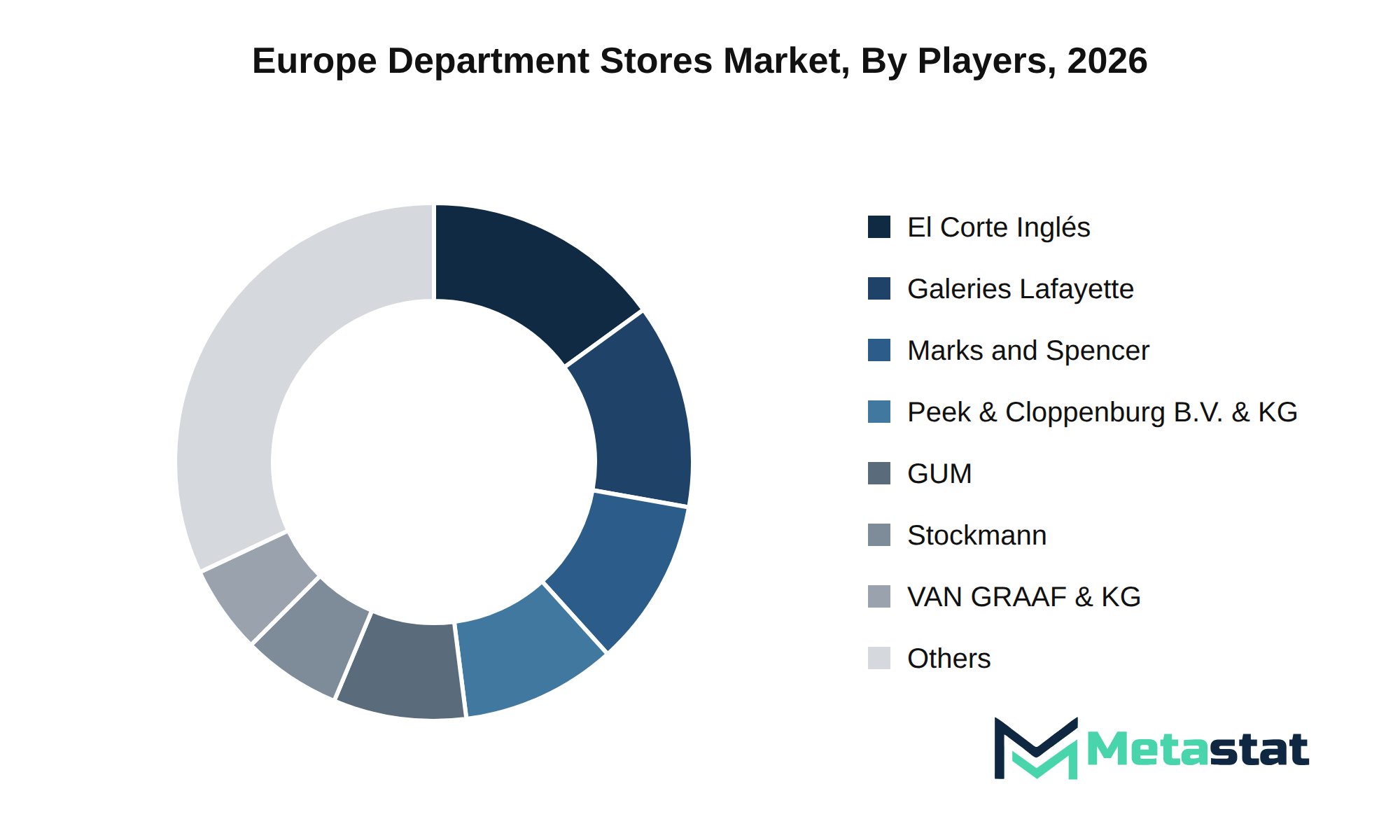
The Europe Department Stores market features a diverse array of players, each employing distinct strategies to capture market share. Companies including Marks and Spencer plc, El Corte Inglés, S.A., and Selfridges Retail Limited focus on premium product offerings and enhanced customer experiences, reinforcing brand loyalty among consumers. In contrast, other players like TSUM (Mercury Fashion LLC) and GUM apply competitive pricing and promotional strategies to attract price-sensitive shoppers.
Strategic alliances and partnerships remain critical in the evolving landscape. Collaborations between companies including Galeries Lafayette and local brands enhance product variety while leveraging existing customer bases. Joint ventures in targeted regions increase market penetration, particularly among emerging players like Vitkac Sp. z o.o. and Robne kuće Beograd d.o.o.
The market continues to expand, with an increasing emphasis on technological innovation and customer retention. Brands invest in proprietary technologies to streamline operations and improve customer engagement, ensuring a strong competitive position. The future of the Europe Department Stores market is projected to hinge on the ability to adapt to changing consumer preferences while maintaining robust supply chain practices.
Market size is forecast to rise from USD 184.7 billion in 2025 to over USD 249 billion by 2033. The base case is USD 184.7 billion in 2025 to USD 249 billion by 2033 at a 3.8% CAGR. Economic cycles influence downstream demand changes significantly, affecting consumer spending patterns and purchasing behavior within the Europe Department Stores market. Factors including inflation, employment rates, and general economic stability impact consumer confidence and the overall willingness to spend on non-essential items.
The maturation of core industries drives structural consumption shifts, leading to evolving consumer preferences and expectations. Next-generation technology integration plays a crucial role in enhancing operational efficiency and customer experience, with R&D commercialization timelines determining the pace of innovation adoption. Regulatory evolution and compliance milestones require businesses to remain agile and adaptable to changing market conditions and government policies.
Geopolitical realignments and evolving trade corridors directly impact supply chain dynamics, influencing product availability and pricing strategies within the market. Strategic capital allocation directives focus on infrastructure commitments and CapEx investment vectors that strengthen operational capabilities and enhance market competitiveness. Identifying emerging white-space opportunities and unmet enterprise needs facilitates entry into high-growth pockets, providing avenues for expansion and revenue generation.
Executive-level strategic imperatives emphasize the necessity for defensibility roadmaps that outline risk management strategies and future growth recommendations. Aligning business objectives with market trends and consumer demands enables stakeholders to optimize their approaches for sustainable success in the Europe Department Stores market.
The report strategically identifies and profiles the key market players and analyses their core competencies in each sub-segment of the Department Stores market.
Report Attributes | Details |
Study Period | 2021-2033 |
Base Year | 2025 |
Estimated Year | 2026 |
Forecast Period | 2026-2033 |
Historical Period | 2021-2025 |
Growth Rate | CAGR 3.8% from 2026 to 2033 |
Revenue Unit | USD billion |
Segmentation | By Product Category, Store Format, Ownership Model, Region, and Region |
Find answers to common questions about this report
The Department Stores market size in Europe was valued at USD 184.7 billion in 2025.
The Department Stores market is projected to grow at a CAGR of 3.8% during the forecast period from 2026 to 2033.
The Apparel & Fashion segment leads the Europe Department Stores market, with a value of USD 56.9 billion in 2026. This segment represents the largest share compared to other product categories.
Key drivers for the Europe Department Stores market include improved economic conditions, rising disposable incomes, and increased consumer confidence. Enhanced marketing strategies and a focus on personalized shopping experiences attract diverse customer bases, while the integration of digital platforms facilitates broader reach and operational efficiency.
Significant operational challenges, including regulatory compliance costs, macroeconomic headwinds like inflation, and supply chain disruptions, restrain growth in the Europe Department Stores market. High capital investment requirements and geopolitical instability further limit competition and innovation, impacting overall market performance.
Improved economic conditions, rising disposable incomes, and greater consumer confidence drive product adoption in the Europe Department Stores market. Enhanced investment in marketing strategies and personalized shopping experiences increases consumer engagement and loyalty, resulting in higher demand for both essential and luxury items.
The Department Stores market is estimated to reach a valuation of USD 249 billion by 2033.
Key players in the Europe Department Stores market include Stockmann, TSUM (Mercury Fashion LLC), GUM, Marks and Spencer plc, El Corte Inglés, S.A., Galeries Lafayette, and Harrods Limited.
The apparel and fashion segment is projected to reach USD 69.5 billion by 2033.
Poland exhibits the highest growth rate, with a CAGR of 6.6% projected through 2033.
The analysts below cover Consumer Goods research at Metastat Insights.
LEAD ANALYST
Utkarsh Khirodkar is a Lead Market Research Analyst at MetaStat Insight, specializing in market intelligence, technology sector assessments, and competitive strategy.
Scaling antibody-drug conjugate manufacturing hinges on contract manufacturing availability for high-potency active ingredients. The MetaStat Insight analysis looked closely at global cleanroom slot constraints, bioconjugation batch failure rates, and supply chain redundancies between the US, Europe, and India. The supplier capability matrix proved genuinely useful for our team when mapping secondary source options across our clinical pipeline.
Floating offshore wind feasibility relies heavily on specialized installation vessel availability and port crane limits, which most broad renewable energy forecasts ignore. The report delivered a thorough analysis of dry dock capacity, mooring chain supply constraints, and raw material pricing trends for deepwater anchor installations. It served as a solid independent sanity check for our offshore project capital expenditure assumptions.
Assessing commercial microgrid software adoption requires looking past top-level installation numbers and examining utility interconnection queues. The research provided verifiable data on average permitting timelines, tariff structures, and battery storage integration costs across regional utility territories. That grounded perspective was valuable for our team when building five-year demand projections for industrial microgrid controllers.
Explore related market intelligence reports worth reading alongside this one.