
LEAD ANALYST
Utkarsh Khirodkar is a Lead Market Research Analyst at MetaStat Insight, specializing in market intelligence, technology sector assessments, and competitive strategy.

Premium Skincare Market Size, Share, By Product Type (Creams, Moisturizers, Eye Care, Cleansers, Face Oils, Serums, Masks, and Others), By Category Positioning (Luxury Prestige, Premium Prestige, and Masstige Premium), By Consumer Group (Women, Men, and Unisex), By Distribution Channel (Department Stores, Specialty Stores, Beauty Boutiques, Online Retail, Brand-Owned Stores, Pharmacies, Dermocosmetic Channels, and Others), Industry Analysis, Growth, Trends, and Forecast, 2026-2033
Report ID
MSI-4572
Published
April, 2026
Pages
324 Pages
Format
Report Details
Choose Your License
Premium Skincare Market
The Global Premium Skincare market size was valued at USD 31.9 billion in 2025. The market is projected to grow from USD 34 billion in 2026 to USD 52.8 billion by 2033, exhibiting a CAGR of 6.5% during the forecast period.
The global premium skincare market was valued at USD 31.9 billion in 2025 and is projected to reach USD 52.8 billion by 2033, reflecting a CAGR of 6.5% during 2026-2033.
North America held 24.4% share in 2025, with the United States leading regional revenue.
Creams and Moisturizers segment accounted for a 32.1% market share in 2025.
Key trends driving growth: Increased Consumer Preference for High-Efficacy and Clinically Oriented Skincare, Increased Spending on Prestige Beauty Owing to Premiumization and Self-Care Trends
The opportunities include AI-Led Skin Diagnostics and Personalization Enabling Higher Conversion and Repeat Purchase
Key insight: Premium skincare demand reflects a shift toward science-backed, ethically positioned products supported by strong digital engagement and brand loyalty.
The global premium skincare market within the personal care industry extends beyond traditional product boundaries and reshapes how efficacy, safety, and sensorial experience are defined in high-end skincare. In the coming years, product roadmaps will place continued emphasis on biocompatible actives, long-term skin resilience, and sensory refinement rather than short-term cosmetic outcomes. Premium skincare brands are increasingly aligning portfolios with dermatology-led innovation, fermentation-derived actives, and biomimetic ingredients to strengthen consumer trust and willingness to pay.
The future outlook highlights a strong interrelationship between luxury skincare and adjacent disciplines such as preventive dermatology, skin barrier science, and wellness-oriented routines. Brand positioning will evolve toward curated regimen experiences rather than individual products, wherein consultation-led services, virtual skin diagnostics, and adaptive formulations become core parts of premium offerings. Packaging innovation will also shift toward refillable systems and clearer ingredient disclosures to strengthen prestige perception while reinforcing responsible sourcing narratives.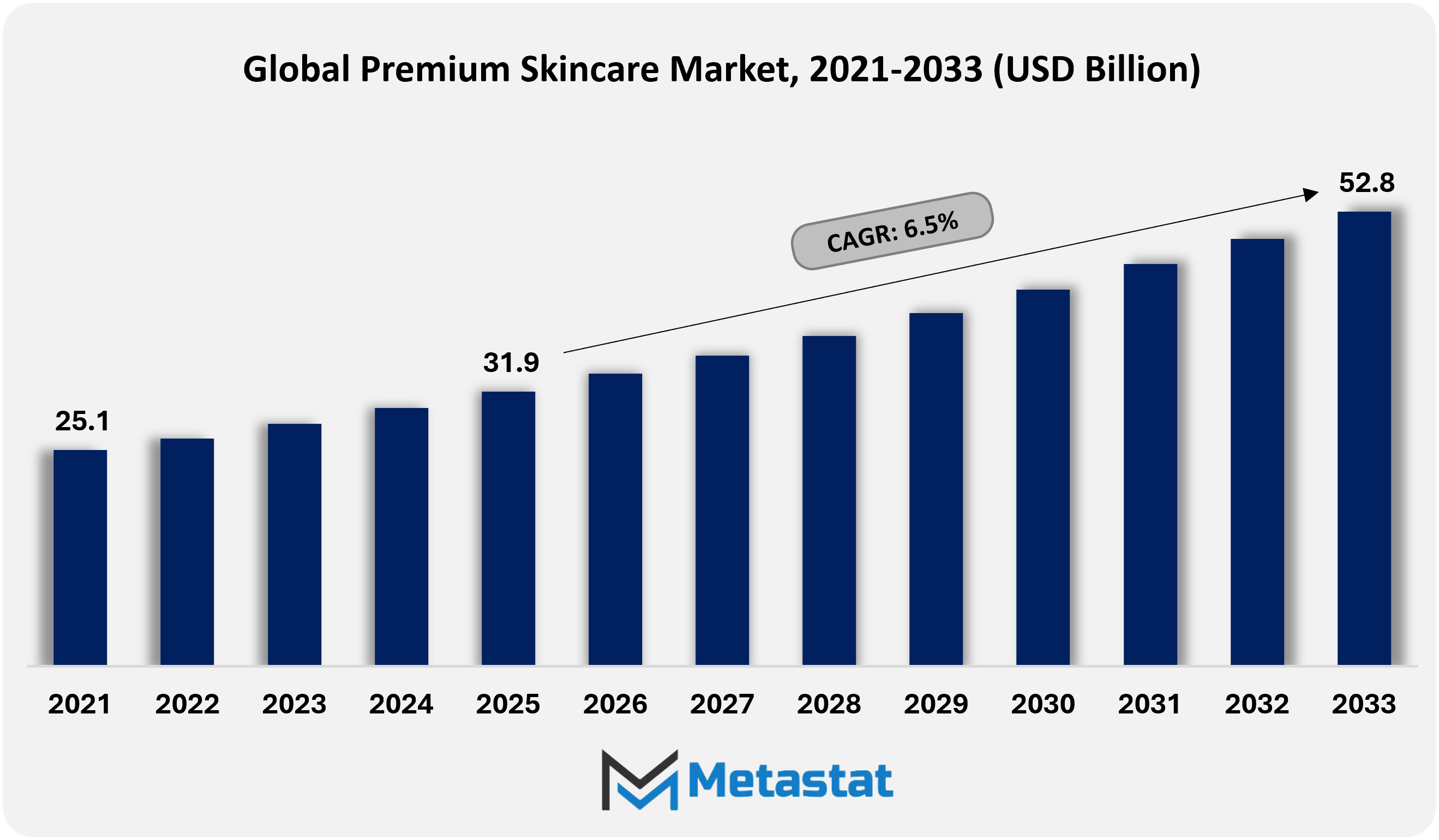
Increased Consumer Preference for High-Efficacy and Clinically Oriented Skincare.
Rising awareness of ingredient transparency, clinical validation, and measurable skin outcomes will support premium skincare purchases. Clinically tested formulations and science-led claims are gaining trust across anti-aging, sensitivity, and barrier-repair needs.
Increased Spending on Prestige Beauty Owing to Premiumization and Self-Care Trends
A rise in disposable incomes and shifts in lifestyle towards wellness routines will increase demand for prestige skincare. The premium beauty purchasing is now increasingly linked with self-investment and emotional well-being. Brand storytelling, premium packaging, and experiential retail strategies will sustain willingness to pay and support category resilience.
High Price Points Limiting Penetration Across Price-Sensitive Consumer Cohorts
The premium pricing strategy will limit affordability among budget-conscious population, particularly in developing nations. Weak alignment of perceived values will lead to limited trial adoption and lesser repeat purchase frequency. Efforts to expand the market require a careful balancing act between being exclusive and affordable to allow for greater reach.
Counterfeit and Unauthorized Online Resale Impacting Brand Trust and Margin Control
The increase in counterfeit products and the unregulated online resale channels will undermine brand credibility and profitability. Counterfeit products will erode consumer confidence. To safeguard brand equity, stronger authentication systems, closer distribution oversight and digital enforcement will be necessary.
AI-Led Skin Diagnostics and Personalization Enabling Higher Conversion and Repeat Purchase
Artificial intelligence will raise the bar for skincare personalization. Advanced diagnostics will result in precise matching of the products, high success rates, and an ultimately happy customer. Using data to create customized models will help to encourage repeated purchasing patterns and long-term brand engagement across premium skincare portfolios.
The global premium skincare market is segmented by Product Type, Category Positioning, Consumer Group, and Distribution Channel.
By Product Type, the market is further segmented into:
Creams and Moisturizers segment was valued at USD 10.9 Billion in 2026 and is projected to reach USD 16.4 Billion by 2033, at a CAGR of 6% during the forecast period.
Creams and moisturizers will continue to grow in importance in the global premium skincare market due to the increasing focus on long-term skin hydration and barrier repair. Advanced formulations, bioactive ingredients and texture refinement will support demand growth. Premium buyers will prefer performance-driven products backed by research-backed status.
Eye Care segment was valued at USD 4.3 Billion in 2026 and is projected to reach USD 7 Billion by 2033, at a CAGR of 7.1% during the forecast period.
The expansion of eye care products under the global premium skincare market will be driven through innovation, addressing fatigue, fine lines, and environmental stress indicators. Development will be supported by targeted formulation, clinical reliability, and packaging precision. Future demand will reflect increasing awareness about early prevention and special daily care routines.
Cleansers segment was valued at USD 5.6 Billion in 2026 and is projected to reach USD 8.6 Billion by 2033, at a CAGR of 6.4% during the forecast period.
Cleansers in the global premium skincare market will shift toward gentle yet effective cleansing solutions. Preference for sulfate-free, pH-balanced, and skin-conditioning formats will increase. Premium consumers will appreciate products that provide hygiene without dryness, reinforcing daily use patterns aligned with wellness-oriented skin care practices.
Face Oils segment was valued at USD 2.9 Billion in 2026 and is projected to reach USD 4.6 Billion by 2033, at a CAGR of 7% during the forecast period.
Face oils will experience increasing acceptance in the global premium skincare market due to their multifunctional benefits such as nourishment, glow enhancement, and skin soothing. Botanical sourcing, cold-pressed technology and sensory appeal will define future adoption. Market momentum will reflect a preference for minimal content lists paired with visible results.
Others (Serums, Masks) segment was valued at USD 10.3 Billion in 2026 and is projected to reach USD 16.2 Billion by 2033, at a CAGR of 6.7% during the forecast period.
The serums and masks of the global premium skincare market will meet the concentrated treatment needs supported by high-performance actives. Continued product diversification will meet the goals of anti-aging, hydration and skin recovery.
By Category Positioning, the market is divided into:
Luxury Prestige segment is projected to reach USD 13.6 Billion by 2033, at a CAGR of 5.7% during the forecast period.
The luxury prestige position in the global premium skincare market will focus on exclusivity, legacy branding, and advanced research investments. Future growth will depend on personalized solutions, limited releases, and immersive brand experiences. High-value consumers will look for depth of innovation and exclusivity supported by a sophisticated product story.
Premium Prestige segment is projected to reach USD 24.7 Billion by 2033, at a CAGR of 6.4% during the forecast period.
Premium prestige offerings within the global premium skincare market will balance efficacy and accessibility within aspirational pricing structures. Science-based formulations and strong brand credibility will drive growth. Market expansion will reflect demand for visible performance without excessive price premiums.
Masstige Premium segment is projected to reach USD 14.5 Billion by 2033, at a CAGR of 7.6% during the forecast period.
Masstige's premium positioning within the global premium skincare market will appeal to a broad audience looking for advanced quality at controlled pricing. The success of the product will depend on simplified routines, dermatologist-inspired formulas and digital-first brand communications. Future demand will be in line with price-conscious but quality-driven purchasing behaviour.
By Consumer Group, the market is further divided into:
Women segment is projected to reach USD 39.5 Billion by 2033 with a share of 75.3% in 2025.
Women-centric demand will remain dominant in the global premium skincare market due to the continued emphasis on preventive care and beauty maintenance. Product development will prioritize age-specific solutions and lifestyle adaptability. The growth component of the market will reflect the increasing awareness around transparency and long-term skin health outcomes.
Men segment is projected to reach USD 8.0 billion by 2033 with a share of 14.4% in 2025.
The men segment in the global premium skincare market will expand through simplified routines and functional benefits. Growth drivers will include increasing skin awareness and targeted formulations addressing oil control and fatigue. Future adoption will benefit from educational marketing and performance-focused product design.
Unisex segment is projected to reach USD 5.3 billion by 2033 with a share of 10.2% in 2025.
In the global premium skincare market, unisex products will gain popularity through inclusive branding and neutral formulations. There will be a growing demand for versatile solutions suitable for all demographics. Market progress will be driven by minimal packaging and universal skin benefit communication strategies.
By Distribution Channel, the Global Premium Skincare market is divided as:
Department Stores segment is projected to grow at a CAGR of 6% during the forecast period.
Department stores supporting the global premium skincare market will maintain relevance through experiential retail and expert-assisted shopping. Growth will depend on a curated brand portfolio and in-store consultation. Physical presence will strengthen confidence-building among the premium consumer segments.
Specialty Stores (Beauty Boutiques) segment is projected to grow at a CAGR of 5.9% during the forecast period.
Exclusive stores within the global premium skincare market will drive growth through focused product education and brand storytelling. The boutique environment will encourage discovery and personalized recommendations. Future expansion will depend on exclusive launches and high-touch customer engagement strategies.
Online Retail (E-commerce) segment is projected to grow at a CAGR of 7.7% during the forecast period.
Online retail channels will drive growth in the global premium skincare market through convenience and detailed product transparency. Enhanced digital content and virtual consultations will influence purchasing decisions. The expansion of the channel will reflect the growing convenience with premium skincare shopping through digital platforms.
Others (Brand-Owned Stores, Pharmacies and Dermocosmetic Channels) segment is projected to grow at a CAGR of 5.8% during the forecast period.
Alternative channels supporting the global premium skincare market will grow through credibility and controlled brand presentation. Brand-owned stores will increase loyalty, while pharmacies will strengthen trust through clinical associations. Channel diversification will support wider reach without diluting premium positioning.
Based on geography, the Global Premium Skincare market is divided into North America, Europe, Asia-Pacific, South America, Middle East, and Africa.
North America Premium Skincare Market is set to expand at a CAGR of 6.5% within the forecast period, reaching a market size (TAM) of USD 11.5 billion by the end of 2033.
North America supports the global premium skincare market through strong consumer preference for dermatologist-endorsed products and high spending power focused on high-efficacy formulations.
North America supports market growth through advanced retail infrastructure, robust brand loyalty, and increasing preference for hygiene-focused and clinically tested skincare solutions.
Asia Pacific provides vast possibilities for the global premium skincare marketplace due to an expanding middle-income population and growing interest in advanced beauty routines.
Asia Pacific creates new avenues of growth due to fast urbanization, digital impact, and growing acceptance of premium skin care products.
In the Middle East, Africa, and South America, the global premium skincare market is continuously progressing through enhancing retail penetration, developing beauty cognizance, and gradual top-class product adoption.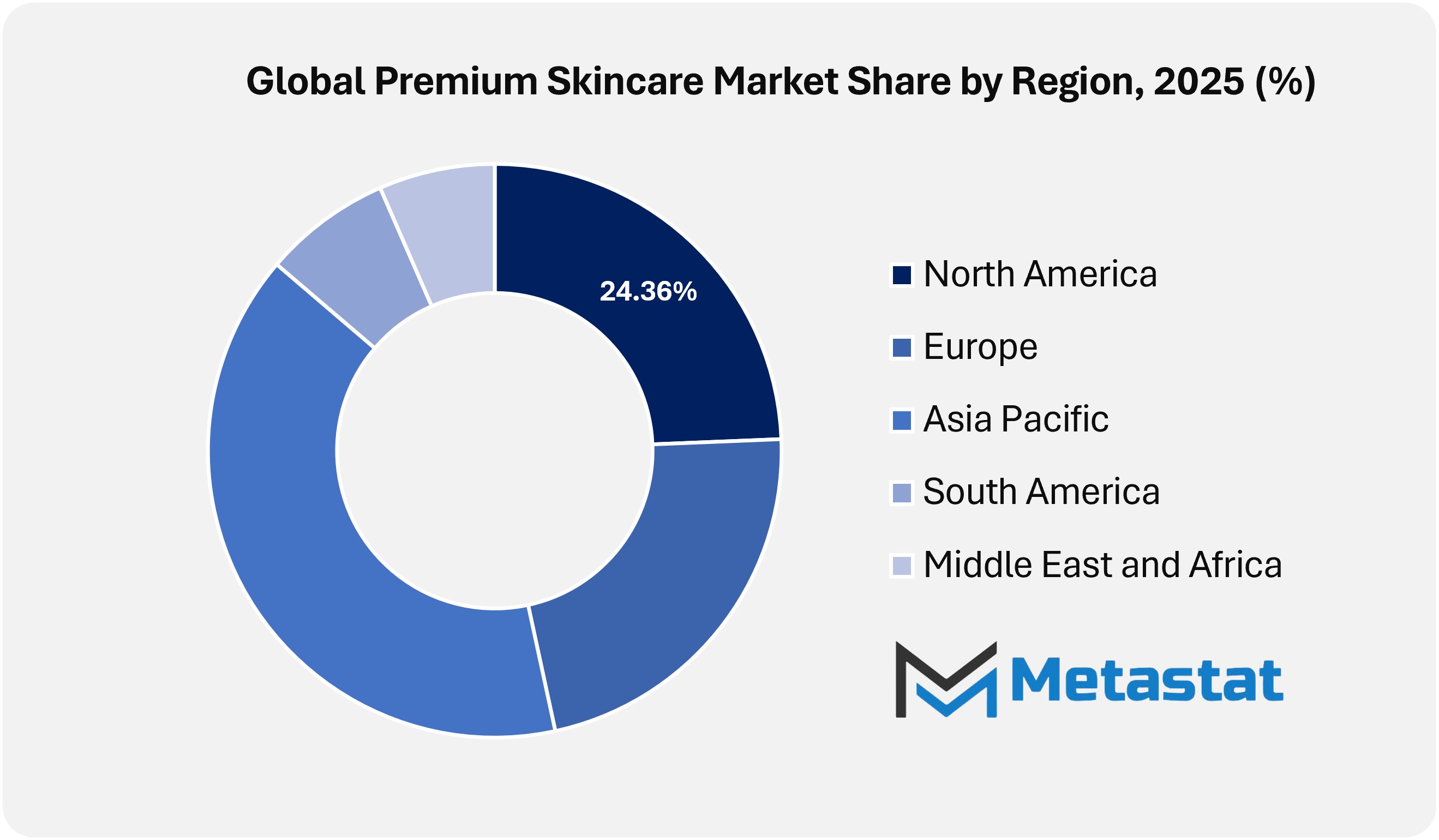
The global premium skincare market continues to attract strong attention as consumers place greater importance on quality, performance, and brand trust. Premium skincare brands focus on sophisticated formulations, long-term skin health, and a sense of care beyond the daily routine. Buyers in this sector are willing to invest in products that promise visible results, safety, and a well-researched approach to skin concerns. The market continues to benefit from increasing awareness about skin care rituals, ingredient transparency, and personalized beauty solutions.
Leading global brands such as L'Oréal Luxe, The Estée Lauder Companies, Shiseido, LVMH, and Chanel play a central role in shaping the direction of premium skincare. The companies bring together science, heritage, and strong brand stories to maintain customer loyalty. The wide portfolio allows them to cater to diverse skin needs while maintaining a high standard of formulation and packaging. The global reach and marketing strength will continue to influence trends and consumer expectations across all sectors.
The larger luxury houses, several science-based and dermatologist-inspired brands have created a strong presence. Names like Medik8, La Mer, SK-II, RéVive Skincare, Clarins Group, Sisley Paris, La Prairie, Augustinus Bader, Dr. Barbara Sturm, and 111 Skin focus on advanced research and targeted treatments. These brands often highlight clinically backed results, premium ingredients, and careful product development. Their approach appeals to consumers who seek solutions that are both effective and unique.
Asian beauty leaders and modern clean beauty brands also contribute significantly to the market growth. Amorepacific, Sulwhasoo, Kao Sensai, and Tatcha reflect the influence of traditional skin care philosophies combined with modern innovation. Additionally, brands like Drunk Elephant, Tata Harper, Fresh, Caudalie, Algenist, and Biologique Recherche attract shoppers who prefer clean labels, plant-based ingredients, and gentle formulas. This blend of tradition and modern thinking will support the widespread acceptance of premium skin care across all age groups.
Niche and professional-focused brands add further depth to the market. Dermalogica, Charlotte Tilbury Skincare, Chantecaille Beauty, MBR Medical Beauty Research, and Kimirica,serve consumers seeking expert-grade care or sensory-led luxury skincare experiences. Together, these players shape a competitive yet creative market where innovation, trust, and emotional connections will define long-term success in the global premium skincare market.
Market size is forecast to rise from USD 31.9 billion in 2025 to over USD 52.8 billion by 2033.
The global premium skincare market will no longer be defined by price or exclusivity alone. Instead, it will be measured by depth of intellectual property, reliability of formulation and ability to maintain relevance amid changing consumer expectations. Long-term success will depend on how effectively brands integrate science, ethics and personalization into a unified premium identity without diluting authenticity.
By Category Positioning:
By Consumer Group:
By Distribution Channel:
Key Global Premium Skincare Industry Players
This research report categorizes the Premium Skincare market based on key segments and regions, forecasts revenue growth, and analyses trends in each submarket. The report analyses the key growth drivers, opportunities, and challenges influencing the Premium Skincare market. Recent market developments and competitive strategies such as expansion, product launch, development, partnership, merger, and acquisition have been included to draw the competitive landscape in the market.
The report strategically identifies and profiles the key market players and analyses their core competencies in each sub-segment of the Premium Skincare market.
|
Report Attributes |
Details |
|
Study Period |
2021-2033 |
|
Base Year |
2025 |
|
Estimated Year |
2026 |
|
Forecast Period |
2026-2033 |
|
Historical Period |
2021-2025 |
|
Growth Rate |
CAGR 6.5% from 2026 to 2033 |
|
Revenue Unit |
USD billion |
|
Sales Volume Unit |
Thousand Units |
|
Segmentation |
By Product Type, Category Positioning, Consumer Group, Distribution Channel, and Region |
|
By Region |
North America (By Product Type, Category Positioning, Consumer Group, Distribution Channel, and Country)
|
|
|
Europe (By Product Type, Category Positioning, Consumer Group, Distribution Channel, and Country)
|
|
|
Asia Pacific (By Product Type, Category Positioning, Consumer Group, Distribution Channel, and Country)
|
|
|
South America (By Product Type, Category Positioning, Consumer Group, Distribution Channel, and Country)
|
|
|
Middle East and Africa (By Product Type, Category Positioning, Consumer Group, Distribution Channel, and Country)
|
Find answers to common questions about this report
The Metastat Insight analysis shows that the North America premium skincare market size is estimated to be USD 11.5 billion by 2033.
Answer: Top players operating in the Premium Skincare industry include L’Oréal Luxe, The Estée Lauder Companies, Shiseido, LVMH (Louis Vuitton Moët Hennessy), Chanel, and Medik8.
Global Premium Skincare market is estimated to reach USD 52.8 billion by 2033.
Increased Consumer Preference for High-Efficacy and Clinically Oriented Skincare and Increased Spending on Prestige Beauty Owing to Premiumization and Self-Care Trends are key driving factors, boosting the market.
Creams and Moisturizers are the leading type of segment in the Global market.
Asia Pacific region dominates the market.
The Global Premium Skincare market is likely to grow at a CAGR of 6.5% over the forecast period (2026-2033).
High Price Points Limiting Penetration Across Price-Sensitive Consumer Cohorts will hamper market growth within the forecast period.
The Metastat Insights study shows that the Global Premium Skincare market size was USD 31.9 billion in 2025.
The analysts below cover Consumer Goods research at Metastat Insights.
LEAD ANALYST
Utkarsh Khirodkar is a Lead Market Research Analyst at MetaStat Insight, specializing in market intelligence, technology sector assessments, and competitive strategy.
Enterprise zero-trust network rollouts are often slowed down by multi-cloud transit latency and proprietary hardware retirement schedules. This study provided realistic total cost of ownership models comparing cloud-delivered security edge solutions against traditional hardware refreshes. The analysis of contract renewal lengths and software maintenance fees gave us clear visibility into enterprise replacement cycles over the next three to five years.
Scaling antibody-drug conjugate manufacturing hinges on contract manufacturing availability for high-potency active ingredients. The MetaStat Insight analysis looked closely at global cleanroom slot constraints, bioconjugation batch failure rates, and supply chain redundancies between the US, Europe, and India. The supplier capability matrix proved genuinely useful for our team when mapping secondary source options across our clinical pipeline.
Floating offshore wind feasibility relies heavily on specialized installation vessel availability and port crane limits, which most broad renewable energy forecasts ignore. The report delivered a thorough analysis of dry dock capacity, mooring chain supply constraints, and raw material pricing trends for deepwater anchor installations. It served as a solid independent sanity check for our offshore project capital expenditure assumptions.
Explore related market intelligence reports worth reading alongside this one.