
LEAD ANALYST
Utkarsh Khirodkar is a Lead Market Research Analyst at MetaStat Insight, specializing in market intelligence, technology sector assessments, and competitive strategy.

Global Supermarket Market Size, Share, By Product Category (Fresh Food & Perishables, Packaged Food & Grocery Staples, Beverages, Household Cleaning & Home Care, Personal Care & Hygiene, Health & Wellness Products, Pet Food & Pet Care, General Merchandise), By Ownership Model (Corporate-Owned Chains, Retail Cooperatives & Member-Owned Networks, Franchise & Affiliated Retail Networks, Independent Supermarkets), By Store Format (Full-Service Supermarkets, Hypermarkets & Supercenters, Discount Supermarkets, Compact & Neighborhood Supermarkets), Industry Analysis, Growth, Trends, and Forecast, 2026-2033
Report ID
MSI-5391
Published
September, 2026
Pages
262 Pages
Format
Historical
Base year
Forecast
Forecast period
Report Details
Market Valuation: Valued at $1,705 Billion in 2025, projected to reach $3,244.4 Billion by 2033 at a 8.3% CAGR.
Dominant Segment: The Fresh Food & Perishables segment leads the market, driven by increasing consumer demand for healthier and sustainable food options, projected to grow from USD 563.7 billion in 2026 to USD 944.8 billion by 2033.
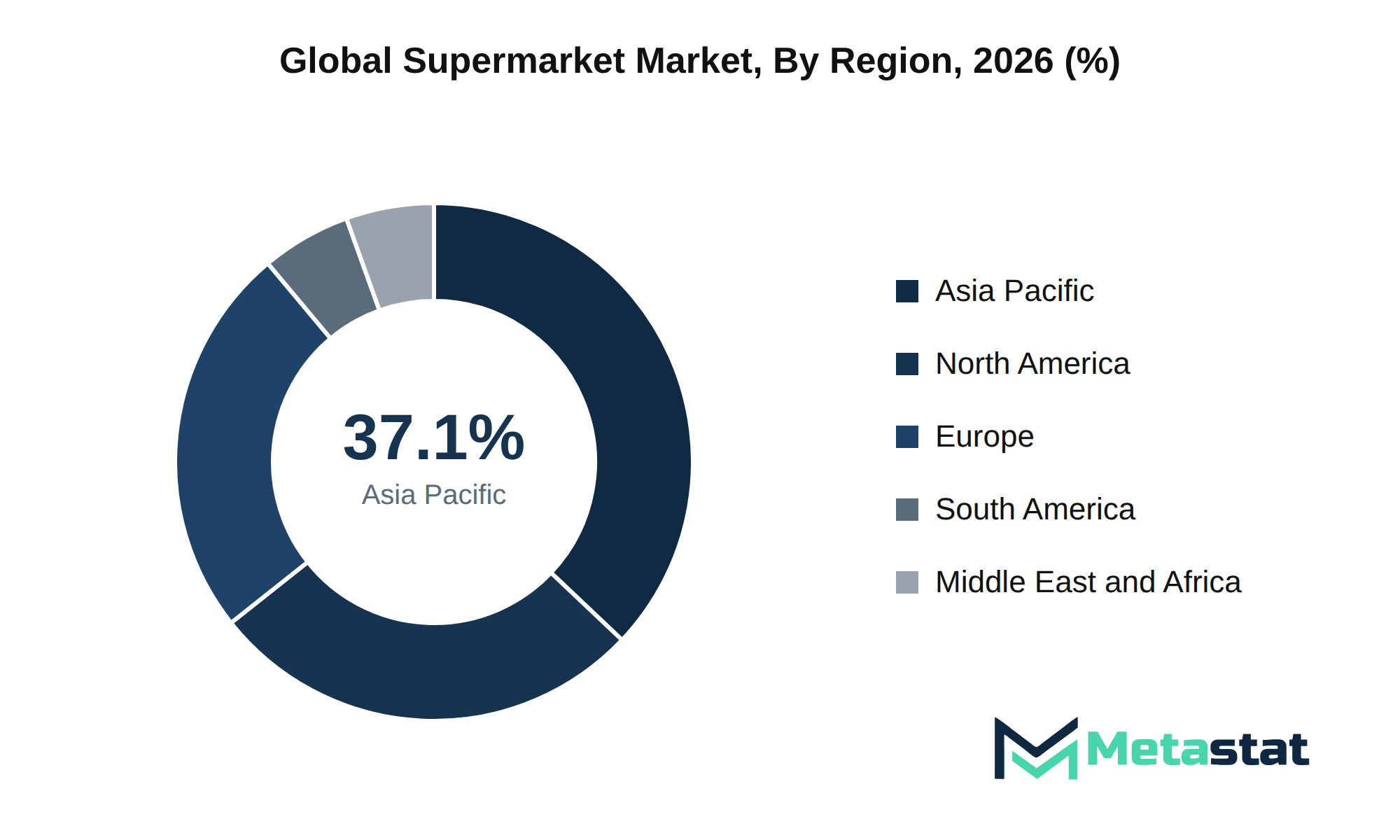
Geographic Lead: The Asia Pacific region is experiencing the fastest growth, fueled by organized retail expansion and rising disposable incomes, which enhance competition and adapt to local consumer demands.
What's Inside: The report provides a comprehensive analysis of market segmentation by product category, ownership model, and store format, along with competitive insights and a forecast extending to 2033.
Market Dynamics: Key market dynamics include rising operating costs, shifting consumer behaviors towards convenience and health, and the impact of urbanization on supermarket expansion.
Choose Your License
Global Supermarket Market
The global Supermarket market was valued at USD 1,705 billion in 2025 and is projected to reach USD 3,244.4 billion by 2033, growing at a CAGR of 8.3% over the forecast period.
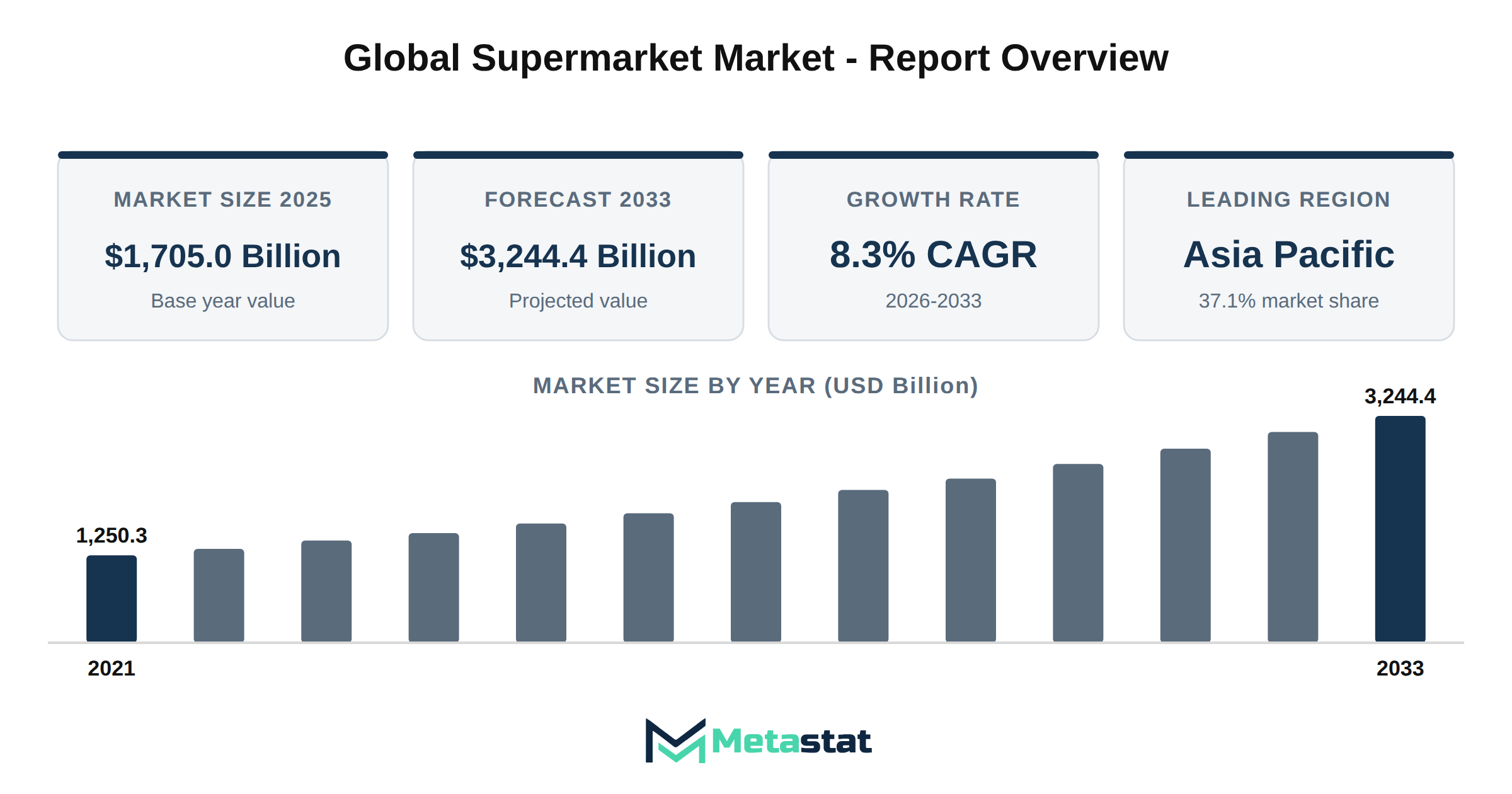
The global Supermarket market shows significant growth potential, with the market projected to expand from USD 1,705 billion in 2025 to USD 3,244.4 billion by 2033, representing a compound annual growth rate (CAGR) of 8.3%. This growth is driven by increasing consumer demand for various product categories, particularly fresh food and perishables, which is expected to rise from USD 563.7 billion in 2026 to USD 944.8 billion by 2033, reflecting a CAGR of 7.7%. The growing focus on health and wellness products further drives supermarket sales, contributing to an evolving product category mix that aligns with changing consumer preferences.
Discount supermarkets experience notable growth, primarily due to value retail expansion strategies that appeal to cost-conscious consumers. This segment is set to capture a larger market share, driven by the demand for affordable grocery options. The compact and neighborhood supermarket format gains traction, catering to urban populations seeking convenience and accessibility. These formats offer a curated selection of essential items, enhancing customer loyalty and repeat visits.
Technological advancements, including AI and automation, play a significant role in enhancing supermarket operations. Retailers increasingly adopt smart checkout systems and digital payment solutions, streamlining the shopping experience and improving operational efficiency. Effective inventory management and supply chain optimization are crucial for maintaining product availability and minimizing waste.
Cold chain development for fresh food supermarkets remains essential, ensuring the safe transportation and storage of perishable goods. This focus on temperature-controlled logistics supports the growing demand for fresh produce and other perishables. Sustainable packaging initiatives and food waste reduction strategies gain importance, with consumers prioritizing environmentally friendly practices.
Energy-efficient supermarket operations and store modernization contribute to reduced operational costs while enhancing the customer experience. Competitive strategies of leading supermarket chains involve mergers, acquisitions, and retail consolidation to strengthen market positions and expand geographic reach. E-commerce integration within traditional supermarket business models transforms the retail landscape, allowing for an efficient shopping experience that caters to consumer preferences for convenience and accessibility.
The Asia Pacific region shows robust supermarket market growth, driven by organized retail expansion and increasing disposable incomes. This regional development enhances a competitive environment, encouraging retailers to adapt to local consumer demands. Overall, the future outlook for the global Supermarket market indicates sustained growth, characterized by innovation and adaptation to evolving consumer trends.
Demand for fresh food and perishables is experiencing significant growth within the supermarket market. Consumers increasingly prioritize quality, freshness, and sustainability in their purchasing decisions. This shift drives supermarkets to enhance their offerings, resulting in an expanding range of fresh produce, dairy products, and meats. The annual revenue from fresh food and perishables is projected to rise from USD 563.7 billion in 2026 to USD 944.8 billion by 2033, achieving a CAGR of 7.7 percent.
Health and wellness products are significantly influencing supermarket sales trends. The growing consumer awareness surrounding nutrition and healthy lifestyles prompts supermarkets to stock an array of health-oriented products, including organic items, supplements, and functional foods. This trend is reflected in the market's overall growth, driven by health and wellness products gaining traction among health-conscious consumers.
Discount supermarkets are experiencing strong growth, driven by the increasing demand for value retail options. Shoppers are seeking budget-friendly alternatives without compromising quality. This trend results in a surge of new discount supermarket openings, expanding their footprint and enhancing market competition. The segment is evolving due to consumers gravitating towards affordable shopping experiences, leading to a broader acceptance of discount formats.
The compact and neighborhood supermarket format is gaining popularity due to consumer preferences for convenience and accessibility. These smaller stores cater to urban populations seeking quick and easy shopping experiences. The growth of this format aligns with the trend towards localism and community-centric retail, resulting in an increase in their market share.
AI and automation technologies are transforming supermarket operations, optimizing inventory management and enhancing customer experiences. These advancements streamline various processes, from supply chain logistics to customer service functions. The integration of automated solutions contributes to cost reductions and efficiency improvements, positively impacting the operational capabilities of supermarkets.
Smart checkout systems and digital payment methods are increasingly adopted in supermarkets, reflecting a shift towards enhanced convenience for consumers. These technologies expedite the shopping process and improve overall customer satisfaction. The ongoing integration of digital payment solutions creates a smooth shopping experience, encouraging higher transaction volumes.
Supermarket inventory management and supply chain optimization remain critical components for operational excellence. Advanced analytics and real-time tracking systems allow supermarkets to maintain optimal stock levels, minimizing waste and maximizing profitability. Efficient inventory management directly influences the bottom line, making it a priority for leading players in the market.
Cold chain development is essential for the effective distribution of fresh food within supermarkets. Investments in sophisticated refrigeration and transportation systems ensure product quality and safety throughout the supply chain. This capability is increasingly crucial because consumer demand for fresh produce continues to rise.
Sustainable packaging and food waste reduction strategies are becoming essential in supermarket operations. Environmental concerns drive supermarkets to adopt eco-friendly packaging solutions and minimize waste through innovative practices. This focus not only addresses consumer preferences but aligns with broader sustainability goals within the retail sector.
Energy-efficient operations and store modernization are key priorities for supermarket chains looking to reduce operational costs. Investments in energy-saving technologies and retrofitting existing stores enhance sustainability and improve long-term profitability. These initiatives reflect a commitment to responsible business practices and operational efficiency.
Competitive strategies among leading supermarket chains include mergers, acquisitions, and retail consolidation, which reshape the market dynamics. These activities facilitate expanded market reach and enhance product offerings, enabling players to respond effectively to evolving consumer preferences. Strategic partnerships and collaborations further strengthen competitive positions within the market.
E-commerce integration within traditional supermarket business models is critical for adapting to changing consumer shopping habits. The rise of online grocery shopping necessitates supermarkets to enhance their digital capabilities. This evolution allows supermarkets to capture a broader customer base and stay competitive in the digital retail environment.
Shifts in product category mix within the supermarket market reflect evolving consumer trends. Increased demand for health-conscious products, ready-to-eat meals, and sustainable goods influences the range of products offered. This diversification enables supermarkets to cater to a broader audience while aligning with consumer preferences.
The Asia Pacific supermarket market is experiencing strong growth, driven by organized retail expansion and urbanization. Rising disposable incomes and changing lifestyles contribute to the increasing demand for modern retail formats. Supermarkets in this region are adapting to local preferences, enhancing their offerings to capture this growing market segment.
The future outlook for the global supermarket market suggests sustained growth, fueled by evolving consumer preferences and technological advancements. Continued investment in innovation, efficiency, and sustainability will shape the competitive dynamics, positioning players for long-term success.

Urbanization significantly influences the growth of the Supermarket market. Rapid migration of populations from rural to urban areas drives higher demand for convenient shopping options. This demographic shift results in increased foot traffic in urban regions, compelling supermarkets to adapt their offerings to meet evolving consumer preferences.
The expansion of urban centers introduces a broader customer base with diverse purchasing power. Supermarkets strategically position themselves in these areas to capture market share, leveraging the growing number of consumers seeking fresh food and perishables, packaged food, and grocery staples. Increased urban living promotes a preference for quick, accessible shopping experiences, enhancing the appeal of supermarkets over traditional grocery stores.
Investment in infrastructure development tailored to urban environments further supports supermarket growth. Improved transportation networks, digital payment technologies, and modernized store formats enhance customer engagement and operational efficiency. Supermarkets that innovate to align with urban consumers' expectations exhibit promising growth trajectories, projected to reach USD 3,244.4 billion by 2033.
Shifting consumer behaviors significantly influence the Supermarket market, driven by evolving preferences that increasingly demand convenience, quality, and sustainability. Factors including lifestyle changes, aging populations, and urbanization lead consumers to seek fresh food and perishables, prompting supermarkets to innovate and adapt their offerings. Enhanced digital engagement and e-commerce platforms align with consumer expectations for efficient shopping experiences, including online ordering and home delivery services.
The market experiences pressure to respond to a more health-conscious consumer base, which prioritizes organic and locally sourced products. This shift drives supermarkets to diversify their product categories, leading to a surge in fresh food offerings and sustainable alternatives. Increased focus on ethical governance and corporate social responsibility initiatives aligns with consumer expectations, motivating supermarkets to implement sustainable practices throughout their supply chains.
Technological integration enables supermarkets to analyze consumer data effectively and tailor their marketing strategies to meet specific needs. Investments in artificial intelligence and automation streamline inventory management and enhance personalized shopping experiences. Overall, these shifting consumer behaviors not only drive innovation within the Supermarket market but present opportunities for growth and competitive differentiation.
Increasing operating costs present a significant restraint for the global Supermarket market. Factors contributing to these rising costs include higher wages, increased utility expenses, and rising costs for goods and services. These pressures force retailers to adjust pricing strategies, impacting profit margins and potentially deterring price-sensitive consumers. While the market changes, operators face challenges in maintaining competitive pricing while managing their cost structures.
Inflationary pressures exert additional strain on supermarket operations. Consumers reduce spending on non-essential items, leading to decreased revenue for supermarkets. This shift in purchasing behavior impacts overall demand within the market, driven by consumers prioritizing essential goods. Retailers manage this delicate balance to sustain growth while adapting to changing economic conditions.
Supply chain disruptions further complicate the operational environment. Challenges in logistics, inventory management, and procurement hinder the ability to maintain steady product availability. Such disruptions lead to stockouts and reduced consumer satisfaction, which ultimately affects loyalty and repeat business. While supermarkets strive to enhance their supply chain resilience, additional investments are necessary, further increasing operational expenditures.
Rising operating costs, inflationary pressures, and supply chain disruptions serve because critical restraints on the growth of the Supermarket market. Addressing these challenges requires strategic planning and resource allocation to maintain competitiveness and consumer engagement in a changing retail environment.
Geopolitical fragmentation presents a significant challenge for the Supermarket market, resulting in supply chain instability. The complexity of international trade relations, including tariff friction and trade deficits, disrupts established supply routes. These disruptions lead to increased costs and delays in receiving goods, impacting pricing strategies and inventory management for supermarkets.
Technological disruptions within the supply chain contribute to inefficiencies. The integration of complex research and development processes demands substantial investment, which strains financial resources. Participants in the market experience heightened operational costs while navigating changing regulations and compliance overhead that vary across regions.
Pricing compression further exacerbates the situation, forcing supermarkets to adapt to fluctuating input costs while maintaining competitive pricing. Workforce skill gaps and automation displacements create additional hurdles, complicating talent acquisition and retention. This dual challenge hampers the ability of supermarkets to innovate and expand effectively.
The market faces rising demands for sustainability, with consumers prioritizing environmentally friendly practices. Supermarkets balance these demands with the realities of operational capabilities and cost structures. The need for sustainable practices influences procurement decisions, potentially leading to higher costs and price increases for consumers.
Ultimately, geopolitical fragmentation and its associated challenges necessitate a strategic approach from stakeholders in the Supermarket market. Addressing these issues will be crucial for maintaining competitiveness and ensuring long-term growth amid an evolving environment.
Emerging regional demands significantly influence the Supermarket market, prompting operators to adapt their offerings. The rise of health-conscious consumers fuels increased demand for fresh food and perishables, compelling supermarkets to enhance their product ranges. Modernization of infrastructure supports the expansion of supply chains, enabling supermarkets to efficiently deliver quality products to meet these consumer preferences. This growing awareness of health and wellness drives supermarkets to diversify their product lines, integrating organic and locally sourced items into their inventories.
Technological disruptions and digital transformation profoundly impact the market, reshaping how supermarkets engage with consumers. Enhanced e-commerce platforms facilitate direct-to-consumer sales, allowing supermarkets to expand their reach beyond traditional brick-and-mortar locations. The integration of advanced analytics enables operators to optimize inventory management, aligning product availability with real-time consumer demand. These digital procurement shifts enhance operational efficiency, reduce waste, and improve profitability across the market.
Emerging trends in sustainability and eco-friendly practices influence market dynamics. Supermarkets increasingly align their operations with environmental, social, and governance (ESG) principles, prioritizing sustainability initiatives throughout their supply chains. This commitment to green transformations attracts environmentally conscious consumers, building brand loyalty and driving sales. The incorporation of eco-friendly packaging and the promotion of sustainable products appeal to modern shoppers, highlighting the strategic importance of sustainability in the market's growth.
Evolving buying behaviors illustrate a shift towards convenience and value. Consumers prioritize one-stop shopping experiences, prompting supermarkets to diversify their formats, including compact and neighborhood stores. This strategic consolidation of product offerings enhances customer satisfaction, positioning supermarkets competitively against other retail formats. The impact of these trends indicates a significant growth trajectory for the Supermarket market, driven by a combination of innovation, sustainability, and consumer-centric strategies.
The Global Supermarket market is segmented based on Product Category, Ownership Model, and Store Format.
Growth in the Fresh Food & Perishables segment highlights evolving consumer preferences for healthier and more sustainable food choices. This shift in consumer behavior drives supermarkets to prioritize fresh and organic products, enhancing their offerings to align with market demands. Valued at USD 563.7 billion in 2026, this segment is projected to reach USD 944.8 billion by 2033, at a CAGR of 7.7% during the forecast period.
Technological advancements contribute to the efficiency of supply chain operations, enabling better inventory management and reducing waste associated with perishable goods. Enhanced logistics practices and real-time tracking capabilities improve the delivery and freshness of products, appealing to health-conscious consumers. These factors stimulate growth within the Supermarket market.
Regulatory compliance, including food safety standards and labeling requirements, influences product offerings and pricing strategies. Adherence to these regulations requires investment in quality assurance processes and training for staff, impacting overall operational costs. Effective navigation of regulatory landscapes builds consumer trust and loyalty, further supporting market growth.
Competition within the Fresh Food & Perishables segment intensifies because retailers seek to differentiate through unique product offerings and localized sourcing. Strategies focused on enhancing the customer experience, including interactive in-store displays and personalized promotions, increase engagement and drive sales. This competitive pressure encourages innovation and investment, leading to a dynamic market ecosystem.
Packaged Food & Grocery Staples segment is estimated to reach USD 853.6 billion by 2033, at a CAGR of 7.6% during the forecast period. Growing consumer reliance on convenience and ready-to-eat meals drives strong demand within this segment. The increasing popularity of packaged foods stems from busy lifestyles that prioritize efficiency, leading to a shift in purchasing habits. Rising disposable incomes among consumers enhance their purchasing power, propelling market growth. Innovations in packaging technology that extend shelf life and improve food safety further enhance product attractiveness.
Regulatory compliance surrounding food safety standards influences the segment, necessitating adherence to health regulations and certifications. These compliance measures increase operational costs for suppliers while enhancing consumer trust. Pricing volatility linked to raw material sourcing creates challenges, influencing profit margins for producers. Strategic opportunity windows arise from the growing trend toward healthier packaged options, driven by consumers shifting toward nutritious and organic products. The segment's resilience against economic fluctuations suggests a robust outlook, reinforcing its position within the broader Supermarket market.
Consumer preference for convenience and ready-to-drink options drives growth in the Beverages segment of the Supermarket market. Increased health consciousness has shifted demand toward healthier beverage choices, including plant-based drinks and functional beverages that offer additional health benefits. Retailers are expanding their product lines to include these trending offerings, aligning with consumer interests in wellness and nutritional value.
Market expansion in this segment is fueled by innovative product development, including the introduction of new flavors and formulations that cater to diverse consumer tastes. Companies invest in research and development to enhance product appeal, ensuring relevance in a competitive landscape. This approach supports steady revenue growth and enhances brand loyalty.
Distribution strategies evolve to accommodate changing consumer shopping habits, with e-commerce platforms significantly increasing market reach. Traditional supermarkets adapt by enhancing their online presence, thus facilitating improved access to a broader range of beverages. This shift to online sales channels allows for heightened consumer engagement and drives sales growth.
Regulatory compliance remains a critical factor influencing production and marketing strategies within the beverages market. Companies adapt to maintain adherence to health and safety standards, which influences pricing strategies. Cost structures reflect the need for compliance, driven by investments in quality assurance and sustainable sourcing that become essential for long-term success.
Growth in the Beverages segment is expected to reach USD 404.3 billion by 2033. This figure reflects the segment's resilience, driven by continuous innovation, changing consumer preferences, and effective marketing strategies aimed at capturing emerging trends within the Supermarket market.
Growth in the Household Cleaning & Home Care segment aligns with increasing consumer awareness regarding hygiene and cleanliness standards. This awareness drives demand for products that effectively address various cleaning needs in residential and commercial environments. Rising health concerns, particularly in the post-pandemic era, have prompted consumers to prioritize cleanliness, leading to greater purchasing of home care products.
Product evolution remains essential for expanding market reach. Innovations in formulations, packaging, and product usability enhance consumer experience, compelling manufacturers to invest in research and development. The shift towards eco-friendly products has led to an increase in demand for sustainable and biodegradable cleaning solutions, which aligns with growing environmental consciousness among consumers.
The segment is projected to grow at a CAGR of 8.1% during the forecast period. This expansion reflects a strategic opportunity window for companies targeting eco-conscious consumers and those seeking enhanced cleaning efficiency. Regulatory compliance standards have influenced product development, driven by brands aiming to meet stringent safety and environmental regulations without sacrificing performance.
Pricing volatility in raw materials presents challenges for manufacturers, necessitating strategic procurement practices. Fluctuations in raw material costs impact profit margins, compelling companies to adopt more resilient supply chain strategies. Ensuring consistent product quality while managing costs remains crucial for maintaining competitiveness in the market.
Disruptive alternatives, including multi-purpose cleaning products, contribute to evolving consumer preferences and influence purchasing decisions. While consumers increasingly seek convenience, products that serve multiple functions capture greater market share. This trend necessitates continuous monitoring of market dynamics to adapt product offerings effectively and meet changing consumer needs.
Overall, the Household Cleaning & Home Care segment within the Supermarket market presents significant growth potential driven by shifting consumer behaviors, product innovations, and regulatory compliance. Companies that adapt to these trends are well-positioned to capture emerging opportunities and drive revenue growth.
Increasing awareness regarding personal hygiene significantly drives demand within the Personal Care & Hygiene segment. Consumers prioritize health and wellness, leading to higher adoption of various personal care products. This shift aligns with a growing focus on maintaining hygiene standards in daily life, particularly following recent global health challenges.
Demand for innovative products in the segment drives continuous evolution and expansion. Manufacturers invest in research and development to introduce next-generation upgrades that cater to changing consumer preferences. The emergence of eco-friendly and sustainable personal care products responds to the rising environmentally conscious consumer base, enhancing market dynamics.
Regulatory compliance remains crucial for product acceptance in the market. Adherence to strict safety and quality standards ensures consumer trust and facilitates smoother market entry for new products. Price volatility and margin pressures influence manufacturers' strategies, compelling them to optimize supply chains while maintaining product integrity.
Supply chain resilience supports sustained growth during raw material sourcing challenges. The industry's ability to adapt to market fluctuations and manage logistics vulnerabilities determines the competitive landscape. Strategic investment opportunities arise through the development of innovative solutions that address consumer needs while navigating disruptive alternatives.
The evolving landscape of personal care products presents significant potential for growth. Consumption shifts towards multifunctional and premium products reflect changing consumer behaviors. The market attracts investments, with emphasis placed on technological advancements and product differentiation to meet the diverse needs of consumers.
Overall, the Personal Care & Hygiene segment exhibits strong growth prospects within the Supermarket market, driven by demand for innovative products and responsiveness to evolving consumer preferences.
Growing consumer awareness regarding health and wellness significantly drives demand for Health & Wellness Products within the Supermarket market. This segment benefits from an increasing focus on preventive healthcare, leading consumers to prioritize products that support a healthier lifestyle.
Adoption of health-focused products accelerates owing to rising disposable incomes and a shift in consumer preferences toward products perceived because beneficial for personal well-being. Retailers expand their offerings to include organic, natural, and fortified products, catering to evolving consumer demands.
Technological advancements in product formulation and packaging contribute to segment growth, with innovations that enhance product efficacy and convenience. Enhanced marketing strategies highlighting health benefits engage consumers and drive sales in the market.
Regulatory compliance shapes product offerings, with stringent guidelines ensuring product safety and efficacy. Brands that achieve relevant certifications gain a competitive edge, further influencing consumer trust and purchasing decisions.
Overall, the Health & Wellness Products segment within the Supermarket market reflects a dynamic combination of consumer trends, regulatory frameworks, and product innovations, positioning it for ongoing expansion and evolution.
Consumer spending on Pet Food & Pet Care reflects a growing interest in pet ownership and well-being. Factors driving demand encompass an increasing number of households with pets, alongside heightened awareness regarding animal nutrition and health. The trend toward premium and organic pet products influences purchasing decisions, particularly among younger consumers who prioritize quality.
Adoption of advanced technologies in pet food production enhances product quality and variety, leading to innovative formulations that cater to specific dietary needs. Manufacturers invest significantly in research and development to create products that address health concerns including obesity, allergies, and age-related issues, aligning with broader trends in health and wellness.
Regulatory compliance related to food safety standards impacts product formulations and marketing strategies. Companies face pressure to ensure transparency and sustainability throughout their supply chains while adhering to evolving regulations. These dynamics create strategic opportunities for businesses that prioritize compliance and ethical sourcing.
Pricing volatility poses challenges within the Pet Food & Pet Care segment, driven by fluctuations in raw material costs and supply chain disruptions. Such factors affect profit margins and compel retailers to adjust pricing strategies to maintain competitiveness. Firms that balance quality with cost-effectiveness position themselves favorably in the market, navigating price sensitivity among consumers.
Strategic investments in marketing and distribution channels facilitate the reach of pet care products to diverse consumer segments. E-commerce platforms gain prominence, offering convenience and accessibility for pet owners seeking a wide range of products. This shift in purchasing behavior contributes to the overall growth of the Supermarket market, reflecting the necessity for retailers to adapt to changing consumer preferences.
Consumer interest in General Merchandise has gained momentum due to evolving shopping habits and preferences for one-stop shopping solutions. Supermarkets increasingly focus on offering a diverse range of general merchandise products to enhance the shopping experience, driving foot traffic and increasing sales. Integration of technology in retail environments supports enhanced inventory management and customer engagement, improving accessibility to general merchandise offerings. Product innovation within the General Merchandise segment addresses shifting consumer needs, including eco-friendly products and smart home devices. A growing demand for sustainable options influences purchasing decisions, prompting supermarkets to expand their merchandise assortments to include environmentally friendly products. Regulatory compliance standards play a critical role in shaping product offerings within the segment. Adherence to safety regulations and certifications is essential for ensuring consumer confidence, directly impacting purchasing behavior. Pricing volatility remains a challenge, affecting profit margins for supermarkets. Strategic pricing strategies, including promotions and loyalty programs, are essential for maintaining competitive advantages in the market. Supply chain resilience is vital for ensuring consistent availability of general merchandise. Robust relationships with suppliers, along with effective logistics management, mitigate risks associated with disruptions. Continuous investment in technology and infrastructure enhances operational efficiency, ultimately contributing to the growth of the General Merchandise segment within the Supermarket market.
Corporate-Owned Chains segment is valued at USD 990.7 billion in 2026 and is projected to reach USD 1,844.1 billion by 2033, at a CAGR of 9.3% during the forecast period. This segment benefits from a strong consumer preference for convenience and efficiency, driving retailers to adopt advanced technologies and streamline operations. Enhanced inventory management, data analytics, and customer engagement strategies further contribute to market expansion. Corporate-owned chains leverage economies of scale, which improve pricing strategies and enhance profitability.
Investment in next-generation upgrades, including automation and e-commerce capabilities, positions corporate-owned chains to respond effectively to shifting consumer demands. The trend towards omnichannel retailing allows these chains to cater to diverse customer preferences, emphasizing the importance of efficient shopping experiences. While consumers increasingly prioritize convenience and accessibility, corporate-owned chains continue to evolve their service offerings, which ensures competitive positioning within the Supermarket market.
Regulatory compliance standards impact operational strategies, necessitating continuous investment in sustainable practices and supply chain resilience. This focus on compliance enhances brand reputation, attracting environmentally conscious consumers and driving loyalty. Corporate-owned chains are well-equipped to navigate these challenges, leveraging extensive resources and established supply chains to mitigate risks associated with pricing volatility and market fluctuations.
Overall, the corporate-owned chains segment demonstrates robust potential for growth within the Supermarket market, supported by strategic investments and a commitment to meeting evolving consumer demands. The trends outlined highlight significant opportunities for stakeholders within this segment, particularly in the context of technological advancement and changing market dynamics.
Increasing interest in local produce and sustainable sourcing significantly influences the Retail Cooperatives & Member-Owned Networks segment. This segment benefits from a strong consumer preference for community-based shopping experiences, where shoppers prioritize supporting local businesses and initiatives. A focus on fresh, locally-sourced products aligns with broader trends in health and wellness, drawing more customers to these cooperatives.
Growth is projected, with the Retail Cooperatives & Member-Owned Networks segment estimated to reach USD 428.6 billion by 2033, at a CAGR of 7.9% during the forecast period. Expansion initiatives across various regions, particularly in North America and Europe, support this growth. These cooperatives often provide unique offerings that align with regional tastes and preferences, allowing them to capture a larger market share.
Technological advancements play a critical role in segment growth. Increased adoption of digital platforms enables better inventory management and customer engagement, enhancing the overall shopping experience. The integration of online shopping and delivery services addresses changing consumer behaviors, positioning cooperatives competitively within the Supermarket market.
Efforts to improve operational efficiencies contribute to profitability. By leveraging group purchasing power, member-owned networks reduce costs while maintaining product quality, which enhances pricing strategies. This approach enables members to offer competitive pricing without compromising service excellence or product selection.
Regulatory compliance remains essential within this segment. Adhering to local food safety standards and sourcing regulations ensures product integrity, building consumer trust. While the market evolves, cooperatives that align with sustainable practices and transparency in sourcing are likely to attract a more extensive customer base.
Franchise & Affiliated Retail Networks represent a dynamic segment within the Supermarket market, projected to reach USD 413 billion by 2033. This growth results from several primary demand drivers, including increased consumer appetite for brand recognition and the convenience of established retail networks. Adoption of this model is fueled by the expansion of regional players seeking to capitalize on local market preferences while benefiting from the credibility that franchise associations provide.
Market expansion is driven by technological maturation, allowing for enhanced operational efficiencies and streamlined supply chains within franchise systems. Next-gen upgrades, including advanced point-of-sale technologies and customer relationship management systems, facilitate better inventory management and customer engagement, which are critical in maintaining competitive advantages. Product evolution across various categories, including Fresh Food, Packaged Goods, and Beverages, aligns with shifting consumer preferences toward quality and variety.
Shifts in consumer consumption toward more personalized shopping experiences further drive growth within this segment. Franchise models offer flexibility and adaptability, enabling retailers to respond effectively to these changing demands. Regulatory compliance standards continue to shape operational frameworks, ensuring that franchisees adhere to policies that maintain quality and safety in food retailing. Margin pressures stemming from rising operational costs emphasize the importance of strategic partnerships and sourcing agreements to enhance profitability.
Technological obsolescence poses a continuous challenge, necessitating investment in innovative solutions to remain competitive. Strategic opportunity windows arise from market demands for competitive pricing and enhanced customer experiences. Capital investment in infrastructure and training for franchise networks ensures resilience and responsiveness to market dynamics, creating a robust environment for growth within the Franchise & Affiliated Retail Networks segment.
Independent supermarkets continue to adapt to shifting consumer preferences. Growing demand for personalized shopping experiences contributes to their sustained relevance in the market. These retailers excel in providing localized products and tailored customer engagement, enhancing customer loyalty while differentiating themselves from larger corporate chains.
This segment is projected to grow at a CAGR of 5.4% during the forecast period, reflecting ongoing opportunities for expansion. While consumers seek fresh and unique offerings, independent supermarkets are well-positioned to satisfy this demand. Their ability to build strong relationships with local suppliers creates unique product assortments that attract health-conscious and community-oriented shoppers.
Pricing pressures from large retailers challenge independent supermarkets; however, their emphasis on quality service and local sourcing mitigates competitive disadvantages. The market evolves, with independent retailers leveraging technology to improve operational efficiency and streamline inventory management, further strengthening their market position.
Strategic investments in next-generation upgrades, including improved online presence and delivery options, enhance accessibility for consumers. Such advancements in service delivery reflect a broader trend within the supermarket market, where convenience and customer experience drive growth. Independent supermarkets contribute to this dynamic by adapting their offerings to meet consumer demands, reinforcing their place in the competitive landscape.
Valued at USD 704.1 billion in 2026, Full-Service Supermarkets are projected to reach USD 1,171.9 billion by 2033, at a CAGR of 7.5% during the forecast period. This segment benefits from rising consumer demand for convenience and a wide range of products in a single shopping trip. Increased urbanization drives foot traffic to these supermarkets, enhancing sales volumes.
Adoption of technology solutions, including self-checkout systems and mobile payment options, streamlines the shopping experience, attracting tech-savvy consumers. Full-Service Supermarkets often implement data analytics to optimize inventory management and improve customer service, further reinforcing their competitive edge.
Product offerings in this segment have evolved to include organic and locally sourced items, tapping into the growing consumer preference for health-conscious choices. Full-Service Supermarkets play a critical role in the evolving landscape of the Supermarket market by catering to diverse consumer needs and adapting to trends in food consumption.
Regulatory compliance standards regarding food safety and quality continue to shape operational practices within this segment. Supermarkets invest in certifications that assure consumers of product integrity, which in turn enhances brand loyalty and market positioning.
Cost structures within Full-Service Supermarkets reflect pressures from rising operational expenses and supply chain challenges. Effective pricing strategies are essential to navigate these costs while maintaining profitability. Balancing these pressures is crucial for long-term growth and stability within the market.
Strategic opportunity windows arise from consumer shifts towards experiential shopping and personalized services. Full-Service Supermarkets that leverage these opportunities enhance customer engagement and retention. This adaptability positions the segment favorably to capitalize on emerging trends, ensuring sustained demand and revenue growth.
Market expansion in the Hypermarkets & Supercenters segment benefits from consumer preferences for one-stop shopping experiences. Rising demand for diverse product offerings, including groceries, household goods, and personal care items, fuels the segment's growth. Hypermarkets and supercenters serve because convenient shopping destinations, allowing consumers to fulfill multiple needs in a single trip, enhancing customer loyalty and frequency of visits.
Technological advancements contribute significantly to the segment's evolution. Retailers implement next-gen upgrades including self-checkout systems and mobile payment solutions, improving overall customer experience. Integration of data analytics enables hypermarkets to optimize inventory management, ensuring stock availability aligns with consumer demand patterns. Enhanced operational efficiency translates to cost savings, positively impacting profit margins.
Changes in consumer behavior, particularly the shift towards convenience-driven shopping, play a crucial role in segment dynamics. Increased reliance on digital platforms for shopping influences the presence of hypermarkets in e-commerce spaces. This adaptation not only attracts tech-savvy consumers but enhances reach in untapped markets, broadening the customer base.
Regulatory compliance standards and operational costs present challenges for the segment. Retailers face pressures from government regulations regarding food safety, labor practices, and environmental sustainability. Navigating these regulations requires substantial investment in compliance measures, impacting overall profitability. However, retailers that exceed these standards improve their brand reputation, attracting more environmentally conscious consumers.
Hypermarkets & Supercenters segment is estimated to reach USD 987.6 billion by 2033, at a CAGR of 7.7% during the forecast period. This growth reflects the segment's resilience and adaptability in a rapidly changing retail environment. Strategic opportunity windows exist for retailers to innovate and enhance customer engagement, strengthening positions within the competitive landscape of the supermarket market.
Increasing demand for value-oriented shopping options drives the growth of discount supermarkets. Consumers facing economic pressures seek affordable alternatives, propelling expansion within this segment. Discount supermarkets provide a broad assortment of products at competitive prices, attracting cost-conscious shoppers.
The discount supermarkets segment is projected to reach USD 620 billion by 2033. This growth results from a combination of strategic pricing, efficient supply chains, and the ability to offer essential goods, enhancing customer loyalty and repeat visits. Retailers in this segment continuously adapt their offerings to align with shifting consumer preferences.
In a landscape characterized by changing consumption patterns, discount supermarkets play a critical role in the supermarket market. The segment benefits from technological advancements that streamline operations, optimize inventory management, and enhance customer shopping experiences. Retailers implementing next-generation upgrades strengthen their market positions.
Regulatory compliance and food safety standards influence product offerings in discount supermarkets. Adherence to these standards ensures consumer trust while creating operational efficiencies. Economic dynamics and market volatility require retailers to maintain flexible pricing strategies, allowing them to respond effectively to external pressures.
Discount supermarkets continue to capture an increasing share of the market through strategic opportunity windows, focusing on expanding their footprint in urban areas. Enhanced marketing strategies and targeted promotions further support growth within this segment. Competition among players encourages innovation, shaping the future of discount supermarkets because a vital component of the supermarket market.
Expansion of Compact & Neighborhood Supermarkets aligns with shifting consumer preferences for convenience and accessibility. These formats cater to urban populations seeking quick access to essential goods, contributing significantly to their increasing popularity. Compact store designs, offering a diverse range of products, facilitate customer retention through a straightforward shopping experience.
Consumer demand for fresh food and perishables drives growth in this segment, prompting supermarkets to enhance product offerings and optimize inventory management. The segment is projected to grow at a CAGR of 10.4% during the forecast period. Retailers focus on local sourcing and personalized customer service to strengthen brand loyalty and differentiate in the market.
Technological advancements play a crucial role in segment growth. Investments in e-commerce platforms and mobile applications enhance customer engagement, enabling supermarkets to meet the digital shopping trend. Data analytics allows for a better understanding of consumer behaviors, assisting in tailored marketing strategies and inventory control. This segment benefits from these developments.
Regulatory compliance regarding food safety and health standards influences operational strategies within Compact & Neighborhood Supermarkets. Adherence to these regulations ensures consumer trust, essential for maintaining market share. Cost structures adapt to these regulations, with increased compliance costs pressuring margins.
Strategic opportunity windows arise from the evolving retail landscape, where urbanization and changing consumer lifestyles create demand for more localized shopping solutions. Compact formats represent a significant focus area in the Supermarket market, with potential for further investment and development.
Based on geography, the Global Supermarket market is divided into North America, Europe, Asia-Pacific, South America, Middle East, and Africa.
North America presents a significant opportunity within the Supermarket market, driven by evolving consumer preferences and convenience-driven shopping behaviors. The region's market is set to expand at a CAGR of 8.3% within the forecast period, reaching a market size (TAM) of USD 839 billion by the end of 2033. The presence of leading retailers including Walmart, Kroger, and Costco reflects a competitive landscape focused on delivering value and variety to consumers across the United States, Canada, and Mexico.
This expansion is supported by robust infrastructure and increasing investment in modernization across supermarket formats. Evolving demographics and consumer trends influence the growth of product categories, particularly in fresh food, perishables, and packaged goods. Retailers adopt innovative strategies to enhance customer engagement and streamline operations, aligning with regional preferences and trends.
Emerging market front-runners leverage localized procurement dynamics, adapting to cultural nuances and regional B2B buying behaviors. The competitive landscape features a mix of corporate-owned chains and independent supermarkets, each striving to capture market share through differentiated offerings and tailored shopping experiences. This dynamic creates an environment conducive to growth, positioning North America because a critical driver in the global Supermarket market.
The Supermarket market in Europe represents a significant portion of the global landscape, accounting for 24.6% share in 2025. Several countries, including Germany, France, the UK, Italy, Spain, and Russia, contribute to this robust market performance.
Consumer preferences in this region increasingly favor fresh food options, driving expansion within the Fresh Food & Perishables segment. The rising health consciousness among consumers supports the demand for organic and locally sourced products, enhancing growth prospects for supermarkets prioritizing these offerings.
Corporate-Owned Chains are positioned prominently in Europe, with competitive strategies focusing on technological enhancements and customer experience. The ongoing integration of digital solutions in supermarkets boosts operational efficiency and enhances customer engagement, which is vital for maintaining market relevance.
Localized procurement dynamics play a crucial role in shaping supply chains, allowing supermarkets to respond swiftly to changing consumer demands. This adaptability contributes to effective inventory management, reducing waste and aligning product offerings with consumer preferences.
The competitive landscape features established players alongside emerging market entrants, which intensifies competition. Domestic market leaders leverage brand loyalty and established supply networks, while new entrants introduce innovative retail formats and products, enhancing market dynamism.
Infrastructure modernization initiatives across the region facilitate improved logistics and distribution networks. Investments in technology and automation streamline operations, further enhancing the position of the Supermarket market in Europe, driven by an essential component of the retail sector.
Driving factors in the Asia-Pacific region include a rapidly growing middle class and urbanization, which enhance consumer purchasing power. The cultural preference for fresh food and perishables supports strong demand for this product category. Countries including China and India demonstrate significant growth potential, given their large populations and evolving retail landscapes.
Infrastructure modernization plays a critical role in improving distribution channels and access to quality products. Retailers invest in technology and logistics to create a more efficient supply chain, aiding in segment expansion. Increased competition within the region encourages firms to innovate and diversify their offerings to meet consumer preferences.
China, Japan, and India lead the market, each contributing to the overall growth trajectory. The market in this region is projected to expand significantly, with an anticipated value of USD 3,244.4 billion by 2033. Emerging markets within Southeast Asia exhibit strong potential due to rising disposable incomes and changing shopping habits.
Localized procurement dynamics influence product availability and pricing strategies. Supermarket players adapt to cultural nuances by incorporating regional products into their offerings, enhancing customer satisfaction. This approach builds loyalty and drives repeat business.
Investment in foreign direct investment (FDI) flows strengthens the market’s position, allowing for growth in underpenetrated territories. Increased competition from domestic market participants pushes companies to refine their strategies, enhancing overall operational performance and market share.
South America represents an emerging market within the Supermarket market, characterized by significant growth potential driven by urbanization and a growing middle class. Brazil and Argentina dominate the regional landscape, with Brazil accounting for USD 1,004.1 million of supermarket sales. The region's market growth is fueled by a shift towards organized retail formats, which offer convenience, variety, and competitive pricing.
Retailers in South America increasingly focus on modernizing their supply chains and enhancing customer experiences through technology adoption. This drive towards efficiency aligns with consumers who seek quality products and services. Localized procurement strategies are gaining traction, aligning with consumers' preferences for fresh and regional produce.
Infrastructure development continues to play a crucial role in supporting the expansion of the supermarket sector. Investments in logistics and distribution capabilities enhance product availability and accessibility across diverse geographic areas. The market remains underpenetrated relative to global standards, presenting opportunities for new entrants and existing players to capture market share.
Cultural nuances and regional buying behaviors shape competitive dynamics, with local market participants adapting to consumer trends and preferences. The Supermarket market in South America continues to evolve, influenced by demographic shifts and a growing emphasis on sustainability and health-oriented products.
The Middle East and Africa region holds a share of 5.5% in the Supermarket market for 2025. The evolving consumer landscape, characterized by a growing preference for convenience and quality, drives market adoption. Enhanced urbanization rates in cities including Riyadh and Dubai contribute to increased demand for modern retail formats, including hypermarkets and full-service supermarkets.
Saudi Arabia and the UAE lead in market growth within this region, supported by significant investments in infrastructure modernization and retail expansion. Retail cooperatives and member-owned networks gain traction, reflecting changing consumer behaviors that favor community-oriented shopping experiences.
In South Africa, local compliance mandates and trade policy shifts influence competitive dynamics, leading to the emergence of domestic market participants who adapt to regional preferences. The market experiences incremental growth through localized procurement dynamics and cultural nuances that shape B2B buying behaviors.
Geopolitical factors and cross-border trade corridors affect supply chain regionalization and the establishment of localized manufacturing densities. This strategic positioning enhances operational efficiency and responsiveness to market demands, contributing to the overall growth of the supermarket sector in the region.
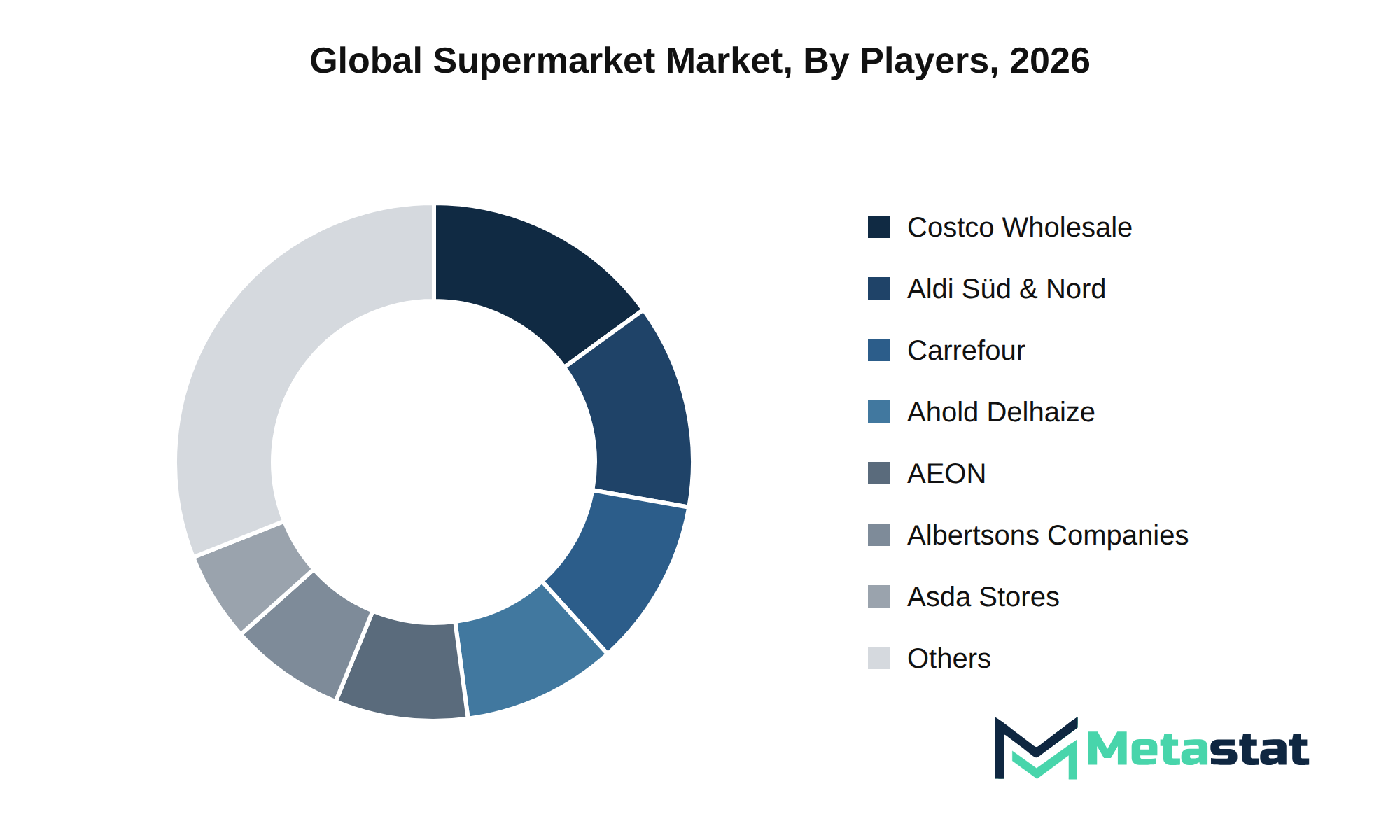
The Supermarket market features a dynamic competitive landscape characterized by various strategic behaviors among key players. Companies including AEON Co., Ltd., Ahold Delhaize N.V., and Aldi Süd & Nord focus on mergers and acquisitions to consolidate market presence and enhance operational efficiency. This strategic consolidation allows firms to leverage synergies and optimize supply chains, resulting in improved cost management and service delivery.
Pricing architectures and go-to-market strategies vary significantly across the market. Players like Walmart Inc. and Costco Wholesale Corporation employ aggressive pricing models to attract price-sensitive consumers, ensuring customer retention and brand loyalty. Premium retailers including E.Leclerc Movement (GALEC) and Carrefour S.A. differentiate their offerings through product innovation and enhanced customer service, which supports higher margins and customer satisfaction.
Collaborations and strategic alliances play a significant role in expanding market reach. Companies engage in joint ventures and partnerships to leverage cross-industry expertise, enhancing their competitive position and enabling access to new markets. The threat of new entrants remains a crucial consideration, influencing established players to strengthen brand equity and invest in proprietary technology to maintain market dominance, which protects their market share.
Future competitive outlook in the Supermarket market hinges on adapting to consumer trends and technological advancements. Companies are anticipated to explore innovative solutions and integrate value chains to improve procurement leverage, which will enhance operational efficiency. Defensive imperatives, including enhancing customer experience and navigating regulatory landscapes, will shape strategic growth vectors across the market, ensuring long-term sustainability and competitiveness.
Market size is forecast to rise from USD 1,705 billion in 2025 to over USD 3,244.4 billion by 2033. This growth trajectory reflects a compound annual growth rate (CAGR) of 8.3%. Various factors contribute to this positive outlook, including macroeconomic conditions, evolving consumer demands, and technological advancements.
Robust economic recovery and increasing disposable incomes drive higher spending on groceries and related products, supporting the bull case for the supermarket market. Structural consumption shifts towards convenience and health-conscious options suggest sustained demand, particularly for fresh food and perishables. Investment in next-generation technologies enhances operational efficiencies and customer experiences, further supporting growth.
Potential challenges outlined in the bear case include economic downturns impacting consumer spending, regulatory changes affecting supply chains, and geopolitical tensions disrupting trade corridors. If these factors materialize, growth in the supermarket market faces constraints, leading to a cautious outlook.
Strategic capital allocation towards infrastructure and technology enhancement remains essential for players in the supermarket market. Companies prioritizing innovation and adapting to changing consumer preferences are likely to capture emerging white-space opportunities, positioning themselves for future growth.
The report strategically identifies and profiles the key market players and analyses their core competencies in each sub-segment of the Supermarket market.
Report Attributes | Details |
Study Period | 2021-2033 |
Base Year | 2025 |
Estimated Year | 2026 |
Forecast Period | 2026-2033 |
Historical Period | 2021-2025 |
Growth Rate | CAGR 8.3% from 2026 to 2033 |
Revenue Unit | USD billion |
Segmentation | By Product Category, Ownership Model, Store Format, and Region |
By Region | North America (By Product Category, Ownership Model, Store Format, and Country)
|
Europe (By Product Category, Ownership Model, Store Format, and Country)
| |
Asia Pacific (By Product Category, Ownership Model, Store Format, and Country)
| |
South America (By Product Category, Ownership Model, Store Format, and Country)
| |
Middle East and Africa (By Product Category, Ownership Model, Store Format, and Country)
|
Find answers to common questions about this report
The Supermarket market size was valued at USD 1,705 billion in 2025.
The Supermarket market is projected to grow at a CAGR of 8.3% during the forecast period from 2026 to 2033.
The North America Supermarket market size is estimated to reach USD 839 billion by 2033.
The leading segment in the Supermarket market is Corporate-Owned Chains, with a projected value of USD 1,844.1 billion by 2033. This segment exhibits the highest growth rate among ownership models, with a compound annual growth rate of 9.3%.
Urbanization significantly drives the Supermarket market, because population migration to urban areas increases demand for convenient shopping options. Shifting consumer behaviors, including preferences for fresh food, quality, and sustainability, further influence market growth, prompting supermarkets to innovate and adapt their offerings to meet these evolving expectations.
Increasing operating costs, inflationary pressures, and supply chain disruptions significantly restrain growth in the Supermarket market. Rising wages, higher utility expenses, and logistics challenges reduce profit margins and impact consumer spending on non-essential items. These factors necessitate strategic planning to maintain competitiveness in a changing retail environment.
Shifting consumer behaviors favor product adoption in the Supermarket market. Increasing demand for convenience, quality, and sustainability drives supermarkets to innovate their offerings, particularly in fresh food and perishables. Enhanced digital engagement and e-commerce platforms align with consumer expectations for efficient shopping experiences, facilitating greater product adoption.
The Supermarket market is estimated to reach a valuation of USD 3,244.4 billion by 2033.
Key players operating in the Supermarket market include AEON Co., Ltd., Ahold Delhaize N.V., Aldi Süd & Nord, Carrefour S.A., Costco Wholesale Corporation, Kroger Co., and Lidl Stiftung & Co. KG.
Corporate-Owned Chains are projected to grow at a CAGR of 9.3% from USD 990.7 billion in 2026 to USD 1,844.1 billion by 2033.
The analysts below cover Food and Beverages research at Metastat Insights.
LEAD ANALYST
Utkarsh Khirodkar is a Lead Market Research Analyst at MetaStat Insight, specializing in market intelligence, technology sector assessments, and competitive strategy.

LEAD PRINCIPAL ANALYST, PHARMA AND HEALTHCARE
Food and Beverages · Healthcare · Healthcare IT · Medical Devices
Ajay Devgire is the Lead Healthcare Analyst at MetaStat Insight, leading strategic research and market intelligence initiatives across the global healthcare domain.

SENIOR RESEARCH ANALYST
Biotechnology · Food and Beverages · Medical Devices · Packaging
Snehal Pasalkar is a Research Analyst at MetaStat Insight, operating at the intersection of life sciences research, competitive strategy, and market intelligence.
Our team was tracking whether regional recycling infrastructure could realistically absorb the growing volume of lithium iron phosphate batteries over the next decade. The report did a solid job separating announced hydrometallurgical plant capacity from active, permitted operational throughput. That distinction made the feedstock availability projections and regional recovery rate models far more credible than standard commercial overviews.
Tracking capacity expansion in single-use bioprocessing requires dependable data on raw material availability and cleanroom-grade polymer supply chains. The competitive landscape chapter gave a grounded evaluation of secondary component suppliers across North America and Asia-Pacific rather than simply reprinting press releases. Having that level of supplier benchmarking helped clarify dual-sourcing considerations for our clinical pipeline planning.
When evaluating distributed energy resource management systems, standard research summaries tend to gloss over the operational differences between front-of-the-meter utility deployments and behind-the-meter industrial sites. The MetaStat Insight report addressed those distinctions directly, especially regarding software interoperability standards and grid interconnection backlogs. The five-year market sizing across regional transmission organizations provided actionable context for our grid modernization strategy.
Explore related market intelligence reports worth reading alongside this one.