
LEAD ANALYST
Utkarsh Khirodkar is a Lead Market Research Analyst at MetaStat Insight, specializing in market intelligence, technology sector assessments, and competitive strategy.

South Korea Tequila Market Size, Share, By Product Class (Blanco Tequila, Reposado Tequila, Añejo Tequila, Extra Añejo Tequila and Others (Gold Tequila, Cristalino Tequila)), By Purity Type (100% Agave Tequila and Mixto Tequila), By Grade (Value, Premium, High-End Premium and Super Premium), By Distribution Channel (On-Trade and Off-Trade), Industry Analysis, Growth, Trends, and Forecast, 2026-2033
Report ID
MSI-5386
Published
September, 2026
Pages
292 Pages
Format
Historical
Base year
Forecast
Forecast period
Report Details
Market Valuation: Valued at $136.6 Million in 2025, projected to reach $290.7 Million by 2033 at a 9.9% CAGR.
Dominant Segment: Blanco Tequila leads the South Korea Tequila market, driven by a rising consumer preference for clear spirits and their mixability in cocktails. This segment is projected to grow significantly, appealing particularly to younger demographics.
Geographic Lead: Urban areas in South Korea are experiencing the fastest growth in tequila consumption, influenced by lifestyle changes and increased social activities among young professionals. This urbanization trend enhances product visibility and accessibility.
What's Inside: The report provides a comprehensive analysis of the South Korea Tequila market, including competitive coverage, market dynamics, and detailed forecasts from 2026 to 2033. It explores various segments such as product class, purity type, and distribution channels.
Market Opportunity: Technological innovations and digital transformations present significant opportunities in the South Korea Tequila market. Brands can leverage these advancements to enhance product quality and expand their reach to younger consumers through online platforms.
Choose Your License
South Korea Tequila Market
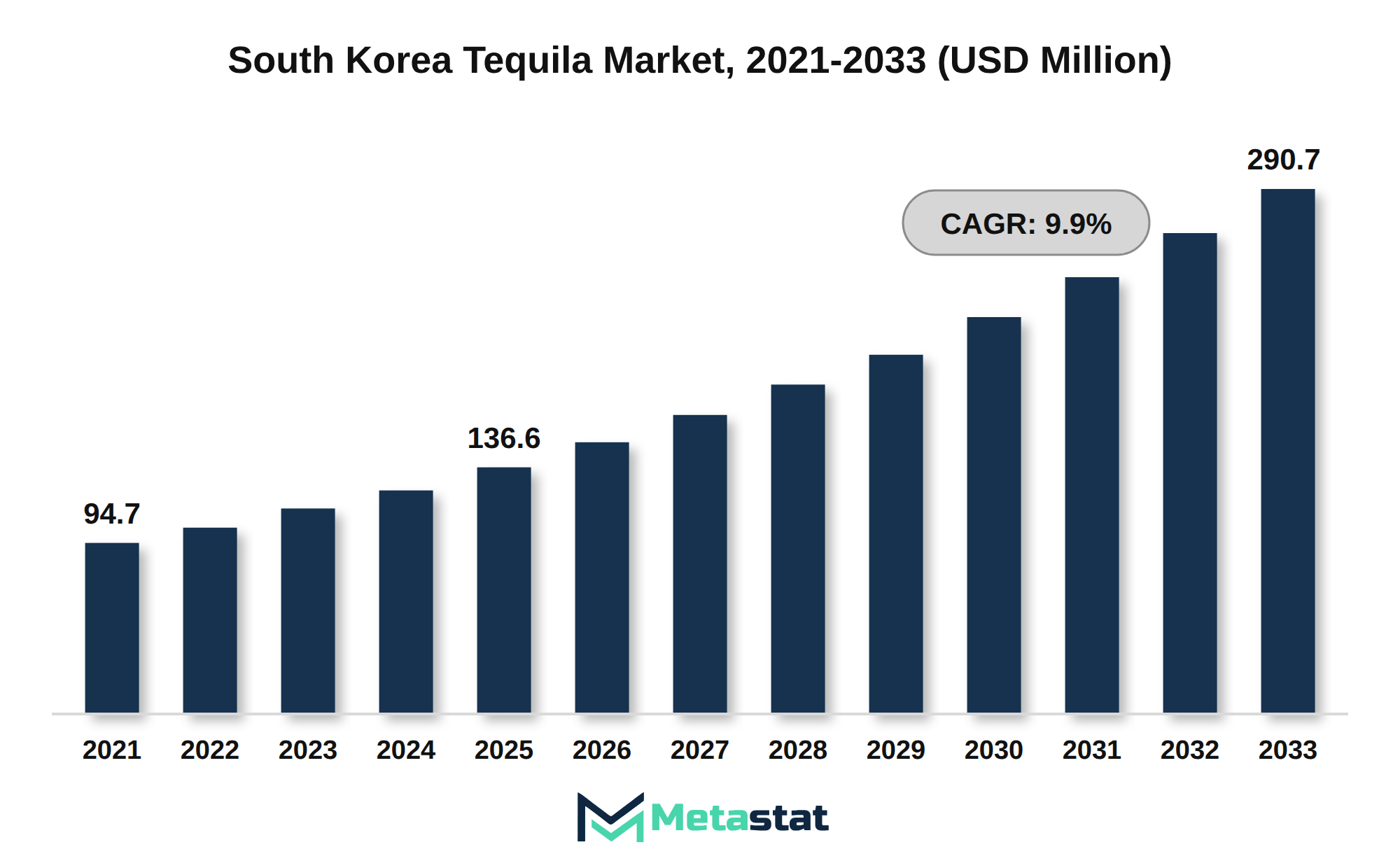
The South Korea Tequila market was valued at USD 136.6 million in 2025 and is projected to reach USD 290.7 million by 2033, growing at a CAGR of 9.9% over the forecast period.
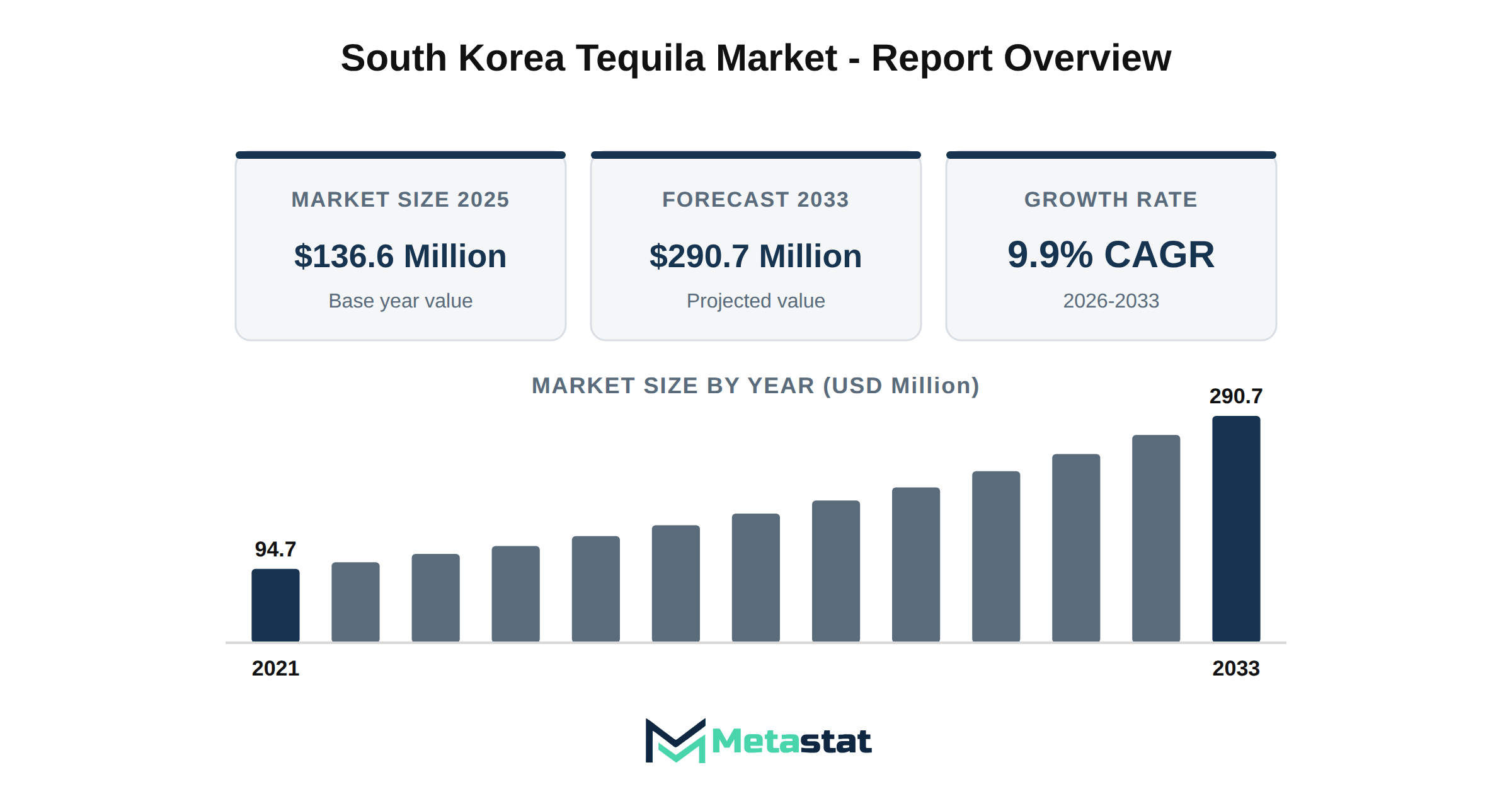
The South Korea Tequila market, valued at USD 136.6 million in 2025, is projected to expand to USD 290.7 million by 2033, reflecting a compound annual growth rate (CAGR) of 9.9%. Historical data indicates growth from USD 94.7 million in 2021 to USD 123.8 million in 2024, with a steady increase leading to the base year value.
Trends within the market highlight a significant premiumization movement, with rising demand for premium and super premium tequila varieties. This demand arises from an evolving consumer base that seeks high-quality spirits, particularly in upscale bars, clubs, and premium restaurants. The increasing popularity of Blanco and Reposado tequilas supports this trend, catering to consumers seeking superior taste and experience.
Interest in Añejo and Extra Añejo tequilas continues to rise among premium consumers, who prioritize aged spirits for their enhanced flavor profiles. The emergence of Cristalino tequila within South Korea's luxury spirits segment represents a shift towards products that combine tradition with modern appeal, aligning with the tastes of discerning consumers.
The influence of cocktail culture significantly impacts tequila consumption, driving a shift in preferences towards agave-based spirits. This cultural change encourages broader acceptance of tequila in various social settings, leading to increased consumption and exploration of diverse tequila brands in the market.
Distribution channels for tequila in South Korea are evolving, with a notable role from duty-free and travel retail sales. These channels provide unique purchasing opportunities for consumers, especially tourists seeking authentic Mexican spirits. The expansion of e-commerce and digital platforms enhances accessibility to tequila brands, improving consumer discovery and engagement.
Competitive dynamics in the South Korea Tequila market involve both global and craft brands vying for market share. Celebrity-backed tequila brands gain visibility and attract a younger audience, contributing to overall growth and diversification of product offerings. This competitive atmosphere encourages continuous brand innovation and marketing strategies aimed at capturing consumer interest.
Premiumization trends significantly influence the South Korea Tequila market, with rising consumer interest in high-quality products. The shift toward premium and super premium tequila reflects a growing appreciation for craftsmanship and flavor complexity among consumers.
Increased consumption of tequila across bars, clubs, and premium restaurants contributes to this trend. Establishments cater to discerning patrons seeking unique and high-quality spirits, driving demand for premium offerings.
The expansion of blanco and reposado tequila demand illustrates the evolving taste preferences in South Korea. These product classes benefit from favorable consumer perceptions, resulting in a notable increase in sales and market presence.
Añejo and extra añejo tequila are gaining popularity among premium consumers, further diversifying the market. These aged varieties attract enthusiasts who value the richness and depth of flavor achieved through extended maturation.
Cristalino tequila emerges because a fascinating addition to South Korea's luxury spirits segment. This innovative product, characterized by its clarity and smooth texture, appeals to consumers seeking a refined drinking experience.
The cocktail culture significantly impacts tequila consumption patterns in South Korea. Mixology trends highlight tequila's versatility, encouraging creative cocktail offerings that enhance the spirit's status in the beverage market.
Changing consumer preferences toward agave-based spirits signify a broader shift in the market. While awareness of the benefits of 100% agave tequila grows, consumers increasingly seek authentic and high-quality options.
Import trends indicate a robust demand for tequila in South Korea, with distribution channels evolving to meet consumer expectations. Duty-free and travel retail outlets play a crucial role in driving sales, providing access to premium and exclusive brands.
The expansion of e-commerce and digital liquor discovery platforms enhances brand visibility in the market. Online channels facilitate easier access to a diverse range of tequila brands, attracting a broader consumer base.
Tequila brand launches and portfolio expansions indicate a competitive market. New entrants and established brands alike focus on innovation and differentiation to capture consumer interest.
Competitive dynamics among global and craft tequila brands highlight a dynamic market. The presence of celebrity-backed tequila brands enhances visibility and attracts consumers seeking premium experiences.
On-trade premiumization drives high-value tequila consumption, with bars and restaurants emphasizing quality offerings. Pricing trends across value and premium grades reflect this shift, aligning with consumer expectations for high-quality products.
The Mexico-South Korea tequila supply chain remains integral to market operations. Import dependence highlights the importance of sourcing quality tequila from renowned regions, influencing pricing and availability.
South Korea's alcohol regulations impact tequila imports, shaping market dynamics. Compliance with local laws ensures a stable supply of products, supporting growth opportunities for brands.
Marketing and brand positioning strategies in the South Korea Tequila market play a vital role in consumer engagement. Effective campaigns emphasize authenticity and quality, connecting with consumer aspirations.
Consumer education and growing awareness of 100% agave tequila create a knowledgeable customer base. Increased understanding of production processes and quality indicators supports market growth.
Opportunities exist for authentic and craft tequila brands to establish a foothold in South Korea. Leveraging unique selling propositions attracts consumers looking for distinctive and premium offerings.
The future growth outlook for premium tequila consumption in South Korea appears promising. Continued trends toward quality and authenticity are likely to drive market expansion in the coming years.
Urbanization in South Korea significantly escalates demand for the South Korea Tequila market. Expanding urban areas concentrate populations in cities, resulting in lifestyle changes and increased social activities that promote higher alcohol consumption. Young professionals and millennials, central to this demographic shift, exhibit a preference for premium and high-quality beverages, including tequila. This trend aligns with the growing popularity of cocktail culture, which encourages consumers to explore diverse spirits.
The urban population's shift towards a more diverse drinking culture enhances opportunities for tequila brands to penetrate new market segments. Increased access to bars, restaurants, and retail outlets in urban centers facilitates greater product visibility and availability. Consequently, brands focusing on innovative marketing strategies and unique product offerings experience enhanced competitive advantages.
The South Korea Tequila market is projected to expand at a compound annual growth rate (CAGR) of 9.9% through 2033, driven by urban demographic patterns. This growth indicates substantial potential for investment in product development and marketing initiatives tailored to urban consumers.
The evolving preferences of consumers significantly influence the South Korea Tequila market. A growing interest in premium alcoholic beverages, particularly among younger demographics, enhances the demand for diverse tequila offerings. This shift in consumer behavior stems from lifestyle changes and increased exposure to global culinary experiences, including cocktails featuring tequila, which appeals to a wide range of consumers.
The market benefits from heightened awareness regarding the quality and authenticity of spirits. A surge in health-conscious choices encourages consumers to opt for 100% agave tequila, which aligns with their preferences for natural and organic products. This trend drives producers to focus on quality, contributing to the expanding premium segment within the market.
Social media and digital platforms play a critical role in shaping consumer perceptions and expanding market reach. Influencers and digital advertising effectively promote tequila brands and cocktail recipes, further boosting interest. The proliferation of craft cocktails and the mixology trend positions tequila because a favored choice among consumers seeking unique drinking experiences.
While consumer behaviors evolve, the South Korea Tequila market is projected to experience growth, supported by increasing demand for premium products, quality, and diverse offerings. Brands that align with these consumer trends are likely to enhance their market presence and contribute to the overall expansion of the tequila sector.
Regulatory tightening in the South Korea Tequila market impacts the operational landscape for producers. Stricter compliance hurdles increase the burden on manufacturers, leading to higher operational costs. This pressure deters new entrants, restricting competition and innovation within the market. Legal mandates regarding labeling and production standards complicate the supply chain, limiting the ability to adapt quickly to consumer preferences.
Macroeconomic headwinds, including inflationary pressures, exacerbate these challenges. Rising costs of raw materials and transportation affect profit margins. Consequently, this situation leads to a slowdown in capital investment, hampering the overall growth trajectory of the market. Supply chain disruptions linked to geopolitical instability further complicate logistics and result in delays, impacting product availability.
High capital investment requirements for establishing production facilities deter potential investors. Combined with escalating operating costs, this situation creates a barrier to entry for new players wishing to enter the South Korea Tequila market. The increasing demand for premium products raises the stakes, but insufficient infrastructure to support expanded production limits potential growth.
Technological obsolescence poses another risk, because producers struggle to keep pace with advancements in brewing and distillation processes. This gap affects efficiency and quality, making it difficult for manufacturers to compete with global brands. Market fragmentation presents challenges, because diverse consumer preferences lead to a variety of offerings, complicating brand positioning.
Cultural barriers and regional adoption resistors hinder the acceptance of tequila among traditional spirit consumers in South Korea. Slowing downstream demand in certain segments results from changing consumer preferences toward alternative beverages. This overall environment of market saturation and industry cycle maturation strains resources and creates uncertainty for stakeholders within the market.
The South Korea Tequila market faces significant challenges stemming from geopolitical fragmentation, which disrupts supply chains and affects product availability. Heightened tensions between nations lead to increased trade deficits and tariff friction, impacting the pricing structure and operational costs in the market. Suppliers experience rising input costs due to these geopolitical pressures, directly influencing the profitability of tequila brands.
Logistics disruptions contribute to the complications faced by producers, complicating the timely distribution of products. These disruptions lead to potential shortages in key components necessary for production, impacting inventory levels and market responsiveness. The volatility of feedstock availability introduces uncertainty, complicating long-term planning for manufacturers and retailers within the market.
In addition to external pressures, compliance overhead associated with tightening regional regulatory standards presents another substantial challenge. Meeting evolving legal liabilities requires investment in compliance systems and processes, straining financial resources for producers. This situation further complicates operational strategies and hinders market growth, resulting from firms allocating funds to compliance rather than product development or marketing initiatives.
With market saturation and shifting consumer preferences, competition intensifies. Producers navigate these complexities to maintain market share while balancing the pressures of rising operational costs and evolving consumer demands. The South Korea Tequila market adapts to these multifaceted challenges to sustain growth in an increasingly competitive environment.
The South Korea Tequila market experiences a significant opportunity driven by technological disruptions and digital transformations. Emerging innovations in production techniques enhance quality while reducing costs, allowing brands to cater to a broader audience. Increased reliance on digital platforms for marketing and distribution channels improves accessibility, attracting consumers seeking unique products. This shift aligns with evolving buying behaviors, attributed to younger demographics increasingly prioritizing online purchases, fueling market growth.
Geographical expansion presents another avenue for market opportunity, with brands exploring untapped regions across South Korea. By targeting these areas, producers establish a strong foothold and create brand loyalty. Strategic consolidation through partnerships and collaborations enables companies to leverage shared resources, enhancing competitive positioning within the market.
The demand for sustainability imperatives has influenced product offerings, with consumers increasingly favoring eco-friendly options. Innovations in green technologies and sustainable practices facilitate the introduction of environmentally responsible products, appealing to health-conscious buyers. Consequently, the South Korea Tequila market is poised for growth through product diversification and niche applications that align with consumer values.
Overall, the South Korea Tequila market benefits from a multifaceted opportunity landscape, driven by innovations, geographic reach, and evolving consumer preferences. This dynamic environment supports growth, attracting investment and encouraging competition among industry players.
The South Korea Tequila market is segmented based on Product Class, Purity Type, Grade, and Distribution Channel.
Valued at USD 58.7 million in 2026, Blanco Tequila is projected to reach USD 110 million by 2033, reflecting a CAGR of 9.4% during the forecast period. The rising popularity of Blanco Tequila is attributed to an increasing consumer preference for clear spirits, especially among younger demographics who favor its mixability and refreshing taste. This segment's expansion is supported by broader trends in cocktail culture, where Blanco serves because a preferred base for various drinks.
Consumption shifts toward premium and authentic experiences contribute significantly to this growth. Consumers exhibit a strong inclination toward brands that emphasize heritage and quality, driving demand for high-quality Blanco Tequila. The market benefits from the growing trend of craft cocktails and the increasing presence of bars and restaurants that offer unique drink options. This trend encourages new entrants and established brands to innovate their offerings to attract discerning customers.
Regulatory compliance standards surrounding alcohol production and distribution in South Korea impact the segment. These regulations ensure quality and safety, which enhances consumer trust. While governmental policies evolve, brands that align with these standards position themselves favorably in the competitive landscape, thereby enhancing brand loyalty.
The cost structure associated with Blanco Tequila production hinges on raw material sourcing, primarily blue agave. Fluctuations in agave prices influence consumer pricing, which impacts market dynamics. Strategic partnerships with agave suppliers enable brands to mitigate risks associated with price volatility. The outlook for investment in this sector remains positive, with opportunities for growth driven by consumer trends toward premiumization and authentic experiences.
Significant growth in the Reposado Tequila segment reflects evolving consumer preferences within the South Korea Tequila market. This segment is estimated to reach USD 84 million by 2033, at a CAGR of 10.2% during the forecast period. Demand for Reposado Tequila arises from the increasing interest in premium spirits, particularly among younger demographics seeking quality and unique flavor profiles. The segment benefits from the trend towards craft and artisanal products, which aligns with consumers' desire for authenticity and a distinctive drinking experience.
The expansion of bars and restaurants featuring specialized cocktail menus enhances exposure to Reposado Tequila. Increased marketing efforts by producers further drive awareness and interest among potential consumers. These establishments introduce innovative drink options, and the visibility of Reposado Tequila increases, contributing to its anticipated growth within the broader South Korea Tequila market.
Certain challenges exist within this segment, primarily related to pricing volatility and sourcing high-quality agave. Fluctuations in raw material costs directly influence pricing strategies, impacting profitability for suppliers. Despite these pressures, the premiumization trend within the market encourages consumers to spend more on high-quality spirits, thereby supporting growth in the Reposado segment.
The evolution of the segment aligns with shifts in consumption habits, particularly the preference for sipping spirits rather than mixing them. This trend positions Reposado Tequila because an attractive option for consumers seeking a premium experience. Overall, the Reposado Tequila segment is poised for substantial growth, driven by strong consumer demand and a favorable market environment.
Consumer interest in Añejo Tequila continues to rise within the South Korea Tequila market, driven by an inclination for premium products and unique flavor profiles. This segment focuses on high-quality tequila that undergoes aging, allowing for more complex and refined tastes, appealing to discerning consumers. The anticipated market value for Añejo Tequila is expected to reach USD 56.3 million by 2033, reflecting a significant growth trajectory.
Shifts in consumption patterns towards premiumization highlight an increasing preference for quality over quantity among South Korean consumers. This trend aligns with global movements that emphasize craft production and authenticity in alcoholic beverages, creating an environment in which Añejo Tequila flourishes. The market experiences substantial interest from both younger and older demographics, who are eager to explore diverse drinking experiences and expand their palate.
Competitive strategies among key players in the market focus on enhancing brand recognition and expanding product offerings. Companies invest in marketing and consumer education, and the demand for Añejo Tequila is projected to increase. Partnerships with local distributors and innovative promotions play a vital role in driving accessibility and visibility, ensuring that Añejo Tequila remains prominent in bars and retail outlets across South Korea.
Cost structures and pricing volatility present challenges for producers in the Añejo Tequila segment. Premium pricing strategies boost profit margins, while fluctuations in raw material costs and regulatory compliance impact overall profitability. Strategic management of these variables will be crucial in maintaining a competitive edge within the market.
Overall, the continued expansion of the Añejo Tequila segment reflects broader trends within the South Korea Tequila market, characterized by evolving consumer preferences and increased demand for high-quality spirits. Capital investment in this segment signals confidence in sustained growth, positioning Añejo Tequila because a prominent choice among consumers seeking premium tequila options.
Demand for Extra Añejo Tequila in the South Korea Tequila market remains robust, driven by an increase in consumer preferences for high-quality, aged spirits. Consumers increasingly favor premium offerings, reflecting a broader trend toward sophistication in beverage choices. With a projected growth rate of 11.2% CAGR during the forecast period, this segment demonstrates significant potential for growth.
Growth in the Extra Añejo Tequila segment aligns with the evolving tastes of consumers who seek unique flavors and superior quality. This trend highlights a shift toward premiumization, where buyers prioritize higher-priced products that deliver a premium experience. The market's capacity to cater to this demand opens strategic opportunities for producers focusing on quality and exclusivity.
Pricing strategies in the Extra Añejo Tequila segment play a crucial role in positioning products within the market. Higher price points attract discerning customers while enhancing brand perception because a luxury item. This segment's value is expected to reach USD 56.3 million by 2033, further establishing its place in the South Korea Tequila market.
Consumer education on production processes and tasting experiences enhances interest in Extra Añejo Tequila, leading to increased consumption. The segment's growth indicates a successful alignment between producers and evolving consumer expectations, supporting sustained investment in quality and innovation within the market.
Shifts in consumer preferences drive interest in premium and artisanal offerings within the South Korea Tequila market. The demand for high-quality spirits encourages brands to innovate in flavor profiles and production methods, enhancing product differentiation. This segment particularly appeals to younger consumers seeking unique experiences and quality over quantity, which supports adoption in upscale bars and restaurants.
Increased awareness of tequila brands through social media campaigns and influencer partnerships supports segment growth. These strategies effectively reach target demographics, generating interest and encouraging trial. The emphasis on heritage and authenticity in production further strengthens consumer loyalty, with brands highlighting traditional distillation methods and sourcing of ingredients.
Regulatory compliance shapes the dynamics within this market segment. Maintaining certifications and standards for production aids in building consumer trust and market credibility. The focus on sustainable practices and responsible sourcing of raw materials complements consumer values, aligning with rising demand for environmentally friendly products.
Competitive pressures encourage brands within the segment to innovate continuously. Staying relevant necessitates investments in technology and marketing. Strategic partnerships with distributors enhance reach, ensuring availability across various channels. This strategy enables brands to capture emerging consumer trends, positioning them favorably within the South Korea Tequila market.
Valued at USD 119.5 million in 2026, the 100% Agave Tequila segment is projected to reach USD 243.4 million by 2033, at a CAGR of 10.7% during the forecast period. Factors driving this growth include an increasing consumer preference for authentic and premium products, alongside a shift towards healthier lifestyle choices that favor high-quality spirits. These trends highlight the rising demand for 100% Agave Tequila within the South Korea Tequila market, positioning it because a key segment for growth.
While the market evolves, the segment benefits from a growing number of upscale bars and restaurants emphasizing craft cocktails, which prominently feature premium tequila options. This emphasis on quality over quantity aligns with broader industry movements aimed at enhancing customer experience and product education. These strategic initiatives further support the premiumization trend, attracting discerning consumers who prioritize quality and authenticity, thus stimulating demand.
Technological advancements in production processes and distribution channels enhance the segment's competitiveness, enabling suppliers to maintain quality while scaling production. The increasing availability of 100% Agave Tequila through various distribution channels, including on-trade and off-trade markets, supports broader consumer access and accelerates market penetration.
The 100% Agave Tequila segment stands out within the South Korea Tequila market due to its robust projected growth, driven by evolving consumer preferences, strategic market initiatives, and advancements in production and distribution methodologies.
Growth in the Mixto Tequila segment reflects evolving consumer preferences towards more accessible price points in the South Korea Tequila market. The segment is projected to reach USD 47.4 million by 2033, with a CAGR of 6.3% during the forecast period. Increasing exposure to tequila-based cocktails in bars and restaurants promotes wider acceptance among diverse consumer demographics. The affordability of Mixto Tequila compared to premium offerings supports its appeal, particularly among younger consumers seeking to explore new beverages.
Consumption shifts driven by social trends and changing lifestyles have led to higher demand for blended tequila products. These factors create strategic opportunities for producers looking to capture market share within this segment. Mixto Tequila serves because a popular choice for both casual and festive occasions, and brands focusing on quality and branding enhancements are likely to experience increased revenue potential.
Demand for the Value segment in the South Korea Tequila market reflects a positive trajectory, driven by increasing consumer interest in affordable yet quality products. Valued at USD 49.8 million in 2026, the segment is projected to reach USD 83.8 million by 2033, reflecting a CAGR of 7.7% during the forecast period. Factors contributing to this growth include the rising popularity of cocktails and mixed drinks featuring tequila, appealing to a wider demographic.
Competition among brands within the Value segment intensifies, leading to innovations in flavor profiles and packaging strategies. The market experiences shifts in consumer preferences toward value-driven options, enabling brands to capture significant market share. This evolving environment presents opportunities for brands to enhance their presence through targeted marketing efforts and strategic partnerships.
Price sensitivity among consumers in South Korea emphasizes the importance of cost structures and pricing strategies within the Value segment. Brands optimize production processes and supply chains while maintaining competitive pricing without compromising quality. This balance supports sustained growth in the segment, contributing to the overall expansion of the South Korea Tequila market.
Growth in the Premium segment of the South Korea Tequila market aligns with evolving consumer preferences for higher-quality products. Increasing disposable income among consumers fuels interest in premium offerings, driving demand for brands that emphasize craftsmanship and authenticity. The segment is estimated to reach USD 92.8 million by 2033, at a CAGR of 10.1% during the forecast period. Marketing strategies focusing on brand storytelling and heritage connect with consumers seeking unique experiences, further advancing this segment's appeal.
Competition among producers intensifies because they seek to differentiate their offerings in a crowded marketplace. Innovations in flavor profiles and packaging attract attention, enabling brands to capture the interest of discerning consumers. The rising popularity of cocktails featuring premium tequila contributes to overall consumption shifts within the market, reinforcing demand for high-end products. Regulatory compliance regarding quality standards builds consumer trust, encouraging market growth and investment in premium tequila brands.
Growing interest in premium spirits drives demand for the High-End Premium segment within the South Korea Tequila market. Consumers increasingly seek high-quality products that reflect their tastes and lifestyle choices, resulting in a shift towards premium and high-end offerings. The market is projected to reach USD 68.9 million by 2033, reflecting an expanding consumer base that prioritizes quality over affordability. This trend aligns with broader movements in the beverage sector, where luxury experiences receive greater value.
Technological maturation within production processes enhances the quality and appeal of high-end products. Innovations in distillation techniques and aging processes contribute to richer flavor profiles, attracting sophisticated consumers who appreciate artisanal craftsmanship. Downstream applications in upscale bars and restaurants support this growth, driven by establishments seeking to curate premium selections for discerning patrons.
Regulatory compliance remains a significant factor influencing the market. Strict quality standards and certifications ensure that high-end products maintain their appeal, reinforcing consumer trust in premium brands. This environment incentivizes producers to invest in superior raw materials and production methods, aligning with the heightened expectations of consumers seeking premium tequila.
Pricing volatility in raw materials impacts profitability within the segment. The strong demand for high-quality tequila allows producers to maintain pricing structures that reflect the premium nature of the product. Investments in supply chain resilience further enhance the stability of availability and pricing, enabling producers to capitalize on the growing interest in high-end tequila.
Growth in the Super Premium segment reflects an increasing consumer preference for high-quality spirits in the South Korea Tequila market. The segment is projected to grow at a CAGR of 12% during the forecast period. This trend aligns with global consumption patterns that favor premium alcoholic beverages, driven by an interest in sophisticated flavors and artisanal production methods. Willingness among consumers to pay higher prices for superior quality tequila enhances profitability for producers.
Recent trends indicate a shift towards premium brands that emphasize authenticity and craftsmanship. Consumers increasingly seek unique experiences, favoring products with distinct heritage and production techniques. This demand for quality contributes to the anticipated revenue growth within the Super Premium segment, which is a significant driver of market expansion. Investment in marketing strategies that highlight the distinctive characteristics of Super Premium products further enhances brand visibility and consumer engagement.
Producers in the Super Premium segment focus on sourcing high-quality ingredients and refining production processes to meet evolving consumer expectations. The emphasis on 100% agave tequila within this segment supports the perception of quality, reinforcing the value proposition for discerning consumers. Challenges including pricing volatility and margin pressures arise from fluctuating raw material costs. Nevertheless, strategic pricing and effective cost management mitigate these pressures, allowing producers to maintain competitive advantages while sustaining growth.
Valued at USD 91.6 million in 2026, the On-Trade segment is projected to reach USD 171.3 million by 2033, at a CAGR of 9.4% during the forecast period. Growth in the On-Trade channel is driven by increasing consumer engagement in social settings, leading to higher tequila consumption in bars and restaurants. The trend towards premium experiences influences customers to choose higher-quality tequilas, enhancing overall segment value. Regulatory support for the alcohol industry in South Korea further facilitates market expansion, encouraging establishments to enhance their beverage offerings. The market benefits from rising tourism, because international visitors contribute to an increased demand for tequila in hospitality venues. Overall, the On-Trade segment presents significant opportunities for growth in the South Korea Tequila market.
Off-Trade distribution channels within the South Korea Tequila market show significant growth potential, driven by changing consumer habits and preferences toward convenience and home consumption. The segment is expected to reach USD 119.4 million by 2033, at a CAGR of 10.6% during the forecast period. Increased accessibility and a wide variety of brands in retail outlets contribute to the expansion of this segment. The influence of e-commerce and online shopping platforms, particularly following the pandemic, enhances consumer purchasing behavior, further supporting growth.
Competitive pricing and promotional activities in the Off-Trade segment attract a diverse consumer base. The shift toward premium and artisanal offerings within the broader tequila market impacts purchasing decisions, encouraging consumers to explore various brands and product types. Enhanced marketing strategies and improved product visibility in retail environments are likely to sustain this growth trajectory while attracting new buyers.
Growing awareness regarding tequila's attributes, including its versatility in cocktails and other mixed drinks, supports its appeal in the Off-Trade segment. Consumers increasingly prioritize quality and brand authenticity. The Off-Trade channel stands to benefit from this trend, establishing a solid foothold in the evolving South Korea Tequila market.
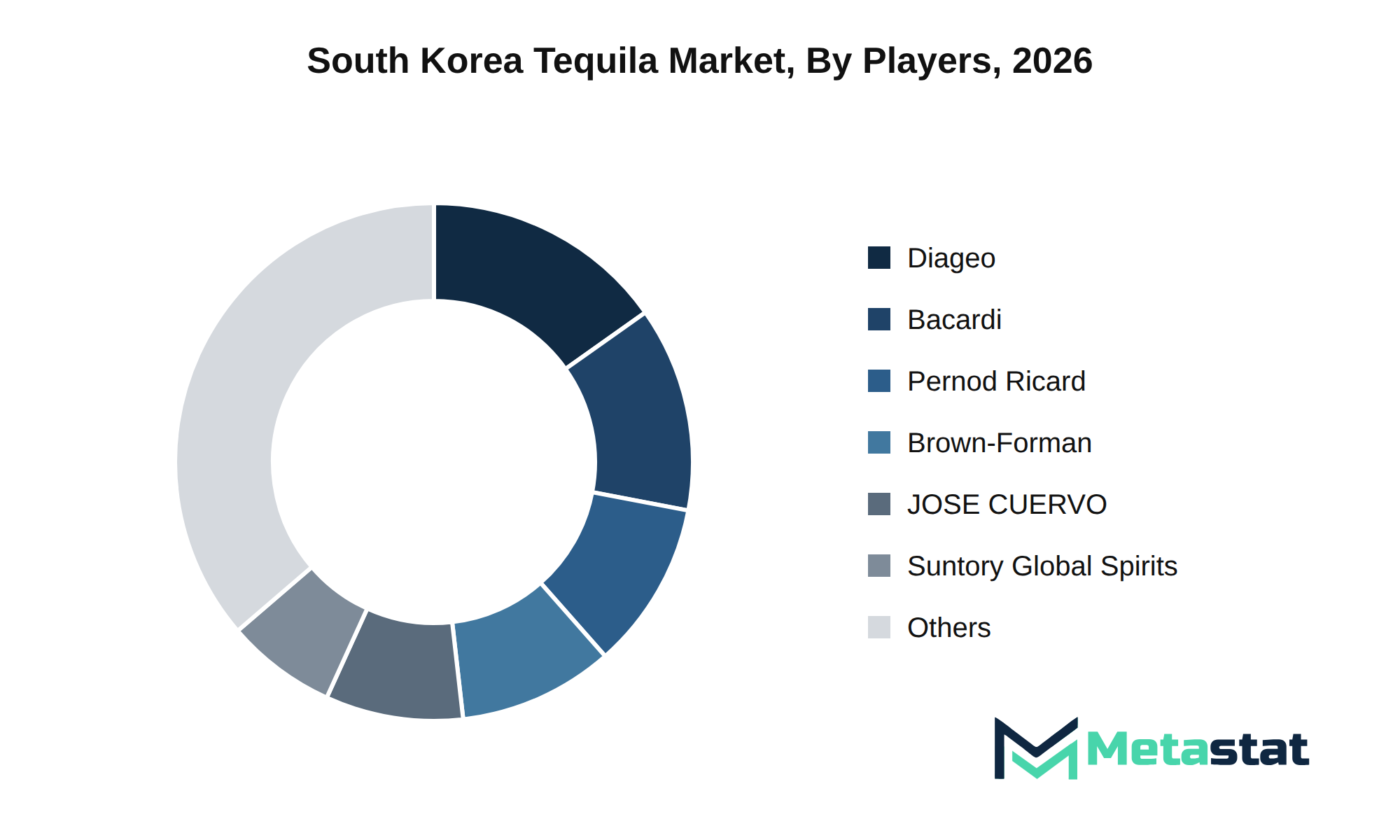
The South Korea Tequila market features major players including Diageo plc, Bacardi Limited, and Brown-Forman Corporation. These companies engage in strategic consolidation and mergers to strengthen their market positions. Ongoing partnerships and alliances with regional distributors enhance their go-to-market strategies, allowing for expanded reach and improved customer retention. Brand equity remains crucial; established players leverage their reputation to maintain customer loyalty and reduce switching costs.
Product differentiation within the market is evident through the diverse offerings of premium and super premium tequila. Companies including Pernod Ricard S.A. and Davide Campari-Milano N.V. focus on innovation and R&D pipelines to develop unique products that cater to evolving consumer preferences. This focus on proprietary technology contributes to a competitive edge that new entrants find challenging to overcome.
The competitive outlook for the South Korea Tequila market indicates a robust landscape, with established firms investing in value chain integration and supply chain dominance. These strategies enhance procurement leverage and operational efficiency, positioning them favorably against potential startup disruptions. Strategic growth vectors emphasize continued investment in brand development and market presence, ensuring sustained competitiveness in the market.
Market size is forecast to rise from USD 136.6 million in 2025 to over USD 290.7 million by 2033. This expansion reflects a compound annual growth rate (CAGR) of 9.9%. The base case scenario indicates steady growth driven by increasing consumer interest in tequila and a shift towards premium and super premium products. Within the South Korea Tequila market, consumer preferences evolve towards higher-quality offerings, particularly 100% agave tequila and aged variants like Añejo and Reposado. Improved local production capabilities allow domestic brands to capture more market share.
In a bullish scenario, heightened demand could surpass expectations, propelled by innovative marketing strategies and strategic partnerships within the alcoholic beverage industry. This scenario would likely result in accelerated growth, particularly among premium product segments. A bearish case arises from economic downturns or regulatory changes that restrict production and distribution. Such conditions could hinder growth, limiting the market's potential. Investment in product development and compliance with evolving regulations remains essential for players aiming to secure their position in the competitive environment.
The report strategically identifies and profiles the key market players and analyses their core competencies in each sub-segment of the Tequila market.
Report Attributes | Details |
Study Period | 2021-2033 |
Base Year | 2025 |
Estimated Year | 2026 |
Forecast Period | 2026-2033 |
Historical Period | 2021-2025 |
Growth Rate | CAGR 9.9% from 2026 to 2033 |
Revenue Unit | USD million |
Segmentation | By Product Class, Purity Type, Grade, Distribution Channel, and Region |
Find answers to common questions about this report
The South Korea Tequila market size was valued at USD 136.6 million in 2025.
The South Korea Tequila market is projected to grow at a CAGR of 9.9% during the forecast period from 2026 to 2033.
Blanco Tequila leads the South Korea Tequila market with a share of 39.1% in 2025. This segment's dominance reflects its popularity among consumers compared to other product classes.
Urbanization in South Korea drives demand for tequila because lifestyle changes among young professionals and millennials lead to increased social activities and premium beverage consumption. The growing cocktail culture and heightened awareness of quality spirits further enhance opportunities for tequila brands, positioning them for significant market expansion.
Regulatory tightening and compliance overhead increase operational costs for producers, deterring new entrants and restricting competition in the South Korea Tequila market. Macroeconomic pressures, including inflation and rising raw material costs, strain profit margins. Supply chain disruptions linked to geopolitical instability complicate logistics and affect product availability, contributing to overall market challenges.
Urbanization in South Korea escalates demand for tequila because young professionals and millennials favor premium beverages. Increased access to bars and restaurants enhances product visibility, while a growing interest in craft cocktails and social media promotion further drives product adoption among diverse consumer segments.
The Tequila market is estimated to reach a valuation of USD 290.7 million by 2033.
Key players in the South Korea Tequila market include Diageo plc, Bacardi Limited, Brown-Forman Corporation, Pernod Ricard S.A., Suntory Global Spirits Inc., and JOSE CUERVO.
The South Korea Tequila market is projected to grow at a compound annual growth rate (CAGR) of 9.9% through 2033.
The Extra Añejo Tequila segment is anticipated to experience significant growth, with a projected CAGR of 11.2%.
The analysts below cover Food and Beverages research at Metastat Insights.
LEAD ANALYST
Utkarsh Khirodkar is a Lead Market Research Analyst at MetaStat Insight, specializing in market intelligence, technology sector assessments, and competitive strategy.

LEAD PRINCIPAL ANALYST, PHARMA AND HEALTHCARE
Food and Beverages · Healthcare · Healthcare IT · Medical Devices
Ajay Devgire is the Lead Healthcare Analyst at MetaStat Insight, leading strategic research and market intelligence initiatives across the global healthcare domain.

SENIOR RESEARCH ANALYST
Biotechnology · Food and Beverages · Medical Devices · Packaging
Snehal Pasalkar is a Research Analyst at MetaStat Insight, operating at the intersection of life sciences research, competitive strategy, and market intelligence.
Floating offshore wind feasibility relies heavily on specialized installation vessel availability and port crane limits, which most broad renewable energy forecasts ignore. The report delivered a thorough analysis of dry dock capacity, mooring chain supply constraints, and raw material pricing trends for deepwater anchor installations. It served as a solid independent sanity check for our offshore project capital expenditure assumptions.
Assessing commercial microgrid software adoption requires looking past top-level installation numbers and examining utility interconnection queues. The research provided verifiable data on average permitting timelines, tariff structures, and battery storage integration costs across regional utility territories. That grounded perspective was valuable for our team when building five-year demand projections for industrial microgrid controllers.
Ambulatory surgical centers have very different purchasing cycles for robotic-assisted surgery platforms than major hospital networks. The MetaStat Insight study focused squarely on capital expenditure depreciation, procedural reimbursement pathways, and surgeon training overhead. That operational clarity made it much simpler to validate multi-year procedure growth forecasts against actual ambulatory center adoption patterns.
Explore related market intelligence reports worth reading alongside this one.