
LEAD ANALYST
Utkarsh Khirodkar is a Lead Market Research Analyst at MetaStat Insight, specializing in market intelligence, technology sector assessments, and competitive strategy.

Global Canned RTD Cocktails Market Size, Share, By Type (Malt-based, Spirit-based, Wine-based, Non-Alcoholic RTD Cocktails, Hard Seltzers, Flavored Cocktails, and Others), By Flavor (Fruity, Citrus, Herbal, Spicy, and Others), By Price Range (Economy, Mid-Range, Premium, and Luxury), By Distribution Channel (Hypermarkets, Supermarkets, Online, Liquor Stores, Bars and Restaurants, Duty-Free, Travel Retail, and Others), Industry Analysis, Growth, Trends, and Forecast, 2026-2033
Report ID
MSI-4709
Published
May, 2026
Pages
315 Pages
Format
Report Details
Choose Your License
Canned RTD Cocktails Market
Global Canned RTD Cocktails market size is valued at USD 3,039.6 million in 2025 and projected to grow at a CAGR of 15.3% during the forecast period, reaching USD 9,488.8 million by 2033.
North America holds 35.2% in 2025 with US leading the market share in 2025.
Malt-based segment account for a market share of 20.2% in 2025.
Key trends driving growth: Rising consumer preference for convenience and on-the-go consumption accelerates demand for canned RTD cocktails, along with premiumization trends and innovation in flavors and craft spirits enhance product appeal across younger demographics.
Opportunities include expansion of low-alcohol, functional, and health-conscious variants creates new growth avenues in evolving consumer segments.
Key insight: The Global Canned RTD Cocktails market is gaining momentum owing to convenience-led consumption, flavor experimentation, premiumization, and expanding retail visibility.
The Global Canned RTD Cocktails market is advancing toward modern drinking occasions centered on portability, consistency, convenience, and ready-to-serve formats. Consumers are increasingly choosing pre-mixed beverages that reduce preparation time while maintaining taste quality and serving consistency. Producers are responding through clean-label formulations, improved ingredient sourcing, natural mixers, and attractive packaging formats that strengthen shelf visibility.
Over the coming years, product development will focus on premium spirit blends, natural fruit infusions, botanical profiles, and reduced-sugar formulations. The Global Canned RTD Cocktails market will benefit from stronger e-commerce penetration, social occasion-based consumption, convenience-store expansion, and seasonal launches that sustain consumer engagement throughout the year.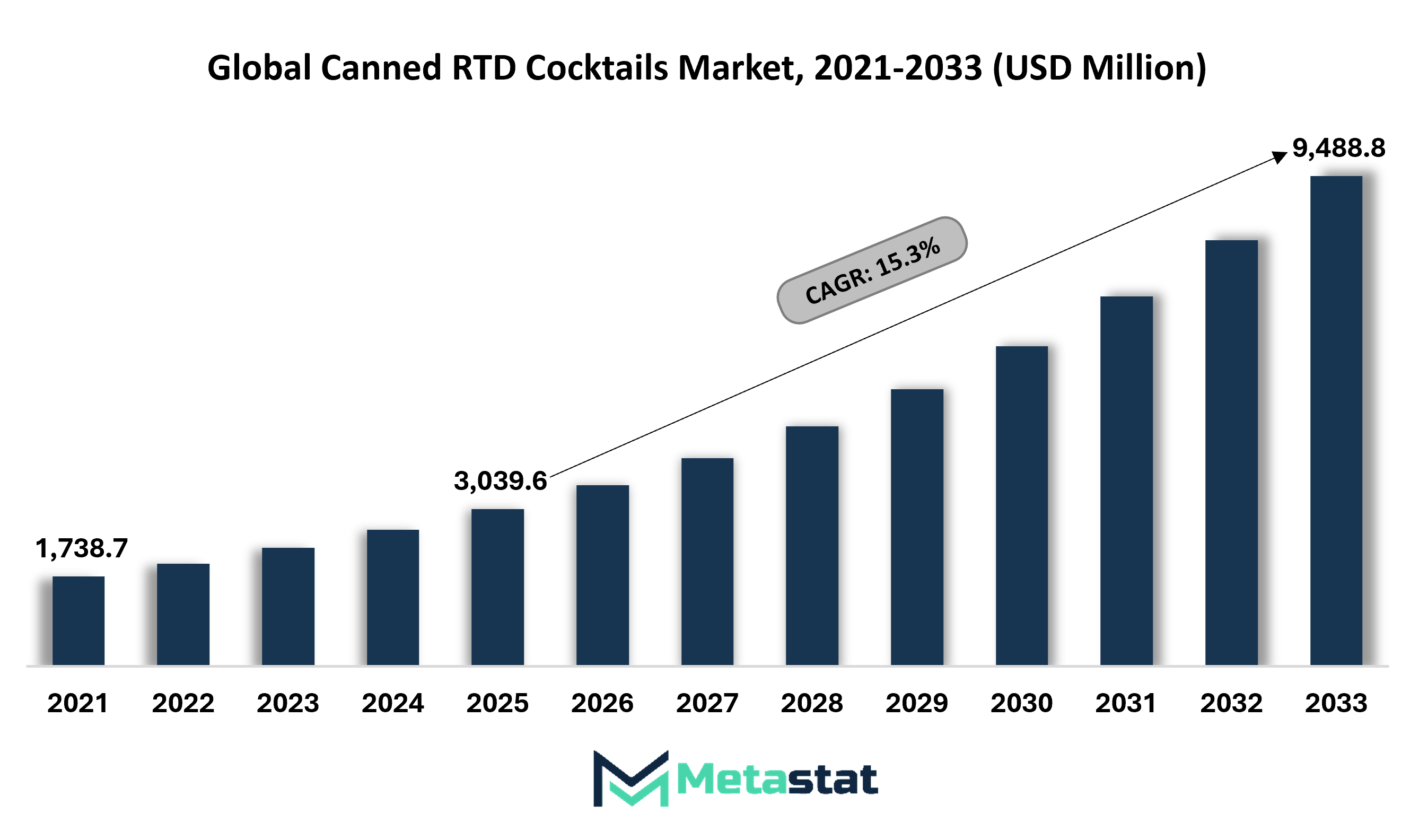
Rising consumer preference for convenience and on-the-go consumption accelerates demand for canned RTD cocktails.
Busy urban lifestyles, travel routines, outdoor gatherings, and quick retail access support stronger sales momentum for ready-to-drink alcoholic beverages. Compact cans provide portability, controlled serving sizes, easy storage, and suitability for social occasions. The Global Canned RTD Cocktails Market gains traction through modern consumption behavior, faster purchase decisions, and expanding convenience retail channels globally.
Premiumization trends and innovation in flavors and craft spirits enhance product appeal across younger demographics.
New flavor blends, botanical infusions, fruit combinations, and craft spirit bases increase shelf appeal among modern consumers. Attractive packaging and premium positioning strengthen perceived purchase value. The Global Canned RTD Cocktails Market benefits from rising interest in high-quality beverages carrying fresh flavor profiles, refined branding, and lifestyle-oriented presentation.
Stringent alcohol regulations and distribution restrictions limit market expansion across regions.
Licensing rules, taxation policies, advertising controls, and age-verification requirements create operational pressure for producers, distributors, and retailers. Cross-border market entry often faces delays owing to compliance procedures and country-specific alcohol regulations. The Global Canned RTD Cocktails Market encounters slower penetration in several territories where legal frameworks remain restrictive and fragmented.
Shelf-life stability and taste consistency challenges impact product quality perception.
Flavor retention, carbonation stability, ingredient interaction, and packaging performance remain critical for repeat purchases. Temperature exposure during storage and transportation will affect freshness standards. The Global Canned RTD Cocktails Market requires continuous investment in formulation technology, canning technology, and logistics systems to maintain reliable sensory quality across supply networks.
Expansion of low-alcohol, functional, and health-conscious variants creates new growth avenues in evolving consumer segments.
Consumer interest in lighter beverages with natural ingredients, reduced sugar, botanical extracts, and wellness-led positioning opens attractive sales channels. Wellness-focused buyers are seeking balanced indulgence with moderated alcohol content. The Global Canned RTD Cocktails Market will expand through innovation aligned with nutrition awareness, moderation trends, and mindful consumption preferences.
The Global Canned RTD Cocktails market is classified based on type, flavor, price range, distribution channel, and region.
Malt-based segment is valued at USD 708.1 million in 2026 and is projected to reach USD 1,643.3 million by 2033, at a CAGR of 12.8% during the forecast period.
Malt-based canned offerings will gain wider shelf presence through smoother flavor profiles, lower bitterness, and broad retail acceptance. Brewing innovation, calorie-controlled formulations, and seasonal variants will attract frequent shoppers. Retail chains will support visibility through chilled placements, strengthening category movement in the Global Canned RTD Cocktails Market.
Spirit-based segment is valued at USD 1,031.1 million in 2026 and is projected to reach USD 3,009.9 million by 2033, at a CAGR of 16.5% during the forecast period.
Spirit-based variants will expand through vodka, rum, tequila, whiskey, and gin blends packaged for convenience. Premium mixers, cleaner labels, and balanced alcohol levels will enhance consumer appeal. Urban nightlife demand, ready-to-serve formats, and occasion-based consumption will support stronger future sales momentum globally.
Wine-based segment is valued at USD 306.7 million in 2026 and is projected to reach USD 687.0 million by 2033, at a CAGR of 12.2% during the forecast period.
Wine-based canned cocktails will advance through sparkling blends, sangria-style variants, spritz formats, and fruit-led combinations. Portable packaging will support demand across picnics, travel occasions, and informal gatherings. Controlled serving sizes and modern branding will increase acceptance among consumers seeking lighter alcoholic choices with elegant presentation and consistent refreshment value.
Non-Alcoholic RTD Cocktails segment is valued at USD 279.3 million in 2026 and is projected to reach USD 969.8 million by 2033, at a CAGR of 19.5% during the forecast period.
Non-alcoholic RTD cocktails will record faster expansion through wellness trends, moderation habits, and inclusive social drinking occasions. Botanical infusions, low-sugar formulas, and premium cocktail-like taste experiences will attract health-conscious consumers. Corporate events, daytime activities, and inclusive social settings will create sustained commercial opportunities ahead.
Hard Seltzers segment is valued at USD 556.1 million in 2026 and is projected to reach USD 1,361.6 million by 2033, at a CAGR of 13.6% during the forecast period.
Hard seltzers will remain attractive through crisp flavors, lower calorie positioning, and light carbonation. Fruit combinations, tropical launches, and wellness-oriented branding will improve category demand. Warm-weather regions, beachside activities, and convenience-led purchases will sustain healthy growth levels across retail channels over the coming years.
Flavored Cocktails segment is valued at USD 420.3 million in 2026 and is projected to reach USD 1,311.4 million by 2033, at a CAGR of 17.7% during the forecast period.
Flavored cocktails will gain attention through dessert notes, tropical blends, seasonal launches, and limited-edition variants. Strong visual packaging and novelty appeal will increase trial purchases. Younger adult consumers will seek rotating flavor options, creating recurring demand and frequent shelf refresh cycles for retailers.
Others segment is valued at USD 199.9 million in 2026 and is projected to reach USD 505.9 million by 2033, at a CAGR of 14.2% during the forecast period.
Other formats will include craft mixes, region-inspired recipes, fermented blends, and experimental launches. Smaller manufacturers will use niche innovation to secure loyal consumer groups. Flexible production and online discovery will open space for new entrants seeking differentiated market positioning in future periods.
Fruity segment is projected to reach USD 3,380.9 million by 2033, at a CAGR of 14.8% during the forecast period.
Fruity flavors will dominate through mango, berry, peach, apple, and tropical combinations. Easy-drinking characteristics will support repeat purchases across casual occasions. Seasonal fruit launches and bright packaging will strengthen shelf movement, particularly during summer demand peaks and festive consumption windows globally.
Citrus segment is projected to reach USD 2,787.8 million by 2033, at a CAGR of 15.6% during the forecast period.
Citrus profiles will develop through lemon, lime, orange, and grapefruit notes delivering sharp refreshment. A clean finish and strong mixability will attract wider adult consumer groups. Warm-weather markets and travel retail demand will support strong rotation for canned formats carrying a lively flavor identity.
Herbal segment is projected to reach USD 1,178.5 million by 2033, at a CAGR of 16.5% during the forecast period.
Herbal flavors will appeal to premium demand through mint, basil, rosemary, and botanical combinations. Sophisticated flavor positioning will suit upscale dining channels and curated retail shelves. Buyers seeking mature taste experiences will increase adoption, encouraging brands to widen artisanal product lines over time.
Spicy segment is projected to reach USD 790.4 million by 2033, at a CAGR of 16.8% during the forecast period.
Spicy variants will rise through chili, ginger, pepper, and masala-inspired combinations. Bold flavor profiles will appeal to adventurous consumers seeking new taste experiences. Regional experimentation and festive launches will build consumer interest, helping brands create standout shelf identity within crowded beverage categories globally.
Others segment is projected to reach USD 1,351.2 million by 2033, at a CAGR of 14.3% during the forecast period.
Other flavor groups will include floral, dessert-inspired, smoky, salted, and fusion combinations. Limited-edition variants will generate trial demand and social media interest. Fast innovation cycles will allow manufacturers to test concepts quickly, improving long-term category freshness and consumer engagement levels.
Economy segment is projected to reach USD 1,527.5 million by 2033.
Economy pricing will secure high-volume demand through affordability and easy access. Value packs, multipack cans, and mainstream flavors will appeal to routine buyers. Expansion across developing markets and neighborhood stores will support turnover, helping the category achieve wider reach over future years.
Mid-Range segment is projected to reach USD 3,783.4 million by 2033.
Mid-range offerings will balance quality and affordability, attracting frequent social consumers. Better ingredients, improved packaging, and wider flavor choices will encourage upgrades from economy tiers. Strong supermarket visibility will help mid-tier products remain a core revenue contributor.
Premium segment is projected to reach USD 3,114.2 million by 2033.
Premium canned cocktails will expand through refined spirits, curated recipes, natural mixers, and elegant packaging. Gifting occasions, parties, and lifestyle positioning will support better margins. Limited batches and celebrity-backed launches will further enhance desirability among urban consumers seeking elevated drinking experiences.
Luxury segment is projected to reach USD 1,063.7 million by 2033.
Luxury tiers will target exclusive hospitality spaces, travel lounges, premium gifting occasions, and affluent shoppers. Rare ingredients, designer packaging, and collector editions will justify higher price points. Small-batch craftsmanship and prestige branding will create niche demand with strong profitability potential across select markets.
Hypermarkets/Supermarkets segment is projected to grow at a CAGR of 13.4% during the forecast period.
Hypermarkets and supermarkets will remain major channels through wide product variety, chilled storage, and impulse placement near checkout zones. Bulk buying habits and promotional bundles will support consistent movement. Strong visibility will help new launches gain quick acceptance among mass consumers.
Online segment is projected to grow at a CAGR of 19.4% during the forecast period.
Online sales will accelerate through doorstep delivery, subscription models, digital promotions, and wider brand access. Digital reviews, targeted offers, and festival discounts will influence purchase decisions. Data-led recommendations will help sellers match flavor preferences, improving repeat orders and customer retention rates.
Liquor Stores segment is projected to grow at a CAGR of 14.3% during the forecast period.
Liquor stores will retain importance through expert guidance, immediate availability, and curated alcoholic beverage selections. Premium launches and local favorites will perform strongly through such outlets. Neighborhood convenience and trusted purchase behavior will keep store traffic steady over the coming years.
Bars and Restaurants segment is projected to grow at a CAGR of 16.2% during the forecast period.
Bars and restaurants will use canned cocktails for speed, consistency, portion control, and menu expansion. Outdoor seating, poolside service, and event catering will increase adoption. Trial consumption in hospitality venues will later convert into retail purchases for at-home occasions.
Duty-Free & Travel Retail segment is projected to grow at a CAGR of 13% during the forecast period.
Duty-free and travel retail will grow through airport demand, gifting interest, and premium impulse purchases. Compact packaging suits traveler convenience. International exposure will help brands build recognition among new consumer groups across multiple geographic markets.
Others segment is projected to grow at a CAGR of 15% during the forecast period.
Other channels will include stadiums, concerts, vending formats, specialty shops, festivals, and pop-up events. Occasion-based selling will create high-margin opportunities. Strategic partnerships with entertainment venues will widen access, helping brands reach lifestyle-focused buyers through targeted consumption moments.
Based on geography, the Global Canned RTD Cocktails market is divided into North America, Europe, Asia-Pacific, South America, Middle East, and Africa.
North America leads the Canned RTD Cocktails market, supported by premium canned beverage demand, strong alcohol retail networks, convenience-store penetration, and high consumer acceptance of flavored ready-to-drink formats.
Europe continues to advance through premium cocktail culture, demand for lower-alcohol formats, clean-label preferences, and strong retail presence across supermarkets, liquor stores, and hospitality channels.
Asia-Pacific offers significant opportunities for the Canned RTD Cocktails market through urban nightlife expansion, rising disposable incomes, western beverage influence, and growing acceptance of premium ready-to-drink alcohol formats.
Across South America, the Middle East, and Africa, the Canned RTD Cocktails market progresses through tourism demand, modern retail expansion, premium beverage adoption, and rising interest in convenient canned alcoholic drinks where alcohol regulations permit sales.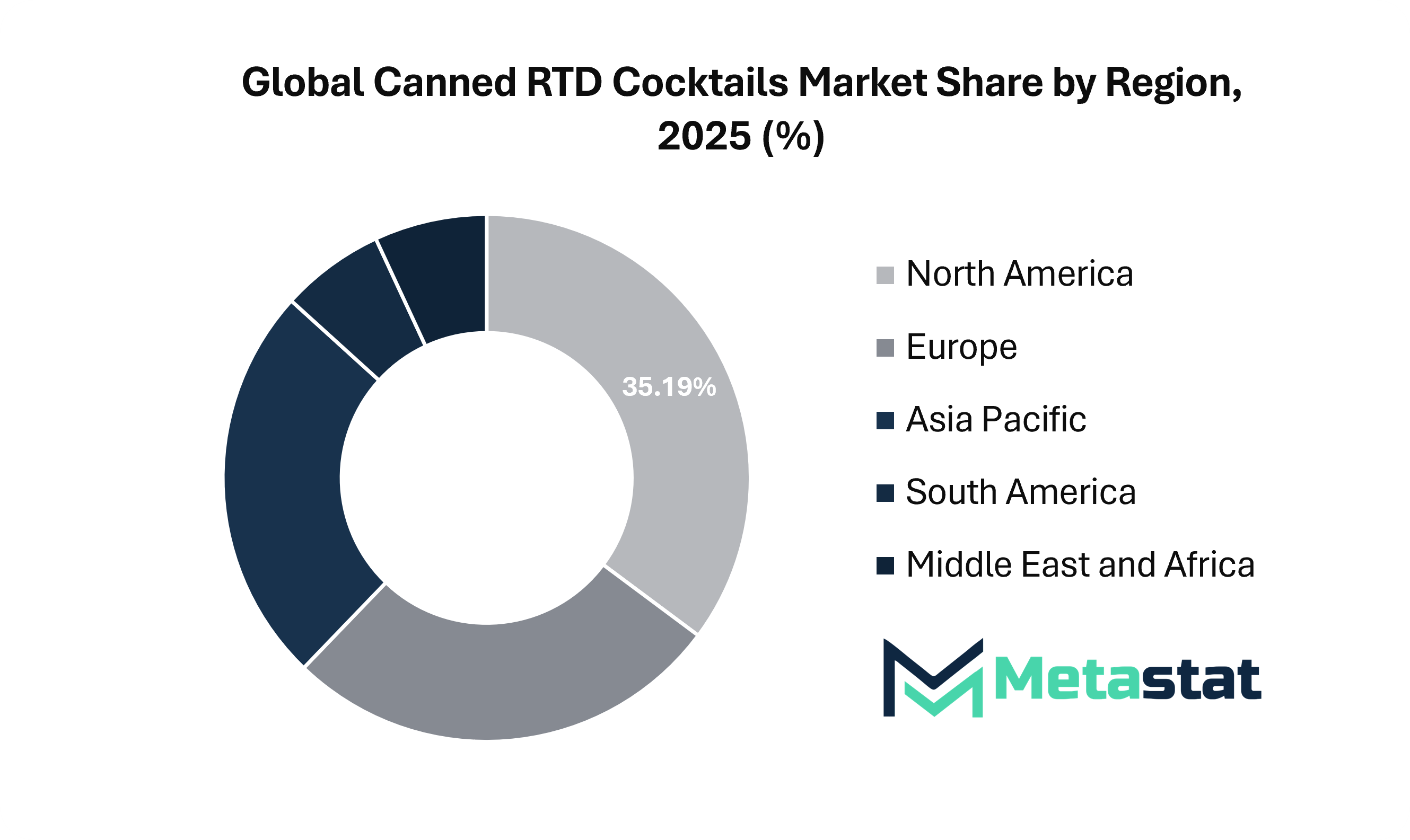
The Global Canned RTD Cocktails Market reflects strong competition, with major beverage companies shaping flavor innovation, pricing strategy, retail availability, and brand positioning across regions. Anheuser-Busch InBev SA/NV, Diageo plc, Pernod Ricard S.A., Brown-Forman Corporation, and Suntory Holdings Limited use deep distribution networks and recognized labels to attract everyday buyers and new adult consumers. Bacardi Limited, Campari Group N.V., Suntory Global Spirits Inc., E. & J. Gallo Winery, and Molson Coors Beverage Company continue to widen ready-to-drink lines with fruit blends, classic cocktail formats, and lighter alcoholic choices for changing consumer preferences. Constellation Brands Inc., The Boston Beer Company Inc., Asahi Group Holdings, Ltd., Kirin Holdings Company, Ltd., Heineken N.V., and Carlsberg Group A/S add scale through retail relationships and broad shelf presence across stores, bars, and hospitality venues.
Rémy Cointreau S.A., The Sazerac Company, Inc., Mark Anthony Group Inc., and Radico Khaitan Limited use brand heritage, regional knowledge, and established beverage expertise to build trust while entering modern canned formats. MG Destilerías S.A., Tilray Brands, Inc., The Coca-Cola Company, PepsiCo, Inc., Tails Cocktails Ltd., and De Kuyper Royal Distillers B.V. bring partnerships, flavor development capabilities, and brand recall that help products stand out. Mike’s Hard Lemonade Co., Ranch Rider Spirits Co., House of Delola, LLC, and Union Wine Company add momentum through niche styles, premium presentation, and direct appeal among younger adult consumers. Future competition will rely on balanced pricing, smart packaging, clear flavor identity, and consistent retail execution. Buyers increasingly look for easy serving, consistent quality, and beverages suitable for gatherings, travel, and relaxed at-home occasions.
Low-sugar options, natural ingredients, and smaller serving formats are also gaining attention. Many companies are using digital campaigns and limited launches to test new concepts before wider rollout. Regional taste preferences remain important, with citrus, spice, berry, and botanical notes gaining traction at different speeds across countries. Strong supply chains will remain important, since aluminum costs, freight rates, and raw material changes will affect margins. Companies that respond quickly, protect quality, and maintain clear branding will retain buyer attention and build repeat demand over time.
Seasonal variants across holidays will create short-term demand spikes and trial purchases. Some brands focus on premium spirit bases, while others target value-seeking buyers through lower price points. Rules on alcohol labeling, taxation, and promotion will continue to shape launch timing across several markets. Innovation in flavors and can design will help smaller brands gain buyer attention quickly, especially in retail channels where visual differentiation and flavor clarity influence purchase decisions.
Market size is forecast to rise from USD 3,039.6 million in 2025 to over USD 9,488.8 million by 2033.
The Global Canned RTD Cocktails market is expected to advance through premiumization, ingredient transparency, flavor diversification, and broader acceptance across mainstream adult alcohol consumers. Producers will expand into low-sugar formulations, tropical flavor ranges, botanical variants, premium spirit-based blends, and ready-to-serve formats suited for social occasions and convenience-led consumption.
This research report categorizes the Canned RTD Cocktails market based on key segments and regions, forecasts revenue growth, and analyses trends in each submarket. The report analyses the key growth drivers, opportunities, and challenges influencing the Canned RTD Cocktails market. Recent market developments and competitive strategies such as expansion, product launch, partnership, merger, and acquisition have been included to draw the competitive landscape in the market.
The report strategically identifies and profiles the key market players and analyses their core competencies in each sub-segment of the Canned RTD Cocktails market.
|
Report Attributes |
Details |
|
Study Period |
2021-2033 |
|
Base Year |
2025 |
|
Estimated Year |
2026 |
|
Forecast Period |
2026-2033 |
|
Historical Period |
2021-2025 |
|
Growth Rate |
CAGR 15.3% from 2026 to 2033 |
|
Revenue Unit |
USD million |
|
Segmentation |
By Type, Flavor, Price Range, Distribution Channel, and Region |
|
By Region |
North America (By Type, Flavor, Price Range, Distribution Channel, and Country)
|
|
Europe (By Type, Flavor, Price Range, Distribution Channel, and Country)
|
|
|
Asia Pacific (By Type, Flavor, Price Range, Distribution Channel, and Country)
|
|
|
South America (By Type, Flavor, Price Range, Distribution Channel, and Country)
|
|
|
Middle East and Africa (By Type, Flavor, Price Range, Distribution Channel, and Country)
|
Find answers to common questions about this report
Top players operating in the Canned RTD Cocktails industry include Anheuser-Busch InBev SA/NV, Diageo plc, Pernod Ricard S.A., Brown-Forman Corporation, and Suntory Holdings Limited.
The Metastat Insights study shows that the Global Canned RTD Cocktails market size was USD 3,039.6 million in 2025.
Global Canned RTD Cocktails market is estimated to reach USD 9,488.8 million by 2033.
Stringent alcohol regulations and distribution restrictions limit market expansion across regions. will hamper the market growth within the forecast period.
North America region dominates the market.
Rising consumer preference for convenience and on-the-go consumption accelerates demand for canned RTD cocktails and Premiumization trends and innovation in flavors and craft spirits enhance product appeal across younger demographics. are key driving factors, boosting the market.
The Metastat Insights analysis shows that the North America Canned RTD Cocktails market size is estimated to be USD 3,058.3 million by 2033.
The Spirit-based is the leading type segment in the Global market.
The Global Canned RTD Cocktails market is expected to grow at a CAGR of 15.3% over the forecast period (2026-2033).
The analysts below cover Food and Beverages research at Metastat Insights.
LEAD ANALYST
Utkarsh Khirodkar is a Lead Market Research Analyst at MetaStat Insight, specializing in market intelligence, technology sector assessments, and competitive strategy.

LEAD PRINCIPAL ANALYST, PHARMA AND HEALTHCARE
Food and Beverages · Healthcare · Healthcare IT · Medical Devices
Ajay Devgire is the Lead Healthcare Analyst at MetaStat Insight, leading strategic research and market intelligence initiatives across the global healthcare domain.

SENIOR RESEARCH ANALYST
Biotechnology · Food and Beverages · Medical Devices · Packaging
Snehal Pasalkar is a Research Analyst at MetaStat Insight, operating at the intersection of life sciences research, competitive strategy, and market intelligence.
In the biological seed treatment space, registration timelines vary drastically between the European Union, Brazil, and North America. The MetaStat Insight research handled these cross-border regulatory barriers with genuine nuance, mapping commercialization pathways alongside historical field adoption rates. The segmentation between microbial strains and biochemical active ingredients was particularly well structured.
Our team was tracking whether regional recycling infrastructure could realistically absorb the growing volume of lithium iron phosphate batteries over the next decade. The report did a solid job separating announced hydrometallurgical plant capacity from active, permitted operational throughput. That distinction made the feedstock availability projections and regional recovery rate models far more credible than standard commercial overviews.
Tracking capacity expansion in single-use bioprocessing requires dependable data on raw material availability and cleanroom-grade polymer supply chains. The competitive landscape chapter gave a grounded evaluation of secondary component suppliers across North America and Asia-Pacific rather than simply reprinting press releases. Having that level of supplier benchmarking helped clarify dual-sourcing considerations for our clinical pipeline planning.
Explore related market intelligence reports worth reading alongside this one.