
LEAD ANALYST
Utkarsh Khirodkar is a Lead Market Research Analyst at MetaStat Insight, specializing in market intelligence, technology sector assessments, and competitive strategy.

Global Beverage Flavoring System Market Size, Share, By Ingredients (Flavoring Agents, Flavoring Carriers, Flavor Enhancers, and Others), By Beverage (Alcoholic and Non-alcoholic), By Flavor (Chocolate, Browns, Dairy, Herbs, Botanicals, Fruits, Vegetables, and Others), By Form (Dry and Liquid), Industry Analysis, Growth, Trends, and Forecast, 2026-2033
Report ID
MSI-4712
Published
May, 2026
Pages
313 Pages
Format
Report Details
Choose Your License
Beverage Flavoring System Market
Global Beverage Flavoring System market size is valued at USD 5,977.8 million in 2025 and projected to grow at a CAGR of 6.0% during the forecast period, reaching USD 9,522.1 million by 2033.
North America holds 27.4% of the market in 2025, with the U.S. leading regional revenue contribution.
The Flavoring Agents segment accounts for 43.9% of the market share in 2025.
Key trends driving growth: Rising consumer demand for innovative and diverse beverage flavors, including exotic and premium variants, along with growth of functional and health-oriented beverages requiring customized flavor masking and enhancement.
Opportunities include increasing shift toward natural, clean-label, and plant-based flavoring solutions driving product innovation.
Key insight: The Global Beverage Flavoring System market is gaining momentum owing to changing taste preferences, premiumization trends, product innovation, and growing beverage diversification.
The Global Beverage Flavoring System market plays a crucial role in modern beverage manufacturing, where flavor, aroma, mouthfeel, and brand identity are increasingly shaped through advanced flavor formulation systems. Producers are focusing on solutions that improve product consistency while addressing rapid shifts in consumer taste preferences. Beverage manufacturers are increasingly adopting modular flavor systems that support sweetness balance, acidity control, botanical notes, aroma release, and sensory intensity across multiple beverage categories.
Over the coming years, innovation will move toward natural flavor carriers, hybrid fruit-botanical combinations, and reduced-sugar taste enhancement systems. The Global Beverage Flavoring System market will increasingly support beverage launches designed around health positioning, regional taste preferences, clean-label claims, and experiential consumption formats.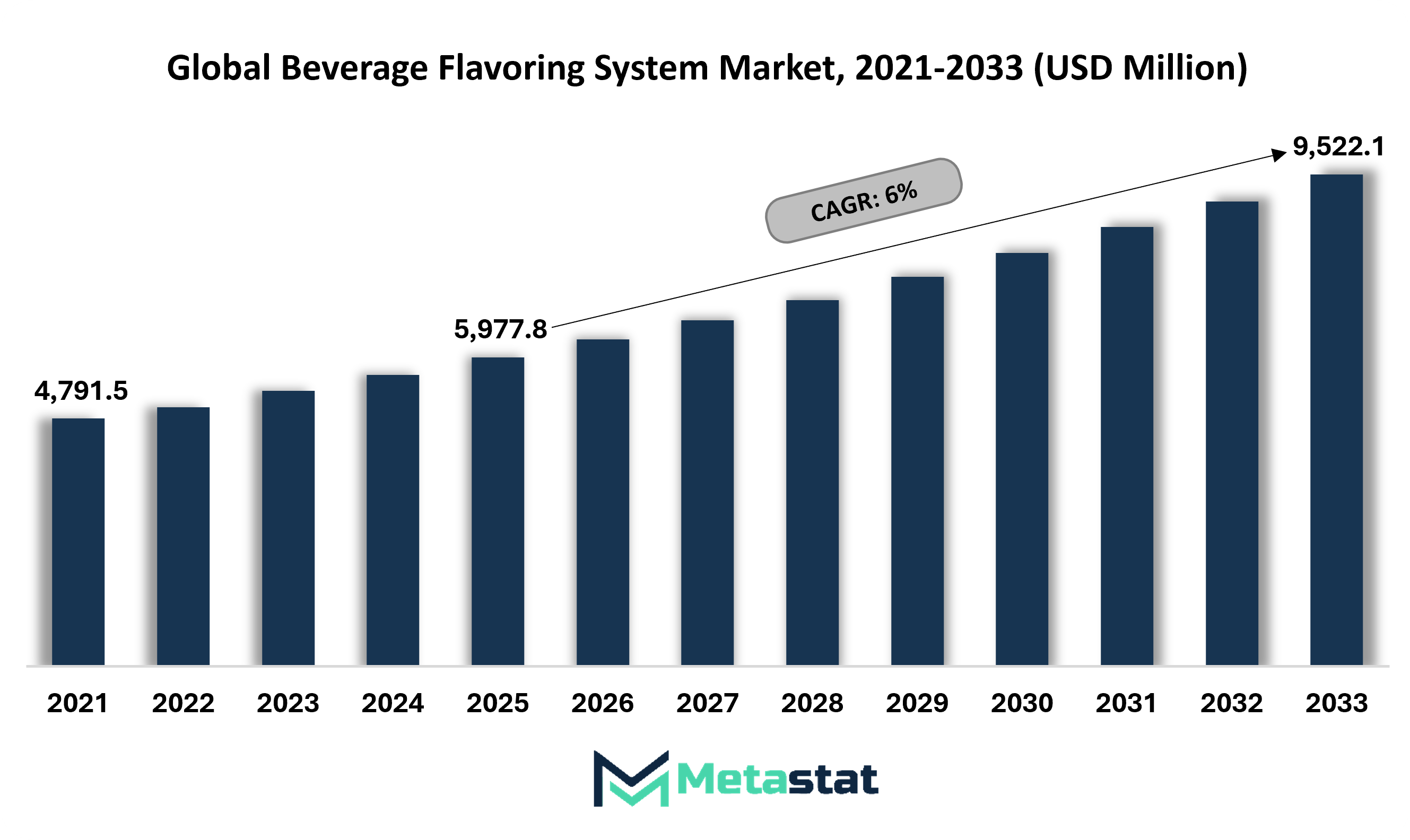
Rising consumer demand for innovative and diverse beverage flavors, including exotic and premium variants.
Consumer preferences continue to shift toward distinctive flavor experiences, regional inspirations, botanical notes, dessert blends, and premium beverage profiles. Premium cafés, retail shelves, and digital-first beverage launches are encouraging frequent flavor rotation. Future market progress will strengthen through limited-edition variants, seasonal concepts, and sensory-led beverage portfolios across consumer age groups.
Growth of functional and health-oriented beverages requiring customized flavor masking and enhancement
Nutritional drinks, protein beverages, botanical tonics, hydration mixes, and wellness formats require balanced taste performance. Bitter vitamins, herbal extracts, minerals, and active ingredients create formulation challenges for beverage manufacturers. Advanced flavor systems support cleaner taste, smoother mouthfeel, and wider consumer acceptance, strengthening their commercial value during future product expansion.
Stringent regulatory requirements and labeling standards for flavor ingredients across regions
Regional food regulations, ingredient disclosure norms, safety evaluations, and import documentation create lengthy approval cycles. Multi-country launches frequently require reformulation, packaging revisions, and certification planning. Future compliance costs will rise further, placing pressure on smaller manufacturers seeking wider geographic access and faster commercialization schedules.
Volatility in raw material supply, especially for natural flavors, impacting cost and consistency
Crop variation, weather stress, logistics disruptions, and seasonal harvest fluctuations regularly influence botanical extracts, fruit concentrates, and spice inputs. Price fluctuations reduce cost visibility and procurement planning efficiency. Future sourcing strategies will depend on diversified origins, contract farming, inventory buffers, and advanced extraction efficiency to maintain consistent production output.
Increasing shift toward natural, clean-label, and plant-based flavoring solutions driving product innovation
Growing interest in recognizable ingredients, botanical sourcing, fruit-derived notes, and vegan beverage concepts creates strong innovation space. Brands will invest in fermentation-based flavors, sugar-reduction support systems, and sustainable sourcing models. Future launches will benefit from stronger shelf appeal through transparent labels, natural positioning, and wellness-centered product claims.
The Global Beverage Flavoring System market is classified based on Ingredients, Beverage, Flavor, and Form.
Flavoring Agents segment is valued at USD 2,781.2 million in 2026 and is projected to reach USD 4,035.5 million by 2033, at a CAGR of 5.5% during the forecast period.
Flavoring Agents support future beverage launches through flavor precision, batch consistency, and faster profile development. Adoption will rise across premium beverages, wellness blends, and region-specific flavor variations. Natural extracts, fermented notes, and clean-label sourcing will strengthen commercial value across global beverage manufacturing networks.
Flavoring Carriers segment is valued at USD 1,549.2 million in 2026 and is projected to reach USD 2,250.1 million by 2033, at a CAGR of 5.5% during the forecast period.
Flavoring Carriers improve stability, blending efficiency, shelf life, and controlled release during beverage processing. Future expansion will come from powdered drink mixes, ready-to-drink beverages, and concentrated syrups. Encapsulation systems, gum bases, and plant-derived carriers will gain preference among formulators seeking reliable texture, solubility, and stability performance.
Flavor Enhancers segment is valued at USD 1,346.1 million in 2026 and is projected to reach USD 2,329.1 million by 2033, at a CAGR of 8.1% during the forecast period.
Flavor Enhancers strengthen flavor impact while supporting sugar reduction and calorie management goals. Rising focus on balanced nutrition will accelerate adoption across sports drinks, flavored water, and functional beverages. Advanced enhancer systems will create fuller mouthfeel and improved taste perception without excessive sweetener dependence.
Others segment is valued at USD 653.7 million in 2026 and is projected to reach USD 907.5 million by 2033, at a CAGR of 4.8% during the forecast period.
Other ingredient groups include color-support systems, masking solutions, acidity regulators, and aroma boosters. Future beverage innovation will require multifunctional ingredients that deliver convenience, stability, and sensory appeal. Premiumization trends will increase demand for integrated systems suitable for faster product rollout across diverse consumer categories.
Alcoholic segment is projected to reach USD 3,333.5 million by 2033, at a CAGR of 5.3% during the forecast period.
Alcoholic beverages will create steady demand through craft spirits, flavored beer, ready-to-drink cocktails, and premium mixers. Flavor systems will help manufacturers introduce seasonal collections and localized taste themes. Botanical notes, fruit blends, and barrel-inspired profiles will support higher-margin portfolio growth.
Non-alcoholic segment is projected to reach USD 6,188.6 million by 2033, at a CAGR of 6.4% during the forecast period.
Non-alcoholic beverages will remain a leading growth avenue across juices, energy drinks, teas, dairy beverages, flavored waters, and hydration products. Health-focused consumption will encourage low-sugar flavor solutions. Exotic fruits, botanical freshness, and functional flavor masking will shape future product pipelines globally.
Chocolate and Browns segment is projected to reach USD 1,454.6 million by 2033.
Chocolate and brown flavors will attract demand through indulgent shakes, coffee beverages, malt drinks, and dessert-inspired launches. Cocoa intensity, caramel warmth, and roasted profiles will support premium positioning. Future innovation will include reduced-sugar comfort beverages with rich sensory appeal.
Dairy segment is projected to reach USD 1,592.1 million by 2033.
Dairy flavors will serve milk beverages, protein drinks, yogurt drinks, and nutritional formulations. Creamy texture association often supports repeat purchases. Future demand will rise from lactose-free and plant-based products seeking traditional dairy taste through advanced flavor replication systems and clean finish delivery.
Herbs & Botanicals segment is projected to reach USD 1,394 million by 2033.
Herb and botanical flavors will gain momentum through wellness beverages, relaxation drinks, sparkling water, and premium teas. Mint, basil, ginger, lavender, and floral notes will attract modern consumer preferences. Future launches will combine flavor indulgence with perceived freshness, sophistication, and functional positioning.
Fruits & Vegetables segment is projected to reach USD 3,765.5 million by 2033.
Fruit and vegetable flavors will lead innovation through vibrant flavor variety and healthy product positioning. Citrus, berry, mango, beet, cucumber, and tropical blends will support strong launch activity. Future growth will benefit from immunity-focused beverages, clean-label formulations, and natural brand positioning.
Others segment is projected to reach USD 1,316.0 million by 2033.
Other flavor categories include spice blends, savory notes, cereal tones, and hybrid sensory concepts. Experimental beverage culture will increase commercial relevance. Future product shelves will feature unusual combinations designed for novelty seekers, premium gifting channels, and limited-edition promotional campaigns.
Dry segment is projected to grow at a CAGR of 5.3% during the forecast period.
Dry formats will support longer shelf life, easier transportation, and efficient storage. Powdered systems will suit instant drinks, vending mixes, nutraceutical beverages, and sachet products. Future demand will grow through e-commerce distribution and portable consumption habits across urban populations.
Liquid segment is projected to grow at a CAGR of 6.5% during the forecast period.
Liquid formats will offer rapid mixing, strong aroma release, and flexible dosing during beverage production. Syrups, concentrates, emulsions, and extracts will remain critical for large-scale beverage production plants. Future expansion will follow ready-to-drink growth, customized formulations, and premium sensory beverage launches.
Based on geography, the Global Beverage Flavoring System market is divided into North America, Europe, Asia-Pacific, South America, Middle East, and Africa.
North America is witnessing strong demand for low-sugar flavored beverages, functional drinks, and premium ready-to-drink launches.
North America, Beverage Flavoring System market growth gains momentum from innovation by multinational beverage manufacturers, advanced processing capabilities, and strong retail adoption of flavored beverage formats.
Europe Beverage Flavoring System market is shaped by strong clean-label reformulation, reduced-sugar beverage development, and steady innovation across functional drinks, dairy beverages, flavored water, premium juices, teas, coffee-based drinks, and low-alcohol formats.
Asia-Pacific offers significant opportunities for the Beverage Flavoring System market through rising disposable incomes, youth-driven beverage trends, and expanding convenience retail networks.
Across the Middle East, Africa, and South America, the Beverage Flavoring System market progresses through urban retail expansion, younger consumer groups, and rising packaged beverage consumption.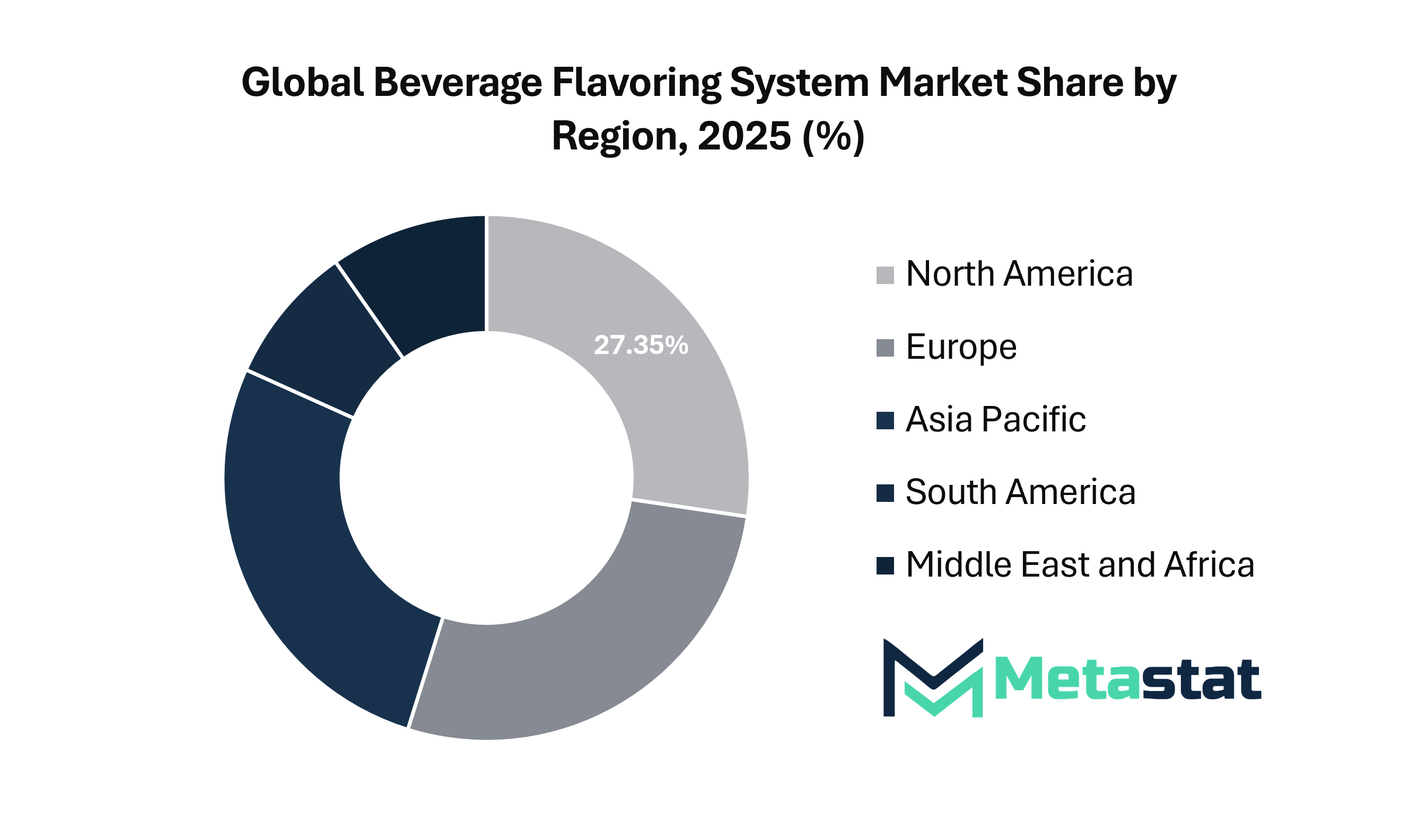
The Global Beverage Flavoring System Market continues to expand as beverage manufacturers focus on taste differentiation, freshness, clean-label reformulation, and wider product variety. Consumers now expect products beyond basic soft drinks and standard juices, with stronger interest in new flavors, reduced-sugar options, natural ingredients, and beverages aligned with changing lifestyles. Flavoring systems help manufacturers deliver a clear flavor profile, balanced aroma, stable shelf life, and improved overall appeal. Demand comes from carbonated drinks, dairy beverages, energy drinks, sports drinks, flavored water, tea, coffee, and plant-based alternatives. Companies are also using flavor blends to create localized taste profiles that connect with regional preferences and support wider brand reach.
Many producers are investing in research to develop natural extracts, fruit-based notes, botanical blends, and sugar-masking solutions. Health trends have encouraged beverage makers to reduce calories without losing flavor, making advanced flavor systems increasingly important. Clean-label demand has also encouraged the use of plant-based sources, natural colors, and familiar ingredient claims. At the same time, premium beverages with layered flavor experiences are gaining attention. Consumers are willing to try combinations such as citrus with herbs, tropical fruit with spice, or floral notes with tea. These trends support long-term industry growth for suppliers offering flexible, stable, and scalable flavoring solutions.
Large multinational companies maintain a strong position through research networks, global reach, technical expertise, and broad customer bases. Givaudan SA remains a major player with strong capabilities in flavor creation and ingredient innovation. International Flavors & Fragrances Inc. (IFF) has a deep portfolio serving beverage producers across multiple categories. dsm-firmenich AG combines nutrition and flavor capabilities, supporting manufacturers in both taste development and wellness-oriented product goals. Symrise AG continues to expand through customized solutions and regional product development. Kerry Group plc is widely recognized for taste systems that improve texture, sweetness balance, and functional beverage performance.
Archer Daniels Midland Company (ADM) and Cargill, Incorporated use their broad ingredient platforms to support beverage manufacturers with integrated supply solutions. Sensient Technologies Corporation and Tate & Lyle plc are active in flavor, color, and sweetening applications aligned with reduced-sugar trends. MANE SA, Döhler GmbH, and Takasago International Corporation maintain strong market presence through beverage innovation and tailored formulations. Robertet SA, T. Hasegawa Co., Ltd., and Treatt plc are valued for natural sourcing and specialty extracts.
Mid-sized and regional players also shape competition by serving niche demand and faster customization needs. Synergy Flavors Inc., Flavorchem Corporation, Bell Flavors & Fragrances, Inc., Huabao International Holdings Limited, and McCormick & Company, Incorporated continue to build presence across multiple markets. Nactarome S.p.A., Carbery Group Limited, Oterra A/S, Balchem Corporation, Foodarom Group Inc., Gold Coast Ingredients, Inc., Virginia Dare Extract Co., Inc., Roha Group, Amar Group, and Plant Lipids Pvt. Ltd. strengthen competition through targeted solutions, regional sourcing, and responsive customer support.
Market size is forecast to rise from USD 5,977.8 million in 2025 to over USD 9,522.1 million by 2033.
The Global Beverage Flavoring System market is expected to move toward precision flavor engineering, with AI-assisted formulation, natural ingredient optimization, and faster concept testing shortening innovation cycles. Consumer preference for healthier beverages without taste compromise will remain a central force shaping long-term market expansion.
This research report categorizes the Beverage Flavoring System market based on key segments and regions, forecasts revenue growth, and analyses trends in each submarket. The report analyses the key growth drivers, opportunities, and challenges influencing the Beverage Flavoring System market. Recent market developments and competitive strategies such as expansion, product launch, partnership, merger, and acquisition have been included to draw the competitive landscape in the market.
The report strategically identifies and profiles the key market players and analyses their core competencies in each sub-segment of the Beverage Flavoring System market.
|
Report Attributes |
Details |
|
Study Period |
2021-2033 |
|
Base Year |
2025 |
|
Estimated Year |
2026 |
|
Forecast Period |
2026-2033 |
|
Historical Period |
2021-2025 |
|
Growth Rate |
CAGR 6.0% from 2026 to 2033 |
|
Revenue Unit |
USD million |
|
Sales Volume Unit |
Kilotons |
|
Segmentation |
By Ingredients, Beverage, Flavor, Form, and Region |
|
By Region |
North America (By Ingredients, Beverage, Flavor, Form, and Country)
|
|
Europe (By Ingredients, Beverage, Flavor, Form, and Country)
|
|
|
Asia Pacific (By Ingredients, Beverage, Flavor, Form, and Country)
|
|
|
South America (By Ingredients, Beverage, Flavor, Form, and Country)
|
|
|
Middle East and Africa (By Ingredients, Beverage, Flavor, Form, and Country)
|
Find answers to common questions about this report
Top players operating in the Beverage Flavoring System industry include Givaudan SA, International Flavors & Fragrances Inc. (IFF), dsm-firmenich AG, Symrise AG, and Kerry Group plc.
Rising consumer demand for innovative and diverse beverage flavors, including exotic and premium variants and Growth of functional and health-oriented beverages requiring customized flavor masking and enhancement are key driving factors, boosting the market.
Global Beverage Flavoring System market is estimated to reach USD 9,522.1 million by 2033.
Stringent regulatory requirements and labeling standards for flavor ingredients across regions will hamper the market growth within the forecast period.
Europe region dominates the market.
The Metastat Insights analysis shows that the North America Beverage Flavoring System market size is estimated to be USD 2,352 million by 2033.
The Metastat Insights study shows that the Global Beverage Flavoring System market size was USD 5,977.8 million in 2025.
The Global Beverage Flavoring System market is expected to grow at a CAGR of 6.0% over the forecast period (2026-2033).
The analysts below cover Food and Beverages research at Metastat Insights.
LEAD ANALYST
Utkarsh Khirodkar is a Lead Market Research Analyst at MetaStat Insight, specializing in market intelligence, technology sector assessments, and competitive strategy.

LEAD PRINCIPAL ANALYST, PHARMA AND HEALTHCARE
Food and Beverages · Healthcare · Healthcare IT · Medical Devices
Ajay Devgire is the Lead Healthcare Analyst at MetaStat Insight, leading strategic research and market intelligence initiatives across the global healthcare domain.

SENIOR RESEARCH ANALYST
Biotechnology · Food and Beverages · Medical Devices · Packaging
Snehal Pasalkar is a Research Analyst at MetaStat Insight, operating at the intersection of life sciences research, competitive strategy, and market intelligence.
When evaluating distributed energy resource management systems, standard research summaries tend to gloss over the operational differences between front-of-the-meter utility deployments and behind-the-meter industrial sites. The MetaStat Insight report addressed those distinctions directly, especially regarding software interoperability standards and grid interconnection backlogs. The five-year market sizing across regional transmission organizations provided actionable context for our grid modernization strategy.
Most industry reports on warehouse automation bundle autonomous mobile robots and fixed conveyor installations into the same top-level numbers, which complicates advisory work. This study split the market cleanly by payload tiers, navigation technology, and fleet management software layers. The regional forecast for Western Europe gave our team defensible adoption benchmarks when evaluating capital allocation for logistics clients, saving us days of secondary data scrubbing.
Analyzing the transition from natural gas to green hydrogen in iron ore reduction requires realistic infrastructure timelines. Meta stat insight supplied a detailed regional assessment of DRI plant conversion costs and scrap metal availability in North America and Western Europe. Their report carefully examined pellet quality specs and electrical grid access constraints without making oversimplified market assumptions. The research material served as a practical reference during internal technology roadmap discussions.
Explore related market intelligence reports worth reading alongside this one.