
LEAD ANALYST
Utkarsh Khirodkar is a Lead Market Research Analyst at MetaStat Insight, specializing in market intelligence, technology sector assessments, and competitive strategy.

Sports Nutrition Market Size, Share, By Raw Material (Animal Derived, Plant-Based, and Mixed), By Type (Energy Bars, Protein Powder, Sports Supplements, Sports Drink, and Others), By Distribution Channel (Hypermarkets & Supermarkets, Drug & Specialty Stores, Online, and Others), By End-user (Athletes, Bodybuilders, and Lifestyle Users), Industry Analysis, Growth, Trends, and Forecasts, 2026-2033
Report ID
MSI-4528
Published
January, 2026
Pages
258 Pages
Format
Report Details
Choose Your License
Sports Nutrition Market
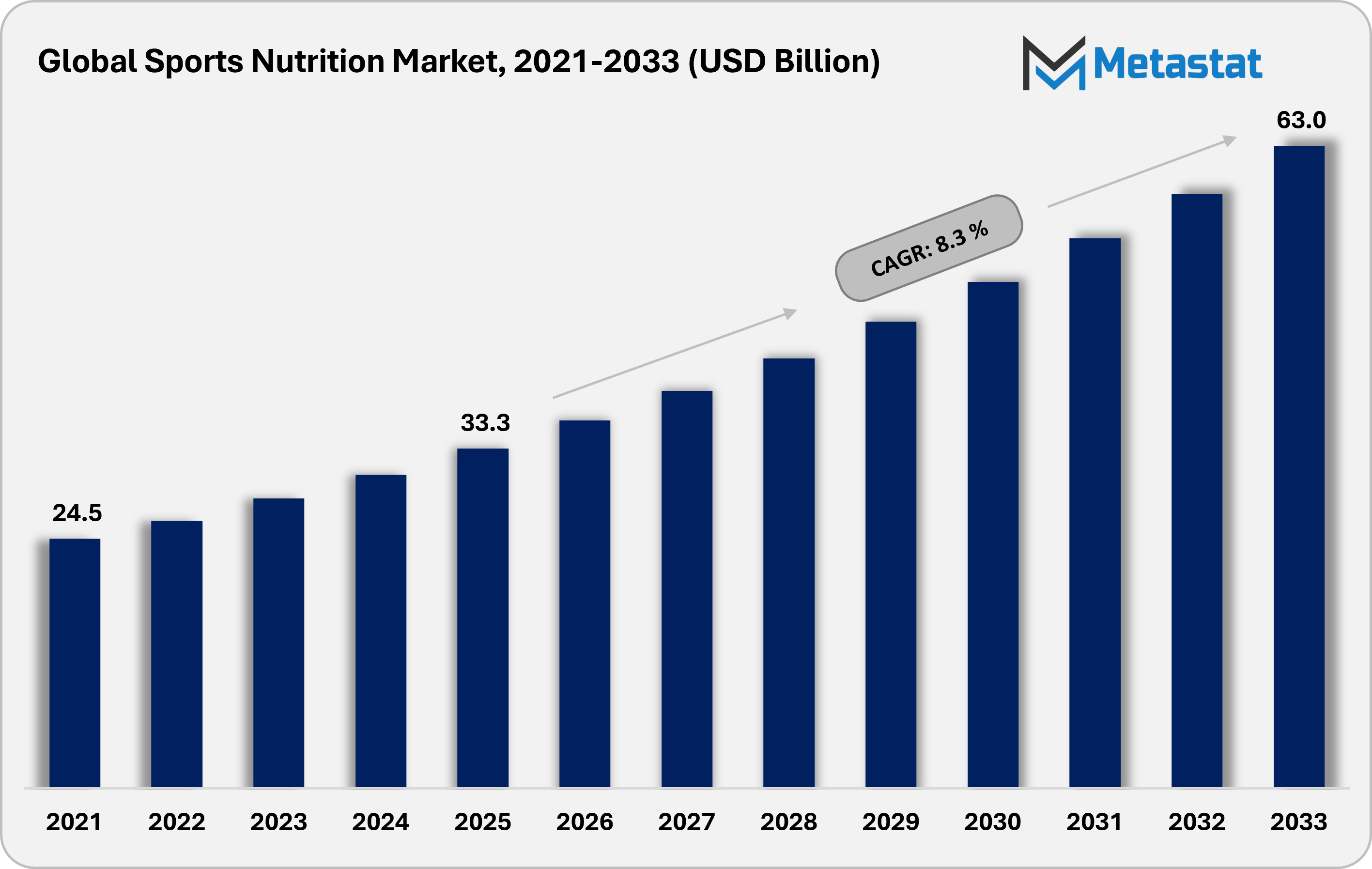
The global Sports Nutrition market size was valued at USD 33.3 billion in 2025. The market is projected to grow from USD 36 billion in 2026 to USD 63 billion by 2033, exhibiting a CAGR of 8.3% during the forecast period.
The global sports nutrition market will remain at the forefront of the industry, shifting away from generic performance products toward nutrition backed by science and aligned with consumers' lives. Sports nutrition supplements are becoming popular among non-athlete and sports consumers. In the U.S., the number of adults for sports nutrition products has increased from about 36% in 2019 to 45% in 2024. Protein powders, drinks, and bars are still the most popular forms of sport nutrition. At the same time, global performance brands are growing at multifold. A major player, Glanbia's Performance Nutrition division generated about USD 1.8 billion in sales in 2023. Its Optimum Nutrition brand achieved double-digit revenue growth, making it the world's top sports nutrition brand. As the active users grows, regulations and official categories for foods for sportspersons in places like the European Union are shaping production, labelling, and marketing.
The market will shift from macro-nutrient loading to precision sports nutrition tailored to training load, metabolic profile, and recovery goals, with the help of connected devices and coaching apps in the forecast period. European trade groups such as the European Specialist Sports Nutrition Alliance (ESSNA) stated that the compliance regimes that aren't well-organized will be the reason for delaying the launch of new products by six to eighteen months and raising regulatory costs by 15 to 25%. The delay enforces the brands to spend more on quality systems and science-based positioning. Independent testing has also resulted in considerable levels of heavy metals in many popular protein powders, especially within plant-based or chocolate-flavored. The delay in product launches will lead to stricter voluntary certification and cleaner sourcing. The sports nutrition will become a personalized product owing to increase use of wearables, digital training platforms, and integrated analytical tools. Formulation science, safety assurance, and real-time performance feedback are closely linked for both elite and everyday consumers will become a key opportunity within the market.
Increasing Participation in Fitness, Gyms, and Endurance Sports driving the Supplement demand.
The growing engagement with gyms, controlled fitness pursuits, and endurance sports events is driving demand for protein powders, drinks, and performance supplements, leading to increased nutritional products purchase. The diverse active population will be a key demand driver group within the sports nutrition market. However, those who incorporate structured training into their weekly routine will also help the market to provide additional driving growth.
Rising adoption of protein-rich and functional nutrition products among health-conscious consumers.
The increased consumption of protein-enriched, functional nutritional products among health & fitness-conscious consumers is driving the daily use of shakes, bars, and fortified foods beyond the sports industry. The market movement will move from immune boosters to muscle maintainers owing to lifestyle-based uptake and next generation of formulation strategies.
Concerns over Adulteration and Banned Substances Impacting Consumer Trust
Anxieties about contamination, mislabelling, and the use of contraband substances will undermine trust in performance supplements, especially among athletes competing at a high level. The market will experience a sluggish growth and hindrance owing to inconsistent quality standards and high fluctuating test results across the brands. Certification-led, trust-first portfolios will be in strong demand in the global sports nutrition market within forecast period.
High Price of Premium Supplements limiting Accessibility in developing markets
The medical-grade formulations and expensive premium supplements will limit the accessibility in emerging markets owing to high premium pricing. With limited availability in specialized retail and price-sensitive consumer behaviour, it will continue to impact usage patterns, driving many regions of the global sports nutrition market toward locally produced value products.
Growing demand for plant-based, clean-label, and personalized sports nutrition products
The increasing demand for plant-based, clean-label, and personalized sports nutrition will create opportunities for brands to innovate with allergen-friendly proteins, functional blends, and goal-oriented formulations. Diversification in fermentation, novel botanicals, and data-driven customization, alongside enhanced supplier performance and brand collaboration, will further accelerate new product pipelines and expand consumer touchpoints.
The global sports nutrition market is mainly classified based on Raw Material, Type, Distribution Channel, and End-user.
Owing to consumer familiarity with whey, casein, and collagen-backed formats, the growth in animal-derived proteins will continue to influence consumers towards sports nutrition choices. The market will experience increased interest within this category owing to quick-absorption and recovery-led results for a range of training needs.
The brands are compelled to provide comprehensive performance profiles owing to ongoing advancements in taste, digestibility, and amino acid balance. This factor is expected to contribute to the growth of plant-based segment across the forecast period. Future product innovations aim to meet clean-label expectations without sacrificing dependable outcomes that will draw more consumer attention.
The complementary advantages of both plant and animal proteins, as well as mixed-source formulations, will help brands strike a balance among cost, performance, and sensory appeal. The new product strategies will continue to strive owing to consistent results across mass and premium consumer segments.
The energy bar segment appeals to fitness and endurance consumers seeking convenient, functional benefits. As brands will continue to improve taste, texture, and clean-label positioning, demand will expand to everyday active consumers seeking reliable pre and intra-workout support.
The whey protein powders grow with strong consumer trust & acceptance of blended and plant-based options and remain a cornerstone of sports nutrition choices. The brands are emphasising on digestibility, higher protein density, and goal-based variants, with consumer focus on strength and weight management.
The increasing popularity of performance and recovery activities, including creatine loading, amino acid supplementation, and sport-specific supplement support, will push sports supplements further into organized training programs. With improved clinical validation and third-party testing, supplements will emerge as a compelling option for serious athletes and active lifestyle users who demand incremental results.
Sports drinks continue to register solid demand in both the gym and outdoor activities as consumers pay more attention to hydration, electrolytes, and low-sugar performance formats. The sports drinks will stand out among consumers seeking convenient, everyday hydration that aligns with their active lifestyles owing to functional claims, flavour, and format variety which will continue to evolve.
Consumer interest continues to evolve toward new formats such as gummies, gels, shots, and fortified foods owing to convince of consumption. The other segment will increasingly expand the market's innovation pipeline with several suppliers' blending convenience with clean label and personalized positioning. These new ventures will be considered for niche as well as hybrid performance needs in the sports nutrition market.
Hypermarkets & Supermarkets led the offline market share, with footfall remaining high and mainstream sports nutrition becoming more visible on shelves. Volume-driven purchasing by casual and first-time consumers will be driving the growth of this segment.
Higher confidence in expert-driven advice and perceived product authenticity will keep drug and specialty stores in play for premium and condition-specific sports nutrition options. The specialty stores will continue to attract well-informed, purpose-driven buyers owing to the availability of high range of clean-label and performance-recovery blends.
With broader brand availability, promotions, and convenience, the online sales channel will continue to propel category penetration amongst urban and emerging consumer cohorts. Virtual platforms will enable more rapid adoption of new form factors and niche formulations.
The increase in the gym, health club, direct-to-consumer, and convenience retail-centric landscape will propel other channels to place greater emphasis on impulsive and trial-driven sales. These paths will underpin diversified market growth as brands incorporate woven sampling and localized pricing.
Committed athletes and endurance competitors pursuing performance improvements will remain key consumers of specialised sports nutrition products for energy, recovery, and injury prevention. Athletes prioritize clinically supported formulations, precise dosing, and reliable quality standards to sustain consistent training outcomes and competitive readiness.
Bodybuilders will drive demand for high-dose proteins, amino acids, creatine, and physique-focused stacks, given their high training volume and protein requirements. The segment of the sports nutrition market seeks quicker visible results and stage-ready conditioning.
The everyday fitness, weight-control, and healthy ageing trends are driven by lifestyle consumption, and convenient shakes, bars, and functional drinks are driving great uptake among these users. The wide demographic's continued search for clean-label, flavorful, and value-driven solutions will continue to drive innovation that is more convenient and accessible.
Competitive Landscape & Strategic Insights
The global sports nutrition is set to continue evolving through a stage characterized by stronger clinical validation, expanding consumer engagement, and heightened brand-led innovation across powders, RTD beverages, bars, and other formats. Traditional performance categories like whey protein, creatine, aminos, and electrolyte systems will remain at the core of sports nutrition market. However, cleaner labels and smarter formulation approaches will drive companies to strike a balance between efficacy, safety, and regulatory alignment. Competition will stay intense as major sports brands and digitally native players coexist and differentiate through ingredient science, flavour innovation, price-tier segmentation, and omnichannel reach. Strategic emphasis will likely intensify around plant-based protein scale-up, hybrid formulations, gut-friendly and recovery-focused blends, and personalised nutrition ecosystems linked to coaching apps and wearable insights. M&A, co-manufacturing, and ingredient partnership models are expected to expand, enabling faster portfolio refresh cycles and improved regional penetration without disrupting core consumer loyalty.
Key contributors shaping this competitive environment include Abbott Nutrition Inc., Ajinomoto Co., Inc., BioTech USA Kft, Biothrive Sciences, Bulk Powders, Cardiff Sports Nutrition, Clif Bar & Company, Glanbia PLC, GNC Holdings Inc, MusclePharm, Nestlé Health Science, Now Foods, Nutrabolt, Orgain Inc., Otsuka Pharmaceutical Corporation Limited, Bellring Brands, Premier Nutrition, Quest Nutrition, The Coca-Cola Company, and Vitaco Health.
Market size is forecast to rise from USD 33.3 billion in 2025 to over USD 63 billion by 2033.
Outside of performance fundamentals, the future sports nutrition market will expand its emphasis to long-term health and recovery resiliency, as well as everyday functional fitness. Plant-based proteins, clean-label concepts, and evidence-backed actives will increase, alongside personalised dosing informed by wearables, apps, and coaching ecosystems. The brands will help guide a future of nutrition that feels more seamless, responsive, and aligned with real-world training and stress schedules. So, the market will start to transcend mainstream products and drive consumer-led momentum in its next growth phase.
This research report categorizes the Sports Nutrition market based on key segments and regions, forecasts revenue growth, and analyses trends in each submarket. The report analyses the key growth drivers, opportunities, and challenges influencing the Sports Nutrition market. Recent market developments and competitive strategies such as expansion, type launch, development, partnership, merger, and acquisition have been included to draw the competitive landscape in the market.
The report strategically identifies and profiles the key market players and analyses their core competencies in each sub-segment of the Sports Nutrition market.
|
Report Attributes |
Details |
|
Study Period |
2021-2033 |
|
Base Year |
2025 |
|
Estimated Year |
2026 |
|
Forecast Period |
2026-2033 |
|
Historical Period |
2021-2025 |
|
Growth Rate |
CAGR 8.3% from 2026 to 2033 |
|
Revenue Unit |
USD billion |
|
Sales Volume Unit |
Kilotons |
|
Segmentation |
By Raw Material, Type, Distribution Channel, End-user, and Region |
|
By Raw Material |
Animal Derived |
|
Plant-Based |
|
|
Mixed |
|
|
By Type |
Energy Bars |
|
Protein Powder |
|
|
Sports Supplements |
|
|
Sports Drink |
|
|
Others |
|
|
By Distribution Channel |
Hypermarkets & Supermarkets |
|
Drug & Specialty Stores |
|
|
Online |
|
|
Others |
|
|
By End-user |
Athletes |
|
Bodybuilders |
|
|
Lifestyle Users |
|
|
By Region |
North America (By Raw Material, Type, Distribution Channel, End-user, and Country) |
|
|
|
|
|
|
|
Europe (By Raw Material, Type, Distribution Channel, End-user, and Country) |
|
|
|
|
|
|
|
|
|
|
|
|
|
|
|
|
Asia Pacific (By Raw Material, Type, Distribution Channel, End-user, and Country) |
|
|
|
|
|
|
|
|
|
|
|
|
|
|
|
|
South America (By Raw Material, Type, Distribution Channel, End-user, and Country) |
|
|
|
|
|
|
|
|
Middle East and Africa (By Raw Material, Type, Distribution Channel, End-user, and Country) |
|
|
|
|
|
|
|
|
Find answers to common questions about this report
The Metastat Insights study shows that the global Sports Nutrition market size was USD 33.3 billion in 2025.
The global Sports Nutrition market is likely to grow at a CAGR of 8.3% over the forecast period (2026-2033).
Global Sports Nutrition market is estimated to reach USD 63 billion by 2033
Top players operating in the Sports Nutrition industry includes Abbott Nutrition Inc., Ajinomoto Co., Inc., BioTech USA Kft, & Biothrive Sciences, and Others.
The analysts below cover Food and Beverages research at Metastat Insights.
LEAD ANALYST
Utkarsh Khirodkar is a Lead Market Research Analyst at MetaStat Insight, specializing in market intelligence, technology sector assessments, and competitive strategy.

LEAD PRINCIPAL ANALYST, PHARMA AND HEALTHCARE
Food and Beverages · Healthcare · Healthcare IT · Medical Devices
Ajay Devgire is the Lead Healthcare Analyst at MetaStat Insight, leading strategic research and market intelligence initiatives across the global healthcare domain.

SENIOR RESEARCH ANALYST
Biotechnology · Food and Beverages · Medical Devices · Packaging
Snehal Pasalkar is a Research Analyst at MetaStat Insight, operating at the intersection of life sciences research, competitive strategy, and market intelligence.
Replacing petrochemical surfactants with bio-based alternatives requires realistic timelines on industrial precision fermentation scaling. The market research broke down commercialization timelines, feedstock sugar price sensitivities, and regional cosmetic ingredient regulatory approvals in Europe and East Asia. That supplier readiness mapping gave our formulations team reliable context when comparing renewable chemical sourcing roadmaps.
Tracking ceramic matrix composite adoption in high-bypass aero engines requires strict attention to material qualification cycles and FAA airworthiness testing milestones. The MetaStat Insight team provided a detailed timeline of silicon carbide fiber manufacturing capacity and commercial foundry lead times. Having clear visibility into upstream thermal barrier coating supply helped us stress-test our long-term component procurement strategy.
Transitioning ultra-class mining haul trucks to alternative power requires concrete data on remote hydrogen refueling infrastructure economics. The report evaluated megawatt-scale electrolyzer installation expenses, onsite storage safety mandates, and heavy-duty fuel cell stack degradation under continuous duty cycles. That technical rigor helped our engineers benchmark realistic total operating cost horizons for off-highway fleet decarbonization.
Explore related market intelligence reports worth reading alongside this one.