
LEAD ANALYST
Utkarsh Khirodkar is a Lead Market Research Analyst at MetaStat Insight, specializing in market intelligence, technology sector assessments, and competitive strategy.

Global Olive Oil Market Size, Share, By Product Type (Extra Virgin Olive Oil, Virgin Olive Oil, Refined Olive Oil and Others), By Certification (Conventional Olive Oil and Certified Organic Olive Oil), By End User (Households, Foodservice Operators and Food and Beverage Manufacturers), By Packaging Type (Bottles and Metal Tins and Cans), Industry Analysis, Growth, Trends, and Forecast, 2026-2033
Report ID
MSI-4525
Published
November, 2026
Pages
305 Pages
Format
Historical
Base year
Forecast
Forecast period
Report Details
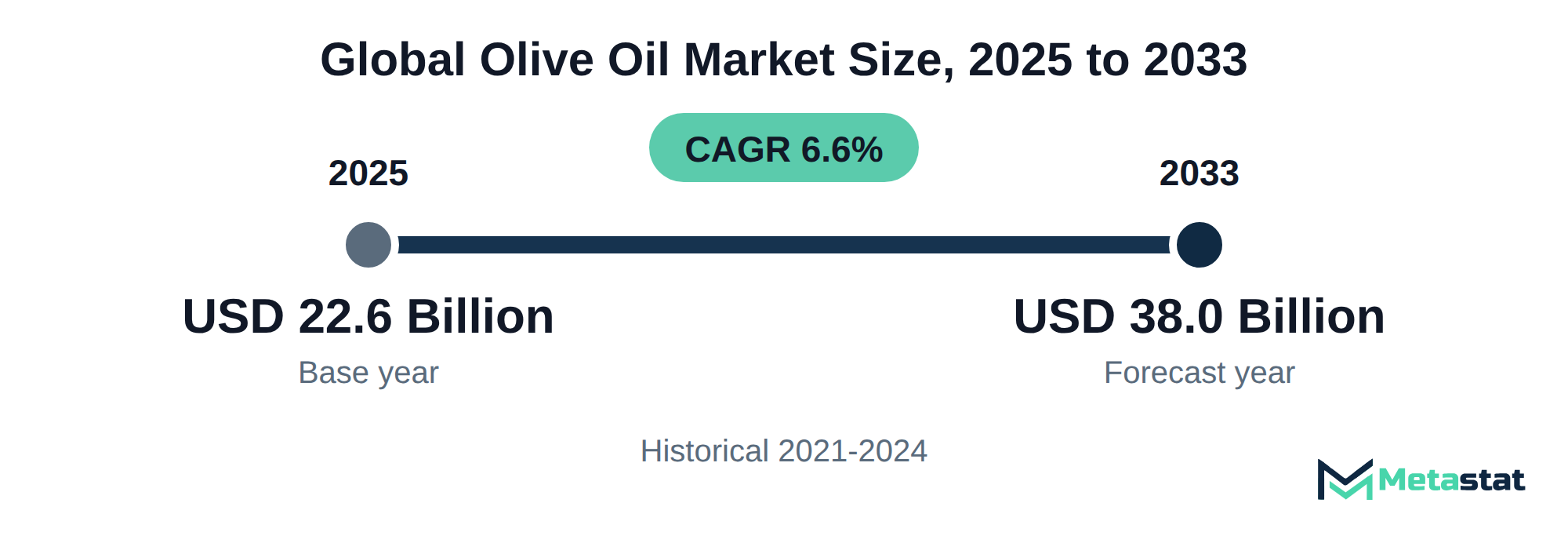
Market Valuation: Valued at $22.6 Billion in 2025, projected to reach $38 Billion by 2033 at a 6.6% CAGR.
Dominant Segment: Extra virgin olive oil leads the market, driven by consumer preference for premium quality and health benefits. This segment is projected to grow significantly, reflecting a strong demand for high-quality products.
Geographic Lead: Europe dominates the olive oil market with a 51.9% share in 2025, primarily due to established production capabilities in countries like Italy and Spain. North America, particularly the US, is also experiencing notable growth.
What's Inside: The report provides a comprehensive analysis of market dynamics, competitive landscape, and growth forecasts from 2026 to 2033. It covers various segments, including product types, certifications, and end users.
Emerging Opportunities: The certified organic olive oil segment is projected to reach USD 6.3 billion by 2033, driven by increasing consumer demand for natural and sustainable products. This trend presents significant growth potential for producers.
Consumer Trends: Rising health awareness among consumers is boosting demand for premium olive oils, particularly extra virgin varieties. Households are increasingly opting for healthier cooking oils, influencing market growth.
Choose Your License
Global Olive Oil Market
The global Olive Oil market was valued at USD 22.6 billion in 2025 and is projected to reach USD 38 billion by 2033, growing at a CAGR of 6.6% over the forecast period.
The Olive Oil market encompasses a variety of products, including extra virgin, virgin, and refined olive oils, catering to diverse consumer preferences and culinary uses. Buyers invest in olive oil for its health benefits, flavor enhancements, and versatility across food and beverage applications. The market attracts households, foodservice operators, and food and beverage manufacturers, driven by increasing demand for high-quality and organic options.
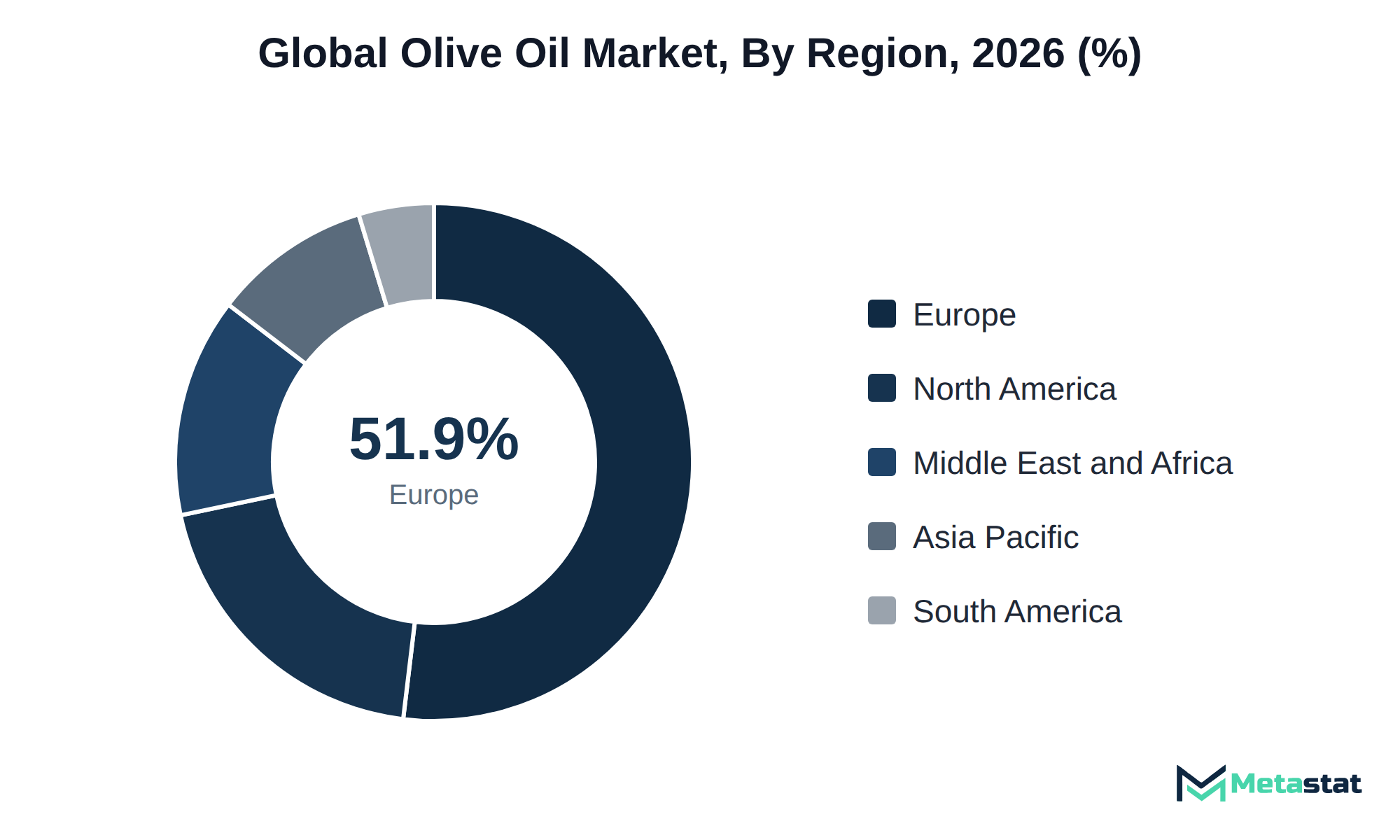
Growth in the market is fueled by rising consumer awareness regarding the health advantages of olive oil, particularly its role in promoting heart health and overall wellness. Extra virgin olive oil stands out, reflecting consumer preference for premium products. Europe dominates the market with a share of 51.9%, surpassing all other regions, while North America holds 19.8% of the market in 2025, with the US leading in 2026.
Increased adoption of healthy cooking practices and broader culinary use drive further interest in the olive oil market. The rise of foodservice operators and the growth of the organic certification segment contribute to a favorable market outlook. Consumers seek healthier alternatives and premium products, positioning the market for sustained expansion through the forecast period.
The Olive Oil market serves various segments, including households, foodservice operators, and food and beverage manufacturers. Consumers increasingly seek high-quality options, driving purchases of premium products like extra virgin olive oil. The versatility of olive oil in cooking, along with its health benefits, contributes to rising consumer interest and spending in this sector.
Rising health awareness among consumers is driving a preference for natural and organic products in the olive oil market. The segment of extra virgin olive oil holds the most value, reflecting high demand for premium quality. Europe dominates the market with a 51.9% share in 2025, indicating strong consumer loyalty and established production capabilities in countries like Italy and Spain.
Innovation in product offerings and sustainable practices further influence market dynamics. Certification trends, particularly in organic olive oil, cater to environmentally conscious consumers. This shift supports an expanding market, aligning with broader consumer preferences for transparency and quality in food products.
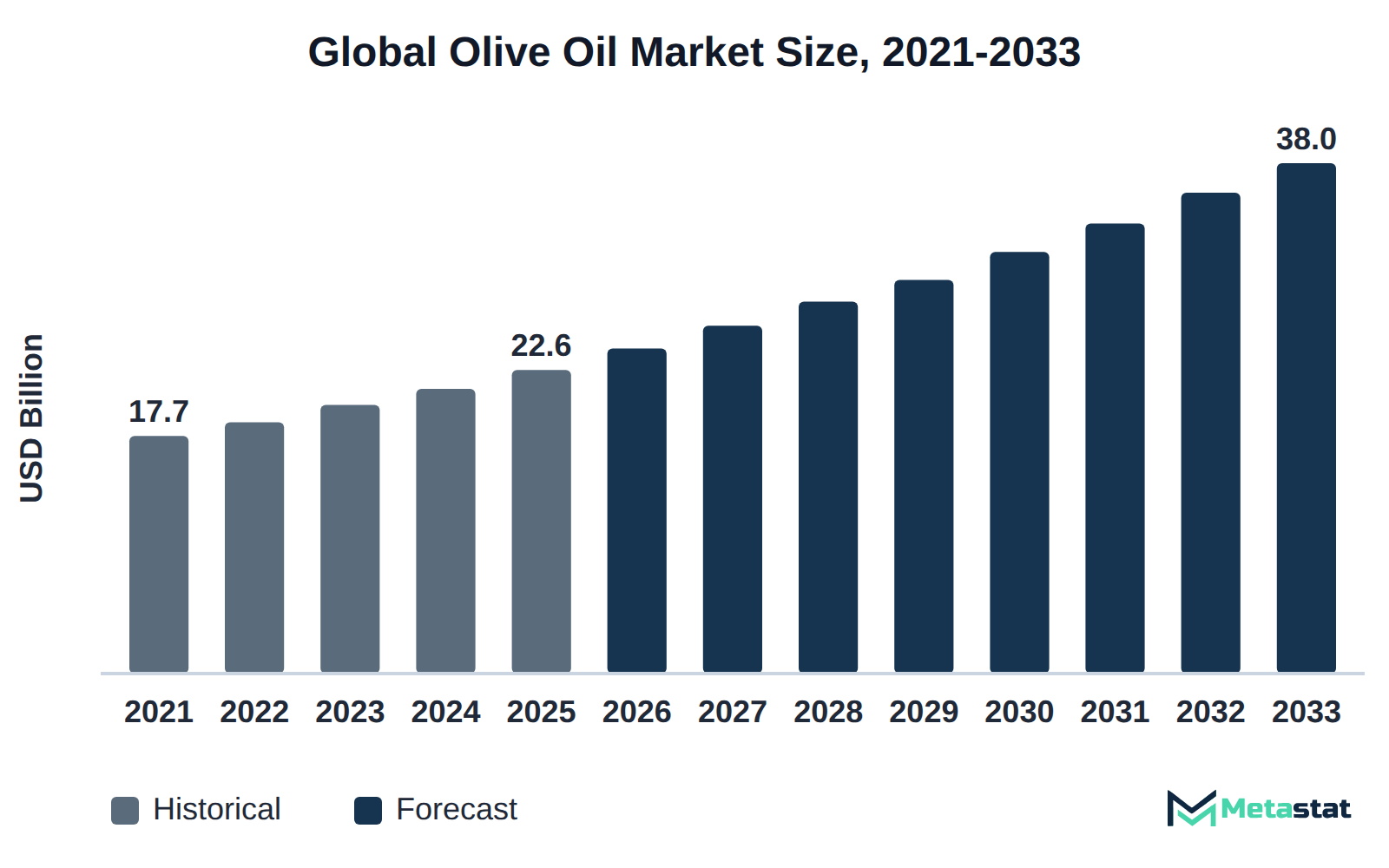
Olive oil price volatility significantly stems from Mediterranean harvests, which remain susceptible to climatic variations. In 2025, the market reached a valuation of USD 22.6 billion, driven by production fluctuations in major olive-producing countries. Drought, excessive rainfall, and pest infestations drastically impact yield, leading to unpredictable pricing dynamics. In regions like Italy and Spain, a single year's poor harvest results in price surges, affecting both consumers and businesses reliant on stable supply.
Producers have recently increased their reliance on technology for harvest operations. Innovations in agricultural technology, including precision farming and data analytics, aim to mitigate the effects of adverse weather conditions on yield. Implementing these technologies enhances decision-making regarding irrigation, pest control, and harvesting, thus stabilizing output levels. This proactive approach supports producers in maintaining profitability, even during challenging climatic periods.
Over the forecast period, technological advancements are central to managing price volatility in the olive oil market. The growth of the segment for extra virgin olive oil, reaching USD 21.4 billion by 2033, highlights the importance of consistent quality and supply stability. By adopting advanced techniques, producers position themselves competitively and can meet consumer demand despite price fluctuations.
Single-origin extra virgin olive oil attracts increasing interest among buyers, driven by a desire for authenticity and traceability. This segment of the olive oil market emphasizes products sourced from specific regions, often linked to unique flavor profiles and quality assurance. The pricing for single-origin offerings typically reflects the added value of tracing the oil’s origin, resulting in higher price points compared to blended options. For instance, the segment for extra virgin olive oil is projected to grow from USD 12.9 billion in 2026 to USD 21.4 billion by 2033, representing a compound annual growth rate (CAGR) of 7.5%. This growth correlates with consumers’ willingness to pay premium prices for products with verified origins.
Contracts for single-origin extra virgin olive oil often include terms that emphasize traceability, with stipulations regarding sourcing practices and certification. Suppliers increasingly adopt transparency measures, allowing buyers to verify the origin of the olive oil through digital platforms or labeling. This trend enhances consumer trust and supports the branding of olive oil products in a saturated market. The emphasis on traceability and single-origin sourcing results in a competitive advantage for producers, helping them capture a growing share of the market focused on authenticity and quality.
Households increasingly prefer glass bottles and bag-in-box packaging for olive oil, driven by the emphasis on quality and convenience. Glass bottles enhance the perception of premium quality, while bag-in-box options offer practical storage solutions. The market for households is projected to grow from USD 14.9 billion in 2026 to USD 22.5 billion by 2033, reflecting a compound annual growth rate of 6.1%. This growth indicates strong consumer preference for olive oil packaged in formats that balance aesthetics and functionality.
Glass packaging appeals to consumers seeking high-quality products, contributing to the segment's expansion. The transparent nature of glass allows buyers to see the oil's clarity and color, reinforcing their choice of premium olive oil. Conversely, bag-in-box liquid packaging provides convenience for everyday use, making it ideal for families who consume olive oil regularly. This dual approach in packaging caters to distinct consumer needs within the olive oil market.
Preferences evolve, prompting suppliers of olive oil to adapt their packaging strategies to align with these trends. Producers focusing on high-quality glass bottles and innovative bag-in-box solutions position themselves to capture market share. Demand for sustainable and practical packaging enhances brand loyalty and supports revenue growth in the olive oil market.
Extra virgin olive oil and refined olive oil differ significantly in terms of production, flavor, and nutritional content. Extra virgin olive oil represents the highest quality level available, derived from cold-pressing olives without the use of chemicals. This process preserves the natural flavors and health benefits associated with olives. In contrast, refined olive oil undergoes processing that often includes the use of heat and chemicals, resulting in a more neutral taste and fewer nutrients.
Consumers show a strong preference for high-quality olive oils rich in flavor and health benefits. Demand for extra virgin olive oil is driven by its applications in cooking, dressings, and health-conscious diets. The appeal of natural ingredients attracts several buyers in the olive oil market, pushing them towards premium options.
Refined olive oil, while versatile and often less expensive, lacks the distinctive taste and health advantages of its extra virgin counterpart. Understanding these differences allows buyers to make informed decisions based on their culinary needs and health goals. Increased awareness of the benefits of extra virgin olive oil supports its growth in the market, ultimately influencing consumer purchasing behaviors.
Consumers increasingly prioritize health and wellness, impacting purchasing behavior towards premium products. Households shift focus to healthier cooking oils, favoring options perceived as beneficial for heart health and overall wellbeing. This change in consumer preferences results in heightened demand for extra virgin olive oil, which has higher nutritional value compared to conventional oils. Higher demand means substantially larger volumes purchased, which influences pricing dynamics across the market. Households seeking healthier alternatives contribute significantly to the overall expansion of the olive oil market.
Enhancing the appeal of olive oil, producers emphasize its natural and organic qualities, aligning with rising consumer interest in clean-label products. Health-conscious buyers invest more in quality olive oil, driving competition among suppliers to meet this demand.
Advancements in production technologies significantly influence the market, enhancing efficiency and reducing operational costs for suppliers. These technologies include improved extraction methods and automated bottling and filling equipment, resulting in higher quality products at competitive prices. Producers adopting state-of-the-art machinery experience lower processing times and reduced waste, contributing to greater profitability. The shift toward cost-effective solutions attracts a broader range of buyers, including foodservice operators and households seeking value in their purchases. Declining production costs lead to increased demand for premium olive oil varieties, which boosts overall sales volumes. These innovations enhance supplier competitiveness and give consumers access to high-quality products at attractive price points. The growing emphasis on sustainability further drives the adoption of environmentally friendly production methods, aligning with consumer preferences for responsibly sourced olive oil. This alignment enhances brand loyalty and builds long-term relationships between suppliers and their customers.
Fluctuating olive oil prices create uncertainty for consumers, particularly impacting household purchases where budget constraints dictate spending behavior. Price instability often results in smaller orders, with buyers opting for cautious purchasing strategies during periods of high cost. This phenomenon affects the overall growth trajectory of the olive oil market by discouraging regular consumption and leading to delayed replacement purchases among households. These trends limit the market's ability to sustain steady growth, particularly in segments heavily reliant on consistent demand. Volatility in pricing undermines consumer trust and loyalty, presenting significant challenges for producers aiming to penetrate new regions or expand existing customer bases. While price fluctuations persist, buyers increasingly seek alternatives, particularly lower-cost oils, which further hinders the expansion of premium olive oil products. The overall impact of these pricing dynamics emphasizes the need for stable pricing mechanisms to enhance consumer confidence in the olive oil market.
Increasing costs for raw materials reduce profitability for suppliers within the Olive Oil market. Factors including inflation and supply chain disruptions contribute to the upward pressure on production expenses. The need for raw olive fruit, which fluctuates in availability and price, adds to the complexity of managing operational costs. Suppliers respond by optimizing production processes, seeking economies of scale, and investing in technology to enhance efficiency. Strategic partnerships with growers and investments in local sourcing aim to stabilize input costs. These adjustments help mitigate the impact of rising expenses, although overall pressure on margins remains a significant concern. Consequently, suppliers face challenges in maintaining competitive pricing while ensuring quality, a vital aspect for consumer retention. The outlook for the market hinges on how effectively suppliers adapt their strategies to counterbalance rising production costs, shaping future growth and investment decisions.
The segment for certified organic olive oil in the Olive Oil market demonstrates significant potential, driven by increasing consumer demand for natural and sustainable products. The market for certified organic olive oil is projected to reach USD 6.3 billion by 2033. This rapid growth highlights the growing preference among health-conscious consumers and environmentally aware buyers. Food and beverage manufacturers, focusing on clean-label products, seek organic options to meet evolving consumer preferences. The rise of e-commerce platforms has facilitated access to organic olive oils, enhancing distribution channels for suppliers. Addressing this trend allows producers to expand their portfolios and capture a larger share of the market, benefiting their revenue and competitive positioning.
While demand for organic products continues to rise, suppliers investing in organic certification processes align with market expectations and open new avenues for growth. Meeting this demand contributes to the overall expansion of the Olive Oil market while catering to a more discerning consumer base.
The Global Olive Oil market is segmented based on Product Type, Certification, End User, and Packaging Type.
Extra virgin olive oil serves various culinary applications, appealing to households and foodservice operators who prioritize flavor and health benefits. The increasing health consciousness among consumers drives demand for extra virgin olive oil, particularly in regions with a strong Mediterranean dietary influence. This segment outpaces others in growth, with a higher CAGR compared to refined or regular olive oils. The quality perception associated with extra virgin olive oil allows producers to command premium pricing, further enhancing revenue potential. In addition, the expansion of e-commerce platforms enables wider distribution, facilitating increased accessibility to this category of olive oil, which supports its overall growth trajectory within the market.
Virgin Olive Oil is estimated to reach USD 3.7 billion by 2033, at a CAGR of 7% during the forecast period. This type of oil finds extensive use in households and foodservice operators who value its flavor and health benefits. The increasing focus on natural ingredients drives demand within this segment, differentiating it from refined olive oils, which undergo processing that affects flavor and nutritional quality. Household consumers prioritize high-quality, flavorful oils for cooking and dressing, contributing to the segment's growth. Rising awareness regarding health benefits associated with virgin olive oil, including antioxidants and heart-healthy fats, enhances its appeal. This segment's growth rate outpaces that of refined olive oil, reflecting changing consumer preferences toward less processed options. The market responds to these trends, with a strong emphasis on quality and authenticity shaping competitive dynamics.
Refined Olive Oil segment is expected to reach USD 2 billion by 2033. This segment primarily serves culinary applications within households and commercial kitchens, appealing to consumers seeking a versatile cooking oil. A notable growth driver includes the increasing popularity of refined olive oil among foodservice operators, who frequently rely on its mild flavor and high smoke point for various cooking methods. This segment experiences a slower growth rate compared to extra virgin olive oil, with a CAGR of 5.3% reflecting its position as a staple rather than a premium choice. The refined olive oil segment’s market dynamics differ markedly from the organic counterpart, which attracts attention due to rising consumer preferences for health-conscious products. Price sensitivity among consumers limits adoption, placing refined olive oil at a different competitive edge in the broader market.
Olive Oil Composed of Refined and Virgin Olive Oils segment is projected to grow at a CAGR of 5.3% during the forecast period. This segment finds application in both culinary uses and food manufacturing processes, appealing to households and foodservice operators seeking quality and versatility. Growing consumer awareness regarding health benefits associated with olive oil consumption drives demand, along with a shift towards healthier cooking oils across various cuisines. In comparison to other segments, this segment experiences moderate growth, distinguishing itself with price stability relative to premium offerings like extra virgin olive oil. While several consumers opt for virgin and refined olive oils for specific culinary applications, the blended product serves a unique niche, offering flexibility and accessibility to many buyers. The market displays a diverse range of preferences, with health-conscious consumers increasingly gravitating towards blends that offer a balance of flavor and cost-effectiveness.
Others (Ordinary Virgin Olive Oil) includes olive oils that do not meet the criteria for extra virgin or virgin classifications. This sub-segment finds extensive use in both household cooking and foodservice environments, where it functions as a versatile ingredient for various culinary applications. Demand for this segment arises from price sensitivity among consumers and foodservice operators, leading to a preference for affordable options. The market for ordinary virgin olive oil typically experiences slower growth compared to extra virgin and virgin olive oils, which attract more premium pricing due to their perceived higher quality. This sub-segment caters to budget-conscious buyers seeking reliable, everyday cooking oils, differentiating itself through cost-effectiveness rather than high-end attributes.
Conventional Olive Oil segment is valued at USD 20.8 billion in 2026 and is projected to reach USD 31.7 billion by 2033, at a CAGR of 6.2% during the forecast period. This segment primarily serves households and foodservice operators, offering a versatile cooking oil suitable for various culinary applications. Increasing health consciousness among consumers drives demand for high-quality olive oils, promoting a shift toward conventional options. This segment experiences steady growth, distinguishing it from the certified organic olive oil segment, which shows a higher CAGR of 9.2%. The price point of conventional olive oil remains more accessible compared to organic alternatives, making it a favored choice for budget-conscious consumers. The market continues to evolve, influenced by changing consumer preferences and the growing importance of quality in food sourcing.
Certified Organic Olive Oil segment is estimated to reach USD 6.3 billion by 2033, at a CAGR of 9.2% during the forecast period. This segment serves health-conscious consumers who prioritize sustainable and natural products. Increasing consumer awareness about the benefits of organic products drives demand, particularly among households and foodservice operators seeking healthier options. The organic certification process ensures higher quality and traceability, appealing to buyers concerned about product integrity. In contrast to Conventional Olive Oil, which is projected to grow at a CAGR of 6.2%, the Certified Organic segment displays faster growth, reflecting a significant shift in consumer preferences toward organic solutions. This demand creates opportunities for producers who adapt to evolving market trends focused on sustainability and health. Companies entering this space face potential challenges related to supply chain management and certification processes, which impact pricing and availability.
This segment primarily caters to domestic consumers who use olive oil for cooking, salad dressings, and various culinary applications. The increasing trend toward healthy eating contributes significantly to the growth of this segment, with consumers opting for olive oil due to its perceived health benefits over saturated fats. Compared to other segments, the Households segment exhibits a steady growth trajectory, supported by consistent demand for high-quality products. The shift toward premium and organic options influences purchasing decisions, distinguishing this segment from foodservice operators and manufacturers, which experience different market dynamics and pricing pressures. Household consumption patterns evolve, and the Olive Oil market continues to adapt, meeting changing consumer preferences.
Foodservice Operators segment is estimated to reach USD 7.4 billion by 2033, at a CAGR of 7.2% during the forecast period. This segment primarily serves restaurants, cafes, and catering services, which use olive oil for cooking, dressings, and flavor enhancement in various dishes. The growing trend toward healthy eating and the incorporation of Mediterranean diets in foodservice establishments significantly boosts demand. Compared to other segments, the foodservice operators segment experiences faster growth, attributed to the increasing number of dining establishments and consumer preferences for higher-quality ingredients. The segment faces challenges related to price volatility in the olive oil market, impacting procurement strategies for operators. The focus on sourcing premium olive oils enhances the culinary experience, driving demand in this segment.
Food and Beverage Manufacturers segment is expected to reach USD 6.5 billion by 2033. This segment includes companies that incorporate olive oil into various food products, enhancing flavors and nutritional profiles. Demand for high-quality ingredients drives growth in this segment, reflecting a wider trend toward health-conscious eating. Increasing consumer awareness regarding the benefits of olive oil supports this trend, increasing its presence in processed foods. With a projected CAGR of 6.5%, this segment exhibits significant growth compared to others in the group. Factors unique to this segment include the necessity for consistent quality and supply, differentiating it from household use where price sensitivity plays a more significant role. The focus on product innovation in food applications further drives the market, allowing manufacturers to create diverse offerings that appeal to health-oriented consumers.
Valued at USD 6.5 billion by 2033, the Personal Care and Cosmetics Manufacturers segment is projected to grow at a CAGR of 8.3% during the forecast period. This segment employs olive oil for its moisturizing properties and antioxidant benefits, appealing to manufacturers of skincare, haircare, and cosmetic products. Increasing consumer awareness regarding natural ingredients drives demand within this segment, pushing brands to adopt olive oil-based formulations. Compared to other segments, this category experiences faster growth, fueled by the rising trend toward organic and chemical-free products. The higher price point associated with premium olive oil products aligns with consumer willingness to invest in quality ingredients, differentiating it from less specialty-focused segments. The market expansion reflects a broader shift toward health-conscious and sustainability-driven consumer choices.
This segment focuses on pharmaceutical and supplement manufacturers using olive oil for various applications, including dietary supplements and topical products. Demand for olive oil in this context is driven by growing consumer inclination toward natural ingredients and health benefits associated with olive oil, including its antioxidant properties. The unique formulation of olive oil appeals to manufacturers seeking high-quality, natural oils that align with their product standards. Compared to other segments, this one often experiences higher pricing due to the premium nature of products developed for health-focused markets. The segment's growth trajectory remains distinct, stemming from increasing integration of olive oil in health and wellness products, creating a niche that enhances market diversity.
Valued at USD 13.4 billion in 2026, the Bottles segment is projected to reach USD 20.3 billion by 2033, at a CAGR of 6.1% during the forecast period. This packaging type serves consumers and retailers who prefer convenient and visually appealing products. Key factors influencing this segment include rising demand from households focused on premium olive oil varieties and the shift toward sustainable packaging solutions. Bottles differ from other packaging types, including metal tins and bulk containers, due to their higher market value and consumer preference for aesthetics. The segment's growth aligns with the broader trend of increasing consumer awareness regarding product quality, driving the need for clear packaging to highlight the oil's visual attributes.
Metal Tins and Cans segment is estimated to reach USD 6.5 billion by 2033, at a CAGR of 5.8% during the forecast period. This packaging type serves various users, including households and foodservice operators, who value durability and convenience in storage. Increasing consumer preference for sustainable packaging solutions drives growth in this segment. The segment stands out due to its moderate growth compared to other packaging types, including Bottles, which project a CAGR of 6.1%. Consumers' focus on effective preservation techniques for olive oil further influences demand. While other packaging options offer distinct advantages, Metal Tins and Cans continue to appeal to cost-sensitive buyers seeking reliable storage solutions, contributing to the overall dynamics of the market.
Pouches and Bag-in-Box segment is expected to reach USD 3.2 billion by 2033. This packaging type serves households and foodservice operators, allowing for convenient storage and dispensing of olive oil. Rising demand for practical packaging solutions influences this segment significantly. Increasing consumer preference for eco-friendly and lightweight options supports the growth of flexible packaging formats such as pouches and bag-in-box offerings, differentiating them from traditional bottle packaging. Compared to other packaging types, this segment exhibits a competitive edge regarding cost-effectiveness and ease of use. The segment's projected growth rate enhances its attractiveness within the broader market, appealing to a variety of users seeking convenient and sustainable solutions.
Bulk Containers segment is projected to grow at a CAGR of 7.2% during the forecast period. Primarily used by large-scale manufacturers and distributors, this segment accommodates bulk purchasing and storage of olive oil, catering to both industrial and commercial sectors. Rising demand for bulk packaging solutions stems from cost efficiencies and increasing requirements for sustainable packaging practices. Compared to other packaging types, Bulk Containers often offer lower per-unit costs, enhancing affordability for businesses engaged in food and beverage production. The need for flexible storage options aligns with growing operational capacities among producers, driving this segment's growth. Bulk Containers differ from Bottles and Metal Tins, which typically target retail consumers, reinforcing the distinct buyer base associated with this segment. Efficient and environmentally friendly packaging solutions are becoming more important in the Olive Oil market.
This segment encompasses various packaging options, including sachets and aerosol sprays, tailored for convenient consumer use. Consumers in households and foodservice operations increasingly seek portable and easily dispensable packaging, prompting growth in this segment. The trend toward on-the-go consumption and portion control drives demand for these packaging types. Compared to more traditional options, this sub-segment presents unique advantages through its convenience and innovative designs. While other packaging types, including bottles and metal tins, experience steady growth, sachets and aerosol sprays cater to different consumer preferences, focusing on convenience and ease of use. This differentiation positions the sub-segment uniquely within the Olive Oil market, appealing to consumers seeking innovative ways to incorporate olive oil into their diets.
Based on geography, the Global Olive Oil market is divided into North America, Europe, Asia-Pacific, South America, Middle East, and Africa.
North America represents a significant portion of the Olive Oil market, accounting for 19.8% of the global share in 2025. The increasing health awareness among consumers in the United States, Canada, and Mexico drives demand for premium olive oil products. Retail expansion and the rise of e-commerce platforms enhance accessibility to various olive oil types, particularly extra virgin and organic options. The growing popularity of Mediterranean diets further supports the market expansion, with consumers seeking healthier cooking oils. North America is projected to reach USD 8.1 billion by the end of 2033. Strong marketing strategies by key players raise consumer interest and drive competition within the market.
Europe holds a significant position in the Olive Oil market, commanding a share of 51.9% in 2025. The region stands out due to its rich history of olive cultivation, particularly in countries like Italy and Spain, where consumer preference for high-quality extra virgin olive oil drives demand. Households and foodservice operators constitute major buyer groups, seeking premium products with strong flavor profiles. Regulatory frameworks including the European Union’s quality assurance programs enhance consumer confidence in product authenticity and safety. Investment in modern production techniques and sustainable farming practices continues to shape the competitive landscape, ensuring Europe remains a leading exporter and innovator within the market.
The market in Asia-Pacific experiences an increasing interest in olive oil, driven by rising health awareness among consumers. Countries like China and India see a surge in demand as households seek healthier cooking alternatives. The region's share of the global market stands at 9.9% for 2025, highlighting its growing significance. Infrastructure improvements in distribution channels enhance accessibility, enabling consumers to incorporate olive oil into their diets. The Food and Beverage Manufacturers segment plays an important role in this region, as manufacturers use olive oil for its health benefits and flavor enhancement in products. Certification trends, particularly for organic varieties, attract environmentally conscious consumers, further propelling market expansion. The Olive Oil market is expected to experience steady growth, supported by evolving dietary preferences and increased consumer education on the benefits of olive oil.
Demand for olive oil in South America exhibits unique characteristics influenced by regional preferences and production capabilities. Brazil and Argentina emerge as key players in this market, with a growing inclination toward healthy cooking oils. The presence of local producers supports the development of the market, contributing to a projected market share of 4.7% in 2025. Increased consumer awareness concerning health benefits drives household purchases, particularly in urban areas. Infrastructure improvements enhance distribution channels, facilitating market access. Regulatory frameworks emphasizing food quality and safety standards further influence purchasing decisions among consumers. This combination of factors positions the olive oil market for continued growth in South America, catering to evolving consumer preferences.
The Olive Oil market in the Middle East and Africa demonstrates a growing interest in premium quality products, particularly within the foodservice sector. Key drivers include increasing health awareness and rising demand for high-quality cooking oils among consumers. Saudi Arabia and the UAE play significant roles in shaping consumer preferences, particularly for gourmet and organic offerings. Infrastructure investments enhance distribution channels, facilitating better access to olive oil products. The region holds a share of 13.7% of the global market in 2025, emphasizing its importance in the overall market. South Africa's expanding food industry further supports the growth of the market, focusing on quality and sustainability in sourcing olive oil. The market's expansion aligns with increasing consumer trends toward healthier dietary choices.
The Olive Oil market features diverse strategies among key players, focusing on product differentiation, pricing, and regional reach. Companies position themselves based on product type, certification, and packaging, appealing to various buyer preferences. Price sensitivity influences purchasing decisions, particularly among households and foodservice operators.
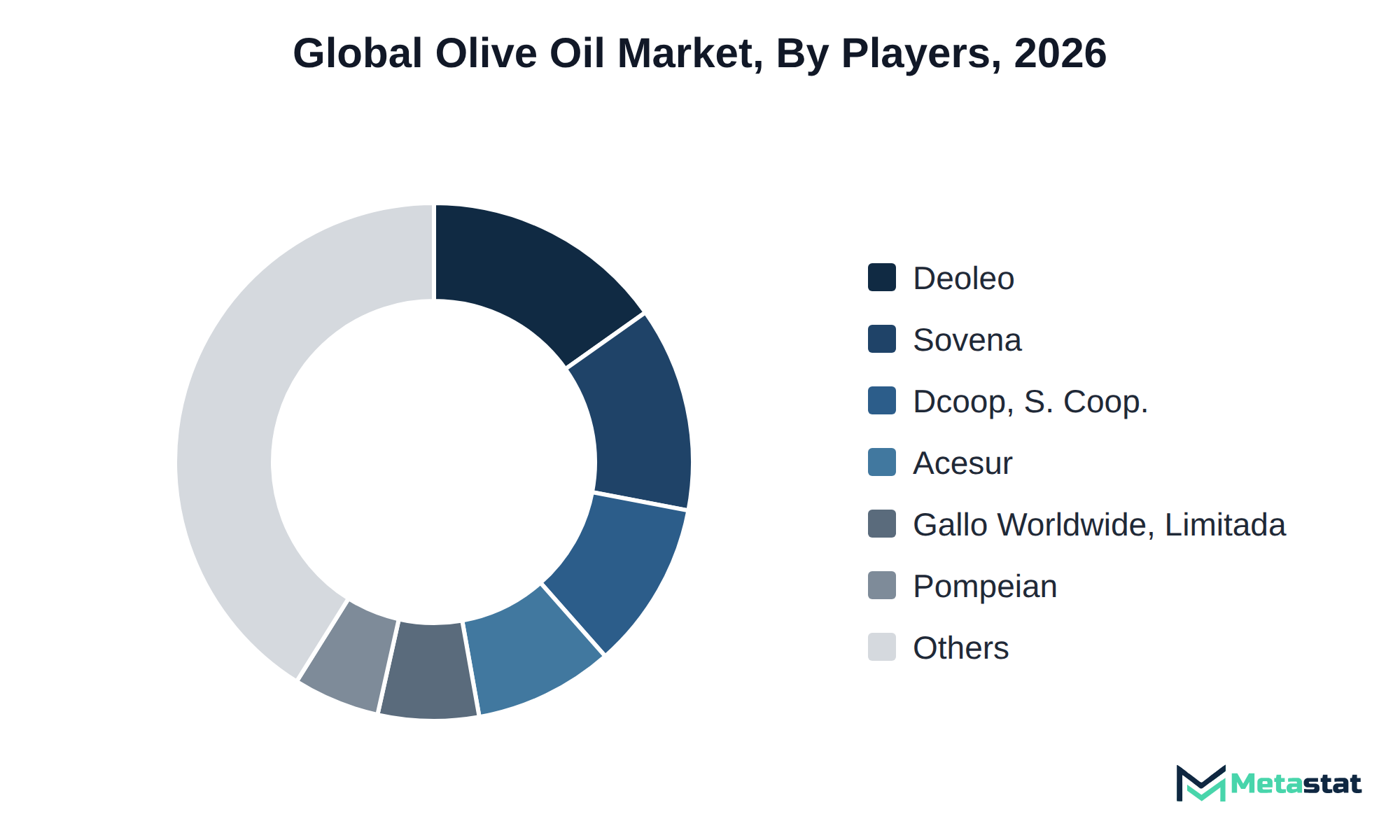
Deoleo, S.A. emphasizes its extensive portfolio of olive oil products, catering to both conventional and organic certifications. The company’s focus on quality and brand recognition strengthens its market presence. In contrast, Gallo Worldwide, Limitada prioritizes value offerings, appealing to cost-conscious consumers while maintaining a commitment to product quality.
Salov S.p.A. concentrates on innovation in packaging solutions, enhancing product visibility and convenience. This approach aligns with evolving consumer preferences for easy-to-use formats. Meanwhile, Del Monte Foods Private Limited (Sundrop Brands) diversifies its offerings by integrating olive oil into food products, catering to the growing demand for healthy cooking options.
To achieve this growth, the Olive Oil market relies on several key developments. The rising demand for extra virgin olive oil, projected to grow at a CAGR of 7.5%, is a key factor driving market expansion. This segment appeals to health-conscious consumers, particularly in North America and Europe, where awareness of the health benefits of olive oil is increasing. The growth of certified organic olive oil, anticipated to increase at a CAGR of 9.2%, highlights a shift towards organic products among households and foodservice operators. However, challenges exist, including fluctuating raw material prices, which could hinder growth. These costs impact producers across all segments, particularly refined and composed olive oils. Balancing these developments against market risks will be essential for the Olive Oil market to reach its forecast targets and sustain growth.
By Product Type: Extra Virgin Olive Oil, Virgin Olive Oil, Refined Olive Oil, Olive Oil Composed of Refined and Virgin Olive Oils, Others (Ordinary Virgin Olive Oil)
By End User: Households, Foodservice Operators, Food and Beverage Manufacturers, Personal Care and Cosmetics Manufacturers, Others (Pharmaceutical and Supplement Manufacturers)
By Packaging Type: Bottles, Metal Tins and Cans, Pouches and Bag-in-Box, Bulk Containers, Others (Sachets, Aerosol Sprays)
The report strategically identifies and profiles the key market players and analyses their core competencies in each sub-segment of the Olive Oil market.
|
Report Attributes |
Details |
|
Study Period |
2021-2033 |
|
Base Year |
2025 |
|
Estimated Year |
2026 |
|
Forecast Period |
2026-2033 |
|
Historical Period |
2021-2025 |
|
Growth Rate |
CAGR 6.6% from 2026 to 2033 |
|
Revenue Unit |
USD billion |
|
Segmentation |
By Product Type, Certification, End User, Packaging Type, and Region |
|
By Region |
North America (By Product Type, Certification, End User, Packaging Type, and Country)
|
|
Europe (By Product Type, Certification, End User, Packaging Type, and Country)
|
|
|
Asia Pacific (By Product Type, Certification, End User, Packaging Type, and Country)
|
|
|
South America (By Product Type, Certification, End User, Packaging Type, and Country)
|
|
|
Middle East and Africa (By Product Type, Certification, End User, Packaging Type, and Country)
|
Find answers to common questions about this report
The Olive Oil market size was valued at USD 22.6 billion in 2025.
The market is projected to grow at a CAGR of 6.6% during the forecast period from 2026 to 2033.
The North America Olive Oil market size is estimated to reach USD 8.1 billion by 2033.
Extra Virgin Olive Oil leads the Olive Oil market with a projected value of USD 21.4 billion by 2033, representing the highest growth among product types.
Increasing consumer prioritization of health and wellness drives demand for premium products, particularly extra virgin olive oil. Advancements in production technologies enhance efficiency and reduce costs, attracting a broader range of buyers seeking value in their purchases.
Europe holds the dominant share of the Olive Oil market, accounting for 51.9 percent in 2025. This significant share reflects Europe's established production and consumption patterns in the olive oil sector.
Fluctuating olive oil prices create uncertainty for consumers, impacting household purchases and leading to cautious buying strategies. Increasing costs for raw materials, driven by inflation and supply chain disruptions, further reduce profitability for suppliers, complicating their ability to maintain competitive pricing while ensuring quality.
Growing consumer demand for certified organic olive oil and clean-label products significantly favors adoption in the industry. The rise of e-commerce platforms enhances access to organic options, allowing producers to capture a larger market share and align with evolving consumer preferences.
The Olive Oil market is estimated to reach a valuation of USD 38 billion by 2033.
Key players operating in the Olive Oil market include Deoleo, S.A., Sovena Group, Dcoop, S. Coop. And., Grupo Migasa, Acesur Group, Salov S.p.A., and Borges International Group, S.L.U.
The analysts below cover Food and Beverages research at Metastat Insights.
LEAD ANALYST
Utkarsh Khirodkar is a Lead Market Research Analyst at MetaStat Insight, specializing in market intelligence, technology sector assessments, and competitive strategy.

LEAD PRINCIPAL ANALYST, PHARMA AND HEALTHCARE
Food and Beverages · Healthcare · Healthcare IT · Medical Devices
Ajay Devgire is the Lead Healthcare Analyst at MetaStat Insight, leading strategic research and market intelligence initiatives across the global healthcare domain.

SENIOR RESEARCH ANALYST
Biotechnology · Food and Beverages · Medical Devices · Packaging
Snehal Pasalkar is a Research Analyst at MetaStat Insight, operating at the intersection of life sciences research, competitive strategy, and market intelligence.
Tracking capacity expansion in single-use bioprocessing requires dependable data on raw material availability and cleanroom-grade polymer supply chains. The competitive landscape chapter gave a grounded evaluation of secondary component suppliers across North America and Asia-Pacific rather than simply reprinting press releases. Having that level of supplier benchmarking helped clarify dual-sourcing considerations for our clinical pipeline planning.
When evaluating distributed energy resource management systems, standard research summaries tend to gloss over the operational differences between front-of-the-meter utility deployments and behind-the-meter industrial sites. The MetaStat Insight report addressed those distinctions directly, especially regarding software interoperability standards and grid interconnection backlogs. The five-year market sizing across regional transmission organizations provided actionable context for our grid modernization strategy.
Most industry reports on warehouse automation bundle autonomous mobile robots and fixed conveyor installations into the same top-level numbers, which complicates advisory work. This study split the market cleanly by payload tiers, navigation technology, and fleet management software layers. The regional forecast for Western Europe gave our team defensible adoption benchmarks when evaluating capital allocation for logistics clients, saving us days of secondary data scrubbing.
Explore related market intelligence reports worth reading alongside this one.