
LEAD ANALYST
Utkarsh Khirodkar is a Lead Market Research Analyst at MetaStat Insight, specializing in market intelligence, technology sector assessments, and competitive strategy.

Global Deli Meat Market Size, Share, By Product Type (Ham, Salami and Pepperoni, Deli Chicken Cuts, Deli Turkey Cuts, Bologna and Mortadella, Roast Beef, Corned Beef and Pastrami, Others), By Meat Source (Pork, Chicken, Beef, Turkey, Mixed Meats, Others), By Sales Format (Prepackaged Sliced Meats, Unsliced Deli Loaves and Whole Cuts, Bulk Presliced Meats), By End User (Retail, Foodservice, Food Manufacturers), Industry Analysis, Growth, Trends, and Forecast, 2026-2033
Report ID
MSI-5785
Published
November, 2026
Pages
264 Pages
Format
Historical
Base year
Forecast
Forecast period
Report Details
Market Valuation: Valued at $225.6 Billion in 2025, projected to reach $332.8 Billion by 2033 at a 4.9% CAGR.
Dominant Segment: The ham segment leads the market, driven by strong consumer preferences for its flavor and versatility in various food applications. It is projected to grow from USD 64.7 billion in 2026 to USD 86 billion by 2033.
Geographic Lead: North America is the leading region, holding 30.5% of the market in 2025, with the US expected to maintain its position due to a robust consumer base and established distribution networks.
What's Inside: The report provides a comprehensive analysis of the global deli meat market, covering product types, meat sources, sales formats, and end users, along with industry trends and forecasts from 2026 to 2033.
Emerging Demand: The deli chicken cuts segment is anticipated to grow significantly, reaching USD 58.1 billion by 2033, reflecting a shift towards leaner, protein-rich options favored by health-conscious consumers.
Technological Innovations: Advancements in processing technologies, such as vacuum and modified atmosphere packaging, enhance product quality and shelf life, addressing consumer demand for convenience and freshness.
Choose Your License
Global Deli Meat Market
The global Deli Meat market was valued at USD 225.6 billion in 2025 and is projected to reach USD 332.8 billion by 2033, growing at a CAGR of 4.9% over the forecast period.

The Deli Meat market encompasses a variety of processed meats, including ham, salami, and deli cuts from different meat sources including pork and chicken. Buyers invest in deli meats primarily due to convenience, versatility, and preference for ready-to-eat food products. The rise in demand stems from busy lifestyles that prompt consumers to seek quick meal solutions, driving spending in this sector.
Growth in the market is influenced by various factors, including increasing health consciousness among consumers. The segment with the highest value is ham, reflecting strong consumer preferences for this specific product type. North America holds 30.5% of the market in 2025, with the US leading in 2026. This region's strong market presence highlights the established consumer base and robust distribution networks supporting deli meat sales.
In addition to North America, Europe follows closely in market share, reflecting significant consumer demand. The expansion of the market is supported by the rising popularity of deli meats in foodservice and retail sectors, further enhancing the overall growth trajectory. The combination of evolving consumer preferences and the increasing availability of diverse product offerings positions the deli meat sector for sustained expansion.
The Deli Meat market includes various processed meats that appeal to consumers seeking convenience and flavor. Buyers invest in these products for their versatility, which suits a wide range of meals and occasions. Factors including the need for quick meal solutions and the growing trend of snacking drive spending in this sector, highlighting the market's alignment with contemporary dining preferences.
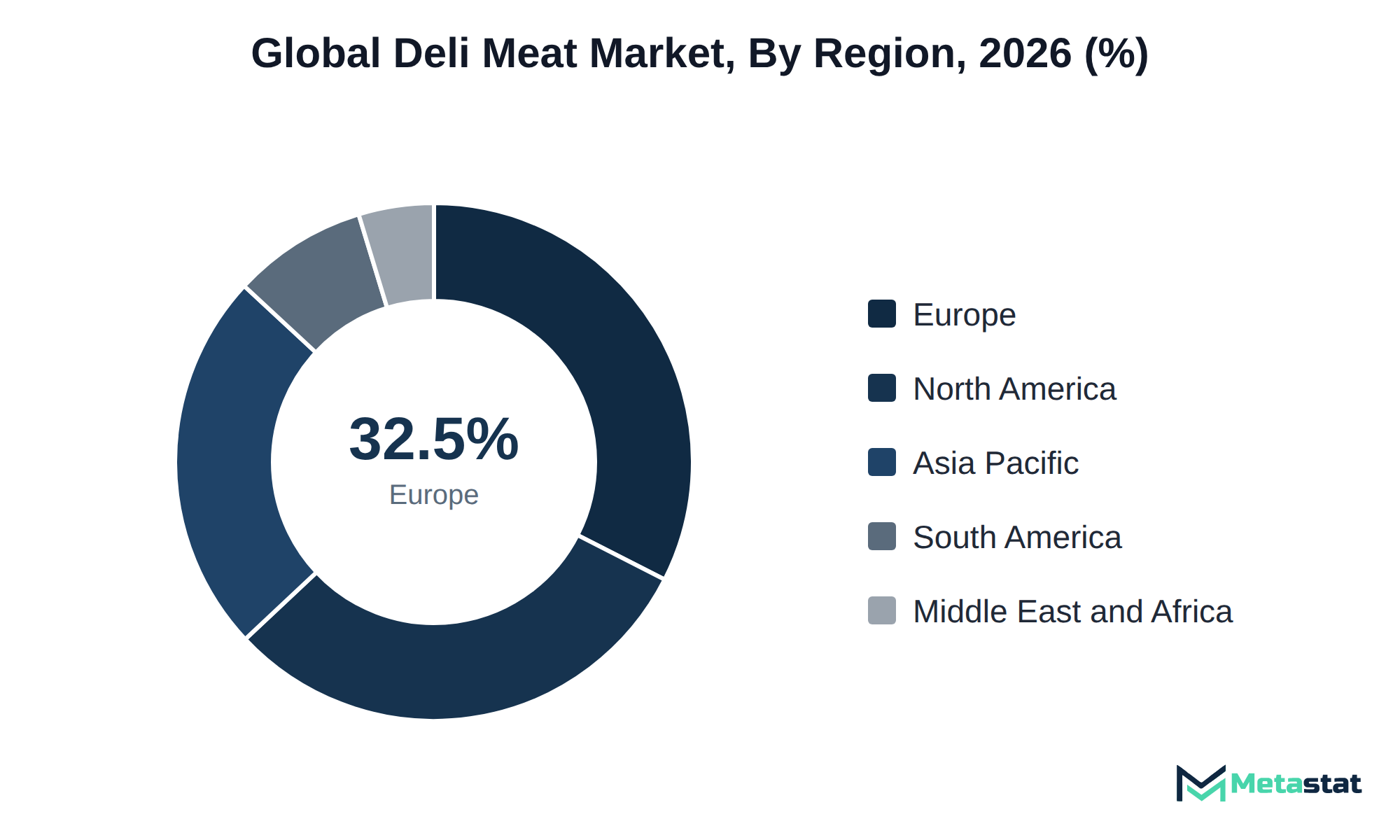
Growth in the market is fueled by increasing demand for high-quality meat products, particularly within the prepackaged sliced meats segment, which commands significant market value. In comparison, Europe follows closely with a 32.5% share, driven by a robust culinary culture that embraces deli meats in various dishes. The Asia Pacific region, with 23.9%, demonstrates potential for growth, reflecting evolving culinary habits.
Salami and pepperoni emerge as key products within the market, demonstrating strong appeal among consumers. The growing popularity of deli meats in foodservice establishments enhances demand, creating opportunities for suppliers. This trend indicates a favorable outlook for market expansion, as more restaurants and cafes incorporate deli meats into their menus, reflecting consumer preferences for flavorful, convenient options.
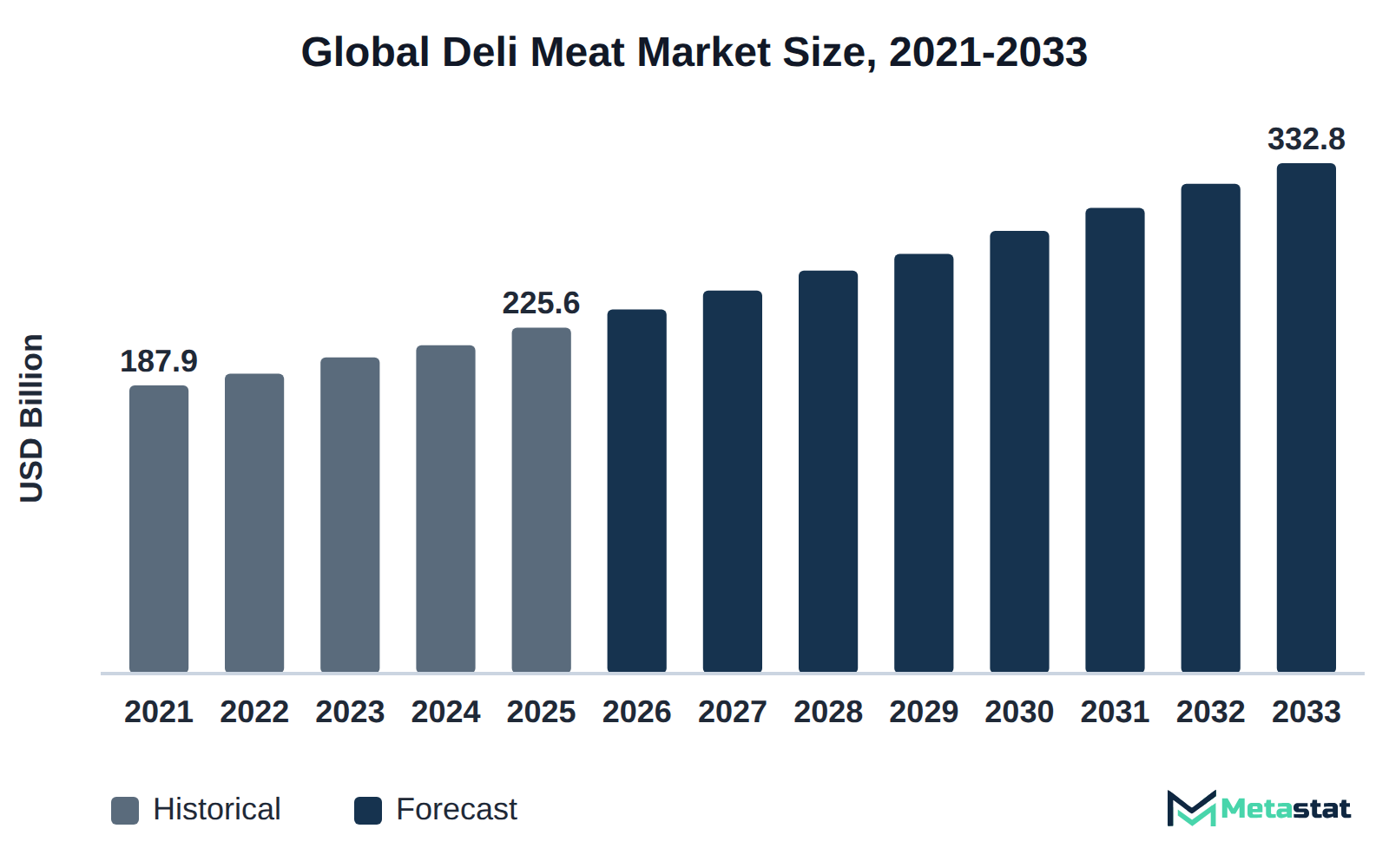
The rising preference for prepackaged deli meat reflects a significant shift in consumer behavior towards convenience and ready-to-eat meals. This trend aligns with the increasing popularity of grab-and-go lunch options, particularly among busy professionals and families seeking quick meal solutions. The deli meat market reports that prepackaged sliced meats will experience growth from USD 127.1 billion in 2026 to USD 187.7 billion by 2033, representing a compound annual growth rate (CAGR) of 5.7%.
Factors driving this demand include urbanization and changes in work habits, with more people opting for fast meal solutions that do not compromise on quality. Retailers are responding by expanding their offerings of prepackaged options, thereby enhancing product visibility and accessibility. The market benefits from suppliers and retailers increasingly focusing on innovative packaging solutions that improve shelf life and consumer appeal.
This evolution in consumer preferences presents opportunities for manufacturers to diversify their product lines and encourages strategic partnerships between food producers and retail chains. The market for deli meat adapts to the growing demand for convenience, and businesses that prioritize prepackaged solutions are likely to capture a larger share of the market.
Poultry deli meat has emerged as a popular choice in foodservice sandwich menus, driven by increasing consumer preference for lighter, protein-rich options. This segment reflects a significant shift in buying habits, with chicken deli products projected to reach USD 81.2 billion by 2033. The growing demand for poultry deli meat aligns with the trend towards healthier eating, prompting foodservice operators to incorporate these items into their menus more frequently.
Pricing strategies for poultry deli meat in the market generally operate on a contract model, where suppliers negotiate long-term agreements with foodservice operators, ensuring consistent supply and pricing stability. This approach benefits both parties, allowing foodservice businesses to manage costs while guaranteeing suppliers a steady volume of sales. The competitive landscape encourages operators to seek favorable contract terms, including bulk purchasing discounts and flexible payment schedules that align with cash flow cycles.
Incorporating poultry deli meat into menus not only enhances product offerings but supports profitability. Foodservice operators adapt to changing consumer preferences, and the strategic use of poultry products differentiates their offerings in a competitive market. The ability to source high-quality poultry deli meat through established contracts enhances operational efficiency and contributes to overall market growth.
The dry-cured deli meat segment reflects a growing demand among consumers seeking premium charcuterie assortments. This demand arises from an increased preference for artisanal and gourmet food options, driven by trends towards healthier and more natural choices. The deli chicken cuts segment is expected to reach a value of USD 58.1 billion by 2033, reflecting an ongoing shift towards high-quality meat products.
Retail buyers particularly seek products that emphasize traditional curing methods and high-quality ingredients, aligning with the evolving consumer palate that values flavor and authenticity. This focus on premium offerings allows retailers to cater to a discerning clientele willing to pay a premium for superior quality. Consequently, this segment within the Deli Meat market supports higher profit margins and enhances brand loyalty among consumers.
Reformulating lower-sodium deli meats involves innovative techniques to maintain flavor while reducing sodium content. Numerous manufacturers now apply alternative flavoring agents to enhance the taste of these products without relying heavily on salt. For instance, the incorporation of spices and herbs has gained popularity, allowing for improved flavor profiles while adhering to health guidelines.
In the deli meat market, consumer demand for healthier options drives these reformulation efforts. This growth highlights a significant shift towards healthier options, catering to consumers increasingly concerned about sodium intake.
For buyers, investing in lower-sodium deli meats represents an opportunity to align product offerings with rising health consciousness among consumers. While these reformulated products gain traction, they enhance consumer satisfaction and position companies competitively within the evolving market.
Advancements in processing technologies enhance efficiency and product quality within the market. Innovations including vacuum packaging and modified atmosphere packaging improve shelf life, ensuring that deli meats remain fresh for longer periods. These technologies meet consumer demand for convenience and quality, driving higher sales across various segments.
Increased automation in production lines decreases labor costs and minimizes the risk of contamination, benefiting manufacturers operationally. By adopting these technologies, suppliers streamline processes and reduce waste, contributing to sustainable practices in the industry. The growing trend toward automation supports the capacity expansion of players in the market, allowing them to meet rising consumer preferences effectively.
Technological enhancements support the development of new product variants, catering to health-conscious buyers seeking low-fat and low-sodium options. This diversification within product offerings aligns with consumer trends toward healthier eating habits, fueling overall demand in the deli meat market.
Increasing production costs exert significant pressure on the Deli Meat market, impacting profitability and pricing strategies. Rising prices for raw materials, including meat and spices, directly affect producers, leading to higher retail prices for consumers. Retail buyers, particularly within the foodservice and retail segments, respond to escalating costs by reducing order sizes or delaying purchases, which slows market growth. Foodservice operators face challenges in maintaining menu prices while offering competitively priced deli meat items. This situation results in smaller profit margins and a potential decrease in menu variety. The combination of rising production costs and cautious consumer spending patterns reinforces a challenging environment for growth in the market. Tightening margins create a barrier to entry for smaller companies, limiting competition and innovation within the sector.
Rising input costs, particularly related to meat sourcing and production materials, challenge suppliers within the deli meat sector. This inflation results from various factors, including supply chain disruptions and increased demand for raw materials, which impact profitability margins. Food manufacturers and retailers face difficulties maintaining pricing structures while ensuring quality, potentially leading to higher consumer prices. Suppliers actively seek strategies to mitigate these impacts, including sourcing alternative ingredients or optimizing production efficiency. For instance, suppliers explore local sourcing opportunities to reduce transportation costs and minimize supply chain vulnerabilities. This adjustment enhances operational resilience and allows for greater flexibility in responding to market fluctuations. The market navigates these challenges while continuing to innovate and adapt to consumer preferences, positioning itself for sustainable growth amid evolving economic conditions.
The deli chicken cuts segment demonstrates significant growth potential within the overall market. This segment is projected to reach USD 58.1 billion by 2033, reflecting a strong consumer preference for lighter protein options. Shifts in dietary habits, particularly towards healthier eating, drive this demand among health-conscious consumers and foodservice operators. Retailers increasingly emphasize products that cater to these preferences, leading to expanded offerings of deli chicken cuts in various formats, including prepackaged sliced options. The focus on convenience and quality aligns with changing consumer behaviors, providing a competitive edge for suppliers targeting this segment. Increased investments in marketing and product development further enhance penetration within the deli chicken cuts market, contributing to its anticipated growth.
The Global Deli Meat market is segmented based on Product Type, Meat Source, Sales Format, and End User.
Ham segment is valued at USD 64.7 billion in 2026 and is projected to reach USD 86 billion by 2033, at a CAGR of 4.1% during the forecast period. This product finds significant use in various food applications, including sandwiches, charcuterie boards, and breakfast dishes, appealing to consumers seeking flavor and convenience. The growing trend towards premium and artisanal food products drives a shift in consumer preferences, increasing demand for high-quality ham. Unlike other segments, the ham segment experiences moderate growth, with a CAGR of 4.1%, positioning it slower compared to salami and pepperoni, which enjoys a CAGR of 5.4%. Pricing strategies differ, with ham often priced higher due to its quality perception and the premium associated with specific varieties. This dynamic indicates a competitive landscape where quality and taste significantly influence purchase decisions among the retail and foodservice sectors.
Salami and Pepperoni segment is estimated to reach USD 56.4 billion by 2033, at a CAGR of 5.4% during the forecast period. Salami and pepperoni products are frequently used in sandwiches, pizzas, and charcuterie boards, appealing to both retail consumers and foodservice operators. Growing consumer preference for flavorful, ready-to-eat options drives demand in this segment, particularly within foodservice establishments. This segment exhibits a faster growth rate compared to others, reflecting a specific inclination towards spiced and cured meats. The rising trend of premium offerings, focusing on artisanal and authentic production methods, further enhances its appeal. In contrast to other product types, including ham, which grows at a CAGR of 4.1%, salami and pepperoni benefit from robust demand in various culinary applications, establishing a distinct position in the market.
This segment appeals to consumers looking for lean, protein-rich options, playing a significant role in retail offerings and foodservice menus. The demand for Deli Chicken Cuts thrives on trends favoring health-conscious choices, with consumers increasingly opting for lower-fat meat alternatives. The segment benefits from the overall growth of the market, with a compound annual growth rate (CAGR) of 7.2%, outpacing several other product types. The preference for ready-to-eat meals and prepackaged options drives sales, contrasting with traditional deli meats including ham and salami, which exhibit slower growth rates. This focus on healthier options positions Deli Chicken Cuts favorably compared to segments relying on higher-fat meats.
Deli Turkey Cuts are projected to grow at a CAGR of 5.5% during the forecast period. This product serves a significant role in both retail and foodservice applications, appealing to consumers seeking protein-rich options. The increasing inclination towards healthier dietary preferences drives demand, particularly among health-conscious individuals. This segment stands out for its higher growth rate compared to others in the product type grouping. For example, the Ham segment grows at a lower CAGR of 4.1%. Deli Turkey Cuts often carry a competitive price advantage, attracting a broader consumer base. Rising demand for lighter, leaner meats supports sales, contributing to the overall growth of the market.
Bologna and Mortadella consist of processed meats that appeal to diverse consumer preferences for flavor and texture. These products find extensive use in sandwiches, charcuterie boards, and various culinary applications, primarily targeting retail and foodservice channels. Growing interest in premium and artisan food offerings drives demand, reflecting the broader trend towards gourmet experiences. Unlike other deli meat segments, Bologna and Mortadella face unique market dynamics related to consumer perceptions of quality and authenticity. Price sensitivity varies, with these products often positioned as slightly more affordable alternatives compared to items like dry-cured meats. This segment, while not projected for rapid growth, remains integral to the market's overall diversity, highlighting the importance of balancing tradition with contemporary tastes in product development.
Roast beef offers a distinct choice among deli meats, appealing to consumers who seek hearty and flavorful options for sandwiches and meal preparations. This segment finds use primarily in retail settings, where it serves as a popular ingredient for deli sandwiches and charcuterie boards. Demand for roast beef is driven by the increasing popularity of gourmet sandwiches and the growing trend toward premium deli offerings. Compared to other segments, roast beef typically commands a higher price, reflecting its premium status and quality. This sub-segment experiences slower growth relative to others, including salami and pepperoni, which benefit from a faster CAGR driven by changing consumer preferences and the introduction of innovative products. The market adapts to these shifts, influencing product offerings and strategic pricing within the deli meat market.
Corned beef and pastrami consist of cured meats that appeal to consumers seeking robust flavors. These products are commonly used in sandwiches, deli trays, and other culinary applications by both retail and foodservice sectors. Growing consumer interest in authentic and flavorful meat options drives demand for corned beef and pastrami, with many buyers opting for premium products to enhance meal experiences. This sub-segment experiences different dynamics compared to other deli meat categories, primarily due to its unique flavor profile and preparation techniques. While other segments exhibit faster growth rates, corned beef and pastrami maintain stable demand, catering to specific consumer preferences and culinary trends that influence the overall market.
Others (Roast Pork, Head Cheese) consists of unique deli meat offerings that cater to specific consumer tastes. This sub-segment finds usage primarily in specialty sandwiches and charcuterie boards, appealing to food enthusiasts and culinary professionals. The popularity of artisanal and gourmet food trends significantly influences this segment, driving demand for diverse and flavorful options. Compared to other segments, this sub-segment experiences slower growth, mainly due to its niche appeal and higher price point relative to mass-market offerings. The emphasis on quality and taste differentiates these products, attracting consumers willing to explore premium and traditional meat options. Shifts in consumer preferences toward authentic and regional flavors further enhance the potential for growth in this segment, making it a notable part of the deli meat market.
Pork is valued at USD 100.6 billion in 2026 and is projected to reach USD 130.6 billion by 2033, at a CAGR of 3.8% during the forecast period. This segment primarily serves retail and foodservice sectors, where it is used in sandwiches, charcuterie boards, and other culinary applications. Demand for pork deli meat is driven by consumer preferences for flavorful and versatile options, particularly in traditional dishes. Compared to other meat sources in the market, the pork segment exhibits relatively slower growth, with a CAGR of 3.8%, contrasting with chicken's higher CAGR of 7.2%. Availability and pricing volatility affect pork's competitiveness against alternative meats, influencing purchasing decisions among consumers and businesses. The pork segment's distinct flavor profile and established presence in consumer diets contribute significantly to its ongoing appeal.
Chicken segment is estimated to reach USD 81.2 billion by 2033, at a CAGR of 7.2% during the forecast period. Chicken products provide convenient options for retail outlets and foodservice operations, appealing to consumers seeking versatile and healthy meal choices. Increased consumer preference for poultry over red meat drives substantial growth in this segment, distinguishing it from others due to its higher growth rate. This segment benefits from lower fats and health-conscious perceptions surrounding chicken, driving strong demand. Compared to beef, which holds a slower growth trajectory, chicken consistently attracts a diverse buyer base, further enhancing its role in the deli meat market. Evolving culinary trends continue to influence product offerings, reflecting chicken’s adaptability in various dishes and preparations.
Beef segment is expected to reach USD 44.6 billion by 2033. This segment serves diverse culinary purposes, appealing to consumers and food manufacturers seeking robust flavor profiles for various meal preparations. The growing inclination towards high-protein diets contributes to demand within this segment, with beef's favorable nutritional attributes attracting health-conscious consumers. Compared to other meat sources, beef demonstrates a slower growth trajectory, with a lower CAGR than chicken and deli turkey cuts, which are projected to grow at 7.2% and 5.5%, respectively. This difference influences pricing strategies, with beef products often commanding higher prices due to production costs and sourcing challenges. The market dynamics surrounding beef products emphasize their integral role in meal offerings while highlighting the competitive dynamics of the deli meat market.
Turkey, a popular meat choice, is projected to grow at a CAGR of 5.5% during the forecast period. This segment finds significant use among retailers and foodservice operators, catering to consumers seeking lean protein options. The increasing inclination toward healthier eating habits drives demand, particularly among health-conscious individuals. Turkey offers a lower fat content compared to traditional deli meats, enhancing its appeal. Differentiating itself from other meat sources, the turkey segment experiences faster growth than pork, which is projected to grow at a CAGR of 3.8%. By positioning itself as a healthier alternative, the turkey segment captures a distinct market share, responding to evolving consumer preferences for nutritious meal options.
Mixed Meats encompass a variety of deli meat options that combine different types of meats to create unique flavor profiles and textures. This segment serves consumers seeking versatile options for sandwiches and meal preparations, appealing to those who appreciate diverse combinations of flavors. Demand for Mixed Meats is driven by consumer preferences for variety and adventurous eating. Compared to other meat sources within the deli meat market, this segment experiences slower growth due to its niche consumer appeal. Pricing varies based on the specific blend of meats used, influencing consumer choices. The market reflects a broader trend toward customization and personalization in food choices, enhancing the relevance of this segment in catering to specific taste preferences.
Others (Lamb, Duck, Game) includes specialty meats that appeal to niche markets within the deli meat sector. These meats attract consumers seeking unique culinary experiences or those with specific dietary preferences. Restaurants and gourmet food retailers frequently use these options to differentiate their offerings and appeal to discerning customers. The rising interest in diverse meat sources contributes to demand growth in this segment. Compared to more mainstream options like chicken or pork, these meats often have higher price points, reflecting their specialized nature. This sub-segment faces distinct competitive dynamics, including limited suppliers and varying consumer acceptance, setting it apart from more commonly consumed meats. The market evolves, driven by consumer curiosity and the exploration of innovative flavors.
This segment caters primarily to retail and foodservice end users, who seek convenience and ready-to-eat options for sandwiches and meals. The increasing demand for quick meal solutions drives growth in this segment, particularly among consumers prioritizing convenience and portability. Unlike bulk presliced meats, which appeal to food manufacturers and require preparation, prepackaged sliced meats offer immediate usability. This convenience factor distinguishes it from other segments in the Sales Format category, contributing to its growth trajectory within the overall market.
Unsliced Deli Loaves and Whole Cuts segment is estimated to reach USD 99 billion by 2033, at a CAGR of 3.5% during the forecast period. This segment primarily serves foodservice operations and retailers, offering consumers the option to slice the meat according to their preferences. Demand for this format is driven by a growing interest in customization and freshness, where consumers prefer freshly sliced meats that enhance the quality of meals prepared at home. Compared to the Prepackaged Sliced Meats segment, this segment experiences slower growth. The expected CAGR of 3.5% contrasts with the 5.7% of Prepackaged Sliced Meats, indicating a more gradual uptake. Pricing strategies differ; Unsliced Deli Loaves and Whole Cuts tend to carry a higher price per unit due to the perceived value of freshness and customer service involved in slicing at the point of sale. The Deli Meat market evolves, reflecting changing consumer preferences and shopping behaviors.
Bulk Presliced Meats segment is expected to reach USD 46.2 billion by 2033. This format serves a range of applications, primarily in foodservice and retail sectors, where convenience and speed of preparation are essential. The segment attracts buyers looking for ready-to-use meat options, simplifying meal preparation for busy consumers. A significant driver of growth stems from the increasing demand for quick meal solutions, particularly in urban areas. This difference reflects a preference for products that offer greater convenience and variety, influencing buying choices in the market.
The retail segment is valued at USD 146.3 billion in 2026 and is projected to reach USD 198.7 billion by 2033, at a CAGR of 4.5% during the forecast period. This segment serves consumers who purchase deli meats for home use, including sandwiches, salads, and meal preparations. Increasing consumer preference for convenience and ready-to-eat options drives demand within this segment. Compared with other segments, retail offers a wider variety of products and often features competitive pricing, appealing to budget-conscious buyers. The growth rate for foodservice, projected at a CAGR of 6.1%, surpasses that of retail, indicating a shift in consumer purchasing habits toward dining out and ready-to-eat meals. Retail remains essential for consumers seeking quick meal solutions, contributing significantly to the overall growth in the market.
The foodservice segment is estimated to reach USD 116.4 billion by 2033, at a CAGR of 6.1% during the forecast period. This segment primarily serves restaurants, catering businesses, and food service providers that require deli meats for sandwiches, salads, and other prepared dishes. Growth within this segment is driven by increasing consumer demand for convenience and ready-to-eat food options, reflecting a shift toward dining out and takeout services. In comparison to the retail segment, which has a CAGR of 4.5%, the foodservice segment exhibits faster growth due to its focus on bulk purchasing and diverse menu offerings. Foodservice operators prioritize high-quality meats to enhance their menu appeal, contributing to higher price points in this segment compared to retail options. The deli meat market experiences robust expansion in the foodservice sector, driven by evolving consumer preferences and an emphasis on quality dining experiences.
Food Manufacturers segment is expected to reach USD 17.8 billion by 2033. This segment caters to food processing companies that incorporate deli meats into various products, including ready-to-eat meals, snacks, and cold cuts. A growing consumer preference for convenient and processed food drives demand in this segment, which is experiencing an anticipated growth rate of 6.1% during the forecast period. High-quality and diverse deli meat offerings allow food manufacturers to enhance their product lines, distinguishing this segment from others. Compared to the Retail segment, which has a CAGR of 4.5%, the Food Manufacturers segment shows a stronger growth pattern, reflecting the increasing integration of deli meats in prepared food products. This trend highlights evolving consumer preferences and the need for innovative solutions driven by demand in the Deli Meat market.
Based on geography, the Global Deli Meat market is divided into North America, Europe, Asia-Pacific, South America, Middle East, and Africa.
Demand in North America stems from a strong retail sector and a growing foodservice industry that drives the deli meat market. The region's rich culinary culture emphasizes convenience and flavor, prompting consumers to seek high-quality deli products. By 2033, North America is projected to reach USD 94.8 billion. The market's share of the global market stands at 30.5% in 2025. The United States, Canada, and Mexico contribute significantly to this growth. Increased consumer interest in ready-to-eat meals and premium deli options has influenced purchasing patterns. Evolving dietary preferences toward protein-rich foods support the expansion of the market. Regional investments in food processing infrastructure enhance production capabilities, allowing suppliers to meet rising demand efficiently.
In Europe, the market benefits from a diverse range of consumer preferences, with countries including Germany, France, and the UK leading in deli meat consumption. Local demand derives from traditional culinary practices, increasing interest in convenience foods, and the rising popularity of ready-to-eat meals. The robust retail and foodservice sectors support growth, with significant investments in distribution channels enhancing accessibility to various products. By 2025, this region is expected to hold a 32.5% share of the global market, with demand for products including salami and pepperoni rising. Increasing health consciousness encourages manufacturers to innovate with leaner meat options, driving a shift in consumer behavior toward healthier deli meat alternatives.
Asia-Pacific accounted for 23.9% of the global deli meat market in 2025. Increasing urbanization and rising disposable incomes in countries like China, India, and Australia drive demand for convenient food options, driving consumption of deli meats. The growing foodservice sector, including restaurants and cafes, stimulates further market expansion, supported by a shift towards ready-to-eat meals. Health-conscious trends influence consumer preferences, with a noticeable demand for products that feature leaner meat options and reduced sodium levels. Infrastructure improvements and supply chain efficiencies enhance product availability across the region, enabling retailers to meet rising consumer expectations for quality deli meats.
Brazil and Argentina drive demand within the Deli Meat market, supported by a growing consumer preference for convenient, ready-to-eat food options. The increasing popularity of sandwich shops and cafes in urban areas contributes to higher consumption rates of deli meats. The foodservice industry in South America shows significant growth potential, particularly in Argentina, where culinary traditions favor deli meat products in various dishes. The region's share of the global market in 2025 stands at 8.4%, indicating steady demand for deli meats. Challenges include fluctuating meat prices and production costs, which influence the pricing strategies of local producers. Despite these factors, the market outlook remains positive, reflecting a strong appetite for deli meat products among consumers.
In the Middle East and Africa, specific factors drive demand for the Deli Meat market. Countries including Saudi Arabia, UAE, and South Africa exhibit a growing preference for ready-to-eat meat products, fueled by urbanization and busy lifestyles. The market benefits from a young population that seeks convenient meal solutions. Local consumers increasingly favor prepackaged options, prompting suppliers to enhance product offerings. Infrastructure improvements, particularly in distribution networks, support market growth. Regulatory frameworks around food safety standards in these countries promote consumer confidence, influencing purchasing decisions. Foodservice establishments in key urban areas contribute significantly to market expansion, further enhancing the variety of deli meats available to consumers.
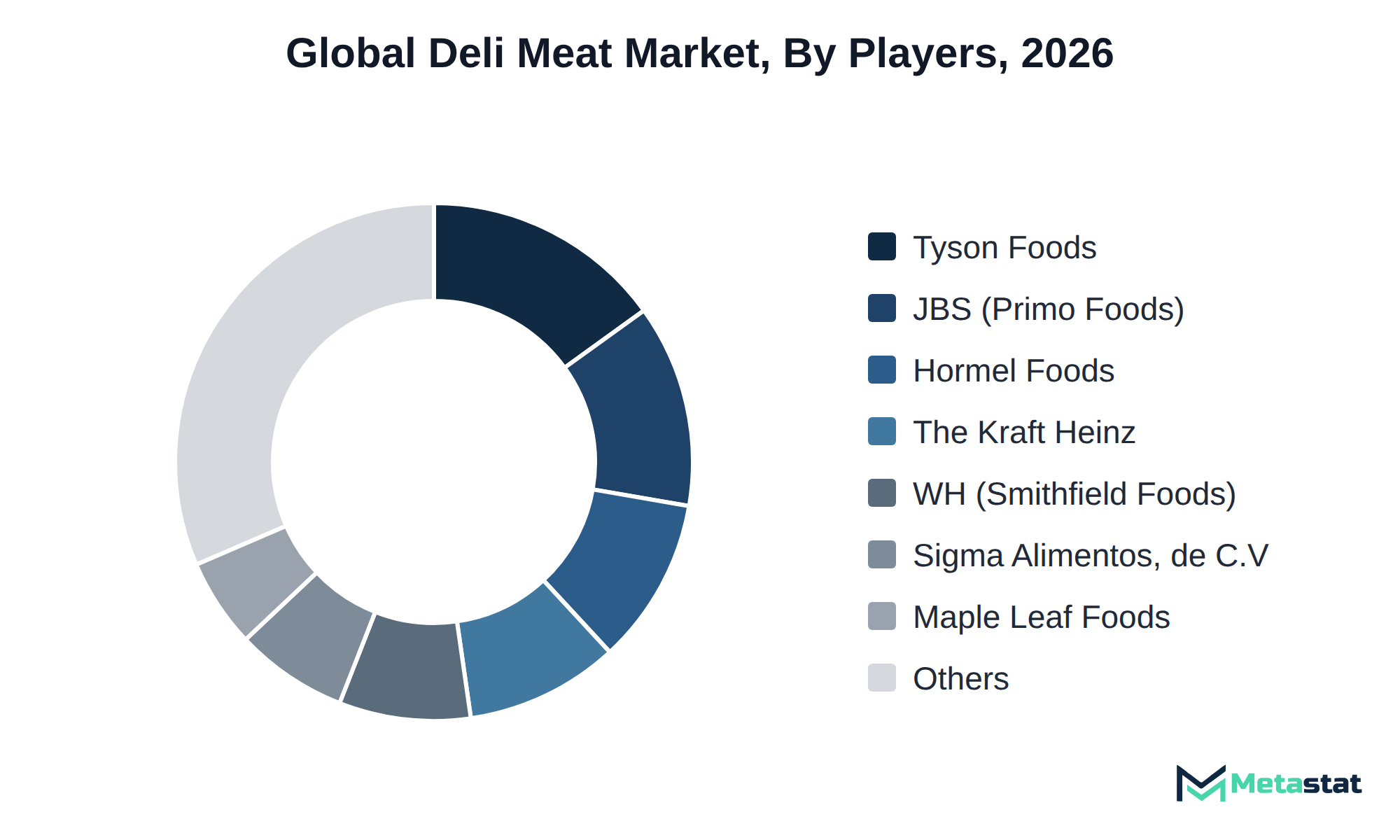
Competition within the Deli Meat market divides primarily based on product type, meat source, and end-user segments. Buyers prioritize factors including price, product quality, certification, and service offerings. Customization enables companies to cater to specific consumer preferences and dietary needs.
JBS N.V. (Primo Foods) emphasizes a diverse product range that includes pork and beef deli meats, appealing to both retail and foodservice sectors. Tyson Foods, Inc. concentrates on chicken deli products, leveraging its strong brand presence and extensive distribution network. Hormel Foods Corporation offers a variety of deli meats, focusing on premium quality and innovative packaging solutions to attract health-conscious consumers.
Companies in the Deli Meat market differentiate through their production techniques and sourcing strategies. For instance, WH Group Limited (Smithfield Foods) sources high-quality pork, integrating sustainable farming practices to appeal to environmentally conscious buyers. Sigma Alimentos, S.A. de C.V. targets the Latin American market with a focus on traditional flavors and regional preferences, enhancing customer loyalty.
Marfrig Global Foods S.A. (MBRF) emphasizes a commitment to quality and safety, catering to food manufacturers with its certified products. Maple Leaf Foods Inc. positions itself with a strong sustainability narrative, appealing to consumers seeking ethical sourcing in meat products. These strategies highlight the competitive dynamics in the market and the varying approaches companies take to meet buyer expectations.
The market expansion relies on several key developments. First, an increase in consumer demand for convenient and high-quality deli meats will drive growth, particularly in the retail segment, which is projected to rise from USD 146.3 billion in 2026 to USD 198.7 billion by 2033 at a CAGR of 4.5%. Second, the production and distribution of prepackaged sliced meats require enhancements to meet evolving consumer preferences, resulting in a projected increase from USD 127.1 billion in 2026 to USD 187.7 billion by 2033 at a CAGR of 5.7%. Third, the rising popularity of chicken deli products, driven by health-conscious consumers, is expected to contribute to the market's growth, with chicken deli cuts projected to reach USD 81.2 billion by 2033. A significant risk to reaching USD 332.8 billion involves fluctuations in raw material costs, particularly pork and chicken, which could impact profit margins and pricing strategies within the market.
By Product Type: Ham, Salami and Pepperoni, Deli Chicken Cuts, Deli Turkey Cuts, Bologna and Mortadella, Roast Beef, Corned Beef and Pastrami, Others (Roast Pork, Head Cheese)
By Meat Source: Pork, Chicken, Beef, Turkey, Mixed Meats, Others (Lamb, Duck, Game)
By Sales Format: Prepackaged Sliced Meats, Unsliced Deli Loaves and Whole Cuts, Bulk Presliced Meats
By End User: Retail, Foodservice, Food Manufacturers
The report strategically identifies and profiles the key market players and analyses their core competencies in each sub-segment of the Deli Meat market.
Report Attributes | Details |
Study Period | 2021-2033 |
Base Year | 2025 |
Estimated Year | 2026 |
Forecast Period | 2026-2033 |
Historical Period | 2021-2025 |
Growth Rate | CAGR 4.9% from 2026 to 2033 |
Revenue Unit | USD billion |
Segmentation | By Product Type, Meat Source, Sales Format, End User, and Region |
By Region | North America (By Product Type, Meat Source, Sales Format, End User, and Country)
|
Europe (By Product Type, Meat Source, Sales Format, End User, and Country)
| |
Asia Pacific (By Product Type, Meat Source, Sales Format, End User, and Country)
| |
South America (By Product Type, Meat Source, Sales Format, End User, and Country)
| |
Middle East and Africa (By Product Type, Meat Source, Sales Format, End User, and Country)
|
Find answers to common questions about this report
The Deli Meat market size was valued at USD 225.6 billion in 2025.
The market is projected to grow at a CAGR of 4.9% during the forecast period from 2026 to 2033.
The North America Deli Meat market size is estimated to reach USD 94.8 billion by 2033.
Ham leads the Deli Meat market with a projected value of USD 86 billion by 2033, based on its significant share compared to other product types.
Growing interest in health-conscious diets drives demand among consumers, particularly for protein-rich foods. The increasing preference for convenience significantly influences purchasing habits, with prepackaged deli meats gaining traction as quick meal solutions.
Europe holds the dominant share of the Deli Meat market, representing 32.5 percent of the total market. This figure surpasses the shares of other regions, including North America at 30.5 percent.
Increasing production costs exert significant pressure on the market, impacting profitability and pricing strategies. Rising prices for raw materials, including meat and spices, challenge suppliers and lead to higher retail prices for consumers.
Growing interest in health-conscious diets and convenience significantly influences adoption in the deli meat market. The demand for protein-rich foods and ready-to-eat meal solutions drives retailers to expand their offerings, enhancing overall market growth.
The Deli Meat market is estimated to reach a valuation of USD 332.8 billion by 2033.
Key players operating in the Deli Meat market include JBS N.V. (Primo Foods), Tyson Foods, Inc., The Kraft Heinz Company, Hormel Foods Corporation, WH Group Limited (Smithfield Foods), and Atria Plc.
The analysts below cover Food and Beverages research at Metastat Insights.
LEAD ANALYST
Utkarsh Khirodkar is a Lead Market Research Analyst at MetaStat Insight, specializing in market intelligence, technology sector assessments, and competitive strategy.

LEAD PRINCIPAL ANALYST, PHARMA AND HEALTHCARE
Food and Beverages · Healthcare · Healthcare IT · Medical Devices
Ajay Devgire is the Lead Healthcare Analyst at MetaStat Insight, leading strategic research and market intelligence initiatives across the global healthcare domain.

SENIOR RESEARCH ANALYST
Biotechnology · Food and Beverages · Medical Devices · Packaging
Snehal Pasalkar is a Research Analyst at MetaStat Insight, operating at the intersection of life sciences research, competitive strategy, and market intelligence.
Replacing petrochemical surfactants with bio-based alternatives requires realistic timelines on industrial precision fermentation scaling. The market research broke down commercialization timelines, feedstock sugar price sensitivities, and regional cosmetic ingredient regulatory approvals in Europe and East Asia. That supplier readiness mapping gave our formulations team reliable context when comparing renewable chemical sourcing roadmaps.
Tracking ceramic matrix composite adoption in high-bypass aero engines requires strict attention to material qualification cycles and FAA airworthiness testing milestones. The MetaStat Insight team provided a detailed timeline of silicon carbide fiber manufacturing capacity and commercial foundry lead times. Having clear visibility into upstream thermal barrier coating supply helped us stress-test our long-term component procurement strategy.
Transitioning ultra-class mining haul trucks to alternative power requires concrete data on remote hydrogen refueling infrastructure economics. The report evaluated megawatt-scale electrolyzer installation expenses, onsite storage safety mandates, and heavy-duty fuel cell stack degradation under continuous duty cycles. That technical rigor helped our engineers benchmark realistic total operating cost horizons for off-highway fleet decarbonization.
Explore related market intelligence reports worth reading alongside this one.