
LEAD ANALYST
Utkarsh Khirodkar is a Lead Market Research Analyst at MetaStat Insight, specializing in market intelligence, technology sector assessments, and competitive strategy.

Global Dumplings Market Size, Share, By Product Type (Frozen Dumplings, Fresh/handmade Dumplings, Ready-to-eat Dumplings, Shelf-stable Packaged Dumplings, Sweet/Dessert Dumplings), By Filling Type (Vegetable-based, Pork-based, Chicken-based, Beef/lamb-based, Seafood-based, Mixed or Fusion Fillings), By Dough Type (Wheat-based Dough, Gluten-free Dough, Rice-based Dough, Whole-grain Dough), By Distribution Channel (Supermarkets and Hypermarkets, Convenience Stores, Specialty Food Stores, Online Retail, Foodservice and Institutional Distribution), Industry Analysis, Growth, Trends, and Forecast, 2026-2033
Report ID
MSI-5770
Published
November, 2026
Pages
281 Pages
Format
Historical
Base year
Forecast
Forecast period
Report Details
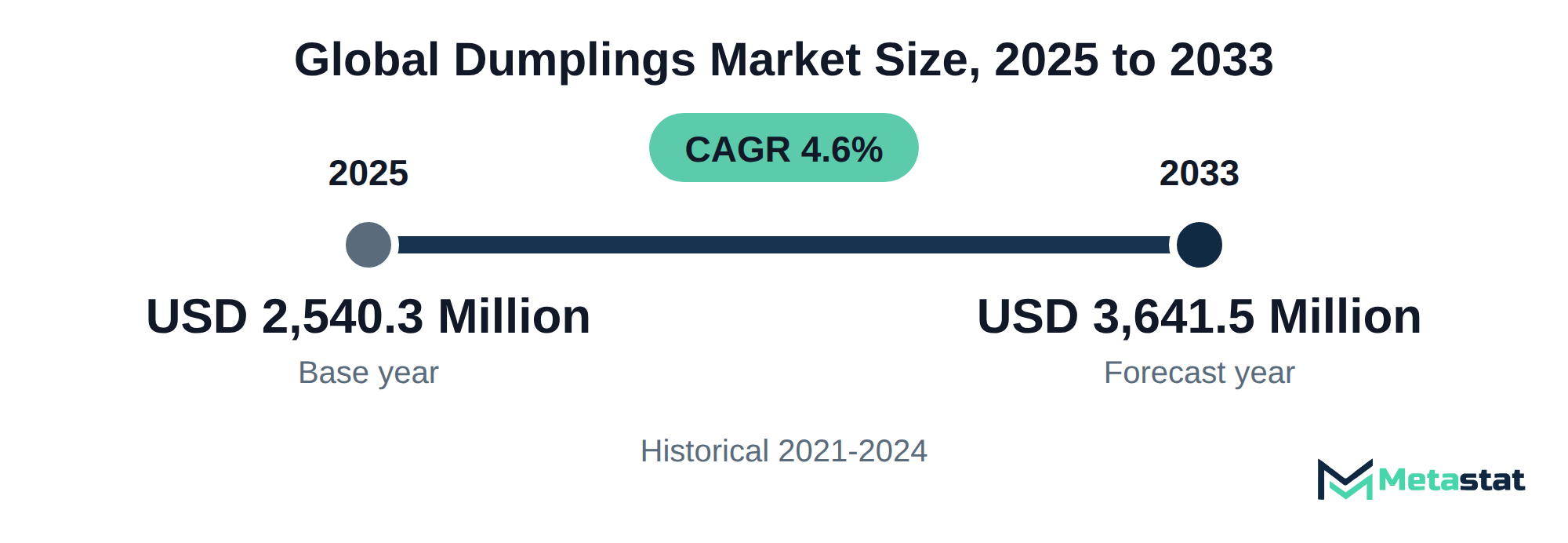
Market Valuation: Valued at $2,540.3 Million in 2025, projected to reach $3,641.5 Million by 2033 at a 4.6% CAGR.
Dominant Segment: Frozen dumplings lead the market, accounting for USD 1,004.1 million in sales, driven by consumer demand for convenient meal options.
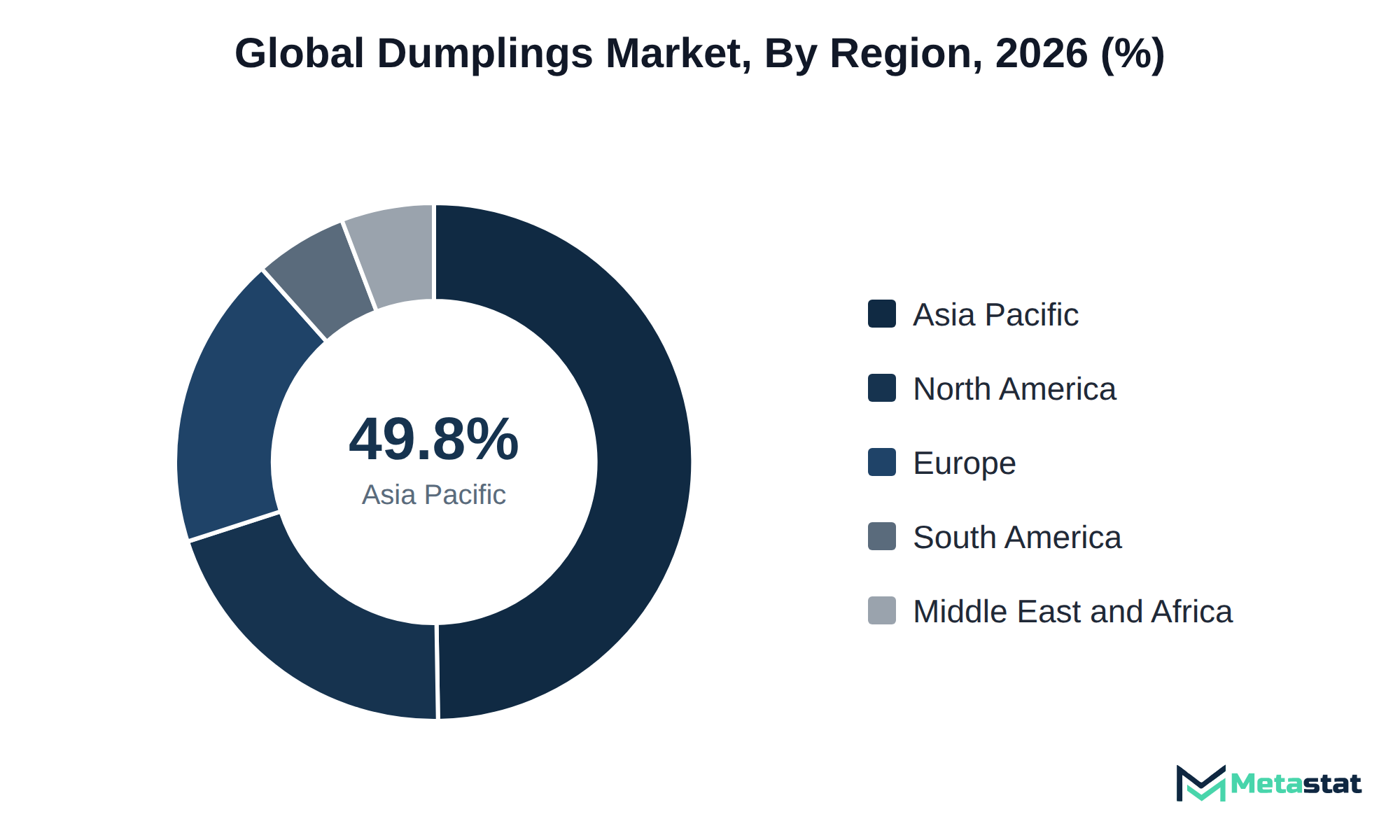
Geographic Lead: Asia Pacific holds the largest market share at 49.8%, fueled by the cultural significance of dumplings and growing popularity of Asian cuisine.
What's Inside: The report provides a comprehensive analysis of market dynamics, competitive landscape, and forecasts from 2026 to 2033, covering various product types, filling types, and distribution channels.
Filling Type Opportunities: The vegetable-based filling segment is poised for significant growth, projected to reach USD 923.5 million by 2033, reflecting a shift towards healthier, plant-based options.
Distribution Channel Trends: The online retail channel is expected to grow at a CAGR of 6.5%, driven by increasing consumer preference for convenient shopping experiences.
Choose Your License
Global Dumplings Market
The global Dumplings market was valued at USD 2,540.3 million in 2025 and is projected to reach USD 3,641.5 million by 2033, growing at a CAGR of 4.6% over the forecast period.
The Dumplings market encompasses various product types, including frozen, fresh, ready-to-eat, and shelf-stable packaged dumplings. Buyers invest in these products due to the growing demand for convenient meal options and traditional culinary experiences. The market appeals to diverse consumer segments, ranging from busy professionals seeking quick meals to families who enjoy preparing and sharing authentic dishes at home.
Growth in the market is fueled by a rising preference for convenient food items that align with busy lifestyles. Frozen dumplings represent the segment with the most value, capturing USD 1,004.1 million of overall sales. North America holds 20.3% of the market in 2025, with the US leading in 2026. This region benefits from strong consumer interest in international cuisines, driving demand for various dumpling offerings across grocery stores and restaurants.
Asia Pacific emerges as the region with the largest share, accounting for 49.8% of the market. The increasing popularity of Asian cuisine within this region contributes to substantial consumption levels, particularly in countries like China and Japan. The trend toward healthier and diverse food options supports the growth of vegetable-based fillings, which have gained traction among health-conscious consumers.
Buyers spend on dumplings for culinary variety and convenience. The diverse product offerings cater to different consumer preferences, from traditional recipes to modern variations. This broad range encourages spending, particularly among families and busy professionals seeking quick meal options without compromising on taste or quality.
Growth in dumpling sales is driven by rising demand for convenient meal solutions and increased interest in ethnic cuisines. Frozen dumplings represent the largest segment, appealing to consumers for their long shelf life and ease of preparation. Asia Pacific holds the largest market share at 49.8%, reflecting the cultural significance of dumplings in the region and the growing popularity of Asian cuisine worldwide. North America is projected to account for 20.3% of the market in 2025, with the US leading in 2026.
Health-conscious consumers increasingly seek vegetable-based options, contributing to the segment's expansion. The emphasis on fresh ingredients and innovative flavors attracts customers ranging from health enthusiasts to food lovers. The market continues to adapt to these evolving preferences, ensuring sustained growth and a dynamic competitive environment.
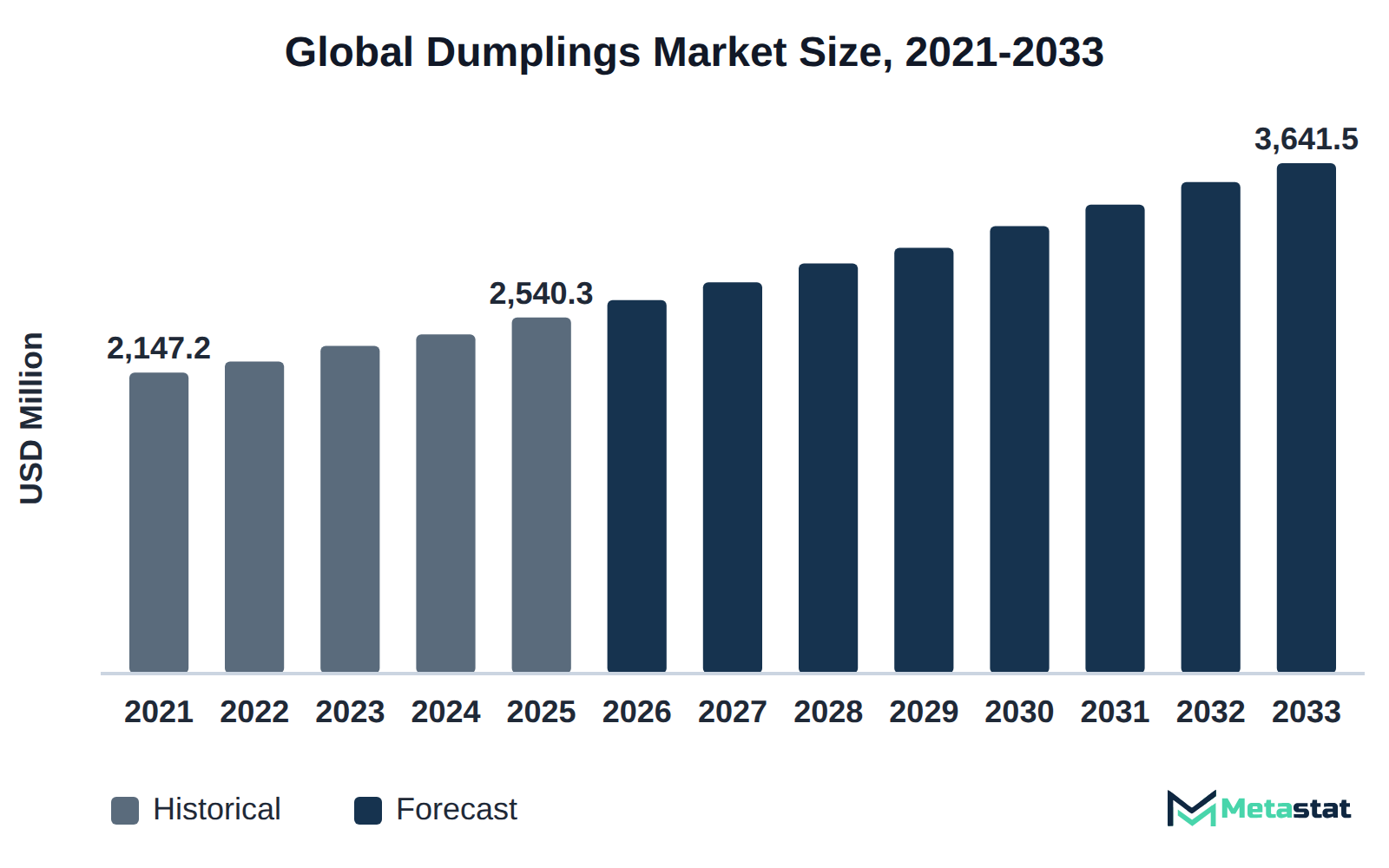
The rise of frozen and ready-to-eat dumplings significantly influences global food consumption patterns. Convenience has become a priority for consumers, and these products address the demand for quick meal solutions. The frozen dumplings segment demonstrates substantial growth, with a projected value increasing from USD 1,150.6 million in 2026 to USD 1,560.4 million by 2033, reflecting a compound annual growth rate of 4.4%. This expansion indicates a clear shift toward prepared meals that reduce preparation time and effort.
Consumers increasingly seek nutritious and convenient options, driving the adoption of frozen and ready-to-eat dumplings. The lifestyle of urban dwellers, along with a growing preference for international cuisines, positions these products as ideal solutions. With the market's overall focus on ease of preparation, manufacturers are investing in quality ingredients and innovative packaging to enhance the consumer experience. The focus on frozen and ready-to-eat variants aligns well with evolving preferences within the dumplings market, ultimately boosting sales and market penetration.
The incorporation of plant-based fillings and gluten-free dough into the dumplings market significantly influences purchasing behaviors among consumers and retailers. A notable trend emerges with vegetable-based fillings, growing from USD 651.4 million in 2026 to USD 923.5 million by 2033, reflecting a compound annual growth rate (CAGR) of 5.1%. This trend aligns with increasing consumer demand for healthier, plant-based options, driving buyers to seek out innovative products that align with dietary preferences.
Retailers increasingly adopt flexible pricing and contract models to accommodate the growing popularity of these offerings. Price sensitivity among buyers leads to greater emphasis on promotions and discounts for plant-based options, while long-term contracts with suppliers for gluten-free dough provide stability in pricing amid fluctuating ingredient costs. This shift in purchasing strategies results in enhanced profit margins for retailers that successfully align their offerings with consumer demands.
The dumplings market is changing as producers build these trends into product development. Retailers able to capitalize on plant-based and gluten-free innovations stand to influence growth and competitive positioning within the industry.
The expansion of cold-chain infrastructure significantly enhances the distribution of dumplings, particularly in the online grocery segment. The demand for convenience and accessibility drives consumers towards online grocery shopping, with the online retail channel projected to experience a compound annual growth rate of 6.5%. This trend reflects changing consumer preferences for purchasing food products, including dumplings, from the comfort of their homes.
With the increasing reliance on e-commerce, suppliers in the dumplings market invest in cold-chain logistics to maintain product quality during transportation. Effective management of temperature-sensitive products ensures freshness, which is critical for maintaining customer satisfaction and loyalty. Consumer awareness of food quality influences the proper handling of dumplings during transit, which is essential for retaining market share.
Businesses that prioritize cold-chain expansion are positioned to capitalize on growing online sales of dumplings. The ability to deliver fresh, high-quality products directly to consumers improves competitiveness and drives revenue growth in the market. Companies that optimize their logistics and distribution strategies will shape the future of the dumplings market.
Consumer preferences for dumplings have shifted toward healthier options, significantly influencing market dynamics. This increased interest in plant-based alternatives aligns with broader health and wellness trends observed globally.
The market's response to this change highlights an opportunity for producers to innovate their product offerings, focusing on nutritional value and clean label ingredients. Manufacturers investing in the development of vegetable-based dumplings attract health-conscious consumers, potentially leading to increased market share and profitability. These trends encourage collaboration with suppliers of high-quality, organic ingredients, further enhancing product appeal.
Regional variations play a role in shaping consumer preferences. For instance, Asian markets have traditionally favored meat-based dumplings, yet rising health awareness is driving a gradual shift toward vegetable-based options. This shift gives businesses room to diversify their product lines and reach a broader audience, strengthening their competitive advantage in the dumplings market.
Recent shifts in consumer behavior highlight a growing preference for convenience foods, particularly among busy professionals and families. Increased participation in the workforce has led to demands for quick and easy meal options. This trend significantly influences purchasing patterns in the Dumplings market, with consumers seeking products that save time while delivering quality and flavor. Frozen dumplings, in particular, experience heightened demand due to their ease of preparation and versatility in meal planning. The rise in interest for ready-to-eat options further reinforces this demand, driving momentum behind convenience-driven products in the market.
Changing lifestyles and the need for meal solutions that fit into busy routines create opportunities for growth and innovation in the Dumplings market.
Technological innovations in the production of frozen dumplings enhance efficiency and product quality, driving growth in the dumplings market. Improvements in freezing techniques and packaging solutions significantly extend shelf life while preserving texture and flavor. Enhanced machinery reduces production costs, allowing manufacturers to increase output and meet rising demand. Automation in the manufacturing process streamlines operations, enabling suppliers to respond swiftly to consumer trends and preferences.
Advancements in food safety technologies ensure that frozen dumplings maintain high standards, which is crucial for consumer trust. The ability to produce high-quality frozen dumplings at competitive prices strengthens market positioning for suppliers. The focus on innovation and quality arises from a highly competitive landscape, where companies differentiate their offerings through unique flavors and healthier ingredient profiles. This emphasis on technology and quality shapes the future of the market.
Fluctuations in ingredient prices create challenges for the Dumplings market, impacting profit margins for manufacturers. Rising costs of key ingredients, including flour and meat, result in higher production expenses. These increased prices deter buyers from placing larger orders, particularly in price-sensitive segments including convenience stores and online retail. Manufacturers face the challenge of balancing ingredient quality while maintaining competitive pricing, leading to potential delays in product launches and limited innovation. Higher ingredient costs restrict the introduction of premium products, limiting market growth opportunities. Overall demand slows, affecting revenue across distribution channels. Sustained increases in ingredient costs contribute to a cautious purchasing approach among buyers, influencing their long-term commitment to the market.
Increased labor expenses create significant challenges for suppliers in the Dumplings market, impacting overall profitability. The need for skilled labor in production processes drives these costs, affecting profit margins. Suppliers have responded by investing in automation technologies to streamline operations and reduce reliance on manual labor. Advanced machinery facilitates higher production rates with consistent quality, enabling businesses to manage costs effectively. Several manufacturers implement training programs to enhance workforce efficiency and adaptability, further mitigating the impact of rising labor costs. This approach helps suppliers keep pricing competitive while improving their products, which sustains growth in the dumplings sector.
The vegetable-based filling segment presents a significant growth opportunity within the Dumplings market. Consumer preferences increasingly lean toward healthier and plant-based options, driving demand for vegetable-based fillings. This trend aligns with rising health consciousness among buyers, particularly in regions with growing vegetarian and vegan populations. The market's response to this demand includes the introduction of innovative recipes and partnerships with local producers to enhance the product offering. Such strategic initiatives are expected to strengthen market penetration and boost revenue. Efforts to capture this segment will directly impact the overall growth trajectory, enabling suppliers to cater effectively to evolving consumer tastes and dietary preferences.
The Global Dumplings market is segmented based on Product Type, Filling Type, Dough Type, and Distribution Channel.
These products serve a diverse consumer base seeking convenience and quick meal options, particularly among busy professionals and families. Demand for frozen dumplings is driven by the growing preference for ready-to-eat meals, reflecting lifestyle changes and the need for convenient food solutions. This segment exhibits strong growth compared to others, highlighting its appeal as a time-saving option. Unlike fresh or handmade dumplings, which require more preparation time and skill, frozen varieties provide an accessible alternative, ensuring consistent quality and taste with minimal effort. Affordability and convenience position frozen dumplings favorably within the market and suit varied culinary preferences.
Fresh/handmade Dumplings segment is estimated to reach USD 901.6 million by 2033, at a CAGR of 4.4% during the forecast period. This segment appeals to consumers seeking authenticity and freshness, often used in restaurants and gourmet food establishments. A growing trend toward artisanal and high-quality food options supports demand for fresh offerings. In contrast to frozen and ready-to-eat variants, fresh dumplings attract buyers willing to pay a premium for quality, contributing to their steady growth. The rising popularity of homemade culinary experiences enhances the segment's appeal, while the market faces challenges related to shelf life and distribution. Unlike frozen alternatives, fresh dumplings require more efficient logistics to ensure quality preservation during transportation and storage. The market positions fresh/handmade dumplings as a niche that builds customer loyalty and engagement, distinguishing it from other segments through a focus on quality and consumer experience.
The Ready-to-eat Dumplings segment is expected to reach USD 623.4 million by 2033. This product type caters primarily to consumers seeking quick meal solutions, appealing to busy lifestyles and convenience-driven dining preferences. The growth of this segment reflects increasing interest among families and professionals in easily accessible meal options that require minimal preparation time. Demand is driven by a preference for quick, satisfying meals, with a projected CAGR of 4.4% from 2026 to 2033. Compared to fresh and frozen dumplings, ready-to-eat varieties often command a premium price point due to their unique preparation and packaging processes. The distinct positioning of ready-to-eat dumplings in the market highlights their competitive advantage, targeting a specific consumer base focused on convenience without sacrificing taste.
The Shelf-stable Packaged Dumplings segment is projected to grow at a CAGR of 4.5% during the forecast period. These products provide consumers with convenient options, often favored by individuals seeking quick meals without compromising on flavor. The demand for shelf-stable varieties is driven by busy lifestyles that prioritize ease of preparation. This segment stands out compared to others due to its longer shelf life, making it appealing for retail and foodservice sectors that require stable inventory management. In contrast to fresh or frozen alternatives, shelf-stable packaged dumplings typically offer lower price points, catering to budget-conscious consumers. This unique positioning within the Dumplings market enhances its attractiveness among various demographics, further supporting its growth trajectory. Evolving consumer preferences toward convenience indicate that the market for shelf-stable packaged options is expected to expand significantly.
Sweet/dessert dumplings serve as a treat for consumers seeking a distinctive culinary experience. These dumplings provide dessert options in various cuisines, particularly in Asian culinary traditions. The segment attracts buyers looking for indulgent snacks or desserts, often featuring sweet fillings like red bean paste or fruit. Growing consumer interest in adventurous flavors drives demand for sweet dumplings, differentiating this segment from others, including savory varieties. While frozen and ready-to-eat dumplings are gaining traction in convenience-focused markets, sweet dumplings often command premium pricing due to specialized production and unique ingredients. This segment's growth trajectory reflects niche consumer preferences and a willingness to explore innovative food experiences.
This segment appeals primarily to health-conscious consumers and those seeking plant-based meal options, reflecting a broader trend toward vegetarian diets and vegan food. The increasing demand for vegetable-based fillings is driven by rising awareness of health benefits associated with plant-based diets. Compared to other filling types, including pork and chicken, the vegetable-based segment is distinguished by its faster growth rate and broader appeal among diverse consumer groups. While the pork-based filling is projected to reach USD 944.6 million by 2033, the vegetable-based segment's growth reflects a significant shift in consumer preferences toward healthier alternatives, influencing purchasing decisions across the market.
Pork-based fillings are projected to reach USD 944.6 million by 2033, at a CAGR of 4% during the forecast period. This filling type appeals to consumers seeking hearty and flavorful options in dumplings, widely embraced by both retail and foodservice sectors. The growth of this segment is primarily driven by increasing consumer interest in traditional and authentic flavors, leading to greater demand for pork-based products. Compared to other filling types, including vegetable-based options, which experience higher growth rates, pork-based fillings hold steady appeal among consumers prioritizing taste and familiarity. This segment often commands a competitive price point, attracting a diverse consumer base, including families and individuals seeking convenient meal solutions. The market sees significant focus on quality and sourcing, enhancing the overall value proposition for pork-based dumplings.
Chicken-based fillings in dumplings have gained popularity, with this segment expected to reach USD 792 million by 2033. This filling type appeals to consumers seeking protein-rich options, particularly among families and individuals prioritizing convenience and flavor. The demand for chicken-based dumplings is driven by the increasing trend of quick meal solutions that do not compromise on taste. Compared to other filling types, chicken-based options exhibit a steady growth pattern, influenced by a broader consumer base favoring poultry over other proteins. The anticipated CAGR of the chicken-based filling reflects its competitive positioning in the dumplings market, aligning with shifting dietary preferences favoring familiar and versatile ingredients.
Beef/lamb-based filling is projected to grow at a CAGR of 4.1% during the forecast period. This filling type appeals to consumers seeking rich flavors and is popular among various demographic groups, including families and culinary enthusiasts. Rising demand for hearty meal options drives growth within this segment, particularly in regions with strong cultural ties to lamb and beef dishes. Compared to other filling types, this segment experiences slower growth due to the increasing popularity of plant-based options, which cater to a growing health-conscious consumer base. With a unique flavor profile, beef/lamb-based dumplings continue to attract loyal customers while navigating the competitive landscape of the dumplings market.
Seafood-based fillings incorporate various seafood options, appealing to consumers seeking unique flavors and nutritional benefits. This segment attracts attention from health-conscious buyers and food enthusiasts, reflecting a growing interest in diverse culinary experiences. The increasing popularity of seafood dishes drives demand, particularly in regions with strong seafood traditions. Compared to other filling types, seafood-based dumplings often command higher prices due to the cost of sourcing fresh ingredients and the perception of premium quality. This segment attracts a different demographic than traditional meat and vegetable fillings, positioning itself for potential growth as consumers explore more gourmet options. Rising health awareness and an emphasis on quality ingredients support expansion in this segment, contributing positively to the overall dynamics of the dumplings market.
Mixed or fusion fillings combine several ingredients to create distinctive flavors in dumplings. This segment appeals to adventurous eaters seeking new culinary experiences, often preferred by younger consumers and food enthusiasts. The demand for these fillings stems from rising interest in diverse cuisines and innovative dining options. Unlike traditional filling types, which focus on single flavors, mixed or fusion fillings cater to consumers looking for a blend of tastes, setting them apart in the market. This segment experiences robust interest driven by the increasing trend of globalization and the exploration of multicultural flavors. While other filling types including pork-based or vegetable-based show steady growth rates, mixed or fusion fillings capture a distinct niche, attracting consumers willing to pay a premium for unique flavor profiles.
Wheat-based Dough segment is valued at USD 1,915.8 million in 2026 and is projected to reach USD 2,580 million by 2033, at a CAGR of 4.3% during the forecast period. This segment serves as the primary foundation for various dumpling types, appealing to consumers who seek traditional flavors and textures. Increasing consumer interest in wholesome, high-quality ingredients drives growth in this segment, particularly among health-conscious buyers. Wheat-based dough often stands out for its versatility compared to gluten-free and rice-based alternatives, which cater to specific dietary preferences. The projected growth rate of 4.3% aligns with a broader trend in the market, indicating consistent demand for classic dumpling offerings while adapting to evolving consumer tastes and preferences.
Gluten-free Dough segment is estimated to reach USD 337.2 million by 2033, at a CAGR of 6% during the forecast period. This product is designed for consumers with gluten intolerance or celiac disease, appealing to health-conscious buyers seeking alternatives to traditional wheat-based options. The growing awareness of gluten-related health issues significantly drives demand for gluten-free food products. Compared to other dough types, gluten-free dough often commands higher prices due to specialized ingredients and processing methods. This segment differs from others, including Wheat-based Dough, which is expected to grow at a CAGR of 4.3%. The market benefits from a shift toward healthier eating habits, further enhancing the attractiveness of gluten-free offerings.
Rice-based Dough segment is expected to reach USD 527.3 million by 2033. This dough type is used in various dumplings, appealing to health-conscious consumers and those with dietary restrictions. Increased demand for gluten-free options drives growth in this segment. Compared to other dough types, rice-based dough typically commands a higher price due to specific processing requirements and ingredient sourcing. The segment's growth rate is influenced by the rising popularity of Asian cuisine and the expanding market for gluten-free foods. With a unique texture and flavor, rice-based dumplings attract a diverse consumer base, including individuals with gluten sensitivities and a preference for healthier alternatives, contributing positively to the overall dynamics of the market.
Whole-grain Dough is projected to grow at a CAGR of 4.6% during the forecast period. This segment appeals to health-conscious consumers seeking alternatives to traditional dough options. Whole-grain Dough provides a nutritious base for various dumplings, gaining traction among buyers prioritizing whole foods. Rising awareness of health benefits related to whole grains drives demand for this sub-segment, particularly in regions with increasing health trends. Compared to other dough types, Whole-grain Dough typically attracts a niche market willing to pay premium prices for healthier options, differentiating it from broader segments like Wheat-based Dough. Demand for Whole-grain Dough has strengthened due to changing dietary preferences, reflecting a shift towards healthier eating habits. Increased interest in this segment emphasizes both health and flavor in culinary applications.
Supermarkets and Hypermarkets segment is valued at USD 1,012.3 million in 2026 and is projected to reach USD 1,341.5 million by 2033, at a CAGR of 4.1% during the forecast period. This distribution channel primarily caters to consumers seeking convenient access to a wide variety of dumpling options. The growing trend towards ready-to-eat and frozen meals significantly drives demand for dumplings in these retail environments, appealing to busy households and individuals. Compared to other segments, Supermarkets and Hypermarkets demonstrate a moderate growth rate due to their established presence, while online retail channels exhibit a faster growth trajectory with a CAGR of 6.5%. Shifts in consumer preferences towards healthier eating options and premium products influence purchasing decisions, presenting a unique opportunity for brands to introduce innovative dumpling varieties and attract health-conscious consumers. This dynamic supports continued growth within the segment.
The Convenience Stores segment is estimated to reach USD 608.9 million by 2033, at a CAGR of 4.3% during the forecast period. Convenience stores provide quick access to ready-to-eat and frozen dumplings, catering primarily to busy consumers seeking convenient meal options. The growing trend of on-the-go consumption drives demand within this segment, with consumers increasingly preferring convenient and easy-to-prepare meals. This segment differs from others due to its focus on immediacy and accessibility, attracting a different buyer demographic compared to supermarkets and specialty food stores. Unlike the frozen dumplings segment, which is projected to grow at a CAGR of 4.4%, the convenience stores focus on immediate consumption rather than bulk purchases. Retailers in the convenience store segment adapt their offerings to meet consumer preferences for speed and variety, contributing to sustained growth in the dumplings market.
Specialty Food Stores segment is expected to reach USD 431.5 million by 2033. These stores cater to consumers seeking unique or gourmet culinary experiences, often offering specialized dumpling varieties that are not available in larger retail formats. Increasing consumer interest in authentic and niche food products drives demand in this segment. Specialty Food Stores typically offer artisanal and handmade dumplings, distinguishing themselves from mainstream supermarkets and hypermarkets by focusing on higher-quality offerings. This segment experiences a competitive advantage, appealing to food enthusiasts willing to pay premium prices for gourmet options. Growth in this segment is anticipated at a CAGR of 4.3%, reflecting a shift in consumer preferences toward more diverse and high-quality food experiences. The dumplings market benefits from this trend, contributing to overall market expansion.
Online Retail segment is projected to grow at a CAGR of 6.5% during the forecast period. This channel caters to consumers seeking convenience and accessibility, allowing for easy purchasing of various dumpling types from the comfort of their homes. The rise of online shopping, driven by changing consumer preferences, significantly influences this segment's expansion. Among the distribution channels, Online Retail offers a unique advantage, providing a wider selection compared to traditional retail outlets. This segment attracts tech-savvy buyers interested in trying different products without geographical limitations. Market dynamics favor online sales as buying shifts towards digital commerce, which sets this segment apart and shows why suppliers must adapt to changing buying behavior in the dumplings market.
Foodservice and Institutional Distribution focuses on supplying dumplings to restaurants, catering services, and institutional kitchens. This segment serves various foodservice operations that prioritize convenience and quick preparation times. A significant driver includes the growing trend of ready-to-eat meals, driven by consumer preferences for convenience and diverse dining options. Demand from larger institutions, including schools and hospitals, influences purchasing decisions, owing to these entities seeking bulk ordering capabilities and cost-effectiveness. Compared to other distribution channels, including Supermarkets and Hypermarkets, this segment often experiences different pricing strategies, catering to bulk buyers rather than individual consumers. The dumplings market reflects a shift towards more efficient supply chains to meet the increasing demand for quick-service food options.
Based on geography, the Global Dumplings market is divided into North America, Europe, Asia-Pacific, South America, Middle East, and Africa.
Market dynamics in North America show significant growth potential, driven by increasing consumer preferences for diverse and convenient meal options. The United States, Canada, and Mexico represent the primary markets, with demand concentrated in frozen and ready-to-eat segments. North America is projected to reach USD 722.8 million by the end of 2033, reflecting robust interest in frozen dumplings, which holds a substantial market share. Consumer trends emphasize the demand for healthy and quick meal solutions, further enhancing market expansion. The region benefits from a well-established retail infrastructure, including supermarkets and hypermarkets, facilitating access to various dumpling products. Increasing interest in international cuisines contributes to growth in the dumplings market, attracting a broader audience seeking authentic flavors and convenient dining experiences.
In Europe, the demand for dumplings is driven by diverse culinary preferences and the increasing popularity of Asian cuisine. Consumers in countries like Germany, France, and the UK show significant interest in ready-to-eat options and fresh dumplings. The market benefits from a robust retail infrastructure, featuring supermarkets and specialty food stores that cater to these preferences. Rising health consciousness encourages the adoption of vegetable-based fillings, which are projected to grow significantly within this segment. The market share in Europe stands at 18.4% in 2025, highlighting the region's significance in the overall dumplings market. Innovations in product offerings, including gluten-free options, appeal to a growing base of health-conscious consumers.
Asia Pacific holds 49.8% of the global dumplings market in 2025. This region is characterized by strong demand driven by consumer preferences for both traditional and modern variants of dumplings. Countries like China, Japan, and India have increasingly incorporated dumplings into their culinary offerings, responding to local tastes and dietary trends. The prevalence of street food culture in these nations enhances accessibility and popularity among consumers. The rise of e-commerce platforms facilitates the distribution of dumplings, meeting consumer demand for convenience and variety. The market is projected to experience growth, reflecting the region's expanding middle class and increasing disposable incomes, which support higher consumption levels of dumplings.
Brazil and Argentina play significant roles in the Dumplings market within South America, driven by increasing consumer interest in diverse culinary offerings and the popularity of Asian cuisine. The growing urban population and rising disposable incomes in these countries support the demand for convenient meal options. The market benefits from expanding retail infrastructure, particularly in supermarkets and hypermarkets, which offer a wide variety of dumpling products. The market share in South America is projected at 5.8% in 2025, reflecting potential for growth in this segment. Consumers increasingly seek ready-to-eat and frozen dumplings, leading to opportunities for manufacturers to innovate and expand their product lines to meet evolving tastes.
Demand for dumplings in the Middle East and Africa is driven by a growing inclination towards convenient and diverse meal options among consumers. The region's culinary culture, particularly in countries like Saudi Arabia and the UAE, influences the popularity of various filling types, including pork-based and vegetable-based varieties. Infrastructure improvements, particularly in urban areas, enhance retail distribution channels, facilitating greater access to dumplings through supermarkets and convenience stores. The market holds a share of 5.8% in 2025, reflecting increasing consumer interest in ready-to-eat options and frozen products. South Africa exhibits a notable trend towards incorporating local flavors into dumpling offerings, further expanding market appeal. Evolving preferences within the region present significant opportunities for suppliers to innovate and cater to diverse consumer tastes in the dumplings market.
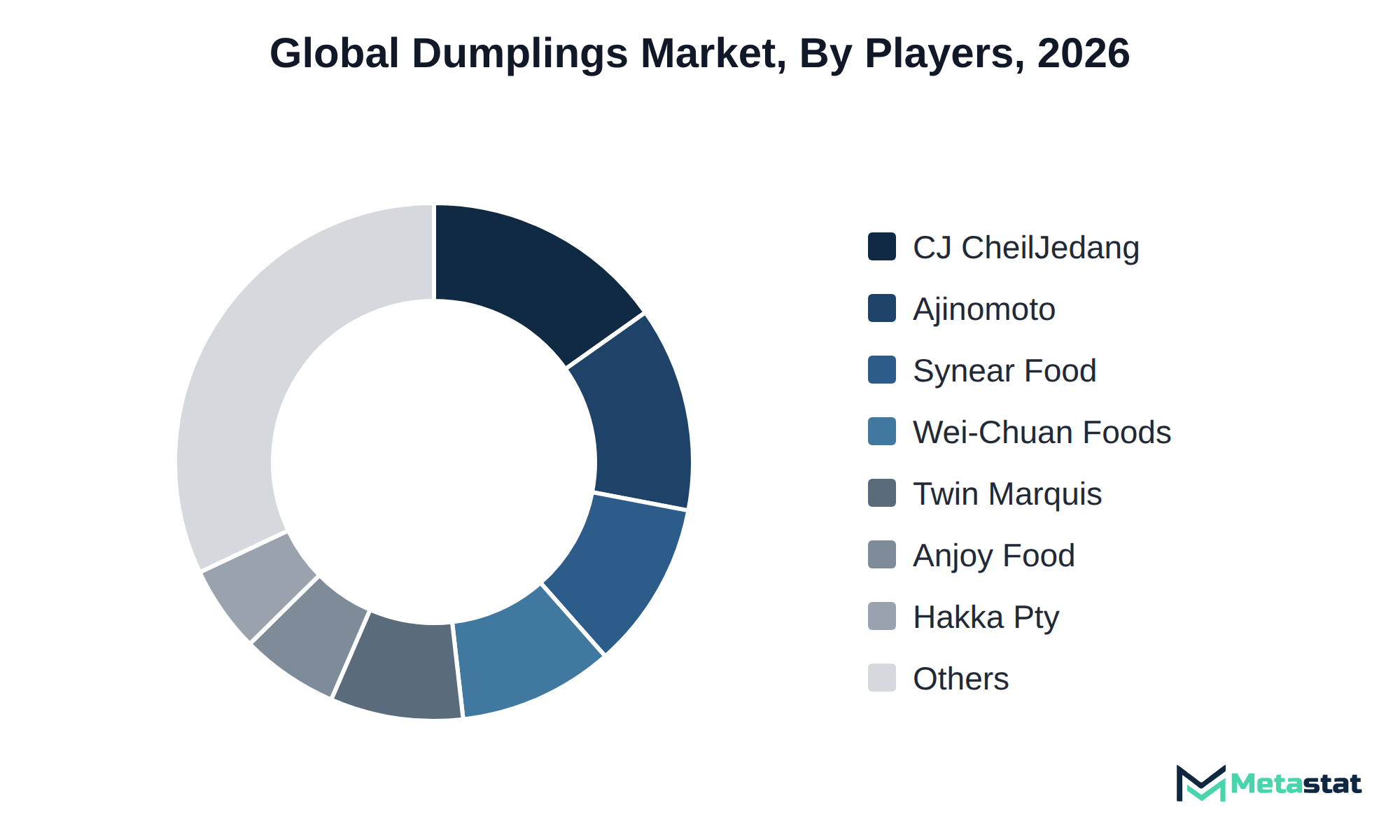
Key players in the Dumplings market pursue varied competitive strategies. Companies differentiate based on product offerings, including frozen, fresh, and ready-to-eat varieties, which cater to evolving consumer preferences for convenience and quality.
Buyers prioritize factors including price, ingredient quality, and product variety when selecting dumpling products. For example, Ajinomoto Co., Inc. emphasizes innovation in flavor profiles to attract consumers seeking unique culinary experiences. CJ CheilJedang Corporation focuses on expanding its range of vegetable-based fillings to meet growing health-conscious trends. Wei-Chuan Foods Corporation targets traditional recipes to appeal to consumers seeking authentic tastes.
Companies actively develop distribution channels that enhance accessibility. Twin Marquis, Inc. leverages online retail to reach a broader audience, while specialty food stores provide niche markets for unique offerings. This multi-channel strategy supports growth in the Dumplings market by ensuring products are available across various platforms.
Achieving this growth requires several developments within the Dumplings market. First, increasing demand for frozen dumplings, projected to reach USD 1,560.4 million by 2033, drives market expansion. Growth in the vegetable-based filling segment, anticipated to reach USD 923.5 million, further supports this upward trend. The rising popularity of online retail, which is expected to expand at a 6.5% CAGR, enhances market accessibility for consumers.
However, risks exist that impede reaching the forecasted market size. Supply chain disruptions, particularly in the Asia Pacific region where dumpling production occurs, pose potential challenges. These disruptions affect production timelines and increase costs, impacting overall market growth. Stakeholders will need to monitor these factors closely to manage changing conditions in the Dumplings market and reach projected revenue targets.
By Product Type: Frozen Dumplings, Fresh/handmade Dumplings, Ready-to-eat Dumplings, Shelf-stable Packaged Dumplings, Sweet/Dessert Dumplings
By Filling Type: Vegetable-based, Pork-based, Chicken-based, Beef/lamb-based, Seafood-based, Mixed or Fusion Fillings
By Dough Type: Wheat-based Dough, Gluten-free Dough, Rice-based Dough, Whole-grain Dough
By Distribution Channel: Supermarkets and Hypermarkets, Convenience Stores, Specialty Food Stores, Online Retail, Foodservice and Institutional Distribution
The report strategically identifies and profiles the key market players and analyses their core competencies in each sub-segment of the Dumplings market.
Report Attributes | Details |
Study Period | 2021-2033 |
Base Year | 2025 |
Estimated Year | 2026 |
Forecast Period | 2026-2033 |
Historical Period | 2021-2025 |
Growth Rate | CAGR 4.6% from 2026 to 2033 |
Revenue Unit | USD million |
Segmentation | By Product Type, Filling Type, Dough Type, Distribution Channel, and Region |
By Region | North America (By Product Type, Filling Type, Dough Type, Distribution Channel, and Country)
|
Europe (By Product Type, Filling Type, Dough Type, Distribution Channel, and Country)
| |
Asia Pacific (By Product Type, Filling Type, Dough Type, Distribution Channel, and Country)
| |
South America (By Product Type, Filling Type, Dough Type, Distribution Channel, and Country)
| |
Middle East and Africa (By Product Type, Filling Type, Dough Type, Distribution Channel, and Country)
|
Find answers to common questions about this report
The Dumplings market size was valued at USD 2,540.3 million in 2025.
The market is projected to grow at a CAGR of 4.6% during the forecast period from 2026 to 2033.
The North America Dumplings market size is estimated to reach USD 722.8 million by 2033.
Frozen Dumplings lead the market with a value of USD 1,150.6 million in 2026. This segment's growth reflects strong consumer demand for convenient meal options.
Key drivers for the Dumplings market include a growing preference for convenience foods among busy professionals and families, and increasing consumer demand for healthier and plant-based options, particularly in the vegetable-based filling segment. The market is projected to expand from USD 2,540.3 million in 2025 to USD 3,641.5 million by 2033, reflecting a compound annual growth rate of 4.6%.
Asia Pacific holds the dominant share of the Dumplings market, accounting for 49.8 percent in 2025. This region significantly surpasses others, including North America at 20.3 percent.
Fluctuations in ingredient prices restrain growth in the Dumplings market, impacting profit margins for manufacturers. Increased labor expenses significantly affect overall profitability, driving suppliers to invest in automation technologies to manage costs effectively.
Several factors favor adoption in the Dumplings market, including the increasing demand for convenience foods among busy consumers and the rising interest in healthier, plant-based options. Innovations in production technologies enhance efficiency and product quality, further supporting market growth. competitive pricing strategies enable suppliers to attract a broader customer base.
The Dumplings market is estimated to reach a valuation of USD 3,641.5 million by 2033.
Key players operating in the Dumplings market include Ajinomoto Co., Inc., CJ CheilJedang Corporation, Synear Food Co., Ltd., Anjoy Food Group Co., Ltd., Wei-Chuan Foods Corporation, Twin Marquis, Inc., and InnovAsian Cuisine Enterprises, Inc.
The analysts below cover Food and Beverages research at Metastat Insights.
LEAD ANALYST
Utkarsh Khirodkar is a Lead Market Research Analyst at MetaStat Insight, specializing in market intelligence, technology sector assessments, and competitive strategy.

LEAD PRINCIPAL ANALYST, PHARMA AND HEALTHCARE
Food and Beverages · Healthcare · Healthcare IT · Medical Devices
Ajay Devgire is the Lead Healthcare Analyst at MetaStat Insight, leading strategic research and market intelligence initiatives across the global healthcare domain.

SENIOR RESEARCH ANALYST
Biotechnology · Food and Beverages · Medical Devices · Packaging
Snehal Pasalkar is a Research Analyst at MetaStat Insight, operating at the intersection of life sciences research, competitive strategy, and market intelligence.
Transitioning ultra-class mining haul trucks to alternative power requires concrete data on remote hydrogen refueling infrastructure economics. The report evaluated megawatt-scale electrolyzer installation expenses, onsite storage safety mandates, and heavy-duty fuel cell stack degradation under continuous duty cycles. That technical rigor helped our engineers benchmark realistic total operating cost horizons for off-highway fleet decarbonization.
Enterprise zero-trust network rollouts are often slowed down by multi-cloud transit latency and proprietary hardware retirement schedules. This study provided realistic total cost of ownership models comparing cloud-delivered security edge solutions against traditional hardware refreshes. The analysis of contract renewal lengths and software maintenance fees gave us clear visibility into enterprise replacement cycles over the next three to five years.
Scaling antibody-drug conjugate manufacturing hinges on contract manufacturing availability for high-potency active ingredients. The MetaStat Insight analysis looked closely at global cleanroom slot constraints, bioconjugation batch failure rates, and supply chain redundancies between the US, Europe, and India. The supplier capability matrix proved genuinely useful for our team when mapping secondary source options across our clinical pipeline.
Explore related market intelligence reports worth reading alongside this one.