
LEAD ANALYST
Utkarsh Khirodkar is a Lead Market Research Analyst at MetaStat Insight, specializing in market intelligence, technology sector assessments, and competitive strategy.

Global Western and Asian Cuisine Food Market Size, Share, By Cuisine Type (Chinese Cuisine, Japanese Cuisine, Indian Cuisine, Korean Cuisine, Southeast Asian Cuisine, Italian Cuisine, American Cuisine, French Cuisine), By Product Format (Freshly Prepared Meals (Foodservice), Ready-to-Eat Meals, Frozen Foods, Ready-to-Cook Products and Meal Kits, Sauces, Seasonings and Condiments, Noodles, Pasta and Rice Products, Snacks and Bakery), By Distribution Channel (Restaurants and Cafés, Quick-Service and Fast-Casual Restaurants, Catering and Institutional Foodservice, Supermarkets and Hypermarkets, Convenience Stores, Specialty and Ethnic Grocery Stores, Online Retail and Delivery Platforms), By Food Type (Meat and Poultry-Based, Seafood-Based, Vegetarian, Vegan and Plant-Based), Industry Analysis, Growth, Trends, and Forecast, 2026-2033
Report ID
MSI-5670
Published
November, 2026
Pages
285 Pages
Format
Historical
Base year
Forecast
Forecast period
Report Details
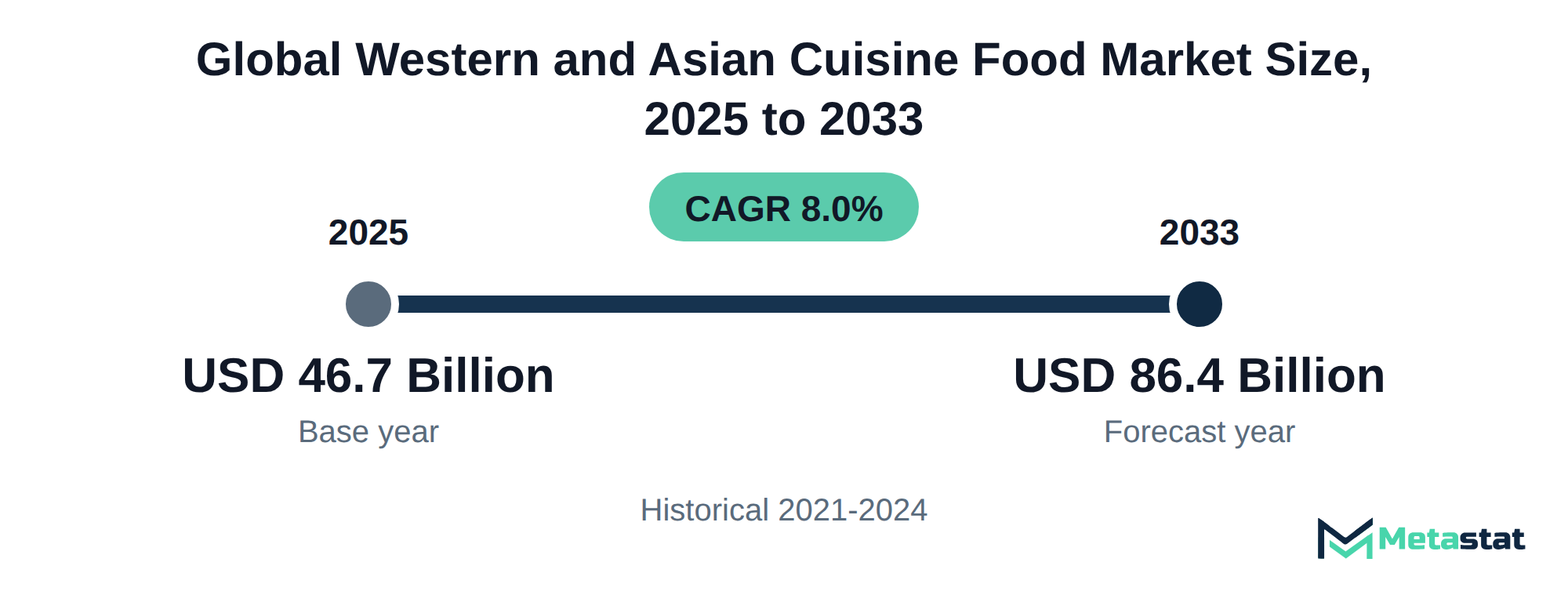
Market Valuation: Valued at $46.7 Billion in 2025, projected to reach $86.4 Billion by 2033 at a 8.0% CAGR.
Dominant Segment: Chinese Cuisine leads the market, driven by its broad appeal and demand for authentic flavors. Its strong presence reflects consumer preferences for diverse and high-quality dining experiences.
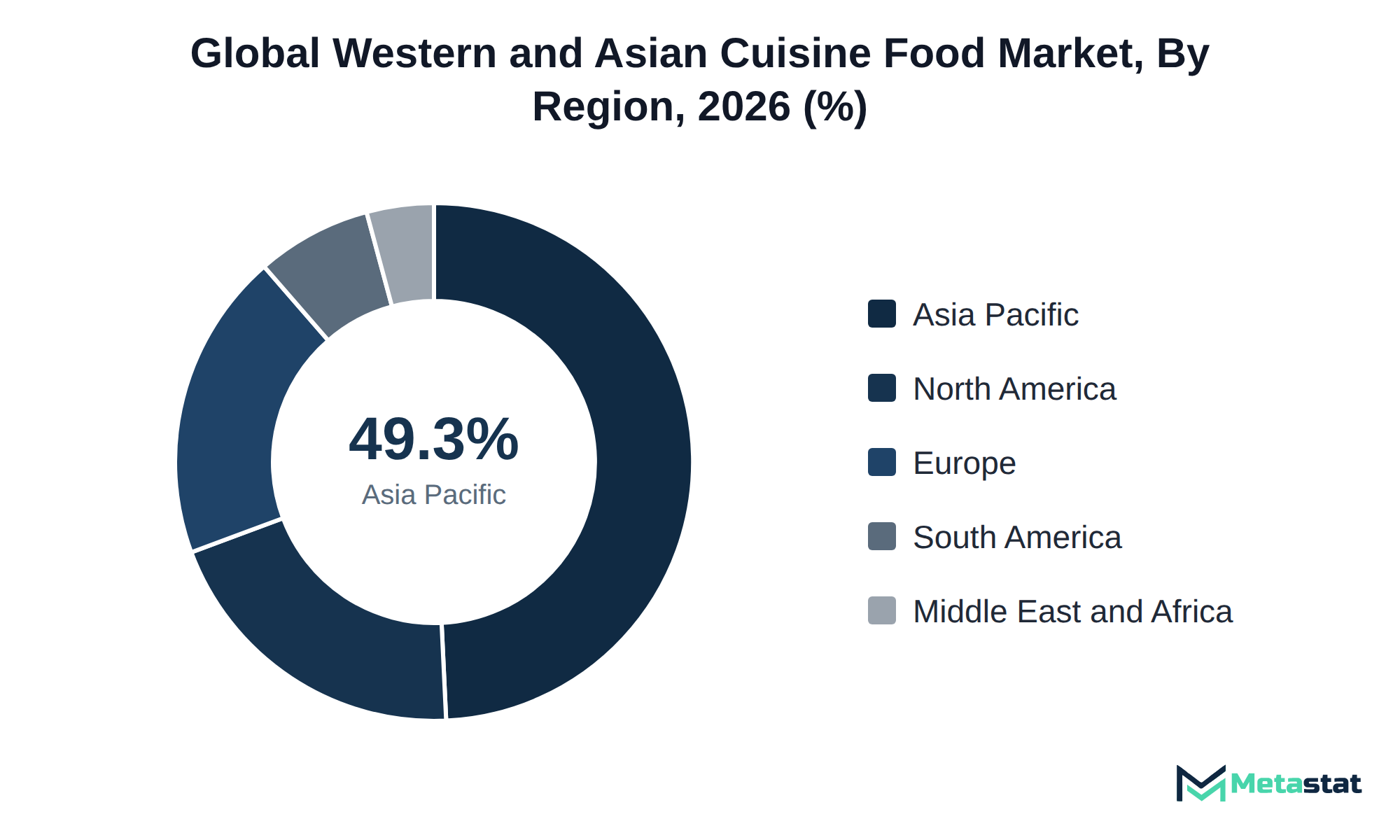
Geographic Lead: Asia Pacific holds the largest market share at 49.3%, propelled by a strong appetite for both traditional and modern Asian dishes. The region's growing culinary landscape is supported by increasing restaurant establishments and foodservice options.
What's Inside: The report provides comprehensive coverage of the Western and Asian Cuisine Food market, including detailed analyses of cuisine types, product formats, and distribution channels. It includes forecasts through 2033, highlighting growth trends and market dynamics.
Emerging Trends: Korean, Indian, and Southeast Asian cuisines are gaining traction, with Korean Cuisine projected to grow at a CAGR of 10%. This shift indicates a growing consumer interest in innovative flavors and authentic culinary experiences.
Consumer Behavior: Health consciousness is reshaping spending patterns, with younger consumers favoring nutritious and convenient meal solutions. This trend is driving demand for freshly prepared meals and ready-to-eat options.
Choose Your License
Global Western and Asian Cuisine Food Market
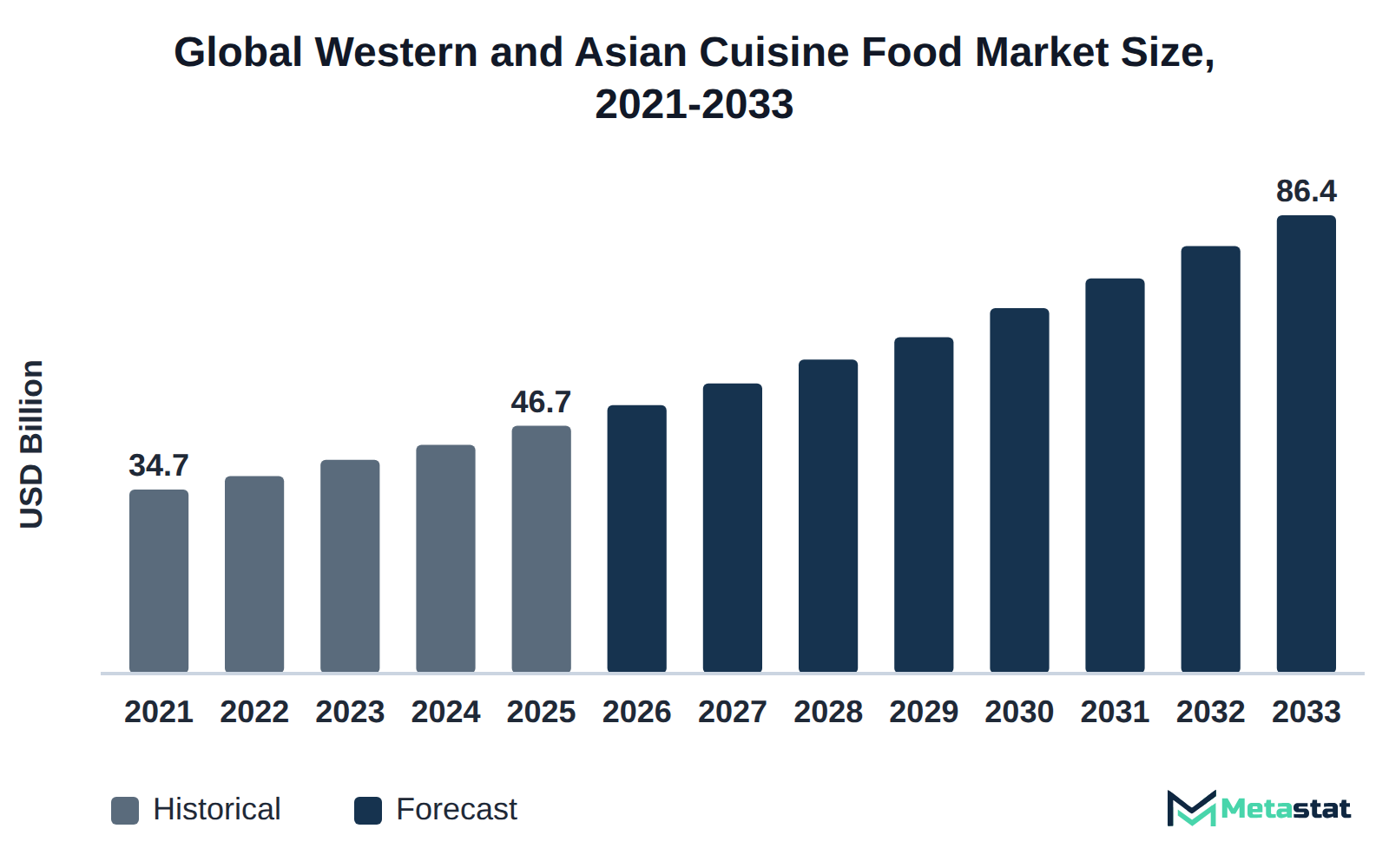
The global Western and Asian Cuisine Food market was valued at USD 46.7 billion in 2025 and is projected to reach USD 86.4 billion by 2033, growing at a CAGR of 8.0% over the forecast period.
The Western and Asian Cuisine Food market covers culinary offerings from many cultures and traditions. Buyers invest in these products due to the increasing demand for authentic flavors and convenient meal solutions that cater to diverse dietary preferences. This market serves consumers seeking quality meals that reflect cultural heritage and culinary innovation.
Growth in the market is driven by evolving consumer preferences for international cuisines, particularly in the Asia Pacific region, which holds a substantial share of the overall market. North America holds 20.1% of the market in 2025, with the US leading in 2026. Chinese Cuisine represents the highest value segment within the market, appealing to a broad demographic that values both taste and authenticity.
Shifts toward healthier eating habits and the rising popularity of plant-based diets further fuel expansion in the market. Increased consumer interest in vegan and vegetarian options highlights a changing landscape where traditional recipes are adapted to meet contemporary dietary trends. This growth creates openings for innovation and market penetration.
The Western and Asian Cuisine Food market features an extensive selection of dishes that cater to the preferences of consumers seeking diverse culinary experiences. Buyers spend on this market due to the increasing demand for authentic flavors, convenience, and the variety offered across different cuisine types. The evolving lifestyle of consumers drives interest in ready-to-eat options and freshly prepared meals that meet the need for quality and taste.
Growth within the market is propelled by the rising consumer inclination towards Asian cuisines, particularly Chinese and Japanese offerings, which have gained significant traction globally. Among the various segments, Chinese Cuisine holds the most value, reflecting strong demand trends. In regional comparisons, Asia Pacific holds the largest share at 49.3%, reflecting strong demand for both traditional and modern interpretations of Asian dishes.
North America is projected to account for 20.1% of the market in 2025, with the US contributing significantly to this figure in 2026. The strong growth in this region stems from an increasing number of restaurants and foodservice establishments offering diverse culinary options. Consumers want authentic dining experiences as well as convenience, which positions the market for sustained expansion through the forecast period.
Frozen dumplings, ramen, and ready meals have transitioned from niche offerings to mainstream staples within the Western and Asian Cuisine Food market. This shift reflects increasing consumer demand for convenient, yet authentic, dining experiences. In 2023, the Asian Cuisine segment is expected to experience significant growth, driven by the popularity of these products among busy consumers seeking quick meal solutions without compromising flavor and quality.
The frozen food segment is projected to reach USD 12.9 billion by 2033, highlighting the growing appeal of Asian culinary offerings in accessible formats. Innovative packaging and preservation technologies have enhanced the shelf life and quality of these products, making them readily available in supermarkets and online retail channels. Consumers increasingly prioritize convenience, which matches strong demand for frozen dumplings and ramen.
This trend expands market penetration and encourages investment in new product development and marketing strategies that suit evolving consumer preferences. The dominant position of frozen meals lets manufacturers capitalize on changing food consumption patterns, which reinforces the presence of Asian cuisine in mainstream dietary choices.
The rise of Korean, Indian, and Southeast Asian cuisines is reshaping purchasing behaviors within the Western and Asian Cuisine Food market. Buyers increasingly seek innovative flavors and authentic experiences, resulting in a shift from traditional staples including Chinese and Italian cuisines. This trend is expected to drive a compound annual growth rate (CAGR) of 8% from 2026 to 2033, reflecting a growing appetite for diverse culinary offerings.
Pricing dynamics reflect this transformation, with premium pricing models emerging for specialty products from these regions. For example, the Korean Cuisine segment is projected to reach USD 16.3 billion by 2033, demonstrating a CAGR of 7.3%. Buyers favor contracts that emphasize quality and authenticity, aligning their purchasing strategies with trends toward gourmet and artisanal foods. This shift influences suppliers to innovate and adapt their offerings, enhancing their appeal to discerning consumers.
While brands meet the demand for unique flavors, the market encourages increased competition among suppliers. Enhanced product differentiation and strategic pricing lead to improved profit margins, effectively capitalizing on the rising interest in these cuisines. This competitive atmosphere drives market growth while shaping consumer expectations and purchasing patterns.
Growing interest in home cooking has significantly increased demand for simmer sauces and meal kits in the Western and Asian Cuisine Food market. The trend highlights consumers' desire for convenience without sacrificing authenticity in their meals. This segment offers a solution by allowing home cooks to replicate restaurant-quality dishes with minimal effort. For instance, the market for freshly prepared meals (foodservice) is projected to grow from USD 16.9 billion in 2026 to USD 28.5 billion by 2033, reflecting an annual growth rate of 7.7%. Such meal formats simplify meal preparation while delivering the complex flavors associated with various cuisines.
Families and busy professionals often seek quick yet diverse dining options. By using simmer sauces and meal kits, these consumers achieve a balance between culinary exploration and efficiency in meal preparation. The increasing availability of these products across various distribution channels, including supermarkets and online platforms, enhances accessibility. This trend encourages higher spending on Western and Asian cuisine products, contributing to overall growth within the market.
Investments in freshly prepared meals from restaurants and cafés provide significant financial returns compared to packaged foods in the Western and Asian Cuisine Food market. This growth reflects shifting consumer preferences toward dining experiences that offer quality and convenience.
In contrast, the ready-to-eat meals segment, while expanding, is expected to reach USD 11.8 billion by 2033, with a CAGR of 8.7%. Despite this growth, the returns from restaurant meals stand out, driven by increasing demand for authentic culinary experiences among consumers. This trend indicates a willingness to spend on dining out, reinforcing the financial viability of investing in restaurant meal offerings within the market.
Operators focusing on freshly prepared meals find greater profitability by aligning their offerings with evolving consumer trends and the enduring popularity of dining out.
Increasing health consciousness among consumers significantly influences spending patterns on culinary offerings. The younger demographic, particularly millennials and Gen Z, increasingly seeks nutritious and convenient meal solutions, favoring Western and Asian Cuisine Food over traditional fast food options. This shift in preferences results in greater demand for diverse meal formats, including freshly prepared meals and ready-to-eat options. In 2026, the market is projected to reach USD 50.6 billion, reflecting this growing consumer trend toward healthier dining choices. The market exhibits significant growth driven by changing dietary habits, with younger consumers prioritizing flavor diversity and healthier ingredients. These trends position the market for sustained expansion through the forecast period, with more buyers opting for culinary options that align with their lifestyle choices.
Innovations in meal kits significantly enhance consumer interest in diverse culinary experiences. The introduction of Asian cuisine meal kits supports the growing trend toward convenient, at-home cooking while offering authentic flavors. These products cater to busy lifestyles, allowing consumers to prepare meals with minimal preparation time and effort. The Western and Asian Cuisine Food market benefits from the demand for such convenience-oriented offerings, appealing to both novice and experienced cooks. Increased technology integration in meal kit preparation, including pre-portioned ingredients and easy-to-follow recipes, drives adoption among consumers seeking hassle-free cooking solutions. The focus on authentic culinary experiences ensures the market remains competitive, with suppliers continually evolving their product offerings. This evolution provides a competitive edge, enhancing market positioning and attracting a broader consumer base. Through strategic innovations, meal kit providers expand their reach, impacting overall market growth and shaping consumer preferences for Western and Asian cuisine.
Increasing ingredient costs represent a significant restraint on the Western and Asian Cuisine Food market. Consumers face higher prices for essential components, leading to a decline in disposable income for food purchases. This situation particularly affects low- and middle-income households, resulting in smaller orders or delayed meal planning. Restaurants and food services adjust menus and pricing strategies to mitigate these effects, which limits the variety and availability of certain cuisine options. Demand for premium products struggles as more budget-conscious consumers prioritize affordability over culinary variety. Consequently, overall market growth is expected to slow, which limits the potential for innovation and diversification in menu offerings.
Suppliers in the Western and Asian Cuisine Food market face significant input and material cost pressures, which directly impact profit margins. Rising prices for ingredients and packaging materials lead to increased operational costs, prompting suppliers to explore various strategies to sustain profitability. Many suppliers implement cost-cutting measures, including optimizing production processes and renegotiating contracts with their own input providers to secure better pricing. Several companies focus on enhancing product offerings by incorporating premium ingredients, which justify higher retail prices and offset rising input costs.
Strategically, suppliers invest in technology to streamline operations and improve efficiency, which reduces waste and lowers overall costs. Collaborations with local producers play a role in mitigating transportation expenses, creating a more sustainable supply chain. These approaches reflect suppliers' responses to the mounting pressure from increasing costs, shaping strategies to maintain competitive pricing within the market while ensuring product quality and customer satisfaction.
Korean cuisine is experiencing notable growth within the market, driven by increasing consumer demand for unique flavors and culinary experiences. This segment is projected to achieve a compound annual growth rate (CAGR) of 10%, highlighting its potential for expansion. Key factors contributing to this growth include a rising interest in Korean dishes, including bibimbap and Korean barbecue, which have gained popularity in both restaurants and retail settings.
The growing interest in Korean cuisine presents opportunities for businesses to innovate by offering ready-to-cook products and meal kits that cater to evolving consumer preferences. Enhanced marketing strategies targeting health-conscious consumers position Korean cuisine as a desirable option within the broader Western and Asian Cuisine Food market. This trend creates a favorable environment for investments and product development, allowing companies to capture a share of the expanding market.
The Global Western and Asian Cuisine Food market is segmented based on Cuisine Type, Product Format, Distribution Channel, and Food Type.
This cuisine primarily serves consumers seeking flavorful and diverse dining options, both in restaurants and through packaged foods. The rising popularity of Chinese cuisine among younger demographics fuels segment growth, reflecting a shift in eating habits toward more exotic flavors. Compared to other cuisine segments, including Japanese cuisine with a projected value of USD 9.8 billion by 2033 at a CAGR of 7.8%, Chinese cuisine growth remains robust, driven by the widespread availability of ingredients and the adaptability of traditional dishes to modern tastes. The market sees increased demand for freshly prepared meals, which aligns with consumer trends favoring convenience and quality. Chinese noodles and traditional food products show how heritage recipes are adapted to modern tastes. This dynamic environment supports the ongoing expansion of Chinese cuisine's presence in the market.
This segment includes a variety of dishes including sushi, ramen, and tempura, appealing to consumers who seek authentic culinary experiences. The rising popularity of Japanese Cuisine is driven by its unique flavors and presentation, attracting consumers in restaurants and home cooking environments. This segment often features higher price points compared to others, reflecting the premium nature of its ingredients and preparation methods. Compared to Chinese and Korean cuisines, which experience more rapid growth rates, Japanese Cuisine maintains steady expansion. The segment benefits from increasing exposure through global food trends and enhanced availability in supermarkets and restaurants, further reinforcing its position in the market.
Indian Cuisine segment is expected to reach USD 9.9 billion by 2033. This segment caters to consumers seeking authentic flavors and traditional dishes from India, popular among both local and international audiences. The growth of Indian Cuisine is primarily driven by rising interest in exploring diverse culinary options, reflecting a cultural shift towards global flavors. Competitively priced meals and the increasing popularity of Indian restaurants contribute to this expanding market. Compared to other segments, including Chinese Cuisine, which is projected to grow at a CAGR of 7.3%, Indian Cuisine experiences significant growth fueled by its unique taste and variety. The segment is expected to benefit from an evolving consumer base that prioritizes authenticity and quality in their dining experiences, thus differentiating it within the market.
Korean cuisine is projected to grow at a CAGR of 10% during the forecast period. This sub-segment appeals to consumers in search of distinctive flavors and unique culinary experiences. The increasing popularity of Korean dishes, including kimchi and bibimbap, captures the attention of younger demographics and food enthusiasts. The demand for authentic Korean meals in restaurants, foodservice establishments, and home cooking reflects this trend. Unlike other Asian cuisines, Korean cuisine's rapid growth stems from its strong cultural influence and rising global awareness. Increased interest in Korean cooking shows and celebrity chefs significantly drives consumer interest, differentiating it from slower-growing segments including Japanese and Chinese cuisines. The market recognizes the value of Korean cuisine, aligning with consumers' evolving tastes and preferences.
Southeast Asian Cuisine features many flavors and dishes that are central to regional cooking. Popular among consumers who appreciate diverse and lively tastes, this segment finds its application in restaurants, takeout establishments, and home cooking. A growing trend toward authentic and traditional flavors drives interest, with consumers seeking unique dining experiences. Differentiation from other cuisine types occurs through the use of bold spices and fresh ingredients, appealing particularly to younger demographics and adventurous eaters. The segment distinguishes itself with a focus on affordability and accessibility, often providing more cost-effective options compared to other premium Asian cuisines. The ongoing interest in health and wellness influences demand, driven by consumers increasingly seeking nutritious yet flavorful meals. This dynamic relationship between flavor innovation and changing consumer preferences positions Southeast Asian Cuisine favorably within the market.
Italian cuisine spans many flavors and dishes that are popular across demographic groups. Consumers appreciate Italian cuisine for its versatility, making it suitable for casual dining, family gatherings, and fine dining experiences. Increasing demand for authentic and high-quality ingredients drives growth in this segment. The focus on using fresh, locally sourced components differentiates Italian cuisine from others, attracting health-conscious buyers willing to pay a premium for quality. Compared to other segments, including Chinese or Indian cuisine, Italian cuisine appeals to a broad audience, reflecting a strong cultural presence in Western culinary traditions. This prominence results in stable demand, supporting growth against other emerging cuisines that experience faster expansion rates.
American cuisine includes many flavors and ingredients that reflect the cultural mix of the United States. This segment primarily serves households, restaurants, and foodservice operators seeking familiar and comforting meal options. A growing trend towards convenience fuels demand for ready-to-eat and ready-to-cook products within this category. Consumers often seek comfort food during times of uncertainty, driving interest in traditional American dishes. Compared to other segments, American cuisine typically experiences steady growth due to its established popularity among a broad demographic. While other cuisine types enjoy faster growth rates, American cuisine's deep-rooted presence in the market provides resilience against shifts in consumer preferences. More brands innovate to include regional specialties, while the competitive landscape within the market continues to evolve.
French cuisine features a variety of sophisticated dishes and culinary techniques that appeal to consumers seeking refined dining experiences. Often associated with high-quality ingredients and intricate preparation methods, this segment finds popularity in upscale restaurants and gourmet food establishments. The growing interest in culinary tourism and fine dining drives demand for French cuisine among affluent consumers. Unique characteristics, including emphasis on sauces and presentation, differentiate this segment from others including Italian or Chinese cuisine, which focus more on hearty flavors or simplicity. Consumer preferences have shifted towards authentic and high-quality culinary offerings, propelling French cuisine's relevance in today’s market. The higher price point of French culinary products appeals to a niche market, resulting in slower growth compared to rapidly expanding cuisines including Korean or Indian. The segment's unique offerings maintain a loyal customer base that values tradition and culinary artistry.
The Others segment encompasses culinary offerings from Spanish, British, German, and Central Asian cuisines. This diverse range of flavors and cooking styles captures the interest of consumers seeking unique food experiences. The segment appeals to food enthusiasts and adventurous diners who enjoy exploring various cultural dishes. Increasing globalization promotes the incorporation of these cuisines into mainstream dining, encouraging restaurants to expand their menus to include these options. The segment differentiates itself through slower growth compared to other segments, highlighting traditional recipes and preparation methods that attract a niche market. While mainstream Asian and Italian cuisines experience rapid growth, the Others segment often offers higher price points, reflecting the specialized nature of these dishes targeted at discerning consumers. The variety within this segment enriches the offerings available in the Western and Asian Cuisine Food market, enhancing culinary diversity and consumer choice.
This segment primarily caters to consumers seeking quick and convenient meal solutions, frequently used in restaurants, cafés, and catering services. Key growth drivers include rising demand for quality dining experiences and the convenience factor associated with freshly prepared offerings. Compared to other segments, this category exhibits a stronger growth trajectory due to changing consumer lifestyles that prioritize ready-to-eat options. In an environment where the Western and Asian Cuisine Food market continues to expand, the Freshly Prepared Meals (Foodservice) segment significantly contributes to this trend.
This segment caters to consumers seeking convenient meal options, often used by busy professionals and families. The increasing pace of life drives demand for Ready-to-Eat Meals, reflecting a broader trend toward convenience in dining. This segment stands out for its rapid growth compared to other product formats, with many buyers prioritizing quick meal solutions. The availability of diverse options, including culturally specific cuisines, enhances its appeal. Changing consumer preferences toward healthier and more balanced meals contribute to the segment's expansion. In this context, the growing emphasis on quality ingredients and nutrition influences product offerings and pricing strategies, positioning Ready-to-Eat Meals as a significant contributor to overall market growth.
The Frozen Foods segment is expected to reach USD 12.9 billion by 2033. This category serves various consumers seeking convenience and quick meal options, particularly busy professionals and families. The rising demand for ready-to-cook meals drives growth, with a significant CAGR of 7.7% anticipated during the forecast period. Frozen Foods typically offer a broader range of flavors and cuisines compared to other segments, appealing to diverse consumer preferences. Unlike freshly prepared meals, which require immediate consumption, Frozen Foods provide flexibility and longer shelf life, catering to consumers who value practicality. Increased household cooking activity during economic shifts further enhances the segment's appeal, positioning it favorably within the Western and Asian Cuisine Food market.
Ready-to-Cook Products and Meal Kits segment is projected to grow at a CAGR of 9.7% during the forecast period. This segment caters to consumers who seek convenience and variety in meal preparation, appealing to busy households and individuals looking for quick yet flavorful dinner solutions. Demand for these products is driven by changing lifestyles that emphasize efficiency without sacrificing quality. Compared to other segments, including Frozen Foods and Ready-to-Eat Meals, this category distinguishes itself with a focus on fresh ingredients and customizable meal options, which often command higher price points. This shift towards home cooking with minimal preparation time offers market players a distinct advantage over traditional food preparation methods, allowing for innovation in flavor profiles and dietary preferences.
Sauces, seasonings, and condiments are a core component of culinary experiences, enhancing flavors and adding depth to many dishes. Restaurants and home cooks use these products extensively to improve meal preparation and presentation. The segment experiences growth driven by increasing consumer preference for flavor diversity and culinary exploration. The rising interest in international cuisines significantly influences demand, pushing suppliers to innovate and expand their product offerings. Compared to other product formats, this segment offers higher margins due to the perceived value of premium and specialty items. While consumers seek authentic and unique flavor profiles, the willingness to invest in quality sauces and seasonings remains strong, positioning this segment favorably within the market. Suppliers continuously innovate to cater to changing tastes, ensuring a dynamic and competitive environment.
Noodles, pasta, and rice products serve essential staples in various cuisines, particularly in Asian culinary traditions. These products appeal to consumers seeking convenient meal solutions that require minimal preparation time. Increasing health consciousness among consumers drives demand for whole grain and gluten-free food options, thereby influencing product innovation within this segment. Differentiation from other product formats occurs through their versatility and cultural significance, with noodles and rice often being the main components of traditional dishes. This segment experiences dynamic growth patterns, driven by a rising preference for ethnic flavors in Western markets and the increasing adoption of Asian dishes globally. The market shows strong potential due to the broadening consumer base that embraces these products, leading to an expanding variety of offerings across retailers. In the competitive landscape, manufacturers adopt innovative approaches to capture consumer interest, reflecting evolving culinary preferences in the Western and Asian Cuisine Food market.
Snacks and Bakery include a diverse range of products that appeal to various consumer preferences, providing convenient options for snacking and meal accompaniment. This segment attracts consumers seeking quick, satisfying food solutions, often emphasizing taste and portability. The growing trend toward on-the-go eating habits significantly drives demand, particularly among younger demographics and busy professionals. Consumer preferences for healthier snack options influence product development, with an increasing focus on natural ingredients and lower sugar content. Compared to other product formats, this segment experiences slower growth due to competition from ready-to-eat meals and freshly prepared options. The emphasis on product innovation and adaptation to changing consumer preferences significantly shapes the Snacks and Bakery segment's trajectory within the Western and Asian Cuisine Food market.
Offering a variety of preserved foods, the Others (Canned, Dried and Pickled Foods) sub-segment provides essential options for consumers seeking convenience and extended shelf life. These products appeal to busy households and foodservice operators, effectively catering to the growing demand for meal prep solutions and easy-to-serve options. Shifts in consumer preferences toward longer-lasting products influence this segment, driven by the desire for reduced food waste and greater efficiency in meal planning. Unlike other sub-segments that focus on fresh or ready-to-eat items, this category emphasizes preservation methods that extend usability, attracting a distinct buyer base. While the Western and Asian Cuisine Food market continues to evolve, the relevance of canned, dried, and pickled foods remains significant, fulfilling niche needs that complement broader culinary trends.
Restaurants and Cafés segment is valued at USD 7.9 billion in 2026 and is projected to reach USD 13.1 billion by 2033, at a CAGR of 7.5% during the forecast period. This segment serves consumers seeking convenient dining options, often featuring diverse culinary offerings. Key factors driving growth in this segment include increasing consumer preferences for dining out and the growing trend of food delivery services. Compared to other distribution channels, including supermarkets and hypermarkets, this segment experiences relatively faster growth due to its adaptability to changing consumer habits. Rising demand for quick-service restaurant meals and unique dining experiences differentiates this segment from more traditional channels, focusing on delivering flavor and convenience while adjusting to evolving culinary trends. Overall, the Restaurants and Cafés segment significantly shapes the dynamics of the Western and Asian Cuisine Food market.
Quick-Service and Fast-Casual Restaurants segment is estimated to reach USD 10.9 billion by 2033, at a CAGR of 8.1% during the forecast period. This segment serves consumers looking for convenient dining options that offer a balance of quality and speed. The increasing demand for quick and affordable meals drives growth in this segment, attracting busy individuals and families seeking efficient dining experiences. Compared to other segments, Quick-Service and Fast-Casual Restaurants experience faster growth, primarily due to the rise of urbanization and changing consumer lifestyles. The segment benefits from the ability to provide a diverse range of menu items that appeal to various tastes and preferences. Innovations in menu offerings and service models continue to enhance customer satisfaction, ensuring the segment's strong position within the market. The Western and Asian Cuisine Food market reflects the importance of this segment in catering to the evolving needs of modern consumers.
Catering and Institutional Foodservice segment is expected to reach USD 4.5 billion by 2033. This segment supplies prepared meals for large groups, serving institutions including schools, hospitals, and corporate settings. Growth in this area is driven by increasing demand for convenient meal solutions across institutions and a growing focus on providing nutritious food options. Compared to the Restaurants and Cafés segment, which is projected to reach USD 13.1 billion by 2033, the Catering and Institutional Foodservice segment experiences slower growth due to the specific needs and scheduling of institutional clients. The market’s emphasis on healthier meal options aligns with broader trends in consumer preferences, enhancing the segment's potential within the Western and Asian Cuisine Food market. Overall, catering services adapt to diverse consumer tastes while emphasizing efficiency and cost-effectiveness in meal preparation.
Supermarkets and Hypermarkets segment is projected to grow at a CAGR of 7.1% during the forecast period. This segment serves consumers seeking convenient access to various Western and Asian cuisine food products, ranging from ready-to-eat meals to fresh ingredients. The growth of this segment is driven primarily by changing consumer lifestyles that emphasize convenience and time-saving solutions. Unlike other distribution channels, supermarkets and hypermarkets offer a broader selection of products, appealing to diverse consumer preferences. Their strategic locations and extensive networks facilitate easy access for customers, further stimulating demand. In comparison, other segments, including Restaurants and Cafés, offer a different dining experience; however, the market's focus on supermarket and hypermarket growth reflects increased consumer interest in at-home dining experiences.
Convenience Stores are essential retail outlets for consumers seeking quick access to food options. This channel caters to busy individuals and families who prefer convenient meal solutions, particularly in urban areas. Factors driving growth in this segment include increasing consumer demand for on-the-go meal solutions and the rising trend of impulse purchases. While other distribution channels including Restaurants and Cafés focus on dining experiences, Convenience Stores prioritize speed and accessibility. This segment differs from others, with a unique customer base that favors quick, affordable options over the varied dining experiences offered by restaurants. The market adapts to changing consumer lifestyles, ensuring that various cuisine options are readily available in a convenient format.
Specialty and Ethnic Grocery Stores focus on providing diverse culinary products, catering to consumers seeking authentic ingredients and flavors. These stores attract food enthusiasts, home cooks, and individuals interested in exploring global cuisines. A growing trend toward culinary exploration drives demand in this segment, with consumers increasingly seeking unique flavors and ingredients not typically found in mainstream grocery outlets. Compared to other distribution channels, including supermarkets and hypermarkets, this segment exhibits slower growth due to its niche appeal and often higher prices associated with specialty items. In the Western and Asian Cuisine Food market, the Specialty and Ethnic Grocery Stores segment highlights the increasing importance of cultural diversity in food choices, reflecting evolving consumer preferences that prioritize authentic culinary experiences over mainstream offerings.
Online Retail and Delivery Platforms focus on the direct sale and distribution of Western and Asian cuisine food through digital channels. This segment serves consumers seeking convenience and variety, allowing them to access a wide range of culinary options from the comfort of their homes. Key driving forces include increasing consumer demand for convenience, resulting in a surge in online orders and deliveries. This segment differentiates itself by offering a broader selection compared to traditional grocery stores, attracting millennials and busy professionals who prioritize quick meal solutions. Competitive pricing strategies and promotional activities within this segment enhance its appeal, potentially leading to faster growth relative to other distribution channels in the market.
Vending machines, street vendors, and duty-free stores provide alternative distribution channels for Western and Asian cuisine food products. These channels attract consumers seeking convenient and quick meal options, particularly in high-traffic areas including airports, shopping centers, and urban locations. The demand for fast and accessible food solutions drives growth in this segment, appealing to busy professionals and travelers. Unlike traditional sit-down restaurants, this segment offers lower-priced options, catering to a broader audience seeking affordable meals. The market experiences varying growth dynamics compared to other channels, where segments like quick-service and fast-casual restaurants exhibit faster growth rates. The unique nature of these distribution methods introduces competitive pricing strategies, differentiating them from more formal dining environments.
The Meat and Poultry-Based segment is valued at USD 24.6 billion in 2026 and is projected to reach USD 40.7 billion by 2033, at a CAGR of 7.5% during the forecast period. This segment caters to consumers seeking protein-rich options, commonly found in various cuisines. Restaurants, foodservice outlets, and home cooks use these products for meals, snacks, and culinary preparations. Growing health awareness significantly influences this segment, with consumers increasingly favoring protein sources that align with their dietary preferences. The Meat and Poultry-Based segment exhibits rapid growth compared to other food types, driven by rising demand for convenient meal solutions. Unlike seafood and vegetarian options, which face different consumer trends and growth rates, the Meat and Poultry-Based segment remains a staple in the Western and Asian Cuisine Food market, appealing to diverse palates and culinary applications.
Seafood-based offerings are estimated to reach USD 13.8 billion by 2033, at a CAGR of 7.7% during the forecast period. This segment serves consumers seeking healthy, protein-rich options and features prominently in both Western and Asian cuisines. Rising health consciousness among consumers drives demand for seafood products, which are often viewed as healthier alternatives to red meats. Different from other segments, seafood-based products often command higher prices due to sourcing and sustainability concerns. While the market for seafood-based options expands, it faces competition from vegetarian and vegan alternatives, which attract a growing demographic interested in plant-based diets. The seafood-based segment's growth rate aligns closely with overall trends observed in the market, reflecting evolving consumer preferences and increasing focus on nutrition.
The vegetarian segment is expected to reach USD 24.8 billion by 2033. This segment caters to health-conscious consumers and those following plant-based diets, driving significant interest from various demographic groups. Rising awareness of health benefits and environmental sustainability supports growth in this segment. Demand from younger consumers, particularly millennials and Generation Z, fuels adoption of vegetarian options, influencing product development across the market. Compared to other food types, vegetarian offerings exhibit a higher growth rate, driven by an increasing preference for plant-based diets. The CAGR for the vegetarian segment stands out, reflecting an anticipated acceleration in consumer shift towards healthier eating habits. This growth is supported by a broader trend toward reduced meat consumption, positioning the vegetarian segment uniquely within the Western and Asian Cuisine Food market.
The Vegan and Plant-Based segment is projected to grow at a CAGR of 11.1% during the forecast period. This segment includes a variety of plant-based food options tailored for consumers seeking healthier and more sustainable dietary choices. A significant driver of this segment involves the increasing consumer awareness surrounding health and environmental issues, prompting a transition toward plant-based diets. This shift appeals to health-conscious individuals and environmentally aware consumers looking for meat analogues as alternatives to traditional meat products. Compared to the Meat and Poultry-Based segment, which holds a considerable share in the market, the Vegan and Plant-Based segment presents faster growth due to rising demand for plant-based proteins and alternatives, indicating opportunities for expansion. Ultimately, the segment reflects a broader trend focused on health, sustainability, and ethical consumption, contributing to the overall dynamics of the Western and Asian Cuisine Food market.
Based on geography, the Global Western and Asian Cuisine Food market is divided into North America, Europe, Asia-Pacific, South America, Middle East, and Africa.
Demand for Western and Asian Cuisine Food in North America derives primarily from the growing appetite for diverse culinary experiences among consumers in the United States, Canada, and Mexico. The region's strong restaurant culture, supported by an expanding population with increasing disposable incomes, drives substantial growth. North America holds a share of 20.1% of the global market in 2025. The projected market value is USD 17 billion by the end of 2033. Consumer preferences lean towards convenience, driving demand for freshly prepared meals and ready-to-eat products. The market continues to evolve with a significant focus on the health-conscious demographic, resulting in increased offerings of vegetarian and vegan options. Overall, these dynamics contribute to a favorable outlook for the Western and Asian Cuisine Food market in North America.
Significant demand for the Western and Asian Cuisine Food market in Europe stems from a diverse range of consumers, including families and young professionals seeking convenient meal options. The region's culinary preferences, especially in countries like Germany, France, and Italy, drive interest in authentic and diverse flavors. A growing trend toward dining out contributes to the expansion of restaurants and cafés, which play a critical role in the market's growth. The foodservice sector benefits from increased consumer disposable income, allowing for higher spending on dining experiences. The market value in Europe is projected to reach USD 86.4 billion by 2033, reflecting a steady growth trajectory, supported by innovative culinary offerings and a shift in consumer habits toward international cuisines.
Asia Pacific stands out as the largest regional market, encompassing significant players and diverse culinary influences. Countries including China, Japan, and India drive demand, influenced by growing urbanization and increasing disposable incomes. The region's culinary diversity, reflecting a blend of traditional and modern tastes, supports the popularity of both Western and Asian cuisine food items. The market is projected to account for 49.3% of the global share in 2025, indicating significant growth potential. Rising interest in healthy and convenient food options fuels the expansion of product formats including Freshly Prepared Meals and Ready-to-Eat Meals. Innovative distribution channels, including online retail platforms, enhance accessibility for consumers across various demographics. Unique cultural preferences and evolving dietary trends contribute significantly to the overall growth trajectory of the market.
Brazil and Argentina serve as key players in the Western and Asian Cuisine Food market within South America. Increasing urbanization and evolving consumer preferences drive demand for convenience and variety in food offerings. Countries in this region experience a growing interest in authentic dishes, encouraging the introduction of diverse cuisine types. The prevalence of informal dining settings and street food culture further influences consumption patterns, creating a lively food scene. With a share of 7.2% of the global market in 2025, the region presents opportunities for growth. Local producers and international brands actively participate in this competitive landscape by introducing innovative products tailored to regional tastes. The market benefits from a receptive consumer base seeking new culinary experiences, positioning South America as an emerging area for Western and Asian cuisine.
In the Middle East and Africa, the Western and Asian Cuisine Food market shows potential driven by a growing middle class and increasing urbanization. Countries like Saudi Arabia and the UAE exhibit substantial demand for diverse culinary options, reflecting changing consumer preferences towards international cuisines. The region's share of the global market indicates a noteworthy presence. Rising disposable incomes and a young population further contribute to this growth, with consumers seeking authentic flavors and experiences. South Africa stands out for its expanding foodservice industry, which enhances the restaurant and café segments within the market. The trend towards modern retail formats supports broader distribution, including quick-service restaurants that cater to busy lifestyles.
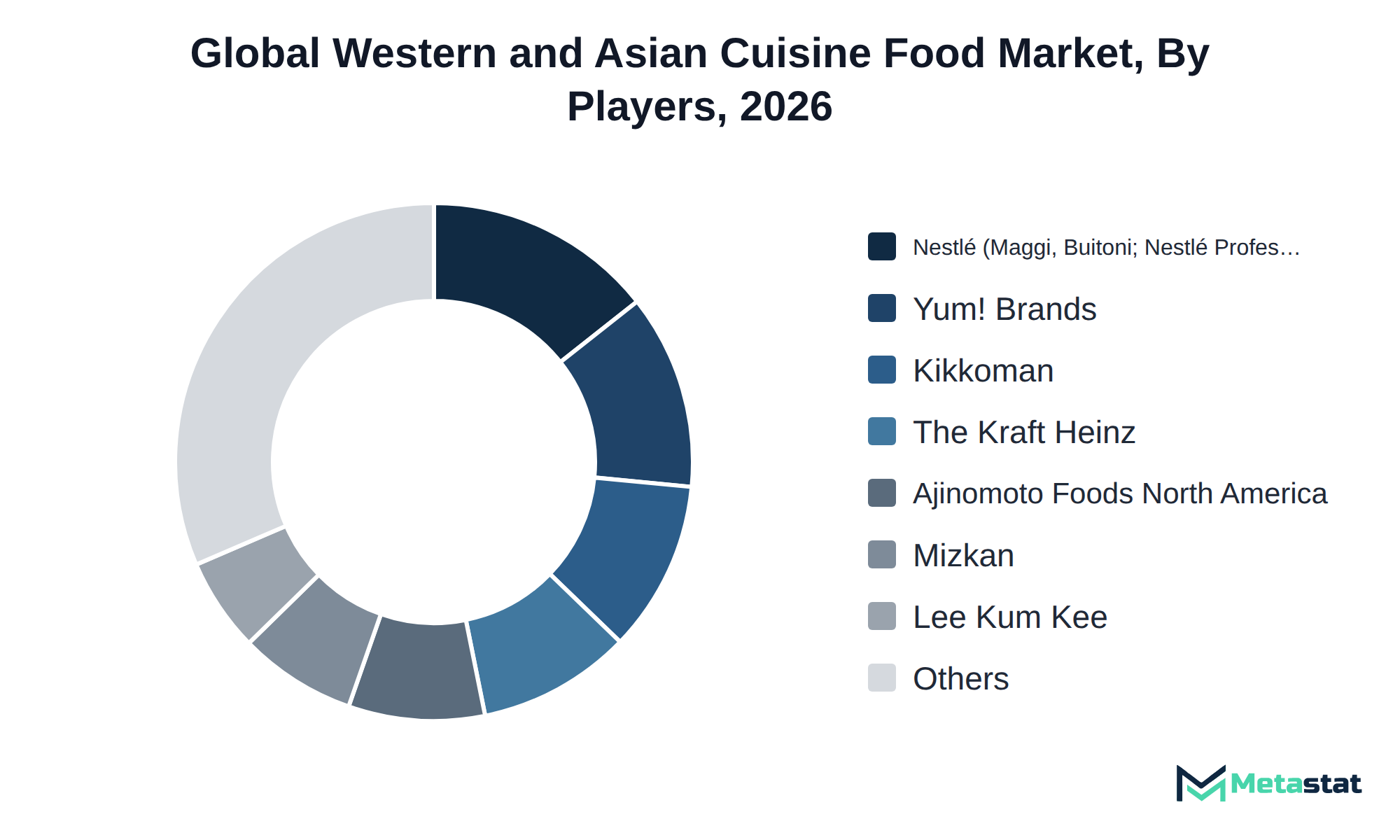
Competition in the Western and Asian Cuisine Food market primarily revolves around product differentiation, price strategy, and service quality. Companies focus on delivering unique culinary experiences, influencing consumer choices based on flavor authenticity, health considerations, and convenience. Price sensitivity among buyers influences purchasing decisions, particularly in the fast-casual and quick-service restaurant segments.
Nestlé S.A. (Maggi, Buitoni; Nestlé Professional) emphasizes a broad portfolio of products, catering to diverse culinary preferences while maintaining competitive pricing. Ajinomoto Foods North America, Inc. concentrates on flavor enhancement and health-conscious options, appealing to health-aware consumers. Unilever PLC (Knorr) highlights sustainability and ethical sourcing, influencing environmentally conscious buyers in their choices.
Growth in the Western and Asian Cuisine Food market will depend on several key developments. First, the increasing demand for Chinese Cuisine, projected to expand from USD 10 billion in 2026 to USD 16.3 billion by 2033, will drive significant revenue growth. This segment is supported by rising interest in diverse culinary experiences among consumers, particularly in North America and Europe. Second, the growth of freshly prepared meals in the foodservice sector is expected to increase from USD 16.9 billion in 2026 to USD 28.5 billion by 2033, reflecting changing consumer preferences for convenient dining options. Third, the rising popularity of ready-to-eat meals, anticipated to reach USD 11.8 billion by 2033, will support overall market expansion, particularly in the Asia Pacific region. However, supply chain disruptions and fluctuations in ingredient costs represent primary risks that hinder growth. Significant increases in raw material prices could impact profitability across multiple segments, particularly in meat and poultry-based products. Addressing these factors will be essential for achieving the market's forecasted growth.
By Cuisine Type: Chinese Cuisine, Japanese Cuisine, Indian Cuisine, Korean Cuisine, Southeast Asian Cuisine, Italian Cuisine, American Cuisine, French Cuisine, Others (Spanish, British, German, Central Asian)
By Product Format: Freshly Prepared Meals (Foodservice), Ready-to-Eat Meals, Frozen Foods, Ready-to-Cook Products and Meal Kits, Sauces, Seasonings and Condiments, Noodles, Pasta and Rice Products, Snacks and Bakery, Others (Canned, Dried and Pickled Foods)
By Distribution Channel: Restaurants and Cafés, Quick-Service and Fast-Casual Restaurants, Catering and Institutional Foodservice, Supermarkets and Hypermarkets, Convenience Stores, Specialty and Ethnic Grocery Stores, Online Retail and Delivery Platforms, Others (Vending Machines, Street Vendors, Duty-Free Stores)
By Food Type: Meat and Poultry-Based, Seafood-Based, Vegetarian, Vegan and Plant-Based
The report strategically identifies and profiles the key market players and analyses their core competencies in each sub-segment of the Western and Asian Cuisine Food market.
Report Attributes | Details |
Study Period | 2021-2033 |
Base Year | 2025 |
Estimated Year | 2026 |
Forecast Period | 2026-2033 |
Historical Period | 2021-2025 |
Growth Rate | CAGR 8.0% from 2026 to 2033 |
Revenue Unit | USD billion |
Segmentation | By Cuisine Type, Product Format, Distribution Channel, Food Type, and Region |
By Region | North America (By Cuisine Type, Product Format, Distribution Channel, Food Type, and Country)
|
Europe (By Cuisine Type, Product Format, Distribution Channel, Food Type, and Country)
| |
Asia Pacific (By Cuisine Type, Product Format, Distribution Channel, Food Type, and Country)
| |
South America (By Cuisine Type, Product Format, Distribution Channel, Food Type, and Country)
| |
Middle East and Africa (By Cuisine Type, Product Format, Distribution Channel, Food Type, and Country)
|
Find answers to common questions about this report
The Western and Asian Cuisine Food market size was valued at USD 46.7 billion in 2025.
The market is projected to grow at a CAGR of 8.0% during the forecast period from 2026 to 2033.
The North America Western and Asian Cuisine Food market size is estimated to reach USD 17 billion by 2033.
Chinese Cuisine leads the Western and Asian Cuisine Food market with a projected value of USD 16.3 billion by 2033, based on its growth trajectory. This segment demonstrates a compound annual growth rate of 7.3 percent during the forecast period.
Key drivers for the Western and Asian Cuisine Food market include increasing health consciousness among consumers and a growing preference for diverse meal formats. The younger demographic prioritizes flavor diversity and healthier ingredients, which influences demand for convenient meal solutions.
Increasing ingredient costs represent a significant restraint on market growth. Higher prices for essential components lead to a decline in disposable income for food purchases, particularly affecting low- and middle-income households.
Increasing health consciousness among consumers drives demand for nutritious meal solutions, particularly among younger demographics. Innovations in meal kits and the rising popularity of Korean cuisine enhance consumer interest, creating favorable conditions for adoption in the Western and Asian Cuisine Food market.
The Western and Asian Cuisine Food market is estimated to reach a valuation of USD 86.4 billion by 2033.
Key players operating in the Western and Asian Cuisine Food market include Nestlé S.A. (Maggi, Buitoni; Nestlé Professional), Ajinomoto Foods North America, Inc., Kikkoman Corporation, Nissin Foods Holdings Co., Ltd., Unilever PLC (Knorr), The Kraft Heinz Company, Mizkan Holdings Co., Ltd., and Lee Kum Kee Group.
Korean cuisine experiences growth due to increasing consumer demand for unique flavors and culinary experiences. This segment is projected to achieve a compound annual growth rate of 10%.
The analysts below cover Food and Beverages research at Metastat Insights.
LEAD ANALYST
Utkarsh Khirodkar is a Lead Market Research Analyst at MetaStat Insight, specializing in market intelligence, technology sector assessments, and competitive strategy.

LEAD PRINCIPAL ANALYST, PHARMA AND HEALTHCARE
Food and Beverages · Healthcare · Healthcare IT · Medical Devices
Ajay Devgire is the Lead Healthcare Analyst at MetaStat Insight, leading strategic research and market intelligence initiatives across the global healthcare domain.

SENIOR RESEARCH ANALYST
Biotechnology · Food and Beverages · Medical Devices · Packaging
Snehal Pasalkar is a Research Analyst at MetaStat Insight, operating at the intersection of life sciences research, competitive strategy, and market intelligence.
Evaluating calorific value requirements and air permit compliance across municipal waste facilities requires localized data. Metastat Insight structured their analysis around operational throughput capacity and feedstock composition variations in Latin America and Eastern Europe. Their competitive mapping of sorting equipment vendors helped clarify technology differences between optical separators and heavy media systems. The study provided an objective baseline during our capital expenditure reviews.
Decarbonizing industrial thermal processes hinges on refrigerant regulations and compressor efficiency limits. Metastat Insights delivered a thorough market analysis that evaluated natural refrigerants like CO2 and hydrocarbons against synthetic low-GWP alternatives. The breakdown of utility incentives and grid capacity constraints across key European manufacturing hubs offered valuable perspective. The follow-up conversation with their sector analysts addressed our specific questions on mechanical vapor recompression systems efficiently.
Assessing 200mm wafer transition schedules and substrate supply bottlenecks requires precise technical intelligence. MetaStat Insight supplied an actionable breakdown comparing planar and trench MOSFET architectures across automotive and industrial drive markets. The regional capacity estimates for Asia-Pacific foundries helped clarify lead-time uncertainties during our strategic planning session. When we needed additional clarification on high-purity raw material sourcing, their analyst team responded with helpful context within twenty-four hours.
Explore related market intelligence reports worth reading alongside this one.
Starting from
$2950