
LEAD ANALYST
Utkarsh Khirodkar is a Lead Market Research Analyst at MetaStat Insight, specializing in market intelligence, technology sector assessments, and competitive strategy.

Global Chinese Noodles and Traditional Food Market Size, Share, By Product Type (Noodles and Vermicelli, Savoury Dumplings and Wontons, Steamed Buns and Breads, Chinese Pancakes and Fried Dough Products, Spring Rolls and Egg Rolls, Rice Meals and Zongzi, Prepared Meat, Seafood, and Vegetable Dishes, Traditional Cakes and Pastries, Glutinous Rice Balls and Sweet Soups), By Storage Type (Ambient, Frozen, Chilled), By Category (Ready-to-Cook, Ready-to-Heat, Ready-to-Eat), By Distribution Channel (Supermarkets and Hypermarkets, Specialty Food Stores, Convenience Stores, Online Retail, Foodservice Supply), Industry Analysis, Growth, Trends, and Forecast, 2026-2033
Report ID
MSI-5467
Published
October, 2026
Pages
271 Pages
Format
Historical
Base year
Forecast
Forecast period
Report Details
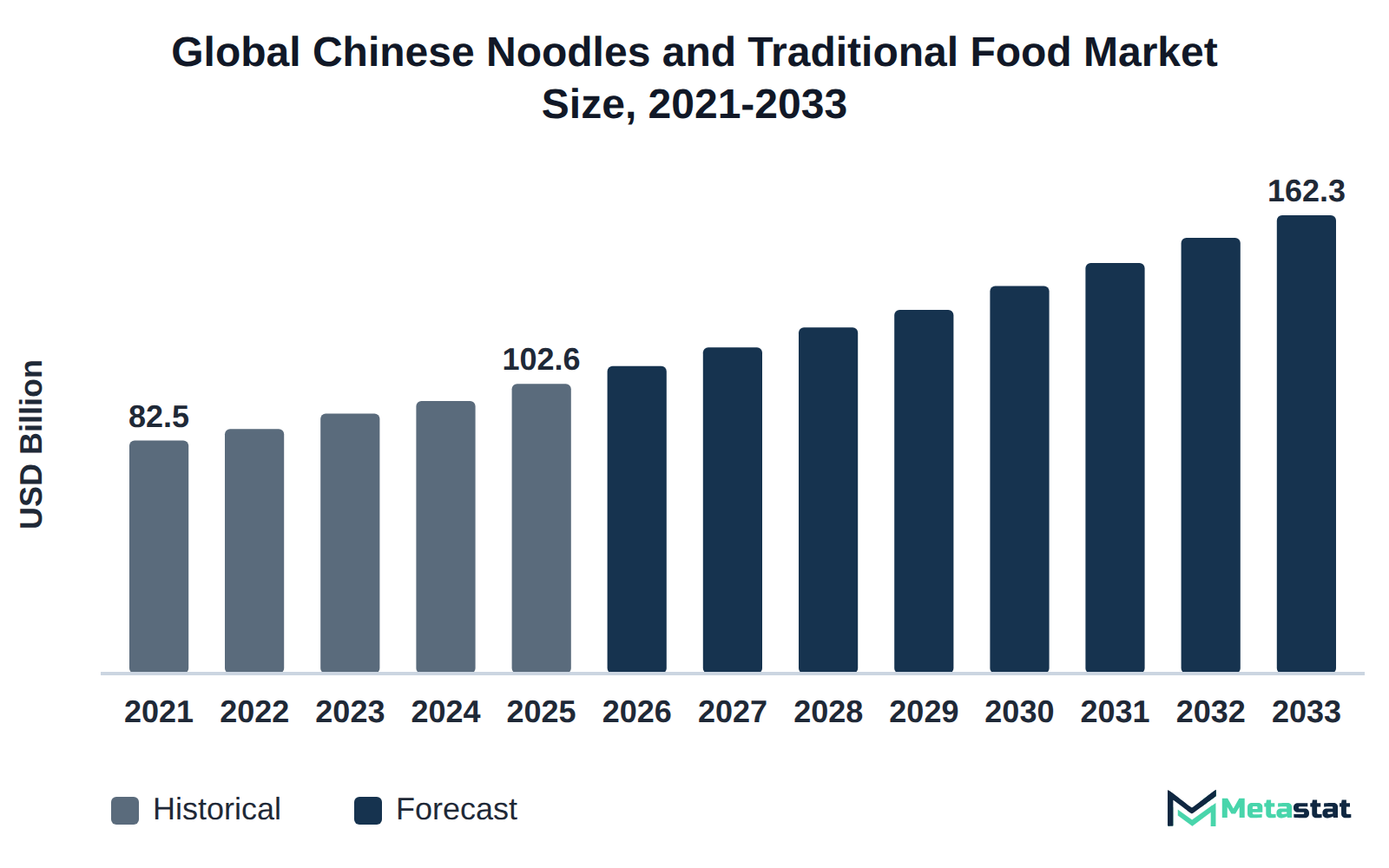
Market Valuation: Valued at $102.6 Billion in 2025, projected to reach $162.3 Billion by 2033 at a 5.9% CAGR.
Dominant Segment: Noodles and Vermicelli lead the market, driven by consumer preference for these staple foods, reflecting their widespread appeal and steady demand.
Geographic Lead: Asia Pacific dominates the market with an impressive 87.2% share in 2025, attributed to deep-rooted culinary traditions and growing urbanization.
What's Inside: The report provides comprehensive competitive coverage, detailed analyses of market dynamics, and forecasts spanning from 2026 to 2033, ensuring a thorough understanding of market trends.
Emerging Opportunities: The frozen product segment is projected to grow at a CAGR of 7.3%, highlighting significant opportunities for retailers and manufacturers focusing on convenience and longer shelf life.
Technological Innovation: Advancements in food processing technologies are enhancing product offerings, leading to the development of healthier alternatives and improved packaging solutions.
Choose Your License
Global Chinese Noodles and Traditional Food Market
The global Chinese Noodles and Traditional Food market was valued at USD 102.6 billion in 2025 and is projected to reach USD 162.3 billion by 2033, growing at a CAGR of 5.9% over the forecast period.
The Chinese Noodles and Traditional Food market encompasses a wide range of products including noodles, dumplings, buns, and pancakes, reflecting diverse culinary traditions. Buyers invest in this market driven by the increasing popularity of Asian cuisine, the growing trend of home cooking, and the convenience of ready-to-cook and ready-to-eat options. Consumers across various demographics, particularly in urban areas, seek these products for their flavor, authenticity, and quick preparation times. The market features an array of offerings that cater to different tastes and occasions, enhancing its appeal to a broad audience.
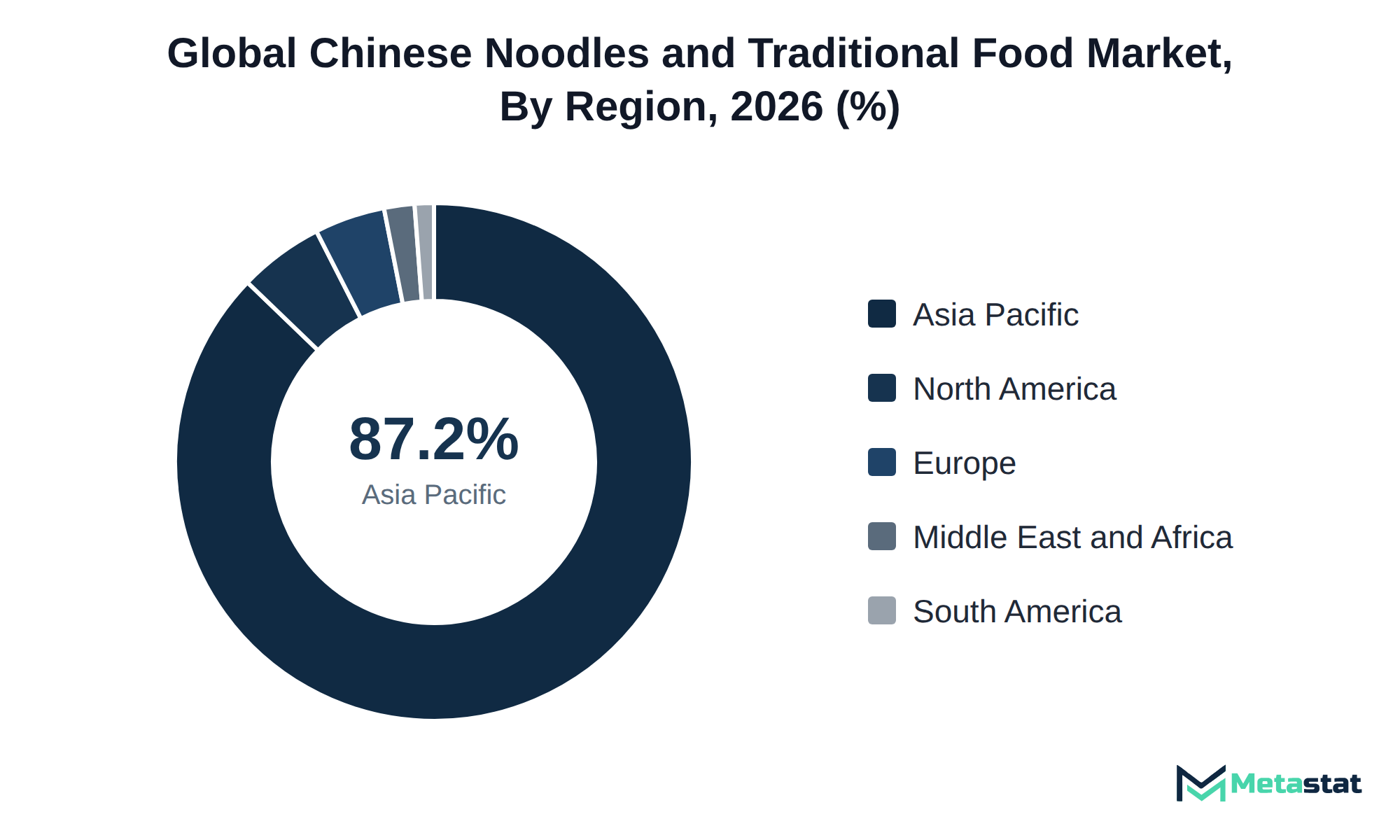
Growth in the Chinese Noodles and Traditional Food market is fueled by increasing demand for convenient meal solutions and a surge in the popularity of Asian cuisine globally. The segment of noodles and vermicelli represents the highest market value, reflecting consumers' preference for these staple foods. Asia Pacific dominates the market, holding an impressive 87.2% share, significantly higher than other regions. North America holds 5.3% of the market in 2025, with the US leading in 2026.
One key growth driver stems from the rising trend of online retail, allowing consumers to access a broader range of products conveniently. This shift toward digital shopping enhances consumer engagement and facilitates market expansion. Growing health consciousness among consumers drives increased interest in traditional foods perceived as healthier alternatives to processed options. Overall, the combination of these factors positions the market for continued growth in the coming years.
The market includes various products that appeal to diverse consumer preferences and cultural backgrounds, driving significant spending on these food items. The convenience and versatility of products including ready-to-cook noodles and savory dumplings attract a wide range of buyers, including households seeking quick meal solutions and foodservice providers looking to diversify their offerings. The market stands out due to its ability to cater to both traditional tastes and modern culinary trends, enhancing its appeal across different demographics.
Growth in the market is propelled by increasing consumer interest in authentic cuisine and convenient meal options. Among the product segments, Noodles and Vermicelli represent the most significant portion of the market, reflecting a strong demand for these staple food items. Asia Pacific holds the largest share of the market, accounting for 87.2% in 2025, reflecting the region's deep-rooted culinary traditions and growing urbanization. North America is projected to capture 5.3% of the market in 2025, with the US leading in 2026.
Changing lifestyles and food consumption patterns contribute to the ongoing expansion of the market. Consumers increasingly prioritize quick meal solutions that do not compromise on quality or flavor. This trend aligns with a growing preference for products that deliver authentic taste experiences while accommodating busy schedules, thereby driving demand for various offerings within the Chinese Noodles and Traditional Food market.
The expansion of cold chain logistics significantly impacts the distribution of frozen Chinese dumplings within the Chinese Noodles and Traditional Food market. Enhanced cold chain infrastructure enables consistent temperature control, preserving the quality and freshness of frozen products. The cold chain segment is projected to grow, reflecting a compound annual growth rate (CAGR) of 7.3%, indicating a robust shift toward frozen offerings in the coming years.
Investment in cold chain technology facilitates the efficient movement of frozen dumplings from production facilities to retail locations, reducing spoilage and waste. This advancement attracts both large grocery chains and specialty food stores looking to diversify their product offerings. The segment of frozen dumplings is anticipated to reach a value of USD 59.6 billion by 2033, illustrating strong consumer demand for convenient meal options that do not compromise on quality.
With effective cold chain systems in place, suppliers respond swiftly to market trends, addressing the growing appetite for ready-to-eat and ready-to-heat meal solutions. This trend positively influences revenue growth and opens avenues for improved market penetration within the Chinese Noodles and Traditional Food market.
Consumer preference for low-sodium and high-protein formulations in the Chinese Noodles and Traditional Food market influences purchasing patterns significantly. Health-conscious buyers increasingly seek products that align with dietary trends, prompting manufacturers to reformulate existing products. The emphasis on health benefits drives demand for noodle varieties that contain reduced sodium levels while boosting protein content, catering to a growing segment of the population focused on wellness.
In line with these trends, the market experiences a shift in product offerings, particularly noticeable in the segment of savoury dumplings and wontons, projected to reach USD 28.6 billion by 2033, reflecting a compound annual growth rate of 6.4%. This growth underlines rising consumer interest in healthier food options, compelling suppliers to innovate and adapt their recipes accordingly. Producers benefit from enhancing product appeal through these formulations, capturing a share of the expanding health-oriented consumer base.
Pricing strategies reflect this shift, with higher production costs associated with sourcing quality ingredients for low-sodium and high-protein noodles. Buyers often face tiered pricing models that vary based on ingredient quality and nutritional value. Such pricing structures lead to increased revenue for manufacturers who successfully balance cost and health benefits, ultimately impacting overall competitiveness within the market, with health-oriented strategies becoming essential for sustained growth.
The rise of cross-border e-commerce presents a significant avenue for the Chinese Noodles and Traditional Food market, catering to the growing demand among international consumers seeking authentic Chinese cuisine. In 2025, the market reached USD 102.6 billion, indicating a robust foundation for expanding online sales channels globally.
Distinct buyer groups, particularly expatriates and individuals with an interest in Asian cuisine, drive this trend. These customers seek genuine products that reflect their cultural heritage or culinary interests, which conventional retail does not fully provide. E-commerce platforms facilitate access to a wider variety of traditional packaged foods, including noodles, dumplings, and other staples, meeting the specific flavor preferences and dietary needs of diverse consumers.
While the market continues to embrace digital platforms, suppliers positioned for online distribution increase their reach and sales volume. The increasing reliance on e-commerce for purchasing food items enhances convenience for consumers and opens doors for traditional food companies to expand their market presence globally. The anticipated growth in this sector highlights the importance of strategic online marketing and logistics to capture the expanding international customer base.
Ready-to-Cook and Ready-to-Heat products play significant roles in the Chinese Noodles and Traditional Food market, catering to different consumer needs. The Ready-to-Cook segment, with a projected value of USD 81.9 billion by 2033, highlights a growing preference among consumers for meal preparation flexibility. This segment's compound annual growth rate (CAGR) of 4.7% reflects ongoing demand for authentic cooking experiences while balancing time constraints.
In contrast, the Ready-to-Heat category is anticipated to reach USD 52.2 billion by 2033, with a stronger CAGR of 7.6%. This growth stems from a rising trend towards convenience, where consumers increasingly seek quick meal solutions without sacrificing quality. The distinction between these two segments illustrates varying consumer priorities: Ready-to-Cook products emphasize culinary engagement, while Ready-to-Heat offerings prioritize ease of use.
Understanding these differences provides insights into consumer behavior within the Chinese Noodles and Traditional Food market. Retailers and manufacturers tailor their product offerings and marketing strategies to align with the preferences of each group. This approach drives sales and enhances customer satisfaction.
Recent demographic shifts contribute significantly to increased spending on Asian cuisine, particularly among younger consumers seeking convenient meal solutions. The rise of health-conscious millennials and Generation Z has led to heightened demand for ready-to-cook and ready-to-eat options, resulting in a notable increase in volume and market value. These generations prioritize convenience without compromising on taste or authenticity, driving growth in the Chinese Noodles and Traditional Food market. The forecast period anticipates growth in the segment, with ready-to-cook products projected to reach USD 81.9 billion by 2033. This shift reflects changing consumer habits, emphasizing the need for quick meal solutions that cater to busy lifestyles while maintaining cultural ties through traditional dishes.
The increased focus on convenience foods aligns with broader lifestyle trends, allowing food manufacturers to respond effectively to evolving consumer needs. Adaptation to these shifting preferences stimulates revenue growth and enhances competitiveness in the overall market.
Advancements in food processing technologies significantly enhance product offerings within the Chinese Noodles and Traditional Food market. Suppliers increasingly adopt automated production lines, which improve efficiency and consistency in product quality. This trend drives the development of new varieties, including gluten-free and organic options, catering to shifting consumer preferences for healthier alternatives. Innovations in packaging technology contribute, allowing longer shelf lives and better preservation of flavors and nutrients.
These enhancements attract health-conscious consumers and those seeking convenience, thus expanding the customer base. Technological improvements have spurred growth in the frozen and ready-to-cook segments, reflecting rising demand for quick meal solutions. The market expands while suppliers leverage technology to create diverse product options, meeting the needs of urban consumers with busy lifestyles. Increased competition among suppliers drives further innovation, leading to a more dynamic and varied market.
Consumer price sensitivity represents a significant restraint within the Chinese Noodles and Traditional Food market. Many buyers prioritize affordability, influencing their purchasing choices and resulting in slower uptake of premium products. This trend is particularly pronounced among lower-income households and price-conscious consumers, who exhibit hesitance towards products with higher price points. The impact of this sensitivity manifests in reduced order sizes and delayed replacement cycles, especially for higher-end offerings that do not align with budget constraints. Consequently, manufacturers navigate these price dynamics carefully to maintain competitiveness within the market. Balancing quality and price is essential for suppliers aiming to capture and sustain market share, particularly in an environment where value perception drives consumer behavior. Maintaining affordability without compromising quality presents a challenge that shapes product development and marketing strategies across various segments.
Suppliers face significant challenges related to rising input costs within the Chinese Noodles and Traditional Food market. The increasing prices of key ingredients, including wheat and rice, contribute to heightened operational expenses. This situation compels suppliers to implement cost-saving measures, including optimizing sourcing strategies and renegotiating contracts with ingredient providers. Several suppliers invest in alternative ingredient sourcing, exploring locally produced options to mitigate reliance on international markets.
Intense competition among suppliers further intensifies pricing pressures, necessitating strategic differentiation to maintain market share and profitability. Several companies adopt innovative production techniques, enhancing efficiency while reducing waste. These initiatives help manage costs effectively while meeting consumer demand for quality products. Supplier collaboration within the industry enables shared resources, allowing companies to collectively address challenges related to rising input costs.
Rapid growth in the frozen segment represents a notable opportunity within the Chinese Noodles and Traditional Food market. The frozen product category is projected to achieve a CAGR of 7.3% through 2033, reaching USD 59.6 billion by 2033. This segment appeals to consumers seeking convenience and longer shelf life, driving demand among busy households and working professionals. Increased focus on frozen savoury dumplings and other traditional offerings aligns with changing consumer preferences that prioritize quick meal solutions without sacrificing authenticity.
Retailers and manufacturers positioned in the frozen segment capitalize on this trend by enhancing their product portfolios and developing innovative offerings. The surge in online retail channels further facilitates market access, making it easier for consumers to purchase frozen products. Successful adaptation to these dynamics enhances market share and contributes to overall revenue growth within the sector.
The Global Chinese Noodles and Traditional Food market is segmented based on Product Type, Storage Type, Category, and Distribution Channel.
Noodles and Vermicelli is valued at USD 37.1 billion in 2026 and is projected to reach USD 51 billion by 2033, at a CAGR of 4.7% during the forecast period. This segment serves a wide range of consumers, including families and single-person households, seeking convenient meal options. Demand for noodles and vermicelli is fueled by increasing consumer preference for ready-to-eat and easy-to-cook meals, highlighting the segment's strong appeal. Unlike other product types, including Savoury Dumplings and Wontons, which exhibit a higher growth rate of 6.4%, the Noodles and Vermicelli segment experiences steadier growth. Price stability across this sub-segment further attracts price-sensitive buyers, ensuring a consistent market presence. The emphasis on convenience continues to drive demand, setting noodles and vermicelli apart from products facing more volatile demand fluctuations.
This segment appeals to consumers seeking convenient meal options and traditional flavors, often used for quick meals or snacks. The increasing preference for ready-to-eat and easy-to-prepare food significantly drives demand, particularly among busy families and young professionals. Compared to other segments, Savoury Dumplings and Wontons experience a higher growth rate, indicated by the segment's CAGR of 6.4%, contrasting with the slower growth of the Steamed Buns and Breads segment. Price sensitivity remains a notable factor, with consumers gravitating towards affordable options while valuing quality. The market sees a robust trend of innovation, with new flavors and healthier variants capturing consumer interest, reflecting an evolving culinary landscape.
Steamed Buns and Breads segment is expected to reach USD 14.8 billion by 2033. This segment includes a variety of steamed products that cater to consumer preferences in both traditional and modern culinary contexts. Restaurants and households frequently incorporate these items into meals due to their convenience and versatility. The increasing demand for ready-to-eat options among busy consumers drives market growth, particularly in urban areas. The segment experiences a compound annual growth rate (CAGR) of 6.3%, positioning it for stronger growth compared to others in the product type category. In contrast to Noodles and Vermicelli, which anticipate a CAGR of 4.7%, Steamed Buns and Breads offer a unique appeal through their diverse flavors and textures, attracting a distinct buyer segment. Retailers focus on expanding product variety and enhancing accessibility to meet evolving consumer tastes.
Chinese Pancakes and Fried Dough Products segment is projected to grow at a CAGR of 6.3% during the forecast period. This segment consists of various types of pancakes and fried dough items that serve popular snacks and meal components, appealing primarily to consumers seeking quick and convenient dining options. The segment benefits from rising consumer interest in diverse culinary experiences, particularly among younger demographics who enjoy exploring foods from different cultures. Increasing availability in supermarkets and online retail platforms drives growth in this segment, allowing consumers to access these products easily. Compared to Noodles and Vermicelli, which grow at a CAGR of 4.7%, Chinese Pancakes and Fried Dough Products exhibit more robust expansion. The lower price point of these products often attracts budget-conscious shoppers, contributing to the projected revenue increase. Consumers increasingly prioritize flavors and textures, further enhancing the appeal of this segment.
Spring Rolls and Egg Rolls represent a popular offering characterized by thin wrappers filled with various ingredients, often deep-fried or baked for a crispy texture. These products appeal to consumers seeking convenient meal solutions or appetizers. Demand for Spring Rolls and Egg Rolls is driven by the growing interest in Asian cuisine and the rising popularity of quick-service restaurants, which feature these items on their menus. Compared to Noodles and Vermicelli, which experience a projected CAGR of 4.7%, the growth dynamics of this segment reflect different consumer engagement, with a heightened focus on savory flavors and snack options. The availability of ready-to-cook varieties caters particularly to busy households seeking easy meal preparation. In this context, the market captures a unique segment that contributes to the broader appeal of the Chinese Noodles and Traditional Food market.
Rice meals and Zongzi include a variety of traditional Asian dishes that feature rice as the primary ingredient, appealing to consumers seeking authenticity in their culinary experiences. These products serve diverse consumer bases, including families and individuals looking for convenient meal options that reflect cultural heritage. Growth in this segment receives support from increasing demand for ready-to-eat meals that maintain traditional flavors. Differentiating factors include price variations, with rice meals and Zongzi typically offered at competitive prices compared to other offerings like savoury dumplings, which feature higher production costs. The focus on convenience and cultural connection drives purchasing behavior, particularly among younger consumers who prioritize both authenticity and ease in meal preparation. This sub-segment experiences distinct dynamics within the broader market, attracting attention from manufacturers focused on innovating traditional recipes.
Prepared Meat, Seafood, and Vegetable Dishes encompass a variety of offerings that cater to consumers seeking convenient meal solutions. This segment appeals primarily to individuals looking for ready-made options that deliver traditional flavors and nutritional value. Factors driving this segment include increasing demand for quick and healthy meal choices, particularly among busy consumers and families. Compared to other segments, this category attracts a diverse range of buyers, including those prioritizing convenience over price. The growth trajectory differs from segments like Noodles and Vermicelli, which experience a more substantial market share. Innovations in preparation methods contribute to making these dishes more accessible, further enhancing their appeal in the Chinese Noodles and Traditional Food market. While the segment faces competition from other ready-to-eat options, its unique offerings position it solidly within the broader market.
Traditional cakes and pastries encompass a variety of baked goods that often feature sweet or savory fillings, appealing to diverse consumer tastes. These products attract a wide range of buyers, including individuals and foodservice establishments. The growing trend towards authentic and traditional foods drives demand for these items, particularly among consumers seeking unique culinary experiences. Increased interest in Eastern culinary traditions boosts the popularity of traditional cakes and pastries. Compared to other segments, this sub-segment experiences slower growth, primarily influenced by rising costs associated with high-quality ingredients and production processes. The market exhibits distinct pricing strategies, with traditional cakes and pastries often priced higher than more common snack options, reflecting their artisanal nature. Overall, the Chinese Noodles and Traditional Food market continues to evolve, with traditional cakes and pastries carving out a niche for consumers seeking authentic flavors.
Glutinous rice balls and sweet soups consist of traditional Chinese desserts known for their chewy texture and sweet fillings. These products cater to a diverse consumer base, frequently enjoyed during festivals and special occasions, appealing to those seeking authentic cultural experiences. The growing interest in traditional foods drives demand for glutinous rice balls and sweet soups, enhancing their visibility among younger consumers looking to explore heritage cuisines. This sub-segment distinguishes itself from others within the product type category through its unique offerings, with consumers often willing to pay a premium for authentic flavors and quality. Unlike segments including noodles and vermicelli, which possess broader everyday appeal, glutinous rice balls and sweet soups target specific consumer occasions, resulting in slower growth compared to the more rapidly expanding segments in the market.
Others (Savoury Soups, Traditional Bean Curd Snacks) encompass a diverse range of offerings that appeal to consumers seeking authentic flavors and convenient meal options. These products typically provide comfort food, enjoyed by individuals and families looking for quick meal solutions or snacks. Growth within this segment is influenced by increasing consumer preference for traditional tastes and plant-based options. The segment differentiates itself from others due to its unique offerings, attracting health-conscious consumers and those seeking cultural experiences through food. Competition remains robust among suppliers, each striving to leverage unique recipes and ingredients. This segment evolves with changing dietary trends, positioning itself favorably in the market while catering to both nostalgic tastes and modern health considerations.
Ambient segment is valued at USD 62.4 billion in 2026 and is projected to reach USD 86.3 billion by 2033, at a CAGR of 4.7% during the forecast period. This segment caters to a diverse group of consumers, including busy families and young professionals, seeking convenient meal solutions. The increasing preference for shelf-stable products drives demand, enabling consumers to store food items longer without refrigeration. Compared to frozen and chilled segments, the ambient segment experiences slower growth, reflecting the stability of traditional consumption patterns. The anticipated revenue growth indicates robust consumer interest, particularly in easy-to-prepare offerings that align with contemporary lifestyles. The market sees significant participation from various distribution channels, including supermarkets and online retail, which enhance accessibility and convenience for buyers. The focus on expanding product lines with innovative flavors contributes to maintaining competitive positioning within the market.
Frozen segment is estimated to reach USD 59.6 billion by 2033, at a CAGR of 7.3% during the forecast period. This segment caters to consumers seeking quick meal options without sacrificing quality. Busy lifestyles drive demand for frozen products, particularly among working adults and families, who show preference for convenience without compromising on taste. The segment stands out with a higher growth rate compared to other storage types, reflecting a strong shift towards frozen offerings. Innovations in freezing technology contribute to maintaining product quality and extending shelf life, further enhancing consumer trust. Increasing awareness of the nutritional benefits of frozen foods supports demand. This growth trajectory highlights the segment's significant role in shaping purchasing decisions within the Chinese Noodles and Traditional Food market.
Chilled segment is expected to reach USD 16.4 billion by 2033. This segment includes products that require refrigeration to maintain freshness, appealing to health-conscious consumers and families seeking convenient meal options. Rising demand for ready-to-eat meals drives growth, particularly among urban populations with busy lifestyles. The chilled segment faces competition from frozen offerings, which show a higher growth rate at a CAGR of 7.3%. While chilled products often command a premium price due to their freshness, they cater to consumers prioritizing quality and taste. The increasing preference for authentic Asian flavors and convenient meal solutions significantly influences purchasing decisions. This segment distinctly positions itself within the market, focusing on quality and freshness while addressing the evolving needs of modern consumers.
Ready-to-Cook segment is valued at USD 59.5 billion in 2026 and is projected to reach USD 81.9 billion by 2033, at a CAGR of 4.7% during the forecast period. This segment provides a solution for consumers seeking convenient and quick meal options, particularly appealing to busy households and working professionals. Demand is driven by the increasing preference for easy-to-prepare meals without compromising on flavor and authenticity. Compared to other segments, Ready-to-Cook exhibits a slower growth rate, with a CAGR of 4.7%, contrasting with the faster growth observed in products like Ready-to-Heat, which shows a CAGR of 7.6%. The focus on quality ingredients and innovative flavors distinguishes this segment, further enhancing its appeal in the competitive landscape of the Chinese Noodles and Traditional Food market.
This segment caters to consumers seeking convenience with minimal preparation time, appealing particularly to busy professionals and families. Growing urbanization drives demand for quick meal solutions, contributing to an increase in market penetration. Compared to other categories, Ready-to-Heat products exhibit higher growth rates, with a stronger emphasis on flavor and quality, distinguishing them from the Ready-to-Cook and Ready-to-Eat segments. The segment's expansion benefits from consumers' increasing preference for meals that require less cooking, reflecting a lifestyle shift towards convenience. Market trends indicate that enhanced packaging technology and product innovation will further support growth in the Ready-to-Heat category, influencing purchasing decisions among health-conscious buyers seeking nutritious options.
Ready-to-Eat segment is expected to reach USD 28.2 billion by 2033. This category caters primarily to busy consumers looking for convenient meal options that require minimal preparation. The demand for ready-to-eat products experiences stimulation from the growing preference for quick meal solutions among urban dwellers and working professionals. This segment stands distinct from others in its group, reflecting a slower growth rate compared to Ready-to-Heat, which has a projected CAGR of 7.6%. The Ready-to-Eat segment's growth trajectory reflects a heightened focus on consumer convenience, with offerings designed for immediate consumption. By 2033, the prominence of this segment will influence the overall dynamics of the Chinese Noodles and Traditional Food market, aligning with evolving consumer lifestyles that favor speed and efficiency.
Supermarkets and Hypermarkets segment is valued at USD 40 billion in 2026 and is projected to reach USD 53.8 billion by 2033, at a CAGR of 4.3% during the forecast period. This segment serves consumers seeking convenience and variety in their food choices, with retailers providing a wide range of Chinese noodles and traditional food products. The increasing preference for ready-to-cook and ready-to-heat options drives demand within this segment, catering to busy households and individuals looking for quick meal solutions. Compared to other distribution channels, this segment exhibits slower growth due to intense competition and the rising popularity of online retail, which offers consumers greater convenience and often better pricing. The segment's expansion reflects broader trends in consumer behavior, emphasizing the need for efficient shopping experiences in the market.
Specialty Food Stores segment is estimated to reach USD 27.9 billion by 2033, at a CAGR of 4.9% during the forecast period. This segment caters to consumers seeking authentic Chinese culinary experiences, offering a curated range of traditional food products. Growth in this segment is supported by increasing consumer preferences for high-quality, specialty food items that reflect cultural authenticity. The rising trend of gourmet cooking and home meal preparation drives demand for products typically found in specialty stores. Compared to other distribution channels, this segment experiences more modest growth, influenced by niche market dynamics and a focused customer base, distinguishing it from more mainstream outlets including supermarkets and hypermarkets. The market continues to evolve, with emphasis on product variety and unique offerings to maintain competitive advantage.
Convenience Stores segment is expected to reach USD 21.5 billion by 2033. These retail locations provide a quick and accessible shopping option for consumers looking for ready-to-eat or ready-to-cook meals, particularly busy individuals and families. The growth of this segment is driven by increasing demand for convenience food products that fit into busy lifestyles, with a noted emphasis on ease of preparation. Compared to other distribution channels, this segment experiences a unique demand dynamic, characterized by its higher growth rate attributed to changing consumer habits. The CAGR for this segment stands at 10.2%, highlighting its rapid expansion relative to others, including Supermarkets and Hypermarkets. Convenience Stores offer a distinct purchasing experience, often emphasizing local and fresh selections, which differentiates them from larger grocery chains. The market continues to adapt to consumer preferences, focusing on enhancing the variety and quality of offerings available.
Online Retail segment is projected to grow at a CAGR of 10.2% during the forecast period. This segment caters to consumers seeking convenience and variety in food options, with online platforms providing easy access to a wide range of products. Increased smartphone penetration and improvements in internet connectivity drive growth in this segment. Consumers prefer purchasing Chinese noodles and traditional food through online channels due to the ease of browsing and the ability to compare prices. Compared to other distribution channels, Online Retail offers a faster growth trajectory, highlighting its increasing role in the overall market. The Online Retail segment contributes to the broader trends of digitalization and e-commerce, reshaping how consumers engage with food products.
Foodservice Supply provides essential products and services for food establishments, including restaurants and catering services. This segment caters to businesses seeking high-quality Chinese noodle offerings to serve customers in various dining experiences. The growing trend of consumers preferring convenient dining options significantly influences demand within this segment, driving foodservice operators to expand their menus with traditional food items. Compared to other distribution channels, this segment focuses on bulk purchasing, often resulting in different pricing structures. Operators prioritize quality and authenticity, impacting their sourcing decisions. Competitive pricing and product availability play critical roles, distinguishing this segment from retail-focused channels. The Chinese Noodles and Traditional Food market experiences shifts driven by evolving consumer preferences and dining habits.
Independent grocery stores and factory outlets serve important distribution channels for traditional food products, appealing to consumers seeking authentic cuisines and convenient options. These outlets provide a local touch, often offering homemade or regional specialties that align with neighborhood preferences. Demand for traditional food products in these channels is driven by consumers' growing desire for convenience and authenticity. Compared to other distribution channels, including supermarkets and hypermarkets, this segment focuses on unique, localized offerings that cater to specific tastes. Price sensitivity differs, with independent grocery stores providing competitively priced products to attract budget-conscious buyers. The market continues to evolve, with increasing competition emphasizing product quality and customer experience.
Based on geography, the Global Chinese Noodles and Traditional Food market is divided into North America, Europe, Asia-Pacific, South America, Middle East, and Africa.
Demand for the Chinese Noodles and Traditional Food market in North America derives from a growing interest in Asian cuisine and convenience food options. Consumers in the United States, Canada, and Mexico increasingly seek authentic flavors and ready-to-cook meals. The North American market is projected to reach USD 10.1 billion by the end of 2033, reflecting a share of 5.3% of the global market in 2025. Supermarkets and hypermarkets serve as the primary distribution channels, offering a wide variety of traditional food products. The rising population of health-conscious consumers influences demand for products that align with modern dietary preferences, creating opportunities for market growth. Promising prospects arise from evolving consumer preferences and the overall increase in food accessibility.
The market experiences significant interest across several consumer segments in Europe, driven by a growing appreciation for authentic flavors and convenient meal solutions. Countries including Germany, France, the UK, Italy, and Spain demonstrate a rising demand for products like noodles and dumplings, influenced by an expanding multicultural environment and increasing disposable incomes. Emerging trends reflect a lean towards ready-to-heat and ready-to-eat options, catering to busy lifestyles. Regulatory frameworks in these nations support food safety and quality standards, enhancing consumer confidence in traditional food offerings. The Chinese Noodles and Traditional Food market in Europe holds a share of 4.4% of the global market in 2025, indicating substantial growth potential within the region.
Asia Pacific stands out in the Chinese Noodles and Traditional Food market, dominating the global share with 87.2% in 2025. The region's culinary diversity, especially in countries like China, Japan, and India, drives significant consumer interest in traditional foods. Rising urbanization and changes in consumer lifestyles contribute to increasing demand for convenient meal options, including ready-to-cook and ready-to-eat products. Enhanced distribution networks, particularly through supermarkets and online retail platforms, facilitate greater access to these products. The market benefits from strong local production capabilities, ensuring competitive pricing and continuous innovation in product offerings. Southeast Asia and Australia reflect growing trends toward healthier and authentic food experiences, further influencing market dynamics.
Brazil and Argentina represent key markets within the region for the Chinese Noodles and Traditional Food market, driven by a growing inclination toward Asian cuisine among consumers. The cultural diversity in these countries creates a demand for a variety of noodle products and traditional options, reflecting their culinary integration. The market in South America holds a share of 1.2% of the global market in 2025, indicating potential for growth in this area. The rising number of Asian restaurants and grocery stores contributes to increased availability and accessibility of Chinese noodles and traditional food products. Strategic marketing and expansion efforts by local businesses are critical factors in enhancing market presence.
Consumer interest in the Chinese Noodles and Traditional Food market is growing in the Middle East and Africa, particularly in Saudi Arabia, UAE, and South Africa. The region values authentic flavors and convenient meal solutions, driving demand among urban populations seeking quick yet traditional dining options. Local production facilities exhibit an increase in capacity to meet this rising demand, supported by investments in processing technologies. The market demonstrates a gradually increasing presence within the global landscape. The regulatory environment favors local producers, enhancing their competitive position within the market. Rising interest in Asian cuisine and the expansion of distribution channels create significant opportunities for growth in this region.
The competitive field in the Chinese Noodles and Traditional Food market divides along several strategic dimensions, including product type and distribution channels. Key players focus on various segments including noodles, dumplings, and steamed buns, allowing buyers to choose products based on their preferences for taste, innovation, and price.
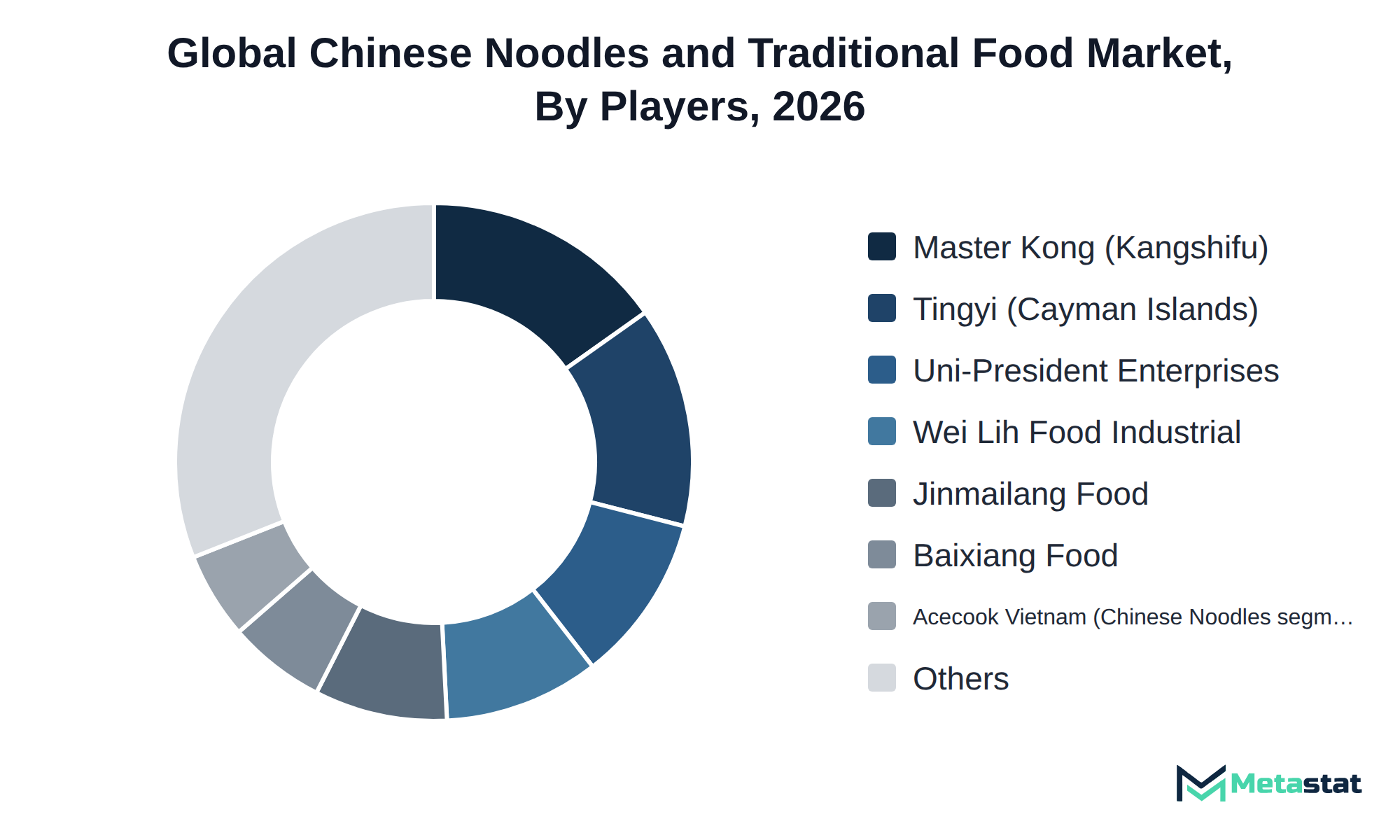
Tingyi (Cayman Islands) Holding Corp. and Master Kong (Kangshifu) represent significant players in the noodles and dumplings segment. Their strategies involve offering a diverse range of ready-to-cook and ready-to-heat products, catering to increasing demand for convenience in meal preparation. Uni-President Enterprises Corp. emphasizes quality and variety in its product offerings, attracting consumers seeking authentic flavors.
Distribution channels including supermarkets and online retail platforms play essential roles in shaping buyer behavior. Companies like Jinmailang Food Co., Ltd. expand their reach through online retail, targeting younger consumers who prefer shopping digitally. In contrast, Sanquan Food Co., Ltd. leverages traditional retail channels to maintain a strong presence among established customer bases, balancing online and offline strategies to cater to diverse consumer preferences.
This growth relies on several developments in the Chinese Noodles and Traditional Food market. First, increasing consumer preference for authentic Asian cuisine drives demand for noodles and vermicelli, particularly in regions like Asia Pacific, where cultural ties to traditional food remain strong. Second, the expansion of online retail channels enhances accessibility, allowing consumers to purchase these products conveniently, further boosting market growth. Third, the rising trend of convenience foods, especially ready-to-cook and ready-to-heat categories, aligns with busy lifestyles, prompting higher sales volumes across various distribution channels. However, potential risks exist that could impede this growth trajectory. Economic fluctuations affecting disposable income lead to reduced spending on non-essential food items, particularly in regions like North America and Europe, where consumers exhibit price sensitivity. The combination of these factors will shape the market's path toward reaching the anticipated USD 162.3 billion by 2033.
By Product Type: Noodles and Vermicelli, Savoury Dumplings and Wontons, Steamed Buns and Breads, Chinese Pancakes and Fried Dough Products, Spring Rolls and Egg Rolls, Rice Meals and Zongzi, Prepared Meat, Seafood, and Vegetable Dishes, Traditional Cakes and Pastries, Glutinous Rice Balls and Sweet Soups, Others (Savoury Soups, Traditional Bean Curd Snacks)
By Storage Type: Ambient, Frozen, Chilled
By Category: Ready-to-Cook, Ready-to-Heat, Ready-to-Eat
By Distribution Channel: Supermarkets and Hypermarkets, Specialty Food Stores, Convenience Stores, Online Retail, Foodservice Supply, Others (Independent Grocery Stores, Factory Outlets)
The report strategically identifies and profiles the key market players and analyses their core competencies in each sub-segment of the Chinese Noodles and Traditional Food market.
Report Attributes | Details |
Study Period | 2021-2033 |
Base Year | 2025 |
Estimated Year | 2026 |
Forecast Period | 2026-2033 |
Historical Period | 2021-2025 |
Growth Rate | CAGR 5.9% from 2026 to 2033 |
Revenue Unit | USD billion |
Segmentation | By Product Type, Storage Type, Category, Distribution Channel, and Region |
By Region | North America (By Product Type, Storage Type, Category, Distribution Channel, and Country)
|
Europe (By Product Type, Storage Type, Category, Distribution Channel, and Country)
| |
Asia Pacific (By Product Type, Storage Type, Category, Distribution Channel, and Country)
| |
South America (By Product Type, Storage Type, Category, Distribution Channel, and Country)
| |
Middle East and Africa (By Product Type, Storage Type, Category, Distribution Channel, and Country)
|
Find answers to common questions about this report
The Chinese Noodles and Traditional Food market size was valued at USD 102.6 billion in 2025.
The market is projected to grow at a CAGR of 5.9% during the forecast period from 2026 to 2033.
The North America Chinese Noodles and Traditional Food market size is estimated to reach USD 10.1 billion by 2033.
Noodles and Vermicelli leads the market with a projected value of USD 51 billion by 2033, based on its significant share compared to other segments. This segment demonstrates a compound annual growth rate of 4.7 percent during the forecast period.
Key drivers for the Chinese Noodles and Traditional Food market include increased spending on Asian cuisine, particularly among younger consumers seeking convenient meal solutions. The rapid growth in the frozen segment appeals to busy households and working professionals, enhancing overall market demand.
Consumer price sensitivity and rising input costs for key ingredients represent significant factors restraining growth in the Chinese Noodles and Traditional Food market. Price-conscious consumers influence purchasing choices, leading to slower uptake of premium products. Increased operational challenges compel suppliers to implement cost-saving measures to maintain competitiveness.
Rapid growth in the frozen segment, projected to achieve a CAGR of 7.3 percent and reach USD 59.6 billion by 2033, favors adoption in the industry. This segment addresses consumer demand for convenience and longer shelf life, appealing to busy households and working professionals seeking quick meal solutions.
The Chinese Noodles and Traditional Food market is estimated to reach a valuation of USD 162.3 billion by 2033.
Key players operating in the Chinese Noodles and Traditional Food market include Tingyi (Cayman Islands) Holding Corp., Master Kong (Kangshifu), Uni-President Enterprises Corp., Wei Lih Food Industrial Co., Ltd., Jinmailang Food Co., Ltd., Nissin Foods Company Limited, and Beijing Jintianmai International Food Co., Ltd.
The frozen segment is projected to reach USD 59.6 billion by 2033, driven by increasing consumer demand for convenience and longer shelf life.
The analysts below cover Food and Beverages research at Metastat Insights.
LEAD ANALYST
Utkarsh Khirodkar is a Lead Market Research Analyst at MetaStat Insight, specializing in market intelligence, technology sector assessments, and competitive strategy.

LEAD PRINCIPAL ANALYST, PHARMA AND HEALTHCARE
Food and Beverages · Healthcare · Healthcare IT · Medical Devices
Ajay Devgire is the Lead Healthcare Analyst at MetaStat Insight, leading strategic research and market intelligence initiatives across the global healthcare domain.

SENIOR RESEARCH ANALYST
Biotechnology · Food and Beverages · Medical Devices · Packaging
Snehal Pasalkar is a Research Analyst at MetaStat Insight, operating at the intersection of life sciences research, competitive strategy, and market intelligence.
Most industry reports on warehouse automation bundle autonomous mobile robots and fixed conveyor installations into the same top-level numbers, which complicates advisory work. This study split the market cleanly by payload tiers, navigation technology, and fleet management software layers. The regional forecast for Western Europe gave our team defensible adoption benchmarks when evaluating capital allocation for logistics clients, saving us days of secondary data scrubbing.
Analyzing the transition from natural gas to green hydrogen in iron ore reduction requires realistic infrastructure timelines. Meta stat insight supplied a detailed regional assessment of DRI plant conversion costs and scrap metal availability in North America and Western Europe. Their report carefully examined pellet quality specs and electrical grid access constraints without making oversimplified market assumptions. The research material served as a practical reference during internal technology roadmap discussions.
Integrating zero-trust access controls across legacy electronic health record systems involves complex compliance overhead. Team produced an analysis that clearly separated identity governance and administration tools from privileged access management platforms. Their evaluation of HIPAA and GDPR compliance features across cloud native solutions gave our architecture group clear baseline criteria. The custom data request regarding biometric authentication adoption in hospital networks was returned promptly with clear documentation.
Explore related market intelligence reports worth reading alongside this one.