
LEAD ANALYST
Utkarsh Khirodkar is a Lead Market Research Analyst at MetaStat Insight, specializing in market intelligence, technology sector assessments, and competitive strategy.

Global Kimchi Market Size, Share, By Type (Baechu Kimchi, Kkakdugi Kimchi, Chonggak Kimchi, Dongchimi Kimchi, Nabak Kimchi, Oi Sobagi Kimchi, and Others), By Packaging (Bottles & Jars, Pouches, Boxes, Tubs & Trays, Cans, and Others), By End Use (Households/Retail, Foodservice, and Institutional/Catering), By Distribution Channel (Supermarkets & Hypermarkets, Convenience Stores, Department Stores, Online Retail & E-Commerce, and Others), Industry Analysis, Growth, Trends, and Forecast, 2026-2033
Report ID
MSI-4922
Published
August, 2026
Pages
310 Pages
Format
Historical
Base year
Forecast
Forecast period
Report Details
Choose Your License
Global Kimchi Market
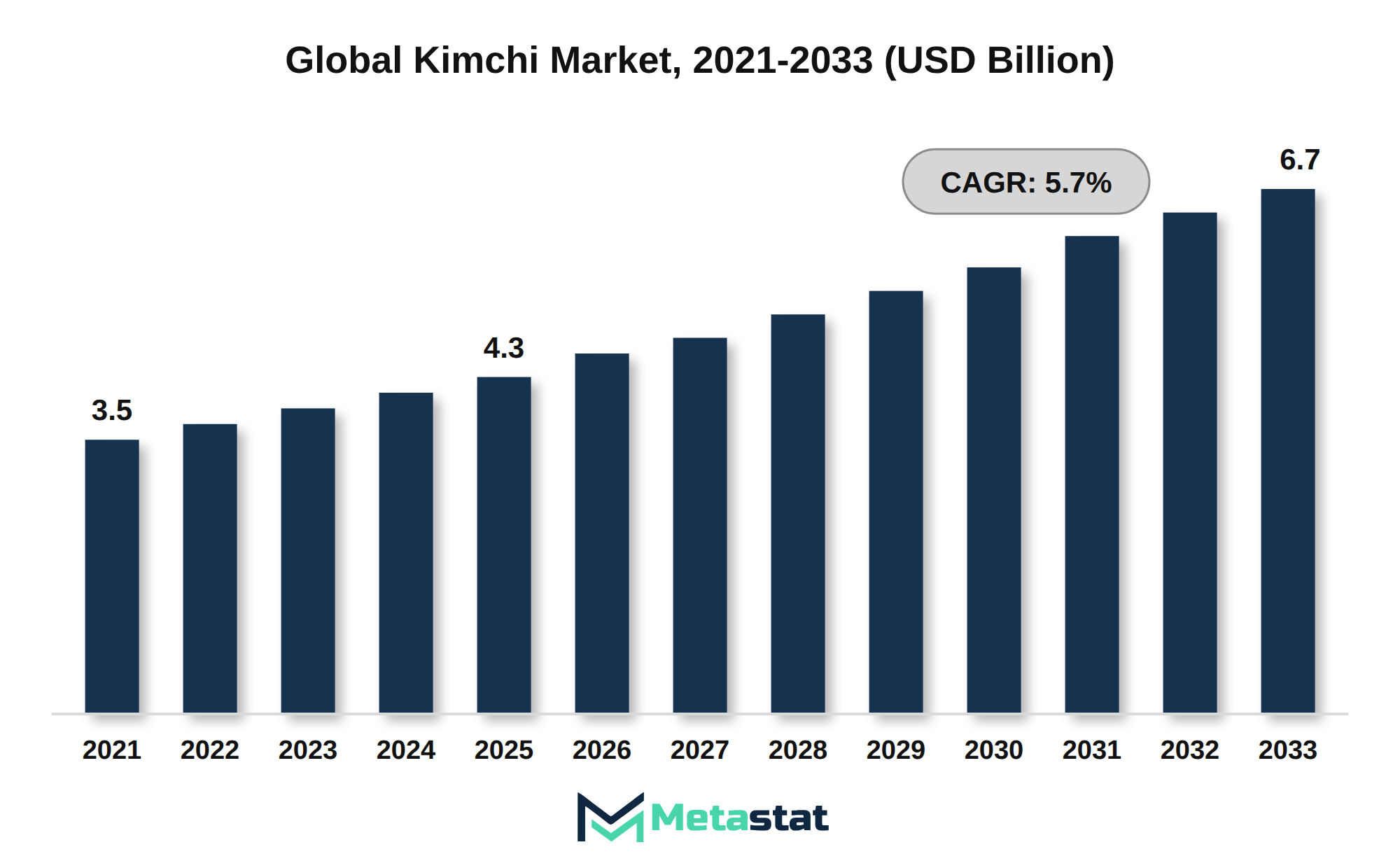
The global Kimchi market was valued at USD 4.3 billion in 2025 and is projected to reach USD 6.7 billion by 2033, growing at a CAGR of 5.7% over the forecast period.
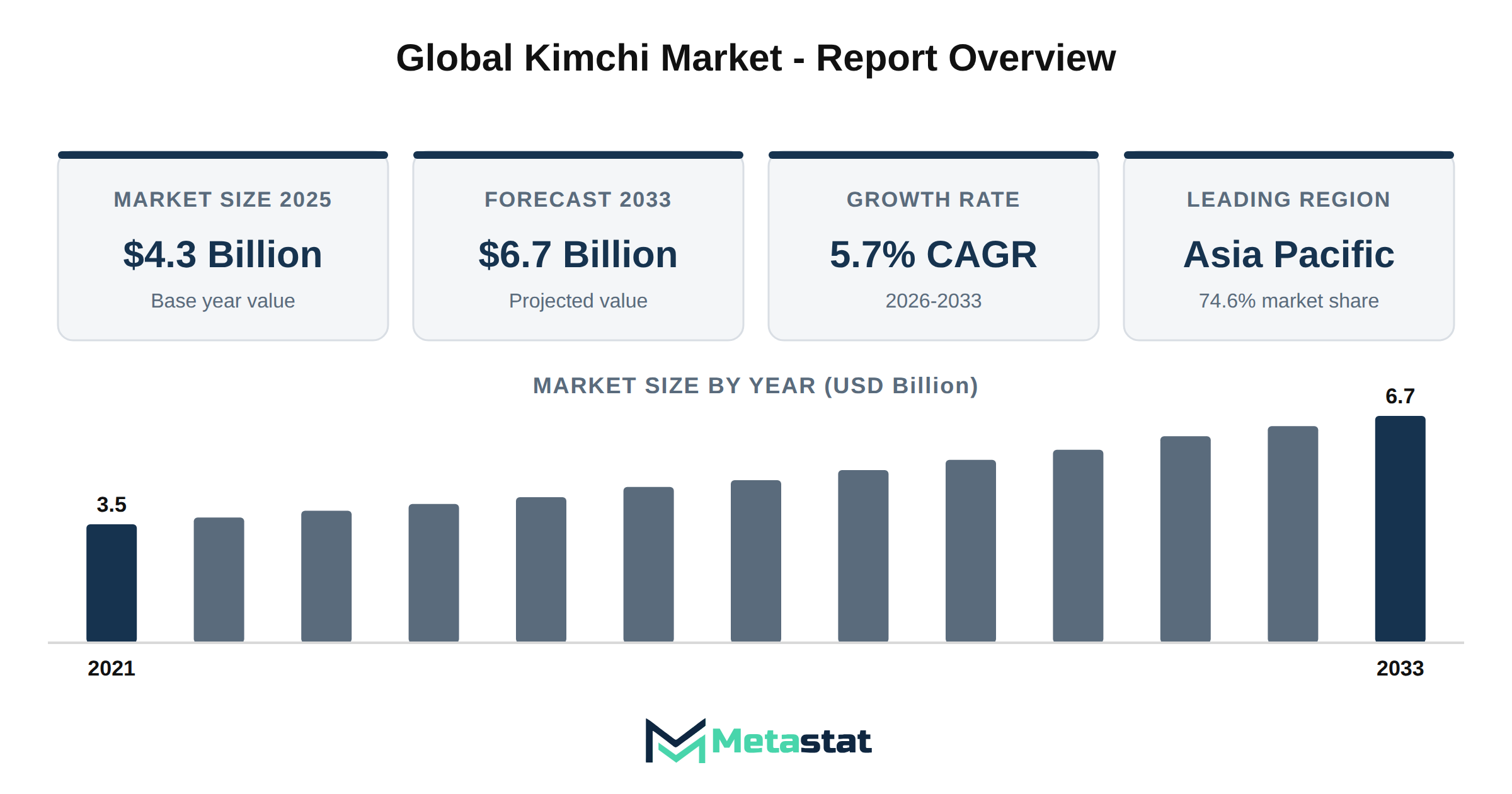
The global Kimchi market reached a value of USD 4.3 billion in 2025, with projections indicating growth to USD 6.7 billion by 2033. This represents a compound annual growth rate (CAGR) of 5.7% over the forecast period from 2026 to 2033. Historical values show an increase from USD 3.5 billion in 2021 to USD 4.1 billion in 2024, reflecting rising demand and popularity of Kimchi worldwide.
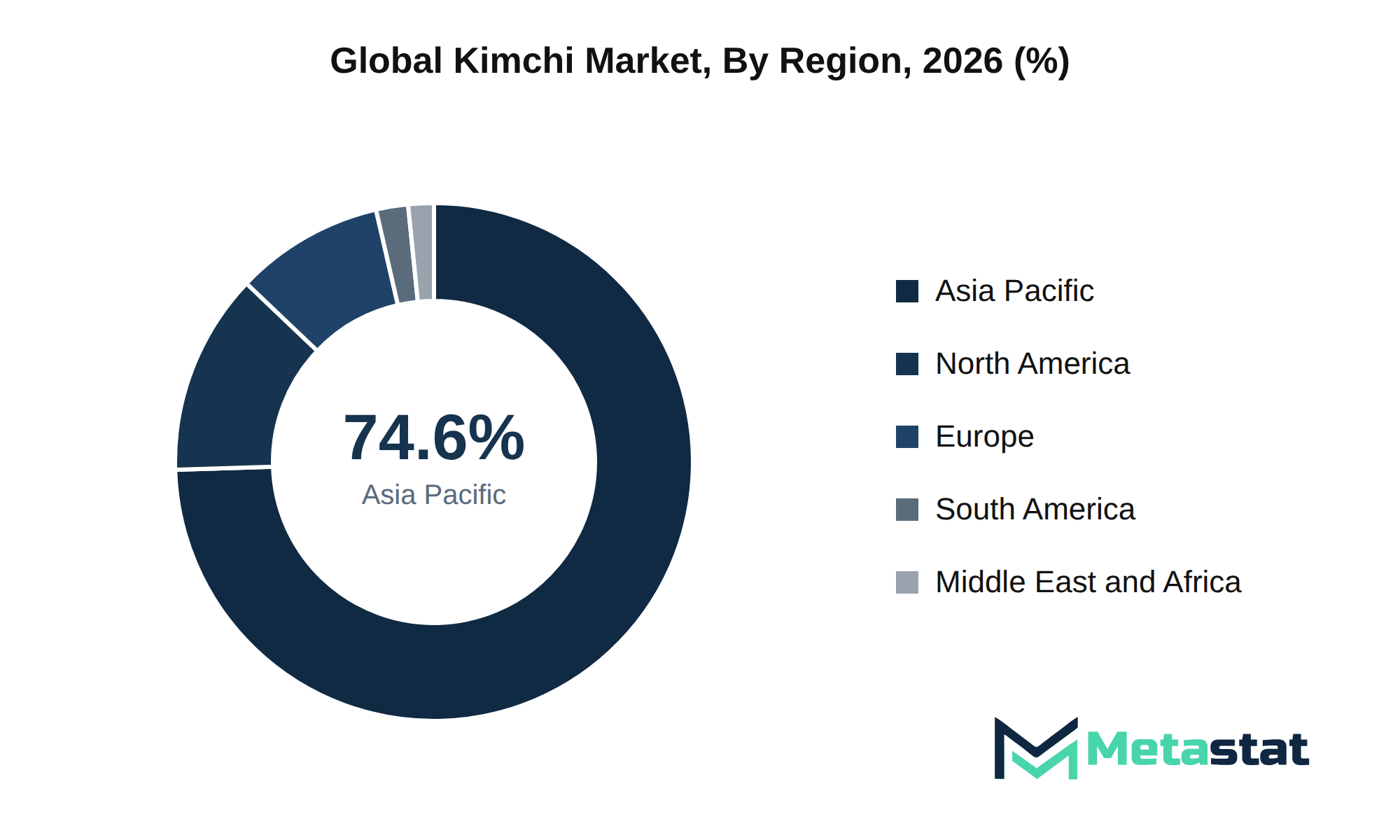
Asia Pacific dominates the market, accounting for 74.6% of total share, followed by North America with 12.6% and Europe with 9.3%. This regional distribution highlights the cultural significance of Kimchi in Asian countries, particularly South Korea, where traditional consumption patterns promote consistent demand. In North America, awareness and acceptance of Kimchi have risen, driven by health consciousness and the trend toward fermented foods.
The market segments show diverse variations, particularly in type, packaging, and end use. Baechu Kimchi leads in type with expected growth from USD 2.5 billion in 2026 to USD 3.5 billion by 2033. In terms of packaging, bottles and jars dominate, with growth anticipated from USD 2.2 billion to USD 3.1 billion during the same period. Households and retail channels represent the largest end use segment, projected to expand from USD 3.3 billion to USD 4.8 billion by 2033.
In light of evolving consumer preferences, innovative packaging solutions and sustainability initiatives influence market dynamics. The shift toward eco-friendly packaging aligns with broader environmental goals, enhancing brand perception and driving sales in the Kimchi market. The incorporation of next-generation ingredients and flavors responds to increasing demand for unique culinary experiences, creating growth opportunities across various segments.
The Kimchi market experiences significant growth driven by evolving consumer preferences for healthy and fermented foods. Rising awareness of the health benefits associated with kimchi, including its probiotic properties, supports increased demand across various demographics. Health-conscious consumers in North America and Europe actively seek out products that promote gut health, enhancing market penetration in these regions.
Innovation in product offerings, including the introduction of new flavors and types, contributes to market expansion. Manufacturers invest in research and development to create diverse kimchi variants, appealing to a broader audience. This trend not only enhances consumer choices but increases competition among suppliers, driving improvements in quality and sustainability.
Supply chain dynamics play a crucial role in the delivery of kimchi products. Producers adapt to disruptions by optimizing logistics and sourcing strategies. Investments in infrastructure, including cold chain facilities, enable consistent product quality and freshness, which are vital for maintaining consumer trust and satisfaction.
The market faces challenges from macroeconomic headwinds, including inflationary pressures and currency volatility. Inflationary pressures and currency volatility impact production costs, influencing pricing strategies and profit margins for manufacturers. Effective capital allocation becomes essential for businesses aiming to navigate these economic uncertainties while sustaining growth.
Future strategic outlook suggests that the kimchi market is expected to continue to evolve with a focus on sustainability and circular economy principles. Companies prioritize eco-friendly packaging solutions and sourcing practices that minimize environmental impact. This commitment to sustainability aligns with consumer expectations and regulatory requirements, positioning the market favorably for the coming years.
Shifting consumer behaviors significantly influence the kimchi market, with increasing health consciousness prompting individuals to seek nutritious food options. The demand for fermented foods, including kimchi, arises from a growing awareness of their health benefits, including improved gut health and enhanced immune function. Urbanization and lifestyle changes result in a higher consumption of ready-to-eat meals, further boosting the appeal of kimchi because a convenient and flavorful accompaniment to various dishes.
The trend of plant-based diets contributes to the expansion of the market, driven by consumers incorporating more vegetables into their meals. This dietary shift aligns with the traditional ingredients used in kimchi, appealing to those seeking plant-based alternatives. Demographic changes, particularly among younger generations, promote adventurous eating habits and openness to international cuisines, driving interest in kimchi.
Retail channels have adapted to these evolving preferences by expanding their offerings of kimchi products, enhancing accessibility for consumers. Online platforms facilitate the growth of the market by enabling easy access to a wide range of kimchi varieties, catering to diverse tastes and preferences.
Investment in technological integration significantly impacts the Kimchi market, enhancing operational efficiency and product quality. Companies adopt automation, artificial intelligence, and advanced software to streamline production processes, resulting in reduced costs and increased output. This trend attracts venture capital funding, driving innovation and strengthening market competitiveness.
Digitizing legacy processes improves data management and supply chain coordination. Enhanced analytics capabilities allow firms to better understand consumer preferences, enabling tailored product offerings. Companies gain market access and improve their positioning within the industry, reinforcing their competitive edge.
The integration of new technologies supports sustainability initiatives, aligning with consumers' increasing focus on ethical sourcing and environmentally friendly practices. Firms implementing efficient resource stewardship report reduced waste and improved profitability. Consequently, these advancements contribute to the overall growth trajectory of the Kimchi market.
The Kimchi market faces significant challenges from increasing regulatory compliance hurdles and inflationary pressures. Stricter regulations impose additional costs on producers, impacting operational expenses and profit margins. Compliance with food safety standards and labeling requirements necessitates investments in quality assurance processes, straining financial resources for smaller producers.
Inflationary pressures contribute to rising costs across the supply chain, affecting prices for raw materials, packaging, and transportation. Escalating operational costs limit manufacturers' ability to maintain competitive pricing, resulting in reduced demand from consumers who seek more affordable alternatives. The combination of these factors creates a challenging environment for market participants, impacting growth prospects and market dynamics.
Supply chain disruptions linked to geopolitical instability and resource scarcity complicate sourcing and distribution. Such challenges lead to inconsistent product availability, ultimately impacting consumer trust and brand loyalty within the kimchi market. Without adequate strategies in place to address these issues, the market experiences stagnation in growth and difficulty in meeting evolving consumer demands.
Geopolitical fragmentation significantly impacts the Kimchi market by disrupting supply chains and increasing trade deficits. Nations adopting protectionist measures and tariffs hinder international trade, affecting the availability of raw materials and finished products. This fragmentation generates volatility in pricing structures, placing pressure on manufacturers facing rising input costs.
Tariff friction complicates relationships between countries that traditionally supplied ingredients or products. These complexities reduce market efficiency and raise compliance costs for businesses operating in multiple jurisdictions. Operational challenges erode profit margins, compelling companies to reconsider pricing strategies while limiting product accessibility for consumers.
Technological disruptions, including cybersecurity risks and data vulnerabilities, add another layer of complexity. The increasing reliance on digital operations in the market creates exposure to potential breaches and operational interruptions, impairing production and distribution processes. While companies integrate new technologies to improve efficiency, concerns regarding intellectual property protection arise, influencing the competitive landscape.
Finally, evolving downstream demands coupled with market saturation pressure producers to innovate continually. Addressing consumer preferences for sustainable and health-conscious products requires significant investment in research and development. This ongoing demand for innovation, combined with supply chain instability, presents substantial challenges to sustaining competitiveness in the Kimchi market.
The Kimchi market experiences robust opportunities driven by emerging regional demands and evolving culinary preferences. Consumers in North America and Europe increasingly seek authentic and health-oriented products, resulting in heightened interest in traditionally fermented foods like kimchi. This shift towards natural, probiotic-rich options aligns with global health trends, promoting dietary diversity and wellness.
Infrastructure modernization across regions facilitates increased production capabilities and distribution efficiency. Improved logistics and supply chain frameworks enable manufacturers to meet rising consumer demand effectively. Technological disruptions, including automation and advanced fermentation techniques, enhance production processes, driving operational efficiencies and product consistency. These advancements reduce production costs and ensure high-quality standards, making products more appealing to consumers.
Geographical expansion into untapped markets presents significant growth opportunities for the kimchi market. Manufacturers targeting regions with rising health consciousness leverage niche applications and localized flavors to cater to diverse palates. This strategic diversification into new demographics enhances market penetration and builds brand loyalty.
Sustainability imperatives influence purchasing decisions, with consumers increasingly favoring eco-friendly packaging and production practices. Brands that adopt sustainable practices align with environmental, social, and governance (ESG) criteria, appealing to ethically conscious buyers. This shift creates advantageous positioning for companies embracing green transformations and eco-friendly innovations.
Digital transformation reshapes the distribution landscape, shifting the focus toward e-commerce and online retail channels. The rise of digital procurement influences purchasing behaviors, allowing consumers to access a wider variety of products. This transition supports the growth of the kimchi market by providing convenience and broader access to niche offerings.
The Global Kimchi market is segmented based on Type, Packaging, End Use, and Distribution Channel.
Valued at USD 2.5 billion in 2026, Baechu Kimchi is projected to reach USD 3.5 billion by 2033, reflecting a CAGR of 5.3% during the forecast period. This segment benefits from growing consumer interest in fermented foods due to perceived health benefits, including improved gut health and enhanced immunity. Increased awareness and promotion of traditional Korean cuisine across global markets drive demand.
Segments including foodservice and retail prioritize authentic, high-quality products, pushing producers to focus on preserving traditional fermentation methods while incorporating modern flavor profiles. This strategy aligns with the preferences of health-conscious consumers who seek natural and minimally processed food options. Consequently, the market for Baechu Kimchi experiences heightened competition, with several suppliers enhancing their product offerings to capture a larger share.
The expansion of distribution channels, particularly through online retail and e-commerce, facilitates increased accessibility for consumers. Enhanced logistics and supply chain strategies enable producers to meet rising demand efficiently, while strategic partnerships with retailers improve market reach. Price stability remains crucial, with producers facing pressures from raw material sourcing costs and competition, necessitating effective cost management strategies to maintain margins.
Kkakdugi Kimchi segment experiences strong growth, estimated to reach USD 1.2 billion by 2033, at a CAGR of 6.8% during the forecast period. Increasing consumer interest in traditional Korean cuisine contributes to the segment's expansion. Growing health awareness boosts demand for fermented foods, aligning with the health-conscious consumer base. This interest drives food manufacturers to innovate and enhance product offerings, leading to greater market penetration.
The segment benefits from evolving consumer preferences favoring unique and flavorful options, enhancing its appeal. Distribution channels play a crucial role, with supermarkets and online retail increasingly stocking Kkakdugi Kimchi. Targeted marketing strategies aimed at younger demographics strengthen demand, aligning with trends towards diverse culinary experiences. Enhanced product availability across various regions facilitates market growth.
Regulatory compliance around food safety continues to influence production practices, ensuring quality and safety in offerings. This focus on quality protects consumers and enhances brand reputation, building loyalty. Pricing volatility in raw materials remains a challenge, affecting margins for producers in the market.
Overall, the Kkakdugi Kimchi segment demonstrates promising growth potential within the broader Kimchi market, driven by evolving consumption habits and strategic market positioning.
Interest in Chonggak Kimchi is expected to grow, driven by increasing consumer awareness of fermented foods and their health benefits. This segment is gaining traction due to its unique flavor profile and nutritional value, appealing to health-conscious consumers seeking probiotics in their diet. The popularity of Korean cuisine globally enhances market demand, particularly because culinary trends highlight authentic and traditional food experiences. The Chonggak Kimchi segment is expected to reach USD 0.3 billion by 2033.
Adoption of Chonggak Kimchi is driven by rising consumer interest in diverse food options, with more people willing to explore ethnic foods. Growth in the foodservice sector, including restaurants and catering services, contributes to expanding distribution channels for this specific type of kimchi. Strategic marketing efforts focusing on its authenticity and health benefits enhance consumer engagement, further driving demand in the market.
Consumption patterns show a shift towards convenience and ready-to-eat options, influencing packaging preferences. The segment benefits from innovations in packaging solutions, providing consumers with improved usability and freshness. Engaging in online retail strategies allows for wider availability, appealing to tech-savvy consumers seeking quick access to products. Overall, the Chonggak Kimchi segment positions itself for growth through strategic consumer engagement and product evolution.
Growing interest in traditional and authentic flavors drives the Dongchimi Kimchi segment within the Kimchi market. This segment is projected to grow at a CAGR of 5.8% during the forecast period, reflecting an increasing consumer preference for unique and diverse culinary experiences. The adoption of Dongchimi Kimchi aligns with rising health consciousness, driven by consumers seeking products that offer probiotic benefits and support gut health. Significant demand from households and foodservice sectors drives this growth, with consumers appreciating the versatility of Dongchimi Kimchi in various dishes.
The expansion of this segment is supported by innovations in production techniques and packaging, enhancing product shelf life and convenience for consumers. While manufacturers focus on improving quality and introducing new flavors, strategic opportunities arise to widen market reach and enhance brand loyalty. Regulatory compliance ensures product safety and quality, further driving consumer confidence in Dongchimi Kimchi. Overall, the outlook for this segment remains positive, with expected contributions to the overall growth of the Kimchi market.
Growing consumer interest in healthier food options drives the demand for Nabak Kimchi, characterized by its unique flavor and texture. This segment attracts consumers seeking novel culinary experiences, enhancing its appeal in the market.
Adoption of Nabak Kimchi expands owing to its versatility because an ingredient in various dishes, particularly within Korean cuisine. This adaptability encourages experimentation among chefs and home cooks alike, contributing to increased consumption rates.
Technological maturation plays a role in refining production methods for Nabak Kimchi. Innovations in fermentation techniques improve product consistency and help preserve flavors, appealing to both traditionalists and modern consumers.
End-use dynamics indicate a growing preference for Nabak Kimchi among households and foodservice sectors. Health-conscious consumers prioritize fermented foods known for their probiotic properties. This trend aligns with broader dietary shifts toward natural and minimally processed products.
Regulatory compliance standards impact the production of Nabak Kimchi, necessitating adherence to safety and quality regulations. Certification processes enhance consumer trust, further strengthening the segment's standing in the market.
Strategic opportunity windows arise from the increasing popularity of Asian cuisine in Western markets. Nabak Kimchi capitalizes on this trend by leveraging marketing strategies that emphasize authenticity and health benefits.
Oi Sobagi Kimchi stands out within the Kimchi market due to its unique flavor profile and preparation method. This sub-segment attracts consumers seeking distinct culinary experiences, contributing to its growing appeal. Traditionally made with young radishes, Oi Sobagi is often stuffed with various ingredients, increasing its versatility in meals. This preparation method aligns with consumer trends favoring health-conscious and fermented products, enhancing its market presence.
Demand for Oi Sobagi Kimchi is influenced by cultural shifts towards plant-based diets and increased awareness of the health benefits associated with fermented foods. Consumers prioritize gut health and probiotics, and Oi Sobagi's positioning aligns well with these trends, attracting a diverse audience. The popularity of Korean cuisine globally further supports the growth of this sub-segment, expanding its reach beyond traditional markets and introducing it to new consumers.
Technological advancements in food preservation and packaging contribute significantly to the viability of Oi Sobagi Kimchi in the market. Innovations in refrigeration and vacuum-sealing ensure product freshness and enhance shelf life, crucial for maintaining quality in distribution. While production techniques evolve, opportunities for expansion become evident, allowing producers to meet rising consumer demand effectively.
Regulatory compliance standards surrounding food safety and packaging impact production practices for Oi Sobagi Kimchi. Adhering to stringent guidelines ensures the product meets consumer expectations regarding quality and safety. This adherence not only builds consumer trust but allows producers to differentiate their offerings in a competitive market.
Overall, the Oi Sobagi Kimchi sub-segment reflects an intricate interaction between consumer preferences, production technologies, and regulatory frameworks within the broader Kimchi market. Continued investment in marketing and distribution strategies will further enhance its position, reflecting a favored choice among diverse consumer bases.
Interest in various types of kimchi, including Yeolmu Kimchi, Gat Kimchi, Pa Kimchi, Buchu Kimchi, Bossam Kimchi, White Kimchi, and Specialty Vegetable Kimchi, continues to rise driven by the growing popularity of fermented foods with health benefits. These products appeal to health-conscious consumers who prioritize gut health and seek out probiotic-rich options. The market's response to these trends has led to an increase in product variety and innovation, enhancing consumer choice.
Market expansion is influenced by cultural shifts favoring traditional and artisanal food products, which align well with the unique offerings within this sub-segment. Consumers increasingly appreciate the rich flavors and authentic preparation methods that these types of kimchi provide. The rise of global cuisine has resulted in a broader acceptance of diverse food styles, creating opportunities for increased market penetration.
Regulatory compliance concerning food safety and quality standards influences product development in this segment. Adherence to these standards builds consumer trust and supports brand loyalty. With rising consumer awareness around food sourcing and production processes, companies focusing on transparency and quality assurance within this sub-segment are likely to gain a competitive edge.
Pricing volatility in raw materials impacts profit margins for producers of these specialty kimchi varieties. Fluctuations in ingredient costs necessitate strategic pricing and sourcing decisions to maintain profitability while offering competitive products. Supply chain resilience is crucial for companies navigating these challenges, ensuring consistent product availability and quality.
Innovation in packaging solutions contributes to consumer convenience and enhances product appeal. Sustainable packaging options attract environmentally conscious consumers, positioning brands favorably in the market. Continued investment in next-generation upgrades and product evolution drives growth within the Kimchi market.
Bottles & Jars segment is valued at USD 2.2 billion in 2026 and is projected to reach USD 3.1 billion by 2033, at a CAGR of 5.3% during the forecast period. This growth results from increasing consumer preference for convenient and portable packaging options, which align with busy lifestyles and on-the-go consumption trends. The demand for Kimchi packaged in bottles and jars reflects consumer desire for freshness and quality, because these materials ensure product integrity while maintaining flavor and nutritional value.
Adoption of sustainable packaging solutions within the market further enhances the appeal of Bottles & Jars. Innovative designs that incorporate eco-friendly materials attract environmentally conscious consumers, driving significant market penetration. Packaging features, including resealable lids and easy-to-use designs, cater to both households and foodservice applications, promoting enhanced usability.
While awareness of health benefits associated with fermented foods increases, Bottles & Jars positioned because a convenient option for storing Kimchi make a strong case for growth. Retailers emphasize this packaging to attract customers seeking healthy and flavorful food choices. Consequently, the segment stands to benefit from rising consumer interest in exploring diverse culinary experiences.
Investment in marketing and brand differentiation strategies within the Kimchi market strengthens Bottles & Jars segment performance. By emphasizing quality, authenticity, and unique flavors, producers capture consumer attention and encourage trial purchases. This strategic focus supports a favorable outlook for Bottles & Jars, aligning with broader market trends emphasizing premium products.
Pouches have gained traction within the Kimchi market due to evolving consumer preferences for convenience and portability. This segment is projected to reach USD 1 billion by 2033, with a CAGR of 7.1% during the forecast period. Increasing demand for ready-to-eat and on-the-go food options facilitates the growth of pouch packaging, which offers a practical solution for consumers leading busy lifestyles.
Rapidly changing consumption patterns influence the expansion of this segment, with consumers seeking fresher and healthier options packaged in convenient formats. Retailers and foodservice providers recognize the potential of pouches to enhance product visibility and shelf appeal, further driving adoption. The market for pouches benefits from innovations in packaging technology, which ensure product integrity and extend shelf life.
Regulatory compliance standards related to food safety and packaging materials reinforce the need for high-quality pouches. Manufacturers investing in sustainable materials and eco-friendly practices gain competitive advantages, aligning with consumer expectations for environmentally responsible products. The Kimchi market continues to evolve, and pouches represent a strategic opportunity for growth and differentiation in packaging.
Growth in the Boxes segment of the Kimchi market is driven by increasing consumer demand for convenient packaging solutions. This segment is projected to reach USD 0.4 billion by 2033, reflecting a strategic shift towards user-friendly packaging options. More consumers prioritize convenience in food products, prompting manufacturers to invest in innovative designs that cater to on-the-go lifestyles.
Adoption of Boxes packaging is influenced by the rising trend of e-commerce and online grocery shopping. Enhanced delivery services require packaging that ensures product safety and freshness during transit. Consequently, brands emphasize durable and sustainable materials to attract environmentally conscious consumers, resulting in a competitive edge in the market.
Technological advancements play a role in evolving packaging solutions, enabling companies to produce aesthetically pleasing and functional options. Next-generation upgrades focus on both user engagement and waste reduction, aligning with broader sustainability goals. This evolution enhances brand loyalty and addresses increasing regulatory scrutiny regarding packaging waste.
End-use dynamics indicate a significant preference for Boxes among retail and foodservice sectors, where shelf appeal and functionality are crucial. Evolving consumer tastes motivate brands to innovate their packaging strategies, pushing the segment towards higher growth rates. Overall, the shift towards Boxes in the Kimchi market illustrates a blend of consumer preferences and industry innovation.
Growing consumer interest in convenient and ready-to-eat food options fuels the adoption of Tubs & Trays within the Kimchi market. The segment is projected to grow at a CAGR of 5.7% during the forecast period, reflecting a trend towards packaging that enhances portability and ease of use. Popularity among households for meal prep and on-the-go consumption supports this growth, highlighting a shift in end-use dynamics driven by consumers seeking practical solutions. The increasing prevalence of foodservice establishments incorporating kimchi into their offerings contributes to market expansion, because these establishments prefer Tubs & Trays for their efficiency in storage and serving. The demand for innovative packaging solutions that maintain product freshness while being environmentally friendly positions Tubs & Trays because a strategic opportunity within the market. Investment in sustainable materials and technologies aligns with rising consumer preferences for eco-conscious products, enhancing growth potential. The segment is expected to capture a larger share of the overall market, reinforcing the trend towards versatile and consumer-friendly packaging.
Consumer preferences shift towards convenience and portability drive the adoption of Cans for kimchi packaging. This interest aligns with the growing trend of on-the-go eating, where consumers seek easy-to-carry options. Cans offer a durable packaging solution that preserves freshness, appealing to customers prioritizing quality and shelf life in their food choices.
Technological advancements in canning processes enhance product preservation and flavor retention, attracting manufacturers to invest in this method. Innovations in canning technology improve the efficiency of production lines, reducing operational costs and increasing profitability. With rising demand for ready-to-eat foods, the market responds through the introduction of new flavors and varieties in canned kimchi.
Distribution channels expand with the inclusion of convenience stores and online retail, enhancing accessibility for consumers. The strategic placement of canned products in high-traffic areas increases visibility and boosts sales potential. These dynamics position the Cans segment favorably within the broader kimchi market, driven by manufacturers leveraging trends in consumer behavior to optimize their offerings.
Regulatory compliance remains a consideration for the Cans segment, particularly concerning food safety standards and packaging materials. Adherence to these standards ensures that products meet consumer expectations while building trust in brands. While awareness of health and safety issues rises, companies invest in certifications that underline their commitment to quality.
Overall, the Cans segment of the kimchi market presents a strategic opportunity for growth. Enhanced product offerings alongside a focus on consumer convenience strengthen its position, making it an essential component of market expansion efforts.
Consumer preference for kimchi among households and retail channels drives significant growth in this segment. Valued at USD 3.3 billion in 2026, it is projected to reach USD 4.8 billion by 2033, at a CAGR of 5.4% during the forecast period. Rising demand stems from increasing health awareness and the popularity of fermented foods, prompting households to include kimchi in their diets. Retailers adapt to this trend by expanding product ranges to feature various types of kimchi, thereby enhancing accessibility.
Technological advancements in production and packaging offer new opportunities for product evolution within the market. Innovations including vacuum-sealed packaging preserve freshness and extend shelf life, catering to consumer demands for convenience. The segment experiences increasing interest from younger demographics, aligning with the broader shift in consumption patterns toward healthier, ready-to-eat options. This evolving interest positions the segment favorably for sustained growth.
Price dynamics remain critical, with fluctuations in raw material costs impacting overall margins. Retailers strategically manage pricing to remain competitive while ensuring product quality. Success in the Households/Retail segment hinges on effective marketing strategies, consumer education about the health benefits of kimchi, and the ability to respond swiftly to changing market demands. The segment's resilience against economic fluctuations further supports its growth trajectory in the kimchi market.
Increased popularity of kimchi among restaurants and catering services drives the Foodservice segment, stimulating significant market growth. The trend towards incorporating healthy and flavorful ingredients into menus enhances demand across the foodservice sector. Innovations in product offerings, including ready-to-use and bulk packaging, capture attention from foodservice operators seeking efficiency while maintaining quality. The segment is projected to reach USD 1.6 billion by 2033, at a CAGR of 6.2% during the forecast period.
Health-conscious consumers influence the demand for fermented foods, including kimchi, within foodservice establishments. This shift towards probiotic-rich products aligns with broader dietary trends focusing on wellness and nutrition. The foodservice industry's adaptation to changing consumer preferences for diverse, authentic culinary experiences supports growth in the kimchi market. Establishments seeking competitive advantages enhance menu offerings with kimchi, creating opportunities for expansion and customer engagement.
Institutional and catering services represent a critical end-use segment within the Kimchi market. Demand for kimchi in this segment arises from the growing incorporation of fermented products into institutional menus, emphasizing health benefits and unique flavors. An increase in the number of restaurants and catering services focusing on authentic and diverse culinary experiences supports market expansion. This trend aligns with broader consumer preferences for healthy and flavorful options in dining settings.
Institutional and catering services are projected to reach USD 0.4 billion by 2033. Pricing strategies in this segment reflect the integration of high-quality ingredients and the emphasis on authentic flavors, which influence consumer choices. The segment's growth is further supported by an evolving regulatory landscape that encourages the use of traditional and fermented foods.
Key players focus on improving product offerings through innovative recipes and packaging that appeal to institutional buyers. Investments in marketing and partnerships with foodservice providers enhance visibility and accessibility. Such dynamics create strategic opportunities for growth within the segment, ensuring that the Kimchi market remains competitive and responsive to changing consumer demands.
Consumer preferences strongly favor Supermarkets & Hypermarkets, reflecting preferred distribution channels for kimchi products. Enhanced accessibility and convenience offered by these retail formats significantly contribute to the growth of the Kimchi market. Increased foot traffic in supermarkets attracts a diverse customer base, including health-conscious individuals and culinary enthusiasts seeking authentic flavors.
Promotional strategies and in-store marketing campaigns drive product visibility, creating a vibrant environment for kimchi consumption. Retailers frequently highlight the health benefits and versatility of kimchi, appealing to consumers looking for nutritious and flavorful options. The growing trend of international cuisines in mainstream dining contributes to a heightened interest in kimchi across varying demographics.
Supply chain efficiencies enhance the availability of fresh kimchi products, with a focus on maintaining quality standards. This aspect becomes crucial in meeting consumer demands for freshness and flavor authenticity. Supermarkets & Hypermarkets often serve because platforms for introducing new kimchi varieties and innovative products, supporting continuous market expansion.
Competitive pricing strategies adopted by large retail chains facilitate consumer access to a wide range of kimchi products. These strategies contribute to price stabilization in the market, encouraging consumers to explore different types and flavors. Overall, the Supermarkets & Hypermarkets distribution channel plays a significant role in shaping the dynamics of the Kimchi market, facilitating growth through strategic promotions and enhanced product availability.
Consumer demand for quick and convenient food solutions influences the growth of the Kimchi market through convenience stores. Increased consumer awareness of health benefits associated with fermented products drives purchases, making kimchi an attractive item for busy shoppers. Convenience stores provide easy access to ready-to-eat kimchi, aligning with the trend of on-the-go consumption.
Product innovation within the segment plays a significant role in attracting consumers. Unique flavors and packaging options enhance the appeal of kimchi, encouraging trial and repeat purchases. The availability of single-serving packs caters to individuals seeking quick meal options without compromising on taste or nutrition.
Competitive pricing strategies adopted by convenience stores contribute to the accessibility of kimchi. Offering promotions and discounts facilitates increased volume sales, thus supporting the overall growth of the market. The segment benefits from strategic partnerships with suppliers, ensuring consistent product availability and variety.
Broader trends in the food industry, including the rise of health-conscious eating, further underpin the segment's expansion. Consumers increasingly prioritize gut health, making kimchi a staple in their diets. This shift towards health-oriented products strengthens the position of kimchi within convenience stores, ensuring relevance in a dynamic market.
Department stores provide a significant retail channel for kimchi, reflecting trends in consumer behavior towards convenience and variety. The modern consumer increasingly seeks diverse food options, resulting in heightened demand for specialty items including kimchi. Enhanced visibility within department stores facilitates consumer exploration and trial, positively influencing purchasing decisions. Marketing strategies aimed at promoting the health benefits and unique flavors of kimchi connect well with health-conscious shoppers. Effective in-store promotions and product placements contribute to increasing consumer awareness and education about kimchi.
A focus on product evolution is essential in this segment. New flavors and innovative packaging attract consumers, while collaborations with well-known brands enhance the market's profile. Anticipated growth in the kimchi market aligns with evolving consumer preferences towards fermented foods, which are perceived because healthy and beneficial. In addition, increased interest in Korean cuisine supports sales in department stores, further driving demand.
Regulatory compliance and quality standards heavily influence the dynamics of the market. Products meet safety and quality regulations to ensure consumer trust and loyalty. Certifications related to food safety enhance credibility and help differentiate premium offerings in a competitive landscape. With a variety of choices available, consumers often opt for brands that demonstrate adherence to these standards.
Pricing volatility poses challenges, impacting profit margins for both retailers and producers. Strategic pricing methods allow brands to remain competitive while ensuring product accessibility. Ongoing shifts in distribution channels highlight the necessity for department stores to adapt their strategies to meet customer expectations effectively. Overall, the department stores segment within the kimchi market is positioned for growth, driven by consumer preferences, innovative product offerings, and strategic marketing approaches.
Rapid growth in online retail and e-commerce channels enhances accessibility for consumers seeking kimchi products. The convenience of online shopping aligns with increasing demand for ready-to-eat and versatile food options. This segment supports a broad range of consumer preferences, enabling customers to explore various kimchi types and packaging options without geographical constraints. Engagement of younger demographics, who prefer digital shopping experiences, drives significant market dynamics.
Technological advancements in e-commerce platforms, including improved user interfaces and payment solutions, facilitate efficient purchasing experiences. Enhanced product visibility through social media and online marketing strategies contributes to heightened consumer awareness of the kimchi market. Increased visibility often leads to higher sales conversions, driving overall growth in the e-commerce distribution channel.
Diverse product offerings and innovations within the kimchi market, including new flavors and health-oriented versions, further stimulate interest among online shoppers. The evolving landscape of consumer preferences emphasizes the importance of convenience, quality, and authenticity. Online retail provides a platform for brands to present their products effectively, engaging customers who prioritize unique and health-conscious food options.
Demand for specialty and ethnic food options drives growth in the distribution channel that includes Specialty & Ethnic Food Stores, Foodservice Distribution, Direct-to-Consumer, Farmer's Markets, and Club Stores. Consumers increasingly seek authentic and unique food experiences, contributing to a rise in niche marketplaces and direct purchasing avenues. This trend aligns with a broader movement supporting local and small-scale producers, enhancing connections between consumers and food origins.
Segment expansion in this category benefits from technological maturation and next-generation upgrades that streamline supply chain processes. Innovations in e-commerce platforms facilitate direct-to-consumer sales, improving accessibility for consumers while enabling producers to connect with their target audience effectively. The evolution of delivery services and increasing mobile shopping further enhances the shopping experience and drives consumer engagement.
Consumption shifts toward health-conscious choices strengthen the appeal of kimchi and its variations, promoting adoption across diverse demographics. Regulatory compliance standards and certifications regarding food safety and quality play a vital role, ensuring consumer trust in products sourced from these channels. This trust enhances loyalty and repeat purchases, supporting continued growth in the kimchi market.
The presence of foodservice distribution channels optimizes market penetration, allowing restaurants and catering businesses to offer authentic kimchi dishes to a broader audience. Strategic opportunity windows arise from increasing interest in international cuisine and the growing popularity of fermented foods. This interest boosts demand among foodservice operators looking to diversify their menus, contributing to overall market expansion.
Cost structures and pricing volatility present challenges for suppliers within this sub-segment. Variations in raw material sourcing and logistics vulnerabilities impact profitability, requiring effective management to maintain competitive pricing. Understanding these dynamics enables stakeholders to navigate potential disruptive alternatives while reinforcing supply chain resilience.
Capital investment outlook in this sub-segment indicates optimism, with opportunities for innovation and product differentiation. Producers focusing on unique flavor profiles and organic ingredients attract a discerning consumer base. This focus on product evolution aligns with the market's overall growth trajectory and enhances the appeal of kimchi within the diverse distribution channels available.
Based on geography, the Global Kimchi market is divided into North America, Europe, Asia-Pacific, South America, Middle East, and Africa.
North America experiences a growing interest in kimchi, with a market size projected to reach USD 0.8 billion by the end of 2033. The region represents a significant portion of the global kimchi market in 2025. Consumer trends reflect a shift toward healthier fermented food options, contributing to increased demand for kimchi products across the United States, Canada, and Mexico.
Key drivers of market growth include the rising popularity of ethnic cuisines and the expanding awareness of kimchi's health benefits. Retailers enhance their product offerings to cater to diverse consumer preferences. The foodservice sector, including restaurants and cafes, actively incorporates kimchi in various dishes, promoting its acceptance among consumers.
Localized manufacturing and supply chain efficiencies enhance market accessibility. Domestic players strategically position themselves to meet increasing demand while adapting to regional tastes and preferences. This dynamic creates a competitive landscape where local and international brands compete effectively.
While the market evolves, cross-border trade remains a fundamental aspect of distribution, allowing for diverse product availability. Overall, North America’s kimchi market shows strong potential for continued growth, driven by cultural shifts and expanding consumer awareness.
In Europe, the kimchi market experiences steady growth, fueled by increasing interest in Asian cuisine and healthy fermented foods. Countries including Germany, France, and the UK demonstrate rising consumer awareness of the health benefits associated with kimchi, including its probiotic properties and role in gut health. This trend leads to higher adoption rates among households and retail channels, contributing to market expansion.
The diverse cultural landscape in Europe influences regional preferences for specific kimchi varieties. For instance, Germany and France show a preference for Baechu Kimchi, while other countries explore different types including Kkakdugi and Chonggak Kimchi. This segment expansion attracts various producers seeking to cater to local tastes, further enriching the market.
Challenges in the European market include regulatory frameworks and compliance mandates that vary across countries. Local producers often face hurdles related to labeling and food safety standards, which impact the speed of market entry for new products. Established brands leverage their experience to navigate these regulations effectively.
Key players in the European kimchi market include both domestic producers and international brands, all competing for market share. Collaborative efforts among vendors to enhance distribution networks strengthen regional supply chains, allowing for more efficient product delivery. The market experiences the emergence of localized procurement dynamics, driven by consumers increasingly prioritizing sourcing from nearby vendors.
While consumer preferences evolve, the market is anticipated to expand through innovative marketing strategies and product offerings. Continued emphasis on health, convenience, and ethnic food experiences positions the kimchi market favorably for sustained growth throughout the forecast period.
Asia Pacific dominates the Kimchi market, accounting for 74.6% of the global share in 2025. Several factors drive this substantial presence, including a rich cultural heritage of fermented foods and an increasing awareness of the health benefits associated with kimchi consumption. Countries including China, Japan, and South Korea significantly contribute to the market's growth, driven by their traditional cuisines that incorporate kimchi. Rapid urbanization in the region creates a growing middle class, which increasingly values convenience and ready-to-eat meal options.
Emerging markets, particularly in Southeast Asia and India, present opportunities for expansion because local consumers become more familiar with kimchi and its diverse applications. The growing number of foodservice establishments in these regions further enhances demand for kimchi because a versatile ingredient in various dishes. Infrastructure modernization and improved supply chains facilitate the efficient distribution of kimchi products across urban centers, meeting rising consumer expectations for quality and availability.
Anticipated growth in the market will benefit from localized manufacturing initiatives, which help to reduce costs and enhance product freshness. Cross-border trade corridors facilitate the movement of goods, while domestic players strengthen their positions through strategic partnerships and targeted marketing efforts. Cultural nuances play a significant role in shaping regional B2B buying behaviors, with local preferences influencing procurement strategies for kimchi.
The competitive landscape within Asia Pacific features established domestic leaders alongside emerging players, all vying for market share. Regional resource availability and energy grid resiliency contribute to a conducive environment for investment, ultimately supporting the market's long-term growth trajectory.
The Kimchi market in South America experiences gradual growth driven by increasing consumer awareness of health benefits associated with fermented foods. Brazil and Argentina represent key markets reflecting rising interest in traditional Asian cuisine, contributing to the overall expansion of kimchi consumption in the region. Cultural nuances influence preferences for flavor profiles, with local variants of kimchi gaining traction among consumers seeking authentic experiences.
Emerging market front-runners, particularly Brazil, benefit from an expanding foodservice sector that incorporates kimchi into diverse culinary applications. Restaurants and cafes experiment with unique dishes featuring kimchi, enhancing visibility and appeal. The market's share in South America is projected at 2.00% in 2025, reflecting a growing segment within the broader food landscape.
Localized manufacturing densities and supply chain regionalization play a vital role in market dynamics. Domestic producers focus on meeting increasing demand by adopting innovative production methods tailored to local tastes. Cross-border trade corridors facilitate access to ingredients, supporting growth of small and medium-sized enterprises dedicated to producing authentic kimchi products.
Strategic entry barriers, including brand recognition and distribution challenges, influence competitive dynamics. Domestic producers in Brazil and Argentina leverage established networks, while new entrants explore niche markets to gain a foothold. This competitive environment encourages collaboration and partnerships that aim to enhance product offerings and expand market reach.
The Kimchi market in the Middle East and Africa represents a niche segment, accounting for 1.6% of the global market in 2025. Growth in this region results from a combination of cultural influences and an increasing interest in diverse culinary options, particularly in countries like Saudi Arabia, UAE, and South Africa. The infusion of Asian cuisine into local diets significantly contributes to the rising demand for kimchi.
Adoption rates within this market remain moderate due to limited awareness and availability of traditional kimchi products. Emerging trends in health and wellness drive consumers toward fermented foods, benefiting the market. Local suppliers are beginning to explore opportunities by introducing kimchi varieties tailored to regional tastes and preferences.
Infrastructure modernization plays a crucial role in enabling distribution channels. Enhanced logistics and supply chain frameworks improve access to retail outlets, increasing the visibility of kimchi products. The market continues to evolve, with localized manufacturing densities gradually forming to support growing demand.
Regional competitive dynamics feature several domestic players beginning to establish themselves. Companies are working to consolidate their positions by aligning product offerings with local tastes while navigating the regulatory framework governing food safety and compliance. This environment prompts vendors to innovate and expand their reach.
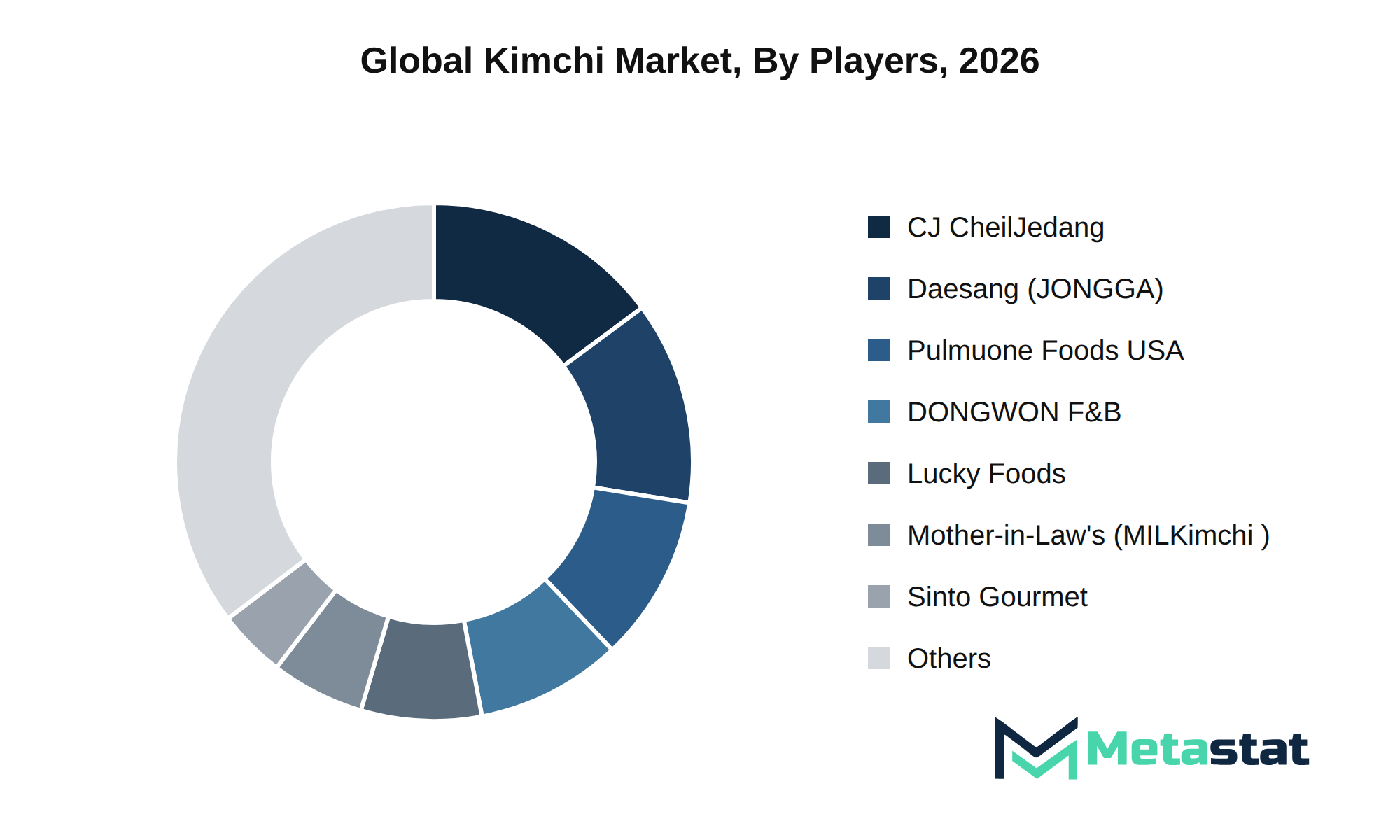
The competitive dynamics within the Kimchi market revolve around strategic alliances, product differentiation, and innovation in packaging and distribution channels. Key players focus on enhancing brand equity through quality and unique flavor profiles, capturing market segments including households, foodservice, and institutional catering. Companies like Daesang Corporation (JONGGA) and CJ CheilJedang Corp. leverage their extensive R&D pipelines to develop proprietary technologies that reinforce their positions in the marketplace.
Pricing architectures serve because a crucial element for competing firms, influencing consumer choices and establishing loyalty. Companies including Pulmuone Foods USA and Lucky Foods adopt competitive pricing strategies that target a diverse consumer base, balancing affordability with premium offerings. The market's expansion encourages new entrants, prompting existing companies to strengthen their intellectual property portfolios to protect innovations and maintain technological defensibility.
The future competitive outlook for the Kimchi market indicates growth driven by increased demand for authentic and health-conscious food products. Companies like Beavia and Sinto Gourmet are positioning themselves to capture emerging trends through joint ventures and cross-industry partnerships that enhance their market reach. Barriers to entry continue to evolve, necessitating that new entrants develop robust customer retention strategies to compete effectively against established brands.
Supply chain dominance shapes the competitive landscape, with firms including DONGWON F&B and Kehoe's Kitchen emphasizing procurement leverage to optimize costs and enhance product availability. The combination of these strategic factors ensures a dynamic and competitive environment, ultimately driving growth and innovation within the market.
Market size is forecast to rise from USD 4.3 billion in 2025 to over USD 6.7 billion by 2033. The base case reflects steady growth driven by increasing consumer interest in health-conscious diets and the rising popularity of fermented foods. Downstream demand from households and foodservice sectors supports this growth, with a compound annual growth rate (CAGR) of 5.7% anticipated during the forecast period.
In a bull case, favorable conditions including accelerated adoption of next-generation technologies and favorable regulatory frameworks enhance market dynamics. This scenario presents opportunities for innovation and product diversification, leading to increased penetration and revenue generation. Conversely, the bear case suggests potential challenges from geopolitical realignments and evolving trade corridors, which disrupt supply chains and impact pricing strategies. These factors could hinder growth potential, emphasizing the importance of strategic capital allocation and market adaptability.
The market evolves through shifts in consumer preferences toward diverse kimchi varieties and packaging solutions that align with changing lifestyles. Focus on research and development, alongside evolving compliance landscapes, remains essential for market players. Understanding emerging white-space opportunities is critical for capturing unmet needs and maximizing growth potential.
The report strategically identifies and profiles the key market players and analyses their core competencies in each sub-segment of the Kimchi market.
Report Attributes | Details |
Study Period | 2021-2033 |
Base Year | 2025 |
Estimated Year | 2026 |
Forecast Period | 2026-2033 |
Historical Period | 2021-2025 |
Growth Rate | CAGR 5.7% from 2026 to 2033 |
Revenue Unit | USD billion |
Segmentation | By Type, Packaging, End Use, Distribution Channel, and Region |
By Region | North America (By Type, Packaging, End Use, Distribution Channel, and Country)
|
Europe (By Type, Packaging, End Use, Distribution Channel, and Country)
| |
Asia Pacific (By Type, Packaging, End Use, Distribution Channel, and Country)
| |
South America (By Type, Packaging, End Use, Distribution Channel, and Country)
| |
Middle East and Africa (By Type, Packaging, End Use, Distribution Channel, and Country)
|
Find answers to common questions about this report
The Kimchi market size was valued at USD 4.3 billion in 2025.
The Kimchi market is projected to grow at a CAGR of 5.7% during the forecast period from 2026 to 2033.
The North America Kimchi market size is estimated to reach USD 0.8 billion by 2033.
Baechu Kimchi leads the Kimchi market with a projected value of USD 3.5 billion by 2033, based on its significant share compared to other types.
Key drivers for the Kimchi market include shifting consumer behaviors towards health-conscious and nutritious food options, a rising demand for fermented foods, and the trend of plant-based diets. Urbanization and lifestyle changes further boost the appeal of kimchi because a convenient and flavorful accompaniment to various dishes.
Asia Pacific holds the dominant share of the Kimchi market, accounting for 74.6 percent in 2025. This region significantly surpasses others, including North America at 12.6 percent and Europe at 9.3 percent.
The Kimchi market faces significant challenges from increasing regulatory compliance hurdles and inflationary pressures. Stricter regulations raise operational costs, while inflation affects prices for raw materials and packaging, limiting manufacturers' ability to maintain competitive pricing. These factors create a challenging environment that impacts growth prospects and market dynamics.
Shifting consumer behaviors favor product adoption in the kimchi market, driven by increasing health consciousness and the demand for nutritious food options. Urbanization and the trend toward plant-based diets enhance the appeal of kimchi because a convenient and flavorful accompaniment, while younger generations' adventurous eating habits promote interest in diverse cuisines.
The Kimchi market is estimated to reach a valuation of USD 6.7 billion by 2033.
Key players in the Kimchi market include Daesang Corporation (JONGGA), CJ CheilJedang Corp., Pulmuone Foods USA, Lucky Foods, Sinto Gourmet, and Mother-in-Law's (MILKimchi Inc.).
The analysts below cover Food and Beverages research at Metastat Insights.
LEAD ANALYST
Utkarsh Khirodkar is a Lead Market Research Analyst at MetaStat Insight, specializing in market intelligence, technology sector assessments, and competitive strategy.

LEAD PRINCIPAL ANALYST, PHARMA AND HEALTHCARE
Food and Beverages · Healthcare · Healthcare IT · Medical Devices
Ajay Devgire is the Lead Healthcare Analyst at MetaStat Insight, leading strategic research and market intelligence initiatives across the global healthcare domain.

SENIOR RESEARCH ANALYST
Biotechnology · Food and Beverages · Medical Devices · Packaging
Snehal Pasalkar is a Research Analyst at MetaStat Insight, operating at the intersection of life sciences research, competitive strategy, and market intelligence.
When planning edge sensor rollouts across refinery environments, generic IoT reports typically miss the harsh-environment certification bottlenecks. MetaStat Insight gave an objective evaluation of ATEX and Class 1 Division 2 hardware availability, along with realistic five-year maintenance cycle cost projections. The comparison of wireless mesh versus private cellular backhaul helped our team pressure-test network reliability models for remote processing facilities.
In the biological seed treatment space, registration timelines vary drastically between the European Union, Brazil, and North America. The MetaStat Insight research handled these cross-border regulatory barriers with genuine nuance, mapping commercialization pathways alongside historical field adoption rates. The segmentation between microbial strains and biochemical active ingredients was particularly well structured.
Our team was tracking whether regional recycling infrastructure could realistically absorb the growing volume of lithium iron phosphate batteries over the next decade. The report did a solid job separating announced hydrometallurgical plant capacity from active, permitted operational throughput. That distinction made the feedstock availability projections and regional recovery rate models far more credible than standard commercial overviews.
Explore related market intelligence reports worth reading alongside this one.