
LEAD ANALYST
Utkarsh Khirodkar is a Lead Market Research Analyst at MetaStat Insight, specializing in market intelligence, technology sector assessments, and competitive strategy.

Global Dry Fruits Market Size, Share, By Product Type (Dates, Raisins and Other Dried Grapes, Prunes, Dried Apricots, Dried Figs, Dried Cranberries, Dried Tropical Fruits), By Certification Category (Conventional, Certified Organic), By Application (Direct Consumption, Bakery and Confectionery, Breakfast Cereals and Snack Bars, Dairy and Frozen Desserts), By Sales Channel (Supermarkets and Hypermarkets, Specialty, Grocery and Convenience Stores, Online Retail, Direct Commercial Sales and Wholesale), Industry Analysis, Growth, Trends, and Forecast, 2026-2033
Report ID
MSI-4526
Published
November, 2026
Pages
289 Pages
Format
Historical
Base year
Forecast
Forecast period
Report Details
Market Valuation: Valued at $12.1 Billion in 2025, projected to reach $19.3 Billion by 2033 at a 6.0% CAGR.
Dominant Segment: The dates segment leads the market, driven by increasing consumer preference for natural sweeteners and healthy snacking options. This segment is projected to grow at a CAGR of 6.7%, reaching USD 7.5 billion by 2033.
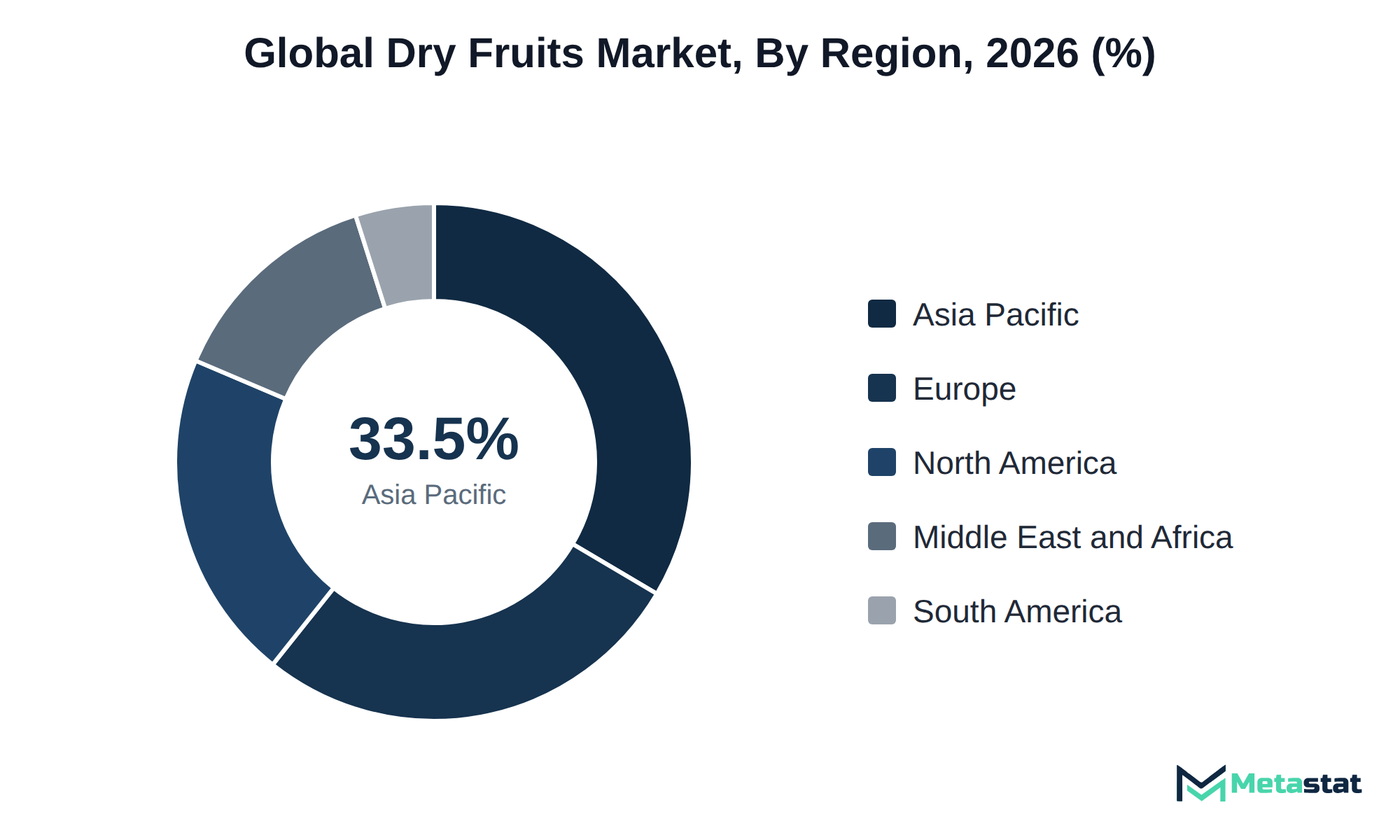
Geographic Lead: Asia Pacific holds the largest market share at 33.5%, supported by strong consumption patterns and production capabilities. North America follows with a significant share of 20.7% in 2025, with the US expected to lead in 2026.
What's Inside: The report provides a comprehensive analysis of the global dry fruits market, covering competitive landscape, market segmentation by product type, certification category, application, and sales channel, along with growth forecasts through 2033.
Emerging Opportunity: The Certified Organic segment is anticipated to grow at a robust CAGR of 8.8%, reaching USD 2.5 billion by 2033, driven by rising consumer demand for health-oriented and sustainably sourced products.
Choose Your License
Global Dry Fruits Market
The global Dry Fruits market was valued at USD 12.1 billion in 2025 and is projected to reach USD 19.3 billion by 2033, growing at a CAGR of 6.0% over the forecast period.
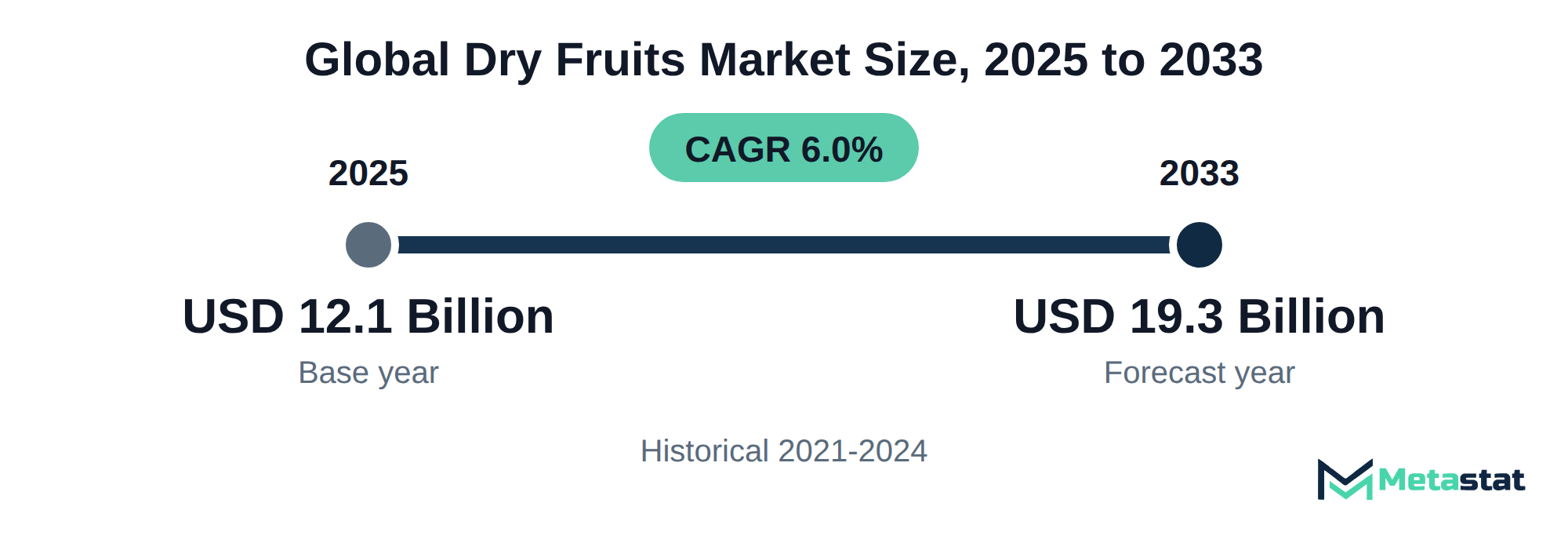
The Dry Fruits market encompasses a variety of dried fruits that serve as snacks, ingredients, and additives across multiple sectors. Buyers invest in this market due to increasing awareness of health benefits associated with dried fruits, including high nutritional value and convenience. This market caters to health-conscious consumers, food manufacturers, and the retail sector, driving significant demand for products like dates, raisins, and dried apricots.
Growth in the market is fueled by the rising preference for healthy snacking options and the expanding applications of dried fruits in food products. The segment of dates stands out with substantial value, reflecting consumer trends toward natural sweeteners and whole foods. Geographically, Asia Pacific leads with a share of 33.5%, indicating strong consumption patterns and production capabilities. North America holds 20.7% of the market in 2025, with the US leading in 2026.
Increased focus on organic and health-oriented food products is expanding the dry fruits market. The demand for certified organic dried fruits has been growing rapidly, driven by a shift in consumer purchasing behavior. This trend reflects a broader movement toward sustainable and health-focused food options, ensuring that the market evolves in line with consumer preferences.
The demand for dry fruits arises from their versatility in culinary applications, health benefits, and convenience. Buyers across various sectors, including food and beverage, retail, and hospitality, spend on these products to enhance flavor, nutrition, and product offerings. The dry fruits market serves consumers looking for nutritious options, contributing to the increasing adoption of healthier eating habits and the rise in snacking trends.
Rising consumer preference for healthy, convenient snacks and growing awareness of the health benefits of dried fruits drive growth in the dry fruits market. Among the product types, dates represent the segment with the highest value, poised for significant growth due to their popularity in both traditional and modern cuisines. Europe holds the largest share of the market at 27.2%, reflecting strong consumer demand and established distribution channels.
The increasing adoption of dried fruits in various applications, including direct consumption and bakery products, supports overall market expansion. The projected growth in the certified organic segment further indicates a shift toward health-conscious consumer choices.
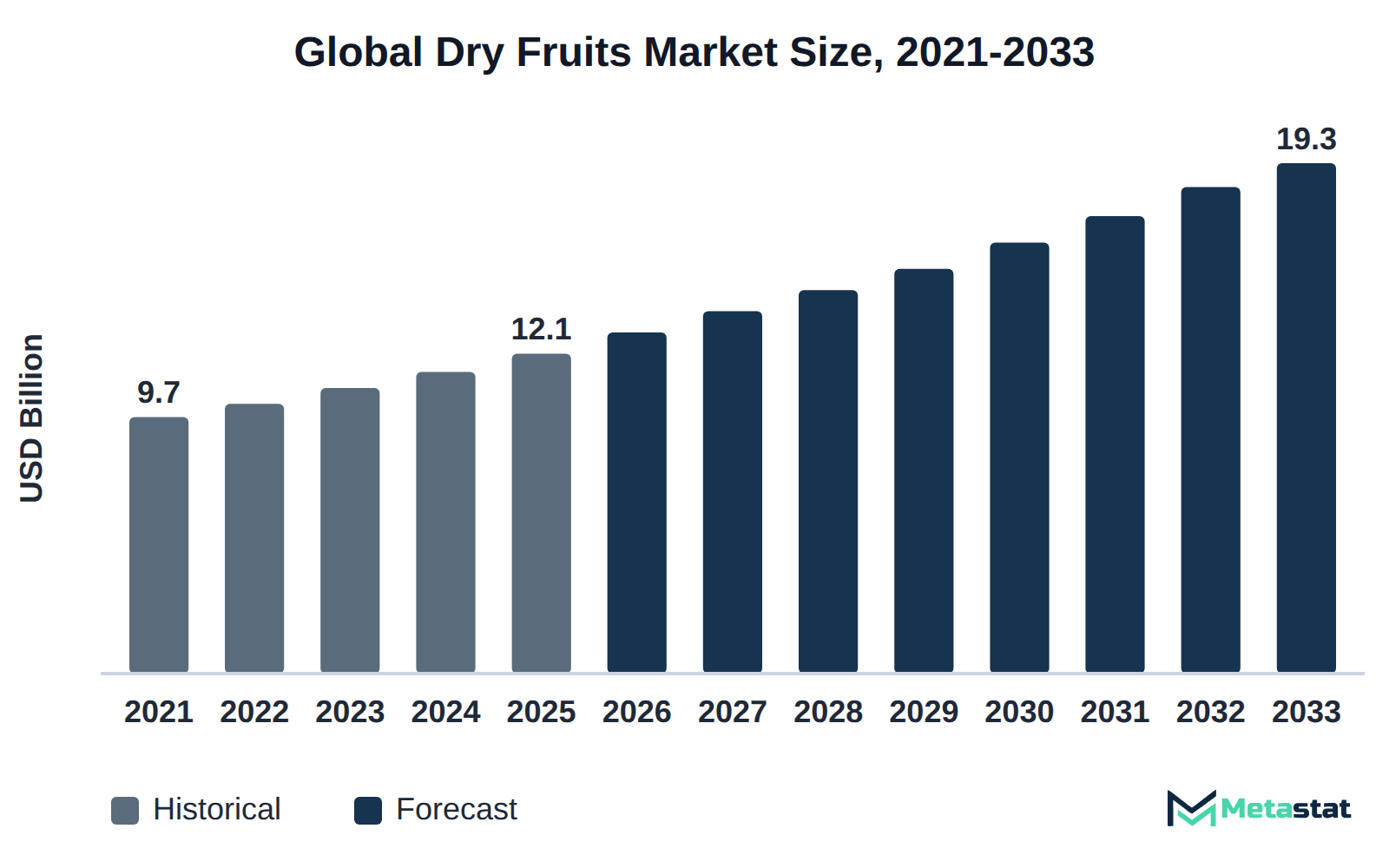
Date-based sweetening is gaining traction in the Dry Fruits market, particularly within snack bars and bakery products. This shift aligns with consumer preferences for healthier, natural ingredients, driving manufacturers to incorporate dates as a sugar substitute. The dates segment is projected to grow at a CAGR of 6.7%, reaching USD 7.5 billion by 2033. This growth reflects increasing consumer awareness regarding the health benefits associated with natural sweeteners.
Dates in snack bars and bakery items add flavor and nutritional value, which appeals to health-conscious buyers seeking alternatives to refined sugars. This trend is reinforced by rising demand for clean-label products, prompting food manufacturers to revise their ingredient sourcing strategies. By using dates, companies tap into the growing market for healthier snacks and improve product differentiation.
The adoption of date-based sweeteners in these applications positions companies to capitalize on changing consumer preferences. This focus on natural ingredients strengthens brand loyalty and creates competitive advantages in a dynamic market.
Freeze-dried fruit inclusions for cereals and confectionery represent a growing segment within the Dry Fruits market, driven by increasing consumer demand for innovative and healthier snacks. The purchasing behavior of buyers in this segment typically involves a focus on quality, sourcing, and pricing models that align with their production needs. Buyers often require consistent quality and flavor profiles, leading to long-term contracts with suppliers that ensure reliability and cost predictability.
In this market, the average pricing for freeze-dried fruits varies significantly based on certification categories. For instance, conventional freeze-dried fruits are projected to grow from USD 11.5 billion in 2026 to USD 16.8 billion by 2033. This growth reflects rising production capabilities and efficiency improvements among suppliers, allowing competitive pricing strategies that attract buyers in the bakery and confectionery sectors.
Contract models in this market typically include fixed pricing agreements, which help buyers manage their budgets effectively while securing necessary supplies. Suppliers benefit from establishing long-term contracts, providing them with stable revenue streams and enhancing their market position. Suppliers can differentiate through unique freeze-dried fruit offerings that cater to specific buyer preferences.
Raisin and apricot procurement in the Dry Fruits market relies heavily on crop variability. This variability directly impacts the availability and quality of these products, leading to fluctuating prices and supply levels. The segment for raisins and other dried grapes highlights the significance of these products within the market.
Environmental factors including temperature changes and precipitation patterns influence crop yields, which in turn affect procurement strategies. Buyers in the market account for these fluctuations when sourcing raisins and apricots, ensuring they have reliable suppliers who provide consistent quality throughout the year. Strong relationships with growers and real-time data on crop conditions become vital to navigating these challenges effectively.
Understanding the implications of crop variability allows buyers to develop more resilient supply chains. By securing contracts that factor in potential yield fluctuations, they mitigate risks associated with price volatility. This approach helps buyers maintain consistent offerings while adapting to the unpredictable nature of agricultural production.
Specific dried fruits excel in low-moisture snack formulations due to their textures, flavors, and nutritional profiles. Their natural sweetness enhances snack products, appealing to health-conscious consumers.
Raisins and other dried grapes follow closely, anticipated to reach USD 5.7 billion by 2033, with a CAGR of 5%. Rich in antioxidants and fiber, they create a satisfying snack option while catering to a growing trend favoring wholesome ingredients. Prunes (dried plums) and dried apricots contribute distinct flavors while supporting digestive health, making them valuable in low-moisture applications.
The dry fruits market recognizes the importance of incorporating these fruits in formulations, allowing manufacturers to meet consumer demands for nutritious, convenient snack options. By selecting fruits with proven market growth, producers enhance product lines while appealing to health-oriented consumers.
Increased health consciousness significantly influences purchasing decisions, leading consumers to favor dry fruits for their nutritional benefits. Health-focused individuals and families prioritize snacks that provide essential nutrients, vitamins, and minerals. The shift toward healthier eating habits has resulted in a higher volume of dry fruits sold across various sectors, including direct consumption and bakery applications. The market is projected to reach USD 19.3 billion by 2033, reflecting a compounded annual growth rate of 6%. The popularity of dry fruits as an alternative to sugary snacks highlights the changing preferences of consumers, with a focus on health and wellness driving demand forward. As this trend grows, suppliers adapt to rising expectations for quality and variety.
Growing interest in organic options increases demand for certified organic dry fruits. Consumers increasingly select products that align with their health goals, resulting in increased sales of organic offerings. This trend creates opportunities for growth in specific segments, contributing to the overall expansion of the market.
New drying technologies significantly impact production efficiency and product quality in the Dry Fruits market. Advanced techniques including vacuum and infrared drying facilitate moisture removal while preserving nutritional profiles and flavor. Improved equipment reduces energy consumption, leading to lower operational costs and increased competitiveness among suppliers. Enhanced drying methods enable the production of higher-quality dry fruits, appealing to health-conscious consumers and food manufacturers seeking premium ingredients.
The rising preference for organic options drives suppliers to adopt certified organic drying practices, further enhancing product appeal. Innovative food and beverage packaging solutions, including moisture-resistant materials, extend shelf life and maintain product integrity, influencing consumer purchasing behavior. This evolution in drying technologies supports market growth by meeting the increasing demand for high-quality, convenient, and nutrient-dense dry fruits.
Price sensitivity represents a significant restraint in the Dry Fruits market, particularly impacting price-conscious consumers in regions with limited disposable income. Higher retail prices for organic and specialty dried fruits create a barrier for budget-conscious buyers, resulting in smaller order sizes or delayed purchases. This situation restricts growth opportunities, especially in emerging markets where consumers prioritize affordability over product quality. The trend of inflation in agricultural inputs further compounds price challenges, leading to increased costs for manufacturers. As a result, demand growth slows, particularly for premium products. Enhanced consumer awareness regarding the nutritional benefits of dried fruits contrasts with the hesitation to invest in higher-priced options. This relationship between consumer preferences and price sensitivity influences overall market dynamics, shaping demand trends.
Profitability remains a significant challenge due to rising input costs in the Dry Fruits market. Increased prices for raw materials, including fruits, labor, and energy, pressure suppliers to maintain margins. Fluctuations in the availability of quality fruits due to climatic factors further increase production costs. Suppliers address these challenges by optimizing production processes and exploring cost-effective sourcing methods. Several companies invest in automation and technology to enhance efficiency and reduce reliance on manual labor, which mitigates labor cost impacts. Partnerships with local farmers and cooperative models help secure a steady supply of fresh fruits while stabilizing costs. These strategies help suppliers manage rising input expenses while continuing to meet growing consumer demand for dried fruit products. The shift toward sustainable practices influences operational choices, strengthening resilience in a competitive environment.
The Certified Organic segment in the Dry Fruits market offers a growth opportunity, with an expected CAGR of 8.8% through 2033. Increasing consumer awareness regarding health and sustainability drives demand for organic products, prompting buyers, especially in North America and Europe, to seek organic alternatives. This trend aligns with the overall shift towards healthier food options, resulting in an increased willingness to pay a premium for certified organic dried fruits. The expected market value for this segment reaches USD 2.5 billion by 2033, reflecting its strong growth potential. Retailers and producers focusing on organic certification capitalize on this trend, enhancing their product offerings and appealing to a broader customer base. Growth in this segment supports the overall expansion of the market, which is anticipated to reach USD 19.3 billion in the same year.
The Global Dry Fruits market is segmented based on Product Type, Certification Category, Application, and Sales Channel.
Dates represent a popular choice for direct consumption and ingredient inclusion in various culinary applications due to their natural sweetness and health benefits. Rising consumer awareness regarding nutritional value drives demand for dates, particularly among health-conscious buyers. This segment's growth rate surpasses others, including Raisins and Other Dried Grapes, which has a CAGR of 5%. Trends toward healthier snacking and natural sweeteners favor the dates segment, thus differentiating it from other dried fruits. Dates often command a higher price point compared to other dried fruits, reflecting their unique qualities and appeal in the market.
This segment finds extensive use in direct consumption, baking, and various culinary applications. Consumers favor raisins and other dried grapes for their natural sweetness and nutritional benefits. The segment distinguishes itself with moderate growth rates compared to others. Strong consumer preference for healthy snacking drives demand, with the segment's CAGR situated between those of Certified Organic and Dried Apricots segments. Competition among producers intensifies, pushing innovations in product offerings and packaging. Price volatility in raw materials affects the segment, leading to fluctuating retail prices. This dynamic encourages manufacturers to optimize supply chains to maintain competitive pricing and enhance product availability, supporting the growth trajectory in the market.
The prunes segment is expected to reach USD 1.4 billion by 2033. This segment finds applications primarily in direct consumption, where consumers seek nutritious snacking options, and in food products including bakery items and breakfast cereals. Growing health awareness drives demand, particularly among health-conscious consumers who prioritize fiber-rich snacks. Compared to other segments, prunes exhibit a unique positioning due to their established health benefits, including digestive health support. Despite slower growth relative to segments like Certified Organic, which has a projected CAGR of 8.8%, prunes maintain a steady consumer base owing to their affordability and versatility. The segment's growth reflects a broader trend within the market, emphasizing the importance of nutritional value in purchasing decisions.
Dried apricots segment is projected to grow at a CAGR of 5.1% during the forecast period. These fruits find extensive use in direct consumption and bakery items and serve as a nutritious ingredient in various applications. Health-conscious consumers, including those seeking natural snacks, drive the demand for dried apricots, favoring their sweet flavor and nutritional profile. The segment stands out within the product types due to its moderate price point and increasing popularity compared to other dried fruits. Factors including growing awareness of the health benefits associated with dried apricots and the convenience of using them in cooking and baking contribute to this segment's growth trajectory. The market reflects a notable shift toward incorporating dried apricots in various culinary applications, highlighting their versatility and appeal to diverse consumer groups.
Dried figs serve as a popular choice among health-conscious consumers seeking natural snacks due to their high fiber content and rich flavor. These fruits often find application in direct consumption, baked goods, and various culinary settings. The increasing focus on natural and organic food products drives interest in dried figs, differentiating them from other dried fruit segments. A notable trend within the market involves an expanding preference for health-oriented snacking options, promoting sustained growth in demand. Compared to other sub-segments, dried figs experience slower growth rates, influenced by factors including pricing pressures and competition from alternative snacks. Enhanced distribution through online retail channels facilitates greater accessibility, contributing to a steady rise in consumer awareness and preference. This dynamic reflects a shift toward healthier lifestyle choices, positioning dried figs favorably among consumers seeking nutritious snack alternatives.
Dried cranberries serve as a popular ingredient in various products, ranging from snacks to baked goods. Their appeal lies in their sweet-tart flavor and nutritional profile, attracting health-conscious consumers and culinary enthusiasts alike. The growing trend of incorporating dried fruits in breakfast cereals and snack formulations significantly influences demand for dried cranberries. The segment experiences growth driven by increasing consumer interest in natural ingredients and convenient snack options. Compared to other segments like dates and raisins, dried cranberries attract a different buyer demographic focused on innovative and health-oriented products. The unique taste profile and versatility differentiate this segment, contributing to its steady presence in the market.
Dried tropical fruits encompass a variety of fruits dehydrated for extended shelf life and enhanced flavor. Popular among health-conscious consumers and food manufacturers, these fruits find applications in snacks, breakfast cereals, and desserts. Dried mango is one example of a product in this category. The demand for dried tropical fruits is propelled by their nutritional benefits and convenient packaging, appealing particularly to busy individuals seeking healthy snack options. Existing competition in the market impacts pricing strategies, with consumers inclined toward higher-quality offerings. The growth trajectory for dried tropical fruits remains distinct from other segments, with unique buyer preferences shaping purchasing decisions. Unlike more established fruits, the pricing and sourcing of dried tropical fruits vary significantly, influenced by seasonal availability and import dynamics.
Others (Dried Apples, Dried Cherries, Dried Blueberries) encompass a variety of dried fruits used in various culinary applications. These fruits function as ingredients in snacks, baked goods, and breakfast cereals, appealing to health-conscious consumers seeking nutritious options. An increasing preference for natural and organic products drives demand within this segment. Unlike other dried fruits, this sub-segment typically offers a unique flavor profile and nutritional content, attracting specific consumer segments interested in diverse and innovative food products. With its distinct characteristics, this sub-segment stands out amid the broader product types, appealing to niche markets focused on gourmet and artisanal offerings. Overall, growth in the market is driven by evolving consumer tastes and the emphasis on health-oriented choices.
The conventional segment is valued at USD 11.5 billion in 2026 and is projected to reach USD 16.8 billion by 2033, at a CAGR of 5.6% during the forecast period. This segment caters primarily to mainstream consumers who prefer widely available dried fruit products. Demand increases due to affordability and accessibility, appealing to price-sensitive buyers, particularly in regions with varying income levels. The conventional segment differs from the Certified Organic sub-segment, which targets health-conscious consumers willing to pay a premium for organic options. While the organic segment experiences a robust CAGR of 8.8%, the growth of the conventional segment reflects a steady increase, driven by consistent consumer habits and established supply chains. The market for conventional dried fruits continues to thrive with significant contributions from various applications, including direct consumption and inclusion in baked goods and snacks.
Certified Organic segment is estimated to reach USD 2.5 billion by 2033, at a CAGR of 8.8% during the forecast period. This segment attracts health-conscious consumers who prioritize natural and sustainably sourced products. The increasing demand for organic food products drives growth in this segment, particularly among buyers seeking premium options that align with their dietary preferences. Compared to other segments, Certified Organic distinguishes itself through stronger growth potential and higher price points due to the production standards and certification processes involved. The focus on clean labels and transparency in sourcing further fuels consumer interest, pushing the market toward premium organic options. Online retail channels play a significant role in distributing these products, enabling consumers to access a wider variety of certified organic dry fruits. Increased health awareness and changing consumer behavior reinforce the segment's relevance.
Direct Consumption segment is valued at USD 7 billion in 2026 and is projected to reach USD 10.7 billion by 2033, at a CAGR of 6.1% during the forecast period. This segment primarily serves health-conscious consumers seeking convenient, nutritious snacks. The increasing trend of on-the-go eating significantly drives demand, with consumers prioritizing healthy options that fit into busy lifestyles. Unlike other segments, this one experiences faster growth, reflecting a shift toward direct consumption over ingredient use in processed foods. The emphasis on natural and wholesome snacks contributes to its appeal, positioning it distinctly in the market. The rise of e-commerce channels facilitates access to these products, enhancing sales opportunities.
Bakery and Confectionery segment is estimated to reach USD 3.8 billion by 2033, at a CAGR of 5.1% during the forecast period. This segment finds application in various baked goods, snacks, and confectionery products, appealing to both manufacturers and consumers seeking high-quality ingredients. The rising demand for natural and nutritious ingredients drives growth in this segment, particularly among health-conscious consumers. Unlike the Direct Consumption sub-segment, which emphasizes individual purchases, Bakery and Confectionery focuses on larger-scale applications, attracting food manufacturers and bakeries. The need for innovative flavors and healthier options in baked goods continuously influences purchasing trends, ensuring the Bakery and Confectionery segment remains competitive. This segment experiences steady growth, reflecting a balance between consumer preferences and market dynamics, contrasting with the Certified Organic sub-segment, which exhibits a higher CAGR due to its specialized appeal.
Breakfast Cereals and Snack Bars segment is expected to reach USD 2.7 billion by 2033. This segment functions as a key ingredient in various breakfast products and snack options, appealing to health-conscious consumers and those seeking convenient meal solutions. Growing consumer awareness regarding the nutritional benefits of dry fruits drives demand in this segment, while increasing preferences for on-the-go snack options further enhance its market potential. The market for this segment experiences a compound annual growth rate (CAGR) of 6.1%. Compared to other application segments, Breakfast Cereals and Snack Bars stand out due to higher growth prospects and increasing integration into health-oriented diets. This growth aligns with a broader trend among consumers prioritizing healthier snack alternatives, positioning this segment favorably within the market.
Dairy and Frozen Desserts segment is projected to grow at a CAGR of 5.7% during the forecast period. This segment includes dried fruits used in ice creams, yogurts, and other frozen delicacies, appealing to consumers seeking healthy and indulgent desserts. Increased health awareness among consumers drives demand, owing to these products offering nutritional benefits alongside great taste. Unlike Bakery and Confectionery, which focuses more on baked goods, this segment emphasizes frozen applications, attracting a different buyer demographic. The demand for innovative flavors and natural ingredients further fuels growth, with manufacturers exploring new combinations to satisfy evolving consumer preferences. The Dairy and Frozen Desserts segment contributes to overall growth in the Dry Fruits market.
Others (Beverages, Sauces, Prepared Meals) serve various culinary purposes, enhancing flavor profiles and nutritional value in diverse recipes. Consumers increasingly incorporate dry fruits into beverages and sauces, driven by rising interest in healthy eating and natural ingredients. This segment attracts food manufacturers and home cooks seeking convenient, nutritious options. Compared to other segments, this sub-segment experiences slower growth due to the specific application niche it occupies. The reliance on culinary creativity and trends influences demand, distinguishing it from segments like Direct Consumption, which sees more consistent demand. Overall, the growth dynamics in this segment reflect changing consumer preferences and innovation in product formulations.
Supermarkets and Hypermarkets segment is valued at USD 4 billion in 2026 and is projected to reach USD 5.8 billion by 2033, at a CAGR of 5.5% during the forecast period. This channel is central to retailing dry fruits, serving health-conscious individuals and busy families seeking convenient snack options. The increasing demand for ready-to-eat and nutritious products significantly drives this segment. Compared to other sales channels, including Online Retail, which targets a different demographic, Supermarkets and Hypermarkets provide immediate accessibility and a wide range of product choices. The emphasis on in-store promotions and bulk purchasing options enhances consumer engagement, further distinguishing this segment from its counterparts. Lifestyle changes favoring convenience support sustained growth in the market through 2033.
Specialty, Grocery and Convenience Stores segment is estimated to reach USD 3.8 billion by 2033, at a CAGR of 4.9% during the forecast period. This segment caters to consumers seeking easy access to dry fruits for snacking, baking, or cooking. Increasing consumer interest in healthy eating habits drives demand within this channel, with more shoppers prioritizing nutrition in their food choices. Specialty stores often feature higher-priced, premium products, which contrasts with typical supermarket pricing. The growth trajectory of this segment is slower than that of the Direct Consumption segment, which experiences a CAGR of 6.1%. Online retail poses competition by providing convenient purchasing options; however, Specialty, Grocery and Convenience Stores maintain a significant presence, particularly in local markets where consumers prefer physical shopping experiences. The dry fruits market continues to evolve, influenced by shifting consumer preferences and retail dynamics.
The Online Retail segment is expected to reach USD 2.3 billion by 2033. This segment serves consumers seeking convenient and accessible purchasing options for dry fruits. The growing trend of online shopping drives demand, with consumers increasingly preferring the convenience of home delivery. Unlike traditional retail channels, the online platform offers a wider selection of products, often at competitive prices. The segment's projected CAGR of 6.3% reflects a strong growth trajectory, supported by changing consumer behaviors favoring e-commerce. Increased smartphone penetration and improved internet connectivity further enhance accessibility for buyers. The market's emphasis on direct sales compared to other channels contributes to its unique positioning, attracting tech-savvy shoppers seeking variety and convenience in their dry fruit purchases.
Direct Commercial Sales and Wholesale segment is projected to grow at a CAGR of 6.3% during the forecast period. This segment primarily serves businesses and retailers, providing bulk quantities of dry fruits for further distribution or resale. The growth in this segment is driven by increasing demand from food manufacturers and health food stores seeking to stock natural ingredients for their products. High-quality sourcing and competitive pricing play significant roles in attracting buyers in this segment. Compared to other sales channels, this segment features a more stable customer base focused on long-term relationships, which supports consistent sales volume. The segment stands out due to its lower margins relative to retail-focused channels, suggesting a different pricing strategy targeted at volume rather than high markups. The growth trajectory for the segment aligns with overall trends in the Dry Fruits market, reflecting robust demand for dried fruit products.
Others (Open-Air Markets, Institutional Retail) focus on the sale of dried fruits through informal venues like markets and specialized institutions. These channels serve diverse consumer bases, including local communities and institutions seeking bulk supplies for various purposes, including catering and food services. The segment experiences unique dynamics compared to traditional retail channels. Factors including fluctuating consumer preferences and the increasing popularity of natural and organic products drive demand in this segment. While growth rates vary, the segment typically features lower pricing structures than formal retail channels, appealing to cost-sensitive buyers. This accessibility influences purchasing decisions and shapes the competitive landscape, making it distinct from other segments. The Dry Fruits market benefits from expanding consumer interest in healthy snacking, supporting the sustainability of these channels.
Based on geography, the Global Dry Fruits market is divided into North America, Europe, Asia-Pacific, South America, Middle East, and Africa.
The North American market for dry fruits displays significant potential, driven by consumer preferences for healthy snacks and natural food products. The demand stems primarily from the United States, Canada, and Mexico, where the popularity of dried fruits as nutritious alternatives to traditional snacks continues to grow. By 2026, the market is projected to reach USD 12.9 billion, reflecting a growth trajectory. Regulatory support, including initiatives promoting the consumption of healthy food options, further stimulates market expansion. North America accounted for a 20.7% share of the global market in 2025. North America is projected to reach USD 3.8 billion by the end of 2033, indicating a favorable outlook for dry fruits in this region.
The European market demonstrates a substantial appetite for dry fruits, driven by diverse consumer preferences and an expanding health-conscious population. Countries like Germany, France, and the UK increasingly incorporate dry fruits into products targeting health and wellness. Regulatory frameworks promoting organic farming have boosted the demand for certified organic options, particularly in Germany and France. The market's projected share of 27.2% in 2025 indicates strong regional growth potential. Increasing consumer interest in convenient snacking options fuels demand in the bakery and confectionery sectors, alongside direct consumption trends. The market benefits from established retail channels, with supermarkets and hypermarkets playing a crucial role in distribution, ensuring availability and accessibility for consumers. Rising awareness of the health benefits associated with dry fruits contributes to sustained growth in this region.
Asia Pacific ranks a significant region in the Dry Fruits market, accounting for 33.5% of the global share in 2025. Rising health awareness among consumers fuels demand for dry fruits, particularly in countries like China and India. The growing trend of healthy snacking and the incorporation of dry fruits in various culinary applications contribute to market expansion. The region benefits from an expansive agricultural base, enabling high production volumes. Increasing urbanization and the rise of modern retail formats support access to dry fruits across different demographics. The market experiences growth driven by shifting consumer preferences toward healthier food options.
Brazil and Argentina represent significant markets for dry fruits, driven by increasing consumer demand for healthy snacks and natural food options. Growing health awareness among consumers supports the shift toward dried fruits as nutritious alternatives. The region's agricultural capabilities, particularly in fruit production, contribute to local supply, enhancing market accessibility. The market share for South America stands at 4.9% in 2025. Investment in food processing infrastructure stimulates growth in the dry fruits market, enabling better distribution and product availability. Retail channels including supermarkets and specialty stores play crucial roles in meeting consumer preferences, while online retail continues to expand its presence. This dynamic environment positions South America as a noteworthy contributor to the global dry fruits market.
The Middle East and Africa region holds a notable share of 13.7% in the Dry Fruits market for 2025. Demand is driven primarily by health-conscious consumers seeking nutritious snack options across countries including Saudi Arabia, UAE, and South Africa. Rising awareness of the health benefits associated with dry fruits boosts consumption, particularly in the direct consumption and bakery segments. Infrastructure development enhances distribution channels, facilitating better access to these products. A growing trend in organic food consumption contributes to the expansion of the certified organic segment within the market. Continuous investments in local production capabilities reflect the region's commitment to meeting increasing consumer demands and preferences.
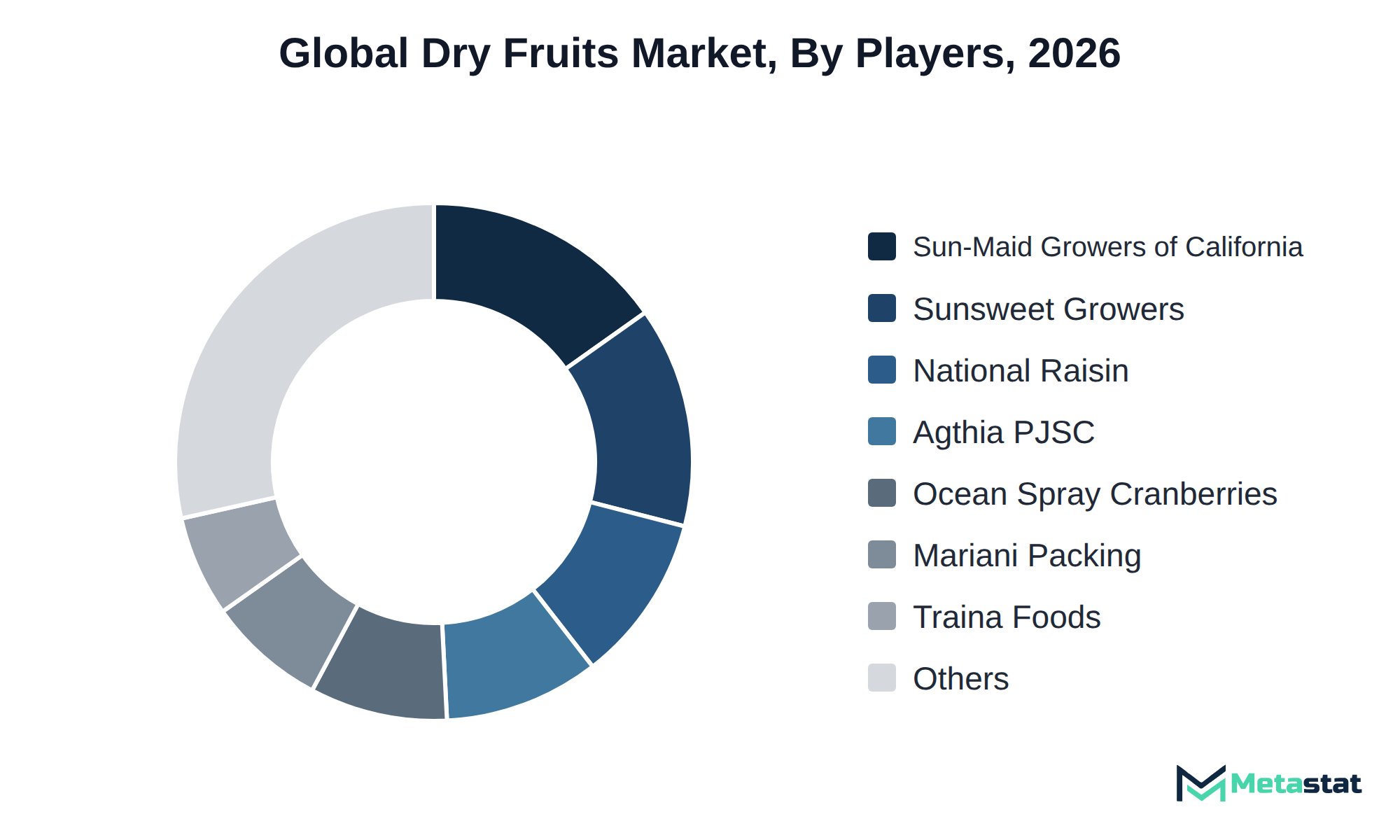
Companies in the Dry Fruits market employ diverse strategies to differentiate their offerings. Price, certification, product customization, and service levels influence buyer decisions significantly. For instance, Sun-Maid Growers of California focuses on a broad product range, emphasizing quality and flavor to maintain its competitive edge.
In contrast, Happilo International Pvt. Ltd. targets health-conscious consumers with an emphasis on organic certification and nutritional value. This strategic positioning appeals to buyers prioritizing health benefits in their purchasing decisions. Meanwhile, Ocean Spray Cranberries, Inc. leverages its reputation for quality and sustainability, attracting consumers interested in environmental impact and ethical sourcing.
The market divides by product type, certification, application, and sales channel, allowing companies to tailor their strategies. For instance, the focus on certified organic products is growing, driven by increasing consumer awareness regarding health and environmental sustainability. This segment is expected to see substantial growth, encouraging companies like Sunsweet Growers Inc. to enhance their organic offerings.
Sales channels affect competition, with online retail gaining traction. Companies including Graceland Fruit, Inc. adapt their strategies to maximize visibility and accessibility through digital platforms, catering to the evolving purchasing behavior of consumers.
The growth of the Dry Fruits market hinges on several key developments. First, an increase in the demand for Certified Organic products, projected to reach USD 2.5 billion by 2033, will attract health-conscious consumers. This trend, particularly strong in North America and Europe, drives producers to enhance their organic offerings. Second, significant growth in direct consumption, anticipated to rise from USD 7 billion in 2026 to USD 10.7 billion by 2033, reflects changing consumer preferences towards convenient and nutritious snacks. Regions including Asia Pacific, with its expanding middle class, will play a critical role in this shift. However, potential risks exist, including supply chain disruptions that could affect production and distribution. These challenges hinder the market's ability to reach its projected USD 19.3 billion, particularly in emerging markets where infrastructure may not be fully developed.
By Product Type: Dates, Raisins and Other Dried Grapes, Prunes, Dried Apricots, Dried Figs, Dried Cranberries, Dried Tropical Fruits, Others (Dried Apples, Dried Cherries, Dried Blueberries)
By Certification Category: Conventional, Certified Organic
By Application: Direct Consumption, Bakery and Confectionery, Breakfast Cereals and Snack Bars, Dairy and Frozen Desserts, Others (Beverages, Sauces, Prepared Meals)
By Sales Channel: Supermarkets and Hypermarkets, Specialty, Grocery and Convenience Stores, Online Retail, Direct Commercial Sales and Wholesale, Others (Open-Air Markets, Institutional Retail)
The report strategically identifies and profiles the key market players and analyses their core competencies in each sub-segment of the Dry Fruits market.
|
Report Attributes |
Details |
|
Study Period |
2021-2033 |
|
Base Year |
2025 |
|
Estimated Year |
2026 |
|
Forecast Period |
2026-2033 |
|
Historical Period |
2021-2025 |
|
Growth Rate |
CAGR 6.0% from 2026 to 2033 |
|
Revenue Unit |
USD billion |
|
Segmentation |
By Product Type, Certification Category, Application, Sales Channel, and Region |
|
By Region |
North America (By Product Type, Certification Category, Application, Sales Channel, and Country)
|
|
Europe (By Product Type, Certification Category, Application, Sales Channel, and Country)
|
|
|
Asia Pacific (By Product Type, Certification Category, Application, Sales Channel, and Country)
|
|
|
South America (By Product Type, Certification Category, Application, Sales Channel, and Country)
|
|
|
Middle East and Africa (By Product Type, Certification Category, Application, Sales Channel, and Country)
|
Find answers to common questions about this report
The Dry Fruits market size was valued at USD 12.1 billion in 2025.
The market is projected to grow at a CAGR of 6.0% during the forecast period from 2026 to 2033.
The North America Dry Fruits market size is estimated to reach USD 3.8 billion by 2033.
The leading segment in the Dry Fruits market is Dates, with a projected value of USD 7.5 billion by 2033. This segment outpaces others in growth, reflecting a compound annual growth rate of 6.7%.
Increased health consciousness significantly influences purchasing decisions, leading consumers to favor dry fruits for their nutritional benefits. The rising preference for organic options drives suppliers to adopt certified organic drying practices, further enhancing product appeal.
Price sensitivity represents a significant restraint on Dry Fruits market growth, particularly affecting price-conscious consumers in regions with limited disposable income. Rising input costs, including raw materials, labor, and energy, challenge profitability and pressure suppliers to maintain margins.
The Dry Fruits market is estimated to reach a valuation of USD 19.3 billion by 2033.
Key players operating in the Dry Fruits market include Sun-Maid Growers of California, Sunsweet Growers Inc., National Raisin Company, Agthia Group PJSC, Ocean Spray Cranberries, Inc., Mariani Packing Company, Inc., and Happilo International Pvt. Ltd.
The Certified Organic segment is expected to reach USD 2.5 billion by 2033, reflecting a compound annual growth rate of 8.8 percent.
Increasing consumer awareness regarding health and sustainability drives demand for organic dried fruits, particularly in North America and Europe.
The analysts below cover Food and Beverages research at Metastat Insights.
LEAD ANALYST
Utkarsh Khirodkar is a Lead Market Research Analyst at MetaStat Insight, specializing in market intelligence, technology sector assessments, and competitive strategy.

LEAD PRINCIPAL ANALYST, PHARMA AND HEALTHCARE
Food and Beverages · Healthcare · Healthcare IT · Medical Devices
Ajay Devgire is the Lead Healthcare Analyst at MetaStat Insight, leading strategic research and market intelligence initiatives across the global healthcare domain.

SENIOR RESEARCH ANALYST
Biotechnology · Food and Beverages · Medical Devices · Packaging
Snehal Pasalkar is a Research Analyst at MetaStat Insight, operating at the intersection of life sciences research, competitive strategy, and market intelligence.
In the biological seed treatment space, registration timelines vary drastically between the European Union, Brazil, and North America. The MetaStat Insight research handled these cross-border regulatory barriers with genuine nuance, mapping commercialization pathways alongside historical field adoption rates. The segmentation between microbial strains and biochemical active ingredients was particularly well structured.
Our team was tracking whether regional recycling infrastructure could realistically absorb the growing volume of lithium iron phosphate batteries over the next decade. The report did a solid job separating announced hydrometallurgical plant capacity from active, permitted operational throughput. That distinction made the feedstock availability projections and regional recovery rate models far more credible than standard commercial overviews.
Tracking capacity expansion in single-use bioprocessing requires dependable data on raw material availability and cleanroom-grade polymer supply chains. The competitive landscape chapter gave a grounded evaluation of secondary component suppliers across North America and Asia-Pacific rather than simply reprinting press releases. Having that level of supplier benchmarking helped clarify dual-sourcing considerations for our clinical pipeline planning.
Explore related market intelligence reports worth reading alongside this one.