
LEAD ANALYST
Utkarsh Khirodkar is a Lead Market Research Analyst at MetaStat Insight, specializing in market intelligence, technology sector assessments, and competitive strategy.

Global Food and Beverage Consumer Packaging Market Size, Share, By Packaging Material (Plastic, Paper and Paperboard, Glass, Metal, Others), By Packaging Format (Bottles and Jars, Cans and Canisters, Liquid Packaging Cartons, Folding Cartons, Bags and Pouches, Cups and Tubs, Trays and Bowls, Films and Wraps, Others), By Application (Dairy Products and Dairy-Based Beverages, Non-Dairy Non-Alcoholic Beverages, Alcoholic Beverages, Meat, Poultry and Seafood, Bakery Products, Confectionery and Snacks, Fruits and Vegetables, Ready Meals and Prepared Foods, Sauces, Dressings and Condiments, Others), By Packaging Type (Rigid Packaging, Flexible Packaging, Semi-Rigid Packaging), Industry Analysis, Growth, Trends, and Forecast, 2026-2033
Report ID
MSI-5579
Published
October, 2026
Pages
309 Pages
Format
Historical
Base year
Forecast
Forecast period
Report Details
Market Valuation: Valued at $607.9 Billion in 2025, projected to reach $858.2 Billion by 2033 at a 4.4% CAGR.
Dominant Segment: Plastic packaging leads the market, driven by its widespread use across various applications, especially in beverages and dairy products. This segment's growth is fueled by increasing consumer demand for convenience-oriented packaging solutions.
Geographic Lead: Asia Pacific commands the largest market share at 41% in 2025, attributed to robust consumer demand and a preference for diverse packaging solutions. North America follows, with the US expected to lead in 2026.
What's Inside: The report provides a comprehensive analysis of the Food and Beverage Consumer Packaging market, covering various packaging materials, formats, and applications. It includes competitive coverage, industry trends, and forecasts from 2026 to 2033.
Growth in Paper and Paperboard Packaging: The paper and paperboard segment is projected to reach USD 284.2 billion by 2033, reflecting a CAGR of 5.4%. This growth is driven by increasing consumer preference for sustainable packaging solutions.
Single-Serve and Resealable Formats: The demand for single-serve and resealable formats is reshaping consumer packaging, particularly in the Dairy Products and Dairy-Based Beverages segment, which is expected to grow significantly by 2033.
Choose Your License
Global Food and Beverage Consumer Packaging Market
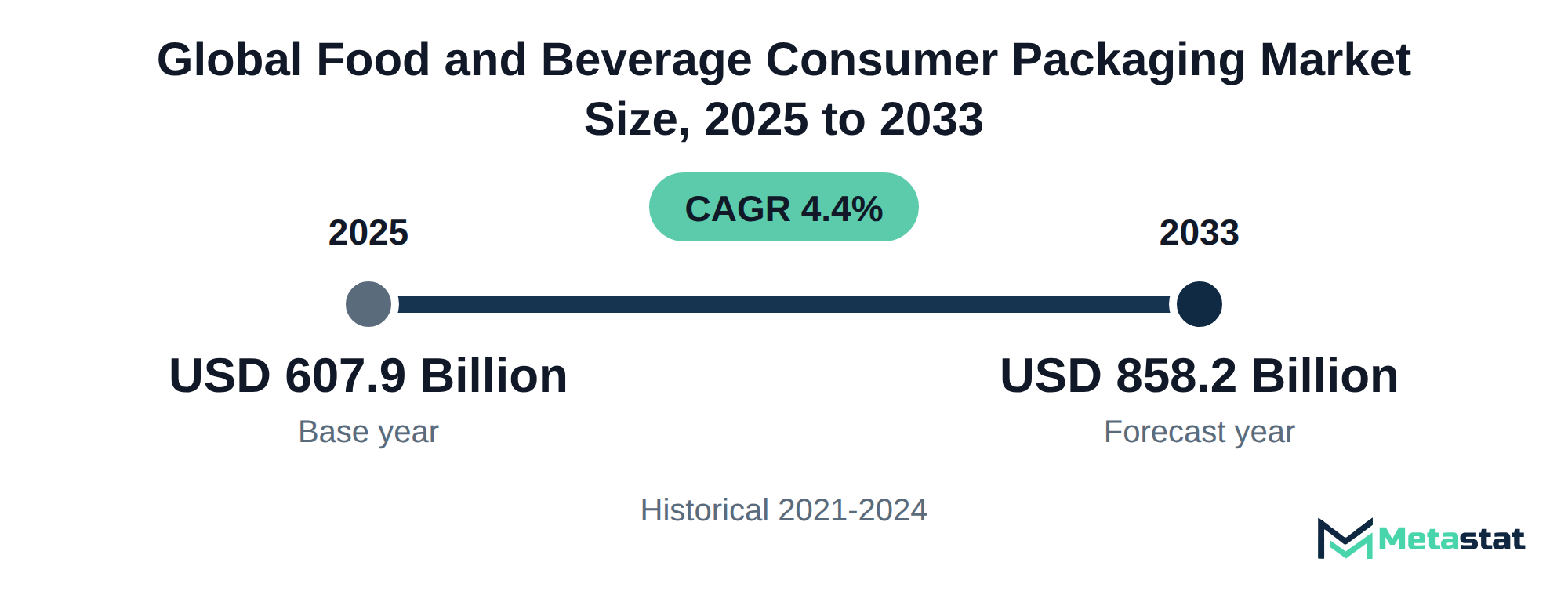
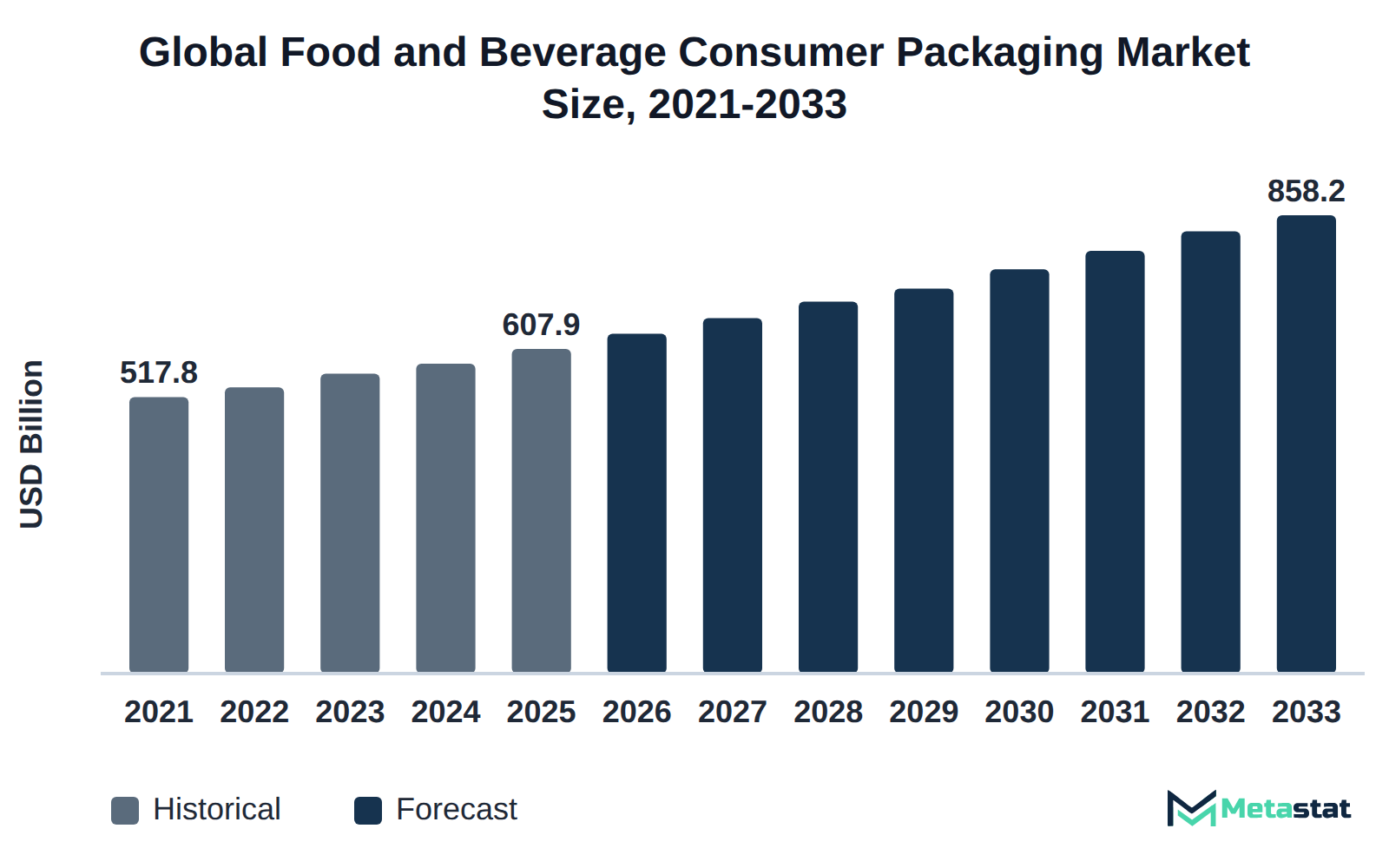
The global Food and Beverage Consumer Packaging market was valued at USD 607.9 billion in 2025 and is projected to reach USD 858.2 billion by 2033, growing at a CAGR of 4.4% over the forecast period.
The Food and Beverage Consumer Packaging market covers materials, formats, and applications tailored to the changing demands of consumers and businesses. Buyers invest in this market to enhance product preservation, ensure safety, and improve brand appeal. The growing emphasis on sustainability and convenience drives the adoption of innovative packaging solutions, prompting manufacturers to explore new materials and technologies that align with consumer preferences.
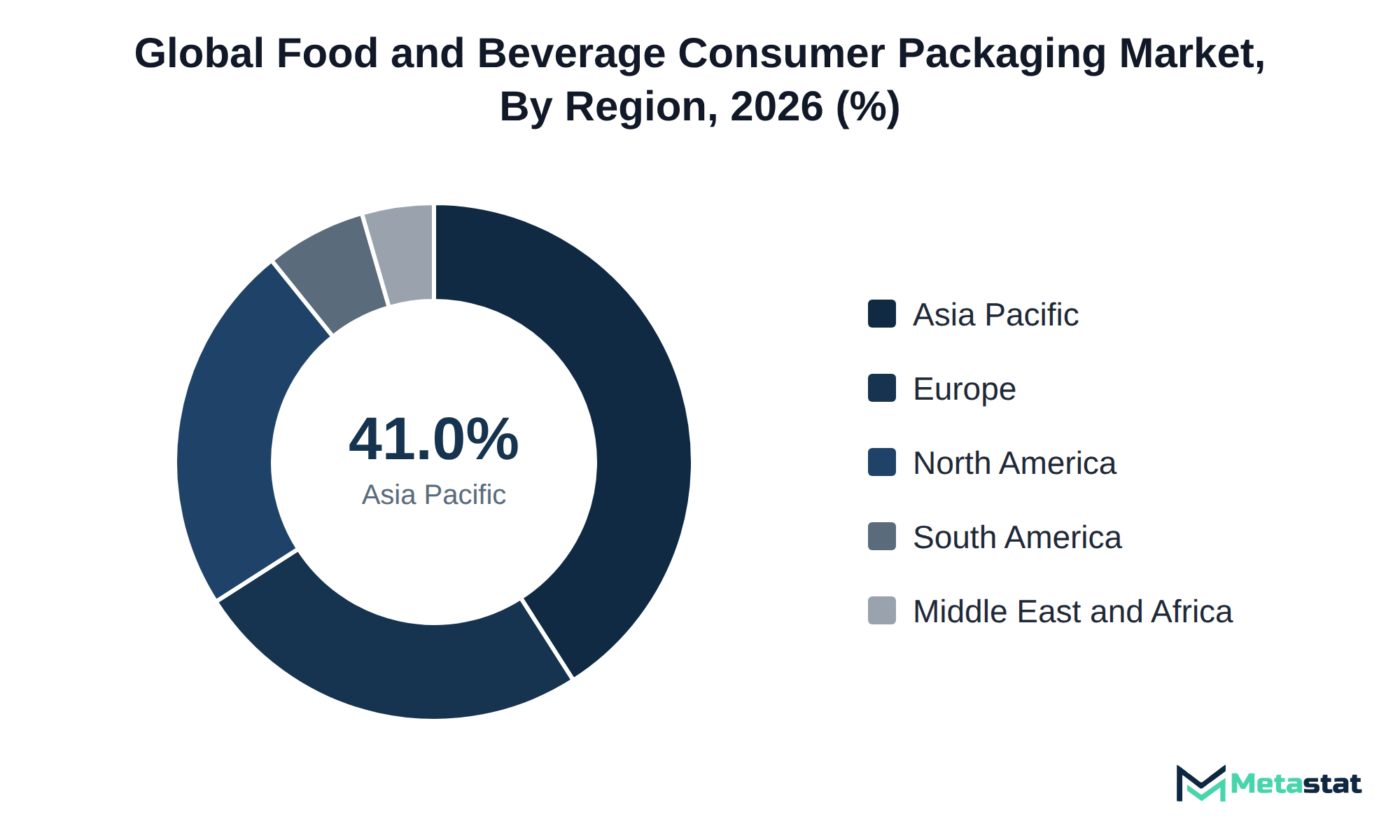
Growth in the market is fueled by several factors, with the increasing demand for packaged food and beverages being a significant driver. Among the various segments, plastic packaging represents the most substantial value, reflecting its widespread use across different applications. In terms of regional distribution, Asia Pacific commands the largest market share, accounting for 41% of the total. North America holds 23.3% of the market in 2025, with the US leading in 2026.
The expansion of e-commerce and the shift towards ready-to-eat meals have further accelerated the growth of the Food and Beverage Consumer Packaging market. Consumers increasingly seek convenience and portability, influencing manufacturers to adapt their packaging strategies. Efficient packaging solutions that suit the modern consumer's lifestyle are therefore increasingly important.
The Food and Beverage Consumer Packaging market features various packaging materials, formats, and applications tailored to consumer preferences. Buyers invest in this market due to the growing demand for convenience, sustainability, and product protection. The need for innovative packaging solutions drives spending, with companies striving to enhance their brand image and meet regulatory standards while catering to environmentally-conscious consumers.
Growth in the market is propelled by the increasing preference for sustainable packaging options, with paper and paperboard segments representing the highest value. Asia Pacific stands out with the largest market share, accounting for 41% in 2025. This regional strength reflects robust consumer demand and a preference for diverse packaging solutions.
Research and development investment advances packaging technologies and materials. The continuous evolution toward lightweight and eco-friendly packaging aligns with consumer trends and regulatory requirements, creating a competitive landscape. The Food and Beverage Consumer Packaging market is set to experience sustained growth while companies adapt to shifting consumer preferences and regulatory pressures.
Aseptic cartons represent a significant advancement in the Food and Beverage Consumer Packaging market, particularly in the dairy and beverage sectors. These cartons provide extended shelf life without the need for preservatives, aligning with consumer demand for healthier options. The shift towards aseptic packaging reflects a broader industry trend towards sustainability and safety, leading to heightened interest among producers and consumers alike.
The aseptic carton segment is projected to grow due to its ability to enhance product quality while reducing food waste. The market for dairy products and dairy-based beverages is expected to reach USD 144.8 billion by 2033, highlighting the increasing adoption of innovative packaging solutions. This growth is attributed to rising preferences for on-the-go consumption and the need for products that maintain freshness over prolonged periods.
Barrier innovations within aseptic cartons further enhance product integrity, ensuring that sensitive beverages are protected from external contaminants. This technology equips brands with a competitive edge, enabling them to meet stringent regulatory requirements while appealing to health-conscious consumers. In the Food and Beverage Consumer Packaging market, investment in research and development increasingly targets advanced barrier materials that improve product preservation.
Increasing regulations on recycled-content requirements are reshaping the Food and Beverage Consumer Packaging market. Governments worldwide focus on sustainability, pushing for higher recycled content in packaging materials. For instance, Europe has set targets of at least 30% recycled content in plastic packaging by 2030. This shift has prompted manufacturers to explore alternative materials and improve recycling technologies.
Plastic packaging, projected to grow from USD 253.7 billion in 2026 to USD 324.7 billion by 2033, represents a significant portion of this industry's transformation. The anticipated compound annual growth rate of 3.6% illustrates strong market potential, driven by rising consumer awareness of environmental issues. Brands increasingly emphasize sustainable practices to enhance their image, leading to higher demand for packaging solutions that incorporate recycled materials.
This trend toward sustainable packaging significantly influences procurement strategies. Buyers prioritize suppliers that demonstrate compliance with recycled-content regulations and illustrate their commitment to sustainability. Close collaboration between brands and packaging suppliers is essential to adapt to these changes. Ultimately, these trends create new commercial opportunities, driving revenue growth for companies that adapt to the changing requirements in the Food and Beverage Consumer Packaging market.
The demand for single-serve and resealable formats significantly influences the Food and Beverage Consumer Packaging market. These formats cater to the growing preference for convenience among consumers, particularly in busy lifestyles. A notable trend is the increased consumption of single-serve products, particularly within the Dairy Products and Dairy-Based Beverages segment. This segment is expected to reach USD 144.8 billion by 2033, growing from USD 105.4 billion in 2026. The appeal of these formats lies in their ability to offer portion control, ease of use, and reduced waste, addressing the needs of busy individuals and families.
Retailers and manufacturers increasingly recognize the commercial benefits of adopting single-serve and resealable packaging solutions. This shift meets consumer demand for convenience and enhances brand visibility in crowded retail spaces. The trend toward these formats positions companies to capitalize on emerging consumption patterns, ultimately driving revenue growth. The Food and Beverage Consumer Packaging market is expected to continue evolving, focusing on innovative packaging solutions that enhance user experience and align with modern consumer habits.
Cartons, bottles, and pouches present distinct advantages and challenges when evaluating cost, shelf life, and recyclability in the Food and Beverage Consumer Packaging market. Each packaging format exhibits unique characteristics that influence purchasing decisions across various applications.
Cost is a significant factor in determining which packaging format to adopt. For instance, pouches often incur lower material and production costs compared to glass bottles. This cost efficiency appeals particularly to producers of non-dairy non-alcoholic beverages, which are expected to achieve a market value of USD 159.5 billion by 2033. In contrast, cartons incur moderate costs, depending on their material composition and design. Understanding the cost implications aids businesses in optimizing operational budgets and pricing strategies.
Shelf life significantly impacts the choice between cartons, bottles, and pouches. Glass bottles generally provide superior shelf life due to their impermeability and resistance to oxygen, making them ideal for preserving the freshness of beverages. In contrast, pouches tend to offer shorter shelf life, which limits their application in products requiring extended freshness. Dairy products and dairy-based beverages, for instance, are projected to increase from USD 105.4 billion in 2026 to USD 144.8 billion in 2033, where longer shelf life becomes a critical factor.
Recyclability remains a key consideration for environmentally conscious consumers and companies alike. Cartons, typically made from paper and plastic composites, have made strides in recyclability, although processing is complex. Bottles, especially those made of glass, hold an advantage in terms of recyclability. Pouches, while lightweight and efficient, face challenges in recycling due to mixed materials. Companies in the Food and Beverage Consumer Packaging market increasingly consider these factors to align with sustainability goals, thereby influencing consumer preference and brand loyalty.
Changes in consumer preferences toward environmentally friendly options drive increased expenditure in the market. Buyers from various sectors, including food and beverage manufacturers, prioritize sustainable packaging solutions driven by heightened awareness of environmental issues. This shift has resulted in a significant increase in demand for packaging materials that reduce environmental impact, including biodegradable plastics and recyclable paper products. The rising emphasis on sustainable practices correlates with a compound annual growth rate of 5.4% for paper and paperboard packaging by 2033. This growth indicates that consumers are willing to pay a premium for packaging that aligns with their values, affecting overall volume and pricing strategies in the market.
Growing preference for convenience products
Consumer behavior trends indicate a shift toward ready-to-eat and on-the-go meal solutions, stimulating demand in the market. Increased urbanization and busy lifestyles drive the search for convenient food options, leading to higher sales of single-serve and portable packaging formats. This trend reflects a compound annual growth rate of 4.6% for dairy products and dairy-based beverages packaging by 2033. Consequently, manufacturers adapt their strategies to enhance product availability in convenient formats, facilitating greater consumer access and improving sales performance.
A significant trend influencing the Food and Beverage Consumer Packaging market involves the adoption of sustainable materials, particularly bioplastics and recycled substances. Innovations in material science have led to the development of alternatives that reduce reliance on traditional plastics, driven by consumer expectations for eco-friendly products. This shift attracts manufacturers aiming to enhance brand loyalty and meet regulatory pressures regarding sustainability.
Several industries, including dairy and beverages, actively pursue these sustainable options to align with evolving consumer behavior. Investments in research and development focus on improving the functionality and performance of these materials while minimizing environmental impact. This approach not only addresses consumer demand but opens avenues for competitive differentiation within the market. Sustainable materials support growth through enhanced product appeal and potential cost savings in waste management.
Rising costs associated with packaging materials significantly impact buyer behavior in the Food and Beverage Consumer Packaging market. Many buyers, particularly in the non-dairy non-alcoholic beverages segment, find themselves constrained by budgets, leading to slower adoption of innovative packaging solutions. Increased prices for essential materials, including plastics and paperboard, contribute to smaller order quantities and delayed replacement of existing packaging. This economic strain particularly affects smaller producers and start-ups, hindering their ability to invest in advanced packaging technologies that enhance product appeal and sustainability. Such limitations on expenditure result in reduced competitiveness in the market, ultimately affecting growth potential and market penetration across various application segments. Buyers frequently prioritize cost over innovation, creating a ripple effect throughout the supply chain and impacting overall market dynamics.
Price fluctuations in raw materials significantly challenge suppliers in the market. Rising costs of inputs, particularly plastics and paper, squeeze profit margins, prompting suppliers to seek cost-efficient alternatives and optimize production processes. Heightened competition forces players to prioritize cost management while maintaining product quality. In response, suppliers increasingly explore innovative materials and technologies to enhance efficiency and sustainability. Various manufacturers collaborate with R&D teams to develop advanced packaging solutions that use fewer resources while maintaining functionality and appeal. This strategy aligns with consumer expectations for more sustainable products while addressing profitability concerns. Suppliers aiming to sustain competitiveness in the food and beverage consumer packaging market must keep adapting to these cost pressures.
Paper and paperboard packaging emerges as a notable growth segment within the Food and Beverage Consumer Packaging market, driven by increasing consumer preference for sustainable options. This segment is projected to reach USD 284.2 billion by 2033, reflecting a compound annual growth rate (CAGR) of 5.4%. The shift toward environmentally friendly materials aligns with brand strategies focused on reducing carbon footprints and enhancing product appeal. Buyers across the food and beverage sectors increasingly seek alternatives featuring recyclable and biodegradable properties, resulting in heightened demand for paper and paperboard solutions.
This trend particularly influences manufacturers of dairy products and non-dairy beverages, where packaging maintains product integrity and extends shelf life. The paper and paperboard segment's growth supports sustainability goals and presents significant opportunities for innovation in packaging design and functionality. Companies investing in this area capture a larger market share while meeting evolving consumer expectations.
The Global Food and Beverage Consumer Packaging market is segmented based on Packaging Material, Packaging Format, Application, and Packaging Type.
Plastic segment is valued at USD 253.7 billion in 2026 and is projected to reach USD 324.7 billion by 2033, at a CAGR of 3.6% during the forecast period. This material finds extensive use in packaging for beverages, dairy products, and a range of food items due to its lightweight nature and durability. The segment benefits from increasing consumer demand for convenience-oriented packaging solutions that prioritize easy handling and storage. Growth in this segment is propelled by advancements in manufacturing technology and the ongoing shift towards sustainable practices, including the development of recyclable and biodegradable plastic options. In comparison to other materials, including paper and paperboard, which exhibit a higher CAGR of 5.4%, plastic maintains a steady growth trajectory, driven by its flexibility and cost-effectiveness in diverse applications. Plastic's lightweight nature, durability, flexibility, and cost-effectiveness help it compete against other materials in the market.
This segment finds extensive usage in packaging for various dairy products, non-dairy beverages, and other food items, catering to manufacturers seeking sustainable and recyclable options. Increased consumer demand for eco-friendly packaging drives growth in this segment, setting it apart from other packaging materials like plastic, which experiences slower growth at a CAGR of 3.6%. The affordability and versatility of paper and paperboard packaging appeal to a wide range of buyers, including small-scale producers and large beverage corporations. The market adapts to shifting preferences, emphasizing sustainable materials, which enhances its competitive position. The segment's alignment with sustainability trends boosts its market share among environmentally conscious consumers.
Glass packaging is expected to reach USD 115.5 billion by 2033. This segment serves various applications, including beverages, food items, and pharmaceuticals, appealing to manufacturers prioritizing product integrity and consumer safety. The demand for glass packaging draws strength from its recyclability and perceived premium quality, attracting eco-conscious consumers. The glass segment experiences a growth rate of 4.7%, positioning it favorably compared to other materials including plastic and paper, especially considering the latter segments' higher growth rates. Key drivers include environmental regulations and consumer preferences favoring sustainable options, boosting demand for glass over less eco-friendly alternatives. Consequently, the glass segment's emphasis on quality and sustainability contributes to its ongoing relevance despite the competitive landscape of packaging materials.
Metal packaging is projected to grow at a CAGR of 4.7% during the forecast period. This segment serves various applications, including beverages and food products, catering to industries that prioritize durability and recyclability. The demand for metal packaging is driven by its ability to provide superior protection against contamination and light exposure, making it a preferred choice among manufacturers. Unlike other materials, metal offers a longer shelf life and maintains product integrity, appealing particularly to buyers in the beverage sector. Pricing dynamics play a role; metal packaging often commands a premium compared to alternatives including plastic and paper. The market experiences robust competition, with metal’s unique qualities driving ongoing innovation and adaptation to consumer trends.
Molded natural fibers and cellulose-based films represent innovative eco-friendly materials, gaining traction within the Food and Beverage Consumer Packaging market. These materials find applications in sustainable packaging solutions, often employed by brands aiming to enhance environmental responsibility. Rising consumer awareness about sustainability significantly influences the growth of this segment, prompting companies to invest in greener packaging alternatives. Unlike conventional materials, molded natural fibers and cellulose-based films typically offer lower environmental impact, appealing to a segment of consumers that prioritizes eco-conscious choices. However, cost factors related to sourcing and production present challenges in achieving widespread adoption, impacting pricing strategies compared to more traditional materials like plastic. The market's continued shift toward sustainable practices positions this segment as a unique player, distinct from the more established packaging materials.
Bottles and Jars segment is valued at USD 155.2 billion in 2026 and is projected to reach USD 196.2 billion by 2033, at a CAGR of 3.4% during the forecast period. This segment primarily encompasses glass and plastic containers for various food and beverage applications, serving consumers and manufacturers in the industry. The need for convenience and portability drives demand, particularly in the non-dairy non-alcoholic beverages sector, which is projected to reach USD 159.5 billion by 2033, reflecting a CAGR of 5.2%. Bottles and jars exhibit slower growth compared to other formats, including flexible packaging, which commands a CAGR of 5.2%. The focus on sustainability influences manufacturers to explore innovative materials, enhancing the appeal of bottles and jars while addressing environmental concerns. This evolving landscape presents opportunities for stakeholders to align with consumer preferences, reinforcing the relevance of the Bottles and Jars segment in the market.
Cans and canisters segment is estimated to reach USD 119.6 billion by 2033, at a CAGR of 4.6% during the forecast period. This format serves various applications, including beverages and food products, where preservation and portability are essential. Growth in the non-alcoholic beverage sector, particularly for energy drinks and ready-to-drink beverages, significantly influences demand for cans and canisters. The introduction of new designs and enhanced sealing technology improves product shelf life, appealing to manufacturers focused on quality and consumer convenience. Compared to other formats, including bottles and jars, this segment exhibits slower growth, reflecting a more mature market with established consumer preferences. Continuous innovation in sustainable materials and packaging processes enhances competitive advantage, ensuring this segment remains relevant amid changing consumer expectations and regulatory pressures.
Liquid Packaging Cartons segment is expected to reach USD 92 billion by 2033. This packaging format primarily serves the beverage industry, particularly for liquid dairy products, non-dairy beverages, and sauces. Demand for this segment is driven by consumer preferences for convenience and portability, with efficiencies in shipping and storage further enhancing its appeal. In comparison to other packaging formats, Liquid Packaging Cartons experience a higher growth rate, positioning it favorably among competitors including Bottles and Jars. The segment differentiates itself through its lightweight design and lower production costs, contributing to a CAGR of 5.2% during the forecast period. Suppliers actively invest in innovations and sustainable practices, aligning with broader trends impacting the Food and Beverage Consumer Packaging market.
Folding Cartons segment is projected to grow at a CAGR of 4.9% during the forecast period. These cartons serve various applications in food and beverage packaging, providing an efficient solution for brands seeking to enhance product visibility and convenience. Dairy products and non-alcoholic beverages use folding cartons extensively, reflecting their versatility and visual appeal. Increasing consumer demand for sustainable packaging drives the growth of this segment, particularly amid rising environmental awareness. The folding cartons segment exhibits a slower growth rate compared to other formats, including flexible packaging, which is projected to reach USD 331.9 billion by 2033 with a CAGR of 5.2%. This difference arises from the distinct preferences of buyers who prioritize lightweight and flexible materials for certain applications, affecting purchase decisions. The market continues to evolve, adapting to changing consumer preferences and competitive pressures.
Bags and pouches are versatile packaging solutions widely used for food and beverage products. Common applications include snacks, ready meals, and beverages, catering to consumer preferences for convenience and portability. Trends toward reducing packaging waste and promoting sustainability influence this segment, driving demand for innovative materials and designs. In comparison to other formats, bags and pouches present a cost-effective option due to lower material requirements and reduced shipping weights. This segment distinguishes itself by offering greater flexibility in design and functionality, appealing particularly to brands focused on enhancing consumer engagement through attractive packaging. The Food and Beverage Consumer Packaging market evolves, with bags and pouches playing a critical role in meeting contemporary packaging needs.
Cups and Tubs provide essential packaging solutions primarily for dairy products, desserts, and various food items. These formats appeal to manufacturers seeking convenience and functionality for consumer applications. The demand for Cups and Tubs is driven by the rising preference for single-serve options and convenience foods, which increasingly influence purchasing decisions among consumers. Unlike other packaging formats, Cups and Tubs cater to specific requirements for portion control and ease of use. This segment reflects higher prices compared to traditional packaging alternatives, positioning it uniquely in the broader scope of the Food and Beverage Consumer Packaging market. In terms of growth dynamics, Cups and Tubs demonstrate a competitive edge, supporting a shift towards innovative designs and sustainable materials, aligning with changing consumer behaviors and preferences.
Trays and bowls are essential packaging solutions for various food products, facilitating convenient storage and consumption. Frequently used in the food service industry, these packaging types cater to restaurants, catering services, and ready-to-eat meal providers. A notable driver for this segment stems from rising demand for convenient meal options among consumers, leading to increased adoption by retailers and food manufacturers seeking to improve their offerings. In comparison to other packaging formats, trays and bowls generally experience slower growth, influenced by competition from flexible packaging solutions that offer additional versatility. While pricing strategies vary, the emphasis remains on maintaining cost-effectiveness to meet consumer expectations. The market continues to evolve with innovative designs aimed at enhancing user experience, ultimately supporting the growth of the market.
Films and wraps provide flexible solutions for packaging various food and beverage products, ensuring protection, preservation, and convenience. This segment caters to diverse applications, including snacks, baked goods, and ready-to-eat meals, appealing to manufacturers seeking lightweight and cost-effective packaging options. Key drivers for this segment include the growing consumer preference for convenient and portable food items, alongside the rise of e-commerce platforms requiring efficient packaging solutions. Compared to other packaging formats, films and wraps exhibit faster growth due to their versatility and ability to adapt to changing consumer demands. The emphasis on sustainable materials influences product development, positioning this segment favorably against traditional rigid formats, which involve higher production costs and less flexibility in design.
Others, which include Squeezable Tubes and Consumer Bag-in-Box Packs, provide innovative solutions for packaging a variety of food and beverage products. These formats are widely used in the beverage industry, catering particularly to liquid foods, sauces, and snacks by enabling convenient dispensing and storage options. Growing consumer demand for portable and easy-to-use packaging fuels interest in these formats, attracting manufacturers looking to enhance product appeal. This segment stands out with differentiated pricing strategies and consumer targeting compared to other formats. Squeezable Tubes and Bag-in-Box Packs typically offer lower production costs and more flexible design options than rigid packaging alternatives. The Food and Beverage Consumer Packaging market is experiencing a shift towards these versatile solutions, driven by evolving consumer preferences and the need for efficient product presentation.
This segment includes milk, cheese, yogurt, and other dairy products packaged for retail and consumption. Growing health consciousness among consumers contributes significantly to the demand for dairy products, driving growth in this segment. Increased awareness surrounding the nutritional benefits of dairy products fuels consumption. Compared to other segments, Dairy Products and Dairy-Based Beverages exhibit steady growth, supported by a loyal customer base. This segment's growth rate of 4.6% positions it favorably against the Non-Dairy Non-Alcoholic Beverages segment, which is projected to grow at a CAGR of 5.2%. Distinct consumer preferences and an established market presence differentiate this segment from others in the market.
This segment includes a variety of beverages including juices, flavored waters, and plant-based drinks targeted primarily at health-conscious consumers. Rising awareness regarding health benefits drives demand, with consumers increasingly opting for alternatives to sugary sodas and alcoholic beverages. The segment exhibits a faster growth rate compared to others in the Application category, particularly Dairy Products and Dairy-Based Beverages, which has a CAGR of 4.6%. Non-Dairy Non-Alcoholic Beverages cater to a diverse consumer base, including those with dietary restrictions, enhancing its market appeal and creating additional revenue opportunities. Innovation in flavors and packaging formats significantly influences the segment, aligning with consumer preferences for convenient and healthy drink options while contributing to the overall expansion of the market.
Alcoholic Beverages segment is expected to reach USD 88.7 billion by 2033. This segment serves the diverse needs of consumers seeking a range of alcoholic products, including beer, wine, and spirits. Demand for this segment is driven by changing consumer preferences and a growing interest in craft beverages, which support innovation in packaging solutions. Compared to other segments, the Alcoholic Beverages segment experiences a relatively slower growth rate, with a CAGR of 3.5%. This slower momentum reflects increased competition and market saturation in certain regions. The market provides a variety of packaging types, including glass bottles and cans, which cater to different product requirements and consumer preferences. The Food and Beverage Consumer Packaging market evolves in response to these trends and the shifting landscape of consumer demands.
Meat, Poultry and Seafood segment is projected to grow at a CAGR of 3.5% during the forecast period. This segment primarily serves food processors and retailers who require reliable packaging solutions for preserving freshness and extending shelf life. The rising demand for convenience foods and ready-to-eat meals drives growth in this segment, reflecting consumer preferences for quick and accessible meal options. Compared to other application segments, this category exhibits slower growth, attributed to stringent regulations surrounding food safety and packaging standards. Regulations influence packaging material choices, impacting overall cost dynamics in the market. Product innovations, including vacuum sealing and modified atmosphere packaging, enhance preservation techniques, catering to health-conscious consumers. This technological advancement distinguishes the Meat, Poultry and Seafood segment from others, emphasizing the need for effective packaging solutions in maintaining product quality.
Bakery products encompass a variety of baked goods, including bread, pastries, cakes, and cookies, which serve diverse consumer preferences. Retailers and food service providers rely on effective packaging to maintain freshness and extend shelf life while enhancing product appeal. Demand for convenient and ready-to-eat bakery items continues to rise, driving the need for innovative packaging solutions that protect the contents and improve user experience. Consumer trends indicate a growing preference for artisanal and health-conscious options, influencing product formulations and packaging materials. Unlike other sub-segments, bakery products often require packaging that accommodates bulk handling and display, distinguishing them within the market. This segment's focus on aesthetics and functionality aligns with increasing competition among brands seeking consumer loyalty.
Confectionery and Snacks encompasses a diverse range of sweet and savory products, appealing to consumers globally. This segment is used by manufacturers who produce a variety of snacks, including candies, chocolates, chips, and baked goods. Demand drivers for this segment include increasing consumer preference for on-the-go snacking and the introduction of innovative flavors and healthier options. Unlike other segments, Confectionery and Snacks typically experiences faster growth, driven by evolving consumer trends and lifestyle changes. The shift toward sustainable packaging solutions influences purchasing decisions, prompting manufacturers to adopt eco-friendly materials. This segment stands distinct within the Food and Beverage Consumer Packaging market due to its dynamic nature and responsiveness to consumer demands.
Fruits and vegetables require specialized packaging solutions to maintain freshness and appeal during distribution and retail. This segment primarily serves growers, distributors, and retailers who seek to preserve product quality while enhancing shelf visibility. Growing consumer demand for fresh produce drives innovation in packaging materials and formats, with an increasing emphasis on sustainability. Unlike other segments in the application category, this segment experiences unique challenges related to perishability and the need for protective packaging that addresses moisture and temperature control. While consumers shift toward healthier eating habits, the requirement for effective packaging solutions in the fruits and vegetables segment remains critical for market participants aiming to capitalize on this trend and enhance product presentation.
Ready Meals and Prepared Foods encompass a variety of convenient meal options, appealing to busy consumers seeking quick solutions for meals. This segment finds extensive use among households and food service operators looking for ready-to-eat options, reflecting a shift in consumer lifestyles toward convenience-oriented dining. Primary growth drivers include increasing urbanization and the rising demand for time-saving food solutions. This segment distinguishes itself from others within the Application category, specifically demonstrating a faster growth trajectory due to the escalating preference for convenience and pre-packaged meal solutions. The evolving consumer behavior toward healthier and ready-to-eat meals supports significant innovation in packaging, influencing the materials and formats employed by producers to enhance shelf life and convenience. The segment plays an essential role in the Food and Beverage Consumer Packaging market, adapting to meet changing consumer needs while encouraging engagement among suppliers and buyers.
Sauces, Dressings and Condiments serve essential roles in enhancing the flavor profiles of various food dishes. This segment finds extensive use in both home cooking and food service applications, catering to consumers seeking convenience and variety in meal preparation. Factors driving demand include increasing consumer interest in culinary experimentation and the rising popularity of international cuisines, which create a preference for diverse condiment offerings. In comparison to other segments, this category experiences significant growth due to the expanding dining-out trend and an inclination towards gourmet and specialty sauces. The market reflects a dynamic environment with shifting consumer preferences, impacting product formulations and packaging innovations aimed at attracting health-conscious buyers.
Packaging solutions for baby food, cereals, and edible oils play a significant role in maintaining product integrity and safety. This segment caters to families and health-conscious consumers seeking nutritious options for infants and children. Rising demand for organic and natural food products drives increased interest in sustainable packaging solutions. However, challenges related to sourcing raw materials that meet safety standards influence production costs and availability. Compared to other segments, this category experiences slower growth due to the niche nature of its target market; it remains essential for manufacturers aiming to meet specific dietary needs. In the Food and Beverage Consumer Packaging market, innovative packaging strategies contribute to brand differentiation and customer loyalty, enhancing market dynamics.
Rigid Packaging segment is valued at USD 293.2 billion in 2026 and is projected to reach USD 374.9 billion by 2033, at a CAGR of 3.6% during the forecast period. This segment serves important functions for products requiring durability and protection against external factors. End-users include manufacturers of beverages, dairy products, and processed foods, ensuring their products remain safe and shelf-stable. The growing emphasis on sustainability and recyclability influences demand, pushing manufacturers to innovate in materials and designs. Compared to Flexible Packaging, Rigid Packaging typically commands a higher price point and offers enhanced product protection. While Rigid Packaging experiences steady growth, the market sees more robust expansion in the Flexible Packaging segment, which appeals to producers seeking lightweight and cost-effective solutions. Rigid Packaging continues to meet diverse consumer preferences as the Food and Beverage Consumer Packaging market evolves.
This segment encompasses various flexible materials, including pouches, films, and wraps, used extensively in food and beverage applications. Manufacturers in the food sector favor flexible packaging for its lightweight and adaptable properties, enhancing convenience and shelf appeal. Demand for this segment receives a boost from the trend toward on-the-go consumption and product innovation, particularly among younger consumers seeking convenience. Compared to other packaging types, flexible packaging demonstrates faster growth, driven by a shift toward sustainable materials and designs that optimize resource use. Consumer preferences evolve, and the flexible packaging segment plays a critical role in meeting diverse market needs, reinforcing its position within the broader Food and Beverage Consumer Packaging market.
Semi-Rigid Packaging segment is expected to reach USD 151.4 billion by 2033. This packaging type is commonly used for food products requiring moderate protection and flexibility, including items like dairy, meats, and snacks. The appeal of semi-rigid packaging lies in its ability to balance durability with lightweight characteristics, making it a preferred choice among manufacturers. Demand for semi-rigid packaging is supported by consumer preferences for convenience and portability, driving innovation in design and materials. Compared to other packaging types, including rigid or flexible packaging, semi-rigid options experience slower growth rates, reflecting a more mature market segment. The CAGR for this segment is 3.6% through 2033, indicating steady but slower expansion relative to flexible packaging, which shows a higher growth trajectory of 5.2%. This distinction highlights evolving market needs, where producers focus on enhancing the functionality and sustainability of packaging solutions.
Based on geography, the Global Food and Beverage Consumer Packaging market is divided into North America, Europe, Asia-Pacific, South America, Middle East, and Africa.
North America stands out with a projected market value of USD 187.3 billion by the end of 2033. The region accounts for 23.3% of the global market in 2025. The demand for food and beverage consumer packaging is driven primarily by the United States, Canada, and Mexico, which feature a strong emphasis on convenience and sustainability in packaging solutions. Increasing consumer preferences for ready-to-eat meals and beverages contribute to growth across various segments. Regulatory frameworks focusing on environmental sustainability influence manufacturers to adopt eco-friendly materials and practices. This shift presents opportunities for innovative packaging solutions, enhancing brand appeal and meeting consumer expectations in a competitive landscape.
European demand for food and beverage packaging reflects a strong consumer preference for sustainable solutions, particularly in countries like Germany, France, and the UK. Sustainability-driven initiatives influence packaging design, with brands focusing on recyclable and biodegradable materials. The region exhibits a high level of innovation in packaging technologies, aiming to improve efficiency and reduce waste. Stringent regulations regarding plastic use impact manufacturers, compelling them to invest in alternative materials and eco-friendly practices. By 2025, Europe holds a 25.0% share of the global market, emphasizing its importance in the overall landscape. The Food and Beverage Consumer Packaging market in this region is projected to expand steadily, driven by evolving consumer preferences and regulatory pressures.
Asia-Pacific holds 41.0% of the Food and Beverage Consumer Packaging market in 2025. The diverse consumer preferences in countries including China, Japan, India, and South Korea drive demand across various packaging formats and materials. Rapid urbanization and growing disposable incomes in this region fuel the consumption of packaged products, particularly in the non-dairy non-alcoholic beverages and dairy segments. The expansion of e-commerce and retail infrastructure enhances accessibility to packaged goods, further supporting market growth. Environmental regulations promoting sustainable packaging solutions play a crucial role in shaping industry practices. Innovative packaging technologies and materials increasingly find adoption to meet consumer demand for convenience and sustainability. Overall, the region's dynamic market conditions position it as a critical player in the global landscape of food and beverage packaging.
In South America, the Food and Beverage Consumer Packaging market reflects a growing demand driven by consumer preferences for convenience and sustainability. Brazil and Argentina lead the region with significant investments in packaging innovations aimed at enhancing product shelf life and reducing environmental impact. The increasing consumption of dairy products and non-alcoholic beverages contributes to market expansion, with projected growth in these segments supporting overall packaging demand. Infrastructural developments, particularly in urban areas, facilitate greater access to packaging solutions, further enhancing market dynamics. The region is expected to capture a market share of 6.3% in 2025, highlighting its emerging role within the global landscape.
Considerable demand for food and beverage packaging arises from the growing population and increasing urbanization in the Middle East and Africa. The region's share of the global market reaches 4.5% in 2025, highlighting its emerging significance. Countries including Saudi Arabia and the UAE focus on modernizing their packaging standards, driven by a shift toward sustainability and innovation. South Africa's dynamic consumer base further stimulates demand for diverse packaging solutions, particularly in the food and beverage sector. The market benefits from ongoing investments in infrastructure, which enhance production capabilities and distribution efficiency. Regulatory frameworks increasingly emphasize environmental sustainability, influencing packaging choices across various applications. Overall, the Food and Beverage Consumer Packaging market in this region is projected to experience growth aligned with regional economic development and evolving consumer preferences.
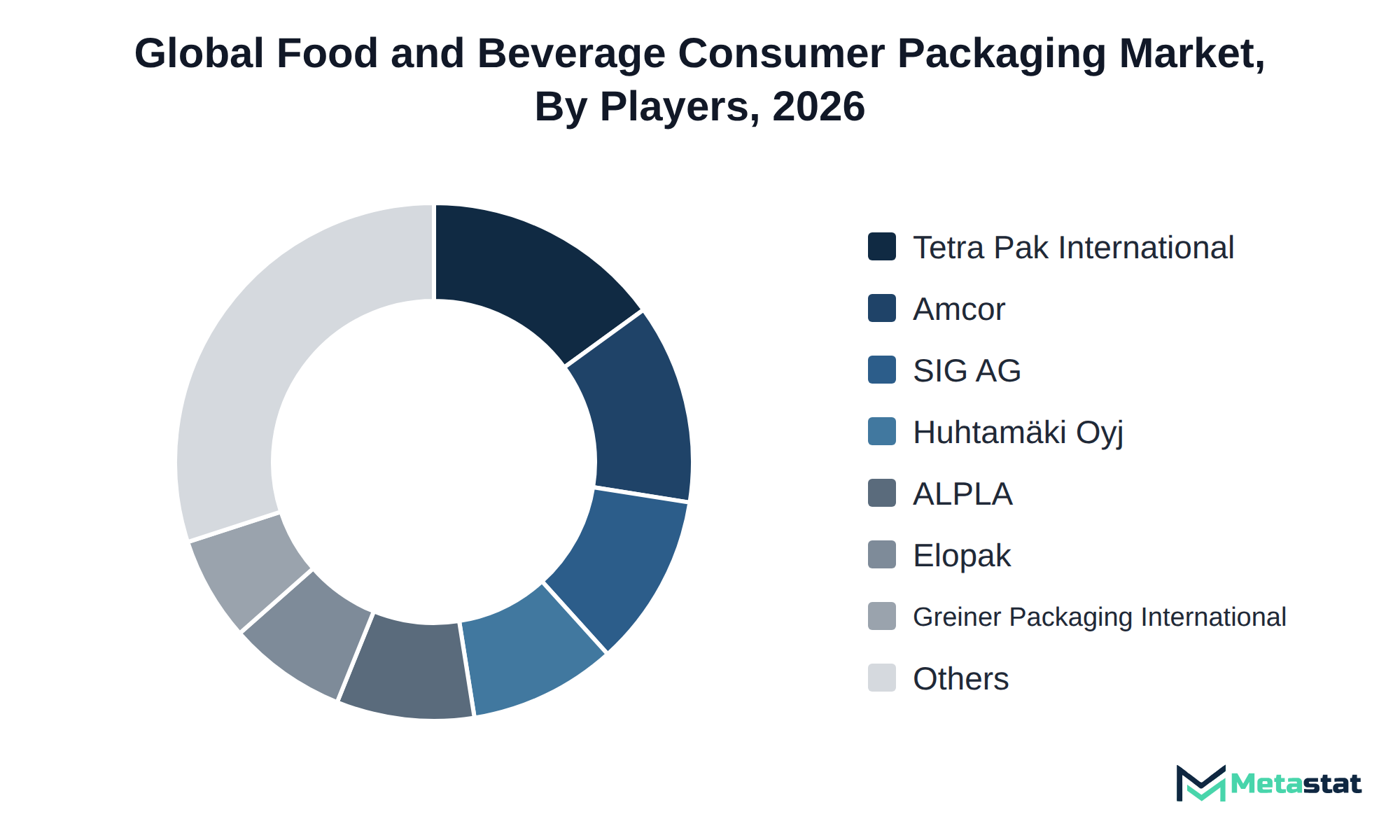
The Food and Beverage Consumer Packaging market features intense competition among various companies, each aiming to differentiate their offerings. Companies engage in competition based on factors including price, certification, and customization. Buyers prioritize these elements to ensure that their packaging aligns with market demands and regulatory standards.
Notable players like Tetra Pak International S.A., Amcor plc, and SIG Group AG focus on sustainable packaging solutions, enhancing their product lines to attract environmentally conscious consumers. Elopak emphasizes innovative designs for liquid packaging, while Huhtamäki Oyj targets the demand for flexible and sustainable alternatives. These strategic focuses allow companies to carve out specific niches within the broader market.
Customization has emerged as a crucial factor for buyers in the Food and Beverage Consumer Packaging market. Companies including Altium Packaging LLC and Greatview Aseptic Packaging Company Limited use their capabilities to provide tailored solutions that meet specific consumer needs. This approach creates deeper connections with clients and enhances competitiveness in the market.
This growth depends on several critical developments within the Food and Beverage Consumer Packaging market. First, the demand for flexible packaging is projected to increase significantly, supported by consumers' preference for convenience and sustainability. Second, the paper and paperboard materials segment is expected to see growth, driven by sustainability trends that favor recyclable and biodegradable packaging solutions, with an estimated value of USD 284.2 billion by 2033. However, a significant risk lies in potential regulatory hurdles regarding packaging materials, particularly plastics. Stricter regulations could hamper growth in specific regions, especially in North America and Europe, where environmental concerns drive legislative changes. Manufacturers will need adaptable strategies to meet evolving consumer preferences and regulatory requirements.
By Packaging Material: Plastic, Paper and Paperboard, Glass, Metal, Others (Molded Natural Fibers, Cellulose-Based Films)
By Packaging Format: Bottles and Jars, Cans and Canisters, Liquid Packaging Cartons, Folding Cartons, Bags and Pouches, Cups and Tubs, Trays and Bowls, Films and Wraps, Others (Squeezable Tubes, Consumer Bag-in-Box Packs)
By Application: Dairy Products and Dairy-Based Beverages, Non-Dairy Non-Alcoholic Beverages, Alcoholic Beverages, Meat, Poultry and Seafood, Bakery Products, Confectionery and Snacks, Fruits and Vegetables, Ready Meals and Prepared Foods, Sauces, Dressings and Condiments, Others (Baby Food, Cereals, Edible Oils)
The report strategically identifies and profiles the key market players and analyses their core competencies in each sub-segment of the Food and Beverage Consumer Packaging market.
Report Attributes | Details |
Study Period | 2021-2033 |
Base Year | 2025 |
Estimated Year | 2026 |
Forecast Period | 2026-2033 |
Historical Period | 2021-2025 |
Growth Rate | CAGR 4.4% from 2026 to 2033 |
Revenue Unit | USD billion |
Segmentation | By Packaging Material, Packaging Format, Application, Packaging Type, and Region |
By Region | North America (By Packaging Material, Packaging Format, Application, Packaging Type, and Country)
|
Europe (By Packaging Material, Packaging Format, Application, Packaging Type, and Country)
| |
Asia Pacific (By Packaging Material, Packaging Format, Application, Packaging Type, and Country)
| |
South America (By Packaging Material, Packaging Format, Application, Packaging Type, and Country)
| |
Middle East and Africa (By Packaging Material, Packaging Format, Application, Packaging Type, and Country)
|
Find answers to common questions about this report
The Food and Beverage Consumer Packaging market size was valued at USD 607.9 billion in 2025.
The market is projected to grow at a CAGR of 4.4% during the forecast period from 2026 to 2033.
The North America Food and Beverage Consumer Packaging market size is estimated to reach USD 187.3 billion by 2033.
Plastic packaging leads the Food and Beverage Consumer Packaging market, with a projected value of USD 324.7 billion by 2033. This segment's growth reflects a compound annual growth rate of 3.6 percent from 2026 to 2033.
Changes in consumer preferences toward environmentally friendly options drive increased expenditure in the market. Growing preference for convenience products stimulates demand due to increased urbanization and busy lifestyles.
Rising costs associated with packaging materials significantly impact buyer behavior, leading to slower adoption of innovative solutions. Price fluctuations in raw materials challenge suppliers, squeezing profit margins and prompting a focus on cost management while maintaining product quality.
Growing consumer preference for sustainable materials, including bioplastics and recycled substances, drives adoption in the Food and Beverage Consumer Packaging market. Innovations in material science enhance product appeal while addressing regulatory pressures and consumer expectations for eco-friendly options.
The Food and Beverage Consumer Packaging market is estimated to reach a valuation of USD 858.2 billion by 2033.
Key players operating in the Food and Beverage Consumer Packaging market include Tetra Pak International S.A., SIG Group AG, Elopak, Amcor plc, Huhtamäki Oyj, and Ball Corporation.
The paper and paperboard segment is projected to reach USD 284.2 billion by 2033, reflecting a compound annual growth rate of 5.4%.
The analysts below cover Packaging research at Metastat Insights.
LEAD ANALYST
Utkarsh Khirodkar is a Lead Market Research Analyst at MetaStat Insight, specializing in market intelligence, technology sector assessments, and competitive strategy.

SENIOR RESEARCH ANALYST
Biotechnology · Food and Beverages · Medical Devices · Packaging
Snehal Pasalkar is a Research Analyst at MetaStat Insight, operating at the intersection of life sciences research, competitive strategy, and market intelligence.

INDUSTRY CONSULTANT - CHEMICALS & ADVANCED MATERIALS
Chemicals and Materials · Machinery & Equipment · Packaging
Amit Gadhekar Consultant for Chemicals and Materials at MetaStat Insight, directing sector-specific intelligence, research, and strategic consulting across global chemical and processing markets.
Analyzing the transition from natural gas to green hydrogen in iron ore reduction requires realistic infrastructure timelines. Meta stat insight supplied a detailed regional assessment of DRI plant conversion costs and scrap metal availability in North America and Western Europe. Their report carefully examined pellet quality specs and electrical grid access constraints without making oversimplified market assumptions. The research material served as a practical reference during internal technology roadmap discussions.
Integrating zero-trust access controls across legacy electronic health record systems involves complex compliance overhead. Team produced an analysis that clearly separated identity governance and administration tools from privileged access management platforms. Their evaluation of HIPAA and GDPR compliance features across cloud native solutions gave our architecture group clear baseline criteria. The custom data request regarding biometric authentication adoption in hospital networks was returned promptly with clear documentation.
Evaluating calorific value requirements and air permit compliance across municipal waste facilities requires localized data. Metastat Insight structured their analysis around operational throughput capacity and feedstock composition variations in Latin America and Eastern Europe. Their competitive mapping of sorting equipment vendors helped clarify technology differences between optical separators and heavy media systems. The study provided an objective baseline during our capital expenditure reviews.
Explore related market intelligence reports worth reading alongside this one.