
LEAD ANALYST
Utkarsh Khirodkar is a Lead Market Research Analyst at MetaStat Insight, specializing in market intelligence, technology sector assessments, and competitive strategy.

Global Fresh Air Ventilation System Market Size, Share, By Product Type (Supply Ventilation Systems, Exhaust Ventilation Systems, Heat Recovery Ventilators (HRVs), Energy Recovery Ventilators (ERVs), Dedicated Outdoor Air Systems (DOAS), Make-Up Air Units, Balanced Ventilation Systems), By Installation Configuration (Centralized Ducted Systems, Decentralized Single-Room Systems, Packaged Rooftop Systems, Ceiling-Mounted Systems, Wall-Mounted Systems), By End User (Residential, Commercial Buildings, Industrial Facilities, Institutional Buildings), By Sales Channel (Direct Sales, HVAC Contractors and System Integrators, Authorized Distributors, Online Sales), Industry Analysis, Growth, Trends, and Forecast, 2026-2033
Report ID
MSI-5813
Published
November, 2026
Pages
291 Pages
Format
Historical
Base year
Forecast
Forecast period
Report Details
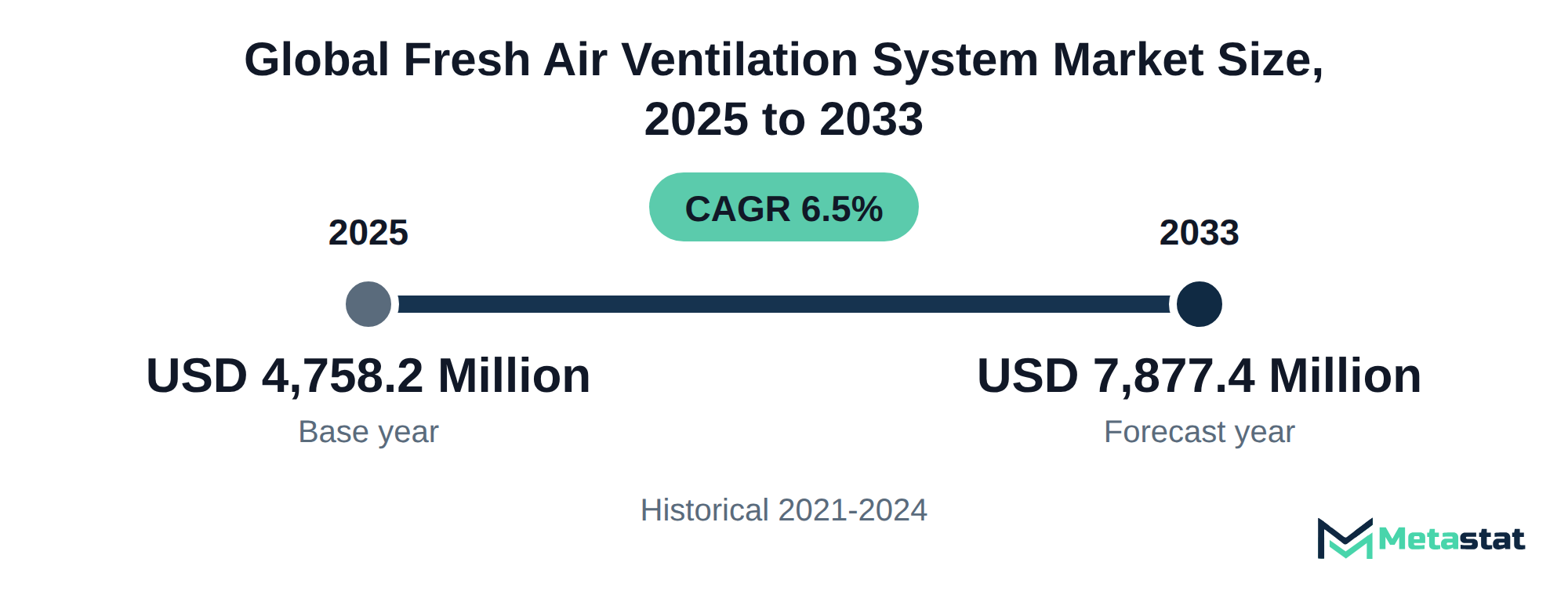
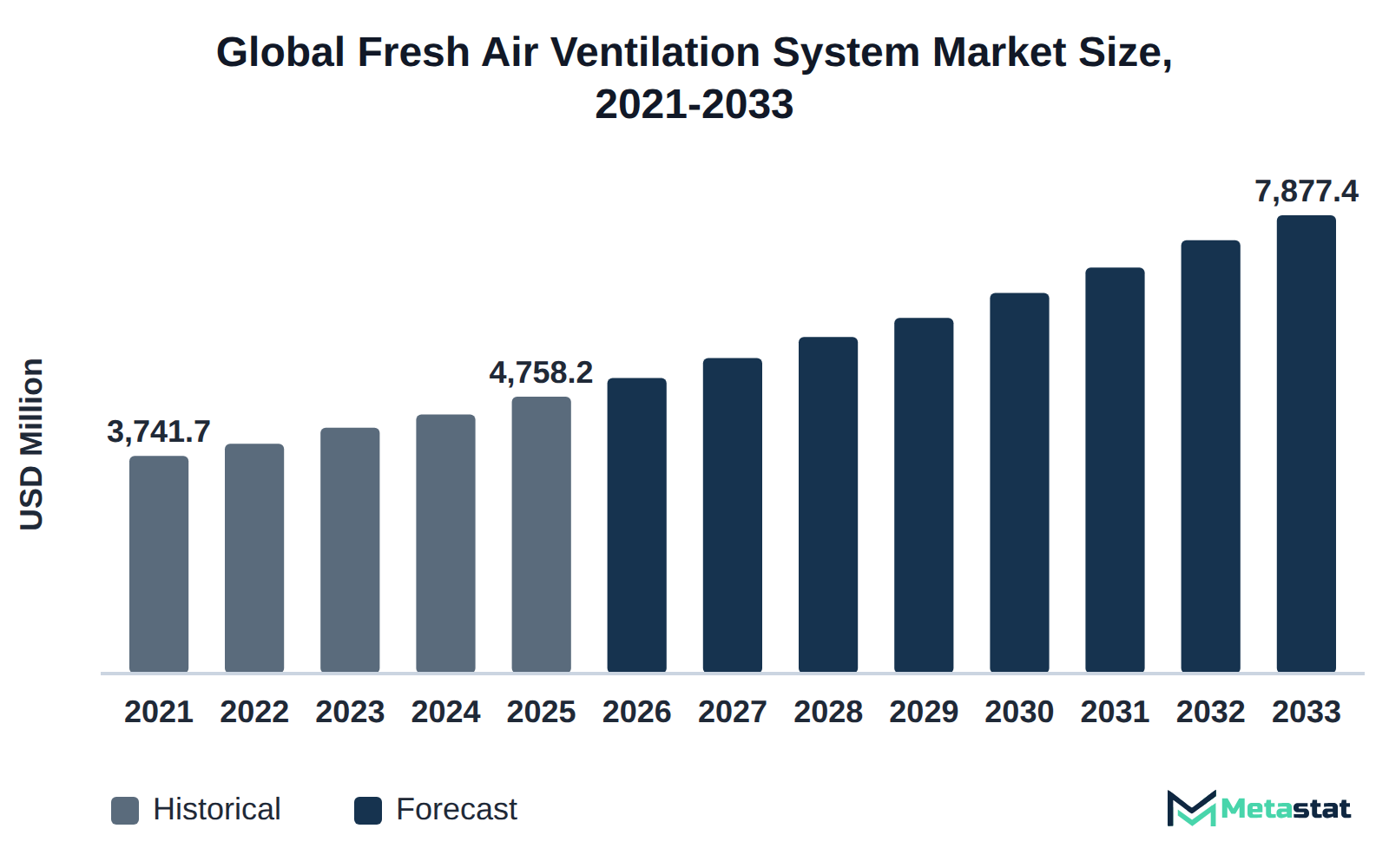
Market Valuation: Valued at $4,758.2 Million in 2025, projected to reach $7,877.4 Million by 2033 at a 6.5% CAGR.
Dominant Segment: Supply Ventilation Systems lead the market, driven by a growing focus on enhancing indoor air quality and energy efficiency.
Geographic Lead: North America is the leading region, holding 30.1% of the market in 2025, supported by established infrastructure and heightened awareness of indoor air quality.
What's Inside: The report provides a comprehensive analysis of market dynamics, including competitive coverage, product segmentation, and forecasts through 2033.
Emerging Trends: Decentralized Single-Room Systems are gaining traction, projected to achieve a CAGR of 7.1% through 2033, reflecting a shift towards flexible and efficient ventilation solutions.
Energy Efficiency Focus: Heat Recovery and Energy Recovery Ventilators are increasingly adopted, with HRVs expected to reach USD 1,492.8 million by 2033, highlighting the market's emphasis on sustainable technologies.
Choose Your License
Global Fresh Air Ventilation System Market
The global Fresh Air Ventilation System market was valued at USD 4,758.2 million in 2025 and is projected to reach USD 7,877.4 million by 2033, growing at a CAGR of 6.5% over the forecast period.
The Fresh Air Ventilation System market encompasses various products and technologies designed to improve indoor air quality by facilitating the circulation of fresh air. Buyers invest in these systems to enhance comfort, ensure compliance with health regulations, and improve energy efficiency in residential, commercial, and industrial settings. The growing awareness of air quality and its impact on health drives demand for these systems, with consumers seeking solutions to create healthier living and working environments.
Growth in the market is propelled by increasing urbanization and the rising need for energy-efficient solutions. The segment that holds the most value is Supply Ventilation Systems, which significantly contributes to overall market revenue. North America holds 30.1% of the market in 2025, with the US leading in 2026. The region's established infrastructure and awareness of indoor air quality issues support strong demand for advanced ventilation solutions.
Technological advancements and innovations in energy recovery systems further enhance market potential. The market benefits from a growing emphasis on sustainability and regulatory standards aimed at improving air quality in buildings. Increased investments in smart building technologies and automation systems contribute to the market expansion, with consumers and businesses seeking integrated solutions that optimize energy use while maintaining air quality.
The Fresh Air Ventilation System market addresses the increasing demand for improved indoor air quality, driven by heightened awareness of health and environmental concerns. Buyers focus on acquiring systems that enhance air freshness, reduce allergens, and promote better overall well-being. The residential sector represents the largest share of end users, reflecting the growing trend of investing in home comfort and safety measures.
Growth within the market is significantly influenced by the rising emphasis on energy efficiency and sustainability in various sectors. Energy Recovery Ventilators (ERVs) stand out as the most valuable segment, appealing to consumers seeking solutions that minimize energy consumption while ensuring adequate ventilation. North America holds 30.1% of the market in 2025, with the US leading in 2026, illustrating the region's strong demand for advanced ventilation solutions.
Technological advancements continue to drive innovation in the market, enabling the development of more efficient and user-friendly ventilation systems. Manufacturers integrate smart technologies and automation features into their products, aligning with consumer preferences for convenience and performance. Such innovations are expected to enhance market competitiveness and encourage further adoption among several end-user segments.
Heat recovery and energy recovery technologies significantly enhance the efficiency of fresh air ventilation systems. These technologies rely on heat transfer equipment to move thermal energy between outgoing and incoming air, minimizing energy loss and optimizing indoor air quality. The growing emphasis on energy efficiency drives the adoption of heat recovery ventilators (HRVs) and energy recovery ventilators (ERVs) within the fresh air ventilation system market.
By 2033, the market is projected to reach USD 1,492.8 million for HRVs, reflecting a strong shift towards these advanced solutions. The enhancements offered by HRVs and ERVs result in lower operational costs and reduced reliance on heating and cooling systems. This trend aligns with the increasing emphasis on sustainable building practices and compliance with energy efficiency regulations.
The integration of heat recovery and energy recovery technologies supports commercial and residential sectors in achieving significant energy savings while maintaining comfortable indoor environments. Escalating environmental concerns prompt investments in such technologies within the fresh air ventilation system market, further driving market expansion.
Purchasing practices for Dedicated Outdoor Air Systems (DOAS) in commercial buildings are evolving due to a shift toward energy efficiency and indoor air quality. Buyers increasingly seek systems that integrate smart ventilation controls, allowing for real-time monitoring and adjustments. This functionality enhances operational efficiency and ensures compliance with stringent regulations on indoor air quality. In 2025, the market for DOAS is projected to contribute significantly to the overall Fresh Air Ventilation System market, reflecting a growing preference for these solutions.
The pricing models for these systems vary, often depending on the complexity of the installation and the technology employed. Many buyers favor performance-based contracts that align costs with energy savings achieved through improved ventilation. These contracts provide a mechanism for ensuring that investments yield tangible benefits, making them appealing for budget-conscious entities. The market is expected to feature performance guarantees and service level agreements that outline specific outcomes.
Commercial buildings that adopt DOAS with smart controls realize reductions in energy consumption and operational costs over time. The integration of advanced technologies in ventilation systems simplifies compliance with environmental standards and enhances occupant comfort. This trend is anticipated to drive further adoption of such systems within the larger Fresh Air Ventilation System market.
Increasing concerns regarding indoor air quality (IAQ) drive significant demand for advanced residential ventilation systems. Homeowners increasingly recognize the impact of poor IAQ on health and well-being, prompting investments in effective Fresh Air Ventilation System technologies. The residential segment is projected to reach USD 3,128.9 million by 2033, reflecting a compound annual growth rate (CAGR) of 6.9% from 2026. This surge highlights the need for systems that facilitate optimal air exchange, reduce allergens, and mitigate indoor pollutants.
The residential market's growth results from a combination of heightened awareness about health issues linked to air quality and regulatory push for enhanced building standards. Families seek solutions that provide fresh air while maintaining energy efficiency. Centralized ducted systems and decentralized single-room systems give homeowners options tailored to specific needs. With the increasing adoption of smart home devices, integrating advanced ventilation systems with home automation presents new opportunities for manufacturers and suppliers in the market.
Residential air quality requirements evolve, prompting investments in innovative ventilation solutions that are essential for market players aiming to capture a share of this expanding segment. Enhanced IAQ contributes to healthier living environments and influences property values and satisfaction levels among homeowners.
Heat Recovery Ventilators (HRVs) and Energy Recovery Ventilators (ERVs) significantly enhance energy efficiency and indoor air quality in residential and commercial settings. HRVs recover heat from exhausted indoor air, transferring it to incoming fresh air, while ERVs execute similar functions, incorporating moisture transfer. This technology effectively reduces energy consumption, supporting sustainable building practices.
The market indicates that ERVs will experience a compound annual growth rate (CAGR) of 7.3% through 2033. Increased demand for energy-efficient products drives investments in this technology, appealing to consumers and businesses focusing on reducing operational costs and improving indoor environments. These systems contribute to better ventilation while minimizing energy loss, addressing both comfort and environmental concerns.
HRV and ERV systems gain traction, influencing consumer choices toward energy-efficient solutions. The commercial advantages include lower utility bills and compliance with increasingly stringent energy regulations. The focus on sustainability drives market growth and makes these systems more important in modern buildings.
Growing awareness of indoor air quality (IAQ) directly influences residential purchases of fresh air ventilation systems. Homeowners increasingly prioritize the health benefits associated with superior air quality, reflecting a behavioral shift toward healthier living environments. This increased attention stems from studies linking air quality to various health issues, prompting consumers to invest in advanced systems that enhance their indoor atmosphere. The residential segment is projected to experience a compound annual growth rate of 6.9% through 2033, indicating a significant uptick in demand. The market is expected to see sustained growth in the coming years as the trend toward healthy living continues.
Increased investment in energy-efficient systems drives demand. Consumers recognize the long-term cost savings achieved through energy recovery technologies, further incentivizing their shift toward modern ventilation solutions. The growing focus on sustainability aligns with environmental concerns, ensuring that fresh air ventilation systems remain integral to residential developments.
Centralized ducted systems and decentralized single-room systems exhibit rapid advancements, contributing significantly to the Fresh Air Ventilation System market. Centralized systems streamline the distribution of fresh air across larger spaces, appealing to both commercial and residential segments. Their capacity to manage substantial air volumes efficiently supports energy savings and enhances overall indoor air quality.
Decentralized ventilation systems, particularly in residential applications, respond to increasing demand for flexibility and lower installation costs. These systems facilitate targeted ventilation solutions, allowing users to address specific air quality needs in individual rooms. The trend toward energy-efficient and user-friendly options fuels this segment's expansion.
Technological innovations, including smart controls and automation features, enhance the functionality of both system types. Enhanced user engagement with real-time monitoring and control options transforms traditional ventilation approaches. These developments stimulate further growth in the market by improving user experience and aligning with broader energy efficiency goals.
Price sensitivity represents a significant restraint affecting the Fresh Air Ventilation System market, particularly among residential and commercial buyers. Higher initial costs associated with advanced systems, including energy recovery ventilators and centralized ducted systems, deter potential customers from making purchases or upgrading existing installations. This hesitation results in slower uptake and smaller orders, significantly impacting overall market growth. The investment required for these systems often leads to delayed replacements, driven by buyers weighing long-term benefits against upfront expenses. Consequently, the residential and commercial segments face challenges in navigating purchasing decisions, leading to a cautious approach toward investing in fresh air ventilation systems. These dynamics create a barrier to faster market expansion, limiting the potential customer base and reducing revenue opportunities across the sector.
Rising input costs challenge suppliers in the Fresh Air Ventilation System market, impacting profit margins. Increased prices of raw materials and components contribute to higher operational expenses. Suppliers respond by optimizing supply chains and sourcing alternatives to mitigate these costs. Investments in technology and process innovation enhance efficiency, allowing suppliers to offset the financial strain. Strategic partnerships with manufacturers secure more favorable pricing and access to quality materials. These responses to mounting cost challenges directly influence product pricing strategies, ultimately impacting market competitiveness and consumer purchasing decisions. Ongoing adjustments in supply chain management and material sourcing systems will shape the market's future.
The decentralized single-room systems segment demonstrates significant growth potential within the market, driven by rising demand for efficient and flexible ventilation solutions. This segment is projected to achieve a compound annual growth rate (CAGR) of 7.1% through 2033, presenting a strong opportunity for suppliers to serve diverse consumer preferences. Increasing awareness of indoor air quality in residential and commercial settings creates favorable conditions for adopting decentralized systems, which offer tailored ventilation for individual rooms. The growing trend of home improvement and renovation, including energy retrofit projects, further supports the expansion of this segment, with consumers prioritizing energy-efficient solutions that enhance comfort and health. Suppliers focusing on this product type capitalize on the emerging demand, addressing specific ventilation needs while contributing to improved overall air quality in various environments. The market's trajectory indicates a notable shift toward these adaptive systems, reflecting broader changes in consumer behavior and expectations.
The Global Fresh Air Ventilation System market is segmented based on Product Type, Installation Configuration, End User, and Sales Channel.
Supply Ventilation Systems segment is valued at USD 880.3 million in 2026 and is projected to reach USD 1,327.3 million by 2033, at a CAGR of 6% during the forecast period. This segment is primarily applied in residential and commercial buildings to enhance indoor air quality by supplying fresh air while expelling stale air. The growing focus on improving ventilation efficiency and energy conservation drives demand for these systems. Unlike Exhaust Ventilation Systems, which concentrate on removing indoor air, Supply Ventilation Systems facilitate the introduction of outside air, effectively addressing air quality concerns. With a projected CAGR of 6%, this segment exhibits consistent growth, appealing to buyers prioritizing energy efficiency and sustainable practices over cost alone. The market continues to evolve, reflecting technological advancements and increased regulation regarding indoor air quality standards.
Exhaust Ventilation Systems segment is estimated to reach USD 765.7 million by 2033, at a CAGR of 5.8% during the forecast period. These systems are vital for removing stale air from buildings, ensuring a continuous supply of fresh air. Predominantly employed in residential and commercial environments, their adoption results from stringent indoor air quality standards and growing health concerns among occupants. This segment's growth reflects heightened energy efficiency demands, distinguishing it from other product types with lower growth rates. Compared to Supply Ventilation Systems, which expand at a CAGR of 6%, Exhaust Ventilation Systems experience slower growth due to existing market penetration levels. However, ongoing technological advancements and growing awareness of proper ventilation contribute to their rising adoption, driving overall growth in the Fresh Air Ventilation System market.
Heat Recovery Ventilators (HRVs) segment is expected to reach USD 1,492.8 million by 2033. HRVs recover heat from exhaust air, improving overall heating efficiency in residential and commercial buildings. This technology appeals to builders and homeowners focused on energy conservation and cost savings. A primary force propelling this segment includes heightened regulatory standards for energy efficiency, enhancing the adoption of HRVs. The segment's growth rate, driven by a CAGR of 7.3%, surpasses other product types in the market, indicating a strong trend toward energy-efficient solutions. The emphasis on sustainable construction practices positions HRVs favorably against traditional ventilation systems, which lack these efficiency enhancements. The market adapts to evolving consumer preferences, particularly those prioritizing environmental responsibility and operating cost reduction, which supports the segment's strong trajectory.
Energy Recovery Ventilators (ERVs) segment is projected to grow at a CAGR of 7.3% during the forecast period. These systems enhance energy efficiency and maintain indoor air quality by transferring heat and moisture between incoming and outgoing air streams. This segment finds extensive use in both residential and commercial applications, driven by a growing emphasis on sustainability and energy conservation. The increasing adoption of green building standards further fuels demand for ERVs. Compared to other product types, ERVs often command higher prices, reflecting their advanced technology and energy-saving capabilities. Their growth is stronger than that of Exhaust Ventilation Systems, projected to reach USD 765.7 million by 2033 at a CAGR of 5.8%, highlighting the increasing focus on energy recovery solutions in the market.
Dedicated Outdoor Air Systems (DOAS) focus on providing adequate ventilation by delivering outdoor air directly to occupants in spaces including commercial buildings, schools, and healthcare facilities. Increasing emphasis on energy efficiency and indoor air quality (IAQ) drives demand for this segment, particularly in environments requiring strict temperature and humidity control. Growing regulatory requirements for ventilation in various sectors, including commercial and institutional, further influence this segment's adoption. Compared to other product types, including Heat Recovery Ventilators (HRVs) and Exhaust Ventilation Systems, DOAS often involves higher initial costs but offers significant long-term savings through energy-efficient designs. This segment primarily serves buyers prioritizing health and comfort, leading to its unique positioning within the Fresh Air Ventilation System market.
Make-Up Air Units provide fresh outdoor air to indoor spaces, effectively compensating for air exhausted from the building. These units primarily find usage in residential, commercial, and industrial settings where maintaining indoor air quality is essential. The demand for Make-Up Air Units is influenced by increasing regulations on indoor air quality and energy efficiency standards, compelling users to adopt solutions that align with these requirements. Make-Up Air Units differ from other segments, including Supply Ventilation Systems, which exhibit a projected CAGR of 6.0%. Their demand fluctuates with varying buyer preferences and application scenarios, contributing to differing growth rates across product types. This segment's focus on compliance with air quality regulations distinguishes it from others, ensuring it remains relevant in the evolving Fresh Air Ventilation System market.
Balanced Ventilation Systems facilitate the circulation of fresh air in indoor environments while maintaining energy efficiency. These systems serve a variety of applications, particularly in residential and commercial settings where indoor air quality is crucial. Demand for this segment grows due to a heightened focus on energy-efficient building technologies and improved air quality standards. Homeowners and facility managers prioritize these systems for their ability to provide optimal ventilation while minimizing energy consumption. Compared to other product types, Balanced Ventilation Systems differentiate themselves through their unique mechanism of maintaining air balance, which sets them apart from traditional exhaust or supply systems. This innovation addresses specific needs in the market, contributing to the ongoing shift toward smarter, more sustainable ventilation solutions.
Centralized Ducted Systems segment is valued at USD 2,179.8 million in 2026 and is projected to reach USD 3,273 million by 2033, at a CAGR of 6% during the forecast period. These systems deliver conditioned air throughout a building via a network of ducts, primarily used in commercial and large residential structures where efficient temperature control and ventilation are essential. Key drivers for this segment include a growing emphasis on energy efficiency and enhanced indoor air quality, which influence buyer preferences. Compared to Decentralized Single-Room Systems, which are expected to experience a CAGR of 7.1%, Centralized Ducted Systems attract customers seeking integrated solutions for larger spaces, providing higher initial installation costs with potential long-term energy savings. The market for these systems continues to expand, fueled by technological advancements and increased regulatory standards focusing on air quality and energy consumption.
Decentralized Single-Room Systems segment is estimated to reach USD 2,005.6 million by 2033, at a CAGR of 7.1% during the forecast period. This segment primarily serves residential applications, providing efficient ventilation solutions for individual rooms, improving indoor air quality without requiring extensive ductwork. Rising awareness of air quality in residential and small commercial spaces drives the increased adoption of these systems. Unlike Centralized Ducted Systems, which supply air to multiple rooms simultaneously, decentralized systems allow for greater flexibility and control, catering to the specific needs of individual spaces. The segment exhibits a faster growth rate compared to other installation configurations, reflecting a shift toward personalized ventilation solutions that enhance comfort and well-being. As consumers prioritize energy efficiency and indoor air quality, the market dynamics of this segment are expected to evolve, creating opportunities for manufacturers and suppliers.
Packaged Rooftop Systems segment is expected to reach USD 1,159.5 million by 2033. This segment primarily serves commercial buildings and industrial facilities, providing efficient ventilation solutions in a compact form. The increasing focus on energy efficiency and sustainability drives demand for these systems, enabling businesses to optimize indoor air quality while reducing operational costs. Compared to other installation configurations, this segment experiences a slower growth rate, with a projected CAGR of 5.9% during the forecast period. Centralized Ducted Systems exhibit a higher CAGR of 6% due to their widespread adoption in larger facilities. The competitive pricing and ease of installation of Packaged Rooftop Systems appeal to budget-conscious buyers, differentiating them from more complex ventilation systems. Overall, these factors contribute to the growth and evolution of the Fresh Air Ventilation System market.
Ceiling-Mounted Systems segment is projected to grow at a CAGR of 6.2% during the forecast period. These systems are designed for residential and commercial applications, offering flexible installation options for enhancing indoor air quality. The segment attracts interest from buyers seeking efficient ventilation solutions in limited spaces. A driving force includes the increasing focus on energy-efficient technologies, which supports the adoption of ceiling-mounted configurations. This segment differentiates itself from others through its specific application in confined environments, while exhibiting a growth rate slower than Decentralized Single-Room Systems, projected to reach USD 2,005.6 million by 2033 at a CAGR of 7.1%. The market presents a clear opportunity for manufacturers to innovate and cater to the unique demands of consumers prioritizing effective air circulation and energy efficiency.
Wall-Mounted Systems provide a practical solution for residential spaces seeking efficient ventilation. These systems offer users flexible installation options, making them suitable for various indoor environments, especially where space is limited. The growing emphasis on improving indoor air quality significantly influences this segment, driving demand among homeowners and property managers. Consumer preferences for energy-efficient and easy-to-install systems contribute to the notable interest in Wall-Mounted Systems, distinguishing them from other configurations including centralized ducted systems. The focus on energy savings aligns with the broader trends observed in the Fresh Air Ventilation System market, where sustainability is significant. Increasing regulatory pressures and consumer awareness regarding air quality concerns drive heightened adoption of Wall-Mounted Systems, reflecting a shift towards more adaptable and efficient ventilation solutions.
Residential fresh air ventilation caters to homeowners and residential builders who prioritize effective indoor air quality and energy efficiency. The primary driving force for this segment centers on heightened awareness regarding health and wellness, prompting homeowners to seek solutions that enhance indoor air quality. Compared to other segments in the market, the residential segment experiences a faster growth trajectory, particularly in contrast to industrial facilities and institutional buildings. This rapid expansion aligns with rising consumer preference for environmentally friendly and energy-efficient products, reflecting a significant shift in buying behavior. The increasing trend toward sustainable living further drives the demand for advanced ventilation systems, reinforcing the segment's growth potential.
Commercial Buildings segment is estimated to reach USD 2,587.7 million by 2033, at a CAGR of 6.7% during the forecast period. This segment includes a variety of structures including offices, retail outlets, and hotels, all requiring effective air quality management to enhance occupant comfort and productivity. Increased emphasis on energy efficiency and indoor air quality significantly influences this sector, driven by evolving regulations and growing awareness among building owners. Compared to the Residential segment, the Commercial Buildings segment exhibits a slightly slower growth rate, reflecting the unique challenges and investment requirements associated with large-scale ventilation systems. Enhanced ventilation systems address energy usage while maintaining compliance with sustainability initiatives, contributing to strong demand within the Fresh Air Ventilation System market.
Industrial Facilities segment is expected to reach USD 1,214.7 million by 2033. This segment involves the use of fresh air ventilation systems in factories, warehouses, and manufacturing plants, where maintaining indoor air quality is crucial for worker productivity and health. Increasing industrial regulations regarding air quality drive demand for this segment. The growth rate for this segment stands at a moderate pace compared to others, reflecting a CAGR that is lower than the Residential segment, which experiences a CAGR of 6.9%. Industrial Facilities often face challenges related to the cost of advanced ventilation technologies, hindering rapid adoption. The focus on improving air quality persists, while budget constraints in industrial settings limit investment in these systems. The Fresh Air Ventilation System market views this segment as essential for ensuring compliance with occupational health and safety standards.
Institutional Buildings segment is projected to grow at a CAGR of 5.3% during the forecast period. This segment includes facilities such as schools, hospitals, and government buildings, where proper ventilation is critical to air quality and occupant comfort. The increasing focus on health and well-being within institutional settings drives demand for advanced ventilation solutions. Regulatory standards push for improved indoor air quality, compelling facilities management teams and building operators to adopt new technologies. Compared to other segments, including Commercial Buildings, which is estimated to reach USD 2,587.7 million by 2033 at a CAGR of 6.7%, the Institutional Buildings segment reflects a more moderate growth trajectory. This difference arises from the specific needs and budget constraints of institutional buyers, influencing their purchasing decisions in the Fresh Air Ventilation System market.
Direct Sales segment is valued at USD 1,573.7 million in 2026 and is projected to reach USD 2,350.6 million by 2033, at a CAGR of 5.9% during the forecast period. This sales channel typically engages directly with customers, including residential and commercial buyers, providing tailored solutions for their ventilation needs. Strong demand for energy-efficient systems drives this segment, with customers seeking to minimize energy consumption and enhance indoor air quality. Compared to HVAC Contractors and System Integrators, which focus on larger projects and installations, the Direct Sales segment caters to individual consumers and smaller enterprises, promoting quicker sales cycles. This growing preference for direct engagement allows for a more personalized experience, distinguishing this channel from others in the market. Increased awareness regarding health and well-being in indoor environments further supports growth in this segment.
HVAC Contractors and System Integrators segment is estimated to reach USD 3,065.1 million by 2033, at a CAGR of 6.6% during the forecast period. This segment caters to the installation and integration of fresh air ventilation systems in various settings, including residential, commercial, and industrial environments. The increasing focus on energy efficiency and indoor air quality drives demand from building owners and managers. In contrast to other segments, this segment exhibits strong growth potential due to rising construction activities and regulatory pressures regarding energy conservation. The overall landscape reflects a shift towards more integrated solutions, with HVAC contractors playing a significant role in ensuring optimal system performance across installed HVAC equipment. This focus sets the segment apart, influencing overall market dynamics and often commanding a higher price point due to the specialized skills and knowledge required for effective system implementation.
Authorized Distributors segment is expected to reach USD 1,892.1 million by 2033. This segment supplies fresh air ventilation systems to various end users, including residential, commercial, and industrial sectors. Demand for Authorized Distributors is driven by increasing focus on energy efficiency and indoor air quality in buildings. This segment exhibits higher growth potential compared to others in its category, supported by the growing trend of online sales and direct consumer engagement, contributing to a CAGR of 8.5% during the forecast period. Unlike Direct Sales, which is projected to grow at a CAGR of 5.9%, the Authorized Distributors segment emphasizes a broader distribution network, enhancing accessibility and availability for customers. This dynamic growth trajectory signifies strong opportunities for investment and expansion in the Fresh Air Ventilation System market.
Online Sales segment is projected to grow at a CAGR of 8.5% during the forecast period. This segment addresses the increasing demand for convenient purchasing options among various customers, including residential and commercial buyers. Consumers increasingly prefer online platforms for acquiring fresh air ventilation systems due to their accessibility and competitive pricing. The growing trend of digitalization in the retail space enhances the segment's performance, allowing manufacturers to reach a broader audience. This segment demonstrates a faster growth trajectory compared to other sales channels, driven by the ongoing shift toward e-commerce and online shopping. The increasing preference for purchasing ventilation solutions online supports overall market expansion.
Based on geography, the Global Fresh Air Ventilation System market is divided into North America, Europe, Asia-Pacific, South America, Middle East, and Africa.
Demand for fresh air ventilation systems in North America is driven by increasing awareness of indoor air quality and energy efficiency. The growing residential sector, particularly in the United States and Canada, supports this trend through investments in energy-efficient building designs and technologies. North America is projected to reach USD 2,216.7 million by the end of 2033. Regulatory frameworks in the region, particularly those encouraging sustainable building practices, enhance the market's growth prospects. The emphasis on improving indoor environments in commercial and industrial facilities further stimulates demand. Competitive pressure among market players to innovate and offer advanced ventilation solutions influences investment strategies and operational efficiencies within the region. This competitive landscape drives advancements in fresh air ventilation systems tailored to meet the needs of diverse buyer groups.
Demand for the Fresh Air Ventilation System market in Europe is driven primarily by the residential and commercial sectors, which require efficient air quality management solutions. Countries including Germany, France, and the UK emphasize regulations focused on improving indoor air quality and energy efficiency, stimulating investments in advanced ventilation technologies. The market benefits from established infrastructure in these nations, providing a robust framework for the adoption of innovative ventilation systems. The European market is projected to account for 25.00% share by 2025. This region's commitment to sustainability and energy conservation further enhances the growth of the Fresh Air Ventilation System market, increasing its appeal to both consumers and businesses. These conditions create a favorable environment for market participants, encouraging competition and innovation in product offerings.
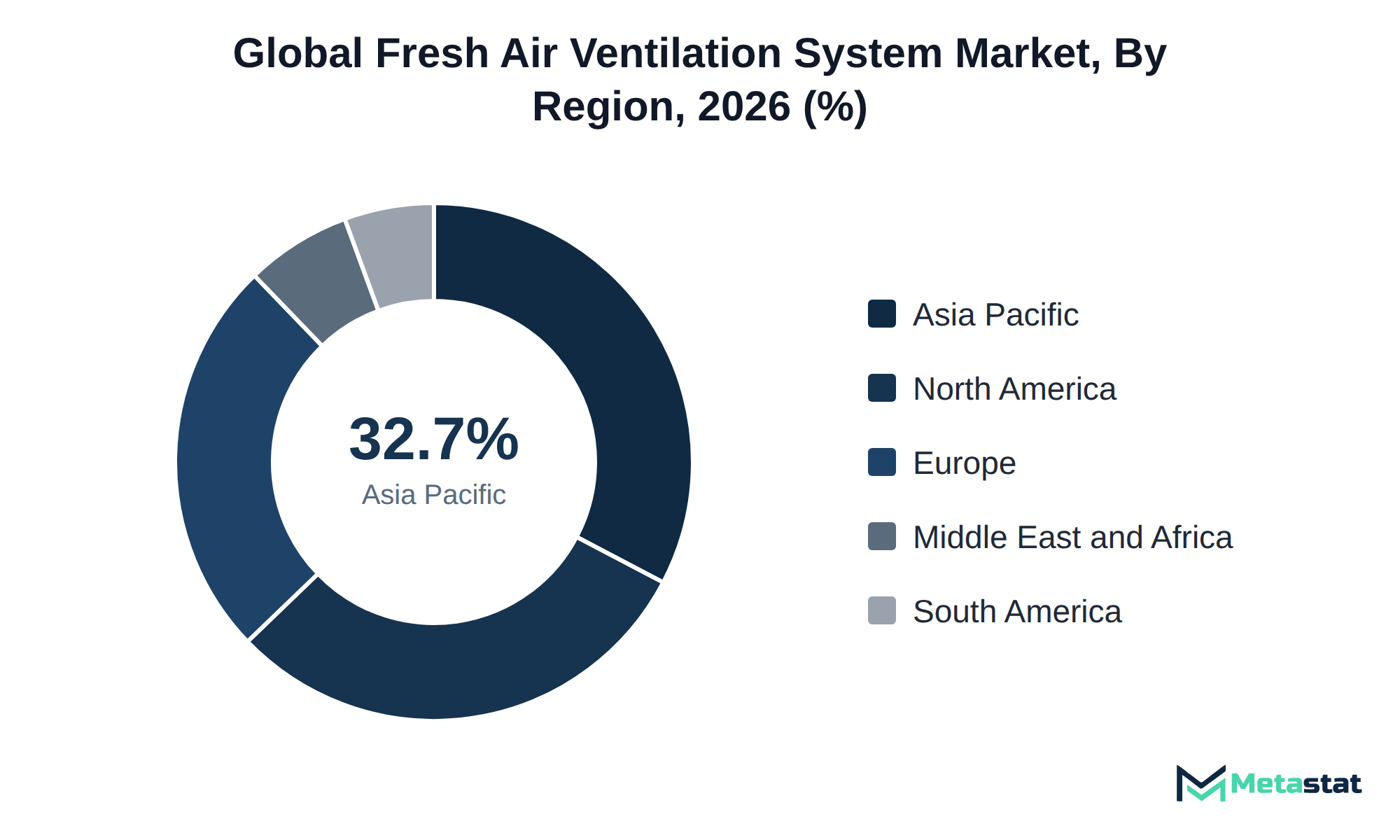
Asia Pacific represents a significant portion of the Fresh Air Ventilation System market, accounting for 32.7% of the global share in 2025. Growth in this region is driven by increasing urbanization and rising awareness of indoor air quality, particularly in countries like China and India. Innovative technologies and initiatives aimed at improving energy efficiency in building infrastructure contribute to heightened demand. Regulatory support for energy-efficient systems and sustainable practices further enhances market potential. The commercial sector, particularly in Southeast Asia, continues to adopt advanced ventilation solutions to comply with stricter environmental standards. Australia and Japan show robust infrastructure development, driving investment in ventilation systems. Overall, the region is projected to experience substantial growth throughout the forecast period, reflecting emerging trends and market dynamics.
In South America, the Fresh Air Ventilation System market experiences growth driven by increasing urbanization and the rising focus on indoor air quality in countries like Brazil and Argentina. The residential and commercial sectors contribute significantly to demand, with growing awareness of the benefits of ventilation systems. Infrastructure development in major cities supports the adoption of these systems, particularly in newly constructed buildings. Regional regulations regarding energy efficiency and air quality standards enhance market opportunities. South America accounts for 5.6% of the global market share in 2025, reflecting a growing recognition of the importance of proper ventilation for health and comfort. The market expands while local manufacturers improve product offerings to meet the unique requirements of the region.
In the Middle East and Africa, demand for the Fresh Air Ventilation System market is supported by increasing urbanization and the growth of commercial and residential construction projects. Countries including Saudi Arabia and the UAE exhibit significant investments in infrastructure development, driven by ongoing initiatives aimed at enhancing energy efficiency and improving indoor air quality standards. South Africa's industrial facilities contribute to the market, emphasizing the importance of effective ventilation systems in manufacturing and production environments. The region's share of the global market is projected at 6.6% in 2025, reflecting a growing recognition of the value of fresh air ventilation systems across diverse sectors. Rising awareness surrounding health and wellness further stimulates demand for the market, encouraging adoption among various end-user segments.
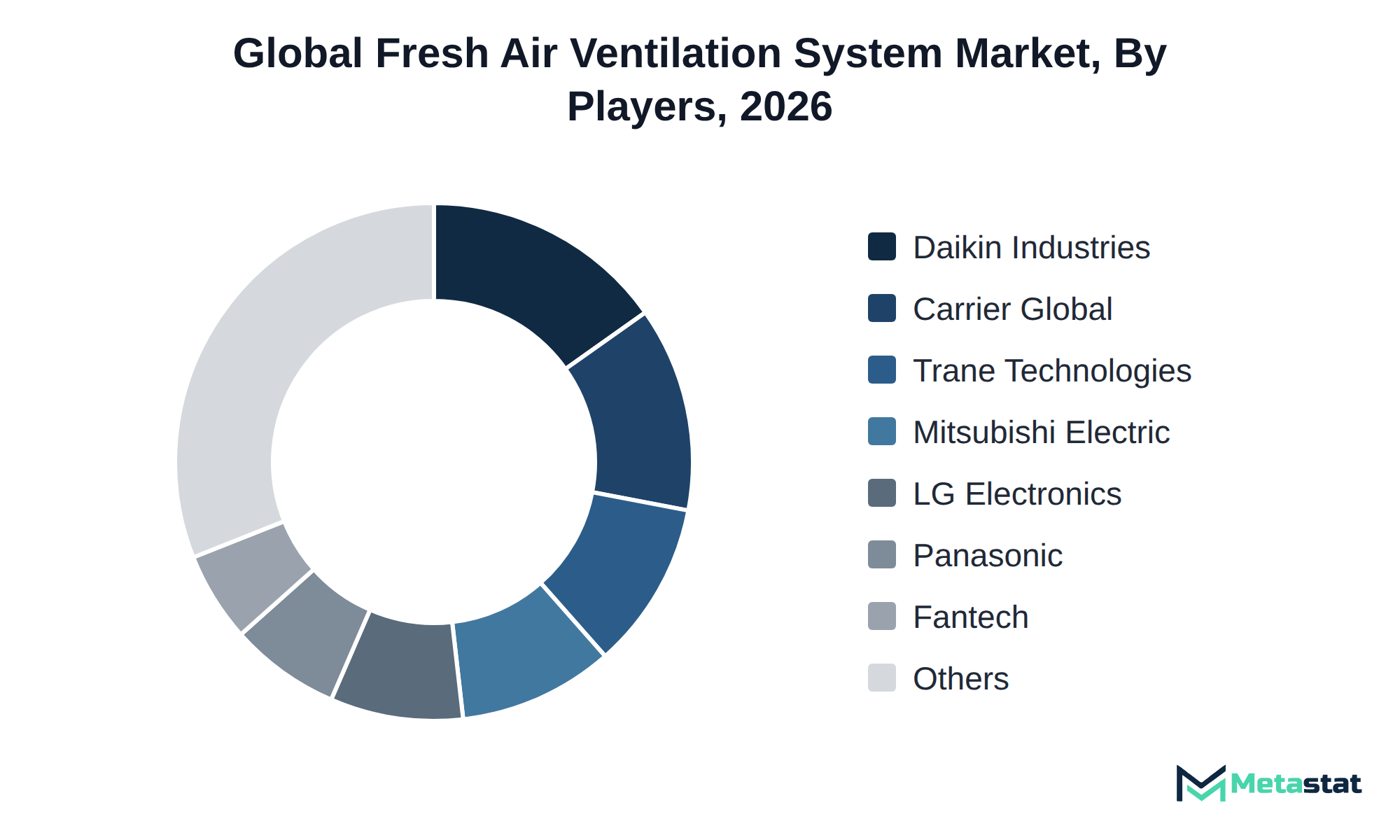
Competition in the Fresh Air Ventilation System market involves various companies employing diverse strategies. Key players, including Daikin Industries, Ltd. and Carrier Global Corporation, focus on technological advancements and product differentiation. Buyers prioritize factors including price, certification, customization, and the overall service ecosystem when making purchasing decisions.
Trane Technologies plc emphasizes innovative energy recovery solutions, while Mitsubishi Electric Corporation targets high-efficiency systems to meet increasing energy standards. LG Electronics Inc. leverages its reputation for reliable performance and a broad product range, appealing to both commercial and residential sectors. This strategic positioning among companies shapes competitive dynamics within the market.
Achieving this growth relies on several critical developments within the fresh air ventilation system market. Firstly, the expansion of supply ventilation systems, projected to increase from USD 880.3 million in 2026 to USD 1,327.3 million by 2033, will contribute significantly to overall market performance. Secondly, the adoption of decentralized single-room systems is anticipated to accelerate, with expected growth reaching USD 2,005.6 million by 2033. Growth in these segments reflects a shift toward more efficient and tailored ventilation solutions, driven by rising awareness of indoor air quality. A potential risk to this forecast includes economic downturns, which could delay investments in commercial and residential buildings, impacting demand for fresh air ventilation systems across North America and Europe. Therefore, while the market is poised for significant growth, external economic factors influence the pace of this expansion.
By Product Type: Supply Ventilation Systems, Exhaust Ventilation Systems, Heat Recovery Ventilators (HRVs), Energy Recovery Ventilators (ERVs), Dedicated Outdoor Air Systems (DOAS), Make-Up Air Units, Balanced Ventilation Systems
By Installation Configuration: Centralized Ducted Systems, Decentralized Single-Room Systems, Packaged Rooftop Systems, Ceiling-Mounted Systems, Wall-Mounted Systems
By End User: Residential, Commercial Buildings, Industrial Facilities, Institutional Buildings
By Sales Channel: Direct Sales, HVAC Contractors and System Integrators, Authorized Distributors, Online Sales
The report strategically identifies and profiles the key market players and analyses their core competencies in each sub-segment of the Fresh Air Ventilation System market.
Report Attributes | Details |
Study Period | 2021-2033 |
Base Year | 2025 |
Estimated Year | 2026 |
Forecast Period | 2026-2033 |
Historical Period | 2021-2025 |
Growth Rate | CAGR 6.5% from 2026 to 2033 |
Revenue Unit | USD million |
Segmentation | By Product Type, Installation Configuration, End User, Sales Channel, and Region |
By Region | North America (By Product Type, Installation Configuration, End User, Sales Channel, and Country)
|
Europe (By Product Type, Installation Configuration, End User, Sales Channel, and Country)
| |
Asia Pacific (By Product Type, Installation Configuration, End User, Sales Channel, and Country)
| |
South America (By Product Type, Installation Configuration, End User, Sales Channel, and Country)
| |
Middle East and Africa (By Product Type, Installation Configuration, End User, Sales Channel, and Country)
|
Find answers to common questions about this report
The Fresh Air Ventilation System market size was valued at USD 4,758.2 million in 2025.
The market is projected to grow at a CAGR of 6.5% during the forecast period from 2026 to 2033.
The North America Fresh Air Ventilation System market size is projected to reach USD 2,216.7 million by 2033.
Supply Ventilation Systems lead the Fresh Air Ventilation System market with a projected value of USD 1,327.3 million by 2033. This segment surpasses others in terms of revenue growth during the forecast period.
Growing awareness of indoor air quality significantly influences residential purchases of fresh air ventilation systems. Increased investment in energy-efficient systems drives demand, with consumers recognizing long-term cost savings achieved through energy recovery technologies.
Price sensitivity represents a significant restraint affecting market growth, particularly among residential and commercial buyers. Higher initial costs associated with advanced systems deter potential customers from making purchases or upgrading existing installations.
Factors favoring adoption in the Fresh Air Ventilation System industry include growing awareness of indoor air quality and a trend toward home improvement. Consumers prioritize energy-efficient solutions that enhance comfort and health, driving demand for decentralized systems that provide tailored ventilation for individual rooms.
The Fresh Air Ventilation System market is estimated to reach a valuation of USD 7,877.4 million by 2033.
Key players operating in the Fresh Air Ventilation System market include Daikin Industries, Ltd., Carrier Global Corporation, Trane Technologies plc, Mitsubishi Electric Corporation, LG Electronics Inc., Panasonic Holdings Corporation, and Fantech.
The decentralized single-room systems segment is projected to achieve a compound annual growth rate of 7.1 percent through 2033, indicating robust growth potential.
The analysts below cover Packaging research at Metastat Insights.
LEAD ANALYST
Utkarsh Khirodkar is a Lead Market Research Analyst at MetaStat Insight, specializing in market intelligence, technology sector assessments, and competitive strategy.

SENIOR RESEARCH ANALYST
Biotechnology · Food and Beverages · Medical Devices · Packaging
Snehal Pasalkar is a Research Analyst at MetaStat Insight, operating at the intersection of life sciences research, competitive strategy, and market intelligence.

INDUSTRY CONSULTANT - CHEMICALS & ADVANCED MATERIALS
Chemicals and Materials · Machinery & Equipment · Packaging
Amit Gadhekar Consultant for Chemicals and Materials at MetaStat Insight, directing sector-specific intelligence, research, and strategic consulting across global chemical and processing markets.
Transitioning ultra-class mining haul trucks to alternative power requires concrete data on remote hydrogen refueling infrastructure economics. The report evaluated megawatt-scale electrolyzer installation expenses, onsite storage safety mandates, and heavy-duty fuel cell stack degradation under continuous duty cycles. That technical rigor helped our engineers benchmark realistic total operating cost horizons for off-highway fleet decarbonization.
Enterprise zero-trust network rollouts are often slowed down by multi-cloud transit latency and proprietary hardware retirement schedules. This study provided realistic total cost of ownership models comparing cloud-delivered security edge solutions against traditional hardware refreshes. The analysis of contract renewal lengths and software maintenance fees gave us clear visibility into enterprise replacement cycles over the next three to five years.
Scaling antibody-drug conjugate manufacturing hinges on contract manufacturing availability for high-potency active ingredients. The MetaStat Insight analysis looked closely at global cleanroom slot constraints, bioconjugation batch failure rates, and supply chain redundancies between the US, Europe, and India. The supplier capability matrix proved genuinely useful for our team when mapping secondary source options across our clinical pipeline.
Explore related market intelligence reports worth reading alongside this one.