
LEAD ANALYST
Utkarsh Khirodkar is a Lead Market Research Analyst at MetaStat Insight, specializing in market intelligence, technology sector assessments, and competitive strategy.

China Construction Market Size, Share, By Construction Segment (Residential Buildings, Commercial Buildings, Industrial and Logistics Facilities, Institutional and Public Buildings, Transportation Infrastructure, Energy and Utilities Infrastructure, Water and Environmental Infrastructure), By Construction Type (New Construction, Renovation and Modernization, Repair and Maintenance), By Construction Method (Conventional Onsite Construction, Prefabricated Panelized Construction, Modular Volumetric Construction, Hybrid Onsite and Offsite Construction), By Investment Source (Public-Sector Procurement, Private Corporate Investment, Household and Individual Investment), Industry Analysis, Growth, Trends, and Forecast, 2026-2033
Report ID
MSI-5749
Published
November, 2026
Pages
267 Pages
Format
Historical
Base year
Forecast
Forecast period
Report Details
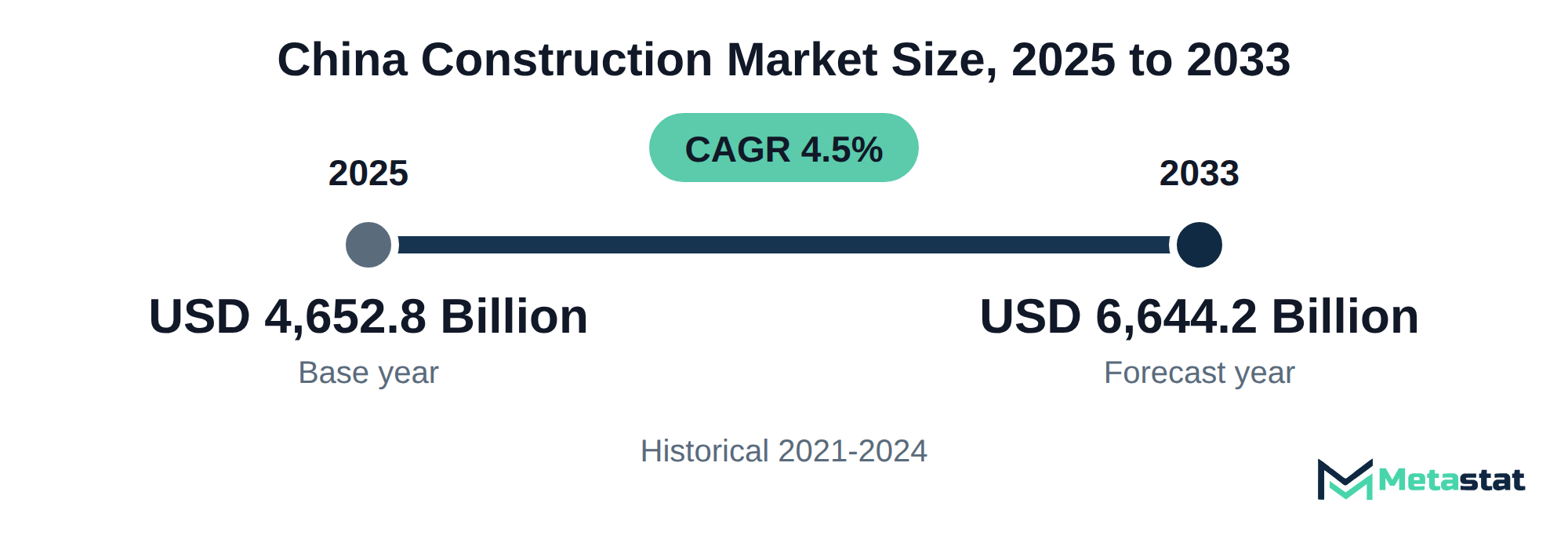
Market Valuation: Valued at $4,652.8 Billion in 2025, projected to reach $6,644.2 Billion by 2033 at a 4.5% CAGR.
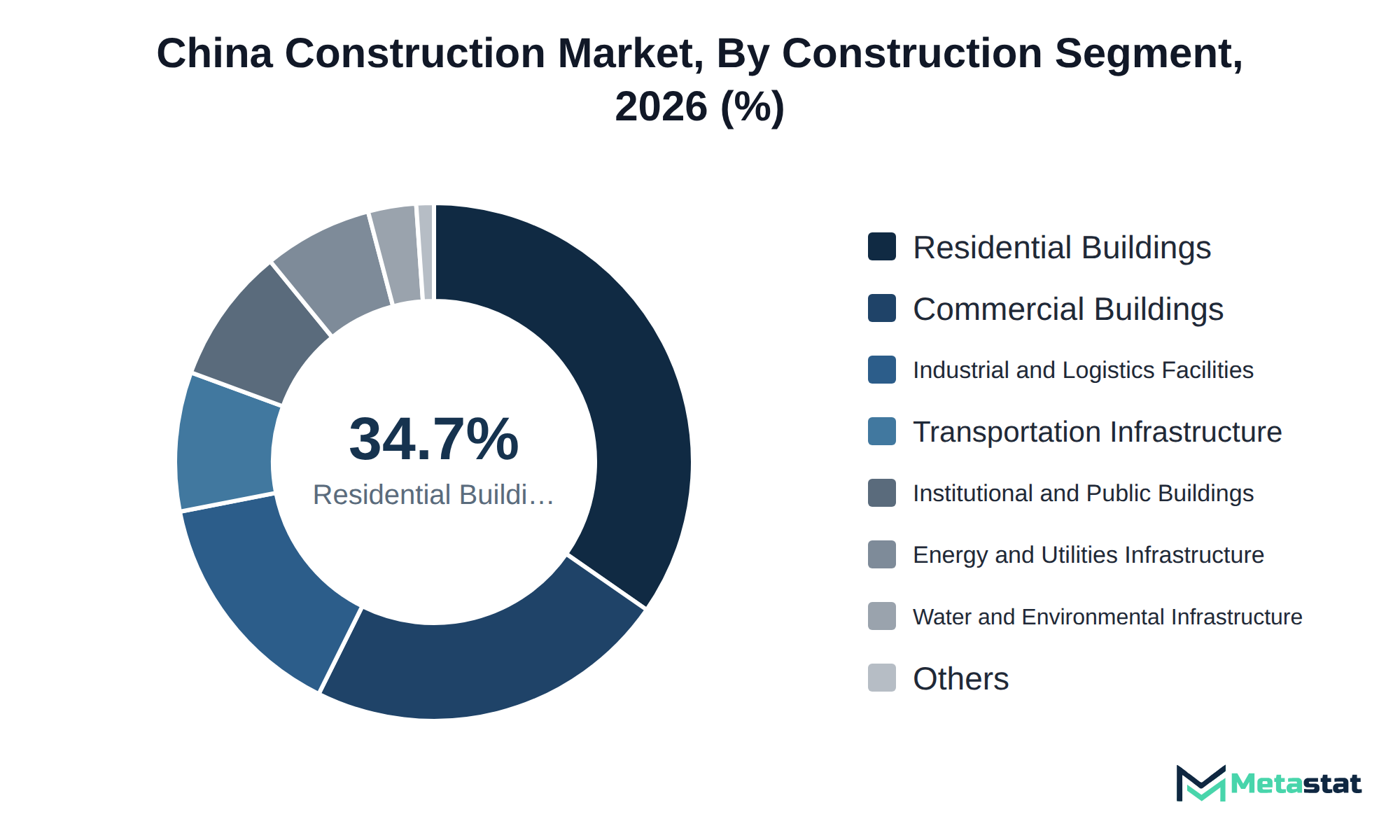
Dominant Segment: The Residential Buildings segment leads the China Construction market, driven by increasing urbanization and government initiatives to improve housing availability and affordability.
Geographic Lead: The Asia-Pacific region is the largest market, bolstered by substantial infrastructure investments and a focus on urban development.
What's Inside: This report provides comprehensive coverage of market dynamics, competitive analysis, and forecasts from 2026 to 2033, focusing on various construction segments and types.
Rising Demand for Renovation: The Renovation and Modernization segment is projected to grow at a CAGR of 6.7%, highlighting a shift towards upgrading existing structures to meet contemporary standards.
Emerging Construction Methods: The adoption of prefabricated panelized construction is gaining traction, expected to reach USD 601.3 billion by 2033, reflecting a trend towards efficiency and sustainability in building practices.
Choose Your License
China Construction Market
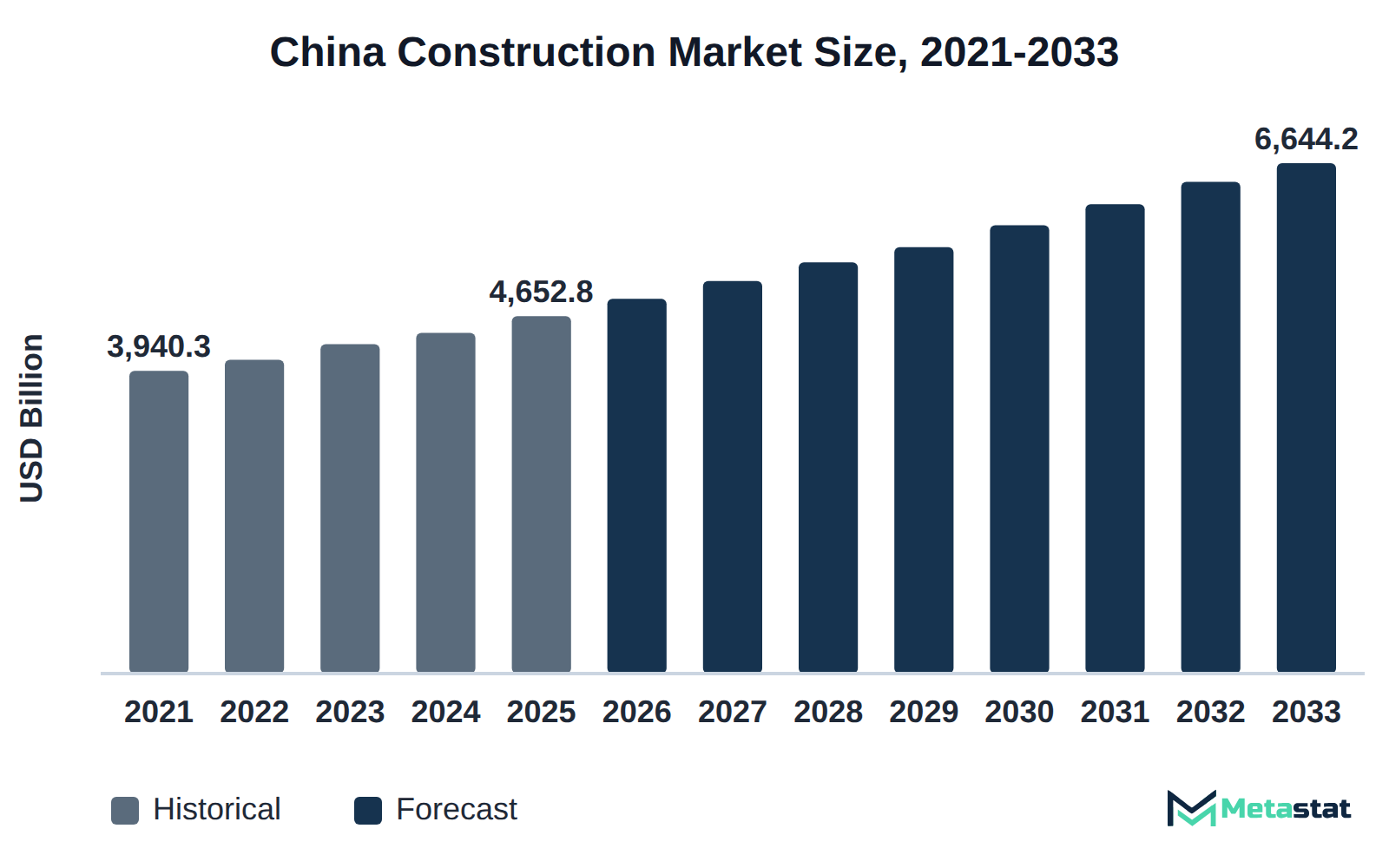
The China Construction market was valued at USD 4,652.8 billion in 2025 and is projected to reach USD 6,644.2 billion by 2033, growing at a CAGR of 4.5% over the forecast period.
The China Construction market covers the design, building, and maintenance of infrastructure, including residential, commercial, and industrial structures. Buyers invest in this market to enhance living standards, support economic growth, and improve connectivity. The demand for construction services arises from urbanization, population growth, and the ongoing need for modern infrastructure, driving significant capital expenditures in the sector.
Infrastructure development is a key driver of growth in the China Construction market. The residential buildings segment commands the largest share of the market, reflecting the increasing demand for housing in urban areas. With a projected compound annual growth rate of 2.9%, this segment benefits from government initiatives aimed at improving housing availability and affordability.
Regional dynamics vary, and North America does not necessarily hold the largest share. Rapid urbanization in Asia, coupled with government investments in infrastructure projects, positions this region as a significant player in the construction sector. Ongoing efforts to modernize transportation and utilities infrastructure further highlight the potential for growth within the market.
The China Construction market spans segments such as residential buildings, commercial properties, and industrial facilities. Buyers invest in the market to address the growing demand for infrastructure development, modern living spaces, and efficient logistics systems. The emphasis on urbanization and economic expansion contributes significantly to capital expenditures across different sectors, driving purchases from private corporations, public entities, and individuals. This focus on improving living standards and enhancing economic productivity influences spending patterns in the market.
Among the segments, residential buildings represent the highest value, reflecting the continuous need for housing solutions driven by population growth and urban migration. The market experiences significant growth due to rising disposable incomes, which enable consumers to invest in new constructions and renovations. The demand for commercial buildings supports market expansion, highlighting the increasing requirement for office spaces and retail establishments to accommodate evolving business needs.
The Asia-Pacific region commands the largest share of the market, fueled by substantial infrastructure investments and government initiatives aimed at enhancing urban development. One primary growth driver is the shift towards renovation and modernization, which presents opportunities for innovation in construction methods and materials. This trend addresses existing infrastructure challenges and aligns with sustainable development goals, further enhancing the market's growth potential.
Recent trends indicate a significant shift in infrastructure-led demand within the China Construction market, moving from traditional coastal megacities to the central and western regions. This transition arises from increased governmental focus on regional development initiatives aimed at promoting economic balance. Investment in infrastructure in these areas is essential for enhancing connectivity and supporting urbanization.
For instance, the anticipated public-sector procurement investment is projected to grow from USD 2,986 billion in 2026 to USD 3,857 billion by 2033, reflecting a compound annual growth rate of 3.7%. This public funding goes to infrastructure projects, including transportation and energy facilities, that are critical for regional development.
Consequently, construction firms operating in the market are adapting their strategies to align with this emerging demand. Companies are increasingly focusing on projects that cater to this shift, expanding their portfolios to include infrastructure developments in central and western China. This pivot addresses regional needs and positions these firms to capture new growth opportunities in the market.
The increasing integration of prefabrication and Building Information Modeling (BIM) within the China Construction market transforms purchasing and payment dynamics. This shift emphasizes efficiency, transparency, and cost management in project delivery. In 2026, the value of new construction is projected at USD 3,696.4 billion, highlighting a significant market opportunity for innovative contract models that align with these advancements.
Buyers increasingly favor fixed-price contracts tied to modular construction elements, which reduce uncertainties associated with traditional building methods. Such contracts allow for clearer budgeting and resource allocation, while firms benefit from faster project timelines and reduced labor costs. The adoption of prefabricated panelized construction is expected to reach a value of USD 601.3 billion by 2033, reflecting a strong trend toward this approach.
This growth illustrates a commitment to modernizing infrastructure through collaborative partnerships and government investments, further reshaping financial frameworks within the market.
Prefabrication and BIM enhance value for all stakeholders by driving operational efficiencies and supporting long-term growth in the China Construction market.
In the China Construction market, low-carbon buildings increasingly rely on effective fastening, assembly, and installation systems to meet sustainability standards. The shift toward energy-efficient infrastructure has heightened the demand for these systems, particularly in the context of residential buildings. From 2026 to 2033, the segment for residential buildings is projected to grow from USD 1,669.8 billion to USD 2,046.4 billion, reflecting a compound annual growth rate of 2.9%. This growth highlights the necessity for solutions that support efficient construction while adhering to low-carbon principles.
Building contractors and developers face unique challenges in integrating sustainable practices into their projects. The selection of appropriate fastening systems influences the overall energy performance of buildings. High-performance fastening solutions speed up installation and improve the durability of materials, which helps reduce lifecycle emissions. In a competitive market, construction firms prioritizing these advanced systems position themselves favorably among environmentally conscious consumers.
The China Construction market shows a clear trend toward adopting innovative fastening and assembly solutions that align with sustainability goals. This trend creates opportunities for suppliers specializing in high-quality, eco-friendly fastening products to expand their market reach. While the emphasis on low-carbon buildings continues to grow, the demand for effective installation systems remains a critical factor in achieving construction efficiency and sustainability.
Rapid growth in the China Construction market is anticipated within the Residential Buildings segment. Factors influencing this growth include urbanization trends and rising living standards, which drive demand for new housing developments. The expansion of this segment will benefit homebuilders and suppliers of construction materials, leading to heightened competition among market participants.
Another segment with significant growth potential is the Commercial Buildings sector, projected to reach USD 1,408.6 billion by 2033. This growth is driven by increased investments in retail and office spaces, compelling developers to adapt their strategies to meet evolving consumer preferences. The emphasis on sustainable and smart building practices will shape the competitive environment, impacting operational costs for developers adopting advanced construction techniques.
In addition to segments, certain regions in China present unique growth opportunities. Urban centers, particularly those experiencing rapid economic development, will attract increased investment in infrastructure and buildings. Government initiatives aimed at enhancing urban living conditions will support substantial growth, encouraging both public and private investment. Consequently, businesses targeting these regions are likely to achieve competitive advantages by aligning their services with local government priorities.
Public-sector procurement drives growth within the China Construction market. Recent commitments to enhance infrastructure encourage government entities to increase spending on various construction projects, including transportation, utilities, and public facilities. This shift in focus stems from a strategic initiative to support urban development and cater to rising population demands in urban areas. Ongoing investments heighten competition among construction firms, resulting in more innovative solutions and improved project delivery timelines, which benefit stakeholders across multiple industries.
Increased investment in public infrastructure fuels demand for renovation and modernization projects. Government initiatives encourage property owners to upgrade existing structures, improving energy efficiency and sustainability while maintaining compliance with updated standards.
Prefabricated panelized construction experiences increasing adoption within the market due to advancements in modular building techniques. This approach reduces on-site construction time and lowers labor costs, appealing to developers focused on efficiency. Industries including residential and commercial construction benefit significantly, with prefabricated elements streamlining project timelines and enhancing overall productivity. The integration of advanced manufacturing techniques, including automation and robotics, supports this trend, allowing for higher precision and reduced waste. A pressing demand for sustainable building practices further accelerates the shift toward prefabricated options, which often employ eco-friendly materials. The market anticipates substantial growth in prefabricated construction, driven by public-sector initiatives and private corporate investment targeting efficiency and sustainability. This evolution marks a significant phase in construction methodologies, contributing to the overall expansion of the China Construction market.
The cost of building materials has increased significantly, impacting project budgets across various segments of the market. Construction firms face challenges in sourcing affordable raw materials, resulting in reduced profit margins and potentially delayed project timelines. Buyers in the residential and commercial segments exhibit caution in committing to new projects due to escalating prices, leading to smaller order sizes and slower decision-making processes. This restraint particularly affects public-sector procurement, where strict budget allocations hinder the ability to accommodate rising expenses. Consequently, delays in project execution arise, impacting overall market growth and the timely delivery of essential infrastructure. Ongoing volatility in material costs requires careful financial planning among stakeholders in the construction sector and complicates investment and expansion within the market.
Compliance costs present a significant challenge to suppliers in the China Construction market. The complexity of regulatory requirements and industry standards increases operational expenses, impacting profit margins across various segments. Suppliers face rising costs associated with maintaining compliance, including investments in training, equipment upgrades, and ongoing monitoring systems. Increased expenditures strain budgets and limit competitive pricing capabilities. To address these challenges, suppliers explore strategic partnerships and invest in technology to streamline compliance processes. Automation and digital tools help reduce manual workloads and improve efficiency, ultimately lowering compliance-related costs. Several suppliers focus on enhancing their training programs to ensure staff remain well-versed in the latest regulations, thereby minimizing the risk of costly penalties. These measures support a more sustainable operational model and aim to maintain profitability in a challenging environment.
Renovation and modernization in the China Construction market represent a significant growth opportunity, driven by increasing urban living standards and the need for infrastructure upgrades. This segment is projected to grow at a compound annual growth rate (CAGR) of 6.7%, reflecting a shift toward enhancing existing structures rather than initiating new projects. Key drivers include the rising popularity of sustainable practices, which require modernization of older buildings through energy retrofits to meet contemporary energy efficiency standards. Public and private sector investments focus on upgrading older commercial and residential facilities to benefit from improved operational efficiencies. This trend supports the construction sector and stimulates ancillary markets, including material supply and design services. The growing emphasis on sustainability aligns with broader urban development goals and drives demand for innovative renovation solutions across the market.
The China Construction market is segmented based on Construction Segment, Construction Type, Construction Method, and Investment Source.
This segment caters primarily to individuals and families seeking housing solutions, playing a key role in urban development. Growth in this area is driven by increasing urbanization and improving living standards, leading to higher demand for quality residential spaces. Compared to other segments, Residential Buildings experiences slower growth, with a CAGR of 2.9%, contrasting with the Renovation and Modernization segment, which enjoys a CAGR of 6.7%. The relatively stable pricing in this segment encourages investment, while challenges related to land availability and regulatory hurdles persist, impacting the speed of new developments. Overall, the Residential Buildings segment contributes significantly to the broader China Construction market.
Commercial Buildings segment is estimated to reach USD 1,408.6 billion by 2033, at a CAGR of 3.6% during the forecast period. This segment serves the construction of offices, retail spaces, and other commercial facilities, catering to businesses and governmental entities. Growth in this segment derives from increasing urbanization and the expansion of service sectors, driving higher demand for functional and aesthetic commercial spaces. Compared to other segments, Commercial Buildings exhibit moderate growth, outpacing Residential Buildings, which are projected to grow at a CAGR of 2.9%. The higher price point for commercial properties reflects their complex requirements and specifications, distinguishing them from industrial and public buildings that target different buyer profiles or project scopes. Regulatory frameworks promoting sustainable construction practices influence the evolution of this segment, encouraging investment in energy-efficient and environmentally friendly building designs.
Industrial and Logistics Facilities segment is expected to reach USD 1,086.3 billion by 2033. This segment serves various industries, including e-commerce, manufacturing, and distribution, providing essential infrastructure for efficient goods movement. A significant driver of growth arises from the increasing demand for warehousing and distribution centers, fueled by the rise of online retail and changing consumer behaviors. The anticipated compound annual growth rate (CAGR) stands at 5.2%, placing it among the faster-growing segments in the market. This growth contrasts with the commercial buildings segment, which exhibits a CAGR of 3.6%. The development of advanced logistics technologies and the expansion of supply chain networks further influence growth, prompting investments in modern industrial facilities that enhance operational efficiency and meet evolving market demands in the China Construction market.
Institutional and Public Buildings segment is projected to grow at a CAGR of 5.2% during the forecast period. This segment encompasses structures including schools, hospitals, and government facilities, serving a diverse range of public needs. Demand is driven by urbanization and a growing population, increasing the necessity for public services and facilities. Government investments in infrastructure projects further support growth in this segment. Compared to other segments within the construction industry, the Institutional and Public Buildings segment is expected to experience a faster growth rate due to higher public funding levels and an increased focus on social infrastructure. With a shift towards sustainable building practices, demand for energy-efficient and environmentally friendly designs in institutional buildings is rising, enhancing market opportunities.
Transportation infrastructure encompasses various projects aimed at developing and maintaining systems for transport, including roads, bridges, railways, and airports. Government agencies and private corporations invest in this sub-segment to enhance connectivity and facilitate economic growth. An increasing focus on sustainable practices drives demand for innovative construction methods and materials. Transitioning to more durable and environmentally friendly solutions supports long-term infrastructure viability. Compared to other segments, transportation infrastructure often experiences slower growth due to the complexities of project financing and regulatory approvals. However, ongoing investments in urban mobility and public transit modernization highlight the critical role this sub-segment plays in shaping urban environments and improving overall accessibility within the China Construction market.
Energy and Utilities Infrastructure focuses on the development and maintenance of essential systems that provide power and water services, which are critical for urban and rural development. This segment serves various stakeholders, including government entities, energy companies, and utility providers. A significant growth driver involves the increasing demand for renewable energy sources and the modernization of existing utility frameworks to enhance efficiency and sustainability. Unlike other segments, this area often experiences slower growth due to regulatory and environmental challenges associated with new projects. The investment required for large-scale utilities infrastructure deters smaller players, limiting market competition. Projects typically involve higher capital expenditures, further differentiating this segment from others that require less intensive funding. Market dynamics focused on sustainability and energy diversification continue to reshape priorities and strategies across the market.
Water and Environmental Infrastructure encompasses projects focused on providing essential services related to water supply, sewage management, and environmental protection. Municipal governments and public agencies primarily engage in this construction to develop critical infrastructure that supports urban living and environmental standards. Increasing urbanization and the rising emphasis on sustainable development strongly influence demand in this segment. This demand contrasts with other segments, including Residential Buildings, which are projected to grow at a CAGR of 2.9%. The focus on environmental sustainability drives innovation in water and wastewater treatment technology and in waste management systems, differentiating this segment by potentially higher costs compared to traditional construction methods in other areas. This segment's importance in the China Construction market reflects a broader trend toward enhancing urban resilience and sustainability.
This segment covers projects related to site preparation, demolition, and other specialized construction activities not categorized elsewhere. Clients for this sub-segment typically include developers and government agencies requiring specific site-level work before structural construction begins. The demand for these services is driven by urban development projects and the need for land preparation prior to new construction efforts. Compared to segments like Residential Buildings or Commercial Buildings, this segment experiences slower growth due to its specialized nature and reliance on broader construction activities. This sub-segment plays a critical role in facilitating operational efficiencies in initial project phases, ultimately impacting timelines for larger construction initiatives. The China Construction market benefits from ongoing urbanization trends that fuel demand for these essential preparatory services.
New Construction segment is valued at USD 3,696.4 billion in 2026 and is projected to reach USD 4,694.1 billion by 2033, at a CAGR of 3.5% during the forecast period. This segment primarily involves the construction of new residential, commercial, and industrial buildings, serving clients including government agencies, private developers, and corporations. The increasing demand for new housing and commercial centers drives this segment, particularly in urban areas experiencing population growth. Compared to the other construction types, New Construction exhibits slower growth, outpaced by Renovation and Modernization, which carries a CAGR of 6.7%. Factors including rising construction costs and regulatory requirements influence market dynamics, affecting project timelines and budgets. The China Construction market focuses significantly on new constructions to address growing urbanization while integrating advanced construction techniques to improve efficiency and sustainability.
Renovation and modernization segment is estimated to reach USD 1,166.1 billion by 2033, at a CAGR of 6.7% during the forecast period. This segment focuses on updating existing structures to enhance functionality or aesthetics, appealing to both residential and commercial property owners. Urbanization trends drive demand for modernization, with property owners seeking to improve living conditions and increase property value. Differentiating from other segments, renovation and modernization exhibits a higher growth rate compared to new construction, reflecting a more conservative approach to investment. The rising interest in energy-efficient upgrades contributes to this segment's growth, prompting investment from both public and private sectors. The integration of sustainable practices within renovation projects positions this segment uniquely against others, encouraging a shift toward environmentally friendly solutions in the China Construction market.
Repair and Maintenance segment is expected to reach USD 689.7 billion by 2033. This segment encompasses activities focused on preserving and restoring existing structures, including residential and commercial properties, infrastructure, and public buildings. Key buyers include property management firms, government agencies, and private homeowners. Growth in this segment is driven by increasing building aging and the emphasis on sustainable practices, which necessitate regular maintenance and upgrades. The segment exhibits a higher CAGR of 6.7%, outpacing other construction types like New Construction, which shows a CAGR of 3.5%. This difference reflects a greater emphasis on maintaining existing assets rather than investing in new builds, aligning with the trend of maximizing the lifespan of properties within the China Construction market.
Others (Site Preparation and Demolition) segment is projected to grow at a CAGR of 7.9% during the forecast period. This segment encompasses activities related to site preparation, demolition, and other specialized construction functions not classified elsewhere. In the construction industry, this segment serves contractors and developers who require sites to be cleared or prepared for future projects. Increasing urbanization and infrastructure development generate demand for these services, driving growth in the segment. Unlike traditional construction types, this segment focuses on pre-construction activities, often characterized by rapid project timelines and specialized construction equipment, which enhances operational efficiency. The estimated growth of this segment positions it faster than others in the construction type category, reflecting ongoing transformation within the China Construction market.
Conventional Onsite Construction segment is valued at USD 4,071.2 billion in 2026 and is projected to reach USD 5,415 billion by 2033, at a CAGR of 4.2% during the forecast period. This segment focuses on the traditional method of constructing buildings directly at the site, widely used by various sectors including residential, commercial, and industrial. Increasing urbanization and demand for new housing projects drive this segment, attracting investments from both public and private entities. Unlike other construction methods, including prefabricated or modular approaches, conventional onsite construction represents a more traditional approach, often incurring higher labor costs due to reliance on on-site workforce management. The market shows a steady growth trajectory, indicating sustained demand for new constructions across diverse applications, further highlighting its significance in the China Construction market.
Prefabricated Panelized Construction segment is estimated to reach USD 601.3 billion by 2033, at a CAGR of 5.4% during the forecast period. This method involves the off-site fabrication of building components, which are assembled on-site to create structures. Prefabricated panelized construction is widely used in residential and commercial developments, allowing for faster build times and reduced labor costs. Demand for this segment is driven by the increasing focus on efficiency and sustainability in construction practices. Compared to other construction methods, including conventional onsite construction, which is projected to grow at a CAGR of 4.2%, prefabricated panelized construction offers a more streamlined approach, appealing to developers seeking cost-effective and time-saving solutions. The market observes growing interest from both public sector projects and private corporate investments, indicating broad applicability across various construction types.
Modular Volumetric Construction segment is expected to reach USD 275.7 billion by 2033. This method involves prefabricating building modules offsite and assembling them on location, primarily for residential and commercial projects. Key players include construction firms focusing on efficiency and speed in development. The growth of this segment is driven by rising labor costs and increasing demand for rapid construction solutions, which provide significant advantages in urban areas where time and space constraints are prevalent. Compared to other construction methods, Modular Volumetric Construction shows a distinct advantage through its faster assembly times, while conventional onsite construction is projected to grow at a CAGR of 4.2%. The modular approach faces challenges related to initial investment and regulatory compliance, affecting adoption rates among several construction firms. The market adapts to these challenges through advancements in technology and design innovation, further enhancing the appeal of modular solutions.
Hybrid Onsite and Offsite Construction segment is projected to grow at a CAGR of 6.5% during the forecast period. This construction method employs both traditional onsite techniques and offsite prefabrication, enabling faster project completion and reduced labor costs. It serves various buyers, including commercial developers and public institutions, who seek efficient building solutions. Adoption of this method benefits from growing demand for quicker construction timelines and sustainability initiatives. Compared to Conventional Onsite Construction, which is projected to grow at a CAGR of 4.2%, Hybrid Onsite and Offsite Construction offers a more innovative approach, appealing to stakeholders focused on optimizing costs and timelines. The market continues to evolve with advancements in prefabrication technologies that enhance overall efficiency and quality.
3D-Printed and Robotic Construction employs advanced technologies for building construction, integrating automation and robotics to enhance efficiency and precision. This approach applies across various projects, attracting interest from innovative developers and construction firms focused on reducing labor costs and improving construction timelines. The segment experiences growth driven by increasing demand for sustainable and efficient building methods, positioning it as a forward-looking option compared to traditional construction methods. In contrast to segments like Conventional Onsite Construction, which benefits from a larger market size and established practices, this segment offers unique advantages including reduced waste and enhanced design flexibility. While Conventional Onsite Construction experiences growth, the adoption of 3D-Printed and Robotic Construction reflects a shift toward modernization in the China Construction market.
This segment encompasses construction projects funded and initiated by government entities, including infrastructure developments and public building construction. Typically, local and national governments serve as the primary buyers, driven by the demand for improved public services and infrastructure. Growth in this segment reflects an ongoing commitment to enhancing urban infrastructure and public facilities. Compared to other segments, Public-Sector Procurement experiences slower growth due to regulatory frameworks and budget allocations. The CAGR of 3.7% contrasts with the more dynamic growth observed in segments including Renovation and Modernization, which reaches 6.7%. Consequently, while essential, this segment's expansion proceeds at a measured pace, shaped by economic considerations and policy-driven initiatives. The China Construction market shows significant reliance on public investment to drive development.
Private Corporate Investment segment is estimated to reach USD 1,890.3 billion by 2033, at a CAGR of 5.7% during the forecast period. This segment involves funding from private entities for construction projects, particularly in commercial and residential sectors. Corporations invest in new developments and renovations, driven by urbanization and infrastructure demands. Investment from private sources supports a diverse range of projects, typically characterized by faster growth compared to public-sector procurement, which is projected to grow at a CAGR of 3.7%. The rising need for modern facilities and improved infrastructure fuels private corporate investment, distinguishing it from other financing sources. This segment contributes to the overall growth of the China Construction market, reflecting the increasing trend of private involvement in infrastructure development.
Household and Individual Investment segment is expected to reach USD 677.7 billion by 2033. This segment encompasses expenditures by private homeowners and individuals investing in residential construction, renovations, and home improvements. Demand drivers include increasing disposable incomes and a growing desire for home personalization, which increases spending in this category. Compared to other segments, including Public-Sector Procurement, this segment displays a higher growth trajectory, driven by the increasing involvement of individual investors. The segment is projected to experience a CAGR of 5.7%, reflecting notable expansion relative to other investment sources. Households prioritize direct investments in their living environments, influencing trends in residential construction and modernization. The China Construction market continues to evolve, with this segment playing an important role in shaping residential landscapes.
Others (PPP and Institutional Capital) segment is projected to grow at a CAGR of 8.5% during the forecast period. This segment encompasses projects funded through public-private partnerships and institutional investments, often employed for large-scale infrastructure developments. Government entities and private investors engage in this segment to enhance urban development and improve public services. The increasing reliance on collaborative financing models drives this segment, with a notable shift towards private financing for public infrastructure in recent years. Compared to traditional public-sector procurement, this segment experiences faster growth, reflecting a transition in investment strategy. The segment's unique financing structure attracts a diverse range of buyers interested in long-term returns and sustainable development, distinguishing it from other investment sources in the China Construction market.
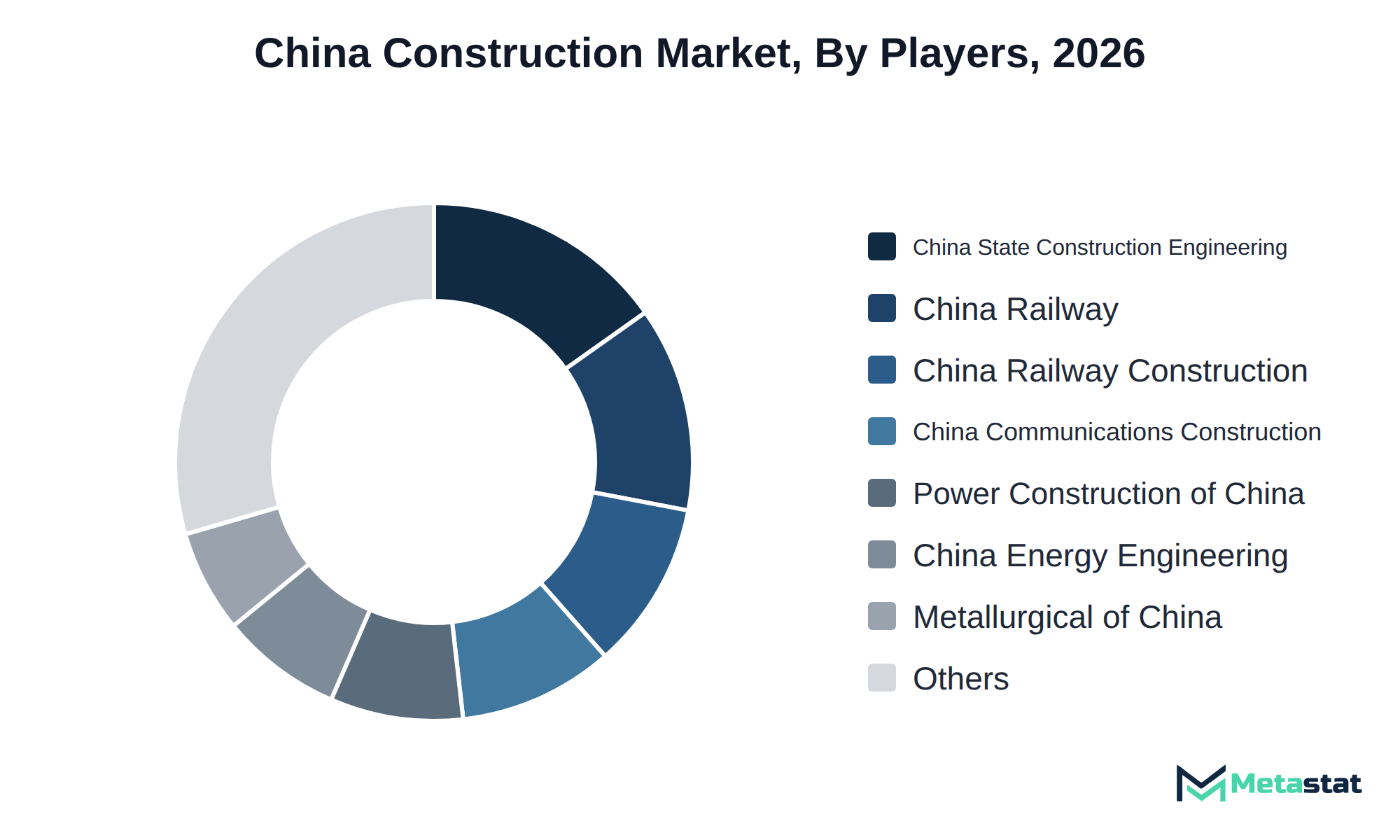
Companies in the China Construction market compete through various strategies, focusing on distinct segments including residential buildings, commercial buildings, and industrial facilities. Each segment draws interest from specific buyer groups, with decision factors including price, certification, customization, and overall service quality. Public-sector procurement drives demand for larger firms, while private corporate investment shifts focus toward innovative solutions.
China State Construction Engineering Corporation Limited emphasizes large-scale projects, leveraging its extensive experience in public-sector initiatives. Poly Developments and Holdings Group Co., Ltd. targets the residential segment, focusing on sustainable development and community-oriented design. Meanwhile, China Vanke Co., Ltd. balances traditional construction with modern techniques to appeal to discerning consumers in the commercial space.
Achieving this growth relies on several key developments within the China construction market. Significant investments in new construction, particularly in residential buildings, will enhance market demand, driving the total value upward.
However, potential risks could hinder this growth. Economic fluctuations or regulatory changes affecting public-sector investments restrict funding for essential infrastructure. The construction sector's reliance on public investments places it at risk in the event of budget cuts or policy shifts. Maintaining stable economic conditions and encouraging both public and private investment will be crucial for the market to reach USD 6,644.2 billion by 2033.
By Construction Segment: Residential Buildings, Commercial Buildings, Industrial and Logistics Facilities, Institutional and Public Buildings, Transportation Infrastructure, Energy and Utilities Infrastructure, Water and Environmental Infrastructure, Others
By Construction Type: New Construction, Renovation and Modernization, Repair and Maintenance, Others (Site Preparation and Demolition)
By Construction Method: Conventional Onsite Construction, Prefabricated Panelized Construction, Modular Volumetric Construction, Hybrid Onsite and Offsite Construction, Others (3D-Printed and Robotic Construction)
By Investment Source: Public-Sector Procurement, Private Corporate Investment, Household and Individual Investment, Others (PPP and Institutional Capital)
The report strategically identifies and profiles the key market players and analyses their core competencies in each sub-segment of the Construction market.
Report Attributes | Details |
Study Period | 2021-2033 |
Base Year | 2025 |
Estimated Year | 2026 |
Forecast Period | 2026-2033 |
Historical Period | 2021-2025 |
Growth Rate | CAGR 4.5% from 2026 to 2033 |
Revenue Unit | USD billion |
Segmentation | By Construction Segment, Construction Type, Construction Method, Investment Source, and Region |
Find answers to common questions about this report
The Construction market size was valued at USD 4,652.8 billion in 2025.
The market is projected to grow at a CAGR of 4.5% during the forecast period from 2026 to 2033.
Residential Buildings leads the Construction market with a projected value of USD 2,046.4 billion by 2033. This segment surpasses others in terms of total value during the forecast period.
Key drivers for the China Construction market include public-sector procurement, which enhances government spending on infrastructure projects, and the growing emphasis on renovation and modernization, reflecting rising urban living standards and the demand for infrastructure upgrades.
Increasing urban living standards and the necessity for infrastructure upgrades drive adoption in the China Construction market. The focus on sustainable practices and modernization of older buildings aligns with urban development goals, creating strong demand for innovative renovation solutions.
The Construction market is estimated to reach a valuation of USD 6,644.2 billion by 2033.
Key players operating in the Construction market include China State Construction Engineering Corporation Limited, China Railway Group Limited, China Railway Construction Corporation Limited, China Communications Construction Company Limited, Power Construction Corporation of China, and China Energy Engineering Corporation Limited.
Public-sector procurement is projected to expand from USD 2,986 billion in 2026 to USD 3,857 billion by 2033, reflecting a compound annual growth rate of 3.7%.
The renovation and modernization segment is projected to exhibit a compound annual growth rate of 6.7%, driven by increasing urban living standards and the need for infrastructure upgrades.
Suppliers face rising costs associated with maintaining compliance, including investments in training and equipment upgrades, which strain budgets and limit competitive pricing capabilities.
The analysts below cover Packaging research at Metastat Insights.
LEAD ANALYST
Utkarsh Khirodkar is a Lead Market Research Analyst at MetaStat Insight, specializing in market intelligence, technology sector assessments, and competitive strategy.

SENIOR RESEARCH ANALYST
Biotechnology · Food and Beverages · Medical Devices · Packaging
Snehal Pasalkar is a Research Analyst at MetaStat Insight, operating at the intersection of life sciences research, competitive strategy, and market intelligence.

INDUSTRY CONSULTANT - CHEMICALS & ADVANCED MATERIALS
Chemicals and Materials · Machinery & Equipment · Packaging
Amit Gadhekar Consultant for Chemicals and Materials at MetaStat Insight, directing sector-specific intelligence, research, and strategic consulting across global chemical and processing markets.
Integrating zero-trust access controls across legacy electronic health record systems involves complex compliance overhead. Team produced an analysis that clearly separated identity governance and administration tools from privileged access management platforms. Their evaluation of HIPAA and GDPR compliance features across cloud native solutions gave our architecture group clear baseline criteria. The custom data request regarding biometric authentication adoption in hospital networks was returned promptly with clear documentation.
Evaluating calorific value requirements and air permit compliance across municipal waste facilities requires localized data. Metastat Insight structured their analysis around operational throughput capacity and feedstock composition variations in Latin America and Eastern Europe. Their competitive mapping of sorting equipment vendors helped clarify technology differences between optical separators and heavy media systems. The study provided an objective baseline during our capital expenditure reviews.
Decarbonizing industrial thermal processes hinges on refrigerant regulations and compressor efficiency limits. Metastat Insights delivered a thorough market analysis that evaluated natural refrigerants like CO2 and hydrocarbons against synthetic low-GWP alternatives. The breakdown of utility incentives and grid capacity constraints across key European manufacturing hubs offered valuable perspective. The follow-up conversation with their sector analysts addressed our specific questions on mechanical vapor recompression systems efficiently.
Explore related market intelligence reports worth reading alongside this one.