
LEAD ANALYST
Utkarsh Khirodkar is a Lead Market Research Analyst at MetaStat Insight, specializing in market intelligence, technology sector assessments, and competitive strategy.

Global Building Materials Market Size, Share, By Material Type (Cement and Cementitious Materials, Aggregates, Concrete and Precast Products, Bricks and Blocks, Metals and Metal Products, Glass and Glazing Materials, Wood and Engineered Wood Products, Insulation Materials, Roofing Materials, Construction Chemicals and Mortars), By Construction Application (Residential Construction, Commercial Construction, Industrial Construction, Infrastructure and Civil Construction, Renovation and Repair), By Distribution Channel (Direct Sales, Distributors and Wholesalers, Specialty Building-Material Dealers, Retail and Home-Improvement Centers, Online and B2B Marketplaces), By Project Type (New Construction, Replacement and Retrofit, Maintenance and Repair, Expansion and Renovation), Industry Analysis, Growth, Trends, and Forecast, 2026-2033
Report ID
MSI-5227
Published
September, 2026
Pages
270 Pages
Format
Historical
Base year
Forecast
Forecast period
Report Details
Market Valuation: Valued at $1,534.7 Billion in 2025, projected to reach $2,233.8 Billion by 2033 at a 4.8% CAGR.
Dominant Segment: The residential construction segment leads the market, driven by increased homeownership rates and urbanization trends, projected to grow from USD 633.3 billion in 2026 to USD 844.4 billion by 2033.
Geographic Lead: Emerging economies are experiencing the fastest growth in building materials, fueled by significant investments in infrastructure and housing projects to accommodate expanding urban populations.
What's Inside: This report provides a comprehensive analysis of the global building materials market, covering material types, construction applications, distribution channels, and project types, along with competitive insights and growth forecasts.
Growth Opportunities: The market is witnessing a shift towards sustainable building practices, creating opportunities for eco-friendly materials and innovative construction techniques that meet evolving consumer preferences.
Choose Your License
Global Building Materials Market
The global Building Materials market was valued at USD 1,534.7 billion in 2025 and is projected to reach USD 2,233.8 billion by 2033, growing at a CAGR of 4.8% over the forecast period.
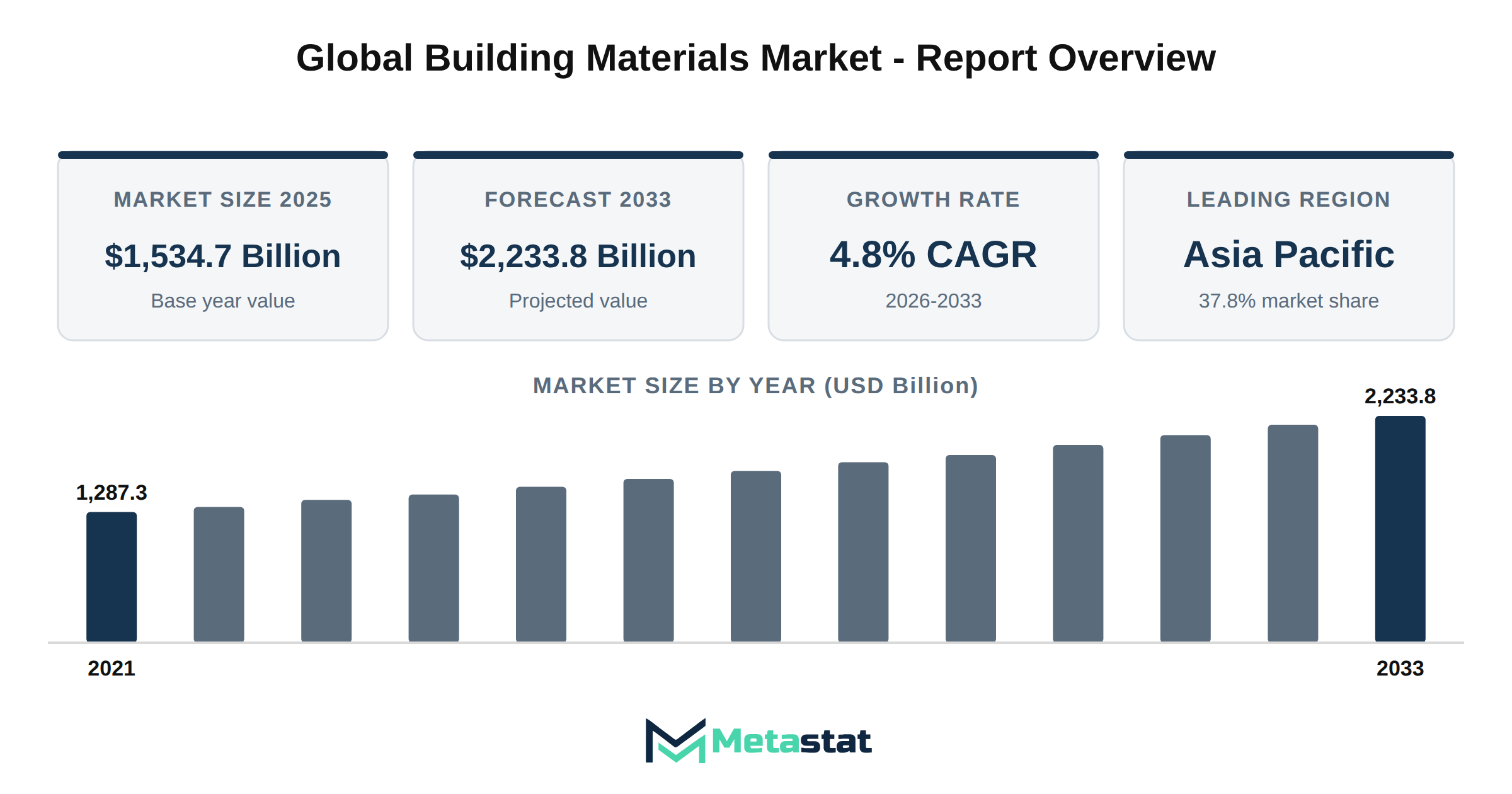
The global Building Materials market reached a valuation of USD 1,534.7 billion in 2025 and is projected to grow to USD 2,233.8 billion by 2033, reflecting a compound annual growth rate (CAGR) of 4.8%. This growth trajectory is driven by increased investments in residential, commercial, and infrastructure projects across various regions.
Demand for construction materials experiences steady trends, particularly in regions with expanding urban populations and robust economic growth. The residential and commercial construction outlook remains positive, with significant investments in housing and commercial developments expected in the coming years. Anticipated growth in these sectors contributes substantially to overall demand for building materials.
The supplier and distributor landscape includes a mix of established players and emerging companies, enhancing competition within the market. Key players including China National Building Material Group Co., Ltd., CEMEX, and HOLCIM focus on innovation and strategic partnerships to strengthen their market positions. This competitive environment drives advancements in product offerings and customer service.
Material pricing and cost trends indicate fluctuations influenced by raw material availability, labor costs, and transportation expenses. Pricing strategies reflect market conditions, with suppliers adapting to maintain profitability while meeting customer demands. This dynamic pricing environment necessitates agile responses from industry stakeholders to manage cost implications effectively.
Supply chain and logistics dynamics play a crucial role in the operational efficiency of the market. Efficient logistics architecture and sourcing strategies enhance the ability to meet demand while minimizing delays and disruptions. Market players invest in optimizing supply chains to ensure timely delivery and cost-effectiveness.
Growth opportunities arise from emerging demand in sustainable building practices and innovative construction techniques. Increasing awareness of environmental impact drives a shift towards eco-friendly materials and solutions, creating avenues for growth within the market. Investments in research and development focused on next-generation innovations support this trend.
The regulatory landscape influences market activities, with compliance to standards and regional risk frameworks shaping operational practices. Companies navigate these regulations while pursuing sustainable transformation and decarbonization initiatives, aligning with global sustainability goals. This proactive approach positions firms to capitalize on evolving market demands and maintain competitive advantages.
Rising construction activities across various sectors drive demand for building materials. Increased investments in infrastructure projects and residential developments significantly contribute to this trend. Consequently, construction firms prioritize sourcing high-quality materials to enhance project durability and efficiency. Anticipated growth in urbanization and population will further increase the demand for residential and commercial spaces, reinforcing the need for robust building materials.
The residential construction segment shows promising growth, with a projected increase from USD 633.3 billion in 2026 to USD 844.4 billion in 2033. Commercial construction exhibits significant potential, reaching USD 332.6 billion by 2033. Factors driving this expansion include a surge in housing demand and commercial infrastructure development, particularly in emerging economies. Future construction projects will focus on sustainable practices, aligning with environmental regulations and market expectations.
The supplier network within the building materials market consists of both large-scale manufacturers and specialized distributors. Major players include China National Building Material Group Co., Ltd., CEMEX, and Holcim, which maintain significant market shares. Distributors and wholesalers adapt to evolving customer preferences by expanding their product offerings and enhancing service delivery. This competitive landscape encourages innovation and efficiency within the supply chain.
Material pricing experiences fluctuations due to raw material availability and production costs. Cement and cementitious materials are projected to grow from USD 431.5 billion in 2026 to USD 576.1 billion in 2033, reflecting a compound annual growth rate of 4.2%. Similarly, aggregates exhibit a strong growth trajectory, with projections indicating a rise to USD 626.6 billion by 2033. These trends highlight the importance of strategic procurement and cost management in maintaining competitiveness.
The building materials market relies on a complex supply chain that integrates raw material extraction, manufacturing, and distribution. Efficient logistics management ensures timely delivery and cost-effectiveness. Emerging technologies, including digital tracking and automation, enhance supply chain visibility and responsiveness. Companies increasingly invest in optimizing their logistics architecture to accommodate growing demand and mitigate operational disruptions.
Identifying growth opportunities within the building materials market is critical for stakeholders. Emerging trends include increased demand for sustainable and eco-friendly materials, driven by heightened awareness of environmental impact. Innovations in material science, including advanced composites and recycled materials, present opportunities for market differentiation and expansion. Companies focusing on sustainability attract environmentally conscious consumers, enhancing their competitive edge.
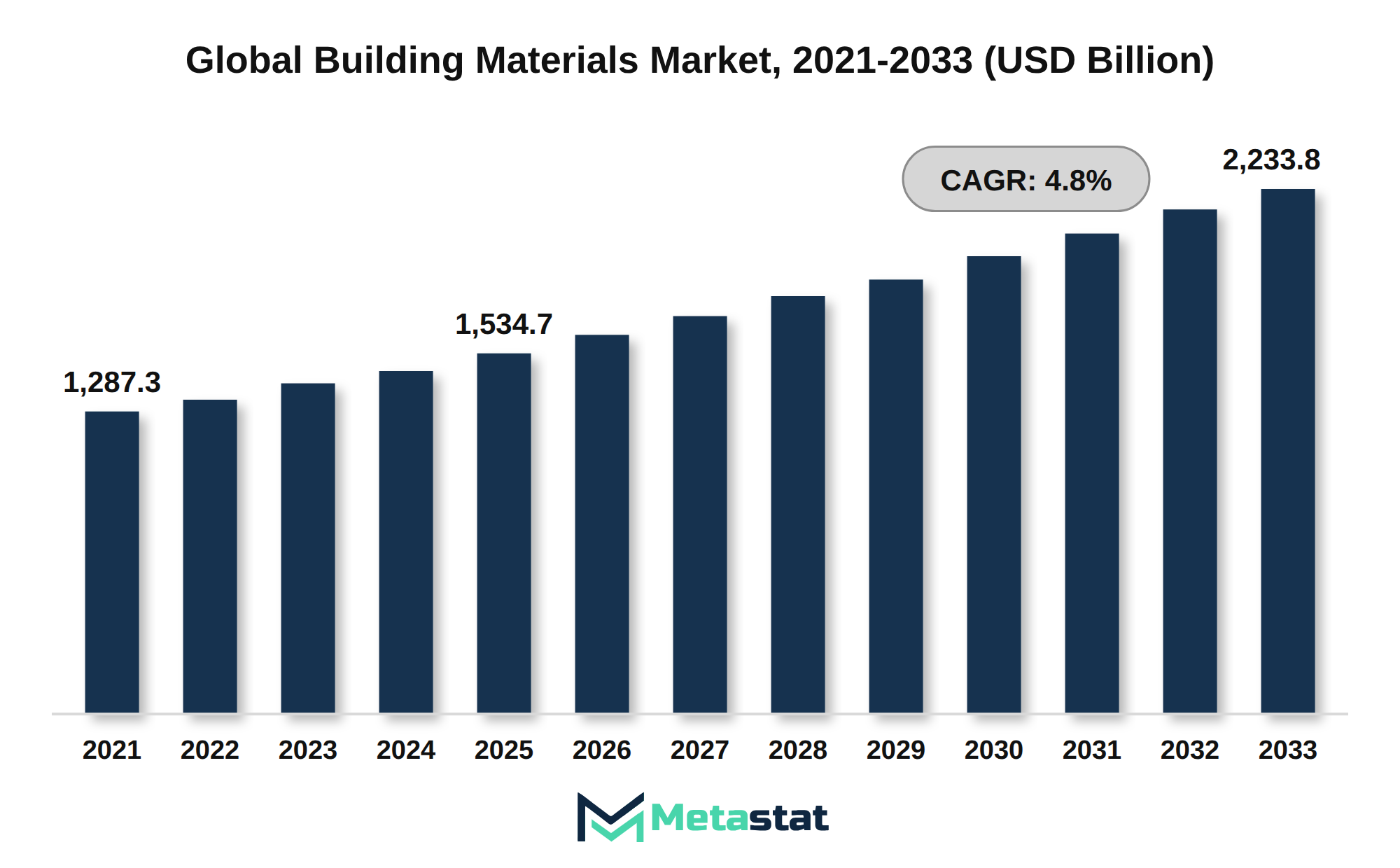
Investment in infrastructure development significantly influences the Building Materials market. Governments and private entities prioritize upgrading physical assets, enhancing urban facilities, and expanding network capabilities. This trend stems from heightened focus on urbanization, population growth, and economic expansion, which create increased demand for construction materials.
The ongoing push for modern infrastructure directly correlates with higher capital expenditures across various sectors, including residential, commercial, and industrial construction. This scenario boosts the market, driven by stakeholders allocating resources to meet the rising demand for new construction and renovation projects.
While urban centers expand and populations grow, the market experiences continuous pressure to supply diverse building materials. The shifting demographic patterns and lifestyle changes further intensify this demand, encouraging innovation and diversification among material suppliers. Overall, infrastructure development significantly propels the market toward its projected growth trajectory.
Changing demographics significantly influence the Building Materials market. An aging population increases the demand for residential construction and renovation, emphasizing accessibility and modern amenities. Urbanization trends lead to higher housing demand in metropolitan areas, creating a need for diverse building materials. The growing population stimulates housing projects and infrastructure development, resulting in greater material consumption.
Shifts in consumer preferences toward sustainable and energy-efficient building solutions prompt manufacturers to adapt their offerings. Younger generations prioritize eco-friendly materials and modern designs, driving innovation in product development. This transformation encourages firms to invest in research and development, enhancing their competitive edge. Consequently, adopting advanced materials meets evolving consumer expectations.
The combination of urbanization and demographic changes presents substantial opportunities for market growth. Construction projects expand, supported by government initiatives aimed at improving infrastructure. Increased residential and commercial developments lead to heightened demand across various segments, ultimately contributing to the overall expansion of the market.
Regulatory tightening presents a significant restraint within the Building Materials market. Stricter compliance requirements raise operational complexities for manufacturers, increasing the cost of doing business. Organizations invest heavily in ensuring adherence to evolving regulations, diverting resources from innovation and efficiency improvements. This environment creates barriers for smaller firms lacking the capital to meet compliance standards, limiting their market participation.
Macroeconomic headwinds, including inflationary pressures, contribute to rising costs across the supply chain. Increased prices for raw materials and labor affect profit margins, forcing companies to pass these costs onto consumers. This situation leads to decreased demand within the market, because higher prices deter investment from both residential and commercial construction sectors.
Supply chain disruptions exacerbate challenges. Fluctuating availability of materials delays project timelines and escalates costs, impacting the overall competitiveness of the market. Geopolitical instability introduces uncertainty, affecting supply routes and pricing strategies. These factors contribute to a fragmented market environment, where regional disparities pose additional obstacles to consistent growth.
Technological obsolescence emerges because a critical concern within the industry. Rapid advancements in building technologies outpace the adoption of newer materials, leading to risks of substitution. Companies that fail to adapt face declining market share, hindering long-term sustainability. Infrastructure gaps and connectivity deficits in certain regions limit the deployment of advanced building materials, further restricting market penetration.
Overall, these interconnected restraints challenge the Building Materials market, creating an environment where growth opportunities become increasingly difficult to seize. Companies that navigate these obstacles effectively position themselves to capitalize on emerging trends, enhancing their competitive advantage in the evolving marketplace.
Geopolitical fragmentation disrupts the global Building Materials market by creating trade deficits and tariff friction. Nations implement various trade barriers, leading to increased costs and reduced material availability. These barriers pressure suppliers to seek alternative sourcing strategies, often resulting in higher prices for consumers.
Technological disruptions present another challenge, with complex research and development integrations required to keep pace with innovation. Companies face interoperability friction when adopting new technologies, which complicates production processes and extends project timelines. This situation contributes to disappointing returns on investment and increases operational costs.
Logistics disruptions and supply chain instability compound these issues, leading to delivery delays and increased transportation costs. The volatility of feedstock and component prices exacerbates the situation, making it more difficult for businesses to manage budgets effectively. Consequently, these factors create significant margin pressures within the market.
Environmental lifecycle footprints and decarbonization mandates introduce additional complexities, driven by companies striving to align with tightening global regulatory standards. Compliance overhead grows, increasing the cost of doing business in the market. The focus on sustainability demands further investment and commitment from firms, impacting their financial resources.
Workforce skill gaps and talent retention pressures challenge organizations in the Building Materials market. Automation displacements result in a shift in labor requirements, making it crucial for businesses to invest in training and development initiatives. Failure to address these workforce challenges hinders operational efficiency and limits growth potential.
Infrastructure gaps and retrofitting barriers obstruct progress, creating implementation bottlenecks that affect project timelines and costs. Companies operating in the market navigate these challenges to maintain competitiveness and profitability.
Intellectual property protection deficits, cybersecurity risks, and data vulnerabilities pose additional threats. Companies in the Building Materials market prioritize security measures to safeguard their assets and information, owing to breaches leading to significant financial loss and reputational damage.
Changing downstream demands and market saturation create pressures on pricing, prompting companies to innovate continuously. This dynamic environment necessitates adaptability and strategic planning to succeed in the competitive landscape of the market.
Emerging regional demands significantly reshape the Building Materials market. Countries actively pursue infrastructure modernization, prompting increased investments in construction activities. This shift creates substantial opportunities for manufacturers to innovate and diversify their product offerings, catering to evolving consumer preferences and market needs.
Technological disruptions play a significant role in transforming production processes within the market. Advancements in digital transformation enhance operational efficiencies, enabling suppliers to optimize resource management and reduce costs. The integration of next-generation innovations facilitates the development of sustainable building materials, aligning with rising environmental consciousness among consumers and businesses alike.
Sustainability imperatives, including ESG-driven alignments, drive demand for eco-friendly materials. Companies embracing green transformations improve their competitive positions while meeting regulatory expectations. The market experiences heightened interest in niche applications, including energy-efficient insulation materials and sustainable concrete alternatives, which respond to the increasing focus on environmentally responsible practices.
Strategic consolidation emerges because a key trend, with cross-industry mergers and acquisitions strengthening supply chain networks. This approach encourages collaborative efforts that enhance value-chain optimization across diverse sectors, improving market responsiveness and adaptability. Resource sharing and technological integration among players create opportunities for innovation and increased market penetration.
Evolving buying behaviors, influenced by digital procurement shifts, compel suppliers to adapt their commercial models. The growth of online platforms and B2B marketplaces transforms how materials are sourced and purchased, enhancing accessibility and increasing competition. This trend accelerates the market's transition toward more efficient distribution channels, allowing for quicker responses to consumer demand changes.
Supply chain localization and strategic buffering contribute to improved resilience within the market. By focusing on regional sourcing and minimizing reliance on imports, companies enhance their operational stability and responsiveness to market fluctuations. This trend ensures that the Building Materials market aligns closely with local demand dynamics, facilitating sustainable growth in the coming years.
The Global Building Materials market is segmented based on Material Type, Construction Application, Distribution Channel, and Project Type.
Cement and Cementitious Materials is valued at USD 431.5 billion in 2026 and is projected to reach USD 576.1 billion by 2033, at a CAGR of 4.2% during the forecast period. Demand within this segment derives from its essential role in various construction applications, particularly in residential, commercial, and infrastructure projects. This reliance supports consistent consumption patterns, driven by ongoing urbanization and infrastructure initiatives globally.
Innovation in cement formulations enhances performance characteristics and reduces environmental impact, aligning with increasing regulatory pressures for sustainability within the Building Materials market. Advances including high-performance concrete products and alternative cementitious materials expand options for builders and developers, meeting consumer demand for durability and efficiency.
Fluctuations in cost structures, influenced by raw material availability and transportation expenses, impact pricing strategies for cement producers. Market participants actively manage these pressures through strategic sourcing and operational efficiencies to maintain competitive pricing. Price volatility remains a critical challenge, requiring adaptable business models that respond to market dynamics effectively.
The evolving landscape of cement and cementitious materials presents opportunities for growth in emerging markets, where rapid urbanization and infrastructure development projects drive demand. Strategic investments in production capabilities and distribution networks position players favorably to tap into these expanding markets, enhancing their market share within the overall Building Materials market.
Demand for aggregates, crucial for various construction applications, experiences steady growth driven by increasing infrastructure projects and residential construction activities. Expanding urbanization and population growth increase the need for aggregates, which are essential for concrete production, road construction, and other building projects. The aggregates segment is expected to reach USD 626.6 billion by 2033, growing at a CAGR of 4.6% during the forecast period. Investment in sustainable construction practices enhances the focus on high-quality aggregates, further pushing market growth.
Technological advancements in extraction and processing techniques contribute to increased efficiency and cost-effectiveness in the aggregates sector. Adoption of recycled aggregates, driven by stringent environmental regulations, supports sustainability objectives and improves resource utilization in the building materials market. The segment's expansion drives innovation and competition among suppliers, leading to continuous improvements in product offerings and quality standards.
Global demand dynamics indicate a shift towards high-performance aggregates used in specialized applications, including precast concrete and asphalt production. End-users, including contractors and construction firms, prioritize improved performance and durability, influencing purchasing decisions. Regulatory compliance regarding environmental impacts and material safety further shapes the market, encouraging suppliers to align with sustainable practices that address evolving consumer expectations.
Cost structures within the aggregates market remain affected by fluctuations in raw material pricing and transportation expenses. Companies engaged in this segment address challenges through strategic sourcing and efficient logistics to mitigate margin pressures. Overall, the aggregates segment plays a significant role in the broader building materials market, driven by sustained demand from construction and infrastructural development.
Growth in the Concrete and Precast Products segment stems from increased demand for durable, sustainable building solutions in various construction applications. The construction sector's expansion, driven by urbanization and infrastructure initiatives, significantly contributes to this demand. Rising preference for precast concrete due to its efficiency and cost-effectiveness supports market adoption across residential, commercial, and industrial projects.
Technological advancements in manufacturing processes enhance product quality and performance, facilitating wider acceptance of concrete and precast products. Innovations in mix designs and production methods improve structural integrity and reduce environmental impact, aligning with regulatory compliance and sustainability standards. This evolution positions concrete and precast products because essential components in modern construction.
Cost structures in the segment reflect the influence of raw material pricing and manufacturing expenses. Fluctuations in commodity prices directly impact production costs, while innovation efforts aim to offset these pressures through improved operational efficiency. Competitive pricing strategies enhance market positioning, driving revenue growth.
The Concrete and Precast Products segment is expected to reach USD 219.4 billion by 2033. Strategic opportunities emerge from ongoing infrastructure development projects and increasing investments in sustainable building practices. These factors create a favorable environment for market participants, who leverage advancements to capture additional market share.
Downstream application dynamics highlight the versatility of concrete and precast products across various project types. Their adoption in both new construction and renovation projects illustrates the segment's resilience in adapting to changing consumer preferences and regulatory landscapes. The market continues to evolve, driven by innovation and the pursuit of enhanced performance in construction materials.
Growth in the Bricks and Blocks segment is projected to grow at a CAGR of 4% during the forecast period. Increasing urbanization and infrastructure development drive the demand for bricks and blocks across various construction applications, including residential, commercial, and industrial projects. The expansion of the housing sector, particularly in emerging economies, boosts consumption in this segment. Technological advancements in the manufacturing processes enhance product quality and reduce production costs, attracting more builders and contractors. Compliance with environmental regulations encourages the adoption of sustainable materials, influencing manufacturers to innovate in product offerings.
Investment in research and development facilitates the introduction of next-generation products that meet specific customer needs, including energy efficiency and durability. The rising trend of prefabricated construction methods creates opportunities for bricks and blocks, driven by the compatibility of these materials with modular designs. Fluctuations in raw material prices affect cost structures and profit margins, prompting manufacturers to optimize their supply chains and explore alternative materials. Overall, the dynamics within the Building Materials market reflect a strong outlook for the Bricks and Blocks segment, emphasizing its vital role in modern construction practices.
Growing demand for metals and metal products in construction aligns with the increased focus on sustainability and energy efficiency. This segment benefits from technological advancements that improve product performance while reducing environmental impact. Integration of recycled materials into metal products enhances sustainability, appealing to environmentally conscious consumers and businesses.
Adoption of innovative metal products, including lightweight and high-strength materials, increases usage in various construction applications. Industrial and commercial sectors express robust interest, aiming to enhance project efficiency and durability. Regulatory compliance standards promote investment in advanced materials that meet stringent environmental and safety guidelines, influencing purchasing decisions across industries.
Pricing volatility, driven by fluctuating raw material costs, affects profit margins within the segment. Supply chain resilience becomes critical owing to producers navigating challenges in sourcing high-quality materials. Strategic opportunities arise for companies that innovate and adapt to changing market conditions, driving growth within the Building Materials market.
Increasing utilization of glass and glazing materials in construction projects stems from various factors, including the push for energy-efficient buildings and the aesthetic appeal that these materials offer. This segment benefits from the growing demand for sustainable building solutions, aligning with global efforts to reduce carbon footprints in the construction sector. The market experiences significant expansion driven by advancements in manufacturing techniques, leading to enhanced product quality and performance. Innovations including low-emissivity coatings and smart glass technologies contribute to the functionality and appeal of glass and glazing products, creating opportunities for new applications in residential, commercial, and industrial projects.
End-use dynamics indicate a shift towards more environmentally friendly materials, prompting manufacturers to develop products that meet stringent regulatory compliance standards. This trend influences investment strategies, with players focusing on research and development to comply with certification requirements while addressing consumer preferences for sustainability. The competitive landscape sees players adapting to changing consumption patterns, emphasizing the importance of supply chain resilience and raw material sourcing to mitigate risks associated with pricing volatility. Strategic opportunity windows arise from the market evolution, allowing for capital investments that support the development of next-generation glass and glazing materials.
Increasing adoption of wood and engineered wood products in construction aligns with sustainable practices, driven by the lower carbon footprints these materials offer compared to traditional alternatives. The focus on eco-friendly construction drives demand from builders and consumers prioritizing sustainability. Enhanced product performance, including improved durability and aesthetics, attracts various market segments, reinforcing the attractiveness of wood-based solutions. Innovations in engineered wood technologies further expand applications beyond conventional uses, allowing for incorporation in diverse architectural designs.
Consumer preferences have shifted towards more sustainable and renewable materials, motivating manufacturers to innovate. Regulatory compliance with environmental standards influences production processes and product offerings. This shift presents both challenges and strategic opportunity windows for stakeholders within the building materials sector, driving investments in R&D and enhanced production capabilities.
Cost pressures in raw material sourcing impact pricing strategies within the segment. Fluctuations in supply chain dynamics introduce vulnerabilities, because sourcing quality timber becomes increasingly critical. However, strategic partnerships and sustainable forestry practices mitigate risks associated with raw material shortages, reinforcing supply chain resilience. The emphasis on quality and sustainability in wood and engineered wood products continues to enhance their position in the building materials market.
Investment in energy efficiency and sustainability drives demand for insulation materials within the Building Materials market. Regulatory compliance standards, particularly those focusing on energy consumption and emissions, create a favorable environment for insulation products. This trend aligns with the increasing focus on reducing operational costs and improving building performance across the construction sector.
Technological advancements in insulation materials enhance their effectiveness, leading to greater adoption across various applications. Product evolution, including the development of eco-friendly and high-performance insulation solutions, appeals to environmentally conscious consumers and builders. The shift toward modern construction practices emphasizes the importance of thermal performance, further increasing demand.
Supply chain resilience plays an essential role in ensuring consistent availability of insulation materials, while raw material sourcing remains crucial in managing costs. Pricing volatility in raw materials affects the overall cost structure, adding margin pressures for manufacturers. Continuous innovation and strategic partnerships within the industry support growth opportunities, positioning insulation materials for increased consumption in the foreseeable future.
The market experiences consumption shifts driven by the growing trend toward sustainable building practices. End-use dynamics highlight the importance of insulation in both residential and commercial construction, reflecting the increasing awareness of energy efficiency. Strategic opportunity windows arise from emerging markets, where infrastructural development aligns with heightened demand for effective insulation solutions.
Innovation within roofing materials drives significant advancements in the Building Materials market. Technological maturation allows for the introduction of new materials with enhanced durability and energy efficiency, aligning with growing consumer preferences for sustainable options. Increased focus on energy-efficient buildings boosts demand for roofing solutions that provide insulation and contribute to overall energy savings. Evolving regulatory compliance standards push manufacturers to adopt environmentally friendly practices and materials.
Market expansion catalysts include trends including green building practices and the rising importance of aesthetics in residential and commercial construction. The preference for visually appealing and high-performance materials influences purchasing decisions, leading to increased investments in next-generation upgrades. End-use dynamics indicate a shift toward premium roofing products, reflecting homeowners’ desires for longevity and reduced maintenance costs.
Consumption shifts toward eco-friendly and recyclable materials gain traction, propelled by heightened environmental awareness. This trend enhances the competitive landscape within the market, compelling suppliers to diversify their offerings. Strategic opportunity windows arise from the expansion of urban areas and infrastructure projects, necessitating robust roofing solutions to support growing building needs.
Pricing volatility remains a key concern for manufacturers, often influenced by fluctuations in raw material costs. Sustained investment in supply chain resilience and raw material sourcing enhances market stability. Disruptive alternatives, including advanced synthetic materials, challenge traditional roofing products, prompting manufacturers to innovate and maintain competitiveness within the market.
Continuous advancements in construction chemicals and mortars influence the Building Materials market significantly. Demand stems from the growing need for high-performance materials that enhance durability and sustainability in construction applications. Innovations in formulations and applications drive the adoption of these materials across various project types, including new construction, maintenance, and renovation projects. Technological maturation contributes to product evolution, enabling the development of next-generation solutions that meet stricter environmental standards and performance criteria.
Shifts in consumption patterns highlight a preference for eco-friendly and energy-efficient products, aligning with global sustainability initiatives. Regulatory compliance standards play a crucial role in shaping market dynamics, because manufacturers adapt to meet evolving guidelines. Supply chain resilience is critical, with raw material sourcing strategies adjusted to mitigate risks associated with availability and pricing volatility. These factors collectively influence the market environment, presenting strategic opportunity windows for stakeholders aiming to capture growth in the construction chemicals and mortars segment.
The demand for effective performance and compliance results in increased scrutiny of cost structures and margin pressures within the market. Companies focus on optimizing their offerings to maintain competitive pricing while addressing the growing expectations of consumers and regulators. Continued investment in research and development is essential to achieve breakthroughs that enhance the functionality and applicability of construction chemicals and mortars, positioning them favorably in the broader Building Materials market.
Residential construction holds significant importance in the Building Materials market, valued at USD 633.3 billion in 2026 and projected to reach USD 844.4 billion by 2033, at a CAGR of 4.2% during the forecast period. This segment experiences growth driven by increased homeownership rates, rising disposable incomes, and urbanization trends across many regions. Expanding populations and high demand for housing drive investment in residential projects, thus enhancing material consumption. Regulatory compliance standards supporting sustainable building practices further boost demand for eco-friendly materials including energy-efficient windows and insulation products.
Technological advancements in construction methods and materials improve residential construction efficiency and performance. Innovations in prefabricated components and modular construction techniques allow for faster project completion and reduced labor costs. Downstream applications in residential projects exhibit a shift toward smart home technologies, which directly influence the material specifications required in new builds. Consequently, manufacturers adapt their product offerings to align with emerging trends, enhancing competitiveness in the market.
The outlook for residential construction emphasizes strategic opportunity windows in regions experiencing significant population growth and infrastructure development. Increasing emphasis on sustainability leads to heightened demand for green building materials, aligning with global efforts toward climate change mitigation. Investment in this segment signifies a commitment to long-term growth, with stakeholders focusing on innovative solutions to address evolving consumer preferences and regulatory challenges within the Building Materials market.
Increased focus on urban development and office spaces drives demand within the commercial construction sector. This segment relies on enhanced infrastructures, emphasizing the need for modernized facilities and advanced construction techniques. The ongoing trend toward sustainable building practices leads to higher adoption rates of eco-friendly materials, aligning with regulatory compliance and consumer preferences. Investments in smart technologies and energy-efficient systems represent significant catalysts for expansion within this segment.
Commercial construction is expected to reach USD 332.6 billion by 2033, growing at a CAGR of 4.7% during the forecast period. Businesses within this segment experience competitive advantages by integrating innovative construction methodologies and leveraging advanced materials. Cost structures face pressures from fluctuating raw material prices; however, strategic sourcing and efficient project management contribute to optimized margins. Supply chain resilience enhances project execution and minimizes risks associated with disruptions.
While stakeholders prioritize quality and sustainability, commercial construction adapts to evolving market demands, creating strategic opportunities. This transition drives growth in the Building Materials market, ensuring that suppliers and contractors remain responsive to shifting end-use dynamics and consumption patterns.
Investment in industrial construction is projected to reach USD 182.1 billion by 2033. Continued expansion in manufacturing, logistics, and energy sectors drives significant demand within this segment. The push for advanced manufacturing capabilities influences the adoption of innovative materials and techniques, enhancing productivity and efficiency.
Technological advancements play a critical role in segment growth. Automation and smart building technologies streamline operations while reducing costs, making industrial projects more attractive to investors. Compliance with stringent regulatory standards accelerates the adoption of sustainable materials, aligning with broader industry trends toward environmental responsibility.
Shifts in consumption patterns toward prefabricated and modular construction methods enhance the efficiency and speed of industrial projects. Increased focus on reducing project timelines and costs promotes the integration of these modern practices. The need for energy-efficient solutions in industrial facilities encourages investment in next-generation materials.
Pricing volatility in raw materials poses challenges and creates opportunities for strategic sourcing and partnerships. Companies that adapt their supply chains effectively mitigate risks associated with price fluctuations. The resilience of the supply chain in the industrial construction sector is vital, enabling firms to respond swiftly to market demands and maintain competitive positioning.
Strategic opportunity windows exist for firms that identify white-space areas in the market. Expanding capabilities to address specific needs within industrial sectors enhances market share and profitability. Overall, the industrial construction segment contributes significantly to the growth dynamics of the Building Materials market, reflecting broader trends in innovation and sustainability.
Infrastructure development emphasizes the need for enhanced urban connectivity and transportation efficiency. This focus drives substantial investments in infrastructure and civil construction projects, promoting economic growth and improving the quality of life. Investment in infrastructure projects, including roads, bridges, and public transport systems, significantly influences demand for building materials, especially concrete and aggregates.
Infrastructure and Civil Construction segment is projected to grow at a CAGR of 5.5% during the forecast period. Increased government spending on public infrastructure enhances the market landscape, encouraging private sector participation in construction activities. Regulatory compliance standards further increase the demand for high-quality building materials that meet safety and environmental guidelines.
Technological advancements in construction techniques and materials contribute to the efficiency and sustainability of infrastructure projects. Innovations including prefabrication, modular construction, and sustainable materials play a crucial role in enhancing the performance of infrastructure projects. The continuous evolution of materials results in improved durability and lower maintenance costs, appealing to project stakeholders.
Competitive pressures within the Building Materials market drive firms to focus on cost structures and pricing strategies. Fluctuations in raw material prices impact profit margins, necessitating firms to optimize their supply chains and sourcing strategies. Strategic investments in research and development promote the introduction of next-generation materials, aligning with market demands for enhanced performance and sustainability.
The growing emphasis on smart cities and sustainable development further influences construction dynamics. Infrastructure projects increasingly integrate smart technologies, enhancing energy efficiency and resilience in urban environments. The shift towards sustainable engineering solutions positions the Infrastructure and Civil Construction segment because a significant growth driver within the Building Materials market.
Demand for renovation and repair services stems from increasing investment in property maintenance and upgrades. Aging infrastructure and the need for modernization contribute significantly to this demand. Homeowners and property managers prioritize upgrades to enhance property value and ensure safety, driving the market forward. Rapid urbanization and shifting consumer preferences toward sustainable and energy-efficient renovations influence the growth of this segment.
Regulatory compliance related to building safety and environmental standards creates pressure for renovations that align with current codes. Innovations in materials and technologies enhance the efficiency and effectiveness of renovation projects, delivering better performance and reducing long-term costs. This evolution in product offerings responds to consumer demands for higher quality and durability in renovation materials.
Adoption of next-generation upgrades, including smart home technologies, influences the scope of renovations. Consumers increasingly seek integrated solutions that enhance living comfort and energy efficiency. This trend is evident in the growing interest in sustainable materials that align with environmental certifications and green building standards.
Economic factors, including fluctuating material costs and labor availability, impact pricing in the renovation and repair sector. Increased competition among suppliers drives innovation and enhances the product selection available to consumers. The combination of these elements positions the renovation and repair segment because a dynamic component of the Building Materials market.
Valued at USD 530.6 billion in 2026, the Direct Sales segment is projected to reach USD 713.3 billion by 2033, at a CAGR of 4.3% during the forecast period. Growth in this segment hinges on the increasing preference for direct transactions and personalized service offerings. Customers in the construction industry prioritize reliability and service quality, driving suppliers to enhance direct sales strategies. Direct sales enable suppliers to maintain closer relationships with end-users, allowing for a better understanding of customer needs and preferences.
Technological advancements facilitate improved sales processes, with digital platforms enabling efficient management of customer interactions and transactions. While construction projects become more complex, direct sales channels provide customized solutions tailored to specific project requirements. These tailored solutions increase consumer confidence, promoting higher expenditure on construction materials within the Building Materials market.
Continuous investment in the segment supports expansion, with companies enhancing sales capabilities through training and technology adoption. This shift aligns with broader trends in the market, where efficiency and customer satisfaction are critical. Growth in the segment reflects a changing landscape, where businesses that invest in direct sales capture increased market share and build long-term customer loyalty.
Expansion within the Distributors and Wholesalers segment in the Building Materials market reflects the increasing complexity of construction supply chains. This complexity stems from heightened demand across various construction applications and a focus on efficiency in distribution processes. The segment is expected to reach USD 600.7 billion by 2033, growing at a CAGR of 4.3% during the forecast period. Operational advancements in logistics and inventory management contribute significantly to this growth, enabling wholesalers to service a broader range of clients effectively. Changing customer preferences toward convenience and quick access to materials further drive changes in distribution strategies.
Primary demand drivers include the ongoing urbanization trend, which increases construction activity in residential, commercial, and infrastructure sectors. The growing emphasis on sustainability influences distributors and wholesalers to adapt their offerings, aligning with eco-friendly materials and practices. These shifts create opportunities for businesses within the segment to innovate their product lines and embrace next-gen upgrades, enhancing their competitive positioning in a developing market. Regulatory compliance standards and certifications require coordination among distributors and wholesalers to ensure quality and safety, which further shapes the operational landscape.
Strategic investments in technology, including supply chain management systems, enhance visibility and efficiency within the distribution process. This investment enhances resilience against fluctuations in raw material sourcing and pricing volatility while addressing margin pressures resulting from competitive pricing strategies. While distributors and wholesalers adapt their operations, their roles in the Building Materials market evolve, contributing to overall growth and dynamic end-use applications.
Demand for Specialty Building-Material Dealers remains strong owing to the ongoing expansion in construction projects across various sectors. Increased investment in residential and commercial construction enhances the need for specialized materials, driving growth in this segment. Significant opportunities arise for dealers in sourcing high-quality, diverse materials that meet evolving construction standards.
Technological advancements fuel product evolution within this segment, enabling dealers to offer innovative solutions that cater to specific project requirements. Enhanced product offerings, alongside a focus on sustainability, lead to shifts in consumption patterns, driven by builders and contractors prioritizing eco-friendly materials. Regulatory compliance standards further push dealers to align their inventories with industry guidelines, impacting procurement and pricing strategies.
The competitive landscape features various players striving to strengthen their market positions through strategic partnerships and improved service delivery. Dealers benefit from a resilient supply chain, ensuring timely access to raw materials while addressing potential substitution risks. Overall, Specialty Building-Material Dealers play a crucial role in the Building Materials market by facilitating access to essential products that support ongoing construction efforts.
Consumer interest in home improvement projects drives significant engagement within Retail and Home-Improvement Centers. These centers play a crucial role in providing essential building materials, tools, and products for various renovation and construction needs. The projected growth of this segment at a CAGR of 4% during the forecast period reflects an increasing trend in DIY home projects, which cater to both residential and commercial markets.
Shifts in consumer preferences toward convenience and accessibility further enhance the importance of Retail and Home-Improvement Centers in the Building Materials market. These channels provide a wide range of products tailored to meet diverse customer requirements, enabling effective solutions for both minor repairs and extensive renovations. The rise of e-commerce and online shopping platforms contributes to the expansion of this segment, allowing customers to access building materials with greater ease and flexibility.
Continuous product evolution, including the introduction of environmentally friendly materials, aligns with growing consumer awareness regarding sustainable building practices. Retail and Home-Improvement Centers adapt their offerings to incorporate these innovations, increasing customer loyalty and satisfaction. This strategic alignment positions the segment favorably within the competitive environment of the Building Materials market.
Overall, the Retail and Home-Improvement Centers segment demonstrates growth potential, driven by changing consumer dynamics, product advancements, and a focus on sustainable construction practices. Maintaining a competitive edge requires ongoing investment in inventory, customer service, and technological enhancements.
Digital platforms transform the distribution of building materials, enhancing access and efficiency across the supply chain. These channels facilitate direct engagement between suppliers and buyers, allowing for streamlined transactions and improved product visibility. Shifts in consumer behavior towards online purchasing significantly impact the market dynamics, driven by buyers increasingly seeking convenience and competitive pricing.
Technological advancements support the growth of online and B2B marketplaces, enabling features including real-time inventory tracking and customized ordering solutions. Enhanced data analytics provide suppliers with insights into buying patterns, allowing for tailored marketing strategies that capture specific customer segments. The proliferation of mobile applications further improves the accessibility of building materials, creating a culture of on-the-go purchasing.
Regulatory compliance remains critical within this segment, because digital platforms adhere to industry standards and certifications to ensure safety and quality. While governmental regulations around construction materials evolve, suppliers on these platforms adapt swiftly to maintain competitive advantages. This adaptability influences purchasing decisions, with buyers increasingly prioritizing suppliers that demonstrate compliance with relevant standards.
Cost structures within the online and B2B marketplaces reflect the need for competitive pricing while balancing operational efficiencies. The pressure on margins necessitates innovative approaches to logistics and supply chain resilience, ensuring that suppliers maintain reliable delivery schedules. Disruptive alternatives, including new technologies and emerging competitors, challenge traditional distribution models, compelling existing players to innovate continuously to retain market share.
Strategic opportunity windows emerge because the market evolves, with investments in next-gen upgrades and digital capabilities driving competitive differentiation. Companies that leverage these advancements position themselves favorably within the Building Materials market, enhancing their appeal to a broader customer base. Overall, the online and B2B marketplaces segment significantly shapes the future of the building materials distribution channel.
Valued at USD 707.1 billion in 2026, the New Construction segment is projected to reach USD 965.5 billion by 2033, at a CAGR of 4.6% during the forecast period. Factors driving growth in this segment include the escalating demand for residential and commercial spaces, fueled by urbanization and population growth. Investment in infrastructure projects further increases demand, driven by governments and private entities prioritizing development to enhance economic productivity.
Technological advancements in construction methods and materials improve efficiency and lower costs, influencing the market significantly. Adoption of modern construction technologies including prefabrication and modular construction improves timelines and reduces waste, appealing to stakeholders looking for cost-effective solutions. Regulatory compliance standards and certifications dictate material use and safety protocols, ensuring quality and sustainability in construction practices.
Price volatility in raw materials affects cost structures and profit margins within the segment. Suppliers face challenges related to sourcing high-quality inputs amid fluctuating prices, which impact project budgets and timelines. Strategic investment in supply chain resilience and raw material sourcing becomes crucial to mitigate these pressures. Companies focusing on innovative materials strengthen their competitive positioning in the market, aligning with consumption shifts toward sustainable and durable building solutions.
An increasing emphasis on energy-efficient designs in new construction raises the demand for advanced building materials. Trends in eco-friendly construction practices drive interest in materials that offer better thermal performance and reduced environmental impact. This focus creates strategic opportunity windows for companies that develop next-generation upgrades and products tailored to meet evolving consumer preferences in the Building Materials market.
Growing trends in sustainability and efficiency significantly influence the Replacement and Retrofit segment within the Building Materials market. Increasing regulatory standards and consumer preferences for energy-efficient solutions drive investments in upgrading existing structures. Building owners and contractors prioritize energy-saving materials and technologies to comply with these standards, enhancing property value while reducing operational costs.
This segment is expected to reach USD 432.7 billion by 2033, at a CAGR of 5% during the forecast period. Adoption of innovative materials and methods, including advanced insulation and eco-friendly products, supports segment growth. The focus on modernizing outdated infrastructure further contributes to demand, driven by cities aiming to improve the resilience and functionality of their buildings.
Shifts in consumer behavior toward renovating rather than new construction lead to increased spending on maintenance and improvement projects. Homeowners invest in upgrades that enhance comfort and aesthetics. These factors combine to strengthen the position of the Replacement and Retrofit segment, reflecting a broader commitment to sustainability and modernization within the market.
Growing investment in maintenance and repair services drives demand for building materials, reflecting an increasing focus on property upkeep and enhancement. This segment is projected to reach USD 293.7 billion by 2033, supported by rising consumer preference for renovations and improvements in existing structures. The ongoing trend of aging infrastructure necessitates consistent maintenance efforts, generating further opportunities within the market. Regulatory compliance standards and certifications surrounding safety and environmental impact significantly influence product selection, pushing suppliers to innovate and enhance offerings. Shifts in consumption patterns toward sustainable and energy-efficient solutions create strategic opportunity windows for manufacturers. Fluctuations in raw material prices and cost structures present challenges that require adaptive strategies from industry players. Overall, these factors contribute to an evolving environment where maintenance and repair represent a vital segment of the Building Materials market.
Renovation and expansion activities align with evolving consumer preferences, resulting in a notable surge in demand for building materials. The rising trend of upgrading existing structures to accommodate modern standards and energy efficiency drives investment across various sectors. Increased emphasis on sustainable building practices influences preferences for eco-friendly materials, leading to a shift toward innovative solutions in the market.
This segment is projected to grow at a CAGR of 5.2% during the forecast period. Significant capital investment in renovation projects reflects a response to demographic changes and urbanization, creating opportunities for suppliers. The growing need for compliance with newer regulations and building codes further increases demand for high-quality materials, impacting cost structures and pricing strategies.
Adoption of advanced technologies in construction enhances efficiency and reduces waste, contributing to the segment's growth. Enhanced operational practices in construction and design facilitate smoother integration of newer materials and techniques into existing frameworks. The combination of these factors positions the segment favorably within the broader Building Materials market, ensuring sustained expansion and increased revenue potential.
Significant investments in infrastructure development emerge from the need for enhanced urban connectivity, transportation networks, and public utility systems. This trend gains traction driven by government initiatives targeting the modernization of existing facilities and the construction of new ones. The Building Materials market benefits from these initiatives, creating increased demand for various construction materials and services.
Technological maturation in construction processes leads to the adoption of innovative materials and methods that boost efficiency and sustainability within infrastructure projects. Continuous upgrades and product evolution align with governmental regulations aiming to improve energy efficiency and reduce environmental impact. These factors contribute to heightened competition among suppliers, ultimately benefiting end-users through improved product offerings.
Increased consumption patterns reflect a shift towards prioritizing infrastructure projects that maximize long-term returns on investment. Regulatory compliance standards play a crucial role in shaping the required materials and processes, ensuring that projects adhere to safety and environmental guidelines. Consequently, suppliers focusing on certified products and sustainable practices gain a competitive edge in the market.
Strategic opportunity windows arise from significant capital investments in infrastructure, with governments and private entities seeking to revitalize aging systems. These investments enhance supply chain resilience, enabling firms to source raw materials more effectively and mitigate potential disruptions. Supply chain vulnerabilities remain an area of concern, necessitating robust strategies for sourcing and logistics management.
In light of the evolving landscape of infrastructure demand, the market presents numerous pathways for growth. Firms actively evaluating substitution risks and disruptive alternatives position themselves favorably within this dynamic environment. By addressing technological obsolescence and embracing next-generation materials, suppliers enhance their market relevance and appeal to a broader customer base.
Overall, the infrastructure development segment of the Building Materials market demonstrates strong potential for growth fueled by ongoing investments, technological advancements, and shifting regulatory demands. Collaboration among stakeholders promotes innovation, ensuring that infrastructure projects meet the evolving expectations of society while delivering value to investors.
Based on geography, the Global Building Materials market is divided into North America, Europe, Asia-Pacific, South America, Middle East, and Africa.
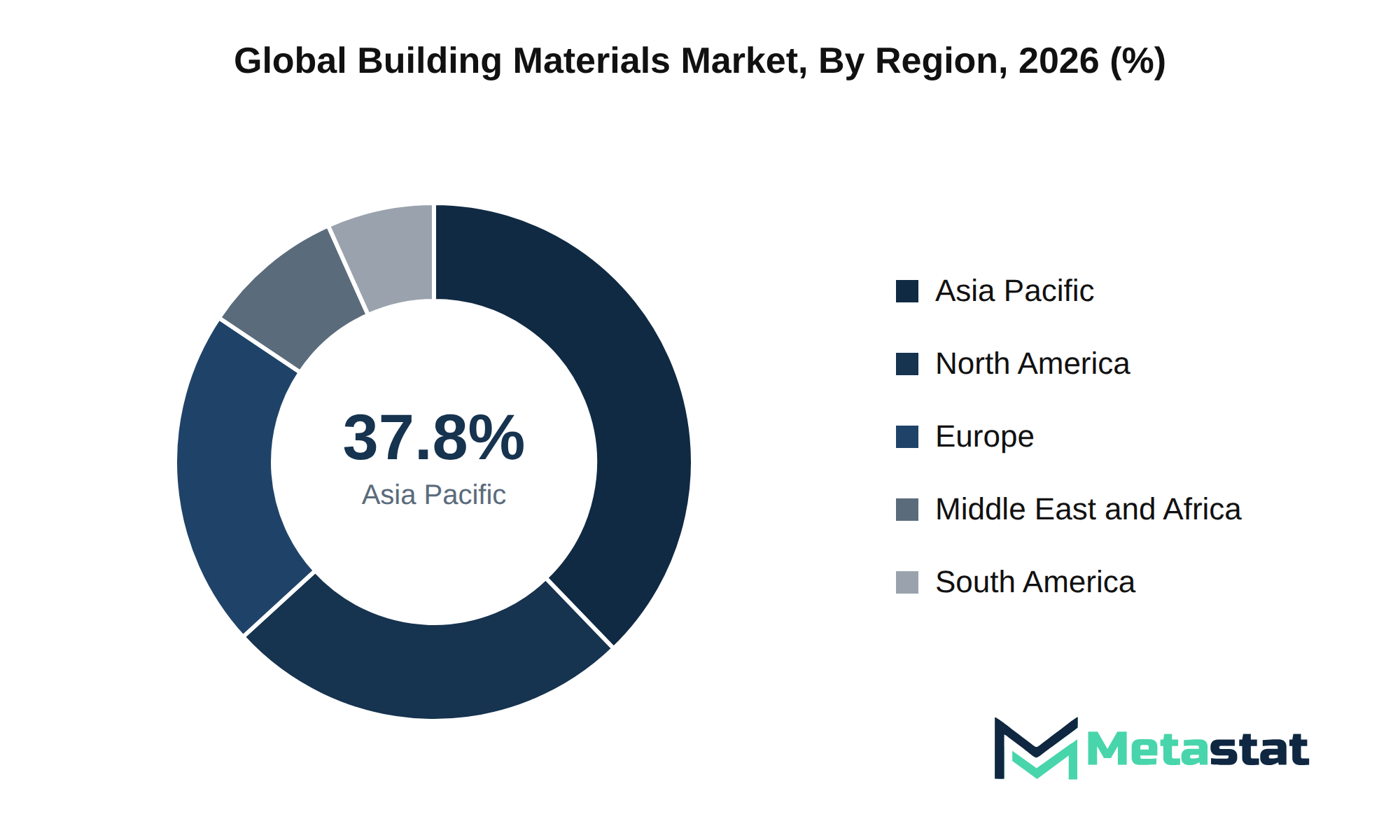
North America accounts for a significant portion of the global Building Materials market, with a share of 25.4% anticipated in 2025. The market expands at a CAGR of 4.8% during the forecast period, reaching a market size (TAM) of USD 550.2 billion by the end of 2033. Factors driving this growth include ongoing infrastructure modernization efforts, increasing housing demands, and a shift toward sustainable construction practices.
The United States, Canada, and Mexico represent key players in the North American Building Materials market. Investment in residential construction remains robust, focusing on new projects that enhance urban living and sustainability. Demand for construction materials, including aggregates and cement, grows in response to rising construction activities and government initiatives aimed at upgrading infrastructure.
Domestic market participants, including major manufacturers and distributors, are well-positioned to capitalize on the region's growth opportunities. Localization of supply chains and nearshoring initiatives enable these players to respond effectively to evolving market conditions. The competitive landscape shows a trend toward vendor consolidation, enhancing operational efficiencies and product offerings.
Geographic regulatory frameworks and local compliance mandates influence procurement dynamics within the region. Proactive engagement with local suppliers and adherence to regional standards enhance market access and consumer trust. Energy grid resiliency and local infrastructure readiness impact market growth, enabling quicker project completions and supporting overall demand for building materials.
Europe accounts for 21.2% of the Building Materials market in 2025. The building materials sector in this region benefits from robust infrastructure frameworks and established supply chains. Countries including Germany, France, the UK, Italy, and Spain lead in construction activities, supported by government initiatives aimed at modernizing public infrastructure.
The focus on sustainable building practices drives demand for innovative materials across various segments, including residential and commercial construction. European markets show strong growth in the aggregates and cement sectors, a trend fueled by increasing urbanization and renovation projects. Competitive dynamics within the region feature both domestic and international players, with an emphasis on vendor consolidation trends that enhance market stability.
Geopolitical factors influence cross-border trade corridors, impacting sourcing strategies and local compliance mandates. Companies adapt to changing regulatory frameworks, while localized procurement dynamics play a crucial role in shaping competitive landscapes. Energy grid resiliency and infrastructure readiness further support market expansion and promote investment in high-value projects.
With continued focus on modernization and sustainability, the Building Materials market in Europe is poised for growth, driven by emerging technologies and evolving consumer preferences. Strong market fundamentals and strategic entry barriers offer opportunities for both new entrants and established players to enhance their market positions.
Asia Pacific represents a growing share of the Building Materials market, accounting for 37.8% of the global market in 2025. This region experiences strong growth driven by rapid urbanization, increasing population densities, and heightened infrastructure demands. Countries including China, India, and Japan play key roles in shaping market dynamics, with extensive investment in construction projects aimed at modernizing urban infrastructure.
Increased public and private sector spending fuels demand for a variety of building materials. This trend reflects a broader strategy to enhance living standards and economic development. Residential and commercial construction activities in urban areas contribute to segment expansion, particularly in China's major cities and India's growing metropolises.
Supply chain regionalization supports local manufacturing capacities, strengthening the market. Initiatives focused on nearshoring improve the procurement of building materials within the region, reducing reliance on distant markets. Geopolitical factors influence procurement strategies, with companies increasingly focusing on localized supply chains to enhance resilience against external shocks.
In terms of segment performance, the demand for Cement and Cementitious Materials, Aggregates, and Concrete products continues to rise. Growth in these areas reflects ongoing construction projects and infrastructure repair works across the region. The market is anticipated to evolve because companies adapt to market conditions, innovate product offerings, and pursue strategic alliances to enhance competitive positioning.
Sustained economic growth in Asia Pacific drives high-value replacement cycles and incremental growth vectors in the market. Emerging market front-runners demonstrate potential for substantial contributions to overall market expansion. Local compliance mandates and regulatory frameworks guide operational practices, shaping how companies engage with market opportunities.
Investment flows, particularly in foreign direct investment (FDI), provide crucial support for the region's building materials sector. Geographic expansion windows open up new possibilities for market players, creating a competitive environment that encourages innovation and enhanced customer offerings. The market outlook for Asia Pacific remains positive, driven by these various growth factors and the ongoing evolution of regional dynamics.
South America, accounting for 6.7% of the global Building Materials market in 2025, demonstrates steady growth driven by increasing urbanization and infrastructure development in key countries including Brazil and Argentina. The rising demand for residential and commercial construction fuels market expansion, supported by government initiatives aimed at modernizing infrastructure and stimulating economic growth.
Brazil leads in market share, supported by significant investments in housing projects and urban renewal programs. The government’s commitment to enhancing infrastructure through various public-private partnerships facilitates growth in the construction sector. Argentina, while smaller in market size, shows promising potential due to ongoing residential development projects and increasing foreign direct investment (FDI).
Localized manufacturing densities contribute to market competitiveness by reducing supply chain costs and enhancing responsiveness to regional demands. The growing trend of nearshoring initiatives further strengthens the market, enabling firms to capitalize on local resources and minimize logistical challenges.
Regional market dynamics reflect a balance between mature and emerging segments. High-value replacement cycles in residential and commercial buildings create incremental growth vectors, driven by property owners looking to enhance energy efficiency and sustainability in their projects. The market environment encourages domestic players to consolidate, creating stronger competitive advantages amid increasing demand.
Geographic factors significantly shape the Building Materials market in the Middle East and Africa. The region captures a share of the global market in 2025, reflecting an evolving demand landscape driven by urbanization, infrastructure development, and economic diversification efforts. Countries including Saudi Arabia and the UAE lead investments in construction, with substantial projects aimed at modernizing urban infrastructure and enhancing living standards.
Infrastructure modernization initiatives play a significant role in driving growth, particularly within Saudi Arabia, where Vision 2030 initiatives encourage substantial public and private investments in various sectors, including construction. The UAE's ongoing projects for sustainable city developments contribute significantly to the market. South Africa represents an emerging market front-runner, with improvements in housing and public infrastructure aimed at addressing urbanization challenges.
Localized manufacturing densities and supply chain regionalization efforts enhance operational efficiency in the market. Nearshoring initiatives allow companies to establish manufacturing bases closer to end-users, reducing lead times and transportation costs. Geopolitical fragmentation and shifting trade policies influence cross-border trade corridors, prompting businesses to adapt their procurement strategies to align with evolving regional dynamics.
Domestic market participants, including established companies, focus on strengthening their market presence through strategic alliances and vendor consolidation trends. Cultural nuances and regional B2B buying behaviors affect purchasing decisions, emphasizing the importance of tailored solutions to meet local demands. Growth vectors including high-value replacement cycles and infrastructure development projects highlight significant opportunities for stakeholders in the market.
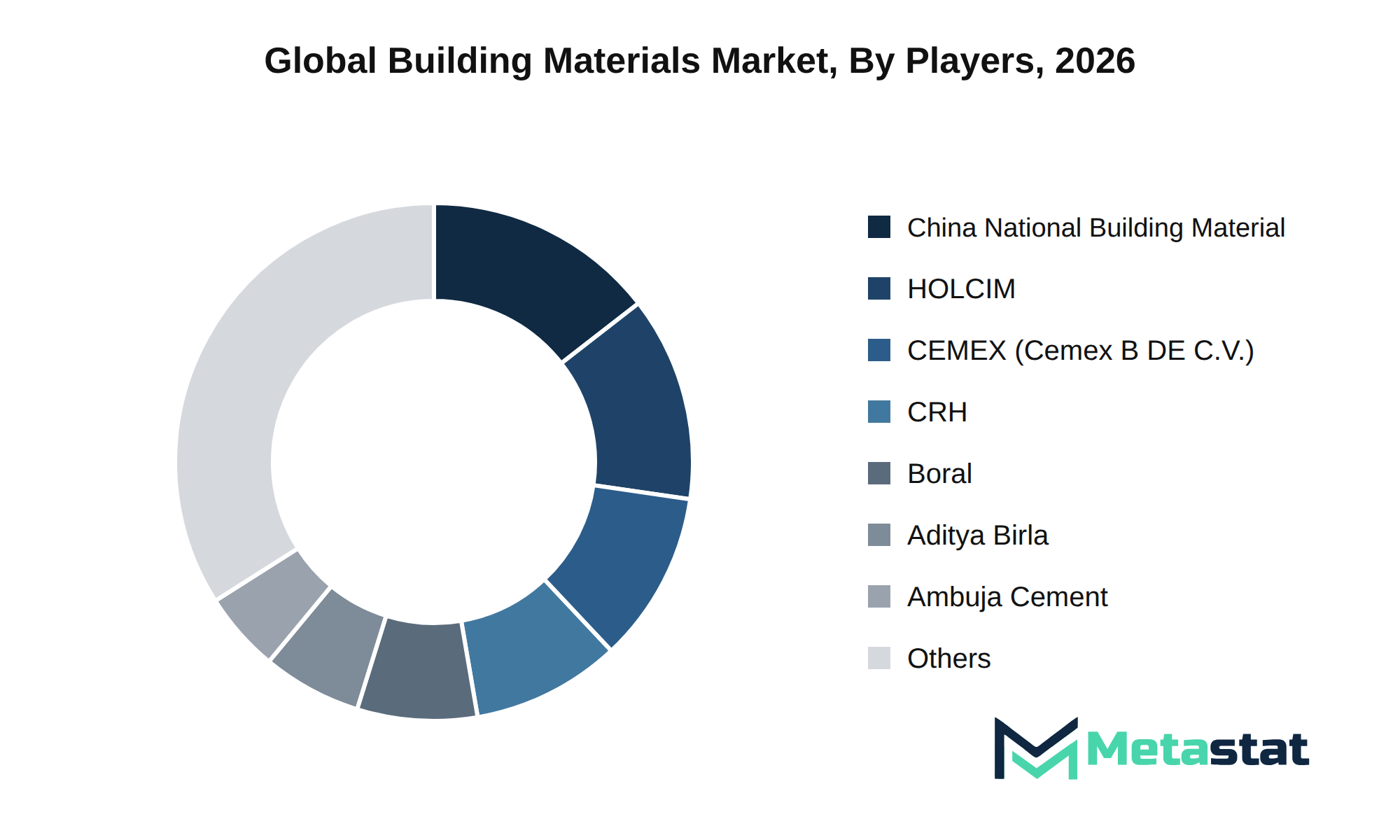
The Building Materials market experiences significant activity in mergers, acquisitions, and strategic consolidation. Major players actively engage in partnerships and joint ventures to strengthen their market positions and leverage economies of scale. Companies like CEMEX and HOLCIM pursue strategic alliances to enhance their competitive edge and access new markets.
Product differentiation remains a core focus for companies in the market. Firms invest in research and development to innovate and improve product offerings, ensuring they meet evolving customer demands. Technology moats serve because a critical element for maintaining competitive advantages, with several companies developing proprietary technologies that enhance product performance and sustainability.
The market faces barriers to entry, including high capital requirements and established brand equity among key players. New entrants encounter challenges in competing against well-established brands including Saint-Gobain and Boral Limited, which possess strong customer retention strategies and substantial market presence.
Future competitive dynamics will involve a deeper integration of value chains and enhanced procurement leverage. Strategic growth vectors emerge because companies look to diversify their portfolios and expand into emerging markets, driving further innovation and market expansion.
Market size is forecast to rise from USD 1,534.7 billion in 2025 to over USD 2,233.8 billion by 2033. The base case indicates growth at a 4.8% CAGR during this period. Factors influencing this trajectory include macroeconomic conditions, evolving industry demands, and shifts in technology integration within the Building Materials market.
The bull case envisions robust economic expansion, characterized by increased infrastructure investments and heightened demand for residential and commercial projects. This scenario supports accelerated growth in the market, driven by strategic capital allocation and proactive policy enforcement. In contrast, the bear case anticipates potential economic downturns that impact downstream demand and constrain growth prospects. Such challenges arise from geopolitical tensions and disruptions in global supply chains, dampening overall market performance.
Overall, the outlook for the Building Materials market reflects structural consumption shifts and core industry maturation. R&D commercialization timelines and regulations will shape future developments, creating both challenges and opportunities. While the market evolves, stakeholders remain agile, identifying white-space opportunities and addressing unmet enterprise needs to capitalize on high-growth pockets.
The report strategically identifies and profiles the key market players and analyses their core competencies in each sub-segment of the Building Materials market.
Report Attributes | Details |
Study Period | 2021-2033 |
Base Year | 2025 |
Estimated Year | 2026 |
Forecast Period | 2026-2033 |
Historical Period | 2021-2025 |
Growth Rate | CAGR 4.8% from 2026 to 2033 |
Revenue Unit | USD billion |
Segmentation | By Material Type, Construction Application, Distribution Channel, Project Type, and Region |
By Region | North America (By Material Type, Construction Application, Distribution Channel, Project Type, and Country)
|
Europe (By Material Type, Construction Application, Distribution Channel, Project Type, and Country)
| |
Asia Pacific (By Material Type, Construction Application, Distribution Channel, Project Type, and Country)
| |
South America (By Material Type, Construction Application, Distribution Channel, Project Type, and Country)
| |
Middle East and Africa (By Material Type, Construction Application, Distribution Channel, Project Type, and Country)
|
Find answers to common questions about this report
The Building Materials market size was valued at USD 1,534.7 billion in 2025.
The Building Materials market is projected to grow at a CAGR of 4.8% during the forecast period from 2026 to 2033.
The North America Building Materials market size is estimated to reach USD 550.2 billion by 2033.
The segment leading the Building Materials market is Aggregates, with a projected value of USD 626.6 billion by 2033. This segment surpasses others based on its growth rate and overall market share.
Investment in infrastructure development and changing demographics drive the Building Materials market. Increased urbanization and population growth create heightened demand for construction materials, while consumer preferences shift towards sustainable and energy-efficient solutions, prompting innovation among suppliers. These factors collectively support market expansion and adaptation to evolving consumer expectations.
Regulatory tightening creates operational complexities and increases costs for manufacturers, limiting participation in the Building Materials market, particularly for smaller firms. Macroeconomic headwinds, including inflation and supply chain disruptions, further raise costs and decrease demand. Geopolitical fragmentation and technological obsolescence hinder growth opportunities within the market.
Urbanization and demographic changes significantly favor product adoption in the Building Materials market. The growing population and shifting consumer preferences towards sustainable and energy-efficient solutions drive innovation and diversification among material suppliers, enhancing market growth. Government initiatives supporting infrastructure development further stimulate demand across various segments.
The Building Materials market is estimated to reach a valuation of USD 2,233.8 billion by 2033.
Key players operating in the Building Materials market include China National Building Material Group Co., Ltd., CEMEX (Cemex S.A.B DE C.V.), Boral Limited, HOLCIM, CRH, Saint-Gobain, and The Sherwin-Williams Company.
The Cement and Cementitious Materials segment is projected to grow from USD 431.5 billion in 2026 to USD 576.1 billion by 2033, reflecting a CAGR of 4.2 percent.
The analysts below cover Chemicals and Materials research at Metastat Insights.
LEAD ANALYST
Utkarsh Khirodkar is a Lead Market Research Analyst at MetaStat Insight, specializing in market intelligence, technology sector assessments, and competitive strategy.

INDUSTRY CONSULTANT - CHEMICALS & ADVANCED MATERIALS
Chemicals and Materials · Machinery & Equipment · Packaging
Amit Gadhekar Consultant for Chemicals and Materials at MetaStat Insight, directing sector-specific intelligence, research, and strategic consulting across global chemical and processing markets.
Decarbonizing industrial thermal processes hinges on refrigerant regulations and compressor efficiency limits. Metastat Insights delivered a thorough market analysis that evaluated natural refrigerants like CO2 and hydrocarbons against synthetic low-GWP alternatives. The breakdown of utility incentives and grid capacity constraints across key European manufacturing hubs offered valuable perspective. The follow-up conversation with their sector analysts addressed our specific questions on mechanical vapor recompression systems efficiently.
Assessing 200mm wafer transition schedules and substrate supply bottlenecks requires precise technical intelligence. MetaStat Insight supplied an actionable breakdown comparing planar and trench MOSFET architectures across automotive and industrial drive markets. The regional capacity estimates for Asia-Pacific foundries helped clarify lead-time uncertainties during our strategic planning session. When we needed additional clarification on high-purity raw material sourcing, their analyst team responded with helpful context within twenty-four hours.
Tracking maintenance cycle demand for secondary flight display units and terrain collision avoidance systems across regional jet fleets involves complex aftermarket dynamics. MetaStat Insight provided practical analysis separating airline retrofit programs from OEM forward-fit production schedules in North America and Southeast Asia. The supplier matrix highlighted component obsolescence timelines without resorting to vague generalizations. The dataset served as a dependable reference during our annual program review meetings.
Explore related market intelligence reports worth reading alongside this one.