
LEAD ANALYST
Utkarsh Khirodkar is a Lead Market Research Analyst at MetaStat Insight, specializing in market intelligence, technology sector assessments, and competitive strategy.

China Prefabricated Construction Market Size, Share, By Structural Material (Concrete, Steel, Timber and Others), By System Type (Panelized Building Systems, Volumetric Modular Buildings, Componentized Building Systems and Others), By Building Application (Residential Buildings, Manufacturing Buildings, Warehouses and Logistics Buildings, Office and Retail Buildings, Healthcare Buildings, Education Buildings, Hospitality Buildings and Others), By Building Permanence (Permanent Buildings and Relocatable Buildings), Industry Analysis, Growth, Trends, and Forecast, 2026-2033
Report ID
MSI-5751
Published
November, 2026
Pages
275 Pages
Format
Historical
Base year
Forecast
Forecast period
Report Details
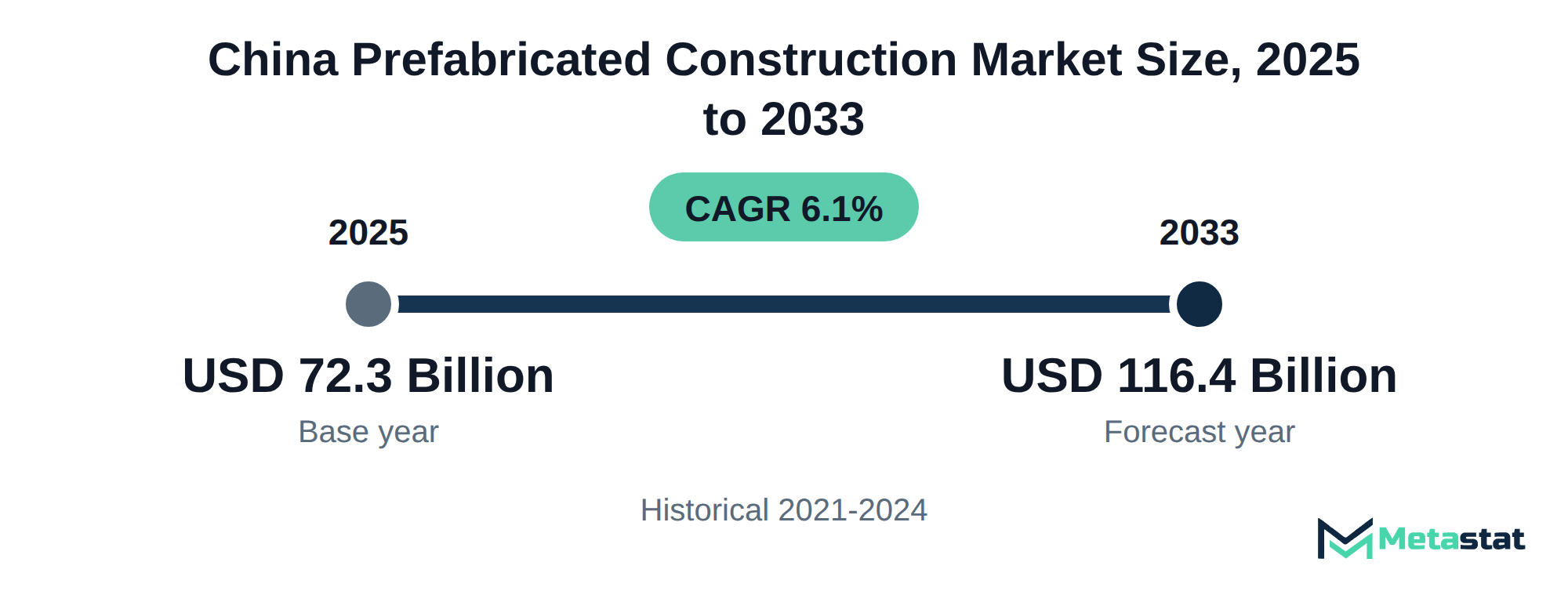
Market Valuation: Valued at $72.3 Billion in 2025, projected to reach $116.4 Billion by 2033 at a 6.1% CAGR.
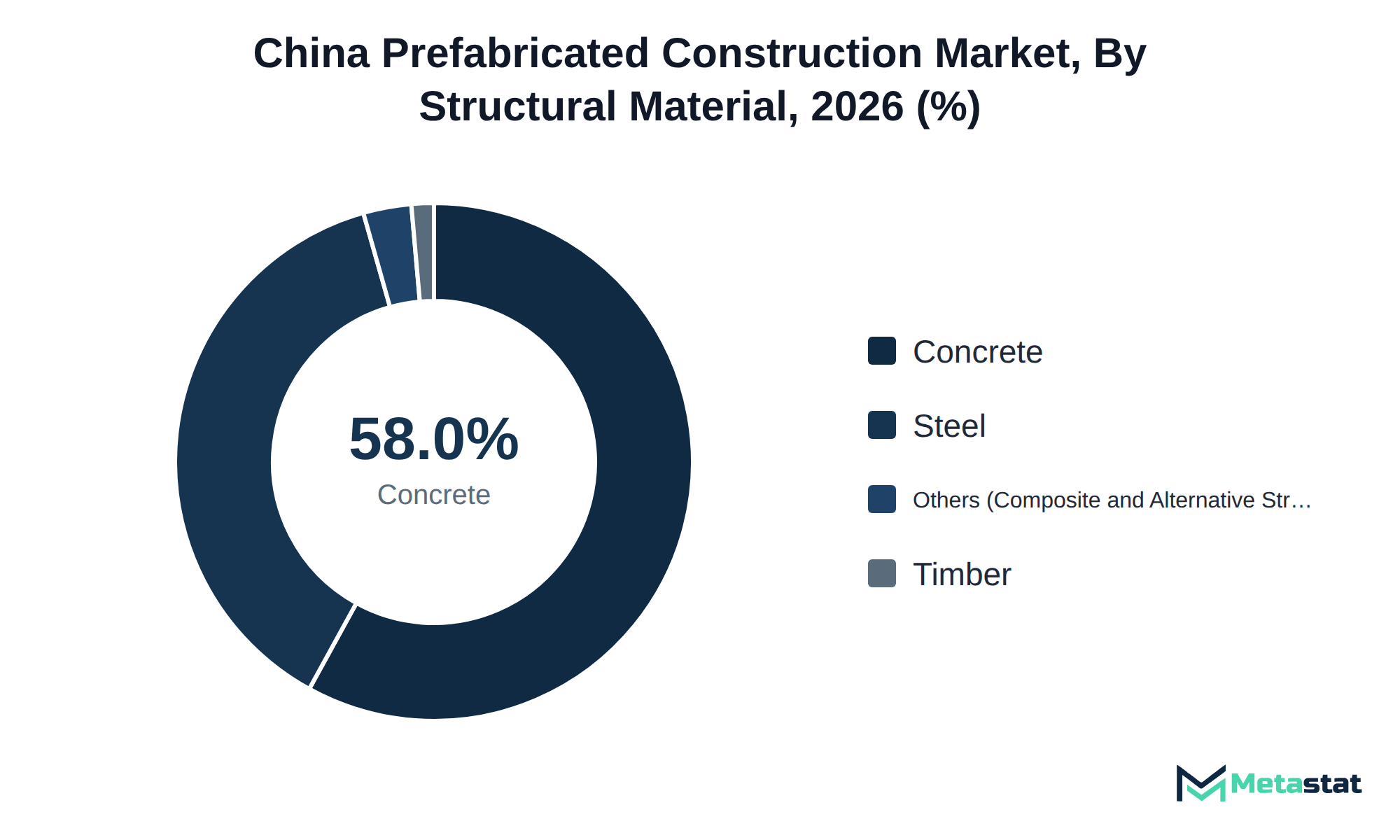
Dominant Segment: The Structural Material segment leads the market, with concrete holding the largest value due to its widespread application in various construction projects. This dominance is driven by increasing urbanization and a strong focus on sustainable building practices.
Geographic Lead: Eastern China is identified as the leading region for prefabricated construction growth, benefiting from significant urban development and infrastructure investments that drive demand for efficient building solutions.
What's Inside: The report includes a comprehensive analysis of market dynamics, competitive landscape, and detailed segmentation across structural materials, system types, building applications, and permanence categories, along with forecasts through 2033.
Growth in Residential Building Demand: The residential buildings segment is expected to grow steadily, driven by rising urbanization and the need for affordable housing solutions, highlighting the importance of prefabricated construction in addressing housing shortages.
Increased Adoption of Modular Constructi: Technological advancements in modular construction techniques are enhancing efficiency and reducing building time, making prefabricated solutions more attractive to developers focused on tight construction schedules.
Choose Your License
China Prefabricated Construction Market
The China Prefabricated Construction market was valued at USD 72.3 billion in 2025 and is projected to reach USD 116.4 billion by 2033, growing at a CAGR of 6.1% over the forecast period.
The China Prefabricated Construction market encompasses various structural materials, system types, building applications, and building permanence categories. Buyers invest in this market due to increasing demand for efficient construction methods that reduce time and costs. The need for innovative solutions in urbanization and infrastructure development drives purchasing decisions across residential, commercial, and industrial sectors.
Growth in the market is supported by rising adoption of prefabricated construction techniques, which offer significant advantages over traditional methods. Among the segments, Structural Material holds the largest value, with concrete representing a substantial portion of the market. The residential building application stands out as a key area of focus, aligning with demographic shifts and urban development trends.
One primary driver of growth in the China Prefabricated Construction market is the acceleration of urbanization across the country. This trend results in increased demand for efficient and sustainable building solutions that meet the needs of a growing population. The market is expected to continue expanding as stakeholders recognize the benefits of prefabricated systems in addressing housing shortages and enhancing construction productivity.
Investment in the China Prefabricated Construction market reflects a growing preference for efficient building solutions. Buyers, including developers and construction firms, prioritize reduced construction time and enhanced sustainability. The shift towards prefabricated methods stems from the need for faster project delivery and lower labor costs, which directly impacts overall project budgets.
Concrete stands out as the segment with the highest value, driven by its widespread use in various applications, including residential and commercial construction. The market exhibits significant growth across multiple segments, with volumetric modular buildings projected to experience the fastest expansion. Urbanization and increasing demand for affordable housing contribute significantly to this growth trajectory.
Eastern China shows significant activity in the market, benefiting from substantial urban development and investment in infrastructure projects. The emphasis on sustainable construction practices enhances market prospects, reflecting a collective shift in industry standards and consumer preferences. The drive towards modernization in building techniques fuels demand and supports a competitive landscape, enabling firms to adapt to evolving market conditions.
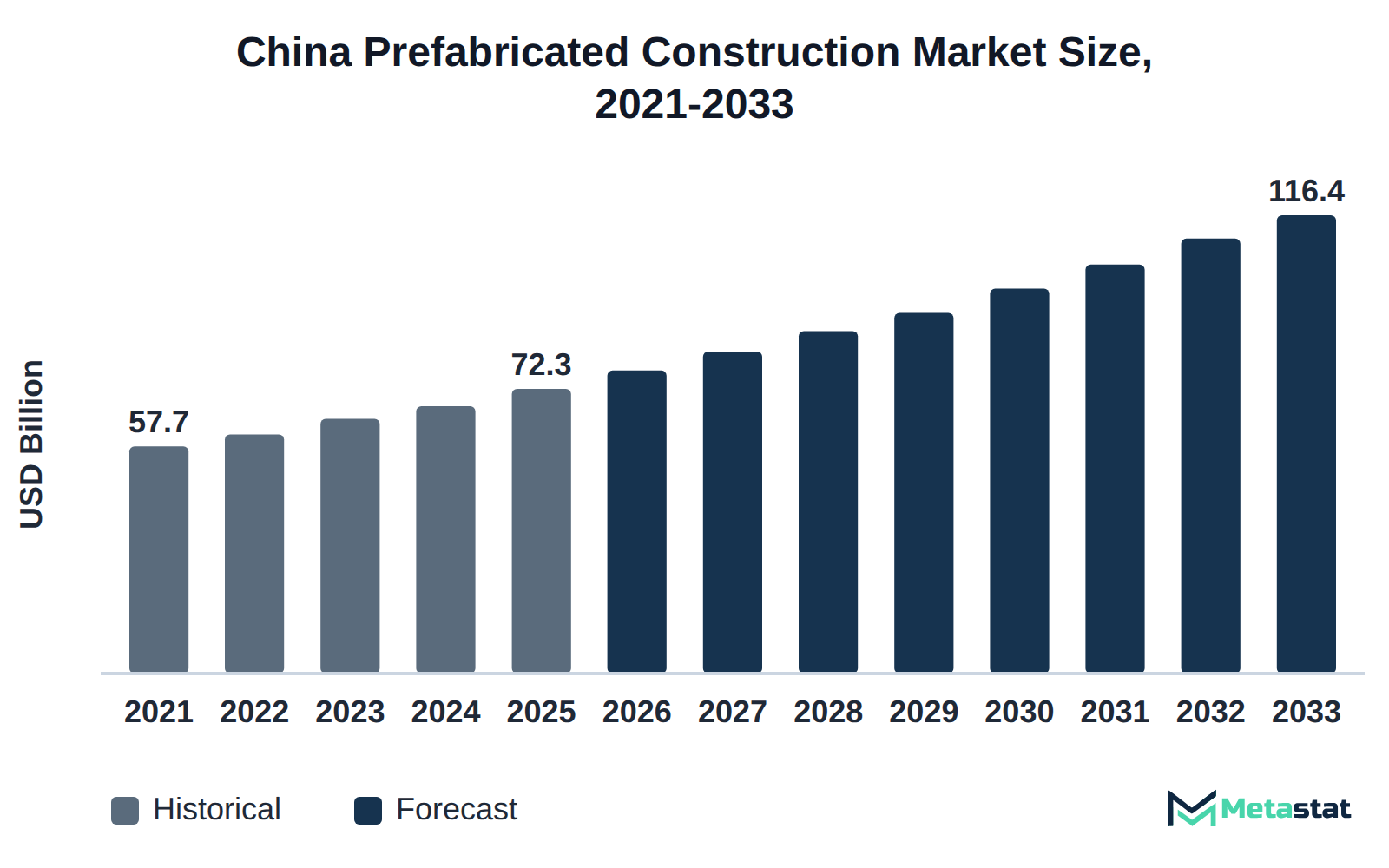
The rise of affordable housing initiatives and urban renewal projects significantly influences procurement in the China Prefabricated Construction market. A growing focus on sustainable development drives the adoption of permanent buildings, projected to increase from USD 72.7 billion in 2026 to USD 110.8 billion by 2033, reflecting a compound annual growth rate of 6.2%. This shift towards permanent construction aligns with governmental policies aimed at enhancing living standards and modernizing urban infrastructure. Funding for these initiatives is covered in more detail within the affordable housing finance industry.
Urbanization trends highlight an urgent need for effective housing solutions, particularly in densely populated areas. Stakeholders recognize prefabricated buildings as efficient alternatives, offering reduced construction times and lower labor costs. The significant financial implications of these technologies position them as essential tools for meeting housing demands and delivering projects swiftly.
The emphasis on affordable housing and urban renewal increases procurement of prefabricated buildings and drives the entire market towards innovative construction methods. This transformation enhances operational efficiencies while addressing the challenges posed by rapid urbanization in China.
The pricing strategies for steel building systems in the China Prefabricated Construction market reflect a trend toward competitive contract models. Buyers typically engage in long-term contracts that ensure price stability over the project lifecycle. Such agreements become increasingly important in an environment where material costs fluctuate significantly. The demand for steel in prefabricated construction is expected to reach USD 46.8 billion by 2033, reflecting a compound annual growth rate (CAGR) of 7%. This growth results from increased investment in factories and logistics facilities, where steel systems offer durability and efficiency.
Contract negotiations frequently include provisions for volume discounts, enabling buyers to benefit from economies of scale. Buyers with larger projects use their purchasing power to negotiate better terms, while smaller buyers opt for simpler agreements that fit their project timelines. The structure of contracts typically includes milestones tied to project completion, which incentivizes timely performance from suppliers. This pricing and contract model encourages collaboration between buyers and suppliers, driving innovation and efficiency in project execution.
In the China Prefabricated Construction market, supplier qualification increasingly emphasizes dry connections and modular assembly techniques. These methods enhance construction efficiency and reduce on-site labor requirements, appealing to buyers focused on minimizing project timelines and costs. The focus on dry connections facilitates faster assembly while maintaining structural integrity, allowing suppliers to meet the rigorous demands of various building applications.
For example, the segment of Volumetric Modular Buildings is projected to reach USD 36.4 billion by 2033. This rapid growth signals strong demand for prefabricated solutions that incorporate dry connections and modular assembly. Suppliers adopting these techniques gain a competitive edge, fulfilling the distinct needs of builders who prioritize speed and precision.
Suppliers that integrate these advanced construction methods can pursue emerging opportunities, attracting buyers who seek to streamline operations and improve project delivery. By focusing on dry connections and modular assembly, suppliers align their offerings with the evolving demands of the China Prefabricated Construction market.
China's prefabricated construction sector sees significant growth potential in urban construction hubs. These areas are characterized by high demand for efficient building solutions and rapid urbanization. For example, prefabricated construction in residential buildings is projected to increase from USD 40.1 billion in 2026 to USD 55.5 billion by 2033, reflecting a compound annual growth rate (CAGR) of 4.8%. This growth stems from the increasing focus on sustainable building practices and the need for faster construction timelines.
Regions including the Yangtze River Delta and the Pearl River Delta serve as key clusters for prefabrication sales. These regions feature advanced infrastructure, strong supply chains, and a concentration of construction firms that prioritize innovative building methods. The increasing investment in these areas enhances the attractiveness of the market, creating opportunities for suppliers and buyers alike.
This trend gives manufacturers and service providers opportunities to work with key players in these clusters and integrate prefabricated solutions into large-scale projects. Strategic positioning within these urban hubs supports market expansion and helps companies compete in China's construction industry.
The shift toward increased residential building demand significantly influences spending in the market. Homebuyers and real estate developers seek efficient construction methods to address escalating housing shortages. This rising demand for prefabricated construction solutions arises from a growing population and rapid urbanization, prompting developers to pursue faster project completion times and cost savings. Residential buildings constructed using prefabricated methods provide reduced labor costs and shorter project timelines, offering a competitive edge in the market. This trend shows how prefabricated construction helps meet the housing needs of urban populations.
The surge in manufacturing building demand drives spending within the market. Manufacturers pursuing greater operational efficiency increasingly adopt prefabricated construction techniques to reduce lead times and enhance production capabilities. The growing need for modern manufacturing facilities stems from expanding industrial activities, necessitating quick and flexible construction solutions. Revenue from manufacturing buildings is projected to reach USD 19.6 billion by 2033, reflecting a compound annual growth rate of 8.1%. This growth shows how prefabricated construction supports the changing needs of the manufacturing sector.
Technological advancements in modular construction techniques significantly enhance efficiency and reduce building time. Innovations in prefabrication enable manufacturers to create components off-site, minimizing the impact of weather-related delays. This efficiency captures the attention of developers focused on tight construction schedules, particularly in urban areas undergoing rapid growth. The reduction in on-site construction time contributes to lower labor costs, appealing to buyers prioritizing budget management. Integration of automation and robotics in the manufacturing process further streamlines operations, leading to higher quality and precision in prefabricated components. The China Prefabricated Construction market reflects a growing trend toward modular construction for both commercial and residential projects. This shift increases competition among suppliers and opens new investment opportunities in advanced manufacturing technologies. Together, these changes increase demand for prefabricated solutions and support substantial growth during the forecast period.
Price volatility in building materials creates uncertainty for developers, particularly affecting residential building projects. Fluctuating material costs hinder budget predictability, discouraging investments in prefabricated construction. Developers face smaller order sizes and project delays due to concerns over rising expenses, impacting overall project timelines.
In the China Prefabricated Construction market, developers prioritize cost control while evaluating prefabricated options. While prefabricated solutions generally reduce labor costs and construction time, the unpredictable nature of material pricing leads to hesitance in decision-making. This restraint particularly affects the residential building segment, where budget constraints are significant. Developers postpone projects or seek alternative solutions until market stability returns, directly influencing growth within the sector.
Rising input costs for raw materials significantly impact profitability in the China Prefabricated Construction market. These costs, driven by increased demand for materials including concrete and steel, create challenges for suppliers striving to maintain competitive pricing. Suppliers respond by optimizing operational efficiencies and exploring alternative materials to mitigate financial pressure. Strategic partnerships with raw material providers facilitate cost stabilization through long-term agreements. Adoption of advanced technologies for production processes enhances efficiency and reduces waste, contributing to better cost management. Such initiatives help suppliers compete while keeping pricing attractive for buyers. The ongoing effort to balance quality and cost in product offerings directly influences market dynamics and future growth.
Growth in the segment of manufacturing buildings presents a significant opportunity within the China Prefabricated Construction market. This sector is projected to achieve a compound annual growth rate (CAGR) of 8.1% through 2033, reflecting increasing demand for efficient and cost-effective construction solutions. The drive for sustainable manufacturing practices and the need for rapid scalability in production facilities contribute to this rising demand. Manufacturers seek prefabricated solutions that reduce construction time and enhance operational efficiency, aligning with industry trends focused on lean practices. The expected revenue of USD 19.6 billion in manufacturing buildings by 2033 highlights the potential for expansion in this area. Companies that offer advanced modular systems tailored for manufacturing applications are positioned to benefit from this growth and gain a competitive edge in prefabricated construction.
The China Prefabricated Construction market is segmented based on Structural Material, System Type, Building Application, and Building Permanence.
Concrete segment is valued at USD 44.4 billion in 2026 and is projected to reach USD 63.6 billion by 2033, at a CAGR of 5.3% during the forecast period. This segment finds widespread application in residential buildings, infrastructure projects, and commercial facilities, primarily serving construction companies and developers. Demand growth is driven by increasing urbanization and the rising focus on sustainable building practices. While the Concrete segment experiences steady growth, it faces competition from alternative materials including steel and timber, which offer different benefits in terms of strength and weight. Compared to the Steel segment, which is projected to grow at a faster CAGR of 7%, the Concrete segment's growth rate remains strong, driven by its established presence in the market and versatility in applications. The anticipated expansion of large-scale construction projects significantly enhances revenue potential for suppliers operating in this segment. Formwork used to shape concrete elements is a related input examined in the concrete formwork systems industry.
Steel is essential in constructing various building types, including industrial and commercial structures, primarily used by developers and construction firms. The growing demand for robust and sustainable building solutions significantly drives this segment. Technological advancements in fabrication techniques enhance the efficiency of steel usage compared to other materials, including concrete and timber, which exhibit slower growth rates. With a CAGR of 5.3%, the concrete segment lags behind steel in expansion potential. Cost-effectiveness and superior load-bearing capabilities position steel as an appealing choice for builders focused on quality and longevity, thus strategically influencing dynamics in the China Prefabricated Construction market.
Timber is expected to reach USD 2.4 billion by 2033. This segment serves a variety of applications, predominantly in residential and low-rise commercial buildings, where sustainable and lightweight materials are preferred. A closely related building method is examined in the timber frame construction industry. Demand increases due to a growing emphasis on eco-friendly construction practices, attracting developers who prioritize environmental considerations. Timber distinguishes itself from other materials in its group, including concrete and steel, which typically command higher prices and heavier structural requirements. The competitive growth rate observed in the timber segment reflects an anticipated CAGR of 7.1% and outpaces materials like concrete, projected at 5.3%. This trend highlights timber's appeal among developers seeking both cost efficiency and sustainability in the China Prefabricated Construction market.
Others (Composite and Alternative Structural Materials) segment is projected to grow at a CAGR of 7.1% during the forecast period. This segment includes various innovative materials designed to enhance performance in construction applications. Builders and developers increasingly adopt these materials for efficiency and sustainability in projects. Rising demand for eco-friendly solutions and regulatory pressures regarding sustainability drive growth in this segment. Compared to traditional materials, alternative options often present competitive pricing and quicker installation times. The segment stands apart from concrete and steel, which have lower growth rates, reflecting shifts in consumer preferences toward advanced composite materials. Demand from the construction sector, seeking lighter and stronger options, further influences this upward trend in the market.
Panelized Building Systems segment is valued at USD 34.9 billion in 2026 and is projected to reach USD 49.5 billion by 2033, at a CAGR of 5.1% during the forecast period. These systems primarily find applications in residential and commercial buildings, appealing to builders and developers seeking efficient construction methods. Demand for panelized systems is driven by the increasing need for faster construction timelines, especially in urban areas where space is limited. Unlike volumetric modular buildings, which focus on complete units, panelized systems use prefabricated panels for structural assembly, providing flexibility and design versatility. This segment's growth is slower compared to volumetric modular buildings, which exhibit a CAGR of 9.1%. Builders favor panelized systems due to their cost-effectiveness and adaptability, further supporting expansion in the market for prefabricated construction in China.
Volumetric Modular Buildings segment is estimated to reach USD 36.4 billion by 2033, at a CAGR of 9.1% during the forecast period. This segment focuses on pre-fabricated units that combine multiple components, offering rapid assembly on-site. Key buyers include residential developers and commercial builders seeking efficient construction solutions. Increasing demand for quick-to-assemble structures, driven by urbanization and a need for affordable housing, drives growth in this segment. Compared to other system types, including Panelized Building Systems, Volumetric Modular Buildings demonstrate a higher growth rate, attracting significant interest from investors and developers. The segment's appeal stems from its ability to reduce labor costs and construction timelines, aligning with market trends emphasizing efficiency and cost-effectiveness.
Componentized Building Systems segment is expected to reach USD 26 billion by 2033. This segment serves a critical role in constructing complex buildings through prefabricated components, appealing to commercial and residential developers seeking efficiency and timely project completion. Factors stimulating demand include the emphasis on reducing construction time and labor costs, driven by rapid development in urban areas. Compared to other segments, Componentized Building Systems exhibit a moderate growth rate, with a CAGR reflecting the shifting preferences in building methodologies. This segment's development pace remains slower than Volumetric Modular Buildings, which is projected to achieve a CAGR of 9.1% during the same period. The market benefits from ongoing innovations in design and manufacturing processes that enhance the assembly of these components, creating opportunities for growth in the China Prefabricated Construction market.
Others (Hybrid Panelized and Volumetric Systems) segment is projected to grow at a CAGR of 8.4% during the forecast period. This segment is used primarily in construction projects that require a blend of prefabricated panels and volumetric modules, appealing to developers seeking efficiency in both residential and commercial buildings. Rapid urbanization and the increasing demand for sustainable building solutions drive growth within this sub-segment. Compared to traditional panelized and volumetric systems, hybrid solutions often offer enhanced flexibility and reduced construction timelines, drawing interest from builders aiming to optimize project delivery. While the market for hybrid systems experiences significant growth, it attracts higher initial investments compared to conventional methods. This segment's unique characteristics set it apart from other system types, contributing to an evolving dynamic in the China Prefabricated Construction market.
This segment primarily caters to developers and investors focused on creating housing solutions for urban populations. Key factors driving growth in this segment include increasing urbanization and rising demand for affordable housing options. Compared to other building applications, including manufacturing buildings which experience a higher CAGR of 8.1%, residential buildings reflect a steadier growth pattern, supported by sustained consumer interest in homeownership and government policies aimed at boosting residential construction. The focus on sustainable and efficient building practices further differentiates this segment from others, enhancing its appeal among environmentally conscious buyers. Overall, the residential buildings sector contributes significantly to the growth trajectory of the China Prefabricated Construction market.
These structures serve various industries, including automotive, electronics, and textiles, providing essential spaces for production and assembly operations. Factors driving this segment include the rapid growth of industrial activities and the increasing demand for efficient production processes. Compared to other building applications, manufacturing buildings experience faster growth, driven by the need for modern facilities that enhance productivity. This sector thrives on innovations in materials and building techniques, which reduce construction times and costs. The focus on sustainability further increases investments in this segment, reflecting a shift toward eco-friendly manufacturing practices. In the competitive landscape, players in the China Prefabricated Construction market continue to evolve, enhancing their offerings to meet the specific needs of manufacturers.
Warehouses and Logistics Buildings segment is expected to reach USD 13.1 billion by 2033. These structures serve various industries, including retail and supply chain, facilitating efficient storage and distribution of goods. Growth in e-commerce and increasing demand for streamlined logistics significantly influence this segment. A shift toward warehouse automation and smart technology further promotes adoption. Compared to other building applications, this segment experiences a faster growth trajectory due to rising operational requirements. With a CAGR of 8.1%, it outpaces certain other segments, reflecting strong demand from businesses focused on optimizing logistics capabilities. The China Prefabricated Construction market sees this segment gaining traction, driven by ongoing transformation in how goods are stored and delivered.
Office and Retail Buildings segment is projected to grow at a CAGR of 4.9% during the forecast period. This segment primarily serves businesses and organizations requiring functional spaces for operations, customer interactions, and sales. Increased urbanization and rising disposable incomes drive demand for diverse commercial spaces, pushing developers toward prefabricated solutions that offer cost-effectiveness and timely delivery. Unlike the Manufacturing Buildings segment, which shows a CAGR of 8.1%, the Office and Retail Buildings segment experiences moderate growth due to higher initial construction costs associated with premium locations and specialized design requirements. The integration of innovative design elements and energy-efficient technologies further enhances appeal and operational efficiency, allowing investors to capitalize on shifting consumer preferences for sustainable and adaptable commercial spaces.
Healthcare buildings serve vital functions in providing medical services and facilities to the population. Hospitals, clinics, and specialized care centers apply prefabricated construction techniques to enhance the efficiency and speed of building processes. Increasing demand for rapid healthcare infrastructure development drives this segment forward, particularly in urban areas where population growth leads to higher patient needs. Compared to other building applications, healthcare structures often require higher standards of hygiene and specialized designs, influencing production costs and timelines. Compliance with strict regulations and standards in healthcare facility construction adds complexity compared to residential or manufacturing buildings. These factors contribute to a unique market positioning, focusing on precise specifications and rapid deployment in response to urgent healthcare demands. The China Prefabricated Construction market is projected to see continued interest in this area, with stakeholders looking to improve healthcare accessibility through innovative building solutions.
Education buildings serve essential functions in the academic sector, facilitating learning and development for students. This segment typically attracts investments from educational institutions and government bodies focused on enhancing educational infrastructure. A significant driver for growth in this segment arises from increasing enrollment rates and the subsequent demand for modern, adaptable learning environments. Challenges include strict regulatory requirements that influence design and construction timelines, delaying project completions. Compared to other building applications, education buildings generally involve higher upfront investments due to specialized designs and technology integrations. The emphasis on sustainable construction practices further differentiates this segment, aligning with broader environmental goals within the China Prefabricated Construction market.
Hospitality buildings serve essential roles in the accommodation and tourism sectors, providing spaces for hotels, resorts, and other lodging facilities. Developers and investors prioritize these structures to meet increasing consumer demand for high-quality, prefabricated accommodations. Growth in this segment is influenced by rising tourism and a growing middle-class population seeking modern lodging options. The hospitality buildings segment typically experiences slower growth compared to residential buildings due to longer project timelines and higher capital requirements. This segment differentiates itself from others through its focus on experience-driven design and luxury finishes, reflecting the unique needs of the hospitality industry. Ongoing innovation in modular construction techniques enhances the appeal of prefabricated solutions for hospitality projects, positioning them favorably in the competitive landscape of the China Prefabricated Construction market.
Buildings serving agricultural, transport-terminal, and community functions play a vital role in providing essential infrastructure for various sectors. These structures are employed by governments, NGOs, and private organizations focused on community engagement and logistical operations. Demand for this sub-segment is driven by increasing urbanization and the need for efficient transport hubs, which require scalable and flexible building solutions. This segment differs from others within the building application category, reflecting a unique buyer base focused on functionality over aesthetics, leading to potentially lower price points compared to residential or manufacturing buildings. The China Prefabricated Construction market continues to evolve, with this sub-segment gaining attention for its contribution to sustainable development and efficient resource use, aligning with public and private sector investment priorities.
These structures serve a variety of applications, including residential, commercial, and industrial purposes, appealing to developers and contractors seeking long-term solutions. The growing emphasis on sustainability and rapid urbanization drives demand for permanent buildings, which offer durability and energy efficiency compared to relocatable options. In this context, the segment experiences a higher growth rate than relocatable buildings, which are projected to reach USD 5.7 billion by 2033. Adoption of advanced building technologies enhances the functionality and environmental performance of permanent buildings, supporting their increasing popularity within the China Prefabricated Construction market. This trend reflects a shift toward more permanent solutions to meet the rising demands of urban development.
Relocatable Buildings segment is estimated to reach USD 5.7 billion by 2033, at a CAGR of 4.2% during the forecast period. These structures serve a variety of temporary or mobile applications, including construction sites, emergency housing, and educational facilities, appealing to sectors that require flexibility and rapid deployment. The demand for relocatable buildings is driven by the increasing need for quick, scalable solutions in urban development and disaster recovery. This segment experiences slower growth compared to Permanent Buildings, which are projected to achieve a CAGR of 6.2%, highlighting the distinct market dynamics between temporary and permanent solutions. Pricing structures for relocatable buildings often align with immediate project needs, contrasting with the long-term investments associated with permanent structures. The China Prefabricated Construction market reflects these trends, where relocatable options become vital for organizations seeking adaptive and efficient building solutions.
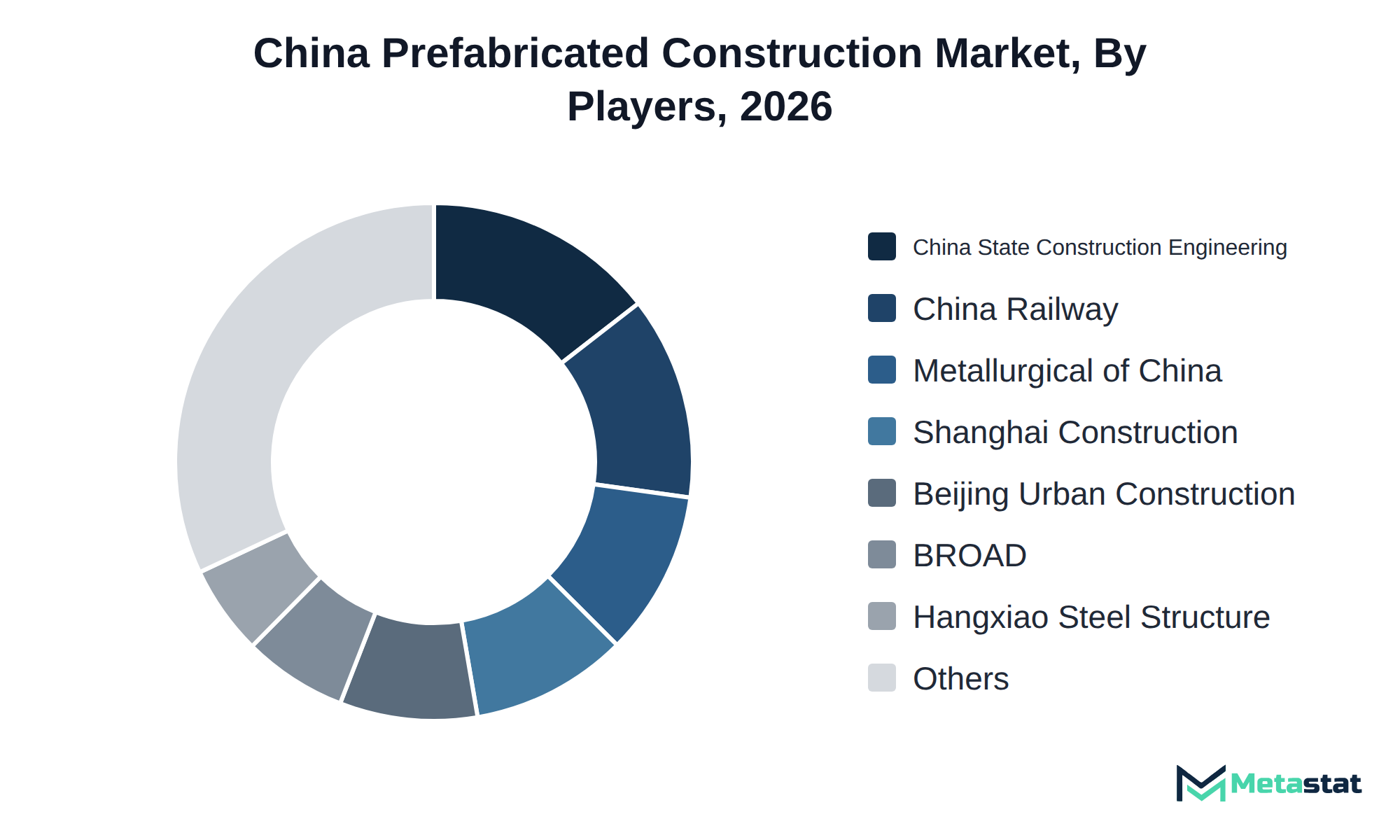
Competition within the China Prefabricated Construction market occurs through various strategic approaches. Companies differentiate themselves based on factors including price, customization, and service quality. For instance, China State Construction Engineering Corporation emphasizes large-scale projects and efficient delivery, appealing to clients seeking reliability and extensive experience. In contrast, BROAD Group focuses on innovative technologies and energy-efficient solutions, catering to environmentally conscious buyers.
Buyers in the market prioritize certification and compliance with industry standards, influencing their purchasing decisions. Metallurgical Corporation of China Ltd. positions itself by ensuring adherence to safety certifications, which attracts clients in need of assurance regarding structural integrity. Zhejiang Southeast Space Frame Co., Ltd. offers customizable solutions, appealing to clients requiring specific designs and flexibility in project execution.
This growth relies on developments within the prefabricated construction market. Key factors include increased demand for permanent buildings, driven by urbanization and housing shortages, particularly in the residential segment. The market is projected to benefit from advancements in volumetric modular buildings, which enhance construction efficiency and reduce timelines. Expanding interest in sustainable materials, including composite and alternative structural materials, influences growth.
However, risks exist that could impede this upward trajectory. Regulatory challenges and potential supply chain disruptions limit growth, particularly in the steel and concrete segments. Should these obstacles arise, they could delay the adoption of innovative construction systems and affect overall market performance. Thus, while the market for prefabricated construction in China is poised for substantial growth, vigilance regarding regulatory landscapes and supply chain dynamics remains essential.
By Structural Material: Concrete, Steel, Timber, Others (Composite and Alternative Structural Materials)
By System Type: Panelized Building Systems, Volumetric Modular Buildings, Componentized Building Systems, Others (Hybrid Panelized and Volumetric Systems)
By Building Application: Residential Buildings, Manufacturing Buildings, Warehouses and Logistics Buildings, Office and Retail Buildings, Healthcare Buildings, Education Buildings, Hospitality Buildings, Others (Agricultural, Transport-Terminal and Community Buildings)
By Building Permanence: Permanent Buildings, Relocatable Buildings
The report strategically identifies and profiles the key market players and analyses their core competencies in each sub-segment of the Prefabricated Construction market.
Report Attributes | Details |
Study Period | 2021-2033 |
Base Year | 2025 |
Estimated Year | 2026 |
Forecast Period | 2026-2033 |
Historical Period | 2021-2025 |
Growth Rate | CAGR 6.1% from 2026 to 2033 |
Revenue Unit | USD billion |
Segmentation | By Structural Material, System Type, Building Application, Building Permanence, and Region |
Find answers to common questions about this report
The Prefabricated Construction market size was valued at USD 72.3 billion in 2025.
The market is projected to grow at a CAGR of 6.1% during the forecast period from 2026 to 2033.
Concrete leads the Prefabricated Construction market with a projected value of USD 63.6 billion by 2033. This segment surpasses others in terms of revenue generation within the market.
Increased residential building demand significantly influences spending in the market, driven by a growing population and rapid urbanization. The surge in manufacturing building demand contributes to market growth, as manufacturers seek efficient construction methods to enhance operational capabilities.
Price volatility in construction materials creates uncertainty for developers, particularly affecting residential building projects. Rising input costs for raw materials significantly impact profitability, driving challenges for suppliers striving to maintain competitive pricing.
The significant growth in manufacturing buildings presents a favorable opportunity for adoption within the China Prefabricated Construction market. This sector is projected to achieve a compound annual growth rate of 8.1 percent through 2033, driven by the demand for efficient, cost-effective construction solutions and sustainable manufacturing practices.
The Prefabricated Construction market is estimated to reach a valuation of USD 116.4 billion by 2033.
Key players operating in the Prefabricated Construction market include China State Construction Engineering Corporation, China Railway Group Limited, Metallurgical Corporation of China Ltd., Shanghai Construction Group Co., Ltd., Beijing Urban Construction Group Co., Ltd., and BROAD Group.
Revenue from residential buildings is projected to reach USD 55.5 billion by 2033, reflecting a compound annual growth rate of 4.8%.
Revenue from manufacturing buildings is expected to reach USD 19.6 billion by 2033, with a compound annual growth rate of 8.1%.
The analysts below cover Packaging research at Metastat Insights.
LEAD ANALYST
Utkarsh Khirodkar is a Lead Market Research Analyst at MetaStat Insight, specializing in market intelligence, technology sector assessments, and competitive strategy.

SENIOR RESEARCH ANALYST
Biotechnology · Food and Beverages · Medical Devices · Packaging
Snehal Pasalkar is a Research Analyst at MetaStat Insight, operating at the intersection of life sciences research, competitive strategy, and market intelligence.

INDUSTRY CONSULTANT - CHEMICALS & ADVANCED MATERIALS
Chemicals and Materials · Machinery & Equipment · Packaging
Amit Gadhekar Consultant for Chemicals and Materials at MetaStat Insight, directing sector-specific intelligence, research, and strategic consulting across global chemical and processing markets.
Enterprise zero-trust network rollouts are often slowed down by multi-cloud transit latency and proprietary hardware retirement schedules. This study provided realistic total cost of ownership models comparing cloud-delivered security edge solutions against traditional hardware refreshes. The analysis of contract renewal lengths and software maintenance fees gave us clear visibility into enterprise replacement cycles over the next three to five years.
Scaling antibody-drug conjugate manufacturing hinges on contract manufacturing availability for high-potency active ingredients. The MetaStat Insight analysis looked closely at global cleanroom slot constraints, bioconjugation batch failure rates, and supply chain redundancies between the US, Europe, and India. The supplier capability matrix proved genuinely useful for our team when mapping secondary source options across our clinical pipeline.
Floating offshore wind feasibility relies heavily on specialized installation vessel availability and port crane limits, which most broad renewable energy forecasts ignore. The report delivered a thorough analysis of dry dock capacity, mooring chain supply constraints, and raw material pricing trends for deepwater anchor installations. It served as a solid independent sanity check for our offshore project capital expenditure assumptions.
Explore related market intelligence reports worth reading alongside this one.