
LEAD ANALYST
Utkarsh Khirodkar is a Lead Market Research Analyst at MetaStat Insight, specializing in market intelligence, technology sector assessments, and competitive strategy.

Global Concrete Formwork Systems Market Size, Share, By Formwork Type (Wall Formwork, Slab Formwork, Column Formwork, Beam Formwork, Climbing Formwork, Tunnel Formwork, Bridge Formwork), By Material (Steel Formwork, Aluminium Formwork, Timber and Plywood Formwork, Plastic and Composite Formwork), By End-Use Sector (Residential Construction, Commercial Construction, Industrial Construction, Infrastructure and Civil Engineering Construction), By Business Model (Formwork Equipment Sales, Formwork Equipment Rental and Leasing, Formwork Contracting Services), Industry Analysis, Growth, Trends, and Forecast, 2026-2033
Report ID
MSI-5465
Published
October, 2026
Pages
303 Pages
Format
Historical
Base year
Forecast
Forecast period
Report Details
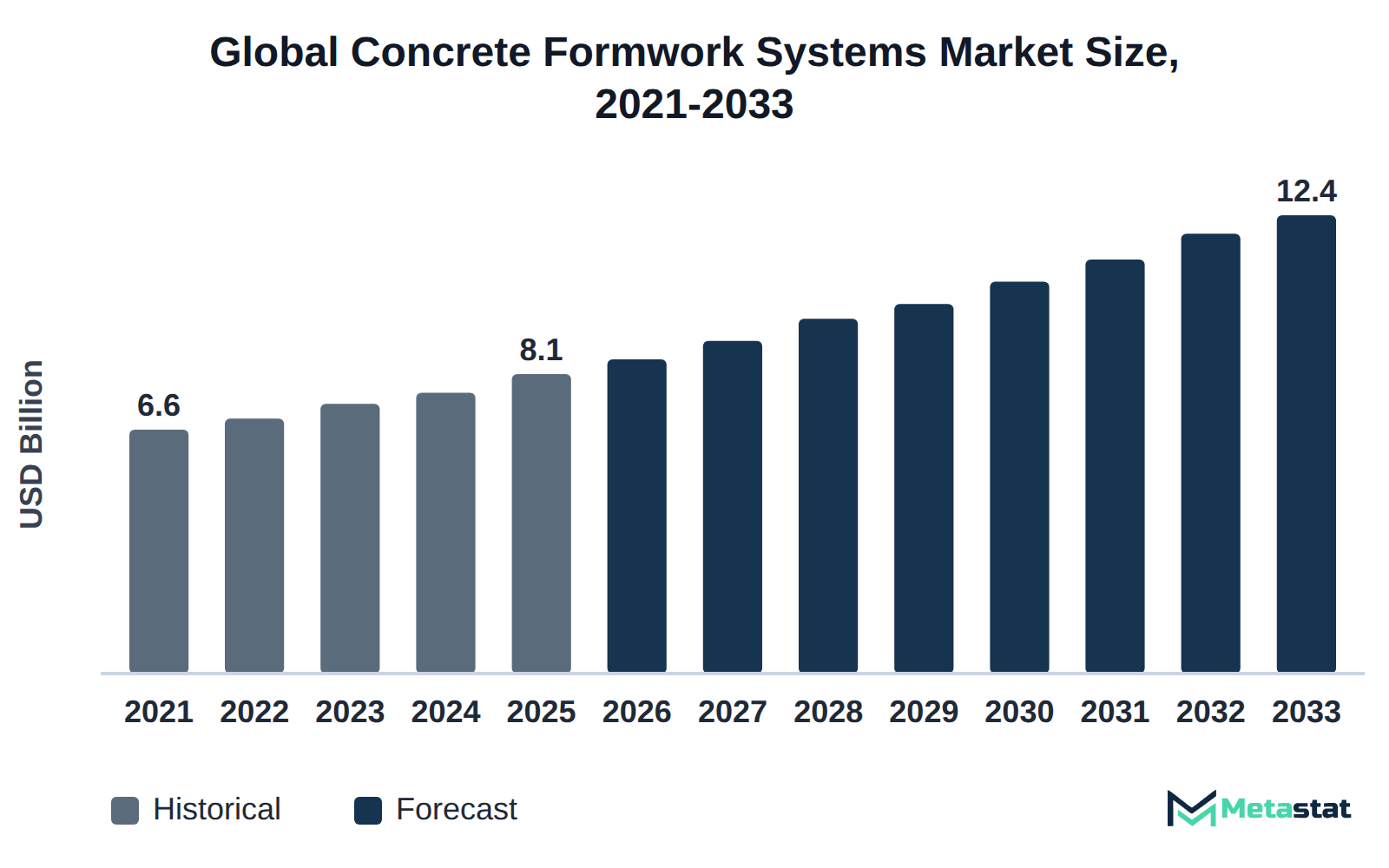
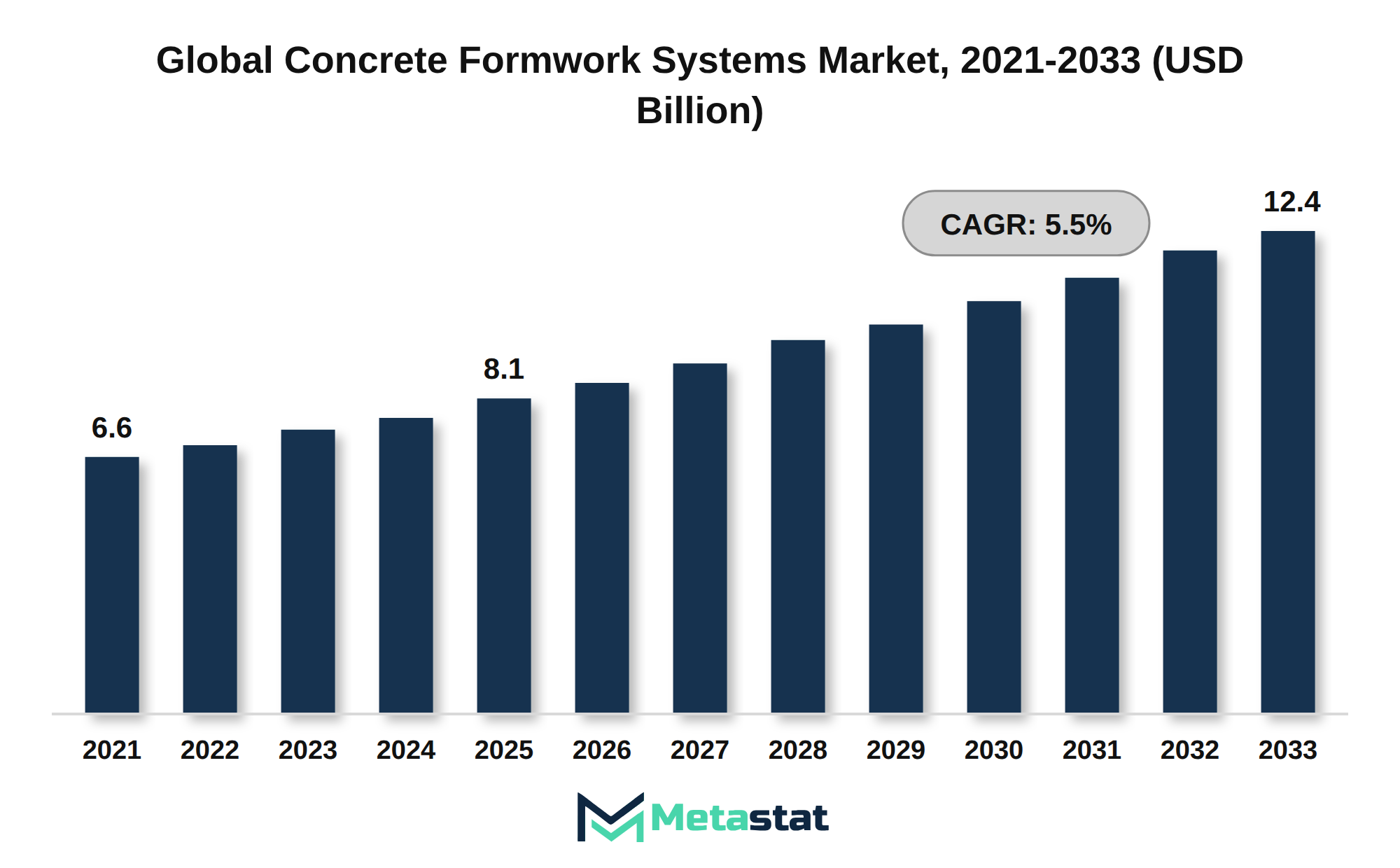
Market Valuation: Valued at $8.1 Billion in 2025, projected to reach $12.4 Billion by 2033 at a 5.5% CAGR.
Dominant Segment: Wall formwork leads the Concrete Formwork Systems market, driven by its critical role in foundational structures across various construction projects.
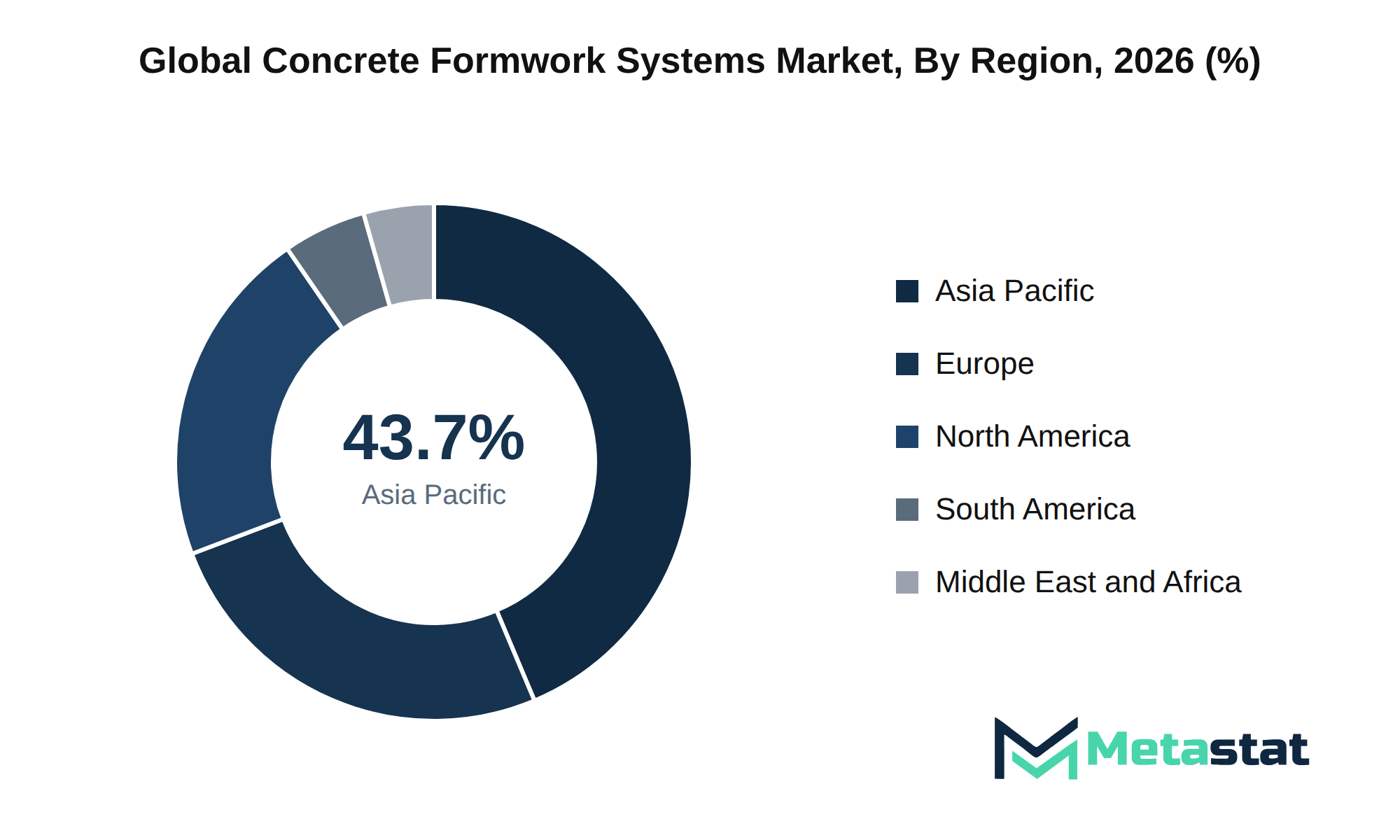
Geographic Lead: The Asia Pacific region commands the largest market share at 43.7% in 2025, fueled by robust construction activities in countries like China and India.
What's Inside: This report provides a comprehensive analysis of the competitive landscape, market dynamics, and detailed forecasts for the Concrete Formwork Systems market from 2026 to 2033.
Rising Adoption of Aluminium and Modular: Aluminium formwork is projected to grow significantly, reaching USD 3.7 billion by 2033, as it offers advantages like reduced weight and faster installation for high-rise projects.
Formwork Equipment Rental Expansion: The rental and leasing segment is expected to reach USD 5.3 billion by 2033, reflecting a growing trend towards flexibility and cost-efficiency in construction project management.
Choose Your License
Global Concrete Formwork Systems Market
The global Concrete Formwork Systems market was valued at USD 8.1 billion in 2025 and is projected to reach USD 12.4 billion by 2033, growing at a CAGR of 5.5% over the forecast period.
The Concrete Formwork Systems market encompasses the frameworks necessary for constructing concrete structures, including various types including wall, slab, and column formwork. Buyers invest in these systems to enhance construction efficiency and ensure structural integrity in projects across residential, commercial, and industrial sectors. The need for reliable and adaptable formwork solutions increases spending, particularly in large-scale construction projects that require precision and durability.
Growth in the market is driven primarily by the expansion of infrastructure projects globally. The Asia Pacific region commands the largest share, accounting for 43.7% of the market. In this competitive environment, the wall formwork segment stands out, representing the highest value among various formwork types. North America holds 21.2% of the market in 2025, with the US leading in 2026.
Continued investments in urban development and infrastructure modernization significantly contribute to market dynamics. Increasing urbanization and the growing population worldwide necessitate advanced construction methods and materials. Demand for innovative formwork solutions intensifies, influencing both market growth and competitive strategies among key players in the industry.
The Concrete Formwork Systems market covers a wide range of formwork solutions essential for construction projects, including residential, commercial, and industrial sectors. Buyers invest in these systems to achieve efficient construction processes, improve safety, and enhance the quality of concrete structures. The demand for advanced formwork solutions stems from the increasing complexity of construction designs and the need for timely project completion, driving investment in innovative technologies and materials.
Growth in the market is driven by the rising demand for infrastructure development globally. Asia Pacific contributes the largest share, with 43.7% of the market in 2025, reflecting strong construction activities in countries including China and India. Among the various formwork types, wall formwork holds the most value, projected to increase significantly during the forecast period. The US is expected to lead the North American market in 2026, contributing significantly to the overall growth.
Investments in commercial and civil engineering projects further support market expansion. The increasing urbanization and population growth have created a strong demand for new housing and infrastructure, resulting in sustained expenditure on concrete formwork systems. This trend emphasizes the market's importance in supporting the evolving needs of the construction industry while addressing the challenges related to efficiency and sustainability.
The Concrete Formwork Systems market experiences increasing interest in aluminium and modular formwork systems, driven by the rising number of high-rise construction projects. Aluminium formwork systems offer significant advantages, including reduced weight, improved durability, and faster installation times compared to traditional materials. The demand for these systems is projected to expand, with aluminium formwork anticipated to reach USD 3.7 billion by 2033, reflecting a compound annual growth rate (CAGR) of 7.8%. This growth highlights a clear shift towards more efficient building practices within the market.
The modular nature of these systems allows for rapid assembly and disassembly, effectively supporting project timelines and reducing labor costs. Construction firms increasingly recognize the potential for aluminium and modular formwork systems to streamline operations while enhancing structural integrity in high-rise buildings. This technology shift results in lower overall project costs and improved profitability for construction companies. The adoption of advanced formwork solutions positions firms competitively within the evolving market, creating growth opportunities in high-rise construction.
The expansion of formwork equipment rental services significantly influences construction project costs within the Concrete Formwork Systems market. This shift allows contractors to access high-quality equipment without the substantial upfront investment required for purchasing. In 2033, the rental and leasing segment is projected to reach USD 5.3 billion, indicating a strong growth trajectory driven by increasing demand for flexibility and cost-efficiency in projects.
Contractors often face challenges in balancing project budgets while ensuring the availability of appropriate formwork solutions. The rental model mitigates these challenges by allowing firms to pay only for the duration of equipment use, effectively reducing overall expenditure. Rental pricing structures typically involve daily, weekly, or monthly rates, providing options that align with diverse project timelines. Such arrangements enhance financial planning and resource allocation for contractors.
While the market continues to evolve, contractors leveraging rental services benefit from reduced capital costs and enhanced cash flow management. This strategic approach aligns closely with the growing emphasis on operational efficiency in the construction sector, ultimately leading to more competitive positioning in the Concrete Formwork Systems market.
Automated climbing formwork, integrated with Building Information Modeling (BIM), significantly enhances the efficiency of concrete construction. This advanced technology streamlines the construction process, reducing labor costs and project timelines. In the Concrete Formwork Systems market, the adoption of automated climbing formwork is expected to grow, driven by increasing demand for high-rise buildings and complex structures.
The segment for formwork equipment sales is projected to reach USD 5.3 billion by 2033, reflecting a compound annual growth rate (CAGR) of 4.2%. This growth indicates robust interest from developers and contractors focusing on large-scale construction projects. The integration of automated climbing systems with BIM allows for precise planning and execution, reducing the risk of errors and improving overall project outcomes.
Developers prioritizing efficiency and accuracy increasingly turn to automated climbing formwork solutions. The convergence of these technologies promises significant cost savings in labor and materials, ultimately influencing project profitability. Competition intensifies, and firms leveraging these innovations position themselves favorably within the market, meeting evolving needs of clients who demand quicker and more reliable construction methods.
Infrastructure investment significantly influences the demand for advanced concrete formwork systems. With a projected growth rate of 7.7% in the Infrastructure and Civil Engineering Construction sector, this segment has become a key driver for formwork adoption. Increased funding for infrastructure projects worldwide highlights a commitment to enhancing transportation networks, utilities, and public facilities. These large-scale developments require reliable and efficient formwork solutions to ensure project timelines and quality standards are met.
In the context of the Concrete Formwork Systems market, the rising need for specialized formwork products, including Wall and Slab Formwork, directly correlates with this expansion in infrastructure investment. Wall Formwork is expected to grow from USD 2.6 billion in 2026 to USD 3.6 billion by 2033, reflecting a compound annual growth rate of 4.6%. This growth signifies a strong market response to the increasing complexity and scale of infrastructure projects.
Governments and private sectors allocate more resources toward infrastructure, driving the demand for innovative concrete formwork solutions. This trend results in enhanced opportunities for manufacturers and suppliers within the market, driving competition and stimulating technological advancements in formwork systems.
The growing emphasis on residential construction drives significant demand for concrete formwork systems. Homebuilders invest more in advanced formwork solutions to enhance project efficiency and reduce construction timelines. This shift reflects an increased need for durable and versatile materials that support various architectural designs and construction methods. A notable increase in housing starts indicates a larger volume of projects requiring efficient formwork solutions, leading to a substantial rise in orders for these systems.
In 2026, the residential construction sector is projected to reach USD 3.1 billion, rising to USD 4.3 billion by 2033. This significant increase highlights the effectiveness of modern formwork in meeting the evolving demands of the construction industry. With builders seeking to optimize resources and improve project delivery, the focus on innovative formwork technologies is expected to shape the market, enhancing profitability for suppliers and manufacturers.
Advancements in materials including aluminium and plastic composites contribute to the expansion of the Concrete Formwork Systems market. The introduction of lightweight and durable materials facilitates faster installation and reduces transportation costs, attracting construction firms seeking efficiency. Aluminium formwork, known for its strength and recyclability, presents a sustainable option that appeals to environmentally conscious builders. Plastic and composite formwork options offer enhanced flexibility and reusability, appealing to contractors focused on reducing waste and increasing profitability. The growing preference for these innovative materials reflects a shift toward more efficient and sustainable construction practices.
Manufacturers are investing in research and development to create materials that enhance performance while reducing costs. This competitive environment drives companies to adopt advanced technologies, strengthening their market positions. Investments in high-quality materials align with the increasing demand for durable and efficient formwork systems, promoting growth across various construction sectors. The positive impact of these developments on operational efficiency and sustainability continues to shape the trajectory of the market.
Increased prices for raw materials restrict the budgets of construction projects, particularly affecting the residential construction sector. Stakeholders face challenges related to cost management, leading to smaller orders and slower project initiation. Rising costs of steel, aluminum, and other essential materials directly impact overall expenditure on concrete formwork systems, prompting buyers to reconsider project timelines and investment strategies. Tightened budgets result in a cautious approach toward adopting advanced formwork solutions, influencing project scales and leading to potential delays in construction schedules. The combination of high material costs and limited financial flexibility constrains market growth, necessitating careful planning and strategic sourcing to navigate financial pressures faced by buyers. This environment cultivates a demand for cost-effective alternatives, pushing industry players to innovate while maintaining quality standards.
Profitability in the concrete formwork systems market faces challenges due to rising labor costs. Increased demand for skilled labor in construction influences expenses, compelling suppliers to reconsider their pricing strategies. High labor costs affect profit margins, particularly within sectors requiring precision and expertise, including commercial and industrial construction. Suppliers are adapting through automation and digital solutions, enhancing operational efficiency and reducing dependency on manual labor. Investing in technology streamlines processes, ultimately improving workforce productivity while addressing cost pressures. This shift supports the market's overall growth by enabling a more competitive pricing structure. Suppliers that embrace innovative construction techniques and automation position themselves advantageously in a landscape where labor costs continue to escalate, ensuring sustained profitability in the concrete formwork systems market.
Rapid growth in the aluminium formwork segment presents a distinct opportunity within the market. Increased adoption of lightweight, durable, and reusable aluminium formwork systems satisfies the construction industry's quest for efficiency and cost-effectiveness. Buyers in the residential and commercial construction sectors increasingly seek advanced solutions that reduce labor requirements while improving project timelines. The focus on sustainability drives demand for aluminium materials, which align with environmental goals and are recyclable at the end of their life cycle. Factors including these position aluminium formwork as a leading choice for modern construction projects, enhancing overall productivity and profitability within the Concrete Formwork Systems market.
The Global Concrete Formwork Systems market is segmented based on Formwork Type, Material, End-Use Sector, and Business Model.
This segment focuses on the vertical formwork structures used in constructing walls, which are essential for residential, commercial, and industrial projects. Various factors influence this segment, including the increase in residential construction activities and the push for faster project completions. Compared to other formwork types, including slab and column formwork, the Wall Formwork segment exhibits slower growth due to the increased availability of alternative systems that offer enhanced efficiency. While slab formwork shows a higher CAGR of 4.8%, wall formwork remains critical for its specific applications in establishing foundational structures, reinforcing the importance of targeted solutions in construction projects.
Slab Formwork segment is estimated to reach USD 3.1 billion by 2033, at a CAGR of 4.8% during the forecast period. This formwork type primarily supports horizontal surfaces in construction, making it essential for various building projects, including residential and commercial constructions. Demand for slab formwork is driven by the increasing focus on urbanization and infrastructure development, leading to heightened construction activities across regions. Compared to other segments, slab formwork experiences moderate growth, aligning closely with the residential construction sector, which is undergoing significant expansion. This segment's steady demand contrasts with the faster-growing aluminium formwork segment, which has gained popularity owing to its lightweight properties and ease of assembly. The market for slab formwork remains crucial, catering to builders who require reliable and efficient solutions for creating durable concrete floors.
Column Formwork segment is expected to reach USD 1.2 billion by 2033. This segment provides structural support during the construction of vertical elements in various types of buildings, including residential, commercial, and industrial structures. Column formwork is particularly used by contractors and construction firms focused on projects requiring precise vertical alignment and load-bearing capabilities. The anticipated growth in this segment is driven by increasing investments in infrastructure projects, which emphasize the need for robust and reliable formwork solutions. Compared to other formwork types, column formwork exhibits a steady growth trajectory but lacks the rapid expansion noted in segments like aluminium formwork, which is projected to grow at a compound annual growth rate (CAGR) of 7.8%. The segment's demand is influenced by the construction industry's continual push for efficiency and quality in building practices.
Beam Formwork, valued at USD 1.9 billion in 2026, is projected to grow at a CAGR of 4.9% during the forecast period. This segment finds application primarily in constructing beams in various structures, catering to builders and contractors involved in residential, commercial, and industrial projects. Increased activity in infrastructure development and commercial construction drives growth in this segment. Beam Formwork distinguishes itself from other sub-segments by focusing primarily on the support structures necessary for horizontal construction elements, resulting in a different pricing structure and purchasing behavior compared to wall or slab formwork. The specialized nature of this segment ensures that demand is consistent among builders who prioritize efficient and robust supporting frameworks. The market for Beam Formwork is expected to see continued investment, driven by ongoing construction activities and advancements in formwork technology.
Climbing Formwork is a specialized solution for vertical concrete structures, providing support during the pouring process. This type of formwork is widely used in high-rise buildings, bridges, and other large-scale infrastructure projects, where precision and speed are crucial. Demand for climbing formwork is driven by the increasing complexity of construction projects, particularly in urban environments where space is limited. Compared to other formwork types, climbing formwork typically offers faster installation and higher safety standards, appealing to contractors focused on efficiency and worker safety. While other segments like slab and wall formwork focus on horizontal and vertical structures respectively, climbing formwork caters specifically to projects involving significant height or elevation changes, thereby distinguishing itself in terms of application and technical requirements. This specialized nature enhances its value proposition within the Concrete Formwork Systems market, appealing to construction professionals demanding innovative solutions for challenging building sites.
Tunnel Formwork serves a critical function in constructing underground structures, providing support and stability during the pouring and curing of concrete. This formwork type is used primarily in infrastructure projects, including tunnels and subways, where precision and safety are essential. The demand for Tunnel Formwork is driven by increasing investments in urban infrastructure and transportation systems, reflecting the growing need for efficient and durable construction solutions. Compared to other formwork types, Tunnel Formwork presents unique challenges and requirements, often involving specialized designs and materials to withstand the specific environmental conditions encountered in subterranean construction. This differentiation results in a distinct buyer profile, primarily composed of contractors and companies engaged in large-scale civil engineering projects, positioning Tunnel Formwork as a specialized offering within the Concrete Formwork Systems market.
Bridge Formwork serves a critical role in the construction of bridges, enabling the accurate shaping and support of concrete elements during the curing process. This type of formwork is predominantly used by civil engineering firms and contractors specializing in infrastructure projects. Growth in this segment is driven by increased investments in transportation infrastructure worldwide, with governments prioritizing new bridge construction and repairs of aging structures. Technological advancements in formwork design, including the use of lightweight materials, further enhance efficiency and reduce labor costs. Compared to other formwork segments, Bridge Formwork often involves higher initial costs due to the complexity and scale of projects; however, its durability and reusability result in long-term savings. In contrast to segments like Slab and Wall Formwork, which focus on building construction, Bridge Formwork specifically caters to large-scale infrastructure developments, indicating a distinct market positioning.
Others (Dam Formwork, Custom Architectural Formwork) encompasses specialized solutions tailored for unique construction challenges. Custom architectural formwork involves designs that achieve specific aesthetic and functional requirements, while dam formwork focuses on the structural needs of hydraulic structures. Engineers and construction firms apply these forms to deliver projects with precise specifications. Demand in this segment is influenced by increasing investment in infrastructure development and the growing complexity of architectural designs. This segment differs from traditional formwork types, featuring higher customization levels and price points. The market for customized and specialized solutions is evolving, catering to clients seeking unique constructions that require innovative formwork systems.
Steel Formwork segment is valued at USD 3.3 billion in 2026 and is projected to reach USD 4.5 billion by 2033, at a CAGR of 4.4% during the forecast period. This segment is essential in constructing various structures, primarily used by contractors and builders for its durability and strength. Steel formwork provides superior structural integrity compared to materials like timber or plastic, which appeals to large-scale construction projects. With the construction industry increasingly focused on efficiency and safety standards, the demand for robust solutions continues to rise. Unlike the aluminium segment, which is growing at a faster rate of 7.8%, the steel formwork segment's steady growth reflects its established market position and reliability in both residential and commercial sectors, catering to a broad range of construction needs.
This segment finds extensive applications in residential and commercial construction projects, where lightweight and durable solutions are essential for efficiency and cost-effectiveness. Key factors driving growth include increasing adoption of modern construction techniques and the need for faster project timelines. Compared to other materials, aluminium formwork offers advantages including reduced labor costs and improved cycle times, making it highly appealing to contractors. The segment's anticipated growth rate surpasses that of traditional materials, reflecting a shift towards more innovative and efficient construction methodologies. The aluminium formwork segment stands out due to its rapid growth trajectory within the market, providing opportunities for suppliers to capitalize on evolving demands of builders and developers.
Timber and Plywood Formwork segment is expected to reach USD 2.9 billion by 2033. This type of formwork is prevalent in various construction projects, particularly in residential and commercial sectors, where it provides a lightweight and cost-effective solution for creating molds for concrete. Demand for Timber and Plywood Formwork experiences support from the rising popularity of sustainable building practices, reflecting a shift towards environmentally friendly materials. The segment demonstrates higher growth potential than traditional materials including steel, driven by increasing emphasis on eco-friendly solutions. Timber and Plywood Formwork offers flexibility and ease of handling, making it appealing to contractors focused on efficiency. However, challenges related to moisture resistance and durability compared to other materials persist, impacting adoption levels. Competitive pricing and favorable performance characteristics contribute to its growing acceptance in the market.
Plastic and Composite Formwork is projected to grow at a CAGR of 8.3% during the forecast period. This type of formwork finds application in various construction sectors, particularly in residential, commercial, and industrial projects. Its lightweight and durable properties make it suitable for a range of uses, appealing to contractors seeking efficient and cost-effective solutions. The increased adoption of innovative construction techniques drives demand in this segment, distinguishing it from traditional materials like steel and timber, which experience slower growth rates. Plastic and Composite Formwork shows a notable advantage in terms of ease of handling and installation, contributing to the overall efficiency of construction processes. The market experiences a shift toward sustainable materials, enhancing the attractiveness of this formwork type among environmentally conscious buyers.
Fabric Formwork represents an innovative alternative in the concrete formwork segment, offering flexibility and lightweight characteristics. This material finds applications primarily in complex geometries, enabling architects and engineers to achieve intricate designs that traditional formwork often struggles to accommodate. The segment attracts interest due to its cost-effectiveness and efficiency, appealing to builders focused on reducing construction time and labor costs. Growing environmental awareness drives demand for sustainable construction solutions, enhancing the appeal of fabric formwork. Differentiation in the market occurs through its unique ability to adapt to various shapes and sizes, distinguishing it from more rigid options like steel and aluminum formwork. The market experiences a dynamic shift driven by stakeholders increasingly recognizing the advantages of incorporating fabric formwork into their projects, aligning with modern architectural trends.
This segment focuses on building homes and residential complexes, making it essential for contractors and developers engaged in housing projects. A key driver for this segment stems from increasing demand for new housing due to population growth and urbanization trends. Compared to other segments, this area shows moderate growth but remains crucial due to its consistent demand from various buyer groups including homebuilders and real estate developers. Unlike more industrial-focused segments, the Residential Construction segment faces unique challenges regarding regulatory approvals and the need for sustainable building practices, influencing its adoption rate relative to other segments in the market.
Commercial Construction segment is estimated to reach USD 3 billion by 2033, at a CAGR of 5% during the forecast period. This segment encompasses various projects, including office buildings, retail spaces, and hospitality establishments, driven primarily by urbanization and economic growth. Developers and contractors engage in this sector, seeking efficient and cost-effective solutions to meet growing demands. The rising need for sustainable construction practices presents a notable demand driver. Compared to other segments, including Residential Construction, the Commercial Construction segment demonstrates a slower growth trajectory, reflecting the complexity and regulatory requirements associated with larger-scale projects. Its distinct characteristics influence pricing dynamics and buyer engagement, differing significantly from smaller-scale construction segments. In this context, the market continues to evolve, adapting to technological advancements and changing consumer preferences.
Industrial Construction segment is expected to reach USD 1.4 billion by 2033. This segment primarily involves the construction of facilities for manufacturing, processing, and assembly in sectors including automotive, aerospace, and pharmaceuticals. Demand in this segment is driven by increased industrial activity and infrastructure investments, resulting in higher expenditures for construction projects. This segment experiences a growth rate of 4.5%, which is lower than the expected growth in sectors like Infrastructure and Civil Engineering Construction, projected at a CAGR of 7.7%. The distinct nature of industrial construction typically requires specialized formwork solutions to accommodate unique structural needs, differing from the more standardized requirements seen in Residential and Commercial Construction. Factors including technological advancements in construction methods significantly influence the adoption of innovative formwork solutions in this segment. Continuous investments in industrial infrastructure highlight the importance of Concrete Formwork Systems in supporting these initiatives.
Infrastructure and Civil Engineering Construction segment is projected to grow at a CAGR of 7.7% during the forecast period. This segment is essential in the construction of large-scale public works and civil projects, including highways, bridges, and airports, primarily used by government agencies and private contractors. Increasing urbanization and the need for modern infrastructure drive demand within this segment, reflecting a shift towards enhanced transportation and utility systems. Compared to other segments, this area exhibits stronger growth due to significant investments allocated for infrastructure development globally. Infrastructure initiatives prioritize durability and efficiency, influencing the selection of formwork systems tailored for heavy-duty applications. With an anticipated value of USD 1.4 billion by 2033, the Infrastructure and Civil Engineering Construction segment highlights a crucial focus within the broader Concrete Formwork Systems market.
This segment plays a critical role in supplying formwork systems used by construction firms for various projects including residential and commercial buildings. Demand arises primarily from growing construction activities, reflecting the rising need for effective formwork solutions. Unlike formwork contracting services, which often experience slower growth, the Equipment Sales segment enjoys steady expansion due to the increasing preference for purchasing over renting in many markets. The overall trend toward automation and technological advancements in the construction industry supports the growth of this segment, contributing to its competitive position in the Concrete Formwork Systems market.
Formwork Equipment Rental and Leasing segment is estimated to reach USD 5.3 billion by 2033, at a CAGR of 6.8% during the forecast period. This segment serves construction firms seeking flexible and efficient access to formwork equipment without the upfront cost of purchasing. Companies in residential, commercial, and industrial construction sectors use this model to manage project costs effectively. The increasing trend toward rental solutions stems from the need for cost-saving measures and the desire for high-quality, efficient equipment without long-term commitments. Compared to the equipment sales segment, this rental segment exhibits faster growth due to heightened demand for short-term project solutions, resulting in a more dynamic and adaptable market presence. In the Concrete Formwork Systems market, evolving construction practices and a focus on flexibility drive the adoption of rental models, enhancing project efficiency and reducing overhead costs.
Formwork Contracting Services segment is expected to reach USD 1.9 billion by 2033. This segment involves providing specialized services for formwork installation and management in various construction projects. Companies engaged in this segment typically serve residential, commercial, and infrastructure sectors, delivering tailored solutions to meet specific project requirements. Growth in this segment is influenced by increasing demand for efficient construction practices, driven by the need for faster project completion and cost-effective labor solutions. Compared to Formwork Equipment Sales, which is projected to grow at a CAGR of 4.2%, the Formwork Contracting Services segment displays a competitive growth trajectory. This segment benefits from a unique buyer profile focused on contractors and developers seeking reliable and skilled service providers, distinguishing it from equipment-focused segments in the market.
Based on geography, the Global Concrete Formwork Systems market is divided into North America, Europe, Asia-Pacific, South America, Middle East, and Africa.
In North America, demand for the Concrete Formwork Systems market is driven by robust construction activities in the residential and commercial sectors. The United States, Canada, and Mexico represent significant markets, each contributing to the overall growth trajectory. Ongoing investments in infrastructure development, coupled with increasing urbanization, increase demand for various formwork types. North America holds a market share of 21.2% in 2025 and is projected to reach USD 2.4 billion by the end of 2033. This region benefits from established suppliers and technological advancements that enhance the efficiency and safety of construction processes. The market experiences a shift toward innovative materials, providing enhanced durability and reduced weight, which appeals to contractors seeking cost-effective solutions.
In Europe, the market thrives due to robust demand from the residential and commercial construction sectors, particularly in countries like Germany, France, and the UK. Investment in infrastructure projects, driven by government initiatives, enhances growth prospects. Germany's focus on sustainable building practices influences the adoption of innovative formwork solutions. Competitive pricing pressures compel manufacturers to enhance efficiency and reduce costs. Countries including Italy and Spain experience a surge in construction activities, fueling demand for diverse formwork types. The market share in Europe accounts for 25.6% of the global total in 2025, reflecting a significant contribution to overall industry growth. Challenges related to regulatory compliance and material sourcing persist, yet these factors stimulate advancements in formwork technologies. Evolving dynamics of construction methodologies will continue to shape the Concrete Formwork Systems market in this region.
Asia Pacific represents 43.7% of the global Concrete Formwork Systems market in 2025. The construction boom in countries including China and India drives substantial demand, particularly in residential and commercial sectors. Rapid urbanization and increasing infrastructure projects fuel the need for efficient and innovative formwork solutions. The presence of various manufacturers in South Korea and Japan enhances regional competitiveness by offering advanced formwork technologies. The growing trend towards sustainability prompts a shift towards eco-friendly materials, including timber and composite formworks. With a projected growth rate of 5.5% CAGR from 2026 to 2033, the market in this region is set for robust expansion, supported by ongoing investments in infrastructure development.
Demand for Concrete Formwork Systems in South America stems primarily from growing construction activities, particularly in Brazil and Argentina. The residential sector drives much of this demand, supported by government initiatives aimed at improving housing infrastructure. The market share in this region is projected at 5.2% in 2025, reflecting ongoing investments in construction and infrastructure projects. While challenges including fluctuating material costs exist, the increasing need for sustainable construction solutions supports market growth. Enhanced urbanization and population growth contribute to the expansion of the market, creating opportunities for various formwork solutions across the region.
The market in the Middle East and Africa experiences unique dynamics driven by infrastructure development and urbanization efforts. Countries including Saudi Arabia and the UAE invest heavily in construction projects, enhancing demand for Concrete Formwork Systems. Government initiatives focused on infrastructure upgrades contribute to these trends. South Africa's growing residential and commercial sectors further intensify the market's expansion. The region holds a share of 4.4% of the global market in 2025, reflecting increasing adoption of advanced formwork solutions. A combination of rising construction activities and regulatory support for sustainable practices strengthens the outlook for growth in the market.
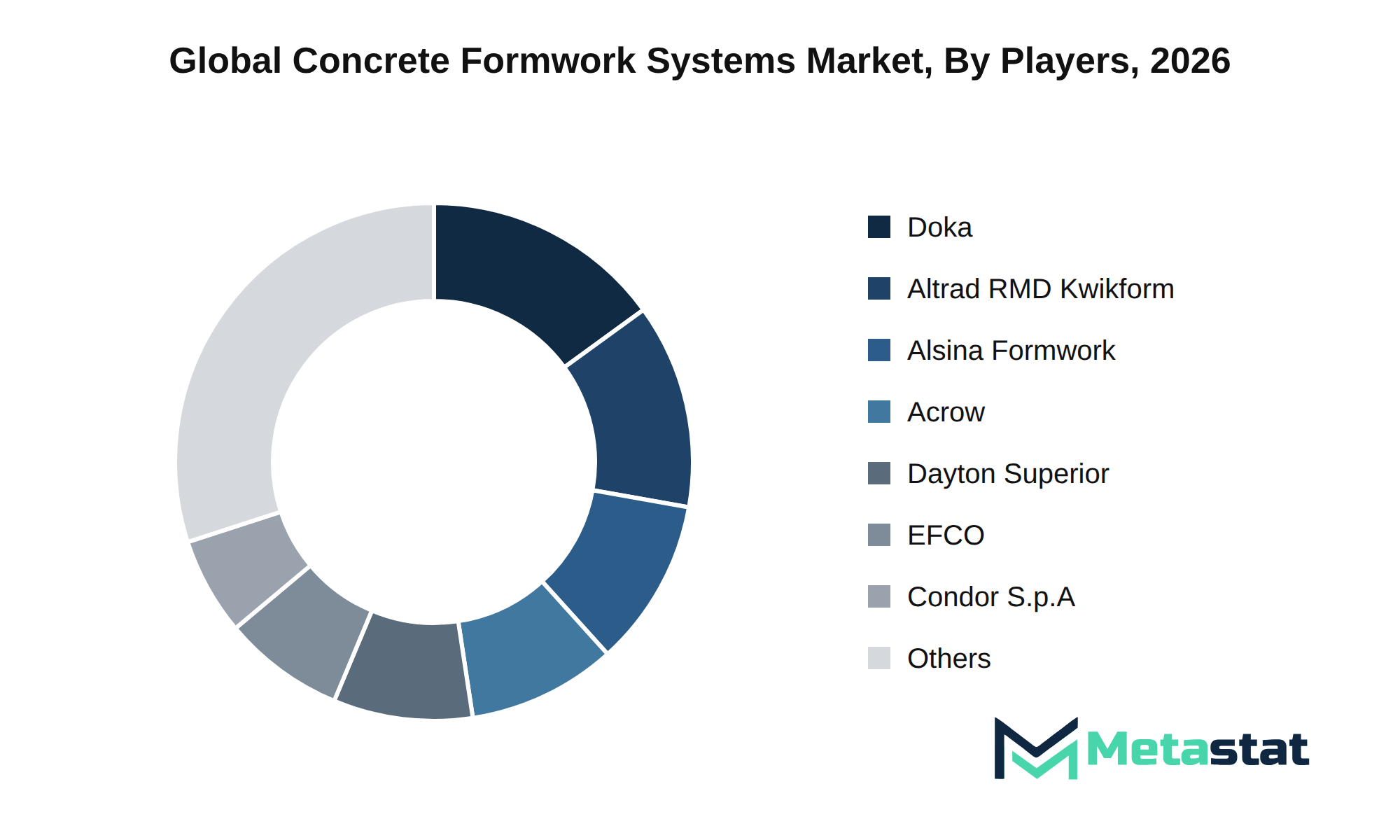
The competitive environment in the Concrete Formwork Systems market divides into several business models, including equipment sales, rental and leasing, and contracting services. Buyers select suppliers based on critical factors including price, customization options, certification, and service quality. This selection process influences operational efficiency and overall project costs, impacting long-term relationships between buyers and suppliers.
Acrow Limited emphasizes innovative formwork solutions that enhance construction efficiency and safety. Doka GmbH prioritizes quality and comprehensive support services, appealing to clients seeking reliable and robust systems. Meanwhile, PERI SE develops a diverse range of modular formwork systems aimed at facilitating various construction projects. Each company's focus aligns with market demands for efficiency and adaptability, reflecting the evolving needs of the construction sector.
The growth trajectory relies on several key developments within the Concrete Formwork Systems market. Increased demand in the residential and commercial construction sectors will drive expansion, particularly in regions including Asia Pacific, which holds the largest market share at 43.7%. The anticipated growth in these sectors supports the transition to innovative formwork solutions, boosting revenue from segments like wall and slab formwork, projected to grow at CAGRs of 4.6% and 4.8%, respectively.
Conversely, challenges in material supply chains and rising costs of raw materials present risks that could hinder market growth. Construction firms face delays or increased expenses, limiting investment in new projects. These factors could affect overall growth, especially in the North American market, expected to reach USD 2.4 billion by 2033. Successful navigation of these issues will be crucial for the market to achieve the forecasted size.
By Formwork Type: Wall Formwork, Slab Formwork, Column Formwork, Beam Formwork, Climbing Formwork, Tunnel Formwork, Bridge Formwork, Others (Dam Formwork, Custom Architectural Formwork)
By Material: Steel Formwork, Aluminium Formwork, Timber and Plywood Formwork, Plastic and Composite Formwork, Others (Fabric Formwork)
By End-Use Sector: Residential Construction, Commercial Construction, Industrial Construction, Infrastructure and Civil Engineering Construction
The report strategically identifies and profiles the key market players and analyses their core competencies in each sub-segment of the Concrete Formwork Systems market.
Report Attributes | Details |
Study Period | 2021-2033 |
Base Year | 2025 |
Estimated Year | 2026 |
Forecast Period | 2026-2033 |
Historical Period | 2021-2025 |
Growth Rate | CAGR 5.5% from 2026 to 2033 |
Revenue Unit | USD billion |
Segmentation | By Formwork Type, Material, End-Use Sector, Business Model, and Region |
By Region | North America (By Formwork Type, Material, End-Use Sector, Business Model, and Country)
|
Europe (By Formwork Type, Material, End-Use Sector, Business Model, and Country)
| |
Asia Pacific (By Formwork Type, Material, End-Use Sector, Business Model, and Country)
| |
South America (By Formwork Type, Material, End-Use Sector, Business Model, and Country)
| |
Middle East and Africa (By Formwork Type, Material, End-Use Sector, Business Model, and Country)
|
Find answers to common questions about this report
The Concrete Formwork Systems market size was valued at USD 8.1 billion in 2025.
The market is projected to grow at a CAGR of 5.5% during the forecast period from 2026 to 2033.
The North America Concrete Formwork Systems market size is projected to reach USD 2.4 billion by 2033.
Wall Formwork leads the Concrete Formwork Systems market with a projected value of USD 3.6 billion in 2033, based on its growth trajectory compared to other segments.
The growing emphasis on residential construction drives significant demand for concrete formwork systems. Advancements in materials, including aluminum and plastic composites, contribute to the expansion of the market by facilitating faster installation and reducing transportation costs.
The rapid growth in the aluminium formwork segment, projected to reach USD 3.7 billion by 2033, reflects increased adoption driven by the demand for lightweight, durable, and reusable materials. This trend aligns with sustainability goals, enhancing productivity and profitability in the Concrete Formwork Systems market.
The Concrete Formwork Systems market is estimated to reach a valuation of USD 12.4 billion by 2033.
Key players operating in the Concrete Formwork Systems market include Acrow Limited, Altrad RMD Kwikform, Doka GmbH, EFCO Corp., PERI SE, RMD Kwikform, SGB (BrandSafway), and Suzhou TECON Construction Technology Co., Ltd.
The aluminium formwork segment is projected to reach USD 3.7 billion by 2033, reflecting a compound annual growth rate (CAGR) of 7.8 percent.
The residential construction sector experiences significant demand due to population growth, urbanization, and the need for affordable housing, particularly in Asia-Pacific and Latin America.
The analysts below cover Chemicals and Materials research at Metastat Insights.
LEAD ANALYST
Utkarsh Khirodkar is a Lead Market Research Analyst at MetaStat Insight, specializing in market intelligence, technology sector assessments, and competitive strategy.

INDUSTRY CONSULTANT - CHEMICALS & ADVANCED MATERIALS
Chemicals and Materials · Machinery & Equipment · Packaging
Amit Gadhekar Consultant for Chemicals and Materials at MetaStat Insight, directing sector-specific intelligence, research, and strategic consulting across global chemical and processing markets.
Tracking capacity expansion in single-use bioprocessing requires dependable data on raw material availability and cleanroom-grade polymer supply chains. The competitive landscape chapter gave a grounded evaluation of secondary component suppliers across North America and Asia-Pacific rather than simply reprinting press releases. Having that level of supplier benchmarking helped clarify dual-sourcing considerations for our clinical pipeline planning.
When evaluating distributed energy resource management systems, standard research summaries tend to gloss over the operational differences between front-of-the-meter utility deployments and behind-the-meter industrial sites. The MetaStat Insight report addressed those distinctions directly, especially regarding software interoperability standards and grid interconnection backlogs. The five-year market sizing across regional transmission organizations provided actionable context for our grid modernization strategy.
Most industry reports on warehouse automation bundle autonomous mobile robots and fixed conveyor installations into the same top-level numbers, which complicates advisory work. This study split the market cleanly by payload tiers, navigation technology, and fleet management software layers. The regional forecast for Western Europe gave our team defensible adoption benchmarks when evaluating capital allocation for logistics clients, saving us days of secondary data scrubbing.
Explore related market intelligence reports worth reading alongside this one.