
LEAD ANALYST
Utkarsh Khirodkar is a Lead Market Research Analyst at MetaStat Insight, specializing in market intelligence, technology sector assessments, and competitive strategy.

Global Light Gauge Steel Framing Systems Market Size, Share, By Product Type (Wall Framing Systems, Floor Framing Systems, Roof Framing and Truss Systems, Ceiling Framing Systems), By Structural Application (Load-Bearing Framing, Non-Load-Bearing Framing, Infill Wall Framing, Curtain Wall Framing), By Construction Method (On-Site Assembled Framing, Off-Site Prefabricated Framing, Volumetric Modular Framing), By End-Use Industry (Residential Construction, Commercial Construction, Industrial Construction, Institutional and Public Infrastructure Construction), Industry Analysis, Growth, Trends, and Forecast, 2026-2033
Report ID
MSI-5463
Published
October, 2026
Pages
291 Pages
Format
Historical
Base year
Forecast
Forecast period
Report Details
Market Valuation: Valued at $29.6 Billion in 2025, projected to reach $47.7 Billion by 2033 at a 6.1% CAGR.
Dominant Segment: The residential construction segment leads the market, driven by a strong preference for light gauge steel due to its durability and energy efficiency. This segment is projected to grow from USD 13.5 billion in 2026 to USD 21.1 billion by 2033.
Geographic Lead: North America is the leading region, with the US expected to dominate in 2026, capturing a significant share of the market. The Asia Pacific region follows closely, driven by rapid urbanization and increasing infrastructure development.
What's Inside: The report provides a comprehensive analysis of the competitive landscape, covering various product types and structural applications. It includes detailed forecasts and insights into market dynamics from 2026 to 2033.
Emerging Opportunities: Off-site prefabricated framing presents significant growth potential, projected to reach USD 21.7 billion by 2033. This method enhances efficiency and sustainability, appealing to builders across residential and commercial sectors.
Choose Your License
Global Light Gauge Steel Framing Systems Market
The global Light Gauge Steel Framing Systems market was valued at USD 29.6 billion in 2025 and is projected to reach USD 47.7 billion by 2033, growing at a CAGR of 6.1% over the forecast period.
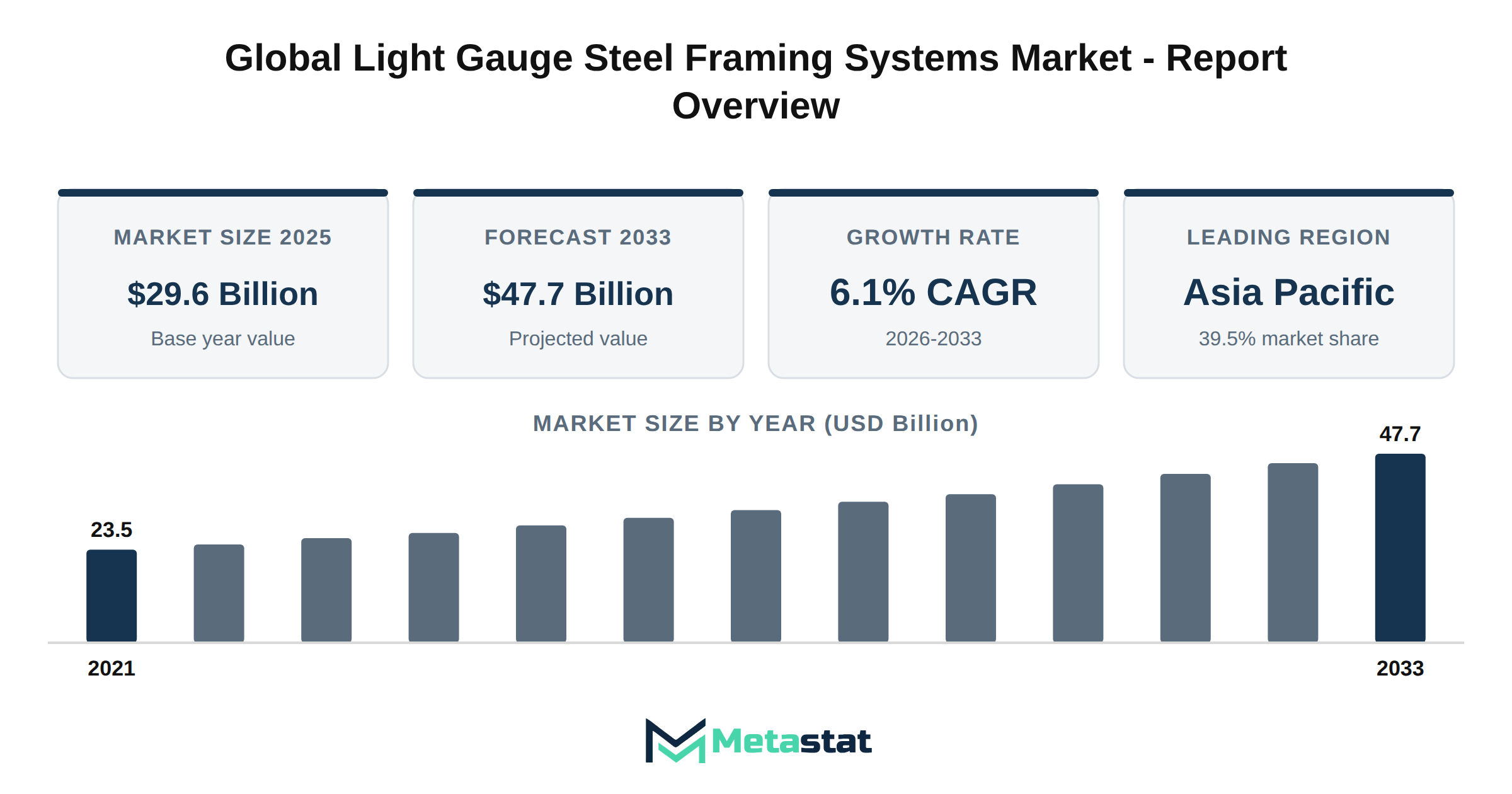
The Light Gauge Steel Framing Systems market encompasses various products and applications that facilitate modern construction methods. This market serves the evolving demands of several buyer groups, including residential, commercial, and industrial sectors. Investment in these systems reflects a growing emphasis on efficiency, sustainability, and durability in construction projects, wherein stakeholders prioritize innovative solutions for building structures. These assemblies frequently integrate with modern mineral wool insulated metal panel products to achieve superior fire resistance and acoustic dampening.
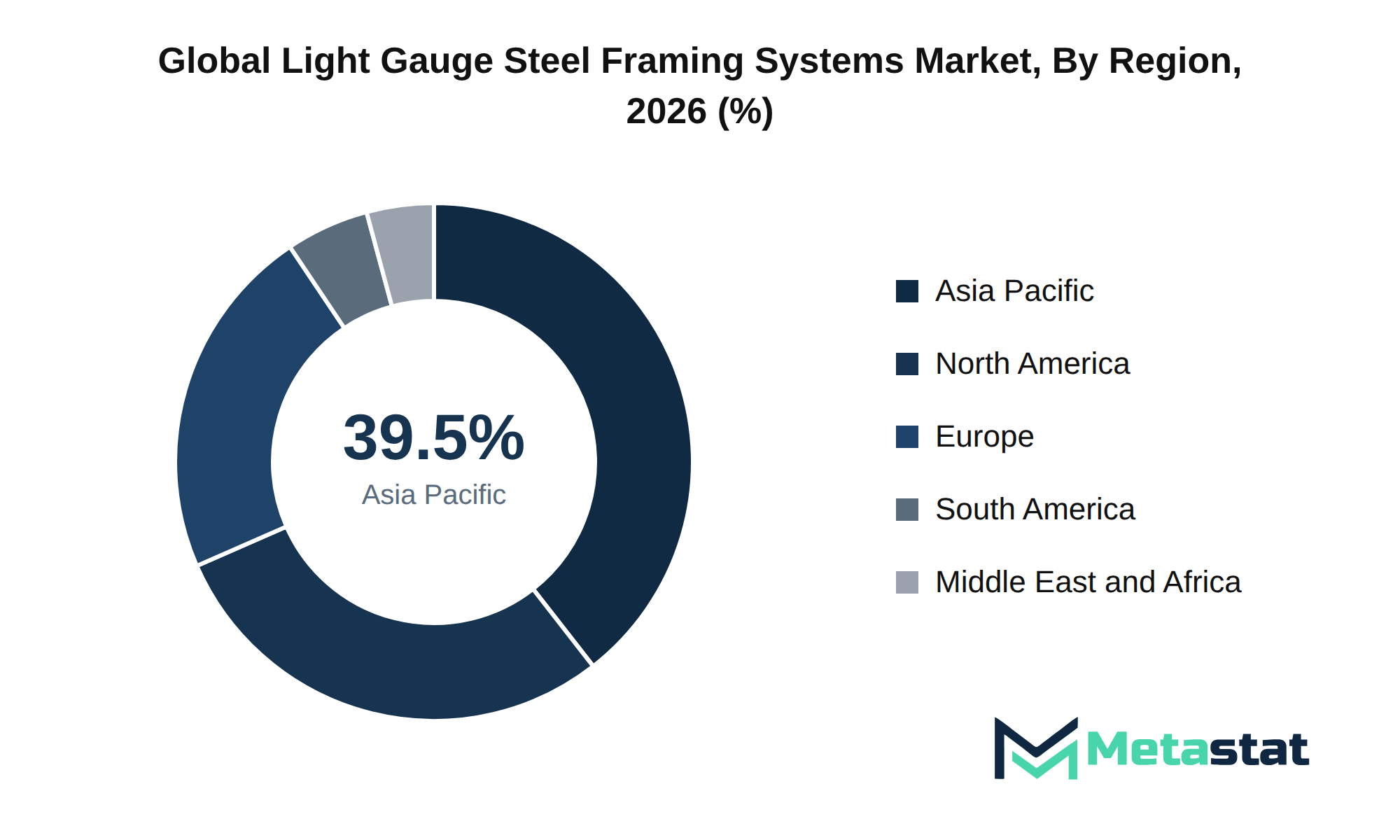
Growth in the market is driven by the increasing adoption of advanced framing techniques, particularly in the residential construction segment, which holds the most value. North America holds 29.0% of the market in 2025, with the US leading in 2026. The Asia Pacific region follows closely, accounting for 39.5% of the market share, indicating significant demand for light gauge steel solutions across various construction applications.
One main growth driver stems from the rising focus on energy-efficient building practices. Stakeholders are increasingly drawn to the benefits of using light gauge steel framing systems, which offer superior thermal performance and reduced waste. To mitigate thermal bridging across steel studs, builders often pair these frameworks with advanced materials such as building thermal insulation board layers. This trend highlights the market's alignment with global sustainability goals, further encouraging investment and expansion across different regions.
The Light Gauge Steel Framing Systems market addresses the growing demand for efficient and sustainable building solutions across various construction segments. Key buyers include developers and contractors focused on faster project completion, optimized utilization of on-site construction equipment, and reduced overall costs. Investments in this market stem from the need for innovative construction methods that enhance structural integrity and reduce environmental impact.
Significant growth in the market is driven by the increasing adoption of off-site prefabricated framing solutions, which streamline construction processes. The residential construction segment represents the largest share of market value, reflecting a strong preference for light gauge steel due to its durability and versatility. In emerging economies, rapid modular framing adoption is supported by expansion in affordable housing finance, enabling faster development of mass residential communities. The US is expected to lead the North American market in 2026, contributing to the overall growth of the region.
Regions including Asia Pacific demonstrate robust market expansion potential, fueled by rapid urbanization and infrastructure development. Competitive pricing and technological advancements in framing systems further contribute to the market's growth trajectory. The focus on sustainability among builders accelerates the shift towards light gauge steel, reinforcing its role in modern construction practices. This sustainable approach extends to roof structures designed to accommodate building-integrated photovoltaic roofing systems for on-site clean energy generation.
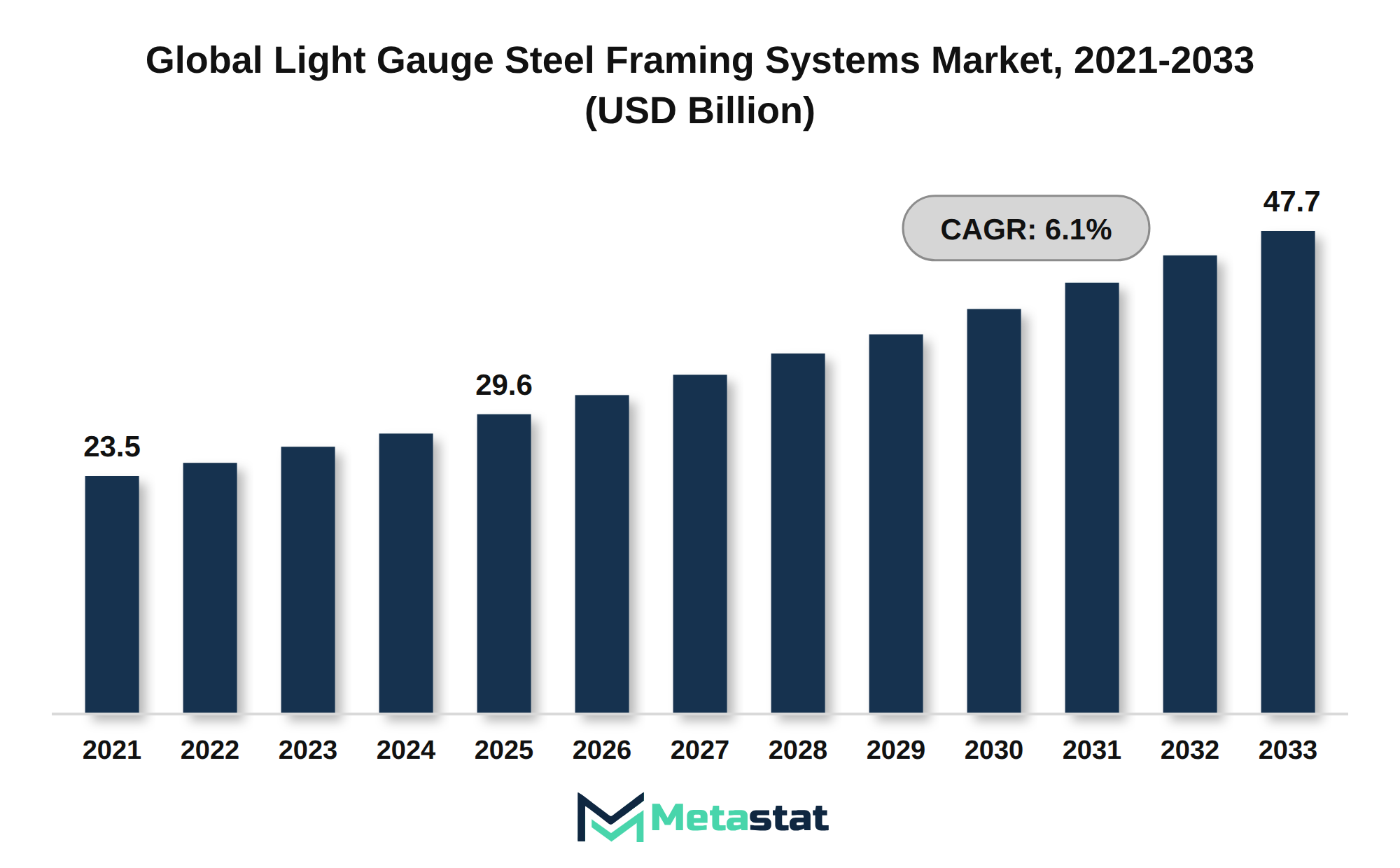
Automated roll-forming technology integrated with specialized AEC software significantly enhances the efficiency and precision of Light Gauge Steel Framing Systems production. This technology streamlines the manufacturing process, allowing for rapid production and reduced material waste. In 2026, the Off-Site Prefabricated Framing segment is projected to reach USD 21.7 billion by 2033, driven by advancements in automation and integration with Building Information Modeling (BIM). The combination of roll-forming and BIM enables faster project timelines and improved design accuracy, satisfying the growing demand for custom solutions in construction.
BIM integration allows stakeholders to visualize and analyze projects in a digital format, reducing errors during construction. This capability is becoming essential for residential and commercial construction, where efficiency and precision directly impact costs and timelines. The integration of these technologies within the Light Gauge Steel Framing Systems market leads to more competitive offerings, attracting buyers focused on maximizing return on investment and ensuring project success.
The pricing structure for prefabricated steel wall panels and modular construction systems reflects a significant trend in the Light Gauge Steel Framing Systems market. A shift towards off-site prefabricated framing is expected to reach USD 21.7 billion by 2033, driven by efficiency and cost-effectiveness. Buyers increasingly favor these systems due to reduced project timelines and lower labor costs associated with off-site construction.
Contract models have evolved, with many suppliers offering fixed-price contracts to enhance predictability in project budgets. This approach minimizes the risk of cost overruns for buyers, particularly in large-scale commercial and residential projects. Such arrangements facilitate easier budgeting and financial planning, attracting more investments into prefabricated solutions.
Competitive pricing and structured contract models position prefabricated steel wall panels as a preferred choice among builders and developers. While the market expands, this approach supports collaborative partnerships and long-term supplier relationships, reinforcing overall market growth.
Pricing structures for cold-formed steel products in the light gauge steel framing systems market significantly influence construction costs and project feasibility. The variability in material pricing often results from supply chain dynamics, production costs, and demand fluctuations. Buyers seeking competitive pricing require a strong understanding of market trends to optimize their procurement strategies.
Building code compliance represents a critical concern for stakeholders in the light gauge steel framing systems market. Adherence to local, state, and national building codes ensures structural safety and longevity. Compliance often necessitates additional costs related to material testing, engineering assessments, and documentation. Buyers involved in residential construction, projected to reach USD 21.1 billion by 2033, require systems that meet stringent regulatory standards while balancing cost-effectiveness and design flexibility.
Structural performance requirements for cold-formed steel framing are critical in determining product suitability for various applications. Load-bearing framing, which contributes significantly to the market, commands a value increase from USD 14.7 billion in 2026 to USD 23 billion by 2033. Structural performance encompasses factors including load capacity, durability, and seismic resistance. Buyers in commercial and industrial construction sectors prioritize these characteristics to ensure project success and compliance with industry standards.
Light gauge steel framing significantly transforms residential and commercial construction through its lightweight, durable properties. This framing system provides a combination of strength and flexibility, making it ideal for various building applications. Specifically, the residential construction segment is projected to grow from USD 13.5 billion in 2026 to USD 21.1 billion by 2033, reflecting a compound annual growth rate (CAGR) of 6.6%. This growth indicates increasing adoption of light gauge steel framing in homes.
This construction method enhances energy efficiency and reduces waste, aligning with modern sustainability goals. Builders recognize the advantages of faster assembly times and lower labor costs, which result from the prefabrication of components. This technique supports innovative architectural designs, appealing to both residential and commercial developers. While the market for light gauge steel framing systems expands, it directly influences the competitive landscape, prompting traditional construction methods to adapt.
Growing residential construction activities drive demand for light gauge steel framing systems. This shift primarily stems from an increasing population and urbanization trends, prompting builders to seek efficient and durable materials. Homebuyers increasingly prioritize sustainability and energy efficiency, which light gauge steel framing effectively provides. The rising cost of traditional materials, including wood, further enhances the appeal of light gauge steel due to its cost-effectiveness and longevity. This upward trend significantly impacts volume and pricing in the market, as builders and contractors opt for innovative solutions to meet evolving consumer preferences and regulatory standards.
The growing inclination towards off-site prefabricated framing systems boosts production efficiencies and reduces construction timelines, making it a favored choice among builders. This development illustrates how shifts in buyer behavior positively influence the market expansion.
Technological innovation enhances the efficiency and versatility of building components in the construction sector. Developments in off-site prefabrication techniques have significantly improved production timelines, allowing for quicker project turnarounds. Enhanced automation technologies streamline production processes, reducing labor costs and minimizing material waste. This shift toward more efficient manufacturing practices influences a wide range of construction applications, including residential and commercial projects. The integration of advanced materials in light gauge steel framing systems supports structural integrity while meeting modern building standards. Increased sustainability awareness drives companies to adopt energy-efficient manufacturing methods. The collaboration between technology and environmental responsibility positions the market favorably for future growth. Proactive adaptation to these advancements enables suppliers to meet evolving customer expectations, creating a competitive landscape that promotes innovation.
Investment in research and development plays a critical role in the evolution of the light gauge steel framing systems market. Companies focusing on technology enhancements position themselves strategically to capture emerging opportunities, ultimately leading to a more robust market presence.
High initial costs associated with light gauge steel framing systems act as a significant restraint, particularly for small to medium-sized residential construction firms. These companies frequently face financial constraints, resulting in slower uptake of advanced framing technologies. Budget tightening leads decision-makers to prioritize cost-effective alternatives like traditional wood framing or low-cost materials, which limits overall market penetration.
Limited awareness regarding the long-term benefits and efficiencies of light gauge steel framing among key buyer segments contributes to underwhelming adoption rates. The perceived complexity of implementing new construction methods deters investment in such systems. Firms that focus on cost reduction over performance experience delayed replacement cycles, further complicating the transition to modern framing solutions.
Consequently, market growth is hindered, with many construction projects reverting to conventional methods that offer lower upfront costs, despite the advantages of light gauge steel framing in terms of durability and sustainability.
Fluctuating prices for steel and other key materials impact profit margins, particularly for suppliers operating with thin margins. Increased global demand for construction materials intensifies competition, driving up procurement costs. This situation compels suppliers to enhance cost-efficiency measures, including optimizing supply chain management and leveraging economies of scale.
In response, several suppliers implement advanced sourcing strategies, focusing on establishing long-term contracts with steel manufacturers to stabilize pricing. Investments in production technology improve efficiency, allowing for better resource utilization and waste reduction. By adopting these approaches, suppliers aim to mitigate the impact of rising input costs while maintaining competitive pricing for customers. Ultimately, managing and controlling material expenses directly influences profitability within the Light Gauge Steel Framing Systems market. Suppliers that successfully adapt their strategies in response to input cost pressures are better positioned to capture market share and drive growth amid evolving industry challenges.
Off-site prefabricated framing represents a significant opportunity within the market, driven by increasing demand for efficient construction methods. This segment is projected to reach USD 21.7 billion by 2033, reflecting a robust CAGR of 7.9%. Prefabrication offers numerous advantages, including reduced construction time, improved quality control, and enhanced material utilization. The growing emphasis on sustainable building practices further fuels interest in off-site solutions, appealing to developers seeking to optimize resources and minimize waste.
Residential and commercial construction industries are primary adopters of these systems, capitalizing on their advantages to streamline projects. The ability to assemble components off-site allows for greater flexibility and consistency in building design, addressing the evolving needs of the construction sector. Investment in off-site prefabrication technologies enhances competitive positioning among suppliers, creating a landscape ripe for innovation and expansion. This shift towards prefabricated solutions reflects broader trends in the Light Gauge Steel Framing Systems market, emphasizing efficiency and sustainability.
The Global Light Gauge Steel Framing Systems market is segmented based on Product Type, Structural Application, Construction Method, and End-Use Industry.
Wall Framing Systems segment is valued at USD 13.5 billion in 2026 and is projected to reach USD 19.6 billion by 2033, at a CAGR of 5.5% during the forecast period. This segment primarily serves the residential and commercial construction sectors, providing essential structural support and insulation. Demand for Wall Framing Systems is driven by ongoing growth in residential construction activities and a shift toward more sustainable building practices. Compared to other product types, including Floor Framing Systems, which achieve a CAGR of 7%, Wall Framing Systems display slightly slower growth, reflecting the maturity of the residential framing market. The competitive landscape for Wall Framing Systems varies, with buyers typically focusing on cost efficiency and project timelines, influencing how suppliers position their offerings. Through these dynamics, the segment plays a critical role in the overall performance of the market.
Floor Framing Systems segment is estimated to reach USD 9.2 billion by 2033, at a CAGR of 7% during the forecast period. This segment is essential in creating the structural framework for floors in various construction projects, particularly in residential and commercial sectors. Builders and contractors widely favor this framing type due to its lightweight properties and ease of installation. The demand in this segment is significantly influenced by the growth of residential construction activities, which drive the need for robust and efficient floor systems. Compared to Wall Framing Systems, which is projected to grow at a CAGR of 5.5%, Floor Framing Systems exhibits a faster growth trajectory, appealing to buyers seeking cost-effective and time-efficient solutions. The emphasis on sustainability and reduced construction times further enhances the adoption of Floor Framing Systems, distinguishing it from other segments in the market.
Roof Framing and Truss Systems segment is expected to reach USD 14.3 billion by 2033. This segment plays a critical role in constructing roofs for various building types, including residential, commercial, and industrial structures. Builders and contractors apply roof framing and truss systems due to their lightweight characteristics and structural integrity. The growth of this segment is driven by increased residential construction activities and the demand for energy-efficient buildings. With a projected CAGR of 6.1%, this segment shows a robust outlook compared to other product types. Unlike Floor Framing Systems, which exhibit a higher CAGR of 7%, Roof Framing and Truss Systems offer stable pricing and reliability, appealing to a broader range of buyers seeking durability and performance. Investments in advanced manufacturing technologies enhance production efficiency and reduce lead times, further supporting growth in the market.
Ceiling Framing Systems segment is projected to grow at a CAGR of 6.3% during the forecast period. This segment serves to support ceilings in various building types, including residential and commercial structures, ensuring structural integrity while allowing for design flexibility. Demand for ceiling framing systems stems primarily from an increasing focus on aesthetic appeal and functionality in construction projects. Factors driving this demand include rising construction activity in urban areas and the growing trend toward sustainable building practices. Compared to other product types, this segment experiences steady growth, benefiting from the rising trend of high-quality interior finishes. The market for ceiling framing systems supports a diverse range of applications, particularly in the commercial sector, where superior performance and design are critical.
Shaftwall framing and soffit framing are essential components in the construction of buildings, providing structural integrity and finishing touches. These systems find use primarily in non-residential construction, serving commercial buildings, institutional facilities, and mixed-use developments. Demand for these products derives from the emphasis on efficient building practices and the need for lightweight, durable materials. The adoption of light gauge steel solutions in this sub-segment has increased due to the advantages of prefabrication and reduced labor costs. Compared to other product types, shaftwall and soffit framing experience slower growth, attributed to the specialized nature of their applications. However, their role in enhancing the performance of non-load-bearing walls and ceiling systems remains significant, influencing overall market dynamics.
Load-Bearing Framing segment is valued at USD 14.7 billion in 2026 and is projected to reach USD 23 billion by 2033, at a CAGR of 6.6% during the forecast period. This segment serves critical roles in constructing multi-story buildings and infrastructural projects, used predominantly by commercial builders and developers. Demand is driven by the increasing emphasis on energy-efficient structures and the growing need for sustainable construction practices. Compared to other segments, load-bearing framing exhibits a stronger growth trajectory due to its essential function in ensuring safety and structural integrity. Its higher price point reflects the advanced materials and technology employed, leading to better performance and durability. The market experiences increased adoption driven by regulations favoring sustainable building practices, which push developers to integrate load-bearing systems into new projects.
Non-Load-Bearing Framing is estimated to reach USD 12.3 billion by 2033, at a CAGR of 5.1% during the forecast period. This segment is primarily used in interior partitions and non-structural applications by builders and architects within various construction projects. Demand for non-load-bearing framing experiences growth due to increasing focus on efficient construction practices and flexible building designs, which are essential in residential and commercial construction. This segment differs from Load-Bearing Framing, which relies on structural integrity and contributes to overall building stability. Non-Load-Bearing Framing features lower costs and simpler installation processes, appealing to contractors seeking cost-effective solutions. The market adapts to evolving design trends, reinforcing its relevance among developers targeting innovative construction methodologies.
The infill wall framing segment is expected to reach USD 7.6 billion by 2033. This segment provides essential structural support in various construction projects, particularly in residential and commercial buildings. Architects and builders increasingly favor infill wall framing due to its lightweight characteristics and ease of installation. Growing emphasis on energy efficiency and sustainable building practices fuels demand for this segment. The infill wall framing segment's growth is anticipated to align with advancements in construction methodologies, which emphasize speed and efficiency. Overall, the infill wall framing segment meets the evolving demands of the construction industry, particularly within the Light Gauge Steel Framing Systems market.
Curtain Wall Framing is projected to grow at a CAGR of 6.1% during the forecast period. This segment is a key structural element in building facades, primarily used in commercial and high-rise residential projects. Architects and builders favor curtain wall systems for their aesthetic flexibility and ability to provide thermal insulation while allowing natural light to penetrate interior spaces. The increasing demand for energy-efficient and visually appealing structures drives adoption, particularly in urban areas. Compared to other segments, this segment stands out due to its focus on design and energy performance, enhancing its value proposition. The growth of urbanization and a commitment to sustainable construction practices contribute to upward momentum in the market. With its unique advantages, curtain wall framing distinguishes itself from other structural applications, enabling a specific competitive edge in the evolving construction environment.
On-Site Assembled Framing segment is valued at USD 14.5 billion in 2026 and is projected to reach USD 17.7 billion by 2033, at a CAGR of 2.9% during the forecast period. This segment finds application primarily in residential and small commercial projects, where efficient construction methods play a critical role. Demand for this segment is driven by the increasing focus on reducing construction timelines and labor costs. Compared to other segments within the construction method categorization, On-Site Assembled Framing exhibits slower growth, primarily due to its reliance on manual assembly processes, which are more labor-intensive. In contrast, Off-Site Prefabricated Framing, with a projected CAGR of 7.9%, appeals to buyers seeking faster turnarounds and lower labor requirements, highlighting a distinct differentiation in buyer preferences and operational efficiency. The market continues to evolve, generating interest in innovative solutions that enhance productivity.
Off-Site Prefabricated Framing segment is estimated to reach USD 21.7 billion by 2033, at a CAGR of 7.9% during the forecast period. This segment finds application primarily in commercial and residential construction, appealing to builders seeking efficient assembly methods that reduce labor costs and construction timelines. Increasing urbanization drives demand for prefabricated solutions, minimizing construction waste and environmental impact. This segment experiences faster growth compared to On-Site Assembled Framing, which has an estimated CAGR of 2.9%. The emphasis on sustainable building practices further enhances market potential, with off-site prefabrication aligning with rising environmental standards. With a focus on enhancing productivity and reducing labor dependency, the off-site prefabricated framing approach stands out, attracting various buyers, including large-scale developers and small contractors in the Light Gauge Steel Framing Systems market.
Volumetric Modular Framing segment is expected to reach USD 8.3 billion by 2033. This framing type is applied in various construction projects, particularly for rapid assembly and efficient space use. Builders and developers prefer volumetric modular framing due to its ability to streamline construction timelines and reduce labor costs. The segment experiences significant growth, driven by rising demand for quick and efficient housing solutions. With a CAGR of 7.9%, it outpaces other construction methods in the market. In addition, the increasing preference for sustainable construction practices enhances its appeal, distinguishing it from traditional on-site assembled framing methods. Factors driven by technological advancements in modular construction techniques further support the segment’s expansion within the market.
This segment supports the construction of homes, where builders and developers typically use light gauge steel framing systems for their lightweight and durable characteristics. Key drivers influencing this segment include growing housing demand fueled by population growth and urbanization trends. Compared to other segments, this segment experiences a faster growth rate, reflecting the increasing preference for modern construction techniques in residential buildings. Heightened activity from private developers and government housing initiatives focused on affordable housing solutions further drives the adoption of light gauge steel framing systems.
Commercial Construction segment is estimated to reach USD 14.3 billion by 2033, at a CAGR of 5.7% during the forecast period. This segment encompasses the construction of office buildings, retail spaces, and other commercial properties, driven primarily by urbanization and economic growth. Demand for modern infrastructure stimulates investment from developers and construction firms looking to meet changing consumer preferences. Differentiating factors include a focus on larger-scale projects compared to residential construction, which typically involves smaller builds. The segment's growth trajectory contrasts with that of the Residential Construction segment, which is expected to grow at a CAGR of 6.6%. The increasing complexity of commercial projects often leads to higher costs, affecting overall profitability for builders. Adoption of innovative building methods, including off-site prefabrication, enhances efficiency, supporting a healthier competitive environment in the market.
Industrial Construction segment is expected to reach USD 6.5 billion by 2033. This segment focuses on constructing facilities for manufacturing, processing, and distribution. Industries including automotive, pharmaceuticals, and food processing heavily rely on this segment for their infrastructure needs. Demand for rapid construction and modular building solutions drives growth in this area, supporting expansion in various sectors. The CAGR for Industrial Construction stands at 5.7%, slightly slower than the Residential Construction segment, which experiences a growth rate of 6.6%. The preference for cost-effective and efficient materials influences purchasing decisions, creating a unique market dynamic. While demand for advanced technologies in construction increases, the Industrial Construction segment benefits from innovations tailored to enhance structural integrity and efficiency, distinguishing it from other segments in the market. The ongoing trend toward automation and smart facilities reflects broader industry shifts, enhancing the segment's value proposition.
Institutional and Public Infrastructure Construction segment is projected to grow at a CAGR of 6.2% during the forecast period. This segment focuses on the development of facilities and services that serve the public, including schools, hospitals, and transportation systems. Key buyers include government entities and contractors specializing in large-scale projects, driving demand for efficient and durable construction solutions. Investment in public infrastructure often reflects increasing urbanization and the need for improved facilities, which significantly influences growth. Compared to other segments, this segment features a distinct demand for compliance with regulatory standards, ensuring safety and sustainability in construction practices. Institutional and Public Infrastructure Construction typically involves larger budgets and longer timelines than segments including Residential or Commercial Construction, highlighting its unique position within the Light Gauge Steel Framing Systems market.
Based on geography, the Global Light Gauge Steel Framing Systems market is divided into North America, Europe, Asia-Pacific, South America, Middle East, and Africa.
Strong growth in the Light Gauge Steel Framing Systems market in North America stems from increased construction activities and modernization of infrastructure across the United States, Canada, and Mexico. Residential construction represents a major driver, reflecting rising demand for efficient building solutions. Favorable regulations and incentives for sustainable building practices support the adoption of light gauge steel framing technologies, enhancing market appeal among builders and developers. By the end of 2033, the region is projected to reach USD 12.9 billion. With a 29.0% share of the global market in 2025, North America is a key player in the industry, driving investments in advanced construction methodologies.
Europe represents a significant segment of the Light Gauge Steel Framing Systems market. Demand in this region is driven largely by residential and commercial construction activities, propelled by increasing urbanization and infrastructure development. Countries including Germany, France, and the UK exhibit robust construction markets, emphasizing sustainable building practices. Regulations regarding energy efficiency and sustainability influence the adoption of light gauge steel framing systems, aligning with European Union directives aimed at reducing carbon emissions in construction. The ongoing focus on building renovation and modernization enhances opportunities within the market, encouraging the use of advanced materials and technologies to meet contemporary building standards.
Asia-Pacific represents a significant opportunity in the Light Gauge Steel Framing Systems market, capturing 39.5% of the global share in 2025. Rapid urbanization in countries like China and India drives demand for residential and commercial construction, influencing project timelines and material preferences. The increasing adoption of off-site prefabricated framing technologies in this region enhances efficiency, reducing construction time and labor costs. Government initiatives promoting sustainable building practices further support the growth of the market, encouraging builders to choose light gauge steel due to its recyclable properties. The robust industrial base in South Korea and Japan strengthens the competitive landscape, leading to innovations in product design and application.
Demand for light gauge steel framing systems in South America originates from the residential and commercial construction sectors. Brazil and Argentina play significant roles in driving this market, supported by ongoing urbanization and infrastructure initiatives. The region's market share reflects growing interest from builders seeking efficient construction methods. A focus on modern construction techniques, alongside cost considerations, increases the adoption of these systems. Infrastructure projects in urban centers advance the demand for innovative framing solutions, enhancing operational efficiency in construction projects. These conditions position the market for continued growth through 2033.
Demand for Light Gauge Steel Framing Systems in the Middle East and Africa is driven by the growing construction sector, particularly in Saudi Arabia and the UAE. Investments in infrastructure projects and residential developments contribute significantly to market dynamics. The region faces unique challenges stemming from fluctuating material costs and varying levels of technological adoption across countries. South Africa shows potential for growth, with an increasing focus on sustainable building practices. This market reflects a steady trajectory for expansion and innovation in construction methodologies, supporting long-term demand for efficient and sustainable building solutions.
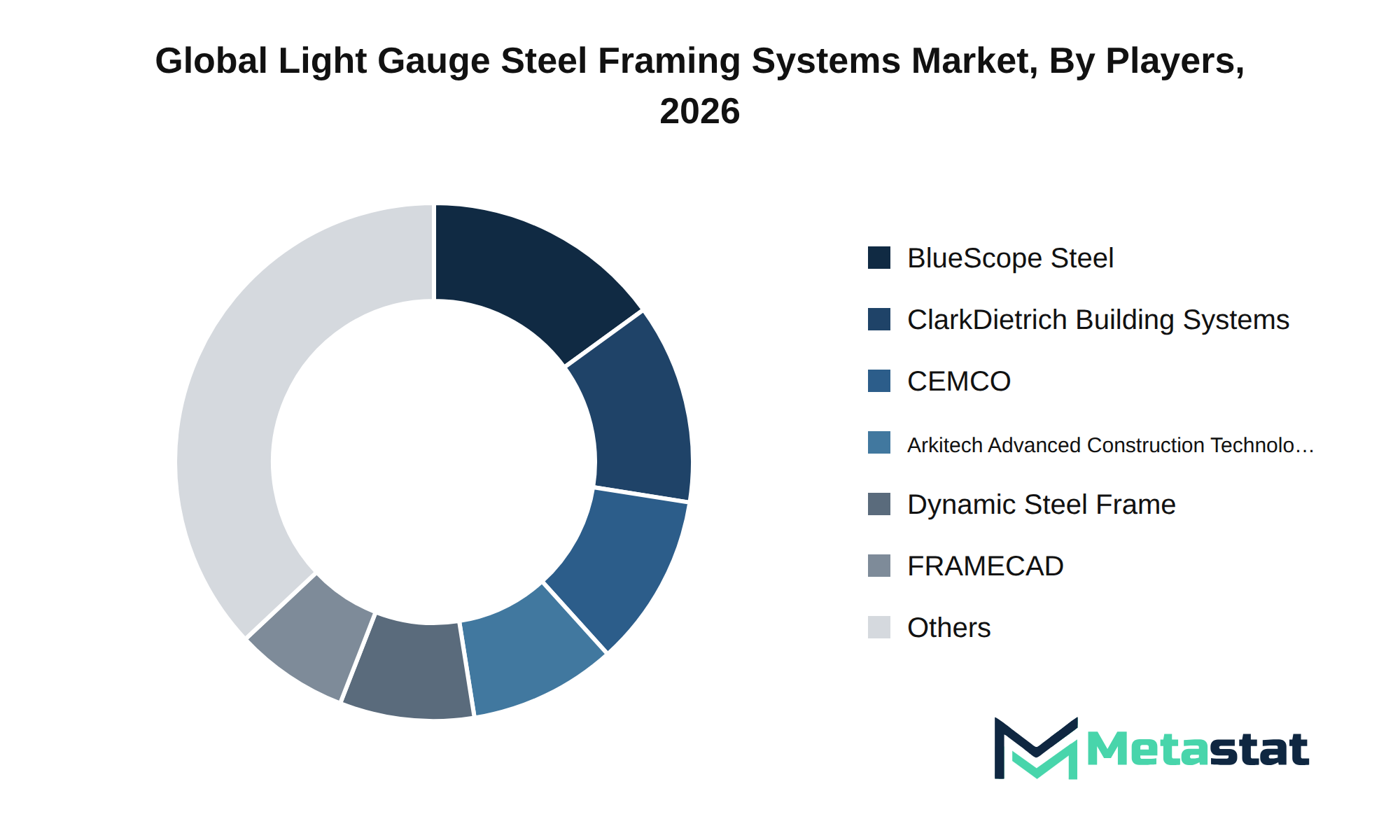
Competition within the Light Gauge Steel Framing Systems market reflects a diverse array of strategic behaviors among key players. Companies differentiate based on product offerings, customization options, and service quality, addressing specific buyer requirements. Buyers prioritize factors including pricing, certification, and the overall service ecosystem when selecting suppliers.
Arkitech Advanced Construction Technologies emphasizes innovative solutions and customer-centric designs, catering to the growing demand for customized framing systems. BlueScope Steel Limited focuses on sustainable manufacturing practices, appealing to environmentally conscious buyers. CEMCO specializes in lightweight steel framing solutions, enhancing its competitive edge in the residential and commercial sectors.
Achieving this growth requires several key developments. The expansion in the residential construction sector, driven by rising population and urbanization trends, will significantly boost demand for Light Gauge Steel Framing Systems market products. Another critical factor involves the adoption of off-site prefabricated framing in commercial and industrial construction, which is anticipated to reach USD 21.7 billion by 2033, owing to its efficiency and cost-effectiveness. However, risks including fluctuating raw material prices pose challenges to market stability. Significant increases in material costs hinder the profitability of manufacturers and slow down project timelines, particularly in regions like North America and Europe, where construction activity remains robust. Overall, the market's trajectory hinges on these developments and the ability to navigate potential risks effectively.
By Product Type: Wall Framing Systems, Floor Framing Systems, Roof Framing and Truss Systems, Ceiling Framing Systems, Others (Shaftwall Framing, Soffit Framing)
By Structural Application: Load-Bearing Framing, Non-Load-Bearing Framing, Infill Wall Framing, Curtain Wall Framing
By Construction Method: On-Site Assembled Framing, Off-Site Prefabricated Framing, Volumetric Modular Framing
By End-Use Industry: Residential Construction, Commercial Construction, Industrial Construction, Institutional and Public Infrastructure Construction
The report strategically identifies and profiles the key market players and analyses their core competencies in each sub-segment of the Light Gauge Steel Framing Systems market.
|
Report Attributes |
Details |
|
Study Period |
2021-2033 |
|
Base Year |
2025 |
|
Estimated Year |
2026 |
|
Forecast Period |
2026-2033 |
|
Historical Period |
2021-2025 |
|
Growth Rate |
CAGR 6.1% from 2026 to 2033 |
|
Revenue Unit |
USD billion |
|
Segmentation |
By Product Type, Structural Application, Construction Method, End-Use Industry, and Region |
|
By Region |
North America (By Product Type, Structural Application, Construction Method, End-Use Industry, and Country)
|
|
Europe (By Product Type, Structural Application, Construction Method, End-Use Industry, and Country)
|
|
|
Asia Pacific (By Product Type, Structural Application, Construction Method, End-Use Industry, and Country)
|
|
|
South America (By Product Type, Structural Application, Construction Method, End-Use Industry, and Country)
|
|
|
Middle East and Africa (By Product Type, Structural Application, Construction Method, End-Use Industry, and Country)
|
Find answers to common questions about this report
The Light Gauge Steel Framing Systems market size was valued at USD 29.6 billion in 2025.
The market is projected to grow at a CAGR of 6.1% during the forecast period from 2026 to 2033.
The North America Light Gauge Steel Framing Systems market size is estimated to reach USD 12.9 billion by 2033.
The leading segment in the Light Gauge Steel Framing Systems market is Wall Framing Systems, projected to reach USD 19.6 billion by 2033. This segment outpaces others in terms of growth and market share.
Growing residential construction activities drive demand due to increasing population and urbanization trends. The rising cost of traditional materials enhances the appeal of light gauge steel framing due to its cost-effectiveness and longevity.
Asia Pacific holds the dominant share of the Light Gauge Steel Framing Systems market, accounting for 39.5 percent. This regional share surpasses that of North America, which holds 29 percent.
High initial costs associated with light gauge steel framing systems act as a significant restraint, particularly for small to medium-sized residential construction firms. Limited awareness regarding the long-term benefits and efficiencies of these systems contributes to underwhelming adoption rates.
Increasing demand for efficient construction methods drives adoption of off-site prefabricated framing systems, projected to reach USD 21.7 billion by 2033. This segment offers advantages including reduced construction time and improved quality control, appealing to both residential and commercial construction industries focused on sustainability.
The Light Gauge Steel Framing Systems market is estimated to reach a valuation of USD 47.7 billion by 2033.
Key players operating in the Light Gauge Steel Framing Systems market include Arkitech Advanced Construction Technologies, BlueScope Steel Limited, CEMCO, ClarkDietrich Building Systems, FRAMECAD, Hadley Group, Knauf Group, and The Bradbury Group.
The analysts below cover Chemicals and Materials research at Metastat Insights.
LEAD ANALYST
Utkarsh Khirodkar is a Lead Market Research Analyst at MetaStat Insight, specializing in market intelligence, technology sector assessments, and competitive strategy.

INDUSTRY CONSULTANT - CHEMICALS & ADVANCED MATERIALS
Chemicals and Materials · Machinery & Equipment · Packaging
Amit Gadhekar Consultant for Chemicals and Materials at MetaStat Insight, directing sector-specific intelligence, research, and strategic consulting across global chemical and processing markets.
In the biological seed treatment space, registration timelines vary drastically between the European Union, Brazil, and North America. The MetaStat Insight research handled these cross-border regulatory barriers with genuine nuance, mapping commercialization pathways alongside historical field adoption rates. The segmentation between microbial strains and biochemical active ingredients was particularly well structured.
Our team was tracking whether regional recycling infrastructure could realistically absorb the growing volume of lithium iron phosphate batteries over the next decade. The report did a solid job separating announced hydrometallurgical plant capacity from active, permitted operational throughput. That distinction made the feedstock availability projections and regional recovery rate models far more credible than standard commercial overviews.
Tracking capacity expansion in single-use bioprocessing requires dependable data on raw material availability and cleanroom-grade polymer supply chains. The competitive landscape chapter gave a grounded evaluation of secondary component suppliers across North America and Asia-Pacific rather than simply reprinting press releases. Having that level of supplier benchmarking helped clarify dual-sourcing considerations for our clinical pipeline planning.
Explore related market intelligence reports worth reading alongside this one.