
LEAD ANALYST
Utkarsh Khirodkar is a Lead Market Research Analyst at MetaStat Insight, specializing in market intelligence, technology sector assessments, and competitive strategy.

Malaysia Building Thermal Insulation Board Market Size, Share, By Material Type (Stone Wool, Glass Mineral Wool, Expanded Polystyrene (EPS), Extruded Polystyrene (XPS), Polyurethane (PUR), Polyisocyanurate (PIR), Phenolic Foam, Wood Fibre, Other Bio-Based Insulation (Cellulose, Kenaf, Coir, Rice Husk, Oil-Palm Fibre)), By Product Type (Unfaced Rigid Insulation Boards, Faced and Laminated Insulation Boards, Semi-Rigid Insulation Slabs, Composite Insulation Boards, Insulated Sandwich Panels, Structural Insulated Panels), By Application (Roof Insulation, External Wall and Façade Insulation, Internal Wall and Partition Insulation, Floor and Slab Insulation, Ceiling and Soffit Insulation, Cavity Wall Insulation, Cold Storage and Temperature-Controlled Building Envelopes), By Building Type (Residential Buildings, Office and Retail Buildings, Hospitality Buildings, Healthcare and Educational Buildings, Industrial and Manufacturing Buildings, Warehouses and Logistics Facilities, Cold Storage and Food Processing Facilities, Data Centres), Industry Analysis, Growth, Trends, and Forecast, 2026-2033
Report ID
MSI-5395
Published
September, 2026
Pages
259 Pages
Format
Historical
Base year
Forecast
Forecast period
Report Details
Market Valuation: Valued at $99.2 Million in 2025, projected to reach $161.8 Million by 2033 at a 6.3% CAGR.
Dominant Segment: The stone wool segment leads the market, driven by increasing awareness of energy efficiency and stringent building codes. It is projected to grow from USD 19.3 million in 2026 to USD 27.7 million by 2033.
Geographic Lead: Malaysia is experiencing rapid urbanization, creating a strong demand for thermal insulation solutions that enhance energy efficiency and sustainability in construction.
What's Inside: The report provides comprehensive coverage of market dynamics, including competitive analysis, growth trends, and a detailed forecast from 2026 to 2033.
Emerging Regional Demands: The market is stimulated by evolving regional demands driven by infrastructure modernization and a shift towards sustainable building practices.
Choose Your License
Malaysia Building Thermal Insulation Board Market
The Malaysia Building Thermal Insulation Board market was valued at USD 99.2 million in 2025 and is projected to reach USD 161.8 million by 2033, growing at a CAGR of 6.3% over the forecast period.
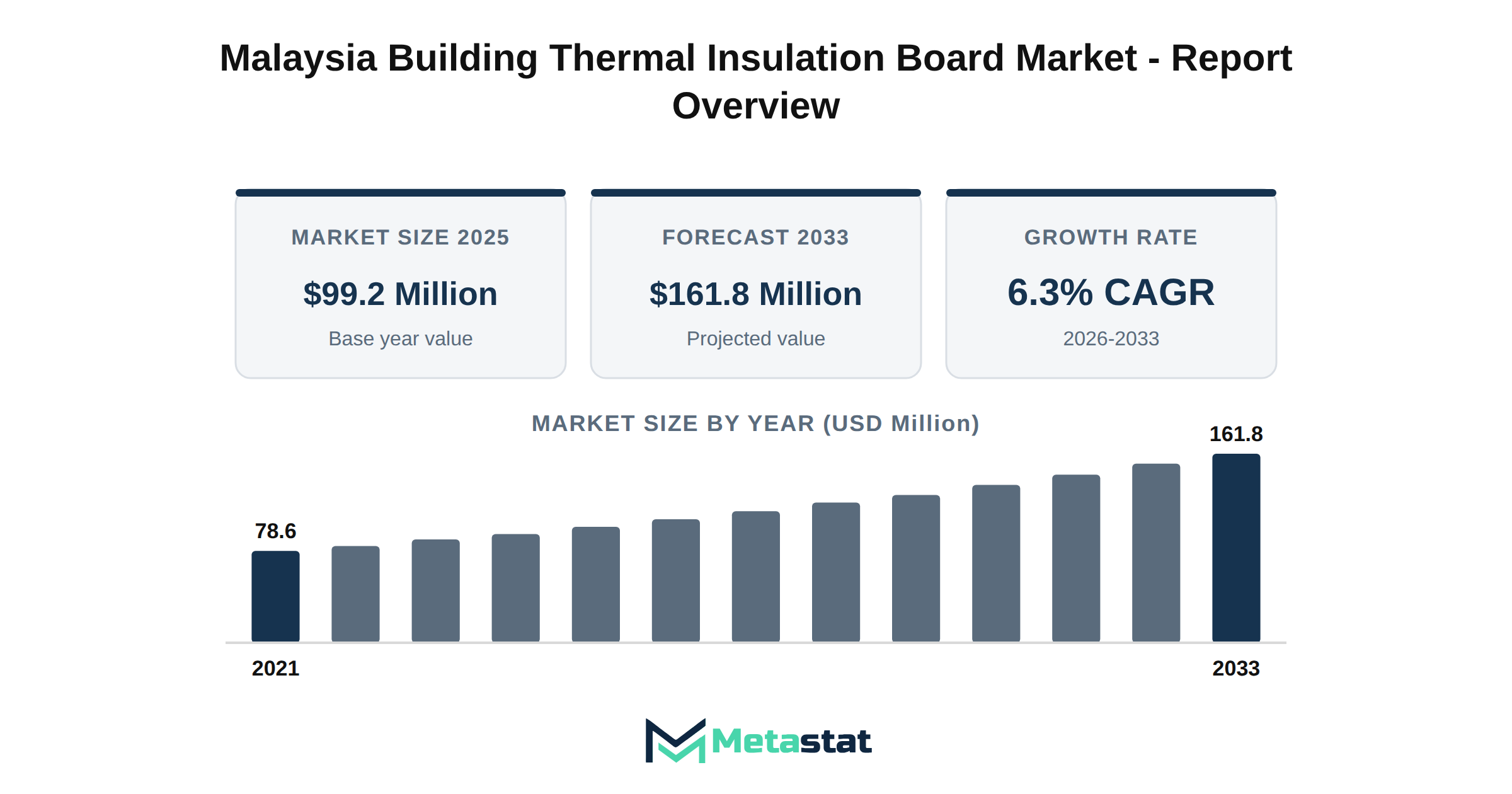
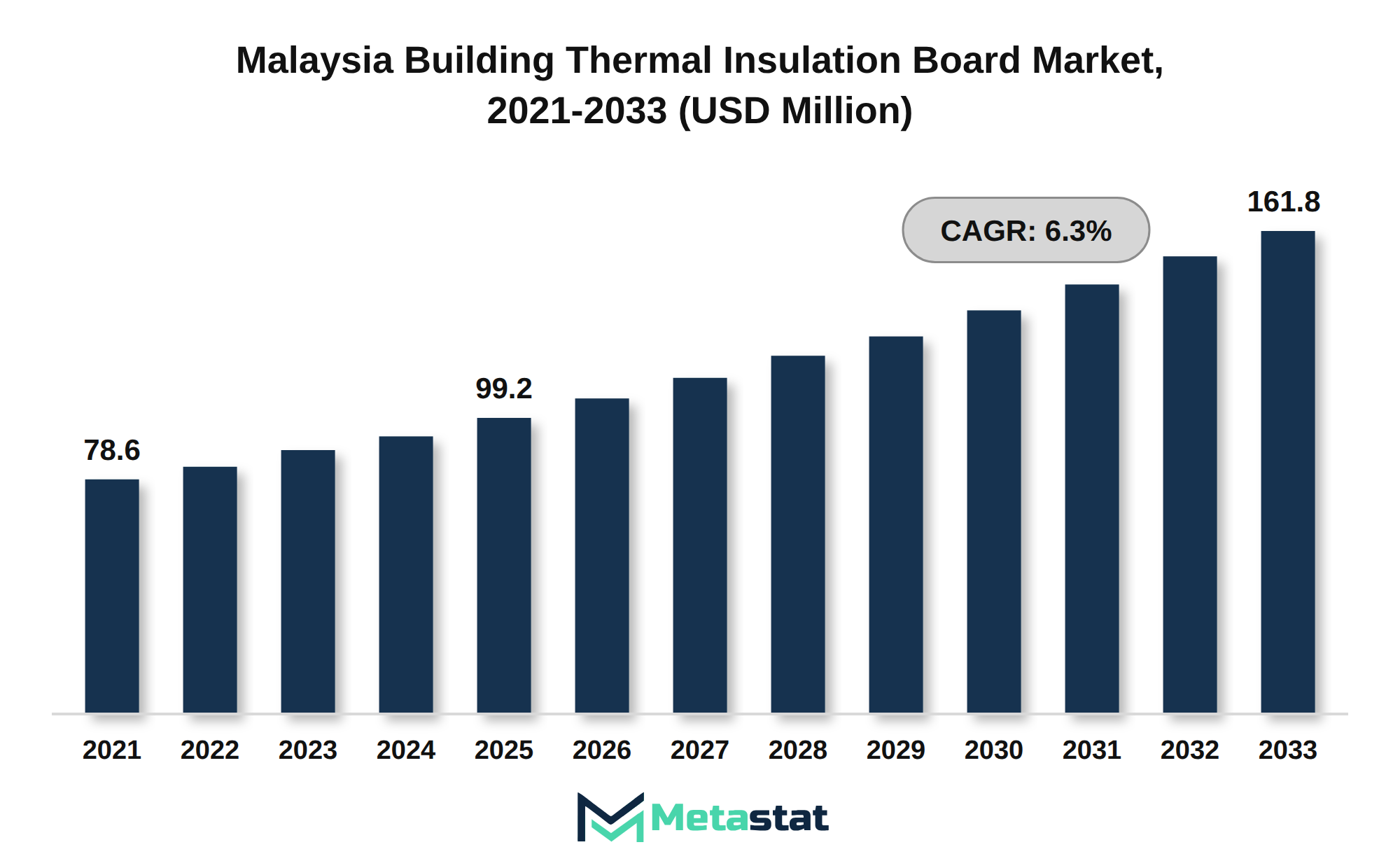
The Malaysia Building Thermal Insulation Board market reached a valuation of USD 99.2 million in 2025, with a projection to grow to USD 161.8 million by 2033. This growth reflects a compound annual growth rate (CAGR) of 6.3%. The market has shown consistent growth from USD 78.6 million in 2021 to USD 93 million in 2024, with significant increases anticipated in the forecast period.
Demand trends indicate a strong preference for various insulation materials, with stone wool representing 18.4% of the market share, followed closely by expanded polystyrene (EPS) at 17.7% and glass mineral wool at 16.7%. The rise in energy-efficient construction practices drives the adoption of thermal insulation boards across multiple sectors, including residential, commercial, and industrial applications.
Bio-based insulation boards, particularly those made from natural fibers, are gaining traction due to increasing environmental awareness and the push for sustainable building materials. Wood fibre insulation boards present significant commercialization potential, offering an eco-friendly alternative to traditional materials while maintaining performance standards.
The supply chain dynamics of the market reflect a mix of locally sourced and imported materials. Local manufacturing opportunities are expanding, driven by the increasing demand for insulation boards that comply with Malaysia's green building standards. The growth of the construction sector supports the need for efficient thermal insulation solutions that enhance energy performance in buildings.
Pricing dynamics for thermal insulation boards are influenced by raw material availability and production costs. Insulation boards like PIR and XPS are experiencing heightened demand due to their high-performance characteristics, particularly in tropical climates where thermal regulation is crucial. The growing need for cold storage and food processing facilities highlights the importance of effective insulation solutions.
Data centre growth contributes to the need for high-performance insulation, driven by the requirement for advanced thermal management strategies. Industrial and manufacturing buildings represent further opportunities for insulation, influenced by increasing operational efficiency and energy-saving requirements.
The Malaysia Building Thermal Insulation Board market experiences notable demand trends influenced by various factors, including regulatory frameworks and sustainability initiatives. Adoption of bio-based insulation boards has been significant, driven by a shift towards environmentally friendly construction practices. The commercialization potential of wood fibre insulation boards exists, with growing interest in natural fibre insulation materials within the Malaysian construction sector.
Local sourcing and supply chain dynamics play critical roles in the market. Thermal insulation board pricing reflects raw material availability and production costs, impacting overall market performance. Rigid insulation board demand across Malaysian buildings continues to rise, particularly in sectors focused on energy efficiency. Cold storage and food processing facilities contribute to insulation demand, emphasizing the necessity for high-performance solutions.
Data centre growth accelerates demand for high-performance insulation, driven by these facilities' prioritization of thermal management and energy efficiency. Industrial and manufacturing buildings represent further opportunities for insulation application, supporting growth in the market. Compliance with Malaysia's green building standards influences insulation demand, promoting sustainable building practices and energy-efficient designs.
Building energy efficiency regulations enhance the appeal of thermal insulation boards, reinforcing their importance in modern construction. Fire safety and product certification requirements remain critical, influencing market dynamics and ensuring compliance with national standards. Local manufacturing opportunities for insulation boards expand, driven by increasing domestic demand and a focus on reducing reliance on imports.
Imported versus locally manufactured insulation boards presents a competitive landscape, with manufacturers striving to balance cost and quality. The potential for biomass feedstock, particularly from kenaf and oil palm, supports the production of bio-based insulation materials. Sustainable building materials drive adoption of such solutions, aligning with broader environmental goals within the industry.
Demand trends for PIR and XPS insulation boards show preferences within the market, influenced by performance characteristics. Competition from mineral wool boards remains significant, because consumers evaluate insulation options based on thermal performance and cost-effectiveness. The demand for insulated sandwich panels in commercial construction highlights the need for efficient and effective insulation solutions.
High-performance insulation materials tailored for tropical climates address specific thermal challenges, ensuring energy efficiency. Innovations in thermal conductivity and moisture resistance drive advancements in product offerings, enhancing their appeal. The focus on low-carbon insulation materials aligns with circular construction principles, promoting sustainability in the building sector.
The competitive dynamics among insulation board manufacturers highlight the importance of innovation and responsiveness to market needs. Growth within the construction sector supports insulation board demand, with projects emphasizing energy efficiency and sustainability. Challenges related to raw material availability and production costs persist, impacting overall market performance.
Green building projects create significant opportunities for insulation board adoption, reflecting a commitment to sustainable practices. The future growth outlook for Malaysia's thermal insulation boards appears positive, driven by increasing demand for energy-efficient solutions and ongoing regulatory support.
In the Malaysia Building Thermal Insulation Board market, increased capital investment significantly influences the adoption of insulation materials. Economic growth, reflected in rising GDP, promotes construction activities, which boosts demand for thermal insulation solutions. Enhanced spending power among private and public sectors creates conditions for infrastructure development, leading to higher consumption of insulation products.
Low interest rates facilitate borrowing for construction projects, allowing developers to allocate budget for advanced thermal insulation technologies. This trend positively impacts operational productivity, driven by businesses investing in energy-efficient solutions that lower operational costs over time. The focus on sustainability and energy efficiency closely aligns with investor interests, driving further investment into the market.
The market is anticipated to expand in response to these capital investment trends. Enhanced construction activity, driven by both government and private sector initiatives, creates a robust environment for the growth of the Malaysia Building Thermal Insulation Board market. This momentum supports the continuous development of innovative insulation solutions tailored for various applications.
The Malaysia Building Thermal Insulation Board market benefits significantly from advancements in digital transformation, which streamline processes and enhance operational efficiency. Adoption of automation technologies and artificial intelligence optimizes production lines, leading to reduced costs and increased output. These technological innovations allow manufacturers to improve product quality while maintaining competitive pricing. Companies integrating digital solutions into their workflows improve overall market efficiency, driving greater adoption of building thermal insulation products.
The shift towards digital platforms facilitates better customer engagement and insights into consumer preferences. This data-driven approach enables companies to tailor products to meet evolving demands, thereby increasing market penetration. The Malaysia Building Thermal Insulation Board market sees a positive impact from these trends, driven by enhanced customer interaction that leads to increased sales and market growth.
Finally, the integration of digital tools supports sustainability efforts by enabling more efficient resource management. Companies that capitalize on these technologies reduce waste and optimize energy usage throughout the production cycle. This focus on sustainability aligns with consumer preferences, leading to a stronger market presence for thermal insulation products that reflect environmentally responsible practices.
The Malaysia Building Thermal Insulation Board market faces significant challenges due to stringent regulatory compliance requirements. Stakeholders encounter numerous hurdles in meeting evolving standards, complicating product development and market entry. Increased compliance costs divert resources away from innovation, affecting profitability for manufacturers.
Macroeconomic headwinds further contribute to market constraints. Rising inflationary pressures impact operational costs, compelling companies to reassess pricing strategies. The fluctuating economic environment creates uncertainty, affecting investment decisions across the industry. High capital investment requirements deter new entrants and limit the expansion of existing players.
Supply chain disruptions add to the challenges faced by market participants. Global geopolitical instability and resource scarcity create delays in sourcing raw materials, ultimately affecting production timelines. This situation leads to heightened competition for available resources and increased costs for insulation manufacturers.
Technological obsolescence poses another restraint. Rapid advancements in insulation materials and methodologies necessitate continuous investment in research and development. Companies that fall behind risk losing market share to competitors offering innovative solutions. The threat of substitution from alternative materials leads to declining demand for traditional insulation products.
Market fragmentation complicates efforts to standardize offerings and streamline operations. With various players vying for share, intense competition pressures pricing and influences overall market dynamics. These factors contribute to a challenging environment, where the Malaysia Building Thermal Insulation Board market navigates numerous obstacles to achieve sustainable growth.
The Malaysia Building Thermal Insulation Board market encounters significant disruption due to geopolitical fragmentation. Trade deficits and tariff friction complicate the import of raw materials, impacting pricing and availability. Regional instability and shifting international relations create uncertainty, affecting investment decisions and supply chain logistics, resulting in potential delays in project timelines.
Technological disruptions further exacerbate market challenges. With the rapid pace of innovation, manufacturers struggle to integrate new technologies efficiently, leading to interoperability friction among different insulation materials. This complexity increases research and development costs and slows the adoption of advanced insulation solutions.
The market faces pressures from rising input costs driven by feedstock volatility. Fluctuations in the prices of essential materials significantly impact profit margins, pushing manufacturers to reassess their pricing strategies. Compliance overhead linked to tightening regional regulatory standards results in added operational costs, intensifying competition among producers striving to maintain market positions.
Environmental sustainability demands shape operational considerations. Companies in the Malaysia Building Thermal Insulation Board market confront challenges related to decarbonization mandates and lifecycle assessment requirements. These evolving legal liabilities necessitate strategic adjustments to align marketing practices with sustainability goals, influencing overall market dynamics.
Workforce skill gaps and talent retention pressures present obstacles to operational efficiency. The need for skilled labor in the thermal insulation sector becomes critical, yet finding and retaining qualified personnel proves challenging. This situation hinders growth and innovation within the market, impacting overall competitive performance.
The Malaysia Building Thermal Insulation Board market benefits from evolving regional demands driven by a surge in infrastructure modernization and urban development. Rapid urbanization in Malaysia creates an urgent need for advanced insulation solutions to enhance energy efficiency and sustainability in buildings. Increasing awareness of environmental impact and energy consumption encourages stakeholders to adopt thermal insulation systems that align with green building standards.
Technological disruptions, including innovations in material science and manufacturing processes, enhance product offerings in the market. These advancements facilitate the introduction of next-generation insulation materials, which provide improved thermal performance and environmental benefits. Buyers across various sectors, including residential and commercial construction, prioritize integrating such innovative products to achieve long-term energy savings and compliance with ecological standards.
Strategic consolidation and cross-industry mergers contribute to a more competitive market landscape, enabling companies to leverage complementary strengths and expand their service offerings. This dynamic creates resilience and enables players to address diverse customer needs effectively. Changing buying behaviors, influenced by digital procurement shifts, drive greater engagement with suppliers that provide comprehensive solutions tailored to specific building projects.
The push for eco-friendly compliance aligns with global sustainability imperatives, prompting local manufacturers to adapt their practices and offerings. Increased focus on environmental, social, and governance (ESG) frameworks influences corporate strategies across industries, making sustainable choices a priority in procurement decisions. Consequently, the Malaysia Building Thermal Insulation Board market stands to gain from companies aiming to enhance their ESG profiles while optimizing operational efficiencies.
The combination of emerging regional demands, technological advancements, and strategic market behaviors positions the Malaysia Building Thermal Insulation Board market for sustained growth. Companies that capitalize on these opportunities are projected to thrive in an evolving landscape that increasingly values sustainability and innovation.
The Malaysia Building Thermal Insulation Board market is segmented based on Material Type, Product Type, Application, and Building Type.
Growth in the Stone Wool segment within the Malaysia Building Thermal Insulation Board market reflects increasing awareness of energy efficiency and sustainability in construction. This segment is valued at USD 19.3 million in 2026 and is projected to reach USD 27.7 million by 2033, at a CAGR of 5.3% during the forecast period. Factors driving adoption include stringent building codes and growing demand for high-performance insulation solutions. Rising construction activities across residential, commercial, and industrial sectors further enhance the market landscape.
The insulation properties of stone wool, including its fire resistance and sound absorption, contribute to its appeal among builders and architects. Regulatory compliance regarding building insulation standards creates a supportive environment for stone wool adoption. The product's ability to provide thermal comfort while improving energy efficiency aligns with consumer preferences, driving growth within the market. Investment in innovative production technologies enhances product quality and performance, further reinforcing stone wool's position in the insulation landscape.
Shifts in consumer preferences towards sustainable materials influence product evolution, prompting manufacturers to develop enhanced versions of stone wool. The introduction of next-generation upgrades, including improved thermal properties and lower environmental impact, positions stone wool because a competitive choice in the insulation market. Increased focus on green building certifications and eco-friendly construction practices drives demand for materials that meet sustainability criteria, benefiting the stone wool segment.
Market dynamics indicate that pricing volatility impacts consumer purchasing decisions. The long-term benefits associated with energy savings justify the investment in stone wool insulation. Overall, the segment's growth trajectory aligns with broader trends within the Malaysia Building Thermal Insulation Board market, emphasizing the need for continued innovation and adaptation to changing market conditions.
Growth in the Glass Mineral Wool segment of the Malaysia Building Thermal Insulation Board market stems from heightened awareness of energy efficiency and sustainable construction practices. This shift in consumer preference drives demand, particularly in the residential and commercial sectors, where insulation reduces energy consumption and improves indoor comfort. Regulatory compliance standards promoting energy-efficient buildings support this trend, stimulating further adoption across various applications.
Technological maturation within the segment enhances product performance, offering solutions that provide better thermal insulation and durability. Continuous innovation leads to next-gen upgrades, including improved fire resistance and moisture control, appealing to a broad range of end-use dynamics. The segment is projected to reach USD 25 million by 2033, with a CAGR of 5.3% during the forecast period.
Consumption shifts toward greener materials positively impact the Glass Mineral Wool segment. The increasing emphasis on environmental sustainability influences purchasing decisions, encouraging builders and architects to select insulation solutions that align with eco-friendly practices. Consequently, this focus on sustainability opens new strategic opportunity windows in the market, driving growth and enhancing investment in innovative insulation technologies.
Raw material sourcing for Glass Mineral Wool remains resilient, supported by established supply chains and effective sourcing strategies. Market players navigate potential substitution risks by maintaining product quality and performance. Strategic partnerships with suppliers facilitate access to high-quality raw materials, ensuring stability in production and pricing. Such dynamics contribute to the overall health of the segment, positioning it well for future expansion within the Malaysia Building Thermal Insulation Board market.
Demand for Expanded Polystyrene (EPS) in the Malaysia Building Thermal Insulation Board market stems from its lightweight properties, excellent thermal insulation capabilities, and cost-effectiveness. These characteristics attract architects and builders focusing on energy-efficient designs. The segment enjoys a growth trajectory supported by ongoing construction activities and rising awareness of sustainable building materials.
Consumer preferences increasingly favor materials that offer both performance and environmental benefits, driving adoption across various applications, including residential and commercial buildings. Innovations in EPS production processes enhance its properties, addressing concerns about durability and sustainability. Expectation for the Expanded Polystyrene (EPS) segment to reach USD 26.3 million by 2033 reflects the growing integration of advanced insulation solutions in construction projects.
Regulatory compliance standards relating to energy efficiency further boost demand for EPS, driven by tightening government regulations on building performance. This environment creates opportunities for manufacturers to innovate and capture market share. The segment's growth is expected to influence overall market dynamics, encouraging suppliers to enhance their offerings and positioning within the Malaysia Building Thermal Insulation Board market.
Growing awareness regarding energy efficiency drives demand for Extruded Polystyrene (XPS) products within the Malaysia Building Thermal Insulation Board market. This segment is projected to grow at a CAGR of 6.8% during the forecast period, reflecting a commitment to sustainable building practices. The rising adoption of stringent regulatory frameworks around energy-saving measures enhances the appeal of XPS solutions for various construction applications.
Technological advancements continue to improve the performance characteristics of XPS, making it a preferred choice among builders seeking superior insulation properties. This evolution aligns with the needs of industries focused on enhancing thermal performance in residential, commercial, and industrial applications. Increasing investments in infrastructure development across Malaysia enable stakeholders to recognize the long-term advantages of incorporating high-quality insulation materials.
While the market evolves, shifts in consumer preferences toward environmentally friendly materials contribute to the growing popularity of XPS. Its lightweight nature and moisture resistance position it favorably against traditional insulation options, appealing to both builders and end-users. Anticipated innovations and product enhancements will further solidify XPS's role in the Malaysia Building Thermal Insulation Board market.
Significant interest in the Polyurethane (PUR) segment arises from its versatility and performance characteristics in various thermal insulation applications. The segment thrives owing to rising energy efficiency standards and environmental regulations that promote sustainable building practices. Enhanced insulation properties contribute to energy conservation and align with global sustainability objectives.
Technological maturation within the segment facilitates the development of advanced materials that improve thermal performance and durability. Innovations in product formulation enhance the segment's appeal across diverse applications, including residential, commercial, and industrial settings. The sector benefits from increasing adoption of next-generation insulation solutions that respond to evolving market demands.
End-use dynamics reflect a growing preference for insulation solutions that address energy efficiency and fire resistance. The regulatory landscape shapes the segment's growth trajectory, with stringent standards driving increased compliance efforts among manufacturers. Consumption shifts toward high-performance materials, including Polyurethane (PUR), align with broader market trends emphasizing sustainability and energy savings.
Pricing volatility and margin pressures arise from fluctuations in raw material costs, impacting overall profitability in the segment. Strategic opportunity windows emerge because manufacturers seek to optimize sourcing practices and enhance supply chain resilience. The pursuit of innovative solutions positions the segment for growth, catering to evolving market demands while addressing competitive pressures.
The Polyurethane (PUR) segment holds a critical position within the Malaysia Building Thermal Insulation Board market, shaped by technological advancements and regulatory influences. Market players focusing on product evolution and strategic investments capitalize on emerging opportunities that drive performance and sustainability.
Innovations in materials and construction techniques drive the demand for Polyisocyanurate (PIR) insulation boards in the Malaysia Building Thermal Insulation Board market. The properties of PIR, including superior thermal performance and fire resistance, contribute to its growing acceptance among builders and architects. Regulatory compliance standards increasingly emphasize energy efficiency in building designs, enhancing the appeal of PIR products.
Expansion catalysts for this segment involve a focus on sustainability and energy conservation. The transition towards eco-friendly building practices aligns with the characteristics of PIR, which offer low environmental impact throughout their lifecycle. Adoption within commercial and residential construction projects has accelerated, reflecting broader trends in energy-efficient building strategies.
Next-generation upgrades in PIR technology facilitate enhanced performance and energy savings, further reinforcing its position in the market. Downstream applications range from residential to industrial buildings, highlighting the versatility of PIR insulation boards across various building types. End-use dynamics reflect a shift towards more stringent energy codes, driving demand for materials that meet or exceed regulatory requirements.
Cost structures and pricing volatility influence purchasing decisions, emphasizing the importance of competitive pricing strategies among suppliers. Strategic opportunity windows exist for manufacturers who innovate and respond to evolving market demands effectively. The focus on raw material sourcing aligns with sustainability goals, ensuring supply chain resilience during potential disruptions.
The Polyisocyanurate (PIR) segment represents a significant component of the Malaysia Building Thermal Insulation Board market, with unique characteristics that cater to emerging trends in energy efficiency and sustainability. Continued investment in technological advancements and market expansion positions the segment for growth, aligning with the overall trajectory of the thermal insulation market in Malaysia.
Growing emphasis on energy efficiency and sustainability significantly influences the demand for phenolic foam within the Malaysia Building Thermal Insulation Board market. This segment benefits from its superior thermal performance, making it a preferred choice for various applications, including residential and commercial buildings. The material's lightweight and durable properties contribute to its adoption across different construction projects, enhancing overall energy savings and reducing operating costs.
Technological advancements in the production of phenolic foam further enhance its appeal. Innovations focus on improving fire resistance and environmental impact, aligning with regulatory compliance standards aimed at reducing carbon footprints. These developments increase confidence among builders and developers, encouraging increased use of phenolic foam in insulation applications.
Demand dynamics within the market reflect shifting consumer preferences towards sustainable building practices. Increased awareness regarding environmentally friendly materials drives the adoption of phenolic foam, positioning it favorably against traditional insulation materials. The growing trend towards green building certifications and energy-efficient designs supports the sustained growth of this segment.
Strategic investments in research and development play a critical role in enhancing the product's market presence. Manufacturers emphasize innovation to improve the properties of phenolic foam, addressing market demands for high-performance insulation solutions. This focus on product evolution ensures that the segment remains competitive due to evolving construction standards and consumer expectations.
Growing awareness regarding sustainable building practices influences the demand for Wood Fibre insulation in the Malaysia Building Thermal Insulation Board market. This segment benefits from its eco-friendly characteristics and advantages in thermal performance, appealing to environmentally conscious consumers and builders. While regulatory bodies emphasize energy efficiency and sustainability standards, the adoption of Wood Fibre insulation aligns with these initiatives, further enhancing its position in the market.
Advancements in production techniques enhance the quality and performance of Wood Fibre insulation, enabling it to compete effectively with traditional materials. The focus on renewable resources drives investment in Wood Fibre, promoting innovation and product evolution. Increased residential and commercial construction activities further stimulate demand for this insulation type, with Wood Fibre emerging because a favored choice for its acoustic and thermal properties.
End-use dynamics reveal a shift toward natural insulation materials, positioning Wood Fibre favorably within the market. Builders prioritize materials that provide effective insulation while meeting regulatory requirements for sustainability. While a result, Wood Fibre insulation experiences heightened visibility in various applications, including residential and educational buildings.
Considering raw material sourcing, the reliance on sustainable forestry practices for Wood Fibre insulation enhances its appeal. This commitment to eco-friendly sourcing aligns with the growing consumer demand for environmentally responsible building materials. The segment continues to evolve with an emphasis on maintaining high quality while addressing environmental concerns, establishing Wood Fibre because a competitive player in the Malaysia Building Thermal Insulation Board market.
Growing interest in sustainable building practices fuels demand for bio-based insulation materials in the Malaysia Building Thermal Insulation Board market. The segment focusing on cellulose, kenaf, coir, rice husk, and oil-palm fibre presents unique advantages, including reduced environmental impact and favorable thermal properties. These materials align with increasing regulatory emphasis on environmental sustainability and energy efficiency in construction.
Adoption of bio-based insulation is driven by various factors, including rising energy costs and consumer preferences for eco-friendly products. Developers and builders recognize the potential for lower energy consumption and enhanced indoor comfort, leading to a shift towards these alternative materials. Regulatory compliance standards further encourage the use of renewable resources in construction projects, enhancing the appeal of bio-based insulation options.
Technological maturation of processing methods improves the performance and applicability of bio-based insulation materials. Innovations in production technologies streamline the manufacturing process, allowing for better quality control and cost-effectiveness. This evolution contributes to increasing adoption rates among various building types, supporting the expansion of the overall market.
End-use dynamics present significant opportunities for bio-based insulation in residential and commercial buildings. The demand for sustainable solutions in construction continues to rise, with consumers actively seeking products that align with their environmental values. This trend influences purchasing decisions, driving manufacturers to innovate and improve their offerings in the market.
Interest in innovative insulation solutions drives attention towards the Others (Cellular Glass, Aerogel-Based Boards) segment within the Malaysia Building Thermal Insulation Board market. Adoption of these advanced materials aligns with growing construction standards prioritizing energy efficiency and moisture control. The unique properties of cellular glass and aerogel-based boards, including high thermal resistance and low weight, enhance their appeal for various applications in commercial and residential projects.
Technological maturation in the production of these materials creates opportunities for expansion within the market. Improved manufacturing processes lower production costs while enhancing performance characteristics. Regulatory compliance, emphasizing sustainability and energy efficiency, supports the integration of these advanced insulation solutions. While the market evolves, strategic investments in R&D will likely lead to further advancements and applications, catering to a diverse range of end-use dynamics.
Attention to supply chain resilience emerges because a critical aspect, particularly regarding raw material sourcing and logistics vulnerabilities associated with the Others segment. Understanding substitution risks and disruptive alternatives remains essential for stakeholders navigating market fluctuations. This segment's potential aligns with strategic opportunity windows identified in emerging construction trends, encouraging capital investments that drive growth and responsiveness within the Malaysia Building Thermal Insulation Board market.
Valued at USD 25.4 million in 2026, the Unfaced Rigid Insulation Boards segment is projected to reach USD 36.3 million by 2033, reflecting a CAGR of 5.2% during the forecast period. Demand drivers for this segment include the rising focus on energy efficiency in building design and the push for sustainable construction materials. Increased adoption across various applications, particularly in residential and commercial buildings, contributes to segment expansion. Technological advancements in insulation materials enhance performance attributes, leading to wider acceptance among builders and contractors.
Regulatory compliance standards regarding thermal performance heighten the necessity for effective insulation solutions. Ongoing evolution of product offerings, including improvements in thermal resistance and moisture control, supports market growth. Shifts in consumption patterns toward eco-friendly materials align with the growing emphasis on sustainability in construction projects. Supply chain resilience is essential for maintaining consistent availability of raw materials needed for production, mitigating potential disruptions in the market.
Strategic investments in next-generation upgrades and innovations present opportunities for players within the Malaysia Building Thermal Insulation Board market. Increased capital investment in research and development is expected to lead to enhanced product features, catering to evolving consumer preferences. Overall, the Unfaced Rigid Insulation Boards segment stands poised for growth, driven by these multifaceted dynamics influencing demand and adoption.
Growing demand for Faced and Laminated Insulation Boards stems from heightened energy efficiency standards and increased awareness surrounding sustainable construction practices. This segment is expected to expand owing to building codes enforcing stricter insulation requirements. The market responds to the preferences of architects and builders favoring advanced insulation solutions that enhance thermal performance.
Faced and Laminated Insulation Boards segment is estimated to reach USD 32.9 million by 2033, at a CAGR of 7.1% during the forecast period. Increased adoption of these boards in various applications, including roof and wall insulation, contributes significantly to this growth trajectory. The ongoing evolution of building materials further supports the expansion of this segment, aligning with industry trends toward high-performance and environmentally friendly products.
Technological advancements in manufacturing processes yield improved product quality and functionality, further strengthening the segment's position within the Malaysia Building Thermal Insulation Board market. Manufacturers emphasize product innovation to meet diverse customer needs, including enhanced thermal resistance and moisture control. This approach addresses market demands while ensuring compliance with evolving regulatory standards.
Shifts in consumer preferences, driven by an emphasis on energy savings and environmental stewardship, increase demand for Faced and Laminated Insulation Boards. The segment's resilience against economic fluctuations and potential supply chain vulnerabilities enhances its attractiveness to investors. Stakeholders within the market recognize the strategic opportunity windows presented by growing urbanization and infrastructure development.
The increasing focus on energy efficiency within construction projects significantly enhances the demand for Semi-Rigid Insulation Slabs in the Malaysia Building Thermal Insulation Board market. These insulation products provide effective thermal performance, which aligns with the growing regulatory standards aimed at reducing energy consumption in buildings.
Technological advancements contribute to segment expansion, facilitating the development of more efficient and durable semi-rigid insulation solutions. Manufacturers invest in research and development to produce materials that meet stringent building codes, driving innovation and adoption in various applications.
Residential and commercial building sectors exhibit a rising interest in integrating semi-rigid insulation due to its superior thermal performance and ease of installation. This segment is expected to reach USD 24.6 million by 2033, reflecting the positive outlook for Semi-Rigid Insulation Slabs within the broader market.
Price volatility in raw materials influences cost structures, affecting the margins for manufacturers and suppliers within the market. Strategic sourcing and supply chain resilience are critical for maintaining competitiveness. Fluctuations in material costs impact pricing strategies and ultimately influence end-user adoption.
Regulatory compliance and certification requirements create additional pressures that drive innovation and efficiency among manufacturers. The focus on sustainable building practices fuels demand for high-performing insulation options, positioning Semi-Rigid Insulation Slabs because a crucial element in the Malaysia Building Thermal Insulation Board market.
In the Malaysia Building Thermal Insulation Board market, the Composite Insulation Boards segment is projected to grow at a CAGR of 7.4% during the forecast period. This growth arises from increasing demand for energy-efficient building solutions and heightened awareness surrounding environmental sustainability. The rising construction of commercial and residential buildings significantly contributes to this demand, driven by regulations promoting energy-efficient practices. Construction firms seek effective thermal management and insulation performance, resulting in enhanced energy savings and reduced operational costs.
Technological advancements enable the development of high-performance Composite Insulation Boards that cater to diverse application needs, including thermal insulation in roofs and walls. Innovations in materials enhance product durability and thermal resistance, further supporting market growth. Consumption patterns shift towards a growing preference for lightweight and versatile insulation solutions, reflecting an evolution in product offerings. Manufacturers invest in research and development to innovate new products tailored to meet evolving regulatory compliance standards and consumer preferences.
Cost structures fluctuate due to raw material pricing volatility, influencing profit margins for producers. Strategic opportunities arise from increasing demand in emerging markets within the region, prompting manufacturers to enhance supply chain resilience by diversifying raw material sourcing. The Composite Insulation Boards segment benefits from the growing trend of using sustainable materials, positioning itself favorably against traditional insulation solutions. Overall, the segment's outlook remains positive, driven by increasing capital investments in the construction sector and a focus on sustainable practices.
Interest in Insulated Sandwich Panels stems from their application across various construction types, addressing energy efficiency and thermal insulation requirements. The growing focus on sustainable building practices in the Malaysia Building Thermal Insulation Board market enhances the appeal of this product due to its dual functionality in providing insulation and structural support. Regulatory compliance standards promoting energy efficiency drive the adoption of these panels, aligning with environmental goals.
Technological maturation in manufacturing processes has improved the performance characteristics of Insulated Sandwich Panels, enabling better thermal insulation properties and reducing material waste. This evolution in technology supports the market by allowing manufacturers to meet stringent certification requirements while optimizing production efficiency. End-use dynamics shift towards environmentally friendly building solutions, creating strategic opportunities for manufacturers to innovate and expand their product offerings.
Cost structures within this segment reflect the balance of raw material sourcing and production costs, influencing pricing strategies. Volatility in raw material prices impacts profit margins, compelling manufacturers within the Malaysia Building Thermal Insulation Board market to adopt strategies that mitigate these pressures. Continuous innovation and responsiveness to market trends are necessary to maintain competitiveness against potential disruption from alternative insulation materials.
Logistical vulnerabilities in transportation and distribution impact the availability of Insulated Sandwich Panels, emphasizing the importance of supply chain resilience. Strategic partnerships with suppliers and advancements in logistics enhance market positioning, ensuring consistent product delivery and availability. This focus on resilience supports the long-term growth prospects of the segment within the overall market.
Interest in Structural Insulated Panels within the Malaysia Building Thermal Insulation Board market stems from their ability to enhance energy efficiency in buildings. This segment aligns with growing regulatory compliance standards that emphasize improved thermal performance and sustainability in construction. The development of advanced materials and design techniques enables manufacturers to produce panels that meet stringent building codes while offering superior insulation properties.
Downstream applications for Structural Insulated Panels extend across various building types, including residential and commercial structures. Increased adoption of energy-efficient designs across these segments drives demand for innovative insulation solutions. Building owners recognize the long-term cost savings associated with reduced energy consumption, promoting further investment in such technologies.
Regulatory frameworks that prioritize energy efficiency and environmental sustainability create a favorable environment for Structural Insulated Panels. Certification requirements serve because a catalyst for manufacturers to innovate and improve product offerings, ensuring compliance with evolving building standards. This dynamic enhances the segment's value proposition, appealing to both builders and end-users focused on sustainable development.
Technological maturation within the segment supports the introduction of next-generation upgrades that optimize performance. Continuous advancements lead to enhanced thermal resistance and durability, addressing concerns related to long-term performance and maintenance costs. The pursuit of greater efficiency and lower operating costs positions Structural Insulated Panels because a strategic opportunity within the market.
Investments in research and development further enhance the segment's potential for growth. Capital investment outlooks reflect a commitment from key players to explore innovative approaches and materials, enhancing the overall competitiveness of Structural Insulated Panels. This proactive stance enables manufacturers to remain agile amid changing market dynamics and consumer preferences.
Valued at USD 26 million in 2026, the Roof Insulation segment is projected to reach USD 37.4 million by 2033, at a CAGR of 5.3% during the forecast period. The increasing emphasis on energy efficiency drives demand for effective insulation solutions in the residential and commercial sectors. Heightened regulatory compliance standards related to energy consumption further support adoption across various building types, particularly in urban developments. The trend towards sustainable construction practices influences investment in advanced insulation materials that enhance thermal performance.
Technological maturation in insulation materials, including the development of innovative products including reflective and multi-layered systems, supports segment growth. Next-gen upgrades in thermal insulation technologies provide enhanced durability and performance, attracting investments from developers focusing on long-term energy savings. Consumption shifts towards environmentally friendly materials create strategic opportunities for product evolution within the market.
Downstream application dynamics reflect a growing preference for roof insulation products that contribute to overall building sustainability. An increasing number of projects focus on energy-efficient roofing solutions, resulting in heightened demand for high-performance insulation boards. Overall, the Malaysia Building Thermal Insulation Board market is positioned to benefit from investments in energy-efficient building practices and regulatory frameworks promoting sustainability.
Investment in energy-efficient solutions drives the External Wall and Façade Insulation segment within the Malaysia Building Thermal Insulation Board market. This segment is projected to reach USD 33.3 million by 2033, at a CAGR of 6.9% during the forecast period. Increasing regulatory focus on energy efficiency standards contributes to market growth, prompting stakeholders to adopt advanced insulation materials. The growing trend towards sustainable construction emphasizes the need for effective thermal insulation, which enhances demand for this segment.
Technological advancements in insulation materials improve performance characteristics, appealing to developers and contractors. Enhanced durability and environmental benefits of modern insulation materials attract consumer interest. Increased urbanization and a rise in construction projects further stimulate the need for effective external wall insulation solutions. Consumers prioritize energy savings, influencing purchasing decisions and resulting in a shift towards high-performance insulation products.
Investments in residential and commercial properties drive the demand for Internal Wall and Partition Insulation. Increased focus on energy efficiency promotes the adoption of insulation materials, particularly in urban areas. Regulatory compliance regarding building codes facilitates the implementation of advanced insulation technologies. Product innovations enhance performance and sustainability, appealing to architects and builders.
The Internal Wall and Partition Insulation segment is projected to reach USD 19.8 million by 2033. The growing trend towards space optimization in urban environments enhances the need for effective internal wall insulation solutions. This segment's expansion correlates with the overall growth of the Malaysia Building Thermal Insulation Board market, reflecting a collective shift towards efficient and sustainable building practices.
Floor and Slab Insulation is integral to the Malaysia Building Thermal Insulation Board market, projected to grow at a CAGR of 5.4% during the forecast period. Demand for effective thermal management in both residential and commercial buildings drives the adoption of insulation solutions in floors and slabs. This segment's expansion is fueled by increasing investments in construction, focusing on energy efficiency and enhanced indoor comfort.
Technological maturation supports the development of advanced insulation materials, ensuring better performance and durability. The evolution of product offerings, including innovative designs and improved thermal characteristics, appeals to end-users seeking enhanced efficiency and cost-effectiveness. Regulatory compliance standards emphasize the need for effective insulation in building designs, pushing stakeholders to adopt suitable solutions.
Cost structures associated with Floor and Slab Insulation reflect a combination of material prices and installation expenses. Fluctuations in raw material costs create pricing volatility, impacting profit margins for manufacturers and suppliers. Strategic investment in product development and market expansion presents opportunities for stakeholders seeking to leverage growth in the market.
Overall, demand dynamics driven by technological advancements and regulatory requirements shape the market for Floor and Slab Insulation in Malaysia. Expected growth reflects broader trends within the construction industry, emphasizing efficiency and sustainability.
Interest in ceiling and soffit insulation reflects a broader commitment to enhancing energy efficiency in buildings. Factors driving this segment include increased awareness of energy conservation, which increases demand for effective thermal insulation solutions. Various building types, including residential and commercial structures, increasingly incorporate ceiling and soffit insulation to optimize energy performance and reduce heating and cooling costs.
Technological advancements contribute significantly to the segment's growth, with next-generation materials offering improved insulation properties. Product evolution is important, driven by manufacturers developing innovative solutions that meet stringent energy efficiency standards. Regulatory compliance continues to influence market dynamics, pushing builders and developers to adopt higher insulation standards to meet energy codes and certification requirements.
Shifts in consumption patterns indicate a growing preference for sustainable construction practices. This trend aligns with global efforts to mitigate climate change and reduce carbon footprints, further driving the demand for effective insulation solutions like ceiling and soffit insulation. The Malaysia Building Thermal Insulation Board market is experiencing a transformation, with increased investment in energy-efficient technologies and products.
Strategic opportunity windows arise for manufacturers who adapt to evolving market needs and preferences. Supply chain resilience remains critical, particularly in sourcing raw materials and managing logistics effectively. Companies operating in this segment face challenges related to pricing volatility and margin pressures, which necessitate efficient cost structures to maintain competitiveness and profitability.
The focus on ceiling and soffit insulation within the Malaysia Building Thermal Insulation Board market is poised for growth, driven by regulatory frameworks, evolving consumer preferences, and advancements in insulation technology. This segment offers significant potential for stakeholders looking to capitalize on the ongoing shift towards energy-efficient building solutions.
Increasing emphasis on thermal efficiency in buildings drives interest in Cavity Wall Insulation solutions. This sub-segment enhances energy performance across various building types, aligning with regulatory compliance standards aimed at reducing energy consumption. The construction sector's adoption of advanced insulation technologies contributes to improved overall building performance and occupant comfort.
Growing environmental awareness influences the demand for insulation solutions that provide sustainable building practices. Suppliers focus on raw material sourcing strategies that prioritize eco-friendly materials, enhancing their market position. Innovations in insulation technology continue to evolve, offering next-generation upgrades that provide superior thermal performance and fire safety.
Competition within the Malaysia Building Thermal Insulation Board market intensifies due to manufacturers navigating pricing volatility and margin pressures. Strategic opportunity windows arise for firms that embrace sustainable practices and invest in innovative product development. The necessity for compliance with stringent building regulations fuels the expansion of this segment, ensuring long-term growth potential.
Demand for cold storage and temperature-controlled building envelopes increasingly reflects the growing emphasis on maintaining optimal temperatures in the food and pharmaceutical sectors. This segment benefits from the rising need for energy-efficient solutions, driven by stringent regulations aimed at reducing energy consumption and carbon emissions.
The market for building thermal insulation boards supports investments in advanced materials that enhance thermal performance. Various stakeholders, including manufacturers and construction firms, focus on innovative insulation technologies to address evolving market needs. The development and adoption of next-generation insulation products contribute to superior energy efficiency and reduced operational costs.
Regulatory compliance standards play a critical role in shaping the demand dynamics for this segment. Industry players strive to adhere to evolving legislation. Certifications for energy efficiency and product performance influence purchasing decisions by end-users, including logistics and cold storage facilities.
Strategic opportunity windows exist for suppliers to introduce disruptive alternatives that improve insulation performance and sustainability. Emphasis on raw material sourcing and supply chain resilience significantly affects pricing structures and profit margins across the Malaysia Building Thermal Insulation Board market.
Residential buildings represent a critical segment in the Malaysia Building Thermal Insulation Board market, valued at USD 26.8 million in 2026 and projected to reach USD 37.5 million by 2033, at a CAGR of 4.9% during the forecast period. Rising energy costs and increasing awareness about energy efficiency fuel demand for insulation solutions in this sector. Homeowners and builders prioritize thermal comfort and energy savings, influencing purchasing decisions toward advanced insulation technologies.
Technological maturation in insulation materials enhances performance standards, providing greater energy efficiency and cost-effectiveness. This ongoing evolution supports the adoption of innovative products including stone wool and expanded polystyrene, aligning with regulatory compliance and sustainability goals. The competitive landscape comprises key players dedicated to developing high-quality insulation solutions, ensuring a strong supply chain capable of meeting market demands.
Investment trends indicate a strategic opportunity window, with stakeholders increasingly focusing on residential construction projects that incorporate energy-efficient designs. Rising construction activities in urban areas contribute to market expansion, driven by government incentives promoting sustainable building practices. Regulatory frameworks emphasizing energy efficiency further drive growth in the residential buildings segment, reinforcing its significance in the broader Malaysia Building Thermal Insulation Board market.
Growing urbanization and increased commercial activities drive demand for thermal insulation solutions in office and retail buildings. These structures prioritize energy efficiency to reduce operational costs and enhance occupant comfort, leading to a rise in the adoption of effective insulation materials. Regulatory compliance and sustainability goals compel developers and property owners to invest in high-performance insulation products. The Office and Retail Buildings segment is projected to reach USD 23 million by 2033, advancing at a CAGR of 5.2% during the forecast period. Technological advancements in insulation materials contribute to improved performance characteristics, supporting market growth. Increased awareness of the benefits of insulation regarding energy conservation positions the Malaysia Building Thermal Insulation Board market for sustained expansion, aligning with broader environmental objectives.
Growth in the hospitality sector drives demand for effective thermal insulation solutions. Investments in luxury accommodations and hotels emphasize energy efficiency, aligning with rising consumer expectations for comfort and environmental performance. The hospitality buildings segment is expected to reach USD 13.2 million by 2033. Stringent building regulations focused on energy conservation enhance the adoption of advanced insulation materials, influencing design decisions among architects and builders.
Technological advancements in insulation products, including enhanced thermal performance and moisture resistance, support expansion in this segment. The market reflects a shift towards sustainable building practices, with owners prioritizing materials that contribute to lower operational costs over time. Refurbishing existing hospitality structures to improve energy efficiency and reduce carbon footprints increases demand for high-quality insulation solutions.
Consumer awareness regarding sustainability and energy savings creates a favorable environment for innovative insulation technologies. Regulatory compliance and certifications incentivize developers to invest in superior materials, enhancing the competitive landscape within the market. Enhanced insulation properties of products reduce overall energy consumption in hospitality buildings, leading to significant savings for operators in the long run.
Growth in the Healthcare and Educational Buildings segment of the Malaysia Building Thermal Insulation Board market aligns with increasing investments in the healthcare and education sectors. Enhanced focus on environmental standards and energy efficiency promotes the adoption of advanced insulation materials designed for these applications. This segment is projected to grow at a CAGR of 5.8% during the forecast period, reflecting the commitment to improving energy performance in building designs.
The rising number of healthcare facilities and educational institutions in Malaysia drives demand for reliable insulation solutions. Regulatory compliance with energy efficiency standards fuels the transition toward higher-performance insulation products, enhancing thermal comfort and reducing energy consumption in healthcare and educational buildings. Effective use of thermal insulation contributes to maintaining optimal indoor environments, crucial for both patient care and student learning.
Increased awareness of sustainability among stakeholders in the education and healthcare sectors encourages investment in innovative insulation technologies. Ongoing product evolution, including the development of next-generation insulation materials, further supports growth within this segment. The Malaysia Building Thermal Insulation Board market will experience heightened competitive dynamics driven by manufacturers introducing advanced, sustainable solutions tailored to meet the unique requirements of healthcare and educational buildings.
Growing focus on energy efficiency in industrial and manufacturing buildings fuels demand for thermal insulation solutions. The market benefits from increasing awareness of the long-term cost savings associated with energy-efficient construction. Customers prioritize insulation materials that enhance thermal performance while minimizing energy consumption, leading to a higher adoption rate of advanced insulation products.
Technological advancements in insulation materials drive product evolution within the segment. Innovative insulation options, including extruded polystyrene and polyurethane, offer superior thermal resistance, attracting interest from builders and developers. Enhanced performance characteristics, alongside regulatory compliance with energy efficiency standards, further drive the adoption of advanced thermal insulation solutions in industrial and manufacturing buildings.
Market dynamics reflect a shift towards sustainable building practices, prompting manufacturers to pursue environmentally friendly materials and production processes. The emphasis on green certifications and compliance with environmental regulations influences purchasing decisions, reinforcing the demand for high-performance insulation solutions in industrial settings. This trend aligns with broader initiatives aimed at reducing carbon footprints and improving sustainability within the construction sector.
Next-generation upgrades in insulation technologies contribute to segment expansion by offering superior performance and value. Features including lightweight designs and enhanced durability increase the attractiveness of thermal insulation boards. Competitive advantages arise for companies within the Malaysia Building Thermal Insulation Board market, enabling them to address evolving customer needs effectively.
Industry players face challenges related to pricing volatility and raw material sourcing. Fluctuations in raw material costs impact overall pricing strategies, influencing margins and competitiveness in the market. While manufacturers adapt to these pressures, strategic sourcing and supply chain resilience become essential for maintaining product availability and cost-effectiveness.
Investment in research and development drives innovation within the segment. Companies focusing on developing next-generation insulation solutions position themselves favorably with changing consumer preferences and regulatory landscapes. Capital investment in advanced technologies is likely to enhance market competitiveness and facilitate growth within industrial and manufacturing buildings.
Current trends in the Malaysia Building Thermal Insulation Board market highlight the increasing importance of thermal management in warehouses and logistics facilities. This segment experiences a growing demand for effective insulation solutions to maintain temperature control and energy efficiency within storage environments. Rising energy costs and the need for compliance with stringent environmental regulations drive facility managers to seek advanced insulation materials.
The shift towards sustainable building practices stimulates interest in insulation products that offer enhanced performance while minimizing environmental impact. Advances in material technology contribute to the development of innovative solutions that meet these emerging requirements. End-use dynamics emphasize the necessity for materials that provide excellent thermal resistance and moisture control, supporting operational efficiency for warehouse and logistics operations.
Consumption patterns within this segment reflect a transition towards high-performance insulation options, driven by the desire to reduce energy expenditures and enhance overall building sustainability. Regulatory compliance standards increasingly necessitate the use of materials that align with green building certifications, reinforcing the market's focus on eco-friendly insulation solutions. This evolution presents strategic opportunities for manufacturers to introduce innovative products that cater to the unique needs of warehouses and logistics facilities.
While economic activity expands, investments in logistics infrastructure increase the demand for effective thermal insulation across warehouse structures. Enhanced insulation performance directly correlates with improved operational margins, making it an important consideration for facility operators. Given the competitive environment, companies in the market explore avenues for innovation and differentiation to capture a larger share of this growing segment.
Growing interest in temperature control within the food processing sector enhances the relevance of thermal insulation solutions. The need for maintaining optimal conditions in cold storage facilities emphasizes the importance of advanced insulation materials. Regulatory compliance regarding food safety and energy efficiency significantly influences the adoption of effective thermal insulators. Increased investments towards maintaining controlled environments benefit various stakeholders in the Malaysia Building Thermal Insulation Board market.
Technological maturation in insulation materials drives innovation, leading to enhanced performance and sustainability. Next-generation upgrades, including improved thermal resistance and moisture control, appeal to facility operators focused on energy savings. The evolution of insulation products tailored for cold storage applications supports ongoing upgrades and renovations in food processing facilities.
End-use dynamics reflect shifting consumer preferences towards sustainable and energy-efficient practices. Increased awareness of environmental impacts prompts stakeholders to seek materials that offer superior insulation properties while minimizing their carbon footprint. This shift in consumption patterns creates strategic opportunities for manufacturers in the market to develop solutions that cater to the evolving needs of cold storage and food processing facilities.
Effective raw material sourcing and supply chain resilience remain critical for maintaining competitive pricing structures. Providers face challenges related to pricing volatility, which affects profit margins and influences strategic planning. Addressing these factors becomes essential for companies aiming to thrive in the evolving market of the Malaysia Building Thermal Insulation Board.
Growing demand for data centres in Malaysia drives interest in advanced thermal insulation solutions. The digital transformation across industries has led to increased investments in infrastructure, emphasizing the importance of energy efficiency and thermal management within these facilities. Enhanced cooling and insulation techniques directly impact operational efficiency and energy consumption of data centres, providing a competitive edge to service providers.
Technological developments in insulation materials play a crucial role in meeting the demands of high-performance data centres. Continuous advancements in energy-efficient insulation technologies improve thermal resistance while reducing environmental impact. Adoption of next-generation insulation materials aligns with the sector's drive towards sustainability and regulatory compliance, ensuring that data centres adhere to increasingly stringent environmental standards.
Regulatory compliance standards significantly influence the selection of insulation products, with increasing scrutiny on energy consumption and emissions in data centres. Companies within the Malaysia Building Thermal Insulation Board market face growing pressure to comply with these regulations, prompting further investment in innovative insulation solutions. The need for certifications and adherence to environmental policies creates a more competitive landscape among insulation manufacturers.
Strategic opportunity windows arise from the need for improved thermal efficiency in data centres, attracting investment from various stakeholders. Integration of advanced insulation products enhances operational resilience, helping businesses mitigate risks associated with energy costs and sustainability. The market evolves, driven by dynamics of supply chain resilience and raw material sourcing challenges, impacting overall product availability and pricing strategies.
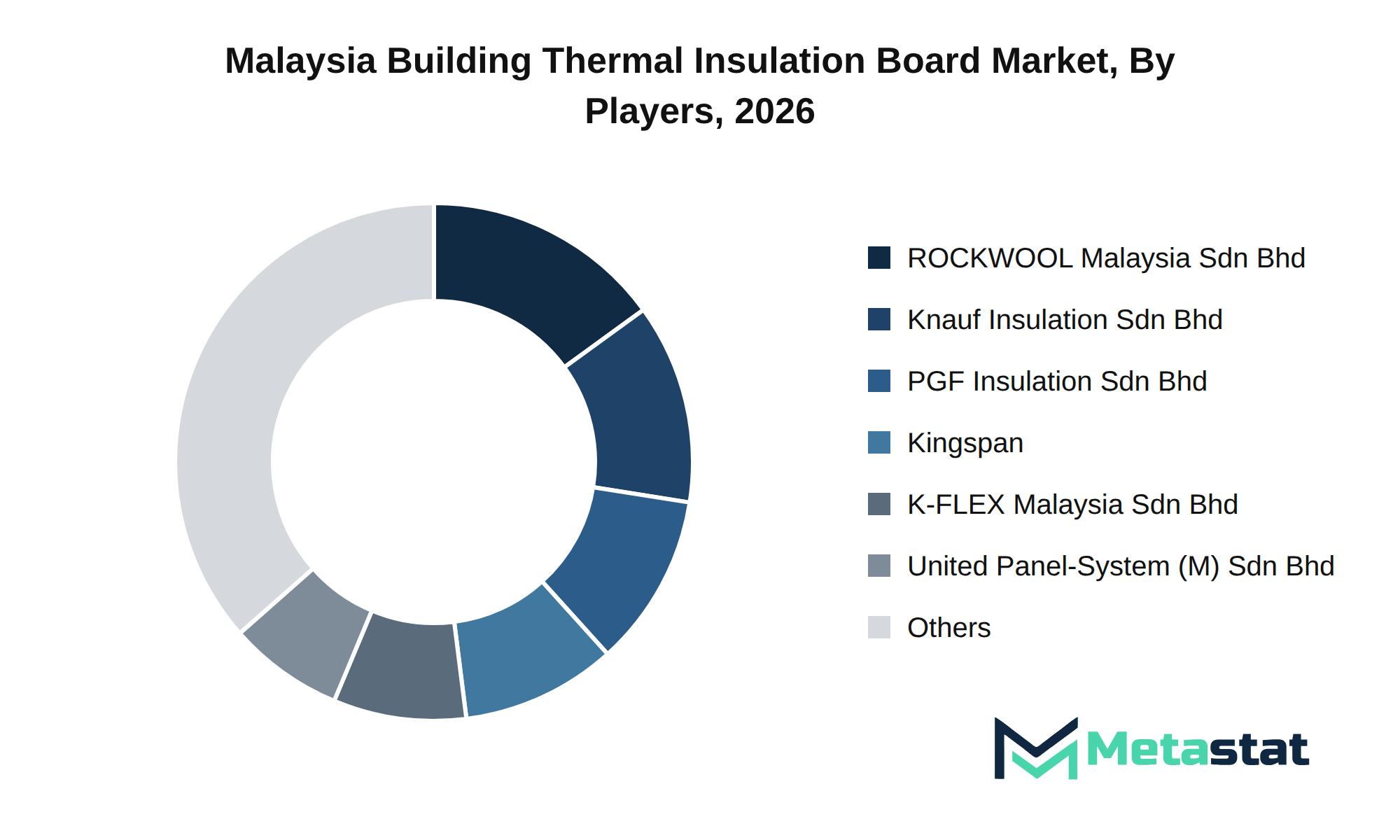
The Malaysia Building Thermal Insulation Board market features a diverse range of players, focusing on various strategic behaviors to strengthen their positions. Companies like ROCKWOOL Malaysia Sdn Bhd and Knauf Insulation Sdn Bhd engage in product differentiation, offering a variety of materials and insulation types to cater to the specific needs of different building applications. Firms including Kingspan Group plc and Saint-Gobain Isover leverage extensive research and development pipelines to introduce innovative products. This focus on technological advancements enhances their competitive edge within the market.
Strategic alliances and joint ventures among industry participants encourage collaborative innovation and improve market penetration. Firms like Armacell and PGF Insulation Sdn Bhd actively pursue partnerships to expand product offerings and reach. Competitive dynamics reflect the influence of barriers to entry, where established companies maintain significant brand equity and customer loyalty, creating challenges for new entrants. Effective customer retention strategies implemented by established players contribute to sustaining market positions and profitability, thus shaping the future outlook of the market.
Market size is forecast to rise from USD 99.2 million in 2025 to over USD 161.8 million by 2033. The base case presents a growth path at a compound annual growth rate (CAGR) of 6.3%. Positive macroeconomic factors, including increased construction activities and heightened awareness regarding energy efficiency, contribute to this upward trajectory. Bull cases envision accelerated growth driven by advancements in next-generation insulation technologies, while bear cases face potential slowdowns due to fluctuations in raw material availability and economic downturns.
Structural shifts in consumption patterns reflect rising demand for sustainable building solutions, particularly within the residential and commercial sectors. Regulatory evolution, including new compliance milestones, enhances market dynamics by promoting the adoption of innovative insulation technologies. Strategic capital allocation directives from stakeholders within the Malaysia Building Thermal Insulation Board market emphasize the importance of infrastructure commitments and capital expenditures, further advancing market penetration.
Investment in research and development (R&D) drives commercialization timelines for advanced products, shaping a competitive landscape. Geopolitical realignments and evolving trade corridors influence supply chains, affecting regional dynamics. High-growth pockets emerge owing to unmet enterprise needs becoming apparent, necessitating strategic imperatives that promote agility and resilience within the market. The market remains poised for expansion while highlighting opportunities for stakeholders to align future growth strategies with changing market demands.
The report strategically identifies and profiles the key market players and analyses their core competencies in each sub-segment of the Building Thermal Insulation Board market.
Report Attributes | Details |
Study Period | 2021-2033 |
Base Year | 2025 |
Estimated Year | 2026 |
Forecast Period | 2026-2033 |
Historical Period | 2021-2025 |
Growth Rate | CAGR 6.3% from 2026 to 2033 |
Revenue Unit | USD million |
Segmentation | By Material Type, Product Type, Application, Building Type, and Region |
Find answers to common questions about this report
The Building Thermal Insulation Board market size in Malaysia was valued at USD 99.2 million in 2025.
The Building Thermal Insulation Board market is projected to grow at a CAGR of 6.3% during the forecast period from 2026 to 2033.
The segment leading the Malaysia Building Thermal Insulation Board market is "Unfaced Rigid Insulation Boards," with a projected value of USD 36.3 million by 2033. This segment surpasses others in terms of growth potential and market share.
Key drivers for the Malaysia Building Thermal Insulation Board market include increased capital investment spurred by economic growth and rising GDP, which boost construction activities and demand for insulation solutions. Enhanced spending power among sectors facilitates infrastructure development, while low interest rates enable borrowing for advanced insulation technologies, positively impacting operational productivity and sustainability efforts.
The Malaysia Building Thermal Insulation Board market faces significant challenges from stringent regulatory compliance requirements, rising inflationary pressures, and supply chain disruptions. These factors increase operational costs, complicate product development, and create uncertainty in investment decisions, ultimately restraining market growth.
Increased capital investment significantly influences the adoption of thermal insulation materials in the Malaysia Building Thermal Insulation Board market. Economic growth, enhanced spending power, and low interest rates facilitate infrastructure development, driving demand for energy-efficient solutions that lower operational costs and align with sustainability goals.
The Building Thermal Insulation Board market is estimated to reach a valuation of USD 161.8 million by 2033.
Key players operating in the Malaysia Building Thermal Insulation Board market include ROCKWOOL Malaysia Sdn Bhd, Knauf Insulation Sdn Bhd, PGF Insulation Sdn Bhd, United Panel-System (M) Sdn Bhd, K-FLEX Malaysia Sdn Bhd, and Kingspan Group plc.
The Malaysia Building Thermal Insulation Board market is projected to grow at a compound annual growth rate (CAGR) of 6.3% from 2026 to 2033.
The Extruded Polystyrene (XPS) segment demonstrates the highest growth rate in the Malaysia Building Thermal Insulation Board market, with a CAGR of 6.8%.
The analysts below cover Chemicals and Materials research at Metastat Insights.
LEAD ANALYST
Utkarsh Khirodkar is a Lead Market Research Analyst at MetaStat Insight, specializing in market intelligence, technology sector assessments, and competitive strategy.

INDUSTRY CONSULTANT - CHEMICALS & ADVANCED MATERIALS
Chemicals and Materials · Machinery & Equipment · Packaging
Amit Gadhekar Consultant for Chemicals and Materials at MetaStat Insight, directing sector-specific intelligence, research, and strategic consulting across global chemical and processing markets.
Analyzing the transition from natural gas to green hydrogen in iron ore reduction requires realistic infrastructure timelines. Meta stat insight supplied a detailed regional assessment of DRI plant conversion costs and scrap metal availability in North America and Western Europe. Their report carefully examined pellet quality specs and electrical grid access constraints without making oversimplified market assumptions. The research material served as a practical reference during internal technology roadmap discussions.
Integrating zero-trust access controls across legacy electronic health record systems involves complex compliance overhead. Team produced an analysis that clearly separated identity governance and administration tools from privileged access management platforms. Their evaluation of HIPAA and GDPR compliance features across cloud native solutions gave our architecture group clear baseline criteria. The custom data request regarding biometric authentication adoption in hospital networks was returned promptly with clear documentation.
Evaluating calorific value requirements and air permit compliance across municipal waste facilities requires localized data. Metastat Insight structured their analysis around operational throughput capacity and feedstock composition variations in Latin America and Eastern Europe. Their competitive mapping of sorting equipment vendors helped clarify technology differences between optical separators and heavy media systems. The study provided an objective baseline during our capital expenditure reviews.
Explore related market intelligence reports worth reading alongside this one.
Starting from
$2950