
LEAD ANALYST
Utkarsh Khirodkar is a Lead Market Research Analyst at MetaStat Insight, specializing in market intelligence, technology sector assessments, and competitive strategy.

Global Silicone-Based Thermal Interface Materials Market Size, Share, By Product Type (Thermal Pads and Sheets, Thermal Gels and Gap Fillers, Thermal Greases and Compounds, Thermally Conductive Adhesives and Thermally Conductive Encapsulants), By Thermal Conductivity (Low Thermal Conductivity, Medium Thermal Conductivity, High Thermal Conductivity and Ultra-High Thermal Conductivity), By Application (Automotive and Electric Vehicles, Computing, Servers and Data Centers, Telecommunications and Networking Equipment, Consumer Electronics, Power Electronics and Power Conversion, Semiconductor and IC Packaging, LED and Lighting, Energy Storage and Battery Systems, Industrial Electronics and Controls), By Interface (Processor and Chip-to-Heat-Sink Interfaces, Power Semiconductor and Module Interfaces, Battery Cell, Module and Pack Interfaces, LED and Optoelectronic Interfaces, PCB and Component-to-Heat-Spreader Interfaces, Enclosure and Heat-Sink Interfaces and Electronic Module and Cold-Plate Interfaces), Industry Analysis, Growth, Trends, and Forecast, 2026-2033
Report ID
MSI-5214
Published
September, 2026
Pages
277 Pages
Format
Historical
Base year
Forecast
Forecast period
Report Details
Choose Your License
Global Silicone-Based Thermal Interface Materials Market
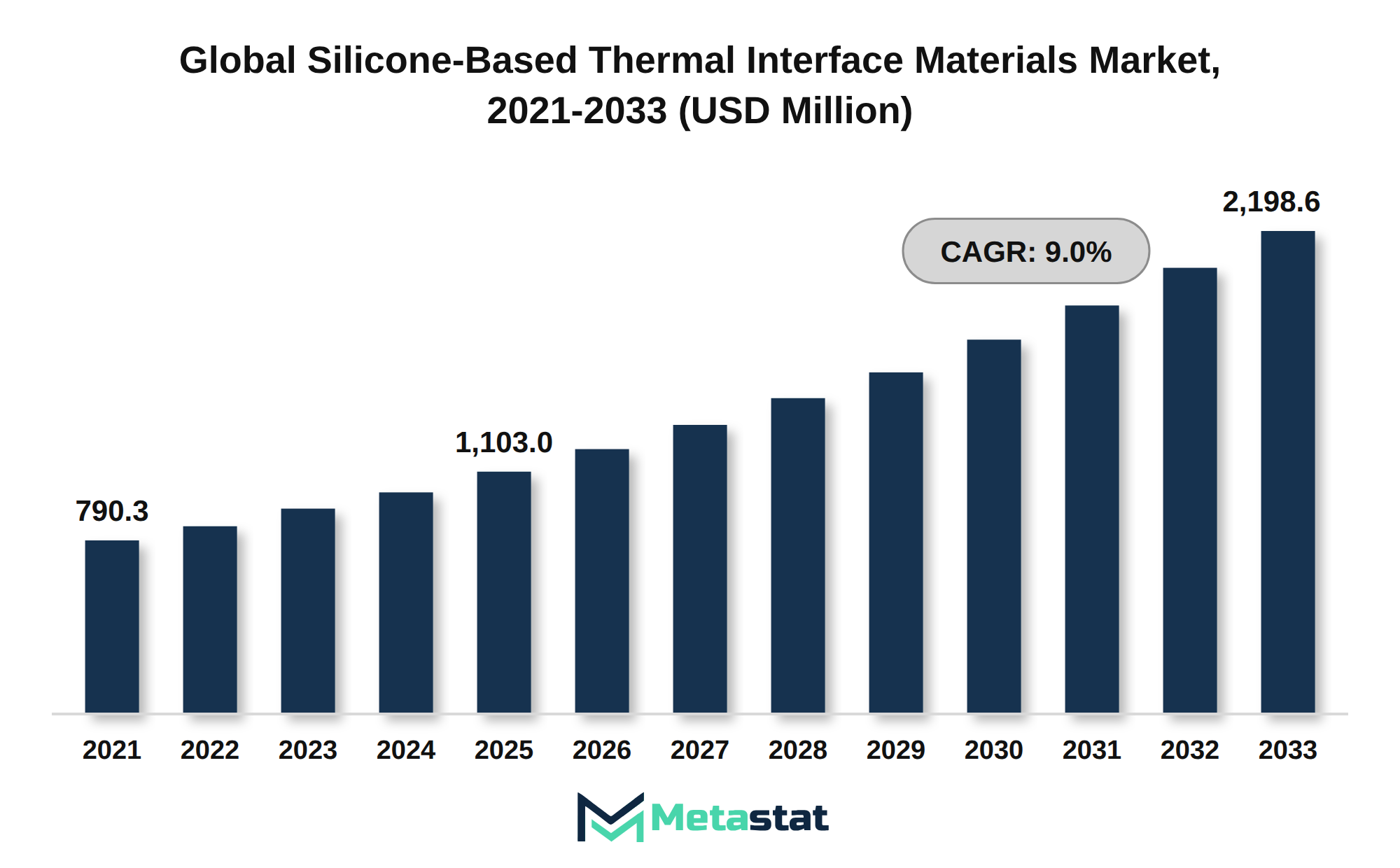
The global Silicone-Based Thermal Interface Materials market was valued at USD 1,103 million in 2025 and is projected to reach USD 2,198.6 million by 2033, growing at a CAGR of 9.0% over the forecast period.
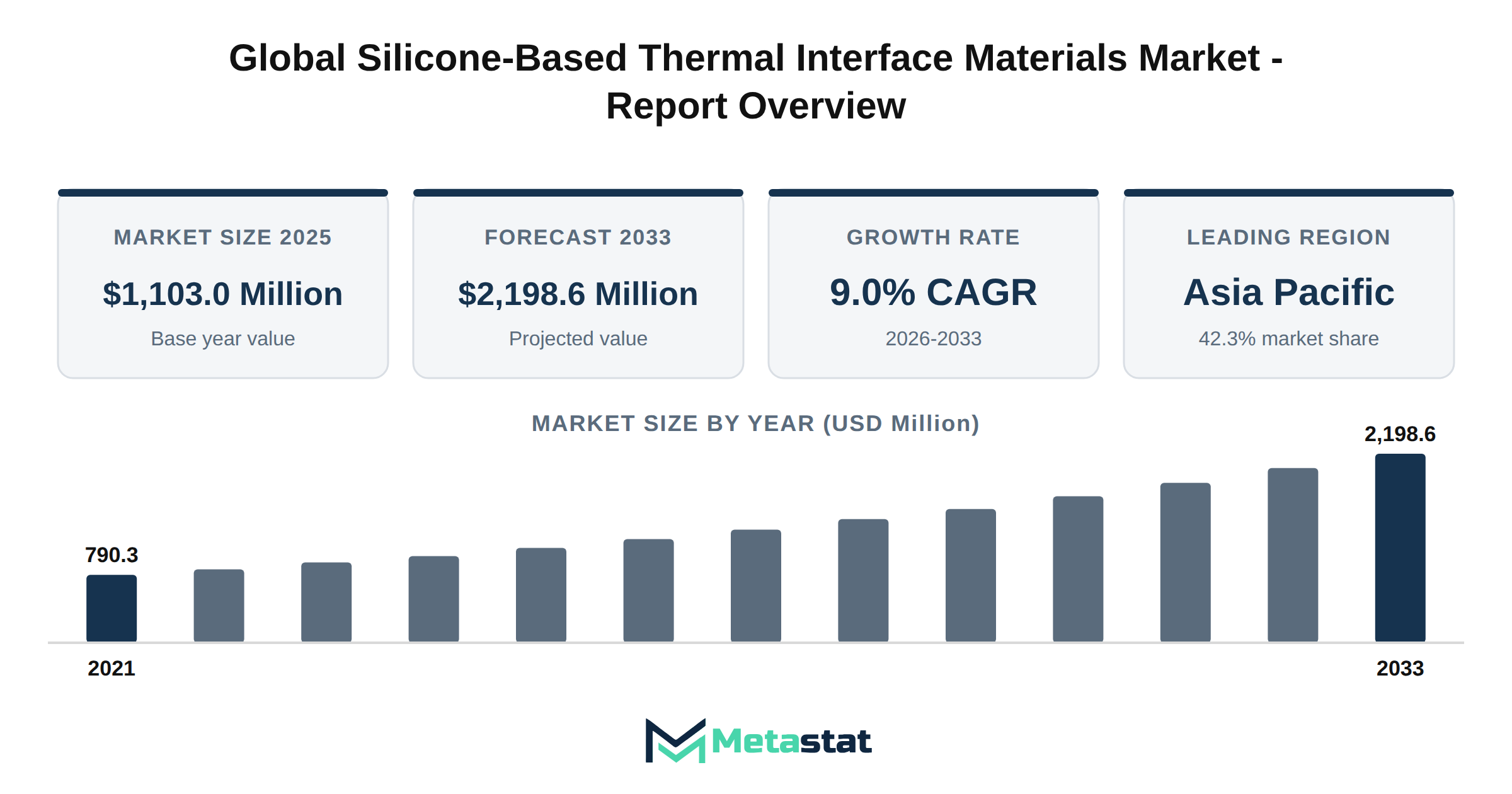
The Silicone-Based Thermal Interface Materials market reached a valuation of USD 1,103 million in 2025. This growth trajectory aligns with the forecasted value of USD 2,198.6 million by 2033, representing a compound annual growth rate (CAGR) of 9%. Historical data indicates the market began at USD 790.3 million in 2021, demonstrating a steady increase through subsequent years, culminating in USD 1,008.5 million in 2024.
Significant drivers for market expansion include rising demand for electric vehicles and automotive electronics, along with increasing reliance on data centers and high-performance computing systems. The shift towards more efficient thermal management solutions in power electronics and semiconductor packaging supports the market. Innovations in high-thermal-conductivity formulations enhance performance across various applications, ensuring manufacturers remain competitive.
Investment activity in the Silicone-Based Thermal Interface Materials market has seen strategic expansions by key players, driving innovation and increasing capacity. The competitive landscape features notable companies including Dow, Henkel AG & Co. KGaA, and Parker Hannifin Corporation. Regulatory developments surrounding environmental compliance impact market dynamics, emphasizing sustainable practices and materials.
Pricing trends reflect increasing demand for high-performance materials, influencing cost structures and margin dynamics across the supply chain. Future growth prospects indicate robust expansion of applications, with potential for advancements in research and development trajectories and next-generation innovations. The market is likely to experience increased focus on sustainable transformation and circular economy dynamics, shaping its trajectory in the coming years.
The market experiences significant growth driven by increased demand in various sectors, particularly electric vehicles and automotive electronics. The transition to electric vehicles necessitates advanced thermal management solutions, enhancing performance and reliability in battery systems and power electronics. This sector is projected to experience robust expansion, with the automotive and electric vehicles segment anticipated to grow from USD 194.9 million in 2026 to USD 395.7 million by 2033, reflecting a compound annual growth rate (CAGR) of 10.6%.
Data centers and high-performance computing applications contribute substantially to market dynamics. The increasing need for efficient cooling solutions in data centers drives demand for silicone-based thermal interface materials. This segment is expected to reach USD 439.7 million by 2033, supported by a CAGR of 11.7%. Innovations in high-thermal-conductivity formulations enhance thermal management, particularly in computing applications.
Investment and strategic expansion activities by key players strengthen the market's competitive landscape. Major companies actively pursue innovation and develop new products to meet evolving customer requirements. Regulatory and environmental developments shape the market, pushing for sustainable practices and compliance with emerging standards. The focus on sustainability and decarbonization influences product development, leading to a shift toward eco-friendly materials.
Pricing, cost trends, and margin dynamics play a crucial role in shaping the market landscape. Fluctuations in raw material costs impact pricing strategies, necessitating efficient sourcing and supply chain management. Future growth prospects for the Silicone-Based Thermal Interface Materials market hinge on the ability to adapt to changing market conditions and leverage emerging applications across various industries.
The Silicone-Based Thermal Interface Materials market experiences growth driven by rising demand for consumer electronics, including mobile devices, laptops, and gaming consoles. Advancements in these sectors necessitate the adoption of effective thermal management solutions to enhance performance and extend product life. Manufacturers seek materials that provide superior thermal conductivity and reliability, ensuring devices operate efficiently under varying conditions.
Increased consumer preference for high-performance electronics encourages manufacturers to invest in innovative thermal interface solutions. The proliferation of smartphones and other handheld devices leads to the miniaturization of components, creating challenges in heat dissipation. Consequently, demand for silicone-based thermal interface materials, which effectively address these challenges, continues to expand. This trend reflects a broader shift in consumer behavior towards devices that offer improved functionality and longevity.
Investment in the development of advanced thermal management solutions aligns with digital transformation initiatives across various industries. The drive towards automation and enhanced user experiences necessitates robust thermal interface materials that sustain higher performance levels. This trend positions the Silicone-Based Thermal Interface Materials market for significant growth, driven by technological advancements and evolving consumer expectations.
Rapid urbanization significantly influences the growth of the Silicone-Based Thermal Interface Materials market. Increasingly congested urban areas drive the demand for efficient transportation solutions, particularly electric vehicles (EVs). The shift towards EVs necessitates advanced thermal management solutions, where silicone-based materials play a critical role in ensuring optimal performance and safety.
This heightened demand stems from a combination of factors, including government initiatives promoting sustainable transportation and consumer preferences shifting towards eco-friendly alternatives. While cities evolve, the growing adoption of EVs creates a need for effective thermal interface materials to manage heat dissipation in various components, including batteries and electric drivetrains. The market stands to benefit from this trend, with potential for enhanced revenue across segments catering to the automotive and electric vehicle applications.
Investment in infrastructure development further increases the demand for silicone-based thermal interface materials. The construction of charging stations and enhancements in electrical grid capabilities support the overall electric vehicle ecosystem. This investment not only facilitates the integration of EVs into urban settings but creates opportunities for suppliers focusing on innovative thermal management solutions. The market continues to expand owing to manufacturers responding to these evolving requirements, ensuring the sustainability of urban transport.
The Silicone-Based Thermal Interface Materials market encounters significant challenges due to high capital investment requirements. Manufacturers face substantial initial costs for advanced production technologies and materials, which restrict entry for smaller players. This financial barrier influences the competitive landscape, resulting in a concentration of investments among larger companies that possess the necessary resources.
Escalating operating costs, driven by inflationary pressures and supply chain disruptions, further complicate profitability for firms in the market. These factors hinder operational flexibility and lead to increased prices for end-users, reducing overall market demand. The resulting economic strain impacts innovation efforts and the ability to respond to emerging market trends.
The combination of high capital investment requirements and escalating costs restrains growth within the Silicone-Based Thermal Interface Materials market, limiting opportunities for expansion and market participation.
The Silicone-Based Thermal Interface Materials market faces challenges stemming from geopolitical fragmentation and trade deficits. These factors lead to tariff friction, complicating cross-border transactions and increasing costs for manufacturers. Suppliers experience higher operational expenses due to tariffs, resulting in higher pricing for end-users and reducing overall market accessibility.
Technological disruptions further compound these challenges. Rapid advancements in technology necessitate complex research and development integrations, straining resources and expertise. The market encounters interoperability friction, where newly developed materials struggle to align with existing systems, hindering adoption rates across various sectors.
Supply chain instability significantly impacts the availability and pricing of feedstock and components essential for silicone-based thermal interface materials. Logistics disruptions contribute to delays in production schedules, exacerbating cost pressures on manufacturers. Rising input cost structures, coupled with margin pressures, create an environment where operational efficiency is critical for survival within the market.
The Silicone-Based Thermal Interface Materials market contends with workforce skill gaps and talent retention pressures. Automation displacements prompted by technological advancements widen the skills divide, making it difficult for companies to find qualified personnel. Environmental lifecycle footprints and sustainability demands require manufacturers to adapt their processes, leading to potential increases in operational costs.
Infrastructure gaps and retrofitting barriers hinder the market's ability to meet evolving demands effectively. Companies face implementation bottlenecks when attempting to integrate new technologies or adapt to changing regulatory standards. These challenges stifle growth potential, making it essential for market players to navigate these complexities to sustain their competitive edge.
Growing regional demands for advanced thermal management solutions significantly influence the Silicone-Based Thermal Interface Materials market. Industries in high-growth regions, particularly in Asia Pacific, look for enhanced thermal performance in consumer electronics and automotive applications. Manufacturers focus on developing products that meet the specific requirements of diverse sectors, including computing, telecommunications, and energy storage, creating opportunities for new entries and innovative solutions.
Infrastructure modernization serves because a vital catalyst for market growth in various regions. Investments in upgrading industrial and commercial facilities require high-performance thermal interface materials that ensure efficient heat dissipation. The trend towards sustainability and energy efficiency drives manufacturers to adopt eco-friendly materials and processes, aligning with global initiatives aimed at reducing carbon footprints.
Technological disruptions, fueled by rapid advancements in semiconductor technology and electric vehicles, increase the demand for specialized silicone-based thermal interface materials. The integration of these materials in high-performance applications creates a competitive environment, encouraging ongoing product development and innovation. The rise of digital transformation leads to shifts in purchasing behaviors, where companies increasingly prefer online procurement platforms for sourcing thermal interface materials, facilitating quicker decision-making and supply chain optimization.
Niche application growth presents significant opportunities within the market. Industries including aerospace, medical devices, and advanced manufacturing increasingly require specialized thermal management solutions. Manufacturers who diversify their product offerings to address these unique needs capture substantial market share. Strategic consolidation and cross-industry mergers enhance capabilities, enabling companies to leverage synergies and expand their geographic reach effectively.
The Silicone-Based Thermal Interface Materials market is set for growth driven by these emerging opportunities, reflecting evolving consumer demands and technological advancements across multiple sectors. Strategic alignment with industry trends and proactive adaptation to market dynamics will determine competitive positioning in the coming years.
The Global Silicone-Based Thermal Interface Materials market is segmented based on Product Type, Thermal Conductivity, Application, and Interface.
Valued at USD 441 million in 2026, the Thermal Pads and Sheets segment is projected to reach USD 769.5 million by 2033, at a CAGR of 8.3% during the forecast period. Demand for Thermal Pads and Sheets arises from the increasing need for efficient thermal management in various applications, particularly in the consumer electronics and automotive sectors. The expansion of electric vehicles and the growing trend toward miniaturization in electronic devices enhance the adoption of these materials. Evolving technologies in material formulation and manufacturing processes support the development of more effective thermal pads and sheets, enabling manufacturers to meet the rising performance expectations of end-users.
Regulatory compliance and environmental standards significantly influence product specifications within the Silicone-Based Thermal Interface Materials market. Innovations aimed at improving thermal conductivity and mechanical properties align product offerings with stringent regulations, encouraging acceptance among manufacturers. The focus on sustainability drives investment in eco-friendly materials and production methods, further propelling market growth. Cost structures associated with raw material sourcing and production capacity remain critical, influencing pricing strategies and overall market dynamics.
Growth in the Silicone-Based Thermal Interface Materials market derives from the rising demand for effective thermal management solutions across various sectors. This segment benefits from advancements in technology, particularly regarding the performance and efficiency of thermal gels and gap fillers. Such developments enhance the reliability of electronic devices by improving thermal conductivity, which is essential for applications in computing, automotive, and telecommunications industries.
Thermal gels and gap fillers provide critical solutions to fill voids and imperfections between surfaces, facilitating improved heat dissipation. Increased adoption of electric vehicles and high-performance computing systems fuels demand for these materials, pushing manufacturers to innovate and optimize product offerings. The segment is projected to reach USD 527.7 million by 2033, with a CAGR of 8.5% during the forecast period.
Technological maturation in manufacturing processes enhances product quality while reducing production costs, leading to improved profit margins for producers. Regulatory compliance regarding thermal management in electronics strengthens market growth, compelling manufacturers to invest in advanced solutions. These factors contribute to a robust outlook for thermal gels and gap fillers, positioning them because significant players in the overall Silicone-Based Thermal Interface Materials market.
Demand for Thermal Greases and Compounds in the Silicone-Based Thermal Interface Materials market relies heavily on their application in diverse industries, particularly in automotive, computing, and consumer electronics. The projected market value of USD 461.7 million by 2033 reflects a favorable growth trajectory driven by the increasing reliance on efficient thermal management solutions in electronic devices.
Technological advancements play a crucial role in the evolution of thermal greases and compounds, with innovations leading to enhanced thermal conductivity and stability. These materials facilitate improved performance in high-power electronics and electric vehicles, where effective heat dissipation is essential for maintaining operational efficiency. The growing emphasis on energy efficiency and enhanced performance in electronic components drives further demand.
End-use dynamics significantly impact the market, particularly with the rising adoption of electric vehicles and the expansion of data centers. These trends create a substantial requirement for reliable thermal interface materials, contributing to market growth. Regulatory compliance and certifications relating to environmental standards establish a framework that encourages the adoption of high-performance thermal greases and compounds.
Pricing volatility and margin pressures remain relevant factors, with fluctuations in raw material costs affecting profitability. Strategic opportunities arise from ongoing investment in research and development, enabling companies to innovate and differentiate their product offerings in a competitive landscape. Overall, the Thermal Greases and Compounds segment benefits from a combination of demand drivers, technological maturation, and evolving industry standards, positioning it for sustained growth in the coming years.
Growth in the Thermally Conductive Adhesives segment aligns with increasing applications in various industries, particularly in automotive and electronics sectors. This segment is projected to grow at a CAGR of 10.1% during the forecast period. Adoption stems from the need for enhanced thermal management solutions in high-performance applications, where efficient heat dissipation is crucial for device reliability and performance. The electronics industry, particularly computing and telecommunications, drives significant demand due to the rising complexity of devices and the need for effective thermal interface solutions.
Technological advancements in adhesive formulations contribute to segment expansion, allowing for better thermal conductivity and bonding capabilities. Manufacturers continuously innovate to develop next-gen products that meet strict performance standards while ensuring compliance with regulatory requirements. The increasing trend towards miniaturization in electronic devices drives the demand for thermally conductive adhesives, resulting from compact designs that require efficient thermal management to prevent overheating.
Pricing volatility in raw materials influences cost structures, impacting operational margins for suppliers in the market. Companies actively seek to stabilize costs through strategic sourcing and improved supply chain resilience. The emergence of disruptive alternatives including thermally conductive gels presents both challenges and opportunities within the segment, compelling manufacturers to adapt and innovate. Overall, the Thermally Conductive Adhesives segment is positioned for significant growth, fueled by evolving market demands and technological advancements within the Silicone-Based Thermal Interface Materials market.
Growing interest in Thermally Conductive Encapsulants and Potting Materials arises from their ability to enhance the thermal management of electronic devices, particularly in high-performance applications. Demand for these materials is driven by the increasing complexity of electronic components and the need for efficient heat dissipation, especially in sectors including automotive, computing, and consumer electronics. Rapid advancements in technology necessitate next-generation upgrades, propelling the evolution of encapsulants to meet higher performance standards.
Adoption of thermally conductive encapsulants is influenced by stringent regulatory compliance standards aimed at ensuring safety and reliability in electronic products. Manufacturers seek certifications that validate their materials' thermal performance and environmental sustainability, which affects purchasing decisions. Increased focus on product evolution leads to the development of innovative formulations that offer improved thermal conductivity and mechanical properties, catering to various applications.
Cost structures associated with these materials reflect the raw material sourcing and production processes involved. Pricing volatility arises from fluctuations in the availability of key materials, impacting margins for suppliers. Strategic opportunity windows emerge because manufacturers invest in R&D to enhance product capabilities and expand market presence. The Silicone-Based Thermal Interface Materials market experiences a dynamic environment, where consumption shifts toward more efficient and reliable solutions drive growth in encapsulants and potting materials.
Valued at USD 410.5 million in 2026, the Low Thermal Conductivity segment is projected to reach USD 659.6 million by 2033, at a CAGR of 7% during the forecast period. This growth results from increasing demand for efficient thermal management solutions across various applications, particularly in consumer electronics and automotive industries. The adoption of low thermal conductivity materials has expanded due to their ability to enhance performance while minimizing weight, a critical factor in modern design considerations.
Drivers contributing to the market dynamics include advancements in material science that improve the performance characteristics of silicone-based thermal interface materials. Technological maturation in manufacturing processes has further facilitated the production of high-quality low thermal conductivity products, enhancing their appeal to manufacturers. Increased investment in electric and hybrid vehicles highlights the requirement for effective thermal management, propelling the growth of this segment.
End-use dynamics indicate a shift towards high-performance applications, with a notable emphasis on energy-efficient solutions. Regulatory compliance with environmental standards and energy efficiency directives drives manufacturers to explore low thermal conductivity options that align with sustainability goals. Consequently, this segment is positioned for expansion, attracting capital investment aimed at innovating next-generation products.
Pricing volatility in raw materials influences the cost structures within this segment, compelling manufacturers to optimize their sourcing strategies. Supply chain resilience becomes crucial in maintaining consistent product availability, especially in the face of global disruptions. The Low Thermal Conductivity segment's adaptability to these challenges enhances its competitive position within the broader Silicone-Based Thermal Interface Materials market.
Projected growth in the Medium Thermal Conductivity segment reflects rising demand across various industries that require effective heat management solutions. This segment is estimated to reach USD 835.5 million by 2033, at a CAGR of 8.3% during the forecast period. Factors driving growth include increased usage in computing, telecommunications, and automotive sectors, where efficient thermal management enhances performance and reliability. Adoption of advanced materials in electronic devices supports this trend, aligning with the technological maturation and ongoing product evolution within the Silicone-Based Thermal Interface Materials market.
Investment in research and development leads to the introduction of next-generation materials, improving thermal conductivity properties while maintaining cost-effectiveness. Stringent regulatory compliance standards influence manufacturers to innovate and optimize their product offerings. Industries increasingly prioritize energy efficiency and performance, driving demand for medium thermal conductivity solutions and creating significant opportunities for suppliers and manufacturers in the market.
End-use dynamics indicate a shift towards high-performance applications, requiring materials with enhanced thermal properties. This demand shift encourages suppliers to enhance their product portfolios, driving competition in the Silicone-Based Thermal Interface Materials market. Supply chain resilience remains crucial, considering the potential impacts of raw material sourcing and logistics vulnerabilities on pricing structures. Overall, this segment's growth reflects a multifaceted approach to meeting evolving market needs while addressing cost pressures and margin considerations.
Increased focus on high-performance applications drives demand for high thermal conductivity materials, which enhance heat dissipation in electronic devices. The expansion of the electric vehicle market significantly contributes to this segment's growth, driven by the necessity for efficient thermal management to ensure battery performance and safety. Technological advancements in material science lead to the development of innovative silicone-based solutions that meet stringent thermal performance requirements, further propelling market adoption.
High thermal conductivity materials cater to diverse applications, including computing, telecommunications, and consumer electronics. Industries prioritize these materials due to their ability to reduce overheating and improve device reliability, influencing purchasing decisions in the Silicone-Based Thermal Interface Materials market. The push for energy efficiency in electronic devices heightens the necessity for effective thermal management solutions, ensuring optimal performance and longevity.
High Thermal Conductivity segment is expected to reach USD 549.6 million by 2033. Regulatory compliance regarding electronic device safety and performance standards reinforces the demand for high thermal conductivity materials, prompting manufacturers to invest in high-quality options. This regulatory landscape encourages the development of advanced materials, creating a competitive environment that drives innovation and efficiency across the market.
Growth in the Ultra-High Thermal Conductivity segment aligns with increasing demand for efficient thermal management solutions across various high-performance applications. This segment is projected to grow at a CAGR of 13.1% during the forecast period. Key drivers include advancements in electronics and electric vehicles, where effective heat dissipation plays a critical role in performance and reliability. The rising need for compact and high-efficiency electronic designs further fuels demand for materials with superior thermal conductivity.
Technological maturation within the Silicone-Based Thermal Interface Materials market facilitates the development of innovative products that enhance performance in demanding environments. Companies focus on formulating advanced materials that address evolving customer requirements, including improved thermal management in automotive and computing applications. By leveraging advanced technologies, producers improve product capabilities, leading to growth opportunities in this segment.
Consumption shifts toward high-performance applications, driven by increasing integration of semiconductor devices in various sectors, including automotive and consumer electronics, which drives growth in this segment. These industries emphasize the importance of effective thermal interface materials to ensure optimal performance, thereby increasing overall market demand. Regulatory compliance standards surrounding electronic device efficiency further necessitate adoption of ultra-high thermal conductivity materials, reinforcing market expansion strategies.
End-use dynamics illustrate a growing preference for high-performance thermal interface materials capable of meeting stringent performance benchmarks. Efficient thermal management solutions enhance device longevity and operational efficiency, making them essential components in modern electronics. This demand creates a strategic opportunity window for producers to expand market presence and improve profitability through innovation and targeted marketing efforts.
Valued at USD 194.9 million in 2026, the Automotive and Electric Vehicles segment is projected to reach USD 395.7 million by 2033, at a CAGR of 10.6% during the forecast period. Increased adoption of electric vehicles significantly drives demand for Silicone-Based Thermal Interface Materials, owing to these materials enhancing thermal management in high-performance automotive applications. The rising focus on energy efficiency and performance in vehicles prompts manufacturers to incorporate advanced thermal interface materials, improving component reliability and longevity.
Technological maturation in thermal interface materials enables better heat dissipation, supporting the growing complexity of automotive electronics and battery systems. The demand for improved thermal performance in electric vehicles results in a shift towards sophisticated materials, which support the segment's growth. Regulatory compliance standards related to thermal management in the automotive sector further influence the adoption of high-quality thermal interface materials.
Consumption shifts towards electric and hybrid vehicles necessitate innovative solutions to manage heat effectively in these advanced systems. Competitive pressures within the automotive industry drive investments in next-generation thermal management technologies, influencing product evolution. The Silicone-Based Thermal Interface Materials market stands to benefit from these dynamics, because suppliers explore opportunities for strategic partnerships and collaborations to enhance product offerings.
Demand for Silicone-Based Thermal Interface Materials in the Computing, Servers and Data Centers segment reflects the increasing reliance on advanced computing technologies and data-driven applications. The sector experiences rapid growth driven by the proliferation of cloud computing, big data analytics, and artificial intelligence, all of which require efficient thermal management solutions. The need for higher processing power intensifies, and maintaining optimal operating temperatures emerges because a critical factor to ensure system reliability and performance.
Technological advancements in thermal interface materials contribute to segment expansion. Enhanced product formulations, including improved thermal conductivity and durability, attract investment in next-generation systems. Companies specializing in thermal management solutions prioritize research and development to meet the specific requirements of high-density computing environments. These innovations directly influence the market's evolution, driving demand for high-performance materials that support effective heat dissipation.
The Computing, Servers and Data Centers segment is projected to reach USD 439.7 million by 2033, at a CAGR of 11.7% during the forecast period. This growth trajectory reflects the increasing adoption of energy-efficient solutions in data centers and server farms, where minimizing thermal resistance is crucial for operational efficiency. The transition to energy-efficient architectures and practices emphasizes the importance of effective thermal management in achieving sustainability goals.
Market dynamics shape evolving end-use requirements, including the push for smaller, more powerful devices that generate significant heat. Businesses and consumers seek more compact solutions, and the demand for thermal interface materials that effectively manage heat in constrained spaces will intensify. This trend presents strategic opportunities for manufacturers, encouraging them to innovate and adapt their product offerings to align with market needs.
Demand for Silicone-Based Thermal Interface Materials in the Telecommunications and Networking Equipment segment stems from the rapid growth of communication technologies and the increasing need for efficient thermal management solutions. This segment is expected to reach USD 219.9 million by 2033, reflecting significant investment in infrastructure and upgraded systems that require effective heat dissipation to ensure optimal performance.
Technological maturation in telecommunications equipment drives the adoption of high-performance materials, driven by manufacturers prioritizing thermal efficiency to enhance device longevity and reliability. Innovations in product development, especially in the context of next-gen upgrades, enable better heat transfer characteristics, positioning silicone-based thermal interface materials because key enablers of improved telecommunications hardware.
End-use dynamics indicate a shift towards compact and powerful networking devices, leading to greater demand for effective thermal interface solutions that accommodate the miniaturization of components. This trend is observable across various applications, including data centers and telecommunications networks, where efficient thermal management is critical for maintaining performance and avoiding overheating.
Regulatory compliance standards related to electronic device safety and efficiency further influence the market, compelling manufacturers to integrate advanced thermal materials into their products. Such compliance not only enhances product reliability but supports competitive positioning in an increasingly regulatory-focused environment.
Supply chain resilience becomes critical in this segment, given the reliance on specific raw materials for silicone-based thermal interface products. Fluctuations in raw material availability or prices pose challenges, impacting production costs and pricing strategies. Strategic opportunity windows emerge for suppliers who optimize sourcing and logistics, ensuring steady access to necessary materials while mitigating risks associated with market volatility.
The Silicone-Based Thermal Interface Materials market reflects ongoing evolution driven by technological advancements and changing consumer demands within the telecommunications sector. While the industry continues to expand, effective thermal management solutions will play a significant role in supporting the growth and development of telecommunications and networking equipment.
Projected growth in the Consumer Electronics segment aligns with rising demand for innovative and efficient thermal management solutions. Increasing device performance and the miniaturization of electronic products drive the need for effective heat dissipation materials. The segment is projected to grow at a CAGR of 6.7% during the forecast period, reflecting its significance within the broader Silicone-Based Thermal Interface Materials market.
Technological advancements in consumer electronics, including smartphones, tablets, and wearable devices, necessitate high-performance thermal interface materials. These materials enhance device reliability and longevity by efficiently managing heat generation. The demand for advanced thermal management solutions in consumer devices fuels investments in research and development, supporting market growth.
Product evolution within the consumer electronics sector indicates a shift towards lightweight, compact designs, increasing the need for thermally conductive materials that maintain performance without adding significant weight. This trend presents strategic opportunity windows for manufacturers, encouraging the adoption of innovative silicone-based solutions tailored to meet specific application requirements.
The Consumer Electronics segment remains a vital component of the Silicone-Based Thermal Interface Materials market, driven by technological maturation and evolving consumer expectations. Market participants focusing on product quality and performance enhancements are likely to gain competitive advantages amid increasing demand.
Increasing energy efficiency regulations drive substantial demand for Silicone-Based Thermal Interface Materials in the Power Electronics and Power Conversion application segment. The transition to renewable energy sources and electric vehicles creates a pressing need for effective thermal management solutions, ensuring optimal performance of power electronic devices.
Technological advancements and innovations in semiconductor materials enhance the performance of power electronics, resulting in heightened adoption of silicone-based solutions. The shift towards compact designs and improved thermal management properties leads to significant investments in R&D, further stimulating market growth.
Growing concerns regarding heat dissipation in power electronic systems necessitate effective thermal interface materials. This segment observes increasing consumption of silicone-based products to address performance challenges in high-power applications, reflecting robust end-use dynamics.
Continuous advancements in product evolution, including enhanced thermal conductivity and reliability, position silicone-based materials because essential. While manufacturers seek to optimize thermal performance and comply with stringent regulatory standards, the market for these materials in power electronics continues to expand.
Strategic opportunities in the Power Electronics and Power Conversion segment arise from the increasing integration of these materials into next-generation applications. This segment supports the durability and efficiency of critical systems, making a significant impact on overall market growth.
Rising demand for sophisticated electronic devices drives advancements in the Semiconductor and IC Packaging segment within the Silicone-Based Thermal Interface Materials market. This segment benefits from increased integration of higher-performance chips and the necessity for efficient thermal management in compact electronic designs. Enhanced processing capabilities in devices including smartphones, laptops, and various consumer electronics necessitate the use of effective thermal interface materials to maintain optimal performance and longevity.
Technological maturation within the semiconductor industry fuels the adoption of innovative packaging solutions, including flip-chip and system-in-package technologies. These advanced methods require reliable thermal management to support heat dissipation effectively, enhancing device reliability and performance. Transitioning to smaller, more powerful chips creates a critical need for reliable thermal interface materials, positioning this segment for significant growth.
Investment in research and development remains a priority, driving next-generation upgrades in semiconductor manufacturing. Continuous innovation leads to product evolution, with manufacturers developing new formulations that enhance thermal conductivity, mechanical stability, and overall performance. Regulatory compliance standards increasingly shape product development, prompting manufacturers to align with environmental and safety regulations while enhancing thermal management capabilities.
Consumption shifts toward high-performance computing applications and data centers further increase the demand for effective thermal interface materials. The segment’s growth aligns with the increasing complexity of electronic systems, where heat management is essential to ensure operational efficiency. Strategic opportunity windows arise from these trends, encouraging firms to invest in advanced materials that meet the evolving needs of the market.
Growing adoption of energy-efficient lighting solutions significantly influences the demand for Silicone-Based Thermal Interface Materials in the LED and Lighting application segment. The push towards sustainable technologies drives manufacturers to enhance thermal management capabilities in lighting systems, ensuring longevity and performance. Increasing investments in smart lighting solutions further elevate the need for advanced thermal interface materials, emphasizing heat dissipation and reliability.
Technological advancements in LED technologies prompt manufacturers to explore innovative materials that improve thermal conductivity, thus enhancing the efficiency of lighting products. This evolution in product design necessitates the integration of high-performance thermal interface materials, reinforcing the importance of effective thermal management systems in modern lighting applications. Consequently, manufacturers face pressure to optimize costs while maintaining quality standards, impacting pricing dynamics within the market.
The regulatory landscape increasingly mandates compliance with energy efficiency standards, compelling manufacturers to adopt advanced thermal interface materials that meet strict performance criteria. This compliance drives innovation and investment in next-generation materials, supporting segment expansion. While competition intensifies, companies focusing on developing superior thermal management solutions gain a strategic advantage, capitalizing on the growing demand within the Silicone-Based Thermal Interface Materials market.
Advancements in energy storage technologies drive significant interest in Silicone-Based Thermal Interface Materials within Energy Storage and Battery Systems applications. The increasing demand for efficient thermal management solutions arises from the rapid growth of electric vehicles and renewable energy storage systems. Enhanced performance requirements for batteries necessitate effective heat dissipation to maintain operational efficiency and prolong lifespan, reflecting a critical need for high-quality thermal interface materials.
Technological maturation in battery technology supports the shift towards more advanced thermal management products. Innovations in materials and formulations enhance the performance characteristics of silicone-based solutions, making them increasingly suitable for high-performance applications. Adoption of next-generation battery systems, including solid-state batteries, emphasizes the necessity for robust thermal interface solutions that ensure optimal thermal conduction and reliability.
Regulatory compliance standards regarding energy efficiency and safety contribute to the demand for Silicone-Based Thermal Interface Materials in this segment. Industries adapting to meet these regulations find investment in quality thermal management solutions essential. Consumption shifts towards sustainable materials and practices reinforce the outlook for silicone-based products, highlighting strategic opportunity windows for manufacturers and suppliers in this evolving market.
Cost structures and pricing volatility related to raw materials impact the profitability of producers in the market. Strategic sourcing and supply chain resilience are essential for mitigating risks associated with raw material availability. Disruptive alternatives and technological obsolescence present challenges while igniting opportunities for innovation within the industry, driving product evolution that aligns with market demands. The Energy Storage and Battery Systems segment requires a focused approach to capitalize on these trends and ensure sustained growth.
Technological advancements in industrial electronics drive significant demand for Silicone-Based Thermal Interface Materials in the Industrial Electronics and Controls segment. Enhanced performance requirements for thermal management solutions increasingly lead to the adoption of high-conductivity materials, essential for optimizing the operation of electronic devices and systems. The ongoing evolution of industrial applications, including automation and control systems, necessitates effective heat dissipation strategies that silicone-based solutions provide.
Increased regulatory compliance standards focusing on energy efficiency and emission reductions further influence market dynamics, prompting manufacturers to adopt materials that support sustainable practices. The integration of advanced technologies in smart factories and industrial IoT applications fuels the need for efficient thermal materials, ensuring reliability and longevity in electronic components. Consequently, increased capital investment in these technologies enhances opportunities for silicone-based thermal interface materials.
Shifts in end-use dynamics within the industrial electronics sector highlight the importance of robust thermal management solutions. A growing focus on optimizing energy consumption in manufacturing processes necessitates the incorporation of effective thermal interface materials. These materials play a crucial role in ensuring system reliability and performance, ultimately driving market expansion.
Interest in advanced applications within aerospace and defense sectors stimulates demand for Silicone-Based Thermal Interface Materials. These industries require materials that ensure enhanced thermal conductivity and reliability, critical for mission-critical systems and equipment. Stringent regulatory compliance standards regarding durability and performance necessitate the adoption of high-quality thermal interface materials, driving innovation and competition among suppliers.
Technological maturation in aerospace, defense, and related electronics leads to a shift toward next-generation materials that provide improved performance in extreme conditions. The evolution of consumer expectations for performance and durability in electronic devices influences the market, prompting manufacturers to pursue innovations in thermal management solutions. Increased investments in research and development boost opportunities for suppliers to introduce innovative products tailored for specialized applications.
Shifts in consumption patterns, driven by the rise of electrification and sophisticated systems in aerospace and defense, increase the focus on energy-efficient solutions. This demand aligns with the ongoing trend toward miniaturization of electronic components, which necessitates advanced thermal management solutions. Strategic opportunity windows emerge for suppliers that offer unique solutions addressing specific challenges faced by these sectors.
Supply chain resilience remains crucial for the silicone-based thermal interface materials market, influencing raw material sourcing and logistics management. Disruptive alternatives are emerging, requiring suppliers to differentiate their offerings to maintain competitive advantage. Continuous monitoring of pricing volatility and margin pressures will determine market dynamics, especially in response to fluctuations in raw material costs.
Valued at USD 368.3 million in 2026, the Processor and Chip-to-Heat-Sink Interfaces segment is projected to reach USD 615.6 million by 2033, representing a CAGR of 7.6% during the forecast period. Primary demand drivers include advancements in semiconductor technology and increasing integration of high-performance components in computing devices. These factors create significant adoption opportunities because end-users seek improved thermal management solutions to enhance device reliability and efficiency.
Technological maturation plays a critical role in segment expansion, with next-gen upgrades in processors and graphics units requiring efficient thermal interface materials to dissipate heat effectively. Product evolution focuses on enhancing thermal conductivity and reducing thermal resistance, which aligns with the needs of high-performance computing and data center applications. Consumption shifts towards miniaturized devices further necessitate innovative solutions, driving a transition from traditional materials to silicone-based options.
Regulatory compliance standards emphasizing energy efficiency and environmental sustainability influence purchasing decisions in the market. Cost structures and pricing volatility impact both manufacturers and consumers, necessitating a balance between performance and affordability. Supply chain resilience remains essential, with raw material sourcing becoming crucial for maintaining quality and consistency in product offerings.
Strategic opportunity windows exist for manufacturers to capitalize on emerging technologies and applications, particularly in areas including artificial intelligence and machine learning, where computational power demands robust thermal management. The evolving landscape of electronic interfaces will continue to shape the direction of the Silicone-Based Thermal Interface Materials market, ensuring sustained growth and innovation.
Significant demand for Silicone-Based Thermal Interface Materials arises from the increasing complexity of electronic devices requiring efficient thermal management. The Power Semiconductor and Module Interfaces segment is projected to reach USD 439.7 million by 2033, at a CAGR of 9.6% during the forecast period. This growth reflects the expanding use of power semiconductors in various applications, including automotive, renewable energy, and industrial electronics.
Technological maturation in semiconductor technology enhances the necessity for advanced thermal solutions, enabling better heat dissipation and performance. The continuous evolution of products, including the integration of high-performance materials, contributes to segment expansion. Energy efficiency mandates from regulatory bodies drive the adoption of innovative thermal interface materials, ensuring compliance with environmental standards.
Cost structures and pricing volatility influence market dynamics, affecting both manufacturers and end-users. Ongoing investments in research and development facilitate the introduction of next-generation thermal interface materials, improving performance and reliability. The strategic opportunity window for suppliers continues to widen, creating competitive advantages in the Silicone-Based Thermal Interface Materials market.
Technological advancements in battery technology drive significant growth in the Battery Cell, Module and Pack Interfaces segment of the Silicone-Based Thermal Interface Materials market. Innovations in energy storage solutions and electric vehicles enhance the demand for efficient thermal management systems, optimizing performance and longevity of battery components. The ongoing shift towards electrification and renewable energy sources emphasizes the importance of reliable thermal interface materials in maintaining optimal operating temperatures for battery cells and modules.
While the segment evolves, increased investment in research and development promotes the introduction of next-generation materials tailored for higher thermal conductivity and improved heat dissipation. This evolution translates into enhanced product performance and broader applications across electric vehicle and energy storage sectors. The demand for Silicone-Based Thermal Interface Materials in this segment is projected to reach USD 373.8 million by 2033, reflecting robust market growth driven by advancements in battery technologies.
End-use dynamics highlight rising requirements for effective thermal management solutions. Manufacturers prioritize efficiency and safety in battery designs. Regulatory compliance and industry standards influence the adoption of superior thermal interface materials, ensuring devices meet safety and performance benchmarks. Overall, these factors contribute to the promising outlook for the Battery Cell, Module and Pack Interfaces segment within the market.
With a projected growth at a CAGR of 6.3% during the forecast period, demand for Silicone-Based Thermal Interface Materials in LED and Optoelectronic Interfaces reflects the increasing integration of advanced lighting technologies and electronic devices. The push for higher energy efficiency in lighting applications drives a robust market for these materials, particularly in the context of expanding LED usage. Innovations in optoelectronic applications support the segment's growth by enhancing product performance and operational efficiency.
Technological maturation within the segment enables manufacturers to develop more effective thermal management solutions, promoting higher adoption rates across various industries. The ongoing evolution of consumer electronics creates increased demands for reliability and performance, further stimulating growth within the market. End-users prioritize energy-efficient and high-performing options, while manufacturers focus on refining product specifications to meet these requirements.
Strategic investments in research and development play a critical role in driving innovation and improving the performance of silicone-based materials. This focus on product evolution positions suppliers to align with consumer needs and compliance standards, thereby enhancing competitive advantage in the market. The segment's growth trajectory indicates a strong outlook, driven by sustained demand for advanced technologies and applications across the LED and optoelectronic sectors.
Growing demand for high-performance electronics drives notable interest in Silicone-Based Thermal Interface Materials, particularly in the PCB and Component-to-Heat-Spreader Interfaces sector. This segment benefits from rapid advancements in semiconductor technology and the increasing complexity of electronic devices, which necessitate efficient thermal management solutions. Enhanced thermal conductivity requirements compel manufacturers to innovate, leading to the development of advanced materials that improve heat dissipation and overall device reliability. The ongoing transition to more compact and powerful components in computing and automotive applications further increases the significance of this segment.
Shifts in consumption patterns reflect rising performance expectations among end-users. Industries including consumer electronics, automotive, and telecommunications prioritize efficient thermal management to enhance device performance and longevity. Regulatory compliance standards emphasizing environmental sustainability and energy efficiency stimulate the adoption of innovative thermal interface materials. Manufacturers responding to these standards find investments in next-generation products essential, driving the evolution of offerings in the market.
Technological maturation within the sector creates opportunities for strategic partnerships and collaborations among key players. Companies leverage advancements in material science to expand their product portfolios, addressing emerging needs across various applications. The ongoing demand for reliable and efficient thermal management solutions in increasingly diverse applications highlights the potential for growth within the PCB and Component-to-Heat-Spreader Interfaces segment. Enhanced competitive dynamics prompt suppliers to focus on differentiating their offerings, influencing pricing strategies and shaping market trends.
Rapid technological evolution in electronics fuels demand for efficient thermal management solutions, significantly impacting the Enclosure and Heat-Sink Interfaces segment. A shift towards miniaturization in electronic components increases the need for effective heat dissipation solutions in compact designs. The rise of high-performance computing, gaming, and telecommunications sectors drives demand for advanced thermal interface materials that ensure optimal performance and reliability.
Regulatory compliance regarding energy efficiency and thermal management in electronic devices enhances the demand for silicone-based solutions. Evolving applications in consumer electronics, automotive, and data centers create opportunities for innovation in product offerings. End-users increasingly seek materials that provide superior thermal conductivity and durability, aligning with the overall growth trajectory of the Silicone-Based Thermal Interface Materials market.
Strategic partnerships among manufacturers and research institutions focus on developing next-generation products tailored for specific applications. This collaborative approach enhances product evolution and facilitates market expansion. Continuous advancements in formulation technologies promise to address thermal challenges across various electronic interfaces, supporting ongoing growth in the segment.
Market dynamics emphasize the importance of cost structures and pricing strategies. Manufacturers balance quality with affordability. Supply chain resilience plays a critical role in maintaining consistent production, while raw material sourcing remains a key consideration in managing production costs. The evolving landscape presents strategic opportunity windows for stakeholders to innovate and adapt within the competitive market.
Growing demand for efficient cooling solutions within electronic devices drives interest in Silicone-Based Thermal Interface Materials, specifically in the Electronic Module and Cold-Plate Interfaces segment. This segment contributes significantly to optimizing thermal management in various applications, particularly in high-performance computing systems and data centers. Innovations in electronics, including increased power densities and miniaturization, necessitate advanced thermal management solutions to prevent overheating and ensure reliable performance.
Adoption of these materials is influenced by the need for improved reliability and longer operational lifespans of electronic components. Regulatory compliance standards emphasizing energy efficiency further increase the demand for effective thermal interface materials. Manufacturers in the market respond to these trends by investing in research and development, aiming to enhance product performance and meet evolving consumer expectations.
The Electronic Module and Cold-Plate Interfaces segment experiences rapid technological advancements and continuous product evolution. Companies actively seek strategic opportunities to capitalize on white-space areas within the market, focusing on the development of next-generation thermal interface solutions. This proactive approach supports the growth of the Silicone-Based Thermal Interface Materials market, positioning it for future expansion amid shifting consumption patterns and end-use dynamics.
Based on geography, the Global Silicone-Based Thermal Interface Materials market is divided into North America, Europe, Asia-Pacific, South America, Middle East, and Africa.
North America is significant in the Silicone-Based Thermal Interface Materials market, exhibiting a substantial market share in 2025. The market is projected to expand at a CAGR of 9.0% during the forecast period, reaching a market size (TAM) of USD 549.6 million by the end of 2033.
Demand for these materials stems from the robust electronics industry, particularly in the United States, Canada, and Mexico. Continuous growth in sectors including computing, automotive, and telecommunications drives adoption rates, reflecting a shift towards more advanced thermal management solutions.
Infrastructure modernization initiatives across North America enhance regional market dynamics. Increased investments in high-performance computing and electric vehicles necessitate improved thermal management, driving accelerated growth in the Silicone-Based Thermal Interface Materials market.
Emerging market front-runners leverage localized manufacturing densities and nearshoring initiatives to optimize supply chains. This strategic approach enables firms to respond rapidly to shifts in consumer demand while reducing operational costs associated with importation.
The competitive landscape in North America features several domestic companies, contributing to vendor consolidation trends. Participants within this market focus on innovation, enhancing their product offerings to cater to evolving customer requirements.
Regional resource availability and energy grid resiliency support market growth, while compliance with local regulatory frameworks ensures adherence to quality standards. Such factors collectively strengthen the overall market position, enabling sustained expansion throughout the forecast period.
Demand for Silicone-Based Thermal Interface Materials in Europe reflects significant growth, driven by the increasing need for efficient thermal management solutions in various high-tech industries. Key players in Germany, France, the UK, Italy, Spain, and Russia contribute significantly to this growth, leveraging advancements in technology and manufacturing capabilities.
Germany serves because a prominent hub for automotive and high-tech manufacturing, enhancing the market's expansion. The country’s commitment to electric vehicle production increases demand for high-performance thermal interface materials, critical for optimizing battery and electronic component performance. In France and the UK, rising investments in data centers and telecommunications infrastructure support the Silicone-Based Thermal Interface Materials market, driven by the growing need for effective heat dissipation solutions in computing and networking applications.
Italy and Spain exhibit increasing adoption of energy-efficient technologies across sectors, leading to heightened demand for thermal interface materials. The presence of established electronics manufacturers in these countries supports market growth through local production and innovation. Russia’s focus on enhancing its electronics industry further contributes to the market, presenting opportunities for domestic and international players.
The market in Europe benefits from a mature ecosystem, characterized by high-value replacement cycles and a focus on innovation. Local compliance mandates and regulatory frameworks drive manufacturers to invest in advanced materials that meet stringent performance standards. This dynamic encourages continuous innovation and competition within the region.
Overall, the Silicone-Based Thermal Interface Materials market in Europe demonstrates strong potential for growth, supported by favorable market conditions, technological advancements, and increasing demand across various applications. Continued investments in infrastructure modernization and localized production will likely enhance the market's trajectory in the coming years.
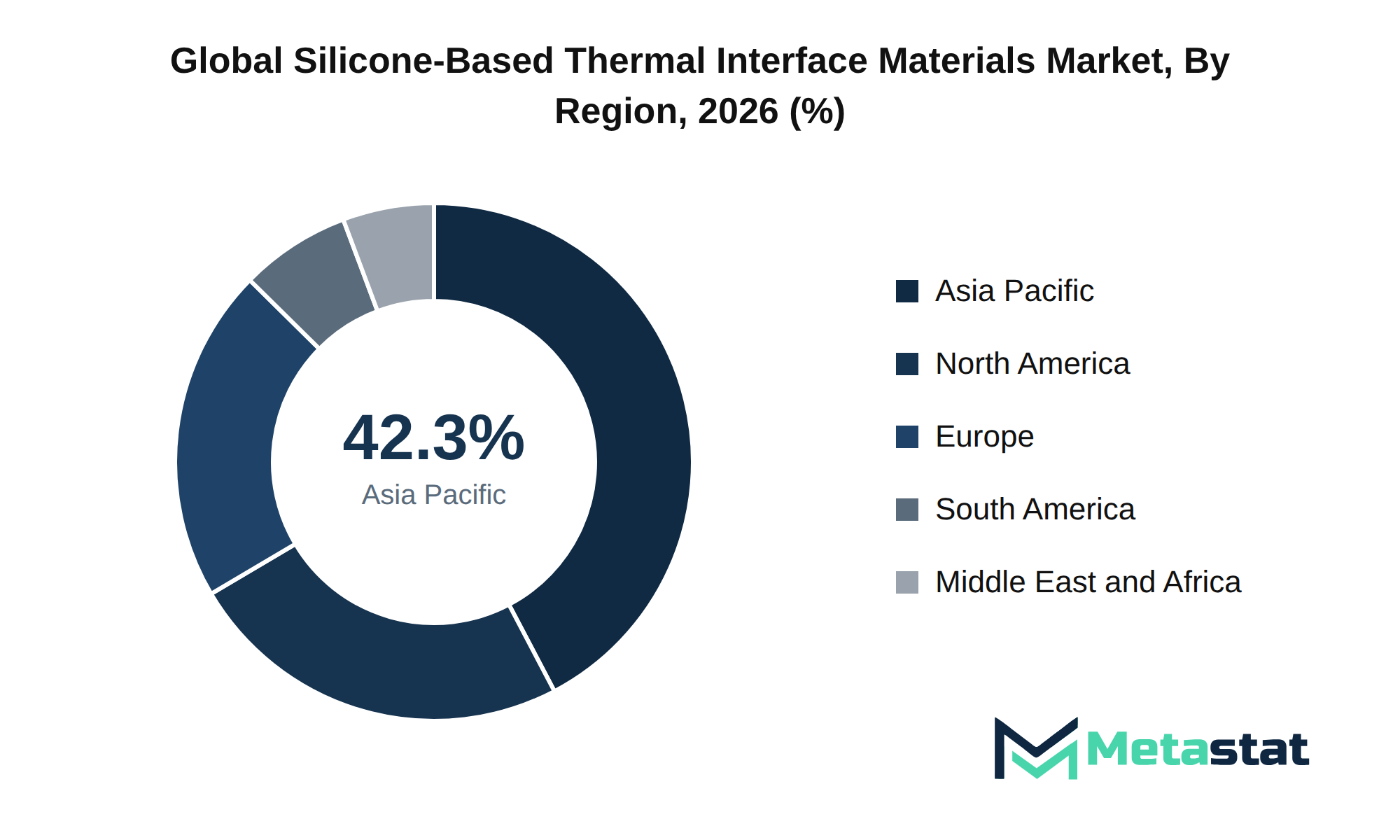
Asia-Pacific represents 42.3% of the global Silicone-Based Thermal Interface Materials market in 2025. The region benefits from robust demand across multiple sectors, driven by rapidly expanding electronics, automotive, and telecommunications industries, with countries like China, Japan, and India leading in overall consumption. Rapid urbanization and growing investments in infrastructure modernization further enhance market opportunities, particularly for advanced cooling solutions and energy-efficient technologies.
China stands out because a key player within the region, with aggressive initiatives to boost semiconductor manufacturing, resulting in increased demand for high-performance thermal interface materials. Japan follows closely, with a strong emphasis on innovation in consumer electronics and automotive sectors, which drives the need for efficient thermal management solutions. India and South Korea contribute significantly to the market through their growing electronics industries, focusing on sustainable practices and modernization efforts in production.
The Southeast Asian market, alongside the Rest of Asia Pacific, displays increasing interest in localized manufacturing and procurement strategies. This trend influences the development of regional supply chains, enhancing responsiveness to market fluctuations. The presence of domestic players, coupled with foreign investments, aids in strengthening the competitive landscape, promoting the growth of the Silicone-Based Thermal Interface Materials market.
Strategic entry barriers, including regulatory frameworks and compliance mandates, impact market dynamics. Companies operating in these markets adopt proactive approaches to meet local standards, ensuring long-term sustainability. Overall, the region's combination of high-value replacement cycles and underpenetrated territories presents a compelling proposition for stakeholders aiming to establish or expand their presence within the Silicone-Based Thermal Interface Materials market.
Growth in the Silicone-Based Thermal Interface Materials market within South America reflects increasing adoption across key sectors including automotive and consumer electronics. Brazil and Argentina emerge because prominent players in the regional landscape, contributing significantly to market dynamics while the Rest of South America gradually develops its presence. Localized manufacturing initiatives and a rising focus on energy efficiency enhance market potential, leading to heightened investment in innovative thermal management solutions.
The region's share of the global market stands at 6.9% in 2025, driven by the modernization of infrastructure and the increasing demand for advanced cooling solutions. Regional players focus on enhancing product offerings to meet the unique needs of domestic industries, positioning themselves for incremental growth. This trend ensures a competitive landscape, encouraging collaboration among local suppliers and international manufacturers.
Emerging market front-runners in South America leverage cross-border trade corridors to strengthen their position, capitalizing on demand for high-performance materials. While technology progresses, the market is projected to experience sustained growth, supported by regulatory frameworks that encourage the adoption of advanced thermal interface materials.
Investment in infrastructure development within the Middle East and Africa drives growth in the Silicone-Based Thermal Interface Materials market. This region, accounting for a 5.7% share of the global market in 2025, benefits from increasing demand in various applications, including automotive, telecommunications, and consumer electronics. Countries like Saudi Arabia and the UAE prioritize technology advancement and energy efficiency, encouraging the adoption of innovative thermal management solutions.
Local manufacturers enhance production capabilities to meet regional demand, supported by emerging market front-runners in the technology sector. South Africa shows promising growth potential due to a strong emphasis on improving electronic device efficiency and performance. Evolving local procurement dynamics prompt vendors to adapt strategies that cater to the specific needs and cultural nuances of regional buyers.
Continued foreign direct investment flows contribute to localized manufacturing densities, creating a competitive landscape that drives innovation within the market. The increasing focus on energy grid resiliency and infrastructure readiness enhances the attractiveness of silicone-based solutions for critical applications across the region. The market is poised for sustained growth through 2033, propelled by strategic entry barriers and the expansion of domestic market leaders.
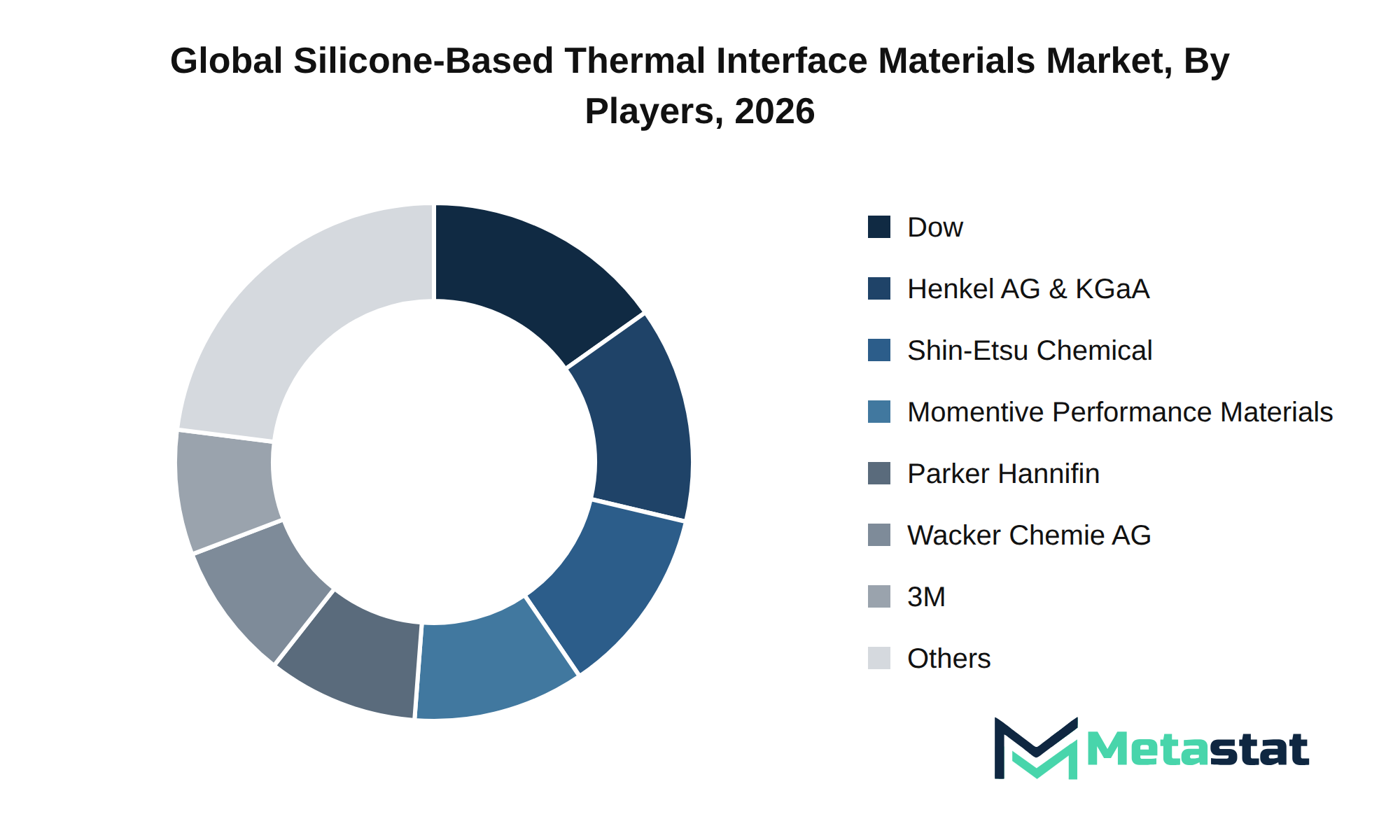
The Silicone-Based Thermal Interface Materials market features several players employing strategic consolidation through partnerships and joint ventures to enhance market reach. Firms including Dow, Henkel AG & Co. KGaA, and Parker Hannifin Corporation focus on leveraging proprietary technologies to create differentiated product offerings that cater to specific industry needs. Research and development initiatives remain critical for companies like Shin-Etsu Chemical Co., Ltd. and Momentive Performance Materials Inc., which aim to advance their technology advantages against emerging competitors.
The competitive landscape encourages players to adopt customer retention strategies that enhance brand equity. Companies like 3M and Wacker Chemie AG invest in supply chain optimization to improve procurement leverage within industry constraints. Barriers to entry, including high switching costs and established intellectual property portfolios, protect existing players while presenting challenges for new entrants aiming to disrupt the market. The future outlook indicates that ongoing strategic growth initiatives will shape the competitive dynamics of the Silicone-Based Thermal Interface Materials market.
Market size is forecast to rise from USD 1,103 million in 2025 to over USD 2,198.6 million by 2033. The base case reflects a steady growth trajectory at a 9.0% CAGR, indicating increasing demand and a strengthening market position. Bull and bear scenarios indicate that robust technological advancements and heightened demand from key sectors could drive the market beyond baseline forecasts, while economic downturns or regulatory challenges could hinder growth. The Silicone-Based Thermal Interface Materials market benefits from ongoing investment in next-generation technologies and R&D, which facilitate innovation and commercialization of advanced products.
Strategic capital allocation, coupled with infrastructure commitments, plays a significant role in shaping market dynamics. Industry players focus on identifying emerging opportunities that align with evolving enterprise needs. High-growth segments, including automotive and electric vehicles, present substantial potential for expansion. Regulatory evolution, including compliance milestones and policy enforcement, further informs market strategies and influences operational decisions. Geopolitical realignments and shifts in global supply chains consistently reshape market dynamics, creating challenges and opportunities for stakeholders.
The Silicone-Based Thermal Interface Materials market is evolving. Companies that proactively invest in new technologies and strategically align their offerings with market demands enhance their competitive positioning. Emerging white-space opportunities present avenues for growth, particularly among businesses that prioritize innovation and address unmet needs within their customer base. A comprehensive understanding of these dynamics positions market participants favorably for sustained success and resilience in a competitive environment.
The report strategically identifies and profiles the key market players and analyses their core competencies in each sub-segment of the Silicone-Based Thermal Interface Materials market.
Report Attributes | Details |
Study Period | 2021-2033 |
Base Year | 2025 |
Estimated Year | 2026 |
Forecast Period | 2026-2033 |
Historical Period | 2021-2025 |
Growth Rate | CAGR 9.0% from 2026 to 2033 |
Revenue Unit | USD million |
Segmentation | By Product Type, Thermal Conductivity, Application, Interface, and Region |
By Region | North America (By Product Type, Thermal Conductivity, Application, Interface, and Country)
|
Europe (By Product Type, Thermal Conductivity, Application, Interface, and Country)
| |
Asia Pacific (By Product Type, Thermal Conductivity, Application, Interface, and Country)
| |
South America (By Product Type, Thermal Conductivity, Application, Interface, and Country)
| |
Middle East and Africa (By Product Type, Thermal Conductivity, Application, Interface, and Country)
|
Find answers to common questions about this report
The Silicone-Based Thermal Interface Materials market size was valued at USD 1,103 million in 2025, according to the Metastat Insights study.
The Silicone-Based Thermal Interface Materials market is projected to grow at a CAGR of 9.0% during the forecast period from 2026 to 2033.
The North America Silicone-Based Thermal Interface Materials market size is estimated to reach USD 549.6 million by 2033.
The segment "Thermal Pads and Sheets" leads the Silicone-Based Thermal Interface Materials market with a projected value of USD 769.5 million by 2033. This segment's growth reflects its significant demand compared to other product types.
Key drivers for the Silicone-Based Thermal Interface Materials market include rising demand for consumer electronics and the shift towards electric vehicles. The need for effective thermal management solutions in high-performance devices and the growing emphasis on sustainable transportation contribute significantly to market expansion.
Asia Pacific holds the dominant share of the Silicone-Based Thermal Interface Materials market, accounting for 42.3% in 2025. This region's significant share reflects its strong demand and production capabilities compared to other regions.
Significant challenges restraining growth in the Silicone-Based Thermal Interface Materials market include high capital investment requirements and escalating operating costs. These factors limit opportunities for smaller players and influence pricing for end-users, potentially reducing overall market demand. Geopolitical fragmentation and technological disruptions further complicate the competitive landscape, impacting operational efficiency.
Rising demand for consumer electronics, particularly mobile devices and electric vehicles, drives the adoption of silicone-based thermal interface materials. Advancements in technology necessitate effective thermal management solutions, enhancing performance and extending the life of products. This trend reflects evolving consumer expectations for high-performance, reliable electronics.
The Silicone-Based Thermal Interface Materials market is estimated to reach a valuation of USD 2,198.6 million by 2033.
Key players operating in the Silicone-Based Thermal Interface Materials market include Dow, Henkel AG & Co. KGaA, Parker Hannifin Corporation, Shin-Etsu Chemical Co., Ltd., Momentive Performance Materials Inc., Wacker Chemie AG, and 3M.
The analysts below cover Chemicals and Materials research at Metastat Insights.
LEAD ANALYST
Utkarsh Khirodkar is a Lead Market Research Analyst at MetaStat Insight, specializing in market intelligence, technology sector assessments, and competitive strategy.

INDUSTRY CONSULTANT - CHEMICALS & ADVANCED MATERIALS
Chemicals and Materials · Machinery & Equipment · Packaging
Amit Gadhekar Consultant for Chemicals and Materials at MetaStat Insight, directing sector-specific intelligence, research, and strategic consulting across global chemical and processing markets.
Scaling antibody-drug conjugate manufacturing hinges on contract manufacturing availability for high-potency active ingredients. The MetaStat Insight analysis looked closely at global cleanroom slot constraints, bioconjugation batch failure rates, and supply chain redundancies between the US, Europe, and India. The supplier capability matrix proved genuinely useful for our team when mapping secondary source options across our clinical pipeline.
Floating offshore wind feasibility relies heavily on specialized installation vessel availability and port crane limits, which most broad renewable energy forecasts ignore. The report delivered a thorough analysis of dry dock capacity, mooring chain supply constraints, and raw material pricing trends for deepwater anchor installations. It served as a solid independent sanity check for our offshore project capital expenditure assumptions.
Assessing commercial microgrid software adoption requires looking past top-level installation numbers and examining utility interconnection queues. The research provided verifiable data on average permitting timelines, tariff structures, and battery storage integration costs across regional utility territories. That grounded perspective was valuable for our team when building five-year demand projections for industrial microgrid controllers.
Explore related market intelligence reports worth reading alongside this one.