
LEAD ANALYST
Utkarsh Khirodkar is a Lead Market Research Analyst at MetaStat Insight, specializing in market intelligence, technology sector assessments, and competitive strategy.

China Thermal Interface Materials Market Size, Share, By Product Type (Thermal Gap Pads and Interface Sheets, Thermal Greases and Pastes, Dispensable Gap Fillers and Thermal Gels, Polymer/Wax Phase Change Pads and Films, Thermally Conductive Adhesives and Tapes, Liquid-Metal TIMs), By Primary Material System (Silicone-Based, Acrylic-Based, Epoxy-Based, Polyurethane-Based, Graphite and Carbon-Based, Metal and Alloy-Based), By Application (Computing, Servers and Data Centers, Consumer Electronics and Smart Devices, Automotive Electronics and Electric Vehicle Systems, Industrial Power Electronics and Automation, Telecommunications and Network Infrastructure, Energy Storage and Power Conversion, LED Lighting and Display Electronics, Medical Electronics), By Thermal Conductivity (Low, Medium, High), Industry Analysis, Growth, Trends, and Forecast, 2026-2033
Report ID
MSI-5070
Published
August, 2026
Pages
285 Pages
Format
Historical
Base year
Forecast
Forecast period
Report Details
Choose Your License
China Thermal Interface Materials Market
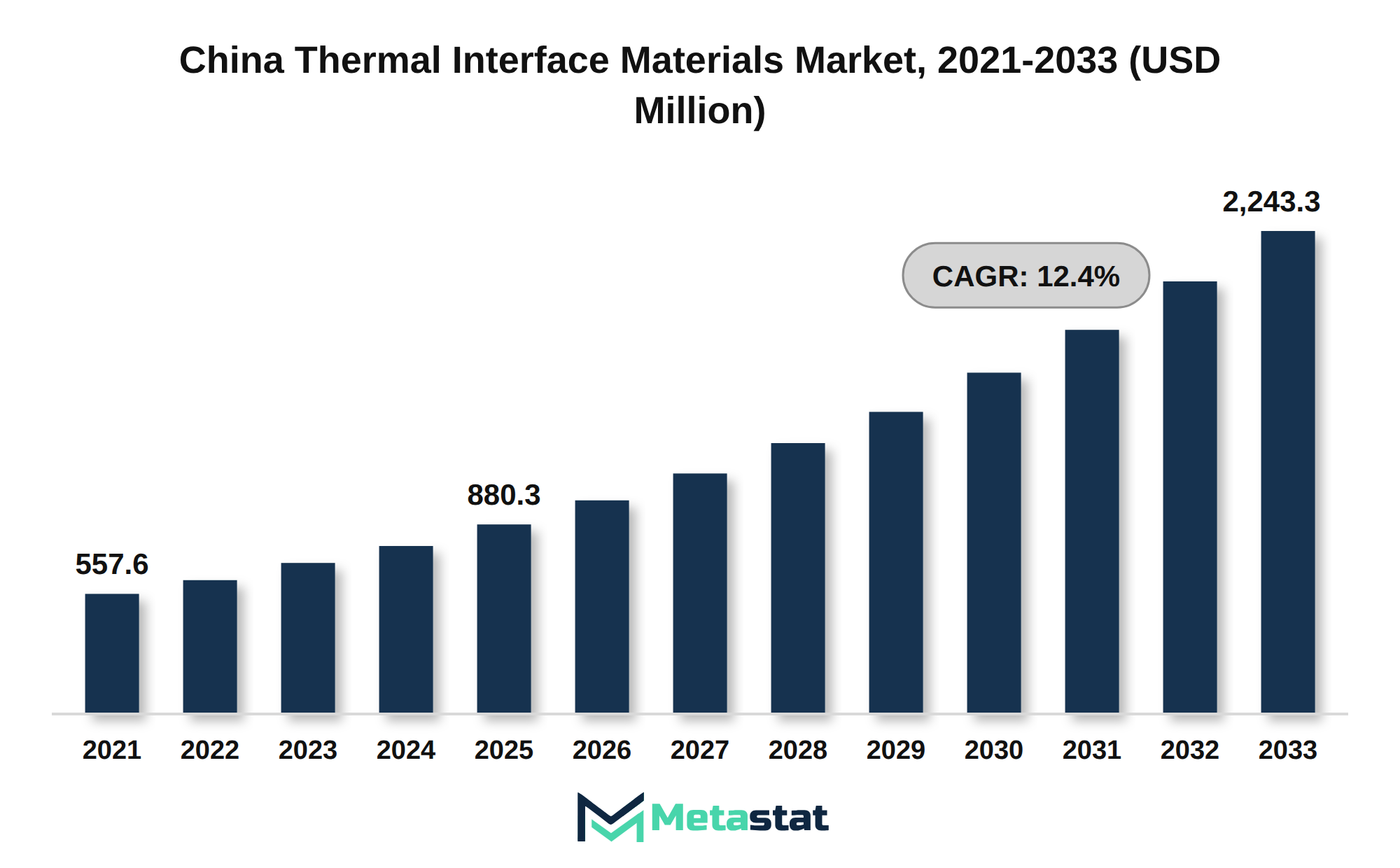
The China Thermal Interface Materials market was valued at USD 880.3 million in 2025 and is projected to reach USD 2,243.3 million by 2033, growing at a CAGR of 12.4% over the forecast period.
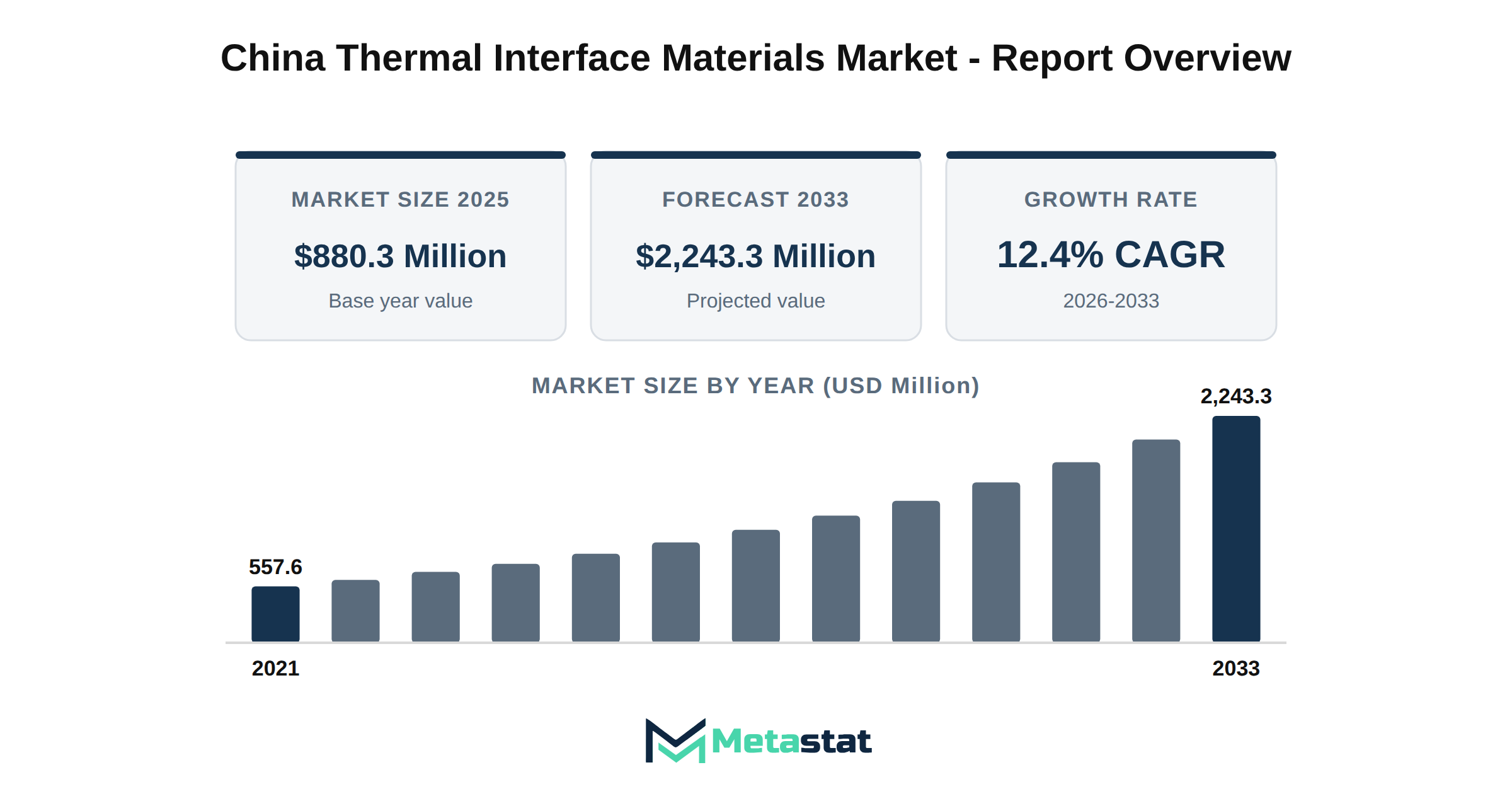
The China Thermal Interface Materials market is projected to reach USD 2,243.3 million by 2033, reflecting a compound annual growth rate (CAGR) of 12.4% from the base year of 2025, which recorded a value of USD 880.3 million. Historical data indicates a steady growth trajectory, with the market expanding from USD 557.6 million in 2021 to USD 780.6 million in 2024.
Innovations in high-conductivity thermal interface materials (TIM) significantly influence the market, with advancements leading to enhanced efficiency across various applications. The performance roadmap for silicone-based TIMs demonstrates consistent improvements, positioning these materials because preferred choices for high-performance electronics.
In the automotive sector, qualification requirements for power electronics drive demand for specific TIM products. Original Equipment Manufacturers (OEMs) and Electronics Manufacturing Services (EMS) companies focus on sourcing high-quality materials to meet stringent performance benchmarks.
Competitive product performance benchmarking highlights the rapid development of next-generation heat-dissipation solutions. Regulatory compliance and adherence to standards shape market dynamics, impacting product adoption and innovation. Geopolitical risk frameworks further complicate sourcing strategies, necessitating agile responses from market players to mitigate potential disruptions.
The evolving landscape of research and development trajectories encourages next-generation innovations in sustainable TIM solutions. Industry participants prioritize decarbonization and circular economy dynamics, reflecting a commitment to environmental responsibility. The supply chain landscape undergoes transformation, with logistics architecture adapting to new sourcing requirements.
High-conductivity thermal interface materials (TIM) have gained traction within the market owing to increasing demand for efficient heat management solutions. Innovations in materials, particularly those enhancing thermal conductivity, facilitate performance improvements in various applications, including computing and automotive electronics. Manufacturers focus on developing advanced compounds that optimize thermal dissipation while maintaining mechanical integrity.
The silicone TIM performance roadmap outlines significant advancements in material formulations and application techniques. These enhancements improve the thermal performance of silicone-based products, positioning them favorably within competitive segments. Continuous research and development efforts target improvements in heat resistance and durability, ensuring alignment with industry specifications and customer expectations.
Qualification requirements for automotive and power electronics emphasize stringent performance and reliability standards. Regulatory compliance within these sectors drives manufacturers to invest in advanced testing and certification processes, ensuring product viability in high-stakes environments. The market experiences heightened scrutiny from original equipment manufacturers and electronic manufacturing services, compelling suppliers to adapt their offerings accordingly.
Trends in sourcing and qualification highlight a shift toward strategic partnerships between manufacturers and OEMs. Collaborative approaches streamline procurement processes and enhance product validation, which builds greater trust in the supply chain. This trend reflects a broader movement toward integrated solutions, where suppliers align closely with customer needs.
Competitive product performance benchmarking remains critical for market participants. Assessing thermal conductivity, mechanical properties, and application compatibility allows manufacturers to position their products effectively. Continuous monitoring of competitor offerings informs strategic adjustments and innovation trajectories, ensuring sustained market relevance. This ongoing analysis supports the identification of strengths and weaknesses in product lines.
Opportunities for next-generation heat dissipation innovations emerge owing to industries adapting to evolving technological landscapes. The integration of sustainable practices within product development aligns with global decarbonization goals. Market participants prioritize solutions that contribute to a circular economy, reducing waste and enhancing resource efficiency.
The supply chain landscape experiences ongoing transformation, influenced by geopolitical factors and inflationary pressures. Shifts in logistics architecture affect sourcing strategies, compelling manufacturers to reassess their operational frameworks. Strategic capital allocation for infrastructure investments becomes essential for maintaining competitive advantage amid fluctuating market conditions.
Future strategic outlooks for the China Thermal Interface Materials market highlight the importance of agility and innovation. Corporate imperatives focus on developing high-value recommendations that address emerging challenges and opportunities. Stakeholders prioritize adaptive strategies that respond to market dynamics, ensuring longevity and relevance in a competitive environment.
Growth in the China Thermal Interface Materials market is primarily driven by macro-economic factors, including GDP growth and capital investment environments. The increasing demand for electronic devices, computing systems, and electric vehicles significantly influences market expansion. Rising GDP encourages businesses to invest in technological advancements, which directly affects the demand for thermal interface materials.
Investment in infrastructure development enhances operational efficiency and productivity across various sectors, consequently increasing the requirement for efficient thermal management solutions. This investment drives innovation, enabling the integration of advanced technology in multiple applications, including computing, automotive electronics, and consumer electronics. Modernizing operations and infrastructures is expected to accelerate growth in the market.
Capital investment environments, characterized by favorable interest rates and public-private spending power, further stimulate the market. Companies are inclined to invest in new projects and technologies that incorporate thermal interface materials, which are crucial for maintaining optimal performance in high-tech applications. These economic factors play a vital role in shaping the growth trajectory of the China Thermal Interface Materials market.
Rapid advancements in technology significantly influence the China Thermal Interface Materials market. Automation, artificial intelligence, and software adoption enhance operational efficiency across industries, leading to heightened demand for thermal interface materials. These materials play a crucial role in managing heat in electronic and electrical systems, particularly in computing, automotive, and industrial applications.
Investment in digitizing legacy processes supports the transition toward next-generation thermal management solutions. Companies increasingly seek materials that offer superior thermal conductivity and reliability, aligning with the push for more efficient and compact electronic devices. This trend drives growth in the market, reflecting manufacturers' prioritization of the integration of advanced thermal materials into their product designs.
The shift toward electric vehicles and increased focus on energy-efficient systems increase the requirement for effective thermal management. While automotive and industrial sectors adopt these innovations, demand for high-performance thermal interface materials rises, creating new revenue opportunities. This dynamic environment positions the market for sustained growth through 2033, driven by continuous technological advancements.
Regulatory complexities significantly impede the growth of the China Thermal Interface Materials market. Stringent compliance hurdles demand substantial resources for companies to navigate, often diverting attention from core business activities. This dynamic creates barriers, particularly for small and medium enterprises lacking the capital and expertise to meet rigorous standards.
Macroeconomic headwinds exacerbate these challenges, with inflationary pressures escalating operational costs. This situation constrains budgets, limiting investments in innovative solutions and technology upgrades. A lack of capital stalls the adoption of advanced thermal materials, stunting overall market expansion.
Ongoing supply chain disruptions create uncertainty, impacting the timely availability of raw materials. Companies face difficulties in sourcing essential components, resulting in delays and increased costs. This scenario creates a ripple effect throughout the market, reducing the ability of key players to meet customer demand effectively.
Geopolitical instability contributes to market fragmentation, leading to inconsistent regulations across different regions. This inconsistency complicates market entry strategies for international firms, inhibiting their ability to compete effectively. Cultural barriers and regional adoption resistors create additional friction, limiting penetration into emerging local markets.
The escalating need for skilled labor remains significant. Workforce deficiencies hinder the industry's capacity to innovate and implement advanced thermal interface solutions. Addressing these skill gaps influences technological advancements, ultimately affecting growth trajectories.
The China Thermal Interface Materials market faces significant challenges stemming from geopolitical tensions that disrupt supply chain stability. Trade deficits and tariff friction between major economies create uncertainty for manufacturers relying on imported materials and components, leading to pricing compression and margin pressures. Ongoing conflicts and disputes lead to increased logistics disruptions, resulting in delays and higher costs for production and distribution.
The market experiences volatility in feedstock prices due to geopolitical instability, impacting overall production costs. Manufacturers encounter hurdles in securing reliable sources of raw materials, which affects their ability to meet growing demand. Complex research and development integrations further complicate the landscape, driven by companies working to innovate while navigating shifting political climates. Compliance overhead related to evolving legal liabilities strains operational budgets, diverting resources away from strategic growth initiatives.
In this context, talent retention pressures arise, driven by a skilled workforce becoming essential for driving technological advancements and maintaining competitiveness in the China Thermal Interface Materials market. Companies face challenges in attracting and retaining skilled professionals who navigate the complexities of an evolving market, contributing to potential skill gaps that hinder progress. The combination of these factors creates a challenging environment for market participants, ultimately impacting growth prospects and competitive positioning.
The China Thermal Interface Materials market benefits from an expanding array of niche applications that heighten demand across various sectors. Increased focus on sustainability encourages manufacturers to innovate and develop eco-friendly materials, aligning with environmental, social, and governance (ESG) criteria. This shift attracts investments and fuels competition, driving advancements in product performance and integration. While industries adapt to digital transformation, the need for high-performance materials in computing, automotive, and consumer electronics drives development in thermal interface solutions.
Strategic consolidation within the market creates opportunities for cross-industry mergers that enhance product offerings and diversify portfolios. Companies seek to optimize their supply chains, with localization efforts minimizing dependence on imports and improving resilience against global disruptions. The focus on next-generation innovations promotes the development of advanced thermal interface materials that meet the evolving demands of modern applications.
Investment in infrastructure modernization further supports growth, with upgrades in power electronics and automation driving the adoption of high-conductivity thermal interface materials. Increasing emphasis on operational efficiency leads to a surge in demand for solutions that maximize thermal management capabilities, reinforcing the market's growth trajectory. Overall, these dynamics position the China Thermal Interface Materials market for robust expansion through 2033.
The China Thermal Interface Materials market is segmented based on Product Type, Primary Material System, Application, and Thermal Conductivity.
Valued at USD 268.7 million in 2026, the Thermal Gap Pads & Interface Sheets segment is projected to reach USD 593.6 million by 2033, reflecting a CAGR of 12% during the forecast period. Demand for these materials arises from the increasing need for efficient thermal management in electronic devices, particularly in computing and automotive applications. Rising complexity of electronic systems drives adoption of advanced thermal interface materials, enhancing performance and reliability.
Technological maturation plays a critical role in segment expansion, with innovations leading to improved thermal conductivity and material durability. Next-generation upgrades in consumer electronics and data centers continuously fuel the market, necessitating high-performance solutions that deliver efficient heat dissipation. Evolving regulatory compliance standards regarding thermal management in electronics further increase demand for thermal gap pads and interface sheets.
Cost structures and pricing volatility present challenges, influencing procurement strategies among manufacturers. Fluctuations in raw material prices and supply chain resilience require strategic sourcing to maintain competitive positioning. The segment benefits from opportunities in white-space analysis, identifying gaps for innovative products tailored to specific applications, contributing to the growth of the China Thermal Interface Materials market.
The expansion of the Thermal Greases & Pastes segment aligns with the growing demand for efficient thermal management solutions across various applications, particularly in computing, consumer electronics, and automotive sectors. This segment is estimated to reach USD 416.4 million by 2033, at a CAGR of 10.3% during the forecast period. Increasing performance requirements in electronic devices drive the need for high-quality thermal interface materials that provide effective heat dissipation.
Technological maturation plays a significant role in segment growth, driven by innovations in formula formulations that enhance the thermal performance and reliability of greases and pastes. While manufacturers introduce next-gen products, improvements in thermal conductivity and stability emerge, meeting the evolving needs of end-users. Regulatory compliance standards further shape the landscape, driving adoption of materials that meet environmental and safety regulations.
Cost structures and pricing volatility influence market dynamics, resulting from producers exploring cost-effective raw material sourcing to enhance profit margins. Strategic opportunities arise for manufacturers focusing on product evolution by introducing formulations with improved characteristics including lower viscosity and better adhesion. The consumption shifts towards higher performance TIMs highlight the segment's importance in the China Thermal Interface Materials market.
Strong demand for Dispensable Gap Fillers & Thermal Gels arises from their increasing adoption in diverse applications requiring efficient thermal management. Industries including computing, consumer electronics, and automotive systems drive this need, driven by manufacturers seeking to enhance device performance and reliability. This segment is expected to reach USD 383.4 million by 2033, reflecting a significant growth trajectory.
The ongoing evolution of technology fuels innovation within this segment, with next-generation upgrades focusing on improved thermal conductivity and environmental sustainability. Regulatory compliance surrounding product safety and performance standards further drives demand, enabling manufacturers to meet stringent requirements. Consistent advancements in material science support the development of next-generation thermal interface materials, enhancing their application range across various sectors.
Cost structures and pricing volatility influence the market dynamics for Dispensable Gap Fillers & Thermal Gels, requiring manufacturers to optimize their supply chains and raw material sourcing. Manufacturers face pressures linked to fluctuating prices of raw materials, which impact profit margins. Strategic opportunity windows arise from technological obsolescence and substitution risks, compelling companies to invest in innovative solutions that cater to evolving market demands.
The growth of the Dispensable Gap Fillers & Thermal Gels segment in the China Thermal Interface Materials market is primarily driven by technological advancements, evolving end-use applications, and compliance with regulatory standards. The segment's expansion presents opportunities for investment and innovation, ensuring sustained growth through 2033.
Projected to grow at a CAGR of 14% during the forecast period, the Polymer/Wax Phase Change Pads & Films segment demonstrates significant potential within the China Thermal Interface Materials market. The integration of these materials in various high-performance applications drives demand, particularly in consumer electronics and automotive sectors where efficient thermal management remains critical.
Technological maturation and next-generation upgrades enhance the appeal of polymer/wax phase change pads and films. Innovations in material formulations contribute to improved thermal conductivity and reliability, aligning with industry requirements for advanced electronic devices. This evolution is expected to result in stronger adoption rates across key end-use applications.
Regulatory compliance influences product evolution within this segment. Stricter environmental and safety standards necessitate the development of materials that meet regulatory guidelines while maintaining performance efficiency. Manufacturers focus on these aspects, enhancing their competitive positioning in the market.
Consumption shifts towards more sustainable and efficient thermal management solutions highlight strategic opportunities for manufacturers. Capital investment trends indicate a growing commitment to research and development, enabling companies to refine their offerings and address emerging market needs effectively.
Adoption of thermally conductive adhesives in the China Thermal Interface Materials market reflects a growing emphasis on efficiency and performance across various applications. Increased utilization in sectors including consumer electronics and automotive electronics highlights the importance of optimal thermal management. Demand drivers include the need for improved electronic device performance, which drives manufacturers to seek adhesives that not only provide thermal conductivity but enhance adhesion and mechanical strength.
Technological maturation plays a significant role in shaping the landscape of thermally conductive adhesives. Ongoing research and development efforts lead to advancements that improve adhesive formulations, enabling better heat dissipation in compact electronic designs. The evolution of these products encourages manufacturers to innovate while meeting stringent regulatory compliance standards and certifications that ensure safety and reliability in end-use applications.
Pricing volatility in raw materials presents challenges, influencing margins for manufacturers and prompting strategic sourcing of high-quality materials. Raw material sourcing strategies require resilience to mitigate risks associated with supply chain vulnerabilities. The introduction of disruptive alternatives in the adhesive market, including advanced polymer blends, influences the competitive dynamics, compelling companies to adapt and refine their offerings.
Strategic opportunity windows arise for players in the market owing to shifting end-user demands towards more sustainable and efficient thermal management solutions. Capital investment in research and development facilitates the introduction of next-generation thermally conductive adhesives, further enhancing market potential. The combination of evolving technologies and shifting consumption patterns positions the thermally conductive adhesives segment for growth within the broader China Thermal Interface Materials market.
Technological advancements in materials science drive the development of thermally conductive tapes within the China Thermal Interface Materials market. The increasing demand for lightweight and efficient thermal solutions contributes to the adoption of these products across various applications, particularly in consumer electronics and automotive sectors. Enhanced thermal management solutions support performance optimization, reducing overheating risks in electronic devices and improving reliability in automotive systems.
Adoption of thermally conductive tapes aligns with the growing emphasis on energy efficiency and compact design in electronics. End-users prioritize performance and durability, leading manufacturers to invest in product evolution to meet these requirements. Consumer electronics, including smartphones and tablets, leverage these tapes to enhance thermal performance while maintaining slim profiles.
Regulatory compliance regarding energy efficiency and environmental standards influences market dynamics. Stricter regulations encourage manufacturers to innovate in thermal interface solutions, enhancing product appeal based on compliance. The ongoing pursuit of certifications drives competitive advantage among suppliers in the market.
Cost structures impact pricing dynamics within the segment. Fluctuations in raw material availability and sourcing challenges lead to pricing volatility, affecting profit margins for manufacturers. Strategic investment in supply chain resilience is essential to mitigate risks associated with material sourcing and logistics vulnerabilities.
Market participants face challenges from disruptive alternatives, including emerging materials with superior thermal properties. To maintain competitive positioning, ongoing research and development initiatives are critical for advancing product offerings. Interest in thermally conductive tapes strengthens, reinforcing their role in the evolving dynamics of the China Thermal Interface Materials market.
Growing interest in Solder & Compressible Metal TIMs stems from their effectiveness in providing efficient thermal management solutions across various applications. Industries including computing, automotive, and consumer electronics drive demand for these materials, particularly due to their reliability in high-performance environments. Manufacturers focus on improving the properties of metal TIMs, including thermal conductivity and mechanical stability, to cater to evolving technological needs, enhancing their competitive position.
The trend towards miniaturization in electronic devices necessitates enhanced thermal management solutions, further propelling the adoption of Solder & Compressible Metal TIMs. These materials find significant application in power electronics and electric vehicle systems, where high thermal performance is essential. Ongoing development of next-generation electronic components, combined with increasing performance expectations, positions this segment favorably within the broader China Thermal Interface Materials market, strengthening long-term demand.
Regulatory compliance standards related to environmental concerns influence the sourcing and manufacturing processes of Solder & Compressible Metal TIMs. Manufacturers adopt sustainable practices to align with these standards, which increase production costs while driving innovation in materials development. The competitive landscape emphasizes strategic opportunities for companies investing in advanced metal TIM technologies, responding to market demands while navigating cost fluctuations, reinforcing their market presence.
Liquid-Metal TIMs represent a unique innovation within the China Thermal Interface Materials market, driven by the increasing demand for high-performance thermal management solutions. This demand arises from various sectors, including computing, automotive, and telecommunications, where efficient heat dissipation is critical for device reliability and performance. The ability of Liquid-Metal TIMs to provide superior thermal conductivity compared to traditional materials enhances their appeal in industries focusing on miniaturization and performance enhancement.
Technological maturation influences the adoption of Liquid-Metal TIMs. Continued advancements in formulation and application techniques improve product performance, catering to the evolving requirements of high-density electronic devices. Next-generation upgrades, including the integration of Liquid-Metal TIMs in advanced cooling systems, create strategic opportunity windows for manufacturers aiming to enhance thermal management solutions.
The segmentation of the market highlights the growing importance of regulatory compliance and certification standards, which influence the acceptance of Liquid-Metal TIMs in various applications. Meeting these standards ensures product reliability and safety, essential factors for end-users in sectors including aerospace and consumer electronics. Manufacturers focusing on compliance gain a competitive advantage in this segment.
Cost structures and pricing volatility present challenges in the market. The raw materials required for Liquid-Metal TIMs incur varying costs, which, in turn, affect pricing strategies and profit margins. Efficient raw material sourcing and supply chain resilience are crucial for maintaining competitiveness in this dynamic environment.
End-use dynamics indicate a shift towards high-performance applications, where Liquid-Metal TIMs are increasingly favored for their excellent thermal properties. This shift signifies a broader trend in the China Thermal Interface Materials market, driven by the prioritization of performance and reliability in thermal management solutions by consumers and manufacturers alike.
Demand for thermal putties and specialty preforms in the China Thermal Interface Materials market stems from the increasing need for efficient thermal management solutions across various industries. Significant growth within sectors including automotive electronics and consumer electronics drives the adoption of these materials. Enhanced performance characteristics of thermal putties, including improved adhesion and thermal conductivity, play a critical role in their application in high-performance devices.
Market expansion aligns with the trend toward miniaturization of electronic components, which necessitates innovative thermal solutions that effectively dissipate heat while conserving space. The high adaptability of thermal putties to different substrates and application methods enhances their appeal in diverse manufacturing processes.
Technological maturation within the industry has led to more refined formulations of thermal putties, allowing manufacturers to meet stringent performance standards. This evolution supports broader acceptance and integration within advanced electronic applications, underpinning the sector's growth potential. While end-use dynamics evolve, manufacturers increasingly focus on product development that aligns with the specific thermal management needs of clients.
Investment in research and development continues to drive advancements in thermal materials, particularly in specialty preforms designed for niche applications. These innovations fuel competition among suppliers, creating a more robust market environment. In response to fluctuating material costs, manufacturers explore cost-effective sourcing strategies and alternative materials to maintain price stability without compromising performance.
Valued at USD 453.5 million in 2026, the Silicone-Based segment is projected to reach USD 994 million by 2033, at a CAGR of 11.9% during the forecast period. Increasing adoption of silicone-based materials in high-performance applications drives the segment's expansion. Applications in computing, automotive electronics, and consumer electronics highlight the demand for advanced thermal management solutions. The segment's growth reflects ongoing technological maturation, with innovations enhancing thermal conductivity and reliability.
Investment in research and development supports product evolution, focusing on next-generation upgrades that meet stringent performance criteria. The trend towards miniaturization and increased power density in electronic devices necessitates efficient thermal interface materials. Regulatory compliance regarding environmental impact and material safety influences selection, pushing manufacturers to innovate while maintaining cost efficiency. The market anticipates sustained interest in silicone-based solutions, driven by these factors and a growing need for effective heat dissipation technologies.
Acrylic-based thermal interface materials offer robust thermal management solutions, meeting the demands of various industries. This segment responds to increasing requirements for efficient heat dissipation in electronic devices, particularly in computing, consumer electronics, and automotive applications. The market’s evolution is influenced by advancements in material formulations, enhancing performance metrics including thermal conductivity and mechanical strength.
Investments in research and development drive the adoption of acrylic-based products. Greater emphasis on energy efficiency and regulatory compliance in electronics drives demand for high-performance thermal interface materials. The Acrylic-Based segment is projected to reach USD 237.8 million by 2033, at a CAGR of 10.8% during the forecast period. These products are critical for applications requiring precise thermal management, ensuring optimal functionality and longevity of devices.
Technological maturation within the market facilitates the introduction of next-generation upgrades. Manufacturers frequently innovate to improve product performance and compatibility with emerging technologies. The market for acrylic-based materials includes a range of applications from consumer electronics to industrial power systems, reflecting a broadening scope of utilization.
Downstream dynamics favor materials that deliver consistent performance under varying operational conditions. Consumer preferences lean towards products that meet technical specifications while aligning with sustainability goals. The market positions acrylic-based thermal interface materials because a strategic choice for manufacturers prioritizing both performance and environmental considerations.
Growth in the Epoxy-Based segment of the China Thermal Interface Materials market results from its unique properties, including strong adhesion, durability, and thermal conductivity. These characteristics make epoxy-based materials suitable for various applications, including automotive electronics and consumer electronics, enhancing their adoption in high-performance environments. The segment is expected to reach USD 205.7 million by 2033, illustrating strong demand driven by technological advancements and evolving market requirements.
Epoxy-based materials exhibit significant versatility, appealing to industries focused on efficiency and performance. This versatility positions epoxy-based products because crucial components in next-generation technologies, driving further investment and innovation within the market. While manufacturers continuously seek to improve energy efficiency and thermal management, epoxy-based thermal interface materials will experience sustained interest, supporting segment growth.
The increasing focus on sustainability and compliance with regulatory standards influences the adoption of epoxy-based materials. Manufacturers invest in research and development to create eco-friendly formulations, meeting stringent environmental guidelines while addressing customer demands for high-performance solutions. This shift towards sustainable practices enhances the segment's growth potential within the broader China Thermal Interface Materials market.
Projected to grow at a CAGR of 12.7% during the forecast period, the Polyurethane-Based segment significantly influences the China Thermal Interface Materials market. This growth stems from increasing demand for lightweight, durable, and efficient thermal management solutions across various applications. Product development emphasizes enhanced thermal conductivity and improved performance in challenging environments, appealing to sectors including automotive electronics and industrial power electronics.
Technological maturation in polyurethane-based materials facilitates next-generation upgrades, enabling better thermal performance and extended product life cycles. The demand for electric vehicles and advanced computing systems drives innovation in this segment, promoting greater adoption of these materials in critical applications. Regulatory compliance standards for energy efficiency and thermal management further encourage the use of polyurethane-based solutions, aligning with broader environmental goals.
Cost structures in the polyurethane segment reflect competitive pricing influenced by raw material sourcing and production efficiencies. Pricing volatility remains a concern; however, manufacturers focus on optimizing supply chain resilience to mitigate risks. Strategic opportunity windows arise from advancements in technology and increasing consumption shifts toward energy-efficient products, positioning the Polyurethane-Based segment to capture a significant portion of market growth in the coming years.
Paraffin/wax-based thermal interface materials represent a growing segment within the China Thermal Interface Materials market, driven primarily by their effective thermal management properties and cost efficiency. Adoption of these materials occurs across various applications, including consumer electronics and automotive sectors. The properties of paraffin/wax-based materials support enhanced performance, leading to increased demand among manufacturers seeking reliable thermal conductivity.
Segment expansion arises from the need for innovative solutions that address rising thermal management requirements in electronic devices. Technological maturation in material science facilitates the development of advanced formulations, enabling better performance under varying operating conditions. Evolution in product offerings addresses the diverse needs of end-users, particularly in applications demanding efficient heat dissipation.
Downstream dynamics reflect shifts in consumption patterns, driven by industries prioritizing sustainability and performance. Regulatory compliance standards increasingly influence product development, compelling manufacturers to ensure products meet environmental and safety guidelines. Compliance with such standards helps maintain market competitiveness while building consumer trust.
Cost structures present challenges, particularly with raw material sourcing and pricing volatility affecting profit margins. Strategic opportunity windows exist for firms investing in research and development to innovate in this segment. A focus on sustainability and performance enhances market positioning and captures emerging demands within the evolving landscape of the China Thermal Interface Materials market.
Growing interest in Graphite & Carbon-Based thermal interface materials arises from their superior thermal conductivity and mechanical properties, which provide effective thermal management solutions for various applications. Industries including computing, automotive, and consumer electronics drive demand, seeking reliable materials that enhance performance and efficiency.
Technological maturation supports the expansion of Graphite & Carbon-Based products, with ongoing research yielding advancements in formulations and processing techniques. These improvements enhance product performance while reducing environmental impact, aligning with global sustainability goals.
Increased adoption of electric vehicles and smart devices fuels demand for high-performance thermal interface materials, leading to a shift in consumption patterns. This trend highlights the importance of adapting to evolving market needs and regulatory compliance standards, reinforcing the role of these materials in the China Thermal Interface Materials market.
Price volatility in raw materials and potential substitution risks challenge the segment, necessitating strategic sourcing and supply chain resilience. Continuous innovation and investment in next-generation upgrades ensure competitiveness in a dynamic market.
Strategic opportunity windows exist for manufacturers focusing on high-performance applications, which offer substantial margins and growth potential. Capital investment in research and development remains critical to addressing emerging challenges and capturing market share effectively.
Innovations in thermal management are driving growth in the Metal & Alloy-Based sub-segment within the China Thermal Interface Materials market. These materials provide significant thermal conductivity, essential for high-performance applications, particularly in electronic devices where efficient heat dissipation is critical. The rising demand for advanced electronics, including automotive and consumer products, increases the need for effective thermal interface solutions.
Development in manufacturing processes enhances the performance and application scope of Metal & Alloy-Based materials. Improved formulations and production techniques enable suppliers to meet stringent performance requirements across various industries. The automotive sector, in particular, benefits from these advancements. Electric vehicle systems require superior thermal management capabilities to ensure optimal operation.
Challenges stemming from raw material sourcing and pricing volatility impact the Metal & Alloy-Based segment. Fluctuations in the cost of metals and alloys lead to increased production costs, affecting pricing strategies within the market. Suppliers adopting strategic sourcing and inventory management practices help mitigate these risks, ensuring consistent supply and stable pricing for end-users.
Regulatory compliance remains a critical factor influencing market dynamics. Standards and certifications guiding thermal interface materials drive innovation and product evolution, pushing manufacturers to enhance their offerings. Meeting such requirements strengthens market competitiveness. Products that adhere to regulatory standards gain favor among consumers seeking reliable thermal solutions.
Strategic opportunity windows emerge for companies capable of advancing the technological maturity of Metal & Alloy-Based materials. Investments in research and development drive innovation, leading to next-generation products that outperform existing solutions. While the market evolves, addressing consumer shifts toward energy-efficient and eco-friendly materials is a priority for manufacturers aiming to capture emerging market segments.
Polyimide, polyester, and hybrid non-silicone systems contribute unique properties to the China Thermal Interface Materials market, expanding application areas in electronics and automotive sectors. The increasing complexity of electronic devices drives demand for materials that offer superior thermal performance and mechanical stability. These materials withstand extreme temperatures, enhancing their appeal in high-performance applications, including automotive electronics and advanced computing systems.
Technological maturation in material science facilitates the introduction of innovative formulations, enhancing thermal conductivity and reducing weight. This evolution aligns with industry trends toward miniaturization and increased energy efficiency. Manufacturers prioritize advancements in these materials to meet stringent regulatory compliance standards, ensuring safety and performance across various applications.
Strategic opportunity windows arise from the growing importance of sustainable practices in material sourcing and production. The adoption of eco-friendly alternatives within the polyimide and polyester categories reflects a proactive market response. Supply chain resilience remains critical, emphasizing reliable raw material sourcing to mitigate potential disruptions and ensure consistent quality and performance in the evolving dynamics of the market.
Downstream application dynamics exhibit a shift toward integrating these materials into next-generation devices, effectively supporting the increasing demand for high-performance thermal management solutions. Regulatory influences and certifications related to environmental impact and safety standards guide manufacturers in their development processes. This segment's growth potential highlights its relevance in the broader context of the China Thermal Interface Materials market.
Valued at USD 236.2 million in 2026, the Computing, Servers & Data Centers segment is projected to reach USD 576.8 million by 2033, at a CAGR of 13.6% during the forecast period. Demand for high-performance computing systems, data centers, and cloud services drives this growth, fueled by an increase in data generation and processing needs across industries. The trend towards digital transformation and the rise of artificial intelligence applications further increase the need for advanced thermal management solutions.
Technological maturation and the continuous evolution of next-generation computing systems contribute to this segment's expansion. Enhanced thermal interface materials mitigate overheating risks in servers and data centers, ensuring optimal performance and reliability. The ongoing upgrade of existing infrastructures to incorporate more efficient thermal management technologies is expected to support market growth.
Cost structures in this segment reflect the increasing demand for high-quality thermal interface materials. Pricing volatility impacts margins, necessitating strategic sourcing and supply chain resilience. Raw material sourcing plays an important role in maintaining competitive pricing while ensuring compliance with regulatory standards.
The China Thermal Interface Materials market experiences a shift in consumption patterns, with an emphasis on performance and reliability. Increased competition encourages innovation, resulting in the development of products tailored to specific applications within computing and data centers. This dynamic environment opens strategic opportunity windows for manufacturers and suppliers.
Expansion in the Consumer Electronics & Smart Devices sector drives notable growth within the China Thermal Interface Materials market. This segment is expected to reach USD 367.5 million by 2033, at a CAGR of 9.9% during the forecast period. Increasing demand for advanced thermal solutions arises from the proliferation of smart devices, including smartphones, tablets, and wearable technology, all requiring efficient heat dissipation. Manufacturers aim for enhanced performance and longer device lifespans, leading to a focus on high-quality thermal interface materials.
Technological maturation in manufacturing processes supports the development of innovative thermal interface materials, which drives the adoption of next-generation solutions tailored to specific applications. Product evolution, driven by consumer expectations for thinner and more powerful devices, necessitates robust thermal management systems that address heat-related challenges effectively. End-use dynamics within the segment reflect a shift toward high-performance materials, emphasizing the importance of reliability and efficiency in consumer electronics.
Regulatory compliance standards further influence the market, with manufacturers aligning their products to meet safety and environmental requirements. Pricing volatility and margin pressures arise from fluctuations in raw material costs, necessitating strategic sourcing and cost management approaches. The market displays resilience through established supply chains, while potential substitution risks from alternative materials require ongoing innovation to maintain a competitive edge. Overall, the segment reflects significant opportunities for investment and growth within the broader context of the China Thermal Interface Materials market.
Increasing advancements in Electric Vehicle systems drive significant demand for thermal interface materials within the automotive sector. Enhanced performance requirements in electric vehicles necessitate effective thermal management solutions, particularly to manage heat generated by batteries and electronic components. Regulatory pressures in China emphasize safety and efficiency, propelling the adoption of high-performance thermal interface materials in automotive electronics.
Technological maturation in thermal interface materials supports innovative applications, with manufacturers focusing on developing next-generation materials that improve thermal conductivity and longevity. The ongoing evolution of electric vehicle technology demands continuous upgrades in thermal management solutions, resulting in investments from various stakeholders in the automotive supply chain.
The Automotive Electronics & Electric Vehicle Systems segment is projected to reach USD 452.5 million by 2033. This growth reflects broader trends in consumer preferences toward electric vehicles, influencing manufacturers to prioritize effective thermal management in their designs. Strategic opportunities arise for companies that leverage advancements in thermal interface materials to enhance product offerings and improve performance metrics.
Overall, the increasing integration of electronic components in vehicles necessitates a resilient supply chain that accommodates shifts in demand while managing cost pressures. Developments in raw material sourcing and logistics strategies will play critical roles in shaping the competitive environment within the China Thermal Interface Materials market.
Growth in the Industrial Power Electronics & Automation segment reflects the increasing adoption of advanced thermal management solutions within the electronics sector. This expansion results from rising demand for efficient cooling technologies in power-intensive applications, driven by the proliferation of high-performance computing, renewable energy systems, and electric vehicles. Enhanced performance and reliability requirements in these areas necessitate effective thermal interface materials to ensure optimal device operation.
Valued at USD 236.2 million in 2026, the segment is projected to grow at a CAGR of 11.8% during the forecast period. Technological maturation in thermal interface materials has led to the development of innovative products that better meet the needs of this application. Continued advancements in material science contribute to improved thermal conductivity and compliance, providing better solutions for thermal management challenges.
End-use dynamics further influence growth, with industries investing in automation and smart technologies. Regulatory compliance standards related to energy efficiency and environmental impact drive manufacturers to enhance their thermal management strategies. The shift toward sustainable practices influences material selection, with a growing preference for products that minimize environmental footprints.
The China Thermal Interface Materials market experiences consumption shifts, favoring products that provide superior thermal performance and stability under varying conditions. This demand for high-quality materials creates strategic opportunity windows for manufacturers looking to innovate and expand their product lines. Investments increase in industrial power electronics and automation, contributing to a robust market outlook with significant potential for capital investment and product evolution.
Telecommunications and network infrastructure represent a crucial application area within the China Thermal Interface Materials market. The increasing demand for high-speed data transmission, driven by the expansion of 5G networks and the growing reliance on cloud computing, significantly influences this segment. Key factors contributing to growth include the rapid evolution of communication technologies and the necessity for efficient thermal management solutions to support advanced telecommunications equipment.
Technological maturation within this sector drives the adoption of innovative thermal interface materials, which enhance performance and reliability. These materials are essential in managing heat dissipation in critical components including routers, switches, and base stations. Continuous advancements in product design and functionality align with the increasing complexity of telecommunications systems, prompting producers to develop more efficient thermal interface solutions.
End-use dynamics reflect a competitive landscape where companies focus on meeting the stringent regulatory compliance standards and certifications necessary for telecommunications infrastructure. This focus directly impacts cost structures and pricing strategies, compelling manufacturers to optimize their offerings while maintaining compliance. In turn, this enhances market resilience and positions suppliers favorably amid evolving market demands.
Strategic opportunity windows emerge owing to increased investments in telecommunications infrastructure, particularly in urban and suburban areas. The transition to next-generation technologies presents significant prospects for growth within the segment. While consumption patterns shift toward more sophisticated communication tools, the market anticipates heightened demand for advanced thermal management solutions tailored specifically for telecommunications applications.
Demand for thermal interface materials in Energy Storage & Power Conversion reflects significant advancements in energy systems and components. Increased emphasis on energy efficiency across industries drives adoption, particularly within renewable energy applications and electric vehicles. Technological maturation in energy storage systems enhances performance expectations, necessitating effective thermal management solutions to ensure reliability and longevity.
End-use dynamics indicate strong interest from manufacturers focused on optimizing energy storage capacity and system efficiency. The shift towards sustainable energy solutions drives investments, particularly in lithium-ion batteries and other advanced energy storage technologies. This transition introduces new challenges and opportunities for thermal interface materials, requiring continual product evolution and next-generation upgrades.
Regulatory compliance standards related to energy efficiency and emissions control further influence market dynamics. Manufacturers strive to meet stringent performance criteria, which increases demand for high-quality thermal interface materials. Strategic opportunity windows emerge owing to companies seeking to innovate and differentiate their offerings, enhancing their competitive position in the China Thermal Interface Materials market.
Pricing volatility in key raw materials impacts cost structures and margin pressures in the industry. Supply chain resilience becomes essential to mitigate risks associated with raw material sourcing and logistics vulnerabilities. The potential for disruptive alternatives exists, prompting manufacturers to explore innovative solutions that enhance thermal conductivity while maintaining cost-effectiveness.
Capital investment outlook remains robust, with stakeholders increasingly recognizing the strategic importance of thermal management in energy systems. Focus on high-performance materials aligns with the broader trends in the China Thermal Interface Materials market, supporting future growth and expansion.
Rapid advancements in LED technology generate strong demand for thermal interface materials within the LED Lighting & Display Electronics sector. This segment benefits from the increasing adoption of energy-efficient lighting solutions and displays, which necessitate effective thermal management. The shift towards high-performance LEDs, especially in consumer electronics and architectural applications, fuels demand for materials that ensure optimal heat dissipation. Innovations in product development enhance the efficiency and longevity of LED systems, driving consumers towards products with superior thermal management capabilities.
Regulatory compliance regarding energy efficiency standards influences the materials used in LED applications. Manufacturers face pressure to meet strict guidelines, prompting investments in high-quality thermal interface materials that improve performance and adherence to regulations. Consequently, the China Thermal Interface Materials market positions itself to support manufacturers in achieving compliance while enhancing product performance. The growing emphasis on sustainability within the electronics sector encourages the development of advanced thermal solutions that align with environmentally friendly initiatives.
Technological maturation within the lighting industry leads to the introduction of next-generation upgrades, requiring compatible thermal management solutions. The evolution of display technologies, particularly OLED and microLED, demands innovations in thermal interface materials to address unique heat challenges. This environment opens strategic opportunities for manufacturers to develop tailored products that cater to specific application needs. Maintaining temperature stability in LED systems remains critical, influencing purchasing decisions and shaping market trends.
Downstream application dynamics reflect the increasing integration of LED lighting across various sectors, including automotive, industrial, and consumer electronics. Expanding markets for smart devices promote the use of advanced thermal materials that ensure reliability and efficiency in LED applications. With growing consumption shifts towards high-quality lighting solutions, manufacturers seek to enhance the performance of LED systems through superior thermal management. The results manifest in heightened competition among suppliers, leading to continuous product evolution and investment in research and development.
Advancements in medical technology significantly influence the demand for thermal interface materials within the China Thermal Interface Materials market. Innovations in patient monitoring systems, diagnostic equipment, and therapeutic devices necessitate efficient thermal management solutions. Reliable thermal interface materials ensure optimal performance and safety in medical electronics, contributing to enhanced patient outcomes. The growth of telemedicine and wearable medical devices further increases the need for high-performance materials capable of managing heat dissipation in compact electronic systems.
Regulatory compliance shapes the market dynamics, driven by manufacturers adhering to stringent standards for safety and effectiveness. Certification requirements drive the selection of thermal interface materials, compelling suppliers to invest in high-quality products that meet these specifications. Such factors create opportunities for technological maturation and next-generation upgrades within the sector, facilitating innovation and product evolution.
End-use dynamics reflect the increasing integration of advanced electronics in medical devices, with demand for thermal management solutions rising in line with the progression of electronic components. While consumption shifts toward more sophisticated applications, manufacturers focus on developing materials that comply with regulatory standards and enhance performance efficiency. This trend positions the medical electronics segment because a vital contributor to the overall growth of the market.
Raw material sourcing presents challenges and opportunities, with suppliers navigating logistics vulnerabilities while ensuring a steady flow of high-quality inputs. The market's strategic opportunity windows highlight the importance of robust supply chain resilience in responding to fluctuations in demand. By addressing these factors, players in the medical electronics sub-segment capitalize on growth opportunities and contribute to the expansion of the China Thermal Interface Materials market.
Technological advancements in aerospace and defense electronics drive demand for effective thermal management solutions. The need for reliable thermal interface materials arises from the increasing complexity and performance requirements of defense systems. Discrete components within aerospace applications generate significant heat, necessitating efficient heat dissipation to maintain operational integrity. The China Thermal Interface Materials market benefits from this trend, driven by manufacturers developing specialized materials that enhance thermal conductivity and reliability.
Regulatory standards and compliance requirements specific to aerospace applications influence the adoption of high-performance thermal interface materials. Manufacturers emphasize certifications that ensure product reliability and safety in critical defense mechanisms. This compliance landscape creates an opportunity for suppliers to differentiate their offerings and establish market credibility.
Investment in next-generation upgrades within aerospace and defense systems fuels the growth of this segment. Organizations prioritize innovation and modernization, seeking materials that support advanced technologies, including radar systems and avionics. The market shifts toward more efficient solutions, with an increasing emphasis on thermal interface materials reflecting a broader trend in the aerospace sector.
Supply chain resilience is essential in meeting the demands of aerospace and defense applications. Raw material sourcing strategies require careful consideration to address potential vulnerabilities. Suppliers focus on establishing reliable channels to secure high-quality materials, ensuring uninterrupted production and adherence to stringent industry standards. This strategic focus on supply chain stability enhances the overall market outlook.
Innovation in robotics, smart appliances, and IoT devices drives growth within the China Thermal Interface Materials market. These applications demand high-performance thermal management solutions to ensure efficient operation and longevity. The increase in smart home devices and automation technologies has led to a surge in demand for effective thermal interface materials that enhance heat dissipation and reliability.
Advancements in technology and consumer preferences for more integrated and efficient devices act because primary demand drivers for this segment. Manufacturers of smart appliances focus on enhancing product performance, which directly correlates with the need for superior thermal management solutions. The proliferation of IoT devices leads to increased competition among producers, compelling them to innovate continuously.
Regulatory compliance standards play a significant role in shaping the market. Manufacturers adhere to stringent safety and performance standards, influencing their selection of thermal interface materials. This compliance creates opportunities for suppliers who provide materials that meet or exceed these standards while maintaining cost efficiency.
Consumption shifts towards sustainable and eco-friendly solutions further impact the market dynamics. Consumers exhibit growing interest in products that offer both high performance and environmental responsibility, prompting manufacturers to invest in the development of greener thermal interface materials.
Strategic opportunity windows emerge because companies invest in research and development to create next-generation thermal interface materials tailored for robotics, smart appliances, and IoT devices. This evolution involves enhancing the thermal conductivity and reliability of materials without compromising on weight and size, which are critical factors in these applications.
Overall, the Others (Robotics, Smart Appliances and IoT Devices) segment highlights the connection of technological advancements, regulatory standards, and changing consumer preferences within the China Thermal Interface Materials market. The focus on innovation and compliance positions this segment for growth because demand for efficient thermal management continues to rise.
Valued at USD 266.5 million in 2026, the Low thermal conductivity segment is projected to reach USD 503 million by 2033, reflecting a CAGR of 9.5% during the forecast period. Demand drivers in this segment include the increasing necessity for efficient thermal management solutions in various electronic applications. Industries including computing and consumer electronics rely on low thermal conductivity materials to enhance device performance and longevity.
Technological advancements play a crucial role in segment expansion. Innovations in material science lead to the development of new compounds that offer improved thermal performance while maintaining low weight and cost. This trend aligns with broader shifts within the China Thermal Interface Materials market, where efficiency and reliability are critical.
End-use dynamics further influence the growth trajectory of the Low segment. The proliferation of compact and high-performance electronic devices raises the demand for effective thermal interface materials that prevent overheating and ensure operational stability. Compliance with regulatory standards regarding thermal management drives the adoption of these materials across various applications.
Cost structures and pricing volatility remain significant factors in shaping market dynamics. Producers face pressures related to raw material sourcing and supply chain resilience, influencing pricing strategies. Manufacturers explore sustainable alternatives and innovative production methods to mitigate cost impacts and enhance profitability within the market.
The Low thermal conductivity segment represents a vital component of the China Thermal Interface Materials market, driven by technological maturation, evolving consumer demands, and regulatory influences. Strategic investments in product innovation and supply chain optimization are likely to enhance competitive positioning in this growing segment.
Medium thermal interface materials serve a significant function within the China Thermal Interface Materials market, particularly due to their application in various electronic devices requiring efficient heat dissipation. Growth in this segment is driven by increasing demand for reliable thermal management solutions across multiple industries, including computing, consumer electronics, and automotive electronics.
Medium materials are estimated to reach USD 997.4 million by 2033, at a CAGR of 12.2% during the forecast period. This growth reflects ongoing technological maturation and product evolution driving advancements in thermal management systems. Increased focus on energy efficiency and enhanced performance standards fuels the adoption of medium thermal interface materials, which offer optimal thermal conductivity and reliability.
Investment in next-generation upgrades and innovations contributes to the expansion of the medium segment. Manufacturers focus on developing advanced materials that enhance thermal performance while maintaining competitive pricing structures. End-use dynamics shift towards higher-performance applications, increasing the consumption of medium thermal interface materials, which provide effective solutions for heat transfer in compact and high-density electronic configurations.
Supply chain resilience is essential, with manufacturers seeking stable raw material sourcing while mitigating cost structures and pricing volatility. While demand for medium thermal interface materials rises, companies in the market strive to adapt to these market trends by ensuring compliance with regulatory standards and certifications, which further strengthens their competitive positioning.
High thermal conductivity materials play a vital role in the China Thermal Interface Materials market, reaching USD 743 million by 2033. This segment experiences growth driven by increasing demands for efficient thermal management solutions across various industries, particularly in computing, automotive, and power electronics applications. The expanding need for enhanced performance in high-power devices fuels the adoption of these materials, promoting their use in sectors where heat dissipation is critical.
Technological maturation and next-generation upgrades in electronic devices significantly contribute to the segment's expansion. Manufacturers focus on developing advanced materials that offer superior thermal conductivity, enhancing device performance and reliability. This evolution aligns with consumer electronics' demand for miniaturization and higher power densities, creating opportunities for high conductivity solutions.
The market encounters regulatory compliance standards that influence material specifications and performance characteristics. Manufacturers aim to satisfy these standards, resulting in innovative formulations that deliver improved thermal properties. This ongoing shift toward compliance and performance optimization aids in driving penetration in the market.
Cost structures and pricing volatility remain essential considerations for stakeholders within the high thermal conductivity segment. Manufacturers strive to manage raw material sourcing effectively, ensuring a stable supply of key components while mitigating risks associated with fluctuating prices. This focus on supply chain resilience enhances competitive positioning in the market.
Strategic opportunity windows arise from increasing investments in industries including electric vehicles and renewable energy, where efficient thermal management is critical. Applications for high thermal conductivity materials expand, allowing market participants to capitalize on these growth avenues, reinforcing the overall upward trajectory of the China Thermal Interface Materials market.
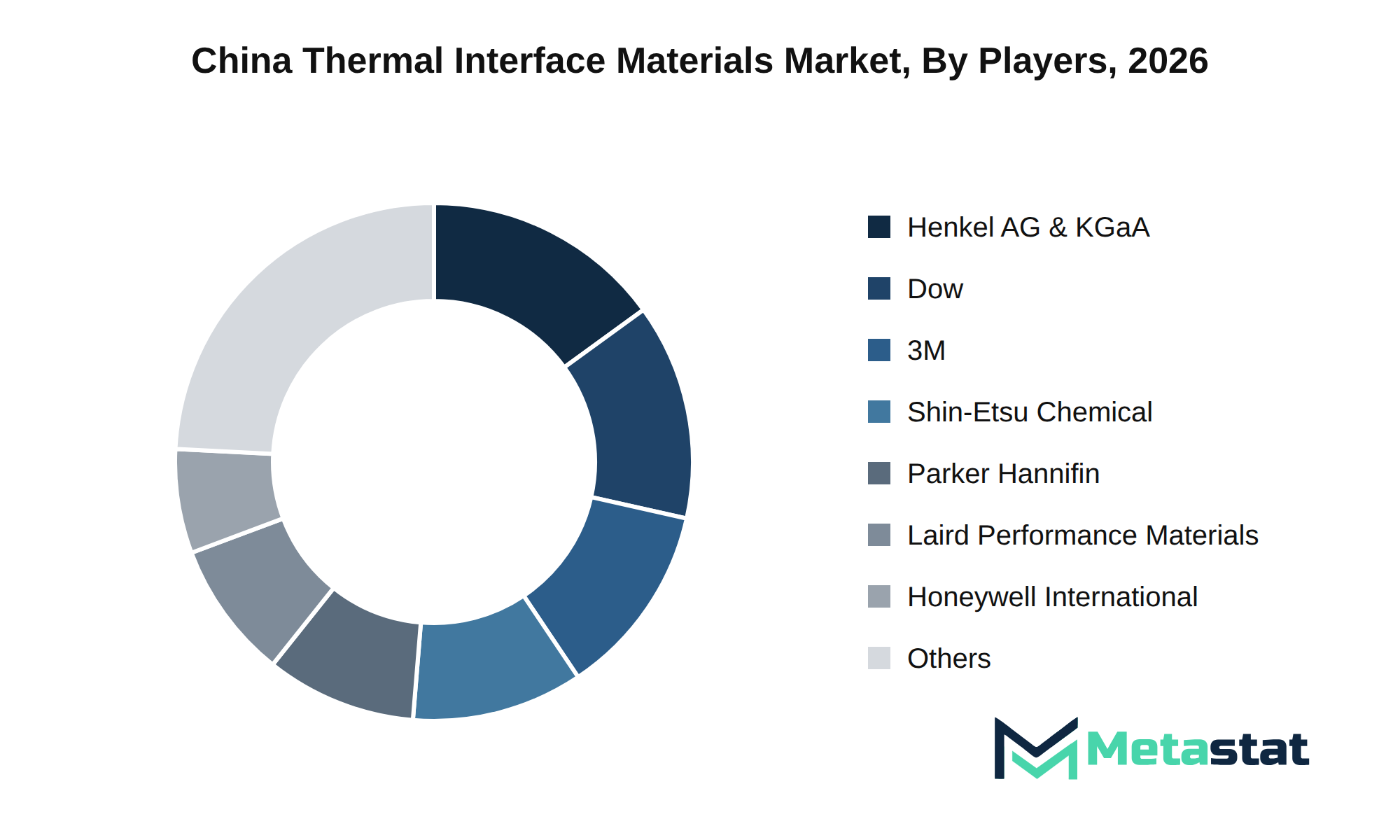
The China Thermal Interface Materials market experiences intense competition among key players. Companies including Henkel AG & Co. KGaA, Dow Inc., and 3M Company employ diverse strategies to enhance their market position. Mergers and acquisitions serve because a critical approach for consolidating resources and expanding product offerings. Strategic alliances enable companies to leverage complementary capabilities and access new markets, promoting innovation within product development.
Price differentiation remains a fundamental aspect of competitive strategies, with companies like Shin-Etsu Chemical Co., Ltd. and Honeywell International Inc. employing competitive pricing architectures to attract a broad customer base. Research and development initiatives drive technological advancements, enhancing product performance and creating proprietary technology moats that protect against new entrants.
Intellectual property portfolios serve because vital assets in maintaining a competitive edge in the market. Firms focus on building robust patent landscapes to secure their innovations and establish barriers to entry that deter potential competitors. The competitive outlook indicates a shift towards value chain integration, allowing companies to optimize procurement leverage and streamline operations for improved customer retention.
Overall, the dynamics of the China Thermal Interface Materials market signify a continually evolving competitive environment, marked by strategic growth vectors and defensive imperatives aimed at ensuring sustained market relevance.
Market size is forecast to rise from USD 880.3 million in 2025 to over USD 2,243.3 million by 2033. This growth trajectory reflects an anticipated compound annual growth rate (CAGR) of 12.4%. Stable market conditions support this expansion. Potential bull cases involve accelerated adoption of new technologies and increased investments in research and development, leading to enhanced product offerings and efficiency gains. Conversely, bear cases could emerge from economic downturns or significant regulatory challenges that hinder operational capabilities.
Key factors contributing to this market growth include evolving downstream demand across core industries and the maturation of existing technologies. Structural shifts in consumption patterns drive the need for innovative thermal interface materials that meet changing performance requirements. The integration of next-generation technologies enhances product life cycles, while regulatory evolution introduces compliance milestones that influence market dynamics.
Strategic capital allocation directives further influence the growth of the China Thermal Interface Materials market. Investments in infrastructure and capital expenditures create opportunities for suppliers to address emerging white-space needs within the industry. Unmet enterprise requirements alongside high-growth pockets present avenues for innovation and market penetration.
Executive-level strategic imperatives shape the future outlook of the market. Organizations focusing on defensibility roadmaps and adaptable business models position themselves favorably within this evolving environment, optimizing resource utilization and enhancing competitive advantages.
The report strategically identifies and profiles the key market players and analyses their core competencies in each sub-segment of the Thermal Interface Materials market.
Report Attributes | Details |
Study Period | 2021-2033 |
Base Year | 2025 |
Estimated Year | 2026 |
Forecast Period | 2026-2033 |
Historical Period | 2021-2025 |
Growth Rate | CAGR 12.4% from 2026 to 2033 |
Revenue Unit | USD million |
Segmentation | By Product Type, Primary Material System, Application, Thermal Conductivity, and Region |
Find answers to common questions about this report
The Thermal Interface Materials market size in China was valued at USD 880.3 million in 2025.
The Thermal Interface Materials market is projected to grow at a CAGR of 12.4% during the forecast period from 2026 to 2033.
The segment leading the China Thermal Interface Materials market is Thermal Gap Pads & Interface Sheets, with a projected value of USD 593.6 million by 2033. This segment holds the largest share based on its growth trajectory compared to other product types.
Growth in the China Thermal Interface Materials market is driven by macroeconomic factors including GDP growth and capital investment environments. The increasing demand for electronic devices, computing systems, and electric vehicles significantly influences market expansion, because businesses invest in technological advancements and efficient thermal management solutions.
Regulatory complexities and stringent compliance hurdles divert resources from core activities, particularly affecting small and medium enterprises. Inflationary pressures escalate operational costs, constraining budgets and limiting investments in innovative solutions. Supply chain disruptions and geopolitical tensions further exacerbate challenges, creating uncertainty and impacting the timely availability of essential materials.
Growth in the China Thermal Interface Materials market is driven by increasing demand for electronic devices, computing systems, and electric vehicles. Investment in infrastructure development and technological advancements enhances operational efficiency, further propelling the adoption of advanced thermal materials across various sectors.
The Thermal Interface Materials market is estimated to reach a valuation of USD 2,243.3 million by 2033.
Key players in the China Thermal Interface Materials market include Henkel AG & Co. KGaA, Dow Inc., Laird Performance Materials, Parker Hannifin Corporation - Chomerics Division, 3M Company, Shin-Etsu Chemical Co., Ltd., and Honeywell International Inc.
The Computing, Servers & Data Centers application segment exhibits the highest growth, with a projected increase from USD 236.2 million in 2026 to USD 576.8 million by 2033, representing a CAGR of 13.6.
The market size for Polymer/Wax Phase Change Pads & Films is projected to reach USD 383.4 million by 2033.
The analysts below cover Chemicals and Materials research at Metastat Insights.
LEAD ANALYST
Utkarsh Khirodkar is a Lead Market Research Analyst at MetaStat Insight, specializing in market intelligence, technology sector assessments, and competitive strategy.

INDUSTRY CONSULTANT - CHEMICALS & ADVANCED MATERIALS
Chemicals and Materials · Machinery & Equipment · Packaging
Amit Gadhekar Consultant for Chemicals and Materials at MetaStat Insight, directing sector-specific intelligence, research, and strategic consulting across global chemical and processing markets.
Evaluating calorific value requirements and air permit compliance across municipal waste facilities requires localized data. Metastat Insight structured their analysis around operational throughput capacity and feedstock composition variations in Latin America and Eastern Europe. Their competitive mapping of sorting equipment vendors helped clarify technology differences between optical separators and heavy media systems. The study provided an objective baseline during our capital expenditure reviews.
Decarbonizing industrial thermal processes hinges on refrigerant regulations and compressor efficiency limits. Metastat Insights delivered a thorough market analysis that evaluated natural refrigerants like CO2 and hydrocarbons against synthetic low-GWP alternatives. The breakdown of utility incentives and grid capacity constraints across key European manufacturing hubs offered valuable perspective. The follow-up conversation with their sector analysts addressed our specific questions on mechanical vapor recompression systems efficiently.
Assessing 200mm wafer transition schedules and substrate supply bottlenecks requires precise technical intelligence. MetaStat Insight supplied an actionable breakdown comparing planar and trench MOSFET architectures across automotive and industrial drive markets. The regional capacity estimates for Asia-Pacific foundries helped clarify lead-time uncertainties during our strategic planning session. When we needed additional clarification on high-purity raw material sourcing, their analyst team responded with helpful context within twenty-four hours.
Explore related market intelligence reports worth reading alongside this one.