
LEAD ANALYST
Utkarsh Khirodkar is a Lead Market Research Analyst at MetaStat Insight, specializing in market intelligence, technology sector assessments, and competitive strategy.

China Phase Change Materials Market Size, Share, By Material Type (Organic PCM, Inorganic PCM, Eutectic PCM), By Application (Building & HVAC Thermal Energy Storage, Cold Chain & Temperature-Controlled Packaging, Industrial Thermal Energy Storage & Waste-Heat Recovery, Battery Thermal Management, Electronics & Semiconductor Thermal Management, Personal Cooling & Wearable Thermoregulation, Medical & Therapeutic Temperature Control, Solar & Renewable Thermal Storage, Consumer Thermal Comfort Products), By End-Use Industry (Building & Construction, Pharmaceuticals & Healthcare, Food & Beverage, Cold Chain Logistics & Distribution, Electronics, Semiconductor & Data Centers, Automotive & Electric Mobility, Textiles, Apparel & PPE, Industrial Manufacturing, Energy & Utilities, Others), Industry Analysis, Growth, Trends, and Forecast, 2026-2033
Report ID
MSI-5059
Published
August, 2026
Pages
281 Pages
Format
Historical
Base year
Forecast
Forecast period
Report Details
Choose Your License
China Phase Change Materials Market
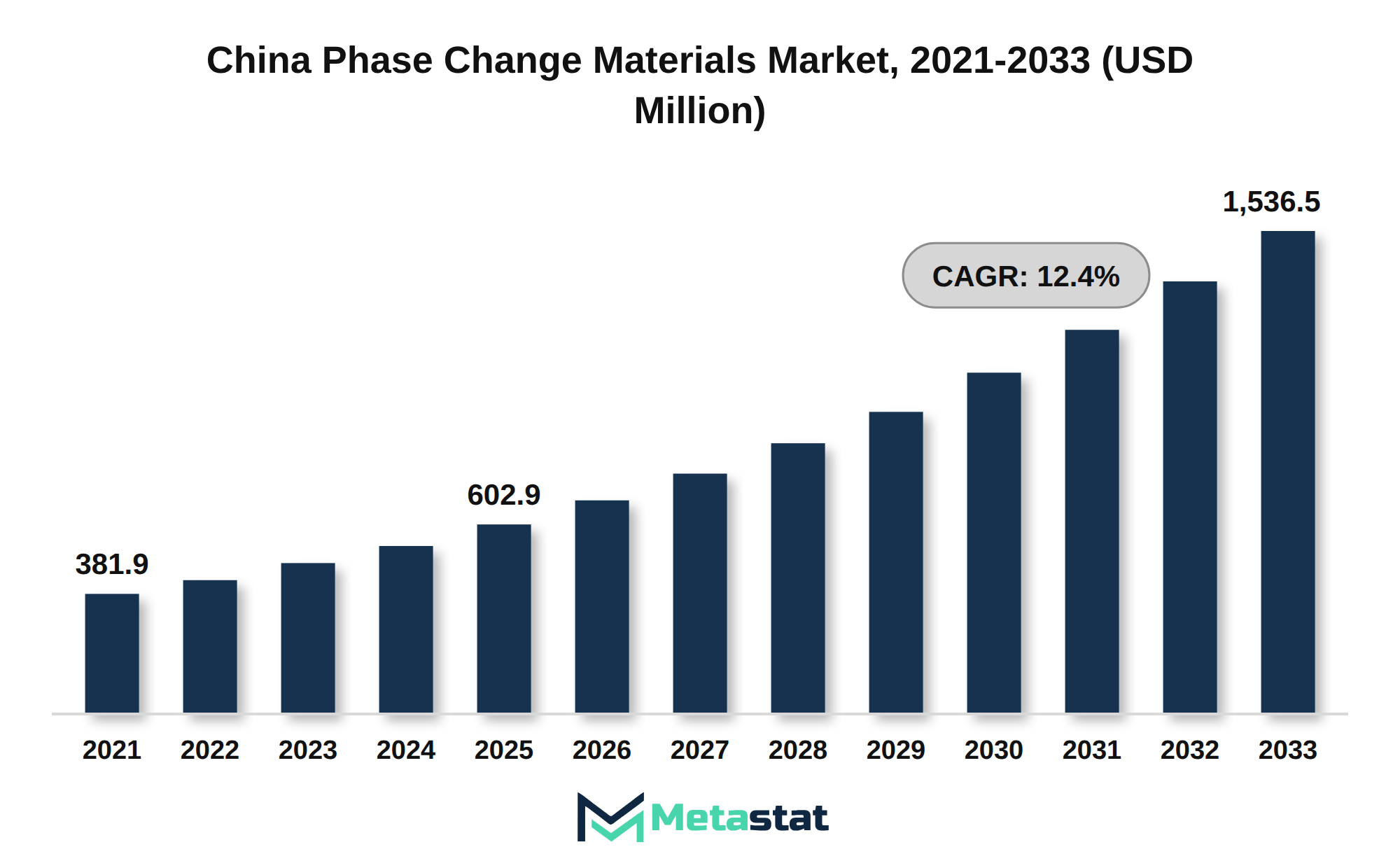
The China Phase Change Materials market was valued at USD 602.9 million in 2025 and is projected to reach USD 1,536.5 million by 2033, growing at a CAGR of 12.4% over the forecast period.
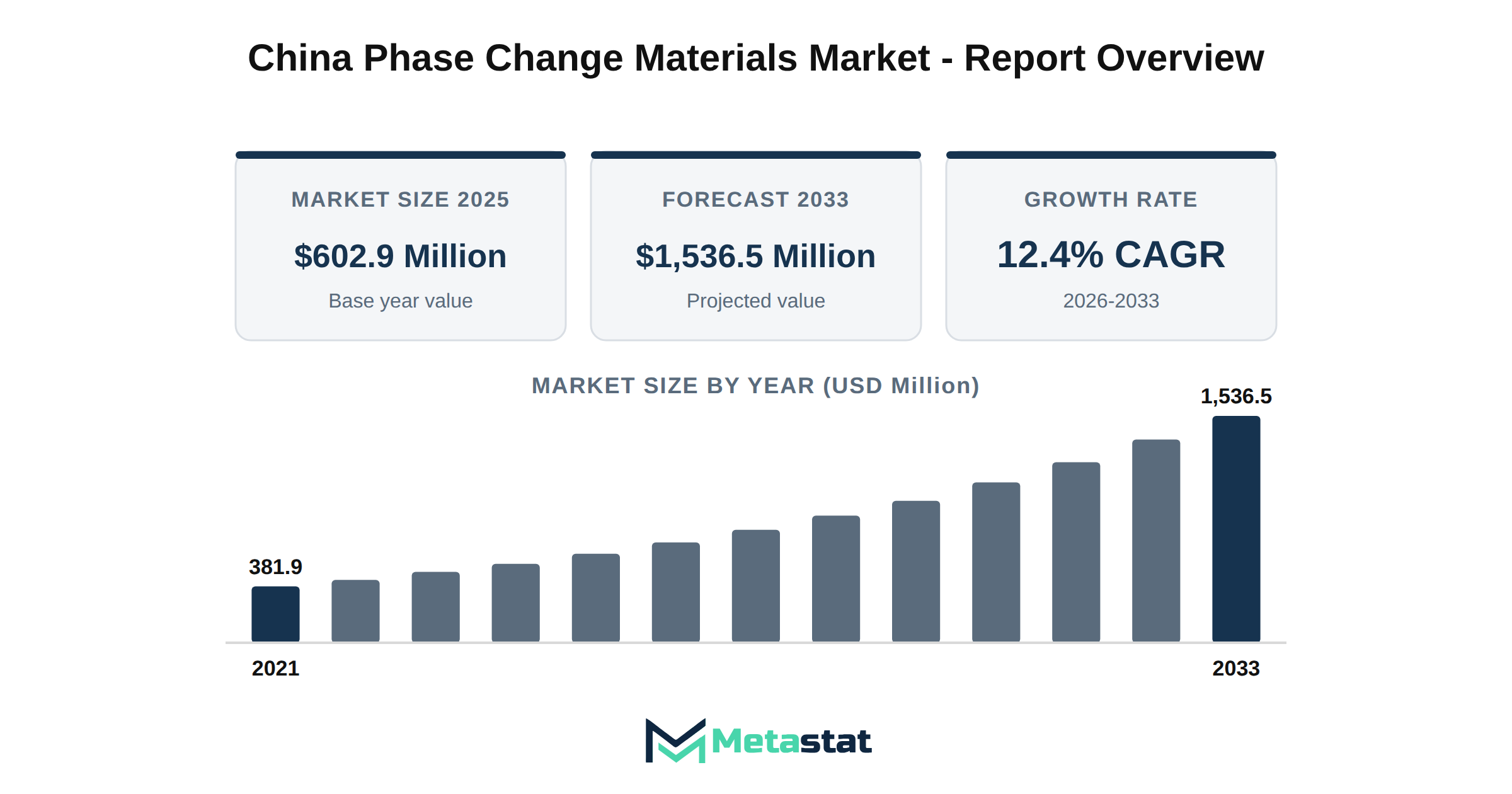
The China Phase Change Materials market reached a valuation of USD 602.9 million in 2025, reflecting a steady increase from USD 381.9 million in 2021. This upward trajectory indicates a compound annual growth rate (CAGR) of 12.4% driven by the market projected to attain USD 1,536.5 million by 2033. Historical data shows consistent growth, with values rising to USD 425.8 million in 2022, USD 480.3 million in 2023, and USD 534.6 million in 2024.
Emerging applications drive significant growth in the market, particularly in sectors including building and HVAC thermal energy storage, cold chain and temperature-controlled packaging, and industrial thermal energy storage. The demand in these areas stems from the increasing emphasis on energy efficiency and sustainability. With advancements in technology, flexibility and form-stable phase change materials (PCMs) become crucial for meeting diverse application requirements.
Innovations in encapsulation techniques enhance scalability and durability, enabling broader adoption across various industries. The ability to produce robust and reliable PCMs supports the expansion of applications in battery thermal management, electronics and semiconductor thermal management, and personal cooling technologies. These developments position the market for sustained growth, especially with the ongoing focus on sustainable transformation and decarbonization efforts.
Commercialization pathways extend beyond traditional thermal energy storage (TES) applications. Regulatory compliance, standards, and geopolitical risk frameworks influence strategic decisions for stakeholders in the market. Investments in research and development (R&D) trajectories support next-generation innovations while addressing macroeconomic challenges and inflationary pressures that impact procurement and capital allocation strategies.
The China Phase Change Materials market experiences significant growth driven by emerging applications and innovative material developments. Flexibility and form-stable PCM innovations address diverse industry needs while enhancing performance in various applications. These advancements result in broader adoption across sectors including building and construction, pharmaceuticals, and cold chain logistics.
Encapsulation scalability and durability trends influence the market by providing enhanced protection and efficiency for PCM products. This trend enhances longevity and reliability, essential factors for industries relying on precise temperature control. The ongoing commercialization pathways outline a clear trajectory for integrating phase change materials into mainstream applications, emphasizing the importance of regulatory compliance and geopolitical risk frameworks in shaping market dynamics.
Disruptive technologies and research and development trajectories drive next-generation innovation in the market. Sustainable transformation initiatives, including decarbonization and circular economy dynamics, align with global environmental goals, giving a competitive edge for companies that embrace these practices. The evolving supply chain landscape influences logistics architecture and sourcing strategies, shaping how materials are procured and delivered.
Market fragmentation presents both challenges and opportunities, prompting mergers and acquisitions that alter competitive positioning. The value chain undergoes continuous optimization, with firms reallocating capital to adapt to shifting market demands. Infrastructure investments play a crucial role in supporting capacity expansion and improving operational efficiency, directly impacting capital expenditure and operational expenditure realities.
Macroeconomic headwinds, including inflationary pressures and currency volatility, pose risks to market stability. Companies actively strategize to mitigate these impacts through agile financial management and adaptive operational strategies. The future strategic outlook for the China Phase Change Materials market emphasizes the importance of corporate imperatives focused on innovation, sustainability, and high-value recommendations to navigate an increasingly complex environment.
Investment in energy efficiency initiatives drives demand for the China Phase Change Materials market. The increasing focus on sustainable practices across various sectors enhances the need for advanced thermal management solutions aimed at reducing energy consumption. Industries including building and construction, pharmaceuticals, and automotive actively seek materials that improve temperature control while minimizing operational costs. This trend aligns with a broader commitment to environmental, social, and governance (ESG) mandates, which emphasize resource stewardship and sustainability.
Ongoing urbanization and lifestyle changes among the population further fuel this demand. Urban areas require innovative solutions to manage increasing energy demands, especially in climate-sensitive applications like building and HVAC thermal energy storage. Rising awareness of climate change impacts motivates companies to adopt phase change materials, which optimize energy usage and contribute to reduced carbon footprints.
The China Phase Change Materials market is projected to experience substantial growth. Industries prioritize investments in technologies that enhance operational productivity and cost efficiency. Long-term economic growth, along with favorable capital investment environments, supports the adoption of these materials, ensuring that businesses remain competitive in an evolving market.
The increasing consumer focus on sustainability drives demand for the China Phase Change Materials market. This trend aligns with growing awareness around environmental issues, including climate change and resource depletion, compelling manufacturers to adopt sustainable practices. Consumers prioritize products that contribute to energy efficiency and reduce carbon footprints, motivating companies to incorporate phase change materials into their offerings.
Integrating these materials enhances product performance while supporting environmental goals. This shift influences various industries, including building and construction, pharmaceuticals, and automotive, where energy efficiency remains a critical consideration. The incorporation of phase change materials not only meets consumer preferences but positions companies favorably within competitive markets.
Investment in research and development focused on sustainable materials results in innovative applications, further expanding the China Phase Change Materials market. Ongoing technological advancements enable improved efficiency and effectiveness of these materials, ensuring they meet evolving needs and expectations of consumers. Such developments contribute to market growth and diversification, reinforcing the role of sustainability in shaping the future of the industry.
The China Phase Change Materials market experiences constraints due to high capital investment requirements, which restrict entry and expansion opportunities for new and existing players. The development and manufacturing of phase change materials require substantial financial resources to establish production facilities and invest in research and development. This financial barrier affects smaller companies more severely, limiting their competitiveness against larger entities that possess more capital and resources.
Escalating operating costs further exacerbate these constraints. Companies face rising expenses related to raw materials, labor, and compliance with industry standards. These increased costs lead to tighter profit margins, prompting several firms to delay or scale back their expansion plans. Consequently, the overall growth potential of the market experiences a significant impact, with firms focusing on optimizing existing operations rather than pursuing new ventures.
In addition to high investment requirements, technological obsolescence emerges because a concern within the market. Rapid advancements in material science mean that products quickly become outdated, necessitating continuous investment in innovation and modernization. Companies unable to keep pace with technological developments risk losing market share and relevance. This dynamic contributes to market fragmentation, with a mix of established and emerging players competing for limited opportunities within the evolving environment of the China Phase Change Materials market.
The China Phase Change Materials market encounters challenges due to geopolitical fragmentation, which impacts trade relations and increases tariff friction. This instability creates uncertainties in sourcing feedstock and components, leading to volatility in prices and availability. Companies that rely on global supply chains face rising costs and potential delays, which impede market expansion.
Technological disruptions further complicate the market. The rapid pace of innovation necessitates continuous investment in research and development. Complex integrations of new technologies into existing systems strain resources and slow down the adoption of advanced phase change materials. This scenario places pressure on companies to allocate budgets efficiently while remaining competitive.
Rising input costs present another significant challenge for the market. Increased expenses for raw materials and manufacturing processes compress pricing structures, leading to margin pressures. Companies navigate these challenges while maintaining product quality and performance. The relationship between pricing and cost structures affects overall profitability and market dynamics.
Workforce skill gaps pose a barrier to the effective implementation of advanced phase change materials. A lack of trained personnel hinders innovation and the development of new applications. Companies invest in talent retention strategies, which add to the operational overhead. They strive to enhance workforce capabilities.
While the market evolves, compliance with tightening regional regulatory standards becomes crucial. Companies operating within the China Phase Change Materials market balance the demands of sustainability and environmental considerations with operational requirements. Failure to meet these standards leads to increased legal liabilities and operational disruptions.
The China Phase Change Materials market benefits from a surge in emerging applications across various industries. Increased demand for thermal management solutions in sectors including building and construction, food and beverage, and healthcare directly influences market expansion. Key drivers include the integration of phase change materials into energy storage systems, which supports advancements in renewable energy technologies and enhances energy efficiency within buildings.
Technological disruptions present significant opportunities for innovation within the market. Developments in material science are leading to the creation of more efficient organic, inorganic, and eutectic phase change materials. These innovations improve performance characteristics, making them suitable for a broader range of applications, including battery thermal management and personal cooling solutions. The growing trend toward digital transformation in manufacturing processes enhances operational efficiency and product differentiation.
Geographical expansion serves because another critical factor for market growth. Rapid urbanization and infrastructure modernization in developing regions, particularly in Asia, fuel the demand for advanced thermal energy storage solutions. This shift enables effective management of energy consumption and costs. Strategic consolidation within the industry facilitates enhanced distribution networks, ensuring that products meet the requirements of various end-use industries, including automotive and electronics.
Rising awareness of sustainability imperatives shapes the market landscape. Companies increasingly align their offerings with environmentally friendly practices, responding to consumer demand for eco-friendly products. This shift encourages the development of sustainable packaging solutions and thermal comfort products, driving revenue growth and enhancing brand loyalty. The China Phase Change Materials market is poised for expansion, driven by these evolving trends and applications.
The China Phase Change Materials market is segmented based on Material Type, Application, and End-Use Industry.
Valued at USD 363.1 million in 2026, the Organic PCM segment is projected to reach USD 789.9 million by 2033, at a CAGR of 11.7% during the forecast period. Adoption of Organic PCM is driven by increasing demand for thermal energy storage solutions across various industries, particularly in building and construction, where energy efficiency and sustainability are critical. The segment benefits from the growing trend towards renewable energy and energy-efficient technologies, because Organic PCM materials provide effective thermal management for heating and cooling applications.
Expansion catalysts include advancements in material technology and product evolution, enabling improved phase change performance and a wider range of applications. Increased awareness of energy conservation drives growth in end-use dynamics, particularly in sectors including pharmaceuticals and healthcare, where precise temperature control is essential. Regulatory compliance standards focusing on energy efficiency and environmental sustainability support the adoption of Organic PCM, aligning with global efforts to reduce carbon footprints.
Cost structures within this segment remain competitive, although fluctuations in raw material prices impact overall pricing strategies. Organic PCM products face limited substitution risks due to their unique thermal properties, which are critical for specific applications. Strategic opportunity windows arise from the growing market for consumer thermal comfort products, driving innovation and investment in next-generation upgrades.
Overall, the Organic PCM segment within the China Phase Change Materials market represents a significant growth opportunity, supported by technological maturation and a proactive approach to sustainability and energy efficiency.
Projected growth for the Inorganic PCM segment positions it to reach USD 543.4 million by 2033, at a CAGR of 12.9% during the forecast period. This growth stems from increasing adoption of Inorganic PCM in sectors requiring efficient thermal management, particularly in building and construction, automotive, and electronics. These industries prioritize energy efficiency, driving demand for materials that enhance thermal regulation and reduce energy consumption.
Technological advancements continue to play a critical role in the evolution of Inorganic PCM, leading to improved product performance and versatility. Innovations in formulation and manufacturing processes contribute to enhanced thermal storage capacity and reliability, appealing to manufacturers looking for cost-effective solutions. Regulatory compliance regarding energy efficiency standards fuels adoption across various sectors, ensuring alignment with sustainability goals.
While applications expand, industries recognize the value of Inorganic PCM for battery thermal management and cold chain logistics. These sectors demand reliable temperature control solutions to maintain product integrity during transport and storage. Adoption trends reflect a shift towards more rigorous thermal insulation technologies, with Inorganic PCM emerging because a favored option owing to its favorable cost-to-performance ratio.
The China Phase Change Materials market experiences increasing investments in research and development, further driving innovation in the Inorganic PCM segment. Strategic partnerships among manufacturers, suppliers, and research institutions create opportunities for collaborative advancements, creating a competitive environment. While consumer preferences shift towards sustainable and energy-efficient products, the Inorganic PCM segment positions itself because a key player in the market, promoting long-term growth and stability.
Investment in innovative technologies and the pursuit of energy-efficient solutions drive the Eutectic PCM segment within the China Phase Change Materials market. Demand for these materials arises from various industries focusing on optimizing thermal management solutions. Eutectic phase change materials enable effective energy storage, making them particularly suitable for applications in building and HVAC thermal energy storage, battery thermal management, and medical temperature control. Their ability to maintain optimal temperatures enhances operational efficiency and minimizes energy consumption across multiple sectors.
Regulatory compliance and growing awareness surrounding climate change boost the adoption of Eutectic PCM. Stringent policies related to energy efficiency and sustainability promote the integration of these advanced materials into various applications. This trend aligns with the broader push towards greener technologies, ensuring that industries remain competitive while adhering to environmental standards.
Advancements in material science have enabled Eutectic PCM to provide improved performance characteristics, catering to diverse end-use dynamics. Enhanced thermal conductivity and energy storage capacity position these materials favorably against alternatives, thus capturing market share. The segment is projected to reach USD 203.1 million by 2033, reflecting a growth trajectory fueled by ongoing investment and technological maturation.
Growth in the Building & HVAC Thermal Energy Storage application results from increasing demand for energy efficiency and sustainability in construction. Rising energy costs drive building owners and contractors to adopt phase change materials, which enhance thermal management and reduce energy consumption. The integration of smart building technologies influences the market, enabling more precise control over energy use and contributing to reduced operational costs.
Technological advancements in material science strengthen the performance of phase change materials, promoting their use in various building applications. Enhanced product characteristics, including improved melting and freezing capabilities, align with the push for modern, energy-efficient designs. Regulatory compliance and green building certifications further accelerate adoption, driven by stakeholders seeking materials that meet stringent energy efficiency standards.
The focus on reducing carbon footprints in the construction industry leads to a notable shift in consumption patterns. Building planners and architects increasingly prioritize sustainable materials, positioning phase change materials because attractive options within the market. Strategic opportunity windows arise for manufacturers that invest in research and development, facilitating next-generation product upgrades that satisfy evolving market demands.
Supply chain resilience becomes critical in ensuring the availability of raw materials essential for production. Fluctuations in pricing and sourcing challenges necessitate strong relationships with suppliers, ensuring uninterrupted access to quality materials. The market faces competition from disruptive alternatives, requiring ongoing innovation to maintain a competitive edge. Investment in phase change materials presents a strategic avenue for stakeholders aiming to capitalize on the growing emphasis on energy efficiency and sustainability within the China Phase Change Materials market.
Increasing temperature-sensitive shipments in the food and pharmaceutical sectors drive demand for phase change materials in cold chain and temperature-controlled packaging. These materials ensure temperature stability during transport, essential for maintaining product integrity and compliance with regulatory standards. The growing focus on food safety and efficacy in healthcare supports the adoption of advanced packaging solutions that incorporate phase change materials.
Technological advancements enhance the effectiveness of cold chain solutions, enabling logistics providers to implement next-generation temperature control systems. This evolution opens strategic opportunity windows for manufacturers, incentivizing investments in research and development. While market participants strive to differentiate themselves, product evolution focuses on improving thermal performance and expanding application versatility, thereby attracting new end-users.
Consumption shifts towards more sustainable packaging solutions reflect heightened environmental awareness among consumers. This shift influences purchasing decisions and prompts manufacturers to seek eco-friendly materials that align with market expectations. Regulatory compliance standards continue to tighten, necessitating adherence to safety and sustainability protocols, further pushing the market towards innovative and compliant solutions.
Raw material sourcing remains critical to ensuring supply chain resilience. Availability and pricing volatility of key components impact production costs. Companies actively explore alternatives and strategies to mitigate risks associated with raw material dependency. This dynamic creates a competitive landscape where firms balance cost pressures with the need for quality and compliance.
While the China Phase Change Materials market expands, the interaction of these factors shapes the development of the cold chain and temperature-controlled packaging segment. Strategic investments in technology and innovation will likely enhance the market's growth trajectory, ensuring its relevance in meeting the evolving demands of industries reliant on effective temperature management.
In the context of Industrial Thermal Energy Storage and Waste-Heat Recovery, demand dynamics hinge on the relentless pursuit of energy efficiency across multiple industrial sectors. This application of phase change materials significantly enhances thermal management systems, enabling facilities to capture and store excess heat, thereby optimizing energy consumption and reducing operational costs.
Adoption of these materials increasingly aligns with stringent regulatory compliance standards aimed at promoting sustainability and reducing carbon footprints. Industries including manufacturing, pharmaceuticals, and food processing actively seek innovative solutions to manage thermal loads effectively, supporting the expansion of the China Phase Change Materials market.
Technological maturation within this segment drives advancements in material formulations, offering improved heat retention and release properties. Enhanced performance characteristics drive product evolution, encouraging stakeholders to explore next-generation upgrades that facilitate increased efficiency and reliability in thermal energy systems.
Consumption shifts towards sustainable practices enhance downstream applications, particularly in energy-intensive sectors. Strategic opportunity windows emerge owing to businesses prioritizing investments in green technologies, allowing phase change materials to play a critical role in achieving their sustainability goals.
Economic pressures stemming from volatile pricing structures and margin constraints challenge manufacturers; however, the strategic deployment of phase change materials mitigates these impacts. Supply chain resilience remains vital, with effective raw material sourcing strategies ensuring consistent availability and stability for businesses within the market.
Overall, the Industrial Thermal Energy Storage and Waste-Heat Recovery segment presents significant potential for growth and innovation, aligning well with broader trends within the China Phase Change Materials market. The outlook for investment in this area remains optimistic, reflecting the growing recognition of the importance of thermal management solutions in achieving energy efficiency and sustainability objectives.
Growing emphasis on battery efficiency and performance drives the demand for phase change materials in battery thermal management applications. Enhanced thermal regulation significantly improves battery lifespan and reliability, particularly in electric vehicles and portable electronics. The market faces increasing adoption fueled by technological advancements in battery chemistry and design, which contribute to higher energy densities and faster charging capabilities. Continuous innovations in phase change materials lead to better thermal management solutions, enhancing overall battery performance and safety.
Regulatory compliance standards focused on energy efficiency and emissions reduction further support market growth, particularly in the automotive and electronics sectors. Manufacturers prioritize phase change materials that meet stringent environmental regulations and contribute to sustainability goals. The market experiences continuous evolution driven by investments in next-generation upgrades, optimizing material properties for specific applications. This evolution is critical for maintaining competitiveness, since end-users demand improved thermal management solutions across various industries.
Investment in research and development creates strategic opportunity windows for companies specializing in phase change materials, driving product evolution and market penetration. The growing trend toward electrification across numerous sectors increases the need for advanced thermal management solutions, positioning the China Phase Change Materials market for significant expansion. By leveraging advancements in material science and technology, suppliers are well-positioned to satisfy the increasing demands of the evolving market.
Demand for effective thermal management solutions in electronics and semiconductor applications drives significant interest in the China Phase Change Materials market. Rapid advancements in technology and increasing miniaturization of electronic components create the necessity for efficient cooling systems. Consequently, phase change materials (PCMs) offer enhanced thermal regulation, enabling optimal performance and longevity of sensitive devices.
The push towards energy efficiency and sustainability in the electronics sector supports adoption of PCMs. These materials effectively absorb and release thermal energy, reducing reliance on traditional cooling systems that consume more energy. The growing emphasis on eco-friendly alternatives aligns with regulatory compliance standards aimed at reducing carbon footprints across manufacturing processes.
Technological maturation in PCM formulations continues to enhance performance attributes, making them suitable for various electronic applications. Innovations focus on optimizing thermal conductivity and the ability to function effectively in diverse operating conditions. Such advancements contribute to market expansion by attracting investments and encouraging the development of next-generation electronic products.
The increasing complexity of electronic devices necessitates robust thermal management strategies. Industries involved in manufacturing consumer electronics, semiconductors, and data centers recognize the critical role of thermal regulation in ensuring reliability and efficiency. The evolution of these sectors drives continuous demand for phase change materials that offer versatile applications across various product lines.
Strategic opportunity windows arise from the growing market for electric vehicles, which integrates sophisticated thermal management systems. While electric mobility proliferates, the demand for effective thermal solutions in battery systems further reinforces the relevance of PCMs. Investments in this area reflect a commitment to enhancing performance while meeting rising consumer expectations for safety and efficiency.
Demand for personal cooling and wearable thermoregulation technologies experiences notable growth within the China Phase Change Materials market. Increasing temperatures and heightened awareness of climate change drive consumers toward energy-efficient cooling solutions. Innovations in thermal management materials result in enhanced performance characteristics, appealing to health-conscious individuals seeking comfort in varying environmental conditions.
The rise of wearable technology fuels interest in personal cooling applications. Advances in fabric technology integrate phase change materials into clothing and accessories, providing users with temperature regulation without relying on power consumption. This evolution enhances product offerings and aligns with consumer expectations for multifunctional wearable devices.
Regulatory compliance with environmental standards influences product development in this segment. Manufacturers prioritize eco-friendly materials and processes to meet consumer demands and government guidelines. This trend supports market expansion and promotes a culture of sustainability within the industry.
Strategic investments in research and development enhance the segment's growth potential. Companies recognize the long-term benefits of incorporating innovative phase change materials into their product lines. Collaborations between technology providers and manufacturers strengthen the supply chain, making the market more resilient to disruptions.
Overall, personal cooling and wearable thermoregulation applications significantly contribute to the evolution of the China Phase Change Materials market. These dynamics enhance the competitive environment while providing consumers with advanced solutions tailored to their comfort and environmental needs.
Growing focus on medical applications significantly influences the adoption of phase change materials, particularly in temperature control solutions for therapeutic and medical use. Enhanced patient care through precise temperature regulation contributes to demand within the China Phase Change Materials market. Innovations in material formulations improve performance, enabling effective management of temperature-sensitive medical products and treatments, resulting in increased operational efficiency for healthcare providers.
Regulatory compliance standards drive manufacturers to prioritize quality and safety in medical applications, building confidence among healthcare providers. Increasing investments in research and development support advancements in product evolution, addressing the specific needs of healthcare settings. This strategic focus enhances the market potential within the medical and therapeutic temperature control sector, reinforcing long-term demand for phase change materials.
Shifts in consumption patterns reflect a growing preference for sustainable and efficient temperature management solutions. The expansion of the healthcare industry, combined with a greater emphasis on patient comfort, highlights the significance of this sub-segment. While technological maturation continues, the market is positioned to leverage emerging opportunities within the medical field, expanding the addressable base for phase change materials.
Growing awareness of sustainability and renewable energy sources drives significant demand for solar and renewable thermal storage applications. These applications facilitate efficient energy management, leveraging phase change materials to store and release thermal energy because required. Increased investments in solar energy projects and technological advancements contribute to market expansion, because stakeholders seek more efficient thermal storage solutions. Adoption of phase change materials in solar applications helps mitigate energy loss, enhancing overall system performance. The urgency to meet regulatory compliance standards regarding sustainability and greenhouse gas emissions encourages various industries to integrate thermal storage solutions. Consequently, the China Phase Change Materials market experiences heightened interest in innovative materials and technologies that support the renewable energy sector.
End-use dynamics shift owing to industries prioritizing energy efficiency and sustainability, creating new opportunities for phase change materials. Sectors like building and construction, pharmaceuticals, and food and beverage actively explore applications in solar energy systems, further driving demand. Investment in research and development for advanced phase change materials reinforces the commitment to creating more efficient and cost-effective solutions. Strategic opportunity windows emerge for manufacturers and suppliers, opening avenues for partnerships and collaborations focused on product innovation. While the market evolves, continuous improvements in material properties and performance capabilities align with the growing emphasis on green technologies.
Growing consumer interest in energy-efficient and sustainable products drives demand for phase change materials in consumer thermal comfort products. This segment benefits from heightened awareness regarding thermal management solutions that enhance comfort in various applications, including bedding, clothing, and personal cooling devices.
Technological advancements significantly influence the evolution of consumer thermal comfort products. Innovations in material composition and performance features contribute to enhanced user experiences and broaden product applicability across diverse environments. Manufacturers focus on integrating these materials into everyday products. The market is projected to expand in both product offerings and consumer adoption.
End-use dynamics indicate a shift toward eco-friendly solutions among consumers, prompting manufacturers to consider sustainability in product design. Regulatory compliance standards regarding environmental impact further reinforce this trend, leading to enhanced product reputations and market acceptance. Balancing cost structures with the growing demand for sustainable materials presents opportunities for companies to differentiate their offerings and strengthen competitive positions.
Strategic investment in research and development efforts focuses on next-generation upgrades to existing products, positioning companies favorably within the China Phase Change Materials market. This commitment to innovation, coupled with a concentrated focus on consumer needs, enhances market resilience and adaptability in a rapidly shifting environment.
Rising demand for specialty thermal buffering solutions in the food processing industry contributes to market expansion. Effective thermal management for perishable goods relies on the unique properties of phase change materials, which enable temperature stability during storage and transportation. End-users in the food and beverage sector increasingly recognize the advantages of these materials in maintaining product quality, extending shelf life, and reducing waste.
Technological advancements drive innovation in the development of next-generation phase change materials tailored for specific applications within food processing. Enhanced performance characteristics lead to improved energy efficiency and reduced operational costs, attracting investment and further supporting the growth of the China Phase Change Materials market. Regulatory compliance and sustainability standards reinforce the adoption of materials that minimize environmental impact while ensuring food safety.
Strategic opportunities arise from manufacturers exploring the integration of phase change materials into existing systems. The potential for collaboration among suppliers and producers strengthens resilience within the supply chain while addressing challenges related to raw material sourcing and logistics vulnerabilities. This dynamic environment encourages ongoing research and development, reinforcing the role of phase change materials in the food processing sector.
Increased focus on sustainable building practices drives demand for phase change materials within the construction sector. Enhancements in energy efficiency align with stringent regulations, prompting builders to integrate these materials into new developments. Thermal energy storage solutions, essential for maintaining comfortable indoor climates, contribute to reduced energy consumption, resulting in lower operational costs for end-users.
Technological advancements in phase change materials enhance their thermal performance and application versatility. The market experiences a shift toward next-generation products incorporating advanced materials and formulations that offer improved energy management capabilities. Rapid urbanization increases the adoption of these technologies in residential and commercial buildings.
Compliance with evolving regulatory standards regarding energy efficiency influences market dynamics. Construction projects incorporating phase change materials benefit from incentives and certifications reflecting sustainability efforts. These certifications improve market competitiveness and attract eco-conscious consumers.
Widespread adoption of phase change materials in the building and construction segment aligns with a growing emphasis on reducing carbon footprints. The transition toward greener building materials promotes strategic investment in research and development initiatives aimed at enhancing product capabilities. While the market evolves, opportunities for innovative applications emerge, particularly in energy-efficient building designs.
The combination of regulatory support, technological innovation, and consumer demand for sustainable solutions strengthens the role of phase change materials in the China Phase Change Materials market. Continued investment in this sector positions it for significant growth. Adoption expands across various segments, particularly in building and construction.
Growing investments in pharmaceutical innovations significantly drive demand for effective thermal management solutions within the China Phase Change Materials market. This sector increasingly relies on phase change materials to ensure optimal temperature control for sensitive products, including vaccines, biologics, and other temperature-sensitive pharmaceuticals. Implementing these materials enhances operational efficiency, especially in cold chain logistics, where maintaining specific temperature ranges is critical for compliance and product integrity.
Regulatory compliance standards, particularly in the healthcare industry, play a crucial role in shaping the adoption of phase change materials. Compliance with guidelines from health authorities mandates stringent temperature control measures, creating a market environment conducive to innovation. The integration of advanced PCM solutions into existing distribution networks addresses these regulatory requirements, contributing to a shift towards more reliable and efficient temperature-controlled environments.
Technological advancements in phase change materials support the development of next-generation products that enhance performance in medical applications. Innovations in formulation and material properties lead to improved thermal storage capacities, positioning these materials because essential components in healthcare facilities and logistics operations. The competitive landscape increasingly emphasizes the need for manufacturers to adopt advanced technologies to cater to the evolving demands of the healthcare sector.
Shifts in consumption patterns, driven by increased awareness of temperature management in medical transport and storage, create strategic opportunity windows for suppliers within the market. Effective thermal management not only safeguards product efficacy but boosts consumer trust in healthcare products. This growing focus on quality and reliability in pharmaceutical delivery systems increases the demand for phase change materials.
Rising consumer demand for fresh and high-quality food products significantly influences the need for effective temperature control solutions within the food and beverage sector. Companies prioritize maintaining optimal temperature conditions throughout the supply chain to enhance product quality and safety. This trend drives interest in phase change materials (PCMs) that offer efficient thermal management capabilities, resulting in reduced spoilage and waste during transportation and storage.
Adoption of PCMs in food and beverage applications aligns with shifting consumer preferences toward sustainable and energy-efficient practices. Enhanced focus on environmental responsibility encourages manufacturers to seek materials that provide temperature control and contribute to reducing overall energy consumption. The integration of these materials improves operational efficiency, lowers energy costs, and meets regulatory compliance standards aimed at minimizing environmental impact.
Technological advancements support the expansion of phase change materials in the food and beverage industry. Innovations in material composition and product design enhance the performance and applicability of PCMs in various temperature-sensitive environments. This evolution attracts investments from companies looking to improve product offerings and capitalize on the growing trend toward sustainable practices within the market.
While the market continues to evolve, businesses face challenges related to cost structures and pricing volatility. Fluctuating raw material costs impact profit margins, prompting companies to explore alternative sourcing strategies and more resilient supply chain solutions. Addressing these challenges while capitalizing on the growing demand positions players in the food and beverage sector to leverage strategic opportunity windows within the China Phase Change Materials market.
Demand for phase change materials in cold chain logistics and distribution reflects the increasing need for maintaining temperature control throughout the supply chain. Industries including food and pharmaceuticals require precise temperature management to preserve product integrity during transit. This heightened focus on food safety and drug efficacy drives the adoption of advanced thermal management solutions within these sectors.
Regulatory compliance plays a critical role in shaping market dynamics. Stringent guidelines governing food safety and pharmaceutical distribution necessitate reliable temperature-controlled logistics. Providers of phase change materials navigate these regulations to deliver compliant solutions, creating opportunities for innovation and product evolution in the market.
Technological maturation has led to the development of next-generation phase change materials, enhancing thermal efficiency and reliability. Innovations in material science yield products that offer improved performance and adaptability, meeting the diverse needs of temperature-sensitive applications. This advancement aligns with the market's expansion, facilitating broader adoption across various end-use industries.
The evolving landscape of consumer preferences towards sustainability influences demand dynamics. Increasing consumer awareness prompts companies to seek eco-friendly solutions, making phase change materials an attractive choice for sustainable logistics practices. Providers that align with these values experience strategic opportunities for growth within the China Phase Change Materials market.
Cost structures and pricing volatility present challenges that companies in the market address. Fluctuations in raw material costs impact pricing strategies, requiring careful management to maintain margins. Effective supply chain resilience strategies are essential for navigating these pressures, ensuring consistent product availability while minimizing disruptions.
Demand for advanced thermal management solutions within electronics, semiconductors, and data centers drives notable growth in the China Phase Change Materials market. This segment faces increasing requirements for efficient heat dissipation, particularly in high-performance computing and data centers. Rising data processing requirements necessitate enhanced cooling solutions, prompting manufacturers to seek effective phase change materials that support reliable thermal regulation.
Technological advancements contribute to segment expansion, driven by innovations in phase change materials that enable improved performance and efficiency. The trend toward miniaturization in electronic devices demands materials that offer compact yet effective thermal management capabilities. Regulatory compliance regarding energy efficiency and sustainability further intensifies the drive for superior thermal solutions, increasing adoption across various applications.
Investments in infrastructure development and technological upgrades play a crucial role in shaping the segment's dynamics. The growing focus on reducing energy consumption and enhancing thermal efficiency aligns with broader sustainability goals, leading to increased demand for phase change materials in data centers. By optimizing energy usage, operators enhance their competitiveness and operational efficiency within the market.
Strategic opportunities arise from the ongoing evolution of consumer electronics and the rapid growth of the semiconductor industry. These shifts create demand for innovative thermal solutions tailored to specific applications. While manufacturers adapt to evolving market needs, the landscape for phase change materials continues to change, presenting significant prospects for growth in the China Phase Change Materials market.
Technological advancements in automotive design significantly enhance the demand for phase change materials, specifically in electric mobility applications. The shift towards electric vehicles (EVs) necessitates effective thermal management solutions to optimize battery lifespan and performance. Incorporating phase change materials into battery systems provides energy storage capabilities while maintaining optimal operating temperatures, influencing electric vehicle efficiency and reliability.
Increased regulatory focus on emissions reductions and energy efficiency drives the adoption of innovative thermal management solutions in the automotive sector. Stricter regulations around vehicle emissions compel manufacturers to explore advanced materials that support energy-efficient designs. Consequently, this trend creates a favorable environment for phase change materials in automotive applications.
Investment in electric mobility infrastructure strengthens the market for phase change materials. The growing number of charging stations and enhancements in battery technology encourage manufacturers to integrate thermal management solutions that incorporate these materials. This strategic alignment boosts the overall market, facilitating growth within the automotive and electric mobility sector.
While end-users prioritize sustainability, the use of phase change materials aligns with the broader goals of reducing the environmental impact of automotive products. By supporting energy-efficient systems, these materials contribute to the increasing demand for sustainable solutions in the automotive industry, further reinforcing the position of the China Phase Change Materials market.
Increasing interest in functional textiles emphasizes the importance of temperature regulation in the textiles, apparel and PPE segment. Companies focus on integrating phase change materials to enhance thermal comfort, improve performance, and extend product lifecycles. This trend reflects a broader push for innovative solutions in the China Phase Change Materials market, particularly because consumer preferences shift toward smart textiles that adapt to varying environmental conditions.
Technological advancements play a crucial role in driving the adoption of phase change materials in textiles. Innovations in material science enable the development of more efficient PCM formulations that are seamlessly integrated into various fabric types. Such advancements enhance product appeal within the segment, supporting growth because manufacturers seek to differentiate their offerings in a competitive market.
Regulatory compliance and sustainability concerns increasingly shape the market, driving manufacturers to prioritize eco-friendly materials. Certifications focusing on sustainable sourcing and production processes reinforce this commitment, positioning brands favorably in the eyes of environmentally conscious consumers. This shift towards sustainability aligns with the evolving dynamics within the China Phase Change Materials market.
Supply chain resilience remains a priority, because manufacturers navigate raw material sourcing challenges. A focus on local sourcing and the establishment of strategic partnerships helps mitigate risks associated with supply disruptions. This approach contributes to cost stability and ensures timely delivery, essential factors for success in a changing market.
Opportunities for growth lie in the expansion of applications for phase change materials across diverse textile sectors, including sportswear and protective clothing. Capital investment in research and development drives innovation, leading to the introduction of next-generation products that address specific consumer needs. Such strategic initiatives underpin the positive outlook for the textiles, apparel and PPE segment within the broader market.
Rising investments in automation and technological advancements significantly influence the demand for phase change materials in the Industrial Manufacturing sector. Increased focus on energy efficiency and sustainability drives manufacturers to explore innovative thermal management solutions. These materials enhance the performance of various processes, including thermal energy storage and waste-heat recovery, aligning with the industry's shift towards environmentally responsible practices.
Technological maturation drives the adoption of next-generation phase change materials, providing improved performance and cost-effectiveness for manufacturers. Enhanced product evolution introduces a range of materials tailored to specific applications, further stimulating interest in the China Phase Change Materials market. Companies that successfully integrate these materials into their operations realize operational efficiencies, contributing to reduced energy consumption and lower operational costs.
Growing regulatory compliance standards and certifications related to energy efficiency and environmental impact push manufacturers to prioritize the use of advanced materials. While the market evolves, strategic opportunities arise for suppliers that provide innovative solutions. This dynamic contributes to a favorable investment outlook, encouraging further capital infusion into the sector.
Overall, the Industrial Manufacturing segment of the China Phase Change Materials market reflects a strong alignment with contemporary industry trends focused on sustainability and technological advancement. The sector's evolution hinges on the continuous development of effective thermal management solutions, ensuring manufacturers remain competitive in a rapidly changing environment.
Investment in renewable energy infrastructure increases demand for phase change materials within the Energy & Utilities segment. These materials enhance energy storage capabilities, providing efficient thermal management solutions that align with global sustainability targets. Regulatory compliance regarding energy efficiency standards continues to drive adoption, attributed to businesses within this segment seeking to meet increasingly stringent guidelines.
Technological maturation in energy systems facilitates greater integration of phase change materials, enabling next-gen upgrades in energy storage and management. Companies in the market pursue product evolution to improve efficiency, reliability, and performance characteristics of energy solutions. The strategic opportunity window within this segment highlights the potential for increased capital investment into innovative thermal management technologies.
Cost structures associated with phase change materials impact overall pricing strategies. Fluctuations in raw material sourcing and supply chain resilience pose challenges that affect margin pressures. Disruptive alternatives, including emerging thermal energy storage technologies, introduce competition and influence consumption shifts within the market.
Interest in phase change materials within the consumer goods, aerospace, and defense sectors focuses on enhancing product performance and sustainability. Continuous technological maturation in materials science supports the development of advanced PCM solutions tailored for these industries. Innovations in product evolution drive the integration of phase change materials into various applications, including temperature control and thermal management systems.
End-use dynamics highlight the significance of reliability and efficiency in consumer goods, aerospace, and defense applications. Regulatory compliance standards influence the adoption of phase change materials, demanding adherence to safety and environmental guidelines. The emergence of strategic opportunity windows encourages suppliers to explore new applications and markets, supporting growth potential in the China Phase Change Materials market.
Cost structures and pricing volatility impact the competitiveness of phase change materials in these sectors. Supply chain resilience is essential to ensure consistent material availability, enabling manufacturers to meet demand challenges. Strategic partnerships and collaborations within the supply chain enhance raw material sourcing and mitigate risks associated with substitution threats and disruptive alternatives.
Investment in research and development accelerates innovation and drives the integration of next-generation upgrades in phase change materials. The market benefits from capital investment outlooks that facilitate the continuous enhancement of product offerings, ensuring relevance in the evolving environment of consumer goods, aerospace, and defense applications. This environment supports sustained growth in the China Phase Change Materials market.
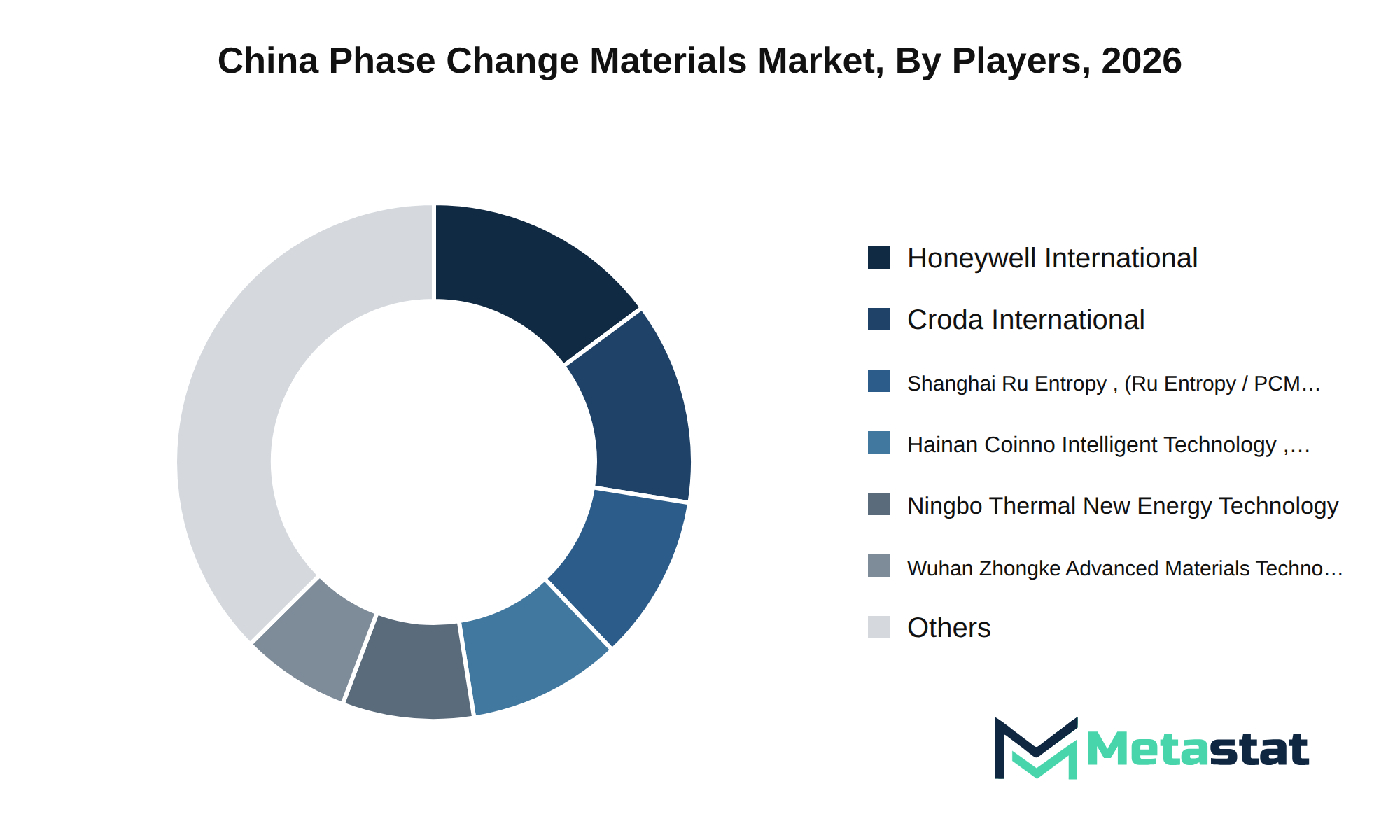
The China Phase Change Materials market consists of a range of players employing various strategic behaviors to enhance their market positioning. Major companies engage in product differentiation and proprietary technology development to create competitive advantages. Players including Hainan Coinno Intelligent Technology Co., Ltd. (Coolinno) and Shanghai Ru Entropy Co., Ltd. (Ru Entropy / PCMCOOL) invest in research and development pipelines to advance their offerings in organic and inorganic phase change materials.
Strategic alliances and partnerships represent another approach for players in the market. Companies like Croda International Plc and Honeywell International Inc. leverage cross-industry partnerships to expand their technological capabilities and improve market access. This collaborative approach drives innovation, enabling firms to adapt to evolving customer demands across various applications, including building HVAC thermal energy storage and cold chain logistics.
Barriers to entry in the China Phase Change Materials market include established brand equity and intellectual property portfolios held by key players. The competitive landscape reflects a dynamic environment where new entrants face challenges from established firms with strong supply chain dominance and customer retention strategies. This situation creates a robust framework for existing players to consolidate their positions and pursue strategic growth vectors through mergers and acquisitions.
Market size is forecast to rise from USD 602.9 million in 2025 to over USD 1,536.5 million by 2033. The base case anticipates a growth trajectory at a 12.4% CAGR, reflecting underlying demand trends and technological advancements in the China Phase Change Materials market.
In a bull case scenario, robust investments in next-generation technology integration and strategic capital allocation directives could accelerate market growth, enhancing product performance and expanding application areas. This scenario emphasizes the potential for rapid commercialization of innovative solutions, capturing significant market share from traditional materials.
The bear case highlights challenges including economic fluctuations and regulatory pressures that could hinder growth. Shifts in downstream demand and structural consumption patterns impact specific end-use industries, including automotive and electronics, potentially slowing expansion in the market.
Overall, anticipated developments in R&D timelines, compliance milestones, and evolving trade corridors influence the strategic landscape, creating opportunities to address unmet enterprise needs and capitalize on high-growth pockets within the China Phase Change Materials market.
The report strategically identifies and profiles the key market players and analyses their core competencies in each sub-segment of the Phase Change Materials market.
Report Attributes | Details |
Study Period | 2021-2033 |
Base Year | 2025 |
Estimated Year | 2026 |
Forecast Period | 2026-2033 |
Historical Period | 2021-2025 |
Growth Rate | CAGR 12.4% from 2026 to 2033 |
Revenue Unit | USD million |
Segmentation | By Material Type, Application, End-Use Industry, and Region |
Find answers to common questions about this report
The Phase Change Materials market size in China was valued at USD 602.9 million in 2025.
The Phase Change Materials market is projected to grow at a CAGR of 12.4% during the forecast period from 2026 to 2033.
The Organic PCM segment leads the China Phase Change Materials market, with a projected value of USD 789.9 million by 2033. This figure reflects the highest anticipated revenue among the material types.
Investment in energy efficiency initiatives drives demand for the China Phase Change Materials market. The increasing focus on sustainable practices across industries, particularly building and construction, pharmaceuticals, and automotive, enhances the need for advanced thermal management solutions that optimize energy usage and contribute to reduced carbon footprints.
High capital investment requirements limit entry and expansion opportunities for players in the China Phase Change Materials market. rising operating costs and technological obsolescence hinder competitiveness, particularly for smaller companies. These factors collectively impact growth potential, prompting firms to focus on optimizing existing operations rather than pursuing new ventures.
Investment in energy efficiency initiatives, a focus on sustainability, and rising consumer awareness of climate change favor the adoption of phase change materials in China. These factors enhance the demand for advanced thermal management solutions that optimize energy usage and reduce carbon footprints.
The Phase Change Materials market is estimated to reach a valuation of USD 1,536.5 million by 2033.
Key players in the China Phase Change Materials market include Hainan Coinno Intelligent Technology Co., Ltd. (Coolinno), Ningbo Thermal New Energy Technology Co., Ltd., Qingdao Thermal New Materials Co., Ltd., Hangzhou Feijie Technology Co., Ltd., Shanghai Ru Entropy Co., Ltd. (Ru Entropy / PCMCOOL), and Croda International Plc.
The market size for organic phase change materials is projected to reach USD 789.9 million by 2033.
Inorganic phase change materials are expected to grow at a compound annual growth rate of 12.9% through 2033.
The analysts below cover Chemicals and Materials research at Metastat Insights.
LEAD ANALYST
Utkarsh Khirodkar is a Lead Market Research Analyst at MetaStat Insight, specializing in market intelligence, technology sector assessments, and competitive strategy.

INDUSTRY CONSULTANT - CHEMICALS & ADVANCED MATERIALS
Chemicals and Materials · Machinery & Equipment · Packaging
Amit Gadhekar Consultant for Chemicals and Materials at MetaStat Insight, directing sector-specific intelligence, research, and strategic consulting across global chemical and processing markets.
When planning edge sensor rollouts across refinery environments, generic IoT reports typically miss the harsh-environment certification bottlenecks. MetaStat Insight gave an objective evaluation of ATEX and Class 1 Division 2 hardware availability, along with realistic five-year maintenance cycle cost projections. The comparison of wireless mesh versus private cellular backhaul helped our team pressure-test network reliability models for remote processing facilities.
In the biological seed treatment space, registration timelines vary drastically between the European Union, Brazil, and North America. The MetaStat Insight research handled these cross-border regulatory barriers with genuine nuance, mapping commercialization pathways alongside historical field adoption rates. The segmentation between microbial strains and biochemical active ingredients was particularly well structured.
Our team was tracking whether regional recycling infrastructure could realistically absorb the growing volume of lithium iron phosphate batteries over the next decade. The report did a solid job separating announced hydrometallurgical plant capacity from active, permitted operational throughput. That distinction made the feedstock availability projections and regional recovery rate models far more credible than standard commercial overviews.
Explore related market intelligence reports worth reading alongside this one.