
LEAD ANALYST
Utkarsh Khirodkar is a Lead Market Research Analyst at MetaStat Insight, specializing in market intelligence, technology sector assessments, and competitive strategy.

Malaysia Bio-Based Thermal Insulation Materials Market Size, Share, By Material Type (Wood Fibre, Cellulose Fibre, Hemp Fibre, Flax Fibre, Jute Fibre, Cork, Sheep Wool, Straw and Grass Fibre, Kenaf Fibre), By Product Form (Rigid Insulation Boards, Semi-Rigid Insulation Boards and Batts, Flexible Insulation Mats and Rolls, Loose-Fill Insulation, Blown-In Insulation, Prefabricated Bio-Based Insulated Panels), By Application (Roof Insulation, External Wall and Façade Insulation, Internal Wall and Partition Insulation, Floor and Slab Insulation, Ceiling and Soffit Insulation, Cavity Insulation, Prefabricated Building Envelope Insulation), By Building Type (Residential Buildings, Office and Retail Buildings, Hospitality Buildings, Healthcare and Educational Buildings, Industrial and Manufacturing Buildings, Warehouses and Logistics Facilities, Institutional and Public Buildings), Industry Analysis, Growth, Trends, and Forecast, 2026-2033
Report ID
MSI-5397
Published
September, 2026
Pages
284 Pages
Format
Historical
Base year
Forecast
Forecast period
Report Details
Market Valuation: Valued at $8.8 Million in 2025, projected to reach $16.8 Million by 2033 at a 8.5% CAGR.
Dominant Segment: Wood fibre insulation leads the Malaysia Bio-Based Thermal Insulation Materials market, contributing 26.6% of the overall value. Its growth is driven by a rising preference for sustainable building materials and energy-efficient solutions.
Geographic Lead: Malaysia is positioned as a leader in bio-based insulation, leveraging its abundant biomass resources, particularly from oil palm plantations, to support sustainable production.
What's Inside: The report provides comprehensive coverage of market dynamics, including material types, product forms, applications, and building types, alongside competitive analysis and future growth forecasts.
Emerging Market Trends: The market is experiencing growth fueled by increasing demand for eco-friendly building practices and advancements in manufacturing technologies that enhance product performance.
Choose Your License
Malaysia Bio-Based Thermal Insulation Materials Market
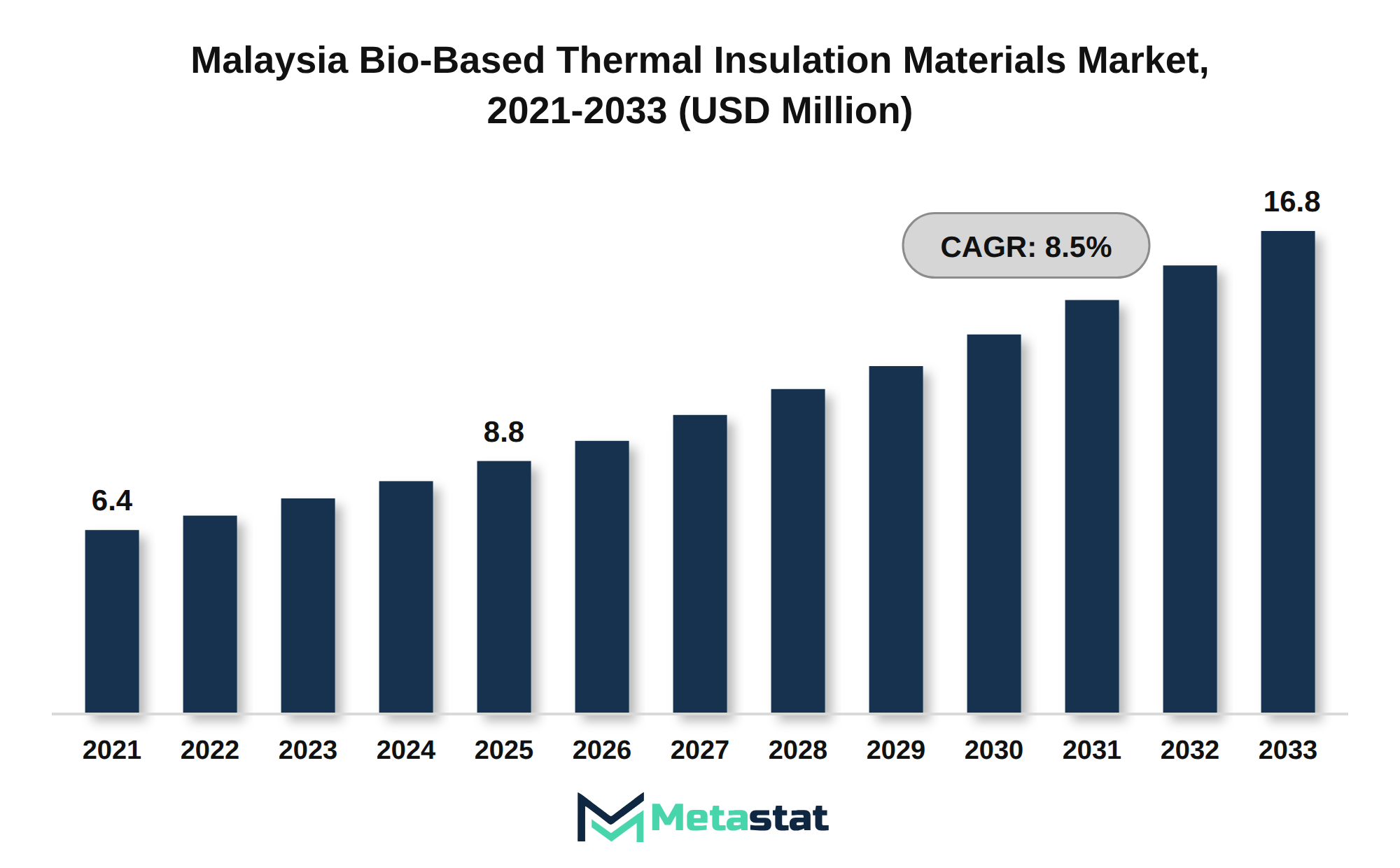
The Malaysia Bio-Based Thermal Insulation Materials market was valued at USD 8.8 million in 2025 and is projected to reach USD 16.8 million by 2033, growing at a CAGR of 8.5% over the forecast period.
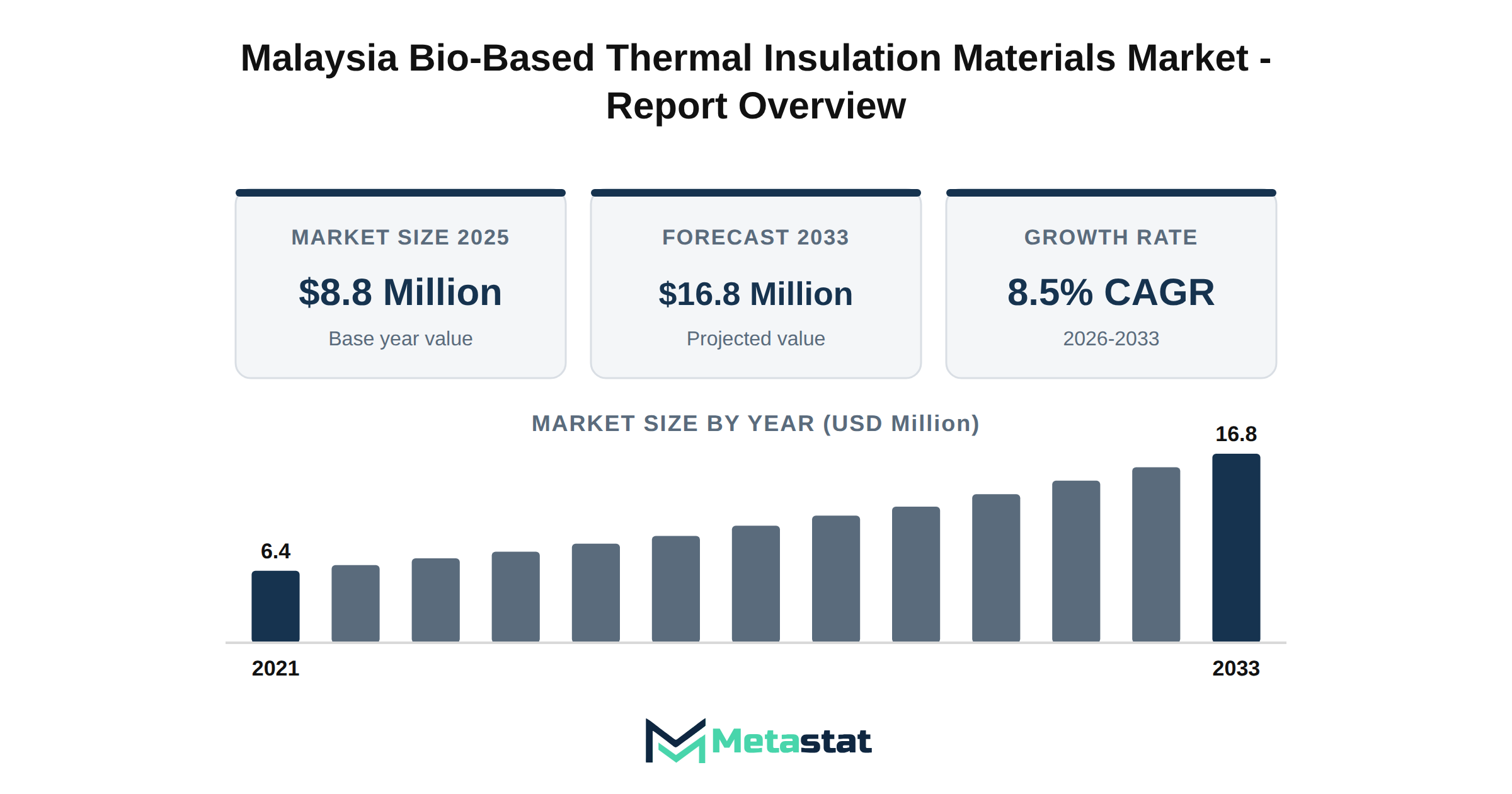
The Malaysia Bio-Based Thermal Insulation Materials market is projected to grow from USD 8.8 million in 2025 to USD 16.8 million by 2033, reflecting a compound annual growth rate (CAGR) of 8.5%. Historical data indicates a gradual increase in market size, starting from USD 6.4 million in 2021 and reaching USD 8.8 million by 2025.
Wood fibre insulation has emerged because a prominent segment within the market, contributing 26.6% of the overall value. This material type is anticipated to expand from USD 2.5 million in 2026 to USD 4.1 million by 2033, with a CAGR of 7.1%. The growing focus on sustainable construction practices and the increasing demand for eco-friendly materials drive this adoption.
The cellulose fibre insulation segment reflects robust development, with a projected value of USD 3.4 million by 2033. The strong performance of this segment is attributed to rising awareness of the thermal efficiency and environmental benefits offered by cellulose-based products.
Kenaf fibre insulation shows significant commercialisation potential, aligning with the broader trend of utilising locally sourced materials. This product type contributes to sustainability efforts while addressing the increasing demand for natural fibre insulation in Malaysian buildings.
Oil palm biomass serves because a viable feedstock for thermal insulation materials, leveraging Malaysia's extensive palm oil production. The integration of oil palm biomass into insulation solutions supports the circular economy and enhances the sustainability profile of the market.
The demand for natural fibre insulation in Malaysian buildings is increasing, driven by the need for energy-efficient solutions that comply with local climate conditions. The tropical environment necessitates materials that offer adequate moisture resistance and thermal performance.
Opportunities exist for the manufacturing of bio-based insulation boards, driven by local sourcing of raw materials and increasing investments in production capabilities. The market's growth is supported by advancements in manufacturing technologies that enhance the performance characteristics of insulation products.
The availability of biomass feedstock in Malaysia creates a favorable environment for the production of bio-based insulation materials. This local sourcing capability reduces reliance on imported materials, creating a more sustainable supply chain.
Developments in the bio-based insulation supply chain contribute to market growth. Enhanced collaboration among manufacturers, suppliers, and regulatory bodies strengthens the ecosystem, enabling the efficient distribution of high-quality insulation products.
The demand for bio-based thermal insulation materials in Malaysia reflects a growing awareness of sustainability and environmental responsibility. Increasing emphasis on energy efficiency in the construction sector drives the adoption of natural insulation options, particularly in residential buildings. The trend towards green building practices creates a favorable environment for bio-based products, aligning with national policies promoting sustainable development.
Wood fibre insulation has gained traction in Malaysia due to its excellent thermal performance and sustainability. Its composition, derived from renewable sources, appeals to environmentally conscious builders and homeowners. The market for wood fibre insulation is projected to expand, driven by demand for energy-efficient building solutions that meet modern construction standards.
Cellulose fibre insulation represents a significant segment of the market, benefiting from its recycled content and thermal properties. Growth in this area is supported by increasing awareness of the environmental impact of traditional insulation materials. The cellulose insulation segment is expected to see continued expansion owing to more manufacturers entering the market, providing diverse options for consumers.
Kenaf fibre insulation presents a unique opportunity for commercialisation in Malaysia due to its rapid growth and minimal resource requirements. This natural fibre offers comparable thermal properties to traditional insulation materials, making it an attractive alternative. The market's commitment to sustainable practices positions kenaf fibre insulation favorably within the evolving sector of bio-based materials.
Utilisation of oil palm biomass for insulation materials aligns with Malaysia's agricultural strengths. The availability of biomass from oil palm plantations offers a renewable resource for insulation manufacturing. This development supports the circular economy by repurposing agricultural waste, contributing to both economic growth and environmental sustainability.
The demand for natural fibre insulation in Malaysian buildings rises in tandem with the construction sector's shift towards sustainable practices. Builders increasingly favour insulation products that provide effective thermal performance while reducing environmental impact. This trend enhances the market for bio-based materials, aligning with global sustainability goals.
Manufacturing opportunities for bio-based insulation boards are expanding, driven by advancements in technology and production methods. Local manufacturers are exploring innovative processes to enhance the performance and affordability of insulation products. This evolution in manufacturing techniques supports the overall growth of the market by increasing accessibility for consumers.
Malaysia's rich biodiversity provides a robust supply of biomass feedstock for insulation products. The combination of agricultural by-products and natural fibres positions the country because a potential leader in the bio-based insulation sector. Ensuring a steady supply of feedstock is crucial for manufacturers aiming to scale operations and meet market demand.
Local sourcing of bio-based insulation materials strengthens the supply chain and reduces dependency on imported products. Malaysian manufacturers are increasingly collaborating with local farmers and suppliers to secure raw materials, supporting economic growth within the community. This strategy enhances the market's resilience and competitiveness, creating a sustainable ecosystem for bio-based insulation.
Development of the supply chain for bio-based insulation in Malaysia is essential to support market growth. Strategic partnerships between manufacturers, suppliers, and research institutions enhance product innovation and distribution efficiency. A well-established supply chain contributes to lowering costs and improving the availability of bio-based insulation materials for consumers.
Natural fibre insulation materials demonstrate effective thermal performance, rivaling traditional insulation options. Their ability to regulate temperature contributes to energy savings in buildings, further driving their adoption. This characteristic positions the market favorably within the broader context of energy-efficient construction practices.
Moisture resistance is a critical factor for insulation materials in tropical climates. Effective moisture management in building envelopes ensures durability and maintains thermal performance. Manufacturers in the market focus on developing solutions that meet these requirements, ensuring that bio-based insulation products perform reliably in Malaysia's climate.
Adhering to fire performance standards is vital for the acceptance of bio-based insulation materials. Compliance with these standards ensures safety in building construction, providing a competitive advantage to manufacturers. The market continues to evolve because new regulations emerge, encouraging the development of fire-resistant bio-based products.
Green building standards in Malaysia actively promote the use of bio-based insulation materials. Compliance with these standards not only enhances building performance but contributes to sustainability goals outlined by government initiatives. This alignment supports market growth by increasing the appeal of bio-based insulation to developers and builders.
Certification of natural fibre insulation products enhances consumer confidence and establishes quality benchmarks within the market. Manufacturers pursuing certification demonstrate commitment to sustainability and product performance, which aids in market penetration. This process builds trust among consumers, encouraging wider adoption of bio-based insulation materials.
Pricing strategies for bio-based insulation materials play a crucial role in market competitiveness. Manufacturers focus on optimizing production costs to offer affordable solutions without compromising quality. This approach enhances the attractiveness of bio-based products, driving adoption in both residential and commercial sectors.
The competition between imported and locally produced bio-based insulation materials influences pricing and availability in the market. Local production reduces transportation costs and supports the economy, providing a compelling advantage over imported options. This dynamic encourages consumers to choose domestic products, supporting the growth of the local bio-based insulation sector.
Residential demand for sustainable thermal insulation continues to rise, driven by consumer awareness of environmental issues. Homeowners increasingly seek insulation solutions that align with their values, prioritizing eco-friendly options. This trend contributes significantly to the overall growth of the market, creating opportunities for manufacturers to meet the evolving needs of consumers.
Adoption of bio-based insulation in commercial buildings reflects a growing commitment to sustainability. Businesses recognize the benefits of energy-efficient building practices, which reduce operational costs and enhance corporate responsibility. This shift in commercial construction significantly impacts the market, creating a robust demand for bio-based insulation solutions.
Prefabricated bio-based insulated panels offer a unique opportunity for manufacturers to streamline production and reduce waste. These panels provide efficient insulation solutions while minimizing installation time and costs. The growing interest in prefabricated construction techniques supports the expansion of the market, appealing to builders seeking innovative solutions.
Circular construction principles drive the adoption of natural insulation materials, emphasizing sustainability and resource efficiency. This approach encourages the use of renewable materials and waste minimization, aligning with global trends towards environmentally responsible building practices. The market benefits from this shift, enhancing the relevance of bio-based insulation materials.
Low-carbon building materials are increasingly prioritized in construction, supporting the growth of the bio-based insulation market. These materials align with climate goals by reducing greenhouse gas emissions throughout their lifecycle. The increasing emphasis on sustainability in building practices drives demand for bio-based insulation, supporting market expansion.
Competition among manufacturers and suppliers in the bio-based insulation market intensifies because more players enter the field. This competitive environment encourages innovation and drives down prices, resulting in enhanced options for consumers. The dynamic nature of the market stimulates growth, ensuring a diverse range of bio-based insulation products are available.
Commercialisation barriers for bio-based insulation products in Malaysia include regulatory challenges and market acceptance. Addressing these barriers requires collaboration among stakeholders, including manufacturers, government, and consumers. Overcoming these challenges facilitates market growth, supporting broader adoption of bio-based insulation materials.
Growth in the construction sector directly supports demand for bio-based insulation materials. Increasing construction activities, driven by urbanization and infrastructure development, create a favorable environment for insulation products. This trend positively influences the market, encouraging investment in sustainable building solutions.
Research and innovation play a vital role in advancing natural fibre insulation technologies in Malaysia. Ongoing studies focus on improving material performance and developing new applications. This commitment to innovation enhances the market's competitiveness, ensuring that bio-based insulation products meet evolving consumer needs.
Green procurement initiatives create opportunities for bio-based building materials in both public and private sectors. These initiatives encourage the use of sustainable products, aligning purchasing decisions with environmental goals. The market benefits from increased awareness and support for bio-based insulation materials, driving demand and adoption.
The future growth outlook for the Malaysia Bio-Based Thermal Insulation Materials market remains positive. Projections indicate substantial expansion driven by increasing awareness of sustainability and energy efficiency. Continued investment in research, technology, and local manufacturing will further enhance market potential, establishing Malaysia because a leader in the bio-based insulation sector.
The Malaysia Bio-Based Thermal Insulation Materials market experiences significant growth driven by macro-economic factors, particularly GDP growth and capital investment environments. An expanding economy enhances public and private spending power, encouraging investments in construction and renovation projects. This trend boosts the demand for thermal insulation solutions, owing to both residential and commercial sectors prioritizing energy efficiency and sustainability in building practices.
Enhanced infrastructure development and asset modernization contribute to the rising demand for bio-based thermal insulation materials. Investment in upgrading facilities aligns with the growing emphasis on sustainability and resource stewardship, prompting stakeholders to adopt more environmentally friendly materials. This shift toward eco-friendly solutions aligns with evolving consumer behaviors, where increased awareness of carbon footprints influences purchasing decisions, creating a favorable market environment.
Demographic shifts, including urbanization and changing lifestyles, heighten the need for effective thermal insulation. While urban populations grow, the demand for energy-efficient buildings escalates, driving the uptake of bio-based insulation solutions. The increasing focus on cost-efficiency initiatives within the construction industry supports the adoption of these materials, because they offer long-term savings on energy consumption, enhancing their attractiveness in the Malaysia Bio-Based Thermal Insulation Materials market.
The integration of advanced technologies significantly impacts the Malaysia Bio-Based Thermal Insulation Materials market. Automation and artificial intelligence improve manufacturing processes, resulting in increased efficiency and reduced production costs. Enhanced software solutions streamline supply chain operations, allowing manufacturers to respond more swiftly to market demands and optimize resource allocation. This technological adoption promotes a shift towards sustainable production practices, aligning with broader industry trends emphasizing eco-friendliness and resource stewardship.
The ongoing digital transformation influences consumer behavior and purchasing decisions. Consumers increasingly prioritize products that demonstrate environmental benefits and sustainable practices, creating a robust market for bio-based thermal insulation materials. Businesses that leverage technological advancements to enhance product quality and sustainability are likely to capture greater market share, driving growth within the sector. The culmination of these technological integrations supports the expansion of the Malaysia Bio-Based Thermal Insulation Materials market, driven by stakeholders adapting to evolving consumer preferences and operational capabilities.
Regulatory challenges pose significant barriers to the Malaysia Bio-Based Thermal Insulation Materials market. Compliance hurdles arise from stringent environmental regulations that require manufacturers to invest in advanced technologies for meeting emission standards. These regulatory measures result in increased operational costs, impacting pricing strategies and market accessibility.
Capital stagnation limits opportunities for investment in new projects and innovations. High capital investment requirements discourage smaller players from entering the market, leading to market fragmentation. Inflationary pressures create an unstable economic environment, complicating financial planning for stakeholders in the sector.
Supply chain disruptions affect the availability of raw materials and components necessary for production. Geopolitical instability adds uncertainty, impacting supplier relationships and collaboration across regions. This instability escalates costs and delays production timelines, adversely affecting the competitiveness of firms within the market.
Resource scarcity, particularly for sustainable inputs like hemp and wood fibers, leads to increased competition for these materials, driving prices higher. Rising costs of materials and labor contribute to overall operational expenses, limiting profitability for manufacturers.
Technological obsolescence presents a challenge for companies that rely on outdated equipment and processes. Firms that do not invest in upgrading technology face risks from more innovative competitors offering advanced solutions. Substitution risks emerge from alternative products that replace bio-based insulation materials, challenging market penetration.
Infrastructure gaps hinder the efficient distribution and installation of bio-based thermal insulation products. Connectivity deficits in rural areas slow down market adoption rates, while deployment bottlenecks create delays in project completions. Skilled labor deficiencies impact the quality of installations and customer satisfaction, leading to potential reputational risks for manufacturers.
Data security vulnerabilities and privacy concerns regarding the use of smart technologies in building materials deter customers from adopting innovative solutions. IP theft risks complicate the competitive landscape, because companies strive to protect their proprietary information.
Ultimately, slowing downstream demand and market saturation lead to a maturing industry cycle. These factors collectively create a challenging environment for the Malaysia Bio-Based Thermal Insulation Materials market, requiring companies to navigate complex dynamics to sustain growth and maintain market relevance.
Geopolitical fragmentation disrupts supply chains in the Malaysia Bio-Based Thermal Insulation Materials market. Trade deficits and tariff friction create cost pressures for manufacturers, impacting pricing strategies and profitability. Companies face challenges in managing feedstock and component volatility, which leads to inconsistent production levels and operational inefficiencies.
Technological disruptions arising from rapid advancements complicate research and development (R&D) integrations. Complexity in aligning new technologies with existing processes leads to increased compliance overhead and evolving legal liabilities. These factors pressure companies to invest significantly in skilled labor and talent retention, further straining operational budgets.
Environmental lifecycle footprints and decarbonization mandates drive the necessity for sustainable practices. Companies adapt to tightening regional regulatory standards while addressing the growing demand for sustainable materials. This adaptation often results in increased costs and implementation bottlenecks, affecting overall market growth.
Infrastructure gaps and retrofitting barriers limit market penetration, particularly in older buildings that require significant upgrades to meet modern insulation standards. These challenges hinder the expansion of the market, stemming from stakeholders prioritizing projects that demonstrate clear financial returns.
Intellectual property protection deficits expose companies to risks of innovation theft, stifling creative advancements in the sector. Cybersecurity risks and data vulnerabilities further challenge the stability of market operations, impacting firms' ability to compete effectively. In the context of changing downstream demands and market saturation, companies within the Malaysia Bio-Based Thermal Insulation Materials market navigate these multifaceted challenges to sustain growth and profitability.
The Malaysia Bio-Based Thermal Insulation Materials market is positioned for growth driven by emerging regional demands and increasing focus on sustainability. The shift towards eco-friendly building practices aligns with global trends towards greener construction methods. This increasing demand encourages manufacturers to innovate and diversify product offerings, targeting specific applications and expanding their market reach.
Infrastructure modernization plays a critical role in expanding market opportunities. Investments in building infrastructure, particularly in residential and commercial sectors, create a fertile ground for the adoption of advanced thermal insulation materials. Enhanced building energy efficiency standards further accelerate the need for superior insulation solutions that contribute to operational cost savings and environmental sustainability.
Geographical expansion remains a strategic focus, because manufacturers explore new markets within Southeast Asia. This diversification provides avenues for businesses to tap into emerging economies where construction activities are surging. Positioning products to meet diverse regional needs creates competitive advantages and greater market penetration.
The increasing integration of digital technologies transforms procurement processes, facilitating efficiency and transparency within the market. Digital transformation enhances the customer experience and provides valuable insights into buying behaviors, allowing suppliers to tailor their offerings accordingly. This evolution in commercial models promotes agility and responsiveness to market changes.
Strategic consolidation through partnerships and collaborations further boosts market competitiveness. Mergers and acquisitions among key players create synergies, enhance product portfolios, and consolidate resources. This trend streamlines operations, reduces costs, and strengthens market positions, ultimately benefiting consumers through improved product offerings.
Investing in niche applications enhances growth within the market. While end-users prioritize specific insulation needs, including soundproofing and energy efficiency, suppliers who develop targeted products stand to gain market share. This trend aligns with increasing consumer awareness of environmental impacts and the benefits of sustainable construction practices.
Adapting to evolving eco-friendly compliance standards positions companies to capture opportunities within the market. By aligning product development with sustainability imperatives, businesses demonstrate commitment to environmental stewardship while meeting consumer demands. This strategy not only addresses regulatory requirements but enhances brand reputation and consumer trust.
Overall, the combination of these emerging trends creates a robust framework for growth within the Malaysia Bio-Based Thermal Insulation Materials market. By leveraging these opportunities, stakeholders drive innovation, enhance competitive positioning, and contribute to the sustainable development of the construction industry.
The Malaysia Bio-Based Thermal Insulation Materials market is segmented based on Material Type, Product Form, Application, and Building Type.
Increasing awareness regarding energy efficiency and sustainability drives demand for bio-based thermal insulation materials in Malaysia. The Wood Fibre segment is valued at USD 2.5 million in 2026 and is projected to reach USD 4.1 million by 2033, at a CAGR of 7.1% during the forecast period. This growth stems from a rising preference for eco-friendly materials in construction and renovation projects. Adoption of wood fibre insulation aligns with stringent environmental regulations promoting sustainable building practices. The segment benefits from innovations in manufacturing processes that enhance product performance and expand application areas.
Wood fibre insulation serves various applications, including residential and commercial buildings, where energy efficiency and thermal performance are critical. The increasing emphasis on green building certifications strengthens the demand for this segment within the Malaysia Bio-Based Thermal Insulation Materials market. Evolving consumer preferences towards renewable materials create opportunities for manufacturers to innovate and diversify their product lines, catering to a wider range of applications and end-users.
Cellulose Fibre represents a significant portion of the Malaysia Bio-Based Thermal Insulation Materials market. This segment benefits from increasing awareness regarding sustainability and eco-friendly construction practices, driving demand across various applications. The growing need for energy-efficient materials in construction supports a shift toward cellulose-based solutions, aligning with global trends in green building initiatives.
The Cellulose Fibre segment is estimated to reach USD 3.4 million by 2033, at a CAGR of 7.5% during the forecast period. Anticipated growth stems from advancements in manufacturing technologies that enhance the performance and efficiency of cellulose materials. These enhancements enable improved insulation properties, catering to both residential and commercial building sectors.
Regulatory compliance regarding energy efficiency in buildings further drives the adoption of cellulose-based insulation products. Stricter standards push developers and builders toward more sustainable material choices, increasing demand for cellulose fibre. Evolving construction practices position cellulose fibre solutions because viable alternatives, supporting both performance and environmental objectives.
Investment in research and development facilitates the introduction of innovative cellulose-based products tailored to meet diverse market needs. By focusing on the development of high-performance insulation materials, stakeholders within this segment capitalize on strategic opportunities, enhancing their market presence in the Malaysia Bio-Based Thermal Insulation Materials market.
Market dynamics indicate a growing interest in the Hemp Fibre segment of the Malaysia Bio-Based Thermal Insulation Materials market. Increasing awareness regarding sustainable building practices drives demand for eco-friendly insulation solutions, particularly among environmentally conscious consumers and builders. The segment is projected to reach USD 1.3 million by 2033, highlighting its importance within the broader market.
Technological maturation in production techniques enhances the quality and affordability of hemp-based insulation products. Innovations in processing and application methods enable manufacturers to cater to diverse end-use requirements, further expanding market reach. Downstream applications across residential and commercial sectors increase the relevance of hemp fibre, aligning with global trends towards energy efficiency and sustainable construction.
Regulatory compliance standards significantly impact the adoption of hemp fibre insulation materials. Stricter building codes and sustainability certifications promote the use of bio-based materials, encouraging builders to explore alternatives to traditional insulation. The segment's growth reflects a strategic opportunity window, driven by shifting consumption patterns that favor renewable resources.
Market participants benefit from increased investment in hemp cultivation and processing infrastructure, which supports raw material sourcing and supply chain resilience. Enhanced awareness and initiatives targeting bio-based materials contribute to the segment's positive outlook, positioning it favorably within the market.
Flax fibre exhibits a unique combination of benefits, including lightweight properties and excellent thermal performance. This segment is projected to grow at a CAGR of 8.9% during the forecast period, influenced by rising consumer awareness regarding sustainable building materials. Demand for flax fibre is driven by its application in various insulation products, particularly in residential and commercial buildings.
End-use dynamics reflect a shift towards more environmentally friendly products, with builders and architects increasingly specifying bio-based materials. The market for this segment reflects growing adoption across multiple applications, including roof and wall insulation. Regulatory compliance standards support the transition to bio-based materials, encouraging manufacturers to innovate and upgrade their products.
Cost structures associated with flax fibre insulation remain competitive compared to traditional materials, supporting its market penetration. Increased investments in flax cultivation and processing capabilities enhance supply chain resilience, ensuring consistent quality and availability. This trend enhances the growth outlook for flax fibre within the Malaysia Bio-Based Thermal Insulation Materials market.
Interest in jute fibre thermal insulation stems from its eco-friendliness and biodegradability, aligning with the growing emphasis on sustainable building materials. The increasing focus on reducing carbon footprints among builders and consumers significantly influences this trend. Adoption of jute fibre finds traction particularly in residential and commercial construction sectors, where energy efficiency and environmental considerations drive decisions. This segment benefits from functional advantages including effective thermal insulation properties and moisture regulation, enhancing overall building performance.
Technological maturation enhances the quality and performance of jute fibre products. Innovations in processing techniques improve material characteristics, making it a viable alternative to synthetic insulation materials. The evolving product landscape encourages further exploration into jute-based solutions, highlighting potential in next-generation upgrades that meet higher standards of energy efficiency and sustainability. Regulatory compliance standards increasingly favor natural materials, positioning jute fibre favourably within the evolving framework of eco-conscious construction practices.
Cost structures associated with jute fibre production have shown resilience, allowing competitive pricing within the market. Factors influencing pricing dynamics include raw material sourcing and fluctuations in availability, which impact overall production costs. This sector faces challenges related to pricing volatility, driven by agricultural conditions affecting jute cultivation. Strategic opportunity windows arise from demand shifts towards bio-based insulation materials, compelling stakeholders to invest in research and capital development efforts to strengthen supply chain resilience and enhance production capabilities within the Malaysia Bio-Based Thermal Insulation Materials market.
Growing interest in sustainable building materials drives demand for Cork within the Malaysia Bio-Based Thermal Insulation Materials market. This segment benefits from increasing regulatory support for eco-friendly products, aligning with global trends towards sustainability. The unique properties of cork, including its natural thermal insulation capabilities and renewable nature, position it because a favorable choice for environmentally conscious consumers and builders.
Cork's application across various sectors, including residential and commercial buildings, reflects its versatility. Demand for high-performance insulation solutions encourages investments in product innovation and development. This focus on innovation supports advancements in cork-based insulation technologies, enhancing performance characteristics and broadening application scope.
Market players actively explore opportunities for cork through partnerships and collaborations that promote product awareness and accessibility. Strategic investments in production processes and supply chains strengthen the market's resilience. Companies in the cork segment focus on optimizing raw material sourcing to ensure steady availability while mitigating risks associated with supply chain disruptions.
Looking ahead, the Cork segment is poised for growth driven by its alignment with environmental factors and evolving consumer preferences. The Malaysia Bio-Based Thermal Insulation Materials market will likely see increased adoption of cork because stakeholders recognize the long-term benefits of incorporating such sustainable materials into construction practices.
Increasing focus on sustainability within the construction sector drives interest in sheep wool because a bio-based thermal insulation material. This natural product offers effective thermal performance, aligning with growing consumer preferences for environmentally friendly options. Enhanced insulation properties contribute to energy efficiency, which appeals to builders and architects pursuing greener building practices. The market benefits from shifts in consumer attitudes towards sustainable materials, influencing purchasing decisions across various applications.
Developments in product formulations further position sheep wool because a viable alternative to synthetic insulation solutions. Innovations in processing techniques enhance its performance characteristics, broadening its appeal to contractors and end-users. The Malaysia Bio-Based Thermal Insulation Materials market experiences increased competition because manufacturers seek to differentiate their products through improved quality and performance metrics.
Regulatory compliance regarding sustainability standards influences market dynamics significantly. Certifications related to eco-friendliness and low environmental impact enhance the marketability of sheep wool insulation. Builders and developers increasingly prioritize materials that meet stringent regulations, ensuring alignment with sustainability goals. This trend creates an environment conducive to the growth of the sheep wool segment within the broader Malaysia Bio-Based Thermal Insulation Materials market.
Growing interest in sustainable insulation solutions positions straw and grass fibre because a noteworthy component within the Malaysia Bio-Based Thermal Insulation Materials market. Environmental concerns and the drive for energy efficiency contribute to the demand for bio-based materials, including this sub-segment. Straw and grass fibres offer advantages like low thermal conductivity and renewable sourcing, which align with contemporary building standards focused on reducing carbon footprints.
The segment benefits from rising awareness regarding the ecological advantages of using agricultural by-products in insulation applications. The increasing focus on sustainability supports the adoption of bio-based materials across various sectors, including residential and commercial construction. End-use industries prioritize products that comply with sustainability certifications, enhancing the attractiveness of straw and grass fibre insulation solutions.
Innovations in processing technologies and product formulations enhance the performance characteristics of straw and grass fibre materials, making them competitive against traditional insulation options. These advancements lead to improved thermal performance and durability, further driving interest among consumers and builders. Construction practices evolve towards greater sustainability, leading to a shift in consumption patterns, with bio-based materials gaining traction.
Strategically, the segment aligns with broader trends in regulatory compliance, emphasizing the importance of eco-friendly materials in construction. This regulatory environment incentivizes manufacturers to develop and promote straw and grass fibre insulation products. The market for these materials features opportunities for strategic partnerships and investments aimed at expanding product lines and market reach.
Overall, the straw and grass fibre sub-segment reflects the growing momentum within the Malaysia Bio-Based Thermal Insulation Materials market, driven by technological advancements, evolving consumer preferences, and a robust regulatory framework supporting sustainable construction practices.
Interest in kenaf fibre arises from its eco-friendly properties and natural abundance in Malaysia. This material aligns with increasing regulatory standards promoting sustainable building practices, enhancing its appeal in the Malaysia Bio-Based Thermal Insulation Materials market. Ongoing developments in processing technologies improve the performance characteristics of kenaf fibre, resulting in its growing adoption across various applications.
Demand for kenaf fibre insulation reflects a broader shift towards renewable materials within the construction sector. This segment benefits from expanding market opportunities, driven by heightened consumer awareness of energy efficiency and sustainability. The market's evolution underscores the strategic importance of embracing such materials to satisfy evolving building standards and consumer preferences.
The segment focusing on Coir, Rice Husk, Oil-Palm Fibre, and Mycelium reflects growing interest in sustainable construction materials within the Malaysia Bio-Based Thermal Insulation Materials market. Heightened awareness of environmental concerns drives increased adoption of these natural fibres, promoting a shift towards eco-friendly insulation solutions.
Technological maturation in processing these materials enhances their viability for thermal insulation applications. Innovations in product evolution, including improved binding techniques and performance characteristics, support the segment's expansion by meeting stringent regulatory compliance standards and certifications.
Downstream applications in residential and commercial buildings demonstrate demand for sustainable alternatives. Evolving end-use dynamics highlight the importance of cost-effective solutions that align with sustainability goals, resulting in consumption shifts towards bio-based options.
Strategic opportunity windows arise from increasing capital investments in green technologies, driving resilience within the supply chain. Raw material sourcing from local agricultural waste contributes to reduced logistics vulnerabilities and supports the segment's growth potential.
Potential substitution risks from synthetic materials prompt exploration of disruptive alternatives that appeal to environmentally conscious consumers. The overall environment of the Malaysia Bio-Based Thermal Insulation Materials market reflects a commitment to sustainability, with the segment positioning itself well to capitalize on these trends.
Valued at USD 2.6 million in 2026, the Rigid Insulation Boards segment is projected to reach USD 4.2 million by 2033, at a CAGR of 7.2% during the forecast period. Demand for rigid insulation boards aligns with the construction industry's focus on energy efficiency and sustainable building practices. The shift towards eco-friendly materials in the Malaysia Bio-Based Thermal Insulation Materials market reflects consumer preferences for products that minimize environmental impact. Adoption of rigid insulation boards in construction projects supports enhanced thermal performance, leading to reduced energy costs and improved building comfort. Regulatory compliance with energy efficiency standards further drives the growth of this segment, because builders and contractors seek sustainable solutions to meet stringent guidelines. Innovations in raw material sourcing and product development enhance the offerings available in the market, providing builders with a variety of options that meet both performance and sustainability criteria. The ongoing evolution of rigid insulation boards contributes to their expanding role in various applications, from residential to commercial structures, reinforcing their significance in the Malaysia Bio-Based Thermal Insulation Materials market.
Demand for Semi-Rigid Insulation Boards and Batts in the Malaysia Bio-Based Thermal Insulation Materials market stems from a shift towards energy-efficient building practices. This segment benefits from increasing regulations focused on sustainability in construction, creating a favorable environment for bio-based products. Growth factors include advancements in manufacturing technologies that enhance product performance and reduce costs. Consumers prioritize environmentally friendly options, propelling demand for insulation solutions that align with these values.
In the coming years, the segment is projected to reach USD 3.2 million by 2033, with a CAGR of 7.6% during the forecast period. Adoption of semi-rigid insulation boards is driven by their effectiveness in both residential and commercial applications. These materials offer versatility, addressing various insulation needs while complying with evolving regulatory standards. Increased investment in green building initiatives supports this segment's expansion.
Demand for Flexible Insulation Mats and Rolls reflects the growing trend towards sustainable construction practices. This segment is projected to reach USD 2.8 million by 2033. The increasing adoption of bio-based materials in construction aligns with global sustainability goals, driving interest from builders and developers. Enhanced thermal performance and ease of installation contribute to the segment's appeal among contractors. Growth in this segment benefits from advancements in raw material sourcing, ensuring the availability of eco-friendly options. Regulatory compliance with building standards further supports market expansion, creating opportunities for manufacturers to innovate and adapt. Strategic investments focus on improving product offerings while maintaining competitive pricing, which is essential for capturing market share in the Malaysia Bio-Based Thermal Insulation Materials market.
Market acceptance of Loose-Fill Insulation within the Malaysia Bio-Based Thermal Insulation Materials market reflects changing consumer preferences for sustainable construction solutions. This segment aligns with the growing focus on energy-efficient materials, appealing to environmentally conscious builders and homeowners. The projected growth at a CAGR of 7.3% during the forecast period highlights significant adoption potential driven by increasing awareness of the benefits of bio-based materials.
Technological maturation supports the segment's expansion, with advancements in production methods enhancing performance characteristics and cost-effectiveness. Innovations in raw material sourcing, particularly from renewable resources, strengthen sustainability claims and appeal to stakeholders prioritizing environmental impact. The segment's role in diverse applications, including residential and commercial insulation, highlights its versatility and potential for growth.
End-use dynamics indicate a shift toward Loose-Fill Insulation because a preferred option owing to its ease of installation and adaptability in various building types. Regulatory compliance standards focused on energy efficiency further fuel demand, compelling builders to consider bio-based alternatives. The market's trajectory reflects a positive growth outlook, supported by consumer shifts toward sustainable building practices.
Growing awareness regarding the benefits of effective insulation materials contributes to the interest in Blown-In Insulation within the Malaysia Bio-Based Thermal Insulation Materials market. Sustainable building practices encourage the adoption of this insulation type, resulting in enhanced energy efficiency and reduced environmental impact. Demand for such materials aligns with broader industry shifts toward eco-friendly solutions, pushing manufacturers to innovate and offer high-performance products.
Technological advancements lead to product evolution, enhancing the performance characteristics of Blown-In Insulation. These innovations facilitate improved installation processes and cost efficiencies. Regulatory compliance standards encourage the development of environmentally preferred materials, further increasing demand within the segment. Consequently, consumers prioritize insulation types that contribute to energy conservation and sustainability.
Shifts in consumption patterns reflect the growing preference for sustainable insulation solutions in various applications, including residential and commercial construction. The focus on energy efficiency influences purchasing decisions, with consumers seeking materials that provide long-term cost savings through reduced energy consumption. While the market evolves, strategic opportunity windows for Blown-In Insulation are expected to expand, driven by increased investment in sustainable infrastructure and building practices.
Growing emphasis on energy efficiency within the construction sector stimulates interest in prefabricated bio-based insulated panels. These panels offer significant advantages, including reduced installation time and improved thermal performance. Adoption of these panels aligns with trends towards sustainable building practices, particularly in residential and commercial developments, enhancing their appeal to builders and architects focused on eco-friendly construction methods.
The segment benefits from advancements in manufacturing technology, allowing for enhanced design and customization options. Innovations in material composition lead to improved performance characteristics, which attract a diverse range of applications. Regulatory compliance standards favoring sustainable materials further encourage adoption among industry stakeholders, contributing to overall market growth.
Cost structures associated with prefabricated panels tend to be competitive, despite fluctuations in raw material prices. This segment faces minimal substitution risks, because bio-based materials provide unique attributes that synthetic alternatives often lack. Strategic opportunities arise through partnerships with construction firms and architects, creating avenues for increased market penetration. Overall, the prefabricated bio-based insulated panels segment significantly influences the evolution of the Malaysia Bio-Based Thermal Insulation Materials market.
In the context of the Malaysia Bio-Based Thermal Insulation Materials market, the Roof Insulation segment stands out for its projected growth and evolving demand. This segment is valued at USD 2.3 million in 2026 and is projected to reach USD 3.7 million by 2033, at a CAGR of 7% during the forecast period. The increasing emphasis on energy efficiency in buildings has heightened the importance of effective roof insulation solutions, motivating manufacturers to innovate and expand product offerings.
Consumers exhibit a growing preference for bio-based materials due to their environmental benefits, which enhances market acceptance. Technological maturation in production processes has led to improved product performance and cost-effectiveness, enabling wider adoption across various building types. Compliance with regulatory standards further boosts demand, driven by policies that favor sustainable construction practices. The combination of evolving consumer preferences and supportive regulations creates a favorable landscape for growth in the roof insulation market segment.
Operational efficiencies achieved through advancements in raw material sourcing contribute positively to cost structures. The segment's growth trajectory reflects not only increased demand but strategic investments aimed at addressing market gaps. Innovations in product development continue to shape consumer choices and influence purchasing decisions, ultimately driving the market.
Increasing emphasis on energy efficiency within the construction sector enhances the relevance of External Wall and Façade Insulation. This segment is projected to reach USD 3.3 million by 2033, at a CAGR of 9.2% during the forecast period. The drive toward sustainable building practices influences architects and builders to select bio-based insulation materials, leading to heightened adoption rates. Technological advancements facilitate product evolution, improving the performance characteristics of bio-based materials. Regulatory compliance standards mandating eco-friendly construction practices further support market expansion. End-use dynamics, particularly in residential and commercial buildings, demonstrate a significant shift toward incorporating sustainable insulation solutions, driving consistent demand within the Malaysia Bio-Based Thermal Insulation Materials market.
Increasing implementation of innovative insulation solutions influences demand for Internal Wall and Partition Insulation in the Malaysia Bio-Based Thermal Insulation Materials market. This segment is driven by rising construction activities and an emphasis on energy-efficient designs. Regulatory compliance standards regarding energy conservation push stakeholders toward adopting sustainable materials, enhancing the segment's growth. Improved manufacturing technologies and material advancements contribute to product evolution, making bio-based insulation appealing to builders and architects.
The Internal Wall and Partition Insulation segment is expected to reach USD 2.5 million by 2033. This growth reflects shifting consumption patterns favoring eco-friendly materials within the construction industry. The increasing preference for sustainable building practices significantly impacts the segment's expansion. Competitive pricing and product performance enhance market opportunities, allowing manufacturers to invest in research and development for next-generation insulation solutions.
Growing demand for effective insulation in construction drives interest in Floor and Slab Insulation within the Malaysia Bio-Based Thermal Insulation Materials market. This segment is projected to grow at a CAGR of 7.8% during the forecast period. Factors influencing this growth include a shift towards sustainable building practices and increasing regulations promoting energy efficiency. Adoption of bio-based thermal insulation materials aligns with the need for eco-friendly solutions in residential and commercial buildings, enhancing energy conservation efforts. The expansion of this segment reflects evolving consumer preferences for materials that reduce environmental impact while maintaining performance standards.
Market participants respond to rising demand by innovating product offerings and improving performance characteristics. Enhanced technological development in bio-based insulation materials fuels competition, leading to improved efficiency and effectiveness in insulation applications. While the market evolves, manufacturers focus on meeting stringent regulatory compliance standards, which shapes product development and market dynamics. Floor and Slab Insulation serves a crucial role in achieving energy efficiency goals, positively influencing overall market growth.
Increasing demand for effective insulation materials drives the adoption of ceiling and soffit insulation solutions within the Malaysia Bio-Based Thermal Insulation Materials market. The focus on energy efficiency in residential and commercial buildings prompts architects and builders to seek high-performance insulation products. This segment benefits from evolving construction practices that prioritize sustainable building materials, leading to heightened interest in bio-based options.
Regulatory compliance standards regarding energy conservation and emissions reduction influence purchasing decisions, compelling manufacturers to innovate and offer advanced insulation solutions. Technological maturation in insulation materials enhances performance characteristics, allowing ceiling and soffit insulation products to meet specific energy efficiency requirements. The integration of next-generation upgrades positions manufacturers to capture emerging opportunities in eco-conscious markets.
Downstream applications reflect the versatile use of ceiling and soffit insulation across various building types. Enhanced performance attributes cater to a diverse range of end-use dynamics, addressing both residential and commercial needs effectively. Consumption shifts towards environmentally friendly materials prompt stakeholders to reassess insulation strategies, driving demand for bio-based alternatives.
The evolving landscape of material sourcing and supply chain resilience presents strategic opportunities for players in the market. Raw material sourcing challenges, coupled with rising costs, necessitate innovative approaches to maintain competitive pricing. Strategic investments in research and development enable manufacturers to navigate substitution risks and respond proactively to disruptive alternatives.
Future prospects for the ceiling and soffit insulation segment within the Malaysia Bio-Based Thermal Insulation Materials market align with broader industry trends. Continued capital investment enhances product evolution and market penetration, positioning this sub-segment for growth in the coming years.
The demand for cavity insulation arises from a growing emphasis on energy efficiency and sustainability in the construction sector. This segment addresses the increasing need for thermal performance in residential and commercial buildings, contributing significantly to overall energy savings and comfort. Technological maturation in bio-based materials enhances performance characteristics, allowing for improved thermal resistance and adaptability to various applications.
Advancements in material science enable the integration of next-generation upgrades within cavity insulation products. This evolution supports the development of insulation solutions that meet stringent regulatory compliance standards and certifications, reflecting changing industry expectations and consumer preferences. Adoption of these products aligns with broader sustainability goals, promoting a shift toward eco-friendly construction practices.
Cost structures remain a critical factor influencing adoption, particularly in the context of raw material sourcing and supply chain resilience. Fluctuations in pricing and margin pressures prompt manufacturers to explore alternative materials or production techniques, ensuring competitive positioning within the market. Strategic opportunity windows arise for innovators focused on enhancing product performance while minimizing environmental impacts.
Consumption shifts toward bio-based insulation solutions occur due to stakeholders prioritizing sustainability in building projects. This trend significantly influences end-use dynamics, driving demand within the Malaysia Bio-Based Thermal Insulation Materials market. Continuous investment in research and development facilitates the introduction of disruptive alternatives, positioning cavity insulation because a viable option for environmentally conscious consumers.
Innovation in insulation technology drives interest in Prefabricated Building Envelope Insulation within the Malaysia Bio-Based Thermal Insulation Materials market. Enhanced energy efficiency standards and environmental sustainability concerns lead to increased adoption of bio-based materials, aligning with regulatory compliance objectives. This segment benefits from advancements in material properties, improving thermal performance while reducing environmental impact. Downstream applications in residential, commercial, and industrial buildings contribute to evolving market dynamics, reflecting shifts in consumer preferences toward sustainable construction practices. Ongoing investment in research and development promotes product evolution, addressing rising demand for efficient and eco-friendly insulation solutions. While market players explore strategic opportunities, focusing on supply chain resilience becomes critical, ensuring reliable access to raw materials and mitigating disruption risks. The growth trajectory of the market highlights the importance of adapting to changing consumption patterns and embracing next-generation upgrades in insulation technology.
Valued at USD 2.5 million in 2026, the Residential Buildings segment is projected to reach USD 4 million by 2033, at a CAGR of 7.1% during the forecast period. Demand drivers for bio-based thermal insulation materials in residential buildings stem from heightened awareness of sustainability and energy efficiency among homeowners and builders. Increasing regulatory standards focusing on energy performance in buildings further support this trend, compelling industry stakeholders to seek effective insulation solutions.
Adoption of bio-based thermal insulation materials is influenced by the growing preference for environmentally friendly alternatives to traditional insulation options. Consumers prioritize materials that reduce carbon footprints while enhancing thermal performance. The market experiences segment expansion catalysts through innovations in material technology, enabling the development of more efficient and cost-effective insulation products tailored for residential applications.
Next-generation upgrades in insulation technology contribute to the evolution of product offerings in the market. Advancements in material performance and manufacturing processes enhance the appeal of bio-based solutions. Downstream applications, including roof insulation and external wall insulation, demonstrate significant growth, driven by increasing demand for energy-efficient building designs.
Cost structures within the Residential Buildings segment reflect a balance between premium pricing for advanced materials and the cost-saving benefits associated with energy efficiency. Pricing volatility in raw material sourcing presents challenges; however, the long-term benefits of bio-based insulation solutions continue to attract investment and interest from builders and homeowners. The Malaysia Bio-Based Thermal Insulation Materials market aligns with ongoing efforts to create sustainable living environments, reinforcing its significance in the construction sector.
Growing investments in energy-efficient construction techniques drive the demand for bio-based thermal insulation materials within office and retail buildings. Regulatory frameworks increasingly emphasize sustainable building practices, influencing construction firms to adopt insulation solutions that enhance thermal performance and energy efficiency. The Malaysia Bio-Based Thermal Insulation Materials market benefits from these trends, evidenced by growth in the Office and Retail Buildings segment, projected to reach USD 2.8 million by 2033, with a CAGR of 8.9% during the forecast period.
Product evolution within the market highlights a shift toward materials that offer superior thermal resistance and environmental benefits. Manufacturers focus on developing innovative products that align with sustainability goals, appealing to environmentally conscious consumers and businesses. This evolution, coupled with competitive pricing strategies, positions bio-based thermal insulation materials because a viable alternative to traditional insulation options.
Adoption within the office and retail buildings sector reflects a broader trend toward sustainable architecture, where bio-based materials meet both functional and aesthetic requirements. Enhanced performance characteristics of these materials, combined with positive life cycle assessments, facilitate acceptance among architects and builders. The market continues to expand, driven by a collective push for greener building solutions and increasing consumer demand for enhanced indoor environmental quality.
Demand for bio-based thermal insulation in hospitality buildings stems from a heightened focus on sustainability and energy efficiency. Investments in eco-friendly construction practices drive builders to seek materials that align with environmental standards. The hospitality sector experiences increasing pressure to reduce carbon footprints, leading to greater adoption of bio-based insulation solutions. With a projected market valuation of USD 1.7 million by 2033, this segment captures attention for its potential in creating energy-efficient environments in hotels and related establishments.
Technological advancements play a crucial role in enhancing the performance of insulation products used in hospitality buildings. Innovations in material properties improve thermal performance while ensuring compliance with building regulations. Enhanced insulation solutions contribute to energy savings, thereby reducing operational costs for hospitality operators. While the Malaysia Bio-Based Thermal Insulation Materials market evolves, strategic opportunities arise for manufacturers focusing on next-generation upgrades, responding to the demands of this dynamic sector.
Healthcare and Educational Buildings represent a significant segment within the Malaysia Bio-Based Thermal Insulation Materials market. The segment is projected to grow at a CAGR of 7.7% during the forecast period, driven by increasing investments in infrastructure and a growing focus on sustainability in building practices. Schools and healthcare facilities increasingly seek environmentally friendly insulation solutions that enhance energy efficiency while providing a healthier indoor environment.
Regulatory compliance regarding building codes and energy performance standards influences the adoption of bio-based thermal insulation materials in this segment. These materials align with green building certifications, appealing to developers and architects pursuing sustainable construction goals. Rising awareness of the importance of indoor air quality in educational and healthcare settings further drives demand, because stakeholders prioritize the use of non-toxic and eco-friendly insulation options.
Pricing pressures and cost structures reflect the balance between sourcing sustainable materials and meeting budget constraints. However, technological advancements in bio-based insulation processes facilitate competitive pricing, making these products more accessible. The market for Healthcare and Educational Buildings benefits from strategic opportunity windows tied to public and private funding for green building initiatives.
The Healthcare and Educational Buildings segment within the Malaysia Bio-Based Thermal Insulation Materials market shows growth potential driven by sustainability trends, regulatory requirements, and increasing awareness of health impacts associated with building materials.
Demand for bio-based thermal insulation within industrial and manufacturing buildings stems from a growing focus on sustainability and eco-friendly construction practices. Regulations regarding energy efficiency in buildings require compliance with stricter standards, often driving the adoption of advanced insulation solutions. The pursuit of higher energy performance levels compels manufacturers to explore innovative materials that align with both regulatory expectations and market demands.
Technological advancements in material science contribute to the evolution of bio-based thermal insulation products, enhancing their performance and application versatility. Investments in next-generation insulation technologies facilitate the development of products that meet industry-specific requirements while supporting operational efficiencies. This technological maturation creates a competitive environment, encouraging suppliers to innovate and expand their offerings to meet diverse customer needs.
Consumption shifts towards environmentally responsible products influence the market landscape significantly. Manufacturers increasingly favor insulation materials derived from renewable resources, responding to consumer preferences and corporate sustainability initiatives. This change reflects broader trends within the Malaysia Bio-Based Thermal Insulation Materials market, where eco-conscious decision-making plays a significant role in shaping product selections.
Strategic opportunity windows arise from the ongoing demand for enhanced insulation performance in industrial settings. Bio-based thermal insulation materials provide effective solutions for energy conservation, contributing to reduced operational costs and improved building performance. This positions the market favorably for capital investment, because stakeholders recognize the long-term benefits of adopting sustainable construction practices.
Demand for bio-based thermal insulation materials in warehouses and logistics facilities derives from the growing focus on sustainability and operational efficiency. The need for improved energy performance in these structures drives adoption across sectors emphasizing environmental responsibility. Innovative insulation solutions enhance temperature regulation and energy savings, directly benefiting facility management and operational costs. Technological advancements in insulation materials support the trend towards energy-efficient design in warehouses, prompting investment in next-generation upgrades.
Regulatory compliance standards related to energy efficiency increasingly influence insulation choices in warehouses and logistics facilities. Stricter environmental regulations encourage the selection of sustainable materials, aligning with consumer expectations for greener practices. The market for Malaysia Bio-Based Thermal Insulation Materials reflects this shift, driven by businesses seeking to meet compliance requirements and enhance their sustainability profiles.
Challenges related to raw material sourcing and pricing volatility impact the market dynamics for bio-based insulation materials. Fluctuations in raw material availability and costs strain budgets, pushing stakeholders to explore alternative sourcing strategies. Strategic opportunity windows emerge for suppliers who offer reliable, cost-effective solutions to meet the specific needs of warehouses and logistics facilities, contributing to supply chain resilience.
Overall, the segment for warehouses and logistics facilities within the Malaysia Bio-Based Thermal Insulation Materials market presents significant potential for growth driven by environmental considerations, regulatory pressures, and technological innovations. This sector reflects broader trends in construction and facility management, emphasizing the relevance of sustainable insulation solutions.
Increased focus on sustainable construction practices drives demand for bio-based thermal insulation in institutional and public buildings. These structures prioritize energy efficiency, leading to a higher requirement for effective insulation materials that align with environmental standards. Regulatory compliance and certifications significantly influence the selection of insulation solutions, impacting material choice and production processes. The Malaysia Bio-Based Thermal Insulation Materials market sees adoption trends emerging from various sectors, emphasizing insulation systems that enhance building performance while meeting sustainability targets.
Emerging technologies play a critical role in evolving product offerings within this segment. Innovations that cater to specific performance criteria, including thermal resistance and moisture control, enhance the appeal of bio-based materials. Consumption shifts towards eco-friendly options are evident, with stakeholders increasingly recognizing the economic and environmental benefits of these products. Cost structures and pricing dynamics remain essential considerations, driven by fluctuations in raw material availability and production costs impacting overall market viability.
Strategic opportunities arise from growing awareness of the benefits associated with bio-based insulation in public infrastructure projects. Investment in next-generation upgrades further supports market growth, facilitating the introduction of advanced insulation products. Supply chain resilience becomes crucial in ensuring consistent availability of high-quality materials, mitigating risks related to sourcing and logistics. By addressing these factors, stakeholders position themselves effectively within the evolving landscape of the Malaysia Bio-Based Thermal Insulation Materials market.
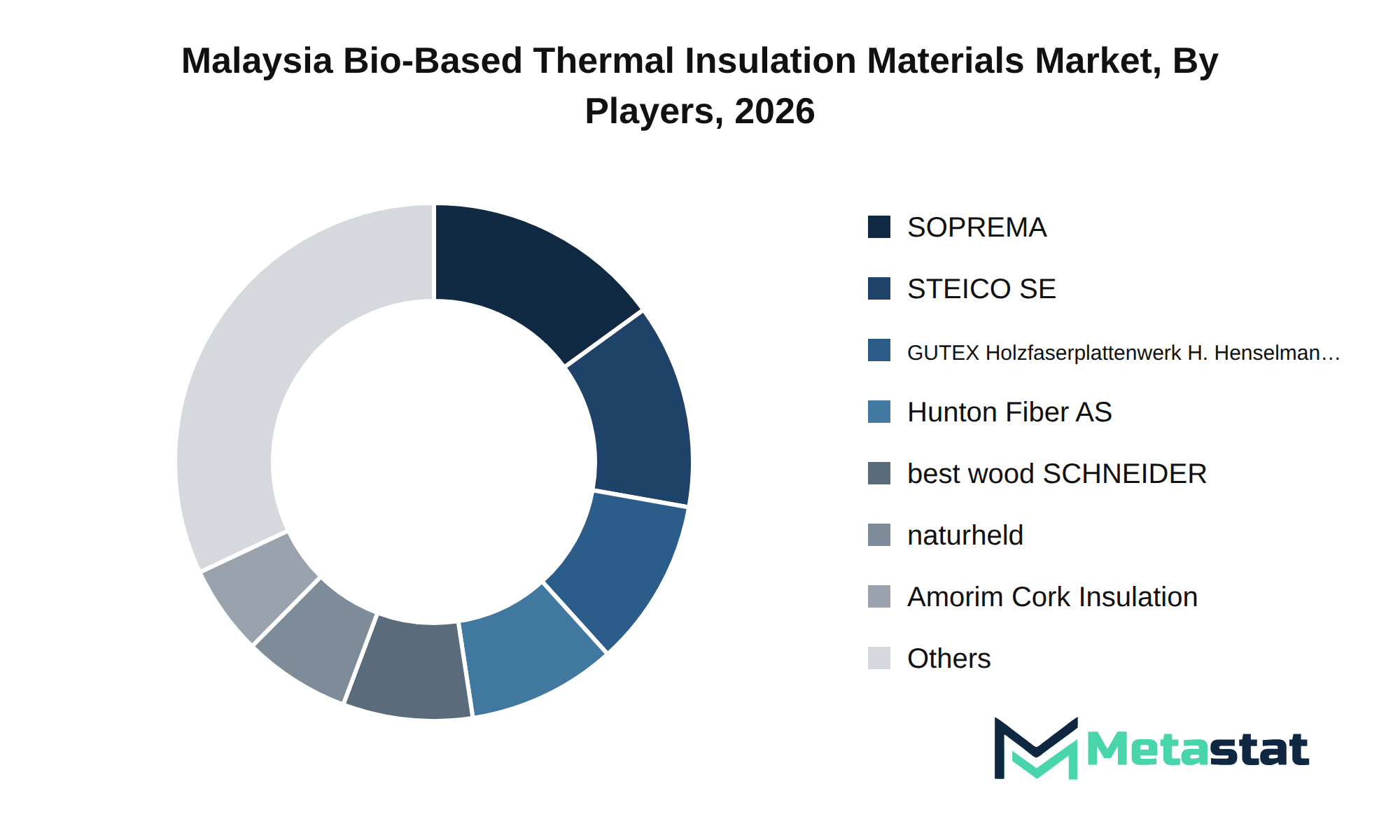
The Malaysia Bio-Based Thermal Insulation Materials market features diverse players engaged in various strategic behaviors including mergers and acquisitions, joint ventures, and partnerships. Companies including STEICO SE and SOPREMA Group actively pursue collaborations to enhance their product offerings and expand market reach. This competitive environment encourages firms to focus on product differentiation, emphasizing sustainable materials and innovative applications to capture consumer interest.
Research and development play a significant role, with firms investing in proprietary technologies to establish competitive advantages. Companies including Hunton Fiber AS and naturheld GmbH leverage their R&D capabilities to develop advanced insulation solutions, reinforcing their positions in the market. Pricing architectures vary, with several players adopting aggressive pricing strategies to penetrate the market, while others maintain premium pricing to reflect their unique value propositions.
Barriers to entry arise from established brand equity and intellectual property portfolios. New entrants encounter challenges in overcoming these barriers, highlighting the competitive nature of the market. While firms emphasize customer retention strategies, increasing switching costs for consumers further strengthen the market positions of established players. Overall, the competitive outlook for the Malaysia Bio-Based Thermal Insulation Materials market remains strong, with numerous growth vectors emerging through innovation and collaboration.
Market size is forecast to rise from USD 8.8 million in 2025 to over USD 16.8 million by 2033. The base case anticipates growth at a compound annual growth rate of 8.5%, reflecting a strong demand trajectory driven by increased awareness of sustainability and energy efficiency in building materials.
In a bullish scenario, accelerated adoption of bio-based materials aligns with heightened regulatory support, creating a strong incentive for manufacturers and consumers. This shift could further increase demand for Malaysia Bio-Based Thermal Insulation Materials, enhancing market visibility and acceptance across various sectors.
Conversely, the bearish outlook highlights potential challenges including economic downturns or stricter compliance measures, which could constrain the growth of the market. Disruptions in supply chains or geopolitical tensions impede production capabilities, thereby affecting the overall demand landscape.
Strategic investments in next-generation technologies and targeted research and development will play an important role in shaping future opportunities. By addressing unmet enterprise needs and capitalizing on high-growth pockets, stakeholders strengthen their positions, influenced by leaders in the evolving market.
The report strategically identifies and profiles the key market players and analyses their core competencies in each sub-segment of the Bio-Based Thermal Insulation Materials market.
Report Attributes | Details |
Study Period | 2021-2033 |
Base Year | 2025 |
Estimated Year | 2026 |
Forecast Period | 2026-2033 |
Historical Period | 2021-2025 |
Growth Rate | CAGR 8.5% from 2026 to 2033 |
Revenue Unit | USD million |
Segmentation | By Material Type, Product Form, Application, Building Type, and Region |
Find answers to common questions about this report
The Malaysia Bio-Based Thermal Insulation Materials market size was valued at USD 8.8 million in 2025, according to the Metastat Insights study.
The Bio-Based Thermal Insulation Materials market is projected to grow at a CAGR of 8.5% during the forecast period from 2026 to 2033.
The Wood Fibre segment leads the Malaysia Bio-Based Thermal Insulation Materials market, with a value of USD 2.5 million in 2026. This segment represents the largest share compared to other material types.
The key drivers for the Malaysia Bio-Based Thermal Insulation Materials market include GDP growth and increased capital investment, which enhance spending power and boost demand for energy-efficient solutions. demographic shifts and heightened consumer awareness of sustainability further fuel the adoption of bio-based insulation materials in both residential and commercial sectors.
Regulatory challenges, including stringent environmental regulations, increase operational costs for manufacturers, impacting pricing strategies and market accessibility. inflationary pressures and supply chain disruptions hinder the availability of raw materials, further complicating financial planning and market competitiveness. These factors collectively restrain growth in the Malaysia Bio-Based Thermal Insulation Materials market.
Significant factors favoring product adoption in the Malaysia Bio-Based Thermal Insulation Materials market include growing public and private investments in construction, an emphasis on energy efficiency and sustainability, and technological advancements that enhance manufacturing processes. demographic shifts and increasing consumer awareness regarding environmental impacts further drive demand for these eco-friendly materials.
The Bio-Based Thermal Insulation Materials market is estimated to reach a valuation of USD 16.8 million by 2033.
Key players in the Malaysia Bio-Based Thermal Insulation Materials market include STEICO SE, GUTEX Holzfaserplattenwerk H. Henselmann GmbH + Co. KG, SOPREMA Group, Hunton Fiber AS, Amorim Cork Insulation, S.A., and EcoCocon s.r.o.
The External Wall and Façade Insulation segment exhibits the highest growth, with a projected CAGR of 9.2% through 2033.
The Wood Fibre segment is expected to reach USD 4.1 million by 2033, reflecting a CAGR of 7.1%.
The analysts below cover Chemicals and Materials research at Metastat Insights.
LEAD ANALYST
Utkarsh Khirodkar is a Lead Market Research Analyst at MetaStat Insight, specializing in market intelligence, technology sector assessments, and competitive strategy.

INDUSTRY CONSULTANT - CHEMICALS & ADVANCED MATERIALS
Chemicals and Materials · Machinery & Equipment · Packaging
Amit Gadhekar Consultant for Chemicals and Materials at MetaStat Insight, directing sector-specific intelligence, research, and strategic consulting across global chemical and processing markets.
Evaluating calorific value requirements and air permit compliance across municipal waste facilities requires localized data. Metastat Insight structured their analysis around operational throughput capacity and feedstock composition variations in Latin America and Eastern Europe. Their competitive mapping of sorting equipment vendors helped clarify technology differences between optical separators and heavy media systems. The study provided an objective baseline during our capital expenditure reviews.
Decarbonizing industrial thermal processes hinges on refrigerant regulations and compressor efficiency limits. Metastat Insights delivered a thorough market analysis that evaluated natural refrigerants like CO2 and hydrocarbons against synthetic low-GWP alternatives. The breakdown of utility incentives and grid capacity constraints across key European manufacturing hubs offered valuable perspective. The follow-up conversation with their sector analysts addressed our specific questions on mechanical vapor recompression systems efficiently.
Assessing 200mm wafer transition schedules and substrate supply bottlenecks requires precise technical intelligence. MetaStat Insight supplied an actionable breakdown comparing planar and trench MOSFET architectures across automotive and industrial drive markets. The regional capacity estimates for Asia-Pacific foundries helped clarify lead-time uncertainties during our strategic planning session. When we needed additional clarification on high-purity raw material sourcing, their analyst team responded with helpful context within twenty-four hours.
Explore related market intelligence reports worth reading alongside this one.