
LEAD ANALYST
Utkarsh Khirodkar is a Lead Market Research Analyst at MetaStat Insight, specializing in market intelligence, technology sector assessments, and competitive strategy.

Global Green Ammonia Synthesis Catalyst Market Size, Share, By Catalyst Type (Iron-Based Catalysts, Ruthenium-Based Catalysts, Nickel-Based Catalysts, Cobalt-Molybdenum Catalysts, Electride-Supported Catalysts and Others), By Synthesis Technology (Conventional Haber-Bosch Synthesis, Low-Temperature/Low-Pressure Catalytic Synthesis, Electrochemical Ammonia Synthesis, Plasma-Assisted Ammonia Synthesis, Photocatalytic/Photothermal Ammonia Synthesis and Other Emerging Catalytic Routes), By Production Scale (Large-Scale Industrial Plants, Medium-Scale Ammonia Plants, Modular and Distributed Plants and Pilot and Demonstration Plants), By Application (Fertilizer Production, Energy Storage and Hydrogen Carrier, Maritime Fuel, Power Generation, Industrial Feedstock and Others), Industry Analysis, Growth, Trends, and Forecast, 2026-2033
Report ID
MSI-5212
Published
September, 2026
Pages
282 Pages
Format
Historical
Base year
Forecast
Forecast period
Report Details
Choose Your License
Global Green Ammonia Synthesis Catalyst Market
The global Green Ammonia Synthesis Catalyst market was valued at USD 994.2 million in 2025 and is projected to reach USD 1,572 million by 2033, growing at a CAGR of 5.9% over the forecast period.
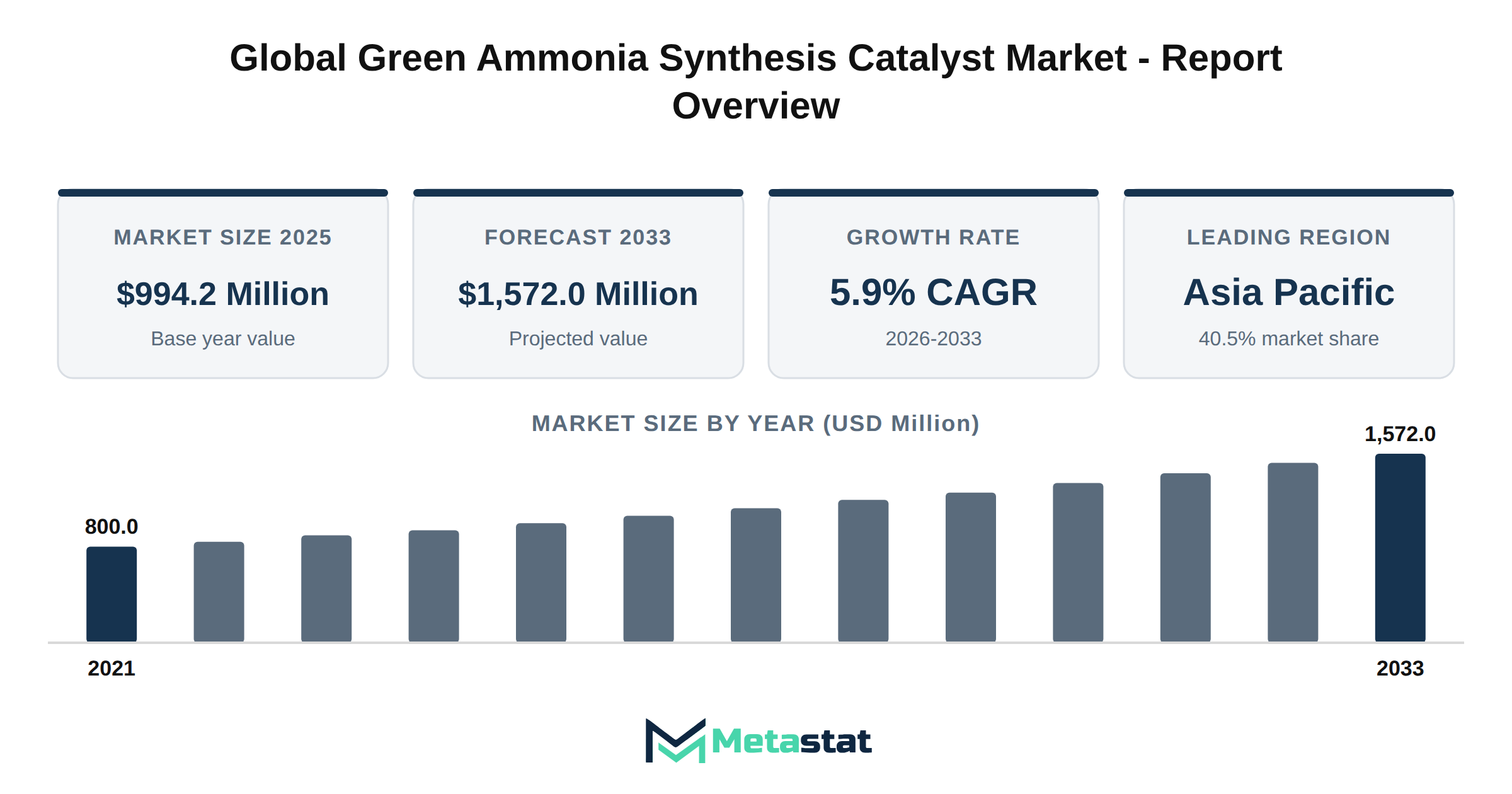
The Green Ammonia Synthesis Catalyst market reached a value of USD 994.2 million in 2025, demonstrating an increase from USD 800 million in 2021. Forecasts indicate growth to USD 1,572 million by 2033, translating to a compound annual growth rate (CAGR) of 5.9%. This upward trajectory reflects the rising demand for sustainable ammonia production methods, driven by the need for decarbonization across various sectors.
Emerging catalyst technologies play a crucial role in low-carbon ammonia production, addressing challenges associated with conventional synthesis methods. Innovations in catalyst development focus on enhancing efficiency and reducing costs, which are significant factors for manufacturers and investors in the market. Research and development activities continue to advance, emphasizing the creation of next-generation catalysts that align with green energy initiatives.
Renewable energy integration directly influences the demand for catalysts in green ammonia synthesis. The shift towards sustainable energy sources increases the necessity for efficient ammonia production processes, which in turn drives catalyst demand within the market. Industries seek alignment with global sustainability targets, and the adoption of green ammonia technologies is expected to rise.
Investment activity in green ammonia catalyst technologies has surged, reflecting growing interest from various stakeholders. Commercialization efforts focus on developing scalable solutions that meet emerging market needs. Strategic partnerships and collaborations among industry players enhance capacity expansion and support the development of innovative catalyst solutions.
Regulatory policies and decarbonization targets significantly impact the adoption of green ammonia catalysts. Governments worldwide implement frameworks aimed at reducing carbon emissions, creating a favorable environment for market growth. These regulations encourage companies to invest in cleaner technologies, increasing the demand for advanced catalysts.
The competitive landscape of the Green Ammonia Synthesis Catalyst market includes a range of manufacturers, each striving to differentiate their offerings. Key players focus on developing proprietary technologies and enhancing product performance to capture market share. Ongoing advancements in catalyst performance, efficiency, and cost trends shape competitive dynamics and influence purchasing decisions among end-users.
The emergence of innovative catalyst technologies significantly influences low-carbon ammonia production. These advancements focus on improving efficiency and reducing costs, which enhances the appeal of green ammonia for various applications. Increased research and development efforts aim to create catalysts that operate effectively under sustainable conditions, thereby attracting attention from industries focused on decarbonization.
Integration of renewable energy sources plays an essential role in driving demand for catalysts used in green ammonia synthesis. The shift towards cleaner energy solutions necessitates the development of technologies that work in conjunction with renewable energy systems, creating opportunities for innovative catalyst solutions tailored to specific energy sources.
Investment activity in green ammonia catalyst technologies has surged, drawing interest from both private and public sectors. Financial backing supports commercialization efforts, allowing manufacturers to scale production and enhance technology development. This trend reflects a growing recognition of the potential economic benefits associated with the transition to green ammonia production.
Regulatory policies and decarbonization targets serve because critical drivers for the adoption of green ammonia catalysts. Governments globally implement regulations that encourage sustainable practices, positioning green ammonia because a viable alternative to traditional ammonia production methods. This regulatory environment promotes innovation and investment, further propelling market growth.
The competitive landscape of the Green Ammonia Synthesis Catalyst market features numerous manufacturers actively engaged in developing and refining catalyst technologies. Companies focus on enhancing product performance and establishing strategic partnerships to leverage synergies in research and development, ultimately improving their market positions.
Strategic partnerships and collaborations among key players enhance capacity expansion efforts in green ammonia catalysts. These alliances facilitate knowledge sharing and resource allocation, enabling faster development and deployment of innovative catalyst solutions that meet market demands.
Developments in the catalyst supply chain and raw material availability influence the market dynamics. Access to essential materials impacts production capabilities, while disruptions in supply chains create challenges for manufacturers. Ensuring a stable supply of high-quality raw materials is crucial for sustaining growth in the market.
End-use demand for green ammonia spans various sectors, including fertilizers, shipping, and power generation. Each application area presents unique challenges and opportunities, driving the need for tailored catalyst solutions that meet specific industry requirements. While industries transition towards greener practices, the relevance of green ammonia increases.
Regional opportunities within the Green Ammonia Synthesis Catalyst market vary significantly. Areas with strong investment in renewable energy infrastructure and supportive regulatory frameworks exhibit higher growth potential. Manufacturers targeting these regions capitalize on favorable market conditions and increasing demand for sustainable solutions.
Trends related to catalyst performance, efficiency, and cost continue to shape the market of green ammonia synthesis. Ongoing advancements focus on optimizing catalyst formulations to enhance productivity while minimizing environmental impact. These performance improvements promote wider adoption of green ammonia technologies across industries.
The exploration of next-generation catalysts and emerging ammonia synthesis pathways highlights the market's commitment to innovation. Ongoing research seeks to identify alternative methods for ammonia production that align with sustainability goals, promoting a diverse array of solutions within the industry.
Commercialization challenges and adoption barriers remain significant for green ammonia catalysts. Factors including high initial costs and technical limitations hinder widespread acceptance among potential users. Addressing these challenges is essential for realizing the full potential of green ammonia technologies.
Opportunities for manufacturers and investors in the green ammonia synthesis catalyst market are vast. While demand for sustainable solutions increases, stakeholders explore avenues for growth and expansion, positioning themselves advantageously in a dynamic market.
Future growth prospects for the Green Ammonia Synthesis Catalyst market hinge on regulatory compliance, technological advancements, and investment in sustainable practices. A robust framework addressing market fragmentation, supply chain efficiency, and value chain optimization will facilitate a smoother transition towards greener ammonia production.
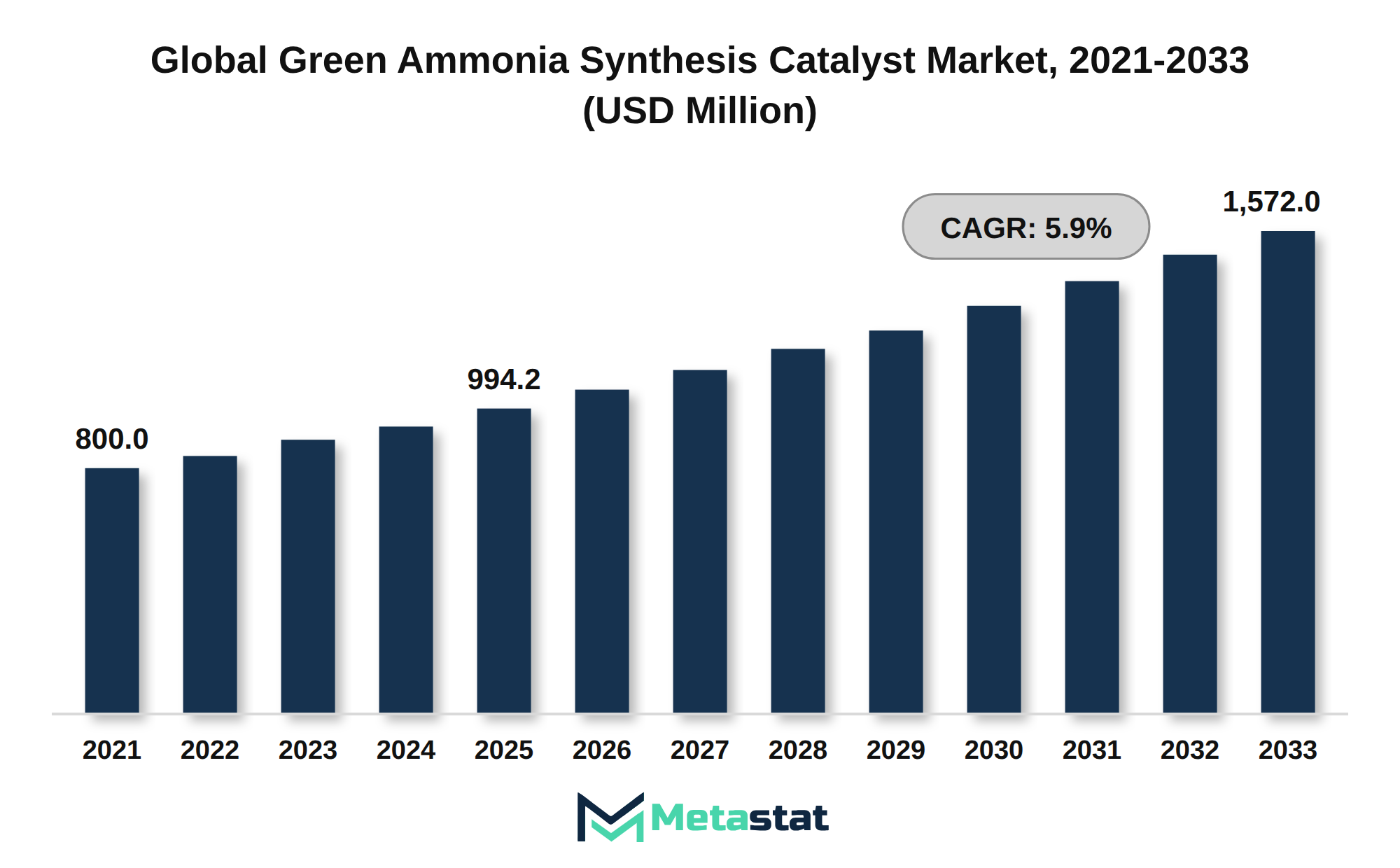
The Green Ammonia Synthesis Catalyst market experiences growth driven by increasing emission regulations and heightened environmental awareness. The demand for sustainable practices in ammonia production aligns with the global push to reduce carbon footprints. Industries prioritizing sustainability seek innovative solutions, directly impacting their operational strategies. Enhanced environmental governance encourages investment in green technologies, facilitating the adoption of advanced catalysts designed to minimize emissions during ammonia synthesis.
Investment in infrastructure development and modernization supports the transition to greener ammonia production. Companies adopt low-carbon technologies to meet stringent emission targets, influencing procurement decisions in the market. The shift towards sustainable practices promotes the use of green ammonia, particularly in sectors including fertilizer production and energy storage. This trend leads to increased investments in research and development for efficient synthesis catalysts, creating a growth trajectory in the market.
The Green Ammonia Synthesis Catalyst market experiences expansion fueled by significant investment in green technology across multiple sectors. Increased awareness of environmental sustainability aligns with corporate strategies focused on reducing carbon emissions. Investors channel resources into innovative technologies that enhance efficiency and reduce production costs, creating a favorable capital investment environment.
The push for green ammonia production supports various industries, including agriculture and energy. Organizations prioritize sustainable practices, resulting in rising demand for efficient catalysts that optimize ammonia synthesis processes. This trend contributes to the overall growth of the market, reflecting a shift in consumer behavior toward environmentally friendly solutions.
Technological advancements in automation and digital transformation enhance operational productivity within the industry. Companies implement software solutions to streamline processes and improve output. These innovations drive competitiveness and position firms to meet growing demand effectively, further advancing the market trajectory.
Investment in infrastructure development and asset modernization ensures that facilities accommodate modern production techniques. Upgrading physical and digital capabilities enhances overall operational efficiency, reducing overhead costs. Companies within the Green Ammonia Synthesis Catalyst market maximize profitability while responding to the increasing need for sustainable solutions.
High capital investment requirements significantly impact the Green Ammonia Synthesis Catalyst market. The need for advanced technologies and infrastructure demands substantial financial resources, which deter potential entrants and limit expansion opportunities for existing players. The development of innovative catalysts and synthesis technologies requires extensive research and development funding, along with the establishment of large-scale production facilities. This financial burden restricts market accessibility, particularly for smaller companies with limited budgets.
Escalating operating costs further constrain market participation. Increased expenses related to raw materials, labor, and regulatory compliance add pressure to operational budgets, affecting profitability. Companies prioritize cost control, which impedes investments in new catalyst development and technology advancements necessary for maintaining competitive advantages in the market.
Supply chain disruptions compound these challenges by creating unpredictability in sourcing essential materials and components. Geopolitical instability exacerbates this issue, leading to volatility in pricing and availability of critical resources. These disruptions delay project timelines and impact overall market growth, complicating strategic planning for stakeholders in the Green Ammonia Synthesis Catalyst market.
The Green Ammonia Synthesis Catalyst market faces significant challenges stemming from geopolitical fragmentation and trade deficits. These factors contribute to tariff friction, complicating the import and export of catalysts and raw materials essential for ammonia production. Fluctuating trade relations impact supply chain stability, leading to increased operational costs for manufacturers and limiting access to critical components.
Technological disruptions present additional hurdles for companies in the market. Rapid advancements in catalyst technology demand continuous investment in research and development, straining financial resources. Complex integrations of new technologies into existing production systems create further challenges, especially for smaller players lacking the necessary capital or expertise to adapt quickly.
Compliance overhead and evolving legal liabilities associated with tightening global regulatory standards add to operating costs. Organizations navigating these complexities allocate resources to maintain compliance, detracting from their focus on innovation and market expansion.
Pricing compression and margin pressures affect the profitability of players in the Green Ammonia Synthesis Catalyst market. Rising input costs and volatility in feedstock prices force manufacturers to reassess pricing strategies. This scenario intensifies competition and leads to reduced investment in product development and technological enhancements.
Workforce skill gaps and talent retention pressures compound the challenges within the market. The transition toward advanced technologies requires skilled labor proficient in new methodologies. Difficulty in attracting and retaining this talent hinders productivity and delays project timelines, limiting overall growth potential.
Environmental lifecycle footprints and sustainability demands increasingly influence market dynamics. Stricter decarbonization mandates necessitate significant shifts in production practices, often requiring costly retrofitting of existing facilities. Infrastructure gaps further complicate these transitions, leading to implementation bottlenecks that stall the adoption of new technologies.
The Green Ammonia Synthesis Catalyst market experiences significant opportunities driven by advancements in synthesis technologies. Innovations including low-temperature/low-pressure catalytic synthesis and electrochemical ammonia synthesis are enhancing production processes, improving efficiency, and reducing energy consumption. These technological breakthroughs attract investments from various sectors, driving growth and facilitating adoption across industries.
Increased emphasis on sustainability mandates the integration of eco-friendly practices, propelling the demand for green ammonia solutions. Industries focused on energy transition recognize ammonia's potential because a hydrogen carrier and a renewable energy source. This recognition leads to expanded applications in sectors like fertilizers, energy storage, and maritime fuel, broadening the overall market reach.
The geographical expansion of production facilities aligns with the rising demand for localized supply chains. Emerging regions are modernizing their infrastructure to support green ammonia production, enabling firms to capitalize on regional market demands. This localization strategy reduces import dependence, ensuring timely access to resources and enhancing competitive advantage.
Strategic partnerships between technology providers and industry players facilitate cross-industry mergers that optimize resource utilization and drive innovation. These collaborations improve product integration, further diversifying market offerings and appealing to a broader customer base.
Shifts in buying behaviors towards digital procurement methods reshape sourcing strategies, influencing how organizations acquire catalysts. This digital transformation streamlines purchasing processes, increases transparency, and improves efficiency in supply chain management. The evolving market dynamics contribute to a heightened focus on operational yield maximization, allowing firms to achieve higher returns on investment.
The Global Green Ammonia Synthesis Catalyst market is segmented based on Catalyst Type, Synthesis Technology, Production Scale, and Application.
Valued at USD 537.9 million in 2026, the Iron-Based Catalysts segment is projected to reach USD 723.1 million by 2033, at a CAGR of 4.3% during the forecast period. Increasing demand for sustainable agricultural practices drives utilization of iron-based catalysts in fertilizer production, aligning with global trends towards environmentally friendly solutions. Technological advancements enhance the efficiency of iron-based catalysts, enabling wider market adoption across various industrial applications.
The rise in energy storage and hydrogen carrier applications significantly influences the growth of this segment. While industries shift towards low-carbon technologies, iron-based catalysts emerge because viable solutions for electrochemical ammonia synthesis, supporting effective energy transition strategies. Regulatory compliance standards further drive innovation within the segment, ensuring that products meet stringent environmental requirements while maintaining performance and cost-effectiveness.
Pricing volatility associated with raw materials, including iron, presents challenges for producers, impacting overall margins. However, the strategic opportunity window for investment in research and development remains robust, allowing manufacturers to innovate and enhance product offerings. This focus on next-generation upgrades strengthens competitive positioning within the Green Ammonia Synthesis Catalyst market.
Growth in the Ruthenium-Based Catalysts segment aligns with increasing demand for efficient ammonia production technologies. Industries emphasizing sustainability and cost-effectiveness drive this demand, particularly in fertilizer production and energy storage applications. Technological advancements in catalyst design enhance performance and reduce operational costs, supporting broader adoption across various sectors.
Investment in research and development for next-generation catalysts creates significant market expansion opportunities. The segment is projected to reach USD 393 million by 2033, registering a CAGR of 9.8% during the forecast period. Regulatory compliance regarding emissions and sustainability further increases interest in ruthenium-based solutions, promoting a transition toward cleaner ammonia synthesis methods.
Challenges related to raw material sourcing and pricing volatility affect the segment's dynamics. Ongoing innovation and strategic collaborations among key players in the Green Ammonia Synthesis Catalyst market strengthen resilience and adaptation. This segment's growth trajectory reflects a strong response to emerging market requirements and evolving consumer preferences.
Growth in the Nickel-Based Catalysts segment is driven by increasing demand for efficient ammonia synthesis processes within the Green Ammonia Synthesis Catalyst market. These catalysts enable lower energy consumption and higher conversion rates, appealing to industries focused on sustainability and cost efficiency. Strong performance in various applications, including fertilizer production, fuels the segment's expansion, because end-users prioritize environmentally friendly solutions.
Technological maturation enhances the efficacy of nickel-based catalysts. Continuous research and development efforts result in advancements that improve selectivity and stability, reinforcing market confidence. Strategic investments in next-generation upgrades attract manufacturers, further propelling the segment's growth trajectory.
By 2033, the Nickel-Based Catalysts segment is expected to reach USD 141.5 million. This growth reflects a robust landscape positioned to cater to evolving industry standards and regulatory compliance. Demand shifts toward greener technologies enhance the attractiveness of this segment, supported by an increasing focus on sustainable ammonia production methods.
Cobalt-Molybdenum Catalysts represent a distinct segment within the Green Ammonia Synthesis Catalyst market, projected to grow at a CAGR of 4.3% during the forecast period. Key demand drivers include the rising need for efficient ammonia production methods that align with sustainability goals. Technological advancements in catalyst formulations enhance performance and broaden application potential, particularly in fertilizer production and energy storage. Increased investments in research and development further support this segment's expansion, facilitating next-generation upgrades and innovations.
The application of Cobalt-Molybdenum Catalysts in medium-scale ammonia plants is essential in meeting the growing demand for fertilizers and clean energy solutions. Market players focus on enhancing catalyst efficiency, which leads to reduced operational costs and improved yield rates. Regulatory compliance standards promote the adoption of cleaner technologies, influencing the competitive dynamics within the market. This momentum positions the Cobalt-Molybdenum Catalysts segment because a significant contributor to the overall growth of the Green Ammonia Synthesis Catalyst market.
Growing environmental concerns and the pursuit of sustainable energy sources drive interest in Electride-Supported Catalysts within the Green Ammonia Synthesis Catalyst market. These catalysts demonstrate advantages in efficiency and low energy consumption, appealing to industries aiming to enhance their green credentials. Adoption in diverse applications, including fertilizer production and energy storage, highlights the versatility of Electride-Supported Catalysts.
Technological maturation accelerates the development of Electride-Supported Catalysts, enabling next-generation upgrades that improve performance and reduce operational costs. The market experiences an increasing focus on product evolution, with innovations targeting higher efficiency and reduced environmental impact. Regulatory compliance standards further support the transition towards greener alternatives, encouraging companies to invest in this segment.
Supply chain resilience in sourcing raw materials plays a critical role in the development of Electride-Supported Catalysts. Key players prioritize stability in sourcing to mitigate risks, ensuring a steady supply of necessary materials. The threat of substitution from alternative technologies and materials influences strategic decisions, with companies exploring unique formulations to maintain a competitive edge.
Capital investment outlook in the Electride-Supported Catalysts segment reflects a growing recognition of its potential within the Green Ammonia Synthesis Catalyst market. Emerging opportunities, driven by shifting consumption patterns towards sustainable solutions, highlight the segment's relevance in future energy strategies. This trend positions Electride-Supported Catalysts because a crucial component in the ongoing transition to green technologies.
The development of advanced catalysts, including those in the Others (Nitride-Based, Molybdenum-Based, Rare-Earth-Based) sub-segment, influences the Green Ammonia Synthesis Catalyst market. These materials offer potential improvements in efficiency and effectiveness for ammonia synthesis, attracting increased interest from various industries, particularly those focused on sustainable practices.
Technological maturation within this sub-segment enhances adoption rates, driven by an emphasis on innovative catalytic pathways that promote reduced energy consumption and increased yield. The demand for greener production methods aligns with the global initiative for carbon neutrality, encouraging manufacturers to explore diverse catalyst options that meet regulatory compliance standards.
Segments operating within the Green Ammonia Synthesis Catalyst market increasingly recognize the advantages of these alternative catalysts, which lead to lower production costs and improved margin profiles. The strategic opportunity window for the Others segment reflects the ongoing investment in research and development, driven by businesses seeking to capitalize on advancements that promise to improve existing operational frameworks.
Ongoing consumption shifts towards eco-friendly solutions highlight the importance of adaptable catalyst designs. The relationship between raw material sourcing, technological obsolescence, and the emergence of disruptive alternatives shapes the market, enhancing resilience within supply chains. Stakeholders in the industry are likely to experience a heightened focus on collaboration and innovation, optimizing their positions to navigate the evolving dynamics of the Green Ammonia Synthesis Catalyst market.
Valued at USD 664.4 million in 2026, the Conventional Haber-Bosch Synthesis segment is projected to reach USD 858.3 million by 2033, reflecting a CAGR of 3.7% during the forecast period. This established synthesis technology remains essential in the production of ammonia, driven by its proven efficiency and reliability. The adoption of this method is supported by robust demand for ammonia in fertilizer production and the growing need for sustainable practices in agriculture. Regulatory compliance standards focusing on reducing carbon emissions enhance the appeal of the Conventional Haber-Bosch Synthesis, pushing manufacturers to optimize their processes.
Technological maturation within the sector encourages continuous improvements, leading to next-generation upgrades that increase efficiency and lower operating costs. Innovations in catalysts and process configurations strengthen the segment's performance, promoting greater operational flexibility and adaptability. The integration of advanced monitoring and control systems ensures precise management of ammonia synthesis, maximizing output while minimizing energy consumption. End-use dynamics, particularly in the fertilizer industry, drive significant consumption shifts toward more sustainable ammonia production methods.
Price volatility in raw materials, including natural gas, influences cost structures, impacting margins across the market. Manufacturers face margin pressures, prompting a need for strategic investments in alternative feedstocks and energy sources. Supply chain resilience remains a critical consideration, with companies exploring diverse sourcing strategies to mitigate risks associated with market fluctuations and geopolitical tensions. The pursuit of disruptive alternatives emphasizes the importance of continuous innovation within the Conventional Haber-Bosch Synthesis segment, positioning it to adapt to evolving market demands within the Green Ammonia Synthesis Catalyst market.
Advancements in low-temperature and low-pressure catalytic synthesis shape the trajectory of the Green Ammonia Synthesis Catalyst market. This synthesis technology provides a more energy-efficient approach to ammonia production, appealing to manufacturers seeking to lower operational costs while meeting stringent environmental regulations. This segment is projected to reach USD 220.1 million by 2033, with a CAGR of 9.9% during the forecast period. Increased adoption of sustainable practices drives demand for this technology, driven by organizations prioritizing reducing carbon emissions.
Regulatory compliance standards play a crucial role in accelerating the adoption of low-temperature and low-pressure catalytic synthesis. Stricter emissions regulations push companies toward advanced synthesis methods that mitigate environmental impact. End-users in the fertilizer production and energy storage sectors actively seek innovative solutions, enhancing market growth. Ongoing research and development efforts focus on optimizing catalyst performance to improve yield and efficiency.
Cost structures associated with traditional ammonia synthesis methods, particularly the Haber-Bosch process, contribute to the appeal of low-temperature and low-pressure catalytic synthesis. Manufacturers benefit from lower energy consumption and simplified equipment requirements. Pricing volatility in natural gas, a key feedstock for conventional methods, motivates stakeholders to explore alternative synthesis technologies. This strategic opportunity window allows market participants to enhance their competitive positioning and expand their share within the Green Ammonia Synthesis Catalyst market.
Electrochemical Ammonia Synthesis represents a growing segment in the Green Ammonia Synthesis Catalyst market, projecting a value of USD 251.5 million by 2033. Increased emphasis on sustainable ammonia production processes drives demand for electrochemical methods, supported by lower energy consumption compared to conventional approaches. This technology aligns with the shift toward renewable energy integration, appealing to industries focused on reducing carbon footprints.
Technological maturation supports segment growth, with advancements in electrochemical cells improving efficiency and performance. Successful development of next-generation catalysts enhances the viability of this synthesis route, attracting investments and encouraging innovation. Regulatory compliance with environmental standards reinforces adoption, further incentivizing industries toward greener practices.
Electrochemical Ammonia Synthesis serves various downstream applications, particularly in energy storage and hydrogen carriers. The increasing need for sustainable energy solutions enhances the segment's commercial appeal, positioning it favorably within the market. While end-use dynamics evolve, shifts toward cleaner alternatives positively influence consumption patterns and demand trajectories.
Overall, the Electrochemical Ammonia Synthesis segment stands poised for growth, reflecting significant opportunities and strategic investments in the Green Ammonia Synthesis Catalyst market.
Increasing interest in sustainable energy production drives the adoption of Plasma-Assisted Ammonia Synthesis within the Green Ammonia Synthesis Catalyst market. This method offers significant efficiency improvements compared to traditional processes, aligning with global trends toward decarbonization. The projected growth at a CAGR of 7.7% during the forecast period highlights a shift in preference among manufacturers seeking innovative synthesis technologies.
Technological advancements contribute to the segment's attractiveness, facilitating enhancements in both energy efficiency and production rates. Manufacturers recognize the potential of plasma-assisted methods to produce ammonia with lower greenhouse gas emissions. Regulatory pressures regarding emissions and a growing emphasis on clean technology encourage investments in this area, enhancing market dynamics.
Downstream applications, particularly in energy storage and hydrogen carrier technologies, present strategic opportunity windows for Plasma-Assisted Ammonia Synthesis. The ability to create ammonia efficiently supports sectors focused on renewable energy integration, further driving demand. This segment's evolution reflects the ongoing transformation within the market, with adaptability and innovation defining competitive strategies.
While the market develops, the focus on cost structures and pricing stability becomes critical. Producers face pressures from raw material sourcing and the need for resilient supply chains. Addressing these challenges will shape the segment's growth trajectory and overall market competitiveness.
Emerging technologies in ammonia synthesis have shifted focus towards innovative processes, including Photocatalytic/Photothermal Ammonia Synthesis. This method leverages sunlight to drive reactions, enhancing efficiency and sustainability in ammonia production. Increased awareness of environmental impacts and the demand for cleaner energy solutions drive interest in this approach among various sectors, including agriculture and energy. The green ammonia synthesis catalyst market benefits from technological advancements that improve the scalability and reliability of photocatalytic methods. Investment in research and development accelerates the evolution of these technologies, enabling broader adoption across industries seeking greener alternatives.
Regulatory frameworks promoting sustainable practices create favorable conditions for the integration of Photocatalytic/Photothermal Ammonia Synthesis in existing processes. Compliance with stringent environmental standards encourages manufacturers to explore innovative solutions that align with global sustainability goals. The transition to greener practices entails navigating cost structures that vary with technological implementation and operational requirements. Strategic partnerships among leading players in the green ammonia synthesis catalyst market facilitate the exchange of knowledge and resources, enhancing the resilience of supply chains. These collaborations create an environment that supports the development of next-generation catalysts, reinforcing the market's growth potential during the forecast period.
Emerging catalytic routes, particularly chemical-looping, represent a significant potential in the Green Ammonia Synthesis Catalyst market. This technology focuses on enhancing the efficiency of ammonia production by employing chemical looping processes, which enable effective nitrogen and hydrogen extraction from various sources. The adoption of such innovative approaches aligns with the growing emphasis on sustainability and environmental stewardship in industrial practices.
Technological maturation in chemical-looping continues to progress, driven by extensive research and development activities. While advancements occur, the market anticipates significant enhancements in the scalability and cost-effectiveness of these methods. Increased research investments contribute to refining operational mechanisms, ultimately leading to broader acceptance and application across various sectors.
Downstream applications, particularly in fertilizer production and energy storage, exhibit strong interest in emerging technologies. The ability to produce ammonia with reduced carbon footprints positions chemical-looping because a compelling alternative to traditional synthesis methods. End-use dynamics reflect a shift towards environmentally friendly practices, with consumers and industries seeking cleaner solutions to fulfill their nitrogen requirements.
Regulatory compliance standards and policy frameworks increasingly favor low-emission technologies. Supportive government initiatives and incentives enhance the viability of chemical-looping, driving further investments into this innovative synthesis technology. This environment creates strategic opportunity windows for market players to explore and develop their capabilities in this segment.
Supply chain resilience becomes crucial owing to raw material sourcing for chemical-looping relying on availability and sustainability. Companies actively seek alternatives to minimize dependency on traditional sources, addressing potential vulnerabilities. Enhanced collaboration along the supply chain promotes stability and strengthens resilience against market fluctuations.
Valued at USD 700.7 million in 2026, the Large-Scale Industrial Plants segment is projected to reach USD 943.2 million by 2033, at a CAGR of 4.3% during the forecast period. Increased adoption of green ammonia technologies in industrial applications significantly drives this segment. The need for sustainable practices in large-scale manufacturing aligns with global initiatives targeting carbon neutrality and reduced emissions.
Technological maturation enhances the segment's expansion. Innovations in ammonia synthesis processes improve efficiency and reduce operational costs, encouraging traditional manufacturers to transition towards greener methodologies. Industrial players recognize the economic advantages of using green ammonia because a feedstock for fertilizers and energy solutions, thereby generating substantial demand within the market.
Regulatory compliance and policy frameworks supporting environmental sustainability further contribute to segment growth. Governments across regions implement stringent emissions regulations that necessitate the adoption of cleaner technologies. This environment encourages investments in large-scale industrial plants focused on green ammonia production, positioning stakeholders favorably for future growth opportunities.
Downstream applications in fertilizer production and energy storage identify significant consumption shifts towards green ammonia. The shift towards renewable energy sources enhances the appeal of green ammonia because a hydrogen carrier, promoting its integration into the energy sector. These dynamics reinforce the Large-Scale Industrial Plants segment's role in the broader Green Ammonia Synthesis Catalyst market.
Projected growth in the Medium-Scale Ammonia Plants segment reflects a significant upward trend within the Green Ammonia Synthesis Catalyst market. This segment is estimated to reach USD 330.1 million by 2033, at a CAGR of 8.4% during the forecast period. Increased adoption of medium-scale plants stems from their ability to produce ammonia efficiently while addressing regional demand fluctuations. The shift towards more flexible production systems aligns with evolving market dynamics and regulatory pressures favoring lower carbon emissions.
Technological maturation enhances the segment's appeal. Advancements in catalyst formulations improve the efficiency of ammonia synthesis processes, enabling medium-scale plants to compete effectively against larger industrial counterparts. This competitive edge supports investment interest and drives the expansion of the segment, attracting entities focused on sustainability and operational agility.
End-use dynamics further influence the growth trajectory of medium-scale ammonia plants. Industries including agriculture and energy increasingly require ammonia for fertilizer production and energy storage solutions. Rising demand for sustainable agricultural practices drives the need for efficient ammonia production technologies, benefiting this segment significantly.
Increasing consumption shifts reflect a broader awareness of sustainable practices across multiple sectors. Medium-scale ammonia plants offer the potential for localized production, reducing transportation costs and associated environmental impacts. This strategic approach aligns with global sustainability goals and supports the overall growth of the segment within the Green Ammonia Synthesis Catalyst market.
Modular and Distributed Plants achieve significant relevance in the Green Ammonia Synthesis Catalyst market, driven by increasing demand for flexible production capabilities. These systems provide an opportunity for smaller-scale ammonia production, catering to localized markets and enhancing supply chain resilience. Growing emphasis on sustainability and reduced carbon footprints pushes manufacturers toward decentralized production, aligning with environmental objectives.
Technological maturation in modular design allows for efficient integration of various synthesis technologies. This flexibility supports rapid deployment and adaptation to evolving market conditions. The segment is valued at USD 204.4 million by 2033, reflecting a strong growth trajectory influenced by rising investments in next-generation upgrades and innovations in production processes. Strategic opportunities arise from the ability to meet diverse end-use dynamics, including fertilizer production and energy storage.
Regulatory compliance standards and policies promoting sustainable practices further enhance the attractiveness of modular and distributed plants. The potential for lower capital investment compared to traditional large-scale facilities increases the segment's appeal. These plants address consumption shifts toward cleaner energy carriers, driving demand in the Green Ammonia Synthesis Catalyst market.
Investment in Pilot and Demonstration Plants remains crucial for advancing the Green Ammonia Synthesis Catalyst market. This segment is projected to grow at a CAGR of 8% during the forecast period. Increasing focus on sustainable practices and the need for innovative ammonia production methods drive demand. These plants enable the testing and refinement of new technologies, accelerating adoption of more efficient catalysts.
Supportive regulatory frameworks enhance the market dynamics for Pilot and Demonstration Plants. Governments worldwide emphasize research and development initiatives, aligning with climate goals and sustainable energy targets. Robust capital investment in this segment drives the emergence of next-generation technologies, enabling the development of more efficient processes. This investment landscape presents strategic opportunity windows for market participants.
The integration of advanced technologies in Pilot and Demonstration Plants encourages product evolution, focusing on enhanced performance and reduced environmental impact. These plants serve because testing grounds for innovations like low-temperature synthesis and alternative catalytic routes. By demonstrating successful applications, these facilities strengthen confidence among stakeholders in the broader Green Ammonia Synthesis Catalyst market.
Rising costs and pricing volatility challenge Pilot and Demonstration Plants, which provide a controlled environment for addressing margin pressures. By validating new methodologies, these plants help optimize production scales and improve overall cost structures. This focus on efficiency aligns with the industry's shift towards sustainable practices and innovative manufacturing techniques.
Growing global agricultural demands and the necessity for efficient fertilizer production drive significant investment in the Green Ammonia Synthesis Catalyst market. Valued at USD 498.6 million in 2026, the segment is projected to reach USD 691.7 million by 2033, at a CAGR of 4.8% during the forecast period. This growth reflects increasing recognition of ammonia's role in enhancing crop yields and its application in sustainable agricultural practices.
Technological advancements in catalyst formulations enhance ammonia synthesis efficiency, contributing to reduced energy consumption and lower environmental impact. The shift towards sustainable practices in agriculture influences manufacturers to adopt greener technologies, further boosting demand for effective synthesis catalysts. Enhanced efficiencies lead to cost reductions in fertilizer production, providing a competitive edge in the market.
Regulatory compliance regarding sustainable agricultural practices and emissions standards reinforces the adoption of green ammonia solutions. Fertilizer producers increasingly seek catalysts that align with these regulations, promoting investment in innovative technologies. This focus on regulatory alignment creates opportunities for companies to capture market share within the evolving landscape of the Green Ammonia Synthesis Catalyst market.
While the demand for fertilizers in emerging economies rises, so does the need for efficient production processes. Rising demand in the fertilizer production segment encourages the development of next-generation catalysts. Investments in research and development will yield products that meet the increasing expectations of efficiency and sustainability, further propelling segment expansion.
Increasing emphasis on hydrogen because a clean energy carrier significantly influences the Energy Storage and Hydrogen Carrier segment. This segment is estimated to reach USD 314.4 million by 2033, at a CAGR of 7.1% during the forecast period. The rising global demand for energy storage solutions, particularly in conjunction with renewable energy sources, drives the need for effective catalysts in ammonia synthesis. The growing need for energy efficiency and carbon-neutral technologies further accelerates the adoption of green ammonia because a viable option for energy storage and transportation.
Technological advancements in ammonia synthesis catalysis enhance the product's applicability in various energy sectors. Innovations in catalyst design and development enable efficient ammonia synthesis, addressing operational efficiency and cost-effectiveness. The Energy Storage and Hydrogen Carrier segment benefits from these advancements, supporting growth in the market. Regulatory support for cleaner energy solutions and stricter emissions standards promote this segment's expansion, encouraging the shift towards sustainable energy sources.
Increased investment in hydrogen infrastructure and ammonia production facilities reflects the segment's strategic importance within the broader Green Ammonia Synthesis Catalyst market. These developments position the segment to capture significant market share, driven by the need for sustainable energy solutions and rising demand from various end-use applications.
Growing demand for alternative fuel sources drives interest in the Maritime Fuel segment within the Green Ammonia Synthesis Catalyst market. This segment is expected to reach USD 235.8 million by 2033, reflecting a strong focus on reducing carbon emissions and enhancing environmental sustainability in maritime operations. The shift towards ammonia because a maritime fuel aligns with global regulatory compliance standards aimed at lowering greenhouse gas emissions.
Technological advancements in ammonia production processes, particularly in synthesis catalysts, enable efficient conversion of ammonia for use in marine applications. The adoption of ammonia because a clean fuel enhances energy efficiency while complying with stringent maritime regulations. This trend influences manufacturers' efforts to innovate and improve fuel technologies, appealing to shipowners seeking sustainable solutions.
Cost structures associated with ammonia production influence the market dynamics. Pricing volatility, driven by fluctuations in raw material costs, affects investment decisions in ammonia synthesis technologies. Strategic opportunity windows arise because industries pivot towards renewable energy sources, driving growth in the Maritime Fuel segment.
Companies involved in the Green Ammonia Synthesis Catalyst market are actively exploring next-generation upgrades to improve catalyst efficiency and reduce operational costs. These innovations contribute to the overall expansion of the maritime fuel sector, positioning ammonia because a viable alternative for shipping and transportation.
Interest in clean energy technologies fuels growth within the Power Generation segment of the Green Ammonia Synthesis Catalyst market. The segment is projected to grow at a CAGR of 7.1% during the forecast period. Increasing investments in renewable energy sources and the push for decarbonization drive demand for ammonia because an energy carrier. This growth highlights ammonia's potential to store and transport hydrogen, addressing energy storage challenges faced by renewable power sources.
Technological advancements influence the adoption of ammonia in power generation. Innovations in ammonia combustion technology enhance efficiency and reduce emissions, positioning ammonia because a viable alternative to traditional fossil fuels. Regulatory policies focusing on emissions reduction support this shift, encouraging utilities to explore ammonia's role in their energy mix.
Market dynamics reflect a shift in end-use applications, with ammonia becoming integral to energy generation strategies. The requirement for cleaner energy solutions prompts strategic partnerships among various stakeholders, enhancing supply chain resilience. These efforts will shape the market's future growth trajectory.
Demand for industrial feedstock drives the Green Ammonia Synthesis Catalyst market, supported by the need for efficient and sustainable solutions in various manufacturing processes. Significant applications in the production of chemicals and materials make this segment essential for multiple industries. Rising awareness of environmental impacts and stringent regulations push industries towards adopting greener alternatives, enhancing the appeal of ammonia because a sustainable feedstock.
Technological maturation influences the evolution of industrial feedstock applications, with advancements in synthesis technologies enabling improved performance and reduced emissions. These innovations facilitate integration into existing production processes, creating opportunities for companies aiming to enhance their sustainability profiles. Investments in research and development of next-generation catalysts fuel expansion and adoption.
Regulatory compliance standards further shape the market, because industries increasingly align with government policies promoting eco-friendly practices. Certifications for sustainable production methods enhance consumer confidence and drive demand for greener alternatives. Companies adopting ammonia because an industrial feedstock benefit from increased market differentiation and potential for higher margins.
Shifts in consumption patterns reflect a growing preference for sustainable materials, prompting manufacturers to evaluate their sourcing strategies. The market faces challenges related to raw material sourcing and logistics vulnerabilities, heightening the need for resilient supply chains that efficiently manage unpredictable market conditions. Strategic opportunity windows arise from the potential to substitute traditional feedstocks with ammonia, aligning with broader sustainability goals.
Macro-economic factors, including pricing volatility and margin pressures, remain critical elements influencing market dynamics. Companies navigating these challenges actively seek innovative solutions to enhance operational efficiency. Forward-looking investments in capital infrastructure and technology adoption position businesses favorably within the evolving landscape of the Green Ammonia Synthesis Catalyst market.
Various industrial applications drive interest in the sub-segment focused on mining, refrigeration, explosives, and water treatment. These industries recognize the potential of green ammonia synthesis catalysts to enhance operational efficiency and reduce environmental impact. Increased regulatory pressures regarding emissions and environmental compliance accelerate the need for innovative solutions across these sectors.
Technological advancements in ammonia synthesis promote the adoption of catalysts that optimize chemical processes. The evolving landscape of mining operations increasingly incorporates ammonia-based solutions to improve extraction methods and minimize waste. In refrigeration, ammonia serves because a refrigerant with a lower global warming potential compared to traditional alternatives, aligning with sustainability goals.
Explosive manufacturing benefits from the use of green ammonia due to its ability to produce safer and more efficient explosives. The water treatment sector explores ammonia because a means of nutrient removal and disinfection, aligning with regulatory compliance for water quality standards. The market for green ammonia synthesis catalysts is expected to expand because these applications gain traction, driven by both technological maturation and strategic investment.
Investments in research and development will likely create new applications and improve existing processes, aligning with the continuing shift towards sustainable practices. The identification of opportunities within this segment signals a strategic path for companies looking to enhance their product offerings and market position in the green ammonia synthesis catalyst market.
Based on geography, the Global Green Ammonia Synthesis Catalyst market is divided into North America, Europe, Asia-Pacific, South America, Middle East, and Africa.
North America presents a strong opportunity within the Green Ammonia Synthesis Catalyst market, with a projected market size of USD 235.8 million by the end of 2033, expanding at a CAGR of 5.9% during the forecast period. The region's share of the global market indicates significant involvement in the synthesis catalyst sector.
Key drivers for market growth include increasing investment in renewable energy initiatives and the transition towards sustainable agricultural practices. The United States, Canada, and Mexico actively pursue modernization of their energy and agricultural infrastructures, enhancing their capacities for green ammonia production. Adoption rates of innovative synthesis technologies, including low-temperature and low-pressure catalytic synthesis, contribute to the regional market's development.
Several domestic market participants vie for a competitive edge, with collaboration and partnerships evident in the region. The localized procurement dynamics demonstrate a growing preference among buyers for suppliers who demonstrate reliability, performance, and adherence to sustainability standards. This trend reflects a cultural shift towards environmentally responsible manufacturing practices.
Regional resource availability, particularly in renewable energy sources, plays a critical role in the market's expansion. A resilient energy grid and well-established local infrastructure support the growth of green ammonia synthesis technologies. Strategic entry barriers, including regulatory compliance and foreign direct investment flows, shape the competitive landscape, creating opportunities for market entrants.
Overall, North America is set to strengthen its position within the Green Ammonia Synthesis Catalyst market through a combination of technological advancement, regulatory support, and a focused approach to sustainable practices.
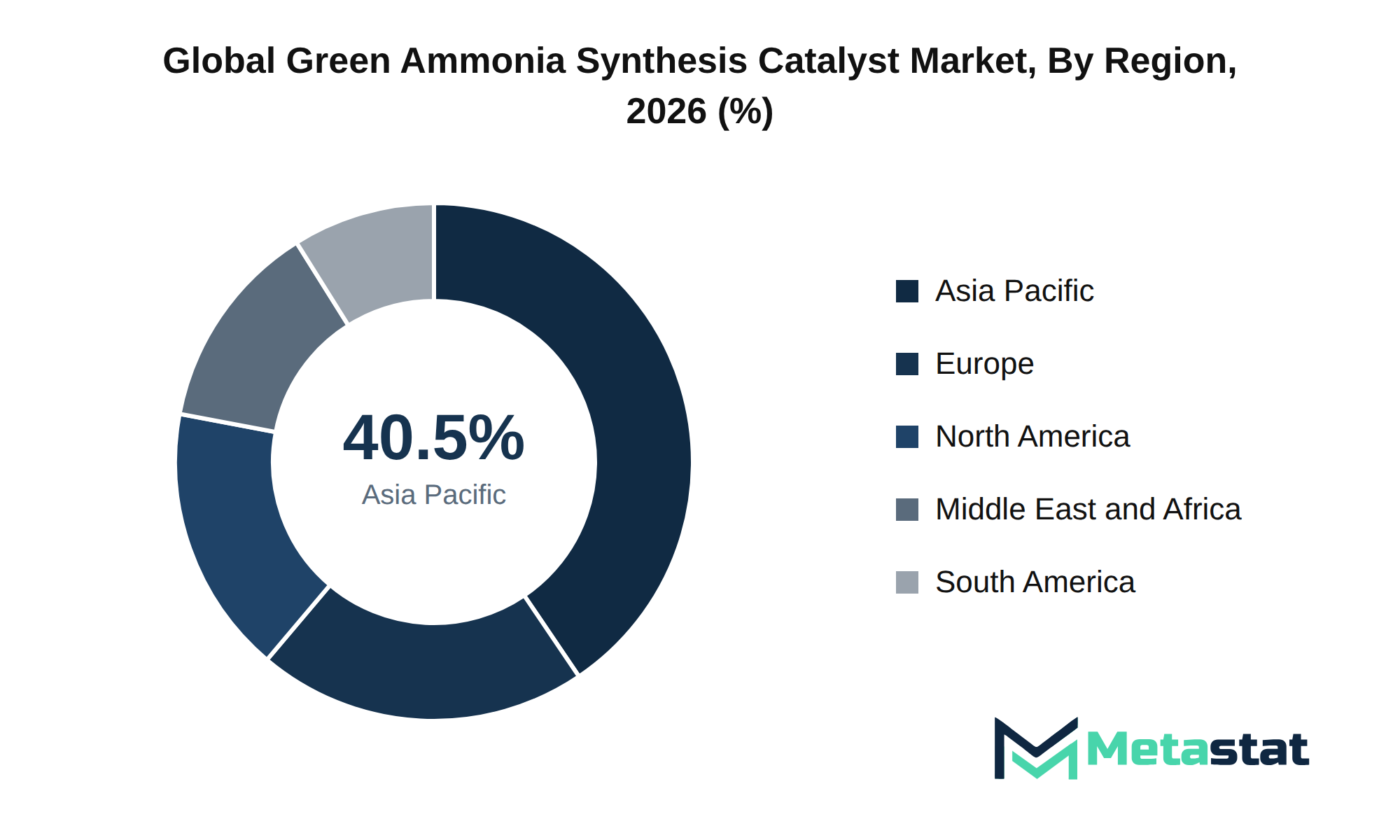
Europe holds a 20.6% share of the Green Ammonia Synthesis Catalyst market in 2025. Countries including Germany, France, the UK, Italy, Spain, and Russia contribute to this robust market presence through a combination of strong industrial infrastructure and a commitment to sustainable energy initiatives.
Investment in green technologies aligns with regional policies focused on decarbonization and energy transition. The European Union's regulatory framework encourages the adoption of green ammonia solutions, further driving demand for catalysts supporting this synthesis. Countries within Europe prioritize infrastructure modernization to enhance energy resilience and facilitate cleaner production methods.
Technological advancements in catalyst types, including Ruthenium-Based Catalysts, reflect an evolving landscape that caters to increased efficiency and lower emissions. Emerging segments, particularly low-temperature synthesis technologies, are gaining traction and exhibit high growth potential over the forecast period. This shift aligns with Europe's strategic objectives to lead in sustainable chemical production.
Localized procurement dynamics shape the competitive environment, with domestic players actively expanding their capabilities. The presence of established companies creates a competitive landscape that promotes innovation and collaboration across the value chain. The Green Ammonia Synthesis Catalyst market thrives on strong partnerships and technology transfers, enhancing product offerings and meeting diverse customer needs.
Asia-Pacific commands a significant share of the Green Ammonia Synthesis Catalyst market, projected to reach 40.5% by 2025. This region benefits from a strong push toward sustainable energy solutions, with countries including China, Japan, and India leading in the adoption of green ammonia technologies. The growing industrial base combined with governmental support for clean energy initiatives creates a conducive environment for market expansion.
Investment in infrastructure modernization plays a critical role in shaping the market landscape. Increasing energy demands, coupled with environmental regulations, drive the adoption of innovative synthesis technologies across various sectors. Countries in Southeast Asia exhibit underpenetrated markets, presenting opportunities for improvements in production capabilities and technology upgrades.
Competitive dynamics within Asia-Pacific highlight several domestic market participants that influence pricing and availability. The presence of local players facilitates regional procurement dynamics, while cultural nuances in B2B buying behaviors shape market strategies. Foreign Direct Investment (FDI) flows into the region contribute to the establishment of localized manufacturing densities, enhancing supply chain resilience and supporting overall market growth.
Emerging applications for green ammonia, including energy storage and maritime fuel, further expand market potential in Asia-Pacific. The focus on diversifying energy sources aligns with regional energy policies and supports the adoption of green technologies. Continuous improvements in local infrastructure readiness will drive advancements, reinforcing the region's role because a key player in the Green Ammonia Synthesis Catalyst market.
The Green Ammonia Synthesis Catalyst market in South America indicates the region's growing importance in the overall market. Brazil and Argentina emerge because key players, driving demand through significant investments in agricultural efficiency and clean energy initiatives. The region's unique supply chain dynamics and resource availability create a favorable environment for localized manufacturing and procurement, enhancing operational readiness during evolving market conditions.
Infrastructure development remains a priority in South America, facilitating the establishment of Green Ammonia Synthesis Catalyst production capabilities. This modernization attracts foreign direct investment, providing opportunities for both emerging and established players. The cultural nuances in B2B buying behaviors influence procurement strategies, aligning with regional compliance mandates and trade policy shifts that shape the market's trajectory.
While industries increasingly adopt sustainable practices, demand for green ammonia applications including fertilizer production and energy storage rises. The market's expansion reflects a strategic response to local needs and global trends, positioning South America because a vital component in the global Green Ammonia Synthesis Catalyst market. Enhanced collaboration among domestic market leaders and international vendors encourages innovation, supporting competitive advancements in this sector.
The Middle East and Africa region holds a 13.1% share of the global Green Ammonia Synthesis Catalyst market in 2025. Strategic investments in renewable energy initiatives significantly influence market development, with countries including Saudi Arabia and the UAE leading efforts in clean energy transitions. The push towards sustainable ammonia production aligns with regional goals to enhance energy security and reduce carbon footprints, resulting in increased demand for green ammonia synthesis catalysts.
Rapid growth in the fertilizer production segment emerges from increasing agricultural needs, particularly in South Africa and surrounding nations. Factors including localized procurement dynamics and cultural nuances shape B2B buying behaviors, impacting how businesses approach the adoption of green ammonia technologies. This growing agricultural demand drives investment in catalyst technologies that support efficient ammonia production.
The region's competitive landscape features domestic market participants taking proactive steps to consolidate their positions, driven by foreign direct investment flows. Localized manufacturing densities and supply chain regionalization initiatives contribute to a resilient market environment, enhancing the availability of green ammonia synthesis catalysts and enabling wider application across various sectors. This consolidation supports long-term growth and stability in the market.
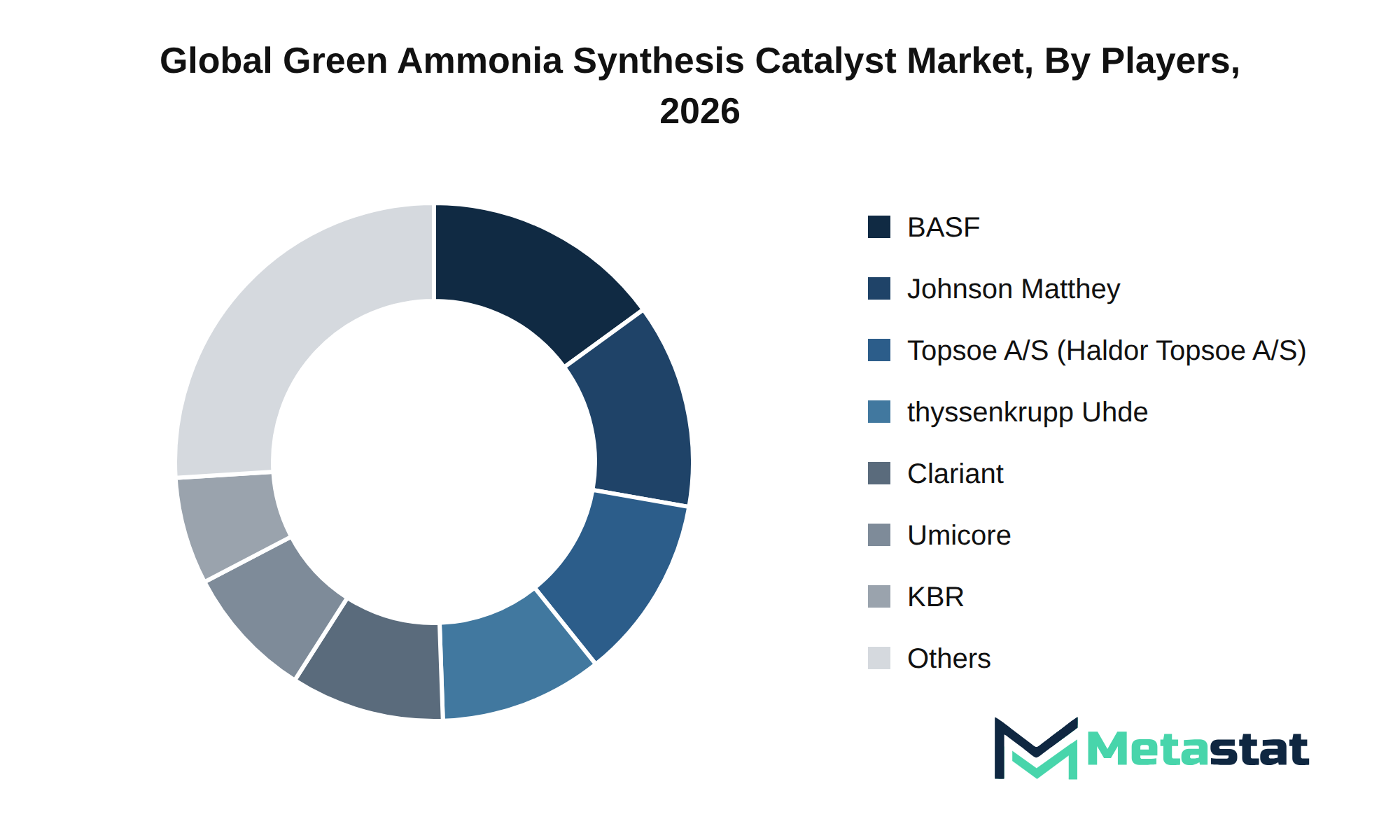
The competitive dynamics of the Green Ammonia Synthesis Catalyst market involve significant positioning by established players and emerging firms. Companies including Topsoe A/S, BASF, and Johnson Matthey focus on developing innovative catalyst technologies and optimizing production processes. Their strategies incorporate research and development initiatives aimed at enhancing catalyst efficiencies and reducing costs, which positions them advantageously in the market.
Strategic alliances and partnerships play a crucial role in driving growth within the market. Collaborations among firms, including Clariant and Umicore, emphasize leveraging complementary technologies and capabilities, which strengthens their market presence. These alliances facilitate access to new markets and broaden product offerings, enhancing competitive positioning.
Investment in proprietary technology and intellectual property fortifies the competitive barriers within the market. Companies including KBR Inc. and thyssenkrupp Uhde GmbH maintain robust patent portfolios that secure technological advantages and prevent new entrants from easily penetrating the market. This protection creates a more challenging environment for startups seeking to disrupt established players.
Pricing architectures remain a focal point for market participants. Firms continuously evaluate their pricing strategies to respond to raw material costs and competitive pressures. This aspect influences customer retention strategies, because companies prioritize value propositions that align with market demands, ensuring sustained engagement.
The future competitive outlook for the Green Ammonia Synthesis Catalyst market highlights the importance of innovation and adaptability. Companies are expected to explore novel synthesis technologies, including electrochemical and low-temperature synthesis methods, which promise to meet evolving industry needs. Ongoing strategic growth vectors will define the pathways for both established and emerging players in this market.
Market size is forecast to rise from USD 994.2 million in 2025 to over USD 1,572 million by 2033. The base case represents growth at a 5.9% CAGR, reflecting strong demand across various sectors. The bull case envisions even higher demand driven by advancements in applications including energy storage, where new technologies integrate seamlessly into existing systems. The bear case anticipates potential regulatory hurdles and geopolitical tensions that could impede growth, particularly in regions reliant on imported catalysts.
The Green Ammonia Synthesis Catalyst market will experience significant transformations due to macroeconomic factors and evolving consumer needs. Structural shifts in consumption patterns, along with the maturation of core industries, lead to increased demand for innovative solutions. The integration of next-generation technologies and expedited R&D commercialization timelines enhances the efficiency of synthesis processes, further propelling market expansion.
Regulatory evolution remains a critical component influencing the market. Compliance milestones and policy enforcement horizons dictate operational frameworks for producers, ensuring adherence to environmental standards. Geopolitical realignments and changing trade corridors reshape supply chains, introducing challenges and opportunities for strategic capital allocation. Infrastructure commitments and CapEx investments direct resources toward high-growth pockets, addressing unmet enterprise needs across various applications.
Emerging white-space opportunities in sectors including maritime fuel and power generation present avenues for innovation and investment. Executive-level strategic imperatives focusing on defensibility roadmaps guide firms in adapting to market dynamics. A proactive approach to identifying future growth recommendations positions stakeholders for long-term success in the evolving landscape of the Green Ammonia Synthesis Catalyst market.
The report strategically identifies and profiles the key market players and analyses their core competencies in each sub-segment of the Green Ammonia Synthesis Catalyst market.
Report Attributes | Details |
Study Period | 2021-2033 |
Base Year | 2025 |
Estimated Year | 2026 |
Forecast Period | 2026-2033 |
Historical Period | 2021-2025 |
Growth Rate | CAGR 5.9% from 2026 to 2033 |
Revenue Unit | USD million |
Segmentation | By Catalyst Type, Synthesis Technology, Production Scale, Application, and Region |
By Region | North America (By Catalyst Type, Synthesis Technology, Production Scale, Application, and Country)
|
Europe (By Catalyst Type, Synthesis Technology, Production Scale, Application, and Country)
| |
Asia Pacific (By Catalyst Type, Synthesis Technology, Production Scale, Application, and Country)
| |
South America (By Catalyst Type, Synthesis Technology, Production Scale, Application, and Country)
| |
Middle East and Africa (By Catalyst Type, Synthesis Technology, Production Scale, Application, and Country)
|
Find answers to common questions about this report
The Green Ammonia Synthesis Catalyst market size was valued at USD 994.2 million in 2025, according to the Metastat Insights study.
The Green Ammonia Synthesis Catalyst market is projected to grow at a CAGR of 5.9% during the forecast period from 2026 to 2033.
The North America Green Ammonia Synthesis Catalyst market size is estimated to reach USD 235.8 million by 2033.
Ruthenium-Based Catalysts lead the Green Ammonia Synthesis Catalyst market, with a projected value of USD 393 million by 2033. This segment shows the highest growth potential compared to others.
Key drivers for the Green Ammonia Synthesis Catalyst market include increasing emission regulations and heightened environmental awareness, leading industries to prioritize sustainable practices. Significant investments in green technologies and infrastructure development further support the transition to greener ammonia production, enhancing demand for efficient catalysts.
Asia Pacific holds the dominant share of the Green Ammonia Synthesis Catalyst market, accounting for 40.5% of the total market. This region's significant share reflects its leading position in the industry.
High capital investment requirements and escalating operating costs significantly restrain the Green Ammonia Synthesis Catalyst market growth. Financial burdens associated with advanced technologies and infrastructure deter potential entrants and limit expansion opportunities for existing players. supply chain disruptions and geopolitical instability create unpredictability, impacting pricing and availability of essential resources.
Increasing emission regulations and heightened environmental awareness drive the demand for sustainable ammonia production practices. Industries prioritizing sustainability seek innovative solutions, directly impacting their operational strategies and leading to rising investments in advanced catalysts designed to minimize emissions during ammonia synthesis.
The Green Ammonia Synthesis Catalyst market is estimated to reach a valuation of USD 1,572 million by 2033.
Key players in the Green Ammonia Synthesis Catalyst market include Topsoe A/S (Haldor Topsoe A/S), BASF, Johnson Matthey, Clariant, Umicore, and thyssenkrupp Uhde GmbH.
The analysts below cover Chemicals and Materials research at Metastat Insights.
LEAD ANALYST
Utkarsh Khirodkar is a Lead Market Research Analyst at MetaStat Insight, specializing in market intelligence, technology sector assessments, and competitive strategy.

INDUSTRY CONSULTANT - CHEMICALS & ADVANCED MATERIALS
Chemicals and Materials · Machinery & Equipment · Packaging
Amit Gadhekar Consultant for Chemicals and Materials at MetaStat Insight, directing sector-specific intelligence, research, and strategic consulting across global chemical and processing markets.
Transitioning ultra-class mining haul trucks to alternative power requires concrete data on remote hydrogen refueling infrastructure economics. The report evaluated megawatt-scale electrolyzer installation expenses, onsite storage safety mandates, and heavy-duty fuel cell stack degradation under continuous duty cycles. That technical rigor helped our engineers benchmark realistic total operating cost horizons for off-highway fleet decarbonization.
Enterprise zero-trust network rollouts are often slowed down by multi-cloud transit latency and proprietary hardware retirement schedules. This study provided realistic total cost of ownership models comparing cloud-delivered security edge solutions against traditional hardware refreshes. The analysis of contract renewal lengths and software maintenance fees gave us clear visibility into enterprise replacement cycles over the next three to five years.
Scaling antibody-drug conjugate manufacturing hinges on contract manufacturing availability for high-potency active ingredients. The MetaStat Insight analysis looked closely at global cleanroom slot constraints, bioconjugation batch failure rates, and supply chain redundancies between the US, Europe, and India. The supplier capability matrix proved genuinely useful for our team when mapping secondary source options across our clinical pipeline.
Explore related market intelligence reports worth reading alongside this one.